Marc Liebman's Blog, page 30
November 2, 2020


An interview with Melina Druga
Marc Liebman is constantly on the go. When he was a partner in a consulting firm, he was on the road at least four days a week and averaged 200,000 air miles annually. It’s an experience he doesn’t miss.
Liebman also has traveled via RV with his family and dog. His dream trip is to watch a baseball game in every ballpark in the country. He’s already seen games in about twenty venues, but some of the stadiums have since been razed.
When not writing or traveling, Liebman skis 30 to 40 days annually, volunteers as a docent at an aviation museum, work on the museum’s aircraft restoration team and gives rides as a demo pilot.
Liebman is the author of Moscow Airlift. He is the next author to be featured in my new interview series focusing on historical fiction and historical romance authors.
Marc Liebman on Writing
How long have you been writing?
Liebman: Decades as in six plus…. I was a correspondent for two magazines in college; wrote magazine articles while in the Navy, was an associate editor of a national magazine and the industry pubs; penned white papers as a consultant and finally, decided at age sixtyish, to write the novel I always wanted to write. Big Mother 40 came out in September 2012 and was an Amazon best seller. Five more followed at roughly one/year, one more is coming out in the next few months and I’ve got 11 more in various stages of completion on my laptop.
Oh, BTW, I’m 37 because I am dyslexic about my age!!!
What is your writing process like?
Liebman: Its pretty disciplined… So, here are the major steps:
Step 1 – Kernel – one to two paragraphs about the book, its plot and timing and preliminary name of the book
Step 2 – Synopsis – two to four pages that lay out the timing, major characters, locations, and details of the plot.
Step 3 – Rough chapter outline – two – six or more bullets that get translated into passages along with preliminary chapter titles
Step 4 – write the first draft of the manuscript. Note that the characters and their behavior dictate the manuscript, not the outline. Chapter titles change as does the plot.
Step 5 – Set the draft aside for at least 30 days. During this period, write notes to the author of “things” that need to be added, changed or researched, or re-organized.
Step 6 – First major edit. Read through the document, editing as I go and making the changes noted in step five as well as many more
Step 7 – set aside for 30 days
Step 8 – start polishing, assuming that I am happy with the manuscript
Traditional publishing, self publishing, or a combo? Why did you take the route you did?
Liebman: I started down the agent route, but it is a quirky, unpredictable process. Five agents actually wanted the whole manuscript and one actually wanted to represent it to a publisher. He sat on it for six months and nothing happened, so I started looking at small independent presses who were willing to invest in a first time novelist. The rest is history.
Pay to publish was out because of the cost and after interviewing several who really wanted Big Mother 40, I decided they were more interested in collecting fees and shipping 2,500 copies to my house than helping me sell books.
Self-publishing was ruled out because I didn’t want to be in the publishing business. I’m an author.
Plus, I review books for several magazines and the writing/production value of many of the selfpublished books left something to be desired.
However, last spring, I dabbled in the “find an agent” game for a new series and lo and behold, I found one willing to represent a new series. We’ll see what happens.
What was your biggest publishing struggle or lesson learned?
Liebman: Two, marketing and proofreading…. Marketing is much harder than I thought! Small publishers don’t have the resources to do much more than put the book on their web site and get it into distribution. The rest is up to the author. So, to build a brand, I started setting up speaking engagements, some paid, most free at which I can share my experiences in the military and at the end, sell some books. I feel about 1,000 books a year through speaking engagements. I write a blog every week, put out a newsletter to 3,000+ subscribers every month and one of these days, I’ll start tweeting. I also go to targeted events where my books would appeal to the attendees.
The biggest lesson learned is proofreading and it is in two parts. One, I am a lousy proofreader and two, a publisher’s sometimes are not much better. I had to pull a book off the market and have it re-proofread and re-released. Two, the proofreader better know your genre or topic or you will have to back and undo their incorrect changes.
Tell me about your latest release.
Liebman: Moscow Airlift came out in April, 2018. The Soviet Union is broke and coming apart. Gorbachev signs a record sized grain deal with the U.S. in January, 1991 and doesn’t have the money to pay for the grain and the country is on the verge of a major famine. Desert Shield happens in January/February. In March, Soviet citizens overwhelmingly vote to dissolve the Soviet Union. Hardliners want to overthrow Gorbachev (failed coup in August 1991) because they want to put an end to perestroika and glasnost and stop the dissolution of the country. In August, the Warsaw Pact officially ends and in December, the Soviet Union dies and is replaced by the Russian Federation.
In this context, Soviet generals are trying to sell tactical nukes to the Iranians to fund their retirement because they are convinced the country will fall apart soon. The hero, Josh Haman, is sent to Moscow in June 1991 to gather intelligence on what is happening. Scope creep happens when the Israeli’s tip off the U.S. that Iran is trying to buy tactical nuclear weapons.
And, oh BTW, the head of the KGB ordered the killing of Josh’s father-in-law and now wants him dead. To make matters worse, he meets an old flame from his days in Vietnam in the 70’s who works for French intelligence and spent three years in a Laotian re-education camp.
To find out what really happens, you’ll have to read the book!
What was its inspiration?
Liebman: The plight of Soviet Jewry. For hundreds of years, anti-Semitism was public policy of the Tsars. The Communists carried it forward even though many of the early leaders of the Bolsheviks – Trotsky, Kamenev, Zinoviev, Litvanov and others were Jews. Having “of Jewish ancestry” in your KGB dossier was career and even life threatening.
Even before Gorbachev started letting Jews emigrate freely, Soviet Jews were trying to get out. My father-in-law escaped and later “ransomed” his brothers by paying the outlandish emigration fees charged by the Soviet Union. Today, the Jewish population in Russia is under 200,000, down from several million in the post WWII Soviet Union.
So in this book, there’s an escape of a group of Russian/Bukharan Jews. Its one of the two “airlifts.”
What’s next for you?
Liebman: My agent is actually representing a non-fiction work called Gold & Silver Wings – Tales from Three Generations of Military Pilots. It is a collection of stories that don’t appear in official reports from my Dad’s, my and my son’s flying careers in the military.
She is also repping the first novel in a four book series called Flight of the Pawnee. Book two in the series – Manpads – is already written and the last two are outlined, but not written.
Sitting on my laptop are two books that are almost ready to go to either a publisher or an agent. The working tiles are Red Star of Death and Retribution.
My publisher has asked me to write a series with a Revolutionary War naval theme and I’m in the process of writing it. Its fun and a bit out of my sweet spot but having grown up reading C.S. Forester, Patrich O’Bryan and Alexander Kent, I’m loving working on it.
What advice would you give aspiring writers or novelists?
Liebman: 1. Patience – you will get published some day
2. Discipline – you have to work at writing every day or at least five to six days a week, several hours a day
3. Have a thick skin. You are going to hear the word “no” a lot in the form of rejections and corrections. Learn from it, separate the good from the bad and move on. Don’t get emotional.
4. Every great writer needs a great editor.
Marc Liebman on History
What is your favorite historical era and why?
Liebman: While I write about Vietnam and more contemporary periods, I think the age of sail, roughly mid 1700s to the end of Napoleon in 1815 is my favorite.
What historical figure would you like to spend a day with and why?
Liebman: Teddy Roosevelt. He was a man of vision, action, bravery and full of contradictions.
Name three historical events you’d like to witness if you had a time machine?
Liebman: 1. The Battle of Midway because so much was riding on the U.S. Navy’s gamble that we could take on the Japanese Navy and win.
2. Constitution taking of the HMS Guerriere. It was proof that the U.S. Navy had arrived.
3. Signing of the Declaration of Independence.
The post An interview with Melina Druga appeared first on Marc Liebman.
Book Pleasures Interview
In Conversation With Marc Liebman Author of Inner Look, Forgotten, Big Mother 40, Cherubs2, Render Harmless and Big Mother 40
By Norm Goldman
Bookpleasures.com welcomes as our guest, novelist, Marc Liebman author of Inner Look, Cherubs2, Render Harmless and Big Mother 40, which was ranked #48 in Amazon.com’s list of top 100 war novels.
Forgotten was recently named as one of the five Finalists in the 2017 Next Generation Indie Book Awards Historical Fiction category which goes along with the Five Star rating given to it by Reader’s Favorites. Inner Look was also given a Five Star rating by Reader’s Favorite.
Marc retired as a Captain after twenty-four years in the Navy and a career that took him all over the world. He is a Naval Aviator with just under 6,000 hours of pilot-in-command/co-pilot flight time in a variety of tactical military and civilian fixed and rotary wing aircraft. He is a combat veteran of both Vietnam and Desert Shield/Desert Storm. Captain Liebman has worked with the armed forces of Australia, Canada, Japan, Thailand, Republic of Korea, the Philippines and the U.K.
Norm: Good day Marc and thanks for participating in our interview. How did you get started in writing? Why do you write? What keeps you going?
Marc: I’ve always wanted to write. Becoming a novelist with published works was a life long dream. While I was in the Navy, I contributed articles to a wide variety of magazines and was even a “correspondent” covering regional auto races. In the early seventies, I was a magazine editor for two years and that experience taught me some hard lessons about the craft.
I also learned it is very hard to make a living as a writer. In fact, I often tell people now that I am retired from the business world, I now can afford to be a writer!
There are really three reasons I write. One, is I enjoy the creative process and bringing stories to life. Two, it is a legacy to future generations of my family. My books are something they can enjoy in the future long after I’m gone. And last, I like talking to people who’ve enjoyed the books. There’s great psychic satisfaction in hearing how much someone enjoyed one of my novels.
I like to think my books are different. Each one as several interesting characters and a plausible plot and are in the correct historical context. This allows me to weave into significant historical issues of the past as well as the present. Plus, few writers create novels about helicopter pilots. Even fewer write about Navy helicopter pilots, and I think I am the only one who writes about a Navy helicopter pilot who is Jewish.
All of the above keeps me going and I still have more books to write. Trust me, it is not the money.
Norm: Did you read any special books on how to write? Do you work from an outline?
Marc: No. I bought some highly touted ones and after a few pages, found them to be not very useful. The main reason was that their advice was often very generic and didn’t address the issues I was struggling with. I went to several highly touted (and expensive) four day workshops and they were marginally helpful. I learned more from my failures and struggles in trying to write a novel and from reading authors I like than from how-to books.
Yes, I work from an outline, but it is the third step in the process that I follow. Here are the steps:
Create the kernel – this is one or two paragraphs that is the story concept. Think of it as the first pass at the back cover blurb.
Story concept – this is an expansion of the kernel into a two or three page, single spaced document identifying the main characters, plot threads, conflicts, and timeline.
Chapter outline – My chapter-by-chapter outlines consist of bullet points on the events/passages for each chapter. Some of the chapter titles are included, but these often change as the manuscript is written and the number of chapters increases or decreases. And, as the manuscript evolves, I often deviate from the outline.
First draft of the manuscript – This is exactly what it is. As part of this, I also create the glossary as well as a cast of characters with a brief bio of the principle characters that act as references as I write and then edit the manuscript. As I write, I keep a page at the front of the manuscript titled Author’s Notes which are reminders to me to make changes in the first edit.
First major edit – A month or so after the manuscript is finished, I read through it and do the first major edit to add/delete passages to make it a better story.
Polishing the manuscript – Each manuscript I have sent to a publisher has undergone at least 10 different drafts! BTW, the Author’s Notes page is a living, breathing page that gets topics added and deleted during the editing process.
Norm: In your opinion, what is the most difficult part of the writing process?
Marc: Research! Because I pride myself in writing manuscripts that are operationally and technically accurate as well as put in the proper historical context, this requires a lot of research. I spend hours poring over maps and photos as well as reading material on what I think will add interesting context to the manuscript.
Sometimes researching a scene or topic takes me down a rat hole and I waste a lot of time. Other times, it leads to information I can use in the manuscript. The bad news is one doesn’t know what you’ll find until you’ve read what you’ve found and had time to digest it. A lot of times, I have what I call “forehead slapping moments” when I discover something that will make a major impact on the manuscript. The anticipation of this makes the research fun and exciting. If it wasn’t it would be pure drudgery.
An interesting side note is that you learn a lot of trivia that clutters your mind!
Two quick anecdotes about research….
First, in RENDER HARMLESS, there is a scene at the Berlin Stadt Hotel in 1976. The Stadt Hotel was one of a chain of four star, luxury hotels run by the East German government and the Stasi (East German secret police) for Westerners coming to do business with East Germany. Every major city had one.
My father took us to the Berlin hotel in the 1964 and I remember sitting in the restaurant at the top of the hotel where you could see into West Berlin.
The stark contrast between East Germany (dull, drab, not many cars, not many people on the street) and West Germany (full of cars, well lit, lots of people, vibrant) was evident.
Fast-forward to writing the manuscript in 2012 and 2013 and I wanted to have a scene in the hotel. The Berlin Stadt hotel was demolished after the wall fell and I spent almost four hours on the Internet one Sunday morning looking for photos of the restaurant and details of the hotel. All that work boiled down to less than a hundred words at the beginning a passage.
Second, after I finished BIG MOTHER 40, the first of my published novels, I sent it to my first detachment officer-in-charge who finished his career as a Rear Admiral for a review.
After he wrote what is now on the back cover, I called to thank him and he told me that after reading the book, he was convinced I spent more time with the NATOPS (the U.S. Navy’s pilot operating manual) writing Big Mother 40 than I did when I was flying in the Navy. Probably not true, but it makes a point about the level of effort needed because I wrote a lot of passages with my copy of the HH-3A NATOPS manual open on my lap.
Norm: How has your environment/upbringing coloured your writing?
Marc: Wow!!! This is a very interesting question. I think this is really a multipart answer. First, I was a service brat – my dad was a career Air Force officer and we lived in the U.S., Canada and Germany while I was growing up in the 1950s and early 60s before I went off to college. This exposed me to a lot of different cultures and, I was forced to make new friends every time we moved!
Another part of this was living early post-war Germany. While many Germans wanted to forget the Nazi regime ever existed, the hangover and the guilt will go on for generations. I vaguely remember my parents discussing war criminal trials as well as about those that who got away.
I also got to meet many, many Germans because we didn’t live in U.S. housing. While my parents were not devout, we are practising Jews and I grew up around people who had tattoos on their arm, i.e. they survived the concentration camps.
The older I get, the less forgiving I am of the German people for supporting Hitler and letting the Holocaust happen. As a kid, and even as an adult, I saw anti-Semitism up close and personal in ways most Americans never experienced. In many ways, I could say I lived among the Nazis. This was the internal pressure that led me to write RENDER HARMLESS and will lead to other books about the Nazis such as a book called RETRIBITION sitting on my laptop waiting for the first major edit.
It is also what drove me to define the character Josh Haman. In CHERUBS 2, anti-Semitism raises its ugly head and will continue to do so in future books when appropriate.
Growing up as an Air Force “brat” and moving a lot puts one, even in the 1950s and early 60’s into a multi-cultural environment. Friends came and went as their fathers were transferred from one duty assignment to another. For example, being in a Boy Scout troop was unlike others in the U.S. It was an ever-changing mix of races, religions, and cultural backgrounds that essentially made me color blind.
And last, my parents encouraged me to read and from that, I got my love of books. I read military, biographies and political history as well as historical fiction. Back when I was a kid, I was really into science fiction, but for some reason, stopped reading it.
Norm: Are you a plot or character writer and what helps you focus when you write?
Marc: When I am writing a scene, I become the character I’m writing about. And, as I peck away on the keyboard, I can “feel” the emotions as I try to put the reader behind the eyes of the character so he/she can see what the character sees/feels and what they are doing. In other words, I try to let the characters tell the story through their words and deeds, not me and this leads to deviations from the plot outline.
In most cases, the passage starts with context to set the scene. I try to add something about the senses – sight, smell, sound, touch to give the reader a sense of the place. Then, comes action followed by dialogue. So when I think the passage doesn’t need conversation, it either becomes a narrative or a character “doing something.”
The hard part is each scene has to add to the story or the plot by either creating tension, providing more insight into the character or conflict that is or will be resolved later in the story. When I’m in the editing/polishing mode, each passage is evaluated against that criteria. Often, there are passages I think are brilliant but they don’t do anything for the story, so out they go.
So I guess this makes me a “character” writer and they make the plot bob and weave as it works to the conclusion.
Norm: In fiction as well as in non-fiction, writers very often take liberties with their material to tell a good story or make a point. But how much do you believe is too much?
Marc: This is where the operational, historical and technical constraints limit what can happen in one of my novels. Often operational, historical or technical constraints restrict what I can write. Let me give you an example I just finished wresting with while writing MOSCOW AIRLIFT. Hopefully, it will go to a publisher sometime in June.
The book takes place in 1992 in and around the attempted coup by the KGB to derail the dissolution of the Soviet Union and create what we now know as the Russian Federation. So, many of the events of the plot have to come to a conclusion in around August 19th, 1992. So that’s one constraint that is historical.
Second are the major political figures – Gorbachev, Yeltsin, the head of the KGB and the Red Army. Many of these men are still alive. Since I can’t put words in any of their mouths and I don’t have access to their notes or interrogations, I had to create characters that were in positions of power and could influence events on both sides. That’s where as a writer, I can get creative.
When I write a flying scene, I download the pilots operating manual so I can read about its systems, flight characteristics as well as the normal and emergency procedures. These become both operational – what the airplane or helicopter can do – and technical – details about the airplane’s systems – constraints.
So, as a historical fiction writer, I can’t change history nor can I change the “things” (airplanes, guns, etc.) my character use, so I don’t. Instead, I concentrate on making them interesting people and put them in difficult situations within the context of what is available to them at the time.
Norm: How did you become involved with the subject or theme of your book, FORGOTTEN?
Marc: The answer starts with how U.S. servicemen were treated by both the North Vietnamese. They were beaten, tortured, and starved in complete violation of all four protocols of the Geneva Convention that the Vietnamese signed them in 1953, long before the U.S. became involved.
As the number of U.S. POWs increased, two things happened. One was the North Vietnamese government’s refusal to provide an accurate list of the POWs they held. Second, after the peace treaty was signed, the Vietnamese took years to provide a full accounting of what happened to the individuals known to have been captured alive and never came home.
Do I think POWs remained in captivity at the end of the war? If you asked me this question in the 1980s, I would have answered yes. Now, I am not so sure. I’ve talked to several people involved in recovering the remains of guys who went MIA and they are convinced that there were none. Given the secrecy and machinations of the Nixon administration, there’s too much circumstantial evidence – some believable, some not – to come to a definitive conclusion. Every time I broach this subject to an expert in the POW/MIA field, I get the same question back, why would the North Vietnamese not return everyone?
My answer is leverage and here’s why. The North Vietnamese knew Nixon and Kissinger were eager to get the U.S. out of the Vietnam quagmire and didn’t have the political desire or support to include anything in the accords that even hinted at military action as a threat to hold the Vietnamese accountable.
Even though they were losing on the battlefield and running out of manpower, they won the political battle. The U.S. simply lost the will to fight. The only lever we had left was promised foreign aid and when the Vietnamese violated almost every provision in the accords, the Nixon administration refused to provide the aid. Hence, we lost our leverage.
So let’s come back to a pilot who has to eject from an airplane. It’s a given that when one has to eject from a battle damaged airplane, one can get hurt during the ejection. Then, if you come down in the trees, the chances you can get seriously hurt are very high. And, if you get hurt, there’s no medical care and you may die from your injuries. Or, you could be bitten by a poisonous snake or insect and die. Or, or, or…. So, I believe a high percentage of the pilots shot down landing in the jungle perished and who didn’t check in via their survival radio perished.
Here’s the scenario that bugs me. When one comes down in a rice paddy and are captured alive, the government – especially if it is a signatory to the Geneva Convention – is obligated to protect you from angry citizens. Several U.S. pilots were killed by the locals while soldiers from the North Vietnamese Army and government officials looked on.
So that’s one aspect of it. It may sound clinical, but it is not when one considers the second reason. I went to Vietnam as a combat search and rescue (CSAR) pilot. It was our job to get to downed pilots and rescue them so they don’t get captured. So, in many ways, this story is personal.
FORGOTTEN starts with a botched rescue. A helo flees from the scene and fails to make the rescue because the aircraft commander is a coward. Not making a rescue is tough to swallow, but cowardice in the face of the enemy is any CSAR pilot’s (and the survivor’s) worst nightmare.
Another is I went to college during the mid-1960s and the Students for a Democratic Society (SDS) were on every campus advocating revolution a violent overthrow of the U.S. government. SDS had an action wing that was firebombing recruiting centers and other military installations. I met and even dated (unknowingly at first) women who were SDS members.
So FORGOTTEN is a mix of POWs who get left behind, SDS and drugs. Add in a CIA operative with shady dealings that include selling secrets and a former POW who became a collaborator and voilà, you have the beginnings of a book.
Norm: What was the most difficult part of writing this book?
Marc: Three words…. Janet Pulaski’s sexuality. In writing the manuscript, I had four choices. One, take her completely out of the book. I rejected this because I wanted to have a “home front” story. That led me to the next three choices.
Two, I could have kept her heterosexual and faithful…. While most POW/MIA wives were faithful to their husbands, for a novel, I rejected this because it didn’t add tension (other than for the husband’s safety and the uncertainty of when he would come home) or conflict to the plot.
Three, I thought about keeping Janet heterosexual and have her go to LA, San Francisco or Vegas to have one night stands. If I turned her into an assassin, then how could Randy and she get together after he came home? The only option was turning them into a team of assassins but I didn’t see that in Randy after 9 years in captivity. The thin he would want most is to avoid jail. So, after going back and forth through the editing process, I rejected it because it would become “routine” set of sexual adventures unless I let her get involved in really deviant sex.
Four, start with Janet being heterosexual or bisexual and then turn her into a lesbian and an assassin. This approach offered the most possibilities. Then, I could let her feelings for Randy emerge at odd times and ways in the book. As a result, I think she became one of the most interesting and complex characters I’ve created.
Norm: How did you go about creating the characters of Janet and Randy Pulaski in Forgotten?
Marc: I touched on this a bit in the last question about Janet so let’s start there.
Throughout the book, Janet maintains her “flame” for Randy even though events force her to realize that the two of them can never be together again.
The idea of turning her into an assassin was a vehicle I could use later in the book to bring resolution to three characters – the traitor/collaborator O’Reilly, the opportunist CIA officer Savoy and the Cuban Páya. It also allowed me to play on the fact that she was member of SDS’s Action Wing. There were three threads to Janet’s life after Randy is shot down – life as a POW/MIA wife, the process the U.S. goes through to go from “possible POW, to MIA to MIA, presumed dead and her career as an assassin. Also, by turning into an assassin, I could write an infinite number of action scenes as a way to deal with the passage of time. Keep in mind the book starts in 1970 and ends in 1982!
Becoming an assassin isolates Janet from society. She can’t have a normal relationship with anyone because of the questions she’ll be asked by anyone who wants a serious or long-term relationship. So, the isolation and resulting loneliness had to be resolved so I created a character she met in Cuba and created a love story with that. The other option was to have Janet killed off. I actually wrote one version with it and then decided to keep her alive!
Randy was easier and through him, I wanted to share the emotional roller coaster POWs face during captivity and the brutal treatment they received from the North Vietnamese. While there were five other POWs, I used Randy as the primary “voice.” I also wanted to bring out that POWs depend on each other to keep their spirits up and they must never lose faith that the country will come get them. In FORGOTTEN, by dragging them out of the normal POW prisons, I could hammer home this last point.
To introduce Randy, I started with the botched rescue in CHERUBS 2 where Josh’s first aircraft commander Higgins demonstrates his cowardice and runs away leaving Randy in the water to be captured. This created some tension and conflict in both Randy and Josh that plays out later in the book.
I gave Randy a Polish father who fought with the Polish Army in Italy so there would be some natural conflict when I brought a Russian in to interrogate him and the collaborator, O’Reilly. On any given day, it’s a crapshoot as to whether the Poles hate the Germans or the Russians more. I added in the bit about the Katyn Massacre to provide some additional historical context. What is also not well known is that the Poles fielded the third largest Allied army (larger than the Free French) and during the Battle of Britain, Polish pilots made about 20% of the kills. Everyone thinks the Polish Army performed poorly in 1939 and if you look at the result, the answer is yes. However, if one digs deeper, it actually did quite well considering that it was overwhelmed by two larger armies and was under-equipped when compared to the Wehrmacht.
Norm: Can you explain some of your research techniques, and how you found sources for your book?
Marc: That’s easy. I start with books in my bookcase and the Internet. Google is a wonderful tool because it gives me choices. As an avid reader of history, it gives me a sense of what’s happened in the past and I can use that as a guide to help sort out which sites are better/more accurate than others.
On my bookshelf, I have several books that I constantly go back and use as a reference. And, when I find one that I need for research and/or want to read, I buy it.
For example, I bought a NATOPS Manual for the A-7B in which Randy was shot down. Another is that I downloaded the operating manual for the Makarov pistol.
FYI, on Amazon, if you find the book with material I’m looking for, I can “open it” and in some cases search for key words. I’ve done that several times to learn interesting tidbits.
Wikipedia, often much maligned, is a great source because it provides an interesting bibliography that can be further explored as well as links to other Wikipedia sites. It also provides a synopsis with dates and other helpful info. I also look at a lot of sites that specialize in the topic being researched.
Google Maps is a great tool. I use it to look at streets and country maps and switch back and forth between the map and the satellite view. The risk here is that if you are using it, you have to figure out the difference between what is there in Google today and what existed in the time the novel is taking place.
Norm: How much of the book is realistic and are the characters in your book based on people you know or have encountered or are they strictly fictional?
Marc: Very little. Josh Haman is very loosely based on my career in the Navy, but nothing in FORGOTTEN is related to my career other than having participated in several Joint U.S./Thai Cobra Gold exercises. Annual Cobra Gold exercise were initiated because the Thais wanted U.S. help to stop or prevent the on-going incursions by Pathet Lao and Khmer Rouge forces supported by the Vietnamese Army.
The POWs are all fictional characters, however, when the American POWs came home in 1974, Captain Stockdale wanted to court martial three men suspected of collaboration. This was the genesis of the O’Reilly character For the record, the DOD and the Nixon administration wanted no part of a court martial.
The waved off rescue is based on a real event, but exaggerated to turn the Higgins character into a coward. Other than the historical notes to give context, the book is total fiction.
Norm: What is the most important thing that people don’t know about the theme of FORGOTTEN that they need to know?
Marc: We can never forget the sacrifices the men and women in the military make to defend our freedom, our values and our way of life. It is ironic that I am writing this on the U.S. Memorial Day weekend. Memorial Day is the day we remember the men and women who died in the service of our country.
Many Americans take it for granted as just another a holiday that kicks off the summer season.
We should, and I am glad that, at least in the Dallas area where I live, there are more and more events that document the actions of those of us who served, and those who gave their lives.
Becoming a POW is something that those of who served never want to experience. For a variety of reasons, the trials, difficulties those who were captured faced, often seems to get lost. Their sacrifices and what they endured is often much more difficult than what others on the battlefield faced.
Norm: It is said that writers should write what they know. Were there any elements of the book that forced you to step out of your comfort zone, and if so, how did you approach this part of the writing?
Marc: Yes. I didn’t know much about lesbians so I took to the Internet to learn more. I read everything from pornography to treatises on what they are and are not to surfing several web sites that cater to lesbian fiction. It was interesting to say the least. This led to writing some graphic sex scenes, something I had never done before. Out of my research, arose Janet Pulaski who one reviewer characterized as a nymphomaniac lesbian assassin. Need I say more?
One more thing. Reading the POW debriefs again (I read several of them in the 1980s) was painful. These were my comrades in arms and I had to temper what they said because if I put the actual torture scenes in the book, I was afraid they would turn off the reader.
Writers write and this is more about discipline than anything else. Once you know who and what the character is, it is just a matter of putting pen to paper (creating ones and zeros?) and creating the character. To use the British expression, one has to muddle through.
Norm: Where can our readers find out more about you and your books including FORGOTTEN?
Marc: Visit my web site – www.marcliebman.com. There are two parts to it, the speaker and author sites. In both, there’s lots of information on flying helicopters, the books – all of the professional reviews are posted in their entirety – the Josh Haman series, me, etc. etc. There are also some short vignettes on each book. As new novels come out, more will be added. Plus, I am always adding material to the site and when I do, it is noted in my blog.
Also, start reading my blog. It is published on Sundays (usually!!!) and is linked to my page in Amazon and Goodreads. You can go back and read the entries which readers may find interesting. There’s stuff on the ups and downs of being a novelist, challenges I’ve faced and over come, etc.
And last, contact me through my web site and ask to be placed on my mailing list. I send out newsletter every three months and this way one can keep up with what I am doing.
All my books are available on Amazon or through Barnes & Noble. If the buyer has a favourite bookstore, the store can order the books directly from the publisher or Ingram/Lightning source.
If a reader wants signed copies, he or she needs to go to my web site –www.marcliebman.com – and click on the link that connects to the author site.
In the top right hand corner, it says “contact.” Click on that, fill out the form and send me a note asking for a signed copy or copies of any one of my books. I’ll respond with an email to set up a call, take a credit card number over the phone and the book(s) will go in the mail the next business day.
If the book is to be sent to a U.S. address, the cost of postage is $3.50 for the book rate and takes five to seven business days to get to the buyer. If the reader wants it sooner, I’ll add $12.00 to the cost of the book for Priority Mail and it takes two business days.
Books shipped outside the U.S., go by first class mail and the cost is $25.00. For some countries, it costs more, some less, but $25.00 is close enough. The cost of postage is added to the retail price of the books that are:
CHERUBS 2 – US$19.95
BIG MOTHER 40 – US$19.95
RENDER HARMLESS – US$19.95
FORGOTTEN – US$24.95 (due to its length)
INNER LOOK – US$23.95 (due to its length)
Norm: Is there anything else you’d like to share with us and are you working on any books/projects that you would like to share with us? (We would love to hear all about them!).
Marc: I’d like to share two things. One is reviews. Sites like Book Pleasures are a great help, but to those who read this, if you buy and read one of my books, please write a review on at least Amazon and Goodreads. These reviews drive a lot of what they do to market an author’s books and that helps drive sales. Plus, it gives me feedback about what readers like.
Number two are new or in work writing projects. There are two more books in the Josh Haman series left to be published. The next one is MOSCOW AIRLIFT. It takes place in 1992 during the turmoil leading up to the August coup and the death of the Soviet Union. The Iranian’s are trying to buy nuclear weapons to use to support terrorist attacks against the U.S. Josh Haman is sent to Moscow to figure out what is happening and stop the theft. In it, you get to meet characters from CHRUBS 2, RENDER HARMLESS and INNER LOOK and what happens to them will surprise you.
The last book in the Josh Haman series has a working title of THE SIMUSHIR ISLAND INCIDENT. North Korea is one of the largest producers of illegal drugs (heroin and methamphetamines) as well as bogus prescription drugs. With the blessing of Kim Jong-Il, an expanded drug factory is set up at the abandoned sub base on Simushir Island. Jong-Il wants to base ballistic missiles on the island and Josh Haman, on the Seventh Fleet staff has to figure out how to put the factory out of business without starting a war.
The conclusion of the THE SIMUSHIR ISLAND INCIDENT is the logical conclusion of the Josh Haman series. I didn’t plan it that way, but now that it is almost ready to go to a publisher, that’s the way it will be.
Then I plan to start another series with a main character by the name of Derek Almer. The first two books in the series – FLIGHT OF THE PAWNEE and MANPADS – are already written and I am working on getting FLIGHT OF THE PAWNEE ready to go to a publisher sometime this late summer.
Originally, they were to be the last two books in the Josh Haman series, but I decided to pull them out, change the dates to the 2015 – 2017 timeframe to make them more contemporary and change the characters. These two will be part of at least a four book series with the other two having preliminary titles of RASBERRY 9 and THE ASSAM DRAGGIN’.
In FLIGHT OF THE PAWNEE, a terrorist group affiliated with Al Qaeda wants to use nerve gas to kill at least ten thousand Americans on Texas/OU football weekend on the fifteen anniversary of 9/11.
To change the nature of the war against the infidels, Al Qaeda prime wants to disrupt the U.S. transportation system and shut down the electrical power to the NY and LA metro areas. Central to their plan is using man portable, air defense systems, a.k.a. MANPADS stolen from the Russians to simultaneously shoot down airliners at six major U.S. airports and use RPGs to destroy key power transmission stations.
The plot of RASBERRY 9 revolves around what happens to $30M in used bills taken from drug cartels by the DEA when the C-130 carrying it as its only cargo disappears into the Saudi desert. The wreck and crew is found, but no trace of the money destined to pay Afghani warlords to keep them loyal to the government.
THE ASSAM DRAGGIN’ is the story about a company contracted to provide helicopters to fly logistics support missions for the Afghan government, military and U.S./Allied forces. The hero’s company has to deal with corruption, Taliban and Al Qaeda agents infiltrated into every level of the Afghan government as well as a ruthless competitor who is doing everything it can – legally and illegally – to cause the company to fail.
On top of that, last summer I wrote a book called RETRIBUTION. It is a stand alone novel about four men – an American Air Force pilot, a Russian NKVD officer, an SS officer wanted for war crimes, and a German boy who is smuggled out of Nazi Germany in the mid-1930s – and their families. As the plot moves along from the end of WW2 to the early sixties, the four threads are woven together. Right now, I am not sure what I am going to do with this book. After I get through with FLIGHT OF THE PAWNEE, I’ll go back to it and decide what to do.
This is not all. I’ve become a “correspondent” with an online publication called Senior Skiing. Last winter, I contributed three pieces and have committed to do more this coming winter.
So, other than this, there’s not much on my plate!
Norm: Thank you so much for taking the time to answer my questions. It’s been an absolute pleasure to meet with you and read your work. Good luck with all of your future endeavors.
The post Book Pleasures Interview appeared first on Marc Liebman.
Interview with The Feathered Quill
Today, Feathered Quill reviewer Amy Lignor is talking with Marc Liebman, author of Raider of The Scottish Coast.
FQ: Your military background is a long and diverse one, to say the least. With more than twenty years in the Navy, what were the perks (such as, the knowledge gained throughout your life) that came in handy when putting this book together?
LIEBMAN: When I was promoted from commander (lieutenant colonel in the other services except the Coast Guard) to captain (full colonel in Army, Air Force and Marine Corps), there was a step change in the how I was treated and what was expected of me. The difference was much greater than when I was promoted from lieutenant commander (major in our sister services) to commander. At the time I was selected for captain, the total strength – active and reserve – of the Navy was ~600,000 men and women. Of those, there were only 800 captains in the active and reserve Navy. That’s not even a tenth of one percent! I felt as if suddenly, I was expected to know something! Also, well before the PC world of today, as a captain, I had to be much more careful about what I said in public.
Then there was the added responsibilities. For example, as a captain, one of the more interesting projects that landed in my lap was reviewing and updating the war plans for the Commander, Seventh Fleet. Each potential enemy – the Soviet Union, the People’s Republic of China (PRC), Democratic People’s Republic of Korea (North Korea) – had its own war plan with several plausible scenarios. The work took almost a year, the team I led had to (a) evaluate information from U.S. and Allied intelligence agencies; (b) understand the foreign policy goals set forth by the National Command Authority, i.e. the president of the U.S; (c) test the plans in war games based on the capabilities of the Marine units, ships and planes Seventh Fleet would likely have under its command; and (d) consider the limitations of logistics and supply. This was a PhD course in collecting, analyzing and synthesizing data to create viable operational strategies and tactics for each scenario. These plans had to be coordinated with our sister services as well as shared and integrated within given guidelines with our allies in the Seventh Fleet operating area. As part of this evolution, I found myself briefing general and flag officers and fielding their tough questions.
What this experience gave me was a deep understanding of our potential enemies as well as the potential situations which would cause the U.S. to be embroiled in a major conflict. Now I had insight into how our intelligence community really operates and the info they provided along with detailed knowledge of our military capabilities in areas in which I had no prior experience. So, coupled with my love of history, this background helped me include realistic geo-politics in every book of the Josh Haman series.
FQ: Your books have touched upon a variety of different wars and countries. Do you have a personal interest in one war in particular? If so, why is that?
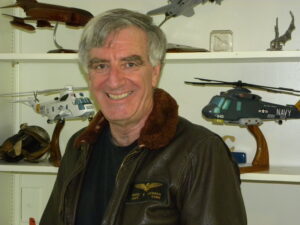 Author Marc Liebman
LIEBMAN: I do and I don’t. I don’t believe wars happen by accident. There is always a chain of events that leads to a war. If you look at history, most have underlying issues which usually economic (colonies/territory/natural resources) or religion or both.
The American Revolution is an exception because one can make a very strong argument that the war was about personal freedom to choose ones destiny versus being dictated to by a king or queen. However, right behind the desire for individual and national freedom came the desire to get out from under the yoke of intrusive taxes, rules and regulations.
While writing Raider of the Scottish Coast, the time I spent researching the years before, during and after the American Revolution caused me to realize how much of our country’s DNA stems from that period. I have a whole new respect for our Founding Fathers and what they accomplished. When the American Revolution began, the Thirteen Colonies went to war against the wealthiest, most powerful country in the world that had the best Navy and one of the best armies. In 1775, when the shots were fired at Lexington and Concord, the thirteen Colonies had no navy or army. Our Founding Fathers and those they led persevered for eight long years. The war left the colonies economically devastated. Four years after the war, they wrote one of the most phenomenal documents in the history of the world, the U.S. Constitution. At the time, all the “talking heads” thought our democracy wouldn’t last 10 years because the “common” people couldn’t govern themselves without a king or queen.
This is a long way to get to the answer to your question. I think the period of 1775 to 1815 which encompasses four wars – the American Revolution, the Quasi War, the War Against the Barbary Pirates and the War of 1812 – is my favorite. Number two would be the Spanish American War because in the span of a few short years, the U.S. becomes a world power.
FQ: What made you decide to become a full-time writer? Is there one specific genre and or subject you have not yet written about that you wish to pursue in the future?
LIEBMAN: I’ve always wanted to be novelist, but didn’t know how. So, in the late 80s, I tried and failed miserably. Attempt number two ended in frustration in the 90s. In 2008, I tried a third time and in 2012 Big Mother 40 was published.
There is good news from by early flailing and failing. My first attempt back in the 80s had the working title of Moscow Airlift. My second attempt in the 1990s was titled The Kuril Wedge Incident. At the time Big Mother 40 was published, I’d committed to a series of books so I listed those as the last books in the series as an afterthought. A revamped Moscow Airlift was published in 2018 and The Kurile Wedge Incident has been renamed and re-written and will be published as The Simushir Island Incident in November 2020.
As far as genre goes, I will continue to write fiction. Most will have military, terrorism, spy type plots or like Raider of the Scottish Coast will be in the Age of Sail genre However, I have several books in my planned list of books to write that are different.
There is a non-fiction book called Gold & Silver Wings – Tales from Three Generations of Military Aviators coming probably in a few years. This is a “memiography” in that the contents are anecdotes from my father’s, my son’s, and my military flying careers. Some of the stories will make you laugh, some will bring a tear to your eyes and some, after you’ve read them, will cause you to ask, “what were they thinking?”
There are also two novels that are not military related. One is a novel about consulting which has the working title of Outsourced and the other is a story about ski racing called Hannenkam.
For more info on the books I have in development, check out this link to a page on my web site – https://marcliebman.com/josh-haman-book-series/books-in-development.
FQ: Given the state of the world as it exists today, do you have any personal worries that we are headed down the road to another war?
LIEBMAN: I do and I don’t. The People’s Republic of China is a long term competitor that wants to extend its influence globally. However, neither countries want a shooting war to erupt. What I see is economic warfare, not in terms of tariffs, but escalating in other ways. The PRC’s leaders know that if the U.S. significantly reduces the purchase of goods made in the PRC, their economy collapses. We’ve been fighting them over their theft of intellectual property from businesses and governments all over the world. They continue to refuse to honor patents and copyrights. However, based on PRC’s deception and carelessness with Covid-19, they may have set in motion events from all over the world that may adversely affect their economy. Only time will tell.
Which brings me to the two countries that I see as the most likely embroil the U.S. in a shooting war. One is North Korea, a country I can spend hours talking about. It is a dismal place to live. Economically, it is a basket case. However, we, as does the United Nations (many people forget this little fact), have a treaty which obligates us to defend South Korea if attacked by North Korea.
North Korea wants to unify the peninsula under its repressive communist regime. South Korea wants a commercial relationship in which South Korean goods flow north and people can travel freely across the DMZ. If this leads to unification under a democratic government so, be it. The South Koreans know they cannot afford to fix the economic and environmental disaster that is North Korea.
North Korea is the only communist country in which power has been passed from the father (Kim il-Sung) to the son (Kim Jong-il) to the grandson, Kim Jong-un. Everything, and I mean everything that Kim Jong-un does on a daily basis is geared to regime survival which is defined as his survival. A war could happen if Kim Jong-un, or possibly his successor, needs to placate hardliners to stay in power. More than likely, it will start with a raid or an outright attack on South Korea that kills U.S. servicemen/servicewomen.
Since 1960, North Korea has launched attacks well over 100 times. These range from “small” shooting incidents, commando raids and torpedoing a South Korean Navy corvette.
Another provocation could lead to miscalculation on North Korea’s part. Kim Jong-un’s threats to use nuclear and chemical weapons are just that, threats. He knows that if he starts a war, neither he nor his regime will survive. How much help he would get from the PRC or Russia is an unknown. While the PRC does not want another democracy on its border, the country sees North Korea’s antics as a way of distracting the U.S.. Intervening as it did in the Korean War may not be in the cards because it would lead to sanctions, loss of the U.S. market, seizure of investments wealthy Chinese have made in the U.S. and more. However, a power struggle within the factions in the North Korean government could lead to a civil war in which the South Koreans may decide to get involved.
Which brings to the greatest threat to the United States in terms of a “shooting” war and that is the Islamic Republic of Iran. This country is, by far and away, the largest state sponsor of terrorism in the world. Tens of thousands of Iranian soldiers are deployed in Yemen, Syria, Iraq, Venezuela, Sudan, and other places around the world. Iran wants to be the dominant power in the Arabian Gulf. The country is ruled by religious fanatics who are committed to destroying Israel and attacking the U.S. who they call the Great Satan.
A nuclear armed Iran is a threat to every nation within a 1,500 mile radius of Tehran. The nations along the southern coast of the Arabian Gulf see the danger which is what drove the United Arab Emirates and Bahrain to sign peace treaties and normalize relations with Israel. More treaties with the remaining Gulf Cooperation States (Kuwait, Qatar, Saudi Arabia, Oman and Kuwait) will come.
Israel and the Trump administration has been very clear that they will not tolerate a nuclear armed Iran. The current sanctions have crippled the Iranian economy. The PRC buys almost all its oil from Iran has largely ignored the sanctions and is one of Iran’s largest trading partner. As customers of Iranian oil find other long term, reliable sources, the stress on the Iranian economy will increase.
The Iranian military continues to provoke, taunt, and often attack the U.S. as well as other nations in and outside the region. The recent blatant attempt to interfere in the 2020 U.S. national election as an attempt to ensure Trump is not re-elected is just another one in a series of provocations. Iranian leaders fear Trump will continue to increase the economic pressure on Iran to end its nuclear program and stop its support or terrorism. The question is what will Iranian leaders do if they start to lose their grip on the population?
FQ: If you were given a choice to sit down at lunch with a past leader, writer, politician, etc. – who would it be and what question would you most want to ask?
LIEBMAN: That’s an easy one. Teddy Roosevelt. Few men in their lives have had as great an impact on U.S. (and the world) as he did. Think about this, he oversaw the rebirth of the U.S. Navy which at the time, helped establish the U.S. as a global power. As a young man, he wrote what is still probably the best analysis of the naval part of the War of 1812. Roosevelt pushed for the Panama Canal. He won a Nobel Peace prize for negotiating an end to the Russo-Japanese War. TR established our national park system and was a strong, vocal early supporter of woman’s suffrage. While president, he pushed for an amendment to the Constitution. I could keep going on and on about Theodore Roosevelt.
What would I ask him? The mind boggles to think of just one question. But I would start with why he became embroiled in the Russo-Japanese War? My next question was why was he confident that U.S. military doctors under the leadership of Dr. Walter Reed could eliminate the threat of yellow fever to the workers of the Panama Canal?
FQ: I had read in your bio that you and your lovely wife like to travel in an RV; is there a specific location that you love; and, perhaps one you are hoping to visit one day soon?
LIEBMAN: Yes. Pensacola Beach. The sand is the color and texture of confectioner’s sugar. There’s an RV park right on the beach on the Naval Air Station!
Both of us would like to drive the Alcan Highway. We have talked to many who have and say that the trip is worth it, but is very, very hard on your RV.
For the record, we just sold the RV.
FQ: What title is up next that readers would absolutely love to know about?
LIEBMAN: Chronologically, the next book to be released is The Simushir Island Incident which is the last book in the Josh Haman series. This novel comes out in November 2020. The bad guys are North Korean and if you want to read more before the book is published, go to – https://marcliebman.com/book/the-simushir-island-incident/. FYI, I am already getting requests for other Josh Haman to fill in the gaps.
Next to come out is Flight of the Pawnee which will be released on January 12th, 2021. This novel is the first in a new, what I hope to be a four book series based on a character named Derek Almer. The story takes place in Texas in 2016. For more on the book, check out this page on my web site – https://marcliebman.com/derek-almer-series/.
The post Interview with The Feathered Quill appeared first on Marc Liebman.
October 25, 2020
Cornwallis’ Surrender at Yorktown Did Not End the American Revolution
If most people are asked what was the last battle of the American Revolution, the answer is often Yorktown. It wasn’t.
Cornwallis and approximately 8,000 men surrendered on October 19th, 1781. Peace negotiations didn’t begin until April 1782 and the actual Treaty of Paris wasn’t signed until September 3rd, 1783. So, what happened in the interim?
After Yorktown, the British Army didn’t have the manpower to conduct a major ground campaign in the colonies. The British were left with three enclaves New York, Savannah, Charleston.
In the south, General Greene continued his drive to confined the British Army to the two southern ports. Elsewhere, local militias supported by Continental Army units battled British Army units aided their Native American allies, such as the Iroquois and Cherokee.
Outside the Thirteen Colonies, the war continued unabated. There were many naval actions between the Royal and French Navies, amphibious landings and land battles. The British retook the island of St. Kitts. The fighting on the Indian subcontinent raged on with the British recapturing all of Ceylon (now Sri Lanka).
In February 1783, the Spanish finally gave up after failing to re-capture Gibraltar after laying siege to the British base for four years. The French raided British forts on Hudson Bay in Canada during the summer of 1782. The Spanish captured the Bahamas in May 1782 and Loyalist forces from British Florida re-took the island chain in April 1783.
In all, 47 skirmishes and/or battles on land or naval actions took place between October 19th, 1781 and April 1783. Of the 20 naval battles, five were in North American waters; eight were in the Caribbean or Gulf of Mexico; three in waters around India; and four were off the French or Spanish coasts.
On land, there were 27 battles were fought in the same time frame. Five occurred as the British and French tried to take each other’s islands in the Caribbean. Three battles were fought in Canada and the same number in Central America; four in India and 11 in six (Ohio, New Jersey, New York, South Carolina, Virginia) of the Thirteen Colonies. Only one, the Spanish siege of Gibraltar took place in Europe.
This strongly suggests that the American Revolution was just one theater of a global conflict. While we, in the United States, think of the American Revolution as a war for independence, in Paris, London and Madrid, this was a war for colonial possessions. King Charles III of Spain and King Louis XVI of France saw the American Revolution was chance to exact revenge for their losses from the Seven Years War and continue the struggle for power, influence and territory.
History shows that the American Revolution had far reaching consequences for Louis XVI whose reign ended in 1789. Spain never regained its position as a world power. England, despite its defeat in North America, emerged stronger and wealthier.
Image (courtesy of Wikipedia) is the 1783 Painting by Benjamin West shows the U.S. delegation, from left to right, John Jay, John Adams, Benjamin Franklin, Henry Laurens and William Tempe Franklin. The British negotiators refused to sit for the painting which was never completed.
The post Cornwallis’ Surrender at Yorktown Did Not End the American Revolution appeared first on Marc Liebman.
October 18, 2020
The Origin of the U.S. Dollar
In the 18th Century, there weren’t official exchange rates for currencies. Before and during the American Revolution, in the Thirteen Colonies there were at least 17, that’s right, 17 different currencies being used. Besides barter, goods and services could be purchased using English pounds, Continental dollars, dollars issued by each of the Thirteen Colonies, Dutch Guilders or Spanish dollars. Whether they were legal tender or not, is a different discussion but this was the reality.
So with the war won, now what? Under the Articles of Confederation, the Second Continental Congress did not have the power to force the individual states to stop issuing money. From a monetary perspective, the situation was chaotic.
One of the early orders of business was to create one currency for the new republic. When the Constitution was ratified in 1787, Article One, Section 8, Line 5 of the new U.S. Constitution gave the Federal government the power to coin money and establish standards for weights and measures. This is the first time in modern history that a government’s founding document delineates this role.
Our Founding Fathers named our currency the dollar after the Spanish dollar that was prevalent throughout the original Thirteen Colonies. They also decided on a decimal monetary system, i.e. 100 cents to the dollar.
For those of you who remember British currency before the pound went decimal in 1971, one used pounds, shillings and pence. Twenty shillings made up a pound and ten pence to a shilling. Try multiplying a price in those three denominations or converting pound to another currency! To make matters worse, there was an unofficial monetary unit called a quid which was 21 shillings.
The Spanish dollar was also known as the Spanish Doubloon, Spanish Peso, Silver Peso and Piece of Eight. Two reasons made the Spanish dollar attractive as a model for our currency. One, the minted coins were consistent in size and weight. Two, at the time, the Spanish dollar was one of the most stable and recognized currencies in the world in the 18th Century. It was not until the late 19th Century that the Spanish dollar lost its role as one of the premier currencies.
The Founding Fathers also believed the country needed a symbol for its new currency. 18th Century Spanish merchants used the S with a P over the top as an abbreviation for the Spanish Peso. However, many Spaniards and others wrote S with a single vertical line down through it.
If you examine the photo at the top of this post, you can see a scroll wrapped around a column which looks, with a little imagination, the $ sign. Whether or not this is the origin of the U.S. dollar sign is a matter of debate, but from the earliest days of our current currency system, $ is what we used to denote the U.S. dollar.
In the Coinage Act of 1792 (which also created the U.S. Mint), the government defined the par value of the U.S. dollar to be equivalent to one Spanish dollar. Spanish dollar of the era contained 387 grains of silver. The U.S. minted silver dollar was defined as having either 371.25 grains of pure silver or 416 grains of what was defined as “standard silver.”
When the U.S. Coinage Act of 1857 banned the use of any foreign currency as legal tender, the Spanish dollar was still in wide circulation.
Photo courtesy of Wikipedia – Coin can be seen at https://en.wikipedia.org/wiki/Spanish_dollar
The post The Origin of the U.S. Dollar appeared first on Marc Liebman.
October 11, 2020
Nicholas Biddle – One of Our Best
It is rare that the U.S. Navy names ships after one its officers, much less four. Captain Nicholas Biddle, Continental Navy is one that has been honored with four ships for his leadership, courage and skill. The first Biddle was a small torpedo boat (TB-26) that served from 1901 to 1919. The second Biddle (DD-151) a four stack Wickes class destroyer commissioned in 1918 and decommissioned at the end of WWII.
One of the earliest Charles Adams class DDGs was initially commissioned as the Biddle (DDG-5) in 1962 but then re-named as the Claude V. Ricketts in 1964. The Navy was without a ship named after the Continental Navy captain until CG-34, the cruiser Biddle was commissioned in 1967 and then stricken in 1993.
So why is Nicholas Biddle so important? Biddle started sailing on merchant ships when he was 13. At 20, he joined the Royal Navy as a lieutenant only to resign in 1773 to participate in an Arctic voyage with Constantine Phipps. One of his fellow officers was Horatio Nelson, the future admiral and hero of Trafalgar.
When the American Revolution began, the Philadelphia native was one of the few Continental Navy officers who had served on a warship. Biddle was given command of the brig Andrea Doria (14 guns) that participated in the March 1776 raid of the Bahamas.
Both Biddle and John Paul Jones who was the first lieutenant on the frigate Alfred were highly critical of Commodore Esek Hopkins conduct during the raid and the squadron’s failure to capture H.M.S. Glasgow (32 guns) off Block Island.
Biddle’s next command was Randolph, one of the 13 new frigates authorized by the Second Continental Congress. The new 32 gun frigate was designed to engage Royal Navy ships of similar size. With the ship manned at about 80 percent, he left Philadelphia in February 1777 escorting U.S. merchant ships into the Atlantic so they could sail to Europe and the West Indies.
With Randolph, Biddle captured H.M.S. True Briton and the three ships that she was escorting. He took his prizes – True Briton, Charming Peggy, Severn and L’Assumption -to Charleston. On the way, many of the crew died from yellow fever and the captured British seamen tried to take over Randolph, but failed. Even though Randolph was seriously undermanned, Biddle agreed to lead a task force of four privateers – General Moultrie, Notre Dame, Fair American and Polly – to go prize hunting.
Leaving Charleston, Biddle sailed into Caribbean where they took one small schooner. The pickings were slim because most of the British merchant ships were now sailing in heavily guarded convoys.
On March 7th, 1778, Biddle’s squadron encountered H.M.S. Yarmouth, 64 guns. The third-rate ship of the line carried twenty-six 32-pounders and twenty-six 18-pounders. Randolph had just twenty-four 12-pounders. The weight of Yarmouth’s main broadside was 650 pounds to Randolph’s 144.
To save his squadron, Biddle took on Yarmouth and managed to keep the larger, more powerful ship at bay for several hours. The battle ended when one of Yarmouth’s cannon ball penetrated the hull, set off a spark in the ship’s magazine and Randolph blew up. The blast and chunks of Randolph’s wood heavily damaged Yarmouth’s rigging forcing her to stop and make repairs allowing the other four ships in Biddle’s squadron to escape.
Only four men survived the explosion. Three hundred and eleven men, including Biddle were killed.
The post Nicholas Biddle – One of Our Best appeared first on Marc Liebman.
October 4, 2020
Not Worth a Continental
Before the Battle of Lexington and Concord, currency (paper money) and specie (coins) were regulated by the British Parliament. In 1751, 1764 and as late as 1773, British Currency Acts regulated what money could be printed in the colonies. Even with these restrictions, each of the Thirteen Colonies printed their “own” paper money.
When the war broke out, residents of the Thirteen Colonies had three ways they could pay for goods. Coins, paper money and what is often referred to as “commodity money,” e.g. 20 pounds of tobacco is worth three chickens.
Adding to the confusion, English pounds in both coin and paper were used throughout the colonies and were the de facto “standard.” However, Dutch guilder and Spanish dollar coins were also prevalent.
Money was denominated in pounds, shillings and pence by some colonies, as dollars in others. However, once the war broke out, each of the Thirteen Colonies became an independent nation and it was not until the Articles of Confederation was ratified in March 1781, were the colonies bound together by much other than a desire to kick the British out.
As such each of the Thirteen Colonies were free to print their own money and many did. So did the Continental Congress which issued the Continental dollar. Adding to the confusion was that Massachusetts pound was not valued at the same value as one from Pennsylvania. Exchange rates were highly negotiable.
During the war, the Continental Congress issued $241,552,780 in paper money. To make matters worse, the British produced counterfeit Continental dollars which further reduced the value of the Continental dollar.
By December 1778, the Continental dollar was worth between 1/5 and 1/7 of its face value. Two years later in 1780, the dollar was worth 1/40 of the number on the paper. In May 1781, the Continental Congress ceased printing money because the Continental dollar wasn’t worth the paper it was printed on. Hence the expression, “not worth a Continental.” At the end of the war, the Congress offered to buy back Continental Dollars using treasury bonds at the rate of 1% of the face value of the bill.
Benjamin Franklin noted after the war that the depreciation of the Continental dollar and the inflation it caused was in fact, a tax that paid for our independence. The reasons behind the collapse of the Continental dollar was well understood by our Founding Fathers, but under the Articles of Confederation, they didn’t have the power to create a remedy.
The ratification of the new Constitution in June 1788 enabled the Federal government to reform our currency. Article 1, Section 8, Line 5 states “The Congress shall have the power to “coin money, regulate the value thereof, and of foreign coin, and fix the standards of weights and measures.”
Mindful of what happened during the war for independence, the drafters of the Constitution included another clause, Article II, Section 10, Line 1 says “No state shall enter any treaty, alliance or confederation grant letters of marque and reprisal; coin money, emit bills of credit, make any thing but gold and coin a tender in payment of debts…”
Robert Morris, financier who helped fund the revolution went to work after he was appointed the Superintendent of Finance. Morris started the Bank of North America which would accept U.S. dollars in exchange for gold and silver coins. He also created the first U.S. mint to create coins. His work (along with what Alexander Hamilton did later) created a stable financial system that set the stage for America’s growth in the 19th and 20th Century.
The post Not Worth a Continental appeared first on Marc Liebman.
September 29, 2020
The Pandemic of 1793
By 1793, the United States had been an independent nation for 10 years. The Treaty of Paris gave the country peace with England. Our new Constitution was ratified in 1787 and George Washington was in his second term as president.
The deep recession that occurred in the aftermath of the Revolutionary War had ended. The economy was growing again, spurred by the resumption of trade with England, our largest trading partner. As the Secretary of the Treasury, Alexander Hamilton had begun get the Federal government’s financial house in order. Inflation was low at around three percent.
The first Census, taken in 1790 as required by the Constitution, set the population at 3,929,214. By 1793, the United States had grown to 15 states with the addition of Vermont in 1791 and Kentucky in 1792.
All this suggests that life in these United States was good. The experiment of people, not kings and queens, running a democracy that so many European experts said would never work was well underway.
Diseases – smallpox, yellow fever, typhus, measles, plague et al – was a dark underbelly that limited life expectancy. In the late 18th Century, life was much shorter and harder than it is today. Men lived an average of 35 years, women 38. In the new United States, life expectancy was beginning to edge up higher than Europe. Food was plentiful and the living conditions were better.
George Washington took the first major step in eradicating smallpox when he insisted that every soldier in the Continental Army and Navy be vaccinated against the disease. (See earlier post from 8/2/2020 – Smallpox, Variolation and George Washington).
We – the United States – was not out of the woods. The first pandemic to hit the nascent country occurred in Philadelphia in 1793, At the time, Philly had roughly 50,000 residents.
Yellow fever is transmitted by a mosquito which has bitten an infected person and then bites one who is not sick. In 1793, doctors did not know the cause of transmission, nor did they have effective medicines.
The epidemic began when 2,000 Haitian refugees arrived in Philadelphia to begin a new life. Historians believe that the ships carried infected mosquitos and very quickly, doctors in Philadelphia, led by Dr. Benjamin Rush, realized that the city had it first yellow fever outbreak in 30 years.
Hospitals at the time did not accept patients with infectious diseases. As a result, empty homes were taken over to house the sick who were tended by an organization known as the Guardians of the Poor.
By today’s standards, medical treatment would be considered bizarre. Bleeding, purging the body with known laxatives and doses of mercury were considered effective.
Some physicians believed that former slaves had natural immunity to the disease. A paper penned by Dr. John Lining after a yellow fever outbreak in Charleston, SC in 1742 hypothesized that people of color had immunity to the disease. As a result, a call went out to the African American community in Philadelphia for nurses.
The reality was quite different and the mortality rate yellow fever killed whomever was infected, white or black, young or old. What stopped the epidemic was the first frost which killed the disease carrying mosquitos. By the first frost, the disease had claimed the lives of 10% of the city’s population and 20,000 Philadelphia residents sought refuge in nearby New York and Wilmington, Delaware, bringing the disease with them.
Unfortunately, yellow fever continued to plague the U.S. After the Spanish American War, Walter Reed and a team of Army doctors discovered the link and in 1937 Max Theiler won the Nobel Prize for Medicine by developing an effective vaccine.
The post The Pandemic of 1793 appeared first on Marc Liebman.
September 21, 2020
The Unseen Enemy Hunting Helicopters Hovering Over Water
When one watches a helicopter hovering over the water, the spray churned up by the rotor wash looks spectacular. However, if you are the pilot of the helicopter, dangers are lurking.
For the record, hovering takes more power than flying in level flight. How much more depends on the temperature of the air, the amount of wind and weight of the helicopter at the time. The higher the temperature, the thinner the air and the less lift and power from the engines. If the wind is below 15 knots, the helicopter is out of translational lift – the speed at which the blades act as a “solid” disc and generate 10 – 15% more lift.
As a rule of thumb, figure 25 – 30% more. Put in simple terms, if the helicopter needs 500 horsepower to cruise at 90 knots, it will need somewhere between 125 to 150 more to hover on most days. We’ll get to “most” days in a minute.
So what is the enemy? There are several. First, there is water ingestion. The spray billowing out from the rotor wash gets sucked into the engine intake by an engine or engines hungry for air to mix with fuel to create more power. More spray, means more water into the engine(s) intake and the greater the chance of reducing the power output of the engine, or worse, putting the fire out. If the pilot doesn’t pay attention, he might wind up swimming.
Most modern jet engines used in helicopters have a “debris” or “particle” separator that separates the globules of moisture from the air just as they do blades of grass. But, like anything else, there is a limit on what they can do.
However, if the helicopter hovers within 10 to 20 feet of the water, the debris separation system may become overloaded causing compressor stalls which announce themselves by loud, attention getting, bangs. Sometimes, compressor stalls are accompanied with fire coming out of the intake or exhaust. At night, besides being alarming, flames coming out of either the intake or exhaust pipe can be exciting to see.
If the compressor stalls are really bad, the engine will lose power, or worse shut down. One bang is a warning meaning the pilot should resume forward flight as soon as possible. If the pilot hears a series of bangs, he should depart the hover immediately.
For those who have never heard a compressor stall, think of a 12 gauge shot gun fired about five feet above and behind your head. Even with helmets designed to protect one’s hearing, the bang of a compressor stall is very distinctive. Once you hear a compressor stall, you’ll never forget it.
If the helicopter is hovering over saltwater, there’s another problem which comes from the salt spray generated by the rotor wash. As the salt water dries on the turbine blades, it leaves a coating of salt that changes the aerodynamic profile of the turbine blade. This reduces blade efficiency and degrades engine performance. As the salt deposits build, the engine begins to lose power, compressor stalls and other bad things happen.
In the U.S. Navy, we hovered at 40 feet for hours in the H-3 with a sonar ball at the end of the cable often hundreds of feet below the surface. Typical mission profiles had us fly 75 – 100 miles from the ship, hover for 10 – 15 minutes and listen. No contact, pull the dome up fly to another location and repeat the process. If a submarine was detected, we’d stay in the hover for as long as we could.
Why 40 feet? Good question. One, at 40 feet, we were above most but not all of the salt spray. Two, 40 feet was about the top of the cushion of air called ground effect generated by the main rotorblades. However, the higher the sea state, the less “ground effect.” And, the less ground effect, required more power.
And three, at 40 feet, one had a reasonable chance of flying the helicopter out of the hover if something bad like an engine failed happened. Or, enough time to try to ditch with the “wings” level.
Net net is that we would often fly double cycles, i.e. about eight hours of which we would be hovering for four to six hours. Even at 40 feet, salt spray would coat the blades and require us to wash them as often as possible.
Lose power on one engine in a hover with the dome in the water and you are probably going to test your water landing skills. This is why we would after, wash down the turbine blades with fresh water as often as we could.
Morale of the story. Beware of the spray, it can knock out of the air!
The post The Unseen Enemy Hunting Helicopters Hovering Over Water appeared first on Marc Liebman.