
Tosh Berman's Blog, page 151
August 10, 2018
"Mick Jagger's Shadow Is Gone" by Tosh Berman (for PLEASE KILL ME)
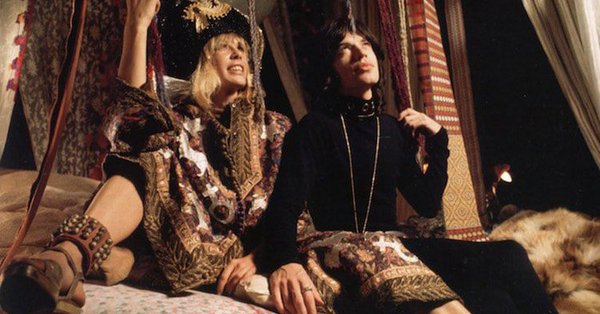 From the film "Performance"
Here is my piece on the legendary and always fascinating the late Christopher Gibbs. Read it here:
https://pleasekillme.com/mick-jagger-christopher-gibbs/?utm_source=PKM+Newsletter&utm_campaign=4cb4119012-PKM_Weekly_Newsletter_8_10_18&utm_medium=email&utm_term=0_4491fdd1df-4cb4119012-261917027&mc_cid=4cb4119012&mc_eid=f9f7b6687e


August 9, 2018
"The Beat Scene" Photographs by Burt Glinn, Essay by Jack Kerouac (Reel Art Press)
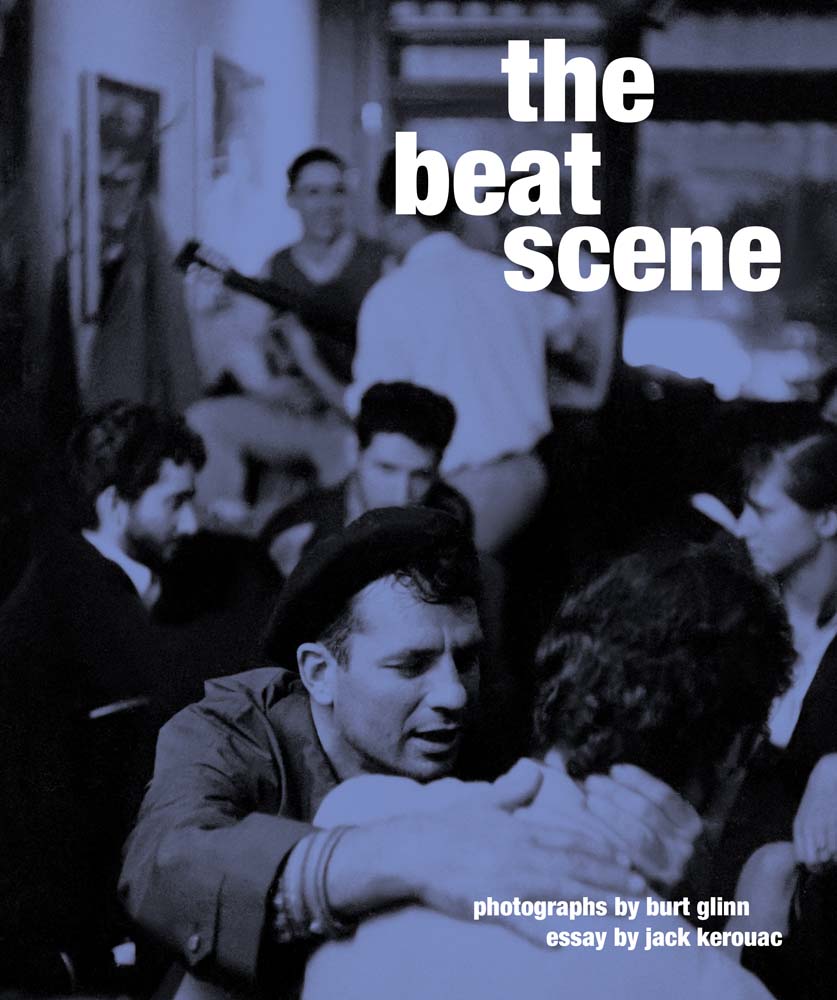 ISBN: 978-1-909526-26-6A remarkable time machine of going back to the late 1950s to observe 'The Beat Scene' as it happened. Burt Glinn was a classic photojournalist of the classic Life/Look/Esquire years. Reel Art Press (RAP) not long ago put out a book of images by Glinn of the first day Castro obtained power in Cuba. The images were raw but beautifully framed by Glinn's eye and his skill as a cameraman. There are many images of the Beats in New York and San Francisco, but the big difference from someone like Charles Brittin and Glinn is that Brittin was an intimate friend of his subject matters. I feel Glinn was there as an assignment, and then moved on to another exciting location after the job was done. Therefore these images of this generation were put in storage for over 50 years.
 Which actually gives an interesting texture or layer in his observations of the Beats. He wrote the captions as well as these photographs, and it is geared toward the reader or viewer who knows nothing of this world but heard about it through the mainstream media. And Glinn represented the mainstream world looking into the bohemian world. Most images I have seen of The Beats either came from my father (Wallace Berman), Charles Brittin or Fred W. McDarrah in New York City. The poet Allen Ginsberg is another great photographer who documented his social/work world as well. But Glinn's work has a journalistic distance from his subject matter, and one can easily imagine these images being in LIFE Magazine in the late 1950s.
The Beats generally don't have a high trust in the mainstream media world for many good reasons. Exploitation is the most obvious reason, but Glinn also captures the inner glamor of such young people doing fun things. Who doesn't want to go to a painter's party, or to a bar to hear poetry/jazz, and drink red wine? Glinn's work is there to document a moment for the mainstream masses, which doesn't mean the photographs are not accurate, but still, there is a Hollywood cinematic touch to the color which makes the images very contemporary. Glinn was a fantastic photographer, but in a very classical sense of picture and subject together. There is no doubt that everyone in the Beat movement was extraordinarily handsome or beautiful. Even it's children, such as page 142, is at the very least, cute.
Jack Kerouac's intro text is fantastic regarding an average night out in Beat-dom. For those who even have the slightest interest in the counter-culture or the Beats should look at this book page-by-page. An important document.
August 2, 2018
Blurbs and Advanced Notices for "Tosh: Growing Up in Wallace Berman's World" by Tosh Berman

Praise for Tosh:"Tosh Berman's sweet and affecting memoir provides an intimate glimpse of his father, Wallace, and the exciting, seat-of-the-pants LA art scene of the 1960s, and it also speaks to the hearts of current and former lonely teenagers everywhere."—Luc Sante, author of The Other Paris
"As the son of artist Wallace Berman, Tosh Berman had a front row seat for the beat parade of the '50s, and the hippie extravaganza of the '60s. It was an exotic, star-studded childhood, but having groovy parents doesn't insulate one from the challenge of forging one's own identity in the world. Berman's successful effort to do that provides the heart and soul of this movingly candid chronicle of growing up bohemian."—Kristine McKenna, co-author of Room to Dream by David Lynch
"This book is sublime: vertiginous, melancholy, highly amusing!"—Johan Kugelberg, Boo-Hooray
"One could not wish for a better guide into the subterranean and bohemian worlds of the California art/Beat scene than Tosh Berman, only scion of the great Wallace. Tosh has a sly wit and an informed eye, he is both erudite and neurotic, and often hilarious. TOSH, the book, is packed with keen observations and unique anecdotal factoids that could only come from a true insider. It's a must for anyone who cares about California counter-culture and the raggedy-ass drumbeat of the Beat Generation."—John Taylor, Duran Duran
"I first met Tosh Berman when he was assigned to sit next to me in 5th grade. We rode the Topanga school bus together for many years and even drove with each other to our high school graduation. But the overlap doesn’t end there. Our parents frequented many of the same movie theaters, clubs, and galleries. Neither of our mother’s drove, either. Both of our families had the celebrities of the day passing through our houses. I witnessed much of what Tosh saw and writes about, and I can say that TOSH: Growing up in Wallace Berman’s World captures the times, places, and people with accuracy, sensitivity, humor, and, at times, great sadness. This is a beautifully written memoir, and I highly recommend it to those who are interested in the Sixties, Topanga Canyon, the Southern California art scene, and for those who wonder what it might mean to grow up as the son of one of our most acclaimed artists."—Lisa See, author of The Tea Girl of Hummingbird Lane
"Tosh Berman paints an intimate and heartfelt portrait of growing up within the quirky West Coast counterculture of the 1950-70s. At the center of the tale is his dedicated and passionate artist father, Wallace Berman, who introduces his son to a bizarre collection of artists, crooks, cowboys, beatniks, hippies, freaks, filmmakers, musicians, mystics, and assorted weirdos. Including hilarious personal stories about Dean Stockwell, Dennis Hopper, Allen Ginsberg, Cameron, Ramblin' Jack Elliott, Michael McClure, Robert Duncan, George Herms, Leslie Caron, William Burroughs, Andy Warhol, Russ Tamblyn, Lenny Bruce, Phil Spector, Brian Jones, Alexander Trocchi, John Cage, and many many more, TOSH, is a delightfully entertaining memoir filled with sly wit and a profound personal perspective."—John Zorn, composer"There's the life—and then there's the life. With TOSH you can have both. My life, and that of many who sailed with me, was formed by the 40's & 50's. TOSH takes you there. Feel the fabric, touch the canvas of all that informed us. Embrace it and move forward."—Andrew Loog Oldham, producer/manager, The Rolling Stones"This double narrative of Tosh Berman and his father, Wallace, will tell you more about the creative process than a hundred how-to books purporting to do the same. Joyous and unselfconsciously readable, it celebrates the delights of surprise and observation on every page, as well as, yes—the confidence that things will somehow land upright."—Jim Krusoe, author of The Sleep Garden
"Reading TOSH is like meeting your idols, one at a time, for a quiet chat. Everyone is disarmed, and it feels like you’ve been in the same room with them for about ten hours, or so. Dennis Hopper is unconstrained and friendly, Toni Basil is bubbly, and Brian Jones has just stopped by to say hello. Topanga, as a place is remote—filled with pockets of escapism, winding landscapes of tumult and ennui. Tosh’s world is both expansive and crystalline, he traces the edges of his world, and Wallace’s world. We get to come and go with Tosh as he navigates his place in and around the tangle of the time."—Soo Kim, artist, Professor at Otis College of Art and Design
August 1, 2018
FROM THE THIRD EYE The Evergreen Review Film Reader Ed Halter & Barney R...
FROM THE THIRD EYE The Evergreen Review Film Reader Ed Halter & Barney Rosset on Tosh Talks
The Evergreen Review was an off-shoot publication/ journal of the Grove Press, edited by the legendary publisher Barney Rosset. When I went to used bookstores, it wasn't hard to find old issues of the Evergreen Review. What strikes my fancy is that reading the review in the late 1960s is so different than reading it in the 21st century. Even the stylish prose of that period is so 1968 and almost dated in a beautiful manner. Languages do change, and it's interesting to pick up a book or especially a magazine from a specific decade or time and notice how the style has changed. "From The Third Eye" is a collection of articles and even ads from The Evergreen Review that focused on the film culture of that period. For me, the most important film magazine of that era was Jonas Mekas' "Film Culture," which he published through the Filmmaker's Co-op and Film Anthology. Evergreen Review, although they did essays and reporting of either film, filmmakers, and film festivals, at its heart was a literary magazine. The publication was set-up as a promotional tool for Grove Press, but also here, for Grove Films, which distributed and produced European films, and actually help made/presented works by Jean-Luc Godard, and writers/filmmakers Marguerite Duras and Alain Robbe-Grillet, which by the way, are all interviewed for the magazine as well as being in the book.
Without a doubt, a perfect snapshot of the concerns of underground or radical cinema, but also the politics of the Vietnam world, and the counterculture that was lurking in Manhattan at the time. Nat Hentoff, Norman Mailer, Parker Tyler, and Amos Vogel are the writers that comment on cinema, but the featured filmmakers are Andy Warhol, Pier Paolo Pasolini, Ousmane Sembène, Duras, Robbe-Grille and William Klein. Also two pieces on Dennis Hopper, one on "Easy Rider," and the other focusing on the making of his "The Last Movie."
Throughout the book there are the original ads that were placed in the magazine, all either focusing on film scripts published by Grove, or film ads distributed by Evergreen/Grove. In a sense, it was a small world, but everyone in that world was an essential figure for culture and the arts. And here at that time, politics was very much part of the creative cultural world. A fascinating document and a fun trip back in time, when things were lively. - Tosh Berman, your host of "Tosh Talks"
July 30, 2018
"Wishes" by Georges Perec; Translated by Mara Cologne Whyte-Hall (Wakefield Press)
 ISBN: 978-1-939663-33-7
Homophonic wordplay is language that plays with the rooted word or expression. The meaning is both what one hears of that word, as well as the spelling and presence of that word. There was no one on this planet like Georges Perec. This late author is perhaps the most playful prose artist to use language. Every year, up to his death, Perec would make and print out a little book to give out to friends, that consist of these homophonic wordplays, that in turn become little narratives or at the very least a joke. Even a bad corny joke!
"Wishes" is a compilation of these homophonic works, that are funny, profound, or just plain surrealistically silly. What I have to imagine is a hellish ride into the French language for a translator, is an enjoyable read into another culture's think pattern. Perec's work overall is always humorous, but there is also another side where he is focused on language and all of its limitations, poetry, expression, and sensuality through its textural meanings that seem endless. A perfect book for a writer, or one who loves to write - because one is thinking of language as they write, and surely Georges Perec is the master who kicked the door open for us to wander in its maze.
July 27, 2018
Modernists and Mavericks by Martin Gayford on Tosh Talks
Martin Gayford, the author of "Modernists and Mavericks," is a terrific writer on the arts, and this book is the obvious and organic meeting of author and its subject - The London artists of the post-war years. For one, Gayford knows David Hockney and Lucian Freud, and he also interviewed all the living artists that are in this book. It's not a book of gossip, but a survey approach to artists who worked in London from the end of World War II to the early 1970s.
I became familiar with some of these artists through the art collection of the late David Bowie. When the family auction off his works, I did go see paintings by Frank Auerbach, David Bomberg, and others of that world. What's interesting is that these artists worked in London, a city that was on the surface, destroyed by the ravages of bombings and the war, yet, it became a visual playground for the great post-war painters. Freud always worked with a model in front of him, in his studio, Auerbach worked in the same format using the same model painting after painting, and Bacon's world was basically Soho London and its citizens. So, the world of the London painter was a small one, but a very intense series of moments, months, and years working on their art. As well as having sex, drinking and socializing within their world.
Gayford captures the London painters in a moment where they did talk about their fields of interest, which was painting, but also I didn't realize that there was a sizable female presence in the painting world as well, regarding Paula Rego, Bridget Riley, and others. Gayford brings up a lot of painters working in that era, who are not as famous as Hockney and company. I have been pretty much drawn to the medium of paint, due to its placement within a frame, and the texture of various colors and brushes. I like the communication between the artist's hand and what appears on their canvas. The importance is not that these artists all lived and worked in London, but their ability to transform their space, time, and presence in such a location that was limited at the time. Across the pond was New York City, and beyond that, for Hockney Los Angeles, still the majority of the London Painters stayed at home and reflected on their world with high intensity and feeling. "Modernists and Mavericks" is a very solid art history book, with some excellent paintings within its pages. I enjoyed Gayford's book immensely.
July 26, 2018
"From The Third Eye: The Evergreen Review Film Reader" Edited by Ed Halter & Barney Rosset (Seven Stories Press)
 ISBN: 978-1-60980-615-6The Evergreen Review was an off-shoot publication/ journal of the Grove Press, edited by the legendary publisher Barney Rosset. When I went to used bookstores, it wasn't hard to find old issues of the Evergreen Review. What strikes my fancy is that reading the review in the late 1960s is so different than reading it in the 21st century. Even the stylish prose of that period is so 1968 and almost dated in a beautiful manner. Languages do change, and it's interesting to pick up a book or especially a magazine from a specific decade or time and notice how the style has changed. "From The Third Eye" is a collection of articles and even ads from The Evergreen Review that focused on the film culture of that period. For me, the most important film magazine of that era was Jonas Mekas' "Film Culture," which he published through the Filmmaker's Co-op and Film Anthology. Evergreen Review, although they did essays and reporting of either film, filmmakers, and film festivals, at its heart was a literary magazine. The publication was set-up as a promotional tool for Grove Press, but also here, for Grove Films, which distributed and produced European films, and actually help made/presented works by Jean-Luc Godard, and writers/filmmakers Marguerite Duras and Alain Robbe-Grillet, which by the way, are all interviewed for the magazine as well as being in the book.
 Without a doubt, a perfect snapshot of the concerns of underground or radical cinema, but also the politics of the Vietnam world, and the counterculture that was lurking in Manhattan at the time. Nat Hentoff, Norman Mailer, Parker Tyler, and Amos Vogel are the writers that comment on cinema, but the featured filmmakers are Andy Warhol, Pier Paolo Pasolini, Ousmane Sembène, Duras, Robbe-Grille and William Klein. Also two pieces on Dennis Hopper, one on "Easy Rider," and the other focusing on the making of his "The Last Movie."
Throughout the book there are the original ads that were placed in the magazine, all either focusing on film scripts published by Grove, or film ads distributed by Evergreen/Grove. In a sense, it was a small world, but everyone in that world was an essential figure for culture and the arts. And here at that time, politics was very much part of the creative cultural world. A fascinating document and a fun trip back in time, when things were lively.
July 16, 2018
"Modernists & Mavericks: Bacon, Freud, Hockney & The London Painters" by Martin Gayford (Thames & Hudson)
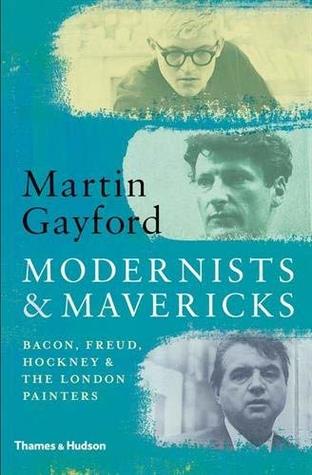
Martin Gayford, the author of "Modernists and Mavericks," is a terrific writer on the arts, and this book is the obvious and organic meeting of author and its subject - The London artists of the post-war years. For one, Gayford knows David Hockney and Lucian Freud, and he also interviewed all the living artists that are in this book. It's not a book of gossip, but a survey approach to artists who worked in London from the end of World War II to the early 1970s.
I became familiar with some of these artists through the art collection of the late David Bowie. When the family auction off his works, I did go see paintings by Frank Auerbach, David Bomberg, and others of that world. What's interesting is that these artists worked in London, a city that was on the surface, destroyed by the ravages of bombings and the war, yet, it became a visual playground for the great post-war painters. Freud always worked with a model in front of him, in his studio, Auerbach worked in the same format using the same model painting after painting, and Bacon's world was basically Soho London and its citizens. So, the world of the London painter was a small one, but a very intense series of moments, months, and years working on their art. As well as having sex, drinking and socializing within their world.
Gayford captures the London painters in a moment where they did talk about their fields of interest, which was painting, but also I didn't realize that there was a sizable female presence in the painting world as well, regarding Paula Rego, Bridget Riley, and others. Gayford brings up a lot of painters working in that era, who are not as famous as Hockney and company. I have been pretty much drawn to the medium of paint, due to its placement within a frame, and the texture of various colors and brushes. I like the communication between the artist's hand and what appears on their canvas. The importance is not that these artists all lived and worked in London, but their ability to transform their space, time, and presence in such a location that was limited at the time. Across the pond was New York City, and beyond that, for Hockney Los Angeles, still the majority of the London Painters stayed at home and reflected on their world with high intensity and feeling. "Modernists and Mavericks" is a very solid art history book, with some excellent paintings within its pages. I enjoyed Gayford's book immensely.
July 4, 2018
"Wine, Women, and Words" by Billy Rose

As a reader and a writer, I'm very much influenced by authors from the golden era of New York Manhattan. Robert Benchley is my top favorite, but then I like other writers such as James Thurber and Dorothy Parker as well. It isn't their subject matter, or even their love for Manhattan life, but more to the fact that they had to produce a certain amount of words per month or day, and usually, they have to be funny, or at least amusing. In 2014, for my blog, I wrote a story a day, and I loved the discipline and the ability to do something like that. To be honest, I could care less if the story was good, I was just happy I did it. For the historical record, I do love those pieces. So, with that in mind, and again, especially Benchley, I use him and others as a role model to study their sentence structures, and how to tell a joke. The joke part I'm not good at, and only readers and critics can decide if my work is worth merit or not. Still, I found this fascinating and cheap paperback from the late 1940s by Billy Rose, called "Wine, Women, and Words."
Rose was a very successful Broadway producer of spectacular shows and musicals. He was also a songwriter of some note, writing the lyrics to Me and My Shadow," "Great Day" (with Edward Eliscu), "Does the Spearmint Lose Its Flavor on the Bedpost Overnight" (with Marty Bloom), "I Found a Million Dollar Baby" (with Mort Dixon) and "It's Only a Paper Moon." Some observed that he may have been there when these songs were written, and his real talent is selling the song. Nevertheless, a classic Broadway hustler. What is not known about him in detail is that he also wrote for a newspaper column, and "Wine, Women, and Words" are a collection of these writings, mostly from the late 1940s. He was at the time a total success and very wealthy man, so I suspect he didn't need to write for money but did it because he's a very talented prose stylist. I always believed a true writer has to write, no matter what.
Not everything he wrote was gold, but sometimes an excellent bronze piece. He had a genius for capturing a character, which was plenty in Manhattan in those days, and I admire his stance and sense of history about the location (Broadway) and his egotism, which is not off-putting. Throughout the book, he writes about his wife Eleanor Holm, who seemed to be a character of great wit and interest as well. Reading about her after reading this book, I was a tad depressed that they had a costly divorce. Still, I think for a writer who writes a column, and for a showbiz figure, life is lived by the moment. And usually, they use that moment for their work. It's a nice payoff.
"The Detroit News" by Tosh Berman (Detroit)
I’m living in a house that was built in 1899. It’s huge. I don’t know what makes a home a mansion, but I feel that I’m living in one. A house that old always has secrets within its walls, attic, and basement. I suspect that this house was built by the Ford company for its executives. It has two staircases. One for the family/owner of the residence, and the other for the servants. The servant's staircase is small, steep, and one can easily hit their head on the ceiling as you go down or up. The other is grand and very inviting, as the other one seems like a pathway to a dark place. Every old home has a dark path from one questionable area to another. Or, more likely a path from lightness to dark.
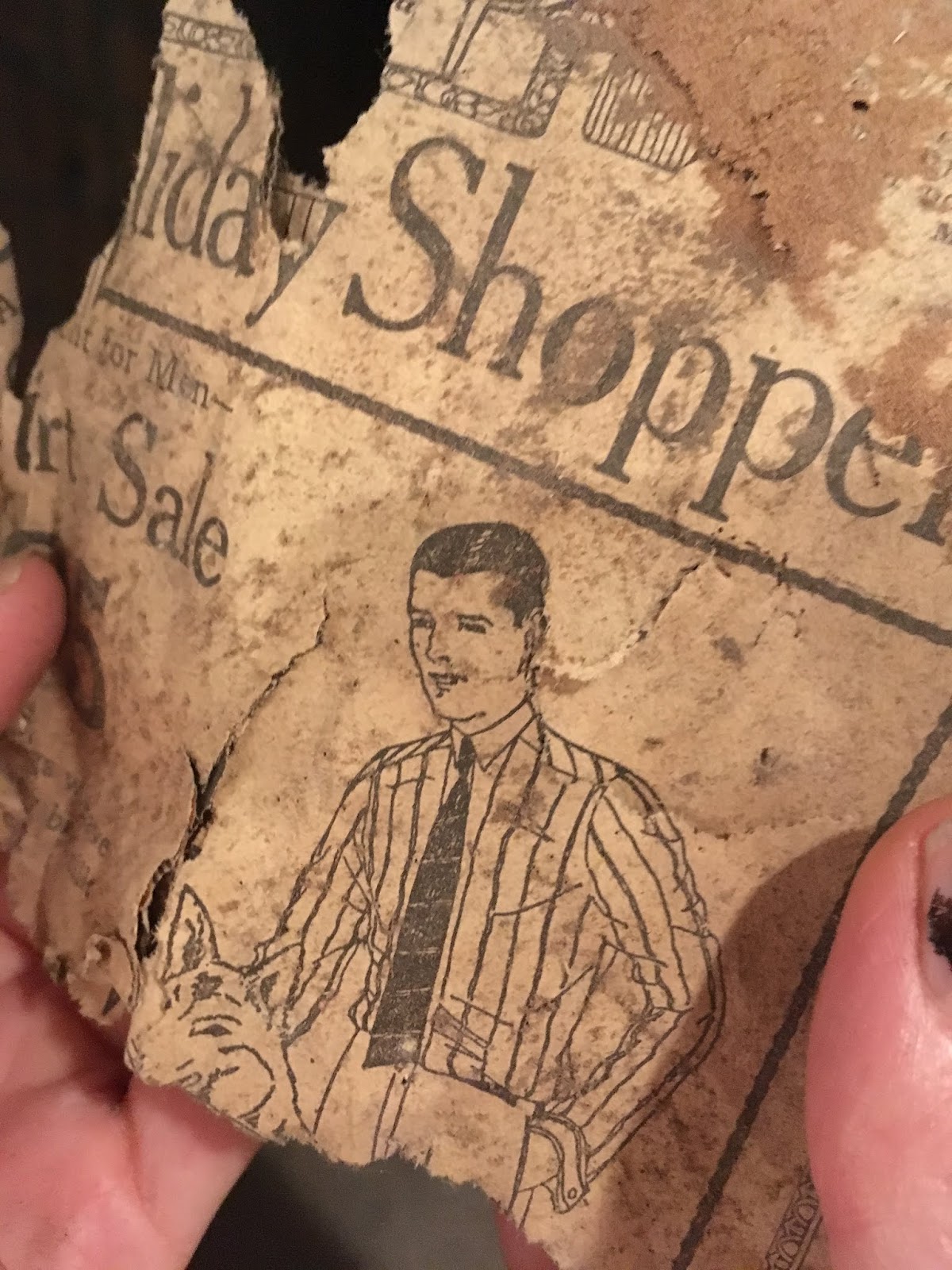
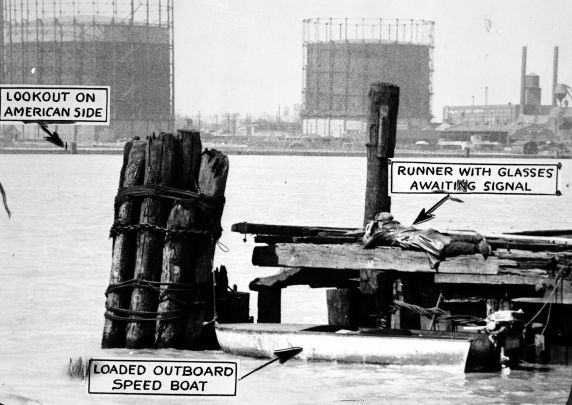
Upstairs being the lightness. Perhaps closer to the sky and its stars. As you wander down the stairs (especially the servant’s entrance), you then turn a slight left, which will lead one to the basement. It’s here that one evening I found torn and frayed copy of “The Detroit News” from June 29, 1947. It was near an old bottle of bootleg alcohol that for sure, came from the Canada side. I never removed it, because I felt it was a grave site. Perhaps not a human one, but a grave for a life spent, and I still think the spirit is in this house.
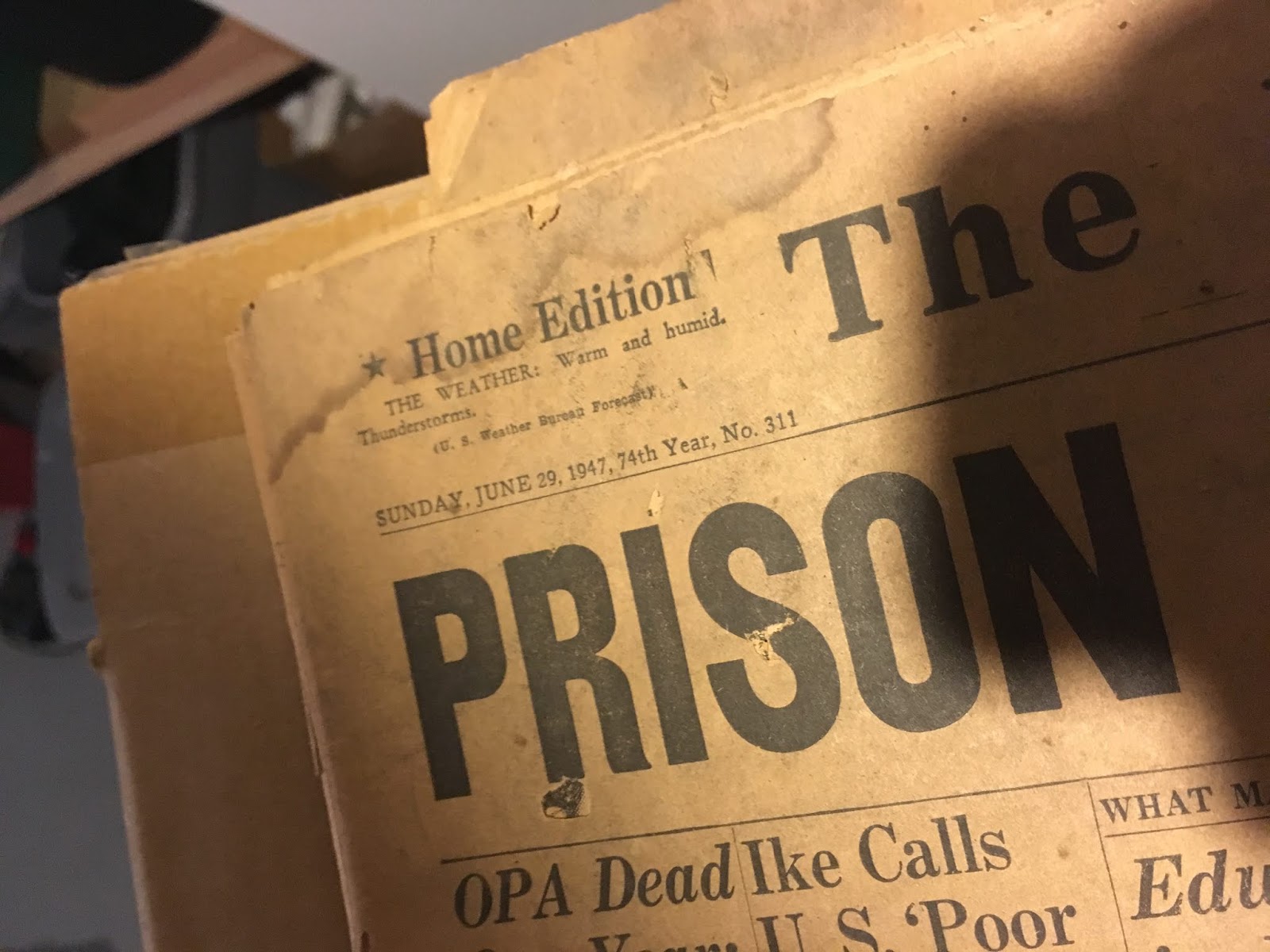
The reason why I drink starting at 7pm every evening is that I feel the basement calling on me, to return to a tradition that stuck its tongue out to the old bitches and bastards who tell us what to do. I don’t want to be told what to do, except by that old magic that is bottled up and sent over in a boat across the river from Canada to my mouth. I never wanted to remove the newspaper, maybe because I feel if I touch it, it will turn to dust, or feel it’s not respectful to remove such an item placed in one’s (not mine) basement. But I did remove the paper due that an article caught my eye.
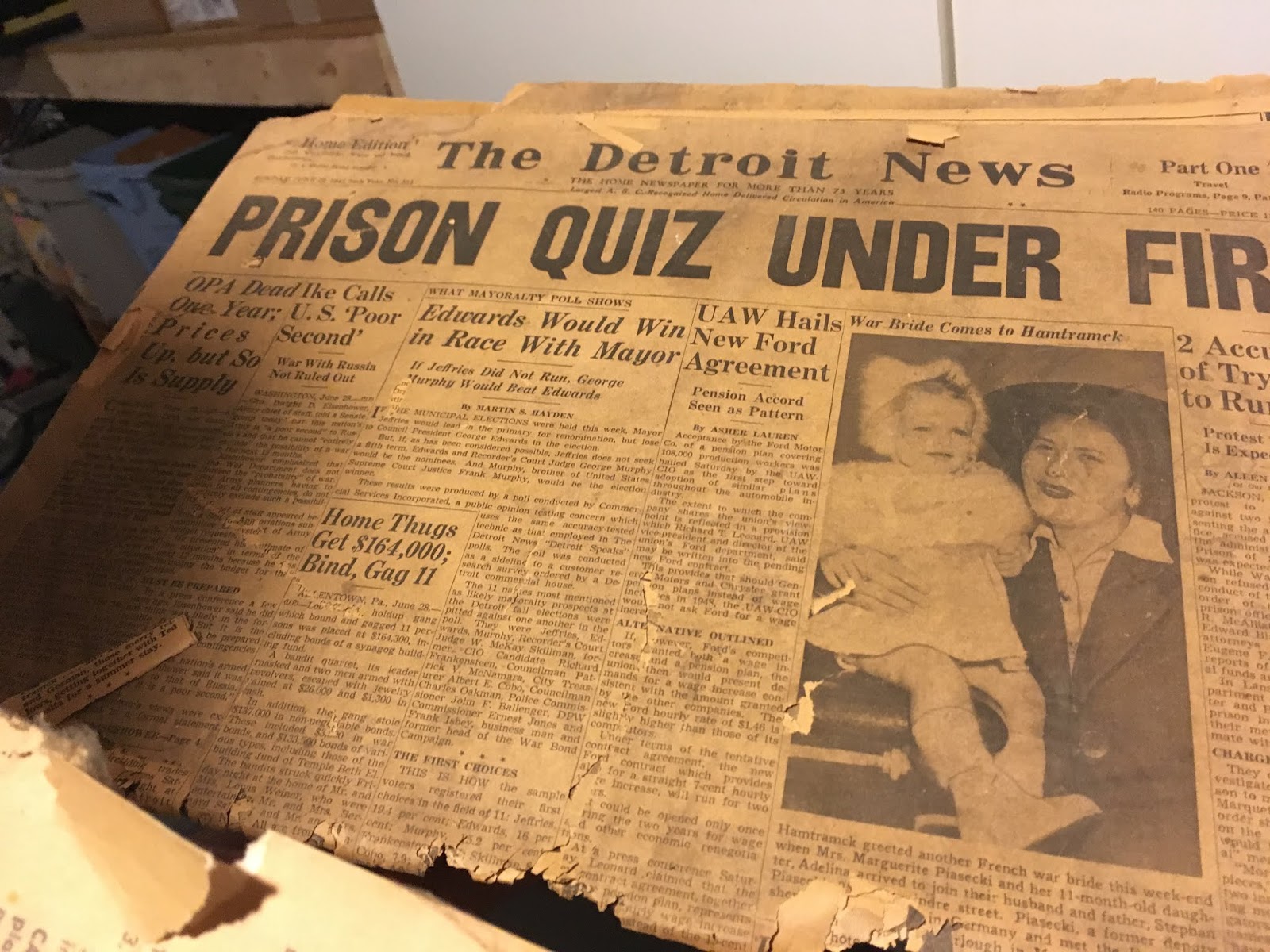
The headline “Home Thugs Get $164,000; Bind, Gag 11” got my attention, and as I started reading the article, it struck me the address of the robbery is where I’m living now. It seems the house once belonging to, or at least he was the tenant, a Lewis Weiner, who had a party to raise money for a synagog building fund. It was a quartet of thieves, and they all wore masks and had revolvers. None were hurt, thank god, but the funny thing is that I notice the date of this newspaper item is June 24, which was the date that I discovered this newspaper in the basement.

The Purple Gang pretty much controlled Detroit with an iron fist, and wasn’t shy in bashing someone’s head in, if the need was there. There was a theory that Weiner was part of the Purple Gang, and an off-shoot gang did the robbery to move into the Purple Gang’s territory. Still, my mood is wearing a blanket of darkness, and the only bright spot in the day is when I start drinking.

The Purple Gang used to smuggle booze from Canada to Detroit, and then elsewhere if there was any extra juice after the Detroit citizens finished their supply. The liquor stores here in the Detroit area are called “Party Stores,” but most close by 9:00 PM. I buy cases of booze and place them in the basement, exactly where I found the old bottles. I feel it’s a tradition of great importance, both for the house and yours truly. To the Purple Gang, and all those who failed the American dream in their fashion on this day of despair, July 4th. - Tosh Berman, Detroit.


