
Helena Halme's Blog, page 42
April 7, 2013
A-Z Blogging Challenge: G if for Genre
My theme: Writing and the Business of Writing
Before I started taking my writing seriously, I was almost allergic to the word genre. For one it just seemed so pretentious somehow; it was a word used by Melvyn Bragg on the South Bank Show, not a word an ordinary person who loves books would ever utter. I mean, how often do you go into a bookshop and say, 'The genre I'm particularly interested in is…' OK, as a former bookseller, I know there are people who'd say just that, but I hope you know what I mean?
During my MA in Creative Writing, however, I became aware that genre was something I needed to take seriously. During my first tutorial, I was asked what my genre is. The tutor must have noticed my panic because she said, 'Who's the writer you most love and wish to emulate?'
At the time I was obsessed with Ian McEwan and William Boyd. The tutor gave a lopsided grin. 'Ah, literary fiction.' I was glad I'd at last found what my aspirational genre was, but was a little puzzled by the tutor's reaction.
It was much, much later when I discovered, that:
a) Literary fiction is the most respected and high-brow of any literary genre
b) It's the most difficult genre
c) It's a genre you have to earn like a badge of honour
d) All authors considered part of this literary fiction genre were at the time (and still largely are) men. (More about women v men in the publishing industry under another letter).
I have since written several books which, if you ignore the literary fiction genre, could be classed as:
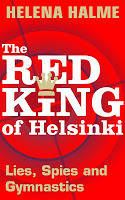
1. Romance (The Englishman) 2. Family saga (Coffee and Vodka)3. Spy thriller (The Red King of Helsinki)
To have written books in several genres poses many problems for a writer (unless you're of the William Boyd or Ian McEwan ilk, when whatever you write is literary fiction).
First of all, if you do wish to seek representation with an agent, he or she will want to know your writing genre. Same with a publisher.
It's also universally acknowledged that readers prefer authors to keep to one genre only. Readers, according to the publishing industry gurus, want to read the same book (only slightly modified) over and over again. I would strongly refute this, but at the same time, anyone who knows anything about marketing knows that, while building a brand, it's difficult to sell products which fall into totally different categories.
So, with all this in mind, the next big question I should ask myself is not which of the 3 or 4 half-finished manuscripts I should complete, but which of the above three genres I should concentrate on?
And you thought all a writer needs to do is put pen to paper…
Before I started taking my writing seriously, I was almost allergic to the word genre. For one it just seemed so pretentious somehow; it was a word used by Melvyn Bragg on the South Bank Show, not a word an ordinary person who loves books would ever utter. I mean, how often do you go into a bookshop and say, 'The genre I'm particularly interested in is…' OK, as a former bookseller, I know there are people who'd say just that, but I hope you know what I mean?
During my MA in Creative Writing, however, I became aware that genre was something I needed to take seriously. During my first tutorial, I was asked what my genre is. The tutor must have noticed my panic because she said, 'Who's the writer you most love and wish to emulate?'
At the time I was obsessed with Ian McEwan and William Boyd. The tutor gave a lopsided grin. 'Ah, literary fiction.' I was glad I'd at last found what my aspirational genre was, but was a little puzzled by the tutor's reaction.
It was much, much later when I discovered, that:
a) Literary fiction is the most respected and high-brow of any literary genre
b) It's the most difficult genre
c) It's a genre you have to earn like a badge of honour
d) All authors considered part of this literary fiction genre were at the time (and still largely are) men. (More about women v men in the publishing industry under another letter).
I have since written several books which, if you ignore the literary fiction genre, could be classed as:
1. Romance (The Englishman) 2. Family saga (Coffee and Vodka)3. Spy thriller (The Red King of Helsinki)
To have written books in several genres poses many problems for a writer (unless you're of the William Boyd or Ian McEwan ilk, when whatever you write is literary fiction).
First of all, if you do wish to seek representation with an agent, he or she will want to know your writing genre. Same with a publisher.
It's also universally acknowledged that readers prefer authors to keep to one genre only. Readers, according to the publishing industry gurus, want to read the same book (only slightly modified) over and over again. I would strongly refute this, but at the same time, anyone who knows anything about marketing knows that, while building a brand, it's difficult to sell products which fall into totally different categories.
So, with all this in mind, the next big question I should ask myself is not which of the 3 or 4 half-finished manuscripts I should complete, but which of the above three genres I should concentrate on?
And you thought all a writer needs to do is put pen to paper…


April 6, 2013
A-Z Blogging Challenge: E is for The Englishman and F is for Freebies
My theme: Writing and the Business of Writing
Free Books
Many people when they hear that I am putting my e-books on a free promotion look at me puzzlingly, ' Really?'
Why, they ask, after spending up to two years writing, editing and formatting a book, do I want to give it away free? When as I mentioned in my Creativity versus Cash post, even us writers need to eat?
There are many reasons.
Firstly, the more people read your words the better. As with the blog (which after all is the same: ie giving your work away free) the more readers you have, the bigger your writer platform. And a big platform means more book sales, eventually.
Or so the theory goes.
Here's what my experiences have been so far.
The Englishman
I've just finished a second free promotion of my e-book, The Englishman, and once again had a good response. It's exciting; I love getting new readers, the more people read my story, the better.
The Englishman - as those of you who've followed my blog for some time know - became a book after I started telling the story of my life here on my blog. The first draft of the book was fairly quick - it took about 6 months to write. At the end of it, however, what I had was just a set of blog posts, not a novel. The editing process took best part of eighteen months. I really struggled with the format. Should I keep it as a memoir, even though the story had already veered into the fiction side? Or should I take it into a fully fledged novel? What I first produced, about a year ago now, was a first person hybrid, which I sent to a few of my biggest fans (including Liberty London Girl and Mrs Trefusis). All were influential people in their fields, so I thought their advice would be invaluable. I knew I was lucky to have such people taking an interest in my writing.
All the good advice pointed in one direction - to make the blog posts into a 'Will they, won't they' love story, ie a traditional novel. So I changed the point of view (more on POV, my pet love/hate in the P post of this challenge) from first person to third person, and added about 20,000 words. After a few more final edits, it was time to send it to a professional editor, and in August 2012 I eventually let The Englishman loose on the world.
When the novel came out, the first sales figures where very promising. I also had several incredibly fabulous reviews, and many of my blogging friends hosted me and the book on their websites. The Englishman was featured on The N10 Show and the book was even recommended as a good read on the Alliance of Independent Writers web site. Accolade indeed!
But by October sales had started to flag a little, so I decided that, to keep up interest in the book, the best thing would be to make The Englishman free for a period. And I have to say the results were staggering. Overnight, during the first 24 hours of the promotion, over 600 copies were downloaded. During the whole promotion I 'sold' over 1,000 copies. That, I've been told is not a bad figure for a first novel in any genre or format.
But, and this is a big but against giving your books away free.
After The Englishman's success, I decided to publish my other two books, Coffee and Vodka and The Red King of Helsinki also as e-books, and at the same time, do another free promotion for the backlist novel. But now the free promo is over, some of my readers are asking me when (not if) the other two will be free…
This is very flattering, it is truly wonderful for a writer who has struggled for years to have any readers at all, to be asked when your work is available (albeit free).
But at the same time I wonder if I've created a reader expectation that all of my work will forever be free? Have I completely destroyed any hope of ever making money (read: breaking even) with my writing?
I do hope not, because as I mentioned before, I too need to eat.
Author exits stage right.
Free Books
Many people when they hear that I am putting my e-books on a free promotion look at me puzzlingly, ' Really?'
Why, they ask, after spending up to two years writing, editing and formatting a book, do I want to give it away free? When as I mentioned in my Creativity versus Cash post, even us writers need to eat?
There are many reasons.
Firstly, the more people read your words the better. As with the blog (which after all is the same: ie giving your work away free) the more readers you have, the bigger your writer platform. And a big platform means more book sales, eventually.
Or so the theory goes.
Here's what my experiences have been so far.
The Englishman
I've just finished a second free promotion of my e-book, The Englishman, and once again had a good response. It's exciting; I love getting new readers, the more people read my story, the better.
The Englishman - as those of you who've followed my blog for some time know - became a book after I started telling the story of my life here on my blog. The first draft of the book was fairly quick - it took about 6 months to write. At the end of it, however, what I had was just a set of blog posts, not a novel. The editing process took best part of eighteen months. I really struggled with the format. Should I keep it as a memoir, even though the story had already veered into the fiction side? Or should I take it into a fully fledged novel? What I first produced, about a year ago now, was a first person hybrid, which I sent to a few of my biggest fans (including Liberty London Girl and Mrs Trefusis). All were influential people in their fields, so I thought their advice would be invaluable. I knew I was lucky to have such people taking an interest in my writing.
All the good advice pointed in one direction - to make the blog posts into a 'Will they, won't they' love story, ie a traditional novel. So I changed the point of view (more on POV, my pet love/hate in the P post of this challenge) from first person to third person, and added about 20,000 words. After a few more final edits, it was time to send it to a professional editor, and in August 2012 I eventually let The Englishman loose on the world.
When the novel came out, the first sales figures where very promising. I also had several incredibly fabulous reviews, and many of my blogging friends hosted me and the book on their websites. The Englishman was featured on The N10 Show and the book was even recommended as a good read on the Alliance of Independent Writers web site. Accolade indeed!
But by October sales had started to flag a little, so I decided that, to keep up interest in the book, the best thing would be to make The Englishman free for a period. And I have to say the results were staggering. Overnight, during the first 24 hours of the promotion, over 600 copies were downloaded. During the whole promotion I 'sold' over 1,000 copies. That, I've been told is not a bad figure for a first novel in any genre or format.
But, and this is a big but against giving your books away free.
After The Englishman's success, I decided to publish my other two books, Coffee and Vodka and The Red King of Helsinki also as e-books, and at the same time, do another free promotion for the backlist novel. But now the free promo is over, some of my readers are asking me when (not if) the other two will be free…
This is very flattering, it is truly wonderful for a writer who has struggled for years to have any readers at all, to be asked when your work is available (albeit free).
But at the same time I wonder if I've created a reader expectation that all of my work will forever be free? Have I completely destroyed any hope of ever making money (read: breaking even) with my writing?
I do hope not, because as I mentioned before, I too need to eat.
Author exits stage right.
April 5, 2013
A-Z Blogging Challenge: D: is for Dialogue
My theme: Writing and the business of writing

[I know, I know it's 5th April today and I should be on E, but I'm running a day late…Yesterday, I couldn't get away from the office (yes, I have a day job), and in the evening I had promised to go to a members' viewing of Lichtenstein's Retrospective at Tate Modern with Daughter. By the time we were at home, the splitting head ache from which I'd suffered most of the day, got worse, so I'm afraid I abandoned any thoughts of the A-Z Blogging Challenge. (And did your dog also eat your homework, I hear you ask. Tsk!) I will catch up, I promise!]
Dialogue is a very important part of any work of fiction. It gives the reader a breathing space from block text and it can also give the story a funny, or sad, interlude.
Done well, it should highlight the peculiarities of your characters. So if your heroine is a self-absorbed woman, she may well talk too much; an Alpha male may just utter the occasional command. That's if your book is filled with caricatures, but you get the point?
Dialogue should take the plot forward, so it shouldn't repeat what's said in the text (unless this is a particular style of course - every rule should be broken and all that). This is something we all fall for at times. The sentence below is from my latest book, The Red King of Helsinki.
The Colonel gave him a set of car keys and told him where to find it, 'It's a moss green Opel Kadett parked in bay 229 in the car park underneath Erottaja. You know the air shelter?'
The highlighted words were removed by my editor with the comment, "We know he tells Iain where to find the car, because he does so in the next sentence." Doh!
There's nothing worse than dialogue that doesn't flow. Non-writers often think dialogue is something we writers pick up word for word on the tube or listening in to people's conversations in a cafe. This is partly true, however, most real conversations make very poor dialogue. Just try to write down all the words next time you're listening in on two or more people having a conversation. It's impossible because first of all there are too many Umms, Ahhs, Errs and Y'know's. There are too many repetitions and too much talking over one another. There are references to people and places you don't know. What writers do is modify, or fictionalise, what they overhear. We take away the repetitions, we add people, places and plot twists we have in the book, and we above all shorten the conversation.
And that's how good dialogue happens.
[I know, I know it's 5th April today and I should be on E, but I'm running a day late…Yesterday, I couldn't get away from the office (yes, I have a day job), and in the evening I had promised to go to a members' viewing of Lichtenstein's Retrospective at Tate Modern with Daughter. By the time we were at home, the splitting head ache from which I'd suffered most of the day, got worse, so I'm afraid I abandoned any thoughts of the A-Z Blogging Challenge. (And did your dog also eat your homework, I hear you ask. Tsk!) I will catch up, I promise!]
Dialogue is a very important part of any work of fiction. It gives the reader a breathing space from block text and it can also give the story a funny, or sad, interlude.
Done well, it should highlight the peculiarities of your characters. So if your heroine is a self-absorbed woman, she may well talk too much; an Alpha male may just utter the occasional command. That's if your book is filled with caricatures, but you get the point?
Dialogue should take the plot forward, so it shouldn't repeat what's said in the text (unless this is a particular style of course - every rule should be broken and all that). This is something we all fall for at times. The sentence below is from my latest book, The Red King of Helsinki.
The Colonel gave him a set of car keys and told him where to find it, 'It's a moss green Opel Kadett parked in bay 229 in the car park underneath Erottaja. You know the air shelter?'
The highlighted words were removed by my editor with the comment, "We know he tells Iain where to find the car, because he does so in the next sentence." Doh!
There's nothing worse than dialogue that doesn't flow. Non-writers often think dialogue is something we writers pick up word for word on the tube or listening in to people's conversations in a cafe. This is partly true, however, most real conversations make very poor dialogue. Just try to write down all the words next time you're listening in on two or more people having a conversation. It's impossible because first of all there are too many Umms, Ahhs, Errs and Y'know's. There are too many repetitions and too much talking over one another. There are references to people and places you don't know. What writers do is modify, or fictionalise, what they overhear. We take away the repetitions, we add people, places and plot twists we have in the book, and we above all shorten the conversation.
And that's how good dialogue happens.
April 3, 2013
A-Z Blogging Challenge: C is for Creativity versus Cash
My theme: Writing and the business of writing.
Creativity and the art of making money are often deemed complete opposites: creativity is pure and beautiful, whereas cash is dirty and ugly. How could these two things possibly be connected?
But even writers have to eat.
In fact, one could say artists are the ultimate self-employed businessmen (and women). There are few professions where you rely so much just on yourself, and your creativity, to provide food and shelter for yourself. (Or shoes and handbags)

Contrary to what the populist opinion of today may say, many artists are excellent at making money. More surprisingly it's often the lack of funds which spurs these artists on to make their art. Just look at my hero, Strindberg. As soon as he ran out of money (which he did frequently), he sat down and wrote another play. Apparently he didn't even like writing plays, but did it because plays were quicker to write than novels and they were easier to market. When even his plays wouldn't sell, he started painting oil canvases, which now fetch a pretty penny.
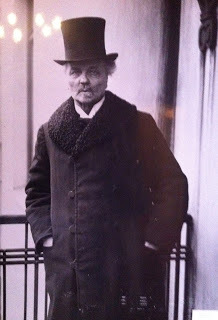 August Strindberg, the Swedish playwrightIt could therefor be said that without the need for cash there would be much less creativity. Discuss...
Creativity and the art of making money are often deemed complete opposites: creativity is pure and beautiful, whereas cash is dirty and ugly. How could these two things possibly be connected?
But even writers have to eat.
In fact, one could say artists are the ultimate self-employed businessmen (and women). There are few professions where you rely so much just on yourself, and your creativity, to provide food and shelter for yourself. (Or shoes and handbags)
Contrary to what the populist opinion of today may say, many artists are excellent at making money. More surprisingly it's often the lack of funds which spurs these artists on to make their art. Just look at my hero, Strindberg. As soon as he ran out of money (which he did frequently), he sat down and wrote another play. Apparently he didn't even like writing plays, but did it because plays were quicker to write than novels and they were easier to market. When even his plays wouldn't sell, he started painting oil canvases, which now fetch a pretty penny.
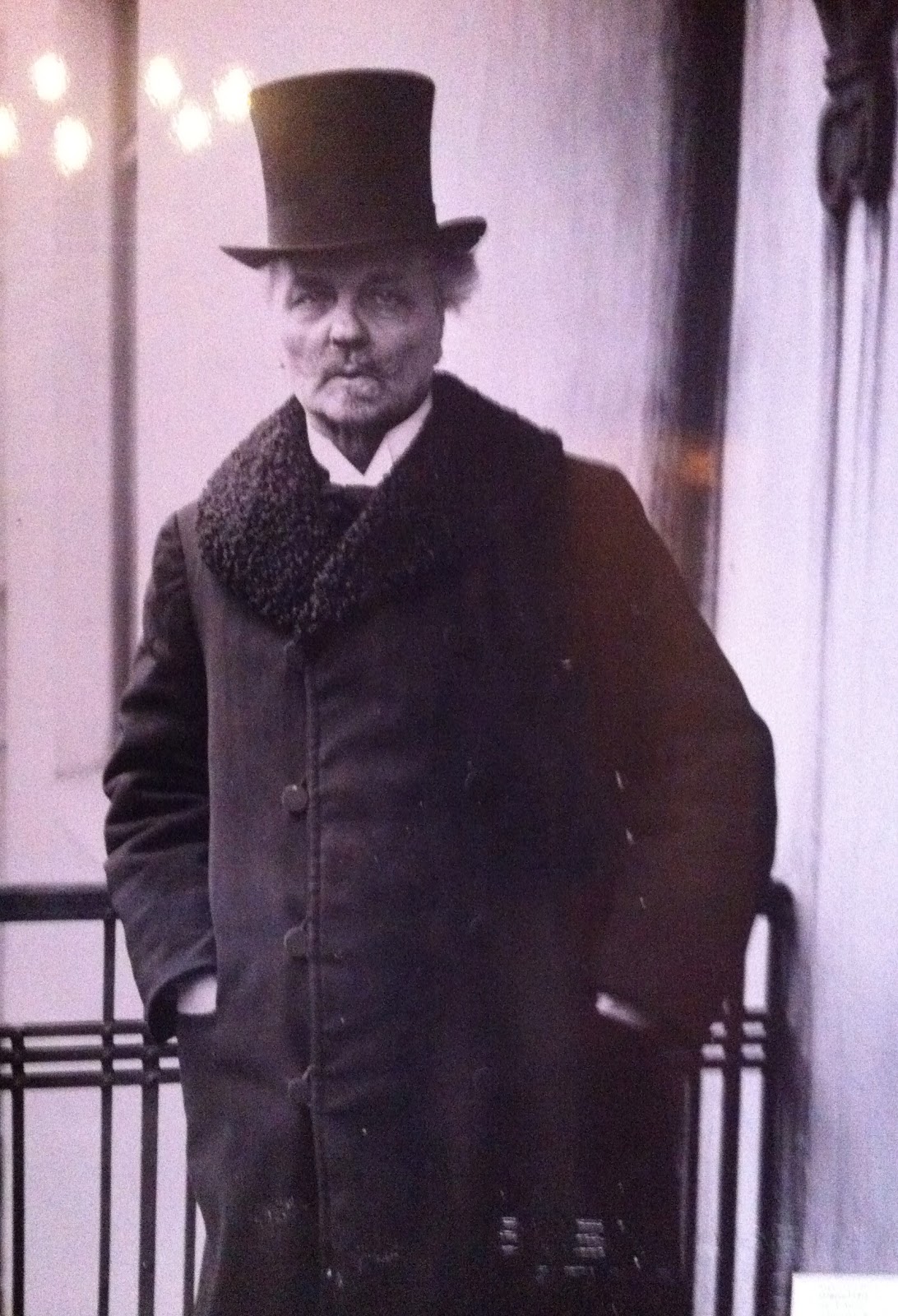 August Strindberg, the Swedish playwrightIt could therefor be said that without the need for cash there would be much less creativity. Discuss...
April 2, 2013
A-Z Blogging Challenge: B is for Blogging

Should writer's blog?
When I started blogging three years ago, I did it purely as an experiment and because I like writing, whether an article for a magazine, a blog or a novel.
I also knew that blogging can be a very good way for a writer to build a platform, to get your name out there. It can also provide a support network, and build friendships. If writing is your day job, it can be a very lonely profession.
Recently, however, many people in the blogosphere and even in the publishing industry, are doubting whether blogging is good for authors. Shouldn't a writer put all his or her energies into producing the thing they want to to produce, ie books, rather than blog posts?
I've noticed that there's also a school of thought where if you are a non-fiction writer, setting up and keeping an informative blog on your specialist subject is almost a must, whereas for fiction writers it might be more of a distraction to have to keep up blogging as well as 'proper' writing. There's an excellent recent blog post about this on Joanna Penn's blog, The Creative Penn.
Personally, I know I wouldn't be the writer I am today if it wasn't for this blog.
Firstly, my first published novel, The Englishman (which incidentally is on a short free promotion at the moment), was born out of a set of blog posts I started writing here (remember How I Came to be in England?).
Secondly, I've made numerous friends since I started blogging. These online readers and fellows writers have spurred me on in ways I could not have imagined before I started writing a blog. You guys gave me confidence to finish The Englishman , as well as to bring out my other two novels, Coffee and Vodka and The Red King of Helsinki .
Thirdly, I have learned a huge amount about publishing, book marketing, and - yes- writing through having this blog and reading other blogs.
Lastly, writing a blog has taught me discipline in writing. For instance this A-Z Challenge is just what the doctor ordered for me right now. With all of my completed books out, I literally need a kick up the preverbal to get me going on a sequel. (Not telling you which book will have a sequel yet…it'll be a surprise!)
So, for me as a writer, blogging is a must.
April 1, 2013
A-Z Blogging Challenge: A is for Agents
I've thought hard about what theme I should have for this, my first A-Z Blogging Challenge and decided that since all of my completed novels are now out, I should write about the business of writing and publishing.
A 'Guide to writing' or 'Helena's Writing Life', if you like.
Sooo, on this April Fools' Day, I am going to talk about Agents. (Seriously, not in jest, although the temptation is huge....)
When, a few years ago (hmm...try ten years - how time flies!) I took my MA in Creative Writing at Bath Spa University, (more about this on a later post under 'M'), it was a fact universally acknowledged that you could not be a proper writer, or a published writer, without having a Literary Agent. Getting accepted into the golden stable of an Agent, however, was harder than getting a publisher to publish your work. And most publishers wouldn't even consider your submission if you didn't have a literary agent on your side.
The job of the literary agent, we were told, was to sell your book to publishers. They would only take you on if they knew they could do this - or as it's called in the industry lingo, 'place your book'. I have lost count of the amount of agents who have told me in letters and emails that they like my writing ('I love your work', 'you have talent', 'you can write'), but that they just couldn't see where to place it. Of course there are several examples of famous writers who struggled to get and agent or a publisher, and went on to sell millions of copies when someone finally believed in their of work. (JK Rowling with Harry Potter and lately E L James with 50 Shades).
 Agents' lettersBut times have since changed.
Today there are several commentators, such as the successful writer, Sean Wesley Smith who believe agents are rapidly becoming extinct as a literary species. Why should you, argues Sean, give your hard earned 15% to someone who is just, figuratively speaking, sitting in your basement, living off your hard work, when you can get your book to market, and straight into a reader's lap without so much as a wink in the direction of the said agent.
But there are others who feel that an agent still has a place in the physical publishing world.
Take the author of Wool, Hugh Howie. Hugh self-published Wool in a series of free-standing e-novellas, and when the books became best-sellers online, was contacted by several agents. Reluctant at first, he did sign with an agent (on his terms), and with her help managed to get a unique publishing deal with Simon & Schuster which excluded the e-book rights to Wool. This deal is a first of its kind and something which most independent publishers/authors dream of as the ultimate goal.
This is worthy of a sideline explanation: To publish printed books takes time and money, as opposed to e-publishing which on the face of it doesn't cost a bean. Not counting all the costs of editing, cover design, online advertising, and the time and effort the author puts into both the writing and the marketing. So, when an author has already done all the hard work of getting the e-book out, why should a publisher sweep in and take a large percentage of the e-book sales as well as of the physical book sales, which is the part he'll make an actual investment in?
But I wonder if Howie would've got the book deal he really wanted without the help of his agent Kristin Nelson? I somehow doubt it.
So, although a writer no longer needs an agent to publish and make money out of his/her e-books, I personally think in the traditional publishing world a (good) agent still has an important role to play.
This, of course, may change in the blink of an eye. But then, that's today's publishing industry for you!
I hope you enjoyed this first post in April's blogging challenge. Tomorrow I'll be writing a post on the subject of 'Blogging - should writers blog or not?'
A 'Guide to writing' or 'Helena's Writing Life', if you like.
Sooo, on this April Fools' Day, I am going to talk about Agents. (Seriously, not in jest, although the temptation is huge....)
When, a few years ago (hmm...try ten years - how time flies!) I took my MA in Creative Writing at Bath Spa University, (more about this on a later post under 'M'), it was a fact universally acknowledged that you could not be a proper writer, or a published writer, without having a Literary Agent. Getting accepted into the golden stable of an Agent, however, was harder than getting a publisher to publish your work. And most publishers wouldn't even consider your submission if you didn't have a literary agent on your side.
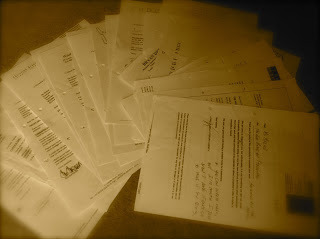
The job of the literary agent, we were told, was to sell your book to publishers. They would only take you on if they knew they could do this - or as it's called in the industry lingo, 'place your book'. I have lost count of the amount of agents who have told me in letters and emails that they like my writing ('I love your work', 'you have talent', 'you can write'), but that they just couldn't see where to place it. Of course there are several examples of famous writers who struggled to get and agent or a publisher, and went on to sell millions of copies when someone finally believed in their of work. (JK Rowling with Harry Potter and lately E L James with 50 Shades).
 Agents' lettersBut times have since changed.
 Today there are several commentators, such as the successful writer, Sean Wesley Smith who believe agents are rapidly becoming extinct as a literary species. Why should you, argues Sean, give your hard earned 15% to someone who is just, figuratively speaking, sitting in your basement, living off your hard work, when you can get your book to market, and straight into a reader's lap without so much as a wink in the direction of the said agent.
But there are others who feel that an agent still has a place in the physical publishing world.
Take the author of Wool, Hugh Howie. Hugh self-published Wool in a series of free-standing e-novellas, and when the books became best-sellers online, was contacted by several agents. Reluctant at first, he did sign with an agent (on his terms), and with her help managed to get a unique publishing deal with Simon & Schuster which excluded the e-book rights to Wool. This deal is a first of its kind and something which most independent publishers/authors dream of as the ultimate goal.
This is worthy of a sideline explanation: To publish printed books takes time and money, as opposed to e-publishing which on the face of it doesn't cost a bean. Not counting all the costs of editing, cover design, online advertising, and the time and effort the author puts into both the writing and the marketing. So, when an author has already done all the hard work of getting the e-book out, why should a publisher sweep in and take a large percentage of the e-book sales as well as of the physical book sales, which is the part he'll make an actual investment in?
But I wonder if Howie would've got the book deal he really wanted without the help of his agent Kristin Nelson? I somehow doubt it.
So, although a writer no longer needs an agent to publish and make money out of his/her e-books, I personally think in the traditional publishing world a (good) agent still has an important role to play.
This, of course, may change in the blink of an eye. But then, that's today's publishing industry for you!
I hope you enjoyed this first post in April's blogging challenge. Tomorrow I'll be writing a post on the subject of 'Blogging - should writers blog or not?'
March 30, 2013
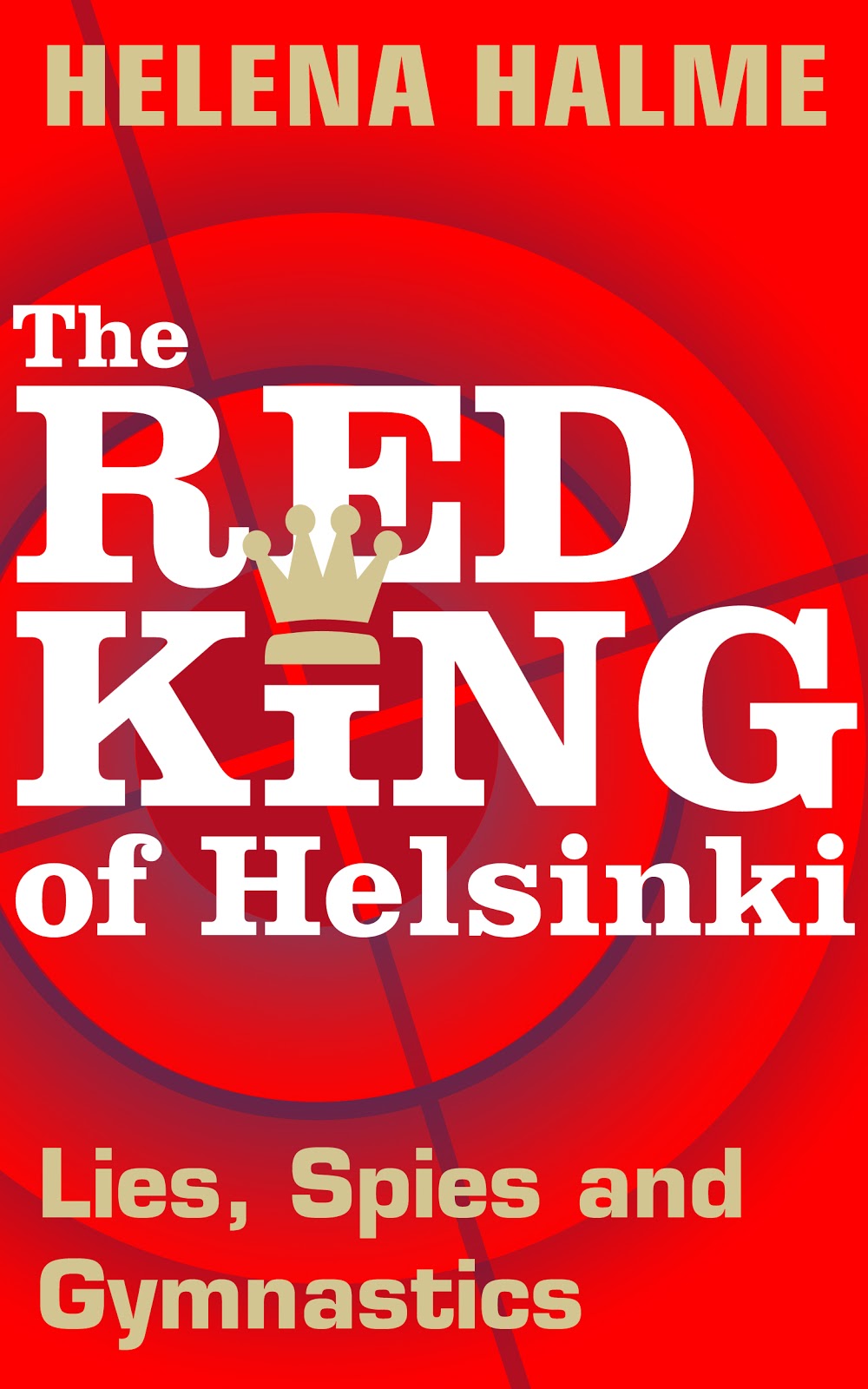
The Red King of Helsinki is out!
At last my spy thriller, set during the Cold War, is out! I pressed the 'publish' button earlier this morning and now it can be downloaded from both Amazon for Kindle and Smashwords for Apple iPad/Books, Nook, Sony Reader, Kobo and most e-reading apps including Stanza, Aldiko, Adobe Digital Editions and others.
I hope you will enjoy this rather different kind of book, as much as I enjoyed writing it.
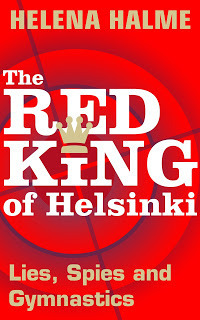
The Red King of Helsinki is a fast-moving, atmospheric literary spy novel set in Finland at the height of Cold War in 1979. 17-year-old Pia’s ambitions to win a gymnastic competition between her college and a school from Moscow trigger a set of dangerous events where her best friend disappears.
A former naval officer Iain – a friend of Pia's mother - is taking an interest in the disappearance, as is a boy in her class, Heikki, who Pia has been in love with as long as she can remember. At the same time, a Soviet official, Kovtun, is hanging around Pia’s school, making Pia’s gym teacher, Leena, blush and stutter.
I hope you will enjoy this rather different kind of book, as much as I enjoyed writing it.
The Red King of Helsinki is a fast-moving, atmospheric literary spy novel set in Finland at the height of Cold War in 1979. 17-year-old Pia’s ambitions to win a gymnastic competition between her college and a school from Moscow trigger a set of dangerous events where her best friend disappears.
A former naval officer Iain – a friend of Pia's mother - is taking an interest in the disappearance, as is a boy in her class, Heikki, who Pia has been in love with as long as she can remember. At the same time, a Soviet official, Kovtun, is hanging around Pia’s school, making Pia’s gym teacher, Leena, blush and stutter.
March 17, 2013
A-Z Blogging Challenge 2013
Having just had a long discussion on Twitter and on Jane Friedman's excellent site about whether writers should blog or not, I have done the almost opposite of what the post by L L Barkat recommends.
I've only signed up to the blogging A-Z Challenge. A blog post on a theme per day on each and every letter of the alphabet during the month of April.
See, I just can't help myself. I saw a post about this fun challenge on Karen G's blog and before I knew what I was doing, I'd signed up.
I think I need help….is there an AA meeting for bloggers I could attend?
March 14, 2013
Finnish Easter shopping
Last weekend, during a Finn Guild friendship network event, I joined a group of Finnish ladies in Brighton to discuss multicultural marriage and the bringing up of bilingual (or in some cases trilingual) children. Whilst listening to an excellent talk by Maria Onuigbo on multicultural relationships, I realised that a huge element of how I've kept my Finnish indentity going all these years living in the UK, has been the upkeep of certain traditions.
So Easter to me is not just a holiday, it's a way to get all the old decorations out, dress our home in spring colours, be with the family and eat Finnish (and Swedish - see below) foods, with the occasional hot cross bun thrown in.
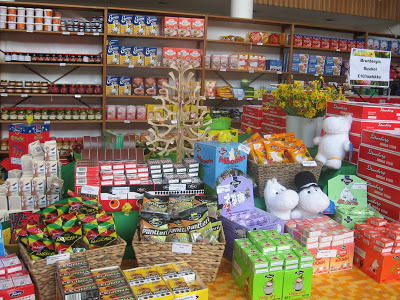 Finnish goodies at the Easter FairWhich brings me onto the shopping bit of this post. Quite often in the past, I've timed a visit to Finland (or Sweden where you can buy most Finnish foodstuffs nowadays and which to me is a little bit of home too) to bring back such goodies as Fazer's Mignon chocolate eggs, Mämmi (a dessert with molasses and sugar) and quark-filled pastries.
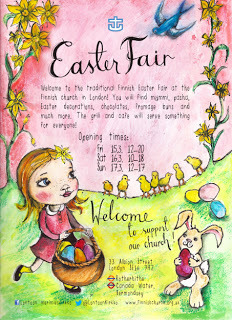
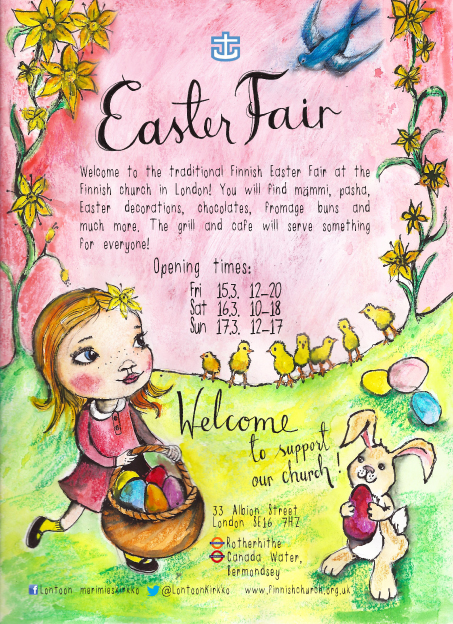
This year, however, I haven't managed a trip back home, but will visit the next best thing - Finnish Church Easter Fair. This is an event which mirrors the hugely popular Christmas Bazaar in the Finnish Church and Seamen's Mission in Rotherhithe, East London. The Easter Fair is this coming weekend, so if you are looking for some unique Nordic Easter foodstuffs and decorations, East London is the place to be.
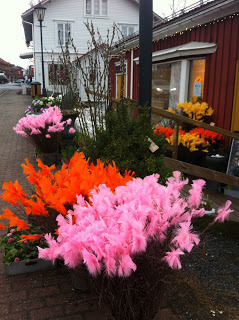
Because my roots are also partly from Sweden, where I lived as a child, I tend to mix into my Easter something from there too, such as these colourful feathers the Swedes attach to birch tree sprigs. I think you can buy these feathers in some florists in the UK, but luckily I've got some left over from last year.
Finnish Church Easter Fair is open:
Friday 15.3. 12-20
Saturday 16.3. 10-18
Sunday 17.3. 12-17
So Easter to me is not just a holiday, it's a way to get all the old decorations out, dress our home in spring colours, be with the family and eat Finnish (and Swedish - see below) foods, with the occasional hot cross bun thrown in.
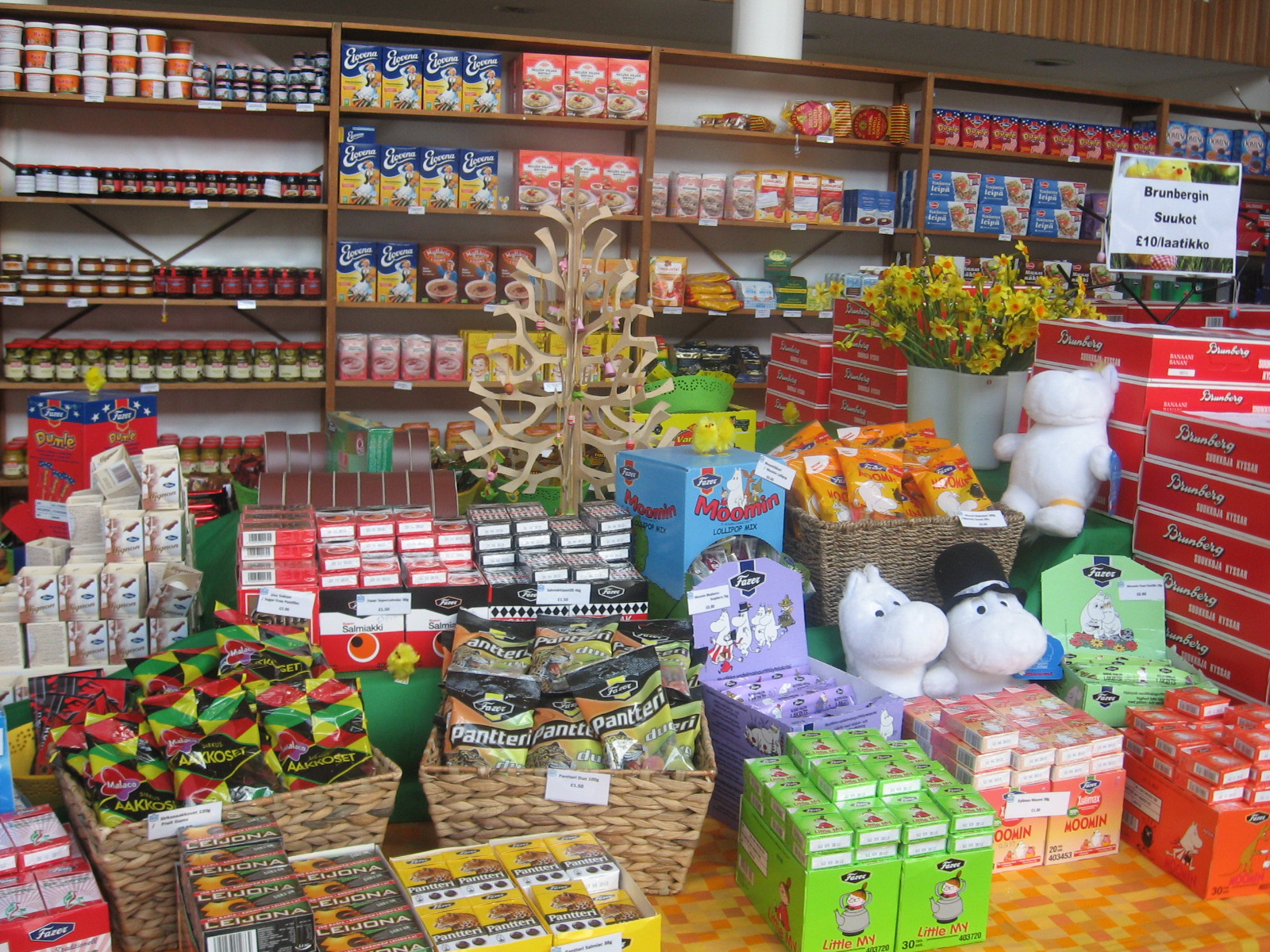 Finnish goodies at the Easter FairWhich brings me onto the shopping bit of this post. Quite often in the past, I've timed a visit to Finland (or Sweden where you can buy most Finnish foodstuffs nowadays and which to me is a little bit of home too) to bring back such goodies as Fazer's Mignon chocolate eggs, Mämmi (a dessert with molasses and sugar) and quark-filled pastries.
 This year, however, I haven't managed a trip back home, but will visit the next best thing - Finnish Church Easter Fair. This is an event which mirrors the hugely popular Christmas Bazaar in the Finnish Church and Seamen's Mission in Rotherhithe, East London. The Easter Fair is this coming weekend, so if you are looking for some unique Nordic Easter foodstuffs and decorations, East London is the place to be.
Because my roots are also partly from Sweden, where I lived as a child, I tend to mix into my Easter something from there too, such as these colourful feathers the Swedes attach to birch tree sprigs. I think you can buy these feathers in some florists in the UK, but luckily I've got some left over from last year.

Finnish Church Easter Fair is open:
Friday 15.3. 12-20
Saturday 16.3. 10-18
Sunday 17.3. 12-17
March 10, 2013
Coffee and Vodka is out!
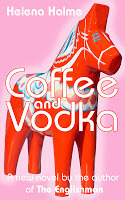
Thank you for all of those who voted in my little book cover poll. In the end it was the horse that won the race…sorry, couldn't resist that one. Looking at the cover, I am really pleased with it and I hope you all agree. I am hugely indebted to my excellent designer Simon Wilder for all his hard work on all of my novel covers!
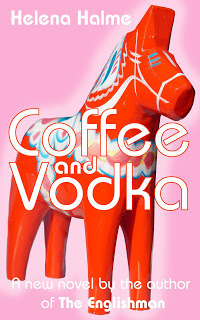
Coffee and Vodka can be found on Amazon here. Don't hold back in spreading the word…
And now for something completely different; to give you a little sneak preview of my next novel to come out, a spy story set in Finland in the winter of 1979, here is the cover and the first few paragraphs. The Red King of Helsinki will be on out by the end of March.
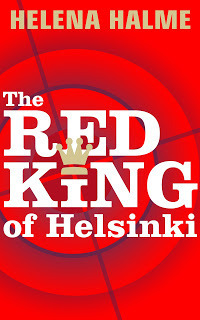
The Red King of Helsinki A Novel by Helena HalmeChapter 1
Iain watched on the snow-covered jetty as a small tugboat slowly piloted HMS Newcastle into Helsinki South Harbour, frozen but for a jagged shipping lane cutting between thick sheets of ice. He’d been following the gradually expanding navigation lights for over an hour while the faint winter sun rose above the Gulf of Finland.
The snowfall had made the day’s copy of Helsingin Sanomat folded under his arm limp. Iain shivered as he placed the paper inside his thick winter coat and pulled the collar further up around his ears. A glance at his watch showed 08:06. They were on time at least. He stamped his feet. The Finns say the coldest winds blow from Siberia, and this morning Iain understood what they meant. Even the weather from the mighty Soviet Union was a bully to its small neighbour.
Finally the ship docked and Iain climbed onboard. He nodded at a Sub Lieutenant, who bounced down the gangway and told Iain to follow him. He looked like a child, with a freshly scrubbed pink face, and at the last minute Iain remembered not to salute him. He kept forgetting he was a civilian now. But the ship, with its musty smell, a combination of salty seawater and diesel oil, made him feel at home. ‘Good passage?’‘Yes Sir,’ replied the officer, showing Iain into a small cabin.
The Colonel was bent over a tiny desk in the corner, his back to Iain.‘Welcome to Helsinki, Sir,’ Iain said. Again the desire to stand to attention overtook him, and he half lifted his hand, but placed it down before it reached the side of his head.‘Ah, Collins. You look cold and wet. Is it really that bad out there?'
Iain ignored this jibe and looked around the cabin. It was a small space, but a luxury for any officer onboard. There was a small porthole, ‘heads’ and crisp white linen on the bunk. The Colonel nodded towards a chair and Iain sat down.
‘Well?’ the Colonel said. His cheeks had broken veins and in the harsh overhead light of the cabin he looked old and weary.‘Sir, page five, bottom right-hand corner.’ Iain handed the Colonel the damp Helsingin Sanomat. The short article was on page four.‘A woman, aged 29, was found dead on Tehtaankatu late yesterday morning. It has been confirmed as the body of a Soviet citizen, employed as a temporary administrative assistant at the Embassy. According to the official source the woman died of natural causes.’
The Colonel considered the page. Iain watched his eyes as he scanned the print and spotted the small, insignificant notice. After a brief moment, he handed the paper back to Iain without saying a word. He crossed his hands over his considerable belly and leant back in his chair. Iain wondered if the Colonel’s Finnish was sufficient for him to understand the meaning of the words.‘Don’t know if it’s significant, but brought it along in case.’‘Hmm, well done,’ the Colonel said.‘I wasn’t sure if I should have contacted the paper?’‘No, of course not. We’ll look into it.’ The Colonel looked at his hands, then up at Iain, ‘How’s the surveillance going?’‘Well, Sir.’There was a silence and Iain wondered if he was supposed to make a move to leave the cabin and the Colonel. But the Colonel handed Iain a green folder.‘Try to find out more about this man, Jukka Linnonmaa. He’s just come back from Moscow and we need to know how active he is. He might get in the way.’Iain opened the file.‘Take it home and read it. There’s the address, wife’s name, any family connections, that sort of thing. Have a little look at his place, see where he goes.’‘Yes Sir,’ Iain said.‘You’ll soon get the hang of it. Report back to me daily.’The Colonel got up, and Iain followed his example.‘And Collins,’ The Colonel said when Iain was at the door, ‘try not to come onboard too often – once more to welcome us into town on behalf of the British Council, and perhaps when we leave to wave us goodbye, is the norm.’‘Yes, Sir,’ Iain said. The Sub Lieutenant had reappeared outside the cabin.‘Goodbye, Sir,’ the young officer said and saluted Iain as he made his way back down the gangway.
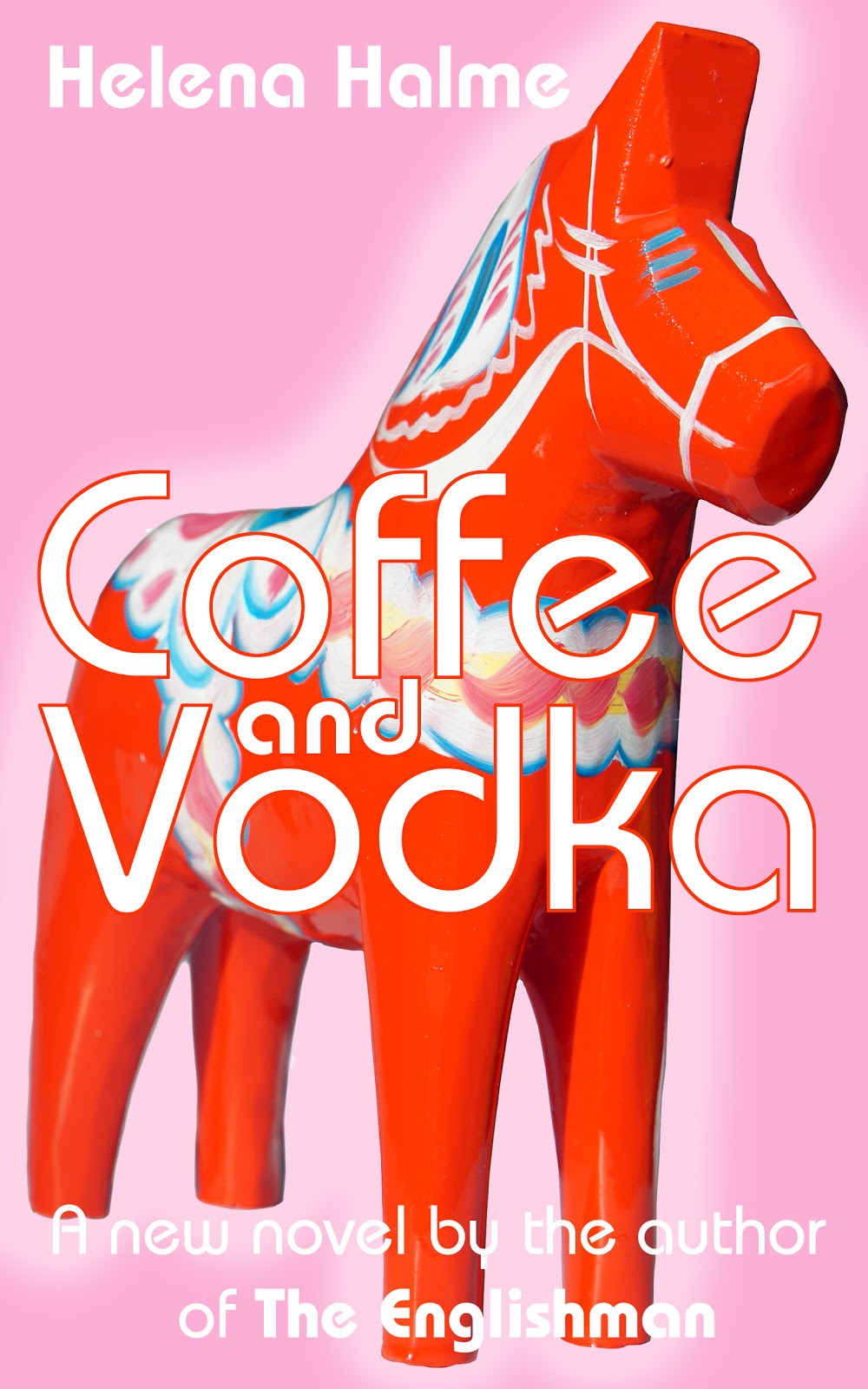
Coffee and Vodka can be found on Amazon here. Don't hold back in spreading the word…
And now for something completely different; to give you a little sneak preview of my next novel to come out, a spy story set in Finland in the winter of 1979, here is the cover and the first few paragraphs. The Red King of Helsinki will be on out by the end of March.
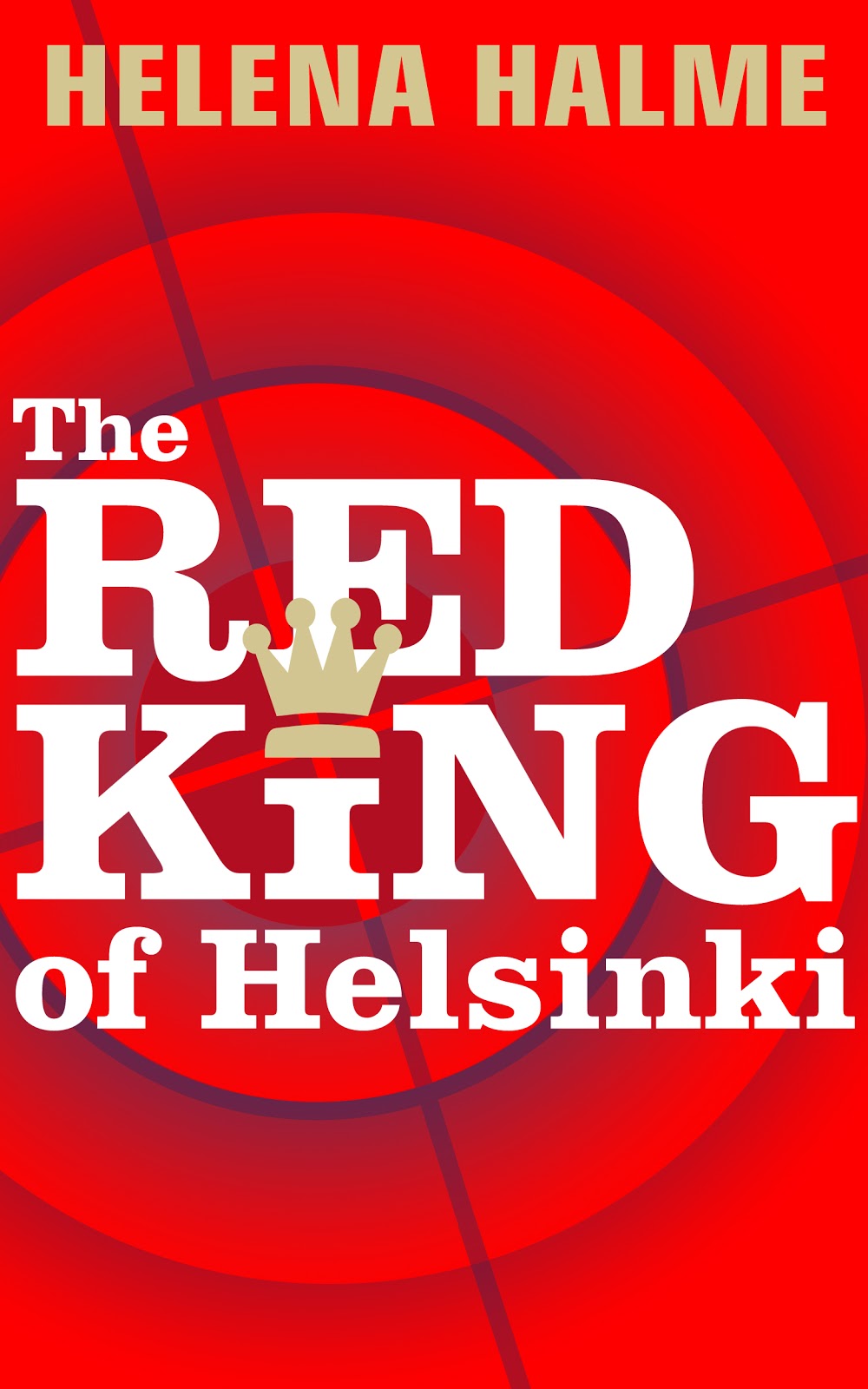
The Red King of Helsinki A Novel by Helena HalmeChapter 1
Iain watched on the snow-covered jetty as a small tugboat slowly piloted HMS Newcastle into Helsinki South Harbour, frozen but for a jagged shipping lane cutting between thick sheets of ice. He’d been following the gradually expanding navigation lights for over an hour while the faint winter sun rose above the Gulf of Finland.
The snowfall had made the day’s copy of Helsingin Sanomat folded under his arm limp. Iain shivered as he placed the paper inside his thick winter coat and pulled the collar further up around his ears. A glance at his watch showed 08:06. They were on time at least. He stamped his feet. The Finns say the coldest winds blow from Siberia, and this morning Iain understood what they meant. Even the weather from the mighty Soviet Union was a bully to its small neighbour.
Finally the ship docked and Iain climbed onboard. He nodded at a Sub Lieutenant, who bounced down the gangway and told Iain to follow him. He looked like a child, with a freshly scrubbed pink face, and at the last minute Iain remembered not to salute him. He kept forgetting he was a civilian now. But the ship, with its musty smell, a combination of salty seawater and diesel oil, made him feel at home. ‘Good passage?’‘Yes Sir,’ replied the officer, showing Iain into a small cabin.
The Colonel was bent over a tiny desk in the corner, his back to Iain.‘Welcome to Helsinki, Sir,’ Iain said. Again the desire to stand to attention overtook him, and he half lifted his hand, but placed it down before it reached the side of his head.‘Ah, Collins. You look cold and wet. Is it really that bad out there?'
Iain ignored this jibe and looked around the cabin. It was a small space, but a luxury for any officer onboard. There was a small porthole, ‘heads’ and crisp white linen on the bunk. The Colonel nodded towards a chair and Iain sat down.
‘Well?’ the Colonel said. His cheeks had broken veins and in the harsh overhead light of the cabin he looked old and weary.‘Sir, page five, bottom right-hand corner.’ Iain handed the Colonel the damp Helsingin Sanomat. The short article was on page four.‘A woman, aged 29, was found dead on Tehtaankatu late yesterday morning. It has been confirmed as the body of a Soviet citizen, employed as a temporary administrative assistant at the Embassy. According to the official source the woman died of natural causes.’
The Colonel considered the page. Iain watched his eyes as he scanned the print and spotted the small, insignificant notice. After a brief moment, he handed the paper back to Iain without saying a word. He crossed his hands over his considerable belly and leant back in his chair. Iain wondered if the Colonel’s Finnish was sufficient for him to understand the meaning of the words.‘Don’t know if it’s significant, but brought it along in case.’‘Hmm, well done,’ the Colonel said.‘I wasn’t sure if I should have contacted the paper?’‘No, of course not. We’ll look into it.’ The Colonel looked at his hands, then up at Iain, ‘How’s the surveillance going?’‘Well, Sir.’There was a silence and Iain wondered if he was supposed to make a move to leave the cabin and the Colonel. But the Colonel handed Iain a green folder.‘Try to find out more about this man, Jukka Linnonmaa. He’s just come back from Moscow and we need to know how active he is. He might get in the way.’Iain opened the file.‘Take it home and read it. There’s the address, wife’s name, any family connections, that sort of thing. Have a little look at his place, see where he goes.’‘Yes Sir,’ Iain said.‘You’ll soon get the hang of it. Report back to me daily.’The Colonel got up, and Iain followed his example.‘And Collins,’ The Colonel said when Iain was at the door, ‘try not to come onboard too often – once more to welcome us into town on behalf of the British Council, and perhaps when we leave to wave us goodbye, is the norm.’‘Yes, Sir,’ Iain said. The Sub Lieutenant had reappeared outside the cabin.‘Goodbye, Sir,’ the young officer said and saluted Iain as he made his way back down the gangway.


