James Van Pelt's Blog, page 4
May 28, 2019
Becoming a Writer
A Goodreads member asked me a while ago what my advice was for aspiring writers. This was my reply:
This is an interesting question. I’m doing a 45-minute presentation at a local comicon that’s entitled, “Becoming a Writer.” It’s an intimidating topic for only 45 minutes! I think that I have to start with a rock-solid basic to answer the question, which is to read, read, read and write, write, write.
I know, that sounds unhelpful and stupid, but it’s actually the formula. You read to get story and language running in the back of your head, and you write because most of us have a lot of crummy writing to get through before we start getting to the better stuff. Writing is like any other art: you progress. Almost no one starts as a genius from the get go. They start crummier than they’re going to end up, and the only way to get from the beginning to the better is to wade through the crummy.
You read a lot to find your influences, and you write a lot to find your voice. It’s that simple.
Being simple doesn’t make it easy, by the way. If you want easy, inherit a lot of money.


May 24, 2019
Becoming a Creative Writing Teacher
At the end the last school year, I mentored two teachers who were going to teach Creative Writing for the first time. I put together a syllabus for them and a notebook (and thumbdrive) filled with examples, exercises, quizzes and everything else I could think of to help them get started.
I realized today, though, that no matter what I gave them, especially for teaching poetry to high school students, that nothing would start them down the path to being creative writing teachers better than collecting the first set of poems from the students.
This is about how teachers who haven’t done much creative writing (which neither had), can grow as a helpful guide to other writers.
Here’s what happens to the new teacher with that first stack of poems, or at least what should happen: the teacher reads the first poem. It will be both the best and worst high school poem that teacher has read. It will have almost no connection to any of the poetry the teacher read in literature classes. It will be an artifact all on its own.
Then the teacher reads the second poem. There’s a chance that it will vary so wildly from the first poem that there will be no comparison, like comparing an apple to a racoon. But by the time the last poem in the stack is read, the teacher will be able to roughly divide the poems into categories of effectiveness. A few of the poems, for whatever reason, will impact the teacher as a reader more strongly than the rest.
Now the teacher, if the teacher is going to be helpful to the students, has to be able to do at least two things for the class: first, tell them what qualities he thought the strongest poems possessed, and show the class those poems. Secondly, the teacher has to be able to say something constructive to each student about her/his poem.
That’s all: generalize about the set of poems, and be specific about individual ones. Hopefully the teacher does this in a positive fashion that stresses how writing is a personal, subjective, growth-centered activity. Every student feels their first effort was validated, and that they learned something from it and their classmate’s efforts to write one they like better the next time.
That’s all. This teaching stuff is a cinch. (See what I did there?)
December 20, 2018
Curious Fictions and Keeping the Word Alive
I see I haven’t posted here for a while. Most of my online time is spent at my Facebook page, which is facing a reality: many people use FaceBook and few visit author’s pages, but, still, I like a dedicated website.
I started my online presence at LiveJournal. I still have an account there, although it’s fairly dusty by now. I haven’t done much with other online media. I have a Linkedin account, but I don’t know why, and I post the occasional video at Youtube. Mostly, as I said, I visit Facebook. Lately, I’ve added Curious Fictions to my activity.
I like the idea of Curious Fictions. It’s a place where authors can reprint their backlist of previously published short stories. Readers can read many of the works in their entirety for free. They they can “like” the stories, comment on the stories, follow authors they enjoy, subscribe to an author (pay them monthly, sort of like Patreon), or leave a tip.
This way, authors can keep their words available and, possibly, generate a little more income from them.
I am posting a story a week there. Since I have over 150 stories to choose from, I have almost three years worth of content. Someone asked me if I was worried that publishing the work online might detract from my short story collection book sales. I’m not. Curious Fictions, if anything, may sell a few books. If someone likes my stuff online, they’re much more likely to look for more of it.
That’s why books exist!
At any rate, if you like short fiction, or you would like to see a sampling of my work, visit Curious Fictions. If you do, leave a comment there, or a “like,” or (cough), money.
December 30, 2017
Goodreads Giveaway for The Experience Arcade and Other Stories
My Goodreads book give-away of THE EXPERIENCE ARCADE AND OTHER STORIES ended. I’m stoked by how many people expressed an interest in the book! Of course, when I looked in my box of books to send to the winners, I realized I didn’t have enough, so I have an order in for more.
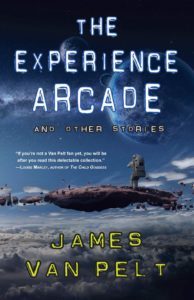 I think this is a collection that would be of interest to writers and teachers too, mostly because I’ve written about the process that produced each story for writers, and I created the curriculum material for teachers who might like to read the stories in their classes.
What I’d like to see are more reviews of the book. If you want to support writers who you enjoy, write an online review! The best place for a reader’s response to a book is Amazon, probably, because Amazon pays attention to how many reviews a book gets and then starts linking a frequently reviewed book to other books, but all responses are helpful, no matter where they are.
John O’Neill at BLACK GATE said, “James Van Pelt’s stories capture the essential joy and boundless optimism of Golden Age science fiction better than any writer alive.”
Ted Kosmatka said, “Prolific, masterful, and stunningly original, James Van Pelt is a modern virtuoso of science fiction.”
My mom said, “I like your stuff.”
December 6, 2017
A CHRISTMAS THEMED TALK ON CREATING VIVID CHARACTERS
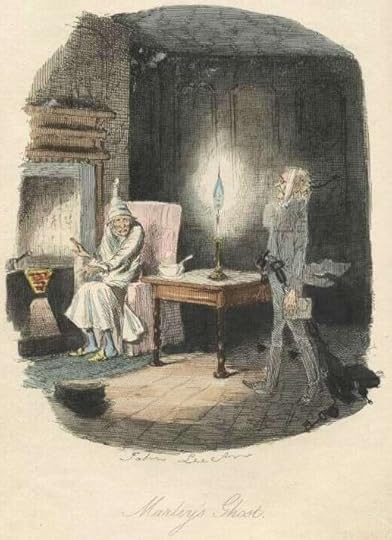 I was able to do something last night that I have wanted to do for a long time. The Western Colorado Writers Forum asked me to do a presentation for their monthly writers series, so I proposed a talk about creating vivid characters.
But this was a DECEMBER talk. What an opportunity! I based the entire presentation on Charles Dicken’s “A Christmas Carol.”
And what a master-class demonstration of creating a character that story is! I argue that character can be revealed in seven different ways (with the possibility for an 8th technique): appearance, speech, actions, thought, how others respond to the character, how the character controls the environment, and what the narrator says directly about the character (the 8th, which I recently realized, is what the writer reveals about the character’s past).
Dickens uses all those techniques brilliantly in “A Christmas Carol,” starting with the one I advise writers to avoid: having the narrator directly state what the character is. Dickens starts the story with this technique, though:
“Oh! But he was a tight-fisted hand at the grindstone, Scrooge! a squeezing, wrenching, grasping, scraping, clutching, covetous, old sinner! Hard and sharp as flint, from which no steel had ever struck out generous fire; secret, and self-contained, and solitary as an oyster. The cold within him froze his old features, nipped his pointed nose, shrivelled his cheek, stiffened his gait; made his eyes red, his thin lips blue; and spoke out shrewdly in his grating voice. A frosty rime was on his head, and on his eyebrows, and his wiry chin. He carried his own low temperature always about with him; he iced his office in the dog-days; and didn’t thaw it one degree at Christmas.”
Dickens goes on like this for three more paragraphs, and its wonderful.
I pointed out that for many stories, the plot is a vehicle to carry a dynamic character from being one kind of person to another kind. “A Christmas Carol” certainly is that kind of story.
Then, Dickens uses the same techniques he used to introduce Scrooge to the readers to show that he’s a diffferent man at the end. He describes Scrooge’s appearance, speech, deeds, thoughts, control of his environment, how other characters react to him, and, finally, direct narrative exposition.
The story is a tour de force of character presentation.
The story ends with the same technique he used to begin, narrator exposition:
“Scrooge was better than his word. He did it all, and infinitely more; and to Tiny Tim, who did not die, he was a second father. He became as good a friend, as good a master, and as good a man, as the good old city knew, or any other good old city, town, or borough, in the good old world. Some people laughed to see the alteration in him, but he let them laugh, and little heeded them; for he was wise enough to know that nothing ever happened on this globe, for good, at which some people did not have their fill of laughter in the outset; and knowing that such as these would be blind anyway, he thought it quite as well that they should wrinkle up their eyes in grins, as have the malady in less attractive forms. His own heart laughed: and that was quite enough for him.
“He had no further intercourse with Spirits, but lived upon the Total Abstinence Principle, ever afterwards; and it was always said of him, that he knew how to keep Christmas well, if any man alive possessed the knowledge. May that be truly said of us, and all of us! And so, as Tiny Tim observed, God bless Us, Every One!”
November 19, 2017
Book Giveaway of The Experience Arcade
.goodreadsGiveawayWidget { color: #555; font-family: georgia, serif; font-weight: normal; text-align: left; font-size: 14px;
font-style: normal; background: white; }
.goodreadsGiveawayWidget p { margin: 0 0 .5em !important; padding: 0; }
.goodreadsGiveawayWidgetEnterLink {
display: inline-block;
color: #181818;
background-color: #F6F6EE;
border: 1px solid #9D8A78;
border-radius: 3px;
font-family: "Helvetica Neue", Helvetica, Arial, sans-serif;
font-weight: bold;
text-decoration: none;
outline: none;
font-size: 13px;
padding: 8px 12px;
}
.goodreadsGiveawayWidgetEnterLink:hover {
color: #181818;
background-color: #F7F2ED;
border: 1px solid #AFAFAF;
text-decoration: none;
}
Goodreads Book Giveaway
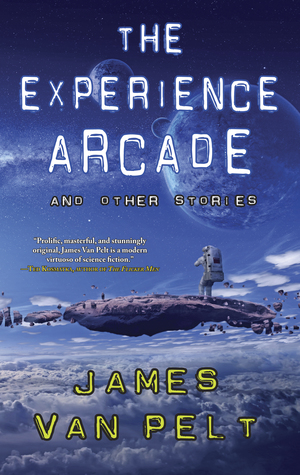
The Experience Arcade and Other Stories
by James Van Pelt
Giveaway ends December 15, 2017.
See the giveaway details
at Goodreads.
November 14, 2017
Review of The Experience Arcade
Don D’Ammassa reviewed THE EXPERIENCE ARCADE AND OTHER STORIES. The killer quote for me is “There are very few writers who can turn out a steady stream of high quality stories. James Van Pelt is one of those talented few.” I’m glad the collection worked for him.

September 14, 2017
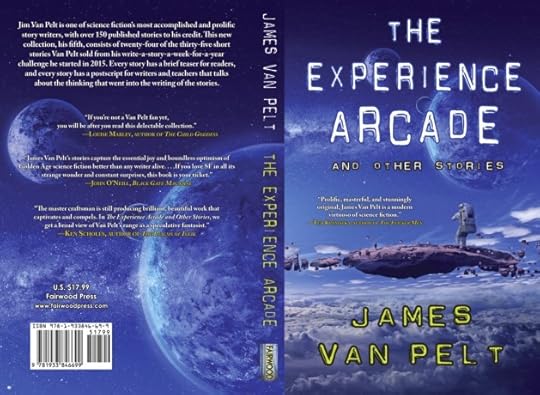
Experience Arcade Cover Reveal
My new collection, THE EXPERIENCE ARCADE AND OTHER STORIES, is now up for preorder at both Amazon and Barnes and Noble. We can now reveal the entire cover! I still get all squishy inside when I see my name on a book. It makes me feel like I was when I was ten-years old at the library, looking for which science fiction authors my book would appear between when I grew up (it was Jack Vance and A.E. Van Vogt).
[image error]
July 7, 2017
New Collection: The Experience Arcade
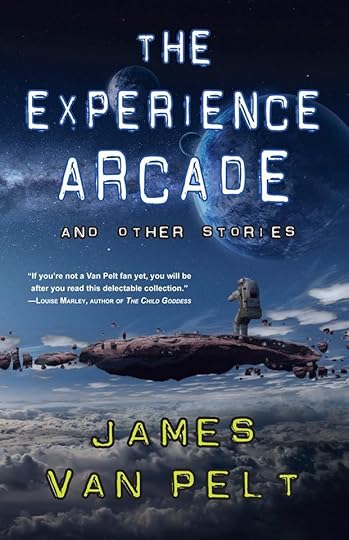 My fifth collection of short stories, The Experience Arcade, will debut at World Fantasy in San Antonio in November.
The collection consists of twenty-four of the thirty-five short stories that I have sold from my write-a-story-a-week-for-a-year that I started in 2015. I’m trying some new approaches with this collection:
First, every story has a brief teaser for the readers, sort of like what Analog does for their short stories. Second, every story has a postscript for writers and teachers that talks a little bit about the thinking that went into the writing of the stories.
I don’t know if the additional material will make the book more interesting or not. I do know that when I was young, I never read introductions or epilogues. As an older reader, I find the extra information very valuable. We’ll see how the experiment in format goes.
I’m also creating a web page with support material specifically for teachers who would like to use any of the stories (or the entire collection!) in class. You can see what I’ve done so far by clicking on The Experience Arcade: A Teacher’s Guide in the menu at the top of the page.
My experience on how best to promote strong sales that I learned from my previous books isn’t very helpful, I’m afraid. My first collection, Strangers and Beggars, and my first novel, Summer of the Apocalypse, did well. The sales on the other books have been hard to graph. I can’t see a pattern, and I don’t know why some books do better than others (other than the obvious that maybe some books are just, well, better).
We will see.
June 1, 2017
How to Improve as a Writer
I finished my two-day class called “Creative Writing for Teachers who would Like to Write” yesterday. I think it went well. I sent them this letter to the teachers today to give them some suggestions for what they can do for themselves as writers on their own (besides reading, reading, reading and writing, writing, writing).
Hi, all,
We talked a little about outside resources for writers that can help you on your journey, so I thought I could send you some specifics.
The first is writing workshops or writing retreats and conferences. A workshop would be where you meet up with other writers to share and critique each others work. A retreat is sort of like a writer’s vacation where you go to write in the company of other writers. A conference is more educational in its nature where there will be presentations during the day related to writing and/or publishing, but, depending on the conference, there can be opportunities for a professional critique of your manuscript or a chance to pitch a project to an editor.
I go to the Rainforest Writers Retreat in Washington each year. It’s easily the best five days of writing I get. It sells out quickly, but there are many other writing retreats all over the country. I also attend two or three conferences a year. Because I write science fiction, fantasy and horror, I go to conferences that focus on those genres. In the last year, I attended the World Science Fiction Convention that was in Kansas City, and MileHiCon in Denver. I will go to the World Fantasy Convention in San Antonio in early November.
I don’t think I can encourage you to look into attending a retreat, workshop or conference more strongly. It would be something you are doing to both acknowledge and feed your commitment to yourself as a writer.
You might also consider looking for or forming your own writers’ critique group. You can see guidelines here: http://writersrelief.com/blog/2014/09/start-writers-group-set-success/
Retreats and Conferences:
A list of well-respected writing retreats around the world: https://thewritelife.com/writing-retreats/
Colorado writing retreats and conferences: http://writing.shawguides.com/Tag/colorado
Writing Organizations:
Another way you can help yourself is to join a writing organization. The Grand Junction area has two that I can recommend. The Rocky Mountain Fiction Writers (http://rmfw.org/) and the Western Colorado Writers Forum (http://westerncoloradowriters.org/index.html). Both organize events for writers, including presentations, contests, critique groups, etc.
There are also national writing organizations that might interest you (http://writersrelief.com/writers-associations-organizations/)
If you are interested in writing for publication and are looking for markets for your work, one of the best resources is at https://duotrope.com/. They describe themselves this way: “Duotrope is a subscription-based service for writers and artists that offers an extensive, searchable database of current fiction, poetry, nonfiction, and visual art markets, a calendar of upcoming deadlines, a personal submissions tracker, and useful statistics compiled from the millions of data points we’ve gathered on the publishers we list. We have been honored as one of Writer’s Digest 101 Best Websites for Writers. Also, Preditors & Editors selected us for their Truly Useful Site Award.”
I hope this helps. Have a good summer and may all your words flow easily.
Best,
Jim Van Pelt