Gail Aldwin's Blog, page 12
April 12, 2021
Moving on
We are packing up our house, getting it ready to let it over the spring and summer. This will leave us free to wander about the UK and we’re aiming to spend time in Edinburgh and Cambridge. Meanwhile, we’re making the most of the things Dorset has to offer. At the weekend, we went on a 17km walk through the fields and here are some of the things we saw.
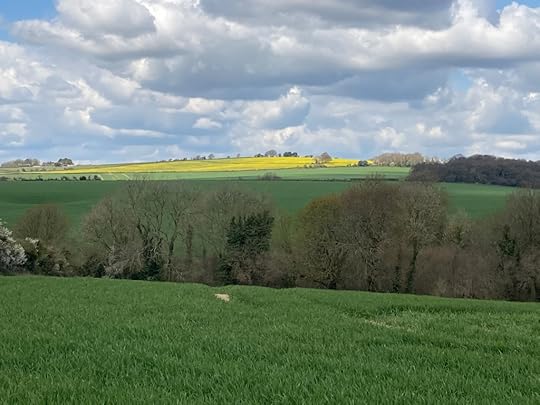
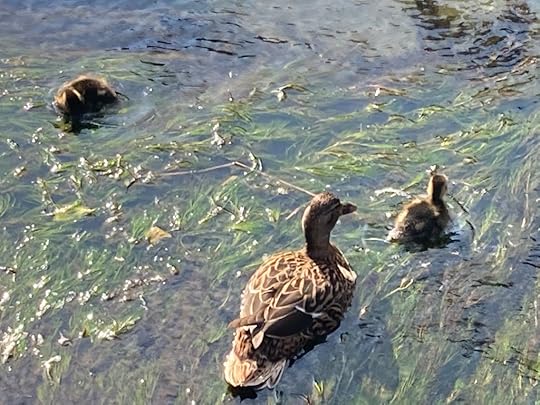
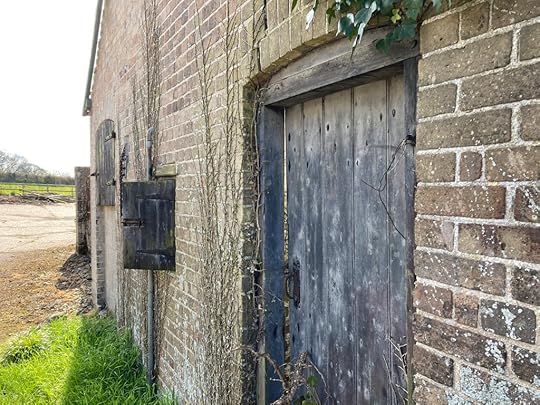
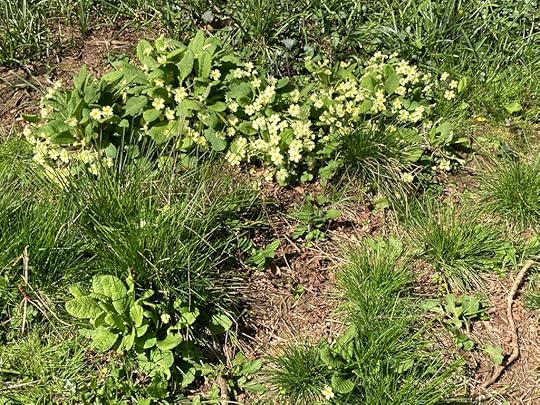
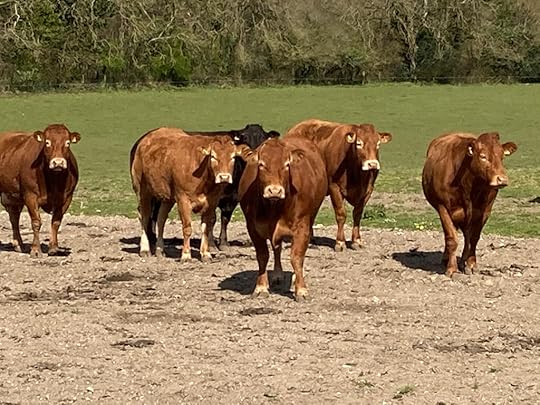
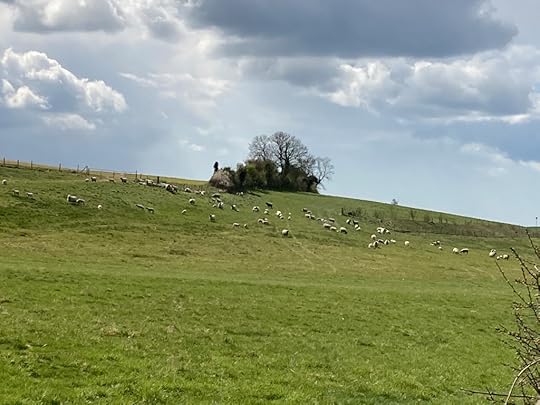
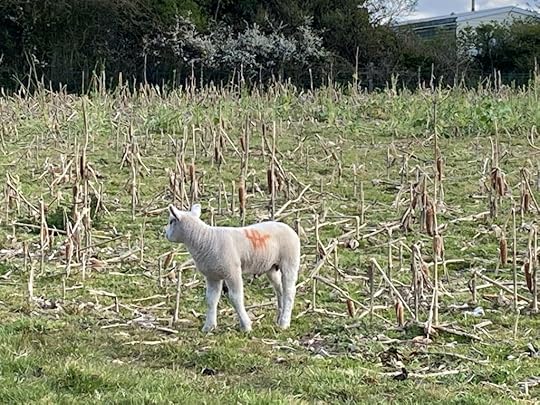
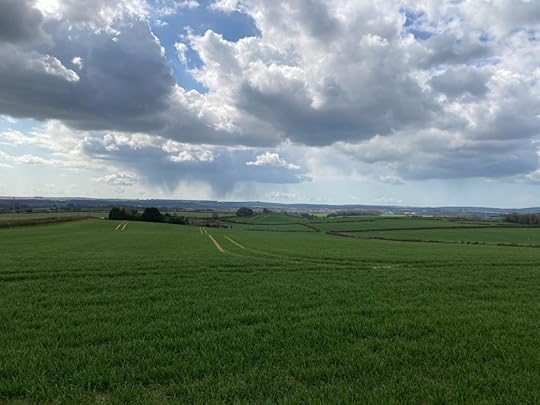
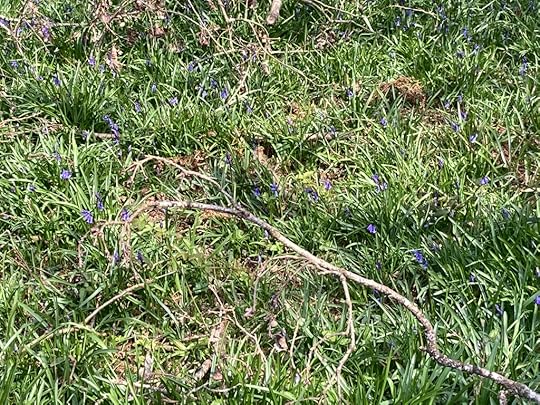
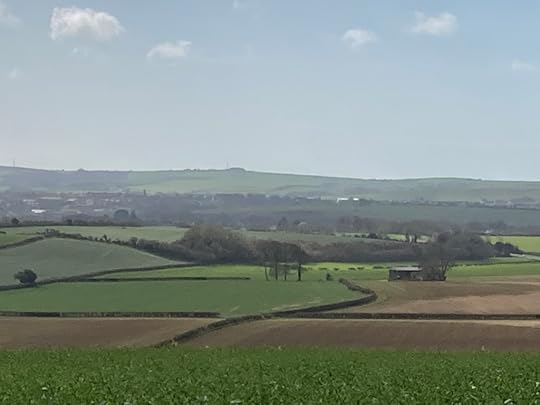
Dorset is a beautiful county. Did you spot the first bluebells? In the next couple of weeks there will be carpets of blue in the woodlands. It almost seems a pity to be leaving…


March 28, 2021
Lots to get excited about
With the opportunity to meet up to six other people outside from 29 March (when some of the lockdown restrictions are lifted in England) I find my diary filling up. My mum is visiting from 1 April (she’s in our bubble) and my daughter returns to Dorchester until her new-build house is ready. I haven’t seen either since December when we had a pre-Christmas celebration so I’m really looking forward to catching up. Mum and my son share the same birthday in April so there will be more celebrations before she goes home.

In other news, David and I achieved a long held ambition yesterday. The windows of our house look over water meadows to a ridge with a clump of trees. Setting off at ten o’clock, we stomped beside hedgerows and through fields to reach the trees ninety minutes later. They were not as we expected, with the evergreens hiding two huge water tanks but the deciduous tree with its many trunks and extensive roots was fascinating.

We covered 15km in total and saw other interesting things along the way.


Our plans to visit Scotland depend on further lockdown restrictions being lifted but we will definitely be heading off in the coming months. Arrangements are confirmed that will enable us to spend time in Cambridge over the summer. And now the clocks have changed to British Summer Time, things are definitely looking up.
March 17, 2021
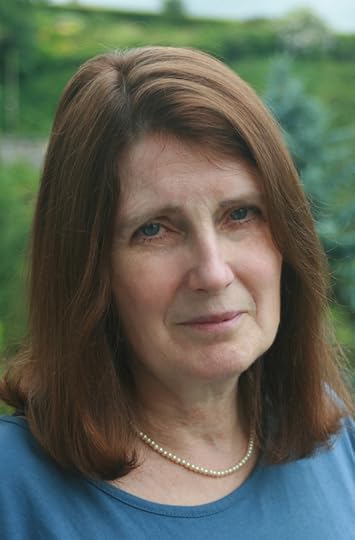
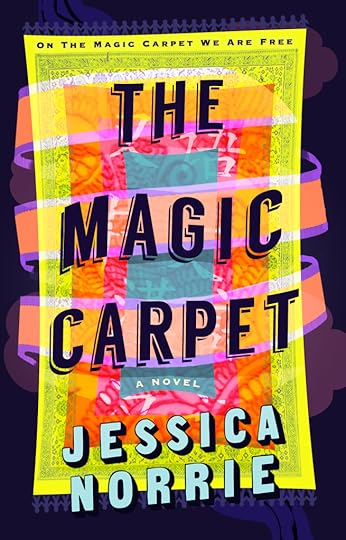
Welcome to Jessica Norrie, author of The Magic Carpet
I became aware of Jessica Norrie and her novels through membership of a Facebook Group called Book Connectors. As the name suggests, it’s a place to connect, particularly targeted to authors and book bloggers. It was with real interest that I was drawn to Jessica’s novel The Magic Carpet. There are certain commonalities in our experiences as authors (we were both formerly teachers) and in the subject of our novels. Jessica’s novel The Magic Carpet covers the experiences of five families with children attending Year Three in an outer London school during the start of the academic year 2016. This Much Huxley Knows is set in the suburbs of London during the autumn term of the same year and is written from the viewpoint of a seven-year-old boy in Year Two.
Following email exchanges, I invited Jessica to The Writer is a Lonely Hunter in order to find out more about her experiences. I extend a warm welcome to Jessica and invite her to answer the following questions that occurred to me while reading The Magic Carpet.

 Although The Magic Carpet focuses on particular families during a specific time period, did you write this novel with universal truths in mind?
Towards the end of my teaching career, I felt the need to distil thirty years, thousands of individuals, situations and conversations into something coherent, otherwise they’d all continue buzzing round my head and I wouldn’t feel free to concentrate on anything else. As everyone knows, all human children and adults combine their similarities in different ways that make them into individuals but with common interests. I wanted to see if I could get at that.
There is a large cast of characters in The Magic Carpet and the use of multiple viewpoints. How did you plan and write the novel to offer perspectives from so many different community members?A 7-year-old said one day “If we only write in capital letters, you can’t tell us off for not using them.” That says so much about how children’s minds explore ideas, and what’s good and bad about learning to write. In the book I gave Mandeep the idea, and a grandmother who’s probably dyslexic but never diagnosed and helps with his homework after school, then I filled out the family, added neighbours, worked my way along the street… Actually five families reflect a fraction of what teachers encounter daily. Whenever I was struggling with the multiple POVs I reminded myself I was usually bombarded with thirty at once. It was just a question of keeping order.
As the title of your novel suggests, traditional stories and personal histories are central to the writing. How important do you think traditional tales are to learning and development as a child and throughout life?I was an exceptionally lucky child because with a bookseller father I had a huge variety of brilliant children’s books. But especially to children from homes without books, traditional tales are essential. They overlap across cultures and they’re stepping-stones to other reading. They help order good from bad too although I think nowadays we’d be rightly wary of handsome princes who break in and kiss us in bed or cripple us in tiny glass shoes. Traditional stories are also versatile to teach with and happy teachers make for happy learners! As opposed to fronted adverbials which are vicious spells cast by bad fairies.
James Kelman was accused of cultural appropriation in using an eleven-year-old boy from Ghana to narrate Pigeon English, a novel about gang culture on a south London estate. What are your views on cultural appropriation?Pigeon English is a fantastic novel, partly based I understand on Damilola Taylor. Anyone from any background is free to take that story or any other and write it their own way – Edna O’Brian did with Girl, encountering the same accusations. Opinions have hardened in recent years and I wouldn’t dare write The Magic Carpet now. Not because I think I shouldn’t, but because I’m terrified of trolls who expect everyone else to accept their opinion but don’t compromise or listen themselves. That’s not to say that evidenced criticism for poor research, or for perpetuating stereotypes and tropes isn’t absolutely valid and welcome.
You can’t set a realistic novel in London with only one ethnicity. It’s obvious to anyone who’s lived in diverse streets and learnt in diverse schools. By coincidence, Guy Gunaratne published his excellent In Our Mad and Furious City while I was finishing TMC. It also has five London narrators from different backgrounds. Does he have more right to do that because he’s BAME? He writes Irish, Afro-Caribbean, Muslim yet he’s not any of those. As a white woman, do I have more right than a man to write about domestic violence against women? Was I fair to set it in an Asian heritage household? Sadly, domestic violence exists in all cultures. Fortunately so do good stories and writers.
If opportunities to write and publish were historically fairer, this debate wouldn’t arise and everyone could develop empathy and imagination by writing and reading whatever they’re drawn to. Until very recently opportunities for writers from any kind of minority have been so limited that it’s logical now to justify ring fencing their life experiences and histories for them. But in the long term if all writers only write about what they know best it will limit everyone.
Hmm – I’m a bit conflicted on this!
Relationships between children, between adults, and between children and adults are at the heart of The Magic Carpet. From your experience as a teacher, do you think this ability to build strong relationships is valued in educational settings?I’d like to see a return to a more child-centred school curriculum and home life. I think learning can only benefit from strong relationships between all the adults a child knows, but current government policies force teachers to be defensive and parents to be pushy and competitive about academic learning at the expense of social and emotional development. Hopefully the pandemic months have helped people to understand the value of play again – for all generations.
I understand The Magic Carpet was an independently published novel. What made you decide to go down this route?My agent submitted it to many publishers and got rave responses, moving and reassuring to receive. But as one acquisitions editor said “It wouldn’t sell in Waitrose”. I don’t like Amazon but have to admit they’re the best designed option for an author on a budget so that’s where it ended up rather than never seeing the light of day.
With several published works under your belt, what’s next for you, Jessica?Agent is currently submitting Novel Three and I’m messing about with another in a desultory lockdownish way… better get back to it I suppose. Thank you SO MUCH for your time and giving me space to waffle on your blog Gail and I do hope my thoughts are useful to somebody somewhere.
Purchase link: http://getbook.at/TheMagicCarpet , also http://getBook.at/TheInfinityPool
Blog: https://jessicanorrie.wordpress.com/
Facebook: https://www.facebook.com/wordsandfictions
Twitter: https://twitter.com/jessica_norrie
I hope followers of The Writer is a Lonely Hunter will agree with me that this has been an exciting and pertinent Q&A. Thank you Jessica for sharing your thoughts and experiences of writing The Magic Carpet. I thoroughly enjoyed reading your novel and can highly recommend the book.
Gail’s review of The Magic Carpet
I admire Jessica Norrie’s skill in creating a novel with so many wonderful characters and viewpoints. (I had my favourite, Mr Chan, a widower from Hong Kong.) Using a light touch, Norrie explores issues of racism, domestic violence, belonging, isolation, identity and much more. Her ability to keep the voices distinct allowed me to tune into a range of personal histories and experiences. The Magic Carpet provides the opportunity to celebrate cultural differences and at the same time it draws upon the shared experiences of families from a range of backgrounds. An entertaining, informative and worthy novel.
March 10, 2021
International Women’s Day 2021
To celebrate IWD this year, I joined a Zoom workshop titled Writing Menopause: culture, sex and identity delivered by Apala Chowdry and Maggie Winters. Following an exchange on Twitter, I offered to write a blog post about the experience of joining this workshop.
There were about eight women of a certain age (including myself) as participants. The warm up activity involved using the chat facility to write about our experience of menopause. This involved identifying a word starting with letters from A-Z to share our experience. When this task was complete, we were unmuted and read out our words simultaneously. This created a wonderful chorus of voices and launched us into the next task.
The focus of the first few writing exercises involved considering water as a metaphor for change.
 A 5th century Roman mosaic of Thalassa in the Hatay Archaeological Museum
We watched a video of wild swimming and drew upon our own experience of swimming in the sea to write for twenty minutes about the sea as a person. We did this by thinking about the physical characteristics of a personified body of water and also the communication skills of this character.
In this free writing task, I recorded the following:
You wear a robe of silken cloth. The material shimmers as the sun catches threads of silver. You are languorous today, not your normal state of being. I remember last time we met, you were full of yourself. Sucking your teeth and blowing bubbles to make everyone laugh. You were the centre attention, just where you like to be. Yet today, I think you may be trying to lull me. Do you sense my mood? Pensive. I was prepared for an argument. I have practised saying the truths you never want to hear. The words roll off my tongue like the sea jewels you collect. You turn away, showing me your deaf ear. I know you too well to let you get away with this. I shall have my say. And when I’m drained of talk, you lap at my feet for once, a faithful dog.
The next exercise involved building on this introduction in a further twenty minute of free writing. The final part of this section of the workshop provided an opportunity to develop a character emerging from the water who meets with another person. We were asked to think about the tension in this encounter. What happens to a character’s sense of self as a result? I took a character from my work in progress to experiment in this section.
The final thirty minutes of the workshop involved thinking about our own life stories. I found this section incredibly worthwhile and would recommend anyone trying out these tasks. It is remarkable how a set of writing instructions were able to provide me with a tangible sense of when I am in life, and what’s left to achieve. If you’d like to give this a go, here’s what to do:
Spend fifteen minutes writing the story of your life in five sentences. Label the sentences, 1 – 5. The writing might include different stages of life, ie from childhood to being an adult, but not necessarily.
Next, spend ten minutes writing the story of your life in three sentences. This doesn’t involve selecting three sentences from the previous list but should be an exploration of priorities. What do you leave out? What remains?
Lastly, spend five minutes writing the story of your life in one sentence with less than thirty words. Here’s what I came up with:
The struggle to overcome a predetermined path has been a life’s work – I’ve embraced the highpoints and pitfalls – and I’m left hungry for more.
For further reading on writing menopause (recommended by Maggie and Apala), you might want to look at the following:
The Waves by Virgina Woolf, I Found Her at the Beach by BA Markus, Deadland A VI Warshawski novel by Sara Paretsky, The Godmother by Hannelore Cayre
There were many events to celebrate International Women’s Day 2021. Are there any experiences you’d like to share? Just pop them in the comments. Thanks for reading!
March 1, 2021
Introducing Linda Rosen
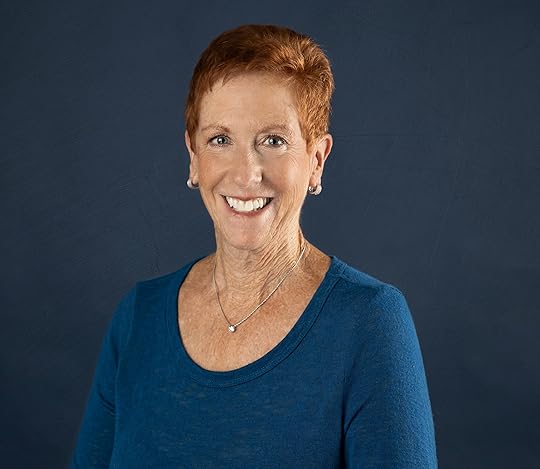
I’m delighted to welcome fellow Black Rose Writing author Linda Rosen to The Writer is a Lonely Hunter. Formerly a fitness professional, Linda became an novelist when her debut The Disharmony of Silence was published in March 2020. I’m so pleased to be able to connect with Linda who splits her time between New Jersey and Florida. As an early reader of Linda’s second novel Sisters of the Vine, I became immersed in the story of Liz, a most tenacious protagonist. I’m thrilled Linda has joined me for an interview to share more information about herself and her books.
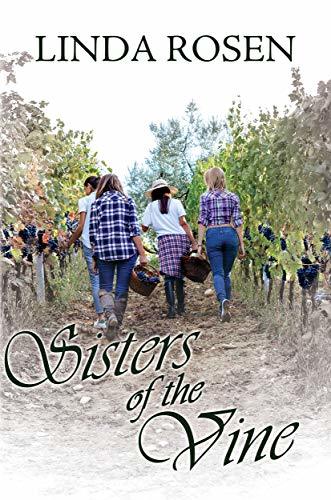
About Sisters of the Vine
Housewife and mother with a loving husband to take care of her – that’s all Liz, a Fifties gal, ever wanted. Over her father’s objections, she drops out of college to marry Rick, who dreams of living off the land. They buy a farm on a verdant hillside in the Hudson Valley, but can’t agree on what to plant. When they discover French-American hybrid grapes, Liz is confident they’ll be happy. Grapes are classy.
As the rich soil sinks into her soul and the vines begin to thrive, the marriage grows rocky. Refusing to disappoint her father again, Liz is determined to make her marriage work . . . until she discovers a photograph hidden in the old barn.
Faced with impossible decisions, Liz is desperate. She has a vineyard ready to harvest and no idea how to accomplish the task. Does she have the moxie to flourish? Or will she and the land turn fallow?
Sisters of the Vine is released 25 March 2021 and is available for pre-order through the publisher Black Rose Writing.
Q & A
Sisters of the Vine is your second novel, can you tell us about your debut, The Disharmony of Silence?
Thanks for asking. I’m happy to. The Disharmony of Silence is about a clandestine love affair in 1920s Brooklyn that leads to a family secret held for eighty-four years. Carolyn Lee, the protagonist, is desperate for family. When she discovers this shocking secret, she is determined, against all advice, to reveal it. The secret has the potential to tear lives apart. Or, it could bring her the closeness and comfort she longs for. It all depends on how she handles it.
T he Disharmony of Silence was published at the start of the pandemic. How did this impact on you as a writer launching a debut novel?
Actually, having my debut published during this time was, for me, the silver lining in this pandemic. With book events all turning to virtual, I was able to “meet” readers from all over, from places I never would have gotten to if events were in person. In addition, the writing community is extremely giving and many well-published authors stepped up to help promote me, as well as my fellow 2020 debuts. Facebook groups were formed with on-line book clubs and podcasts and Zoom took over virtual book talks and interviews. I’ve met so many wonderful writers who I now call friends. And met readers, as I’m doing now on your blog, who I probably never would have met if not for Covid 19 shutting down in-person events. That said, I am looking forward to this pandemic being over and am so very sorry for everyone who has lost a loved one to this horrendous virus.
A sense of place is important in Sisters of the Vine. How do you choose your settings?
Thank you. I worked hard for the vineyard to come alive. Settings are so important to me when I read a novel that I wanted to make mine evocative. I want my readers to inhabit place, smell the aromas and feel the textures. Therefore, I choose places that I know well, where I’ve walked the streets and ate the food, heard the birds sing, or as in Sisters of the Vine, stood in vineyards, felt the grapes in my fingers, smelled the rich moist earth and tasted the bold wine.
I understand the vine to be symbolic of womanhood in your novel. Was this your intention?
Absolutely. The original title for the book was Flourish because as the vines flourished, so did Liz and the women. I’m glad the title changed. Sisters of the Vine is so much better and, as I wrote the second and third drafts, and more, the vineyard became more of a character, more of a metaphor for Liz’s life and for all the women in the story – hopefully for all women in general.
An inherited diamond marquise ring features in Sisters of the Vine. Why did you include a piece of jewellery in each of your novels?
The Disharmony of Silence centers around the mystery of a cameo brooch. The painting in the story, of a woman wearing a cameo, is actually what brought me to write the book. When I added the diamond ring to Sisters of the Vine, it didn’t dawn on me that I had something going with jewelry. When it was pointed out to me that jewelry is part of my brand, I decided to stick with that and I’m adding an emerald to the book I’m working on now. So, to answer your question, I suppose it is simply organic. I hadn’t planned it for books one and two, but now, for future books, I am.
In Sisters of the Vine, we see the women characters offering each other mutual support. How do you plan character development in your novels?
Before I begin writing, I give my main characters a full biography: birth date, color of hair and eyes, body type, marital status, etc. and then I go deeper to their personalities, their idiosyncrasies, emotional triggers, habits, even if they get along with their mothers. I make them human, to the point that one day I was walking down the street and saw someone coming towards me and almost told my friend who was walking with me that the woman looked just like Carolyn (my protagonist in Disharmony)! Sometimes something happens when I wonder what Liz or Carolyn, Kate or any other character would say. I hope my characters are as real to my readers as they are to me.
You’ve now had two novels published, what’s next?
In addition to being interviewed and having virtual book talks for Sisters of the Vine, I’m working on book 3 set in South Florida in the late 1960s. At this point, I’m getting words on the page. I am what’s called a pantser. I don’t outline or plan too far ahead. I know my characters, my theme, and I have an idea where I’m going with the story and I let it come to me organically. The characters talk to me and sometimes when I wish they would keep quiet so I can sleep! It’s fun. And this has been fun, too, answering all your questions. Thank you for having me.
Gail’s review of Sisters of the Vine
Through wonderfully sensory writing, Linda Rosen’s second novel, Sisters of the Vine, explores a route to empowerment for the protagonist Liz Bergen. Sisters of the Vine is set in the 60s and 70s and documents Liz’s journey, from her days as a young wife and mother, through the ups and downs of married life, to a point where she resolves to build a successful business. With the support of other women, she establishes her own vineyard and winery in the Hudson River Valley. It is a story about overcoming adversity, nurturing self-belief and the power of sisterhood. I thoroughly enjoyed this story from start to finish. Well done, Linda Rosen!
More about Linda Rosen
Bio: Linda Rosen’s books are set in the “not-too-distant past” and examine how women reinvent themselves despite obstacles thrown their way. A central theme is that blood is not all that makes a family– and they always feature a piece of jewelry! Her debut novel, The Disharmony of Silence, released in March 2020 from Black Rose Writing. Linda was a contributor to Women in the Literary Landscape: A WNBA Centennial Publication for the Women’s National Book Association and has had stories published in online magazines and print anthologies. She is a member of the Women’s Fiction Writers Association and the Women’s National Book Association where she is National Recording Secretary and Selections Coordinator of the Great Group Reads committee which chooses books for National Reading Group Month.
Find out more about Linda on her website and Facebook, Instagram and Twitter.
Sisters of the Vine purchase links
Amazon USA, Amazon UK, Black Rose Writing (pre-order directly form the publisher and use the discount code PREORDER2020 to save 15%)
February 9, 2021
Cool new photography feature
I’ve just worked out how to use a slider to compare photos. Thrilled by this discovery, I wanted to share it with you immediately. The photo on the left is the view from my writing room yesterday and the right shows this morning.
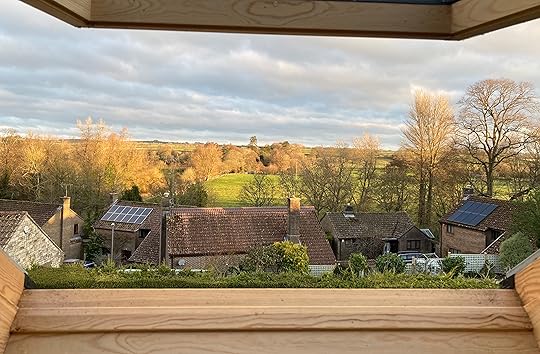
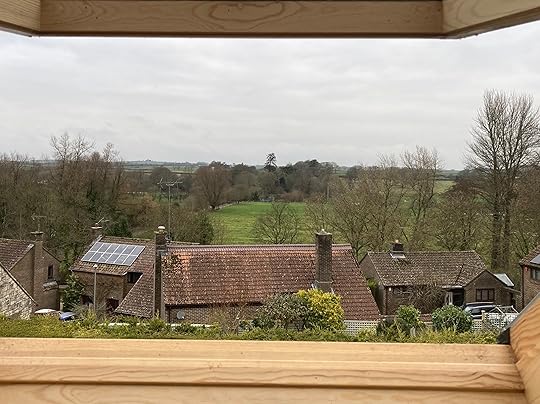 View from my window on consecutive days.
 It’s so much duller today but but I’m excited by the possibilities of this new feature. Watch this space as I try to improve my photography, and explore the benefits of WordPress further.
February 2, 2021
Lockdown walks
Although currently in lockdown, we are allowed to take daily exercise. David and I are in the habit of running one day and walking the next. We don’t run together as he’s much faster than me. On walking days, we cover a 10km loop that takes us along Poundbury hill fort to the village of Bradford Peverell and then through Charminster on the outskirts of Dorchester to home.
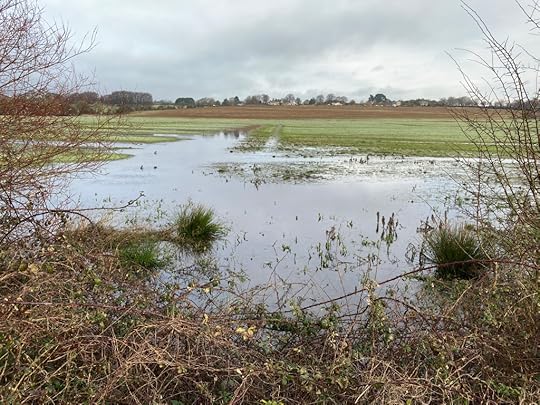
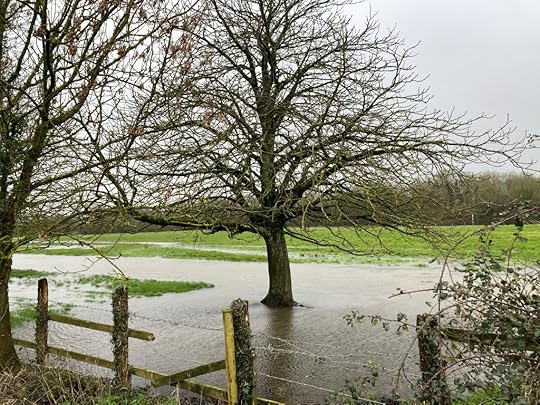
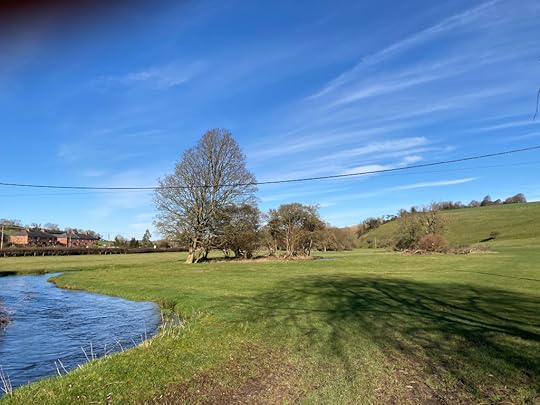
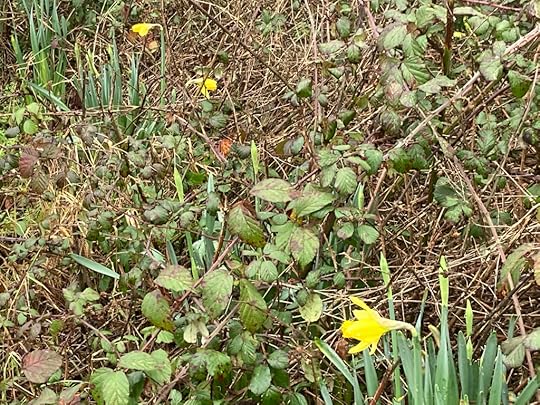
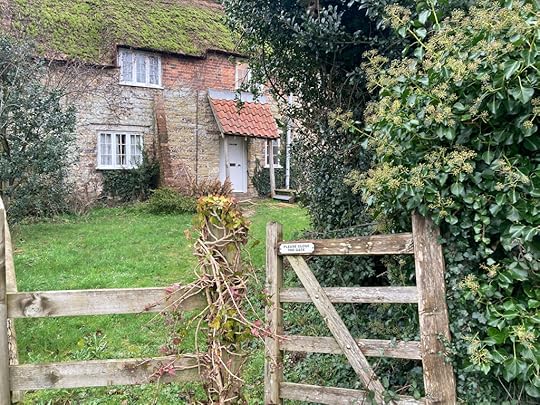
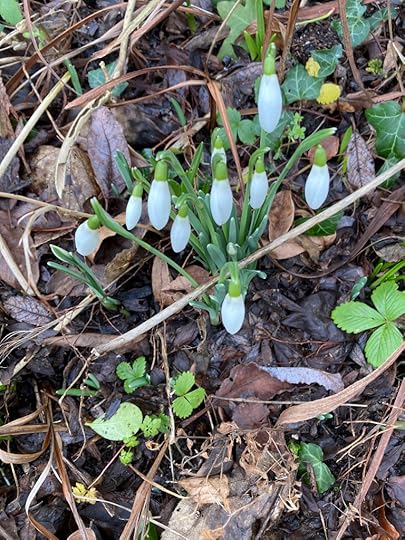
Here are some of the photos I’ve taken on recent walks. From flooded fields, to early buds, lambs in the fields and cottage homes, an azure sky to rain afoot. I hope you enjoy these images of Dorset.
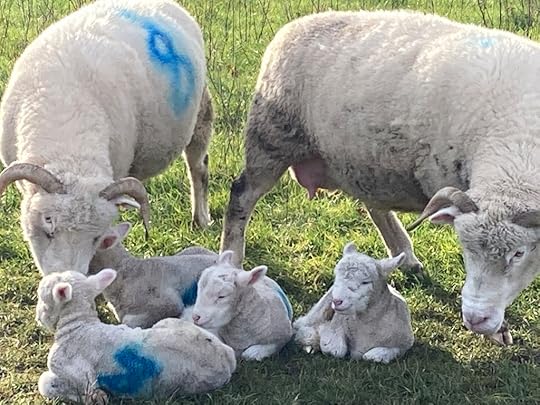
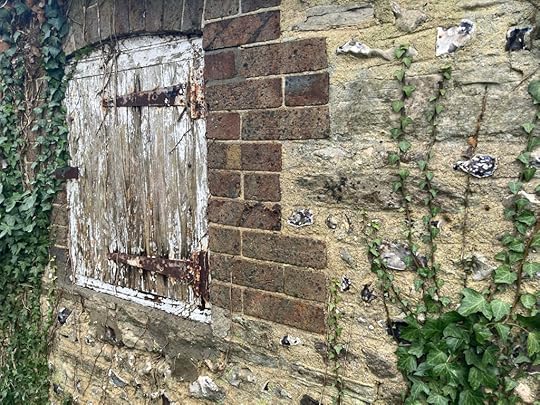
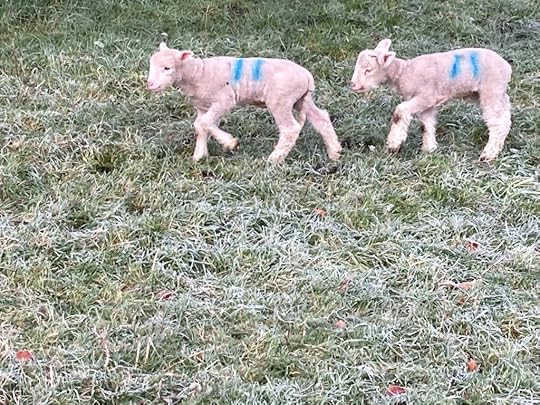
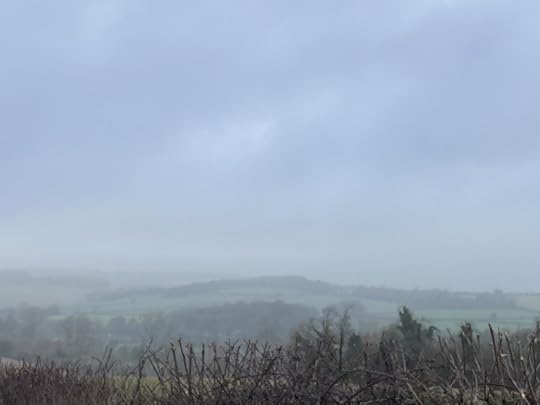
How are you coping during the pandemic?
January 23, 2021
Author and illustrator interview
Why not take a few minutes to watch this interview? Sit down, kick back – you may learn something fun and inspirational!
About illustrator, Fiona Zechmeister
Fiona holds a degree in Visual Communication and a Masters in Publishing from the University of Derby. She works as an illustrator creating book covers and children’s books. Pandemonium is the third children’s picture book Fiona has illustrated. The others are I am Adila from Gaza and Songo. Find out more about Fiona on her website: https://www.fionazeich.net
Twitter: https://twitter.com/fionazeichnet
Instagram: https://www.instagram.com/fionazeichnet/
About author, Gail Aldwin
Gail Aldwin is a novelist, poet and scriptwriter. Her debut coming-of-age novel The String Games was a finalist in The People’s Book Prize and the DLF Writing Prize 2020. Following a stint as a university lecturer, Gail’s children’s picture book Pandemonium was published. Gail loves to appear at national and international literary and fringe festivals. Prior to Covid-19, she volunteered at Bidibidi in Uganda, the second largest refugee settlement in the world. Her forthcoming contemporary novel This Much Huxley Knows uses a young narrator to show adult experiences in a new light. When she’s not gallivanting around the world, Gail writes at her home in Dorset.
Twitter: https://twitter.com/gailaldwin
Facebook: https://www.facebook.com/gailaldwinwriter/
About Victorina Press
Victorina Press was created by Consuelo Rivera-Fuentes. She is a Chilean-British writer and academic. Her mission is to publish inspirational and great books. To do this, Victorina Press follows the principles of bibliodiversity, a concept developed by a group of Chilean independent publishers — Editores independientes de Chile —in the late 1990s. It is now part of the ethos of many worldwide independent publishers. Diversity is beautiful.
January 20, 2021
Happy publication day, Joe Siple
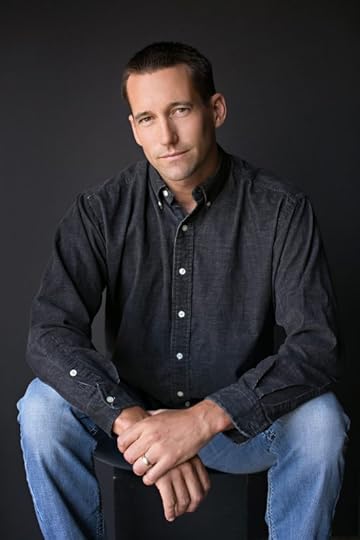
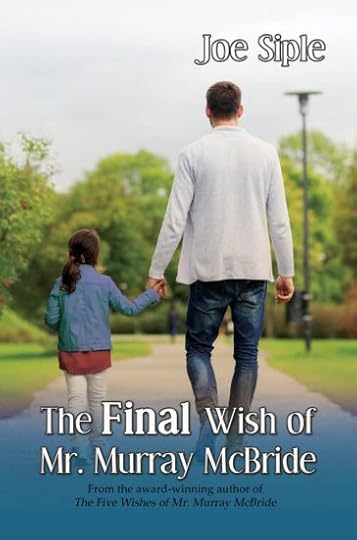
I’m delighted to welcome Joe Siple to The Writer is a Lonely Hunter. Joe is an established author published by Black Rose Writing, an independent press based in Texas. I was so impressed with Joe’s debut novel The Five Wishes of Mr. Murray McBride, I decided to submit my second novel to Black Rose Writing and this has now been accepted for publication. In the meantime, Joe’s sequel The Final Wish of Mr. Murray McBride will be published today, 21 January 2021. I was fortunate to be an early reader of this splendid sequel and I’m thrilled Joe has agreed to join me for an interview.
About The Final Wish of Mr. Murray McBride
Jason Cashman has reached the goal he spent the last twenty years seeking, but instead of feeling content, he feels empty. When he meets Alexandra Lopez, a ten-year-old America-loving girl facing deportation, he is inspired by his old friend, Murray McBride, to give her five wishes before she must leave.
They set out to check off as many wishes as possible, but when Jason’s transplanted heart begins to fail, he must choose between his obligations to the past and his hope for a future.
The interview
Q. I’m fascinated by the relationships between characters in your novels and particularly the strength of intergenerational friendships. What inspired you to write about this?
A. I’ve always been intrigued by how similar most people are, at their core. Yet people of all kinds–young and old, black and white, religious and atheist–seem so different on the surface. I find it fun to explore relationships where the characters find a way to get beyond their superficial differences, to the closeness we all crave.
Q. In The Final Wish of Mr. Murray McBride, your young protagonist faces an uncertain future in America due to ill health and her family’s immigration status. Why write about such a contentious issue?
A. There are two reasons. The first is a result of a family trip to Guatemala. During this “volunteer vacation” we saw the difference between people who were receiving money from a relative in the U.S.–some in the U.S. illegally– and those who weren’t. And I realized that if I were in their situation, I would also do whatever it took to provide for my family’s well-being. We also met many kind, gentle people there and I realized just how human they are, which is easy to lose sight of in the debate over immigration in this country.
The second reason was the result of the change in U.S. immigration policy that separated young children from their parents as a way to scare others from trying to cross the border illegally, as well as the “Remain in Mexico” policy that forced innocent families into territory run by Mexican drug lords. I knew that writing about these things could anger some readers and potentially hurt my career, but it was important that the people I reach with my book see the humanity in these people. I also think it’s important to note that I don’t believe we should have “open borders” and let anyone in. But I do think we need an immigration policy that treats people as human beings. That is the point I try to make with this book, and I believe making that point is worth the risk.
Q. There’s a three-year gap between publication of your debut novel and its sequel The Final Wish of Mr. Murray McBride. When and why did you decide to write a sequel?
A. I had been working on some other projects for a while after “The Five Wishes of Mr. Murray McBride” (although not the two books that were released during that time–those were written before “Five Wishes”). One day my publisher asked me, “What’s Jason Cashman up to now?” It was the first time I had even thought of writing a sequel. My first reaction was, “I have no idea.” I didn’t think there was a story there. But the more I thought about it, the more the new idea came together and I realized it could work. Turns out, it was one of the most enjoyable things to write.
Q. I notice you’ve written a middle grade book for children The Last Dogs. What are the differences in writing for adult and young readers?
A. I try not to think about my audience when I write, and simply tell the best story I can. But that being said, there’s definitely a different feel. For me, writing for young readers means either writing about lighter themes or burying those themes just a little deeper in the text than in adult fiction. Although I think my styles for adult and middle grade are very similar, which is something that developed over time.
Q. Your books have earnt many accolades and have a worldwide readership. What is it about your writing that appeals so broadly?
A. I think that can vary from reader to reader, but if I had to guess, I think it comes down to two things: authenticity and an ability to create an emotional experience for the reader. Authenticity in stories like mine is important because readers can see right through a writer who’s faking it. I think the advice, “Write what you know” is as true for voice as it is for subject matter. As for creating an emotional experience, I’ve improved at that as I’ve learned to really inhabit my characters. I’m certainly not the best writer around from a craft standpoint, but I have stumbled upon a way of making my characters real, and making (most of) my readers care about what happens to them.
Q. From your bio, I understand it took seventeen years to bring your first writing project to publication. What words of advice do you have for new writers?
A. Enjoy the process. Get lost in your stories. Writing should be fun! But also, don’t rush into publication. Wait until you’re good enough. It’s extremely rare that someone sits at their computer for the first time and writes an amazing story. Writing well takes time and practice and mistakes. It can be slow and frustrating. Some days you’ll feel like you’re the best writer on the planet and others you’ll be sure there’s never been a worse writer in the history of mankind. But when you finally write something that’s “good enough,” you’ll know. Maybe it will take seventeen years, like it did for me, or maybe it will take six months. But you’ll know. Then–and only then–should you make your move. Because you only get one debut, and it can affect the rest of your career.
Thank you for joining me, Joe. Wishing you the success you deserve with The Final Wish of Mr. Murray McBride.
My review of The Final Wish of Mr. Murray McBride
In The Final Wish of Mr. Murray McBride, Joe Siple takes readers on a remarkable and compassionate journey. We enter the lives of the young and the not so young, the healthy and those suffering from chronic illness. For Jason it’s about coping with a failing heart transplant and the complicated feelings he holds for the donor. Young Alexandra shows how it’s possible (given the right treatment) to manage disease effectively. Here we have fiction that extends the legacy of an earlier friendship with Mr. Murray McBride and continues the pattern of intergenerational relationships. It’s positive to see those suffering illness and disease given a platform. In a totally appropriate novel for our time, readers begin to understand the experiences of characters who seek a safer yet illegal life in America and who want nothing more than the opportunity to contribute to the community where appropriate help is offered. In this outstanding story, full of twists and turns, Joe Siple’s characters are courageous in the face of challenges but totally human with regrets, weaknesses, feelings of guilt, fears and hopes. This is a wonderfully affirming read which offers powerful messages about acceptance and belonging.
Purchase links
Amazon, Black Rose Writing, Bookshop
Joe’s social media links
January 7, 2021
Meet Dawn Knox

I’m delighted to welcome Dawn Knox to my blog today. We’ve both had stories in print and online anthologies from Bridge House Publishing and have met in person at London celebration events. Dawn writes in a range of genres so I’m thrilled to learn more about her latest release.

Dawn, please can you tell us about your new book?
Of course! It’s called The Macaroon Chronicles and it’s published by Chapeltown Publishing. It is a – hopefully – humorous romp on the fictitious Isle of Macaroon with Eddie the Bald Eagle who is really a chicken but doesn’t like to admit it and his friends: Brian, who’s a monkey, Colin who’s a lemur and doesn’t like to be referred to as a monkey, Gideon the failed spy who’s a pig and finally, two teenage rabbits, Babs and Deirdre, who are addicted to social media. The geography of the Isle of Macaroon is interesting because it contains Meringue Mountains with chocolate waterfalls, cheese mines, a custard river and the island itself, is surrounded by the Bouillabaisse Sea to the east and the Vichyssoise Ocean to the west.
How did you become interested in writing?
I’ve always read lots of books and made up stories in my head, probably as a result of being an only child, but writing stories only began about fifteen years ago when I was trying to help my, then, teenage son to complete his essay homework. In fact, I was actually trying to encourage him to start it! And the beginning of a story which I came up with interested me so much that I carried on writing it although I think my son thought of an idea of his own for his essay. But that incident began a real passion for writing and a few years ago when I had a bit of upset in my life and was feeling rather down I realised that writing was therapeutic and could lift me out of my thoughts and transport me to a different world. I’ve been writing each day ever since.
Do you prefer to write in any particular genre and if so, which?
I’ve tried many genres including sci-fi, speculative fiction, historical romance, horror and humorous, quirky stories. I’ve also won two prizes for non-fiction writing, which surprised me greatly! It would be hard to say which I prefer although it’s probably fair to say that I prefer the genre I’m writing in at that particular moment. The only genre I haven’t written is erotica and at the moment I have no plans to start that although if I did want to have a go, I think I’d use a pen name!
Of all the stories you’ve written, which is your favourite and why?
It would have to be one of those stories that are in my book The Great War – 100 Stories of 100 Words Honouring Those Who Lived and Died 100 Years Ago and I would probably pick a different one each day (well, at least for one hundred days!). I always describe that book as the one that contains my heart and soul. Writing a story in exactly 100 words necessarily means that it is a compact and concentrated story and of course the subject of the First World War is extremely emotive. But of all the stories I have written they are the ones which mean the most to me.
Have any of your characters ever decided to take things into their own hands and write themselves a bigger part or a different part than you’d intended? If so which one or ones?
Two of the characters in The Macaroon Chronicles are ones who wrote themselves larger parts. The first is Eddie the Bald Eagle who’s really a chicken and he came about when I was planning a short story to read at my writers’ group. I’d been watching a clip of the British ski-jumper Mike Edwards or as everyone knew him, ‘Eddie the Eagle’, who captured everyone’s hearts in the Winter Olympics of 1988 in Calgary. I thought ‘Eddie the Eagle’ was a fine name and initially, the character was going to be human but I thought it might be fun if he was actually a bird. And then to give him a twist, I turned him into a Bald Eagle and even more bizarrely, I decided that his vanity would compel him to represent himself as a bald eagle whereas in fact, he was a bald chicken. The other character was Gideon who merely popped up to help Eddie out of one of the many spots of bother in which he finds himself, but Gideon was so endearing with his incompetence and inability to pass his exams to become a fully-qualified spy, he earned his place in the rest of the book. He is completely inept at using the espionage tools he’s been given and has an unfortunate knack of shooting any bystanders with his sleeping-dart-tipped pens. So, Gideon was allowed to stay and he ended up joining Eddie, Colin and Brian on their adventures on the Isle of Macaroon.
Is there a specific word count to which you usually work either intentionally or unintentionally?
When I’m writing short stories, they tend to be between 2000 and 3000 words unless of course I am aiming for a Drabble which is exactly 100 words. However, I generally I end up with more words than I intend and then have to edit to cut back to the desired word count. But I think that’s good because it makes me think about the appropriate words and perhaps to cut out any waffle.
I notice food features greatly in your current work. Tell us more.
It certainly does, as I’ve said before, the Isle of Macaroon is made of many food-related geographical features and even the names of the towns reflect this, in that at the beginning, Eddie, Brian and Colin are heading to Spudwell to the stadium, to perform in a music concert. The chums’ boat is moored in Hummus-on-Sea and just before Christmas, Colin finds himself in Treacletart and on his way back to Hummus-on-Sea, he’s nearly run down by the bus from Eggsenham!
I assume you must like macaroons. True or false?
Unfortunately, I have to stick to a strict diet which limits carbohydrates. Nowadays I don’t eat macaroons at all but I adore anything that’s coconut flavoured.
In The Macaroon Chronicles, on the Isle of Macaroon, there are Meringue Mountains with chocolate waterfalls, cheese mines and a custard river. Sounds delicious! Where would you head to first?
Definitely the cheese mines would be my first port of call for the reason that I gave above, in that I have to limit the carbohydrates I eat. But perhaps a trip to the Bouillabaisse Sea might be quite tasty as well!
You can follow Dawn here on https://dawnknox.com
on Facebook: https://www.facebook.com/DawnKnoxWriter
on Twitter: https://twitter.com/SunriseCalls
Amazon Author: http://mybook.to/DawnKnox
The Macaroon Chronicles can be purchased here mybook.to/TheMacaroonChronicles