Stephen M. Holak's Blog, page 3
April 21, 2013
First Draft Finished, Random Ramblings
The first draft of The Winds of Heaven and Earth is in the bag and weighs in at 160,000 words. I'm spending the next few days going through and just reading it as a linear story (and correcting obvious typos and errors) before I start on the second draft. It's an incredibly good feeling to reach this point, because I *love* editing and re-writing; in my mind the hard part is done, even though there is a lot to fix and work on.
And now for something completely different.
As a science fiction fan, a child of the space age, a fan of and a huge promoter of science and science education (my daughter is a PhD marine scientist), I noticed a trend coalesce last week with several announcements in the aerospace industry.
The move to space privatization is picking up steam, and NASA's role is becoming increasingly . . . not marginalized, but rather evolving into a supporting role in the manned flight and space industry. Their primary role, now and in the future, is clearly in the slot of robotic science research and exploration, rather than cutting-edge trailblazing of human frontiers.
Private industry now launches satellites, supplies the International Space Station, will take the lead from Russia in the near future on shuttling humans back and forth to the Station, and will likely accomplish not only a human flyby of Mars first, but establish a colony there and on the Moon decades before any government agency on earth does, with deep-pockets former space tourist Denis Tito announcing a 2018 two-person flyby attempt, and Dutch startup Mars One planning a 2023 colonization initiative funded by reality TV income.
In addition, there are several corporations taking the lead in the potentially lucrative asteroid-mining business, with multiple startups announcing their future plans over the past few months.
NASA's role will--and should--be in the arena for scientific research, with continued programs like robotic probes of the outer solar system and space telescope programs to search for exoplanets around other stars and potential identification of life-bearing worlds around those distant suns. Private, commercial companies will continue to transition to the human exploration and resource exploration roles, similar to the pattern from centuries ago as the New World and Asian spheres were opened up by private industry after the initial exploratory expeditions were launched and funded by European governments.
In other words, the government functions as scout and target-setter, and private initiatives follow through. This is a model that has deep historical precedent, and it's encouraging that space exploration has reached this point.
As a member of the generation that watched Neil Armstrong's first steps onto the surface of the moon as a child, I'm am continually amazed that over forty years have passed (and Neil's death) without any forward progress; in my opinion, and the opinion of many, we've regressed. It a sad fact that it was political willpower in the context of the Cold War with the Soviet Union that launched the Space Age and propelled man to the moon; once that goal was achieved and the war ended, that will flagged and the public and government lost interest.
Now, commercial interests have picked up the baton. Is that the ideal? Not really, but it has precedent and moves things forward; and although some of us may not see human footprints on Mars in our lifetimes, at least we're moving forward to the long-term need of getting humankind out of this fragile cradle we're living in, and dispersed among the stars. That is the only way to ensure the long-term survival of our species. If the world's governments and political leaders--and even the general public--don't have the will and the interest, at least, hopefully, we'll get there someday, somehow.
For first-liner updates from me, please follow me on Twitter and Facebook as StephenMHolak.
And now for something completely different.
As a science fiction fan, a child of the space age, a fan of and a huge promoter of science and science education (my daughter is a PhD marine scientist), I noticed a trend coalesce last week with several announcements in the aerospace industry.
The move to space privatization is picking up steam, and NASA's role is becoming increasingly . . . not marginalized, but rather evolving into a supporting role in the manned flight and space industry. Their primary role, now and in the future, is clearly in the slot of robotic science research and exploration, rather than cutting-edge trailblazing of human frontiers.
Private industry now launches satellites, supplies the International Space Station, will take the lead from Russia in the near future on shuttling humans back and forth to the Station, and will likely accomplish not only a human flyby of Mars first, but establish a colony there and on the Moon decades before any government agency on earth does, with deep-pockets former space tourist Denis Tito announcing a 2018 two-person flyby attempt, and Dutch startup Mars One planning a 2023 colonization initiative funded by reality TV income.
In addition, there are several corporations taking the lead in the potentially lucrative asteroid-mining business, with multiple startups announcing their future plans over the past few months.
NASA's role will--and should--be in the arena for scientific research, with continued programs like robotic probes of the outer solar system and space telescope programs to search for exoplanets around other stars and potential identification of life-bearing worlds around those distant suns. Private, commercial companies will continue to transition to the human exploration and resource exploration roles, similar to the pattern from centuries ago as the New World and Asian spheres were opened up by private industry after the initial exploratory expeditions were launched and funded by European governments.
In other words, the government functions as scout and target-setter, and private initiatives follow through. This is a model that has deep historical precedent, and it's encouraging that space exploration has reached this point.
As a member of the generation that watched Neil Armstrong's first steps onto the surface of the moon as a child, I'm am continually amazed that over forty years have passed (and Neil's death) without any forward progress; in my opinion, and the opinion of many, we've regressed. It a sad fact that it was political willpower in the context of the Cold War with the Soviet Union that launched the Space Age and propelled man to the moon; once that goal was achieved and the war ended, that will flagged and the public and government lost interest.
Now, commercial interests have picked up the baton. Is that the ideal? Not really, but it has precedent and moves things forward; and although some of us may not see human footprints on Mars in our lifetimes, at least we're moving forward to the long-term need of getting humankind out of this fragile cradle we're living in, and dispersed among the stars. That is the only way to ensure the long-term survival of our species. If the world's governments and political leaders--and even the general public--don't have the will and the interest, at least, hopefully, we'll get there someday, somehow.
For first-liner updates from me, please follow me on Twitter and Facebook as StephenMHolak.


April 16, 2013
A Trend: Another Self-Published Author Hits #1
A few weeks ago, I posted about Jennifer L. Armentrout's success with Wait for You, the first self-published book to hit number one on the digital bestseller list.
This morning, Digital Book World announced in their daily newsletter that The Bet by Rachel Van Dyken was the best-selling eBook in the U.S. last week. The Bet is self-published.
Looks like a trend is kicking in here, Peeps. Now that the Big Six gatekeepers no longer can bar the doors to publication, more and more readers are voting with their wallets about the quality of independently-published fiction. We've all read a number of anecdotal success stories about authors rejected by traditional publishers having success in the self-publishing arena, but the success trend is not only growing in frequency, but in magnitude, which should be an inspiration to authors and aspiring authors everywhere. Put in the hard work and let the readers be the judges.
On the home front, The Winds of Heaven and Earth is sitting just short of 160,000 words, and I *swear* I will wrap the first draft this week.
I've done some work on the next book in the trilogy, The Dark Paths of the World, and even have an early cover concept.
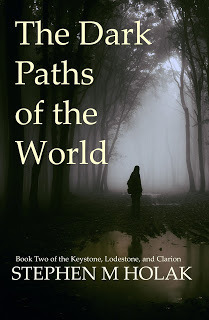
What I'm finding interesting is, even though The Winds of Heaven and Earth is in early draft, there are seeds taking root that's already propelling the plot and momentum of the next story. I already have the first chapter of DPW written, even though its predecessor is still a work in progress.
One final note before I wrap. I've seen a recent spike in sales for A Fairy for Bin Laden, which I attribute to my growing Twitter (@StephenMHolak) audience. If you don't already follow me there, please add me, and a Like on my Facebook Page would be appreciated as well.
Now back to work.
This morning, Digital Book World announced in their daily newsletter that The Bet by Rachel Van Dyken was the best-selling eBook in the U.S. last week. The Bet is self-published.
Looks like a trend is kicking in here, Peeps. Now that the Big Six gatekeepers no longer can bar the doors to publication, more and more readers are voting with their wallets about the quality of independently-published fiction. We've all read a number of anecdotal success stories about authors rejected by traditional publishers having success in the self-publishing arena, but the success trend is not only growing in frequency, but in magnitude, which should be an inspiration to authors and aspiring authors everywhere. Put in the hard work and let the readers be the judges.
On the home front, The Winds of Heaven and Earth is sitting just short of 160,000 words, and I *swear* I will wrap the first draft this week.
I've done some work on the next book in the trilogy, The Dark Paths of the World, and even have an early cover concept.

What I'm finding interesting is, even though The Winds of Heaven and Earth is in early draft, there are seeds taking root that's already propelling the plot and momentum of the next story. I already have the first chapter of DPW written, even though its predecessor is still a work in progress.
One final note before I wrap. I've seen a recent spike in sales for A Fairy for Bin Laden, which I attribute to my growing Twitter (@StephenMHolak) audience. If you don't already follow me there, please add me, and a Like on my Facebook Page would be appreciated as well.
Now back to work.
April 9, 2013
The Best of Times . . .
Before I switch over to the main point of this post, I'll just throw out a little "works in progress" update.
The Winds of Heaven and Earth is flying off the pen; I'm north of 150,000 words now and expect to wrap the first draft of that in about a week or 10,000 more words or so. That said, remember Hemingway's famous perspective on the state of an early manuscript: "The first draft of anything is shit." True dat; when I look back at prose I wrote over a year ago, I cringe. But it's raw materiel, and I force myself to think of it this way: I've just about finished excavating the marble that I'll now carve a statue of David from with my editing chisel. Or at least, his oversize penis.
(Clearly, this is a poor day for metaphor work, so maybe a bit of outlining is on the docket for the afternoon.)
I've also completed a detailed outline of the second book in the trilogy, The Dark Paths of the World, and written the first chapter of that installment (long story, but a scene I wrote near the end of The Winds of Heaven and Earth jumped all over me as the perfect opening for DPW, so I did some plot shuffling), and an rough outline for a children's book called Tinker's Chance, about a fifth-grader who discovers his principal is an evil robot who plans to replace the school's teachers with computers. TC won't be a graphic novel, but I'm thinking heavily illustrated; we'll see.
Shifting back to our regularly scheduled program, Digital Book World's daily newsletter (if you are an Indie author, or dabble at all in the eBook medium, I strongly urge you to subscribe to that free newsletter) showcased an interesting point / counterpoint today on the health of the current climate for authors, in light of all the tumultuous changes happening in the publishing industry..
On one side of the coin was lawyer, bestselling writer, and Author's Guild president Scott Turow. In his April 7th Op-Ed article "The Slow Death of the American Author" in the New York Times, Turow laments about (and somehow mixes): the recent Supreme Court decision to allow the importation and resale of foreign editions of American works, the minuscule eBook royalties doled out to authors already under contract to the Big Six, digital piracy, Google's actions ten years ago when it scanned and made available for free out-of-copyright or ambiguously copyrighted books, library book and eBook lending practices, and Amazon's recent patent to re-sell eBooks as a "sky is falling" invocation of doom and gloom.
Oh yeah. He closes with: "Last October, I visited Moscow and met with a group of authors who described the sad fate of writing as a livelihood in Russia. There is only a handful of publishers left, while e-publishing is savaged by instantaneous piracy that goes almost completely unpoliced. As a result, in the country of Tolstoy and Chekhov, few Russians, let alone Westerners, can name a contemporary Russian author whose work regularly affects the national conversation.
The Constitution’s framers had it right. Soviet-style repression is not necessary to diminish authors’ output and influence. Just devalue their copyrights."
Somebody, quick, hand me a tissue. Scott, jeez, I'm sorry you contracted-to-big-publisher best-selling authors are getting screwed out of eBook royalties. Take it up with your agent. (Or have your agent call Hugh Howey or Bella Andre's agents.)
Or maybe as president of the Author's Guild it's time to crawl out of the Big Six's bed and use your clout to help the little guy, ya think?
On the sunny side of the street was Jeremy Greenfield's article in Forbes "How the Authors Guild Is Kind of Like the NRA and Why Scott Turow Is Wrong About Authors", which, as you might guess from the title, strongly disagrees with Turow.
He goes on to question (identically to an issue I also had with Turow's piece), "So, who is Turow defending with his New York Times editorial? The small percentage of authors who benefited the most from the old publishing paradigm and who have not found a way to benefit from the new and the equally small group of authors who would have been their successors if publishing had stayed the same."
Spot on, though to be fair I believe Greenfield's comparison of the Author's Guild to the NRA is a stretch, although clever.
Greenfield goes on to cover other stuff, namely the hit non-fiction authors are taking in the new climate, but his main takeaway is the perspective I agree with: now is probably the best time in the industry's history to be an author. When paradigms shift, there are always winners and losers, but I believe in this case that the former heavily outweigh the latter.
The main barriers to club entrance--the artificial judgment practices of the old publishing industry stalwarts--are gone, and an author can write and publish with the confidence that if his work is good, it *will* find an audience. No one, now, can keep that from you. Except you.
Now stop reading blogs and online articles and go write.
The Winds of Heaven and Earth is flying off the pen; I'm north of 150,000 words now and expect to wrap the first draft of that in about a week or 10,000 more words or so. That said, remember Hemingway's famous perspective on the state of an early manuscript: "The first draft of anything is shit." True dat; when I look back at prose I wrote over a year ago, I cringe. But it's raw materiel, and I force myself to think of it this way: I've just about finished excavating the marble that I'll now carve a statue of David from with my editing chisel. Or at least, his oversize penis.
(Clearly, this is a poor day for metaphor work, so maybe a bit of outlining is on the docket for the afternoon.)
I've also completed a detailed outline of the second book in the trilogy, The Dark Paths of the World, and written the first chapter of that installment (long story, but a scene I wrote near the end of The Winds of Heaven and Earth jumped all over me as the perfect opening for DPW, so I did some plot shuffling), and an rough outline for a children's book called Tinker's Chance, about a fifth-grader who discovers his principal is an evil robot who plans to replace the school's teachers with computers. TC won't be a graphic novel, but I'm thinking heavily illustrated; we'll see.
Shifting back to our regularly scheduled program, Digital Book World's daily newsletter (if you are an Indie author, or dabble at all in the eBook medium, I strongly urge you to subscribe to that free newsletter) showcased an interesting point / counterpoint today on the health of the current climate for authors, in light of all the tumultuous changes happening in the publishing industry..
On one side of the coin was lawyer, bestselling writer, and Author's Guild president Scott Turow. In his April 7th Op-Ed article "The Slow Death of the American Author" in the New York Times, Turow laments about (and somehow mixes): the recent Supreme Court decision to allow the importation and resale of foreign editions of American works, the minuscule eBook royalties doled out to authors already under contract to the Big Six, digital piracy, Google's actions ten years ago when it scanned and made available for free out-of-copyright or ambiguously copyrighted books, library book and eBook lending practices, and Amazon's recent patent to re-sell eBooks as a "sky is falling" invocation of doom and gloom.
Oh yeah. He closes with: "Last October, I visited Moscow and met with a group of authors who described the sad fate of writing as a livelihood in Russia. There is only a handful of publishers left, while e-publishing is savaged by instantaneous piracy that goes almost completely unpoliced. As a result, in the country of Tolstoy and Chekhov, few Russians, let alone Westerners, can name a contemporary Russian author whose work regularly affects the national conversation.
The Constitution’s framers had it right. Soviet-style repression is not necessary to diminish authors’ output and influence. Just devalue their copyrights."
Somebody, quick, hand me a tissue. Scott, jeez, I'm sorry you contracted-to-big-publisher best-selling authors are getting screwed out of eBook royalties. Take it up with your agent. (Or have your agent call Hugh Howey or Bella Andre's agents.)
Or maybe as president of the Author's Guild it's time to crawl out of the Big Six's bed and use your clout to help the little guy, ya think?
On the sunny side of the street was Jeremy Greenfield's article in Forbes "How the Authors Guild Is Kind of Like the NRA and Why Scott Turow Is Wrong About Authors", which, as you might guess from the title, strongly disagrees with Turow.
He goes on to question (identically to an issue I also had with Turow's piece), "So, who is Turow defending with his New York Times editorial? The small percentage of authors who benefited the most from the old publishing paradigm and who have not found a way to benefit from the new and the equally small group of authors who would have been their successors if publishing had stayed the same."
Spot on, though to be fair I believe Greenfield's comparison of the Author's Guild to the NRA is a stretch, although clever.
Greenfield goes on to cover other stuff, namely the hit non-fiction authors are taking in the new climate, but his main takeaway is the perspective I agree with: now is probably the best time in the industry's history to be an author. When paradigms shift, there are always winners and losers, but I believe in this case that the former heavily outweigh the latter.
The main barriers to club entrance--the artificial judgment practices of the old publishing industry stalwarts--are gone, and an author can write and publish with the confidence that if his work is good, it *will* find an audience. No one, now, can keep that from you. Except you.
Now stop reading blogs and online articles and go write.
March 29, 2013
Amazon Marries Goodreads: What does it Mean?
I'm usually not real savvy about figuring out what things like yesterday's Amazon acquisition of book review site Goodreads means--at least until somebody draws me a picture. But after a day or so of watching the boards and reading blogs and getting the sense of the Twitter zeitgeist, a few things have become clear.
One consensus emerging is that Amazon will *probably* not mess with GR too much; this has been their M.O. in the past in the M & A space, and doing so will run counter to the spin that's been coming out of Amazon and GR in the past 24-plus hours, such as "It’s incredibly important to us that Goodreads remain a platform for all kinds of readers to use, whether they’re reading paper or on their Nook or Kindle or whatever." (GR CEO Otis Chandler)
Authors and readers on the Kindle Boards seem split about the union. One powerful voice that falls squarely in the "this is a good thing for books" camp is ground-breaking best-selling Indie-turned-traditionally-published WOOL author Hugh Howey, who blogged on his site : "I can think of a dozen ways this acquisition might make my life better as both a reader and an author. Right now, I spend a lot of time on both sites in both capacities. My guess is that we won’t see many changes at all. I’m betting that the real acquisition here is all the data behind the scenes. The algorithms that tell me what to buy (and almost always nail it) are going to get better. The social networks that feed my reading habit are going to get stronger. The people who helped make Goodreads awesome are going to get richer. And the people at Amazon, who I have gotten to know this past year and who to a man and woman love the fuck out of some books, are going to keep trying to get the right ones in the hands of readers."
What this seems to be about is discovery. Goodreads and Amazon were the top two web presences for both review and discovery, and now they've moved into the same house; the synergy should be powerful.
And another theme emerging is that this is another brilliant body-shot-to-the-gut at Barnes and Noble. Digital Book World passed on this assessment from a publishing consultant named Thad McIlroy this morning: “Out of all the commenting about books, Goodreads was the most powerful ecosystem for recommending what you read next and Amazon was a close second. Now it’s just Amazon . . . [w]ith the collapse of the Nook [B&N's] lost the online game and we just have to count out the final steps.”
Big gorillas make people uneasy; rightly so. But authors that have inside knowledge and long experience with Jeff Bezos and Amazon seem comfortable and assured that, yes, it's just business, and business is cold-hearted sometimes, but in the end the culture at Amazon is strongly pro-reader, pro-book, and pro-author, and unless you collect your paycheck from BN, the pluses will likely far outweigh the minuses.
Time will tell. Film at 11. All that good stuff.
One consensus emerging is that Amazon will *probably* not mess with GR too much; this has been their M.O. in the past in the M & A space, and doing so will run counter to the spin that's been coming out of Amazon and GR in the past 24-plus hours, such as "It’s incredibly important to us that Goodreads remain a platform for all kinds of readers to use, whether they’re reading paper or on their Nook or Kindle or whatever." (GR CEO Otis Chandler)
Authors and readers on the Kindle Boards seem split about the union. One powerful voice that falls squarely in the "this is a good thing for books" camp is ground-breaking best-selling Indie-turned-traditionally-published WOOL author Hugh Howey, who blogged on his site : "I can think of a dozen ways this acquisition might make my life better as both a reader and an author. Right now, I spend a lot of time on both sites in both capacities. My guess is that we won’t see many changes at all. I’m betting that the real acquisition here is all the data behind the scenes. The algorithms that tell me what to buy (and almost always nail it) are going to get better. The social networks that feed my reading habit are going to get stronger. The people who helped make Goodreads awesome are going to get richer. And the people at Amazon, who I have gotten to know this past year and who to a man and woman love the fuck out of some books, are going to keep trying to get the right ones in the hands of readers."
What this seems to be about is discovery. Goodreads and Amazon were the top two web presences for both review and discovery, and now they've moved into the same house; the synergy should be powerful.
And another theme emerging is that this is another brilliant body-shot-to-the-gut at Barnes and Noble. Digital Book World passed on this assessment from a publishing consultant named Thad McIlroy this morning: “Out of all the commenting about books, Goodreads was the most powerful ecosystem for recommending what you read next and Amazon was a close second. Now it’s just Amazon . . . [w]ith the collapse of the Nook [B&N's] lost the online game and we just have to count out the final steps.”
Big gorillas make people uneasy; rightly so. But authors that have inside knowledge and long experience with Jeff Bezos and Amazon seem comfortable and assured that, yes, it's just business, and business is cold-hearted sometimes, but in the end the culture at Amazon is strongly pro-reader, pro-book, and pro-author, and unless you collect your paycheck from BN, the pluses will likely far outweigh the minuses.
Time will tell. Film at 11. All that good stuff.
March 27, 2013
. . . That, and 3 Billion Will Buy You a Cuppa Joe
Random House's daddy Bertelsmann released its annual report today, which included a piece on the stunning success and corporate bottom-line impact of last year's runaway best seller Fifty Shades of Grey (you may have heard of it.)
The report served up three lessons learned from the Fifty Shades event: new strategies, speed, and, (I'm not making this up) "blocking and tackling" (“Instinct and intuition will continue to play a forward role in book publishing, but they go hand-in-hand with personal relationships, response time, maximizing digital and print delivery, operational excellence, and having strong creative teams.”) Whatever.
The "strategies" lesson acknowledges that the publisher must "look beyond traditional routes and consider different strategies when it comes to acquisitions.” In other words, take a harder and closer look at up-and-coming Indie authors as they start to demonstrate some success--like Fifty Shades author E.L James did--and recruit them as corporate assets before their competitors do, or before all the profits go in the authors' pockets.
"Speed:" The report called this "an instance where a publisher acted swiftly to arrange a meeting with the author and her agent, and then just as quickly we structured a deal to bring the books to market as soon as possible.” (Holy Shit! This dirty little piece of Indie trash is selling like hotcakes and we want a piece of that! Quick. Git 'er, Ray.)
And we already covered the "blocking and tackling" corpo-jabber. ("Personal Relationships." Please. That one cost me a nose full of Starbucks French Roast .)
It's important to note that these lessons were not humble acknowledgments of the paradigm shift taking place in the publishing world, and a bugle call for RH to lead the charge of the Big Six into a Brave New World, but rather a wake up, a strong cup of coffee intended to sober up the troops.
Peeps, Random House has raked in over three billion in revenue (four-hundred million profit) from Fifty Shades. Imagine the corporate bottom line without that title and its sequels. These lessons don't spring from concern for authors or an interest in making the publishing model more equitable for all the players in the industry. Don't make it out to be anything more than it is.
Maybe I'm a cynic. Maybe I'm the only one not eagerly watching for their "strong creative teams" to re-evaluate and establish warm and fuzzy "personal relationships" with authors with better contract terms for the writers who sweat blood to bring their marvelous stories to life for readers.
Yeah, like maybe the contract terms their new "digital imprints" tried to slip on us before John Scalzi told 'em where to stick 'em?
Sounds personal to me.
March 21, 2013
The Other Side of the Coin
My last few blog posts have centered around the dark side of the new Indie publishing world, the predatory practices of the new imprints that are popping up and trying to lure aspiring Indie authors into the woods, notably Random House's new "digital imprints" whose horrible contract terms were called out by John Scalzi, head of the SFWA in an open letter that went viral and brought down an f-ton of public wrath on RH. RH quickly capitulated, offering somewhat better terms, but I warned that we all need to stay vigilant for these sharks, have our heads on a swivel, and look out for ourselves and fellow authors.
In this post, I want to call out the other side of the coin, one of the inspiring success stories that the new publishing model facilitates: the stunning home run hit by Jennifer L. Armentrout.
Indie (well, hybrid) author Armentrout's Wait for You, a young adult book which she self-published under the pen name J. Lynn, hit number 1 on the best seller lists a few weeks ago, and kept that position for two consecutive weeks on Digital Book World's eBook best-seller list.
Peeps, if you don't know this you should: Armentrout's book is the first self-published work to hit number 1.
Riding that wave, she signed a "high six-figure" deal for three books with HarperCollins.
If that doesn't inspire, I don't know what will. Her book was rejected as "too risky" by traditional publishers, but she knew in her heart an audience existed for it, and she plugged away on her own and now she reaps the rewards of that work and determination.
In a few guest blogs last year I wrote about the new publishing model, and the demise of the gatekeepers that stood between the author and the reader. I urged then, and I urge now, to write for yourself, stick with it, finish your project, edit it, get a great cover and draft a great book blurb and put it out there. With a little marketing and word-of-mouth, it will find its audience and it it's good you'll gather some success. No one can stop the reader from judging your works anymore--except yourself, if you don't publish.
Not everyone is going to see the success of a JA Konrath, or an Amanda Hocking, or a Hugh Howey, or a Jen Armentrout. But your writing will find an audience if you publish it. And no one can stop you--but you.
Now, while that fire burns bright, go write.
In this post, I want to call out the other side of the coin, one of the inspiring success stories that the new publishing model facilitates: the stunning home run hit by Jennifer L. Armentrout.
Indie (well, hybrid) author Armentrout's Wait for You, a young adult book which she self-published under the pen name J. Lynn, hit number 1 on the best seller lists a few weeks ago, and kept that position for two consecutive weeks on Digital Book World's eBook best-seller list.
Peeps, if you don't know this you should: Armentrout's book is the first self-published work to hit number 1.
Riding that wave, she signed a "high six-figure" deal for three books with HarperCollins.
If that doesn't inspire, I don't know what will. Her book was rejected as "too risky" by traditional publishers, but she knew in her heart an audience existed for it, and she plugged away on her own and now she reaps the rewards of that work and determination.
In a few guest blogs last year I wrote about the new publishing model, and the demise of the gatekeepers that stood between the author and the reader. I urged then, and I urge now, to write for yourself, stick with it, finish your project, edit it, get a great cover and draft a great book blurb and put it out there. With a little marketing and word-of-mouth, it will find its audience and it it's good you'll gather some success. No one can stop the reader from judging your works anymore--except yourself, if you don't publish.
Not everyone is going to see the success of a JA Konrath, or an Amanda Hocking, or a Hugh Howey, or a Jen Armentrout. But your writing will find an audience if you publish it. And no one can stop you--but you.
Now, while that fire burns bright, go write.
March 16, 2013
Well, We Might Have Chopped Off *A* Head . . .
Earlier this week, I posted a blog about the public letter wars between Random House and the Science Fiction Writers of America (SFWA) over RH's new "digital imprint" and their horrible contract terms for eBook authors. I had an opportunity to ask best-selling
Wool
author Hugh Howey his thoughts on the conflict on Reddit, where he was hosting an AMA--Ask Me Anything--and he replied "Scalzi is a badass. Those contracts were bullshit. Good to see the power of some internet outrage making a change."
The change he is referring to is the public capitulation of RH to the pressure brought forth by SFWA and other authors. (John Scalzi is an author and president of the SFWA.)
As Wired.com reported on Thursday, "In the face of such upset, Random House announced on Tuesday that it would change its contracts, offering prospective authors a choice between a 50/50 profit share with no upfront money and a more traditional advance-plus-royalty model where authors receive some money prior to release, as well as 25 percent of whatever profits the title generates upon publication.
Whichever option is chosen, the Random House imprints will cover production and promotional costs – although promotional costs above $10,000 will be shared between publisher and author in the profit-share model — and will receive publication rights throughout the world in all languages for the duration of copyright unless the digital release falls beneath a particular sales level — 300 copies in 12 months — in which case the author can request rights reversion."
Scalzi went on to say, "The goal here is not to be able to lift the bloodied head of Random House and boast we have taken a hit,” he said. “The goal here is to make sure that writers are being compensated fairly for work they have done and will do."
So this is good thing, right? Yes it is. Fist pump.
But.
As I said in my post, Random House's foray is just one sample of the many predators looking to lunch on new authors anxious to break into digital print. SFWA later in the week reposted YA author Victoria Strauss's similar salvo on Writer Beware against PublishAmerica.
No one has relaxed his or her guard. And no one should. It's going to get worse before it gets better, and authors need to continue to stand their ground and fight these battles for themselves and fellow authors.
These victories are a good beginning.
Or, to paraphrase the late Robert Jordan, it's not the beginning, but it's a beginning.
The change he is referring to is the public capitulation of RH to the pressure brought forth by SFWA and other authors. (John Scalzi is an author and president of the SFWA.)
As Wired.com reported on Thursday, "In the face of such upset, Random House announced on Tuesday that it would change its contracts, offering prospective authors a choice between a 50/50 profit share with no upfront money and a more traditional advance-plus-royalty model where authors receive some money prior to release, as well as 25 percent of whatever profits the title generates upon publication.
Whichever option is chosen, the Random House imprints will cover production and promotional costs – although promotional costs above $10,000 will be shared between publisher and author in the profit-share model — and will receive publication rights throughout the world in all languages for the duration of copyright unless the digital release falls beneath a particular sales level — 300 copies in 12 months — in which case the author can request rights reversion."
Scalzi went on to say, "The goal here is not to be able to lift the bloodied head of Random House and boast we have taken a hit,” he said. “The goal here is to make sure that writers are being compensated fairly for work they have done and will do."
So this is good thing, right? Yes it is. Fist pump.
But.
As I said in my post, Random House's foray is just one sample of the many predators looking to lunch on new authors anxious to break into digital print. SFWA later in the week reposted YA author Victoria Strauss's similar salvo on Writer Beware against PublishAmerica.
No one has relaxed his or her guard. And no one should. It's going to get worse before it gets better, and authors need to continue to stand their ground and fight these battles for themselves and fellow authors.
These victories are a good beginning.
Or, to paraphrase the late Robert Jordan, it's not the beginning, but it's a beginning.
March 11, 2013
A Many-Headed Beast Rises
Anyone in the writing or publishing business keeps a close eye on trending in the self publishing business (or "Indie" publishing, the current popular moniker), especially Indie authors like myself, and if they do, they should be aware of the disturbing events taking place in the past week or so, manifesting themselves in the public letter-war between the Science Fiction Writers of America (SFWA) and Random House.
To recap, RH has launched a new "digital imprint," called Hydra, the latest mushroom to pop up in the fertile grounds around eBooks, digital publishing, and the Indie writers' movement. They propose to "partner" with authors to publish their eBooks, taking on the traditional publisher role of editorial services, cover art, promotion, etc. You supply the creative content, sit back, we'll do the rest.
Hey. Here'a lollipop--wanna go for a ride?
Reading more closely--and this is what SFWA and a growing mob of horrified authors are objecting to--Hydra offers no advance on sales, proposes to split net profits 50/50 with the author . . . after production costs. So the services they're "offering" actually come out of the author's pocket, and it's pretty well acknowledged in the industry that accounting practices on those and other publisher costs are pretty fluid and fuzzy. In case you missed it, I'll say it again: Hydra's offering to provide the traditional publisher services, but it comes out of the author's sales. They call that "sharing the risks." As SFWA states it: "[your] attempt to shift to the author costs customarily borne by the publisher is, simply, outrageous and egregious."
Ya think?
But wait, folks; there's more. They are also proposing to basically keep the rights to the works for life of copyright. Peeps, eBooks do not go out of print. That means, they hold the rights to your stuff until you die, and after. That means if they don't do a good job of promoting, or your sales lag, or the cover they stick you with sucks, you don't have the freedom you have now with KDP or CreateSpace or Smashwords or Kobo or any other self-publishing medium to revise, price, tinker, repackage, offer a free promo period, or publish in any way. You do not own your work. You have no say. Rights never revert back to you. Never.
Again, the Dick-and-Jane version: Hydra wants you to write a book for them, to pay them to edit, format, publish and promote it, and you will trust them to count the beans and split the profits with you after they skim out their costs. And they keep the rights forever--your baby belongs to them.
Snake oil, anyone?
This may sound fair to an author aspiring to break into publication, but to those of us who have already gone the Indie route know that there it's not that hard to format your work using everyday word-processing software, that eBook conversion software is free, there are many artists eager to do a book cover for a reasonable fee, and good editorial services are becoming more and more economical as the traditional publishing houses continue to implode from poor decisions and the pressure of the eBook / Indie movement.
The costs of publishing an eBook are minimal, running at most to the hundreds of dollars--why on earth would you give up your child for that price? And why would you give the publisher half--after costs--when Amazon lets you keep 70%, and you can do what the hell you want with your stuff whenever you want?
This looks like an isolated incident, but it's not. It's part of the growing trend of predatory practices around the eBook and self-publishing explosion; everyone wants a slice of the pie, but not everyone wants to earn it. Self-pub authors deserve every penny for their works, for as long as they live, because they are doing all the work. But new authors drawn into the business by the publicity of the industry's success may not be savvy enough to avoid the pitfalls that are starting to spring up, traps laid by greedy publishing houses that missed the first wave of success because they had their heads . . . in the sand, and want to get on the board now--at your expense.
The price of freedom, they say, is eternal vigilance. I urge all of you to look out for new authors entering the biz, and to watch your own backs as well. There are some legitimate digital publishers out there, and some successful Indie authors have signed careful contracts with the publishing houses, and the so-called hybrids; but Hydra ain't one of them.
Let's cut off every one of the monster's heads, before we're playing Whack-a-Mole
To recap, RH has launched a new "digital imprint," called Hydra, the latest mushroom to pop up in the fertile grounds around eBooks, digital publishing, and the Indie writers' movement. They propose to "partner" with authors to publish their eBooks, taking on the traditional publisher role of editorial services, cover art, promotion, etc. You supply the creative content, sit back, we'll do the rest.
Hey. Here'a lollipop--wanna go for a ride?
Reading more closely--and this is what SFWA and a growing mob of horrified authors are objecting to--Hydra offers no advance on sales, proposes to split net profits 50/50 with the author . . . after production costs. So the services they're "offering" actually come out of the author's pocket, and it's pretty well acknowledged in the industry that accounting practices on those and other publisher costs are pretty fluid and fuzzy. In case you missed it, I'll say it again: Hydra's offering to provide the traditional publisher services, but it comes out of the author's sales. They call that "sharing the risks." As SFWA states it: "[your] attempt to shift to the author costs customarily borne by the publisher is, simply, outrageous and egregious."
Ya think?
But wait, folks; there's more. They are also proposing to basically keep the rights to the works for life of copyright. Peeps, eBooks do not go out of print. That means, they hold the rights to your stuff until you die, and after. That means if they don't do a good job of promoting, or your sales lag, or the cover they stick you with sucks, you don't have the freedom you have now with KDP or CreateSpace or Smashwords or Kobo or any other self-publishing medium to revise, price, tinker, repackage, offer a free promo period, or publish in any way. You do not own your work. You have no say. Rights never revert back to you. Never.
Again, the Dick-and-Jane version: Hydra wants you to write a book for them, to pay them to edit, format, publish and promote it, and you will trust them to count the beans and split the profits with you after they skim out their costs. And they keep the rights forever--your baby belongs to them.
Snake oil, anyone?
This may sound fair to an author aspiring to break into publication, but to those of us who have already gone the Indie route know that there it's not that hard to format your work using everyday word-processing software, that eBook conversion software is free, there are many artists eager to do a book cover for a reasonable fee, and good editorial services are becoming more and more economical as the traditional publishing houses continue to implode from poor decisions and the pressure of the eBook / Indie movement.
The costs of publishing an eBook are minimal, running at most to the hundreds of dollars--why on earth would you give up your child for that price? And why would you give the publisher half--after costs--when Amazon lets you keep 70%, and you can do what the hell you want with your stuff whenever you want?
This looks like an isolated incident, but it's not. It's part of the growing trend of predatory practices around the eBook and self-publishing explosion; everyone wants a slice of the pie, but not everyone wants to earn it. Self-pub authors deserve every penny for their works, for as long as they live, because they are doing all the work. But new authors drawn into the business by the publicity of the industry's success may not be savvy enough to avoid the pitfalls that are starting to spring up, traps laid by greedy publishing houses that missed the first wave of success because they had their heads . . . in the sand, and want to get on the board now--at your expense.
The price of freedom, they say, is eternal vigilance. I urge all of you to look out for new authors entering the biz, and to watch your own backs as well. There are some legitimate digital publishers out there, and some successful Indie authors have signed careful contracts with the publishing houses, and the so-called hybrids; but Hydra ain't one of them.
Let's cut off every one of the monster's heads, before we're playing Whack-a-Mole
February 22, 2013
Renaissance
Yo. Remember me?
I knew it had been a while since I posted, but I was shocked to see that the last post was dated September 18th, when I broadcast my guest post on author Louise Wise's site.
Without going into details, I had a personal life transition-and-upheaval period that sapped time, energy, and motivation away from my writing projects. It's not quite over, but in the past few weeks, I've been slowly digging out from under, and I have the ship underway again. In the last week I've really hit stride, and my per-day word output has hovered in the 1,000 - 2,000 range. And I think it's good stuff.
Some of that I credit to Stephen King's memoir on the craft of writing, (brilliantly titled: On Writing). It's been on my to-read list for a half-dozen years now, and when I saw it on the shelf of a used books store, I grabbed it and gobbled it up in a few days. I think we've all had experiences with a precipitator or Gordian knot-cutter that inspired us and pulled us out of a rut (if you'll permit that clutter of mixed metaphors); although more than half the book was autobiography, it got me going again--with energy.
The novel has turned onto the home stretch and is headed into the last fifth to seventh. I obviously missed my publication goal of mid-December, and don't want to reset expectations unrealistically, but I'm aiming for sometime before June. There's a lot of re-writing, editing, subplot additions, and the formatting and grunt work to do after the first draft is finished in the next month or two, (oh, shit, a cover . . .!) but I can see light at the end of the tunnel, finally, and it's not a train.
I'm also looking for beta readers in about 30-60 days.
Although I have about 12 working titles, the one I'm (currently) favoring is The Winds of Heaven and Earth. Those of you who are lit-savvy may pick up on the Melville reference out of the gate; the rest of you will will have to get Google do your heavy lifting. (And those of you who just have to know more: I was researching for materiel that would make epigraphs that would fit with the themes emerging from the book, and I was struck by the resonance of that passage with my work's themes and imagery.)
I've been coy with details on the book's plot, other than it's the first volume in an epic fantasy trilogy; but I'm pretty settled on the tagline as well, which will give you some insight:
“A wealthy North Carolina aristocrat investigating the mysterious disappearance of his pregnant wife discovers that his family is central to a magical realm’s ancient prophecy.”
That's all for now; back to work. I promise I'll drop by more often.
I knew it had been a while since I posted, but I was shocked to see that the last post was dated September 18th, when I broadcast my guest post on author Louise Wise's site.
Without going into details, I had a personal life transition-and-upheaval period that sapped time, energy, and motivation away from my writing projects. It's not quite over, but in the past few weeks, I've been slowly digging out from under, and I have the ship underway again. In the last week I've really hit stride, and my per-day word output has hovered in the 1,000 - 2,000 range. And I think it's good stuff.
Some of that I credit to Stephen King's memoir on the craft of writing, (brilliantly titled: On Writing). It's been on my to-read list for a half-dozen years now, and when I saw it on the shelf of a used books store, I grabbed it and gobbled it up in a few days. I think we've all had experiences with a precipitator or Gordian knot-cutter that inspired us and pulled us out of a rut (if you'll permit that clutter of mixed metaphors); although more than half the book was autobiography, it got me going again--with energy.
The novel has turned onto the home stretch and is headed into the last fifth to seventh. I obviously missed my publication goal of mid-December, and don't want to reset expectations unrealistically, but I'm aiming for sometime before June. There's a lot of re-writing, editing, subplot additions, and the formatting and grunt work to do after the first draft is finished in the next month or two, (oh, shit, a cover . . .!) but I can see light at the end of the tunnel, finally, and it's not a train.
I'm also looking for beta readers in about 30-60 days.
Although I have about 12 working titles, the one I'm (currently) favoring is The Winds of Heaven and Earth. Those of you who are lit-savvy may pick up on the Melville reference out of the gate; the rest of you will will have to get Google do your heavy lifting. (And those of you who just have to know more: I was researching for materiel that would make epigraphs that would fit with the themes emerging from the book, and I was struck by the resonance of that passage with my work's themes and imagery.)
I've been coy with details on the book's plot, other than it's the first volume in an epic fantasy trilogy; but I'm pretty settled on the tagline as well, which will give you some insight:
“A wealthy North Carolina aristocrat investigating the mysterious disappearance of his pregnant wife discovers that his family is central to a magical realm’s ancient prophecy.”
That's all for now; back to work. I promise I'll drop by more often.
September 18, 2012
Guest Blog Post on Louise Wise Blogspot; India
U.K author Louise Wise was kind enough to invite me to post a guest blog to her site "Wise Words" (love it); it went live Monday 9/17, and can be found here at http://www.louisewise.com/ Many thanks to Louise for the exposure and opportunity. I encourage you to read it on her site and give her the hits, but I've also posted it below for those who want to read it here.
On the home front, the epic fantasy novel (still untitled, so at this point it's 'EFN') is now well north of 100,000 words, which is a pretty amazing number when you step back and look at it as a part-time undertaking. On the other hand, it's got 25 to 50,000 words to go, and will be tight to hit my self-imposed publishing target date of mid-December.
Amazon announced recently that Kindle Direct Publishing eBooks are now available in India, opening up a huge market of millions of potential readers for self-published authors. The global market continues to expand, and the rising curve of eBook adoption shows no sign of leveling off.
Those of you who read my novella "A Fairy for Bin Laden" may be interested in "No Easy Day", Mark Owen's first-hand account of the inside of Navy Seal operation to take down Osama Bin Laden. I haven't read it yet, but I'm interested to see how close my extrapolations about the operation match the actual account of the assault on Bin Laden's compound.
.
Stop Watching Jersey Shore!There’s a New Sheriff in Town—Now Writeby
Stephen M Holak
First off, a grateful tip of the hat to Louise for inviting me to post a guest blog here. As a newly-minted Indie author, I appreciate every opportunity to market myself and build an audience. Second: my personality lends itself very well to standing on a soapbox and pushing my views and opinions on that audience. Just ask my friends and family. I’m not shy; everyone is entitled to my opinion.
I headed over to these parts to introduce myself, my works, let you to get to know me, promote my stuff, you know? But then I changed my mind.
I decided to do you all a favor and spank you.
If you’re a struggling writer, a pre-published author, or a recent self-published / Indie author, what I’m about to tell you should strike a chord. A deep one. It should leave a deep red handprint on your buttocks, Lieutenant Dan.
 Amazon.UK
Amazon.comTell me you haven’t said this to yourself: “I really don’t feel like writing today; what’s the point anyway? I’ll hammer away at something for days / weeks / months / years / decades on my lunch hour / train ride / midnight oil-burning session, polish the crap out of it, throw an agonized-over query letter over it, and submit it to an agent / editor / publishing house / magazine, and six months later I’ll get a polite letter thanking me for my submission, the story had promise, but it wasn’t a good fit for (whatever), blah-blah effing blah.”
Your self-imposed word-count for the day just went from one-thousand down to five-hundred, or five-hundred to two-hundred, or to . . . zero; you cracked open a beer, plopped on the couch, and dialed up last night’s episode of Jersey Shore.
I know you do this. I did it for years. For decades. I didn’t work as hard as I could at my craft, and got absolutely nowhere. What was the point? Deep inside, I thought it was hopeless. I thought I had no control over a writing career, that I was playing a literary lottery. (Oooh. I like that!)
I’m here to tell you, peeps, that those days are over. It’s a Brave New World. Nuclear winter is over—open the door and take a look. See the sun? I’m not yanking your chain. There are absolutely no excuses for the above excuses. None. There’s a new sheriff in town, and his name is Jeff. Jeff Bezos. (I’ll give you a minute to Google him.)
In Ancient Times, the Gatekeepers guarded the, well, Gates. The Big Six publishing houses, (hereafter BS) , stood between you and your customers—the readers. BS decided what was good. They decided who would get the shelf space in bookstores. BS paid authors a tiny royalty and don’t-spend-it-all-in-one-place advances. They kept rights to works even when the print runs were over. BS kept over 50% of the price the reader forked over for your sweat, blood and tears--if you were lucky enough to win the lottery, and your chances are about the same—and be published, you got to keep maybe 15% after you paid your agent and traveled the universe signing and promoting your book on your dime
What they really did, dear colleagues, was decide what they could sell. Not what was good, not what had literary merit or what they thought readers wanted or would enjoy reading, but what BS could sell. What could make BS money. They had absolutely no interest in you, or helping you grow as a writer. You were meat to them. If you weren’t marbled just right, well . . . the metaphor breaks down here, but you get the idea.
And somewhere deep in your brainstem, you knew this. (This is why, by the way, Jersey Shore has such high ratings.)
Amazon, and the explosion of self-publishing options like Kindle Direct (KDP) and Createspace and Smashwords has changed all that. You can publish yourself. With one terrifying click of the mouse, the barriers between you and your potential readers, between anonymity and notice, vanish. Poof.
Repeat after me: There are no more gatekeepers. Readers are free to judge your work on its own merits. If you work hard at learning your craft, if tell a good story, if you edit the hell out of your stuff and edit it some more, if you learn eBook formatting and cover design (or pay someone to do it for you), write a good blurb, and upload the effer to cyberspace and market yourself, people will read your stuff.
If they like it, they’ll buy it. If readers like your product, you’ll not only be a published author, you’ll be an author with sales. (If you care about those sorts of things, that is. I do. That’s partly why I’m here. The other reason is the spanking.) You can write more works and publish them and build an audience and make some money.
So use that train ride, that lunch hour, that rainy Saturday, that restless night. Buy a case of Red Bull and a book on editing (better yet, spring for a good editor; it’s an investment) and a book on eBook publishing and learn Photoshop or marry a girl who owns Photoshop and bang out some great covers (which you by the way, have complete control over), and publish your work. Be a writer. Be an author. No one is holding you back any longer.
No BS stands between you and your potential readers. Stop reading books on writing and blogs on writing (except for this one, and mine, and maybe Joe Konrath; he’s good and I want to be like him), and write, damn it.
Luke Skywalker: Whine, whine.
Yoda: “Do or do not. There is no try.”
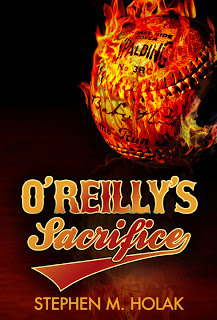
Oh, I almost forgot, my novella, “A Fairy for Bin Laden,” about a foot-high pixie named Tinkerbelle who helps the CIA and Army track down Osama Bin Laden, is available on Amazon.com. (http://amzn.com/B0088IBE3I) Please buy it. And my other novella, “O’Reilly’s Sacrifice,” if you like baseball fantasy stories like Field of Dreams. And my epic fantasy novel coming out in December.
I missed a dozen episodes of Jersey Shore writing this, and feel the Universe owes me some compensation.
On the home front, the epic fantasy novel (still untitled, so at this point it's 'EFN') is now well north of 100,000 words, which is a pretty amazing number when you step back and look at it as a part-time undertaking. On the other hand, it's got 25 to 50,000 words to go, and will be tight to hit my self-imposed publishing target date of mid-December.
Amazon announced recently that Kindle Direct Publishing eBooks are now available in India, opening up a huge market of millions of potential readers for self-published authors. The global market continues to expand, and the rising curve of eBook adoption shows no sign of leveling off.
Those of you who read my novella "A Fairy for Bin Laden" may be interested in "No Easy Day", Mark Owen's first-hand account of the inside of Navy Seal operation to take down Osama Bin Laden. I haven't read it yet, but I'm interested to see how close my extrapolations about the operation match the actual account of the assault on Bin Laden's compound.
.
Stop Watching Jersey Shore!There’s a New Sheriff in Town—Now Writeby
Stephen M Holak
First off, a grateful tip of the hat to Louise for inviting me to post a guest blog here. As a newly-minted Indie author, I appreciate every opportunity to market myself and build an audience. Second: my personality lends itself very well to standing on a soapbox and pushing my views and opinions on that audience. Just ask my friends and family. I’m not shy; everyone is entitled to my opinion.
I headed over to these parts to introduce myself, my works, let you to get to know me, promote my stuff, you know? But then I changed my mind.
I decided to do you all a favor and spank you.
If you’re a struggling writer, a pre-published author, or a recent self-published / Indie author, what I’m about to tell you should strike a chord. A deep one. It should leave a deep red handprint on your buttocks, Lieutenant Dan.
Amazon.UKAmazon.comTell me you haven’t said this to yourself: “I really don’t feel like writing today; what’s the point anyway? I’ll hammer away at something for days / weeks / months / years / decades on my lunch hour / train ride / midnight oil-burning session, polish the crap out of it, throw an agonized-over query letter over it, and submit it to an agent / editor / publishing house / magazine, and six months later I’ll get a polite letter thanking me for my submission, the story had promise, but it wasn’t a good fit for (whatever), blah-blah effing blah.”
Your self-imposed word-count for the day just went from one-thousand down to five-hundred, or five-hundred to two-hundred, or to . . . zero; you cracked open a beer, plopped on the couch, and dialed up last night’s episode of Jersey Shore.
I know you do this. I did it for years. For decades. I didn’t work as hard as I could at my craft, and got absolutely nowhere. What was the point? Deep inside, I thought it was hopeless. I thought I had no control over a writing career, that I was playing a literary lottery. (Oooh. I like that!)
I’m here to tell you, peeps, that those days are over. It’s a Brave New World. Nuclear winter is over—open the door and take a look. See the sun? I’m not yanking your chain. There are absolutely no excuses for the above excuses. None. There’s a new sheriff in town, and his name is Jeff. Jeff Bezos. (I’ll give you a minute to Google him.)
In Ancient Times, the Gatekeepers guarded the, well, Gates. The Big Six publishing houses, (hereafter BS) , stood between you and your customers—the readers. BS decided what was good. They decided who would get the shelf space in bookstores. BS paid authors a tiny royalty and don’t-spend-it-all-in-one-place advances. They kept rights to works even when the print runs were over. BS kept over 50% of the price the reader forked over for your sweat, blood and tears--if you were lucky enough to win the lottery, and your chances are about the same—and be published, you got to keep maybe 15% after you paid your agent and traveled the universe signing and promoting your book on your dime
What they really did, dear colleagues, was decide what they could sell. Not what was good, not what had literary merit or what they thought readers wanted or would enjoy reading, but what BS could sell. What could make BS money. They had absolutely no interest in you, or helping you grow as a writer. You were meat to them. If you weren’t marbled just right, well . . . the metaphor breaks down here, but you get the idea.
And somewhere deep in your brainstem, you knew this. (This is why, by the way, Jersey Shore has such high ratings.)
Amazon, and the explosion of self-publishing options like Kindle Direct (KDP) and Createspace and Smashwords has changed all that. You can publish yourself. With one terrifying click of the mouse, the barriers between you and your potential readers, between anonymity and notice, vanish. Poof.
Repeat after me: There are no more gatekeepers. Readers are free to judge your work on its own merits. If you work hard at learning your craft, if tell a good story, if you edit the hell out of your stuff and edit it some more, if you learn eBook formatting and cover design (or pay someone to do it for you), write a good blurb, and upload the effer to cyberspace and market yourself, people will read your stuff.
If they like it, they’ll buy it. If readers like your product, you’ll not only be a published author, you’ll be an author with sales. (If you care about those sorts of things, that is. I do. That’s partly why I’m here. The other reason is the spanking.) You can write more works and publish them and build an audience and make some money.
So use that train ride, that lunch hour, that rainy Saturday, that restless night. Buy a case of Red Bull and a book on editing (better yet, spring for a good editor; it’s an investment) and a book on eBook publishing and learn Photoshop or marry a girl who owns Photoshop and bang out some great covers (which you by the way, have complete control over), and publish your work. Be a writer. Be an author. No one is holding you back any longer.
No BS stands between you and your potential readers. Stop reading books on writing and blogs on writing (except for this one, and mine, and maybe Joe Konrath; he’s good and I want to be like him), and write, damn it.
Luke Skywalker: Whine, whine.
Yoda: “Do or do not. There is no try.”
Oh, I almost forgot, my novella, “A Fairy for Bin Laden,” about a foot-high pixie named Tinkerbelle who helps the CIA and Army track down Osama Bin Laden, is available on Amazon.com. (http://amzn.com/B0088IBE3I) Please buy it. And my other novella, “O’Reilly’s Sacrifice,” if you like baseball fantasy stories like Field of Dreams. And my epic fantasy novel coming out in December.
I missed a dozen episodes of Jersey Shore writing this, and feel the Universe owes me some compensation.