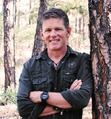
Steve Holt's Blog, page 54
April 9, 2014
The Road Day 2 – The Wilderness
Mark 1:2-8
No writer of the other synoptic gospels so abruptly begins his narrative of Jesus with such a telescopic focus on the wilderness. John, only a few months older than his cousin Jesus, has lived away from the family and home, eating locusts, wearing animal skins and a leather belt, looking like some kind of Jeremiah Johnson, beckons all of Israel into the wilderness. He cries out as some kind of Old Testament prophet, proclaiming a new way of life.
This is the most important spiritual event in Israel in 300 years. After three centuries of silence, the religious community is baffled and curious. Has Elijah come back? After all, the prophecies had said that a day was coming like this. Malachi, the last writer of the canon of scripture had prophesied,
“Behold, I send My messenger,
And he will prepare the way before Me.
And the Lord, whom you seek,
Will suddenly come to His temple,
Even the Messenger of the covenant,
In whom you delight.
Behold, He is coming,”
Says the Lord of hosts. – Mal. 3:1
After all, the people of Israel understood the call—a call to the wilderness where Abraham had forged his life; a call to the wilderness where Israel had turned her back on Egypt. And now an old paradigm is dressed in a new worldview. John is once again calling the people into the wilderness.
John, the last of the Old Testament prophets, a bridge figure from the old law to a new dispensation, is proclaiming a new world order. His cry is for repentance and confession of sin,
John came baptizing in the wilderness and preaching a baptism of repentance for the remission of sins. Then all the land of Judea, and those from Jerusalem, went out to him and were all baptized by him in the Jordan River, confessing their sins. – Mark 1:4-5
An alternative reality is being announced; a new paradigm is being proclaimed. It is a preparation of the heart. It is a call to the wilderness, for one to find his heart. Even Jesus is being called to the wilderness.
God always takes us to the wilderness to find our heart again. It almost always leads us into repentance from the old and acceptance of the new! Repentance is the telescoped purpose of the wilderness. We are baptized in the wilderness. It is a baptism of repentance. God beckons all of us into the wilderness that we might repent and find our heart.
Last month, in March, after Liz and I had met with our dear friends H.B. and Bev London in Palm Desert, we drove out to Joshua Tree, a beautifully strange desert national park. We hiked the wilderness of cactus and Joshua Trees and we prayed. We walked, talked, and prayed. We climbed a high rock, looking out over the desert and we repented. We repented of so many areas of our life. We gave our lives and our ministry future to Jesus in a new way.
The wilderness is the only place we can go if we want to find Jesus in a crisis. Jesus is the Lord of the wilderness. Jesus is the Lord of your crisis. If you are in a wilderness now in your life, embrace it. God is in the wilderness. Surrender afresh in the wilderness and watch what God will do.
One more thing, cactus’ blossom in the wilderness.
On the Road,
Steve


April 8, 2014
The Road Less Traveled – Day 1
Mark 1:1
The church is supposed to be God’s threat to the status quo, because the status quo has been wrong since the last meal in the Garden of Eden! The status quo is the comfortable culture of the Garden that runs from, avoids, and worships gods carved from our own image. But the radical, messy, subversive strategy of God has entered our post-garden world! John Mark presents us with an alternative worldview…
“The beginning of the gospel of Jesus Christ, the Son of God”. Mark 1:1
The Gospel of Jesus Christ is a subversion of reality, as we know it. The starting line of the gospel of Jesus Christ is to reimagine a new world order. The gospel is the greatest threat and the only significant one, to the world, as we know it. The work of a kingdom coming, as we pray in the Lord’s Prayer, is messy work. It changes everything. It’s a new world order.
I want us to reimagine a new world order where Jesus Christ is the key player. I want you to suspend your current cultural thinking of church and community and reinvision a worldview of miracles, power, love, forgiveness, and vulnerability.
The gospel of Jesus Christ is a subversion of reality, an alternative version of reality, that says another way of life is not only possible but is mandated and valid. It is a new system where Jesus is the key player, the key figure. It is a subversion of current cultural thinking that dictates that a new kingdom has come, is “at hand,” a kingdom that is inbreaking upon our daily life as a living reality. It is a kingdom that affects how we treat our spouse, how we do our job, how we fill out our taxes, how we shop at Walmart.
Mark is introducing a messy gospel. A gospel not taught in most of our churches and Sunday schools. It is a subversion of our comfortable American way of life. This is a new world order that speaks of a King, Jesus Christ, who challenges our comfortable way of life.
The messy gospel of John Mark is a fast paced vibrant depiction of a man on a mission. Mark speaks of Jesus as the “son of man” more than any other gospel writer. It is a description of the humanness of Jesus. His humanity comes out in vivid scene after scene—a kind of first century motion picture of our savior living out true humanity through a counter cultural view of life.
We are thus faced with a choice—the choice of a new world order that challenges our old ways, our current passivity, our lingering shame, and our cult of comfort. The choice is before us. As we begin to work our way through the Gospel of Mark, buckle up the seatbelts of your heart, it could get messy.
On the Road,
Steve
April 4, 2014
The Road Less Traveled
Many years ago while hunting elk in a wilderness area of Colorado, a sudden fall snowstorm hit, dropping a foot of snow in a couple of hours. I didn’t have a GPS, and I was depending on a trail I had never used before, which was now completely covered in snow. I lost my bearings. A feeling of panic and concern came over me. I was miles away from camp without any observable physical structures for a reference. All I could depend on was my compass.
Have you ever found yourself disoriented? Disoriented comes from the word “orient,” the root form of orienteering. To be disoriented is to lose a sense of direction. Losing a sense of direction is one of the most frightening experiences we can ever undergo.
On November 23, 2013, the board of elders at Mountain Springs Church, the church I founded almost twenty years ago, put me on a forced leave of absence. In the coming weeks I was handed a list of grievances from the pastors against my character and leadership that shocked and hurt me deeply. My first reaction was to defend myself and rationalize away these concerns. But over time, God began his work of conviction and breaking.
For the next three months I fasted, prayed, sought counsel from trusted mentors, confessed my sins to the board, cried out to God, went on several retreats, read eight books, and attempted to give myself completely to God. The Holy Spirit took me into what St. John of the Cross spoke of as the “dark night of the soul.” God broke me. His loving graceful hand was upon me.
I found the words of David in Psalm 51:2-3 particularly poignant,
Wash me thoroughly from my iniquity,
And cleanse me from my sin.
For I acknowledge my transgressions,
And my sin is always before me.
As I began to acknowledge the dark prideful places of my heart, I was repulsed. I could see as far back as my early years in school, how I had found such significance and security in my accomplishments, my achievements, and my successes. As I looked deeper I found a man who needed human approval and exaltation for self worth. As I dug further, I discovered one who had a spiritual façade but not a deep intimate grace filled relationship with Christ. Don’t get me wrong, I loved Jesus and I had an ongoing walk with him, but something was missing at a deeper level.
A road was forming in my heart, a road of healing, a road of acceptance. Then a breakthrough came. Through the work of Henri Nouwen in his classic book Life of the Beloved, the Spirit of God met me at a new heart level. He writes,
“You are beloved…It certainly is not easy to hear that voice in a world filled with voices that shout, ‘You are no good, you are ugly; you are worthless; you are despicable, you are nobody—unless you can demonstrate the opposite. These negative voices are so loud and persistent that it is easy to believe them. That’s the great trap. The trap of self-rejection. Over the years I have come to realize that the greatest trap in our life is not success, popularity, or power, but self-rejection…”
When I realized my self-rejection, repented and accepted that I was beloved in Christ, all I can say is that a new understanding of God’s grace and mercy flowed into my heart. For the first time in my life, I could accept, not run from or avoid, all of the darkness, sin, and self-rejection that I’m aware of—I surrendered them to Christ.
Since that time, God has continued to show me so many prideful, arrogant, egotistical areas of my life. It has been excruciatingly difficult to face my brokenness, yet also deeply freeing. My heart is gradually getting set free.
Simultaneously, the Lord spoke to Liz and myself seven times over five months of a “road less traveled.” As the months passed, it became apparent to us and our mentors, that God was moving us into a new ministry, a new work of His Spirit. As a result, I resigned from Mountain Springs Church in March.
Isaiah 35:8 captures well this new road,
A highway shall be there, and a road,
And it shall be called the Highway of Holiness.
The unclean shall not pass over it,
But it shall be for others.
Whoever walks the road, although a fool,
Shall not go astray.
I’ve been busted by God but beloved in Christ. I’m a fool. I’m a ragamuffin pastor. I’m a recovering “pride-aholic.” But God is doing something new in my heart, and he has us on a road less traveled.
If you feel led to join us, we are seeking God for 40 nights of prayer and teaching at the Jericho Center at Every Home for Christ, starting this Monday night, April 7th, at 6:30pm. We are asking him to reveal more details about a road less traveled. We will worship, pray, and I will teach through the Gospel of Mark, entitling it, “The Messy Gospel.”
- Steve
October 3, 2013
Chuck Smith, Prophetic Risk Taker
Last weekend at Mountain Springs Church West (our new campus on the west side of Colorado Springs) Luke Lauber, one of our young up and coming worship leaders, led out with a worship song of Mumford & Sons, a popular secular band out of the UK. This could not have happened without Chuck Smith.
Chuck Smith, the pastor of Calvary Chapel Costa Mesa, the founder and leader of the Calvary Chapel movement is dead at 86. He died last night, October 2nd, 2013, of a prolonged struggle with lung cancer. He leaves behind a family of pastors, leaders, and over 1600 like-minded churches worldwide. My daughter Anna called us early this morning with the news. She is in her final semester at Calvary Chapel Bible College in Murrieta, California.
I met “Pastor Chuck,” as he was affectionately called, eight years ago, while making a huge transition in my life. He was speaking at Rocky Mountain Calvary Chapel in Colorado Springs and he had heard about me through Brian Michaels, the Senior Pastor at that time. Through a fortuitous set of circumstances, I was able to spend two hours with him. It was an amazing conversation. One thing stands out—he said, “Steve, as you look to the future, don’t try to make things happen. Let God lead your church.” Since that time, I have often returned to those words in times of struggle and confusion.
When I heard of Chuck Smith’s passing this morning, the first thought that came to my mind was “he was a son of Issachar.” In 1st Chronicles 12 we read these words, “the sons of Issachar who had understanding of the times, to know what Israel ought to do.” Chuck Smith was a prophetic son of Issachar, that group of risk takers who understood what God was doing at the time of David and joined what the Holy Spirit was saying at that time. Pastor Chuck may have been the ultimate son of Issachar of the last fifty years. Let me explain…
Chuck Smith was a prophetic risk taker, possibly the most influential pastor in evangelicalism of the last fifty years. The Holy Spirit inspired risks he took and the influence he has had is nothing less than the miracle of what God can do through a simple man who is completely surrendered to Christ.
Chuck Smith was a prophetic risk taker and challenged conventional wisdom. He disrupted the status quo. Our worship leader leading worship this past weekend with a Mumford & Sons song is just the beginning of his influence.
A New Missiology—taking a Risk on a bunch of hippies
In the mid-60’s with the radical psychedelic LSD-saturated hippie movement in full swing, Pastor Chuck looked past the long hair, beads, beards, and free love to see a lost generation that needed Jesus. “He led a movement that translated traditional conservative Bible-based Christianity to a large segment of the baby boom generation’s counterculture,” says Brad Christerson, a Biola University sociologist who studies charismatic churches in California. Working alongside a Jesus-looking long haired hippie named Lonnie Frisbee, Chuck Smith opened up his little Calvary Chapel on a hill in Costa Mesa to this most bizarre people the evangelical church had ever seen. Soon dirty footed, still high on drugs, torn jeaned young people poured into the loving grace atmosphere of the church. Much to the chagrin of his elders at the time, Chuck Smith welcomed them by the thousands. His laid back and dressed down style has become the new normal today.
A New Hymnology — Taking a Risk on Rock ‘n’ Roll
Chuck Smith welcomed the sound of the 60’s and 70’s rock ‘n’ roll culture into the church. New songs came forth from his church as these newly saved hippies brought there “sound” into the four walls of Calvary Chapel. I can still remember visiting this church in the 70’s and hearing this worship that reminded me of the songs I loved before I got saved. I was shocked. As a southern boy, I had never heard this new blend of ripping electric guitar, bass, and drums with Christian lyrics. I was forever changed musically. I would never fully return to my traditional hymns quite the same way. Chuck Smith was a risk taker in music that still resounds in our churches today.
A New Homiletic—Taking a Risk on the Bible
I grew up around the topical preaching of my Lutheran upbringing. Pastor Chuck left his roots of the same in the Four Square Church and began a small Bible study teaching through the Bible book-by- book and chapter by chapter. His little study grew from a few dozen people into thousands and people packed into his little chapel to hear the simple clear exposition of God’s Word. Never wavering in his commitment to teaching the “whole counsel of God,” over the years Pastor Chuck took his congregation through the complete study of every book of the Bible many times over. Today, if you enter any Calvary Chapel around the world, you will the same unchanging style of preaching.
A New Ecclesiology—Taking a Risk on Church Planting
In the 60’s and 70’s the planting of churches was not in vogue. The enculturated Christianity in America was built around denominationalism. The starting of new churches was confined to big budgets and structure that largely eliminated the need for planting new kinds of fellowships. Pastor Chuck read the book of Acts and believed that new churches were needed on a grand scale. As he raised up new young leaders he encouraged them to plant innovative churches. And they did! Today, there are over 1600 like-minded Calvary Chapels all over the world. Still considered one of the most prodigious and prolific church planting movements in the world.
A New Leader—Taking a Risk on Uneducated, Anointed Men
In my opinion, this might be the greatest risk Chuck Smith ever took. It might be hard to imagine today, but at the time Pastor Chuck began welcoming hippies into his fold, no self-respecting pastor would have given his pulpit to uneducated, unprofessionally trained, non-seminary preachers. But Chuck Smith did. Did he ever. From the crowd of druggies that enveloped his sanctuary, he noticed gifted and anointed leadership on many of these young men. He challenged them to listen to his tapes on the Bible, get informal training through his church and go out and plant new churches. Very few of the early Calvary Chapel pastors had any formal training and yet they went out and planted huge churches, some of which are still the largest in the United States. Many of whom came out of dysfunctional homes, drug addiction, and fatherless backgrounds, Pastor Chuck became their spiritual father and equipped them to go out and build great churches.
Sons of Chuck
The son’s of Issachar were men who “understood the times and knew what Israel should do.” Chuck Smith understood the times and took the risk, and as a result, the Church has been forever changed. He will be deeply missed. But his legacy is with us today. If you are in a church that invites in the unchurched and loves them just as they are, you are a son of Chuck. If you are in a church that uses guitars and drums and a semi-rock sound in worship, you are a son of Chuck. If you are in a church that teaches through the Bible, you are a son of Chuck. If you are in a church that was started as a church plant, you are a son of Chuck. If you are sitting under a pastor that may not have been professionally trained in a seminary, you are a son of Chuck.
Chuck Smith dead at 86, but alive with Christ and alive in the hearts of all of us who are sons of Chuck. Thank you, Chuck Smith, for taking the risk. We have all been impacted. By the way, I really like Mumford & Sons in worship.
- Steve Holt
Chuch Smith, Prophetic Risk Taker
Last weekend at Mountain Springs Church West (our new campus on the west side of Colorado Springs) Luke Lauber, one of our young up and coming worship leaders, led out with a worship song of Mumford & Sons, a popular secular band out of the UK. This could not have happened without Chuck Smith.
Chuck Smith, the pastor of Calvary Chapel Costa Mesa, the founder and leader of the Calvary Chapel movement is dead at 86. He died last night, October 2nd, 2013, of a prolonged struggle with lung cancer. He leaves behind a family of pastors, leaders, and over 1600 like-minded churches worldwide. My daughter Anna called us early this morning with the news. She is in her final semester at Calvary Chapel Bible College in Murrieta, California.
I met “Pastor Chuck,” as he was affectionately called, eight years ago, while making a huge transition in my life. He was speaking at Rocky Mountain Calvary Chapel in Colorado Springs and he had heard about me through Brian Michaels, the Senior Pastor at that time. Through a fortuitous set of circumstances, I was able to spend two hours with him. It was an amazing conversation. One thing stands out—he said, “Steve, as you look to the future, don’t try to make things happen. Let God lead your church.” Since that time, I have often returned to those words in times of struggle and confusion.
When I heard of Chuck Smith’s passing this morning, the first thought that came to my mind was “he was a son of Issachar.” In 1st Chronicles 12 we read these words, “the sons of Issachar who had understanding of the times, to know what Israel ought to do.” Chuck Smith was a prophetic son of Issachar, that group of risk takers who understood what God was doing at the time of David and joined what the Holy Spirit was saying at that time. Pastor Chuck may have been the ultimate son of Issachar of the last fifty years. Let me explain…
Chuck Smith was a prophetic risk taker, possibly the most influential pastor in evangelicalism of the last fifty years. The Holy Spirit inspired risks he took and the influence he has had is nothing less than the miracle of what God can do through a simple man who is completely surrendered to Christ.
Chuck Smith was a prophetic risk taker and challenged conventional wisdom. He disrupted the status quo. Our worship leader leading worship this past weekend with a Mumford & Sons song is just the beginning of his influence.
A New Missiology—taking a Risk on a bunch of hippies
In the mid-60’s with the radical psychedelic LSD-saturated hippie movement in full swing, Pastor Chuck looked past the long hair, beads, beards, and free love to see a lost generation that needed Jesus. “He led a movement that translated traditional conservative Bible-based Christianity to a large segment of the baby boom generation’s counterculture,” says Brad Christerson, a Biola University sociologist who studies charismatic churches in California. Working alongside a Jesus-looking long haired hippie named Lonnie Frisbee, Chuck Smith opened up his little Calvary Chapel on a hill in Costa Mesa to this most bizarre people the evangelical church had ever seen. Soon dirty footed, still high on drugs, torn jeaned young people poured into the loving grace atmosphere of the church. Much to the chagrin of his elders at the time, Chuck Smith welcomed them by the thousands. His laid back and dressed down style has become the new normal today.
A New Hymnology — Taking a Risk on Rock ‘n’ Roll
Chuck Smith welcomed the sound of the 60’s and 70’s rock ‘n’ roll culture into the church. New songs came forth from his church as these newly saved hippies brought there “sound” into the four walls of Calvary Chapel. I can still remember visiting this church in the 70’s and hearing this worship that reminded me of the songs I loved before I got saved. I was shocked. As a southern boy, I had never heard this new blend of ripping electric guitar, bass, and drums with Christian lyrics. I was forever changed musically. I would never fully return to my traditional hymns quite the same way. Chuck Smith was a risk taker in music that still resounds in our churches today.
A New Homiletic—Taking a Risk on the Bible
I grew up around the topical preaching of my Lutheran upbringing. Pastor Chuck left his roots of the same in the Four Square Church and began a small Bible study teaching through the Bible book-by- book and chapter by chapter. His little study grew from a few dozen people into thousands and people packed into his little chapel to hear the simple clear exposition of God’s Word. Never wavering in his commitment to teaching the “whole counsel of God,” over the years Pastor Chuck took his congregation through the complete study of every book of the Bible many times over. Today, if you enter any Calvary Chapel around the world, you will the same unchanging style of preaching.
A New Ecclesiology—Taking a Risk on Church Planting
In the 60’s and 70’s the planting of churches was not in vogue. The enculturated Christianity in America was built around denominationalism. The starting of new churches was confined to big budgets and structure that largely eliminated the need for planting new kinds of fellowships. Pastor Chuck read the book of Acts and believed that new churches were needed on a grand scale. As he raised up new young leaders he encouraged them to plant innovative churches. And they did! Today, there are over 1600 like-minded Calvary Chapels all over the world. Still considered one of the most prodigious and prolific church planting movements in the world.
A New Leader—Taking a Risk on Uneducated, Anointed Men
In my opinion, this might be the greatest risk Chuck Smith ever took. It might be hard to imagine today, but at the time Pastor Chuck began welcoming hippies into his fold, no self-respecting pastor would have given his pulpit to uneducated, unprofessionally trained, non-seminary preachers. But Chuck Smith did. Did he ever. From the crowd of druggies that enveloped his sanctuary, he noticed gifted and anointed leadership on many of these young men. He challenged them to listen to his tapes on the Bible, get informal training through his church and go out and plant new churches. Very few of the early Calvary Chapel pastors had any formal training and yet they went out and planted huge churches, some of which are still the largest in the United States. Many of whom came out of dysfunctional homes, drug addiction, and fatherless backgrounds, Pastor Chuck became their spiritual father and equipped them to go out and build great churches.
Sons of Chuck
The son’s of Issachar were men who “understood the times and knew what Israel should do.” Chuck Smith understood the times and took the risk, and as a result, the Church has been forever changed. He will be deeply missed. But his legacy is with us today. If you are in a church that invites in the unchurched and loves them just as they are, you are a son of Chuck. If you are in a church that uses guitars and drums and a semi-rock sound in worship, you are a son of Chuck. If you are in a church that teaches through the Bible, you are a son of Chuck. If you are in a church that was started as a church plant, you are a son of Chuck. If you are sitting under a pastor that may not have been professionally trained in a seminary, you are a son of Chuck.
Chuck Smith dead at 86, but alive with Christ and alive in the hearts of all of us who are sons of Chuck. Thank you, Chuck Smith, for taking the risk. We have all been impacted. By the way, I really like Mumford & Sons in worship.
- Steve Holt
September 21, 2013
Sons & Daughters of David – A New Breed of Leader
David is mentioned over twenty-eight thousand times in Scripture. No other leader in the Bible, outside of Jesus, gets more biographical and autobiographical attention than David. No other leader in the whole of Scripture is described with more detail about his home life, personality, struggles, and victories than the shepherd-King from Bethlehem.
Where can we find a person in biblical and secular history who is described in so many diverse ways? David is described as a young boy, a shepherd, a commander, a warrior, a poet, a desperado, a musician, a king, an adulterer, and murderer—and then, most importantly, a man after God’s own heart. You might say, to the dismay of some desperate housewives and the Kardashian’s, that the depiction of David is truly the first “reality show.”
Indeed, his writings, seventy-eight of the Psalms, are the most popular readings in the Bible from generation to generation. No other spiritual leader in ancient history has written so much about his own personal passionate pursuit of God than David. In one of his original songs he writes,
One thing I have desired of the Lord,
That will I seek:
That I may dwell in the house of the Lord
All the days of my life,
To behold the beauty of the Lord,
And to inquire in His temple. (Psalm 27:4)
Why so much on one man? What is it about this man of certainly noteworthy accomplishments, but also such miserable failures? After all, he was one who, after committing adultery, thought up a conspiracy to kill the husband of the woman he wanted, and was, at one point, viewed as a traitor to his own people. So, what can we learn about leadership from David, a man with a sordid past?
David as a Prototype Leader
Perhaps it is largely because of his failures, yet his passionate heart, that Isaiah points to David as someone to whom we should all pay attention, someone we should not overlook. Isaiah captured something of the legacy of David that touches our generation when he wrote,
Incline your ear, and come to Me.
Hear, and your soul shall live;
And I will make an everlasting covenant with you–
The sure mercies of David.
Indeed I have given him as a witness to the people,
A leader and commander for the people. (Isaiah 55:3-4)
The prophet, Isaiah, in chapter 55 is calling out to the people of Israel and future generations to hunger and thirst after God, and it’s in this context that he cries out that David was raised up to be “a witness to the people, a leader and commander for the people.” David’s unique leadership record presents a prototype for future leaders of all generations.
We live in a time where there is arguably more information about leadership, screaming for our attention, than any time in all of church history. From podcasts to hardcopy books, we are inundated with and flooded with information on leadership. Never before can we access such a plethora of information on leadership–just a “click away.” Everyone inside and outside the church understands that solid leadership is the quest. If everything rises and falls on leadership, we certainly aren’t missing the opportunity to learn “the how-to’s” of rising and falling.
And then there’s David.
David? He’s just seems so messed up! To put a modern label on him: maybe he’s a bit “bi-polar?” He’s the one who dances before the Lord, with a PG-13 rating, as the entire nation of Israel looks on. He’s the one who, in his anger, decides one day to slay a landowner he doesn’t like. But, then, he turns around and also decides to not overlook, but tenderly care for the man’s wise, gracious widow, taking her as his wife. He’s the one who can’t control his own grown sons. Yet, he is also the one who takes the time to fast and pray for the life of his infirmed baby.
What is it about David that makes him so beloved a leader? How is David’s leadership a witness to us today?
Earthy Spirituality
No other figure in leadership literature so uncovers the reality of being human than David. David reflects an earthy, robust spirituality that we need today. Eugene Peterson writes,
The David story is simultaneously earthy and godly…The David story, like most other Bible stories, presents us not with a polished ideal to which we aspire but with a rough-edged actuality in which we see humanity being formed—the God presence in the earth/human conditions. (Leap over a Wall, pg. 6)
David is a common man with errors in his wake. The account of David is no missionary biography of super human proportions but rather a true tale of a dirty, bloody, emotional young man who loves God deeply. This is a real man who lives his deepest struggles before our eyes as we read our Bibles. Whether David was in the depressing hideout of a dark cave (1 Samuel 22) or in the rich, glamour of a palace, (2 Samuel 5ff) David is David, and his heart is steadfast for God.
If we are honest with our own conflicted realities, we can easily relate to David. We see the grace of God at work in him, and he can be our witness in our own battles, both the private ones and the public. David gives us hope as we come face to face with our own inconsistencies, flaws, and weaknesses. If God keeps forgiving David’s sin, loving, speaking to, and using him, won’t He do the same with us? We desperately need the “sure mercies of David.”
Fully Awake
David is alive in God! We are never more alive in our core being than when we are being dealt with by God and dealing with God. David may not be eligible to lead a seminar on ”success,” but he is fully awake in his humanity as he seeks God. Saint Irenaeus, one the Early Church Fathers, once said, “The glory of God is man fully alive.” David, who pre-dates Iraneus, gets it!
David is no pretender or poser, but alive in letting God deal with his life. David is a confessor of his sins (Ps. 51). On the other hand, he is one, who extravagantly takes time to bless God and thank Him, when he is thriving (Psalm 15). In contrast, he will vulnerably weep before the Lord when he is feeling downcast (Psalm 86). The Biblical account of David in its entirety reveals that he hides nothing from his God. God seems to be included in nearly every one of David’s moments. This colorful example of constancy before God is the “glory of God.”
The Psalms capture this battleground of this imperfect man’s soul. The poet/songwriter, David, confronts God at every turn. From the deepest, “slay-them-at-all-costs” anger (Psalms 13 and 35) to rapturous praise for the splendors of God (Psalms 19 and 24), David is fully aware of his emotions, and even shares every shred of them with God in the beauty of poetry and song. He has the soul habit of unloading his heart and mind with God that reveals a man fully alive.
Yet, this is just how our hearts are formed and spiritual authority gained—dealing with God and letting God deal with us. David is our model of being fully alive in a firm honest grip with his God. No matter the emotional high or low, David is always looking to God and, in turn, connecting to the God who sees him!
Unbridled Pursuit
God hires and fires leaders. How God evaluates the people He can use is of a different stock than ours. God uses a different litmus test than we do in determining the usefulness of an individual. The Bible gives us a glimpse into God’s perspective into spiritual leadership,
For the eyes of the LORD run to and fro throughout the whole earth, to show Himself strong on behalf of those whose heart is loyal to Him. (2 Chronicles 16:9)
God inspects the heart and gives little attention to the outward shell of a person. Even, the prophet, Samuel in trying to distinguish God’s choice of a king can’t figure out whom he is to anoint among Jesse’s sons. The Lord speaks to him,
Do not look at his appearance or at his physical stature, because I have refused him. For the Lord does not see as man sees; for man looks at the outward appearance, but the Lord looks at the heart. (1 Samuel 16:7)
God sees something that Samuel misses—the God-thirst, the God-hunger of the heart. It is the intentions and cries of the heart that get God’s attention. David has something that his brothers don’t have—an unbridled pursuit of God. The first description of David says it all, “The LORD has sought for Himself a man after His own heart, and the LORD has commanded him to be commander over His people.” (1 Samuel 13:14) God seeks out David. God seeks him out to be a leader because of the condition of his heart!
David is in hot pursuit after God’s heart. David wants what God wants. David weeps over what God weeps over. David loves what God loves. His heart has been changed by God, through God, in his pursuit of God, and God finds David trustworthy.
Spiritual leadership is about leading people to God’s heart. David is a prophetic witness to us today. While I love to read books on and listen to podcasts on the subject of leadership, I’m reminded that the best example I know of a leader is one more close to “home”—right in the pages of my Bible. David captures the essence of God’s view of leadership better than any other. In these last days, may the Lord raise up sons and daughters of David, who will lead people to His heart.
- Steve Holt
June 19, 2013
Type 1 Incident
The Holt family came home yesterday. Our Black Forest house was in a state of shock—pictures, backpacks, playing cards, and luggage strewn everywhere from the quick exodus of six days ago. The Holt family was exhausted after moving three times.
We were one of the families who were spared the loss of our structure. With the reality that 502 homes were destroyed all around us (including 20 or more Mountain Springs families) has brought a sobriety and surreal feeling that can’t be explained. Liz wept as she entered our property.
Mothers, fathers, and children will come home in the next few days to the charred remains of their earthly home. They will be flooded with the memories of births, parties, dinners, laughter, barbeques, and times of great joy and maybe even sorrow. As they sift through the blackened remains, tears will pour. The grieving has begun.
As a community, once again, almost to the day of the Waldo Canyon fire last June, we have gone through a Type 1 Incident, a Type 1 disaster. With thousands having to leave their homes, and hundreds losing their homes, our lives have been disrupted, maybe changed forever, and the stress on many is to the breaking point. Post traumatic stress will be heavy on many.
A Type 1 Promise
As we take inventory of what has just happened, I’m led to the prophet Isaiah’s words to the nation of Israel as they despaired over their homes, livelihood, and loss of freedom to an invading army. They were depressed and asking the hard questions of where is God in the midst of such devastation.
Isaiah spoke these words during Israel’s Type 1 Incident:
But now, thus says the Lord, who created you, O Jacob,
And He who formed you, O Israel:
“Fear not, for I have redeemed you;
I have called you by your name;
You are Mine.
When you pass through the waters, I will be with you;
And through the rivers, they shall not overflow you.
When you walk through the fire, you shall not be burned,
Nor shall the flame scorch you.
For I am the Lord your God,
The Holy One of Israel, your Savior;
I gave Egypt for your ransom,
Since you were precious in My sight,
You have been honored,
And I have loved you;
Therefore I will give men for you,
And people for your life.
Fear not, for I am with you;
- Isaiah 43:1-5
God is reminding Israel that He is not only still in control of their devastating situation, but has them in the palm of His hand, still has His eye upon each of His chosen ones. They are blessed under His watchful eye. Their redemption hasn’t changed though their circumstances may have.
All of us go through Type 1 situations that require a new trust, a new dependence on God. I see four wonderful promises from Isaiah 43:
1. Fear not the Fire because I created you and you are mine. Your name, your identity, your family has not changed.
2. Fear not the Fire because I have redeemed you, set you free through my Son Jesus and you are redeemed—purchased with my own blood.
3. Fear not the Fire because My presence is with you.
4. Fear not the Fire because I love you! You are precious and loved more than you know.
Our Type 1 Incident Commander is not Rich Harvey but Jesus Christ. He is still on His throne, working through such horrendous circumstances, to comfort His people. The two phrases used most often in the Bible are “Fear not,” (3,902 verses) and “I am with you” (2,746 verses). It’s as if God knows that we must be constantly reminded that He is with us—even in life’s type 1 battles. Even in life’s let downs, defeats, and depressions, God wants us to know that He is with us—His presence and power is right there, next to us, in our pain.
A Type 1 Response
How should we respond in times such as these?
This is a time to take inventory of what matters at the end of the day—those things that are eternal—those we love and those we can hug. Give a few hugs today. Grab your spouse, grab your kids and tell them how much you love them. Structures can be rebuilt, but hearts are eternal. Touch the eternal today by touching your loved ones.
If you are a member at Mountain Springs Church and/or live in Colorado, this is a time to reach out to the hurting and exhausted. This is what we do at Mountain Springs Church. This is the church at her best. Last year we housed 300+ Summit Ministry students after their evacuation during the Waldo Canyon fire. And once again, Chip and his team have organized a relief effort to those in the Black Forest Fire. Let me encourage you to pray and act during this time. In partnership with the High Plains Helping Hands Food Pantry, MSC is offering assistance to displaced victims of the Black Forest Fire. Aid will be offered daily at our Woodmen Campus from Tuesday through Sunday to distribute food items, hygiene products, pet food, salvage and recovery tools and more. Please visit www.mountainsprings.org for details and times for the distribution.
Lastly take time daily to pray for the families who have lost their homes. Pray for God to comfort and strengthen them. Pray that they would experience the Holy Spirit in a deeper way through such a time. Pray for opportunities to be a comfort to those who need comfort. Our Type 1 Commander is with us, loves us, and is more than ever ready to pursue us during such times as these.
Carpe Diem Gloriae Dei,
Steve
March 27, 2013
Blood
In This Moment is an American heavy metal band. They have released two albums to date, both on Century Media Records. The band’s sound is recognizable mainly for vocalist Maria Brink’s use of a combination of screaming and crisp vocals.
In their official video for the song “Blood” we find over 5 million hits in iTunes. Maria Brink conjures up some interesting images in the opening lines, bespeaking her mockery of, or might it be, a longing for, the life that flows through blood:
I hate you for the sacrifices you made for me
I hate you for every time you ever bled for me
I hate you for the way you smile when you look at me
I hate you for never taking control of me
I hate you for always saving me from myself
It is fascinating that the last line above is the title for Brian Welch’s book and album—the former “screamo rocker” from Korn—in which he speaks candidly of his newfound faith in Christ. Coming out of a similar genre (Korn would be classified nu metal) and in the same time period as Welch’s parting from Korn, In This Moment was formed.
So why a title like “blood?” Why the lyrics of “sacrifice,” “bled for me,” “taking control of me,” and “saving me from myself?” I may not know the history of this song, but there is a spiritual battle going on in Maria Brink’s heart. It’s just too obvious.
Blood. Jesus Christ, tortured and disgraced on what we now term “Good Friday,” changed the game forever. Jesus’ blood is the image of Good Friday. A day of horror and unspeakable bloodshed.
Scourging
The Bible says Jesus was scourged. Scourging was a legal preliminary to every Roman execution, and only women, Roman senators or soldiers were exempt. The usual instrument was a short whip, called a flagrum or flagellum, with several single or braided leather thongs of variable lengths, in which small iron balls or sharp pieces of sheep bones were tied at intervals.
Jesus was stripped of all clothing and his hands were tied to an upright post. His back, buttocks and legs were flogged either by two soldiers or by one alternating positions. The purpose of a scourging was to weaken Jesus to the nearest point of death possible.
As the Roman soldiers repeatedly struck Jesus’ back with full force, the iron balls would cause deep contusions, and the leather thongs and sheep bones would cut into the skins and subcutaneous tissues. As the scourging continued, the lacerations would tear into the underlying skeletal muscles.
Pain and blood loss generally set the stage for circulatory shock. Jesus received 39 lashes, in accordance with Roman Law. Jesus had been awake for over two days and with the loss of sleep, scourging, and blood loss, by the time Jesus is handed a 100 pound cross he is probably in a preshock state. Some medical experts believe that even before the crucifixion, Jesus’ physical state would be classified as critical.
Crucifixion
Crucifixion probably first began among the Persians. The Romans perfected it into one of the most heinous forms of torture ever invented by man. The Roman citizen’s abhorrence for crucifixion is typified in a line from Cicero, “Let every name of the cross be far away not only from the body of a Roman citizen, but even from his thoughts.”
Josephus, who witnessed many gruesome crucifixions in connection with the siege of Jerusalem, characterized it as “the most wretched of deaths.” Crucifixion was designed to produce a slow, agonizing death—many victims taking up to 36 hours to die on the cross.
It was customary for the condemned to carry his own cross from the flogging post to the site of the crucifixion, outside the city walls. Jesus was so weak that he was unable to carry the crossbeam of the cross to the place of crucifixion. At the site of the crucifixion, Jesus was thrown down, arms outstretched along the crossbeam or patibulum. His hands and arms were tied down and Jesus was nailed through the wrists, with tapered nails of 5-7 inches. Jesus was then lifted up and attached to the upright beam. His feet were then affixed with a nail.
The major pathophysiologic effect of crucifixion, beyond excruciating pain, was a marked interference with normal respiration, particularly exhalation. The weight of Jesus’ body, pulling down on the outstretched arms and shoulders, would tend to fix the intercostal muscles in the inhalation process and thereby hinder exhalation.
Muscle cramps would result. Jesus would attempt to lift himself up in order to adequately exhale, placing the entire weight upon the nailed hands and feet, producing searing pain. Lifting the body would scrape the scourged back against the splintered wooden cross.
Jesus died in only 3-6 hours. Even Pontus Pilate was surprised. Jesus died from: exhaustion asphyxia, the severity of the scourging, blood loss, hyperthermia, shock, and acute heart failure. Blood.
Jesus died of acute heart failure—his heart was broken for the sins of the world, but not just corporately, but individually. His heart was broken for you and your sin. Jesus died separated from God. God, in some mysterious way, turned his face away, as Jesus became sin on our behalf.
From Blood to Beauty
Luke recounts that at the moment of Jesus’ deepest pain he said to a condemned thief… on that very day he would be with him in paradise. Blood leading to a new way of living.
The veil of the temple was torn asunder. The blood of Christ opened the way to freedom and forgiveness of all our sins! We can leave the separation behind and enter into a dynamic relationship with God, made known through Jesus Christ.
The Bible says, “[Jesus] who Himself bore our sins in His own body on the cross, that we, having died to sins, might live for righteousness–by whose stripes you were healed.” (1 Peter 2:24). You can be healed spiritually today and come into new life and power in Christ!
From blood to beauty. This holy week, meditate on the blood. New meaning, new purpose, new life.
March 7, 2013
Keepers of His Story
I am a student of history. One of the great joys of my life and one of the most relaxing habits I have developed over the years is reading history. Even today, on my day off, I’m reading Team of Rivals, the New York Times Bestseller, that inspired the movie, Lincoln, the 2012 Oscar winner for Best Picture. The past two hours I’ve been sitting out on my porch in the Colorado sun, devouring this most intriguing book about Lincoln and the other men who ran for the Republican presidential nomination in 1860.
My favorite form of history is biography. I so enjoy reading and ingesting the stories of men and women who have accomplished great feats, experienced great failure and overcome great fears. History has been called His story, the chronology of God’s faithfulness. History provides an ancient narrative on present day life.
The nation of Israel under the leadership of Moses well understood the need for a narrative. Even as the nation experienced a revolution of freedom from Egypt, Moses and Aaron grasped at the deepest level that if Israel ever forgot her history, she would crumble from within.
Thus, in the great Law book, the book of Deuteronomy, Moses instructed the people to not forget their history—His story, God’s redemption. His instruction was directed not just to the leaders of Israel, but to the parents of Israel. He wrote,
“Hear, O Israel: The Lord our God, the Lord is one! You shall love the LORD your God with all your heart, with all your soul, and with all your strength.”
“And these words which I command you today shall be in your heart. You shall teach them diligently to your children, and shall talk of them when you sit in your house, when you walk by the way, when you lie down, and when you rise up.” (Dt. 6:4-7)
Why? Moses continues, “…beware, lest you forget the Lord who brought you out of the land of Egypt, from the house of bondage.” (Dt. 6:12) He realized that the dearth of forgetfulness ran deep in Israel. As Israel is encountering the pagan culture of the Canaanites, Moses is concerned that they will forget their own culture. Forget who did the work, forget the One who performed the miracles, forget who it was who actually set them free. He knew that the loss of the greatest history book ever written, the Bible, would eventually mean the destruction of a great nation.
Moses understood that if the family forgot about God, the demise of a nation would be rapid. He understood that the bosom of a nation is the family. The heartbeat of a nation is the family. The keeper of historical perspective is the family.
Daniel Webster, the great 19th century reformer and political leader, commented on the importance of the Bible in the hearth of each American family, “If God and His Word are not known and received, the devil and his works will gain the ascendency. If the evangelical volume does not reach every hamlet, the pages of a corrupt and licentious literature will.”
John Quincy Adams, the sixth president of the United States, made the Bible the most important reading of his children. He once said, “So great is my veneration for the Bible, that the earlier my children begin to read it the more confident will be my hopes that they will prove useful citizens to their country and respectable members of society. ”
Are you equipping your kids in God’s Word? Is it a regular part of your reading schedule? Over the years, Liz and I have made it the first thing we do personally and corporately. We gather as a family around God’s Word daily and read verse by verse through books of the Bible. May I challenge you to be keepers of the history of God and teach it once again to the next generation?
February 11, 2013
What Love and Hate Look Like
As a child growing up in the south, I became accustomed to hearing the word “nigger.” At school, on athletic teams, and in casual conversations the word was used to describe my friends and acquaintances of a darker skin color than mine. Even if the hue of one’s skin color was only slightly darker than pure white, you fell into the category of nigger.
My southern upbringing was different in that my parents never allowed me to use the word. From as far back as I can remember, my mom and dad made it a point, around the dinner table and at the bedside, to instruct my brother and me that all men were not only created equal but southern society adhered to a type of thinking called Jim Crow. Mom and Dad told us often that we were living in a hateful culture. They often shared stories of what they had witnessed against the black man while they were growing up. They wanted us to be different than those around us. They constantly spoke of our need to love those who were black. They said that the love of Jesus welcomed all people.
I learned that love doesn’t always win.
Joe and Melba Holt didn’t just talk about love, they lived it. My dad was avid in his commitment to racial equality. He led a group of black pastors that met with county commissioners and pushed for the lowering of the confederate flag that had flown over the state house since before the Civil War. He lost. He went before the board of Dixie Youth Baseball and advocated for integration of little league. He lost.
My mom became the first white person to ever teach in the all black high school in Batesburg-Leesville, South Carolina. My mom came home angry most days. She was angry that the seniors at Twin City High couldn’t read or write—seniors! She was mad that the color of one’s skin determined the quality of one’s education. She was mad enough to do something about it. She started a special remedial reading and writing program to help these 17 and 18 year olds get ready for graduation. My mom’s desk was blown up with an explosive while she was teaching. Not every senior at Twin City liked my mom.
Once while my parents were gone, I answered the phone and was told that my dad was a “nigger lover and he better watch out.” Once a man drove on our property and upon learning who my dad was, cursed and spit on him.
Yet nothing deterred them. They continued to talk about and live out a theme of love for all people, regardless of their color or ethnicity. Once while talking to a poor black man who all of us knew as Willy, dad insisted on calling him “Mr. Jones.” It was Mr. Jones this and Mr. Jones that. Dad later told me that he wanted Willy to know that he was Mr. Jones, not Willy, to at least one person.
I learned many things from my parents—they taught me responsibility, discipline, and the importance of keeping my promises—but the greatest lesson I learned from Joe and Melba Holt was love. Love for God’s children, whatever their background, whatever their lineage.
They started a revolution of love in my heart. I might not have been able to define love, but I could do one better, I could describe it. I had seen it. I had walked beside it. I had watched it in action.
And years later when I discovered the love of Christ, I instinctively knew what it should look like. It should look a lot like Joe and Melba Holt.