David VanDyke's Blog, page 7
April 3, 2013
What works to promote your book
Here’s a great post by fellow author Nick Stephenson, explaining his experiences with KFP select and an ERederNewsToday promo, with comparisons.
While I agree with Nick as far as it goes, I also think it’s important to point out that ANYTHING that sells your book is good; his well-executed free promo netted him more money than the ENT promo, but the latter was still profitable and put money in his pocket and for a few days expanded his recognition.
I think of things like this as leaping upward for a time, before gravity always brings you down. Even bestselling books eventually fall in the ratings. The only question is how long they stay in that “air.” For the relatively new indie authors like me and Nick, any air is good air.
Combine this advice with everything you already have heard – or should have – about building your brand – website, social media, etc – and you should slowly climb that mountain so that you have more solid ground and less air under your feet.
Dave
Filed under: Writing Blog








April 2, 2013







March 29, 2013
A roundup of recent e-publishing stories
Just thought I’d run though some of the top thing happening in e-books and publishing lately.
First, most of us have probably heard about Amazon acquiring Goodreads. Comments have of course been all over the place.
Will Amazon clean up some of Goodreads’ excesses, like the Author Behaving Badly group pack attacks? Well, they haven’t done so well at policing their own backyard, so that’s unlikely.
Will they close off links or references to other booksellers’ websites? Well I’m not sure about links – they claim there will be no change, but that’s hard to believe – but Amazon doesn’t seem to care about referencing other sites on their forums, where we discuss B&N or Kobo or Smashwords all the time. And I imagine there will be no more direct-selling of ebooks through the site itself; that will probably all go through Amazon. One wonders about the giveaways – will that policy change? Personally I think limiting book giveaways to phyisical copies is a good thing, narrowing down the playing field a bit to those who are serious enough to do it rather than just give away more freebie ebooks.
The big question is, what will Amazon actually do with the site? Will it turn into just another place for Amazon to advertise? It certainly seems like the conflict of interest will hurt Goodreads’ independence and credibility, even if no positive control is exerted. Simply being owned by Amazon will cause those in charge of GR to second-guess themselves when, for example, criticizing Amazon.
One positive thing seems to be the GR Kindle app that Otis refers to in his press release. (Of course, one positive thing for Otis and Elizabeth will be millions of dollars, but that’s another story). However, this closes off the possibility of a GR app for other readers, which is not so positive.
The biggest effect on things will probably be that so-called book discovery in the American market and a lot of the wide English-speaking market will now be controlled largely by Amazon. If you want to find a new book in a genre you like, or check reviews, odds are you will end up on GR or AZ, which will now be under the same roof. This expands AZ’s power over the market to confer its blessing and favor on certain authors an books. One wonders if there won’t be more enticements and coercives along the lines of KDP Select that will make it more and more likely that the route to discovery will most often be through AZ, or else.
—added later: a great blog post by Hugh Howey on this topic: http://www.goodreads.com/author_blog_posts/3938810-amazon-and-goodreads?utm_medium=email&utm_source=author_blog_post_digest
***
http://www.teleread.com/books/the-annual-calibre-library-cleanup-and-what-i-learned-this-year/
Here’s an article where one line in particular caught my eye: “My goals in years past have been to clean up metadata and cover art, complete missing series runs and prune out the freebies I really didn’t ever plan to read.“
Proof positive, if anecdotal, that freebies have little value. People download them and don’t read them – or even “really plan to” read them. Then why do they download them? For the same reason you pick up a cheap keychain at a convention, then end up tossing it in your geegaw drawer and then throwing it away ten years later. It’s only useful if you actually work your way through the better ones you already have.
Another indication of this principle of perceived value of freebies is some Goodreads reviews/rating I have seen, where the reviewer tagged the book with “freebie,” presumably before they read it (but who knows.) The very fact that someone records the price they paid for a book in their digital shelving system means to me that they will probably ascribe it lower value than one which they paid, regardless of the quanlity of the book itself. So they are more likely to read a more expensive book, and less likely to read a less expensive book – and which one are they most likey to review? I’d say the one they have something invested in.
Beyond that, this is a very good article for authors to read because it shows you how a reader gets rid of books when there are too many. If you as an author want your book to be read, take heed to how this reader chooses what NOT to read; take note of how she decides what is not worth keeping among the excess of digital content she has. With too many books out there now, readers will become more discriminating (by their own subjective measures) and you as an author don’t want to be one she cuts!
***
Here’s another take on the piracy issue, which give a pretty good perspective: http://boingboing.net/2013/03/20/is-it-worth-spending-half-your.html
The question in my mind is one of practicality. Okay, piracy seems to be bad – though there have been some interesting experiments using piracy to promote one’s book, kind a guerilla-marketing super-KDP Select. That aside, the real question is, what’s the cost-benefit analysis?
If you as an author spend much time fighting piracy, you are probably not getting the most benefit from your time. Think of it like a store fighting shoplifting. If they spend so much doing so the use more money than they lose, that’s foolish. Also, those efforts may drive away customers, if they are intrusive and annoying.
Personally I don’t worry much about piracy. I’ll ask the semi-legit sites to block links to my books, because of the principle of the thing and also because I do believe in steering casual thieves – those who go to Amazon, see a book they want, and then look for a pirate site to get it for free – either toward the dangerous pirate sites, or toward a legit sale.
Why toward a dangerous site? Personally I think the dangerous pirates – those who load malware along with the freebie, or those who try to steal credit card info – are doing me a big favor. I want the casual thief to get his fingers burned, in the same way that I hope a burglar coming into my house falls and breaks his leg. I don’t want the average more-or-less law-abiding citizen to think theft comes at no price.
But I’m not going to waste a lot of my time or money on it, either.
Cheers on this Good Friday.
Filed under: Writing Blog







March 21, 2013
The simple answer to the eternal question
I keep seeing some form of the same question on writing forums: How can I be successful as an indie author?
The answer is the same, no matter how much people wish it wasn’t. It’s the same if you are any form of artist or entertainer.
1. Keep making good products – subtask: keep improving
2. Make it easily available at a good price.
3. Promote
4. Repeat the above ad infinitum
The things above are necessary, but not sufficient. The last piece is:
5. Get lucky
But you will make some of your own luck by doing 1-3 the best you can. In poker terms, you must put yourself in a position to get lucky.
Some folks will never get lucky and break out and catch on, and that’s sad. Some classic writers/artists never had much success in their own lifetimes. That’s how it goes. Life ain’t fair. But if you keep at it, the chances of your work catching on, at least enough to make a living, keeps growing.
It’s also very easy to sabotage yourself. Let me give you an example. I recently looked at a writer’s blog post that my wife pointed me to on twitter. It essentially bemoaned the fact that she had written eleven books (though I could only find nine on Amazon) over a decade and was still only making 5-600 dollars a year. You know what? I immediately looked at her books and diagnosed her problem. I posted a post on her blog, because I could find no email for her to send (and by the way, she also said anyone why sends her direct messages on twitter she is likely to block…hmmm). I suggested she e-mail me and I could give her a couple of easy tips to improve her chances of success.
Crickets.
What was the problem? Let’s compare to the list above.
1. Keep making good products – subtask: keep improving
Her books are all romances, with different sub-genres. They are well written, with just a few formatting issues, but not enough to kill. Good covers, good titles, she has a good name or pen name. Okay, #1, check.
2. Make it easily available at a good price.
5 of 9 books are listed for $9.99 KINDLE PRICE.
One is 5.95, two are 2.99, and one is free.
Whoah. Anyone see a problem here?
If she would contact me – and maybe she will see this and recognize herself – I would say, drop all ebook prices to 2.99. If she’s already only making 50 bucks a month, that means she’s selling maybe 10 copies a month of those ridiculously priced ebooks. I bet simply dropping the price would triple her sales right off, and set her up for future success. I bet she would have 10x sales within a year, and be making more money. 100 copies a month with a 9 or 10 book backlist is not difficult. Yes, she might make slightly less money in the short term, but it’s all about volume, baby. All the promotion in the world won’t overcome something being overpriced.
I bet there are people that read her free book or her 2.99 books and then see the price of the others and say, “well, those books were good but I’m not paying that much.” And those people that stop at the cheap books are not going to recommend to friends, or at least, not beyond the cheaper books.
To reiterate, the dichotomy between giving away one book and overcharging for others is killing her sales. It’s like Macdonalds giving away free burgers but charging $10 for a shake. You ain’t gonna sell many shakes. People will walk in, buy the cheap thing, and ignore the expensive thing.
3. Promote
It appears from what I can learn that she is promoting quite a lot. She claims 20,000 twitter followers. If one in ten bought all her books at 2.99 she would be rolling in sales. So promotion is not the problem. I refer her back to #2. She has to compete on price. With established authors and tradpubs slashing prices on all but the hottest bestsellers, who is going to buy her books over one of the other thousand romance writers out there who write equivalently good books?
And if she recognizes herself and still wants to e-mail me, I have a couple more tips for her. Just drop me a line through my website, http://www.davidvandykeauthor.com
Filed under: Writing Blog Tagged: author, books, indie, marketing, success, writing







March 15, 2013
A few items indie authors should read
This article pretty much says it all, on why it’s generally a mistake to DRM your ebooks. Some DRM supporters liken it to locking the door on your house – but that’s a false comparison. It’s more like locking a door on your storage locker in a foreign third-world country that has one thing you created that can’t actually be taken away, just copied. In other words, the only people you will inconvenience are the law-abiding citizens who bought your books and supply you with your sales. Why would you want to do that?
http://www.teleread.com/drm/the-sim-city-debacle-another-lesson-in-why-drm-is-a-bad-idea/
***
This one I thought was interesting, especially the last paragraph. I came up with its conclusion long before I read it, just based on the early part of the article – to wit, as an author, buying my book and not reading it is almost as good as buying it and reading it. If they buy it and it sits on their Kindle, the only downside for me is that they may not go on to buy more of my books, especially if it’s a series.
http://blogs.spectator.co.uk/books/2013/03/the-curious-incident-of-the-books-on-the-kindle/
***
This one has a lot of good info and links on hot topics of today like the Hydra debacle and why indies are better than tradpubs – or at least our model is better.
http://www.teleread.com/publishing/backlists-hydra-and-the-future-of-indie-publishing/
***
Here’s a great post about piracy and why we should not worry too much about it. Better to expend that mental energy writing more books. The BLUF is that piracy is a confusing and sometimes didgitally dangerous way to get free stuff – rather like going into a really bad neighborhood to the thrift store in hopes of getting a deal – and most people tend to go where the combination of convenience and price is acceptable to them (think wal-mart or target).
***
Here’s a so-so but still interesting article one on where we might all be going soon – and by all, I mean indie authors who are serious, productive, skilled and at least somewhat talented, and oh yeah, determined.
For all of the dilettantes, nevermind.
Hybrids may be where tradpubs and indies meet in the middle, with the best of both worlds – profitable product for the TPs, and creative and economic freedom for the author. Somewhat like how free agency changed some sports over the past couple of decades by forcing employment models to change. The writer uses rather the automotive hybrid model, but I think my metaphor is better. Another metaphor might be telework freeing the office drone from a location and his or her commute, while still working for the big corporation.
http://lifehacker.com/5990525/?post=58270952
There’s actually more on the subject tucked into this one:
Filed under: Writing Blog







March 10, 2013
The First Rule of Write Club is: Be Entertaining
Starting off with a metaphor in the first paragraph of your first book? Metaphors are unacceptable for story telling. It’s the first rule of write-club.
You know what? That’s baloney, and I just had to say so.
My belief? Write what sells. I hate first person POV with a passion but if you can sell it, sell it. Fifty Shades is in first person, and EL James will burn in writer’s hell for it, but she will go rich and you can’t argue with success.
I know authors that break all the “rules” but they are selling books like hotcakes. We just have to admit to ourselves that the audience likes what the audience like and most of the time they don’t give a flying fig about so-called write club rules – as long as the author can pull it off, keeping it entertaining and immersive.
Actually the first rule of write club, from JA Konrath the Indie guru, is “Be Entertaining.” If you follow that rule, all else will fall into line.
What’s the point of dispensing with the New York liberal tradpub editor snobs if you just end up adopting their “rules”?
Filed under: Writing Blog







March 8, 2013
Interview with Thriller Author Nick Stephenson
Hi Nick – thanks for joining us today for a quick peek into your work, and I’m sure some scandalous details about your personal life…

It’s an absolute pleasure to be here, David – thanks for the invite! My personal life… well, it’s scandalous to say the least, but I’m afraid that any specifics I reveal could put people’s lives at risk. In fact, I’ve already said too much.
No salacious secrets you want to share with the world? Oh well, it was worth a shot. On to the real questions, then. Can you tell us what your new book, Panic, is all about?
Panic is book number one of the Leopold Blake series of thrillers, with at least two more under development at the moment. The book has been described as “Sherlock Holmes meets Die Hard” and I think this sums up what I wanted to achieve perfectly – a blend of classic mystery and procedural, with the butt-kicking action and edge-of-your-seat tension of your typical action thriller.
The basic premise [from the back cover]: Leopold Blake, expert criminology consultant for the FBI, had his weekend all planned out – and it didn’t involve dealing with a murdered senator, a high-profile kidnapping, and at least three near-death experiences. Three politicians have been murdered in as many weeks, all expertly dispatched by someone who knew their business well, and only Leopold can get to the bottom of it. Unfortunately, as all hell breaks loose on the streets of New York City, he soon finds himself the next target of a powerful enemy who wants him silenced. Permanently. Against the backdrop of political corruption and murder, Leopold and his team must fight for their lives to uncover the truth before it’s too late.
Like most thrillers, what you see isn’t always what you get. Leopold, while undeniably brilliant, is also inherently flawed. Behind that big brain, he’s still trying to prove himself, and it takes him some time (and a fair number of bruises) to realize he can’t do everything by himself.
I noticed right from the beginning of the book that there’s lots of information about forensic examinations, crime scenes, and gadgetry – as well as blow-by-blow accounts of some pretty complex action scenes. How important do you think it is for a writer to get the little details just right?
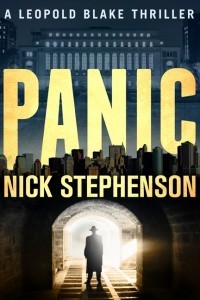 Those little details are what can really spice up a book – for me, you have to get the balance just right. Too much detail, and the reader gets overwhelmed and will eventually drift off in to a comatose state. Too little, and there’s not enough flavor to make the narrative seem realistic and interesting. Hmm one too many food references I think. Burritos, anyone?
How long does it take you to write a first draft of a novel-length piece of work? It’s wildly variable, unfortunately. Consistency is not one of my strong points when it comes to planning out my day, so some days are much better than others for getting words down on a page. Panic took me around two months to do a single draft, but then another two months to revise, rewrite, and edit. On top of that, I had to hire a cover designer, formatter, and set up a whole bunch of launch promos (thanks again, David!) which all takes up a lot of time. All in all, I think it’s safe to allow at least 4 months to get a decent product out there – one that’s polished to the point of supernova levels of shininess. Perhaps that will improve over time, but, for now, I think three books a year is pretty good!
How much time do you spend on the tweaking and editing process once you’ve got a draft under your belt?
The two months I mentioned above was just that – two full months of editing. Each and every day. Until my fingertips bled. I have read this book so many times, back to front, that I can probably recite the whole thing. I think this will get smoother over time, and I can already see marked improvements, but I’m very aware that writing – like any craft – is a continuous journey of self-improvement.
As a self-published author, how do you handle the quality control and marketing side of things?
I wear different hats. Not literally, although I do own several hats, but I have to be both author and marketer; writer and publicist. And it’s difficult to do all those at once. For me, marketing includes quality control, as that is what the market wants. This essentially means getting the product to the level that your customers expect – which can cover anything from choosing the right font, all the way to hiring editors, cover designers and deciding on promotional activities. I outsource everything that I myself am not an expert in (see Malcolm Gladwell’s 10,000 hours theory) which means my covers are done by a pro, my edits are done by a pro and my formatting is done by a pro. I will also pay for advertising and other promotional avenues, if the price / payoff is right. Yes, this costs money, but it’s worth it. Writing and selling books is a business, and should be invested in as such. I believe that my work can stand on the digital shelves next to the James Pattersons, Dan Browns and Lee Childs of this world – and for that, I am immensely proud.
Will you ever consider signing with a traditional publisher?
Yes, absolutely. The traditional publisher still has a big advantage to offer – that of the royalty advance. That offers a lot of value when a writer is planning their workload for the year, and can bring some reliable income streams. That being said, the figures would have to add up, and I would very seriously weigh up the pros and cons of any potential future contract, but I never say never. Except just then. Again, the publishing game is a business – and any sensible business partnership is always worth considering.
Do you have any advice for wannabe writers out there, thinking about jumping into the wild and wacky world of writing and publishing?
Yes! As I’ve hounded on at your request several times already – treat writing like a business. If you don’t do this – you can’t expect to sell anything. Why should readers part with their hard-earned cash for something you didn’t put enough time, money and effort into?
I think the top three takeaways are thus:
- Develop the best product you can. This means a slick cover design, snappy blurb, and a gripping storyline.
- Promote, promote, promote! The best work on the planet will never sell if nobody knows it exists. Consider paid promotions, free giveaways, and thinking outside the box.
- Maintain realistic expectations. Some of the most successful self-published and published writers sold practically nothing for months, years, decades before getting noticed. It can be easier these days with self-publishing opening up new opportunities, but you should assume that it will take at least a couple of years to become an overnight success. If you’re lucky.
Finally – what’s the main reason that readers should go right ahead and buy your book? This is not the time to be modest!
I wrote Panic to best capture the essence of books I enjoy reading the most. Namely; flat-out pacing, plot twists aplenty, pulse-pounding action, and a central mystery that will keep you guessing. I wanted to combine the brain twists of a classic mystery with the excitement of an action thriller, and I’m very pleased with the results. To top it all off, the book is currently FREE on Amazon – so now there’s no excuse for going on over and checking it out. It’ll change your life, save your soul, and solve world hunger*.
Can one little book do all that? You’ll just have to find out…
*please note – any life changes, soul savings, or world hunger solutions are purely coincidental.
Thanks Nick – it’s been a pleasure having you round. Or square, in fact. Dang, your British accent is rubbing off on me.
The pleasure’s all mine.
PANIC on Amazon US PANIC on Amazon UK
See more of Nick at on his website: http://noorosha.com/books/
Nick’s Amazon author page: http://www.amazon.com/Nick-Stephenson/e/B004MYQ8K6/
Follow Nick on Twitter: @Nick_Stephenson
Filed under: Writing Blog







Author, Beware This Pitfall
This is a must-read for all authors everywhere, about how the largest traditional publisher in the English-speaking world, Random House, is capitalizing on the indie boom to take advantage of hopeful authors. Vanity presses have always tried to make money off authors and not the actual publishing of the books, but these new imprints (Hydra, Alibi, Flirt and Loveswept) really take the cake.
Read more at this great blog post: http://whatever.scalzi.com/2013/03/06/a-contract-from-alibi/
Filed under: Writing Blog







March 6, 2013
Keeping it real for fantasy warriors
Guest Post By Tracy Falbe
Does it ever bother you when you’re watching a movie and someone gets shot in the shoulder but still runs up and down a mountain, gets in a fist fight, and isn’t even really bleeding 15 minutes later?
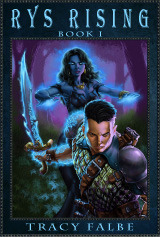 I enjoy fantasy but I can’t imagine away chunks of flesh flying loose from the upper body and not having to take a breather. If a warrior takes a bad wound he better have a friend ready to jump in and defend him from the mortal blow. Then he’s going to need someone with surgical skills, magical power, or at least a few drops of regenerative extract of phoenix root.
Fantasy warriors can have mad skills, but acquiring them should take more training than can be fit into a fortnight. A really good fighter needs to work at it and stay in shape. Some mention of an athletic regimen should accompany these brave characters who draw swords with supreme confidence. A man who duels with a tribe’s select champion as just part of daily negotiating practice needs some established experience. He can’t have survived a tussle with highwaymen and skirmished a pack of goblins and then think he’s magically a martial artist (unless he’s magically changed into a martial artist somehow, but that’s kind of silly).
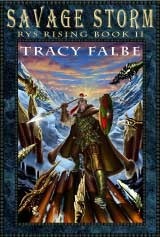 Like professional athletes, fantasy warriors need time to recover from injuries. For the sake of physical realism, even within a magical story, I prefer a character that has to endure some pain and vulnerability after a hard battle. This time of reflection can add nicely to story and character development too.
I’m not at all against magic being involved in recovery. Healing potions and spells are mainstays of fantasy stories, but they should not be thrown around like chocolates on Halloween. Magic requires energy and skill. Using it has costs and consequences.
What makes fantasy great in my opinion are elements beyond illegitimate levels of battle skill and lack of physical consequences. I enjoy the genre because of its willingness to indulge in raw primal physical conflict. A warrior really does solve problems with violence sometimes. That’s a fantasy that relieves the angry pressures that build up in people. Reading about fantasy warriors gives escape from the confines of a mundane and belittling existence. It’s nice to imagine having the strength and skill to overcome enemies or deliver justice. But if he gets hit on the head or cut open with a sword, someone better have a healing spell ready, and the hero is going to need some bed rest, preferably with a buxom maiden to fuss over him.
***
Tracy Falbe is the author two fantasy series, Rys Rising and The Rys Chronicles. Her heroes and heroines are supported by magic, but they still have to accept physical limitations and choose strategic retreat now and then because they aren’t superheroes in capes. They’re real people in a fantasy world, and just because that’s exciting doesn’t mean it’s easy.
Her novels can be found at:
Brave Luck Books
Smashwords http://www.smashwords.com/profile/view/braveluck
Amazon Kindle http://www.amazon.com/Tracy-Falbe/e/B002BLWI3S/
Barnes & Noble http://www.barnesandnoble.com/c/tracy-falbe
iTunes http://itunes.apple.com/us/artist/tracy-falbe/id365797627?mt=11
Sony Reader Store http://ebookstore.sony.com/author/tracy-falbe_160285
Kobo http://www.kobobooks.com/search/search.html?q=%22Tracy+Falbe%22&t=none&f=author&p=1&s=none&g=both
Audible http://www.audible.com/pd/?source_code=ASRDG0001WS041112&asin=B007TLT05Y
Filed under: Writing Blog







March 1, 2013
Goodreads Giveaway of Eden Plague in Print
Thanks to the efforts of my lovely wife, The Eden Plague is now a print book available through CreateSpace and Amazon, so I decided to of a giveaway on Goodreads. If you are interested, just go to this link:
http://www.goodreads.com/giveaway/show/46271-the-eden-plague
(you will need to be signed in to your Goodreads account) and enter to win.
Filed under: Writing Blog