
A.L. Butcher's Blog, page 178
January 27, 2015
Fantasy, Sci-fi and Literary Heroes in Our Society – Guest Post – Wade Garret
At 33, Wade Garret is the youngest of three children (the only boy) born in NY, but raised in the southern United States. He’s married to a wonderful woman and has a convict for a dog. When not reading, writing or occasionally drinking at the pub, he can be found researching the latest comics or in the chair of his favorite tattoo shop.
Genesis is only the beginning for Mr. Garret’s epic Kingdom Come series.
wjgarret.blogspot.com
@wadejgarret
WadeGarret@FB
http://www.amazon.com/s/ref=nb_sb_ss_c_0_17?url=search-alias%3Dstripbooks&field-keywords=genesis+book+one+of+the+kingdom+come+series&sprefix=Genesis%3A+Book+One%2Caps%2C408/
http://www.barnesandnoble.com/w/genesis-wade-garret/1117401189?ean=9780988659094
http://www.goodreads.com/book/show/18334420-genesis?from_search=true
Q) How pervasive do you think fantasy/sci-fi are��in our society today? Why do you think this is?
A) They’re everywhere. As they should be. The people reading this can likely point to a dozen or more things in eyesight that have F/SF all over them: T-shirts, magazines, electronics, cereal boxes and so on. Honestly, lots of interests have learned to see $ where they didn’t before. The content has always been here, but with movies and TV driving it over the last few decades, it’s hit Warp Speed. Also, it’s cool to be a geek now.
Q) It has been argued fantasy is full of ‘tropes’ ��� what are your views on this?
A) So what? There are “tropes” in every genre. There’s common themes and archetypes in all fiction. The Hero’s Journey works for a reason. As a writer, you take those basics and make it interesting, worthwhile; the layers you build and the choices you make define how every story is unique and worth reading. Consider every epic fantasy you know. How different are they? How similar? Which one would you cast away because it came second, borrowing ideas or concepts from the first?
Q) Fantasy and science fiction used to be seen as very male-oriented, do you think this is still the case?
A) I could be wrong, but I don’t think so. I think the influx of YA stories have really impacted that model over the last decade. Anytime I walk into a bookstore I checkout the F/SF areas and discover a mixture of readers. In the YA areas, all female, all ages and the stories are F/SF. It’s great. I want my daughter to have a ton of options when choosing her next great adventure to read.
Q) How important are ‘facts’ in fantasy/science fiction ��� does something need to be plausible to be believable?
A) Most important. When you’re dealing with the Fantastic, believability is key. Once you build the framework for your world, the rules, you’ve got to stick to them. If you break or ignore your own rules, you better have a good reason, because if not, how is your reader going to 1) become a part of the amazing story you’re trying to tell and 2) feel w/e the emotion is you’re trying to impart to them as those rules come into conflict with the characters and the world?
Q) How has science fiction changed from the days of Mary Shelley and Jules Verne?
A) Only in that we have more material to work with which is now mundane, therefore, we must reach beyond the deep to inspire and mystify. Imagination is the real engine of Science Fiction and Fantasy. Considering what was once pulp content alone, separate from the flashy gadgets, odd gizmos or strange wizards with epic powers, I feel it’s now being taken seriously; the richness and depth is being respected. I love it, cause it means more people will experience it and pass it along.


January 26, 2015
Returning Author Andrea Downing and her New Release
I���d like to welcome back author Andrea Downing.�� �� �� �� �� �� �� �� �� �� �� �� �� �� �� �� �� �� �� Thanks so much, Alex, for having me back; I’m delighted to be here once again.

1)�� Please recap briefly about your books:�� ��My first three books were all historical western romances���Loveland and the two novellas, Lawless Love and Dearest Darling.�� Now, on February 4th, I have a contemporary women’s fiction, albeit with strong elements of romance, coming out:�� Dances of the Heart.�� Quite a departure for me.�� It does take place predominantly in Texas so I haven’t left the west, but it’s very different from anything I’ve written before, especially as it also has military themes.
2)�� What has changed since you last visited? Tell us your news!�� Well, both��Loveland and Lawless Love were finalists in the RONE Contest so that was quite exciting; it’s a bit early for Dearest Darling to have garnered anything as that only came out Oct. 10, 2014, but I remain hopeful!�� Lawless Love also placed in the International Digital Awards.�� Dances took quite a long time to get to publication for various reasons, and I even had to postpone the publication date once, so I’m very excited it’s finally making an appearance.�� I guess moving away very slightly from traditional romance is the biggest change; the book I’m working on at the moment is also not an historical western though, have no fear, there are plots in the back of my mind so I will return to that genre.
3)�� Sort these into order of importance: Great characters; great world-building; solid plot; technically perfect. Can you explain why you chose this order? (Yes I know they all are important���)����I’m reviewing in my mind some books I’ve read recently and think I’m for solid plot, great characters, great world-building and technically perfect.�� First of all, I’ve read some books where the characters were believable but there was no real plot, no complexity or sub-plot or conflict and so, for me, the book just died.�� So that is my Numero Uno.�� But pretty much hand-in-hand goes great characters; if your characters are flat or one-dimensional, the book will die.�� They must have inner conflicts to keep the plot moving along.�� The importance of world-building, to me, depends on the plot and the genre.�� Even with a contemporary it can be very important if you’re creating a situation dependent on the world���say, a child goes missing at a summer camp in the Adirondacks.�� But the importance, I think, varies with the book.�� And technically perfect I put last because if it’s a great story and you love it, you’ll probably overlook just about anything technical I believe.�� That’s not to say it doesn’t have to be perfect technically, just that it’s the easiest thing in my humble opinion to overlook.
4)�� Do you self-edit? If so why is that the case? Do you believe a book suffers without being professionally edited? ��I don’t self-edit, unless you include rewriting and so on, but those are the normal things an author does.�� I do believe you need a professional editor because as good as an editor as you may be yourself, nothing compares to having that set of professional eyes scan over the project.�� If you’ve created something and it’s your baby, it’s difficult to let go even when you know you should be changing, deleting or whatever.�� Your editor is the voice in the back of your mind that you MUST�� listen to.
5)�� Do you think indie/self-published authors are viewed differently to traditionally published authors? Why do you think this might be?����I think some years ago that was the case but I do believe it’s totally changed now and they’re considered the same as any author.�� When self-publishing first came out, it was viewed as a type of vanity publishing, which had a very bad reputation:�� if you had enough money, you could get yourself published.�� Now we know that, while there is a lot of dross out there, there is also a load of excellent stuff.�� Many authors just feel that the rewards are great enough to compensate for the hassles of self-publishing.�� For me, I need the validation that being published by someone else brings���if they liked my work enough to publish it, readers might like it too.
6) Do you read work by self-published authors?����A few years ago I bought a book on Amazon without noticing it was self-published. It was terrible; it was so bad, in fact, I was going to use it as a text for a creative-writing course in what not to do.�� It was literally the worst book I’d ever read, and I bought it because the storyline seemed interesting to me, an historical novel.�� I swore then I would always check to see if a book was self-published and not buy it if it was.�� Well, times have changed.�� I’ve read some really excellent self-published books and I now believe that it is as much a toss-up as to whether you enjoy a book whether it is self-published or published by the Big Six.�� There are no guarantees���
7)�� When buying a book do you read the reviews?��Yes, I do read some of the reviews but that doesn’t necessarily mean they sway me one way or the other.���� If it’s for an author I’ve previously read and I like the storyline, I’ll probably read the book whatever the reviews say. ��For instance, I recently finished Donna Tartt’s The Goldfinch; I’ve read her previous two books and loved them, so, although the readers’ reviews were mixed, nothing was going to stop me from taking on this behemoth work. If it’s for an author I’ve never read, then the reviews hold far more sway no matter what the plot line is.�� I feel, why waste my time?�� And if it’s for an author I’m slightly iffy about, then I consider the reviews and weigh it against how much the blurb appeals to me.
8)�� How have you progressed as a writer since you started?�� Gracious, I certainly hope I’ve progressed!�� I’d love to re-write my first book, Loveland, although a lot of people told me they loved that book but I do think I could do better with it now.�� I’m actually afraid to say much more because Dances of the Heart, which is just coming out, was written before Dearest Darling and it’s contemporary, which I am tackling for the first time, so who knows what readers will think.�� But to ask me specifically “how” I think I’ve progressed is difficult to answer; I guess I’d just say my writing has matured!
9)�� Most authors like to read, what have you recently finished reading? Did you enjoy it?�� I’m just finishing up Imperial Woman: The Story of the Last Empress of China by Pearl S. Buck.�� I guess just about everyone has read Buck’s Pulitzer Prize winner, The Good Earth; I certainly did, in school. So when this came up as a deal on Amazon, I decided to give it a try, but I have to say it isn’t exactly a page-turner, though, as an historical novel, it’s quite interesting.�� I’m looking forward to balancing this by reading a load of romance next.
10)�� Can you name your favourite traditionally published author? And your favourite indie/self-published author?�� It’s difficult to name my favourite traditionally published author, there are so many of them in so many different genres.�� For literary fiction, I’d count in Isabel Allende, Donna Tartt, and British author Maggie O’Farrell.�� For historical novels, I loved the Poldark novels of Winston Graham and the Sharpe novels of Bernard Cornwell.�� And, finally, for romance I love Nora Roberts, of course, and Julie Garwood, but Maggie Osborne wins the prize.�� My favourite self-published author is Karen Casey Fitzjerrell; she writes literary books that take place in Texas and has won several awards for her work.�� I recommend them highly.
11)�� What are your views on authors offering free books?�� I just wrote to someone in an email about this.�� My editor-in-chief is, apparently, against this and I begin to see why.�� I’ve given away a number of free books and I don’t think a single one has resulted in a review.�� The purpose of the giveaway is to try to get a larger audience by giving away a book that may then be recommended to others.�� Well, in my view, the best way to recommend a book is to review it, but even fellow authors who have won my books have not reviewed them.�� I understand we are all terribly busy and have very little time, but a couple of sentences is all it takes to put a review on Amazon.�� Even those who have promised to review have not done so; maybe they don’t like them and don’t want to review them for that reason, but if they then return to the next giveaway, it doesn’t seem so.�� So, to answer your question and stop griping, I don’t think giveaways do very much more than bring in more comments to blog posts���everyone wants something for free.
12)�� Give us a bit of information about your primary character(s). ������Dances of the Heart is a four-hander; that is, there are basically 2 couples in this story, the parents and their twenty-something offspring.�� Carrie Bennett is a highly successful romance writer; think Nora Roberts but more on the social scene of NYC and the Hamptons.�� She’s a workaholic who doesn’t face up to the fact she’s been unable to have a lasting relationship with a man since her divorce many years ago.�� On top of that, she has a daughter Paige who tragically lost her fianc�� to leukaemia while they were at law school and now can’t seem to get herself back on track.�� While on a research trip down in Texas, these two come across the Ryders.�� Ray, the father, is a heavy drinker who finds it difficult to deal with the loss of his older son in Afghanistan, though his sense of humour eases him over the rough spots with the help of booze. His younger son, Jake, returns to the family ranch from his stint in Iraq knowing several secrets about his older brother.�� So that’s the basic background to the primary characters, Alex, and I’ll leave it at that with my sincere thanks for having me here today.�� It’s been a great interview for me; many thanks again!
***
Author:�� Andrea Downing
Genre:�� contemporary women’s fiction/romance
Publisher:�� The Wild Rose Press
Blurb:�� Successful, workaholic author Carrie Bennett lives through her writing, but can���t succeed at writing a man into her life. Furthermore, her equally successful but cynical daughter, Paige, proves inconsolable after the death of her fianc��.
Hard-drinking rancher Ray Ryder can find humor in just about anything���except the loss of his oldest son. His younger son, Jake, recently returned from Iraq, now keeps a secret that could shatter his deceased brother���s good name.
On one sultry night in Texas, relationships blossom when the four meet, starting a series of events that move from the dancehalls of Hill Country to the beach parties of East Hampton, and from the penthouses of New York to the backstreets of a Mexican border town. But the hurts of the past are hard to leave behind, especially when old adversaries threaten the fragile ties that bind family to family���and lover to lover.
Excerpt: ���You know how to Texas Two-Step?��� he asked.
���No,��� she said, laughter just below the surface.
���Well, sweetheart, you have come to the right place. Or at least got yourself the right man. By the time I finish with you, you���ll be the best dang stepper on the floor.���
Carrie looked around. ���There isn���t anyone else on the floor at the moment, Ray.���
���Well, heck, I know that. That���s perfect for learning.���
As soon as his hand closed around hers, the leather of his palm a strange glove over her own fingers, a sudden frisson of connection ran through her she hadn���t known in a very long while. He moved her to face him squarely on, a small smile tipping the edges of his mouth, the dark, impenetrable eyes shining with his captured prize.
���Just follow me,��� he said as his right hand went to her back. A cover of a Vince Gill ballad started, the mournful tune setting a moderate tempo. ���Perfect.��� He held her right hand high and applied slight pressure to move her backwards. ���Fast fast slow slow, fast fast slow slow.���
Carrie felt a light bulb go on. She got it. It was good. It was fun. And she relaxed in his embrace. He was an excellent teacher, a fabulous leader on the dance floor. Would wonders never cease?
���You���re doing well. You���re doing fine,��� he assured her. ���We���re gonna try a little promenade now, and then a twirl, so get ready.���
Carrie couldn���t stop herself from smiling, anticipation bubbling for just a second. And then out of the corner of her eye she caught Ty watching them, beer half-raised in salute and a smirk plastered on his face. A moment���s hesitation and she missed the step.
���What happened there?��� asked Ray, oblivious to the effect the on-looker had on her.
Other couples were finally joining them on the dance floor, but despite the company, Carrie���s discomfort increased. ���That boy, that Ty,��� she told him. ���He was watching us. It made me feel���uneasy.���
Ray scanned the sidelines, but Ty had gone, nowhere to be seen. ���Oh, don���t pay him any mind. He���s harmless enough.���
Bio:�� Andrea Downing likes to say that when she decided to do a Masters Degree, she made the mistake of turning left out of New York, where she was born, instead of right to the west, and ended up in the UK.���� She eventually married there, raising a beautiful daughter and staying for longer than she cares to admit.�� Teaching, editing a poetry magazine, writing travel articles, and a short stint in Nigeria filled those years until in 2008 she returned to NYC.�� She now divides her time between the city and the shore, and often trades the canyons of New York for the wide open spaces of Wyoming.�� Family vacations are often out west and, to date, she and her daughter have been to some 20 ranches throughout the west.�� Loveland, her first book, was a finalist for Best American Historical at the 2013 RONE Awards.�� Lawless Love, a short story, part of The Wild Rose Press ���Lawmen and Outlaws��� series, was a finalist for Best Historical Novella at the RONE Awards and placed in the��2014 International Digital Awards Historical Short contest.���� Dearest Darling, a novella, is part of The Wild Rose Press Love Letters series, and came out Oct. 8th, 2014, and Dances of the Heart, her first contemporary novel, comes out in February, 2015.
Links to Social Media:�� WEBSITE AND BLOG:�� http://andreadowning.com
Facebook:�� https://www.facebook.com/writerAndreaDowning
Twitter:�� @andidowning�� https://twitter.com/AndiDowning
Goodreads:�� http://www.goodreads.com/author/show/6446229.Andrea_Downing
Linkedin:�� http://www.linkedin.com/profile/view?id=124888740&trk=nav_responsive_tab_profile_pic
AMAZON AUTHOR PAGE:�� http://www.amazon.com/Andrea-Downing/e/B008MQ0NXS/ref=ntt_dp_epwbk_0
Buy Links:�� Amazon: http://www.amazon.com/Dances-Heart-Andrea-Downing-ebook/dp/B00S46BGY6/ref=sr_1_2?ie=UTF8&qid=1421510959&sr=8-2&keywords=Dances+of+the+Heart
The Wild Rose Press: http://www.wildrosepublishing.com/maincatalog_v151/index.php?main_page=product_info&cPath=195&products_id=6060
Reviews:�� This book has not been released as yet and there are therefore no reviews
Tags:�� Andrea Downing, Texas, New York City, East Hampton, Hill Country, writers, ranchers, military, loss


January 24, 2015
Author Interview Number Eighty One – John Paul Wohlschied – Detective Fiction
Welcome to John Paul Wohlschied��
Where are you from and where do you live now?��The answer to both is Grand Rapids, Michigan. USA
Please tell us a little about your writing ��� for example genre, title, etc.��I have self-published two books so far. In December 2013, I published Don���t Look a Gift Horse in the Mouth, my take on the post-WW2 hard-boiled detective genre. It involves a detective named Benny Cahill, a dead jockey, a fixed horse race, and a pile of money. After I published it, someone suggested that I published a collection of stories with the same main character. So, last month I published Trouble is my Client, a collection of four new Benny Cahill stories. In this book, Cahill deals with a scuffle over a rich man���s will, a radio actor receiving death threats, a bank robbery and a dead scientist.
Where do you find inspiration?��I���m a big fan of radio shows from the 30s-50s, known as the golden age of radio. I also enjoy older films, especially comedies and detective shows. I also do a lot of reading on a wide range of topics, history, technology, religion.
Do you have a favourite character? If so why?��Not really. I have hundreds of characters in stories both published and not, so it���s almost impossible to pick out one.
Do you have a character you dislike? If so why?��Yes, the ones that make me work the hardest.
Have you ever used a person you don���t/didn���t like as a character then killed them off?��No. I���ve read of other authors doing that, but I���ve never had to.
Is there a message conveyed within your writing?�� Do you feel this is important in a book?��When I took English Lit in college, my prof asked us what message Phillip Marlowe was trying to get across in The Big Sleep. I thought to myself, ���I don���t know, I just enjoyed the story.��� To be honest I don���t think stories need a message. If anything, the message of all my detective stories is the same: ���crime doesn���t pay.���
Sort these into order of importance: Great characters; great world-building; solid plot; technically perfect. Can you explain why you chose this order? (Yes I know they all are important���)��Solid plot, great characters, great world building, and technically perfect. Plot is the most important part. If you don���t have plot, you don���t have anything. After plot, you need great characters to make the plot work. I don���t do a lot of world building, I just drop hints. If can get everything technically correct, that���s great but sometimes you need your character to use something from a different time. The plot comes before being technically correct.
In what formats are your books available? (E-books, print, large print audio) Are you intending to expand these and if not, what is the reason?Currently, all my published stories are available as ebooks. Right now I don���t have any plans to expand into other formats. I���m busy writing and ebooks are a cheap way to publish.
Do you self-edit? If so why is that the case? Do you believe a book suffers without being professionally edited?��I do some self-editing, but I have a couple of people who help me out. It probably helps to hire someone to do the editing professionally, but you don���t always need it. Just have some friends who are good with grammar take a look at it.
Do you read work by self-published authors?��Yep. I trawl Smashwords and check out the latest releases from time to time.
What are your opinions about authors commenting on reviews? How important are reviews?��It can helpful, if the author needs to clarify something that the reviewer didn���t understand or like. But it can be a problem if the author doesn���t know how to take criticism and it turns into a shouting match. Reviews can help inform future readers.
What experiences can a book provide that a movie or video game cannot?Books can provide better imagery and more story that both movies and video games can���t provide. I mean, quite often when they make the movie version of a book, they leave a lot of information out or condense it. Also, some battle scenes may look great on the big screen, but in the mind���s eye they can look even bigger and cooler.
Most authors like to read, what have you recently finished reading? Did you enjoy it?��I finished reading my friend���s book, Chasing Liberty. It is a great book with suspense and an enjoyable main character.
Do you have a favourite movie?��When I was younger, I almost wore out a VHS copy of Disney���s 20,000 Leagues Under the Sea.
Do you have any pets?��No. Used to have an outside cat, but he left.
Religion blog:��http://realromancatholic.com/
Tech blog:��http://wiredworldreport.blogspot.com/
Mystery story blog: http://maninfedora.tumblr.com/
Thoughts on writing:��http://writerssoapbox.wordpress.com/


January 17, 2015
Joe Bonadonna’s fine review of I, the Sun, biographical novel of the greatest Hittite king by Janet Morris.

I agree with this fine review. I, the Sun is one of the best books I’ve read. It’s a true rollercoaster of emotional and very literary writing, interweaving the words of the king himself with the superb prose of Janet Morris. I cried, I laughed and I really couldn’t put this down.
 Originally posted on sacredbander:
First published AT: http://dorgoland.blogspot.com/2015/01/a-review-of-janet-morris-classic.html
A review of Janet Morris��� classic historical novel, I, THE SUN.
I, The Sun, by Janet Morris. Published by Perseid Press, 2013. 534 pages. Available in paperback, Kindle, and Nook editions. Cover art: The Seal of Suppiluliumas.
Copyright �� Janet Morris 1983, 2013
This masterpiece of historical fiction was based on the actual writings and historical records of Suppiluliumas I, the great Hittite king who dominated the Middle East around the 14th century, BC. He rebuilt the old capital of Hattusas, and from there exercised his Imperial Power over the Hittite heartland, controlling the lands between the Mediterranean and Euphrates. But he was not a king to sit back on his throne and pull the strings of his minions, advisors and subjects. No, he was hands-on, and long before he became king he made his way in the world, fighting and whoring and playing���
View original 1,455 more words


SpecMusicMuse���Review of The Bone Sword by Walter Rhein
Review of Fantasy the Bone Sword.
 Originally posted on Scott M. Sandridge:
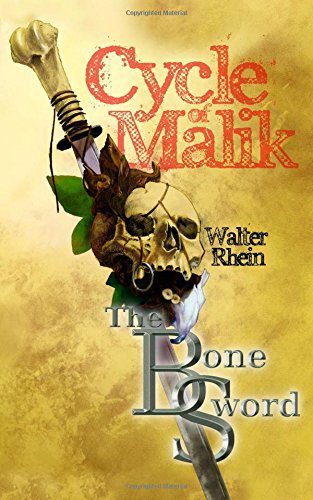 Walter Rhein���s The Bone Sword mixes the grittiness of sword & sorcery with the miraculous wonder common in heroic fantasy, and he does so in a smooth way. While the main protagonist is clearly a good guy, he���s still rough around the edges and willing to do what it takes to win, both in sword fighting and in strategy.
Jasmine, however, ends up stealing the show and actually is the character whose shoulders the fate of an entire kingdom resides on. Her character growth, more than any other character���s, was what kept me reading. Unfortunately, I didn���t feel the same about her brother, Noah. He felt more ���tacked on,��� and I had a difficult time feeling any sympathy for him, even during the torture scene. I felt he needed a little bit more personality to him.
The villains, with the exception of one, were primarily archetypes; however, I still found���
View original 93 more words


How To Create A “Real” Fantasy World
Worldbuilding advice.
 Originally posted on Lynette Noni:
I love fantasy. I love reading it, I love watching it, and most of all, I love writing it. There���s something so incredibly liberating about letting your mind run wild with infinite possibilities. Because, really, the only thing that limits the creation of fantasy is our own imaginations.
But how, exactly, does someone create a ���real��� fantasy world? Because by definition, fantasy means something that is impossible or improbable. So how on��earth can it be ���real���?
*Shrugs* Beats me! But let���s see if we can flesh out some possibilities.
First up, even though it���s fantasy, there still have to be limits. Otherwise the fantasy just becomes chaos. And nobody likes chaos���it���s gritty and difficult to read. You get lost and caught up in the nuances. It���s better to refine the scope of the fantasy than it is to have no rules in place. A good example for this is���
View original 673 more words


January 16, 2015
Crossing Categories in Writing – Guest Post Jacquelynn Luben
In 2015 I am welcoming a number of guests to my blog, where they discuss all manner of topics. I am sure my regular followers have seen the Fantasy and Literary Heroes in Society posts, which will be a continuing feature but today I am pleased to welcome Jacquelynn Luben who talks about the challenges of writing in multiple genres, her work in a small publishing house, research and the challenges faced by many authors. Over to you Jacquelynn…
Crossing Categories in Writing
Jacquelynn Luben
Over the years, I���ve written both fiction and non-fiction, short and long.�� That is to say, I���ve written two non-fiction books and two novels (and am in the process of writing the third) and I���ve also written many short stories and published quite a few articles.
In terms of success, one of my non-fiction books was commissioned and published by a mainstream publisher, while the other was self-published, and of course, my articles were published in print magazines.
My novels, on the other hand, are published by a small publishing house, in which I am a director, with two others – so quite a small concern – which makes it more difficult to achieve the same sort of success as with a mainstream publisher.�� However, on-line sales through Amazon have provided me with a very satisfactory income during the last three years, and this specifically applies to my fiction work.
I have never been a professional writer, and have never had to rely on writing for an income.�� So from this point of view, I am happy with the way my writing has progressed.�� It means I write what I feel like writing and when I feel like it, and am not normally boxed into a corner where I have to produce something to a deadline.
In the past, my non-fiction writing has been praised for its clarity, and perhaps I should have concentrated on that.�� However, the truth of the matter is that I do not really like researching a subject.�� My first non-fiction book (The Fruit of the Tree) was written from the heart, as it dealt with the death of my baby daughter through cot death.�� Having written articles on the subject, I wanted to put the event into context, and so described a period of five years of my married life, including the births of my other children.�� No research was needed.�� At the time when I wrote it, it was all there in my memory.
I have spoken to writers who say that they love the research more than the writing.�� This does not apply to me.�� The writing is the part which is enjoyable;�� I like using words – as any writer should – and I like editing what I have written, moving words, sentences and paragraphs around.�� (Computers have made that aspect of writing so much easier.)�� My articles therefore, have, on the whole, been based on my personal experience, the most recent having been published in a ���nostalgia��� magazine, and have therefore not required much in the way of research.
It was as a result of writing my first book – which in the end, I published myself – that I was commissioned to write a self-help book on the subject of cot death, and for this I had to use my head and try to be somewhat more objective about the subject.�� I did, of course, have to research the topic, and I interviewed a number of people, taking notes and using, at that time, a tape recorder, before going to the computer to transcribe the interviews.�� I tried to make them wide ranging, including as my interviewees, bereaved parents, doctors and a midwife, a funeral director, and representatives of the charity which gave support to bereaved parents.�� The parents, too, were diverse and included, for example, those who had had more children and those who chose not to, and religious and non-religious people.
My motivation for writing fiction is really quite different, the common factors being my enjoyment of writing, and my interest in the structure of any piece of work.�� I am a sucker for stories.�� If I turn on the radio or TV, half way through a play, I will probably get hooked and want to know what happened.�� So constructing a story and living in the world of that story is a different kind of escapism.�� Fiction comes in for criticism from my engineer husband, because it���s ���not true���, but I believe that there is sometimes more truth in fiction than in factual stuff.�� In my opinion, whenever fiction writers describe events, they are remembering something that occurred in their own lives, or that they have heard about.�� The truth is in the emotion that was experienced, even if the fictional characters do not exist.�� So a piece of fiction is a tapestry of true or half remembered events or events that could happen.�� Even in fantasy and science fiction, (which I generally don���t write) good writers usually represent their characters with normal human emotions.
I think that writers have to recognise today that it is very difficult to make a living from writing unless you produce a best-seller.�� But that doesn���t mean that there aren���t opportunities to get work read and even paid for, particularly in the field of ebooks.�� My novel, Tainted Tree, is the piece of work that has provided me with an income recently and is the most read of my current work.�� Initially on the Amazon discussion pages, I promoted it a great deal, though this can bring Amazon���s wrath upon your head, so after a reprimand, ��I made sure that I was more cautious in this respect.
I made sure that I made good use of the categories on the book���s Kindle page, and was fortunate in that another writer who had created a ���Listomania��� of genealogical novels, added it to his list.�� If you are the writer of ���literary fiction���, your book may not be too specific, but as I don���t come into that category, and prefer plot based books, it is probably easier to categorise them.�� Having said that, I don���t believe that any book fits into one category.�� Tainted Tree is a genealogical romance with a bit of mystery and history in the package.�� My current novel in progress is a crime thriller, which also has a romantic thread.
My books have in common one thing.�� I have read and reread them over and over again and made changes to numerous drafts.�� Even if I break the rules, I regard grammar and spelling as of great importance, and, with the help of my fellow directors at our shared publishing house and other writers at my writing circle, I try, to the best of my ability, to sift out all errors.�� I also try my hardest to make sure that loose ends are tied up and that there are no errors of continuity.�� I am not a professional writer, but I try to be professional.


January 13, 2015
Fantasy and Literary Heroes in Our Society Guest Post – Charles E. Yallowitz
Welcome to the next instalment of the Fantasy in Our Society Series. Today I welcome fantasy author Charles Yallowitz.
Author Info
Series Title-�� LEGENDS OF WINDEMERE
Author Name-�� Charles E. Yallowitz
Genre- Sword & Sorcery/High Fantasy
Buy Links- http://www.amazon.com/Charles-E-Yallowitz/e/B00AX1MSQA/
(I���m going to hyperlink the individual pages with the blurbs in this file.)
Blog-�� www.legendsofwindemere.com
Facebook- https://www.facebook.com/CharlesYallowitz
Twitter- https://twitter.com/cyallowitz
Pinterest- http://www.pinterest.com/slepsnor/
Google +- https://plus.google.com/+CharlesEYallowitz
Goodreads- https://www.goodreads.com/author/show/6965804.Charles_E_Yallowitz
LinkedIn- https://www.linkedin.com/pub/charles-yallowitz/21/718/638
Bio- Charles Yallowitz was born and raised on Long Island, NY, but he spent most of his life wandering around his imagination. One day he returned from his fantasy world and decided he would share his stories with others. Eventually his wife decided that she was tired of hearing the same stories over and over again, so she convinced him that it was time to follow his dream of being an author. Now, locked within the house under orders to shut up and get to work, Charles brings you Legends of Windemere. He looks forward to sharing all of his stories with you and his wife is happy he finally has someone else to play with.
Location (as I am wondering if it is regional)? Long Island, NY, USA
Are fantasy/science-fiction seen in a more acceptable light than they used to be?
I think they���re definitely more acceptable and not as fringe as they were when I was a kid, but I can only really speak for fantasy.�� Personally, I always felt science-fiction was accepted more than fantasy.�� I think the rise of ���Harry Potter��� books/movies, ���Lord of the Rings��� movies, and ���Game of Thrones��� have certainly helped the fantasy genre get a slight foothold with the mainstream audience.�� It���s no longer a bunch of ���nerds��� with a loose grasp of reality and delusions of chivalrous grandeur.�� At least among the younger generations who are growing up with more fantasy in the culture.�� You do have an entire generation that grew up with ���Harry Potter���, which certainly brings a change to the perception of fantasy.�� I still get older people saying they don���t like fantasy or they can���t suspend their disbelief enough to get into the story.��I feel weird saying it���s becoming an age gap situation, but it feels that way at times.�� I should mention that there are plenty of older people, myself included, who enjoy fantasy.
It has been argued fantasy is full of ‘tropes’ ��� what are your views on this?
Yes it is and so is every other genre out there such as Westerns have horses and guns.�� I���ve come to have issues with the declaration of clich�� and trope because it tends to be used solely because the person is simply bored with the item.�� Elves, magic, and orcs seem to get this a lot.�� In fact, I see it happen mostly when a fan of one series is trying to declare superiority over another series.�� Meanwhile, people new to the genre won���t have any idea what���s a trope, what���s fresh, and what���s a twist on a trope.
I���ve found that you can boil nearly every story down to something else.�� For example, I���m thinking of a story where feuding kingdoms/families are trying to take control of a kingdom with a lot of backstabbing, death, and brutality.�� You might be thinking ���Game of Thrones���, but I was thinking ���Romance of the Three Kingdoms���.�� Both are entirely different stories when you get into the details and settings, but they still share something that I���ve heard some people call a trope.�� My point here is that we fight so much over why stories are the same that we seem to no longer pay attention to what sets them apart from each other, which can lead to a decrease in stories as time goes on.
Fantasy and science fiction used to be seen as very male-oriented, do you think this is still the case. Do you have any experience of this?
I���m male and it definitely has been geared more for my gender in the past.�� I think that���s starting to change in terms of there being more female authors like J.K. Rowling.�� As far as characters go, the female protagonist has always been fringe for some reason and that���s probably pushed many female readers away.�� I remember loving a character in the Forgotten Realms books named Arilyn Moonblade and she didn���t get a lot of attention with that mythos.��Not like the male characters like Drizzt and Elminster, which I always thought was a shame.��All that being said, I think it���s starting to shift toward female protagonists that can hang with the males and that should bring in more female readers.�� So it���s a slow evolution toward equality here that I see more progress with in the indie scene.�� In traditional books, women seem to primarily be romantic interests and sidekicks/supporting cast.
From my personal experience, I have found an odd response to female heroes.�� In my own series, I have two big heroines in the form of Nyx, a powerful spellcaster with confidence and a temper, and Sari, a flirty and cunning gypsy.�� These two and all of the supporting female characters seem to get a lot more criticism than the male characters.�� Any sign of ���weakness��� (a.k.a. emotion) is railed at while one of the male heroes can do the same thing and nobody seems to care.�� It makes me feel like the two women carry more risk and weight to the story, which is both exciting and nerve-wracking as an author.
How important are ‘facts’ in fantasy/science fiction ��� does something need to be plausible to be believable?
Being a fantasy author, I speak more for that genre.�� In regards to science fiction, I will say that real facts play a big role in the story and probably more so today than in the past.�� People love pouncing on a science fiction story to throw real world science into the author���s face and prove why something is impossible or simply wrong.�� Best way to explain it is that many vocal readers are more focused on the ���science��� part of the genre than the ���fiction��� part.
Now for fantasy, it���s both easier and a little more awkward.�� You can explain the bending or removal of certain laws of physics if you���re on a different world and have a high level magic system.�� Readers that refuse to suspend disbelief will still complain and you can���t do anything about that, but if it fits within the structure of your world then it���s right.�� The easy part is that you make the rules.�� The awkwardness comes from the same source because you need to religiously stick to your own establishment.�� For example, if you claim teleportation is impossible and explain why then you can���t have everyone doing it in a later book without there being a lengthy reason.�� Consistency is where a fantasy author will gain their facts and help pull willing readers into their world.
Fairy-tales, anthropomorphic personifications, mythical beasts and cultural fantastical persons are all about us ��� such as Santa Claus, St George, dragons and fairies ��� how vital are these for our identity? Are we who we are because of the myths our cultures hold?
I���ll admit that when I saw anthropomorphic personification, I was thinking of furries and anime catgirls.�� It���s interesting how every culture seems to have this at certain levels of acceptability. I see a lot of this in Japanese mediums while I rarely see it in American mediums.�� There are a few comic book characters that fall into this category, but they tend to start as humans that transform due to a mutation (Beast from X-Men) or accidents (Lizard from Spider-Man). I���m kind of harping on this one thing, but it certainly demonstrates a person���s mindset when it comes up in conversation.�� I���ve had conversations about this specific topic and someone inevitably brings up the idea of bestiality.�� This is definitely more of an individual identity topic with a touch on the overall culture.
To answer the second question: YES.�� Our fairy tales, mythical beasts, and culture mythos are a foundation of our culture.�� There are symbols within them and lessons to be learned even if they aren���t the same for each person.�� Being in the United States, it���s a hard thing to really wrap my head around because there is a national mythos (i.e. Washington cutting down a cherry tree) and a religious/bloodline mythos (i.e. I���m Jewish, so I have the Golem story).�� So these two areas mold a person to some extent either to learn lessons or rail against them because one finds them to be nothing more than useless folklore.�� Our sense of good/evil, heroes, right/wrong, and other basic foundations of behavior can be shaped by these things.��Popular fantasy can fall into this too because it builds off some aspects of fairy tales and mythology and shows characters who are influenced by these stories.


January 12, 2015
Character Interview Number Twenty-Four – Alan McDonald – Fantasy/Military
Name (s):��Alan (Mac) McDonald
Age:��Thirty-something.
Please tell us a little about yourself.��I was the officer commanding SBS 4 troop, UK Special Forces Anti-Terrorist Wing. My team and I are specialists in everything to do with killing bad guys in inventive and prejudicial ways. Since our transfer to Arden, however, we���ve transferred all that testosterone onto the Horde.
Describe your appearance in 10 words or less.��What James Bond wishes he could look like.
Would you die for those you love?��Was that a loaded question? I did die protecting those I love, and was transported to this hell-hole of a planet under attack from soul-hungry mutants. And although there was no one special back home, I must admit, I worry how my parents will take the news of my ���death���. If only they knew.
What would you say are your strengths and weaknesses?��Strengths? I���d say it���s the ability to make the best of any situation. Life has taught me to be flexible, and to adapt to whatever circumstances I find myself in. Just as well really, seeing what happened eh?
As for my weaknesses? Although I try my best to be patient and courteous, I don���t suffer fools gladly.
Do you have any relationships you prize above others? Why��Well, my team will always hold a special place in my heart. We���ve seen each other through thick and thin, after all.
But, since I arrived in Rhomane, there���s Jayden. She���s pretty cool for a Tec-head, and has a great In-your-face sense of humour. If I manage not to get myself devoured, I think things could get very serious…if she wants to?
Can you remember something from your childhood which influences your behaviour? How do you think it influences you?��I���m 6th generation military. I think that says it all. Both my father and grandfather had a great deal on influence during my early years, and I suppose it was inevitable the course my life…and death would take.
Do you have any phobias?��The Horde. Have you met them? Twelve foot high, esoteric concentrations of rabid hunger ��� with fangs and talons ��� just itching to shred your soul. Apart from that? Not much fazes me…except for Smurfs. They���re so small and blue…you just can���t trust them.
Please give us an interesting and unusual fact about yourself.��I know Victoria���s secret. And it makes me feel kinda…naughty? J
Tell Us About Your World
Please give us a little information about the world in which you live.��Arden is a planet on the far side of our galaxy, along the Scutum-Centaurus Arm (Sounds like a bad chest infection doesn���t it?). She has a red sun, and was once the home world of a civilization that had employed advanced technology for over twelve thousand years on more than thirty planets.
In some ways, it���s much like Earth, although the leaves and grass have a coppery-blue tinge, and the air has a permanent zesty tang to it. (Great for gin and tonic)
Do you travel in the course of your adventures? If so where?��Travel is pretty much restricted because of the Horde. If we do go out, it���s only in small groups and only then with a heavily armed contingent, (which I so happen to oversee).
We use skimmers, an anti-grav form of hovercraft, and their larger counterpart, a skidder.
However, recently, we discovered an Avenger Class Cruiser in orbit, The Arch of Winter, so who knows what we might end up doing with that. (I know, boys and their toys, but c���mon…her guns are so big and shiny).
Name and describe a food from your world.��Lolath is pretty good. It���s very similar in appearance and taste to a cow, although its milk yield is considerably lower. But by far my favourite is rhobexi. It���s what you���d get if you cross a deer with a bull. But how to describe the taste? Very rich, it���s like a blend of venison and lamb, and the more you chew, the more the flavour floods your mouth.
(Nom Nom!) (And I���ve got one of the griddle, right now)
What form of politics is dominant in your world? (Democracy, Theocracy, Meritocracy, Monarchy, Kakistocracy etc.)��From what we can ascertain, the politics of the Ardenese people was senatorial based. Saying that obviously makes us think of the Roman Empire back on Earth, but the Ardenese form of government was quite different, as their society was extremely advanced and enjoyed a level of intellectual and cultural sophistication that simply has to be seen to be believed.
We���ve only been able to witness it from archived holo-clips & digi-crystals. However, the examples we saw blew our minds.��All representatives worked for the greater good of the people, and, while everyone was viewed as equal, each had a personal responsibility to fulfil their individual roles within society.
Officers of the Senatum ��� Magisters ��� were elected each year from the prefects, normal members of society who had been voted to represent each of the cities. While each prefect served on an annual basis, once selected as a Magister, their responsibilities expanded to encompass an entire district. The presiding officer of the Senatum ��� the Chief Magister ��� was a tried and tested politician chosen by his peers to serve as their leader. He remained in office for five years.
What is the technology level for your world/place of residence? What item would you not be able to live without?��Like you, I come from the twenty-first century. But I was transported the equivalent of twelve thousand years into the future, so, you can only imagine the level of technology the Ardenese must have employed.
I say ��� must have ��� because remember, even the most advanced group brought here by the Architect are only from the earth year 4200.
Think of a comparison:
My grandfather was born in the 1960���s. During his life, he saw the advent of space travel, the digital age, world-spanning communication devices you could keep in your pocket, and micro surgery. And they are but a few examples. His grandfather ��� just two generations before him ��� would never have dreamed of such things.
So…just try to imagine that level of advancement, multiplied over six hundred generations. That���s what we ended up inheriting.
The trouble is, we don���t know how to use it. The Architect has assisted us in this regard, with nano-technology that enhances our natural learning curve, but it���s still been a monumental struggle.
Out of all the delightful things we���ve discovered, I love the stealth technology, and the micro-singularity grenade. It���s a Special Forces wet dream come true, as it doesn���t leave any mess behind. No witnesses, no long and troublesome reports.
Look, I���d love to stay, but I���ve got a rhobexi burger on the barbecue. It���s just about done, and if I���m not there when it reaches perfection, some swine will eat the evidence.
Thanks for dropping by and asking a few questions. Any time you feel like swapping places, let me know J
Author notes:
Book(s) in which this character appears plus links
��The IX
Amazon.com:
Amazon.UK:
Author name:
Andrew P. Weston
Website/Blog/Author pages etc.
Blog: http://andrewpweston.blogspot.gr/
Twitter: https://twitter.com/WestonAndrew
��
Amazon Author Page:
http://www.amazon.com/Andrew-P-Weston/e/B00F3BL6GS/ref=ntt_dp_epwbk_0


January 11, 2015
Interview with A.L. Butcher
I am not sure I shared this here when it went live:)
 Originally posted on Nicky Peacock - Author:
 Tell us about your publishing journey���
Hi and thanks for the interview. I���m primarily a dark fantasy author but I���ve also written horror, poetry, short stories and general fantasy.�� I���ve been a writer for as long as I can remember ��� I was usually the one writing for the school display. I never really thought it would go beyond that, if I am honest.�� The first novel sprung from something I���d written for an RPG, which was adapted and expanded. I���ve run and planned role play games for a while, including a vampire based on, and have folders of adventures, which might get adapted. OK yes I am a geek���. The recent horror stories ��� which feature in Tales from Darker Places ��� came from a ���Jack the Ripper��� story I���d written for something else. I read a lot of true crime and that particular set of murders I find���
View original 596 more words


