Maya Panika's Blog, page 3
January 29, 2015
Review: The Altogether Unexpected Disappearance of Atticus Craftsman
by Maman Sanchez
4 stars
 Sent by his father to Madrid, on a mission to close a failing magazine, Librarte, a shy young Englishman, Atticus Craftsman has gone missing. A lazy and inept policeman, Inspector Manchego is charged with finding what has happened to the young man, whilst getting deeply involved with the all-female employees of Librarte, who all seem to have something to hide.
This is a wonderfully quirky, fresh and original comedy; a light and easy read. A story led by its characters, and what a wonderfully well-drawn, eccentric bunch they are: Beta, the literary spinster and leader of the group; Gabriela, whose marriage to her Argentinian is failing under her need to conceive; the apparently staid, married Maria with her five children, whose guilty secrets threaten everyone’s security; poor fat and getting fatter Asunci��n, whose husband has just dumped her and run away with an sir stewardess; and beautiful, unpredictable southern spitfire Solea, who is destined to play such an important role in the disappearance of Atticus Craftsman.
The English characters are not terribly believable and more than a little clich�� – the Craftsmen man all appear to have been based on Jacob Rees-Mogg – but that doesn’t really matter very much. This is a comedy, a farce, a fantasy, and a very good and enjoyable one at that.


January 24, 2015
We are watching The Web of Fear…
Poppy remains deeply concerned about Yeti plans for the invasion of Earth.


January 23, 2015
Review: The Ladies of the House
by Molly McGrann
4 stars
This is an advance review of a book that will not be published until 26th March 2015
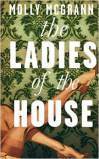
A high-class brothel in Primrose Hill: the ladies of the house, the prostitutes, once young and beautiful, have grown old. One is suffering from dementia, another dying from cancer. One still plies her trade, though her beauty is long gone. And now the owner of their house is dead and his daughter only now discovering just what her father’s business was and just how rich it made him.
This was a terrific read from start to finish – marred only by another (there are so many) ending that wasn’t an ending but where the narrative simply stopped. And the ending we did get – the explanation for all those deaths detailed at the start – was more than a wee bit daft.
Don’t let it put you off: in every other respect The Ladies of the House is a tremendous page turner, with a plot packed with detail – a host of little incidents that add up to an intriguing and gripping whole. The tale is carried by the characters – each chapter told from the point-of-view of one of eight individuals – and what a richly layered and surprising story it is, and totally fresh, I really don’t think I’ve read anything quite like it before. The characterisation is superb. The only thing that disappointed was that non-ending. If ever a book needed at least one extra chapter to tie up those loose ends, this was it.


January 9, 2015
Review: The A – Z of You and Me
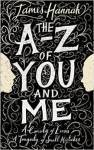 by James Hannah
4 stars
It’s so easy to blame others for all that’s gone wrong in a life, especially a life that has become a litany of grief and regret.
Ivo lies in a hospice bed; he is forty years old and he’s waiting for death. His nurse, the kind and caring, funny Sheila – were you waiting out in the corridor? You came straight in. Oh yeah, keeping vigil outside your room every minute of the day, sweetheart. And it’s only a coincidence that’s where we keep the biscuits – suggests a game to stop him going bananas: to think up an alphabet of body-parts, and each one holds a memory, a story. Some of them are sad (Feet: ‘Mum rubs my feet. I can see she’s found my card. Happy Father’s Day. Mum must have dug it out of the bin); some are funny (chesticles: tiny breasts like wasp stings); some angry (Jugular: There’s definitely a way you can kill someone if you know the right pressure points); or uplifting (Wings: A bird. A fluttering bird. Hold our hands against the sky. Two songbirds, fluttering on the eddies. That’s when we’ll be together, mingling in the wind); but most, by far, are sad (Kidneys: I’ve put off making this call for as long as I can. There has always been that finest thread of hope. The tiniest thread that I’m about to snap forever). The game is not the happy experience Sheila intended. For Ivo, it becomes a soul-wrenching journey through a sad and wasted life; a search for redemption; a hunt for the cause of all his wrong-turns, and wherever he looks, he finds, at the eye of every storm, one constant, his selfish, boorish, ego-centric ‘friend’ Mal. But is that true? There’s plenty I could say about the very end of this very good book, but I risk spoiling it utterly.
Sheila’s game of the bits of the body is a clever device for telling Ivo’s story and The A – Z of You and Me is such a well-crafted work: the plotting and the pacing are as practically perfect as in any novel I’ve ever read. The writing is quietly emotional; affecting, but never mawkish or saccharine – And now I’m aware that I keep saying how miserable Ivo’s life has been, and the sadness is there, it pervades the narrative like the smell of vetivert, but the misery lies in Ivo’s perception more than his reality. It is only at the end of his life that he can see the whole picture; all the joy and many delights his life has held, and all embodied by a scented woollen blanket filled with memories.
This is a wonderful book. Though the tale itself is not particularly fresh or original (how many novels are?), the execution is, and the ending is faultless, and absolute perfection.


November 8, 2014
Review: Holy Cow
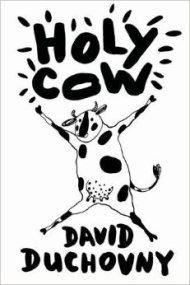 by David Duchovny
4 stars
Due to be released on 3rd February 2015
We are all Animals
We are all one
We are all holy cows
A surreal fairytale about a talking cow, a pig and a turkey, who dream of escaping their inevitable fate on the farm; who can book airline tickets online, use an iphone, pass for human and fly a plane. An extremely silly, pretty clever satire on food and farming, animal consciousness, the contradictions of religion and the arrogance and cruelty of humankind. There’s a definite eco-message, but it comes well- wrapped in velvet mittens; there’s nothing overtly Worthy here, if that worries you (tbh, the main message I brought away from this extraordinary tale is that David Duchovny is more than a tiny bit mental, practically certifiable – but I digress…) The illustrations are spectacularly daft and reminded me more than a little of John Lennon’s drawings. It is, above all, very funny -
‘I breathed in the dry, difficult air and imagined these were the smells inhaled by our First father and First Mother. It must have been a hard life with so little to eat and drink. It was a powerful private moment for me. It was also f-ing hot and I was quite thirsty.’
A very short, rather sweet fairytale – but not always one for the children.


November 2, 2014
Another five star review for Entanglement
by Kristi Gilleland, on Amazon.com
A mysterious story about a gifted psychic, and a ton of ghosts
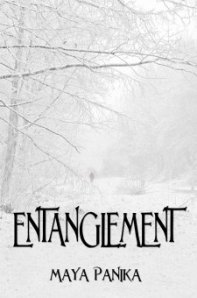 This book is part metaphysical treatise, part murder mystery, part ghost story, and all so incredibly visual. The author sets the scenes with a Gothic, visual creepiness that makes the settings spring from the page, so that as a reader, I felt immersed in the tale at times right along with the characters, as a witness.
Angel is a young orphaned boy who is hit by lightning and has an extreme near death experience. It leaves him, as occultists would say, straddling the veil, often slipping into the realm of spirit so completely that he loses total touch with reality. The story chronicles his experience growing up with this affliction, and how he learns to use his gifts, or not.
It was quite easy to suspend disbelief in psychic phenomena reading the book and explore what it would really be like if spirits DID talk to you – telling your privileged information, and constantly wanting you to do their bidding and act on their behalf. Poor Angel can see and hear spirits as clearly as the living. How distracting that must be! He can also see just a bit clearly into the future at times, and how tempting it is to give himself competitive advantages with this gift. He’s smart though, and does his best not to attract attention.
When a student at his school disappears, he must deal with her ghost pleading with him to go to the police about her murderer. He doesn’t want to, because he knows no one will believe he’s had to witness the murder solely in his mind. The story really takes off at this point on a ride that at times made me think that Angel was deranged, the cops were deranged- maybe everyone was. For a while, a lot of really interesting things were going on, but I couldn’t figure out just what- a true mystery.
The ending didn’t pull punches and avoided the cliché tactic of sparing all the good guys any harm, but it was neatly wrapped up, and satisfying.
Sprinkled throughout the book, Angel contemplated ideas in modern physics about entanglement and such things as spooky action at a distance, and how that might be connected to topics such as consciousness and spiritualism. These asides of quantum speculation are not solely based on New Age thought, but also include bits of folk lore and tenets on subjects such as possession and shamanism, which push this book deeper into metaphysics and occultism than most books would normally go- just as Angel was pushed into the realm of spirit by his accident.
Some readers might find the book a bit long, as the metaphysical speculation at times feels less like fiction and story, but I very much enjoyed it, and found myself slowing down when reading it to think about the topics. I think most readers who have a deep interest in the supernatural will enjoy it.


October 24, 2014
Review: In Search of Solace
by Emily Mackie
5 stars
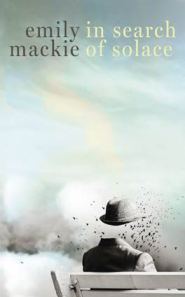 Did he fall, or did he fly…?
`I don’t want to know your name. Not your real name. You can be anyone with me. Anyone at all. Just make it up. Names can be so binding, so limiting.’
So. Who are we, really? Do we know? Are we all just a confection of untrustworthy memory, smoke, mirrors and lies? Does anyone really know anyone? Is anyone, anyone? Is there such a thing as an individual, a personality? Or do we all just make it up as we go along?
So who is Jacob Little? Is he a tragic, lost young man in search of life’s purpose, who regularly adopts new identities, new obsessions – 17 of them, as the story opens – or is that someone else entirely? Does anyone know who Jacob Little really is or was, ever? Even his own diaries, carried from one life to the next in piles of green notebooks, don’t really tell us. ‘If it weren’t for the existence of others’, I wouldn’t exist at all’, Jacob writes – which is of course true for us all, in the physical sense, the existential, the spiritual, even the quantum. But it has particular relevance to Jacob Little, the man who never was.
There’s a firm twist of quantum seasoning here, with a self-made – in the truest, purest sense – protagonist, who fervently believes in his ‘Theory of Obsession’ and his ‘Theory of Others': that none of us has any identity outside that ‘gifted to us’ by those who observe us; that consciousness is just an illusion, a mutation, ‘the parasite self feeding off the rest of him’ but not real. A clever trick of the mind’. And the ‘self’, the so-called personality, a mere construct of invented peculiarities that mark us out from the herd.
We know all this because the narrator tells us. But who is the narrator, the omniscient voice, the ghost? Is it Jacob – the real Jacob? Or maybe his mother? Maybe nobody at all. We are never told; there are no absolutes in this tale of twisted identity and time.
This is, to say the least, an unusual novel. I was irritated at the start, impatient with the bizarre narration, the experimental style. But the annoying narrative voice evaporates in subsequent chapters, and the style settles to focus on Jacob and the people around him; those who think they know him now; those who think they knew him in the past. Jacob exists in the memories of those who thought they knew him, but each individual’s memory of Jacob is so distinct in every detail, they might be remembering entirely different men. Jacob says he imagined jumping from the Clifton suspension bridge; Solace says he actually did, but Jacob says he didn’t tell her what happened, so how does she know what she thinks she knows? Mr Benson thinks that travelling back in time on a quantum level could be possible. Not in our ‘big, clumsy bodies, but elements of our consciousness could, thoughts like sound and light, creating waves in spacetime.’ But is any of it true?
These characters – those who knew Jacob; whose observations, encounters, memories, make up what we know of the man who calls himself Jacob – are a fascinating and engaging cast. There’s Lizzie/Max, a 9 year old girl who wants to be a boy, a child of firm faith who obsessively reads her Bible. There’s Fat Sal, landlady of the pub where Jacob makes his final home. There’s Mr Benson, landlord and watchmaker, who believed he could make ‘a clock that proved time doesn’t exist at all. A quantum clock that held everything past, present and future in one dimensionless point’; who knew Jacob and his mother and befriended Jacob as a boy; his surrogate son. There’s Lucy – later Dr Lucy – daughter of two lesbian mothers, who uses her obsession with Jacob to build a new life, a successful career. ‘Without Jacob, would she exist? Certainly not as she is now. So who would she have become? What would her life look like?’ There’s Solace herself (not her real name, of course), who tells Lucy not to ‘believe a word I tell you with regard to Jacob Little. Because together we make a fiction. Solace is his creation. And Jacob is mine’. Or does she; does she say that? Or does Lucy simply want her to, and is there any difference?
This is a tale of dramatic twists, all gently done; there are no explosions, no screaming, no shouting; everything simply happens. It’s a deeply complex, twisted tangle of a book. A narrative of short chapters, divided into sections called beginning, middle and end. The end, the key event, takes place on a Good Friday; in a book redolent with Biblical references, this can hardly be insignificant.
I’m aware this is an odd and confusing review; well, it’s an odd and confusing book, and hellishly hard to write about. I can tell you, that if you can get past some irritating early chapters; if you have the patience to let the story unfold without pre-empting or imagining you know what is happening, happened or about to happen; if you don’t mind an unreliable narrator, narrative and complete uncertainty at all times and in all spaces, then you are in for an extraordinary ride, because this novel – which starts out so mundanely – ends up going nowhere you expect and builds into something truly extraordinary. Intricate and finely wrought, it will surely reward repeat readings.
To paraphrase Jacob’s teacher, Mr Forbes: Imagine yourself, alone in space, no sound, no light. Would you still be able to think? Would you still hear the voice in your head? Who is that voice? What is consciousness? Is it the same thing as the soul?
Well, is it?
What do you think?


October 21, 2014
Review: Mr Mac & Me
by Esther Freud
3 and a half stars
 It’s 1914, and twelve year old Thomas Maggs, lame since birth, lives with his parents in The Blue Anchor, an old inn in Walberswick, on the Suffolk coast. Tom’s life is a lonely one: his father is a drunk, his mother grieves for her lost babies, his sisters are older – Mary is away in service and Ann thinks mostly of boys and marriage. Tom’s days are dominated by his rambles through the countryside, and to the sea he adores – Tom dreams of a life at sea, a dangerous calling his parents seem determined to keep him from. There’s little excitement in Tom’s life, until the arrival of Charles Rennie Mackintosh and his wife, Margaret MacDonald; exotic flowers in tiny, parochial Walberswick.
Charles Rennie is as lonely as Tom: his wife is frequently away in Glasgow, dealing with family troubles and Charles fits uneasily into village life as the mistrusted ‘foreigner’ with his binoculars, always watching out to sea – a risky pursuit in wartime, when all the eastern coast is on alert for German spies and even small, sleepy fishing villages are under threat of invasion and attacked by Zeppelins. Tom and Mackintosh strike up a strange, shy, stilted friendship based on art and nature: Mac paints his flowers, Tom obsessively sketches boats and dreams of the sea. The main character in this novel is not Tom, or Mackintosh, or any of the human players, but the Suffolk countryside itself – the woods and meadows; the beach and the sea; the rolling waves of weather that bathe and batter the land; the murmurating starlings, which Tom names and takes for the spirits of his dead brothers; the flowers that Mackintosh paints and which Tom’s mother places on the graves of her lost sons – which is eulogised above all else, the constant, unchanging background on which all else is played.
Despite the tension and tragedy, the constant threats from the not-so distant war, Mr Mac and Me is a very gentle book. Pain and tragedy abound in every life, but the characters are stoical; they accept what life brings, pick themselves up and get on with it – or not. Life is sometimes too tragic for some; those who never recover from life’s blows. There are no dramatic highs and lows. Joys come, tragedy strikes: all is woven into the tapestry of a life that has has barely changed in a thousand years.
The characters are well drawn individuals; Mackintosh and Margaret stand out, of course; the discordant notes in this unchanging world. The rest are background, for the most part; highlights in a colour-washed, watercolour scene; they play on a low volume, but all are nicely done. Keep an eye on Tom’s father; I thought I had his number, a bit of a cliché, I thought, but I was wrong. Tom’s father was the only one who surprised me. I feel I need to re-read the novel now, watch out for the clues.
The ending bothered me badly. The pace suddenly changes and we whisk through the years and Tom’s father’s fears come to pass despite it all. But there was nothing of letters home, of his poor mother, left grieving and – without spoiling, it’s hard to say what upset me, but it did, quite a lot. I thought it a poor ending to such a marvellously slow unfolding of a tale.


October 20, 2014
Review: The Spring of Kasper Meier
by Ben Fergusson
5 stars
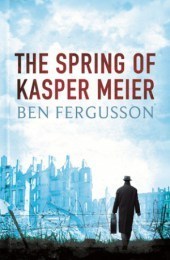 Berlin, 1946: a devastated city crawling with half-starved inhabitants, struggling to live on meagre rations and the black market; where everyone is trying to achieve normality amidst total destruction, total brutality. Everyone has needs and most have something to sell. The young and attractive have their bodies, of course. Others barter what little they have; mostly grave goods – a watch, a ring, a pair of shoes, a tin of ham, some old boot polish. A lucky few have the most valuable commodity of all: information.
When we first meet him, Kasper Meier seems a ruthless black market dealer with all manner of desirable commodities squirrelled away in his one-room home. Who knows how he came by them, he never tells; in Kasper’s world, information is too valuable to give away for free. Unfortunately for Kasper, he knows things that are very valuable to other black marketeers – and a dangerous, blackmailable past that catches up with him in the form of Frau Beckmann and her poisonous children; black market dealers far more ruthless than Kasper, and much more dangerous. For Kasper is not at all the cold, hard, pitiless creature he plays for his trader audience; that’s just a mask he puts on, armour against the everyday terrors of life in occupied, hungry, desperate Berlin. Inside, he is a sentimental, decent soul; kinder than he wants to believe, better than he thinks; tormented with guilt about his actions, regrets about his past. Kasper is quietly extraordinary: a brave and noble soul who has somehow held on to his humanity through two wars, disability, the Nazis, the death of his wife and child and the murder of his one true love.
On the surface, The Spring of Kasper Meier is a clever, well-schemed thriller about blackmail, murder and revenge, with a clever twist. Underneath the suspenseful veneer is the deeply touching story of a soft-hearted, half-broken man who wants to do good: care for his elderly father, defend old friends who escaped, or survived, the death camps; protect a vulnerable, damaged young girl from Frau Beckmann – and herself. A story of relationships: war-damaged friendships; family bonds mutilated by politics, war and the fight to survive; the grief of survivors who felt they could have done more to save their lost loved ones. Love lies over all, like the dust that coats the women who work the rubble: tainted love bought by lonely soldiers from desperate German girls; unwanted love; unrequited love; lost love; gay love – a dangerous pursuit in Nazi Germany, and still illegal under the Occupation.
This is a gripping, twisting thriller, an atmospheric mystery built from wonderfully real characters and about the best crafted, living, breathing world I’ve read in a historical novel. A tender, beautiful story: poignant, heart-warming, heartbreaking. I cried more than once, and I’m a hard-hearted reader; it takes a lot for a book to do that to me.

If you loved The Spring of Kasper Meier as much as I did, you might like to know Ben Fergusson has written an e-book prequel, Kasper Meier: The Planes at Berlin-Tempelhof, free via his website, or from Amazon (click on the image)


December 22, 2013
A glorious, delightful and blush-inducing review…
for Entanglement from Jay Squires, on Amazon.com
 “It was so powerful a novel that I couldn’t put it down,” has been said so freakin’ often it’s become a cliché. And, hadn’t I been putting in a four-hour daily stint on my fantasy novel five or six months ago, when I started Entanglement, I’d have most assuredly compounded that cliché. In spirit, at least.
The fact is, I could only allow myself to read this fine novel in fits and starts, a little bit here and a little bit there, and never within a few hours of my writing. I was that influenced by the poetic drive, the narrative rhythm and, above all, the sticky characters that, if I wasn’t on my guard, would try their best to adhere to my own.
Maya Panika’s Entanglement is a powerful read. It is mightily compelling. It is, quite simply, the best novel of its genre and one of the two best novels of any genre, I’d read in the last several years.