
Marc Weidenbaum's Blog, page 427
April 17, 2014
Disquiet Junto Project 0120: Readymade Rhythm
Each Thursday at the Disquiet Junto group on SoundCloud.com a new compositional challenge is set before the group’s members, who then have just over four days to upload a track in response to the assignment. Membership in the Junto is open: just join and participate.
Tracks by participants will be added to this playlist as the project proceeds:
This project was published in the early evening, California time, on Thursday, April 17, with 11:59pm on the following Monday, April 21, 2014, as the deadline.
These are the instructions that went out to the group’s email list (at tinyletter.com/disquiet-junto):
Disquiet Junto Project 0120: Readymade Rhythm
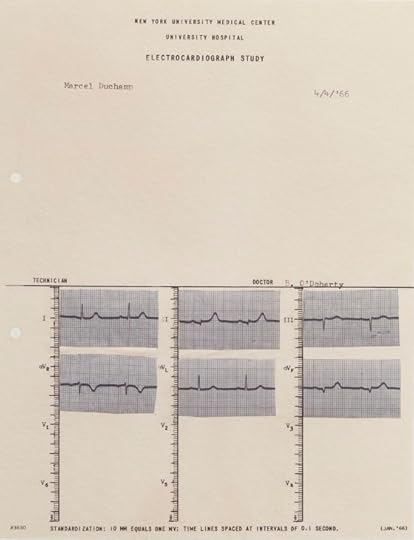
The image at the following link shows the hearbeat of the artist Marcel Duchamp. Study the image closely and from it make the “rhythmic foundation” of a track. Then add two elements, one “tonal” and the other “melodic.” The result is your finished work. You may, of course, loop the hearbeat to achieve the desired length. Given the date of the recording (April 4), you should assume the beat is in 4/4, though deviations are certainly welcome. The image is located in this post:
http://blakegopnik.com/post/81699274569
Background: This image was posted earlier this month by the insightful art critic Blake Gopnik. He explained that the heatbeat of Marcel Duchamp was recorded on April 4, 1966, by the doctor and artist Brian O’Doherty.
Deadline: Monday, April 14, 2014, at 11:59pm wherever you are.
Length: The length of your recording should be between one and three minutes.
Information: Please when posting your track on SoundCloud, include a description of your process in planning, composing, and recording it. This description is an essential element of the communicative process inherent in the Disquiet Junto.
Title/Tag: When adding your track to the Disquiet Junto group on Soundcloud.com, please include the term “disquiet0120-duchampbeat″ in the title of your track, and as a tag for your track.
Download: It is preferable that your track is set as downloadable, and that it allows for attributed remixing (i.e., a Creative Commons license permitting non-commercial sharing with attribution).
Linking: When posting the track, please be sure to include this information:
More on this 120th Disquiet Junto project — “Write a song based on the heartbeat of Marcel Duchamp” — at:
http://disquiet.com/2014/04/17/disqui...
More on the Disquiet Junto at:
Join the Disquiet Junto at:
http://soundcloud.com/groups/disquiet...
Photo associated with this Junto project sourced from the following URL, which notes “Image – margins cropped for clarity – is courtesy the artist, P! and Simone Subal Gallery”:


April 14, 2014
Scanning the Background
Scanner’s reworking of a track by Alan Dunn and Martyn Rainford is the latest in a series of efforts by the duo to explore the idea of “background.” The source audio for their remix is their A History of Background CD. This remix by Scanner is part of a dubplate made for an exhibit currently going on in Jamestown, New York, under the name Colonize. It’s a rich, constantly shifting piece, snatches of dubby static and gadgety fragments heard over a compelling electronic-tribal beat, bits of vocal tweaked and layered, filtered and muffled, until they’re just beyong ready comprehension — leaving them lingering in, as it were, the background.
noumenon /// Scanner remix by Alan Dunn & Martyn Rainford
Track originally posted for free download at 67projects1.bandcamp.com. More on the originating project at alandunn67.co.uk. The Jamestown exhibit was funded thanks to a kickstarter.com campaign. A previous remix in the series is by Dr Cyclops, and it is also available for free. Scanner promoted this on both his Facebook and Twitter pages, which are highly recommended.
April 10, 2014
The Virtuous Circle of Aphex Twin Fandom
Last month, March 2014, marked the 20th anniversary of the release of the landmark 1994 Aphex Twin album Selected Ambient Works Volume II. I wrote a book, also out last month, about that album, as part of the 33 1/3 series. A main thesis of my book is that the Aphex Twin album’s extensive cultural afterlife has significantly shaped our understanding of its music, has changed the way it sounds, how it is appreciated. Much of that post-release change is the result, I argue, of the role played by fans of the music. This process has taken time, but it began almost immediately upon the release of the album, when a member of an email mailing list about electronic music took it upon himself to give names to the tracks on Selected Ambient Works Volume II. Those tracks on the record are, with one exception, essentially title-less. That is, they have no “word names” but are instead associated with cryptic photographs. The responsible fan on the mailing list, whom I tracked down and interviewed for the book, recognized the images in the photos and assigned names to each of the tracks based on those photos. Those fan-determined track names stuck, and in fact are to this day readily disseminated by such systems as Gracenote, which populates media services with record-album track metadata.
And now, just a month after the Selected Ambient Works Volume II anniversary, again Aphex Twin fans have not only played a significant role in an album by Richard D. James, the British electronic musician behind the Aphex Twin mask — they have quite literally taken an unreleased album and made it commercially available for the first time. And the album in question dates from the same year as Selected Ambient Works Volume II: 1994.
The story has been widely covered in the past 48 hours or so, following the April 8 report on factmag.com, and what follows is an interview I conducted via email earlier today, April 10, with the individual behind the effort to make the record widely available. That person goes by the name Joyrex and he is the founder of WATMM.com, which takes its initials from the track “We Are the Music Makers” off Aphex Twin’s 1992 album Selected Ambient Works 85–92. The track samples Gene Wilder uttering the words of 19th-century author Arthur William Edgar O’Shaughnessy in Mel Stuart’s film Willy Wonka & the Chocolate Factory, adapted from the Roald Dahl book. Like Richard D. James, O’Shaughnessy was a British citizen of Irish extraction. The movie came out in 1971, the same year that Richard D. James was born. (Joyrex takes that avatar name — also the name of a website he founded prior to WATMM — from a handful of recordings that Richard D. James has released under the name Caustic Window. He gave me the option of employing his given name here, but I’ve decided to stick with Joyrex.)
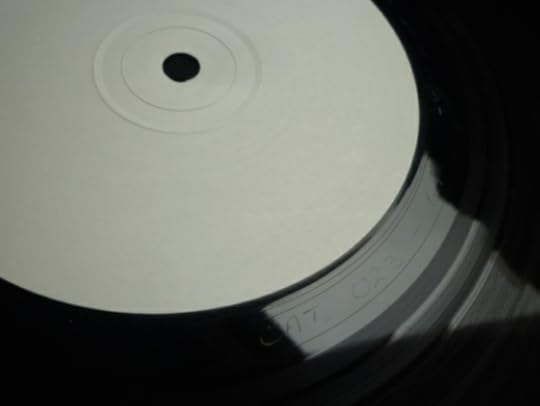
The story — thus far — goes as follows: The website factmag.com reported on April 8 the existence on Discogs.com, a popular crowd-sourced music database and emporium, of a copy of an album from 1994 by Caustic Window, one of many monikers assumed by Richard D. James. The album’s seller was asking for $13,500 (U.S.). What made the record special is that it had never been released. What was for sale was, in fact, a test pressing. There may have been some initial doubt about the record’s existence since just days earlier, as part of an April Fool’s joke, the same magazine, factmag.com, told the story of a previously unheard Aphex Twin song, “Avril 1st.” The title of the track was a play on “Avril 14th,” the prominently sampled (it’s part of “Blame Game,” off Kanye West’s 2010 album My Beautiful Dark Twisted Fantasy) and licensed (Sofia Coppola included it in her 2006 film Marie Antoinette, and it was in the trailer for Spike Jonze’s 2013 film Her) song off Aphex Twin’s 2001 album Drukqs.
In short order, members of Joyrex’s WATMM forum teamed up to support collectively purchasing the album, and Joyrex managed to clear the plan with both Richard D. James and his partner in the label Rephlex, Grant Wilson-Claridge. Within hours of the album going on sale at Kickstarter, the project surpassed its stated goal of $9,300; as of this writing, there are still 29 days to go in the Kickstarter campaign, and it is already at almost double its financial threshold for success.
Below, Joyrex talks at length about the process that led to the album’s release, his negotiations with Aphex Twin and Wilson-Claridge, the origin of his WATMM forum, and much more.
Much about the WATMM-forum situation has fascinating parallels with the music mailing list responsible for the naming of the tracks on Selected Ambient Works Volume II. That list was named IDM@, part of the hyperreal.org site. Like WATMM, IDM@ originated as something intended to only cover Aphex Twin’s music, but expanded its scope. Joyrex notes that he used a vote on WATMM to decide whether to pursue the project, much as back in the early 1990s members of the IDM@ list — in which I was an occasional participant — voted on such subjects as whether or not to jettison Aphex Twin discussion to a separate list, so packed was IDM@ with material about that single artist (the motion failed). The individual from the IDM@ list who named the Selected Ambient Works Volume II tracks, Greg Eden, went on to work for Warp Records for a full decade, and a member of the WATMM discussion form, named Wisp, has himself been signed to Aphex Twin’s own label, Rephlex (there’s more detail on both those scenarios in my book). Back in May 1994, the label Warp, on which Richard D. James releases the music he records as Aphex Twin, released the album Artificial Intelligence II, and as a sign of acknowledgement of the IDM@ list, segments of messages from IDM@ email discussion appeared as graphic elements on the album; the record included music by Polygon Window, another Aphex Twin pseudonym. This time around, the WATMM discussion didn’t merely provide window dressing for a record containing Richard D. James music — it is fully responsible for the album’s release.
Given how often online forums are maligned as places where music is traded illegally, it’s wonderful to see just such a forum function like a proper record label. The role of Kickstarter in commercial popular culture is routinely debated. Back when the Veronica Mars movie was funded through Kickstarter, there was much naysaying — mistakenly, I thought — that suggested that Kickstarter is more meaningful somehow when associated with “independent” projects. I think that distinction is a false one, especially when for all intents and purposes, the original Star Wars movies can be considered independent films. What’s unique about a service like Kickstarter is the bond it forges between the producers of culture and the fans of that culture — forget the so-called “emotional” bond, which can be an excuse for all too much blather about the role of “meaning” in “branding,” but a functional and practical bond. While the Kickstarter service itself is new, it harks back to an age-old — and until recently, outdated and seemingly outmoded — practice, like when Samuel Johnson in the 1700s signed up subscribers for his dictionary while it was still a work-in-progress.
The unique nature of that bond goes far beyond the act of purchase, far beyond the matter of financial support. It is part of the story of how Selected Ambient Works Volume II was shaped by its reception, by its embrace by passionate fans and by other artists, including choreographers, comedians, filmmakers, and composers — not just at the time of its release, but in the succeeding decades.
In any case, I am highly appreciative of Joyrex having taken the time to answer my questions in detail. Below is a lightly edited transcript of that interview.

Marc Weidenbaum: Can you talk a bit about your thinking process — from being aware of this item’s availability, to getting the WATMM folks together to fund this? It’s a stroke of genius, I’d say. Did you immediately just get on the boards and propose it, or did it come to you after some time?
Joyrex: I found out about it being for sale on Discogs.com like everyone else – on WATMM! I reached out to the seller and asked a few questions to satisfy my own curiosity, and around the same time one of the forum members joking suggested we crowdfund this and buy it so everyone gets a copy (despite that being illegal), and I thought, “Why the hell not?” So I posted a thread and poll asking if the community was willing to pay up to $25.00 for a digital copy of it, and it grew from there — I sent Grant [Wilson-Claridge, Aphex Twin's partner in the Rephlex label] an email, proposed the idea, and he and I hashed things out.
Weidenbaum: Can you characterize or describe the music, for folks who haven’t heard it?
Joyrex: I personally haven’t heard the tracks (not knowingly at least — I’ve heard other unreleased Aphex, but that’s another story for another day), but the interview I did with Mike Paradinas (aka µ-Ziq) back in 2001 for my Aphex Twin fansite, joyrex.com (now defunct), that people have reposted on WATMM goes into detail about what each track sounds like – I’m really excited to finally be able to hear them after all this time.
Weidenbaum: I’ve read through the WATMM discussion, but I’d rather have your direct take on this: Did the collective effort come together fairly smoothly, or was there some disagreement in the ranks that had to be managed?
Joyrex: This has gone amazingly smooth (and quick) – Grant (and by extension, Richard) have been very accomodating and very helpful in this process. I’m pretty much a one-man band when it comes to running the site (other than the moderators, who keep the rabble to a minimum on the forum), so there was no “disagreement in the ranks,” as it were. Of course, many members of the community have provided brilliant suggestions and have reached out to me with offers of help with the project.
Weidenbaum: For clarification’s sake, will there be a generally available (“unlimited edition”) digital-only copy, in addition to the 500 physical copies that have been mentioned in news reports and in the forum? Or is the idea that once the 500 copies are done with, the whole thing is done with?
Joyrex: The thread I posted with the FAQ has been updated with the news that it will not be limited anymore — a few forum members were worried they’d miss out, and so I proposed the idea to Grant, and he was fine with it. Honestly, the limited number was only a result of trying to figure out a reasonable price for everyone to pay and more importantly, meet the Kickstarter goal — there was never any (conscious) effort to make it “exclusive.” Anyone will be able to order a copy for as long as the Kickstarter is running — after that, that’s it. (Until the record goes on Ebay and whoever buys it gets the physical record, that is, and I’d sincerely hope they wouldn’t leak it online.)
Weidenbaum: It’s interesting to me that this Caustic Window endeavor happened so quickly after the “Avril 1st” joke circulated on April Fool’s Day, since the “Avril 1st” joke involved there having been some long lost MP3 player packed with additional, unheard Aphex Twin tracks. Do you think there is a vast backlog of Aphex Twin music out there, somewhere, waiting to be heard?
Joyrex: Well the timing is pure coincodence — I was only vaguely aware of the “Avril 1st” joke, but that’s kind of a tradition with electronic music and April Fool’s. I (in)famously pulled a Boards of Canada–related prank some years ago, and it really upset the community. I have since realized it’s not a good thing to upset electronic music fans hungry for more music!
Richard has hundreds of top-quality unreleased tracks — very little of what he produces sees commercial release, and you may have heard he makes music mostly for himself. It’s entirely true. He’s only commercially released music because of the obvious financial benefits (and it gives him time and freedom to make more music).
Weidenbaum: For context, please fill people in a bit on the origins of WATMM — when it was founded, who was responsible?
Joyrex: Back in 1999, I had gotten a job as a graphic designer, and at time time, I saw and knew that the Internet was going to take off in a big way, and the Internet was a logical extension of my love for graphic design. I taught myself how to write HTML, and what better way to teach yourself something than to apply it to something you love? At the time, I studied the existing Aphex Twin fansites, made note of what they did right, and more importantly, noted what they lacked – with that, joyrex.com was born as an Aphex Twin fansite, and it took off.
It took off so much in fact that in early 2000, the site was absorbed by a startup called MusicFans, and they were paying me to run my fansite! Sadly, as with many startups of that era, they folded, and unfortunately part of the agreement was purchasing the rights to the domain, which I lost and was it sold via a court-ordered bankruptcy. I wanted to continue on, but more importanly, I wanted to expand beyond just Aphex Twin (members of my community got me into Boards of Canada, Autechre, and Squarepusher), so the idea of WATMM was born and launched in mid-2001, with hardly a disruption between joyrex.com and watmm.com.
Over the years I learned what worked and what did not in not only managing a website, but also cultivating an online community – one of the reasons I think I’m still doing this 15 years later and now with WATMM becoming one of the premiere online electronic music communities is my determination to make it a place you want to particpate in on whatever level you feel comfortable.
Weidenbaum: And yourself — where are you from, and where do you live?
Joyrex: I’ve lived in Texas now for the past 20 years, and prior to that I lived in Sacramento, California. I’m a programmer by trade these days, and in what little spare time I have, I manage WATMM.
Weidenbaum: Have you learned anything else — are there any other details — about the individual who is selling this Caustic Window record, and how they came upon it?
Joyrex: Everyone asks me about that! He’s just a normal guy, who happens to be close friends of Grant and Richard — close enough to have gotten a copy of this album, it seems. He was given it around the time it was pressed, probably in a very mundane “Here, this is Richard’s latest Caustic Window stuff we’re thinking about releasing” sort of way. Rephlex are very laid back like that.
Weidenbaum: Had you participed in any of the Hyperreal.org discussion groups before getting WATMM going?
Joyrex: No, I actually didn’t get into all that — I wasn’t technically literate enough for mailing lists, etc., back in those days. I recall from the old WARP AFX FAQ and Chris “Evil” Miller’s Aphex Start websites being my indoctrination to the wonderful world of Richard’s music.
Weidenbaum: Is there any precedent within the WATMM community for this sort of record-label-like activity?
Joyrex: Well, in 2004 we released a CD – a compliation of artists from the community (no big names) called We Are the Music Makers | Volume One. This Kickstarter has given me the idea that we could do a second compilation and actually make money off it this time! We have a huge community of talented musicians (some of which are signed to the very labels of the “Featured Artists” we devote forums to, like Wisp on Rephlex), so doing a Volume Two with possibly a vinyl version would be fantastic (plus it would give me a chance to stretch my graphic design muscles again after a too-long period of inactivity).
Weidenbaum: This Caustic Window record dates from 1993 – 1994, an amazing period for Richard D. James, who had recently signed with Warp, released Selected Ambient Works Volume II, as well as Surfing on Sine Waves, among other things — do you have any insight, and thoughts personally, on what made that period such a breakthrough?
Joyrex: I think Richard was hitting his stride. After the success of Analogue Bubblebath 1 and Digeridoo on R&S, all the music he’d been working on since 89-93 was finding an outlet, plus he was (and probably still is) a prolific artist, so the hundreds of tracks he was making had to come out somewhere! I think also the persona he crafted around his music lent itself to the mystique and meshed perfectly with the music, which was unlike anything anyone had ever heard before.
View the Kickstarter for the Caustic Window / Aphex Twin album at kickstarter.com. View the for-sale listing that started it all at discogs.com (the above image accompanied the listing for the album). View the WATMM message board forum where the fan movement began at watmm.com.
This article was edited on April 11, 2014, to correct the release date of the album Drukqs. It was 2001, not 1996.
Disquiet Junto Project 0119: Paperback Beatmaker

Each Thursday at the Disquiet Junto group on SoundCloud.com a new compositional challenge is set before the group’s members, who then have just over four days to upload a track in response to the assignment. Membership in the Junto is open: just join and participate.
This project was published in the evening, California time, on Thursday, April 10, with 11:59pm on the following Monday, April 14, 2014, as the deadline.
These are the instructions that went out to the group’s email list (at tinyletter.com/disquiet-junto):
Disquiet Junto Project 0119: Paperback Beatmaker
This week’s project listens to the rhythms inherent in text. Please use a manual typewriter if possible.
These are the steps:
Step 1: Locate a section of a piece of written fiction that you admire. The section should be roughly between 125 and 200 words long.
Step 2: Record youself typing those words. Please note: You need not type it perfectly, and you should feel comfortable making some corrections as part of your typing. That said, you should come as close as possible to typing it straight through. And you should, if possible, record this in stereo in a way that distinguishes between the left and right sides of your typewriter. That text should account for roughly between a minute and a half and three minutes.
Step 3: Listen through the recording, making note of rhythmic themes, such as repeated sequences of letters, or natural pauses, or intriguing spacial separations across the keyboard.
Step 4: Record a piece of music to accompany the typing, music that uses the inherent rhythm of the typing as its foundation. Imagine, if you will, that someone could listen to this music while writing, and get into the groove, the zone, the mindset of the original writer.
Step 5: Upload the file to the Disquiet Junto group on SoundCloud and describe your approach and process in the text field associated with the track. Please be sure to name your source-material text.
Step 6: Listen to other members’ tracks as they appear in the Disquiet Junto feed on SoundCloud, and comment on them when you have the time.
Deadline: Monday, April 14, 2014, at 11:59pm wherever you are.
Length: The length of your recording should be two minutes.
Information: Please when posting your track on SoundCloud, include a description of your process in planning, composing, and recording it. This description is an essential element of the communicative process inherent in the Disquiet Junto.
Title/Tag: When adding your track to the Disquiet Junto group on Soundcloud.com, please include the term “disquiet0119-paperbackbeatmaker″ in the title of your track, and as a tag for your track.
Download: It is preferable that your track is set as downloadable, and that it allows for attributed remixing (i.e., a Creative Commons license permitting non-commercial sharing with attribution).
Linking: When posting the track, please be sure to include this information:
More on this 119th Disquiet Junto project — “Write music to accompany the typing of a work of fiction” — at:
http://disquiet.com/2014/04/10/disqui...
More on the Disquiet Junto at:
Join the Disquiet Junto at:
http://soundcloud.com/groups/disquiet...
Image associated with this Junto project used via a Creative Commons license:
April 5, 2014
Remembering Kurt Cobain (Feb. 20, 1967 – Apr. 5, 1994)
This is the last paragraph of the third chapter of my recently published 33 1/3 book Selected Ambient Works Volume II, about the Aphex Twin album by that name released by the labels Warp and Sire 20 years ago last month. Today marks the 20th anniversary of the death of Nirvana’s Kurt Cobain. The Morley in this part of the narrative is Risa Morley, the woman who signed Aphex Twin (Richard D. James) to Sire:
The month after the Aphex Twin album was released, Kurt Cobain of the grunge band Nirvana killed himself. Cobain’s death was in part read as a sign that music welcomed as a respite from the excesses of rock would perhaps inevitably itself succumb to those same excesses. Morley told me a story about Aphex Twin having been intended to appear on the cover of a major British music magazine and the slot being cancelled to make room for Cobain’s obituary. While Warp was demolished, in her words, Aphex Twin was if anything relieved to keep stardom at arm’s length: “I just remember him being very weirdly happy that he was not going to be on the cover, in a twisted weird way.”
I sometimes sense an inter-genre feud between grunge and electronic music, both of which were enjoying particular attention in the mid-1990s, so I think it’s worth listening back to Nirvana’s first full-length album, Bleach, and recognizing in it an adherence to repetition, a near-mechanical fury, that is of a piece with the slower of bands like Sunn O))), Godflesh, and most directly Earth, the doom rock outfit headed by Cobain’s friend Dylan Carlson.
More on Selected Ambient Works Volume II at disquiet.com/saw2for33third.
April 3, 2014
Disquiet Junto Project 0118: That Ringing Sound

Each Thursday at the Disquiet Junto group on SoundCloud.com a new compositional challenge is set before the group’s members, who then have just over four days to upload a track in response to the assignment. Membership in the Junto is open: just join and participate.
Tracks by participants will be added to this playlist as the project proceeds:
This project was published in the evening, California time, on Thursday, April 3, with 11:59pm on the following Monday, April 7, 2014, as the deadline.
These are the instructions that went out to the group’s email list (at tinyletter.com/disquiet-junto):
Disquiet Junto Project 0118: That Ringing Sound
This week’s project is as follows. Please answer the following question by making an original recording: “What is the room tone of the Internet?”
When you’re done, upload the file to the Disquiet Junto group on SoundCloud and describe your approach and process in the text field associated with the track. Listen to other members’ tracks as they appear in the Disquiet Junto feed on SoundCloud, and comment on them when you have the time.
Deadline: Monday, April 7, 2014, at 11:59pm wherever you are.
Length: The length of your recording should be two minutes.
Information: Please when posting your track on SoundCloud, include a description of your process in planning, composing, and recording it. This description is an essential element of the communicative process inherent in the Disquiet Junto.
Title/Tag: When adding your track to the Disquiet Junto group on Soundcloud.com, please include the term “disquiet0118-internetroomtone″ in the title of your track, and as a tag for your track.
Download: It is preferable that your track is set as downloadable, and that it allows for attributed remixing (i.e., a Creative Commons license permitting non-commercial sharing with attribution).
Linking: When posting the track, please be sure to include this information:
More on this 118th Disquiet Junto project — “What is the room tone of the Internet?” — at:
http://disquiet.com/2014/04/03/disqui...
More on the Disquiet Junto at:
Join the Disquiet Junto at:
http://soundcloud.com/groups/disquiet...
Image associated with this Junto project used via a Creative Commons license:
Sonic Pedagogy Update: Explicit/Implicit
I’ve been teaching my course on “sound in the media landscape” at the Academy of Art in San Francisco for three years now — four semesters straight since 2012 — and I’m loving it.
It seems like just yesterday that my first day of lecturing was upon me and my many educator-friends were sending me encouragement. This semester has been especially enjoyable — not just because with each passing season there’s iterative improvement of the topics, but because this semester the specific subject that has in the past proved the most elusive is, quite suddenly, not really much of a problem for the students to comprehend. This came down to one tiny little change I made in the curriculum, and yet the impact on the students’ perception of the materials has been remarkable.
Pretty much every week I assign work that builds on that week’s lecture, and I assign work that looks forward to the next week. This latter pre-lecture, pre-discussion work preps them by getting them thinking about the ideas before I explore them more fully in class — ideas like “sound in product design,” or “the history of the jingle,” “the public voice” (largely about public address systems), and so forth.
Anyhow, the course spends a lot of time on the distincion between “explicit” and “implicit” sound — between that which is self-evidently part of a product, a service, an institution, and so forth, and that which is inherently part of the same subject yet isn’t as widely understood to be so. It’s the difference between foregrounded sound, branded sound, and background sound, tacit sound.
For example, the sound of Rice Krispies cereal is explicit (it’s referenced in the characters of Snap, Crackle, and Pop), while the sound of typing on the screen of an iPad is more implicit (the tablet is often described as being silent in contrast with traditional keyboards, even though typing on an iPad does make a sound). Likewise, the quality of audio on an MP3 player or phone is likely an explicit aspect (a selling point), while the sound of the headphone being plugged into the jack is more implicit (an everyday but largely ignored aspect). The spark, the static, of plugging a guitar cord into an amplifier is a more trenchant image than is the plugging in of a headphone into a phone.
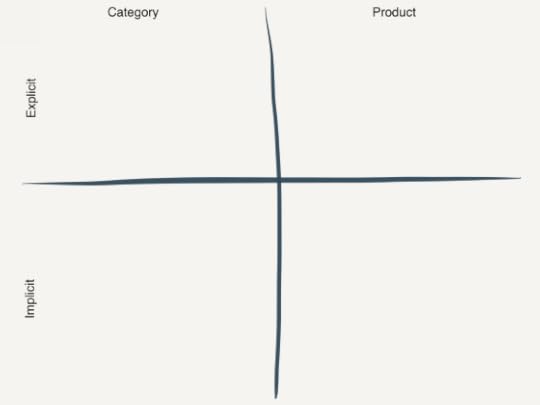
I say “more implicit” because these these things are entirely relative — and because over time implicit sounds can become explicit when they become identified with the product, service, institution, and so forth. In some cases it is more general than a specific product; it’s about a category — the Harley Davidson engine sound is unique to that vehicle, while the concept of an electric car is synonymous with an idea of relative silence. These positions are relative. In the course we tend to work on them in the form of a standard grid of quadrants — not distinct buckets so much as relative positions, along these lines:
In the past, the pre-lecture homework on this explicit/implicit material yielded not so much more questions than answers, than it did as much confusion as curiosity. The whole distinction became so loaded down that explicit/implicit for some students became synonymous with confusion, and up through the last day of a given semester we’d still be discussing how it might be employed effectively. The material was still central to the class, and essential to the subjects at hand, and yet the discussion was muddied by this confusion. I’m not saying that every subject is class is uniformly comphrehended by the students — all of them seem to get “synesthesia” and “soundscape,” while not all have embraced “acoustemology” — but this explicit/implicit material is something this semester that I really wanted to work through more productively, and I gave a lot of thought to how to better present it.
And oddly, it took just a simple change to make progress in that regard. Because this aspect of the course is especially abstract, I simply didn’t assign much in the way of pre-lecture, pre-discussion homework about the distinctions between implicit and explicit sound. I introduced the ideas in class first, built on them in various class meetings, and then dedicated a working-session class — more discussion than lecture — to work through it all. That class meeting occurred yesterday, the ninth weekly meeting of the 15-week semester, and it went quite smoothly.
April 2, 2014
Rain Through a Mixer Darkly
It’s arguable that the remix of my afternoon sounds more realistic than did the original.
This week has seen some tremendous rainfall in San Francisco, where I live. I was sitting in my car on Monday, just after noon, when the power of the storm was so intense that it was remarkable — and by “remarkable” I mean that I felt the desire to remark on it, which I initially did on Twitter (“Noon bells heard through the rain and through the breathing of a post-swim sleeping toddler”) and then in the form of a 30-second recording on my SoundCloud account. That track sounds more like an ice machine than rain, which was clairaudient, in that shortly after I hit stop on my recorder — in this case my phone, a Nexus 5 — the rain turned to hail, and shortly thereafter came lighting and then, with alarming proximity, thunder.
The storm is longer, more consuming, and less immediately threatening in this reworking by Larry Johnson, who plucked my Creative Commons–licensed audio and had his way with it:
And here, for reference, is the original:
Tracks posted respectively at soundcloud.com/l-a-j-1 and soundcloud.com/disquiet.
April 1, 2014
Bulgarian Dread
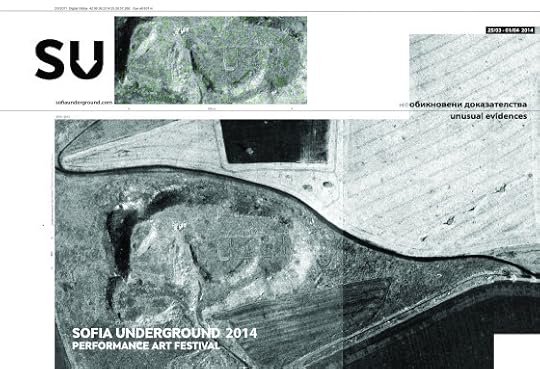
Multiple monikers utilized by a single artist can be confusing to listeners, yet provide orientation for the musicians who adopt them. Take the Bulgaria-based Mytrip, whose work has been covered here in the past, often as an exploration of subsumed tones that push at the contours of rhythm and melody. When planning a set at the Sofia Underground Festival this year, he opted for another name, Dayin, which should not be mistaken for a brighter outlook. Quite the contrary, he states in a brief liner note to the uploaded recording, “I decided to go a bit darker and deeper.” The result is a haunting half hour of ghostly chatter and dense drones:
Track originally posted for free download soundcloud.com/dayin. More on the Sofia Underground Performance Art Festival at sofiaunderground.com.
March 31, 2014
Reel-to-Unreal
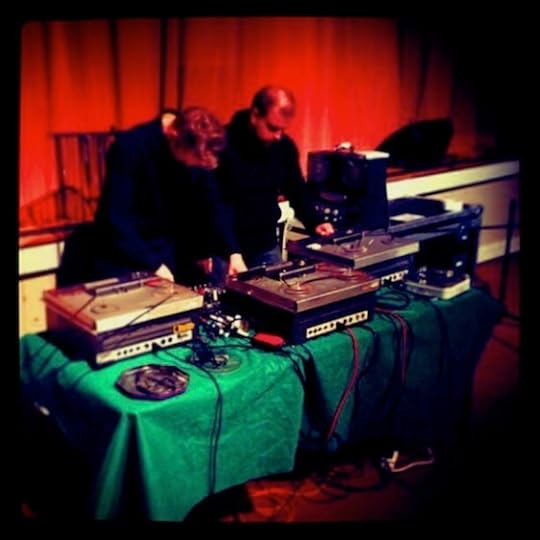
Don’t let William Basinski get all the Google search returns for “ambient decay tape loops.” Save some for Howlround, which pairs Robin the Fog and Chris Weaver, who use reel-to-reel machines to make sounds as rough as they are fragile, as ephemeral as the are rooted in texture. This audio is sourced from what was, apparently, their first ever live performance, back in May 2013, as part of the Great Escape Festival in Brighton (MP3):
Download audio file (Radio102.mp3)
Track originally posted for free download at part of the Touch Radio series at touchradio.org.uk. More from the duo at howlround.co.uk and twitter.com/howlroundmusic.


