Sally Donovan's Blog, page 7
July 18, 2013
‘No Matter What’ – from diary to published book
‘No Matter What’ is my memoir about adopting two children from the UK care system. Yesterday I received a parcel containing six unblemished copies of the book from the publisher Jessica Kingsley. The process of writing it has been long and difficult and I’m not ashamed to say that the sight and feel of those books, my books, brought a tear to my eye.

A few of my blog readers have asked me about my writing process and have asked for advice on how they may write something of their own. So here, as succinctly as I can manage, is how I did it.
1. Living the Dream
Some say ‘write about what you know’, others say the opposite. I have lived every bright light and dark corner of my story and felt I had to tell it. I had a singular purpose: to show what it is like to parent an adopted child who has suffered neglect and abuse in their early lives.
2. Recording
Twelve years ago I started keeping a diary again. I felt I was on the cusp of living something out of the ordinary and knew it would be important not to lose any of it. It was also an outlet. Every moan, bitch, sadness, disappointment, frustration – the diary got it. It wasn’t pretty, but it was real.

3. First Steps
It was only when life had settled a little that I found the time and emotional energy to start writing properly. I wrote a couple of self-conscious chapters in the second person, past tense (‘she cried into her corn flakes’).
4. Serendipity
Although I am the least well-connected person you could come across, one day in the most unlikely of places I got talking to someone. She was a literary agent. She took a look at my chapters, liked them and suggested I rewrite them in the first person, present tense (‘I cry into my corn flakes’). Lots of serious writers are sniffy about books written in the first person, present tense. It is looked upon as a bit of a chav in the library. It worked for me. Mother Luck was taking care of me that day.
5. Hard Graft
I wrote for hours and hours and hours. I wrote at the kitchen table and in bed. I planned, I hand wrote, I typed, I redrafted, redrafted and redrafted again. I showed my work to my agent. She and her business partner took me on. They said ‘we think we can get this published, let’s write a proposal’. I bought a desk.
6. A Selling Job
The proposal was a bore to prepare, but it forced me to think hard about what I was writing and for whom. It contained a synopsis, chapter summaries and market information. The agency sent out the proposal to a list of publishers. Within a few days a large publisher said ‘yes’. That was easy!
7. Developing a Thick Skin
After weeks of saying ‘yes’ to the book (and please answer these hundred and one questions by tomorrow morning), the publisher then said ‘no’ and we were back to square one. It was a big disappointment. We brushed ourselves down, went back out to publishers and the same thing happened again.
8. Blogging and Tweeting
Despite the ‘two yeah but no buts’, the feedback coming from publishers was positive. They liked the book but didn’t think there would be a big enough market for a memoir about adoption. My agent said the words ‘blog’ and ‘twitter’. By this point I was parenting two traumatised children, I had a gardening business and I could barely open an email. It was a challenge. After watching many YouTube videos I launched my blog with a post about the London riots.
9. Serendipity (2)
One winter morning I woke up with a frozen shoulder and could barely dress myself, let alone pick up a spade. The upside was that suddenly I had lots of time on my hands. (Mother Luck, frustrated at my lack of focus, had sent me a a sign I could not ignore. Ouch.) Even typing with one hand I made great headway with the book and the blog. The blog was noticed by Community Care who paid me to write some blogs for them. The end was in sight. Once my shoulder recovered I decided to give up my gardening business and finish the book.
10. Signing the Contract
My agent sent out the completed book and the proposal to a final set of publishers. Within a few days Jessica Kingsley Publishers had said ‘yes’ and meant it. That was in January. Within a few days now the book will be available to order from Jessica Kingsley, from Amazon and other websites and may even make it into a book shop. I have been lucky to receive some positive reviews from some very generous people and I am grateful to all of them.
In no particular order they are Baroness Oona King, Sir Martin Narey, Lorraine Pascale, Carrie Grant, Hugh Thornbery, Professor Harry Ferguson, Camilla Pemberton, Louise Michelle Bomber, Sherry Malik and Jane Evans.
Thank you.


July 9, 2013
Yes indeed, where are the grownups Fraser McAlpine?
Yesterday Fraser McAlpine wrote a piece for in which he paints a less than generous picture of adopters. We are queasy, infertile, middle-class folk who seek a ready-made Boden child to fit neatly into the void we have constructed for them to fill. We catalogue shop for our child, casting aside an unflattering picture or a ‘working class’ name , ‘not thinking too hard about it’. Yes, we are like an army of Katie Hopkins blindly trying to make the world conform to our narrow view of it. ‘Tarquin’ we say to each other ‘if only he was called Tarquin I would fit in so much better in the prep school playground’. We try to erase our child’s history and culture because it doesn’t fit with our hygienic middle-class standards. We are ashamed of where our children come from. And in never quite accepting them, we in turn will shame our children.
‘You have to ask yourself who is adopting whom. Whose needs are being met here, and where are the grownups?’ he says from on high. He sits on an adoption panel you see, judging these feckless idiots who come before him shopping for a child.
Adopters, and I am one, have for too long been gagged and shushed and told to get on with it. There are often numerous complex security issues which prevent us from speaking out, we are isolated from each other geographically and isolated from a society in general which has a low-level of understanding of the long-term damage done to a child by early neglect and abuse. Our families are an uncomfortable reminder, best left hidden, that people abuse their children And we are often knackered and tearful and emotional. Caring for a traumatised child is very, very hard. It doesn’t leave many adopters best placed to refute offensive and prejudiced articles like Fraser McAlpine’s. We have perhaps ourselves become a void which others can fill with their straw men and straw women, hideous characters of wild imaginings, who have been created to be sneered at and misjudged. And oh what fun to liken us to Katie Hopkins. It makes so many more people instantly dislike us.
I can’t be bothered to dispute the straw woman. She is a ridiculous construction and I’ve got more important battles to fight.
Through social networking sites and blogs, adopters and adoptees are starting to connect with each other, to share experiences, to offer each other support and to learn from each other. It is a strong community which explores the dark times as well as the good. It is honest, welcoming and above all else very funny. And although we come from all walks of life (no, not just the middle class) what draws us together is the similarity in our experiences and the overwhelming feeling that our families are misunderstood and ill-served. We kicked up a bit of a storm in our small but enthusiastic patch of twitter last night over Fraser McAlpine’s piece. We decided that he knows jack shit about us. From now on, we’d rather speak for ourselves. Our new blogging hub The Adoption Social is one of the places we do and rather well.
July 5, 2013
A cat called Ron
‘Mummy, mummy, mummy, I want cat, please please can we have cat? I would love cat. I would take care of cat and love cat. Mummy? Mummy mummy please? If I tidy room I can get cat? Mummy?’
Ahh, sweet isn’t it? It is. The first time you hear it. It’s kind of endearing the second, third and fourth times too. But after years and years of mental torture I just wanted it to end. I turned up at our nearest RSPCA centre and begged them for a cat, any cat, even a bald one. They didn’t have a singleton but two sisters who would have to come as a job lot. ’Brilliant’ I thought naively, ‘one adopted cat each for our adopted children’.
This about five years ago. Our children were both at primary school. Even without cats, life was very hard. Our eldest child was a boiling mass of anger, our youngest was always touching, scratching, breaking, hiding. I don’t know what I was thinking. I must have been out of my mind (I was).
The adorable, outward-going friendly cat couldn’t take the pace in our house and ran away after only a few months. We put up posters and knocked doors and then when it became clear the cat had gone for good, oh how we grieved (and raged and scribbled and smashed).
The cat that stayed was the timid, shy one, who didn’t like to be stroked, didn’t want to sit on a lap or be dressed as a fairy. Her name is Ron. She had a VERY hard time in our house. She was pursued relentlessly, shut into bedrooms, put into boxes, fought over, shouted over. Children with attachment difficulties can be unspeakably horrible to animals and mine were no exception.

As I was at home more than the children were and not all that partial to cats, Ron gradually started to bond with me. She would follow me around, sit under my desk and eventually sleep on my lap. The children watched this relationship develop and were mad with jealousy. ’You like the cat more than you like us’ they would scream. And then Ron would be pursued with extra vigour.
Although I love Ron dearly (and enjoy in a dastardly way the preference Ron gives me), her arrival into our family was almost more than I could cope with at the time, on top of the many of layers of trauma behaviours and wobbly attachment difficulties. I should have waited until our children were older and life was a little easier and not given in to the incessant nagging.
NB The author has since acquired two guinea pigs ‘Bart’ and ‘Treacle’ and a tank of miscellaneous fish.
June 23, 2013
Project Me: Just say ‘No’
Due to the popularity of last week’s post entitled Project Me: Taking Care of the Carers I have prepared a follow on, which explores the philosophy further.

The Mohne Dam (during term time)
Carers are not unlike dams. We hold back a lots of water and if we start to crumble, bad things happen. Here are some more ways to keep the water from coming in over your head.
1. A wise man once told me that there are two types of people in the world; radiators and drains. A radiator radiates energy and laughter and enthusiasm and makes those around them feel better for having stepped into their glorious presence. Drains are the very opposite. They suck the very life from a person, their optimism, their hopes and dreams for the future. They love nothing more than telling you the ways in which their lives are so much more difficult than yours, in fine tooth-grinding detail. They dislike everyone and everything around them. The simple advice is this – surround yourself with radiators and avoid drains like the plague (see 2. below for more). Your energy, your optimism for the future, is the mortar between the bricks from which the dam is constructed.
2. Resign from all committees, with immediate effect. What? You say that your PTA, your village hall committee, your board of governors, whatever it is, cannot possibly function without you? That unless you are the Vice Chair or the Treasurer or whatever, all the little children will suffer? I have been there, I have the clip board and the t-shirt and I can tell you, that committee that you have sleepless nights over, will carry on without you. And you will have more time to devote to Project Me, which is of course for the good of everyone.
3. Essential as a follow-on from 2. above, practise the use of the word ‘no’. Do it now. Pretend I’m an alpha mother and I’ve rushed over to you in the playground. I have brushed my hair and have marvellous children.
Me: Now that you don’t have anything else to do (laugh), you could serve the tea and cake at the sports day.
You: No.
Me: Come on, it won’t take long.
You: No
Me: Perhaps you could make a Victoria Sponge then.
You: No.
Me: I’ve made five already and my children play the saxophone.
You: Well done you.
Followed by: drawn out and awkward silence during which you must not be the first to crack.
It may feel painful at first, especially if you are the sort of person who likes to say ‘yes’ and be an all round good egg. But remember, you can’t make omelettes without breaking eggs.
4. The received wisdom says that your children will drown in a swimming accident unless you take them for expensive lessons at very inconvenient times of the day for 45 weeks of the year, for at least ten years of your life. Project Me is about testing received wisdoms. Unspeakable though it may sound, especially to the try hard middle classes (which I used to be one of), you don’t have to inflict swimming lessons on your family. Patch together something in the holidays, take them swimming yourself, accept that they may develop ‘interesting’ swimming styles.
4. And talking of try hard middle classes – music lessons. Forget them, until your children want to do them and are old enough to manage their own practise time. Otherwise there will be shouting. You all have enough on your plate without adding more.
5. Do your children’s’ homework for them whenever needed. I recently dictated a 500 word essay on Oliver Cromwell. We got it done in 10% of the time it would otherwise have taken, there was no shouting and nothing got broken. Result. (And I might add I got a very good mark.)
6. There are objects to be found in most good homes which contain children, which, although do not serve a critical purpose appear to now be considered essential for child development. These include nail varnish, body glue and body glitter, mouth wash, toilet wipes, vitamins disguised as sweets, pain killers disguised as sweets, paints which pour and I could go on, but you get the picture and your list may be different from mine. Put them in the bin with immediate effect. Your children will no longer have to spend time dreaming up ways to torture you with them. Everyone will be relieved.
So much of what we burden ourselves with is about outside pressures, what other people consider to be good practice, good manners, good child rearing. We are doing it differently because we have to. So sister and brothers, stay sat down, and let me hear you say ‘NO’.
June 16, 2013
Project Me: Taking Care of the Carers
Caring for the children of trauma, or indeed any child with complex additional needs can at times leave one feeling entirely grey and bleak. It is exhausting in the proper sense of the word. And you can’t just escape from it for a few days and ride ponies around the New Forest.
When I catch sight of a poo stain, or a mouldy sandwich and then cry for an hour straight I know that it’s time for Project Me. Project Me is not a selfish enterprise because there ain’t no one else who is going to clean up that poo stain, pick up that clump of mould and then be empathetic and curious about it afterwards. So for anyone out there who needs a spell of guilt-free Project Me, here are my top tips. I write them as much to remind myself as for anyone else, but I hope you find them useful:
1. Stop watching the news. Stop listening to the news. Stop reading about the news. It is depressing. You do not need depressing.
2. You know that song, that piece of music that almost never fails to make you dance? Forget the dishes and listen to it. Close the curtains. Go wild. Here is one of mine.
3. People are not going to die of malnutrition if you fail to produce correctly balanced meals for a week or two. Project Me is about taking off the pressure whilst maintaining adequate service. So I say to you ‘baked potato’ and ‘baked beans’, I say ‘ready meal’, I say ‘soup’. I say ‘apple’, I say ‘banana’.
4. Stop recycling. There I said it. It’s just another tedious job which you can return to with gusto when you feel better. But for now, if your eyes fill up at the thought of having to dress yourself, bugger the plastics. Don’t wash them out, put them in the bin. Don’t tromp down the garden in the rain with a bad of mouldy carrot peelings, foul brown juice leaking down your arm. Put them in the bin – now. And remember this adopters and carers - the most costly activity to this wonderful planet is procreation. You’ve already done your bit. You have the carbon footprint of a vole.
5. When you’ve done the absolute bare minimum i.e. everyone is wearing clothes, no one smells of wee, they have eaten something and you have delivered them to wherever it is they go (apologies if you have younger than pre-school or school age children, I can only cry with you right now, but hopefully it will get better), give yourself some guilt free DAYS OFF. You heard right. OK, these are not days off as most people would understand them, these are Project Me days off. In the hours you have available you have my permission to lie on the sofa and watch day time television, or a film, or that thing you recorded. Or you might prefer to sit in a semi-coma and stare at the walls. You are absolutely not to fuss about dirt, mess, laundry, whatever. It’s not going anywhere anytime soon and it’s not going to kill anyone. And another thing – eat chocolate, scoff crisps, drink strong coffee – whatever it is that you do to self-medicate.
6. Make friends with a sensible, reliable teenage girl aka potential babysitter. Plan an evening out. Stop listening to the guilt track (‘my children won’t like her, they will miss me too much, I’ll pay for it later’). All these are probably true but this is Project Me remember and it is for the greater good.
7. Accept help. If none is on offer, ask for it. Be firm. Say what you need.
8. Be more like Ron Swanson than Leslie Knope. For those of you who have missed Parks and Recreation on BBC4 this means be less like a head girl, less perfecty perfecty, tidy tidy, less super-organised. Ron avoids work, hates rules and believes in every man’s freedom to engage in risky behaviours. And by the way, watch Parks and Recreation, it’s very funny.
9. When you absolutely have to leave the house to gather food, if you possibly can, don’t go to the busy place that leaves you feeling like you’ve visited hell, or all your good work will be undone. Go somewhere quiet and relaxed. I like LIDL. No one has any expectations (except that you have a pound for the trolley). They sell pizza. They sell bags of salad.
10. Let the kids watch hours of television and play hours of computer games during your recovery. It’s not going to kill them. You can sit alongside them and read or maintain a steady state of barely disguised consciousness. This measure has the added advantage of doubling as ‘close supervision’ and may start to calm the very behaviours which have helped to put you in this state.
11. Forget homework, forget learning the three times table, forget the bloody book bag. If you feel you need to justify yourself, speak to school and tell them you have enough on your plate at the moment and that normal service will resume soon.
12. Plan something to look forward to. This is very important.
Although Project Me was designed as an emergency measure it can become a more permanent way of thinking and living. If you are the column that keeps the entire building up, then you need to take care of yourself, for the long-term, for everyone’s sake. You have my permission, now go forth and vegetate.
June 11, 2013
Sunny Intervals and Exciting Times
On Saturday afternoon I sat under our apple tree, on a sun lounger, and read a book whilst our children played contentedly in a den they had constructed out of garden chairs, blankets and cushions.
A normal summer afternoon in most families perhaps, but not in ours. I can’t remember this ever happening before. Sure we’ve had short periods of calm and mellow blissfulness, but they tend to be short and far between. No, this felt real and was followed by a similar day on Sunday.
Twelve months ago Rob and I thought we were heading for some kind of catastrophic adoption breakdown, so difficult and relentless were the behaviours we were living with. We were picked up by our social worker just before we hit the ground. A year later and I cannot believe the progress we’ve all made. The red anger, the aggression, the swearing, the hopelessness have all subsided, partly due to maturity, but in much larger part due to full on therapeutic parenting and some direct therapy which our son received.
I know that other families feel they may be where we were a year ago and I felt the need to offer up some hope and to share in our mellow June afternoon.
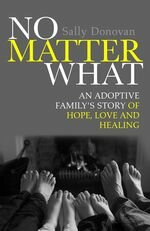
And what of ‘the book’? I’ve been busy reviewing the proof and planning some publicity. No Matter What will be published on 23 July and can be pre-ordered from Jessica Kingsley Publishers and other online book retailers. And no, those feet, they’re not mine.
May 22, 2013
The Collectors
‘Can we go on the beach and collect shells?’ they asked.
Rob and I sat on the sea wall and watched them for a while and chatted until out of the corner of my eye I saw them frantically filling a large carrier bag.
‘Oh God’, said Rob, already imagining the arguments about bringing the shells into our already over-stuffed house, finding them all over the place, crushed and crammed down the sides of beds, under sofa cushions, exuding their fishy stink.
I walked on to the beach by which time Jamie and Rose had charmed a volunteer: an elderly lady who was discovering shells as enthusiastically as they were. The carrier bag was so full that the handles would no longer meet at the top and shells were not it’s only contents. Inside was a battered and salt-corroded Blackberry, oozing battery juice, a white, plastic bottle and a rubber glove. Both children came at me, talking quickly and loudly into my face. I knew they knew what I was going to say.
‘I FOUND A BLACKBERRY!’ shouted Jamie, ‘A REAL BLACKBERRY!’
I showed him the back of the phone and the leaking battery and reminded him about the dangers of heavy metals. He reluctantly dropped the phone and with more negotiation the bottle and the rubber glove (‘BUT WE COULD USE IT!’). Neither children would agree to ditch any of the shells at all and so we walked to the sea wall with them and sat down. Mindful of all the rubbish that they pick up every single day and bring home and the endless subterfuge I have to employ to spirit it out of the house I decided upon a different tack.
‘You both know don’t you that you will always have enough; enough food, enough to wear, enough toys and games don’t you.’
‘Yes,’ they both say, a flicker of something passing across their faces.
‘Well I wonder if the reason why you like to collect lots of things and bring them home is because you sometimes worry that there won’t be enough.’
Surprisingly I get a mumbled ‘may be’, which by our standards counts as a bell ringing success.
‘So I wonder if perhaps you could choose may be four each, the really good ones and put the others back on the beach.’
‘Five, five each,’ is their immediate, unconscious response.
‘Okay, five.’
And to our utter astonishment, they return to the beach, choose the shells they want to keep, tip out the rest and join us on the sea wall. We admire them together and remark on how well they have chosen.
A year ago I would not have dared to try this approach for worry of whipping up a storm. The shells would have joined the wave of detritus, chaos and helplessness which was breaking over us and threatening to pull us under.
It was a small but significant moment and a marker of real and lasting progress.
May 13, 2013
Exploring Food and Children in Care and Adoption
Sally Donovan and Lisa Cherry in conversation.
Sally: So Lisa, you talked on Woman’s Hour recently about the importance of food and taste to children in care, for those who didn’t hear the programme could you just explain?
Lisa: Yes. I explored food in my book The Brightness of Stars as for me, it seemed to define each placement I had during my time in residential units and foster placements. What has emerged is that whenever I write or talk about food in relation to children in care it excites a lot of interest and knowing looks. I know that you, as an adopter of two children, have written about food and had a similar reaction. So when we chatted on twitter it made sense that we had a conversation about it.
Sally: Food has been a major part of our lives since we adopted. I’ve experienced food being eaten out of the bin, it being a constant pre-occupation, consumed at a huge speed and food being taken and consumed in secret.
Lisa: It makes absolute sense of course that when food has been in ‘lack’ and/ or prolonged feelings of hunger have been endured, that the relationship with food is going to be tricky. Food becomes only about survival in those circumstances. For me it was more about it being cultural, socio-economic and filled with an agenda. Having had what I would call ‘loving’ food as a young child (my Gran was French so cooked beautifully) I moved in between daily roast dinners to cabbage and sausages to large canteen style cooking through to locked larders filled with row after row of cheap food. This makes the food a defining feature.
Sally: Anxieties around the availability of food seem to over-ride smell and other sensations in our house. Food is something of great concern and worry. ‘When is tea?’ and ‘What’s for tea?’ are questions I get asked many times a day. Meals are eaten extremely quickly, food disappears and is hoarded and there is a tendency to over eat. The impacts of early experiences of hunger seem to be difficult to shift.
Lisa: What strategies have you tried in terms of shifting early experiences if hunger? What have brought the most success and have any caused more distress?
Sally: The most effective strategy has been regular meal times and simple food. They find a help yourself’ buffet style meal difficult so we manage these carefully. Now that the children are older we try to help them understand why they experience anxiety over food and to reassure them there will always be enough for them. I wonder how long these issues will persist for? It’s been ten years now. Anything that adds emotion and shame to food and mealtimes is detrimental.
Lisa: Do you have any ‘top tips’ for other foster parents or adopters around food?
Sally: I can explain what has worked for us. It has been about trying things out and seeing what works and always testing strategies against a knowledge of early trauma and therapeutic parenting.
Regular meals as they provide a strong structure to the day
Not persisting with foods they don’t like – taking away opportunities for failure at the dinner table – taking the emotion and shame out
Providing foods that they ate and enjoyed in care – even now, ten years in
Planning meals that don’t take long to prepare so that more time is available for one to one parenting and close supervision – meal prep doesn’t become something that takes away mum’s attention – and the more time between the start of prep and the food arriving, the greater the stress
Lots of fruit available to satisfy the constant desire for food
Verbal reassurance – ‘there will always be enough food for you’ ‘ I will not let you go hungry’
Cooking and baking – preparing food, learning about it, shopping together
Some choice – would you like x or y for tea
Being tuned in to what they like and providing these foods frequently
Thanks Sally. For more information it’s worth checking out:
Surveillance and Food Practises Within Residential Care For Young People
Recipes For Fostering by Andrea Warman
The Importance Of Food in Relation To The Treatment of Deprived and Disturbed Children in Care
May 2, 2013
Mother forces adopted daughter to bare her a child
On Sunday evening The Guardian broke the chilling news story of the mother who bullied her daughter into inseminating herself with semen which she had bought over the internet. What this particular headline does not mention, but others do, is that the girl, who gave birth at the age of 16, had been adopted from overseas by her mother, along with two other younger and unrelated children. Occasionally a news story will emerge where the matter of adoption is mentioned despite being irrelevant, but that is not the case here. The adoption by the mother of the three children is central to the criminal act and the damage done (she was jailed for five years for this wrongdoing plus cruelty to a younger child).
It sounds stupid to say this, but it felt like a body blow to the brotherhood and sisterhood of adopters who parent damaged and vulnerable children. I like to think we are all in it for the greater good, learning to parent therapeutically as we must, and with great respect for our children’s origins. Simplistic, I know.
Adopters must be able to tap into vast amounts of empathy to do the very different type of parenting that they do. Empathy was vacant from this drama. This woman wanted another baby and would sell her soul and use her child like a breeding machine to get what she wanted. This blind, all-consuming madness is Shakespearian in both its nature and the tragedy it has delivered upon the innocent. What she did is barely recognisable as fact.
Having gone through the adoption approval process myself and become an adoptive parent I am astonished that she was ever approved to adopt. Easy for me to say perhaps, I don’t know her, didn’t interview her, but she doesn’t sound like a safe bet. She adopted the children from overseas. Whether that is easier to achieve, whether there are loopholes, I don’t know, but it feels like that may be part of the story. Overseas and domestic adoption are certainly separated bureaucratically in this country and I’m not sure why, although I suspect that an agenda to encourage adopters to look to the UK care system and not overseas may be part of it. A kind of first and second division of adoption perhaps, which doesn’t sound like it passes the ‘best interests of the child’ test to me.
After being able to adopt three children, the woman was able to isolate herself and them from anyone who may have been able to spot that things weren’t right. There are the usual stories of alarms being sounded and no one following these up with sufficient rigour. Evidently she talked a good talk (how often do we hear that one?).
Serious questions are posed by this case and there are uncomfortable truths to face too. Not everyone is capable of parenting vulnerable children, much as we would wish it otherwise. Children can slip under the radar if someone wants them to and be in significant risk of harm as a result. And in efforts to reduce the numbers of children awaiting adoption in the UK alongside poor funding of adoption support, are we overlooking some clear issues around overseas adoption?
At the heart of it are three vulnerable children, dislocated from their countries of birth, who found themselves not only parented by someone who was unfit to do so, but cut off from any form of reliable help and rescue. And now there is a vulnerable baby to be considered too. The damage wrought is deep and widespread and will echo down through the generations to come. We can only hope that all four of the children will find the support, nurture and therapy that they will need to make sense of what has happened to them.
April 23, 2013
Drowning in Small Stuff
‘Don’t sweat the small stuff’ people will say as I recount the frustrations of a shoe lost in a tall tree, or a precious thing gouged by something sharp, as though these incidences are one-offs and I have got things madly out of perspective. When life revolves around traumatised and attachment-damaged children, the small stuff comes in vast quantities, there are lorry loads of the stuff. Sometimes I look out over acres of it, with crazed eyes and a crack in my sanity.
Over the past ten years I have become your worst nightmare. I am the parent whose child turns up to school without a pen and only one trainer in their PE bag. I am the parent who cannot find gloves in cold weather, or a matching pair of socks, or something nice to put in a lunchbox. I am the one who never got the school note (or the second one either) and I rarely fill out my child’s reading log. If your child comes to play I won’t have a nice treat for pudding or a plaster to stick on their grazed knee. But please try to be patient with me and mine, because the Matterhorn of small stuff looks something like this, and sometimes it’s a wonder any of us even leave the house in the morning.
… the drawing on the school t-shirt … the soap cut into small pieces … the lunch not eaten … the toilet not flushed … the missing packet of penguins …the fingerprints in the newly iced cake … the toothpaste squeezed around the taps … the whole cut in the centre of the towel … the box of printer paper folded into airplanes … the torch left on … the lost glove … the only remaining pair of shoes lost … the swimming goggles left at the swimming pool … the metres of selotape on the kitchen floor … the writing on the table … the snot wipe on the fridge … the school planner dismembered … the flowers picked … the opened cut leaking blood on the sheets … the wee needed just after lights out … the bite in the ruler …the cat locked in the room … the paint picked off the walls … the television settings changed …
Of course the fidgetty fingers and the anxious minds can’t control a lot of this activity, which renders me unable to guarantee that anything I need will be where I left it and intact. But it does go towards explaining why I am not the person I was ten years ago and not the well-organised haven of calm and lovely motherliness that you wish I was.