
Bryce Moore's Blog, page 299
May 20, 2011
South Park, the Book of Mormon, and Gratuitous Vulgarity


 The original cast recording of the Book of Mormon musical is now kicking around online. It's rocketed to the top 10 of the iTunes charts (a very rare feat for a Broadway soundtrack). A bit of googling will let you listen to the whole thing. I had been holding out hope that the show wouldn't be too crude to take Denisa to.
So much for that.
Let me be upfront here: I'm a Southpark fan, and I enjoyed most of the Book of Mormon Musical cast recording. I think Trey Parker and Matt Stone (the creators of both) are genuinely talented individuals with a flair for using media to convey layered criticisms about our society. They're really funny, and they can make you think--a trait not often found in today's pop culture.
They also are addicted to being crude. No--not just crude. To pushing the envelope as far as they can, often for no other reason than to push envelopes around. If they can say a thing either cleanly or with x-rated language, they'll always go for NC-17. And that's their right as artists (because like their vulgarity or not, I really do believe the two of them are artists, and I'm sure they're doing it all on purpose).
I just wish they'd be able to hold back on some things. But they can't. It's not that the entire soundtrack is laced with every profane word you can imagine (only parts of it). There are some songs on there that avoid it for the most part. (Hello, Turn It Off, All American Prophet, I Believe, and Tomorrow is a Latter Day all seem to be able to do it, as far as I can remember. To avoid the worst offenses, stay away from Hasa Diga Eebowai and Joseph Smith American Moses. What has been heard cannot be unheard.) But even when they manage to avoid dropping casual f bombs, they can't resist any mud puddle they happen to pass. If there's some filth to be found, those boys will roll in it.
Every. Single. Time.
Again. That's their call. And it's their audience's call to listen or watch it or not. But my point is that I think they could be even more popular--make even more of an impact--if they could just get over that knee-jerk desire for filth. There have been Southpark episodes that make fantastic points, but the people who need to hear the things the episode had to say will never, ever watch it. It's too crude. The Book of Mormon has an interesting message--one which I would love to discuss with people. But I won't be able to. Because many people will hear the filth, and they'll stay away. (Note for Mormons--you've heard this show is crude. You might have read reviews by fellow Mormons that say it's crude but has a good message at heart. Yes, it does. But it's not just crude. It's CRUDE. Okay? It's worse than Southpark. And there are no "bleeps" over the bad language. (Duh.) I cannot in good faith recommend the musical to anyone. If you're a pop-culture fiend of a Mormon like myself, you probably won't be able to stay away, just for out of sheer rubbernecking curiosity. But I'm not sugar coating any of this, and don't say I didn't warn you.)
If Parker and Stone read this, they would no doubt laugh and say that's part of their point. Being crude is part of the package. But I don't think it needs to be. The best thing I can compare it to is Bill Cosby and other comedians.
Many comedians can't resist being crude. They're foul mouthed funny, but a lot of the time, it's easier to be foul mouthed funny. When no subject is sacred, you can roll around in whatever you want and get some cheap laughs. Bill Cosby stand up is different. He's hilarious without the need to get dirty. He gets messages across, makes you think--and he can do it all without all the baggage.
The strange thing with Parker and Stone is that I think their addiction to vulgarity makes their humor more difficult at times. If they'd just lighten up on it, I think it would be easier on them. Maybe they do it for the challenge--I have no idea.
In the end, I think the Book of Mormon musical shows Mormons in a pretty favorable light (especially considering what it could have been). It gets some things wrong (like the way missionaries are assigned where they'll work and who they'll work with). It'll likely cause some people to stop Mormon missionaries on the street and get some conversations started. The more conversations the merrier, in my opinion. It's been nominated for enough Tonys, there's a fair chance the musical could eventually be made into a movie. Maybe when that happens, it'll get censored down enough to make it more watchable by a wider audience. (Or then again, that might make it into a short film, not feature length.)
One last note: if I were from Uganda, I would be as mad about this musical as Kazakhstan was about Borat. It portrays the country as a hellhole, filled with AIDS and violence. I found this the most disappointing part of the musical. Parker and Stone are fairly careful to treat Mormons well, but they set up an entire country as a pinata, and that's not right. It seemed to me they just picked a country in Africa at random and assigned it all those "African problems" they've picked up here and there in their heads. It's an awfully elitist, racist approach for two white guys from Colorado to be taking. But the Mormon smokescreen hides that. They could have--and should have--done more to avoid that.


May 19, 2011
Heaven Can Wait: A Depressing, yet Strangely Rewarding "Comedy"
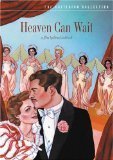
 It's been a while since I did a movie review. Not because I haven't been watching movies, but rather because I had too many other things I wanted to blog about. So to atone for that, I have a movie you Ought to Watch. Heaven Can Wait. No, not the 1978 Warren Beatty film with the same title--the 1943 Ernst Lubitsch one. And that's a reason you should watch it right there. Lubitsch directed some excellent films, including The Shop around the Corner and To Be or Not to Be, both of which I heartily recommend. He had a talent for making films that weren't easily classified. Comedies that weren't just about being funny, for instance. Heaven Can Wait is an excellent example of this.
The premise is simple: a man dies, and he's convinced heaven won't take him, so he goes to hell to argue his case for acceptance there. That's basically just a framing device, however, as the bulk of the movie consists of the man narrating his life, from childhood to death. It depicts him during roughly each decade of his life. (A much better depiction of this than Adam Sandler's Click--go figure.) It's parts touching, parts funny, and parts thought provoking.
Before the film, Denisa and I had been moping about how every now and then, life seems to settle into a rut. Each day can seem the same, and it's easy to start feeling like you never do anything Fun and Exciting. (I know--this coming from the man who's going to Europe this summer. Folks, the fact is that everyone's life can seem exciting to other people. The trick is seeing that excitement yourself.) In any case, after watching this movie, we no longer felt that way. Suddenly it seemed more important to just enjoy experiences as they come, because you never know what the future might hold.
It's That Sort of Movie.
But it's really well done, and very watchable. The characters are realistic (in a 1940s sort of way), and the conflicts hit close to home. My recommendation would be curling up and watching this with your spouse on a date night. All you need is Netflix. :-)
3.5 stars.


May 18, 2011
What Google Won't Let You See

There's been a video getting kicked around librarian circles the past few days that I thought you all might like to watch. Many people these days look at the internet as the Great Equalizer, believing that it brings new ideas to people every day. And maybe it did, at one point in time. But there's a distressing trend lately--more and more, the internet is only showing you what it thinks you want to see.
There's a big difference there. When I Google something, and when you Google something, the results pages are going to be different. Sometimes completely different. But no one knows about that fact--or at least, few people know about it. Here--watch the video, and then I'll give you a bit more commentary below.
What did you think? Did you have any idea that was happening? The reason I find it so distressing is that more and more, people are only going to be exposed to ideas they already have and already agree with, if this trend continues. When your ideas are never challenged, you never have to defend them. I believe ideas get stronger through debate. It's important to expose yourself to other ideas to make certain what you believe is correct--or that you really believe it.
If you'd like to combat this trend somewhat, you can turn off Google's search history personalization. To find out how, check this link. Of course, that only takes care of some of the problem--not all of it. My hope is that talks like this one will raise awareness, which will eventually correct the trend.


May 17, 2011
Roma and the American Viewpoint: *Please Read and Comment*
 Most of you probably know that a large subplot of my upcoming book (Vodnik) focuses on the main character dealing with racism in Slovakia. Although he's only 1/4 Roma (the term "Gypsy" is a considered a racial slur, folks), he's dark-skinned enough to run into problems in the country, which (like much of Europe) has some serious issues with Roma.
This is a subplot that's been very difficult for me to write, for many different reasons. I went into all of that in a previous blog post. For today's post, I want to get some ideas down in a slightly different vein.
I've been watching a documentary on Netflix called A Film Unfinished. It focuses on the study of a Nazi propaganda movie made in the Warsaw ghetto, detailing some of the tricks and techniques the Nazis used to portray life in the ghetto the way they wanted it portrayed. And as I watched the movie, I noticed that a lot of the rhetoric used by the Nazis against the Jews is still used today by racists. (Surprise surprise, I know.) It was argued that Jews had certain shared characteristics as a people. I have no desire to get into the nitty gritty racist claims--I have a hard time writing them down without feeling like I need to wash my hands.
In any case, I saw in the film the same words and arguments used against Roma today, being used by the Nazis eighty years ago. I'm confident if we went back in time two hundred or two thousand years, you'd find the same arguments popping up. Dehumanize a people--make the argument that they are born "different," and that nothing they do can make them escape that difference. They're born thieves. They inherit laziness. Argue that they prefer living in squalor. (Just this morning, my brother-in-law sent me this YouTube video of an illegally built Roma shack being destroyed.) Justify treating a people like animals by claiming that's the way those people are made. Tell yourself and your countrymen that those people must be dealt with like animals, because they are different. Inherently, fundamentally different.
And it turns into a self-fulfilling prophecy. Deprived of opportunities, forced to live off the state, unable to get steady work and income, constantly prejudiced against--is it any wonder that human beings in that condition end up dressing and behaving different?
But all of this is documented elsewhere by people smarter and with more experience than me. And it's just a side note to what I really wanted to address today. Until I started writing and reading about Roma, I was about as clueless as the typical American. So none of this is meant to come across as a holier-than-thou, finger-pointing sermon, that said, here we go:
I find it interesting that in a culture obsessed with political correctness, so many good people can be so unaware of the hurt their words and attitudes can cause. I think most Americans view Gypsies as characters from fairy tales and the occasional Disney movie. They tell fortunes, they steal children, they travel in colorful little huts on wheels--and they're not real. They're a fictional device to be joked about and used in the same way as we might make jokes about Hobbits or trolls or gnomes.
I know that I'm more aware of the issue, but I've been surprised how many times I see the word "Gypsy" used casually in conversation or marketing. There's a BYU furniture company that's trying to launch, calling itself Gypsy Modular. Really? Are we that unaware of racial slurs that we'd use one to casually brand our company?
One of the reasons might well be because Roma as a people are so splintered and spread across the world. It's hard to even estimate how many Roma exist: even in Slovakia, the official number is about 90,000. Unofficial estimates range up to more than half a million. That's a wide margin of error, especially considering Slovakia only has 5.5 million people total. Because Roma are so spread out, it's difficult for them to get a unified voice that can represent them. It's also difficult to even group them into a "them." They have a wide variety of customs and backgrounds. Add to this the fact that many Roma in America don't identify themselves as such--choosing instead to pass as another race with less social baggage--and what happens?
We live in a country where Huckleberry Finn gets a new edition so that the N-word won't offend anyone. And yet we can casually laugh and joke about Gypsies coming to steal children. Does anyone else see something wrong with that? We're outraged by the tremendous loss of life the Holocaust caused for the Jews, but we don't realize that along with the Jews, Roma were classed as enemies of the race-based state under the Nuremberg laws. The German government paid war reparations to Jewish survivors of the Holocaust. They denied those same payments to Roma survivors. Estimates of the death toll for Roma range from 200,000 to 1.5 million (again, it's difficult to determine exact numbers). Let's get a bit more specific: half of the Roma in Austria, three quarters of the Roma in Germany, one third of the Roma in France, all of the Roma in Croatia and Estonia--dead. Gone. (Read more here. Ian Hancock is an expert in the field, and has written a lot of valuable information about it. I'm not trying to trivialize the loss of Jewish life. But I am trying to point out they weren't the only group to suffer from Hitler's rabid rhetoric.)
And we still make fun of this people? We're still casually clueless about their plight? These are people who literally still have laws coming out that bar them from entering certain cities in Europe. This is not right.
It's a complicated situation. I realize that. I love Slovakia, and I love the people I've gotten to know there. My book is based on Slovak mythology. I hope that Vodnik will help grow interest in a country that has been overlooked for years. It's a fantastic place, with a rich and interesting history. But it also shares the same Roma racism that most of the rest of Europe has, and which we as Americans are clueless about. I hope it brings this to light as well. Because the solution to this problem isn't going to be found in bulldozers and racist legislation. The solution is going to be found in recognizing a people as people.
If Vodnik helps with that at all, I'd be overjoyed.
Anyway. That's enough of me speaking for now. I'm interested in hearing your thoughts on the subject. Prior to reading this post, did you have any idea about the issues I've discussed? What is your prior experience with Roma? Please share--it would be immensely valuable to me to hear as many opinions and thoughts as I can.


May 16, 2011
Writing as Sculpture: Sanding the Elephant
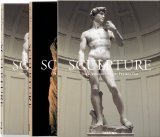
 The rewrite of Vodnik continues. I'm on page 79 out of 186 (not the final page count--just the Word doc I'm working in). And . . . just as before, I'm discovering that this stage of the revision process is more difficult than I thought it would be. The closest metaphor I can come up with is anti-sculpting (something I know pretty much nothing about, so I might get completely wrong).
With sculpture, you start out with a solid block of stone. You then go about removing everything in it that isn't your end product. If you're sculpting an elephant, you take off all the bits that aren't elephant, and what you're left with is (an elephant, hopefully). With writing, it's the opposite. You start with nothing, and you add material until you have your final book. (Yes, there will be some editing and deleting and the like, but the bottom line is that you're always going from nothing to something, as opposed to going from something to something else.)
This will make more sense as I keep going (I hope).
The first steps of both processes are fairly similar: you add (or subtract) a large amount of material, relatively quickly. Yes, things might pop up--an unexpected plot problem halfway through, a pesky bit of weak granite--that make you have to revise your ultimate vision, but for the most part, that first step is hammering your way through the material to get a rough estimation of what you want the thing to look like. By the time you're done with this stage, what you have generally looks like what you want it to become. It's recognizable as an elephant. The problem is, it's not a very good elephant.
Oh, it's good in that people look at it and say "That's an elephant," instead of "Is that a duck?" But it's bad in that no one's going to want to spend much time admiring it. (Unless you're still early on in your development stages as an artist, and you need the encouragement.) So you roll up your sleeves and get to work on step two. Now, you've switched to a slightly smaller chisel. You're rounding out pieces of the sculpture. Some big chunks of stone are still falling to the floor, but you're using a different skill set than what you were using for step one. You can't be as cavalier. No sledgehammers are involved. And once you're done, your elephant looks much better. It's still no work of art. But it's a pretty darn good elephant.
But the difference between a good elephant and a great elephant--or an immortal Elephant for the Ages--is all in the details. The subtle nuances. And those come out in step three, where you're not using a chisel at all. You're sanding and filing the statue. Taking off just enough stone to be just right. The difference between Michelangelo's David and some random statue is all in the details.
I'm not claiming I'm writing a masterpiece here. What I'm saying is that I'm discovering at each stage of the revision process I'm using different tools. They're all difficult. Just because huge chunks of text aren't getting changed or deleted doesn't mean it's easier. This morning, it took me an hour to figure out how I wanted to revise 100 words (it went from 100 to 285, and they were difficult words to write--it was an action scene that's pivotal for the main character, but it's also racially charged. How to make it tactful, not too over the top, emotionally challenging, interesting, and believable all at once--not the easiest task.)
Some of this struggle is likely due to the fact that I've never (ever) revised a book this much. If I had, some of my earlier books would likely be published by now. (Unfortunately, you can't tell someone who hasn't revised enough that they haven't revised enough--because to them, they feel like they have. Does that make sense? People talked about how much effort revision took--and I agreed with them, feeling like I'd put the same amount of effort and struggle into my own revisions. And then I was pushed to keep revising. It's an eye-opening experience.) So hopefully this is a process I get better at in time.
For the meantime, I have a schedule worked out to be finished with the revision on the 25th, a whole week ahead of schedule. I thought I'd be done way sooner than that, because when I looked over Stacy's notes, I didn't see any huge changes. No need for large swathes to be revised. But it turns out fine tuning some of these scenes is just as difficult as making major edits to larger scenes.
Go figure.


May 12, 2011
The Black Belt Librarian

Not much time today and tomorrow. I'm in the middle of a library conference today, and tomorrow I'll be at a library meeting in Bangor all day. So you'll have to get by without my scintillating wit for a day or two. But hey--you can see what I'm learning about today. Check out
http://www.blackbeltlibrarians.com/
Anyway, I'm posting this from my iPad in the middle of the conference, and the speaker's about to start, so I gotta jet.


May 11, 2011
Facebook and Children


 Denisa told me last night that TRC has asked her how old he needs to be before we let him on Facebook. That sort of took me by surprise. I mean, the kid's only 7. It hadn't even occurred to me he might know what Facebook is, let alone have a desire to go on it.
I looked at Denisa and said I was pretty sure Facebook had some rules about age limits, but I'd look into it. Step one is figure out what's okay with Facebook. Step two is figure out what's okay with us. So. Step one was pretty easy. Facebook has a pretty hard line statement on its policy page:
No information from children under age 13. If you are under age 13, please do not attempt to register for Facebook or provide any personal information about yourself to us. If we learn that we have collected personal information from a child under age 13, we will delete that information as quickly as possible. If you believe that we might have any information from a child under age 13, please contact us through this help page.So if you're under 13, you shouldn't be on Facebook. Seems clear, except it isn't. I read this other article this morning, detailing how a recent study found that there are 20 million Facebook users under the age of 18. Of those, 7.5 million of them are under 13. Worse yet, 5 million of those are under age 10, and parents aren't really monitoring their Facebook use.
First off, Facebook--you might have a problem. You clearly do a bad job enforcing your policy, if this sort of info is so easy to track and come across. But putting blame on Facebook aside for a moment, let's look at parents letting their children use Facebook. I see a number of red flags for Facebook use and kids:
While better than Myspace was, Facebook users still get scam emails sent to them, scam messages, phony friend requests, etc. Children are notoriously clueless when it comes to giving personal information out on the web. They also like to click first and ask questions later. Put this propensity in front of a Facebooker, and you're opening your computer up to all sorts of nasty viruses. More importantly, you're opening your kids up to all sorts of nasty individuals--especially if you don't monitor their Facebook use.
Privacy rules on Facebook are notoriously difficult for adults to wrap their heads around. Kids just aren't going to be able to know how to safely store their personal information online. If that info is public, then you have no idea who's looking up your child, and who can find their age, address, favorite band, school--you name it. That scares me. Am I alone in that feeling?
If parents aren't monitoring kids' Facebook use, I'm willing to bet a slew of them aren't monitoring their kids' internet use, period. I'm sorry, but the internet is no place for a child to be wandering around willy nilly. There are some seriously messed up parts of the internet, and they're all only a click away if you don't filter. Regardless of the age of your child, knowing where they're going online seems just as important to me as knowing where they're going in person. Maybe more so.
How old does TRC need to be before I let him on Facebook? At least 13. I think that's actually a pretty good age--but even then, I'd have rules about me having his password and being his friend. And yes, I plan to regularly snoop on where he's been and what he's been doing. I have a filter, and I use that filter. I don't view this as restricting my child. I view this as good parenting.
I'm sure many parents are out there shaking their heads, thinking I'm being over protective or too restrictive. Kids are just going to go online at school or at their friends houses unsupervised, right? Maybe. I hope TRC will understand and respect family rules. He does right now, and it's great. But I feel like a parent has to do all he or she can to ensure the safety of his or her child. I wouldn't let TRC wander around New York City by himself. Why would I let him go online without at least keeping track of where he's been?
Is Facebook a seedy, awful place? No. But it's more dangerous than people think. I'm not saying you need to follow my advice--but I do think you should have a sit down with your kid, regardless of the age--and at least discuss what's out there and see if they have questions. Don't have absolutely no policy whatsoever on kids and the internet. At least have thought it out some and know what you're letting your kid do and why.
Anyway. Didn't mean to be preachy, but it just seems often that parents these days don't "understand" online environments and technology, and so they choose just to ignore them.
What about you? Do you have a policy about Facebook and your children, or about the internet and your kids? How many of you filter? How do you keep your kids safe? Do share.


May 10, 2011
Nostalgic Movie Review Time: Benji

 Confession: I was a huge Benji fan when I was little. Benji movies were extremely exciting. Something about getting to watch a dog save the day was just a barrel full o' fun back then. I even had a Benji stuffed animal (which is pretty sick, when you think of it). Actually, I still have that stuffed animal--I've since donated it to TRC and DC for their personal enjoyment.
Anyway, I saw that Benji was on Netflix streaming the other day, so I added it to the queue, thinking that it might be a fun family movie to watch. I didn't really have any high expectations, but I thought it was worth a shot. We watched it, and I discovered a couple of things:
Benji's not that bad of a movie. It was quite watchable, mainly due to the acting. Not of the people--that's pretty much dreadful across the board. But Benji? That pooch has some acting chops. He's a smart puppy, and I was continually impressed by all the things he could do on camera. Due in large part to him, I actually started to care about what happened in the movie. No wonder I liked it as a kid.
It still has major kid appeal. My kids loved it, especially DC. She thought it was so much fun to watch a dog do cool things.
It gets really intense for kids at the end. Even TRC was shaken up. A plot that has as its climax the kidnapping of kids and the beating of a dog? Poor DC--who was drawn in so much by the beginning two thirds of the film--was in tears for the last third. She was really worried about the kids and the dogs. Maybe Benji's why I was always worried I was going to get kidnapped when I was little. Thanks, Benji.
Overall, it was a good experience. DC's now sleeping with my old Benji dog, but she has to take turns with TRC for the privilege. If you've got kids around the age of 6-8 or so, I'm betting they'd like the film, too. Two and a half stars, maybe a half star more. No, it's not Casablanca, but for what it is (a dog movie), it's a pretty darn good example of one. I can see why it launched a franchise.


May 9, 2011
Next Round of Revisions

 I got my new editorial letter Friday night, so I've gone back into full-revise mode. Much smaller changes this time--not nearly as sweeping as before, and they should be a lot easier to implement. Each time I've been doing this, it's been a learning experience. My gut reaction Saturday was to just revise the pieces Stacy had pointed out. That was when I'd just gotten the letter and notes, and I didn't know how much time I had to work with before she needed the revision done. After some more emails, I discovered I have until June 1st, which gives me some more time.
So with that extra time, I'm rereading the book again and marking it up one more time with my own notes. Thankfully, it seems like all my hard work from before really has paid off. There's much less that I want to change, and the changes I do see that I want to make are ones that can be done in a paragraph or two--or less. True, there are a couple of changes that will have to be spread across several chapters, but even these are just tweaks, rather than full-blown plot revisions.
If the last round of revisions consisted of a good bit of demolition and brand new construction, this one is more along the lines of switching the paint, doing some repairs and knocking somethings back to level. (To combine two of my most blogged about topics: house repair and revision. I wonder if I could work a dental reference in here somewhere? Wait--I just did!)
Schedule-wise, I want to be done with this revision by May 25th, because then I fly out to Utah to go present at Conduit. I technically could still be writing and revising then, but it would be ever so much easier to be done with this step. I want the reread done by tomorrow, and then I need to revise 20 pages a day to meet that deadline. I think it's totally doable.
Tarnhelm will have to wait. And even once I'm done, I had the chance to have a nice long chat with my agent about Tarnhelm on Saturday, and he brought up some really good points about issues the book has that have to be dealt with. I need to think up some solutions and different approaches, but I think it's all very doable. One thing's for sure--this whole writing thing feels a lot more like a business now than it felt like when I was just sending things out to editors or agents.
I like it.


May 6, 2011
America and the Continual Strive to be the "Best"
(Bryce gets out his not-even-dusty soapbox, gives it a kick or two, and stands on top of it.)
 Denisa and I had quite the interesting conversation the other night. I forget exactly how we got into it, but the gist of it was her frustration with the mindset that some Americans have that we have to be the best in everything we do. That we're the best country to live in. That we have the best health care, or the best technology, or the best education system, or the best _________. And the thing is, I don't think a lot of Americans realize just how arrogant and puffed up that mindset makes us look to the rest of the world.
Think of it. What if you had a friend who always wanted to prove he or she was better than you? You're good at hunting? Well, he has to prove he can take down a bigger deer. You like to play the piano? She has to prove she can play it better. Good at Trivial Pursuit? Well, he can beat you. You name it, they want to show just how awesome they are.
All. The. Time.
We approach international rankings like they're some sort of report card for our worth as a nation. China's doing better than us in something? OH NOES! PANIC! South Korea has better internet connectivity? The world is going to end. And heaven forbid a lowly country like Sweden or some other place some of us might not be able to find on a map has the nerve to start succeeding in something. Nope--it's our way or the highway. We have to be best.
Why is this?
Maybe some of it is a remnant of the whole Manifest Destiny ideology--the idea that eventually America will take over the world and everyone will love us. Maybe it's because we suffer from low self-esteem as a country. We know we have our flaws, and we strive to cover them up by shouting from the rooftops just how great we are.
I've got nothing against national pride. I love America, warts and all. But I'm okay if we're not the best in every category--because there's a difference between being good or great at everything, and being the *best*. I don't have to be the best writer in the world. I don't have to prove I'm better than Hemingway or Tolkien or Jordan or whoever. That's okay. I want to be the best I can be, not the best in the world. I don't have to play the piano better than Beethoven. I want to play it the best that I can. I want to continually be improving.
Being the best you can be is a big step away from being better than everyone else. It's all about what scale you're using. I don't mind us comparing ourselves to other countries to see where we might need to improve. Challenges are good, and anything that gets us motivated can help. But turning that into "India has more tech graduates than we do. This means we are failing as a country" . . . I can't get behind that sort of sentiment.
And don't get me started on the Olympic mindset, where we have to have more golds, more silvers, and more bronzes than everyone, or else we suck at sports. The world's getting smaller, people. We should be celebrating the fact that other countries are progressing. That as a species, humanity is constantly improving. It should be an "us" mindset--not an "us" vs. "them." Because the more "thems" we create--the more we compare subsets and turn this world into a big reality television show, the more we shoot ourselves in the foot.
So come on, America. Let's not be the boorish neighbors anymore. Let's sincerely congratulate other countries on their successes. We're not the best country in the world. There *is* no "best." We might be the best in one area, or a few areas, but other countries will be better than us in other areas. That's okay. If the Chinese economy is bigger than ours, so what? If Germany starts to become a powerhouse in technology--bigger than us--who cares?
You know what, America? Other countries are really nice to live in, too. Having lived abroad for years at a time, I've seen first hand that being seventh or eighteenth or twenty-third best at something doesn't make a whole lot of a difference. Simmer down, and learn to get along with everybody else. Let's not be the losers who pack up our game and go home the second we start to notice someone else beating us at it.
(Soapbox, done.)


