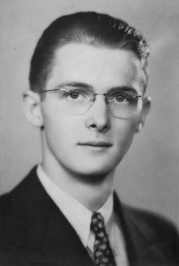
William Nunn Lipscomb, Jr. (December 9, 1919 – April 14, 2011) was a Nobel Prize-winning American inorganic and organic chemist working in nuclear magnetic resonance, theoretical chemistry, boron chemistry, and biochemistry.
Lipscomb has worked in three main areas, nuclear magnetic resonance and the chemical shift, boron chemistry and the nature of the chemical bond, and large biochemical molecules. These areas overlap in time and share some scientific techniques. In at least the first two of these areas Lipscomb gave himself a big challenge likely to fail, and then plotted a course of intermediate goals.
In this area Lipscomb proposed that: "... progress in structure determination, for new polyborane species and for substituted boranes and cWilliam Nunn Lipscomb, Jr. (December 9, 1919 – April 14, 2011) was a Nobel Prize-winning American inorganic and organic chemist working in nuclear magnetic resonance, theoretical chemistry, boron chemistry, and biochemistry.
Lipscomb has worked in three main areas, nuclear magnetic resonance and the chemical shift, boron chemistry and the nature of the chemical bond, and large biochemical molecules. These areas overlap in time and share some scientific techniques. In at least the first two of these areas Lipscomb gave himself a big challenge likely to fail, and then plotted a course of intermediate goals.
In this area Lipscomb proposed that: "... progress in structure determination, for new polyborane species and for substituted boranes and carboranes, would be greatly accelerated if the [boron-11] nuclear magnetic resonance spectra, rather than X-ray diffraction, could be used." This goal was partially achieved, although X-ray diffraction is still necessary to determine many such atomic structures. The diagram at left shows a typical nuclear magnetic resonance (NMR) spectrum of a borane molecule.
Lipscomb investigated, "... the carboranes, C2B10H12, and the sites of electrophilic attack on these compounds using nuclear magnetic resonance (NMR) spectroscopy. This work led to [Lipscomb's publication of a comprehensive] theory of chemical shifts. The calculations provided the first accurate values for the constants that describe the behavior of several types of molecules in magnetic or electric fields."
Much of this work is summarized in a book by Gareth Eaton and William Lipscomb, NMR Studies of Boron Hydrides and Related Compounds, one of Lipscomb's two books.
Lipscomb's group also contributed to an understanding of concanavalin A (low resolution structure), glucagon, and carbonic anhydrase (theoretical studies).
Subsequent Nobel Prize winner Thomas A. Steitz was a doctoral student in Lipscomb's laboratory. Under Lipscomb's direction, after the training task of determining the structure of the small molecule methyl ethylene phosphate, Steitz made contributions to determining the atomic structures of carboxypeptidase A and aspartate carbamoyltransferase. Steitz was awarded the 2009 Nobel Prize in Chemistry for determining the even larger structure of the large 50S ribosomal subunit, leading to an understanding of possible medical treatments.
Subsequent Nobel Prize winner Ada Yonath, who shared the 2009 Nobel Prize in Chemistry with Thomas A. Steitz and Venkatraman Ramakrishnan, spent some time in Lipscomb's lab where both she and Steitz were inspired to pursue later their own very large structures. This was while she was a postdoctoral student at MIT in 1970.
Positions, awards and honors:
Guggenheim Fellow, 1954 Fellow of the American Academy of Arts and Sciences in 1960. Member of United States National Academy of Sciences Member of the Faculty Advisory Board of MIT-Harvard Research Journal Foreign Member of the Royal Netherlands Academy of Arts and Sciences (1976) Nobel Prize in Chemistry (1976) Five books and published symposia are dedicated to Lipscomb....more

 Sign in with Facebook