Victoria Grefer's Blog, page 60
June 23, 2012
July 3, and All’s Well
“July 3, and All’s Well”
Half-gallon of skim milk, frozen waffles, five pounds of sugar…that last would have to go in a different bag, Casey knew. She checked her watch: 3:10. Had she really only been at work an hour? She was stuck here until nine.
Bagging groceries was bad enough on a normal day in New Orleans, but on July 3 the number of people who came to Jackson Food Center was boggling. And almost all of them bought the exact same things.
Casey glanced at the conveyor belt, where a middle-aged couple was loading— yes, she knew it—ground beef, hot dogs, sausage links, and buns. Potato chips and a watermelon were likely to follow. God, could Americans be any more predictable?
Did anyone do something besides barbeque on the Fourth of July? Yes, Casey told herself. They drank. She had bagged so many bottles that day…. In New Orleans, liquor was sold in the grocery stores along wine and beer, and every time an order with lots of bottles came through, Casey had to leave to fetch a winebox, with slots to keep the bottles separated, so the glass wouldn’t break.
Every register in the store was open, and there were still lines four or five people deep by all of them. Casey was bagging at Danielle’s register. Danielle had just graduated from Casey’s high school, while Casey was set to start her senior year come August, but they never talked much. In fact, Casey hated bagging for Danielle, as Danielle was a grade A brat whose voice was extremely annoying when she complained. Which she did all the time. Today, though, it wouldn’t make much difference whom Casey bagged for; the store would be packed until closing, no time to do anything but work.
The worst part about lines this long was not the ceaseless stream of bagging without a break. It was the way customers got annoyed about having to wait to check out and took their anger out on the peon employees
Casey placed the last bag of food (Jackson Food Center only used paper) in the cart that her current customers pushed forward. The woman walked up as her husband ran his debit card through the machine.
“Oh,” she said, staring at her grocery cart. “I wanted everything double-bagged.”
Casey wanted to say, “Then tell me that before I finish bagging all your stuff, you twit. Do you actually think I’m going to rebag your order when five people are waiting behind you?” What she actually said was, “I’m sorry, ma’am. Usually we’re supposed to offer to rebag everything, but the store is so busy today I don’t think that’s a good idea…”
The middle-aged woman huffed. “I see.”
“Next time tell me right away that you want it double-bagged, and I’ll be more than happy to do it.”
“My milk is going to break that bag.”
“I promise you, it won’t. People take full gallons of milk in our bags all the time.”
The woman didn’t say another word. With what was horribly close to a sneer distorting her face, she wheeled her grocery cart out the door.
Casey sighed as the first items of the next order came flying down to her. People are damn inconsiderate, that’s the problem with the world. She’d been working at Jackson’s for a month and already six people had asked her to unpack all their groceries and put them in double bags.
Casey worked for the next half-hour without a break, but without any problems coming up. Then came a woman with a basket full of groceries wearing heels, pearls, and an Ann Taylor dress.
“I want my cold things bagged together,” she said. “Otherwise they melt before I get home.”
“That’s fine,” said Casey. “I put cold things together as a general rule.”
“And don’t put anything else with them, just the cold things.”
“All right,” said Casey. The first few items came to her: cookies, chips, bread. She put them in their own bag in the cart’s baby seat so they wouldn’t get smushed. Then came two-liter drinks, canned goods, and Herbal Essences shampoo, followed by….
“Here come the cold items,” said the woman. “Bag them together.” Casey gritted her teeth. Generally, someone who’d been living for seventeen years knew that milk, cheese, and popsicles were cold. People weren’t stupid because she worked in a grocery store. In Casey’s case, her chances of going to college on a scholarship were actually pretty decent.
After the woman paid she walked up to Casey. “Did you put the cold things together?”
“I did,” said Casey. The woman left the store, and Casey’s cheeks turned red. She muttered, “Condescending bitch.”
At 5:00 she got half an hour for dinner, and took her customary ham sandwich to the break room. Her friend James was there; he worked in the meat department. He glanced up when Casey pulled a seat from his table.
“Thank God for cell phones,” he said.
“Why?”
“I locked myself in the meat freezer today.”
Casey laughed. “You didn’t!”
“Oh, but I did. It wasn’t really my fault, the door swung closed behind me. I called the front of the store to send someone to let me out. My first near-death experience.”
“You couldn’t have been there longer than five minutes.”
“Three on the nose.”
“James, that isn’t really a near-death experience.”
“Why would you say that to me?”
“Because it’s true. At least your day was interesting, though. I’ve only been yelled at and treated like a five-year-old.”
“That sucks.”
“And I get to do it for four more hours.”
James said, “When we graduate next year, I’m gonna work for my dad’s construction company. I think I’ll like that a lot more.”
Casey grinned. “The near-death experiences should be different there, if nothing else. Scaffolding to fall from, planks of wood and metal…”
James looked at his watch. “Damn, I’m late! I gotta get back. Enjoy your break.” He hurried off, leaving Casey alone with her sandwich.
Casey’s first customer when she returned to work was an older man, with a full head of pearly white hair.
“Can you double bag my order?” he asked. Danielle slid the first of his groceries, a box of Cheerios, to the bagging area of the register.
“No problem,” said Casey. Finally, she thought, someone with sense.
“My wife likes the double bags, don’t ask me why. I just do what she tells me. It’s best that way. I figure if it’s worked for forty years, why change the system? Living with a woman that’s FBI, it isn’t easy.”
Casey looked up from her bags. “Your wife’s FBI?”
“Yep,” said the man. “Full-blooded Italian.” And he winked. Casey laughed. When she had finished with his order and he’d paid, he told her to enjoy her holiday.
“You too,” she said, and he left the store.Casey’s next customer was a woman with a little boy. He was sitting in the pull-down child seat in the buggy with a sippy cup. His mother looked to be thirty, maybe thirty-five judging by a laugh line near her mouth. Toward the end of her order, Danielle sent two bags of M&M’s down to Casey.
“Do you want these for your purse?” Casey asked.
“Those are for you two,” she said. “One bag for you and one for the cashier. This place is crazy today, you need to keep your energy up.”
“That’s really nice of you,” said Casey, “thanks.”
“Thanks a bunch,” added Danielle. “You know, no one’s ever done that for us before.”
“It’s nothing,” said the M&M lady. “I hope you have a great Fourth of July. You aren’t working tomorrow, are you?”
“I’m off tomorrow,” said Casey. Danielle said she worked until eleven a.m., when the store would close early. The M&M lady left, and as good a turn as the day had taken, Casey almost groaned audibly when she saw the next person in line.
It wasn’t the person that bugged her—she was an old woman who didn’t look particularly senile. Her cart, however, was almost overflowing with food. On such a busy day the order seemed never-ending, but finally Casey bagged the last container of ground beef.
The woman’s voice was scratchy. “You need to help me to my car,” she told Casey. Casey just stared at her. Loading groceries into vehicles was part of her job, but the way the old woman demanded it threw her completely off guard. “Of course,” she said a moment later, and giving Danielle a heads-up—Danielle didn’t look pleased, as she would have to bag as well as run the register for a while—Casey followed the woman out the front doors.
Casey felt like she was sweating the moment she stepped outside of the air-conditioning. “It must be a hundred degrees,” she thought.
The old woman barked, “My car’s over here,” and popped the trunk of an ancient brown Oldsmobile. And that was as much as she did to help Casey with the groceries: pop the trunk. She turned the engine on and sat in the driver’s seat as Casey placed every single bag into her car. Casey knew better than to expect a tip, though most people who asked her to help them to the car gave at least a couple bucks. The woman didn’t even tell her thank you. She drove away without any sign of acknowledgement.
Casey muttered, “I hope your eggs all break, you old crone.” She headed back into the store, but stopped when she felt a rustling in her pocket. It was her bag of M&M’s, and she tore it open.
“What are you smiling about?” asked Danielle. “This place sucks.”
Casey dumped out a handful of chocolate. “It could be worse.”








June 19, 2012
Opening Excerpt
Here’s an opening excerpt of “The Crimson League,” from Chapter 1, “Bedtime Story.” Great way to check out the novel and see what it’s all about.
THE CRIMSON LEAGUE
The autumn wind’s whistle died with a choke as Kora Porteg slammed her brother’s window. The tattered curtains fell lifeless against the wall. Kora made no habit of attacking windows, not in the quaint little cottage she’d called home all her seventeen years, but she was alarmed, and bitterly disappointed, at the state of this particular one.
“For the last time, Zacry, you can’t leave your room open to the world.”
“Things aren’t that….”
“Things are that bad! You should know. You steal Mother’s paper enough.”
“I understand about half of the paper, they make everything so cryptic. And I haven’t snagged one in two weeks. She’s started torching them.”
Torching them was probably best, Kora thought as she watched Zacry climb, unrepentant, into bed. He spent most days sneaking away to find news of the resistance, though he managed to hide the pastime from most people, his mother among them. He went filling his head with heroics, and him only eleven…. His new hobby frightened Kora, who forced her demeanor and her voice into nonchalance.
“Father would want you to read. To read books.”
“Well, Father’s not here, is he?”
“Zacry!”
Kora’s normally pale complexion lightened two shades. She jumped at her brother’s statement, and a strand of chestnut curls fell from the bun at the back of her neck. She stared out at a robust harvest moon, which just allowed her to descry the line of the unpaved road to Hogarane, the nearest village. Then she drew the curtains closed.
“I’m sorry,” Zacry murmured to Kora’s back. “I shouldn’t have said….”
“Well, you, you’re right. But still, Zac!”
“Why don’t you tell me a story?”
Kora took a seat on the edge of the bed. “Will you pick up a book tomorrow? Not the paper?”
“Yes.” The surrender was guilt-won, but Kora accepted it.
“What story, then?”
“The sorcerers.”
Their father had told the tale many times when they were younger. Kora began the same way he always had:
“Centuries before you were born, the God-blessed kingdom of Herezoth….”
“God-forsaken’s more like it.”
“The God-blessed kingdom of Herezoth,” Kora continued, “was home to many sorcerers. You could always tell a sorcerer because he was born with a special mark.”
“A triangle.”
“That’s right. People say the mark was a triangle because to do sorcery, you needed three things: power, will, and knowledge. You had to be born with the power to cast spells, and not everyone was. You had to truly will the spell to be cast; you had to concentrate, to focus your mind on what you wanted. That applies to more than ancient magic, Zac.”
Zacry’s eye roll said Kora needn’t make her agenda more explicit; he’d promised to read a book, hadn’t he? And he went to school each day. Not that he had any other option beneath the new regime, but he worked diligently in lessons. His sister went on:
“Lastly, a sorcerer needed the right incantation. If he didn’t know that, he could want to cast the spell more than anything and possess the world’s strongest magic. It wouldn’t matter a jot. Some sorcerers specialized in writing spells, but that required an understanding of magic’s subtleties that only a few ever mastered.”
“What happened to the sorcerers?”
“At first they lived with the normal folk in peace. They kept to themselves. They had their own court, their own laws to govern magic. The Hall of Sorcery was high in the mountains, and people say only the magicked ever saw it. They say you needed magic to find the path up to the peak where the Hall’s tallest spire broke the clouds. The court’s members were called Councilors, and their most famous leader was Brenthor. He was a wise man, and just. People like us weren’t afraid to go to him, offering money for help or begging for his aid. To this day it’s said Brenthor honored every honest plea. That’s probably an exaggeration, but we know for a fact he used the money from those who paid him to build houses and grow food for the poor. He advised those sorcerers who wrote spells to put them down in books, which he stored in a library next to the Hall. The king himself asked Brenthor for advice, many times. It was Brenthor who led the king’s warriors when they put down the Sorcerers’ Revolt.”
Kora paused, waiting for Zacry to ask about the Revolt. The question came, and Kora pulled her brother’s blankets tight against him; he wiggled them loose as she said, “A sorcerer came before the magic court when Brenthor was off consulting with the king. This man’s name was Hansrelto, and he was cunning, proud, and cruel. He thought magic had dignity, and that Brenthor was wrong to serve the king, to sell incantations. A number of sorcerers thought like Hansrelto, and they rallied behind him, but it was Hansrelto by himself who showed up at the Hall. He knew Brenthor was gone, and that no one at the court could challenge him.
“Hansrelto wanted sorcerers to rule Herezoth. He asked the court to follow him in an attack on the king and Brenthor’s policies. Brenthor’s second-in-command, a young sorceress named Mayven, was in charge the day Hansrelto came. She debated him, she called his views maniacal, but because Hansrelto thought all magic users had rights, he cast no spell against her. He’d come to marshal the court, and he managed to take a third of its members with him when he left, blowing apart the doors and destroying the front-most pillars. Legend holds a corner of the building collapsed.
“Mayven understood how dangerous Hansrelto was. She wasted no time in uniting her sorcerers against him while Hansrelto terrorized the villages nearby, destroying homes, killing livestock, forcing the people to submit to his new order. Finally, Mayven’s army was put together. Brenthor took command when he returned with five thousand footsoldiers: the king had offered all assistance he could give. The battle took place at the foot of the mountains, and was bloody and long, and most of the magicked died. The ordinary soldiers fared little better. Only eight hundred survived, because Hansrelto cast devastating spells that took out people by the dozens. Brenthor triumphed in the end, but Hansrelto escaped to a nearby cave. Brenthor cast an enchantment on the entrance, a spell that would instantly kill Hansrelto if he walked out.
“Hansrelto died in his prison, but he had already damaged relations between the magicked and the world, damaged them beyond repair. Hansrelto changed how people thought of sorcery. They became scared. They saw what magic could do in evil hands. Brenthor’s bravery meant nothing to them, so they forgot it. Mayven’s body wasn’t found, but no one heard from her again. Most think Hansrelto injured her and she left the battle to die. Perhaps that was best, because anyone who could cast spells was shunned after the revolt. Using magic of any kind was grounds for death. The few sorcerers that were left hid themselves. Magic arts were lost to time, or so it seemed.”
“Until Zalski,” said the boy.
“Until Zalski. He was the son of the king’s chief adviser. He bribed the royal guards, as many as he could, offering positions of power. Some he threatened in secret. However he did it, he had enough support to overthrow the royals. No one stood against him, not when he started casting spells. That was just two years ago.”
“Two years,” mused Zacry. “I was nine. It seems longer than two years.”
“Of course it seems longer. He’s taken three-fourths of what we’ve earned for the past fifty months. It’s his way of keeping us weak, so we can’t rise up. Even down here he’s managed to get Farmer Byjon on his side, and since Farmer Byjon controls everything….”
“But people did rise up,” said Zacry. “You’ve seen the wanted posters: the Crimson League. They stopped that caravan of quartz from reaching Zalski three months ago. They’ve killed as many soldiers as they’ve lost.”
Kora shifted her weight from one side to the other. “They have courage,” she admitted. “The Crimson League is brave, if nothing else. And they deserve better than the deaths that wait for them. But if you don’t think Zalski has fifty men to replace every one they take from him….”
Zacry stared stubbornly at his sister, as he did every time this story devolved into the same argument. “I believe in them.”
“Just don’t believe too loudly, for all our sakes. Now, that’s enough for tonight. It’s late. Sleep well, Zac.”
Kora kissed her brother and went out to what passed for a sitting room, its wooden walls and floor bare except for a portrait of her family. Not long ago comfortable chairs had filled the space, and shelves where her parents displayed books and heirlooms, or the occasional vase of flowers. All had been sold, even the rug, everything but a small table and the portrait, where Kora’s father looked down to make her heart wrench each time her eyes met his. She found her mother seated on a stool, weaving.
“I need you to go to town this week.”
That caught Kora’s attention. “Into Hogarane? Alone?” She hadn’t walked to town by her lonesome since Zalski’s coup.
“The roads are still safe by day, despite what befell your….”
“I know what happened, Mother.”
“I hate to send you, but there’s no way around it. I’ve got too much to do here to go myself. I’ve fallen behind somehow, and the more time I can weave, the more cloth I’ll have to sell. I almost have enough to go to market. I have to make it there by the end of the month; we owe taxes on the fifth.”
“What do you need?” Kora asked.
“Flour, but no more than twenty cups. It spoils much too fast. And eggs, as many as you can get with what’s left over from the coin tin.”
“I don’t understand, did something happen at the general store?”
“Their chickens died. Some kind of disease spread through the coop. And then, the wheat here won’t be harvested for a fortnight. The word came out this afternoon.”
“What’s this, Monday? I’ll go on Wednesday.”
“Be back well before dark. Hours before, I mean it.”
Both women glanced at the portrait, and Kora assured her mother, “I won’t dally.”
“I know you won’t. That’s why I’m letting you go.”
Kora nodded, and lowered her voice. “Did you pick up the Letter today?”
“In the flour bin.”
“The flour bin?”
“I didn’t want your brother finding it. Throw it in the hearth when you’re finished.”
The Letter was the monthly paper of the resistance, known for its stories about those suffering under Zalski’s regime: disappearances, deaths, quiet arrests made public through no other forum. This issue’s featured story was that of a teenager forced to flee his home village up north after breaking an uncle out of jail. The man had been arrested for failure to pay taxes; neither he nor his nephew had been captured.
The boy Kora read about was only four years older than her brother. To contemplate that froze her heart, for Zacry’s thirst for news was turning into an obsession with the damn Crimson League. He was already darting off to places he had no business being on his way home from the schoolhouse. Kora followed him once out of curiosity, wondering what had been making him late. He went to the local tavern, crouched beneath the rear window to listen to conversations between the men who stopped in to complain to one another before they rushed home to families who never seemed to have quite enough food for a decent dinner. Perhaps, Kora thought, if they drank less at the tavern they might find larger portions waiting. But they needed to come together, to commiserate, and no one wanted old Dane, the barkeep, to starve.
Another story was about the Crimson League’s latest escapades.
The administration has been silent on the events of 1 October, but witnesses describe an ambush on one of Zalski’s fuel transports, which contained both wood and coal. The shipment’s destination is still unclear, but wherever it was going, it never arrived. Five masked men outside of Yangerton, ignoring the presence of two families returning to the city, attacked two soldiers moving three large crates. No deaths were reported, though the masked men, who declared themselves members of the Crimson League when they shot an arrow with a crimson-dyed feather into the transport wagon, took the crates.
Each month Kora expected the Letter to shut down, to fail to appear in the district, which would likely be the only sign when the army found its writers or its editors. After reading the current issue, as the kitchen stove was unlit, Kora watched the newsletter blacken and curl in the flames of the sitting room fire.
“I’m worried about Zac,” she said. Her mother barely looked up from her weaving. “He thinks of nothing but resisting. He only talks about the Crimson League. You heard him, he went on about them over dinner last night.”
“Don’t be too severe. He’s young, but he remembers better times; he’s old enough for that. I for one am glad he’s got a conscience.”
“He’ll get arrested. Maybe not until he’s my age, but mark my words….”
“That’s enough, Kora. Your brother has the sense to guard what he says in public. You can talk to him yourself if it’ll make you feel easier, but don’t chastise him. That’ll only make him worse. Now, help me straighten out these threads.”
Kora bumped the living room table, lifting one end off the floor.
“Careful! I know that isn’t your grandmother’s table, but I’ve grown fond of it.”
Kora took ten minutes to get the threads sorted, then announced, “I’m going to bed.”
“Me too. Take a glass of water to Zacry, won’t you? He forgot again to fix one.”
“He always does.” Kora poured the drink and eased open her brother’s door. The window she had slammed was shut no longer; the curtains billowed in the breeze. She glanced at the bed, and had light enough to see that no shadow of a head fell across the pillow.
Eavesdropping at the tavern by day was one thing. To sneak off to God knew where after Zalski’s curfew was another.
“Zacry Porteg, I’ll whip your hide I will.”
Kora placed the glass on the bedframe and climbed outside.
The night was cool and clear, the full moon high. Kora sprinted to the road, wondering which direction to take, but a cursory glance revealed a human shape just in her range of vision, heading toward the river, the Podra. She cursed beneath her breath and followed. Her legs were longer, and she overtook Zacry within minutes.
“What are you playing at?” she demanded.
Zacry looked at her in terror. “Don’t tell Mother!”
“Oh, stop it. You know I’m not a snitch. Just where do you think you’re going?”
“The riverbank. Opal….”
“Your friend from school?”
“Opal told me people hide stories for the Letter half a mile from the general store. In a tree, so they can’t be connected to anyone specific.”
“How would Opal know that?”
“Her father’s the local correspondent.”
Kora was stunned. “Opal’s father writes for the Letter?”
“A real important issue’s coming out,” said Zacry. “At least, Opal thinks one is, ‘cause her Pop’s been real nervous. Listen, he stores his work in that tree and someone from the paper picks it up. Let’s go look.” Kora’s eyes narrowed. Her brother sensed her reservation, for the night was too dark to read it plainly. “Please, Kora….”
“Oh all right. If it’ll stop you leaving home again as soon as I drag you back.”
They left the road to cut quicker to the Podra and found themselves in a wheatfield. The stalks, as tall as Zacry, closed them in. They walked in the harvesters’ lanes between the rows. Kora noted, “This is Farmer Byjon’s land. The tree’s on Farmer Byjon’s land?”
“It must be,” said Zacry. “Ha! I wouldn’t mind him taking the blame if Zalski gets his hands on an article.”
Farmer Byjon had a knack for muscling people out of the property he wanted. He kept a riverside path in good condition for public use—mainly to stem hostilities—but to skirt around his fields to find its start would take the siblings well out of their way.
“As long as Old Byjon doesn’t find us,” said Kora. And she felt an inexplicable tingling in her limbs, a sensation that had nothing to do with the farmer.
“Get down.”
“What?”
Kora yanked her brother to the dirt. Five seconds passed. Ten. She felt through the earth bodies coming from behind, shuffling through the wheat stalks. Nearer and nearer they came; were they walking in her row?
No, they were one lane over. A male voice spoke.
“Why does he want us searching the riverbank? It won’t be here.”
“No, it won’t, but I don’t ask questions. Neither do you.”
Kora heard an exasperated groan. A third voice said, “Let’s just get this done, shall we?”
A troop of six men passed on Kora’s left, two yards away. From the earth she could see their trousers, their boots, but not with any distinction. Her mind started racing: were these men soldiers? They moved with military discipline, and they looked to be wearing uniforms, dark army uniforms….
Then they were gone. Zacry hazarded a whisper.
“We have to get those notes.”
Opal’s father may have left no name on his documents, but he worked in the village as a scribe of legal proceedings, mainly property and tax transactions. His writing would give him away.
Kora and Zacry ran bow-backed after the soldiers, their heads below the level of the wheat. The troop moved without urgency, and the siblings circled around it to come upon the river through the fields. Brother and sister stepped as close to the edge of the last row of stalks as they dared, peering out to look for the proper tree while a cloud moved before the moon and gave them a bit more cover. One oak they passed, then another; the first was too thin to be the one they wanted, the second too solid. A bolt of lightning, however, appeared to have struck the third. Even in the dark, the damage was obvious.
The soldiers were catching up; Kora could hear them coming down the bank. Before she could yank her brother back, Zacry sprinted forward, still bent low, in a beeline for the tree. He took maybe five seconds to grab the papers, five seconds in which Kora failed to breathe, before he took off with his loot. Zacry angled his flight away from the approaching troop, to dive through the edge of the wheatfield thirty feet from his sister. Both of them lay flat. They could not leave; the uniforms were too close. Kora watched the men comb the burned and twisted trunk, watched them dig around the roots, but they never turned to the stretch of unharvested grain just to their left. Her heartbeat pounded inside her ears, and though she was certain the strangers would hear it, they did not.
Even when the troop moved on, Kora’s body felt tense and heavy. She and Zacry inched toward each other, and Kora nodded in silent approval of her brother’s daring. They made their way home without speaking a word, darting from landmark to landmark, constantly peering over their shoulders. Kora had never felt so relieved as when she closed Zacry’s window behind her. Her brother’s eyes were sparkling with excitement. He looked like he wanted to cheer.
“We did it!”
Kora collapsed on the bed, but she smiled at him, a forced smile. Part of her wanted to beat him senseless, but how could she, when his insanity had saved a good man’s life? “Give me the notes,” she said. Zacry clutched them to his chest. “I’m bringing them to Opal’s dad tomorrow,” she insisted. He handed them over. Curiosity got the best of her, and she was more disappointed than she would have thought to find them in shorthand, which she had never learned to read. She jumped to her feet, to bear down on her brother. “If you ever sneak out again….”
“I couldn’t, could I? You’re gonna check every night.”
“Bet your bottom I’m gonna check.”
“This was the first time, I promise. I just had to see what was there. You understand, don’t you?”
He looked so pathetic, so innocent. Kora sighed. “I guess so,” she said, patting him on the shoulder. “Go to sleep, Zac. To sleep, you have school in the morning. And don’t you tell a soul what we did, not even Opal. I mean it, not anyone. Someone could overhear. You know what’s riding on keeping this secret?”
“Our necks, that’s what riding on it. Yours for sure, you’re of age. Listen, I’m not stupid.”
Kora patted his shoulder again. “I know you’re not. What I don’t understand is why Opal told you about her father.”
“We’re best friends. We tell each other everything.”
“Almost everything,” Kora corrected.
“Right, almost everything. No one at school knows about her Pop but me. She only knows ‘cause he’s not as careful as he should be with his work. He tossed some notes in the fire once, but the logs had burned down. The parchment didn’t light, so Opal found it. And then she followed him one Saturday when he left the house. He usually tells her where he’s going, and that time he didn’t, so that’s how she found the tree. He should’ve waited ‘til she’d gone to bed.”
“You should go to bed,” said Kora. “I don’t need to know anything else about Opal’s pop.”
Kora bid Zacry good night. Back in her room, the smallest of the house, she took a quill and inkbottle and sat on the floor. The moon gave her just enough light to see what she was doing. She wrote on top of the first page of shorthand, “The army almost found these. They were combing the bank. Act with caution.”
She let the ink dry and stuffed the pages beneath her mattress, her mind racing. Why would Zalski’s army patrol south of the village, and what were they hoping to find? Had they been tipped that the Letter stashed its work there? How close was Zalski to shutting down the paper? The Letter was all Kora had, all anyone had, to know what truly was happening throughout the kingdom.
She climbed into bed fully clothed, burning for answers, filled with dread of the coming month, when the paper’s next issue should come out. She prayed that the night’s adventure had satisfied her brother’s thirst for heroics, at the very least. Kora prayed to the Giver, Herezoth’s one and supreme deity also simply addressed as “God,” who in his justice took as well as gave and had seemed in a taking mood of late; whom the priests said used believers and non-believers alike as instruments of his benevolence and compassion, speaking to the human heart and inclining human will rather than directly interfering in the world he had created; who rewarded or punished in the afterlife according to one’s willingness to be an Instrument. She entreated him to grant Zacry the wisdom to keep from trouble, knowing all the while the only way her prayer would be answered would be for her to watch over and to teach him. But how could she? How could she when the government required children his age to spend nearly all day at school, and she had no choice but to pass what few hours he was home helping their mother sort thread, prepare and repair the loom, wash and fold cloth for sale at market? Soon she grew distracted, breaking off her prayer midstream as her mind tried to picture what could possibly become of her family. All the while, she never forgot the notes on which she lay.
Kora knew she would not rest that night. For the life of her, she could not foresee Zacry learning to keep his head down. She could not foresee any future for him but one that ended all too soon, unless….
Kora almost smiled from nostalgia to remember the legend of the Marked One. Her father first told her the story when she was eight, and it had not impressed her, because as gifted a storyteller as her father had been, this particular tale lacked any and all precision. In Herezoth’s darkest times, he said, when the kingdom was suffering worse than it ever had before or ever would, a hero would appear to save the kingdom’s future, with special instincts or powers from the Giver no one else in history had displayed.
“What kind of suffering?” she asked, picturing a famine or a flood.
People weren’t sure about that; there were disagreements. Most said the suffering would come as the result of black magic.
“So who’s this hero supposed to be? A knight? A good sorcerer like Brenthor?”
That last was a common guess, at least among those who held the black magic theory. All the legend itself said was that he would have some kind of mark on his face to identify him; thus, the hero was called the Marked One. Some held Brenthor himself had been the Marked One, with a distinctive mole above his lip hidden by a moustache.
Kora had always deemed the legend too ridiculous even for a child to accept, though her best friend, a boy named Sedder, had been fascinated when she asked him if he knew of it and he said no. As for the hero, she could not imagine a concept as fantastically mundane as the “Marked One.” She always pictured a noble knight in white or perhaps gold armor on a shining steed, with a sword in his hand and a birthmark, perhaps the sorcerer’s mark, on his cheek. Every fairytale she had ever heard featured such a warrior. And thousands by now had to be praying for his arrival.
If he were to come, Kora thought with scorn, the Giver had better send him soon, so he could fix things up north in the capital. How much worse could conditions get before they matched those so broadly painted in the legend?







June 18, 2012
Why I love Fantasy
There are so many reasons to love fantasy literature and its film adaptations! I thought I’d take a break from posts explicity about “The Crimson League” to explore a bit what it is about the fantasy genre that resonates so deeply with me and has ever since I discovered it. After reading, feel free to agree or disagree with me or express your own thoughts on the topic in the comments! Let’s begin with the most trite reason:
ESCAPISM. This is a pretty common and obvious one, but seriously, who wouldn’t want to get away from the daily grind to ride a dragon, save a kingdom from destruction, fight evil with magic, learns spells with Harry Potter and Ron at Hogwarts, or train to be a king’s assassin with Fitz? (I am currently engrossed in The Farseer Trilogy by Robin Hobb, and HIGHLY recommend it, if you haven’t read it yet. It has been difficult to put the books down to get my own work done. They’re that good addictive.) I’ve always been a bit of an introvert, and tend to be quiet and feel uncomfortable when I’m forced into new surroundings with people I don’t know. The beauty of a good fantasy novel, for someone like me, is that somehow, it ironically pulls me out of myself into an entirely different world while at the same time, providing some protection and shelter from the world I inhabit.
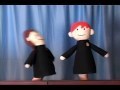
POWERFUL CHARACTERS REFLECT HUMAN WEAKNESSES TO MAKE THEM THAT MUCH MORE STRIKING: AND UNDERSTANDABLE. I have been blessed with a wonderfully supportive and close family, good health, a fantastic education, and decent finances. Hey, I’m no Donald Trump, but I’m know where my next meal is coming from, and I’m I know I’ll have three of them a day. I find it is far too easy for me to grow complacent about my faults and my flaws, far too easy to just assume things will always come easy. Well, there’s no assurance of that, not for anyone. And when people as good as Robin Hobb’s Prince Verity, with his ability to read minds and influence thoughts and decision-making with the Skill can end up in dire situations they’re not sure they’ll get out of, well, it’s a reminder to grateful for all I have, to call up those who have supported me along with the way to give a quick thanks, and not to take the everyday blessings in my life for granted. When Harry Potter turns into an adolescent angst-worm in Order of the Phoenix, it’s a reminder to give people a break when they cut in line at the café or speak sharply, because hey, maybe they’re just having a rough day (or a rough life. Harry definitely has one!) Maybe they’ve been laid off and they’re worried about finding a job, or maybe someone they care about is sick and not doing well. Harry’s friends stand firm beside him despite his fits of feeling like–to quote the Potter Puppet Pals–”My parents are dead, my life sucks, I’m surrounded by effing goblins and s*** all the time, and I still have nightmares of Dobby eating my skin clean off every night!”
 In terms of my own characters, Laskenay Heathdon and the undeserved guilt she inflicts constantly upon herself are a direct reflection of a personal tendency I have, and when I think about her, it reminds me to give myself a break.
FANTASY LANDS CAN SPEAK INTERESTING ALLEGORIES ABOUT OUR OWN WORLD. I’ve considered this a lot as I began to write fantasy, and I feel it is one of the most important aspects of the genre. When I finished the first draft of “The Crimson League,” I considered the world I had created, and I realized what a close analogy I could form between the situation of sorcerers in Herezoth and of the heroes who struggled in the face of hatred and unjust law to assert their human dignity in the Civil Rights movement of the United States. It made me admire those individuals so much more than I ever had before, gave me so much more reason to learn their stories and to strive to follow the examples they set in my own life. A book is just words on a page, and there’s really small value to that until we make comparisons and use those word to develop and mature our personal visions of the world in which we live. That’s why the arts matter. Music, paintings, literature, they all have this capacity to shape the human soul into something better than it used to be.
DEBATES WITH MY FELLOW FANTASY NERDS. I find as much fun in few kinds of frivolous debates than I do in discussing a shared interest in fantasy/sci-fi with my friends. Lupin or Sirius? (I am no hipster, but I take a kind of hipster-ish pride in that few people I speak of Harry Potter with share my love of Remus Lupin. He’s by far the best character in the series, in my humble opinion.) Picard or Kirk? Sam and Frodo: best bromance EVER, no? What brave little hobbitses! And DUDE, before HP and the Deathly Hallows was released to settle the question… Severus Snape: good or evil? GOOD OR EVIL???? My friends and I have passed many a great pub night arguing about these topics. The best time was the one we didn’t even realize we were arguing about how we share the same opinion. (This wasn’t a debate that focused on fantasy literature, exactly, but to be fair, the playwrights from 17th century Spain we were discussing did write mythological comedies and used prophecy in their work. As a friend and I hostilely agreed with one another, Calderón de la Barca is a far superior playwright to Lope de Vega. Make sure you read Life is a Dream / La vida es sueño, though my favorite of Calderón’s plays is The Wonder-working Magician / El mágico prodigioso.)
So, what do you love about fantasy??? I’d love to know!







June 15, 2012
Bookkus and the (vacant) author series
I’m excited to be part of Bookkus Publishing’s (vacant) author series. Bookkus had a number of authors reflect upon their writing experience and the writing process as it works for them as “the ADJECTIVE author.” I participated as “The Surprised Author.” Reach my post to understand why I chose that particular option and why it’s so fitting!
Don’t forget to check out Bookkus’s larger, main website. And follow them on twitter: @bookkus.







June 14, 2012
Kevin Rau author interview
Check out my latest author interview with Kevin Rau, author of the H.E.R.O. series, currently with a 7th book in production. We talk about writing, sure, but the snippets about the X-Men and Monty Python are also tons of fun! While you’re at his blog, don’t forget to check out his other interviews and the information on his books!







June 13, 2012







June 12, 2012
Bidd, Hayden, and Hal

Archery can prove a useful skill in civil war. Yeah….
Bidd and Hayden Grissner, along with Hal Halt, are the youngest members of the Crimson League. Bidd and Hayden are both the only children in their respective families, the sons of two sisters who grew up themselves in a quiet town north of the capital on the Podra River, a milling town. They married millers. Hayden’s mother died in childbirth. When his father died in an accident at the mill three years later, Bidd’s parents took their nephew in. Thus, Bidd and Hayden are really brothers more than cousins. Bidd’s father taught them to ride a horse and to hunt with a bow and arrow, an exercise at which they grew quite adept at a young age. Bidd’s parents would have tanned their hides to discover the habit they developed at age thirteen of hanging out at the local tavern with their friends, learning card games from the local gamblers. Hayden would always win more frequently than Bidd, and use the winnings to buy silence, while Bidd sulked about Hayden’s greater success.
Hal grew up in that same milling village, called Millton (rather boringly, but all three boys found life boring there to varying extents. Hayden was more content than the others.) Hayden always thought Hal was too brash when they were young, a bit of a bully, and was not nearly as upset as Bidd when Hal’s parents took him to Podrar at the age of ten, to be closer to Hal’s family that lived there. Bidd visited Hal yearly, and was in the process of making plans to move permanently to the capital to apprentice with Hal as a gardener for the Duke of Podrar’s estate when Hal’s uncle was arrested for not paying taxes, and both boys had to abandon their intent. While Hal turned his attention to getting his uncle out of jail, Bidd started an apprenticeship at the mill with Hayden. Bidd did not enjoy the work. He much preferred the outdoors, and found the inn smelly and stifling of his spirit. Hayden would tell him on a nightly basis to just be glad they had as secure of a future as anyone in Herezoth could hope for at the moment. Both boys knew, though, that security was temporary. Their family was struggling to make tax payments. More soldiers appeared monthly on the narrow, dirt streets of Millton, and many citizens, the boys included, forewent the technicality of buying hunting licenses. The woods just out of town, across the kingdom’s major road, were so expansive, and so full of quail and rabbits that the army could not possibly make any kind of successful attempt to keep poaching at bay. The Grissners had to poach. Where else would they get food? The baker hated them. Their family had been feuding for years with the baker. The family was able to buy grain upon occasion directly from the mill where all the men worked, but not as frequently as they would have liked.







June 11, 2012
Tuscaloosa Saturday Knights: a short story
I am a huge Crimson Tide football fan: that’s why I titled my the first novel in my fantasy trilogy about Herezoth “The Crimson League.” Check out this short story. If you want more info about the novel, click the link above!
Tuscaloosa Saturday Knights
A short story about Alabama Football by Victoria Grefer
Tilting and horsemanship had two afternoons a week, because they were the most important branches of a gentleman’s education in those days. Merlyn grumbled about athletics, saying that nowadays people seemed to think that you were an educated man if you could knock another man off a horse and that the craze for games was the ruin of scholarship—nobody got scholarships like they used to do when he was a boy, and all the public schools had been forced to lower their standards—but Sir Ector, who was an old tilting blue, said that the Battle of Crécy had been won upon the playing fields of Camelot. This made Merlyn so furious that he gave Sir Ector rheumatism two nights running before he relented.
-T.H. White, The Once and Future King
Some t-shirts speak the truth. At least, that hypothesis could be inferred from the t-shirts worn mainly by the Greek students—Tuscaloosa is a drinking town with a football problem, in the same way that White’s Merlyn considered Gramarye to have a jousting and tournament problem. Since the University of Alabama student body ranks among the Crimson Tide’s most rabid fans, to have open seating in the student section of Bryant-Denny Stadium carries one main disadvantage: the need to arrive almost two hours before kickoff to snag a spot to the right of the band near the twenty yardline. You could make that two and half hours for important match-ups, or for rivalry games against Tennessee, Auburn, and LSU.
Saturday afternoons are far from moderate, temperature-wise, in mid-September if you study in the Deep South. The humid heat was a second annoyance, and not a mild one. The game this particular Saturday was at two o’clock and considered a sure victory—the opponent was Louisiana-Monroe—so Virginia Bergeron and her friends waited to enter the stadium until 12:30. They had no trouble finding seats. As they slid along the bleachers of row 50, section EE, a gaping hope on their left to mark where the Million Dollar Band would eventually file in, the announcer proclaimed with indecent enthusiasm: “The countdown to kickoff has begun! Ninety minutes until Alabama-Louisiana Monroe!” The scoreboard timers, which had previously been frozen at 90:00, began to tick down. The students cheered. Only ninety more minutes of boredom! (The boredom was another annoyance caused by open seating).
“I ain’t doin’ it today,” Jeremy grumbled. “I ain’t savin’ ‘em seats. My ass ain’t settin’ out here for an hour and a half so that James ‘n his girlfriend can show up at 1:55 and set in front of us. They don’t even call to ax us to save ‘em seats. I’m fixin’ to call ‘im right now….”
Virginia tore her eyes from the group of students in the front row slathered with crimson paint. “So call him,” she said, though he did not.
Virginia had met Jeremy in her fundamentals of engineering class. He was somewhat overweight, thanks to his affinity for biscuits and gravy, fried chicken, and sweet tea, but he was always willing to help Virginia with Calculus II and was a genuinely pleasant person, if not well-spoken. Mark, on Virginia’s other side, pulled out a deck of cards. “Who does LSU play this week?” he asked her. “Florida?”
“My whole family will be glued to the tv.”
Mark let out a low, long whistle. “I bet they will. That’ll be a game….”
“A battle,” Virginia corrected him. She was from New Orleans, strong LSU territory, and a lifelong fan of the LSU Tigers. The decision to come to Alabama had been difficult, but she studied aerospace engineering, and Louisiana State did not offer that program. “I’m glad it’s an evening game, I can catch in the dorm. You should make the trek across the hall and join me.”
Mark said, “I might be able to.”
Virginia frowned. “Might? What is this ‘might’ I hear?”
“I have a paper due Monday.”
Virginia punched him in the arm. “That’s what Sundays are for. We’re talking LSU-Florida. National Championship implications.”
Mark, most regrettably, had been born a Yankee. In Delaware. He studied English, wanted to focus on linguistics, and chose to attend Alabama as it was a decent school and cheaper than those in New England. His saving grace, as far a true Southerner was concerned, was that he recognized the complete and utter dominance in college football of the Southeastern Conference, or SEC. The sovereignty of the SEC was sacred in the Bible Belt. “You’re right,” he said. “It’s a date. Though I may have to bring my laptop over.”
“I hate LSU,” said Jeremy. “Hate the bastards. Let Florida wipe the floor with ‘em.”
“We agreed we two would not discuss my Tigers,” Virginia reminded him. The topic of the LSU Bayou Bengals seemed to threaten their friendship every time it reared its head.
“I’m gittin’ a hotdog,” said Jeremy. “Y’all want somethin’?”
Mark shuffled the cards. He had already eaten lunch. Virginia gave Jeremy money for nachos and a Coke, and when he got back Mark dealt a round of rummy. The bleachers were still empty enough that the three could play without bothering a soul.
Jeremy won resoundingly. “What’s your paper about?” he asked Mark.
“It’s for an early British lit class. Arthurian legend, Le Morte d’Arthur specifically. I’m actually halfway looking forward to writing it.”
“Arthurian legend,” said Jeremy sagely, “is just as freakin’ awesome as the 2005 Bama defense.”
“It’s violent as hell,” said Virginia.
Mark raised an eyebrow. “You say Arthurian legend is violent and you’re crazy about football? What’s the difference? You have crashes. Flying helmets. Rules of engagement and a strategy that’s almost military. And women still don’t take part.”
Jeremy and Mark high-fived each other, stretching in front of Virginia, who crossed her arms with a scowl.
“Football,” she said, “is violent and interesting. Malory’s book is violent and dull. I had to read that horror in high school. Didn’t get through half of it.”
“Have you tried T. H. White?” Jeremy asked. “The Once and Future King?” Virginia had not. Mark faked a British accent.
“You really should. It’s got much more humanity than Malory, it’s not nearly as dry, I say, what?”
Jeremy choked on his hotdog with a snort. “King Pellinore. Nice.”
“You three are officially the biggest nerds I have ever known. And I mean that with love. Seriously? King Arthur? You’re discussing King Arthur?”
James had arrived much earlier than usual, with Anne, his girlfriend of six months and a close friend of Virginia’s, in tow. Virginia had been the one to introduce them. In addition to a purse, Anne carried five crimson and white shakers that she had grabbed out of habit from one of the boxes near the stadium entrance—the others always walked right past them. She and James settled into row 49.
With a sigh of relief, James took one of the shakers and threw it at Mark. “Thank the Lord. I thought you had lost your mind.”
Jeremy shrugged his shoulders. “Roll tide,” he said, returning to his hotdog. James tossed him a shaker too, and Jeremy dropped his lunch.
Roll tide, if you happen to be unfamiliar with the state of Alabama, is a versatile expression and a safe one to employ on almost any occasion in the Tuscaloosa region. Collectively—that is, culturally—it may punctuate fragments or sentences as an interjection, similar to the way King Pellinore uses “What?” in The Once and Future King. “Roll tide” is a proper way to excuse boorish manners, to shrug off an unfortunate occurrence, or to celebrate a lucky one. For instance, if you are with your roommate in the library to make flashcards to prepare for an upcoming Spanish or French exam, and you realize that you left the apartment without a pencil but that your roommate has two or three pens out, and you take one of the extra pens without asking, and your roommate catches you and sends you a dirty look, you can say, “Roll tide”—or whisper it. You are in the library, after all. Statistics show that in roughly 97.8% percent of cases all would be forgiven. If later you forget to use your flashcards and you fail your test as a result, you friends might tell you “Roll tide” in consolation. Or, on the other hand, if you do remember the flash cards and do quite well, you may pull out your cellphone and text your best friend to say, “I aced my exam!” Here too, “Roll tide” is an appropriate congratulatory response. This may seem contradictory, but the pragmatics of language often are. In Tuscaloosa, “Roll tide” may also be used as both a greeting and dismissal. Just never say “Roll tide” if you go to Auburn, Alabama. If you must go there, and you must say “Roll tide,” try to pronounce the “Roll” like “War” and the “Tide” like “Eagle.” A nasty feud exists between the cities of Tuscaloosa and Auburn. It is not exactly as bloody as the feud between the Orkney faction and Pellinore’s family in T.H. White’s book, but it is still unpleasant and you would do better not to embarrass yourself.
Looking at Anne, Virginia remembered that she and Mark were in the same English class. “Your paper’s done,” Virginia guessed. She caught a shaker from James with one hand as he left to get something to drink.
“Not quite done,” Anne admitted. “The first draft’s finished, but I’m not really happy with it. I need to work with it more.”
“You got somethin’ to turn in, if worst comes to worst,” Jeremy told her.
“That I do. I guess I do,” Anne added as an afterthought. Jeremy was always saying Anne took classes too seriously, which made Virginia shake her head, as Jeremy spent quite a bit of quality time holed up with his physics book. Physics did not come as easily to him as calculus. He was better with pure math.
Virginia and Anne made lunch plans for Monday, and then James came back with a Coke in a souvenir cup. The student section was just over half full now; there were people enough, at any rate, to make a resounding “boo” as Louisiana-Monroe’s players trotted out of the visitors’ locker room to warm up on the field. Had the year been 2000, or 2001, the band members lined up along the edge of that same gridiron would have begun to play “Rock and Roll #2,” also called the “Hey!” song, and the students would have chanted:
Hey Monroe! Hey Monroe! Hey Monroe—we’re gonna beat the hell outta you! Rammer Jammer, Yellowhammer, give ‘em hell Alabama!
This cheer is well-known among the Bama faithful, so well known that when Warren St. John wrote a book about what Merlyn repeatedly calls “games mania” and the forms it takes in the twenty-first century, using Crimson Tide fans as an example of some of the most far-gone fans you can find, he titled the work “Rammer Jammer.” The yellowhammer of the chant is a reference to Alabama’s state bird.
Unfortunately, the year was 2006, not 2000, and the university had officially banned pre-game usage of the Rammer Jammer. The high-ups in administration considered it embarrassing and unsporting. The students could only maintain the tradition post-game, after victories, when “We’re gonna beat the hell outta you” becomes “We just beat the hell outta you.” The tragedy of the change is that the post-game line is not always accurate. Many games of American football are hard-fought battles with a close score all the way; they come down to the final minutes, even seconds, of a full hour of playing time. Sometimes a team plays with greater pluck and grit than its opponent but still manages to score fewer points. When this happens, no one gets the hell beat out of them, technically speaking. But the Rammer Jammer must be sung.
Alabama, interestingly enough, would go on to lose that game against Louisiana-Monroe, and lose it badly. The match should have been a certain victory. The fans of the Crimson Tide were confused, and angry, and sad, all at once, rather like Guenever and Arthur after Lancelot returned from the quest for the Grail to recount his numerous defeats, he who had always before known only triumph. The king and queen tried to excuse the fall that Lancelot’s son had given his father. Arthur assumed that Galahad had launched a surprise attack and reasoned that “Naturally you would not want to beat your son.” Arthur thought that Lancelot had not really tried to win. Guenever asserted, “Everyone has to be unlucky sometimes.” Human nature seems to be drawn to sport, to the thrill of triumph, and for centuries has used the concepts of fate, punishment, or bad fortune to explain great failures. In athletics, defeat is always a possibility. Luck, as Guenever notes, is always a variable, and an uncontrollable one, in any competition and on any college football Saturday. Perhaps it is this variable that makes old Merlyn’s loathed “games mania” as powerful a force as it always has been: the passion arises from the certain knowledge that victory never is certain. In any case, Virginia was so disgusted by the Tide’s lackluster performance that her heart was not in the LSU game that night. Mark was in such a temper that he did make it across the hall to watch the match with her after all.







June 10, 2012
Teena Unsten (and her sister Leeda)

Teena is often described as “sprite-like” due to her airy movements and ability to move so lightly on her feet. Red-headed and on the plump side, she is nonetheless quite agile, and known throughout Fontferry for her hospitality and tendency (welcomed or not) to fuss over her guests, making sure they are perfectly comfortable. She considers her work not an occupation but a calling, and takes great pride in providing comfort and a good night’s rest to weary travelers.
I’ve always considered Teena one of my favorite characters, as minor of one as she ended up being. She has courage and quite a bit of pluck. She’s not afraid to speak out when something needs saying, and she’s as resourceful as any member of the Crimson League, as well, which I respect about her. As I sit to write this post, I just wrapped up the first draft of the first scene to include her in the final chapter of the Herezoth Trilogy (working title is “The Sorcerer’s Rebellion,” but I’m not happy with it and intend to make a change.)
Not much information is given about Teena’s background in “The Crimson League.” Some more information is given in “The Magic Council,” the novel’s sequel, so I won’t give away any spoilers here, don’t worry.
Teena’s parents were the keepers of the inn she runs as an adult in Fontferry, and she was born and raised there with a sister one year her junior. Teena and Leeda were never very close: they were just too different, far too different. Teena was a serious and studious child, though of average performance in school, while Leeda was more frivolous, more active, and a bit more selfish most times. The exception to this was the genuine gratitude Leeda felt for Teena’s help with her annoying and resented schoolwork, sums and the like. Leeda’s relationships with her family grew more and more strained as she grew older, until finally, at the age of fifteen, Leeda arranged with a group of pilgrims to run away from home and travel to Partsvale in their company, working as their washerwoman. Her decision came as no surprise to her parents, or to Teena, and they respected her decision as a woman a mere year shy of coming of age. Leeda did send word to the inn that she had reached Partsvale safely and intended to remain there, working as a washerwoman at a larger inn than that of her parents. Teena’s mother died of a long illness when Teena was twenty-five. Because she and her husband had run the inn as a joint venture, Teena was able to take over her mother’s responsibilities and was thus prepared to take total control upon her father’s death of a heart attack three years later.
Those who knew Teena as a child, of course, also knew Leeda. And when one day, two decades later, a young, quiet, solemn-looking woman and her husband came to Teena’s inn with an infant whom they left, Teena said the boy was her nephew, born of her good-for-nothing sister in Partsvale. Leeda had sent her the child to raise because she had not planned the birth and wanted nothing to do with her son. Leeda had never once returned to Fontferry. She had been known as a flirt in her youth, so those who remembered her accepted Teena’s story as more than plausible. And so, Vane Unsten grew up in Teena’s care.
Who, in reality, is Vane? Is he Leeda’s son? If you don’t know the answer, read “The Crimson League” to find out! And don’t forget to check out the sequel, “The Magic Council,” when it becomes available in 2013 for more information about Teena’s history–her marriage and daughter alluded to in the first installment.







May 27, 2012
4 star review: Debbie Prins
I really enjoyed The Crimson League. The main character in this book is extremely likeable and you get behind her struggle immediately. I found the character descriptions a but vague but I like being able to imagine the characters myself. You could find it frustrating if you like a picture painted for you.
The world the author created is extremely believable and I could picture it quite well. The struggles and oppression of the people in the story was easy to imagine and to get outraged about.
The antagonist was strangely honourable even though he was very sadistic. But that made it more real. It was easy to hate him and his power and unbeatableness added nicely to the tension of the story.
The relationships between the characters were nicely built up but I felt that it could have been embellished on even more. I was disappointed with the lack of romance and a “happy ever after” ending but that did make the story unique and kept the focus on the storyline.
Certain parts of the book I felt could have been embellished on and the end felt a little rushed, but that could be because I didn’t want it to end.
I would definitely recommend this book as a really good read.