Heather Holleman's Blog, page 229
September 12, 2017
Reaping a Harvest from a Single Seed
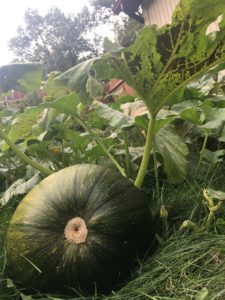
My pumpkin patch continues to amaze me. A single seed! Planted in compost because we tossed a rotting pumpkin out like garbage! Something we don’t tend or care for!
And yet! This one, for context, is about the size of a large toaster oven.
I think of letting God in—even a little bit, like a tiny seed of surrender—and what He makes from it, no matter what the conditions, no matter how rotted our heart.


September 11, 2017
By My Spirit
I’m excited to read the book of Zechariah because my sister reminds me of the key verse I needed to hear today: “‘Not by might nor by power, but by my Spirit,’ says the Lord Almighty.”
I remember what God does by His Spirit, not by any other form of strength, intelligence, planning, money, or other resources we insist we require now, by our own means and in our own ways.
September 10, 2017
Daily Collection of Joy
Since the pumpkin patch overtakes the raspberry canes, I resign myself to a diminished harvest. Even now, with the blue sky, the bright red berries, and my little bowl balanced on the beam that helps stabilize my blackberries, I find myself filled with joy.
Ordinary, simple. 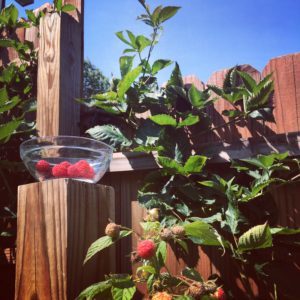 These, I eat with yogurt or alongside afternoon tea. Or, in that strange atmosphere of equal parts summer’s retreat casting warmth and autumn’s outstretched arms chilling our toes in the garden, I’ll invite my daughter–the one in her own transition to new seasons–and we’ll stand together in the uncertain weather, gobbling the sun-warmed berries.
I’ll take what I can get.
September 9, 2017
A Joyful Losing
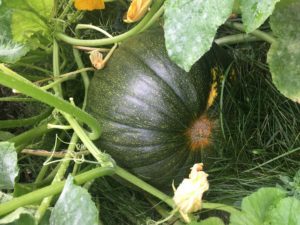
As I peer into the enormous pumpkin patch, I note the once dark green pumpkins slowly begin their transformation to bright orange. It’s so exciting! They turn colors much as the leaves do; they stop producing chlorophyll with the longer and cooler fall nights. The green pigment fades, and we begin to see the carotenoids that give the orange and yellow tint.
I love thinking about autumn: the beauty we observe represents a slowing down, a decay, a loss, and a fading. We delight in something aging, and in this loss, we see the most glorious colors. The decay was a condition for art. The beauty requires a certain kind of losing.
It’s a joyful, marvelous losing. 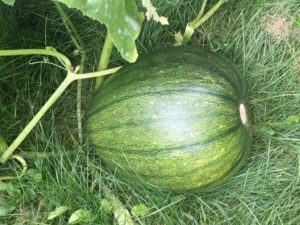
September 8, 2017
A Peek in the Classroom
It’s been an amazing semester here at Penn State. We’re in week three of advanced writing, and so far, students designed stunning professional portfolios that included a resume, cover letter, and personal mission statement (all with vivid, shimmering verbs!). Now, we move on to the professional “signature story”—a short single-event memoir that showcases the student’s transformation in some way. These stories work well for personal statements, interview settings, or for personal confirmation about career paths.
We talk about creating an authentic written voice. We talk about rhythm. We talk about how semicolons and colons powerfully direct the reader’s mind; they make arguments. I show examples of the best, most memorable lines in literature and how, essentially, writers arrange words in particular patterns to create that elusive concept called “voice.” I point out, too, the power of the two to five word sentence. It lets voice in. It’s musical. It’s a way to talk in the paragraph.
My favorite lesson today, however, involves conflict, tension, and enemies. We transform through opposition. But the enemy doesn’t have to be another person; it appears in various forms: time, psychological barriers, philosophies of living, nature, or one’s own body.
We begin sharing our stories of transformation that reveal why we do what we do now, what we want to do in the future, and what we aim to inspire others to do as well. We think about our writing as changing something in the world around us. We consider our role as change agents. We’re reading Mary Pipher’s book, Writing to Change the World, and we enjoyed sharing our favorite quotes from her first chapter as our name game.
Such fun over here!
September 7, 2017
Inner Certainty
Today I read about cultivating “inner certainty.” What a beautiful phrase! In the midst of so much uncertainty—not just in our political climate but also in something so precarious as weather–we move about our days lacking any certainty. With so many students shaking in my office out of fear and uncertainty, I wonder how to best help others develop a lifestyle of inner certainty.
What would it feel like to make meaningful decisions based on God’s word, the leading of the Holy Spirit, and your own sound mind and then rest in certainty that you made the best choice you could, with the knowledge that you had? How do you teach someone to cultivate wisdom and discernment in decision making? Can you imagine going about your day without nagging, anxiety-producing uncertainty? Uncertainty gathers in doubt, suspicion, misgivings, great apprehension, and fear. The brain does not like uncertainty; it generates a reactive, high-stress response.
I like collecting “certainty” phrases like this:
I am certain God will orchestrate these events–even my failures within them–for my good and His glory.
I am certain that if I made a decision that helps me love God and love others more, then it is the right decision.
I am certain that God’s work in my life is not limited by my bad decisions.
I am certain that God is not tricking me and making it hard for me to decide; I know He gives wisdom generously and provides the Holy Spirit as a counselor.
As I learn more about the psychology behind certainty, I’ll share my research. And when I lack confidence, I remember this little picture. It makes me laugh every time.

September 6, 2017
Advice from a Leadership Consultant
Last night during a church dinner, I sat next to a leadership consultant. I asked her to summarize her absolute best advice for any leader.
She said: “Be helpful.”
Indeed. Great leaders serve. Great leaders help. I think about her advice and how most of us characterize our leadership with other words like visionary, decisive, confident, inclusive, empathetic, or any other word but this simple one: helpful.
The advice changes how I go about leading classrooms, seminars, and meetings. When I’m leading, I’m conscious today of what it means to serve and to offer help as my primary leadership task.
September 5, 2017
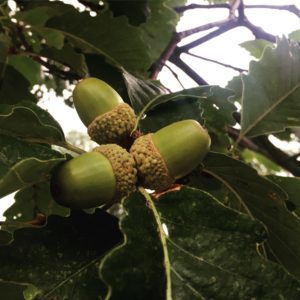
Greeting the Acorns
On the partial walk to school, we watch the acorns grow as the leaves begin to change color. We’ll gather these large acorns and paint them for autumn decorations. This year, we’re thinking about painting autumn scenes on the oak leaves. But for now, we marvel at a new season almost here.
September 4, 2017
Always Remember Greater Joy
When temptation comes our way, remember that Jesus offers greater joy than this thing. Stop and consider Psalm 4 and how the writer proclaims, “Who can show us any good? Let the light of your face shine upon us, O Lord. You have filled my heart with greater joy than when their grain and new wine abound.”
We don’t need to chase things we imagine will bring life and happiness. We rest in Jesus’ promise that He has come “that [we] might have life and have it abundantly.”
It’s so tempting to believe that abundant life comes about differently than in the life God has ordained for us, so we travel down dark paths to find a joy that doesn’t exist there. We consider new locations, new relationships, new addictions, new purchases, new careers, and new experiences as we hope for that elusive thing we seek but never grasp. We compromise in countless areas all because we want something that we truly believe satisfies the longing of our hearts.
What we seek is found in God–the fulfillment of all our hopes and dreams and the giver of the shalom peace our heart needs. Trust Him in this, the one who “richly provides all things for our enjoyment” (1 Timothy 6:17). Trust in Jesus who was so great, so amazing, so utterly fantastic that Peter left everything–everything!–to follow Him (Luke 5:11).
September 3, 2017
Some Advice that Helped Me When Depressed
Sometimes students come to my office to talk about depression and anxiety, and they ask the same question: Why are you so happy?
It wasn’t always this way! Oh, if you only knew the dark places and the long years of feeling estranged from myself, of wanting to die, and of feeling hopeless despair! If you only knew! But let me help you on the journey!
I love talking to students about mental health and my own long journey to take care of my mind and body. I tell everyone that I’m not an expert in mental health, but I am an expert in my own story. Sometimes just knowing that folks exist who live normal adult lives—who finally wake up joyful after battling depression—encourages their hearts.
As I think about best practices for mental health, I note these seven practices based on research:
Begin daily writing in a journal (or blog!) about joyful, beautiful, curious, funny, hopeful, or kind things. Keep a “Gratitude Journal” and even write thank-you notes to people expressing gratitude. To learn more about the research linking gratitude to happiness, you can read “In Praise of Gratitude” from Harvard Health. If you remember, my own blog often recorded five things a day that I loved or was thankful to God for. After a few years, I couldn’t believe how I woke up with anticipation on most days.
Recalibrate toxic relationships. When relationships make you feel bad about yourself, or if you feel controlled or steamrolled, you can distance yourself from these relationships in loving ways to preserve your mental health. Codependent or enmeshed relationships lead to depression, and finding ways to relate in healthy ways is the next step on the journey of healing. For more information about how codependency leads to depression, you can read more here.
Build your identity in Christ. My entire life changed when I started to truly believe and apply God’s word–especially through the book of Ephesians–about who I was. Rather than living in sadness, regret, or a sense that I was living the wrong life, God enabled me to see the “real me” through reading the Bible. My books on being Seated, Guarded, and Included document how I have, over the last few years, strengthened my identity in Jesus. As I read the Bible and prayed for years, I experienced increasing peace and joy in my heart.
Seek out professional help. My therapist, primary care physician, and endocrinologist saved my life back at the University of Michigan. Finding a team of people to care for you makes all the difference. My counselor helped me with great coping mechanisms, spiritual practices, and tools to understand sources of depression, while my doctor found problems in my blood work including the wrong levels of thyroid stimulating hormone and low vitamin D. My endocrinologist helped me understand how my body was working and why anxiety and depression were happening to me. For two years, we worked together to find a good medication for anxiety and the right thyroid medication. After those two years, I never needed medication again for anxiety and depression, but I still take medication for my thyroid every day.
Take a walk and eat foods that aid mental health. If you’re like me, you don’t have the luxury of doing nothing to help your brain work better. We can’t! We have to support our mental health more rigorously! Exercise, fruits and vegetables, lean proteins, and plenty of water work to make you feel your best. I also take a multivitamin with all the Vitamin B’s.
Focus on other people, pets, or even plants. Sometimes, depression and anxiety turn us inward on ourselves, and we forget the biblical joy (Isaiah 58:8) of serving others. Volunteering at a shelter, teaching the youth group kids in Sunday school, making meals for neighbors, or joining an organization to serve others is part of a happy life. Pets, according to scientific research, do increase happiness (I have three cats!). I also find great delight in gardening and watching plants grow.
Think about cultivating all the areas of your life–relational, spiritual, physical, and mental. Think about what’s missing or what’s out of balance. For me, learning new skills makes it hard for me to feel depressed in that moment. I also try to do things with my hands, like bake or clean the house, because so much of my life is mental activity like teaching, writing, and speaking.
On your journey towards mental health, I pray God gives you insight and understanding that will aid your path to joy. In the meantime, you’re not alone.