Marshall J. Stephens's Blog, page 3
February 10, 2014
Doing “Very Special” Especially Well
“Very Special” episodes of anything, in a word, suck.
I’m not saying that the acting isn’t good. I’m saying that when a TV show decides to announce that an episode will be “Very Special”, what that means is that it will be preachy and that the characters will be pushed to act out of character for the sake of the narrative’s message.
There are, thankfully, exceptions. In fact, there are shows that have managed to pull this off without having to brand the show “Very Special”.
Nothing I’m about to mention is very recent, but I think they represent the best of the concept, mostly because they didn’t draw attention to the message and just let it speak for itself.
Example One : “Troq”
Show : Teen Titans
Issue : Racism
 A very powerful, very skilled alien hero arrives on Earth and is immediately adored by all of the Titans. They agree to help him take out this week’s baddy, an alien race that’s waging war on pretty much everything. The Titans pile on his spaceship and head out.
One problem: He’s got a beef with Starfire’s whole race, considering them useless. He uses the term “troq” when referring to her, which is an insult and a slur. The rest of the team doesn’t pick up on it at first, but eventually they do. Despite their offense and Starfire saving the day, the space-racist leaves with his bigotry intact.
The thing I love about this episode was that the bigot didn’t see the error his ways, actually. It made the problem of intolerance and racism more real, showing it to be a deep seated cancer rather than an easily cured rash. It also, as sci-fi does, made the issue very personal by making it alien.
Favorite Line :
Starfire : “Yes. You know what it is like to be judged simply by the way you look?”
Cyborg : “Of course I do. I’m part robot.”
Example Two : “Hooked Up”
Show : Batman Beyond
Issue : Addiction

Kids are going comatose and Batman’s successor, Terry McGinnis, investigates. His friend and confidant Max Gibson, decides she’ll look into it as well, against Terry’s advice. What she finds is that there’s a criminal getting teenagers hooked on full virtual reality immersion and then getting them to steal for him to get the next hookup. Batman saves the day, but not before Max has to figure out which is more important to her, the fantasy world that takes her away from the pains of her real life or her friendship with the guy trying to do the right thing.
There’s been plenty of cartoons that have tried to address addiction with greater and lesser ham handed methods, but by making the addiction to something other than a drug, to something that is a natural outgrowth of things that are already relatable to teens, namely video games, it addresses the ease with which one can become addicted, even if you know the risks. One could argue doing this to the female sidekick is a little “girl in the refrigerator” for their tastes, but as she’s an obviously sharp, capable figure, it hammers home that this could be anyone.
Favorite Line:
Terry McGinnis : I can’t believe I got her involved in this.
Bruce Wayne : Now you sound like Batman.
Terry McGinnis : What?
Bruce Wayne : I’ve been right where you are, more times than I care to count. And like you said, there is no way you could have stopped her.
Example Three : “Call of the Cutie”
Show : My Little Pony: Friendship is Magic
Issue : Puberty

“My god,” you’re thinking as we come to the most recent episode in the list. “Has this whole article been a veiled pitch for Brony-ism?”
Not so much, but this particular half hour (including commercials) is what got me thinking about the whole “very special episode” thing in the first place.
The plot revolves around a young filly named Apple Blossom who has not yet gotten her “cutie mark”, the little insignia that appears on the rear flanks of a pony once he or she has found her purpose. At school, Apple Blossom get’s called “blankflanks” and other derogatory names by the others who have gotten their cutie marks. As a party is imminent where one particularly snooty pony is celebrating her coming of age, Apple Blossom is freaking out trying to find her purpose. This comes to a conclusion when she finds two other young fillies who don’t yet have their cutie marks either. The trio accept that there’s no rush, that’s they are all fine just as they are and that they’ll find their purpose together.
My Little Pony: FiM could easily be a toss away show, serving it’s purpose of being a very long commercial for toys, but it was storylines like this that got me watching the show and that demonstrate that in order to send an insightful message, you don’t have to write down to your audience or hit them over the head with, just be true to your characters and let them do the talking.
Favorite Line :
Scootaloo : I said, you got a problem with blank flanks?
Silver Spoon : The problem is, I mean, she’s like, totally not special.
Sweetie Belle : No, it means she’s full of potential.
Scootaloo : It means she could be great at anything . The possibilities are, like, endless .
Take care, patient readers. Peace.


November 4, 2013
Lessons on Writing from George Lucas, the Rocky Horror Picture Show and My Own Dumb Mistakes
Imagine being on a roller coaster, climbing up that first long incline and, just before the cars lurch forward to test the bounds of your nerves and the laws of physics, someone calls out from the control panel, “By the way. Some of the track may be missing or damaged.”
That’s kind of what self-publishing is like.
I am never more nervous than when I click the “submit” button. The opportunities for fail are endless. Did I format it well? Did I send the write version from the piles of backups I keep? Did I undo any of my editor’s work? Did I miss some word because it wasn’t misspelled, but in the wrong place? Is it just simply going to suck?
About a week after any publication, I run every detail over in my head, wondering what (not if) I missed. Usually, it’s a week or so before that finally goes away.
But there is something worse. A month after I published my second short story collection, The Gears of Strange Machines , I was out mowing the lawn, contemplating the details of the first story in the book, “Empties”. This is one of the stories that established the tone and theme of the work more than any of the others. It was one I’d been happy with and that had genuinely creeped out one of my test readers which is what convinced me it needed to be front and center.
Amid the smells of gas and new cut greenery, it hit me, “It needed to be longer.”
I f you go to the Amazon site and download the sample , “Empties” should be available in full. You’ll see there’s a point where things get real and that point is one that I kept asking myself if it felt rushed. Suddenly, I realized how I could have added about half a page to the story and have made it so much better.
Being that it’s self published, I could pull a George Lucas and go rewrite the story, upload it and pretend that nothing happened. The 100 or so people who’ve downloaded the collection would be the only ones who would know, and then only if someone discussed the story with them. I could totally turn Anakin’s ghost into Hayden Christensen. Why not?
The reason why not wears fishnets, actually. I went to go see The Rocky Horror Picture Show the weekend before Halloween this year and something hit me, aside from the fact that half of the audience had 1) never seen the picture and 2)could have been my children. That was that Richard O’Brian is sort of the anti-Lucas when it comes to the film.
Other people took hold of his work. They emphasized aspects of it, added to it and made it their own. This muted some of the subtle accents of his story, but only because now there was this experience that has been shared by people for three decades and shows no sign of fading into obscurity.
O’Brian could have rejected the shadow casts. He could have denounced their actions and antics, perhaps even tried to get things stopped. He didn’t, though. He embraced it. He has celebrated it.
Compare this to a man who has twice edited one of the most pivotal scenes of one of the most beloved Sci-Fi characters in history to such a degree that if Lucas is ever lynched, one the things they’ll be chanting at the gates is “Han Shot First”. I’ve heard rumors that certain of the most execrable details of the prequels were added simply as a middle finger to the “extended universe”. Star Wars is his and he has little interest in letting others play in his sandbox, a fact that has presumably changed now that it’s been sold to the House of the Mouse.
Once an author lets a work be seen, I think there’s some degree to which it is now public property. I’m not saying that others should exploit the author’s efforts, but that if you’re very lucky, you’ll inspire people to put their stamp on your universe. There’s a certain satisfaction I imagine I’d have if I had to seriously question how I felt about fanfic written about characters that I created. You just have to let it go, sometimes.
For that reason, I don’t think I’ll go back and edit “Empties”, even if I think it will make a better story.
Though you can be damn sure that when I put my first novel up, Even the Dead May Die , there were fine tooth combs involved.
October 30, 2013
Review: Doomstar Requiem
 I’ve been watching Metalocalypse for some time now, catching episodes here and there along with watching some online when they’re available. As cartoons targeted at adults go, it’s okay though it’s not my favorite. The punchline to too many jokes is “and then we kill someone”, which grows tired quickly.
That said, I get sucked into stories and I like where they’re going with the tale of how mega-rich band Dethklok is stumbling through their lives, unaware at first and then unwilling to accept that they are the heroes in an upcoming escatolgical cataclysm.
I’m a sucker for end of the world tales, really.
More so, though, I love the music in this show. For being a joke band, their music is seriously awesome, enough that you can buy the premise that they are the most beloved band in their narrative world, sort of the Death Metal version of the Beatles, if the Beatles had actually had more money than the rest of the UK combined.
There were rumors that Brendon Small, the mad wizard that makes Dethklok live and breathe, was drawing the story to a close with a 1 hour rock opera entitled The Doomstar Requiem. At the beginning of the story, two people important to the band, their producer and their rhythm guitarist, have been taken prisoner by a scorned sadist with the help of their version of Dave Mustaine, i.e. the guy who got kicked out of the band just before they went from awesome to awesomest. The plot revolves around whether or not the other members of Dethklok will step up and accept their collective destiny and save their brother in instruments or if they’ll flake out and try to go on just being fabulously wealthy rock stars.
I found the production to be one of the best things to come out under the name Metalocalypse , managing to blend humor, torture and face melting guitar riffs with ease and elegance. The violence was, if anything, more reserved. The music, varying from 80′s techno to the Death Metal we’ve come to expect, was top notch and made use of the orchestra they brought in to raise the story of Dethklok from epic to world crushingly epic.
If I had any criticism, it would be that I wanted more. They took a fair bit of time getting to the actual plot I came to see, that being how they were going to rescue their band mate. When they get there, the resolution is much shorter than I would have expected. That said, they left it on a cliffhanger that promises that the boys will be back, growling out lyrics and taking us further down their road towards the Metalocalypse.
I wouldn’t start here, but if you’ve ever watched the show and liked it, check out Doomstar Requiem. The soundtrack looks like it will be worth a listen as well, the most amazing songs sung in the voice of the characters you’d least expect.
This really needs to be a midnight movie somewhere. It would be brutal, I tell you. Glorious and brutal.
October 23, 2013
Nine Inch Nailed It: Getting to see masters in action
 Recently, I turned 42, which I think means I can legally drink twice as much now. My birthday celebrations were mostly low-key, but as I was kind of down approaching the date, I think the universe decided to toss me a bone: I won tickets to go see Nine Inch Nails.
I started listening to the brain child of Trent Reznor when I was an angsty twenty-something going through a lot of change in life choices. Pretty Hate Machine has been on my desert island disc list for some time, evident in that I still write as if music comes on “discs”. I had not realized that Reznor and crew had already done a farewell tour and that this was more than just another show, but I don’t know if that knowledge in advance would have made it any more awesome.
The arena is almost four hours from home. The PNC arena in Raleigh, NC is nice enough, though I still think it should be a felony to charge $4.50 for a freaking bottle of Aquafina. That said, my wife and I did dine on some pretty damn fine bar-b-que before taking our seats and having our senses overwhelmed.
I have to give some mention to the opening band, whose name apparently requires two clauses to fit in all the pretension: Godspeed You! The Black Emperors. What galled me about their music was that they were obviously talented musicians and their sound was very spiffy, but they take so much time getting to the point of demonstrating brilliance that I was too bored with their droning to care.
They played two songs, each about ten minutes long, though it felt like about ten hours. The first three or four minutes of each sounded like they were tuning up the string section or maybe were just trying to stretch the intro to cover for a guitarist who’d show up late; there is such a thing as too much foreplay, it turns out. On top of that, they had a screen showing random images, I think to add some edgy imagery to their masturbatory compositions, but it ended up just making the whole thing more confusing (Oh, you’re showing the word “Hope” in a scratchy font. How contreversial! That fits in in well with the loop of the six random photos of hospital paitents and the schematics of train parts).
I’m not arguing that they weren’t skilled, but I’m not a fan. There’s not enough drugs in the world to improve that part of the experience.
That low note aside, the concert was astounding. Reznor and the other band members were so obviously comfortable on stage, it was easy to forget that the whole production is meticulously crafted, each song with it’s own sensory overload of lights and images. The setlist rand their whole catalogue, everything from the 90′s to now, demostrating just how much of their music I’ve missed and have to go back and find. The crowd lit up on “Terrible Lie”, “March of the Pigs” and “Came Back Haunted”, devotees mixed in with people who’ve only heard them on modern “alt rock” stations.
I think just about every member of the band switched instruments at least once, going from synthesizers to percussion to guitars to saxaphone. The drummer, Ilain Rubin, stood out for me as he tore up the skins and filled the whole hall with rhythm. The Oscar winning, esteemed Mr. Reznor every inch the rock star you’d imagine, demonstrating over and over why he’s not just a musician but an influence.
As I got back home that night at 3am, there was no doubt it my mind that it had been worth the trip. As my wife put it, it was a bucket list item, and I was glad to cross it off even though I’d been unaware that seeing Nine Inch Nails in concert was even on there.
Peace.
Oh, and by the way… check the “Published Works” link above. There’s a new entry. I’ll be writing more about that later this week.
August 30, 2013
Who Played It Best: Dredd vs. Dredd
 In this time of remakes, redos and reboots, a question arises when a character gets played by multiple people, I think. Specifically, the question is “Who played it best?” I’ve been meaning to offer my opinion on this matter concerning a few re-visited roles and here is my first candidate.
Last night, I watched the ultra-violent, 2012 popcorn flick Dredd . I had wanted to see it in the theater, failed, and recently saw a lot of people speaking well of it now that it is on Netflix.
As you may be aware, Sylvester Stallone played this character in 1995′s Judge Dredd . Both are based on the long running Judge Dredd segments from the British comic 2000AD. Dredd is a street judge, a police officer authorized to dispense judgement and punishment on the spot, armed with a variable ammunition handgun and a leather pants load of attitude. They’re trained for 15 years, not just cops but knights in the cause of justice. And Dredd is the paladin of them, the true believer.
The movies have been judged on their own merits. Stallon’s film is a rambling exploration of the world pinned with a lofty conspiracy plot that is not about the job of being judge, jury and executioner, but also about the price of keeping order. The 2012 film has Dredd, played by the undervalued Keith Urban, evaluating a rookie judge who underperforms, but whose psychic talents have convinced her higher ups to push her through if she can pass Dredd’s judgement. On the evaluation ride, the get trapped in a 200 story “mega block” housing complex and have to fight to survive as well as to end the reign of a drug lord ex-prostitute.
The films, despite sharing the titular character, are radically different. Stallone’s felt more like a comic book, but squandered established characters for the sake of hollywood action scenes. Urban’s film is more understated, more realistic, but feels like it’s more about Dredd’s rookie charge, played by Oliva Thirlby, than it does about the Judge himself.
The radical differences, I think, are more due to the choices of the respective directors than they are of the actors. Each honored the comic in their own ways and where they differed, I think they both did so with some good reason (though points to Urban’s portrayal for keeping a helment on that meant all of his expressions had to be done with his mouth and jaw alone).
Dredd is a monolithic character, striking fear into the hearts of all but the most irreverant or foolish just by standing there, much less when he goes for the Lawgiver pistol on his hip. An actor stepping up to that character has to carry weight even when he’s saying nothing, doing nothing. He has to be imposing on the screen, portraying relentless obedience and believe in the law even when he’s saying nothing.
So who did that better?
Stallone’s Judge Dredd was just on the edge of going over the top. They put the “I am the Law” decree up front, got the constant frown down and he made a point of constantly making himself look big, with arms akimbo and feet apart. However, he had numerous emotional outbursts that didn’t suit the charcter and were more the hallmark of Stallone’s usual action movie performance.
Urban’s portrayal, on the other hand, was more reserved. He almost faded into the background in some scenes, which is very much not Dredd. When he delivers his declaration of “I am the Law”, it’s a threat. For that moment, I think they captured Dredd, but something was lacking otherwise. There was just a note where Urban was badass, but not the avatar of unflinching adherence to the letter of the law. He came off as tough, not legendary.
The one place I can cut Urban some slack is that I think where his film missed the mark was more the direction and writing than it was the acting. But that said, there was still something I left the movie wanting.
To be honest, I don’t think either film got Dredd exactly right. Both were close and I would dearly love to see the fan-desired but studio-uninterested sequel that the message boards pray for. I’d be even happier to see Judge Anderson get a sequel. And in truth, the 1995 film was the worse of the two.
That said, I’ve elected myself judge, jury and critic on this matter and my verdict is….
…Stallone takes it, by the stubble of his chin.
Disagree? Agree? Want to discuss recipes for ramen? Leave me a comment.
More of this sort of thing to come. Peace.
July 10, 2013
Your Finest Hour
Recently I got to play D&D. The character creation process was not the standard “roll 3 dice and pray” sort of affair, but more of a meandering storytelling process that was at the same time very satisfying and a little scary (as playing games go) as it’s not always clear what will serve the image I had of my character in my mind and what will hamstring him.
This got me thinking about life, the universe and being an author.
I think one of the things that we have to face is that we don’t get to know when we’re at our peak. We know if we feel good, confident and competent, but we never really know when by the metrics we’ll never be better. We might be able to figure it out once it’s over, reflecting once we’ve lost enough vigor or capability to recognize that we’re not getting it back, but even then some folks have a twilight Renaissance that dwarfs their previous achievements and love of life.
Stories, both non-fiction and fiction, allow us to participate in someone else’s peak moment, however. They’re about the time that someone was the strongest or greatest or best. They might be aware of it, they might not, but we are as a reader or listener. We hear about the battle, read about the success, take in the climax of the story and we’re for a moment right there with the hero of the tale, participating in their apex, which usually arrives around the last fifth of the book.
We get to see others, through story, be awesome in a way we don’t get to recognize in ourselves, save in mostly confident retrospect.
When I’m writing a story or playing a game, one thing I want the character to be able to do is “their thing”. I want to see the marksman pull off the impossible shot. I want the wizard to appear, if for a few moments, an omnipotent master of his world. I want to see the detective be the cleverest man in the room and able to cap off his brilliance with a terse yet memorable one-liner. I want the love story to really seem like it will last until the end of time. I even want the villain to have that moment when it seems they are unassailable and really about to win.
I want this when I’m reading, listening or watching, too. I want to be there when we see the character arrive in all their glory. I think it gives me hope, the sense that my greatest achievements are yet to be done, that I can recapture that feeling that makes me want to pump my fist in the air or just stand there stoically and say, “Damn right”.
I hope that, on balance, we have more of those moments in real life than from the consensual fantasy that is storytelling. And I hope that anyone reading this both understands what I’m talking about and gets to feel it, again or for the first time, very soon.
Peace.
June 29, 2013
“Duplicity” on Books of the Dead Press
A flash fiction piece I wrote is available over at Books of the Dead Press today on their website/blog.
Books of the Dead publishes horror and was recommended to me by my esteemed editor Weston Kincade. They feature some pretty talented authors and I’m honored to be included in the work they’ve promoted.
In celebration, “Ten Cent Tales: Just Next Door” is available for for free over at Amazon.com for one of the three last times I’ll be making the offer. After July, the book will be removed from their lending program.
Thanks to everyone who’s boosting the signal and I hope you enjoy “Duplicity”.
June 17, 2013
Random Review: Highschool of the Dead

Lots of professionals use women’s breasts as rifle rests.
I don’t have a buttload of time to watch anime these days, but as I was looking for something that I could veg out to in 15-30 minute bursts and I’ve been into zombies recently, I decided to Netflix all over Highschool of the Dead .
The basic premise of the show is that the zombie apocalypse has occurred and a group of Japanese highschool students have to survive their world suddenly becoming a lot more bitey and decomposing. There’s nothing uber-shocking original in that aspect. In fact, I wouldn’t call any of it innovative by any measure. But that said, the show is not without its merits.
The main characters include a brooding but handsome main guy, a “military nerd” (instant badass, just add firearms), and four absurdly attractive and anatomically improbable women: the captain of the kendo club, the captain of the spear martial arts club, a brainy and abrasive rich girl and a blonde so airheaded that she seems to have trouble understanding the function of doorknobs yet made it far enough through medical classes to be the school’s nurse.
The women in the show are portrayed, by and large, as competent and as capable as the men, though with the extreme emotional fragility that I’ve come to expect from anime females. And the fan service, my gods the fan service; there is not thirty seconds that passes without a panty shot or great attention paid to the gentle bouncing of a character’s breasts (there’s an entire episode that mostly involves the girls taking a bath together, including fondling one another’s breasts in disbelief of their unclothed immensity). Still, none of them tip completely over into the “too annoying” category and that was pleasant.

No, seriously. This is how all women want to dress for the zombie apocalypse.
The male characters aren’t exceptionally deep, though they’re pleasant enough. They’re also not so ridiculously clueless that you want to shout things at the screen, a thing that plagues other guys in anime.
I’m not sure I’d call this good, but I couldn’t stop watching it. It was entirely wish-fulfillment, escapist, adolescent male fantasy. My 15 year old self would have obsessed over this series to an absurd degree and my 41 year old self found it entertaining enough to keep watching all 12 available episodes, usually two to four at a time.
If you want to spend six hours or so watching animated boobs bounce gently and zombies get their heads smashed in or shot out, it’s worth the time, but please don’t blame me if you try to watch it with your girlfriend and she smacks you in face and decides to assemble a crack team of feminist berserkers to go storm the studio and burn the original copies.
Rating: 3.5 out of 5 bashed in zombie heads.
June 14, 2013
The Gears of Strange Machines
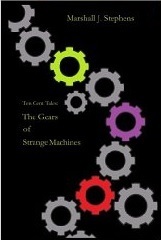 The second installment of Ten Cent Tales is up, and with an extra story no less.
The collection came together as I went through short stories I’ve written over the years and started noting a theme between them. They weren’t about the Big Bad, exactly, but about those who facilitate their wickedness. As I was putting together the next collection, I filled in a couple of gaps with stories written just for the volume and, voila, The Gears of Strange Machines was born.
Once I have some things sorted with Amazon and how they have my books associated with one another, I’ll probably be doing some promotional giveaways, but for now it’s up and available for less than a buck on kindle and less than a fiver in trade paperback.
Now, onto the next one.
June 6, 2013
Fantasy and Feminism: A Shaky Male Perspective
I’ve been a fantasy novel reader and tabletop role-player since I was a boy. I’ve don’t have a lot of high fantasy in my bibliography (though that will change with time), but I’m a writer and it’s one of the genres in which I’m interested. Furthermore, I’m a male in 21st century who remembers when the Equal Rights Amendment failed to become the law land, who has seen more women than I care to count marginalized or dismissed because of their sex, and who was raised to respect women and treat them as equals.
This gives me a few opinions on chainmail bikinis.
Recently, an issue of the Bulletin of the Science Fiction and Fantasy Writers of America that featured on their cover this image:
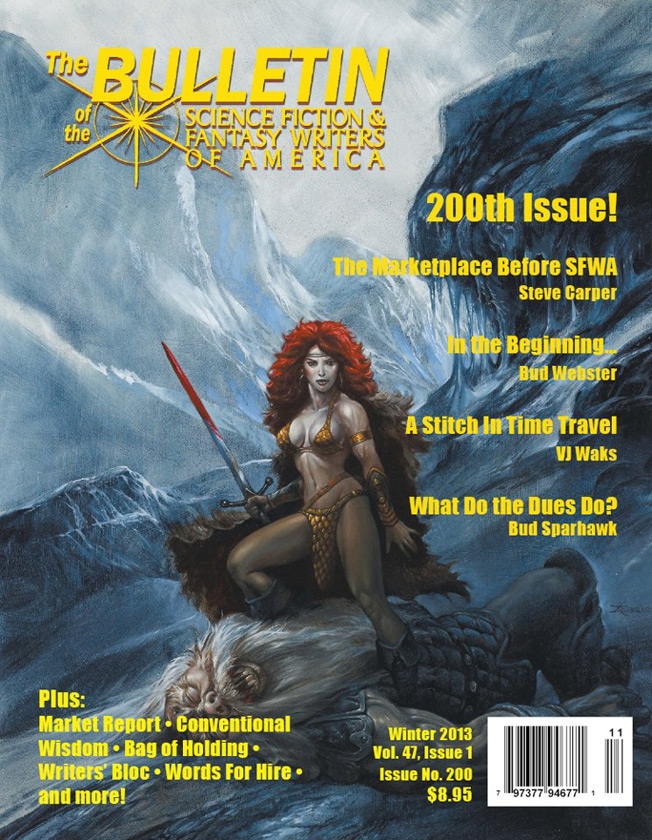
It’s pretty typical of the genre, but this on the cover of a magazine targeted at fantasy authors, who are starting to count more and more women among their number, combined with a couple of articles that seemed less than progressive in terms of gender roles… well, it has caused a bit of a tizzy, one that fantasy fiction and art often has coming to it.
I’m not ashamed to say that when I was a teenager, I was turned on by such images (Or pretty much any image of shapely women. Or by virtually any woman. Or by stiff winds). I practically fell in love with the cover of Dragon Magazine #94 . That said, I don’t think I ever felt that this was how women were supposed to dress or what they were limited to, either in real life or on the page.
The women gamers I knew, by and large, didn’t seem to be offended by such images. One gamer girl I knew played a paladin whose fighting style involved beating baddies to death with her “gozangas”, complete with requisite breakaway breastplate (though later, probably after the joke wore thin, she switched to a longsword). One of the best gaming experiences I had was a con where I was playing a female satyr (that’s a short anecdote in and of itself) who, with a female GM running the game, had to seduce a brothel’s madam for information.
Most of the people I knew who read fantasy were women. I never really asked them if any of them felt objectified. They weren’t reading Conan novels or anything set on the planet Gor, more Mercedes Lackey and Anne McCaffery; my suspicion is that they did not. But I can totally get how one might and in fact how it’s likely that many girls and young ladies interested in sword and sorcery found a certain amount of testosterone fueled imagery to be a barrier to entry, or perhaps even enough to turn them off the genre entirely.
The roots of how women are portrayed in fantasy are, I’m guessing, rooted in how women historically played into folklore and historical conflict. They were more often being married off or taken prisoner to be bedded prizes back inthe homeland than they were the ones doing the raiding and pillaging. Women warriors have existed and were (and are) every bit the heroes their male counterparts are, but they’ve never really been the norm. Even Boudica, one of the greatest warriors in history of either sex, started out her path of revenge on the Romans only after she and her sisters were raped by them.
As a male author, I’m always a little scared of writing female characters, especially when it comes to how to play out love scenes and romantic interests. If I make them too sex motivated, then I’m playing into adolescent male fantasy. If I play their sexuality down too far, then I’m unsexing them and turning them into dudes with boobs. Make them the victims of violence, and I’m being misogynistic. Keep them from violence, I’m making them passive. Rescue them, I’m reducing them to damsels in distress. Make them perky and I’m playing into the pixie dream girl fantasy. Make them aggressive then I’m turning them into Action Bimbos.
It’s a hard line to walk and is one governed by the rule that you can’t please everyone, but you can sure piss everyone off.
Now, if at this point you’re reading this going “let me play a tiny violin for you, white male”, I can understand. Any challenges I face as a male author pale in comparison to those faced by female authors trying to get respect in a male dominated genre (many recent successes, especially in teen literature, notwithstanding). And any tightrope I feel about how I represent women is nothing compared to the tightrope that most women are subjected to in day to day living. Women who feel objectified or marginalized by anything, including the chainmail bikini, have a right to be outraged and plenty of bedrock reasons to want to see changes made.
I think that as time goes on, we’re going to see more of those changes happen. It’s been in my lifetime that I’ve seen the idea of a woman being a cop or a soldier or a politician go from being a laughable proposition to an everyday reality. Fantasy is a reflection of the author’s attitudes of what should be, often placed in stark contrast with what they find most offensive; we’re going to see more strides, both from authors of every sex, towards female characters just being characters who happen to be female.
But I don’t think we’ll ever see them cease to be sexualized, not because that’s just what women get, but because that’s part of our fantasies. When women write women in the genre, they don’t describe them as looking frumpy or particularly unattractive. They write them as being beautiful, sometimes buxom, often athletic, just usually in more practical clothes. Likewise, men are written with strong arms and chiseled jaws with rare exception; we want our love interests to be characters the reader could see someone falling in love with, which often means playing to societal norms of beauty.
There will, perhaps sadly, always be a societal norm of what’s beautiful and it will always be kind of predictable.
I think, however, that such truths aren’t fatal to any genre, any more than the fact that someone will always be drawing on other stereotypes in fiction. I don’t think there’s anything wrong with a character, male or female, being beautiful or sexually aggressive. We want to represent our characters as complete people and sometimes overt sexuality or societally approved good looks are part of that. As long as we’re not limiting people to those stereotypes and then acting as if that is all they can or ever will be, then I think there’s a slot in the description for such attributes.
I think the cover art above is pretty silly. I can understand how it might be considered offensive and I don’t think I’d want it on the cover of anything I wrote except maybe as a joke. I agree that putting a sword in a characters hand doesn’t automatically make you a feminist author, even if you have her being bad ass with it.
But I think there’s a line where you can guard against such things too far. Maybe it’s a line we need to be less concerned until it’s the one being crossed too often, but it’s there and I hope we don’t forget that.
When I finally get around to writing that high fantasy trilogy that’s swimming around in my head, I will warn you that the women will likely be beautiful, buxom and some of them athletic. But I promise, no one will yell at them as they run bravely into battle “Put some damn clothes on!”.