Jenn Reese's Blog, page 10
January 7, 2013
ICEFALL, Norse Mythology, and Me
I have no intention of becoming a book reviewer, but I do want to start talking about books that I’ve read more often. Instead of a review, you’re likely to get a ramble about the book, my emotional state while reading it, or whatever tangents I feeling like exploring.
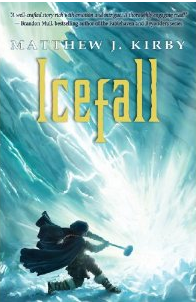 The first book I read in 2013 was Matthew J. Kirby‘s Icefall, and I absolutely loved it. Do you like vikings? Strong female main characters? Complex side characters? Storytelling? Mythology? Adventure and intrigue? Well, Icefall has all of those things and wraps them up in wonderfully descriptive language that evokes the very fjords themselves. (Kirby’s use of kennings made me squee with delight.)
Icefall is a middle-grade book, but anyone who wants to fill the chill of a glacier as a young girl tries to find her place in her family and in the world will enjoy it. (
Don't believe me? Check out this blurb from Ursula K. Le Guin:
Clear, lively, exciting, and unstoppable as the torrent of meltwater from a glacier, Icefall confirms Matthew Kirby as one of our finest new writers for young adults. Readers of any age may be enthralled by the bitter Nordic winter setting and the story of a girl who needs a lot of courage to discover who she is.
So go, add Icefall to your Goodreads pile, order it from your favorite indie bookstore, download the audiobook, or add it to your ereader [Nook | Kobo | Kindle].
Tangent time!
I have always loved mythology, ever since I was a little girl. I picked it for every school project, particularly when the project involved drawing chimeras or dragons. One of my earliest pictures is of Odin’s eight-legged horse Sleipner, which I present alongside its canonical source:
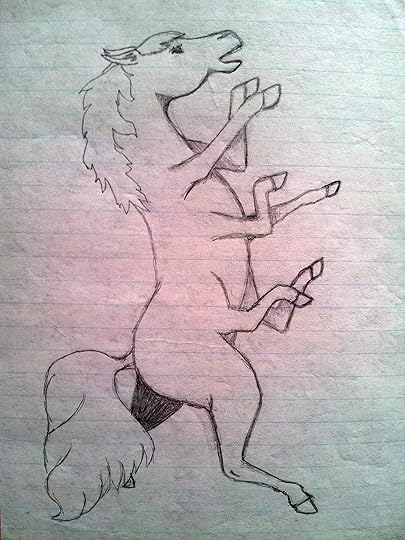
(Yes, that’s the Advanced Dungeons & Dragons manual Deities and Demigods. Now you all know that Sleipner was Lawful Neutral. You’re welcome.)
My love of Norse mythology carried over into college. Once I gave up on my computer science degree, I focused on Icelandic sagas, Old English, and Beowulf. In fact, the first real story I ever wrote (that wasn’t for a D&D game) was an original Icelandic saga for class. I even joined the local chapter of the SCA, Myrkfaelinn, whose charter was written in Old Icelandic. (Note: Kirby talks about the berserkers in Icefall: they also exist in the SCA and D&D, too!) I did my field study in Ireland and finished college with degrees in English and Archaeology, but really in Medieval Studies.
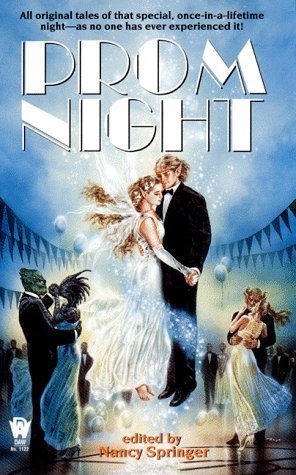
After college, when I finally began writing stories, my first two professional sales (my first two sales in general) were both Norse mythology-related: “Memory and Reason” (Prom Night), an sf tale that referenced Odin’s two ravens, and “Valkyrie” (Sword & Sorceress XVII) about an older woman realizing she is more than her father’s daughter, her husband’s wife, or her son’s mother.
I’m not going to post any of my Celtic knotwork here, so much of it inspired by Norse culture and art, but rest assured: there’s enough to fill a fjord.

Later, I named my blog “Memory and Reason” and created a logo for it: two ravens in front of the moon. In my mind, “Memory” made me think of fantasy, and “Reason” of science fiction. It still does, and I think I may need to resurrect this logo and start using it again. (A variation of this might even make a decent tattoo, as it also evokes the symbolism of the yin-yang circle, another huge part of my life.)
So, thank you, Matthew Kirby, for rekindling my love of Vikings and Norse mythology. Icefall is an incredible book and certainly one of the best sagas I have read.


January 1, 2013
2013: Looking Forward
I’m still processing everything that happened in 2012: the debut of Above World, the audiobook, the signings and book clubs and events, the reviews and fan art, turning in the third book of the trilogy… plus all the difficult stuff that, frankly, sometimes seems to overwhelm the good. But instead of going into that now, I’d like to look forward to the new year. I’m always so full of hope and optimism on January 1st, and I want to ride this feeling as long as I can.
For the most part, this year is looking a lot like the last one: I’ll still be working my part-time job at Lambda Literary Foundation (for as long as they’ll have me), designing book covers under my guise as Head Tiger of Tiger Bright Studios, and nurturing my writing career. Here are some of the writing milestones I’m excited about:
February 12
Above World comes out in paperback.
March 12
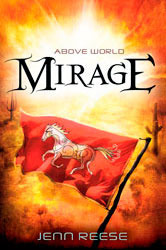
Mirage (Above World book 2) comes out in hardcover, ebook, and audiobook in the US and Australia/New Zealand.

April 4
Above World is published in the UK with a new cover! (As soon as I can share this, I will.)
In terms of writing goals, I’m keeping it simple this year:
Finish Above World book 3 (revisions, copyedits, proofs)
Write a new book
Revel in the good stuff
Learn how to let the bad stuff go
I’m looking forward to working with my amazing agent Joe Monti and my incredible editor Sarah Ketchersid for another year, and I suspect I’ll be leaning on my friends just as often as I did last year. Of course, many of my friends have new books releasing this year, and I’m eager to watch hordes of other people fall in love with them.
In short, I’m thrilled that my “debut year” is behind me. I can’t wait to roll up my sleeves and get to work creating new stories. Happy New Year, everyone!
December 31, 2012
2012 Faves: Games and Visual Media
Trying to compile these entries has taught me that I need to keep better records of my media consumption each year. Let me give it a go anyway…
Videogames
Portal 2
One of my favorite games of ALL TIME. I love logic puzzles, and the collaborative mode of this game had me scratching my head then whooping with joy every time I solved a new challenge. LOVE LOVE LOVE. The single-player mode also has the fabulous character Wheatley who is worth the price of the game by himself. All people who love spacial relations and puzzle solving MUST PLAY THIS GAME.
Little Big Planet 2
Brilliant, bizarre, and laugh-out-loud funny. The second in this series is a little easier than the first, meaning I could actually play most of the levels. There are so many creative ways to enjoy this game — designing your own levels, decorating existing levels, changing your own character’s costumes… If I had a child, this game would be a must-have. (PS3 only)
World of Warcraft: Mists of Pandaria
The latest World of Warcraft expansion is my favorite so far. Gorgeous settings, epic story lines, and a PLAYABLE PANDA RACE. Game play remains mostly the same, but Blizzard continues to tweak the system to keep it interesting and fun for casual players like myself. LOVE.
2012 New (to me) TV Shows
Parks & Recreation
Feminist, funny, and featuring a wonderful created family. Start at season 2 or 3 if you’re having trouble getting into it. Leslie Knope (Amy Poehler) is now one of my favorite characters of all time. (Netflix & NBC)
Adventure Time
Tim Pratt is to blame for getting me into this awesome animated TV show. It’s not something I would have watched normally, and some of the episodes are still turn-offs. But the world building and bizarre storytelling surprise and delight me on a regular basis. (Cartoon Network)
The Legend of Korra
Avatar: The Last Airbender is one of my favorite TV shows of all time, animated or not. Korra doesn’t have the same magic for me, but it’s still one of my favorites of 2012. The animation and martial arts are mind-blowingly good and I’m hoping the plot and characters work better for me in season 2. (Nickelodeon)
Bunheads
Although the show needs to seriously up the diversity in its cast, I really enjoyed the first season. It’s funny and features a wide array of (white) female characters, each unique and interesting. (ABC Family)
The Newsroom
My love/hate relationship with Aaron Sorkin TV shows continues. The Newsroom is infuriatingly misogynist at times, but I find other aspects compelling enough to keep me watching. Now that the election is over, I’m curious to see if it becomes any less sanctimonious. (HBO)
Continuing TV Shows
I continued to watch and enjoy SyFy’s triumvirate: Eureka, Warehouse 13, and Haven. (Sadly, Eureka is no more.) I also kept up with Castle, Make It Or Break It, and Drop Dead Diva. I finally gave up on White Collar and Leverage, although I may catch up on them later.
Reality TV Shows
I love love love SyFy’s show Face Off about battling special effects/makeup artists. The challenges are always interesting (Underwater monsters! Dinosaur people! Zombie Alice in Wonderland!) and it’s fascinating to watch the competitors conceive their ideas, sketch, sculpt, fabricate, and paint their creations. Highly recommended if you’re interested in the creative process. Other favorites for me continued to be Project Runway, Top Chef, and The Next Iron Chef.
Movies
The Avengers
I loved this movie and, I’m not sure why, but it sent me into an obsession spiral. (This involves reading as many related comics as possible and scanning Tumblr for such tags as #Avengers, #Hawkeye, and #BlackWidow.) I’m over the worst of it now, but I still think the film is great — at its heart, a story of created family.
The Cabin in the Woods
I can’t watch horror movies at all, but I’m so glad I braved this one and saw it before the plot was spoilered. It was fun, funny, and kept me thinking for weeks. (I saw it at the same time I saw The Hunger Games, which I think has many of the same underlying themes but that undermines its themes with its spectacle.) As much as I enjoyed Avengers, this is the film I’ll remember most from this year.
Other favorites include:
Moonrise Kingdom – Fun, quirky, coming-of-age romance heaped with style.
Safety Not Guaranteed – Fun, quirky romance with a sci-fi edge.
Haywire – Hopefully the first of many films for MMA badass Gina Carano.
Chronicle – One of the best visions of what real-life superheroes would look like.
Documentaries
Forks Over Knives
This documentary convinced me to finally try giving up dairy. It’s heavily pro-vegan, plant-based diet, so if you’re not in the mood for that, then give it a pass. But if you’re considering making changes in your diet, then I can’t recommend it highly enough. (Netflix)
Indie Game: The Movie
At turns depressing and uplifting, this documentary applies to creatives of all sorts, not just game designers. I saw many parallels with game creation and being an author. (Netflix)
Other documentaries I enjoyed: (A)Sexual, Being Elmo, First Position, Jiro Dreams of Sushi, Kings of Pastry
Web Series
The Guild
Felicia Day’s web series based on a World of Warcraft guild continues to ROCK. Season 5 (I still haven’t caught up on Season 6) follows the group as they head to a huge gaming convention. It may be my favorite season yet, probably due to Kevin Sorbo’s brilliant cameo. (Netflix & online)
Burning Love
This spoof of Bachelor/Bachelorette-type reality shows is laugh-out-loud funny… except for some blatant transphobia. Hopefully Ken Marino’s next project will be a homerun. (Online)
Husbands
This cute series, written and created by Brad Bell and Jane Espenson, follows two men who get married during a wild night in Vegas. Fun, but too short! (Online)
December 27, 2012
Thoughts on Les Misérables
I saw Les Misérables four times on Broadway when it first came out. I have listened to the soundtrack hundreds — if not thousands — of times, and used to be able to sing the entire thing from start to finish.
And yet… I didn’t like the movie.
[Spoilers follow.]
I’m struggling to say exactly why I didn’t like it. The theater production is magic. You get chills from the opening words, you cry when Fantine dies, you cheer when the barricade forms, you stare in wonder as Javert falls from the bridge. An epic story unfolds on a tiny stage, and your mind rushes to fill in the blanks. You add the hordes of French troops firing on the revolutionaries. You add the stars in the sky above Javert, and the icy river below him. You watch Valjean carry Marius through the sewers, and you mentally add in the smell and the rats and terrifying darkness.
But in the movie version, there were no blanks to fill in, no “white space” between scenes or around the edges where your mind creates an entire world. In the movie, we see the sores on Fantine’s face, the dirt on her neck, the feces from the sewer. Instead of Javert falling powerfully and symbolically to his death, we see Russell Crowe’s body hit a stone wall and hear it crack. The emotional content of the moment is replaced by visceral horror, and for me, the whole point is lost.
There is such a thing as too much reality, too much verisimilitude. I’m hearing it from people coming out of high frame-rate version of The Hobbit: they feel like they’re on the set with the actors, not watching an epic story of adventure.
Too much reality hurts Les Misérables in other ways, too. When you see it on stage, it moves you. It makes you laugh and cry. It makes your heart soar until you’re mouthing the words “One Day More” along with the revolutionaries. But in the movie, the horror the world is played out in full — the disease, the poverty, the filth, the needless death. Most of the songs involve the actors sobbing or dying the whole way through.
When Fantine sings “I Dreamed a Dream” on stage, you are enraptured and heartbroken, but you aren’t actually miserable yourself. The two hours and forty minutes of the film version of Les Misérables felt like two hours of watching people suffer. There was no lightness, no upbeat tempos, almost no moments of joy or happiness. In their efforts to convey a wretched world full of hopelessness, the filmmakers bring that lack of joy right to the audience.
This is not to say the film is without merit. I thought Anne Hathaway as Fantine and Daniel Huttlestone as Gavroche were stunningly good. Everyone (except Russell Crowe) sang fine, although I was certainly not happy to see Helena Bonham Carter (who should be banned from all musicals) and Sacha Baron Cohen show up. Still, it was a huge production that had a distinct voice and style, and I’m sure many people will love it.
But for me, the hyper-realism of the movie killed the magic of the story.
December 20, 2012
Me and Above World on The Book Smugglers

First, the reason I’m grinning ear-to-ear today: Above World has been reviewed on The Book Smugglers, where Thea calls it a “notable read of 2012″!
I also had the pleasure of writing a guest post for The Book Smugglers as part of their annual Smugglivus celebration. I chose to talk about girl adventurers and some of my favorite middle grade adventure reads from 2012… and one from 2013.
There were some problems with the embedded video from the Geena Davis Institute on Gender in Media, so in case you haven’t seen it, take a look and consider supporting the organization and its mission:
Happy Smugglivus!
December 13, 2012
The Norton Award and Middle Grade Books
 This post is part of the Norton Award Blog Tour.
The “Andre Norton Award for Young Adult Science Fiction and Fantasy,” given annually by the Science Fiction and Fantasy Writers of America (SFWA), is actually an award for both young adult and middle grade fiction, despite the official title. If you look at the list of Norton Award finalists and winners since the award’s creation, you’ll see a number of wonderful middle grade books:
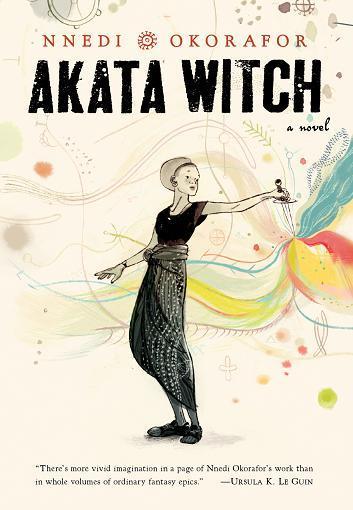
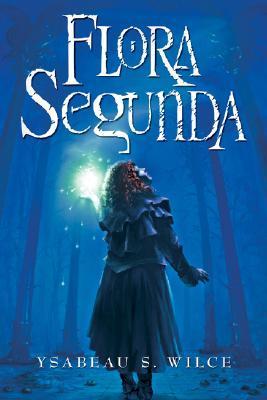
Akata Witch by Nnedi Okorafor (Finalist 2012)
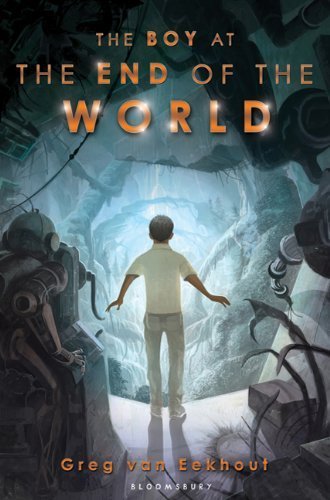
The Boy at the End of the World by Greg van Eekhout (Finalist 2012)
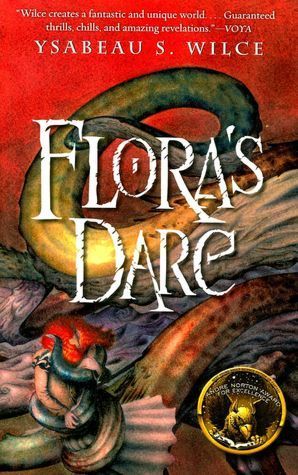
Flora Segunda (Finalist 2008) and Flora’s Dare (Winner 2009) by Ysabeau S. Wilce
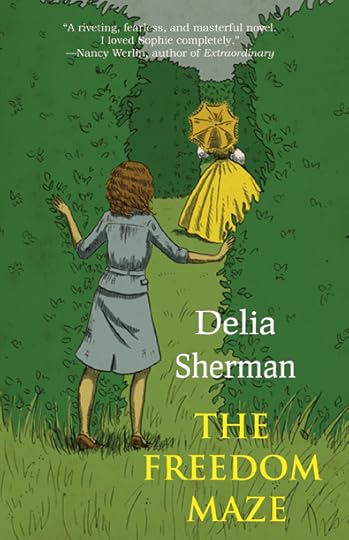
The Freedom Maze by Delia Sherman (Winner 2012)
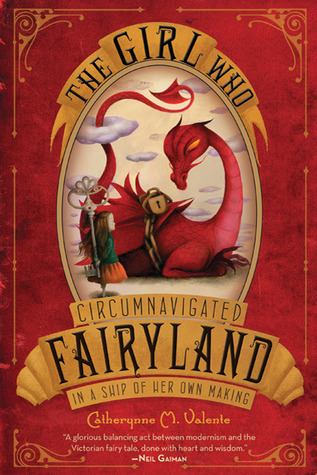
The Girl Who Circumnavigated Fairyland in a Ship of Her Own Making by Catherynne M. Valente (Winner 2010)
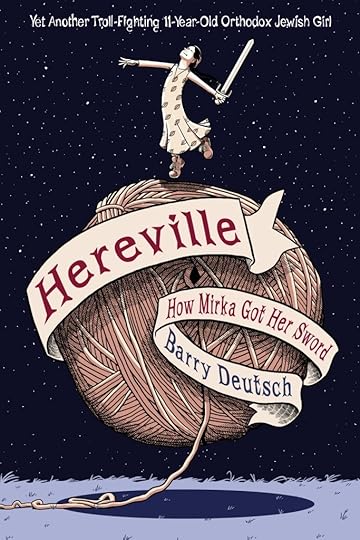
Hereville: How Mirka Got Her Sword by Barry Deutsch (Finalist 2011)
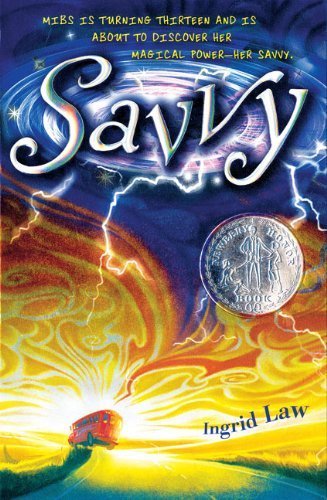
Savvy by Ingrid Law (Finalist 2009)
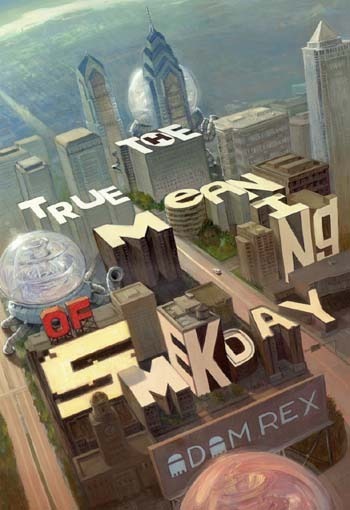
The True Meaning of Smekday by Adam Rex (Finalist 2008)
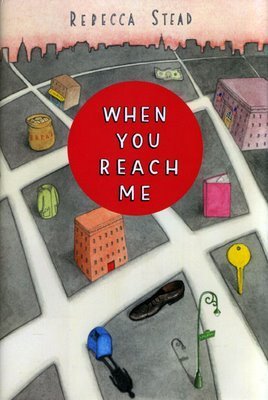
When You Reach Me by Rebecca Stead (Finalist 2010)
And here are a few more books that straddle the line between middle grade and young adult:
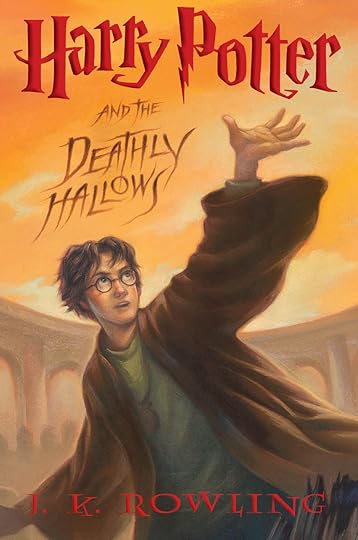
Harry Potter and the Deathly Hollows by J.K. Rowling (Winner 2008)
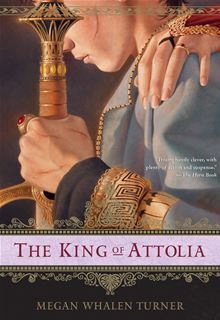
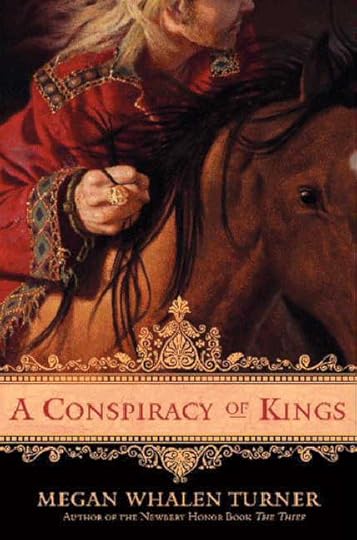
The King of Attolia (Finalist 2007) and A Conspiracy of Kings (Finalist 2011) by Megan Whelan Turner
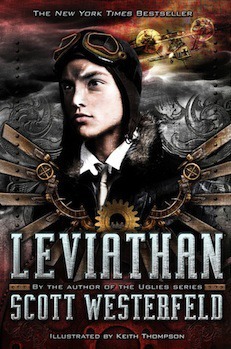
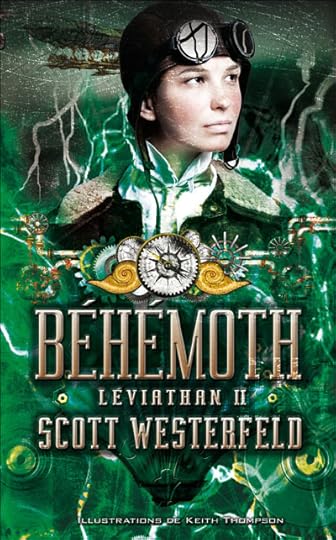
Leviathan (Finalist 2010) and Behemoth (Finalist 2011) by Scott Westerfeld
It’s clear that middle grade fiction plays an important and robust role in the science fiction and fantasy fields. For many readers, these books will be a gateway to young adult sf, and sometimes directly into adult science fiction and fantasy.
On a personal note, these were the books that saved me when I was a kid. I found them at a time in my life when I was in desperate need of hope and heroes. I needed to read about Meg in A Wrinkle in Time, about the wonderful balloon creations in The Twenty-One Balloons, about Milo and Tock in The Phantom Tollbooth. I read The Lion, the Witch, and the Wardrobe and started looking for portals to other worlds.
Except… I’d already found them. Books were my portals, as they are for so many kids growing up in difficult situations. They let me dream of other worlds where even the least powerful kid could make a difference.
So please, don’t forget about middle grade science fiction and fantasy. For many kids, these books are the first step on their road to a better, science-fiction-and-fantasy-filled life.
Nominating Books for the Norton Award
Active, Lifetime Active, and Associate SFWA members in good standing are eligible to cast a 2012 Nebula Awards Nomination Ballot. The nominating period is open from November 15, 2012 to February 15, 2013 11:59pm PST.
My first middle-grade book, Above World, is eligible.
December 3, 2012
The Norton Jury on the Norton Award: Why It’s Important
This post is part of the Norton Award Blog Tour.
Although the Andre Norton Award for Young Adult* Science Fiction and Fantasy relies on nominations from SFWA members just as the Nebula Awards do, the Norton also employs a jury of qualified volunteer SFWA members to help round out the ballot and ensure that outstanding works are not overlooked. We’ve asked this year’s jury to share their thoughts about the importance of the award, and what they’re looking for in this year’s crop of middle grade and young adult speculative fiction. But first, let’s meet them:
Victoria McManus (chair) reviews for Publishers Weekly and is writing a historical fantasy. She lives in Philadelphia.
Christopher Barzak is the author of the Crawford Fantasy Award winning novel, One for Sorrow. His second book, The Love We Share Without Knowing, was a finalist for the Nebula and Tiptree Awards. His short fiction has appeared in a variety of venues, including Asimov’s Science Fiction, Realms of Fantasy, Strange Horizons, Lady Churchill’s Rosebud Wristlet, The Year’s Best Fantasy and Horror, The Mammoth Book of Best New Horror, and The Year’s Best Science Fiction and Fantasy. He grew up in rural Ohio, has lived in a southern California beach town, the capital of Michigan, and has taught English in suburban and rural communities outside of Tokyo, Japan, where he lived for two years. His most recent book is Birds and Birthdays, a collection of surrealist fantasy stories. Forthcoming is Before and Afterlives, a collection of supernatural fantasies. Currently he teaches fiction writing in the Northeast Ohio MFA program at Youngstown State University. Visit him at christopherbarzak.com.
Merrie Haskell writes for all ages. Her first book, The Princess Curse, was a Junior Library Guild Selection in 2011. Her next MG novel, Handbook For Dragon Slayers is forthcoming in Summer 2013 from HarperCollins. Merrie now lives in Saline, Michigan, with her husband, stepdaughter, and too many cats named for legendary characters. Visit her at www.merriehaskell.com.
E.C. Myers has been writing science fiction and fantasy for more than eleven years and has been a proud SFWA member since 2011, when he sold his first young adult SF novel, Fair Coin. That book and its sequel, Quantum Coin, were both published this year by Pyr Books. Young adult and middle grade fiction comprise the bulk of his reading, if you don’t count the internet—which incidentally, is where you can find out more about him, especially at ecmyers.net and on Twitter @ecmyers.
Carrie Vaughn is the author of the New York Times bestselling series of novels about a werewolf named Kitty, the most recent installment of which is Kitty Steals the Show. She also wrote the young adult novels Voices of Dragons and Steel, and the novels Discord’s Apple and After the Golden Age. She’s a contributor to the Wild Cards series of shared world superhero books edited by George R. R. Martin, and her short stories have appeared in numerous magazines and anthologies. An Air Force brat, she survived her nomadic childhood and managed to put down roots in Boulder, Colorado. Visit her at www.carrievaughn.com.
Why you think the Norton Award is important for the science fiction and fantasy fields and/or for the middle grade (MG) and young adult (YA) fields?
Victoria McManus:
There are a whole slew of big name awards for MG/YA books, but none of them focus on speculative fiction, so it’s easy for books in our genre to be lost in the ocean of “best of” lists.
Having an award that is devoted only to MG/YA science fiction and fantasy helps to draw attention to future classics that might otherwise be overlooked. It also provides a handy list of winner and nominees to librarians and readers who might be new to speculative fiction.
Christopher Barzak:
The Andre Norton Award is important for both the speculative fiction community as well as the Middle Grade and Young Adult reading communities. In both cases, those communities tend to highlight the best work in their fields almost by default by age category. Young Adult and Middle Grade books are celebrated within that community, Science Fiction and Fantasy largely celebrates the best of its literature written for the adult audience each year. Occasionally there is some crossover work celebrated in both of those communities, but it’s only on occasion. The Norton Award can help bridge the gap between those two worlds, I hope, as there is good work in both fields that both age categories would be happy to swap back and forth and read.
Merrie Haskell:
There are tons of awards out there, of course, but the Norton Award is one step in filling an important gap, which is specifically recognizing how the fantastical contributes to children’s literature–and maybe even more important, how children’s literature is a vital part of speculative fiction. These are two great tastes that taste great together, and it is altogether too easy for both fields to dismiss and overlook the other.
E. C. Myers:
Some of the best science fiction and fantasy being published today is for middle grade and young adult audiences, but many adult readers are either unaware of it or choosing to ignore it. If you like sf/f and you aren’t reading MG and YA, I think you’re missing out on a very large and important part of the field; when I was young, I discovered genre fiction through children’s books, and they still serve the same role for many kids and teens today. But I don’t want people to look at books for young readers as something to “graduate” from. Yes, they can be an entry point to sf/f, but they are interesting and worthy in themselves and contributing much to the genre—and in some ways children books are helping to make the public more aware of and more accepting of genre fiction, with breakout hits like Harry Potter and The Hunger Games.
The lines between adult and young adult fiction are also blurring, with kids and adults reading on both sides of the divide, and many adult authors, like Paolo Bacigalupi, China Miéville, and Brandon Sanderson, are publishing books for readers of all ages. So I really think the Norton Award is important for the sf/f field as a way of promoting the value of children’s books and to introduce people to some of the best offerings, which will hopefully lead them to love these books as much as I do.
Carrie Vaughn:
I think the Norton Award is important because it helps the science fiction and fantasy communities find out about the great work being done in the YA/MG field right now, that often gets overlooked because of how it’s marketed (i.e. not to SF&F readers). On the flip side, it can also alert librarians, teachers, and so on that science fiction and fantasy really do have great books to offer to young readers. It bridges biases in both directions.
What are you looking for in a Norton Award-worthy book?
Victoria McManus:
I feel it is part of the jury’s mandate to be on the lookout for books that are different in some way from the bulk of books published during the year, whether in style, story, setting, or characters.
There are many excellent stories that incorporate hot trends or traditional stories, but it’s my assumption that in general those books are already garnering enough attention that the general membership of SFWA will nominate them. It’s the more unusual books, perhaps those on the edges of the genre or from smaller publishers, that tend to be overlooked, so I try to focus on reviewing those, while not forgetting about the best of the more mainstream titles.
I keep in mind the important issue of the intended readers – do I think younger readers would enjoy the book, or would they find it stale?
I also try to keep in mind the book’s potential longevity – will readers still be loving this in a decade? Two decades? Obviously, I can’t really predict that, but some books do seem to hold a sort of timelessness within their pages, eliciting a sense of wonder that will not grow stale.
I don’t have to enjoy a book to think it is different, well-written, and worthy of my nomination, but my personal enjoyment is definitely a factor in my choices, as well.
Christopher Barzak:
The kind of book that I think is Norton Award-worthy are books that are complex, that don’t become less challenging because they are written for Middle Grade or Young Adult Readers, books that have fine or even beautiful prose, or at least a style of writing that is unique or distinguished in some way from others, with complex characters with inner lives as well as outer difficulties they must deal with. It’s really the same criteria I think most awards have, which is as it should be.
Merrie Haskell:
I’m looking for a pretty specific combination of traits in a Norton-worthy book. First, I feel like it has to fit my criteria for a good MG/YA book: it can’t talk down, it has a good sense of how kids are versus how they “should be,” and it neither glosses over tween/teen emotional journeys nor overly maudlinizes them. (Yeah, maudlinize isn’t a word.) It’s a fine line to walk. If it fits that criteria, it’s already pretty good. For the Norton Award, I feel like the book has to add something to the body of sf/f children’s literature that hasn’t been seen yet, or presents a somewhat unique viewpoint. It has to contribute, not rehash.
E. C. Myers:
First and foremost, I am looking for a great book, the story that I don’t want to put down, with characters, scenes, and themes that I keep thinking about when I’m not reading it and linger with me after the last page. I’m also looking for books that exceed my expectations, that are doing something different with genre or gender or familiar tropes—basically anything that stands out because it is raising the bar just a little bit higher. It might feature a character or an idea I’ve never seen before, or handles them better than most, or twists things just enough to make it all seem fresh again. Or maybe I just love the protagonist’s voice and the writing or I connect with the story emotionally. The best books, the ones I want to recommend for the Norton Award, may accomplish many of these things, all of these things, or more—with few or no missteps. They don’t have to have an “agenda,” but I want them to be fun, exciting, engaging, moving, and often ambitious. And I also try to consider how the book helps to represent or elevate the MG/YA and sf/f fields.
This might seem like a tall order, but there are many books being published every year that qualify, and in the best of circumstances, we have a really hard time choosing only a few to recommend, let alone vote for just one winner. I’m thrilled that we have the chance to find these books and bring them to the attention of a larger audience.
Carrie Vaughn:
What am I looking for in a Norton-worthy book? Something well written, and something mind-blowingly different, which I know is kind of vague. But I really am looking for books that push the envelope, that would have blown my own mind when I was a young reader.
Nominating Books for the Norton Award
Active, Lifetime Active, and Associate SFWA members in good standing are eligible to cast a 2012 Nebula Awards Nomination Ballot. The nominating period is open from November 15, 2012 to February 15, 2013 11:59pm PST.
* Although the official title of the award is the Andre Norton Award for Young Adult Science Fiction and Fantasy, the award includes middle grade books as well.
October 29, 2012
Above World 2, MIRAGE: Cover! Copy! ARCs!
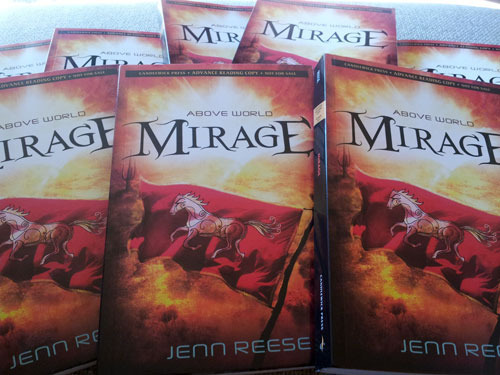
Here it is, the front and back covers for Mirage, the second book in my Above World adventure series from Candlewick! Isn’t it gorgeous? Artist Alexander Jansson and the design team at Candlewick have really outdone themselves.
[Click for a larger images.]


And the official flap copy:
The desert is no place for ocean-dwelling Kampii like Aluna and Hoku, especially now that Aluna has secretly started growing her tail. But the maniacal Karl Strand is out to conquer the Above World, and the horselike Equians are next on his list. Aluna, Hoku, and their friends — winged Calli and Equian exile Dash — race to the desert city of Mirage, intent on warning the Equians and forming an alliance.
Unfortunately, Strand’s clone Scorch has gotten there first. Now the Equian leader has vowed to take all his people to war as part of Strand’s army. Any herd that refuses to join him by the time of the desert-wide competition known as the Thunder Trials will be destroyed.
To have any chance of defeating Scorch and convincing the Equians to switch sides, the four friends must find a way to win the Trials. The challenge seems impossible. But if they fail, the desert — and possibly all of the Above World — will be lost to Karl Strand forever.
SQUEE! I am a Very Happy Author. I may or may not have rubbed these glorious ARCs on my face.
October 17, 2012
Minimalist Mindset: Online Life
For the last few years, I’ve been working towards a more minimalist lifestyle: mainly, I live in a small apartment and try not to own too many things. That’s an over-simplification, but you get the idea.
When I went on vacation last week, I realized that for all the strides I’ve been making to simplify my material world, my online world is a perpetually overflowing geyser of information and clutter.
- I get hundreds of emails a day. (Not including work emails.)
- I read or skim hundreds of blog entries via Livejournal and RSS feeds.
- I belong to almost every social networking site.
- I have large lists of friends on Twitter, Facebook, and Livejournal and try to keep up with as many of them as I can.
Decluttering my physical space makes me feel more relaxed and creative. I started wondering if doing a little online housecleaning would have the same effect.
1. Unsubscribing
I thought I was getting maybe a dozen emails a day from charities, businesses, airlines, and other services I occasionally use. Normally I see these in my inbox and either delete without opening or give them a quick glance in case there are any sales I might want to explore. But even the act of seeing the email and deleting it takes mental energy. It’s like seeing piece of paper on your desk. Sure, it’s easy to crumple it up and toss it in the trash, but that’s still time wasted — especially when you’re doing it 10, 20, 50, or more times a day.
So I started unsubscribing. And unsubscribing. And unsubscribing. Every time I thought I must have gotten the last batch, another slew found its way to my inbox. I had been drastically underestimating the number of these useless emails I’d been getting, and underestimating the amount of time each day that I spend dealing with them.
Also, I don’t need to know about sales! As a budding minimalist, I try to buy quality items when I need them and eschew impulse purchases predicated on sale prices. Every single one of those emails was a temptation I had to resist. How much mental energy did that take? Even a teeny tiny amount would be far more than they’re worth.
2. Cleaning up my feeds (AKA Unsubscribing, Part 2)
I use Google reader to skim and read hundreds of posts a day on a variety of topics: design, science, book reviews, feminism, etc. But there are feeds that I always skim or use “Mark All as Read” on. I went through my lists and unsubscribed. There are feeds with high volumes (hundreds of new posts a day) where I occasionally find a cool article or idea. Unsubscribe! A 1 to 300 ratio of usefulness is not good enough! I’d never let an item stay in my house if I used it that rarely.
But I know I have a lot of work to do in this category. I removed a lot of high volume feeds, but I still have well over a hundred left. This is one of those categories that I’m finding difficult to let go of, much like the craft supplies I hung on to for years in my closet. So for now, I’ve committed to regular trimming and assessing, and hope that I develop more of a backbone as I go.
3. Social Network management
I deleted my Linkdin account, which I never used. Why did I maintain my profile for so long, dealing with emails about new adds and updates from groups I apparently joined 10 years ago? Gone! I’ve also abandoned my Tumblr account, since I don’t really enjoy the interface and feel like my blog and Pinterest accounts do the same things in a way I like better.
On Twitter, I’ve turned off Retweets for all the people I’m following. I think the number of tweets I see has dropped in half, and I still get the actual updates from my friends.
I’d like to cut down on the number of “friends” I have on Twitter, Facebook, and Livejournal, but I haven’t managed to do this yet. (I’m too soft!) So for now, I’m going to be stricter about my “no catching up” rule for all three. This means I don’t go back and try to read whatever I’ve missed since the last time I checked. I can lose hours doing that. Instead, I will try posting and interacting with whatever I see when I log in and am actively engaged on the site.
Outcome
Just a few days after Online Armageddon, I’ve noticed a big change. I spend less time catching up, and more important, I spend less time on things that never mattered — on dealing with clutter. All that emotional/psychological/intellectual clutter adds up, and I’d been sifting through far more of it than I realized.
This is an ongoing process, just like decluttering my house is. I’m going to keep trying to simplify my online life, keeping only the things that are most important to me, just as I do in my house with my material possessions. I can’t believe it’s taken me this long to figure out that my “home” exists in more than one place.
October 8, 2012
Adventuring in Oregon
Our trip has been amazing so far! We’ve hiked the Pittock Mansion trail in Portland (I didn’t make it to the top, but I loved it anyway) and the utterly glorious Cape Lookout trail on the coast. We managed quick visits to Powell’s, Title 9, and REI and walked around town. We ate at the Kennedy School, Prasad (YUM), and had one of the best meals EVER at a place called The Farm Cafe. Tonight we made it to our “penthouse suite” (complete with chandelier and fireplace) and enjoyed an early dinner at the nearby Tidal Rave while watching waves crash against the cliffs.
Click on this to see the pictures I’ve taken so far:
Great Oregon Adventure 2012
I’m having a fantastic time. This is exactly what I needed.