Bryce Zabel's Blog, page 5
October 29, 2021
There’s UFOs Over New York
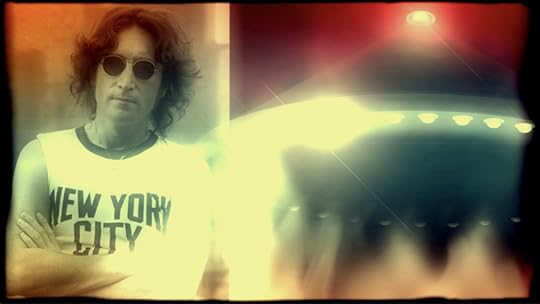
On August 23, 1974, John Lennon and May Pang saw a UFO outside his New York City penthouse. He talked about it until the end. (Part 1 of 3)


October 25, 2021
Bill Nelson’s Mission to Turn NASA Around on UFOs

Ex-Senator and former astronaut Bill Nelson says that NASA is going to look for evidence to explain the UAP our military has encountered.
October 21, 2021
A Profane Rant about Modern Ufology
Even the Navy UAP videos contain a trained military airman shouting, “What the fuck is that?” Here’s the case with profanity included.
Why the Entire Hair-on-Fire Cosmic F******* BOOM! of UFO Reality Never Seems to Show Up
Even the Navy UAP videos contain a trained military airman shouting, “What the fuck is that?” Here’s the case with profanity included.
October 12, 2021
Skinwalkers at the Pentagon
 Fantasy/Pixabay
This month’s “Saucer Talk” features the new book, Skinwalkers at the Pentagon: An Insiders’ Account of the Government Secret UFO Program, reviewed by Trail of the Saucers editors Bryce Zabel and David Bates.
Bryce: First off, my disclaimer. I know George Knapp personally. He’s had me on his weekend Coast-to-Coast gig several times, a great interviewer. Plus, I’ve come to admire George’s journalistic chops on so many different projects, and, of course, he’s a brosky of former Senator Harry Reid. I could go on and on. So I was looking forward to this one quite a bit.
David: My disclaimer is that my only prior encounter with Skinwalker Ranch is Hunt for the Skinwalker, also written by Knapp with Colm Keller and published in 2005. Fascinating book. I read it last year. The first chapter, with a giant wolf seemingly impervious to being shot repeatedly at point-blank range, is a mind-bender, and then it just gets weirder.
 Skinwalkers at the Pentagon | Mystery Wire
Bryce: I guess the best way to frame this is to say that this book continues the Skinwalker Saga. I’ve never actually done a deep dive into Skinwalker, I’m not sure why. I see it, then I go back to nuts and bolts UFOs and abductions. Only now I see the attraction — Skinwalker has it all, UFOs, other dimensional beasts, blue orbs, mutilated cattle, and all the poltergeist activity that you can stomach.
David: It really is a paranormal hotspot that seems to not disappoint, no matter who visits. I’d like to see the editorial crew from Skeptical Inquirer do a weekend retreat there, spend their nights looking at the stars … and other things. But you’re right, it’s not an obviously UFO-centric place. Maybe it needs a short introduction. Shall I do the honors?
Bryce: Go for it. Sweetest words I’ve ever heard.
David: Basically, it’s 500 acres of ranchland in Utah about 150 miles from Salt Lake City. It was first introduced to the world in 1996 by a local paper and then later in an alternative weekly by Knapp. Then he went on to write the first book about it, Hunt for the Skinwalker. A primary focus in that book was on the Gormans, a Mormon family who had some genuinely bizarre experiences while living there.
Bryce: Bizarre UFOs?
David: Well, UFOs, but also creepy stuff like you mentioned. Honestly, what I recall most from the book are two incidents that had nothing to do with UAPs. The first is this encounter with an enormous and seemingly bulletproof wolf creature that Gorman and his son tracked until it literally vanished. The other involved four bulls, which were seen in their corral and then 45 minutes later were inexplicably crammed into a locked trailer, unharmed, but in a daze.
Bryce: And, just as a quick aside, this latest book from Knapp, Kelleher and Lacataski — Skinwalkers at the Pentagon — is way more than a book about Skinwalker Ranch. That’s a part, but mainly it seems to be about how our military and intelligence agencies have been studying UAP phenomenon for years and in ways that go far beyond what we thought they were doing.
David: Exactly, I think that’s the essential takeaway.
Bryce: They were all caught up in the exotic nature of the UFO mystery, including extremely strange and even haunting things that happen around UAP encounters. There’s also a lot about the biological effects. So, definitely, a whole lot of things getting pulled out of that gray basket. Here’s what they say, and I’m reading now —
“By the end of the two-year program, more than 100 separate technical reports, some of which ran to hundreds of pages, were delivered to the Defense Intelligence Agency. Among them was a 149-page report on the Soviet (and now Russian) UAP investigation/analysis capability. Another details the design and build of a functional prototype for an autonomous Unidentified Aerial Phenomena surveillance platform.”
Bryce: So, yeah. Back to you for a live update on the Ranch.
David: There’s no way I’m ever doing a live update from that ranch, or even a tape-delay update. But anyway. The property has gone through a series of ownerships. The investor Robert Bigelow bought it for his privately-formed National Institute for Discovery Science, which spent some time trying to document and study paranormal occurrences there and whose work is discussed in the first book. Another company bought it in 2016, and they keep the place sealed up tight.
 Bryce Zabel | David Bates
Bryce: Let me digress, just a moment here to the book itself and not the content. There are so many acronyms in this book that they needed a glossary page up front and even then after you’ve seen BAAS for the eleventeeth time, your mind starts to play tricks on you. By the end of the read, every time I saw that one, BAAS, my brain translated it into Bad Ass. Which apparently, if you know Bob Bigelow, is not entirely incorrect.
David: The acronyms do give the book a wonkish vibe, which I’d say is … well, I’m not sure what I’d say. I guess it’s a double-edged sword. If the point is to illustrate the mind-boggling intricacy of the Pentagon and intelligence bureaucracy, mission accomplished, I guess.
Bryce: But man, AATIP, AAWSAP, ODNI, NIDS, UAPTF, DIRD, JWICS, SCI, SCIF, and on and on. Of course, the book is about the government’s secret UFO programs and the U.S. isn’t about to call something Secret UFO Program, right? Although that would be SUP, as in “What SUP?” so it could work, too.
David: Ha! But actually what I found useful was the clarification it provides on the distinction and relationship between AATIP and AAWSAP, which I think most people don’t understand.
Bryce: Back to the content below the acronyms, and, for me, the headline for this book is the concept of “hitchhikers,” which refers to these evil effing entities — wait, I’ve done it again!, created a new acronym, EEE — the sound you make when one of them hijacks you. Hijack means that they attach to you somehow, follow you home, infect your family, jumping from your kids to other kids and their families, all thousands of miles apart. It’s just weird as all shit, like tracking the coronavirus with a paranormal twist. One thing it makes me worry about is given all the time I read and study this subject, I sure as hell hope I’m not inviting some EEE-mofo into my house. First of all, my wife would never forgive me for bringing home an uninvited guest with no warning. Okay, I know I shouldn’t make light of this stuff but it’s only because it’s so weird and disturbing.
David: Well, it is weird and disturbing. The book basically looks at a fundamental problem, the way that UFO sightings and incidents are frequently accompanied by even weirder phenomena, the “woo” factor, to borrow a word that’s become a thing. This is nothing new, of course. Jacques Vallee gets into that in his Dimensions trilogy, among other books.
Bryce: You raise a great point. Are we saying that “woo” is a problem? Why?
David: Because for the purposes of official, “public” discussion, this remains a nuts-and-bolts issue, which is how officials want it, which is alluded to at the end, when there’s this debate over what the scope of the government’s inquiry ought to be. The only conversation they’re comfortable with is this: If even the wildest implications by people like Christopher Mellon and Luis Elizondo are to be believed, then the most exotic thing about UAPs is that they’re “aliens” in “ships” from other planets. As extraordinary and mind-blowing as that is, it’s a concept most people can wrap their heads around.
Bryce: Right, that’s what I get into with A.D., is how to do that.
David: Right. But as you know, once you spend time really looking at the issue, you realize that UFOs are only the “nuts-and-bolts” tip of a very large iceberg of high strangeness. Skinwalker Ranch offers a glimpse of that. And you’re right — it can be terrifying.
Bryce: This is why this subject matter both attracts and repels me at the same time and has for, oh, like three decades now.
David: That said, it’s an interesting and frankly important step forward for those who are just now discovering this. Leslie Kean and Ralph Blumenthal told the world in the New York Times in 2017 that the U.S. Government was investigating UFOs. Now here comes Knapp, basically saying: Yes, UFOs but a whole lot more. They’re taking the “woo” part seriously. Very seriously.
Bryce: If there’s a limitation to this book, it is primarily that it sacrifices drama with its overly-journalistic tone, repetition between chapters, and overwhelming amount of acronyms. So, it should be scary as f*** to think about people being followed from one end of the country to another by paranormal hell raisers, but it’s written in a very declarative and sometimes overly just-the-facts manner. Now I know that’s probably exactly what the authors intended but the story at times could have been told with a little more juice. I’m probably overstating this case but I’ve barely slept in two days working on a writing project myself and it takes two cups of fully leaded coffee today just to feel tired. What say you, David? Too harsh?
David: Uh-uh. The best recent example I could name would be Ross Coulthart’s In Plain Sight which is a prodigious journalistic accomplishment but still feels like one man’s personal journey of discovery and from time to time slips into Coulthart’s Aussie call-it-like-it-is-even-if-it-involves-profanity bravado.
Bryce: That’s on point. It makes me wonder who the intended audience is, here. The strength of Ross’s book is that it’s a respected journalistic voice saying, “Hey, this phenomenon is real.” What Knapp has done is drilled down and taken it another step, to point details and context: “It’s real, and the U.S. government is very engaged with it — and not just the UFO part of it.” But hey, Coulthart and Knapp, two distinct and important journalistic voices engaged with this thorny subject, and cheers to both.
David: Exactly, and we need to point out, too: Knapp is a co-author here. The other two are James Lacatski and Dr. Colm Kelleher, who were involved in the Bigelow research effort in the 1990s — and were involved in the day-to-day operations of AAWSAP. The way the book brings into focus that, Skinwalker Ranch, and then the events leading to AATIP and all the way up to the UAP report goes way beyond the 2017 New York Times revelations.
Bryce: True that. I guess the other part of this is that the Skinwalker book relies to a great degree on things that people say they experienced like a dark ghost at the foot of their beds. That’s different than saying here’s an iPhone photo of a dark ghost at the foot of my bed. Coulthart, on the other hand, deals in testimony and documents and interviews and there are tons of references to the sensors, data and multiple witnesses. This is not to say that I don’t believe that what’s being said is happening at Skinwalker is happening, only that I could imagine certain skeptics writing it off more easily than they can write off actual cases and craft and wreckage.
David: Oh, and they do. Our friend Robert Sheaffer at Skeptical Inquirer magazine has dismissed the whole thing as nonsense, “nothing to see here.” I suspect that the number of hours he’s spent on the property is exactly zero. No hitchhikers for him.
Bryce: That’s a great movie idea. A skeptic goes to Skinwalker and takes home a hitchhiker and has to go to the very people he’s doubted so much and get help. Anyway, what Skinwalker does convincingly, however, is make the case that multiple elements of the U.S. government have, over time and with great persistence, chosen to double and triple down on the idea that UAP and related phenomena should be investigated even when they have publicly stated that there’s nothing to see here. That hypocrisy actually does make its own case that the things people are reporting have convinced some powerful and informed people that there’s something worth studying going on.
David: I don’t want to get conspiratorial here, because obviously I can’t read minds and I don’t know intent and motivations, but I don’t think it’s too far-fetched to ask: Given the involvement of Lacatski in writing this book, can we regard Skinwalkers at the Pentagon as part of Disclosure?
Bryce: It’s a fair point about Lacatski, but I doubt very much that anybody in government is saying about George Knapp, “Hey, let’s cut him in on our Disclosure project.” George is an investigative reporter who has had to fight for every story.
David: Let’s sum up then. To the extent that this book tells a story, what do you make of it at the end of the day?
Bryce: Give me a sec on that one. Okay, okay. The high concept to this all is that it appears that Skinwalker Ranch, hitchhikers, portals, fearsome beasts from somewhere else, magnetic anomalies, poltergeist behavior and so on — it appears that people in government take it very seriously. If they take it seriously, then I guess I should, too, and so should all of us. That makes Skinwalkers in the Pentagon an important piece of this cosmic puzzle. But, and here’s the rub, by looking at the UFO and UAP phenomena only through the evidence being presented it’s possible to truly not feel there is sufficient specificity to determine intent, like if they’re basically bad or basically good or even in-between. On the other hand, the Skinwalker phenomena just looks bad to me.
David: Yeah, that’s another point they make, that these things aren’t necessarily benign. The report that went to the government, supposedly, flat-out says as much: “The UAP phenomenon is a threat to human health and well-being.”
Bryce: It makes me nervous. It makes me wonder if the war is over and the good guys lost. And that probably goes a long way toward actually explaining why I haven’t been sleeping lately.
Read more about the book and what it has to say in this Mystery Wire article.
Neil deGrasse Tyson, Let’s Have a Real UFO DebateAn Investigative Reporter Discovers UFOsSaucer Talk
Trail of the Saucers focuses on UFO/UAP news, history, culture, and analysis. Here are other articles from our archive—

Skinwalkers at the Pentagon was originally published in Trail of the Saucers on Medium, where people are continuing the conversation by highlighting and responding to this story.
October 8, 2021
Should Congress Create a New Office to Study UAP?
 Originally published at https://www.christophermellon.net/post/should-congress-create-an-osd-office-for-uap-issues
Many were surprised to see that the House Armed Services Committee included a provision in this year’s National Defense Authorization Act (see §1652) requiring the Secretary of Defense to create a staff position to orchestrate UAP data collection and analysis.
Is this a good idea? Should the Senate agree to this proposal and include it in the annual Defense Authorization bill submitted to the President?
At the outset it is important to applaud this initiative on the part of Rep. Ruben Gallego of Arizona. After all, aerospace vehicles of unknown origin and capability are violating restricted U.S. military airspace on a recurring basis. While the reporting may be subject to collection biases, these vehicles seem to be especially interested in the activities of U.S. Navy ships and carrier strike groups, U.S. nuclear facilities, and DoD test ranges.
 Photo by Aaron Burden on Unsplash
Some could be next-generation Chinese or Russian drones capable of eluding U.S. air defenses. Notably, an unsophisticated guerrilla force in Yemen recently used relatively primitive drones to incapacitate 50% of Saudi Arabia’s oil refining capabilities in 2019, so this is not a trivial matter. That successful attack was achieved despite the fact that the Saudis have spent billions deploying some of the world’s most sophisticated air defense systems. Clearly, the threat of small, unmanned aircraft with concentrated intelligence and firepower capabilities needs to be taken seriously. Congratulations to Rep. Gallego for recognizing the national security significance of the UAP issue.
The language in the FY 2022 House Armed Services Committee bill indicates that the primary goal of the proposed new UAP office is to:
“Synchronize and standardize the collection, reporting, and analysis of incidents regarding unidentified aerial phenomena across the Department of Defense.”
This is an important goal because there are still many shortcomings in UAP reporting procedures despite the efforts of the UAP Task Force. Among other things, there needs to be a full accounting of what systems were contacted by the services to collect data for the recent Congressional UAP report. Did the USAF contact the Space Fence organization or the Upgraded Early Warning Radar System (UEWR) or X-Band radar operators or the Global Infrasound Detection System etc.? If so, what responses were received? What pertinent systems or data were withheld due to classification (a serious and growing problem)?
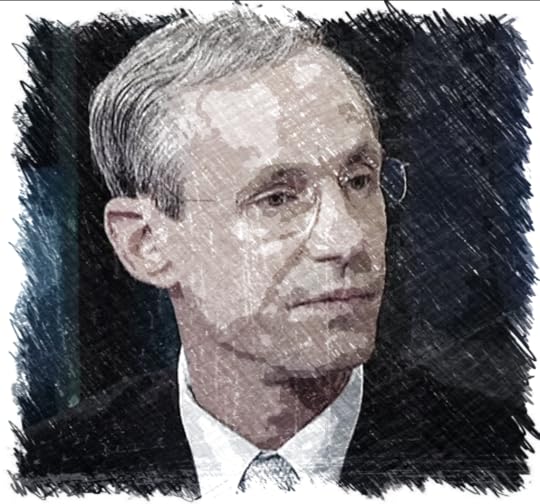 Christopher Mellon | Fox | Alt by Stellar
Although vital, it is not enough to merely “standardize collection and analysis” if we want to determine the origin and capability of these craft or the intent of those controlling them. Standardized reporting would ensure that incidents are recorded regardless of the source, but that data will merely be the result of random incidents unless we work to develop an effective collection program. Passive reliance on UAP data collected from random encounters is not a plan commensurate with the potential risks to U.S. national security. Had we sought to track other breakthrough weapons or technology developments in that manner, we might still be wondering if the Russians or Chinese had developed ICBMs.
To make serious headway we need to do much more, including:
Identify telltale signatures associated with UAPs. This requires sophisticated technical analysis of existing data (e.g., radar, IR, optical, infrasonic etc.). Assessments of the propulsion technologies potentially used by these vehicles could also help to determine what distinctive UAP signatures to look for.With that information, and a baseline review of the effectiveness of existing sensor systems vis-á-vis UAPs, we can determine which U.S. collection capabilities are best suited to detect and track UAPs.Once that is determined, we can devise a collection strategy that efficiently leverages America’s vast array of technical sensor systems. Recognizing the many important intelligence requirements these collection systems are already supporting, it will have to be an efficient collection plan with minimal impact on other missions.We should also apply AI and machine learning analysis to UAP data in the hope of gaining new insights and iteratively improving our collection activities.Additionally, we should also use AI and machine learning technology to filter the large and growing volume of civilian UAP data. New UAP photos and videos are being submitted to private UAP organizations on a daily basis worldwide. Although civilian UAP reporting today has limited value if any for DoD, some of it is genuinely baffling and potentially useful if the authenticity can be established. A minimal investment would support an AI capability that winnowed the wheat from the chaff, thereby leveraging information collected by smartphone cameras around the world.DoD and the Intelligence Community should also welcome and encourage mainstream scientific interest in the UAP issue. The Galileo Project, a purely civilian effort to study UAPs led by the former Chairman of the Harvard astronomy department, is evidence of this recent transformation. The many scientists belonging to the Scientific Coalition for UAP Studies offer further proof of serious scientific interest in the UAP issue. In light of such interest, either Congress or the Executive Branch could establish a panel of cleared civilian engineers and scientists willing to advise and assist USG collection and analysis efforts. The panel could be formed under NASA auspices or those of DoD or the IC. Either way, there is ample precedent for such collaboration.From even this brief assessment of next steps it should be clear that however well-intended, a small OSD UAP office lacking resources or authority is not the answer. Neither the UAP Task Force nor a small OSD office has the skill set and heft to effectively manage such a technically and bureaucratically complex undertaking. Indeed, a new OSD UAP office could have a pernicious effect if it led members of Congress to neglect the UAP issue afterward because they thought a small OSD office was sufficient to fix the UAP problem.
As a former OSD intelligence staffer, I can vouch for the fact that the mere establishment of a small OSD UAP office is unlikely to accomplish much. Only the most senior OSD staff have much leverage with the services and agencies and then only when they are clearly acting at the behest of the Secretary. The situation is difficult enough vis-á-vis the military services, but an OSD staffer’s influence with the intelligence agencies is even more tenuous since these organizations report to the Director of National Intelligence (DNI) as well as the Secretary of Defense. Indeed, it is often difficult for even the Secretary of Defense to implement change across the department, especially where intelligence issues are concerned.
How would a small OSD office develop, implement and manage a multi-service and multi-agency collection program? Or initiate a contract to develop new algorithms for strategic radar systems to enable them to identify UAPs? Who would perform the UAP data analysis and identify the collection priorities? If the current UAP Task Force established by the Secretary of Defense is insufficient, what reason is there to believe a small OSD office would do any better? If it only had one or two personnel, like the original UAP Task Force, it would have a nearly full plate simply attending coordination meetings, reviewing the latest incident reports and briefing members of Congress and senior Executive Branch officials.
While it is true the UAP Task Force needs to be replaced by a more permanent solution, I suggest Congress allow the Secretary of Defense and DNI a chance to identify the best location for this function as they already have these issues under review at the direction of the Deputy Secretary of Defense. In the meantime, Congress should continue to insist on answers to key questions and place the responsibility where it belongs — the only place where the authority currently exists to address these issues given the number of powerful organizations that need to be compelled to cooperate — which, for now, is at the level of the Secretary of Defense and the DNI.
Sometimes the most effective thing Congress can do is simply to ask those in charge the right questions and use the power of the purse as needed to ensure that appropriate answers are provided.
Congress should be asking:
What data is required to assess the potential UAP threat and what is the plan for collecting and analyzing that data?What signatures and sensors are most useful for detecting and tracking UAPs?What would it cost to apply a different set of algorithms to our massive Solid State Phased Phased-Array (SSPAR) radars to ensure they have the ability to track emerging drone and UAP threats?Posing such questions helps to ensure accountability. It also helps to ensure that the principals in Congress, DoD and the IC remain engaged on the issue.
A generic problem associated with the House Armed Services Committee proposal to establish an OSD UAP office concerns the impact over time of Congressional organizational mandates. Every time Congress mandates another position on the OSD staff it further limits the ability of the Secretary of Defense to reorganize his staff in response to changing circumstances in the years ahead. Once Congress mandates establishment of an office it takes subsequent legislation to eliminate or modify the organization, always a lengthy and tedious process. It certainly could prove necessary to mandate an organizational change regarding the UAP issue, but it seems premature to do so before the Deputy Secretary of Defense has even had time to review the recommendations of the internal review she instituted in June.
Ideally, the UAP function should be managed by an organization that already works effectively with the Secretary of Defense and DNI and has demonstrated proficiency managing complex collection and analysis tasks. Single service organizations like the National Air and Space Intelligence Center (NASIC) are unable to provide the advocacy needed to institute a new function across the entire intelligence community. They are also unlikely to have the agility needed to expeditiously manage innovative contracts and research.
Furthermore, the USAF has a lot of historical baggage and is therefore not trusted by the public on the UAP issue. It also doesn’t help that the USAF is still not acting like a team player responsive to civilian direction from OSD. In that regard, it was incredible to see that in the recent unclassified report to Congress on UAPs that the USAF alone was explicitly singled out for not sharing information.
NASIC also reports on these matters through a USAF chain of command, unlike DIA or the Space Security and Defense Program (SSDP) that report directly to both the DoD and IC leadership. DIA and the SSDP also have the skill set, resources, and heft to make things happen within the highly competitive and complex system that manages U.S. intelligence collection and analysis.
In seeking answers to the national security implications of the UAP phenomenon, I suggest Congress, DoD and the DNI pay special attention to the capabilities of America’s most powerful and sophisticated strategic radar systems. Strangely, it seems these powerful instruments have not detected or reported what much smaller tactical radars have been observing off the East and West coasts of the United States. This has occurred it seems despite the fact that the massive early warning radar at Beale AFB was pointed almost directly at the Nimitz Carrier Strike Group during the famous “Nimitz incident” in 2004 in which strange aircraft were tracked for days by the USS Princeton and observed at close range by multiple USN aviators. Similarly, the East Coast counterpart to the Beale radar located on Cape Cod seems not to have detected or reported any of the scores and scores of UAP incidents that have occurred off the East coast of the U.S. since 2015. Is this really true? If so, why? These questions should be thoroughly examined.
If this deficiency can be remedied by merely modifying radar processing algorithms (the radar’s “filters” or “gates”) then it may be possible to quickly and inexpensively achieve a massive increase in UAP and drone detection and tracking. However, even if this proves to be a relatively inexpensive prospect, since no new hardware would be required, and even though it can be accomplished without in any way degrading the current vital strategic warning mission of these systems, bureaucratic resistance seems assured. Again, this is not something an OSD staffer can overcome alone. Maintaining visibility for policymakers and the public will be crucial to overcoming the inevitable inertia and resistance to change that the immense DoD bureaucracy is renowned for.
The good news for America is that major progress in solving the vexing UAP mystery can be achieved without large new expenditures or the disruption of other vital activities. Congress should demand answers and results and hold the Secretary of Defense and DNI accountable, but it should also grant the leaders of these sprawling organizations the flexibility to manage implementation. The timing is especially propitious now because the Deputy Secretary of Defense has asked the Under Secretary of Defense for Intelligence (USDI) to prepare recommendations on how best to manage the UAP issue.
In conclusion, if Congress remains actively engaged, we should soon find that the UAP mission has a new and more permanent home in an organization with the skills and access needed to at long last determine the national security implications of these strange vehicles.
Thankfully, Rep. Gallego and his colleagues in the House and Senate are in a good position to achieve further progress by continuing to demand answers to critical questions. Congress should require further action as needed but in fairness the Administration has been responsive to date and seems to recognize the need for change. They are already working to develop proposed reforms and if Congress makes clear what needs to be accomplished they are likely to respond appropriately.
If the Administration doesn’t answer the mail then it will be time for Congress to move from identifying the goals to stipulating how to achieve them.
Meanwhile, it is exceptionally commendable that Congress and the Administration are engaging on this issue, putting national security ahead of any residual fears stemming from an outdated stigma.
It is also encouraging to see that there are still some issues that both parties can work together on in the interest of national security. Kudos to Rep. Gallego and his colleagues as well as their Senate counterparts, in particular Senators Mark Warner and Marco Rubio and their staff.
Written by Christopher Mellon. Originally published at https://www.christophermellon.net/post/should-congress-create-an-osd-office-for-uap-issues

Should Congress Create a New Office to Study UAP? was originally published in Trail of the Saucers on Medium, where people are continuing the conversation by highlighting and responding to this story.
October 7, 2021
Neil deGrasse Tyson, Let’s Have a Real UFO Debate
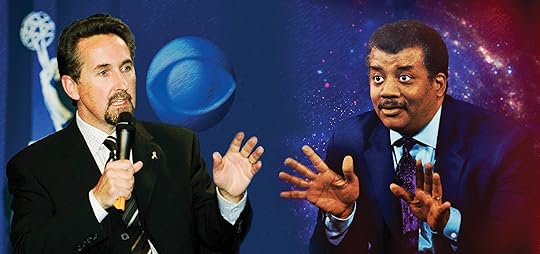
This open letter challenges your UFO skepticism. Can you go beyond sound bites and punch lines to get to the heart of the matter?
September 20, 2021
‘Roswell and JFK in an Atom Collider’

Twenty-five years ago, NBC’s landmark alien invasion series Dark Skies linked two of the most speculated events of the century together…
September 15, 2021
TV’s Most Subversive UFO Series Turns 25

The landmark NBC series Dark Skies had a subversive on-air storyline matched only by its off-air intrigue with real Men-in-Black. The…
September 14, 2021
America’s First UFO Abduction Case Turns 60

Barney and Betty Hill said they encountered extraterrestrials six decades ago, and their story still packs a punch.