
Lakis Fourouklas's Blog, page 10
September 9, 2013
Book Review: Shadow of the Rock by Thomas Mogford
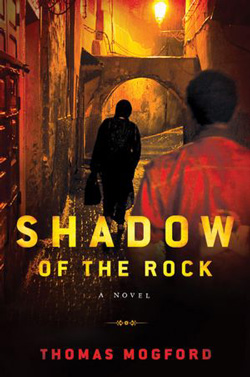
Shadow of the Rock by Thomas Mogford is the first book in a series starring tax attorney and amateur detective Spike Sanguinetti.
It’s a humid summer night in Gibraltar when lawyer Spike Sanguinetti finds Solomon Hassan, an old school friend, waiting on his doorstep. Accused of murdering a Spanish girl in Tangier, Solomon swears his innocence. He has managed to skip across the straits, but the Moroccan authorities demand his return.
Spike travels to Tangier in the hope of delaying the extradition. Solomon's boss, Nadeer-the founder of a renewable-energy company called Dunetech that is on the verge of financing an enormous solar-powered site in the Sahara-suggests that if Spike can delay Solomon's trial until after the deal signs, he will persuade the governor of Tangier to bury the extradition demand. Complicating this offer, Spike encounters a Bedouin girl who insists that Dunetech is engaged in a nefarious scheme linked to the disappearance of her father. As Spike uncovers the truth, he finds himself drawn deeper and deeper into a world of secrets, corruption, and murderous lies.
First I’d like to give you an advice: Don’t start reading this book late at night. I did and I had to pay the price; that is, stay awake until early morning when I finally finished it.
I guess that I was surprised in a way that a thing like this would happen to me with a book that’s not a fast-paced thriller, full of twists and turns, car-chases, explosions and other cinematic elements. On the other hand though it has all the other qualities that make a crime novel stand out: mystery, exciting settings and a hero who, well, at first doesn’t seem to want to be a hero.
Spike considers his homeland, The Rock, as Gibraltar is widely known, as one of the best, if not the best place in the world. Everything looks simple there. Everybody seems to know everybody else, the way of life is kind of serene but mostly cosmopolitan, and nothing of much interest, or rather exciting I should say – apart when it come to the world of business – seems to happen.
He knows this little abode at the edge of the sea inside out and he really loves the Old Town and its history:
Ahead rose the Moorish Castle, dominated by the Tower of Homage, built by the Moors when they’d conquered Gibraltar in AD 711. They’d held it until the reconquest, seven centuries later, and their leader’s name Jebel Tariq – Mountain of Tariq – has stuck, morphing over time to Gibraltar. Beneath the stone battlements ran dark, sweaty stains where the Moors had poured boiling pitch onto besieged Spaniards. Spike stared up at them, marveling as ever at their longevity, as he came into Upper Castle Gully. Then he saw Jessica Navarro standing by her Royal Gibraltar Police van.
Jessica is one of his closest friends, along with his partner at the law firm, Peter Galliano, a lover of good life. There seems to be some kind of attraction between Spike and Jessica, but that doesn’t even morph into words. It’s as if they know that what they have is what there’s ever going to be.
One of the most unusual things in this novel is that cops and lawyers seem to get along very well. They talk a lot, they drink beers together and they help each other out.
For instance when Spike advices his old friend and now client, Solomon Hassan, to surrender to the police in Gibraltar, he knows that he’s going to be in good hands. Actually the only one who verbally abuses him is Spike himself in order to make certain that he is innocent.
And even when he travels to Tangier to investigate the crime in question he’s still in close contact with the police through his colleague, Galliano, who keeps him up to date.
Of course he doesn’t expect the same kind of co-operation from the Moroccan authorities. If he wants to have something done he has to do it himself. And thus starts the adventure, an adventure that would make the cynic in him come to life, especially as he wanders the streets of the mythical city: “He tried a different route down, passing an American woman of a certain age arm in arm with a handsome Moroccan youth. The irresistible pheromones of the green card.”
Spike finds Tangier attractive and kind of repulsive at the same time. As he walks the streets, talks to the people, pays bribes, and moves on from place to place, he feels good there, but at the same time he knows that it’s a place where he could never live. It’s not the night life that mostly captures his imagination, it’s not the bazaars or even the women (at first); it’s the beach:
The sand felt warm between Spike’s toes. Seeing a discarded syringe ahead, he dropped his espadrilles to the ground and kicked them back on. The breadth of the beach had been a surprise, more than half a kilometer wide, continuing all along the inlet of the bay, port to the left, hills to the right, bright wasps’-nest city rising behind.
Waves lapped at Spike’s feet, propelled by their cross-mix of currents. A shelf of sand rose at the tidemark: if someone had wanted to sit by the sea they could lean on the sandbank and be out of sight of anyone walking behind. Washed up against it was a melee of debris: punctured lilo, toothbrush, a plastic doll with a melted face.
Shadow of the Rock is a character driven novel. Spike may be in the epicenter of things, but there’s a colorful cast of secondary characters that enrich the story: headstrong and dismissive inspector Eldrassi, Marouane, the bar owner who sure likes his bribes, Jean-Baptiste, Spike’s hotel neighbor who’s willing to offer a helping hand, some goons and a rich industrialist, Zahra, the girl who knows too much and has her own agenda, and his receptionist at the hotel, an avid reader who answers almost every question with a quote.
As far as debuts go this couldn’t have been any better. The author has taken full advantage of his material in order to create an engrossing tale that captures the reader’s heart. I, for one, look forward to the future adventures of Mr. Spike Sanguinetti.


September 7, 2013

September 6, 2013
Book Review: The Crime of Julian Wells by Thomas H. Cook
When famed true-crime writer Julian Wells´ body is found in a boat drifting on a Montauk pond, the question is not how he died, but why?
The death is obviously a suicide. But why would Julian Wells have taken his own life? And was this his only crime? These are the questions that first intrigue and then obsess Philip Anders, Wells´ best friend and the chief defender of both his moral and his literary legacies.
And so the journey, in The Crime of Julian Wells, begins. A journey that will take the reader by the hand and lead him into the wilderness of the human psyche, moving back and forth in time, describing some of the most heinous crimes that ever took place in history and bringing to light the dark secret that haunted for years on end the soul of poor Julian Wells.
“There’s no more haunting story than that of an unsolved crime, Julian had once written,” and now Philip, the friend who thought so highly and yes, even a little bit jealous, of him needs to find out for himself the reason why he has taken his own life.
His quest for the truth will not prove easy though, because Julian died leaving behind him just a small clue as to why he did it but no real answers. Could the truth lie somewhere in his books, or did something else happen that made his friend decide that enough was enough and that he couldn’t go on living in this brutal world of ours?
Philip can’t stop himself from feeling a little bit guilty for what have happened. Maybe if he was there more, maybe if he knew his friend better, maybe if he could read in his face his sorrow and his pain, he could have helped him. Julian however has always been a man on the move, for him the road was home.
From his first trip abroad, I’d had little doubt that he would remain an expatriate all his life, which made it all the stranger that in the end –that terrible, lonely end– he had died at home.
Now, my thought, growing more insistent by the hour, was how I may have saved him.
Too little, too late. “Guilt is a luxury, Philip,” Julian told him once, but that doesn’t make him feel any better now. So, for the first time in his life, he decides to do something out of character, to put everything on hold and follow in his best friend’s footsteps to find out the truth about his life and death.
Thus as a man on a mission he crosses the Atlantic and goes to Paris to gather Julian’s belongings from his apartment there and then decides to keep on traveling, moving from one place to the next, visiting the places that the latter’s books talked about, meeting people who knew him and finding out a lot of the secrets he never told him.
Who, really, was Julian? he asks himself time and again. Who was that eccentric, mystifying and introvert man? As it turns out he was, as expected, somebody else. Who exactly? It well take a lot of time and a lot of traveling, and a quite a bit of detective work, until the reader, as well as the hero, finds the answer. However the journey that will lead him to the final solution will be full of surprises and flourished with bits and pieces of history that make the narrative much richer, and as time goes by more compelling.
There’s not a single word too many in this novel. The author wanted to say a story about love and loss, but also about personal and collective pain, and dress it in a coat of mystery and he did just that. This is not your usual crime novel, which makes it all the much better, not just because it crosses genre boundaries, but primarily because it does.

September 2, 2013
Book Review: The Ostracism of Ophelia by Claire Fitzpatrick

The Ostracism of Ophelia by Claire Fitzpatrick is one of those novels that can make the reader feel more than simple sympathy for its heroes. It’s a story about pain and sorrow, hope and despair, love and forgiveness. And it’s also a story about crime and punishment.
Ophelia, William, Wren and Casper, the main protagonists, are damaged souls. They are young, they seem to have a bright future ahead of them, yet their everyday lives are bleak, bathed in despair, haunted by a past that just won’t let them make their dreams come true and fulfill their potential.
Good and evil seem to walk hand in hand in this story; no one is a really good person or a completely bad one. However, they are not ordinary in any way — they may do ordinary things every now and then, but that’s about it. What are they? They are young people who are trying hard to escape their demons, to travel like lucky Alice to Wonderland. Will they ever make it there? And if they do, how, and what will they find?
I wish that I could say that their story resembled a fairy tale, but it doesn’t. The heros live in a cruel world, and try to survive by taking difficult decisions and making hard choices. They read a bit, they play music, they take drugs, they hide in their secret garden and they create an unimaginable plot in order to escape their reality and also save one of them from her own self.
Sometimes their actions are cruel, and sometimes they are very kind; most of the times their bond seems unbreakable though every now and then they somehow drift apart. They look and act as if they belong together, but at the same time it seems that their meeting was not planned by some gods but rather by the devil. As the reader follows the paths of their lives, he finds himself in their shoes; he empathizes with them; he can feel their pain and he has no choice but to feel sorry for them.
If it wasn’t for the light touches of humour and the special moments of magic that can be found throughout the text this would be a bleak novel indeed. But instead this book is simply a great read. However, it’s not only the aforementioned elements that make it a good novel; it’s also the intricate plot and the well-crafted timeline, and finally the writing itself. Going through these pages one can find pure reading joy, and bathe himself in emotions; happy and sad. This is not a story for the fainthearted, but it is a story for those who have a big heart.

August 29, 2013
Book Review: The Black Box by Michael Connelly

Harry Bosch, Michael Connelly’s fictional hero, is celebrating 20 years in the crime-solving business, and The Black Box was promoted well in advance as a novel that would celebrate the life and work of this unconventional character.
The story takes the reader back and forth in time as Harry, who now works in the open-unsolved unit of the LAPD, decides to investigate a cold case, the murder of a young white woman during the Rodney King Riots of 1992. The woman, who was given the nickname Snow White by the press, was shot and killed, almost execution-style, in a somewhat quiet and deserted area of the city. At the time of the murder no witnesses came forth and apart from a bullet, nothing else was found at the scene.
Normally nobody would pay too much attention to the incident, since at the time chaos and mayhem prevailed in the city, but when somebody opened fire against Harry and his partner Jerry Edgar, while they were inspecting the scene, things changed; but yet things remained the same, since there was not enough evidence to carry on with the investigation.
Now, 20 years later, Harry is still haunted by the case and he’s determined more than ever to discover the truth. However, the higher-ups in the chain of command are not so pleased with his decision for political reasons; the victim was white. So they try to stop him. And they fail. When it comes to the politicians, in his precinct, or elsewhere, he couldn’t care less. What he cares about is the victims, and his personal need to give the relatives, whoever they may be, some kind of closure. So he battles on, though most of the time he’s all alone, and little by little he starts to unravel the threads of the mystery.
At the same time he tries to spend as much time as he possibly can with his daughter Maddie, who also wants to be a cop and his girlfriend Hannah Stone, a therapist who has a son in jail, but of course that’s not quite easy, since his job is his obsession, it’s what he lives for, and it’s what more often than not puts him into trouble. Thus it comes as no surprise that he’s yet again investigated by the Internal Affairs.
Harry Bosch is maybe older now and a little bit wiser, but he hasn’t changed. He’s as stubborn, restless and uncompromising as ever. He may have mellowed somehow because of Maddie and Hannah, but that’s about it. As they say, you can’t teach an old dog new tricks.
The Black Box is not one of the best Bosch novels. The plot is good and the story runs smoothly, but not always, since every now and then it seems to lose its pace. I think that if it was a little bit shorter it would be much better. It is an enjoyable read though.
By the same author:
The Safe Man
Mulholland Dive
The Drop
Angle of Investigation
Suicide Run
The Fifth Witness

August 27, 2013
Book Review: The Absent One by Jussi Adler-Olsen

The Absent One by Danish crime writer Jussi Adler-Olsen is a novel that explores the darkest secrets of some of the most powerful men in Copenhagen.
In The Keeper of Lost Causes, Jussi Adler-Olsen introduced Detective Carl Mørck, a
deeply flawed, brilliant detective newly assigned to run Department Q, the home of
Copenhagen's coldest cases. The result wasn't what Mørck-or readers-expected, but
by the opening of Adler-Olsen's shocking, fast-paced follow-up, Mørck is satisfied with the notion of picking up long-cold leads. So he's naturally intrigued when a closed case lands on his desk: A brother and sister were brutally murdered two decades earlier, and one of the suspects -part of a group of privileged boarding-school students- confessed and was convicted.
The question at first, of course, is who was it that placed the case file on his desk, and then the why follows. But do these questions really matter? The case is closed, so why bother? Unless, and that’s exactly when things start to get interesting, there were more than one men involved in the case, and the man who took the blame was paid to do so.
Mørck, truth be told, is not so eager to investigate this case. Not too long ago he found himself in the epicenter of a painful investigation that brought his Department Q some fame, and just before that he was involved in an incident during which one of his partners was killed, while another one came out of the ordeal almost completely paralyzed. He carries, one would dare say, a lot of dead weight on his shoulders, and what he doesn’t really need right now is to add to it by working on a case like this.
However, Mørck is who Mørck is; and that is a figure who has issues with authority, who doesn’t really follow protocol unless he’s explicitly ordered to do so, and who just likes to do what he’s told not to. Thus he starts paying real attention to the case when they tell him to let it go.
When Carl was a boy, his father had been on to him. He gave Carl explicit orders not to plough the meadow, so Carl ploughed it. He admonished Carl not to join the military, and Carl enlisted. His crafty father had even tried to stir him towards the lasses. This farmer’s daughter and that farmer’s daughter weren’t good enough, so Carl went after them. That was Carl’s way, and always had been. No one was going to make his decisions for him, which actually made him easy to manipulate. He knew this, of course. The question was whether or not the police chief also knew it. It was hard to imagine.
Getting people mad at him seems to be his favorite pastime, so there are not an awful lot of people that really like him. He’s doing fine with Assad, his idiosyncratic assistant, who half the time just does whatever he seems to think proper instead of following orders, his tenant Morten and his stepson Jesper, and the police force’s psychologist Mona Ibsen, with whom he wants to date and not freaking consult.
How could such a man properly perform in a workplace where cooperation is the keyword? Not easily, apparently, and that’s exactly the reason that he was demoted/promoted to Department Q. While there he doesn’t have to interact with many people and that suits everyone fine.
In the previous novel by the author, the excellent The Keeper of Lost Causes, where the reader comes for the first time face to face with Mørck, he only had to spend time with Assad, in his lonely basement office. But, the success of the case he handled back then had put him on the spotlight. So, the police chief decided to enrich his team with the addition of Rose, an officer with lots of wit but attitude problems, who was chased out of her previous post. With her arrival there the tempers seem to rise, and since Carl is by nature like a walking and breathing ticking bomb, things sooner or later are bound to explode.
However, Rose doesn’t only bring trouble into his office, but also a fresh breath of air. She knows things, she’s quite good at her job and she can even predict what he’s going to ask her to do next. So Carl, even though he doesn’t dare admit it, soon comes to realize that he needs her. He still wants her out, of course, but at the same time, he can do nothing but admire her work ethic. If only she wasn’t so nosy.
In the meantime, in the world of the villains, some interesting things seem to take place. To begin with the members of a former school gang and ever since best friends, seem to start losing their confidence about keeping their secrets buried in the sand of time. They are rich and famous, they are more than powerful, they can, and most of the times do, whatever they want. However, an old friend of theirs comes out of the blue to unsettle their blissful lives. She knows everything about them, all their crimes and all their lies, and she can definitely destroy them if they let her be. They have to find her and silence her once and for all. But she’s too clever, and too sly, and she’s determined more than ever to turn their dream lives into a living nightmare. So the past and the present at some point will come together and the end result will prove just as surprising and explosive as the plot that preceded it.
The author draws very detailed portraits of his characters. Reading through the pages the readers come to know how each and every one of these people became what he or she is today. Some of them are haunted by the past, a few live charmed lives, the members of the gang know that “this painful, shared hatred of their fathers had united them”, and Carl, despite his harshness and his difficulty of expressing his feelings is, at the end of the day, a humanist misanthrope. He may be a loner and persistently antisocial, but he also cares deeply about some people, and empathizes more often than not with the victims’ misfortunes.
It couldn’t have been colder in this house that it felt now. Everything in it was saturated with the tragedy of the past. Who was even left from that time? An old woman who would soon die of a tumor in her brain, that was about it.
He focused on the panel doors leading to the bedrooms. Father, mother and child we see. Count them quickly: one, two, three. He peeked into each room, one after the other… In these bedrooms, beneath the sheets, the future seemed bright and infinite. And in the living room behind him, that future had been brutally torn from them. Which meant that he was standing on the very axis upon which life revolved.
The threshold where hope had met reality.
I thought that The Keeper of Lost Causes (review here) was one of the best crime novels that I’ve ever read, but I truly believe that Adler-Olsen has somehow managed with The Absent One to improve on that remarkable feat. This is a book that takes a pretty good and detailed look into the darkness that, from times immemorial, lurks in the hearts of men.

July 26, 2013
Book Review: Lake Country by Sean Doolittle
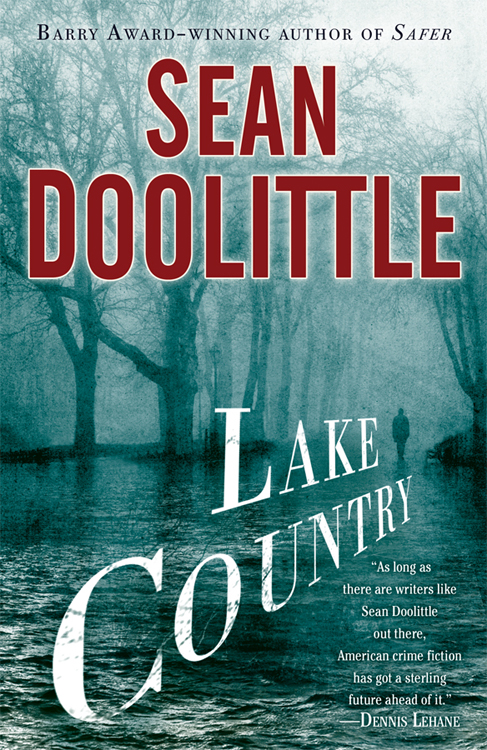
Lake Country by Sean Doolittle is not a police procedural and it’s not really a thriller. It’s a story about some people and their haunted past, about the ghosts that no matter how hard they try, they cannot escape.
What I mostly liked about this book I must admit is its size. What do I mean by that? I mean that the author did a great job working on the economy of the novel. There’s not a single word out of place here, there are not too many subplots to make it a doorstopper, and thus less enjoyable, and there are no wild stretches of the imagination in order to surprise the reader. All Doolittle seems to want to do is tell a story, and that he does well.
Two of the main characters in this novel are ex-soldiers, survivors of the war in Iraq, and each one of them carries their own psychological baggage.
Darryl Potter is a troubled young man who’s seen his fair share of war and bloodshed and who always manages, in one way or another, to get into trouble. He hates the way his life turned out, he hates that the justice system doesn’t really care about imposing the law when it comes to the rich and powerful and he hates the fact that he wasn’t able to save the life of one of his army comrades, and feels guilty about what happened afterwards to that man’s family. He almost hates everything and everyone. His day to day life bathes in misery and now, more than ever, he’s determined to do something to change it, even if that means taking the law into his own hands.
Mike Barlowe though, his brother in arms, doesn’t seem to hate anyone. He just feels kind of sad about his life and he tries to relieve his psychological, but also bodily pain, since he carries a serious wound on the knee, by drinking alcohol and taking scores of pain killers. What a life, one would say. What a life!
We meet a lot of human wrecks in this story; people who have lost everything in an accident, or during the war, or at a moment of pure madness. Even though some of the protagonists seem to lead quiet and peaceful lives that is not really the case. They also have harmed people and have been harmed by others. They’ve also suffered, or still suffer loss, sadness, loneliness. Actually when it comes to it I would say that none of these people seems to belong to this world anymore. They can only be grateful for what they have and that’s what keeps them going: a job, a family, a very good friend who’ll stand by their side no matter what, a purpose that could prove misguided, but which at the same time will give them the opportunity to face their inner demons.
The author is not very kind with his heroes. They are all full of faults, full of out-of-control passions, even full of themselves. But maybe that’s exactly what makes this book so special. It talks about people who could be living right next door to us, or maybe down the street; people who meet once a year to celebrate a life and mourn for a death; people who sit at a dark corner of a bar where they desperately try to hide their fears away.
If you like adventures you’ll get some here; if you like mysteries, not so much; if you love police procedurals, well, this could work for you; but it would be better if while reading it you just let yourself go, and enjoy the ride. It may be a bleak ride in a way, but it’s a great one nevertheless.
This review appeared a year ago in Criminal Element

July 23, 2013
Man Booker Longlist Announced

The longlist for the Man Booker Prize has been announced today. 13 books have been selected at this stage. The shortlist will be revealed in September and the winner on the 15th of October. Please note that some of these volumes are still to be released. The longlisted books are:
Tash Aw - Five Star Billionaire
NoViolet Bulawayo -
Eleanor Catton - The Luminaries
Jim Crace - Harvest
Eve Harris - The Marrying of Chani Kaufman
Richard House - The Kills
Jhumpa Lahiri - The Lowland
Alison MacLeod - Unexploded
Colum McCann - TransAtlantic
Charlotte Mendelson - Almost English
Ruth Ozeki - A Tale for the Time Being
Donal Ryan - The Spinning Heart
Colm Tóibín - The Testament of Mary (read my review here)

July 17, 2013
Feature: Petros Markaris. The Greek Master of Crime Fiction

He’s a household name among crime fiction aficionados. His books have been translated into fourteen languages and are sold in more than twenty countries in the world. His last novel, Peraiosis, has sold fourteen editions in Greece (that should be over thirty thousand copies) in a little less than a month. And yet not many people know him in the English speaking world. I believe that sooner or later that is going to change.
Petros Markaris is one of those writers that somehow manage to try their hand in many different writing fields and succeed. He’s written crime novels, short stories, plays and screenplays (for Theo Angelopoulos among others), and translated the works of Goethe and Brecht from German to Greek, as well as quite a few books from and to Turkish. And he’s created a fictional hero that seems to openly express the thoughts, feelings and worries of the Greek people about what’s going on around them.
Costas Haritos, a CID chief who lives in Athens with his eccentric wife and troublesome daughter, doesn’t have many things to share with his European or American counterparts. Forget the lonesome figures of the American procedurals or thrillers, leave behind the angry souls fighting crime in a system that seems to protect the perpetrators more than the victims, and do not expect to meet at his face the guzzler detective that tries to drown his sorrows in a bottle of whiskey. Haritos is something and somebody else. Not that he doesn’t drink or doesn’t like his food, not that; the difference is that he does everything in moderation.
Once the readers get to know him well they’ll come to understand that he lives and breathes for his job, but that doesn’t turn him blind to the world. He may love what he does for a living, but he’s not obsessive about enforcing the law if the ends don’t justify the means. He wants to do what’s right, according to his own code of ethics, and if to accomplish that he has to turn a blind eye every now and then, well, he’ll just do that. He’s kind of a loner, truth be told, but he’s a man of the people as well. He can feel their pain and their agony, he can speak their tongue.
In these turbulent times for Greece, Markaris seems to be the only writer who can really talk about what is going on in the country. In 2010 he brought out the first book in a trilogy (The Trilogy of the Crisis) titled Overdue Loans (Lixiprothesma Daneia) about the current economic and social realities in his homeland. In that book an unlikely avenger starts killing local and foreign bankers and urges the public, through posters on the city’s walls, not to pay their debts to the banks. Haritos needs to find and arrest him before things get completely out of hand.
In Peraiosis or Completion that came out a year later a man that calls himself the Tax Collector starts killing tax evaders in order to scare rich people into paying their taxes and thus filling the state coffers, and Haritos finds himself in a moral dilemma, since he really doesn’t know what to do. He suffered a big salary cut, his bonuses are no more, his daughter is about to emigrate to find a job; and he’s supposed to arrest the man that targets the very people that did everything they possibly could to lead the country into catastrophe? Should he do that? And, moreover, does he want to do it?
The third part of the trilogy came out towards the end of last year, it is called Psomi, Pedia, Eleftheria (Bread, Education, Freedom) and in it the author turns his gaze on the so-called Genia tou Politexneiou (The Generation of the Polytechnic University) which helped to bring down the dictatorship in Greece in 1973. The young people behind the revolt were to rise to power in the years to come and betray all their beliefs and break all their promises in order to cling to their posts in government and the glory that came with them.
As one can gather Markaris is not only a crime fiction writer but also a social commentator. He keeps his eyes and mind open, he listens to what the people all around him have to say, he watches what’s going on in his front yard and really talks his mind. As one of Haritos´s friends says in Che Committed Suicide: “The revolution became a t-shirt;” and an empty one at that.
The latter is one of four novels by the author available in English. The other three are The Late-Night News, Zone Defence and Deadline in Athens. With which book should a reader start the journey into Haritos´ world? Well, any of the above will do, since they all are stand-alone novels. I personally started with Che Committed Suicide and then went back to the older books in the list and didn’t regret it for a minute.
Markaris is a consistent writer who keeps his standards high. If I was asked by someone to tell which famous detectives he reminds me of, I would say Michael Connelly’s Harry Bosch and Ian Rankin’s John Rebus. What’s the common denominator? Their unflinching quest for the truth. Because in the end it’s all about the truth, isn’t it? Will it set you free though? Haritos is not one to ask, or say.
If you really want to find out what is going in Greece right now Markaris is your man. And if you love high quality crime fiction he can definitely deliver the goods.
This article was first published at the American website Criminal Element more than a year ago.

July 9, 2013
Book Review: Only One Life by Sara Blaedel

Only One Life by Danish author Sara Blaedel is not so much a whodunit, I wouldn’t even say it’s a whydunit; it is, to put it gently, a “what the heck happened?” kind of book. This is one of those novels that have many layers. The first layer is made of facts, the second of hidden truths, the third is composed primarily by lies, the fourth talks about the social background and so forth.
As in her previous outstanding novel Call Me Princess (review here), Blaedel is more interested in exploring the tortured psyches of her subjects than providing the reader with a fast-paced narrative. She wants to tell the story behind the story, to see where people are coming from and where they dream of going. She doesn’t seem to seek to impress us with her twists and turns in the plot, as much as to make us think; to think about the world that’s changing all around us, to consider seriously the issue of immigration and explore our capabilities to adapt in these new realities.
Her heroes and heroines are not extraordinary people; they are as common as they come. They live ordinary lives, lives full of small joys and great sorrows, lives which even at the best of times look unfulfilled, robbed of any potential for happiness.
Samra is a girl that arrived in a new land, with different habits, but who tries hard to adapt, despite the fact that her family doesn’t seem to want her to do so. Dicta, her best friend, leads a mostly carefree life, since she has rich parents who more or less let her be, even though she’s no older than fifteen. Louise Rick, the cop, is a highly intelligent yet sad woman, who tries to find solace in her job and in helping other people out. Her friend, Camilla, is a stubborn journalist, who’s trying to recover from a recent break-up, do the best she can about her son Markus, and of course excel at her work.
There are quite a few other people -mothers and daughters, fathers and sons, friends and lovers, in this story- and there’s drama all around. And that’s exactly what makes the book so special. The people are the story, not the crimes. The crimes just serve to kick-start the process of this long journey of discovery that will lead the main characters time and again into dark places, while it will also show them that in the end not everything is lost, there’s still hope in the world. Blaedel tackles the big issues of today with an open mind, and in doing so she has to give her heroes a human face. Nobody is perfect. They all have their weaknesses, they all every now and then do things that they regret and they all try desperately to understand each other, even though sometimes there’s no way of making that happen.
How can people from a Muslim country find their way and start a new life in a world so much different from their own? How do they forget their traditions and their codes of honor? How do they integrate into an immoral, at least in their eyes, society? And how can the locals accept these outsiders? Do they feel threatened by them or do they really welcome them as who they truly are? Could it be that the only things that keep society from falling apart, of social tensions rising, are observing some codes of silence and every now and then turning a blind eye?
It takes a crime to burst this ideal world bubble, and another to bring it to the brink of destruction.
Only One Life is a good police procedural that tells a great story, but most of all it’s a novel with a conscience, and you can’t say that for every book that hits the bookshelves these days. A lot of those books try to feed on the fear of people for the unknown, while this one just tries to understand that fear and put it into context. A job well done.


