
Nell Stephenson's Blog, page 14
March 7, 2019
How Healthy are Those Healthy Snacks?
Are Vegan, Nacho “Cheeze” Flavored, non GMO, soy, dairy and nut-free, USDA Organic Certified kale chips all they’re cracked up to be?
Gone are the days when the line between healthy and so unhealthy was a glaring red divide.
Think back to a time when one might wander into any run of the mill grocery store and could either opt for one of two choices:
Go down the into the small health food section (a concept I always found odd; if that was health food, what would the rest of the contents in the store be classified as, anyway?) or produce section to buy real food
Peruse the rest of the store and stock up on packaged, processed items, often with their best feature being convenience
Back then, it was hardly even conversation worthy to consider whether steamed broccoli with olive oil versus trans-fat rich potato chips were the healthier choice.
Now the lines have blurred tremendously.
Forget about the items labeled as being “keto friendly” or “Paleo – approved”; let’s just focus on those we perceive to be healthy.
Organic ‘Nacho-Cheeze” Flavored Kale Chips
Gluten Free Tamari Edamame Puffs.
Non GMO Yam Crisps.
Oregon Tilth Certified Chick-Pea Bites.
Fair-Trade Coconut Flour Chocolate Wafers.
What else have you seen?
Let’s dig into this a little.
We know that the labeling we see on our foods is governed by the USDA.
And we also know who backs the USDA (1); amongst them are ConAgra, General Mills, Kellogg, the National Dairy Council, Coca-Cola, Kraft Foods, Nestlé, and PepsiCo.
So what does it really mean when we see the word healthy on a label?
Foods that “are not low in total fat, but have a fat profile makeup of predominantly mono and polyunsaturated fats; or contain at least ten percent of the Daily Value (DV) per reference amount customarily consumed (RACC) of potassium or vitamin D” are considered healthy.
No regulation to determine the amount of sugar, the presence of corn syrup or vegetable oils (hydrogenated or not), amount of processing and, on a most basic level, nutrient density.
This begs the question, as so eloquently positioned in a recent article in Vogue (3), “is the new breed of healthy snack food actually healthy, or just addictive?”
The author mentions navigating her young child’s stroller around her local Whole Foods and coming across one such ‘healthy’ snack labeled as “Vegan, White Cheddar ChickPea Puffs”, whose package stated that the contents were “USDA Organic, kosher, soy-free, dairy-free, nut-free and non-GMO”.
Do all these qualifications mean this is a healthy item to give our youngsters? Or to eat ourselves?
While eating a bag of USDA Organic Certified, kosher, soy-free, dairy-free, nut-free, non-GMO crisps of some sort or other on a rare occasion certainly isn’t going to create the demise of a healthy human body all on it’s own, what happens when food byproducts such as these become the mainstay of what humans consume?
Common sense dictates a general trend of eating more things from bags, boxes, mixes or cans is less than ideal versus fresh, local and in season.
Another point of contention to consider is how much the ingredients, all of which are completely legal to use and approved for human consumption by the USDA, may do more damage long term as a result of what is, in effect, a domino-like effect caused not only by added addictive sugars but also potentially by artificial flavors, colorings and dyes.
Dr. Mark Schatzer wrote The Dorito Effect (4) in 2015, in which he posits that it is the growing presence of fake flavorings which are responsible for our country’s obesity rate.
In the Vogue article, the author closes with reference of another example of another product which was about to make its debut: “100% Vegan Ch’eesy Mac and Ch’eesy Bacon Mac, a plant-based take on a classic comfort food that is shelf-stable, ready in one minute, completely free of nuts, dairy, oil, trans fat, cholesterol, GMOs and artificial flavors”.
How’s that for a mouthful?
Do we really want to choose to eat things that need that much qualification?
If we were to eat real, fresh, whole food, we wouldn’t need all that verbiage; how much wording do you see when you buy a bunch of kale, or a piece of wild black cod or a bottle of olive oil?
Cut to the chase: sure, a baked, organic, non GMO yam crisp made with coconut oil is a better choice than a conventional, white potato chip deep fried in hydrogenated oil.
Have it once in a while.
Once in a while, being the key takeway.
But please, don’t do your body (or your kids’ and family’s) bodies the disservice of opting for packaged items marked as healthy as a regular occurrence.
It’s each and every one of our responsibilities to nurture and nourish ourselves through eating real food, moving and sleeping… and then, to allow our leading by example to facilitate better options for those around us.
http://www.eatdrinkpolitics.com/wp-content/uploads/AND_Corporate_Sponsorship_Report.pdf
https://www.fda.gov/Food/GuidanceRegulation/GuidanceDocumentsRegulatoryInformation/ucm521690.htm
Adler, Tamar. “Grab And Go?” Vogue, Feb. 2019, pp. 156–177.
Schatzker, Mark. The Dorito Effect: the Surprising New Truth about Food and Flavor. Simon & Schuster Paperbacks, 2016.


February 27, 2019
Kale + Fat: What’s Wrong with That?
I’m a kale fanatic; anyone who knows me will vouch for this, and it goes way back to before kale was a thing.
Far before kale was cool, and for that matter, far before health food stores were cool, there you’d find me as a toddler with my hippie mom, purchasing the 70s versions of ‘health’ food including organic alfalfa sprouts, whole wheat flour for mom to bake her own bread, raw cashews (a favorite snack of mine that mom allowed me to have, despite the pediatrician warning her they might cause me to become a fat child), carob powder and Dr. Bronner’s all in one soap, amongst a plethora of other food + household stuff that are now the norm but back then, were just… weird.
Fortunately, I latched on to what she demonstrated and fell in love with real food and healthy eating around the time I was born, and rather than rebelling during the time I was a bratty teenager, I kept these things which were the foundation of healthy living close at heart, and continued eating these foods that others would often comment as being strange.
Including eating a bell pepper, whole and raw, as a snack (still don’t see what the big deal here is).
And, including eating kale.
One thing that has changed, thankfully, is the misconception that kale, and all veggies, while we’re on the subject, must be eaten only in their raw form or that if cooked, they must only be steamed if we want them to most easily maintain their status as being good for us.
Far from it.
Of course, we do lose nutrient density when we cook anything, but if we weigh out the pros and cons, one common reason people cite for not eating enough veggies is that they don’t like them.
Other variables apply, certainly, such as not carving out a small amount of time to prepare them, or not being sure of the best preparations of a veggie we’re trying out for the fist time but if we ditch the idea that our only two options in the veg department are raw or steamed, we open up a world of possibility.. and taste.
Most importantly, we can move forward, full speed ahead with one simple trick which can transform even the more boring of veggies to something undoubtedly decadent: add fat.
Simply put, you’ll never go wrong sautéing any veggie in coconut oil and garlic, or roasting it in duck fat with and capers, or blanching it then dousing it with olive oil and lemon.
As more and more people find themselves intrigued by a ketogenic approach to eating, whether or not they’re cycling into a paleo-inspired foundation of eating, slowly but surely, more fat-friendly veggie recipes and entrees at restaurants are popping up.
(To clarify, a properly executed ketogenic approach does not have to equal zero carbs and thus, zero veggies. The key is to be mindful of which veggies have the lowest net carbs and stick with those, making it easy to stay below 50 grams of carbs per day while cosuming adequate dietary fiber to keep the system running like clockwork).
Some of my own regular go-to recipes are my duck-fat roasted cauliflower and of course… sautéed kale.
Which is precisely why I loved an article published today in the Times’ food section, Where Kale Is King (at Least, When It’s Stewed in Schmaltz and Bacon) (1).
Who knew!?
It turns out that there is such a thing as an actual festival to celebrate this beloved leafy green, which ranks a 100 on the A.N.D.I. scale (2)!
In a corner of Germany some 50 miles south of the North Sea, kale is more than the essential ingredient for superfood smoothies or a better-for-you-than-broccoli vitamin bomb. It is a season, an event, a tradition.
Unlike the Bavarians’ annual beer festival, Oktoberfest, which is known the world around, the hikes and feasts surrounding the annual harvest of kale, grünkohl, in German, in the flat lands around Oldenburg and Bremen are unknown internationally and draw blank looks from most Germans.
A few years ago, the city of Oldenburg set out to change that. Calling itself the country’s “Kale Hike Capital,” it began promoting events surrounding the winter walks, held from November through late February.
I want to go!
I did detect a slight note of an apologetic nature when the preparation is reviewed; a long-cook or stew in bacon or goose fat and the reference to it being most delicious when eaten the next day, and I disagree that there’s any reason to not enjoy this preparation, again, so long as it’s balanced out with other means of preparing this, and other leafy greens.
Bring the fat on and own it.
When sourced properly, natural animal fats including pasture fed lard, grass fed tallow, duck fat, chicken schmaltz and you name which ever other ones you can recall your grandmother using, are a healthy part of our overall nutrient intake.
Products from grassfed animals offer us more than omega-3s. They contain significant amounts of two “good” fats, monounsaturated oils and stearic acid, but no manmade trans-fatty acids. They are also the richest known natural source of CLA and contain extra amounts of vitamin E and beta-carotene. Finally, grassfed meat is lower than feedlot meat in total fat and calories, making it ideally suited for the all too common sedentary lifestyle (3).
Sometimes sauté with lard; other times use coconut oil.
Sometimes roast in duck fat; other times add olive oil to steamed veggies after cooking.
Yet other times, simply cut an avocado in half, mash it up with some lime and dip in the raw veggies.
Find your own balance and get those veggies in somehow, and often!
One caveat: there is such thing as pushing it a little too far; if you’re attempting to count the bag of kale chips you munch on each day between that 9am latte and hasty fast food lunch at noon as part of your daily intake, don’t. Once in a while is one thing, but if that’s the only time something green graces your plate, consider including options that aren’t quite so highly processed as your regular go-to.
Stay tuned for an upcoming post discussing how healthy many of the new ‘healthy’ versions of snack foods are these days.
In the meantime, which veggies will you eat next?
(1) https://www.nytimes.com/2019/02/26/wo...
(2) https://www.drfuhrman.com/library/eat...
February 21, 2019
Gut Health and Brain Function
About two years ago, my husband and I did DNA tests.
The raw data received was interesting, including finding out exactly what percentage of my ancestry actually is Norwegian (less than I thought) as well as the option to “trace parts of my ancestry to a specific group of individuals from 1,000+ years ago” and more.
It wasn’t until we had our raw data interpreted through Promethease (1), a literature retrieval system that builds a personal DNA report based on connecting a file of DNA genotypes to the scientific findings cited in SNPedia and took this report to a geneticist, mainly out of personal interest and intrigue, as well as part of our planning pre baby, that it began to get even more interesting.
The Functional Medicine Physician who specializes in genetics met with each of us and gave us a run down not just of any increased risk of disease or health issues we may be slightly more likely to have but of personality traits!
Fascinating.
And although I do have the gene to put me at higher risk of early onset Alzheimers, I didn’t walk away feeling frightened.
Why?
Because the although we cannot do anything about our genetics, we have complete control of epigenetics.
Epigenetics Controls Genes.
Epigenetics is what determines a cell’s specialization (e.g., skin cells, blood cell, hair cell, liver cells, etc.) as a fetus develops into a baby through gene expression (active) or silencing (dormant).
Additionally, environmental stimuli can cause genes to be turned off or turned on.
What you eat, where you live, who you interact with, when you sleep, how you exercise, even aging – all of these can eventually cause chemical modifications around the genes that will turn those genes on or off over time. Additionally, in certain diseases such as cancer or Alzheimer’s, various genes will be switched into the opposite state, away from the normal/healthy state (2).
And guess what the recommendation was for me to take complete control of all that I am able to in order to prevent developing that debilitating dis ease?
Get regular exercise.
Avoid toxins such as smoking, chemical exposure and improperly sourced and prepared food
Get ample and quality sleep.
Eat a nutrient dense diet which provides copious, local, in season veggies for vitamins, minerals and fiber, ample natural fats to support brain health and gut biome boosting foods regularly.
While the first three might sound like common sense, for many, a pause for thought might occur to ponder how a healthy gut biome affects brain health.
If you’ve taken a pause to consider, you’re not alone.
As recently as 2011, a mere seven years ago, it was considered crazy to look at at connections between the microbiome, behavior and overall brain health, according to a recent article in the NY Times (3).
Amongst many other manifestations of sickness on brain function due to a disruption of a healthy gut microbiome, we see:
An alteration in appetite patterns, first seen in rodent studies
Unusual patterns of microbial species in stool samples of Autistic children
Differences in the gut bacteria of people with a host of other brain-based conditions
An association between gut microbiota and metabolic disorders such as obesity, diabetes mellitus (4)
A link between neuropsychiatric disorders such as schizophrenia, autistic disorders, anxiety disorders and major depressive disorders
For many of us, myself previously included, some degree of gut dysbiosis is all too common.
Whether due to overuse of antibiotics, exposure to parasite or bacterial infections in the gut, excessive drinking, following a methodology of eating which is based on anything but real, whole foods which thereby causes inflammation or a combination of all of the above, the good news is that the human body is incredibly resilient.
In other words, we can heal ourselves, if our goal is to address root causes with a food first approach, rather than seeking transient remedies which target symptoms only, without removing the culprit.
Imagine trying to dress a gaping, oozing wound with small bandaids without trying to figure out why the bleeding won’t stop in the first place.
This is precisely the problem with the typical experience of visiting a doctor’s office for pain, for depression, even for GI distress; tablets, pills and powders are typically distributed like candy on halloween, yet what one is eating to cause or contribute to the problem is often never even a conversation.
This was my own personal experience, as well as that of many clients with whom I’ve worked over the years.
If we begin to self educate and learn the vast impact gut health has on all functions of the body, we can first start by addressing what we’re choosing to put in our mouths, something we have complete control over and, if needed, then seek health care professionals who can provide guidance, testing and remedies when appropriate (sometimes Eastern, sometimes Western).
We may start with addressing our own gut health, or lack thereof, and for some, it’s a long path ahead, but what other choice is there?
If we think about what each of us may have endured in terms of sickness and shift our mindset to one which is proactive and information gathering, not only do we create a plan for building and boosting our own gut biomes, but we do so for our families and those around us.
The influence of a mother’s gut biome on her unborn baby begins before birth, as a pregnant mother’s microbiome releases molecules that make their way into the fetal brain and continues post partum as mothers seed their babies with microbes during childbirth and breast feeding. During the first few years of life, both the brain and the microbiome rapidly mature, according to Rebecca Knickmeyer, a neuroscientist at Michigan State University, who was interviewed for the piece in The Times.
We are in exciting times; obesity rates in the U.S. appear to be leveling off, according to a new report (from 2015 to 2016, adult obesity rates remained stable in 45 states) (5), people are becoming more mindful of the quality of food they’re buying (6) and there is a seemingly limitless amount of healthy food options coming on to the market place (more on this in an upcoming post).
Anecdotally, I see more clients in my nutrition work who come in already aware of the impact of inflammation and gut disfunction on their overall health and it is my feeling that people are beginning to get sick and tired of being sick and tired.
Are you sick and tired?
If so, how’s your gut health?
Not sure?
How’s your sleep quality?
Mood?
Focus?
Digestion / elimination?
Energy all day long?
Overall well being?
Just a few of the boxes to tick off to check to self evaluate your current.
Start with taking an honest inventory of what you’re eating, how you’re feeling as a result and begin taking away the highly processed, low nutrient dense items that may have become a regular part of your regular regime.
Then, incorporate in a meaningful way, a large focus on in season, leafy organic veggies, small amounts of mindfully sourced proteins, a range of ample, natural fats and gut biome boosting foods:
Bone broth
Fermented foods (so long as you’re not following a candida or SIBO protocol
Prebiotic foods (asparagus, dandelion greens, garlic, jerusalem artichoke, onions)
Probiotics (you may want to check in with your naturopath to determine which probiotics are best for you, specifically)
Takeaway message here: when it comes to our health, everything goes back to the gut.
All of it.
Healthy guts, here we come!
https://www.promethease.com
https://www.whatisepigenetics.com/what-is-epigenetics/
https://www.nytimes.com/2019/01/28/health/microbiome-brain-behavior-dementia.html
https://www.ncbi.nlm.nih.gov/pmc/articles/PMC4662178/
https://www.livescience.com/60293-obesity-rates-leveling-off.html
http://www.startribune.com/americans-are-eating-more-organic-food-than-ever-survey-finds/424061513/
February 14, 2019
Exercise + Pregnancy
Yoga isn’t the only option for moving your body during pregnancy, but it sure is one that’s a great one to incorporate!
Before I was pregnant, I’d wonder what the landscape would look like if, one day, I were to become pregnant later.
While I’d had plenty of friends whom I’d met through triathlon who’d had babies both before and after (and in between!) their racing careers, the most I could gather was that there would clearly be a time period where training would be… different.
But just how different?
This was the question that begged to be addressed, and quite honestly one that factored in to our decision to have children now, ‘later in life’ as opposed to 10 years or more ago.
Research included trying to find any reliably sourced information online, looking for books relating to pregnancy and exercise and simply speaking to other women who race competitively as an age group athlete as I do, as well as those who race professionally.
With the exception of the last option, direct communication with a handful of other women, I came up empty handed, or so I thought.
It wasn’t until a month or two passed that I realized how valid the theory of continuing to do what the body is already used to doing, albeit with some modification, of course, is the recipe for success for each individual woman.
As with any new endeavor which I’ve chosen to embark upon and teach myself how to, in the beginning, I sought a leader or someone to impart some pearls of wisdom.
Accordingly, I did indeed follow the advice given by the doctor initially, but only for less than a week.
Why?
The advice was that I could exercise: I could do light walking.
For that brief moment in time, I obeyed the rule which resulted in me feeling like I was walking on eggshells.
Exactly what I was worried about happening, I can’t even remember but suffice it to say wherever it was it was completely fear based. Which is not remotely how I live any other part of my life!
I had to review the facts.
It’s a fact that extreme heat is a no-go. Studies have shown that some babies exposed to high temperatures (like those of a hot tub or sauna) during the first trimester experience serious complications to the brain and/or spinal cord (1). Effective immediately, I stopped my 3x /week 30 minute sauna.
It’s also a fact that my resting heart rate, normally 39 bpm, as well as heart rate throughout the day and during exercise would be elevated. Starting in the first trimester, resting heart rate will elevate by 15 to 20 beats per minute. As is the case with all of the major organ systems, cardiovascular changes that take place during pregnancy are believed to be triggered by hormonal signals, primarily increases in progesterone and estrogen, which alert the body to the presence of a fetus (2). So, heart rate would have to be modified. No problem. Little did I know that it wouldn’t be long before the little guy would start pressing on my lungs anyway, so even if, for some reason, I had felt an urge to do a redline workout, I would not have been able to, simply because I would not have been able to breathe!
Another fact: as my body changed, specifically as the baby grows and the belly begins to protrude, the center of gravity shifts (and later, so does ability to forward bend). Solution? Modify bike position into what appears a quite silly, upright pose so I can still spin inside on my trainer in our gym. I didn’t start showing until about 6 months, but I still felt the changes quite early on, particularly with regard to what felt like limited lung capacity.
Lastly, as body shape changes, certain poses in yoga begin to feel uncomfortable and / or are not recommended. Some are obvious, like Salabhasana, in which one lies on their stomach and lifts legs and arms off the ground; others, not so much, such as the recommendation not to twist. After the embryo implants itself in the uterus at around week 4 of pregnancy, the placenta begins to form and eventually attaches to the uterine wall (3).
As each day progressed, and I continued to feel well overall despite nausea, which never manifested into actually getting sick, so it was quite easy to not give it any life, I remembered more and more that all the answers would be within and that just like during a race or training session (pardon the analogy but given the topic, seems appropriate), tuning into what my body’s signals were would prove to be all the guidance I’d need.
And another development unfolded, which took me by the most pleasant surprise: I noticed I felt completely fine, even ecstatic about the way my body was telling me to move at a slower pace and I experience not one iota of concern of detraining, not being able to compete again post baby or anything of the like.
For me, this was huge. I’ve always been such a type A person, that missing a workout was never an option, running in a circle to make sure the mile marker on my Garmin ended evenly was the norm and taking a day off was unquestionable.
Despite all this, an automatic switch must have flipped in my brain in the most beautiful way.
I’m going on long hikes with the dogs instead of running (which just feels clunky at the moment), doing more yoga and swimming and riding my bike inside as described above.
Not worried if I take a day off and completely, honestly just feeling radiant.
Because my food story remains intact, having stuck with tried and true methodology I’ve followed for years which turns out to be exactly what baby needs, too, the body changes are all within the growing belly.
I never bought into the idea of eating for two inasmuch as the second person for quite a few months is about the size of a pea, per my doctor, so continuing to eat as I normally due has kept me feeling fab!
Doing what the body is already used to doing pregnancy but making modifications accordingly has been the theme that’s working best for me.
I won’t be taking up MMA or football any time soon, but I saw no good reason to remain comfortable with light walking as my only means of moving my body.
I’ve been an endurance athlete for over 20 years; arguably, stopping abruptly would be far more disruptive than modifying as the baby grows.
Benefits to the baby as well as mom of keeping active and fit during pregnancy are tremendous, including but not limited to (4):
Helps reduce backaches, constipation, bloating, and swelling
May help prevent, or treat, gestational diabetes
Increases your energy
Improves your mood
Improves your posture
Promotes muscle tone, strength, and endurance
Helps you sleep better
Regular activity also helps keep you fit during pregnancy and may improve your ability to cope with labor. This will make it easier for you to get back in shape after your baby is born.
Combine that with some common sense and this may well be the recipe for each of us to sort out our own preggie routines.
Not quite comfortable with this approach?
Two things: double check with your functional medicine partitioner and consider working with a fitness professional.
Seek someone with a degree in exercise physiology from an accredited university plus a legitimate training certification such as ACSM or NASM.
As a former fitness trainer holding both credentials, I can share first hand that it is far too easy to find unqualified trainers and now, as your baby’s developing inside you, is not the time to cut corners on cost for a less expensive trainer.
Your health and your baby’s may depend on it.
(1) https://www.healthline.com/health/pre...
(2) https://www.livestrong.com/article/25...
(3) https://www.curejoy.com/content/yoga-...
February 7, 2019
Care For Some Dye with That Glucose?
Lovely array of color, isn’t it?
Perhaps to look at, but not so lovely to think that coloring like this, often ends up in our food and drinks as well as personal care products.
Food dyes are chemical substances that were developed to enhance the appearance of food by giving it artificial color. People have added colorings to food for centuries, but the first artificial food colorings were created in 1856 from coal tar. Nowadays, food dyes are made from petroleum(1).
Avoiding items containing dyes is something we can all benefit from, but what do we do if it comes in something our doctors give us?
And how many of us go to the doctor’s office and listen to what they say, no questions asked?
I’ve been the squeaky wheel in this situation just as much as when I’m asking food-related questions when dining out for quite a while; unfortunately, there are far too many things left unspoken that we need to know about and unless we are willing to get a little uncomfortable, often there is potential risk.
As I’ve been sharing snippets of my pregnancy journey with you, I thought it worthwhile to write a post about a recent perfect example of just this situation: the gestational diabetes test.
I have no reason to fear that this was a risk for me, given the manner in which I choose to eat, however, given that this was a non invasive, no risk test involving nothing more than a blood sample, I had no issue with my doctor performing it.
The test is generally given between the 24th and 28th week of pregnancy (2); if you have had gestational diabetes before, or if your health care provider is concerned about your risk of developing gestational diabetes, the test may be performed before the 13th week of pregnancy.
When a woman is diagnosed with this condition, she’s often given a prescription for insulin and she’s far less likely to receive accurate nutritional advice, unless she’s under the care of a functional medicine OB, to steer her in the direction of managing this with food (what a concept) rather than having to rely on a mediation which the unborn baby is going to receive as well.
While gestational diabetes usually goes away after the baby is born (3), they have an increased risk for type 2 diabetes later in life as well as greater likelihood of being obese as a child or teen, and is more likely to develop type 2 diabetes later in life too.
So, valid test, and again, while there was no real concern on my part, why not do it?
It was the protocol I had an issue with.
At the second to last visit, the receptionist handed me a 12 oz plastic bottle containing an orange liquid, which struck an alarming resemblance to Gatorade.
“Oral Glucose Tolerance Drink” read the label, and I immediately looked for the ingredient panel:
Water, dextrose (same molecular formula as glucose), artificial flavors, sodium benzoate, FD&C Yellow.
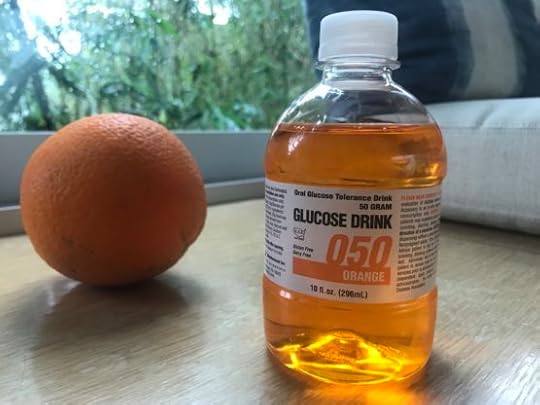
Obviously, glucose would be needed as the test is designed to measure the body’s response to ingesting this type of sugar as a determining factor as to whether one has the condition.
I remembered doing a very similar test back when I was studying exercise physiology; we used a pure glucose for the same protocol, although in that case it was to measure the response demonstrated by athletes rather than pregnant ladies.
So why would this test be any different? Couldn’t a non-GMO, pure dextrose sugar be used instead?
Bad enough I’d have to ingest 50grams of pure sugar on its own, so why add fuel to the fire with the yellow dye and sodium benzoate, a widely used food preservative?
Granted, the amounts might be minuscule, but it’s the principle that rubbed me the wrong way.
I decided to call the office to ask.
I explained that I preferred not to ingest dye and additives. Sodium benzoate, for example, is associated with sodium benzoate has been associated with side effects such as confusion, decreased urination, headaches, arrhythmia, appetite loss, muscle pain or cramps and nausea (4).
And the dye? Yellow 5 is banned in Austria and Norway, and other European countries have issued warnings about their possible side effects. It is still freely and extensively used in the US, however (5).
No, thank you.
I told the receptionist I would prefer to do the test using plain glucose (non GMO corn-derived glucose is easy to find. Not that this is a good thing to consume with any regularity, but for the one circumstance of the test, preferable to glucose plus dye plus preservatives.)
She asked me to hold and after a brief pause, returned and advised that I must indeed drink this untoward beverage, but that I could feel free to add a squeeze of lemon to alter the flavor.
Right.
I would still be consuming the dye and preservatives though.
Completely missed the point.
In the end, I emailed the doctor directly, and she replied I could certainly do the test using the plain glucose.
Which I did and no, I do no have gestational diabetes.
I did however, feel quite nauseated at consuming 50 grams of sugar on its own in one feel swoop.
We shall see what other interesting test suggestions come up along the way, and I will certainly share as I go.
Update: currently at week 28, the first of the third trimester, and feeling fantastic!
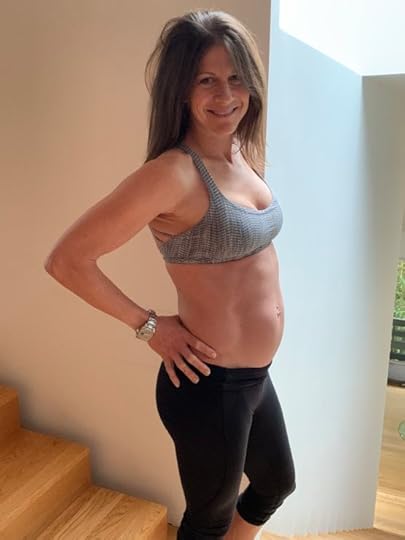
Exercising at a lower heart rate of course, marveling at the changes that already have occurred, and laughing at myself for feeling winded when climbing up the stairs as well as creating my own new pace at masters: pregnancy pace.
Next up on the blog series, more on how I’m shifting my daily exercise routine; it’s based on what I’ve been doing for the past 30+ years, with just a bit of modifications.
What my body was already used to, since birth and without adding something new. Not going to start MMA any time soon!
Also in the line up, the impact of meditation on pregnancy and what I’m learning as we explore different options for our birth plan.
Take away from this post: don’t be afraid to ask questions.
Don’t take my post as medical advice; rather, if something just doesn’t make sense or you don’t get an answer that demonstrates the doctor has listened, don’t hesitate to seek an OB who may have a more functional medicine background or at least a more holistic approach.
We’re doing just that!
(1) https://www.healthline.com/nutrition/...
(2) https://www.webmd.com/diabetes/gestat...
(3) https://www.cdc.gov/diabetes/basics/r...
(4) https://www.livestrong.com/article/52...
January 31, 2019
Milking the Mylks: What’s the Best Option of the Plant-Based ‘Milks’?
Soy milk. Almond Milk. Hemp Milk. Coconut Milk. Oat Milk.
It’s a no brainer that consuming cow’s milk, for most people doesn’t come without consequence.
30 million to 50 million Americans are lactose intolerant, including 75 percent of African Americans and American Indians and 90 percent of Asian Americans. (1)
On top of that, most readily available milk products are sourced from what is referred to as a CAFO (concentrated animal feeding operation); an investigation by The Washington Post revealed that even some milks from organic-labeled dairies are nothing more than CAFOs in disguise, selling higher-priced milk that is scarcely different from conventional CAFO dairy (2).
Furthermore, with the growing trend away from whole and even 2% to skim milk, the latter of which contains 12 grams of sugar, drinking a cup or more per day adds to the insidious amount of this addictive substance consumed en masse, often unintentionally due to its tendency to be hidden in a vast array of processed food-products.
In addition, cow’s milk is acidic; the pH of milk is 6.7 to 6.9, making it slightly below neutral and therefore acid-forming. What does the body do in an attempt to bring the body’s pH to alkaline? It draws calcium from bones to buffer excess acidity which, over time, can weaken bones and increase the risk of osteoporosis (3).
For all of the reasons above, it’s not surprising that we sought other options to take the place of the drink that arguable might have best been left for the population it was truly meant for: calves.
Enter the nut, seed and grain based ‘milks’.
Call them milk, milked or mylk, what’s the deal on which of the plant-derived liquids are truly the best options for us in terms of nutrient density, flavor, texture and most importantly, least potential negative impact on gut health?
Certainly not soy milk.
With 93% of the soy products we have in the US being GMO (4), milks rendered from this inflammatory legume aren’t consumed without consequence. Soy is inflammatory with its high levels of Omega 6s; most Americans are getting 20 times the amount of omega-6s than needed which is extremely problematic, considering omega-6s are inflammation-causing, fat-storing, and weight-gain-inducing (5). In addition, with its high concentration of phyto estrogens, soy is the one of the most prolific offenders when it comes to hormonal imbalances in both men and women. Last but not least, soybeans contains anti-nutrients, including phytic acid (from phytates), which binds and prevents mineral absorption, especially zinc, calcium, and magnesium, leading to malnutrition as well as contributing to leaky gut.
Enter the nut and seed milks… any better?
Perhaps, but sourcing and preparation is key. In this category we see almond and hemp milk most often, with a growing occurrence of coconut milk.
While this group doesn’t contain the harmful plant estrogens, it can still be problematic in terms of creating inflammation as almonds are also high in Omega 6s and low in Omega 3s. Additionally, there is a growing awareness about the amount of water required to grow almonds, which in large scale can contribute to drought conditions globally. (6)
Another thing to keep in mind if purchasing commercially prepared almond or hemp milks is the addition of unfavorable ingredients. Be on the lookout for added sugars, stabilizers such as the gums (xanthan, carrageenan and guar), all of which contain anti nutrients of their own, as well as anything you cannot identify as a food.
How about milked oats?
Environmentally more friendly versus almonds, but still grain-based and thus still with anti-nutrient properties from phytates (7), thereby contributing to inflammation and leaky gut. Less than wheat, undoubtedly, but not without potential harm.
And the winner?
Coconut!
My personal favorite as well and specifically when sourced properly; as in not in a can or tetra pack. You can make your own if you happen to live in a tropical area; simply blend fresh coconut water right out of the coconut with fresh coconut meat from the same nut / seed / fruit (coconut is actually all of the above! (8). Plus, coconut has anti-inflammatory properties as well as vitamin E, vitamin K and the essential fatty acids. If you’re not in Hawaii, a good option is to buy a fair trade coconut butter, place the glass jar in a pan of simmering water until it melts, then mix with an amount of filtered water in your blender to create the desired thickness for whatever you’re preparing.
Worried about how you’re getting calcium without drinking milk? Fear not as all you need to do is get your greens in. A cup of collard greens has 357 mg of calcium versus 306 mg of calcium in dairy milk, per the Harvard School of Public Health and without any of the acid forming, bone-leeching properties!
Once again, everything we need is available to us if we go straight to the source: in season, local, plants in abundance (mostly veggies) paired with ample natural fats and a touch of mindfully sourced protein.
It’s. Just. Food.
(1) https://news.cornell.edu/stories/2005...
(2) https://articles.mercola.com/sites/ar...
(3) https://www.drweil.com/diet-nutrition...
(4) https://www.huffingtonpost.com/margie...
(5) https://www.ncbi.nlm.nih.gov/pmc/arti...
(6) https://www.theguardian.com/lifeandst...
(7) https://draxe.com/antinutrients/
January 17, 2019
The Gut Biome of a Baby
I hope there’s bone broth in that cup!
With all this talk about gut health (not just talk coming from me, but the growing awareness of in general), combined with my recently increased interest of the gut health of a baby, for obvious reasons, it occurred to me that much of what we read is re-active, rather than pro-active.
In other words, since 80% or more of us Americans already have leaky gut, the focus has largely been on what to do to heal it as well as address consequences of it, not how to prevent it.
Unless you’ve been living in a modern day hunter-gatherer society and eating accordingly, chances are your gut has already been affected by this faux food / modern day convenient style of eating, so we have to start where we are and focus on fixing…. when it comes to our own guts as well as that of our older kids + family member.
But what about baby?
What a wonderful opportunity to create optimal gut health before your baby is even born, and as a result, to save him or her the cascade of ill health effects that can occur.
Think back to some of the health issues you may have endured personally, be them physical, emotional or both.
Go way back; problems breastfeeding when you yourself were an infant? Or even earlier, how did you come into this world? Did you know there is a strong correlation between gut health and natural childbirth?
Being born by cesarean section has been tied to higher risks for various health problems in children, one of which is that babies also have fewer “good” bacteria in their digestive tract (1). Children who had been delivered by C-section had less diverse flora, lower levels of Shigella bacteria and none of the bacteria known as bacteroides at all. Shigella and bacteroides are organisms picked up from mom and considered first colonizers, which lay the foundation for further microbes that become part of our normal microbiome.
Vaginal delivery, however, fosters the growth of trillions of good bacteria that reside peacefully in the human body (collectively know as a person’s microbiome), many of them in the intestine.
Meanwhile, C-sections interfere with the newborn’s exposure to bacteria in the vaginal tract, bacteria that essentially trains the immune system to react appropriately to future events, according to study background information.
Mothers who have C-sections also tend to start breast-feeding later and require antibiotics, both of which could also affect the baby’s microbiome.
Of course, circumstances can arise during childbirth which can pose risk both to mom and to baby, and in these cases, C-sections may be the safest option.
But did you know that in the US, the rate of elective C-sections is the highest in the world, at a rate of over 30%?
Women in the US can elect to have a C-section simply because they feel it will give them more control over childbirth than waiting to go into labor naturally. They can choose the day, they can choose the surgeon, they know exactly how it will happen (2).
It brings pause for thought: are these moms to be told the potential long term consequence of the unnatural birth when performed for non medical reasons?
And it’s not only the baby who can suffer; women who delivered vaginally showed more activity in certain areas of the brain linked to emotions and parenting behaviors compared to the six moms who had elective C-sections. The researchers suggest that vaginal birth stimulates the more rapid release of the “love hormone” oxytocin. Oxytocin is released during active labor and delivery. It’s been shown to be a factor in mother-child bonding.
Some research has linked C-section delivery with higher rates of postpartum depression, and this may be due to the discrepancies in oxytocin release (3).
After C-section delivery, mothers who have an epidural might be unable to hold and breastfeed their babies immediately after surgery.
Plus, babies born via C-section are sometimes a bit drowsy, due to the anesthetics. And since mom was also likely given antibiotics, which can cause thrush, baby is exposed to all of the above as well. The icing on the cake? After a C-section, breastfeeding can be increasingly challenging during the first few weeks, leading some moms to give up due to concern about baby not eating enough and switching them permanently to formula, which, no matter how pure the product, will never be the equivalent to mom’s milk.
Of course, making sure that mom’s milk is of the highest calibre is of utmost importance. So how and what can a new mom eat to ensure her breastmilk is providing the optimal nutrient density for the baby?
Not surprisingly, focusing on the very same gut biome boosting foods that we humans can all benefit from eating regularly, while avoiding inflammatory foods is key.
Copious amounts of local, in season, organic plants (mostly veggies, but for breastfeeding, a slight increase of carbohydrate from fruit balanced out with fat in each meal creates an optimal balance)
Mindfully sourced proteins in moderate portions. Wild game, grass fed meat and wild caught low Mercury fish all work well. Sourcing is tantamount in order to be sure neither you nor your baby are being exposed to hormones, steroids, harmful bacteria and GMO grains.
Good fat, good fat and more good fat. Fat rich foods such as eggs from hens raised on pasture, fatty cuts of pasture-raised pork, grass produced butter and fatty fermented foods such as high cacao dark chocolate all contain fat soluble antioxidants and other nutrients which are healthful to mother and fetus.
Organ meats. Rich in folate (not to be confused with the synthetic form – folic acid) is critical to the development of healthy babies in the womb. The Weston A. Price Foundation (4) recommends 3-4 ounces of liver, 1-2 times weekly as ideal for pregnant women, based on the practices of ancient tribes. Consuming folate through liver is especially important if you’re following a Paleo-style diet, which can eliminate most other food-sources of folate. Worried that pregnant moms shouldn’t eat organ meats because of risk of Vitamin A toxicity? While Vitamin A toxicity and deficiency are both very serious, it’s important to understand that the likelihood of hyper-vitaminosis A is quite low. One must consume an acute one time dose of 500,000 IU or a repetitive intake of 25,000 IU/day for several months. (A large serving of liver may reach the 25,000 threshold, but it must be consumed for several months for toxicity to set in.)
Bone Broth. Easily assimilated in the body, the golden elixir truly is a panacea for a postpartum mom who has literally given most of herself to form the baby and now has to nourish baby through bouts of exhaustion. With literal loads of blood-building properties to restore the blood and fluid lost in giving birth as well as minerals and nutrients to strengthen the body, it’s also deeply hydrating for breastfeeding moms who require extra fluid intake for breast milk production. The cartilage found in broth helps with strengthening the bones and supporting tendons and joints postpartum.
Want an extra bonus? (As if setting the stage for optimal health for your baby needed a bonus!) Eating in this manner (as in, eating real food), will also fast track your body’s path back to its pre-baby weight… unless you already ate this way all along, in which case, you didn’t likely put on more than you needed in the first place.
PS: As I’ve mentioned before, but will mention again from time to time: this article, and all my pieces on my blog are intended for your use as a resource, not medical advice for your specific circumstance.
Best words of wisdom to impart: if your doctor isn’t listening to you, or is eschewing the importance of what you’re eating and its effect on pregnancy, whether or not your baby is breastfeeding… or is suggesting a scheduled C-section for any reason other than a medical necessity, it may be time to find a doc who has a more holistic approach.
Your health, and your baby’s, depends on it!
https://www.webmd.com/baby/news/20130...
Sky-high C-section rates in the US don’t translate to better birth outcomes
https://www.webmd.com/baby/news/20080...
January 15, 2019
Nourishing Yourself + Baby for an Optimal Pregnancy
And, no, eating “three daily servings of dairy for calcium” needn’t be part of the picture.
How does one stay fit, lean and healthy during this incredible time of life, while ensuring that baby’s getting what he or she needs for optimal development?
When I first got the great news, I immediately began to wonder if I would need to change anything in my eating regime.
While I felt completely confident that the way I eat is what allowed my own leaky gut to heal almost twenty years ago, in all honestly when another human came into the picture (and I’m not referring to my hubby), it did give me pause for thought to question whether or not there were any extras I’d need to add into the mix, now that I have a little baby to nurture, growing inside my very belly!
Since my naturopath whose been my go-to doc for years is not an OB/GYN, I continued with my physician whom I’ve been seeing for years, for my regular women’s health exams, who’s been completely fine for the annual routine.
But once I began her office’s prenatal care and regime of office visits, I soon learned that the advice I was given was exactly of the nature I’d expected it would be.
100% western, conservative and quite frankly, outdated. Kind of like reading the Weight Watchers Pamphlet my mom shared with me, the one which she used to lose her baby weight after I was born!
Some of the general recommendations included:
You can exercise; you can do light walking
Definitely get a flu shot
Take a baby aspirin daily (I later researched this only out of curiosity, only to find that this can increase chance of pregnancy loss, congenital defects and premature closure of a vessel in the fetus’s heart (1). Thank goodness I don’t ever take that stuff!)
However, my favorite pearls focused on those having to do with food:
Be sure to drink 2-3 cups of low fat or skim milk each day as great Calcium sources to help with baby’s bone development
Definitely don’t eat wild tuna but (this was fair enough; obviously eating anything with a high Mercury content is a bad idea, but it was followed up with) canned tuna is fine
Stay away from saturated fat, organ meats, skin, dark meat and stick with lighter options such as chicken breast
I knew enough to know that these recommendations made no sense and that my back to basic, nutrient dense approach I’ve followed for years which has kept me in tip top health and shape would be at the very least, a solid foundation.
But was there anything extra I’d need to add?
I looked for a book, some research, a study but came up empty. There just didn’t seem to be any more reasonable sources of information.
When in doubt… go right to the source!
I reached out to Dr Loren Cordain (2), my mentor of the past 15 years and asked him if we could hop on a quick call to cover some of the basics.
Read on for what he had to say regarding the topic of eating properly for a healthy pregnancy, for mom and baby alike!
Q: Is there anything lacking in an authentic, modern day Paleo diet in terms of promoting optimal fetal development while simultaneously supporting the health of the mother?
I don’t think that we have definitive answers to your question because “optimal fetal development” depends upon the interaction of genetic and environmental factors. As a pregnant mother, I suggest that you listen to your body first and foremost and follow your instincts and proclivities for foods. Many pregnant women have reported otherwise food preferences during this special time of life. My wife, Lorrie had a special interest in high fat hamburger meat when she was pregnant with all three of our boys. This preference makes sense because higher protein diets can have adverse effects upon pregnancy and childbirth.
Q: What about the same old question about getting enough Calcium; do we really need to alter the consumption of dairy, for example?
Part of the equation about pregnancy is that the placenta preferentially “steals” from the mother for the requirements of the developing fetus. Accordingly, mother’s calcium stores likely contribute to the developing fetus’s calcium requirements, regardless of mother’s calcium intake. For pregnant mothers, a good rule of thumb from an evolutionary perspective is to ingest a calcium to magnesium ratio of about 2:1. The calcium part of the 2:1 equation is not as difficult as the magnesium part. In the western world, we are awash in high calcium foods (milk, cheese, skim milk, yogurt, ice cream, ice milk, dried milk products, etc.). Typically, we tend to eat less high magnesium rich foods such as Swiss chard, spinach, parsley, kale, broccoli, acorn squash, daikon radish, turnips, parsnip, carrot, rutabaga, potato, blackberries, raspberries, strawberries, casaba melon, cantaloupe, watermelon, banana, papaya, kiwi fruit.
Q: How about folic acid or folate? Do all women really need to supplement and what’s the difference between the two? Who should take which?
If you eat or juice leafy green vegetables daily or consume liver regularly, you will not have to worry about folate requirements for your developing fetus. Folate deficiencies result in birth defects called neural tube defects. The natural form of folate is present in leafy green vegetables and also in organ meats such as liver. Folic acid is an artificial compound which can be converted to folate in the liver. Excessive folic acid ingestion increases the blood pool of folic acid and may have deleterious effects to adults over years and decades of consumption. The bottom line — eat folate rich leafy greens on a regular basis and don’t depend upon folic acid fortified wheat flour for you and your fetus’s folate intake.
Q: Are there any foods that are viewed as particularly beneficial that we should focus upon? Anything to avoid during pregnancy that may be a real, paleo food, but not necessarily conducive for optimal health during this critical time?
Fat rich foods such as eggs, fatty cuts of pork (Saint Louis Spare Ribs, Pork bellies, pork roasts, etc.), fatty lamb cuts (leg of lamb, lamb chops, lamb racks), grass produced butter and fatty fermented foods such as high cacao dark chocolate all contain fat soluble antioxidants and other nutrients which are healthful to mother and fetus. Combine these high fat foods with plenty of fresh leafy green vegetables and fresh fruit, and you will enhance your odds for a healthy baby.
Q: Any other words of wisdom you’d like to share as a general message to women who a) understand what a real Paleo diet is and b) would like to continue this optimal way of eating throughout pregnancy?
Avoid salt laden foods (All processed foods basically — French fries, pickles, salsa, chips, olives, pizza, hamburgers, hot dogs, salami, bologna, recipes which include sea salt, bread, pretzels, taco’s, sandwiches, chili beans, cheese, processed meats, canned food, pancakes, hot sauce, canned tuna, canned sardines etc.). Replace with potassium rich fresh fruit, vegetables, fresh meats and fresh fish.
I was relieved to say the least.
All of the foods I loved could continue to be center stage in my daily regime, and to know with certainty I wouldn’t need to add anything questionable provided that extra boost of confidence I needed.
And what about cravings?
An inclination to eat more bitter and sour when I felt nauseated for four months straight, though, gratefully, I never actually got sick (I was loving lemon, kim chi and kombucha)
As well as an intense desire to eat organ meat more often than I typically do (loving the US Wellness Meats Liverwurst )
Aversions?
I find myself particularly more sensitive to smell:
The odor of beer on one’s breath is even more off putting than normal (never been a beer fan)
Ironically, the smell of chicken, the latter of which proved a bit tricky during my long Mondays in the kitchen when I cooking broth!
Overall the only real things that have changed are:
Including a bit more carbohydrate, in the form of a couple of pieces of in season fruit per day. Whereas my pre-pregnancy daily carbohydrate intake was on the low side, in favor of fat, now I’m on the more moderate side, hovering around 100g/day, while still loving all the fats I always ate.
Eating about 3-4 times per day rather than 2-3 (or sometimes 1) that I’ve been doing for the past four years.
Next preggie post will be all about exercise.
What would you like to know?
I always welcome questions.
If I don’t know the answer, it’s a chance for me to research and expand my knowledge base, too!
(1) https://www.mayoclinic.org/healthy-li...
January 13, 2019
It’s A Boy!
I am thrilled to share with you that Chris and I are expecting our first baby and IT’S A BOY!
I’m six months pregnant and due on May 2nd and all ultrasounds and blood tests show he’s healthy across the board.
We chose to keep him under wraps for the first few critical months as was advised by my doctor and then to reveal our surprise with close friends in person before sharing our miracle publicly.
All along, any time a client, friend or blog reader would broach the subject of why I’d been writing a bit less about training and racing, I’ve been chalking it up to being in the launch phase of the bone broth business, which was absolutely the truth.
Yet there was one other very important reason for toning the training and competition down just a tad (ok more than a tad : ).
I had one more very important consideration to keep in mind with every workout I embarked upon, every meal I prepared and every activity I chose to add to the schedule.
Admittedly, even despite the wealth of information I’ve gathered over the past decades from formal education, my work with Dr Cordain and with clients globally, I still wasn’t 100% convinced I knew for sure what the heck I was doing.
Perhaps I should have known better than to do any online searching and fortunately, I stopped myself before I got too far down what can end up being a rat hole of advice, suffice it to say that I found the information of what someone in my unique demographic should do, or not do when expecting a baby.
Pregnant endurance athlete.
“Older” pregnant woman (I’m 44).
Pregnant Woman who has been following an authentic Paleo (with a bit of keto mixed in) for nearly 15 years.
“Underweight” (aka low body fat) pregnant woman
Doctor’s suggestion on exercise?
“You can workout, sure! You can do light walking”. Huh?
Doctor’s suggestion on food?
Silly at best, some of my favorites which include:
Be sure to get at least three dairy servings per day, and keep it low fat, to ensure ample calcium intake
Avoid high fat foods such as organ meats and animal fat.
And that’s only the beginning!
While I did adhere to the light walking for the first few days after finding out, I soon realized that I knew my body enough to trust it would, just as the sayings go, tell me everything I needed to know.
So with what my body is cueing me, along with a few pieces of sage advice from trusted mentors and experts in the field who I found through referrals, I quickly began to develop my own guidelines, which I will be sharing with you.
Over the next four months as I enter my third trimester, I’ll be posting regularly about things I’ve learned and continue to learn, as part of the continued theme of the Paleoista blog: to educate on the importance of eating food and moving.
One essential disclaimer I must state: nothing on this series of blog posts is intended to be medical advice. I am far from a pregnancy expert; rather, it’s my goal simply to share what I am learning with the intention that other women out there who may be in the same conundrum feel perhaps a bit more inclined to trust their own bodies and to seek other medial council if what they’re being told by their Western docs just doesn’t sound right.
I continue to exercise each day; it’s just different:
I’ve put cycling outside on hold for now. Indoors on the trainer, sitting upright for a shorter period of time suits me just fine.
I’m still doing yoga three times per week, and it’s still level 3 flow, it’s just with modifications. I shared very early on with my teacher so he could advise on what poses are a bad idea, such as no twisting.
Running? Admittedly, I feel a bit clunky when I run, so now it’s more of a wog on the treadmill, but hubbie and I are also spending more time on the trails hiking with our current kids (the four legged duo of Preston + Pele).
Swimming? No brainer. Also shared the news with my swim coach fairly early on, mostly so he’d know the reason I’m averaging closer to a 1:35 / 100 instead of my normal speed is not through lack of focus and presence- I simply have to slow down since my lungs feel squashed!
On a funny note: getting winded going upstairs is a new thing, but in all honestly, it’s all good, it’s all fun and it’s part of this beautiful part of like that I am thrilled beyond words that we decided to embark upon.
Be sure to stay tuned for my next preggie post in which I spoke with my mentor directly, Dr. Cordain, to ask him my top five most pressing food related questions on whether or not I’d need to change anything about what and how I was eating.
Also, reach out!
What would you like to know about your pregnancy as it relates to food and moving?
Thank you for reading and thank you for being a part of this miraculous time of our lives.
December 28, 2018
Permanent Fat Loss: Is It Really That Confusing?
Is this how you feel when you get on the scale?
If not, read on to learn how and why it’s not actually that tricky and that you can, in fact, take control of the situation.
As much as I love reading my favorite part of the NY Times (Wednesday’s Food Section, which I do partly for my own enjoyment as well as to glean recipe ideas and continue to learn about global food stories, another key part of my weekly read of this periodical is the Tuesday Science Times.
Inevitably amongst the more “sciency”-pieces that may range from a recent fossil discovery, to the latest in space travel, nestled smack in the middle of the health section, the Science Times, will be at least one short question, if not smaller article related to do with diet, weight loss, exercise and health in general.
Sometimes it may be related to a recent discovery of a treatment for a rare disease. Other times, perhaps one more piece of concrete evidence proving the definitive link between exercise and anti aging.
And while the topic of weight loss is certainly always a hot one, one which far too many Americans desperately need to engage in, it seems the positioning of some leaves the reader to feel even more confused.
Reader being me, and the confusion is not a result of not knowing how to create a strategic and practical plan for others to implement to reduce body fat, rather, confusion as to why weight loss or lack of ability to lose said weight in general, is being presented as an enigma, one which we simply cannot figure out.
Two in particular stood out over the past month:
“Why Are We So Fat?” (1) and “Diets and Weight Loss: A Complicated Link” (2) left the reader (me) quite puzzled.
The former begins with a brief intro reminding us of how, since 1975 the obesity rate in the US has gone from 15% to 40%, followed with the statement that no one really knows how this happened.
Really?
It continues along to inform us that it’s only the rare exception that actually follow a plan which does not lead to years of yo-yo dieting, in a ‘ fruitless, frustrating cycle’.
While this may be true, as an estimated percentage 95% (3), of Americans do ‘fail’ when trying to diet’, the single solution suggested in this article as the “one uniformly effective treatment, which is woefully underused, as only about 1% of 24 million of eligible American adults” take advantage of this method.
And what is this unique answer, this failsafe cure all?
Not cutting out the evil drug that sugar is.
Not going back to basic common sense eating of nixing all the processed, grain-based packaged items.
Not even upping one’s intake of local, in season, organic veggies and getting one’s body to move.
Nope.
It’s bariatric surgery.
The piece then focuses more on the genetic impact of how fat (or not) we may become, as well as the failure of a treatment aimed to target leptin, launched in the mid 90’s to ‘unlock a complex network of hormones to address weight gain” and culminates with with a ray of hope: mice and rats are being given this bariatric surgery to help uncover and untangle the ‘web of biochemical changes that follow the procedure” in order to then offer solutions to their human counterparts.
So… is the takeaway that our genetics are what they are, there’s very little we can do to alter our circumstances and that really, our only hope is surgery?
It gets worse.
Just a few weeks back, the second article caught my eye; this one titled, Diets and Weight Loss: It’s a Complicated Link.
We learn from the conclusions of a recent Obesity Summit (the fact that there exists an obesity summit should sound some alarm bells) that:
People vary in terms of how they respond to diets. (OK, fair enough; but still, there are some very basic common threads that are applicable to all, such as, again… no one needs to be eating sugar)
There is nothing new in the diet universe
Diet studies are insanely difficult
Dieting for better health does not necessarily equal dieting for weight loss
Statements which are all fair enough but not weighty (pun intended) to allow us to adopt this doom and gloom mentality that we simply can’t figure out why people are fatter and sicker now more than ever before.
The second to last paragraph offers, some possible things that just maybe, could have contributed to the state of health (or lack there of) we see today:
Ever larger portion sizes
Growing tendency to snack all day
More meals being eaten out
Cultural acceptance of being fat to the point of thinking it’s normal
Hmmm…. do you think?
And sugar?
“Researchers are hesitant to blame a single ingredient for obesity”.
Researchers, even if that ingredient is a drug more addictive than cocaine and heroin? (4)
Yes, losing weight permanently may not be the easiest thing to do, but this messaging of hopelessness with the exception of surgery and confusion leading nowhere it’s not the answer.
And yes, humans are different from one another; some humans who hail from Japan might tolerate a handful of garden-fresh edamame while others whose ancestors lived in Central American may eat a couple of homemade masa tortillas with their fresh fish and veg, but attempting to take that out of context and suggest everyone should eat more soy for a natural, plant- based protein option or snack on popcorn as a fat-free great idea is far from truthful or accurate.
We all need water, and plenty of it.
We all need real, nutrient dense foods.
We all need fresh, local, in season veggies in abundance.
We all need wild protein sources in moderation.
We all need a variety of natural fat.
We all need to sleep.
We all need to move.
No one needs to be eating packaged items, so highly processed it would take a team of highly trained CIA agents (CITE) to uncover one iota of nutrient density.
Nor do they need to consume sugar or even a diet high in carbohydrate for that matter; while the percentage of this macronutrient one relies upon for their own eating blueprint can vary based on several factors (activity level, gender, healthy history / history of trauma, autoimmune, thyroid or inflammation in general and ancestry), when it comes to sugar and all products containing this addictive substance, it’s not a need – it’s a want.
Granted, the impact of learned behavior is not to be overlooked; we model what we’re taught and it takes a leap of confidence, a feeling of truly being sick and tired of being sick and tired or a combination of both to make lasting changes.
But the most important takeaway is not doom and gloom and you’re hopeless and helpless unless you can afford a major study.
If you start by moving, just a little bit each day, take the things out of your diet and therefore out of your mouth that aren’t really food in the truest sense of the word and execute both as part of a sound plan to achieve a realistic timely fat loss goal, you’re creating the foundation to a lifetime of health, no matter how genetically different you might be from your slim co worker, your fit neighbor or your toned gym buddy.
Only one person controls the outcome of how fat and sick, or conversely, fit, lean and healthy you become and it’s the same person who’s choosing what to put in your mouth.
So unless you’re reading this at an unheard of early age of reading, so young that you’re still being fed by your mommy, it’s time to take the proverbial bull by the horns and empower yourself by taking control of your own health and subsequently, your own destiny.
What a better time to decide to do this that right this very moment?
(1) https://www.nytimes.com/2018/11/19/he...
(2) https://www.nytimes.com/2018/12/10/he...
(3) https://health.usnews.com/health-news...
Nell Stephenson's Blog


