
Matador Network's Blog, page 450
July 11, 2022
5 Wildlife Adventures Near Fort Myers To See Manatees, Spoonbills, Sea Turtles and More

In Fort Myers, residents don’t refer to their region as “south Florida” — they call it “southwest Florida.” And it’s easy to see why. The city, on the coast and surrounded by beautiful barrier islands, is nothing like Orlando. In fact, there’s to remind visitors that they’re in the state of Mickey Mouse and retirement communities.
But that doesn’t mean you’ll be hurting for what to do in Fort Myers – as long as you love outdoor exploration and wildlife. Instead of amusement parks and themed hotels, the islands of Fort Myers off paddle trails through mangroves, outer island beaches that seem plucked from the Caribbean, and the kind of bird watching that will make you download a birding app after just a few hours outside.
The marine preserves, state parks, and wildlife refuges around Fort Myers cover more than 350,000 acres of protected lands and waters, all of which provide for the area’s major attraction: wildlife. With easy ways to spot ospreys on the barrier islands or watch sea turtles, dolphins, and manatees cross the Pine Island Sound, the most challenging part of deciding what to do in Fort Myers is deciding which activities to save for your next trip.
Spot the birds at J.N. Ding Darling Wildlife Refuge
Photo: Dylan York
Sanibel, a laidback 11-mile-long island and a gem in the Lee County crown, boasts Caribbean-class beaches and a Florida Keys vibe that attracts as many spring breakers as snowbirds. But it’s the 6,400 protected acres of subtropical habitat at Ding Darling that make Sanibel and neighboring Captiva Island truly worth the trip for wildlife lovers.
Starting promptly at 7 AM, visitors can walk, bike, or drive the one-way road that runs through the heart of Ding Darling. But since the reserve is home to 428 species of birds, you should plan on the four-mile drive lasting an hour or longer. Tag on a visit to the welcome center, museum, and even the (literally award-winning) bathrooms, and it’s easy to spend all morning there.
And speaking of mornings: visiting in the morning is the way to play it. There’s not much shade and no-see-ums (tiny, biting bugs) can be intense in the afternoon. Besides, getting in well before lunch is the best way to see some of Ding Darling’s most popular residents: the roseate spoonbills. “All summer, every morning, they’re here until 10 AM,” Ranger Toni Westland advises. “They’re like cows – one leaves and the rest follow.”
Another tip: plan on spending some time at the observation tower, which offers the best vantage point for spotting a mass of tall, beautifully pink birds.
Go shelling on Sanibel Island
Photo: Maridav/Shutterstock
As the self-proclaimed “shelling capital of the world,” Sanibel Island offers more seashell-strewn sandbars than you can shake a stick at. In fact, if you ask anyone what to do in Ft. Myers right after a storm, they’ll tell you to head directly to Sanibel’s beaches.
The Gulf Coast currents and gently sloped seabeds here frequently wash up the spotted junonia shells, lettered olives, horse conches, and alphabet cones – often fully intact – that draw beachcombers from around the country. Lighthouse Beach is Sanibel’s most popular shelling spot and guaranteed to be packed by residents and tourists alike during low tide. Most will be doing the “Sanibel stoop” – a position that involves being hunched over the surf, nets and buckets in hand, combing for mollusk-free shells.
Beachcombing has become such a popular attraction on the island that in 1995 the Bailey-Matthews National Shell Museum chose Sanibel as its home. Remember that collecting “live shells,” including inhabited shells and live sea urchins, sand dollars, and starfish, is illegal on the island. But visitors can view live native mollusks at the museum’s aquarium.
Explore Cayo Costa State Park
Photo: Dylan York
In southern Florida, Bahia Honda and John Pennekamp State Parks in the Keys tend to get the glory (and tourists). But let it be known: Cayo Costa State Park has the same calm waters and white sands – plus seashells nearly as good as Sanibel, wildlife to compete with Ding Darling, and a tiny fraction of the crowds of more well-known parks. But there’s a trade-off for all those selling points: as a barrier island west of Fort Myers, Cayo Costa is accessible only by boat.
Save for a small, privately owned area, Cayo Costa State Park occupies the majority of the island and is open to all visitors willing to hop on a ferry, paddle themselves over, or take a private boat to the island. Tent campers have access to basic beachfront sites with bathrooms and showers, and a few cabins are available for rent. Most visitors come just for an afternoon of sifting through shells, spotting egrets and osprey from the beach, and snorkeling in water shared with manatees and sea turtles. If you’re wondering what to do in Fort Myers to get away from usual crowded beaches, Cayo Costa is it.
Take a boat tour of the islands
Photo: Scott Hay/Shutterstock
With two rows of barrier islands lining Lee County’s coast, many of Fort Myers’ most popular attractions are best reached by boat. In fact, there might be no better way to spend an afternoon (and a few hundred dollars) in southwest Florida than to hire or rent a boat for the day.
Jensen’s Marina and Captiva Water Sports, at the southern end of the Pine Island Sound, offer boat rentals for half-day or full-day excursions. But those unfamiliar with the area will find that hiring Captain Brian on the Water is a sure way to be both entertained and educated. With 28 years of experience and a certification as a Master Naturalist certification to boot, Captain Brian’s tours center around the interests that draw visitors to these waters: shelling, snorkeling, wildlife, and photography.
Go on a nature walk at Cabbage Key
Photo: Howard Layne/Shutterstock
On what has to be one of the coolest private islands in the country, visitors arrive by boat, travel by foot, and dine on fresh Gulf Coast shrimp and fish under a ceiling stapled with dollar bills. That’s Cabbage Key, of course – the name of both the island and its restaurant.
Cabbage Key seems to be purpose-built for a restful day on the water between Cayo Costa and Pine Island on land that could be mistaken for the Florida Keys, were not so sparsely developed.
Its roads are nature trails, its single restaurant is open-air, and its parking lot is a small marina. Many people visit for lunch and a quick walk as part of a more extensive island-hopping trip. But visitors who’d like to stay longer can reserve a surprisingly affordable room at the Cabbage Key Inn or one of its cottages.
Visiting the Inn and Restaurant puts guests on an exclusive list: according to the Wells Family, who has owned the island since 1976, Ernest Hemingway, Katharine Hepburn, Julia Roberts, and Jimmy Buffett have all sat at its famous bar. In fact, it’s rumored to be home to the original “cheeseburger in paradise.”
Kayak through the mangroves in Matlacha
Photo: Dylan York
Between the coast and many barrier islands near Forty Myers is a sprawling ecosystem of mangroves and seagrass beds protected by the state. The Great Calusa Blueway, a 190-mile paddling trail, makes some of these otherwise impenetrable habitats accessible to conscientious kayakers and canoers.
The Blueway preserves critical habitat for birds common to Lee County like osprey, herons, pelicans, and egrets, as well as sawfish, wild dolphins, manatees, rays, and, for a brief period each spring, even baby sharks. Aside from the sharks, they’re all common sightings.
One popular jumping-off point is the tiny island of Matlacha (pronounced, impossibly, matt-la-SHAY), which offers a burst of subtropical color and a surprising amount of seafood joints, considering the size of the island. It also has easy access to the Great Calusa Blueway via the Matlacha Pass Aquatic Preserve, making it a gateway to the trail’s mangrove forests (and easy to reach from Fort Myers).
Paddling routes are accessible and easy to follow for all levels of kayakers, thanks to the GPS-based Blueway App and well-marked trails. Don’t have your own kayak? No problem: Gulf Coast Kayak offers three-hour tours of the Matlacha Pass mangroves that provide the right combination of education, exertion, and wildlife spotting. 
More like thisRomance9 of the Most Romantic Spots on The Beaches of Fort Myers & Sanibel


26 of the Best Amazon Prime Day Deals on Travel Gear This Year

Amazon Prime Day 2022 runs from midnight July 12 to 11:59 PM on July 13. This is your chance to upgrade your travel gear or grab a deal on an item you’ve had your eyes on. Prime Day covers all categories, from electronics, beauty products, clothing, and gear. To help you bag a bargain, we’ve put together a selection of some of the best travel items in this year’s sale.
We hope you love the products we recommend! Just so you know, Matador may collect a small commission from the links on this page if you decide to book a stay. Listed prices are accurate as of the time of publication.
The best travel gear product deals on Amazon Prime Day 2022Memory foam travel pillow: $18.99 (save $6) [image error]
Buying the right travel neck pillow is an absolute game-changer. Made with memory foam and extremely soft silver fox textured plush velour, this pillow fits both adults and kids and comes with an easy-to-use zipper. It’s breathable, comfortable, and provides perfect support for the head and neck.
Travel laptop backpack: $39.99 (save $15) [image error]
This backpack is exclusively designed for plane travel. The TSA friendly travel laptop backpack unfolds at a 90 to 180 degree angle, allowing the laptop to stay flat without you needing to remove it. It also has a USB charging port and built-in charging cable so you can charge your devices while on the go.
SwissGear rolling suitcase: $87.67 (save $42.32) [image error]
The rolling suitcase is a staple of travel, whether you’re going on a long-haul trip or a weekend jaunt. The SwissGear rolling suitcase is both stylish and efficient, with multiple front panel pockets, a removable wet bag, and a packing pocket for smaller items and accessories.
Coollife three-piece luggage set: $189.99 (save $110) [image error]
Perfect for the whole family, this three-piece luggage set is made of lightweight yet durable material. The 20-inch, 24-inch, and 28-inch suitcases that come with the set can be put inside each other for convenient storage when you’re not traveling. Each suitcase comes with interior mesh zip pockets and an option to upgrade to a TSA lock.
Kenneth Cole Reaction three-piece luggage set: $143.07 (save $156.92) [image error]
The Kenneth Cole Reaction three-piece luggage set has everything you need for a family getaway. Each has main compartments with tear-resistant lining, double-sided packing, and a zippered organization pocket, while the exterior has a push-button retractable trolley handle for ease of use. It’s also made with durable, lightweight ABS material with corner guards that absorb shock.
TSA approved luggage locks: $10.89 (save $6.47) [image error]
Luggage security is key while traveling. You never know who might grab your suitcase off of the baggage claim belt — accidentally or otherwise — so it’s better to be safe than sorry. Enter TSA-approved luggage locks. These small locks work perfectly on backpacks, bags, briefcases, and all other types of luggage, and allow you to set your own three-digit combination.
Passport holder in multiple colors: $8.99 (save $1) [image error]
There’s nothing quite as terrifying as losing your passport before boarding your flight — or anytime, really. The Fintie Passport Holder is a synthetic leather holder that helps you keep track of your most important documents. There are also slots for business cards, credit cards, and boarding passes.
Fashionable fanny pack in multiple colors: $18.99 (save $4) [image error]
Fanny packs have come back as an essential accessory for smart travelers since the fanny pack golden years of the 90s. This water-resistant fanny pack comes with a flexible strap and multiple pockets, perfect for holding phones, wallets, keys, passports, cosmetics, and other small items. There are even separate slots for storing credit cards and a passport. In addition to its obvious airport and travel benefits, the fanny pack is also great for hiking and other outdoor activities.
Best deals on remote work gear during Amazon Prime Day 2022JBL Tune 230 Headphones: $59.99 (save $40)
A word to the wise: There’s more to the Bluetooth-enabled, in-ear headphone universe than AirPods. The JBL Tune 230 Headphones put AirPods to shame on three accounts: unbeatable active noise cancellation, four mics built in to optimize audio quality on calls, and an incredible “speed charge” feature that gives you two hours playtime with just 10 minutes of charging. On a normal charge, the JBL Tune 230s last up to 40 hours, or eight hours if you have noise-canceling enabled the whole time.
What sold us on this pair as the perfect travel and remote work headphones is a setting called Ambient Aware, which dials in surrounding noise on-demand so that you don’t miss important announcements on a plane, train, or elsewhere. If you spend time working in cafes, coworking spaces, or other crowded work hotspots, there’s no better option for noise-canceling in-ear headphones than the JBL Tune 230.
Google Pixelbook Go Chromebook: $775 (save $75) [image error]
Google has made a major play at Apple’s MacBook line over the past few years, undoubtedly gunning for its reign as the preferred laptop of remote workers and digital nomads. The Google Pixelbook Go Chromebook, on sale now for $775, is its best attempt yet. The Pixelbook Go is designed for those who move about, and with a 13.3-inch screen and 128GB of memory, you get a laptop with enough space for your professional and personal life that is small enough to fit in the laptop sleeve of your travel backpack.
Nest Mesh WiFi Point – Wi-Fi extender and smart speaker: $94 (save $56) [image error]
Mesh Wi-Fi routers are ideal for remote workers because they take your existing home network and allow you to divide it up around the house. This eliminates dead zones, and can even allow you to work outside on a nice day with the same bandwidth as if you were sitting directly under your router. Google Nest is our go-to mesh router and it’s on sale right now for $94 (save $56). These routers can be set up in minutes and are smart-home enabled, meaning they can boost the productivity of devices throughout your household.
Nest WiFi Router and 2 Points – Mesh Router for Wireless Internet [image error]
Of course, you need the Google Nest router to enable the mesh access points. If you don’t already have one, this deal combines the router with two points that you can set up anywhere in your home. Your remote work setup has never been faster.
Best wellness and body product deals during Amazon Prime Day 2022Yoga starter kit: $49.99 (save $10) [image error]

This yoga starter kit is ideal for not only a beginner yogi, but for those who actively practice and needs to upgrade their gear. The bundle comes in various colors from classic black to fuchsia pink. The well-padded mat comes with a strap, and the good-value kit includes two yoga blocks, two towels, and a strap.
Set of leak proof silicone travel bottles: $12.74 (save $14.25) [image error]
A package like this will make you one organized traveler. The kit includes 21 containers of various shapes and sizes. TSA-approved and 100 percent leak-proof, the silicon containers are perfect for shampoo, body wash, creams, and perfume.
Water-resistant toiletry bag: $15.99 (save $14) [image error]
This sleek, roomy, water-resistant toiletry bag is chic and super practical. The baby pink eco-leather is also very durable, and is ideal for a weekend away or a longer vacation.
Essential oil travel set: $17.99 (save $5) [image error]
Tea tree, lavender, peppermint, eucalyptus, lemongrass, orange, jasmine, sandalwood, chamomile, and vetiver essential oil kit for $17.99. What a steal. The calming set is ideal for use in diffusers, humidifiers, aromatherapy, or for pressure points to relax during travel.
Contoured eye mask: $19.99 (save $10) [image error]
Manufactured with memory foam, this soft and comfortable eye mask is ideal for restless travelers. Although it blocks out light, its 3D mold allows space for blinking. It has an adjustable strap which is easy to adjust.
Best outdoor gear deals during Amazon Prime Day 2022Solar-powered collapsible lantern and USB charger: $19.99 (save $10) [image error]
A solar-powered lantern will never not be handy — especially since it collapses to the size of a hockey puck. There are plenty of solar lanterns on the market, but we particularly like this one for two reasons: it provides up to 10 hours of light, and it doubles as a solar charger for any device via a USB port. It’s also useful in case of unexpected power outages.
Suunto 9 Baro GPS Smartwatch: $399 (save $200) [image error]
Our outdoor editor bought her first fitness tracking watch years ago on a whim, but now, she never hikes or mountain bikes without it. Being able to see your elevation, distance, and heart rate stats as you cycle up a hill or make your way on foot to a summit helps you gauge your pace, ultimately building constancy and endurance. You can also use it to track your hikes, upload hikes and follow the maps from your watch, track your sleep, and much more. The Suunto 9 Baro is an especially useful choice as it has a battery life of up to seven days, plus 80 sport modes and a barometer to accurately gauge your elevation changes (useful in nearly all mountain sports). It’s a great discount at nearly half off and a useful tech buy on Amazon Prime Day 2022, even if you only wear it while working out.
An inflatable stand-up paddleboard with backpack case: $209 (save $91) [image error]
If you’re an occasional paddleboarder who paddles mostly on flat water and calm ocean, as opposed to rivers or rapids, do yourself a favor and spend the $200 on this full paddleboard kit. It includes everything you need to get out on the water, including the board and paddle, a hand pump, an ankle leash, and a backpack carrying case to make it easy to carry on short hikes out to your favorite lake. It’s not the fanciest paddleboard available, but it’s sturdy, highly reviewed, and easy to transport. At almost $100 off the normal price, it’s a great Amazon Prime Day 2022 deal if you want to treat yourself without breaking your budget.
LifeStraw water filter with hanging gravity bag: $25.95 (save $25) [image error]
This is our outdoor editor’s favorite Amazon Prime Day 2022 deal for any backpackers or campers. Hikers and campers already know they need to carry a water filter to cut down on backpack weight and rehydrate during multi-day trips, but walking back and forth to your water source to fill one water bottle at a time is a real time suck. This water filter with a gravity bag solves that: just fill the giant bag, hook up the filter, hang it from a tree, and you’re all set. You can use it to fill bottles, wash dishes, brush your teeth, or even do a quick rinse. It also weighs next to nothing, so it’s easy to carry. It’s a heck of a good deal at 45 percent off.
Four-bike car rack: $99.99 (save $100) [image error]
It’s time to get your bike out of your car — and tire marks off your car’s upholstery. This is a heck of a good deal for cyclists, especially if you want to run bike shuttles with your friends. The rack works for both road bikes and mountain bikes (though as with many racks, you may need a bar adapter for some full-suspension mountain bikes). Buyers report that the rack is sturdy and bikes are easy to mount. You’ll need a hitch on your car to mount the rack and be sure to check the max weight rating for your car (usually in the user manual) before mounting four heavy bikes.
By the way: this is a limited deal, so only a certain number of racks are available. If you’re at all on the fence, we advise buying it while you can — you can always return it for free later with Amazon Prime.
Telescope with a phone mount and hands-free photo shooting: $140 (save $160) [image error]
If you’ve ever wanted to peer up at the night sky to spot constellations, planets, and even rocket launches, now’s your chance. This freestanding telescope kit (which also includes the telescope plus a carrying case and multiple lenses) is one heck of an Amazon Prime Day 2022 deal if you’re fascinated by space. Our favorite feature is the built-in cell phone mount and wireless photo-taking capabilities, so you don’t have to worry you’re going to blur your carefully focused shots by tapping the shutter button.
Mesh beach bag with tons of pockets: $21 (save $9) [image error]
This roomy beach bag fits much more than you’d expect — certainly more than a backpack — and has a half-dozen external pockets to organize small items like sunblock, sunglasses, or cell phones. The best part, of course, is that it’s made from durable mesh, completely eliminating the risk of getting sand in your bag. Shake it out once you’ve packed up after your beach day, and you’re good to go.
Complete at-home slacklining kit: $39.97 (save $15) [image error]
If you thought slacklining was the purview of hippies and expert yogis only, think again. Slacklines are a great way to build balance and core strength and increase your mental focus. Once you have one set up, you can pop on it for just a few minutes at a time since you don’t need to take it down after every use (though you may want to take it down in heavy snow). Slacklining is easier than it looks, especially if you follow some of the beginner techniques for learning to stand. This kit comes with the slackline as well as tree protectors and a ratchet kit to keep it tight, but the “complete” kit (at a similar discount) also includes a hand rope, which can be helpful for beginners.
Ultralight two-person backpacking tent: $204 (save $75) [image error]
Many of the items on sale for Amazon Prime Day 2022 are generic brands, which is why it’s nice to see this technical, highly rated two-person backpacking tent from established outdoor brand ALPS Mountaineering on sale. The two-person Helix is easy to assemble and roomy enough for two, plus it has extra vestibule space under the rainfly to keep your gear dry and covered. But the best selling point is the weight: even the two-person tent is less than four pounds, which normally is only seen on tents that cost you a lot more than $204.
What is Amazon Prime Day?In short, Amazon Prime Day is the e-commerce platform’s version of a mega-sale. It’s effectively a digital Black Friday, where all types of items are listed at huge discounts to entice shoppers to stock up on a variety of things while they are cheap. Discounted prices are listed next to the normal price, in a different color, noting the discount. You can only take advantage of Prime Day prices during the two days in which the sale takes place. After the sale is over, prices return to normal.
Prime Day came about in 2015 because Amazon wanted to celebrate its 20th birthday in a manner that would draw massive attention (and create massive profits). It has since become one of the most anticipated online retail events of the year, with shoppers able to take advantage of deals on items that touch nearly every aspect of their lives. Even books, the company’s flagship product, are steeply discounted, sometimes even free for Prime members.
Do you need to be a Prime member to participate in Amazon Prime Day?Yes, you do. However, it’s not too late to join. What’s more, you can sign up for a free 30-day trial right now and be eligible to participate in Prime Day. Amazon Prime costs $15 per month or $139 per year. Once enrolled, you can take advantage of perks like free shipping, special deals, and the ability to participate in these special Prime Day sales.
When is Amazon Prime Day?Amazon Prime Day 2022 runs on July 12 and July 13, 2022, from midnight on the first day until 11:59 PM on the second. You can take part in the sale up until the very end, and Amazon has listed some products in advance, including AirPlay Pro Bluetooth adapters. Prime Day sales cover everything category on the site, and include products from many large vendors — and pretty much everything made or sold by Amazon directly.
Prime Day typically takes place in July, though last year’s Prime Day happened in June. Rumors abound that a second Prime Day will take place later in 2022, to offer similar deals once again to Prime members.
For comparison, here are the dates of previous Prime Day sales:
Prime Day 2015: July 15Prime Day 2016: July 12Prime Day 2017: July 11 and 12Prime Day 2018: July 16 and 17Prime Day 2019: July 15 and 16Prime Day 2020: Oct. 13 and 14 (delayed due to COVID-19 pandemic)Prime Day 2021: June 21 and 22How does Prime Day work?Amazon Prime Day is a simple program: As long as you’re a Prime member, you can take advantage of all the great deals on travel products and all kinds of other gear. When you’re logged into your Prime account, you’ll see the deals pop up automatically when you look at a product, or a listing of different eligible products. Buy the product, and you automatically get the discounted price. Plus, you still get those sweet Prime perks like free shipping in just one to two days, in many cases.
What countries can participate in Prime Day?Amazon has added more countries to its list of participants in Prime Day 2022. You can take part in Amazon Prime Day on six continents (we’re still waiting for word on when Antarctica will be accepted).
Bring the Dogs: Tips for RV Travel With Pets

Part of the beauty of traveling is making memories with those dearest to you, so why leave your pet behind? Traveling with dogs is far easier on the road than in the air — especially with an RV, when you’re bringing your lodging with you. There’s no being separated on the plane, rushing back to pick her up from the sitter, or packing a suitcase for all her stuff. Plus, being able to snuggle up with your little guy during the journey is like bringing a core part of home with you.
When you travel by RV, it’s you, your best friend, and the open road. Here’s what you need to know to make the journey easier so you and your pup can focus on crafting those lifelong memories.
Plan ahead for pet-friendly adventures.
Photo: Go RVing
Even though traveling with an RV means having the freedom to go anywhere you want at your chosen pace, it takes some planning to know where you can and can’t take your dog. Many national parks, for example, don’t allow pets. Save yourself some stress by researching pup-friendly outdoor adventures in advance of your trip. It won’t be a fun experience for anyone if you’re caught trying to hide your pup, or end up with a scenario where you’ll have to either skip an activity or find an emergency sitter.
Check out BringFido for a list of dog-friendly parks, beaches, and hotels in every state to help plan your stops. This way, you’ll spend your time having fun rather than frantically looking for a place where your dog is welcome.
Tip: Always know and follow local leash laws. Even if your pet is super well behaved, you can’t control wildlife — and a spooked dog could put you both in danger around big animals like moose, bears, and mountain lions. Err on the side of safety and heed the rules if a trail says to leash up your pup.
Update your contacts.
Photo: Go RVing
Before you make any bookings, do some research on nearby emergency vet services. Knowing there’s a vet within an hour’s drive of where you’re going will provide peace of mind, especially if you’re planning any long hikes or other strenuous activities with your pet.
Tip: Have a 24-hour vet line saved in your phone for any urgent questions about unfamiliar plants or litter your pup may have snacked on while on the trail.
Similarly, if you’re looking into any not-so-pup-friendly activities, be sure to plan ahead and search for doggy daycare or local pet sitters to keep your dog safe and sound while you’re otherwise occupied.
Help your pup feel at home.
Photo: Go RVing
Just like how you brought your favorite blanket in your RV, your pet needs to feel comfortable too. RV travel may take some getting used to for them, especially if it’s a new experience for all of you. Consider doing a test run of the adventure by spending a night or two camping in your own driveway or yard, to see how your pet reacts to the new surroundings.
Do what you can to help your dog find her own cozy little corners — bring a bed, enough food, her favorite toys, and maybe a new treat to help her get excited about the experience. A folding step ladder is a simple way to help your pups climb up into the vehicle or onto your bed (if that’s allowed, that is). This way, they can go up and down as they please. When it’s not in use, just fold it up and slip it somewhere out of the way.
Tip: Traveling with your pup means being more mindful. Don’t leave anxious dogs unattended for long periods, especially in your vehicle on sunny days, even if it isn’t hot outside — it’s just not worth the risk.
Pack essential adventure gear for your dog.
Photo: Go RVing
It makes sense to invest in adventure gear like a sturdy helmet before rock climbing up a cliff face, so do the same for your pet. Have an adventure-ready kit to keep them safe and within sight — especially at night.
Ruffwear’s Knot-a-Hitch stretches between two trees to give pups the roam of the campsite on a tangle-proof, hands-free lead. You can also pick up a light-up or glow-in-the-dark collar or attach a small light or headlamp to their harness so you can always see where they are as the sun goes down. Finally, a dog-specific first aid kit — like this one from Adventure Medical Kits, which specializes in camp-friendly kits — will keep you stocked with the nonnegotiable essentials in the event you need to pull a thorn from a paw or tape up a sprain. Now your pup can run around in all that open space and fresh air.
Tip: Don’t forget that your dog needs clean drinking water too and, just like us humans, can get sick from untreated sources. Pack enough water for all of you or bring a portable filter if you’re camping by a lake or pond.
All it takes is a little extra planning and a new toy — or two — to make your next RV adventure perfectly dog friendly, and you’ll be happy you thought ahead. Seeing your pup run around in wide open spaces and take in all the sights, sounds, and, of course, smells nature has to offer make for some of the most fulfilling parts of being their best friend.
I Stayed at Yelp’s #1 Hotel in the US. Here’s What It’s Really Like To Visit.

You can book the fanciest, priciest hotel you can find, but in the end, a vacation can only be as good as you make it. And that’s something to keep in mind if you want to enjoy a stay at Garden of the Gods Resort and Club in Colorado Springs, which was recently listed as Yelp’s number one United States hotel in 2022.
Garden of the Gods the resort sells itself on its view of the nearby Garden of the Gods park. And the view is indeed fantastic. Striking red rock formations can be seen from the dining areas, adults-only pool, and many of the room balconies. As with any hotel that has an incredible view, the price to enjoy that view is high. Although in this case, you can’t take any photos with a camera of said view that you’re paying for.
At a recent stay, I brought my personal, non-professional camera out to the lawn to take a few photos. Before I even raised the viewfinder to my face, a staff member shouted across the lawn that she “hates being the bearer of bad news” but no one is allowed to take photos without permission. She further explained that Garden of the Gods is private property and that’s the reason why.
I had figured taking pictures for personal use of the private property that I was paying about $800 a night to stay at (with the Colorado resident discount) would be in the clear. After all, I’d never been told that I couldn’t take personal photos at a hotel I was a paying guest at before. Thinking there was some kind of mistake, I texted the concierge desk number and got the following response: “My apologies for the miscommunication, pictures with out previous approval can only be taken with your personal cell phone.”
It seemed to escape them that the same view could be seen from our room’s balcony and that iPhone cameras now take high resolution pictures that can be blown up to the size of a billboard, but no matter.
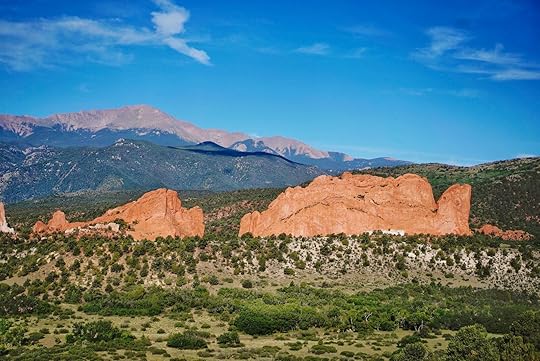
Photo: Nickolaus Hines
Garden of the Gods Resort rooms and amenitiesI booked a Cottage room that had a five-piece bath and fireplace, but was instead put in the pricier King Club room. I didn’t complain since the King Club has the balcony views, and I figured the people at the front desk knew what they were doing. The trade-off was it lacked a bathtub and only had a small shower.
Other than the view, the room felt fancy like how a La Quinta Inn feels fancy. I was woken up at 7:30 AM on the first morning by a kid screaming (and then being loudly scolded by his parents) in the room on the other side of the paper-thin wall. The screen door to the balcony was off its hinges when I got to the room and I put it back on, but I couldn’t do anything about the handle that was broken off. The bench at the end of the bed was cracked in the middle as if one of the kids from the other room had been jumping on it, and the carpet runner in the hallway had what looked like a dog pee stain in the middle.
The hotel prides itself on being open since 1951. Unfortunately, it doesn’t seem like much has changed since then other than some dated technology like an old iPhone dock that could only fit the large charging port of the 2011 iPhone 4.
Garden of the Gods doesn’t change the sheets until after three days for sustainability reasons — something I’m all for. I put the request for service tag on the door after the first night to have the coffee and water restocked, however, as well as to have one of the wines in the self-pour machine replaced as it had been out since before we checked in. The waters were not replaced, and neither was the wine. What was left behind by the cleaning crew was a dirty yellow rag on the nightstand next to my fiancée’s pregnancy lotion.
The food and dining options at Garden of the Gods ResortThe “upscale” dining is closer to what you’d expect at a large wedding than what you’d get at a fancy restaurant. My order for a martini with Botanist gin came back as a vodka martini, and the wine that I ordered after the appetizer came out didn’t make it to the table until we were done eating the main course. Both were rung up wrong on the receipt, and in the case of the wine it was rung up for a higher priced item. And while the fried quail was tasty, the small bass filet needed a few lemons to rehydrate past the point of chalky.
We decided to try the more casual Rocks Lounge the second night. The food was again middling, but at least the drinks were done right — the benefit of sitting next to the bar I suppose. After eating, we went outside and sat next to the fire pits where we were joined by a mouse that ran out from under the seats and into the dining area.
At the pool, the food menu was short but solid. Honey Greek yogurt with watermelon will always be a hit on a hot day, and the selection of canned wine and beer got the job done.
We checked out early and went elsewhere for brunch on the last day. The unrelated Garden of the Gods Market and Cafe in town was fantastic, reasonably priced, mouse-free, and gave me a little bit of regret that we didn’t leave the property for the other meals.
The cost of staying at Garden of the Gods Resort over a summer weekendAll in all after the food and drinks charged to the room at the resort, it cost about $2,500 for a weekend — two round-trip flights to Paris at today’s high ticket prices, to put that into perspective. Despite the frequent text messages and emails Garden of the Gods sent me, I never received a final receipt after checking out from the front desk or over email.
Despite everything, there’s no denying that Garden of the Gods Resort and Club has incredible views. And my fiancée and I did, in fact, fully embrace that a vacation is what you make of it and we enjoyed ourselves. But is Garden of the Gods truly the number one hotel in the US as Yelp says, let alone worth a four-digit price tag for a weekend? I’d suggest heading over to Kinship Landing or another Colorado Springs hotel and getting your Garden of the Gods views on a morning trip to the park instead.
Family-Friendly Adventures Within 90 Minutes of the Las Vegas Strip
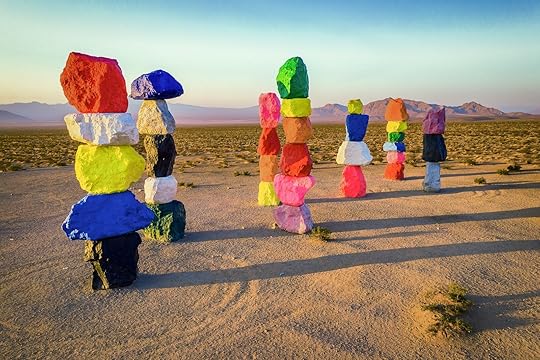 Family-Friendly Adventures Within 90 Minutes of the Las Vegas Strip
By: Matt Villano
Photo: SkyBlodgett/ShutterstockYou already know Las Vegas as the Entertainment Capital of The World. But hiding behind all that grown-up fun also happens to be one of the greatest destinations for families looking to plan a rocking summer vacation.
While the Las Vegas Strip certainly comes jam-packed with a trip’s worth of adventures, there are ample family-friendly activities farther afield that make it worth straying from all that glitters. From quick half-hour jaunts to easy day trips, from giant art installations to eerie ghost towns, let’s take a look at some of our faves.

This post is proudly produced in partnership with Travel Nevada.
Into the desert:
90 minutes from the Strip Fremont street at night Lake Las Vegas Neon Museum Just beyond the Las Vegas Strip — but often still within sight of your hotel or resort — lies a wide array of world-class art and culture to-dos. Leave it to the kids to show us how to truly appreciate a city!
No. 1 on the list: Downtown Las Vegas. The Fremont Street Experience is a full-on sensory extravaganza, with the world’s largest digital display on the underside of a canopy that spans five city blocks — watch the kids’ eyes light up as bright as the night’s free light show. During the day, goad the kiddos to zoom down the treehouse slide in the center of Downtown Container Park, or relax on the steps at locally-loved-and-run Fergusons Downtown with some goodies from Vegas Test Kitchen.
Fremont East has lots of public art to ogle — think colorful, one-of-a-kind murals — and the 18-block Las Vegas Arts District (aka “18b”) always delivers, too, with dozens of museums and one happy Snowball: a goofy, 10-foot-tall cat sculpture ready for the camera. If you have older kids, sign up for the hour-long guided tour of the Neon Boneyard at the Neon Museum to grab selfies with some of the legendary lit-up signs from casino resorts of yesteryear.
To the southeast, Lake Las Vegas is a legit oasis. Hit up Lake Las Vegas Water Sports to rent kayaks, stand-up paddleboards, e-foils, flyboards, and more. There’s also a floating aqua park that’s a cross between a bouncy house and an obstacle course, only on water. On the way, pay a visit to the city of Henderson (Nevada’s second largest), where you can rent bikes and ride part of the River Mountains Loop Trail, which runs for 34 miles in all.
To the southwest, Goodsprings is one of the most easily accessible ghost towns in southern Nevada. And even though a historic bar doesn’t sound like a family attraction, going to Goodsprings and not visiting the century-old Pioneer Saloon would be a big miss. With a Food Network-worthy restaurant inside and cornhole on the back patio, it’s absolutely kid-friendly (so long as the minors are accompanied by an adult). Families with older kids should check out a historic walking tour or off-road ATV tour — two-hour and half-day 4×4 jaunts zip around the ghost town and out into the nearby landscape. (Plus, there are always self-guided ghost hunts to be had any and every day!)
One last-but-not-least option: the Pinball Hall of Fame. While this destination is on Las Vegas Boulevard just north of the “Welcome to Fabulous Las Vegas” sign, technically it’s not on the Strip (which begins at Russell Road). The museum is home to more than 150 pinball machines and 50 classic video games. For a good time, all you need is a pocketful of quarters.
.map * { font-family: sans-serif !important;}.info-window-link { display: block; margin-top: 10px; padding: 3px 10px; border-radius: 3px; background-color: #0099ff; color: white !important; font-size: 12px; text-align: center;}.info-window-link:hover { text-decoration: none;}var _icons = { red: { url: 'https://travelstoke.s3.amazonaws.com/...', size: { width: 22.8, height: 35.4 }, anchor: { x: 11.4, y: 35.4 } }, orange: { url: 'https://travelstoke.s3.amazonaws.com/...', size: { width: 22.8, height: 35.4 }, anchor: { x: 11.4, y: 35.4 } }, yellow: { url: 'https://travelstoke.s3.amazonaws.com/...', size: { width: 22.8, height: 35.4 }, anchor: { x: 11.4, y: 35.4 } }};var _styles = { travelstoke: [ { featureType: 'administrative', elementType: 'geometry.stroke', stylers: [{ color: '#999999' }] }, { featureType: 'landscape.natural.terrain', elementType: 'geometry', stylers: [{ visibility: 'off' }] }, { featureType: 'poi.business', elementType: 'all', stylers: [{ visibility: 'off' }] }, { featureType: 'road', elementType: 'geometry.stroke', stylers: [{ color: '#ffffff' }] }, { featureType: 'water', elementType: 'geometry', stylers: [{ color: '#53acce' }] } ], desert: [{"elementType":"labels","stylers":[{"visibility":"off"},{"color":"#f49f53"}]},{"featureType":"landscape","stylers":[{"color":"#f9ddc5"},{"lightness":-7}]},{"featureType":"road","stylers":[{"color":"#813033"},{"lightness":43}]},{"featureType":"poi.business","stylers":[{"color":"#645c20"},{"lightness":38}]},{"featureType":"water","stylers":[{"color":"#1994bf"},{"saturation":-69},{"gamma":0.99},{"lightness":43}]},{"featureType":"road.local","elementType":"geometry.fill","stylers":[{"color":"#f19f53"},{"weight":1.3},{"visibility":"on"},{"lightness":16}]},{"featureType":"poi.business"},{"featureType":"poi.park","stylers":[{"color":"#645c20"},{"lightness":39}]},{"featureType":"poi.school","stylers":[{"color":"#a95521"},{"lightness":35}]},{},{"featureType":"poi.medical","elementType":"geometry.fill","stylers":[{"color":"#813033"},{"lightness":38},{"visibility":"off"}]},{},{},{},{},{},{},{},{},{},{},{},{"elementType":"labels"},{"featureType":"poi.sports_complex","stylers":[{"color":"#9e5916"},{"lightness":32}]},{},{"featureType":"poi.government","stylers":[{"color":"#9e5916"},{"lightness":46}]},{"featureType":"transit.station","stylers":[{"visibility":"off"}]},{"featureType":"transit.line","stylers":[{"color":"#813033"},{"lightness":22}]},{"featureType":"transit","stylers":[{"lightness":38}]},{"featureType":"road.local","elementType":"geometry.stroke","stylers":[{"color":"#f19f53"},{"lightness":-10}]},{},{},{}]};window.addEventListener('load', function() { console.log('test'); jQuery(document).ready(function($) { var boundPadding; var id = 'map-62cd43a44313c'; var atts = {"lat":"36.2","lng":"-115","zoom":"10"}; var markers = [{"lat":"36.085","lng":"-115.171","title":"Pinball Hall of Fame"},{"lat":"36.177","lng":"-115.135","title":"Neon Museum"},{"lat":"36.167","lng":"-115.138","title":"Downtown Container Park"},{"lat":"36.116372","lng":"-114.91631","title":"Lake Las Vegas"},{"lat":"36.015538","lng":"-115.03515","title":"Henderson, NV"},{"lat":"35.831629","lng":"-115.43164","title":"Goodsprings Ghost Town"}]; var map = new google.maps.Map(document.getElementById(id), { mapTypeId: google.maps.MapTypeId.ROADMAP, disableDefaultUI: true, zoomControl: true, scrollwheel: false, zoomControlOptions: { style: google.maps.ZoomControlStyle.LARGE, position: google.maps.ControlPosition.LEFT_CENTER } }); if (atts.style && _styles[atts.style]) map.setOptions({ styles: _styles[atts.style] }); if (atts.padding !== undefined) boundPadding = parseInt(atts.padding); var mapBounds; if (atts.lat !== undefined && atts.lng !== undefined) { // Use lat and lng if provided map.setCenter({ lat: parseFloat(atts.lat), lng: parseFloat(atts.lng) }); } else if (markers && markers.length) { if (markers.length === 1) { // Use lat lng from first marker if only 1 provided map.setCenter({ lat: parseFloat(markers[0].lat), lng: parseFloat(markers[0].lng) }); } else { // With multiple markers create a boundry that includes all of them mapBounds = new google.maps.LatLngBounds(); } } var labels = 'ABCDEFGHIJKLMNOPQRSTUVWXYZ'; var labelIndex = 0; if(atts.offset !== undefined) { labelIndex = parseInt(atts.offset); } var infoWindow = new google.maps.InfoWindow({ content: '' }); var openInfoWindow = function(marker, target) { var info = $('<div>', { style: 'max-width:150px' }); $('<div>').append(marker.title).appendTo(info); if (marker.scroll_to) { $('<a>', { class: 'info-window-link', href: '#' marker.scroll_to, }).append('Jump To').appendTo(info); } infoWindow.setContent(info[0].outerHTML); infoWindow.open({ anchor: target, map: map, shouldFocus: false }) }; $('#' id).on('click', '.info-window-link', function(e) { console.log('info window'); e.preventDefault(); var target = $(e.target).attr('href'); $('html, body').animate({ scrollTop: $(target).offset().top - 55 }, 1000); }); for (var i = 0; i < markers.length; i ) { var marker = markers[i]; if (marker.lat !== undefined && marker.lng !== undefined) { var markerObject = { map: map, position: { lat: parseFloat(marker.lat), lng: parseFloat(marker.lng) }, animation: google.maps.Animation.DROP, locationId: i, } if(atts.ordered !== undefined) { if(atts.numbered !== undefined) { number = labelIndex = labelIndex 1; markerObject.label = number.toString(); } else { markerObject.label = labels[labelIndex % labels.length]; } } if(marker.icon !== undefined) { markerObject.icon = marker.icon; } var mapMarker = new google.maps.Marker(markerObject); if (mapBounds) mapBounds.extend(mapMarker.getPosition()); if (marker.title) { var infowindow = new google.maps.InfoWindow({ content: marker.title }); if (markers.length === 1) { setTimeout(function() { openInfoWindow(marker, mapMarker); }, 1200); } google.maps.event.addListener(mapMarker, 'click', function() { openInfoWindow(markers[this.locationId], this); }); } } } if (mapBounds) { map.fitBounds(mapBounds, {top:boundPadding, right:boundPadding, left:boundPadding, bottom:boundPadding}); } else if (atts.zoom) { map.setZoom(parseInt(atts.zoom)); } else { map.setZoom(16); } });});Photo credits: Ryan Donnell/Travel Nevada and Kit Leong/Shutterstock
The best of Vegas:
30 minutes from the Strip Hoover Dam Seven Magic Mountains Snow-covered Spring Mountains Family adventures within an hour’s drive of the Strip become a bit more…well, adventurous! Look forward to a mix of humanmade wonder and natural spectacle.
Hoover Dam, about 45 minutes southeast of Las Vegas, was the world’s tallest concrete structure when it was completed in 1936, and it’s still a feat of modern engineering that’s likely to blow your (and your kids’) minds. On the basic powerplant tour, you’ll wind through construction tunnels and visit a platform looking down on water gushing through a 30-foot-wide penstock pipe. The upgraded guided tour, meanwhile, does all that and takes you through inspection tunnels at the center of the dam.
As far as views go, the top of the dam offers can’t-miss vistas of the Colorado River rushing out below. The experience is even better when you realize you have one foot in Nevada and one foot in Arizona.
Beyond civil engineering marvels, there’s art in the middle of the Mojave Desert, too. Seven Magic Mountains, an installation by Ugo Rondinone that sits southwest of Las Vegas, is spectacular in its simplicity: seven towers of giant rocks, each stone painted a different neon color of the rainbow. Taken as a whole, they look kinda like stacks of giant Nerds candies, dramatically juxtaposed against the more monochromatic landscape. After mugging for photos, walk behind the towers and spy for jackrabbits amid the brush.
Spring Mountains National Recreation Area, northwest of Las Vegas, remains one of the only places in the Las Vegas Valley where you can regularly see snow — even in the heat of summer. The big attraction here is Mt. Charleston, the tallest peak in Clark County at 11,916 feet. Because of the elevation and the way the mountain bowl is protected from the sun, it’s usually 15-20 degrees cooler up here than it is on the Strip, making outdoor adventures possible even when everyone in Vegas runs for the A/C.
.map * { font-family: sans-serif !important;}.info-window-link { display: block; margin-top: 10px; padding: 3px 10px; border-radius: 3px; background-color: #0099ff; color: white !important; font-size: 12px; text-align: center;}.info-window-link:hover { text-decoration: none;}var _icons = { red: { url: 'https://travelstoke.s3.amazonaws.com/...', size: { width: 22.8, height: 35.4 }, anchor: { x: 11.4, y: 35.4 } }, orange: { url: 'https://travelstoke.s3.amazonaws.com/...', size: { width: 22.8, height: 35.4 }, anchor: { x: 11.4, y: 35.4 } }, yellow: { url: 'https://travelstoke.s3.amazonaws.com/...', size: { width: 22.8, height: 35.4 }, anchor: { x: 11.4, y: 35.4 } }};var _styles = { travelstoke: [ { featureType: 'administrative', elementType: 'geometry.stroke', stylers: [{ color: '#999999' }] }, { featureType: 'landscape.natural.terrain', elementType: 'geometry', stylers: [{ visibility: 'off' }] }, { featureType: 'poi.business', elementType: 'all', stylers: [{ visibility: 'off' }] }, { featureType: 'road', elementType: 'geometry.stroke', stylers: [{ color: '#ffffff' }] }, { featureType: 'water', elementType: 'geometry', stylers: [{ color: '#53acce' }] } ], desert: [{"elementType":"labels","stylers":[{"visibility":"off"},{"color":"#f49f53"}]},{"featureType":"landscape","stylers":[{"color":"#f9ddc5"},{"lightness":-7}]},{"featureType":"road","stylers":[{"color":"#813033"},{"lightness":43}]},{"featureType":"poi.business","stylers":[{"color":"#645c20"},{"lightness":38}]},{"featureType":"water","stylers":[{"color":"#1994bf"},{"saturation":-69},{"gamma":0.99},{"lightness":43}]},{"featureType":"road.local","elementType":"geometry.fill","stylers":[{"color":"#f19f53"},{"weight":1.3},{"visibility":"on"},{"lightness":16}]},{"featureType":"poi.business"},{"featureType":"poi.park","stylers":[{"color":"#645c20"},{"lightness":39}]},{"featureType":"poi.school","stylers":[{"color":"#a95521"},{"lightness":35}]},{},{"featureType":"poi.medical","elementType":"geometry.fill","stylers":[{"color":"#813033"},{"lightness":38},{"visibility":"off"}]},{},{},{},{},{},{},{},{},{},{},{},{"elementType":"labels"},{"featureType":"poi.sports_complex","stylers":[{"color":"#9e5916"},{"lightness":32}]},{},{"featureType":"poi.government","stylers":[{"color":"#9e5916"},{"lightness":46}]},{"featureType":"transit.station","stylers":[{"visibility":"off"}]},{"featureType":"transit.line","stylers":[{"color":"#813033"},{"lightness":22}]},{"featureType":"transit","stylers":[{"lightness":38}]},{"featureType":"road.local","elementType":"geometry.stroke","stylers":[{"color":"#f19f53"},{"lightness":-10}]},{},{},{}]};window.addEventListener('load', function() { console.log('test'); jQuery(document).ready(function($) { var boundPadding; var id = 'map-62cd43a443525'; var atts = {"lat":"36","lng":"-115","zoom":"9"}; var markers = [{"lat":"36.015692","lng":"-114.73782","title":"Hoover Dam"},{"lat":"35.838376","lng":"-115.27109","title":"Seven Magic Mountains"},{"lat":"36.268900","lng":"-115.58779","title":"Spring Mountains National Recreation Area"},{"lat":"36.271114","lng":"-115.69422","title":"Mt. Charleston"}]; var map = new google.maps.Map(document.getElementById(id), { mapTypeId: google.maps.MapTypeId.ROADMAP, disableDefaultUI: true, zoomControl: true, scrollwheel: false, zoomControlOptions: { style: google.maps.ZoomControlStyle.LARGE, position: google.maps.ControlPosition.LEFT_CENTER } }); if (atts.style && _styles[atts.style]) map.setOptions({ styles: _styles[atts.style] }); if (atts.padding !== undefined) boundPadding = parseInt(atts.padding); var mapBounds; if (atts.lat !== undefined && atts.lng !== undefined) { // Use lat and lng if provided map.setCenter({ lat: parseFloat(atts.lat), lng: parseFloat(atts.lng) }); } else if (markers && markers.length) { if (markers.length === 1) { // Use lat lng from first marker if only 1 provided map.setCenter({ lat: parseFloat(markers[0].lat), lng: parseFloat(markers[0].lng) }); } else { // With multiple markers create a boundry that includes all of them mapBounds = new google.maps.LatLngBounds(); } } var labels = 'ABCDEFGHIJKLMNOPQRSTUVWXYZ'; var labelIndex = 0; if(atts.offset !== undefined) { labelIndex = parseInt(atts.offset); } var infoWindow = new google.maps.InfoWindow({ content: '' }); var openInfoWindow = function(marker, target) { var info = $('<div>', { style: 'max-width:150px' }); $('<div>').append(marker.title).appendTo(info); if (marker.scroll_to) { $('<a>', { class: 'info-window-link', href: '#' marker.scroll_to, }).append('Jump To').appendTo(info); } infoWindow.setContent(info[0].outerHTML); infoWindow.open({ anchor: target, map: map, shouldFocus: false }) }; $('#' id).on('click', '.info-window-link', function(e) { console.log('info window'); e.preventDefault(); var target = $(e.target).attr('href'); $('html, body').animate({ scrollTop: $(target).offset().top - 55 }, 1000); }); for (var i = 0; i < markers.length; i ) { var marker = markers[i]; if (marker.lat !== undefined && marker.lng !== undefined) { var markerObject = { map: map, position: { lat: parseFloat(marker.lat), lng: parseFloat(marker.lng) }, animation: google.maps.Animation.DROP, locationId: i, } if(atts.ordered !== undefined) { if(atts.numbered !== undefined) { number = labelIndex = labelIndex 1; markerObject.label = number.toString(); } else { markerObject.label = labels[labelIndex % labels.length]; } } if(marker.icon !== undefined) { markerObject.icon = marker.icon; } var mapMarker = new google.maps.Marker(markerObject); if (mapBounds) mapBounds.extend(mapMarker.getPosition()); if (marker.title) { var infowindow = new google.maps.InfoWindow({ content: marker.title }); if (markers.length === 1) { setTimeout(function() { openInfoWindow(marker, mapMarker); }, 1200); } google.maps.event.addListener(mapMarker, 'click', function() { openInfoWindow(markers[this.locationId], this); }); } } } if (mapBounds) { map.fitBounds(mapBounds, {top:boundPadding, right:boundPadding, left:boundPadding, bottom:boundPadding}); } else if (atts.zoom) { map.setZoom(parseInt(atts.zoom)); } else { map.setZoom(16); } });});Photo credits: superjoseph/Shutterstock, Ryan Opelac/Shutterstock, and nyker/Shutterstock
Mountains and more:
60 minutes from the Strip Rhyolite Ghost Town Ash Meadows NWR Camel Safari The wildest family-friendly adventures near Las Vegas are those that require a bit more of a drive. But if they’re willing to put in the extra miles, adventuresome parents can introduce their kids to things they’ve likely never seen — things they quite possibly may never see again.
Beatty, Nevada, home to the headwaters of the Amargosa River, makes for a fun and kitschy way to spend a day. The city bills itself as the “Gateway to Death Valley,” but it’s also become famous for the friendly burros that hang around town. From here, it’s a 10-minute drive to the Rhyolite Ghost Town, where crumbling buildings along a once-bustling main drag offer an eerie look into the area’s mining past. Definitely check out those nifty public art sculptures on the outskirts of “town,” aka the Goldwell Open Air Museum.
Ash Meadows National Wildlife Refuge, northwest of Vegas, might as well be the Galapagos Islands of the Mojave. Even though the refuge sits in the hottest and driest corner of the country, it’s home to a remarkable concentration of species endemic to North America. In just under 24,000 acres, you can scout for 26 species found nowhere else on Earth, including different species of desert pupfish and zebra-tailed lizards. Kids tend to love looking for bighorn sheep and coyotes — many visits turn into living-creature scavenger hunts. (Just remember to show a healthy respect for any wildlife you’re lucky enough to encounter, and observe from a distance.)
The area around Mesquite, an hour or so northeast of Vegas, packs in family-friendly attractions like Camel Safari, an accredited zoo where kids (and grown-ups, of course) can pet and ride camels. Fifteen minutes up the road, the Virgin Valley Heritage Museum tells deep stories of local history — among other exhibits, it houses the first slot machine found in this part of the state.
While in Mesquite, make sure to check out CasaBlanca Resort & Casino, whose pool rivals any on the Vegas Strip, with a design that calls to mind a tropical oasis. And while this might not excite the kids, the virgin Pina Coladas here are half the price of what they’d be in a Strip-side resort. By our math, that’s double the fun.
Photo credits: imagoDens/Shutterstock and Travel Nevada
This post is proudly produced in partnership with Travel Nevada.
July 10, 2022
National Park Face Mask Requirements Are Returning Due To Rising Case Numbers
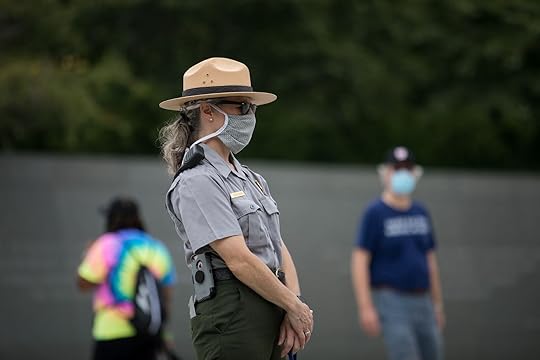
If you’re planning on enjoying one of the country’s national parks this summer, you might want to make sure you’re stocked up on masks before you leave. A surge in COVID-19 cases is causing many parks to reintroduce masks mandates.
Rules about masks vary depending on the park and the Center for Disease Control and Prevention’s COVID-19 Community Levels tool. In areas the CDC identifies with a high COVID-19 community level, masks are required regardless of vaccination status. In most low and medium COVID-19 community level areas, masks are optional, however visitors should use policies enforced at staff and volunteer discretion. In all parks, masks are required on all forms of enclosed public transportation. So far, six national parks have reinstated mask mandates according to the National Park Service website.
Seqouia and Kings Canyon mask mandateWearing a mask is currently required inside all park buildings regardless of vaccination status.
Rocky Mountains mask mandateDue to the the high levels of transmission within Larimer and Boulder Counties, masks are advised for Beaver Meadows VC, Moraine Park Discovery Center, Fall River VC, Alpine VC, on the Hiker Shuttle, and on in-park shuttle buses.
Grand Teton mask mandateMasks are required in all park buildings in Grand Teton National Park, regardless of vaccination status, including, but not limited to, visitor centers, administrative offices, lodges, gift shops, and restaurants.
Masks are now required in all park buildings within Grand Canyon National Park, regardless of vaccination status. Park buildings include, but are not limited to visitor centers, administrative offices, lodges, gift shops, and restaurants everywhere within Grand Canyon.
Denali mask mandateAccording to the Associated Press, park officials say Masks covering the nose and mouth will be required for everyone over the age of two, regardless of vaccination status. They must be worn in all common and shared workspaces in buildings owned or controlled by the National Park Service, including visitor centers, lodges, gift shops and restaurants. Masks also are required to ride buses and courtesy shuttles inside the park.
Yellowstone mask mandateMasks are required for everyone in all NPS buildings and enclosed public transportation, regardless of vaccination status.
July 9, 2022
At These Florence Workshops, You’ll Learn the Secrets of Handworked Leather
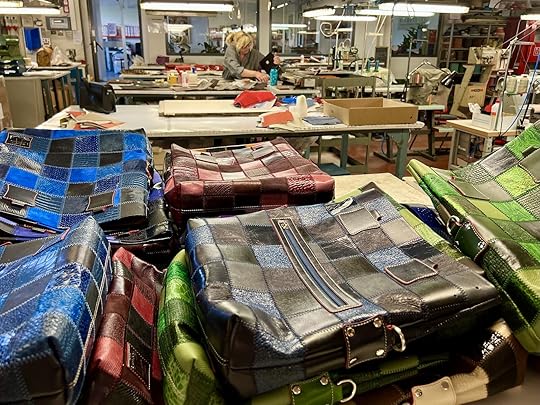
Walk through the streets of Florence, Italy, and you’ll be greeted not just by stunning Renaissance art, Baroque architecture, and the lyrical sound of the Italian language. You’ll also see leather everywhere: clothing stores carrying leather jackets, stationary shops vending leather-bound journals, and kiosks festooned with leather bags, wallets, and belts in every hue of the rainbow.
Leather-making in Florence dates back hundreds of years to the first leather guild established in the 13th century. Today, visitors may be aware that luxury local brands like Gucci and Salvatore Ferragamo first began by selling top-quality leather footwear and bags. But until you stroll through this refined city, you may not realize how pervasive leather is, and what the seal “Made in Italy” really means. A look at leather artisans in Florence – and discovering how you could become one yourself – will help you grasp the aura of Italian leather.
Tour a leather factory for a deep dive into hand-made leather goods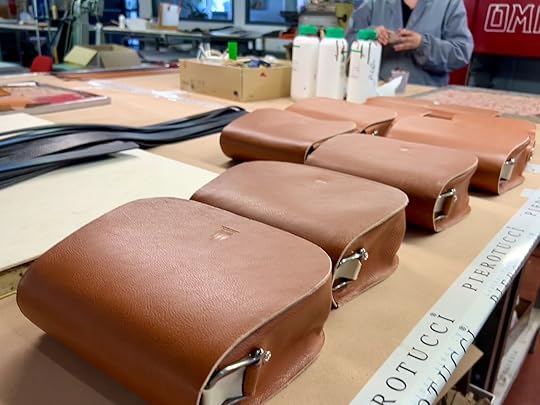
Photo: Noelle Salmi
Piero Tucci began making leather bags 50 years ago. According to the company he founded, Pierotucci, he was soon making leather goods for such companies as Valentino, Cole-Haan, and Hugo Boss. As his business grew, the company moved into larger facilities a 15-minute drive over the wooded hills from central Florence. Reserve online to join a free tour of the Pierotucci factory and you’ll get a deep dive into the process of making an Italian handbag. Marco Tucci now runs the business with his brother, Matteo Tucci, and had a clear purpose when they decided to open the factory to visitors.
“In our opinion, it’s nice to see how we select the leather, to [understand]… how the tannery process works,” Marco said. “We give them some information on how the items that they can find everywhere are being manufactured, so they see a real craftsman, how he or she works.”
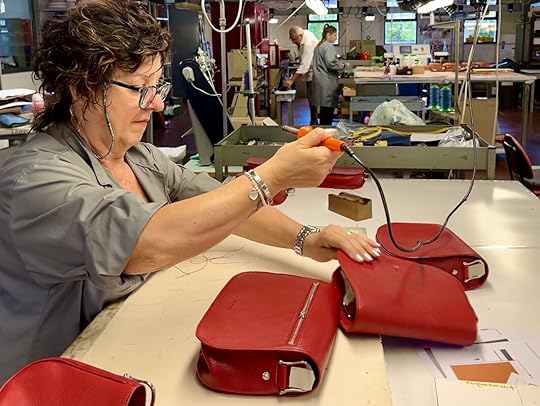
Photo: Noelle Salmi
For Tucci, a look at the painstaking process of making a handbag lends appreciation of what “Made in Italy” really means. My private tour of the factory, which feels more like a large workshop, began with a look at expansive racks of multi-colored leather – some naturally dyed and some tinted with synthetic chroma dyes. Pierotucci buys its lamb and cow leather from tanneries that were long ago moved out of Florence.
I learned that cow leather is categorized into two categories: more pliable leather from 18-month-old cattle, and sturdier stuff from 24-month-olds. Also, different parts of a cow lend leather particular characteristics, and the leather used depends on the type of bag that’s being made. As to leather jackets, my guide insisted only lamb leather should be used, given its lightness; she felt that oft-used buffalo leather is much too heavy.

Photo: Noelle Salmi
On the tour, it’s explained that even the most workable leather needs to be stripped to a specified thinness at the seams where it’s sewn together. Before that happens, though, all new bag designs are first tested with cardboard mockups to see how it would look and wear. The ultimate lesson in this factory tour, though, is that “90 percent of the work is really done by hand.”
The craftspeople I’d met had been working for Pierotucci for decades; one told me that making a single bag from start to finish would take her well more than a day. After seeing what it takes to make a bag by hand, you’ll no longer wonder why Pierotucci prices come with two zeros at the end. And you’ll know that if you do spend the money, the bag will last forever.
Visit a leather school in the heart of Florence’s leather industry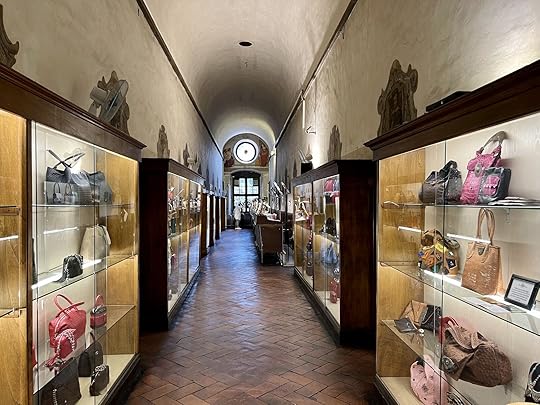
Photo: Noelle Salmi
Walking into the courtyard of the Scuola del Cuoio in Santa Croce, the historic center of leather-working in Florence, feels a little like walking onto a mini college campus. You leave the bustle of the street as you walk past a wooded park and enter the historic building – in this case, a repurposed monastery. It turns out that Scuola del Cuoio, or School of Leather, was founded by monks and leather artisans after World War II to teach war orphans a trade.
Today, the school still offers “scholarships to people that need help, poor people, or with mental disease, that will join the school for a nine-month course,” said Beatriz Parri Gori, the granddaughter of one of the school’s founders, Marcello Gori. She was showing around a Hollywood TV couple, who were discreetly Covid-masked and who were following a long line of bold-faced names who have visited the school.
The Scuola del Cuoio also specializes in making one-of-a-kind bags and in teaching paying students the secrets of high-quality leather working. One of those students was an energetic, white-haired senior from Australia, Alison Bruce, who was taking her third course at Scuola del Cuoio – this one 10-weeks long. She had just finished making a fetching chocolate and teal-toned bag in the workshop downstairs, and had come upstairs to have leather artisan Francesco Galleni brand it with her own signature seal that she’d made.
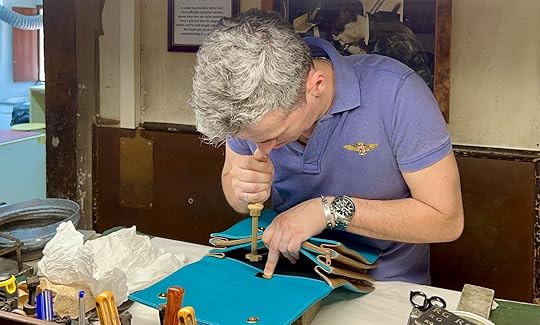
Photo: Noelle Salmi
Galleni attached Bruce’s seal to a spike, heated it to a high temperature, and then placed a piece of gold leaf onto the spot inside the bag where she wanted the seal. He pressed down onto the gold leaf, and the seal was imprinted. Alison Bruce’s bag was complete.
“The quality of instruction is exceptional,” Bruce said. “We’ve got a Japanese teacher who’s been here 30 years. And the two others, one’s a Canadian handbag maker and the other one’s a Brazilian. So it’s very international.”
Some artisans I spoke with expressed that they worry about the loss of handcrafting skills in Italy, but at least Galleni – the artisan who burned the finishing gold seal onto the handbag – said he’s happy to be a part of the school. Following in his father’s footsteps, the 38-year-old Galleni has worked at Scuola del Cuoio for 20 years. While the more intense leather-working goes on in the studio below, he said he prefers working upstairs since it’s open to the public and he gets to meet more people.
Inspired, I went to the front of the Scuola, purchased a lovely black belt as a gift, and had Galleni burnish it inside with my loved one’s initials. Rather than gold, though, I chose the silver leaf.
Visit the most famous bespoke shoe store in the world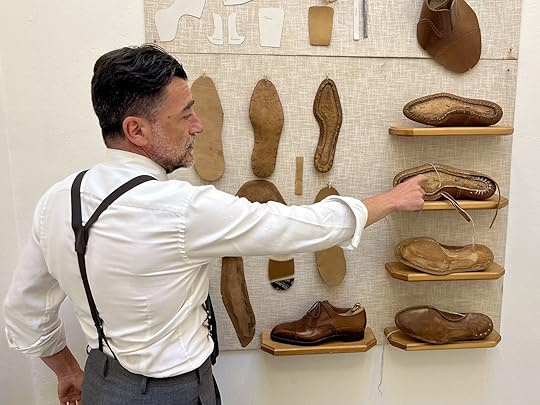
Photo: Noelle Salmi
Stefano Bemer was already famous for its bespoke shoes and hand-tailored suits when Daniel Day-Lewis learned about the brand. Day-Lewis was so impressed with the craftsmanship that he decided to learn the skills himself. Stefano Bemer offers six-month apprenticeships, but Day-Lewis stayed for 10 months, leaving Martin Scorcese waiting for him to begin filming Gangs of New York, according to Tommaso Capozzoli, who took me upstairs to see the pale-blue wood chair on which Day-Lewis sat for nearly a year, learning to handmake a pair of shoes.
Capozzoli was an old friend of Stefano Bemer and began working with him only two years before Bemer died in 2012, at the age of 48. Today, the store is owned by a family member connected to the Scuola del Cuoio, and like the Scuola, it’s housed in a formerly religious institution – in this case, a church. When you enter the store, though, church isn’t exactly what comes to mind.
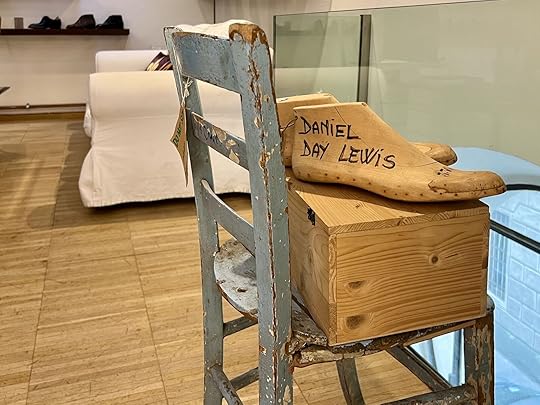
Photo: Noelle Salmi
The hyper-elegant store that sells shoes that cost hundreds, and in some cases thousands, of dollars is also where apprentices learn their skills: in the front section of the store, visible as soon as you enter. They’re surrounded by shoe molds attached to vertical wooden beams above handsome shoes displayed on shelves below. The effect is brilliant, emphasizing the handmaid nature of the work, although it can get loud when one of the few apprentices seated there is hammering nails into a sole.
Capozzoli said that although the apprenticeships are six-months long, it takes six to seven years to become a master shoemaker. Likewise, the tailor they have upstairs has been making suits for 70 years.
“Our tailor is 84 now,” Capozzoli said. “So he started when he was like 11 or 12. It’s a level of experience and skills that are not replaceable. We launched our school because of that.”
While Capozzoli fears that these skills are dying in Italy, it seems possible that at least some of the students who come from around the world will choose to stay. After all, people still want the Made in Italy label, and students can continue to learn from the country’s artisans after completing an apprenticeship.
Buy a handmade, leather-bound journal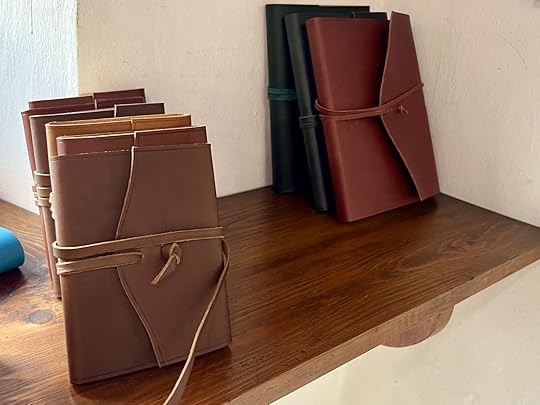
Photo: Noelle Salmi
Il Torchio is a 10-minute walk from the Stefano Bemer shoe store in the artisan-rich Oltrarno neighborhood. This beautiful bookbinding store is run by Erin Ciulla, a Canadian who studied design in Toronto.
If you ask Ciulla, she might take you to see the “guillotine” in the back room. I was expecting something macabre, but the guillotine is actually a very large, antique-looking machine that’s used to cut large amounts of paper. Beyond binding with leather covers, Ciulla also covers books, journals, and photo albums in decorative marbled papers that are made by hand in Florence.
Although Ciulla’s father is from Sicily, she exemplifies the expat who learned an artisan trade and stayed. She discovered the craft of Florentine bookbinding while studying abroad there in college. After returning to Canada, she came back to apprentice with Anna Anichini, who began the store over 40 years ago. Now, Ciulla runs the business.
Over 100 colleges offer exchange programs in Florence, so this is one way that foreign students can discover the city’s rich artisan tradition. Perhaps some of them will come back to learn those handcrafted skills and will keep them alive – either in their home countries or in the alluring, culture-rich city of Florence itself.
July 8, 2022
18 Photos That Show How Wild the GoPro Mountain Games Are
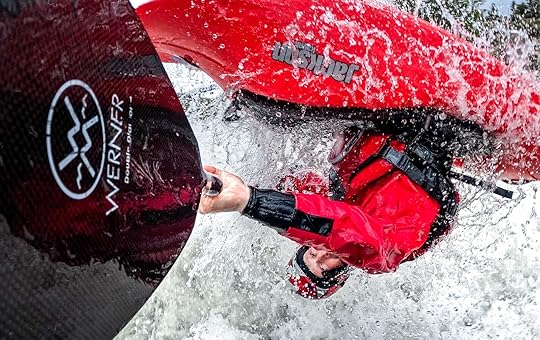
Sure, most of the super-epic GoPro photos you’ve seen on Instagram are taken by professional photographers and athletes at the top of their game — but not all. And the GoPro Mountain Games in Vail, Colorado, is proof that you don’t need to be a pro to take a stunning outdoor shot.
At the annual games, professional and amateur athletes alike gather to recreate and compete in a variety of outdoor games — some serious, some not so much — across the rivers, mountains, and valleys of Vail. Spectators, too, are more than welcome, and the three-day event includes opportunities for art, music, concerts, yoga, and everything you’d expect from a top-level summer festival. Activities for athletes of various levels range from trail runs and timed raft races to rock climbing competitions and uphill mountain bike races.
Sponsored by GoPro and the Vail Valley Foundation, the games are a chance for anyone to learn a new skill, test their current skills, or just get to know other athletes and spectators who appreciate friendly competition in the great outdoors.
Of course, since GoPro is the lead sponsor of the games, you can bet there are usually some epic photos that come out of the competition and 2022 was no exception. In addition to photos taken from athletes, media, and journalists covering the event, the GoPro Mountain Games invites content creators to spend a few days learning about GoPro camera techniques and shooting — all while watching and participating in the various events.
Oh, and if you’re wondering: next year’s games are June 8 – 11, 2023. Better practice your mud run and speed paddling.
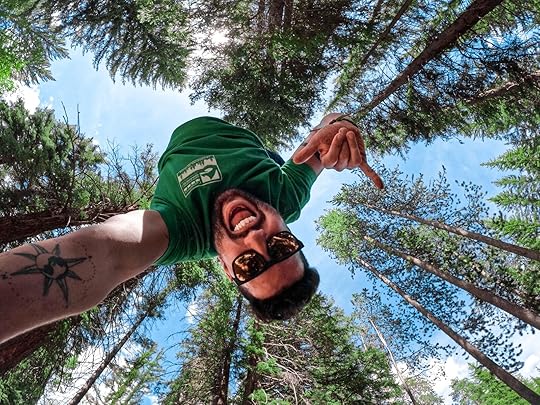
Taking a break to hang out in the trees around Vail. Photo: Andrews Santana
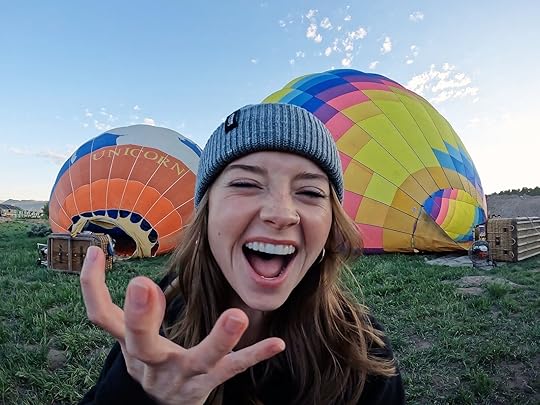
Attempting to get amped up for a morning balloon ride with a 3:30 AM wake-up call. Photo: Susi Vidal
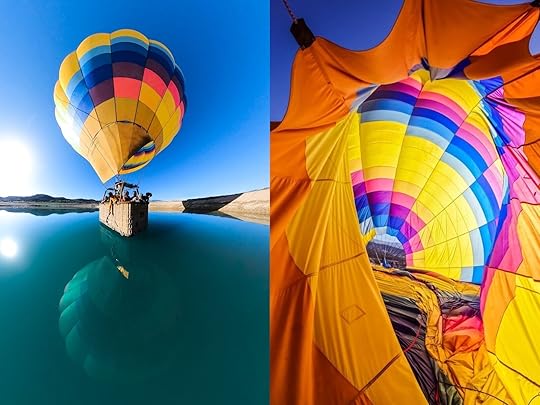
A sunrise hot air balloon mission, captured on a GoPro MAX 360 camera, and an inside look before liftoff. Photos by: GoPro and Nikolai Zychowicz
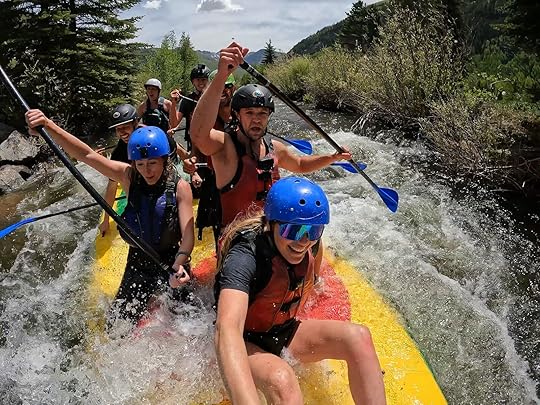
A SUPsquatch (giant stand-up paddleboard) group going down Gore Creek. Photo: Grete Eliassen
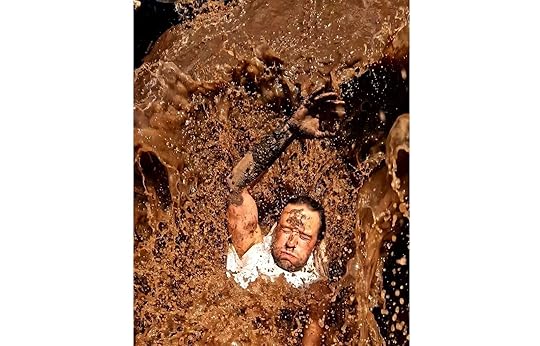
The Nature Valley Mud Run (i.e, the chocolate river from Willy Wonka). Photo: Nick Rowley
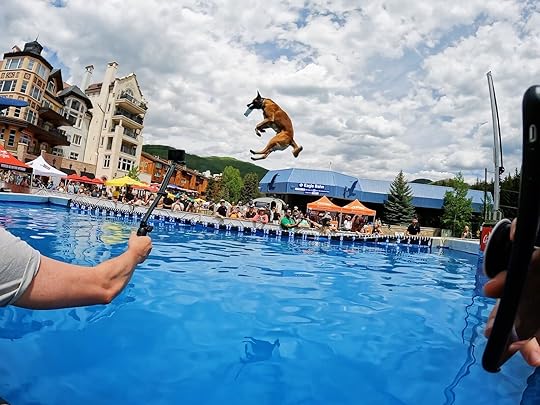
A four-legged competitor going for gold at the Orijen DockDogs Outdoor Big Air event, akin to long jump for dogs. Photo: Susi Vidal
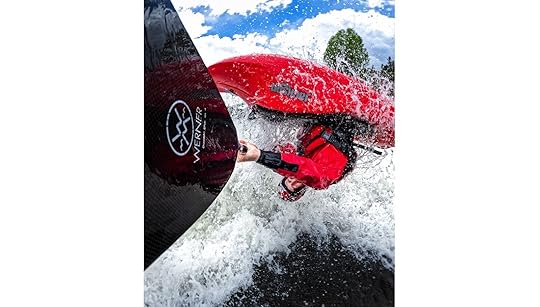
No, this photo is not upside down. Professional kayaker Nick Troutman competing in the freestyle kayak event. Photo: Nick Troutman
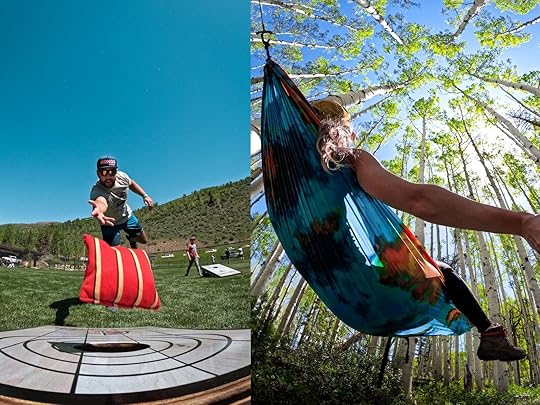
Not all games are super-stressful — nor is the schedule so packed that you can’t find some time for a quick nap. Photos: Andrews Santana and GoPro
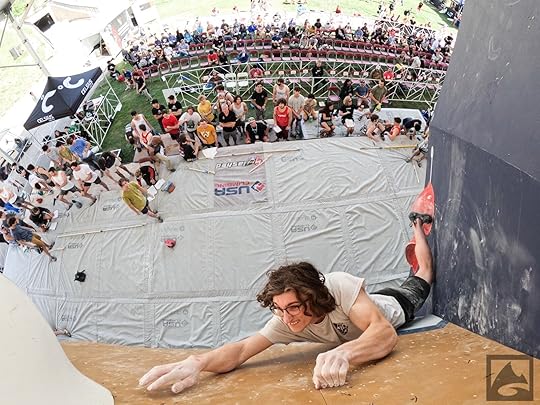
Spectators watching the men’s climbing event in Mountain Plaza. Photo: Zach Mahone/Vail Valley Foundation
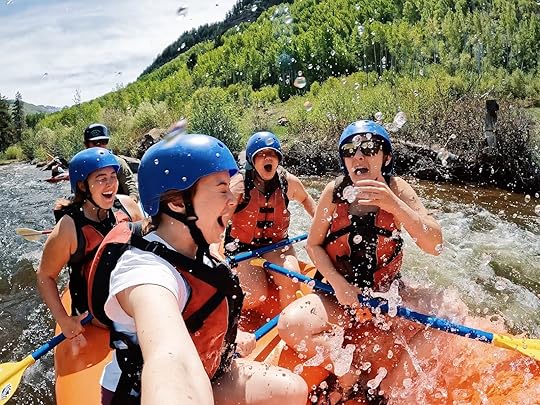
Braving the rapids of Vail’s Gore Creek. Photo: Susi Vidal
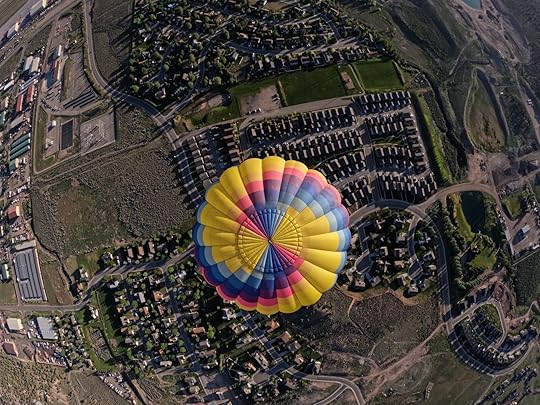
A unique hot air balloon perspective. Photo: Nikolai Zychowicz
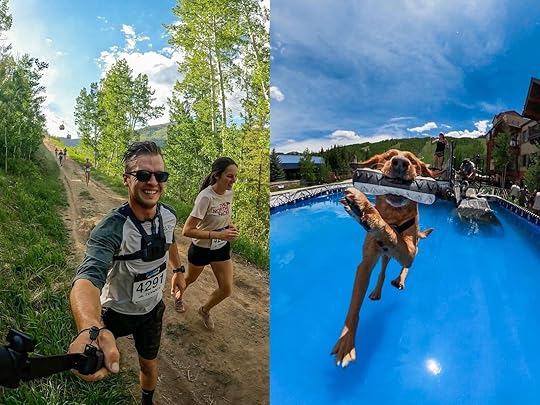
Some events are low-key and open to anyone, like the Après 5K Run, while some events have specific requirements — like having to have four feet. Photos: the_adventureaddicts and GoPro
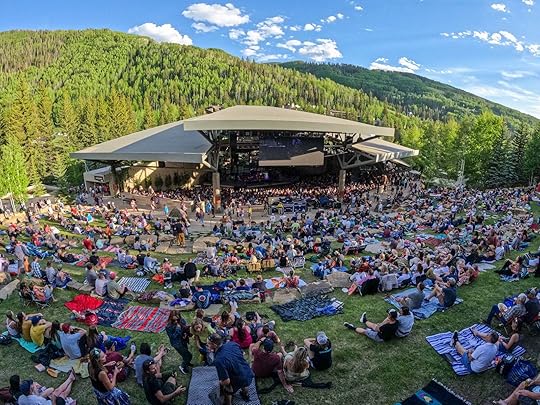
Crowds for days at the Mountain of Music concert night at the Gerald R. Ford Amphitheater. Photo: Vail Valley Foundation
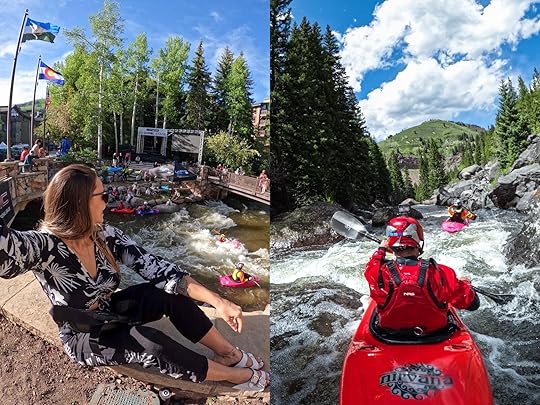
Spectators can catch a front-row seat to events like the Pacifico 8 Ball Kayak Sprint event. But experienced athletes can paddle for the gold at events like the TINCUP Steep Creek Championship (in Red Cliff, just outside Vail). Photos: Thata Luz and Nick Troutman
More like thisPhoto + Video + FilmTake Better Photos: 8 Landscape Photography Tips for Self-Taught TravelersI Won’t Travel Without This Backpack, and It’s 44 Percent Off Through July 13
As a travel editor, packing is a routine part of my life. When you’re constantly on the road, living out of a suitcase becomes the norm and you get used to rearranging and retrofitting your packing setup to make it more efficient. Ironically, the most efficient thing I ever did to my travel setup was to ditch the suitcase entirely in favor of a new backpack, the Tortuga Setout 45L. I acquired my Setout in late 2017, prompted by a summer spent traveling through Asia and a fall in Mexico during which I had a rucksack-style backpackers’ pack that I felt both too old for and, now, too experienced to be carrying around.
What hooked me on the Tortuga Setout is that it wears like a backpack, opens like a clamshell, and packs like a suitcase. I’ll get into the specifics of packing below, but know this for starters – this is the backpack for those who have outgrown the vagabond rucksack days and who want something both more stylish and more functional, but who still abide by the golden principle of long-term and frequent travel: “Thou shalt not roll.” This pack single-handedly prevented me from selling out and getting a roller suitcase. Nearly five years in, I have no plans to change course.
We hope you love the Tortuga Setout backpack! Just so you know, Matador may collect a small commission from the links on this page if you decide to book a stay. Listed prices are accurate as of the time of publication.
The Tortuga Setout comes in men’s and women’s options. My experience is with the men’s version, but I have multiple colleagues and friends who use the women’s version with high regard.
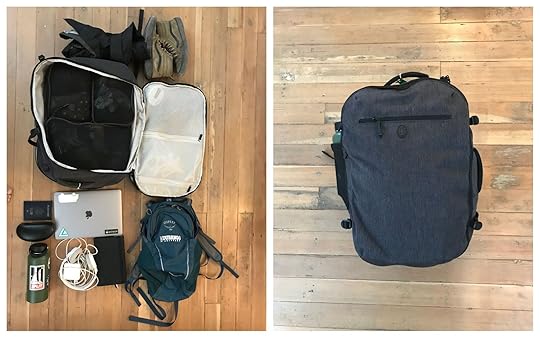
Packing space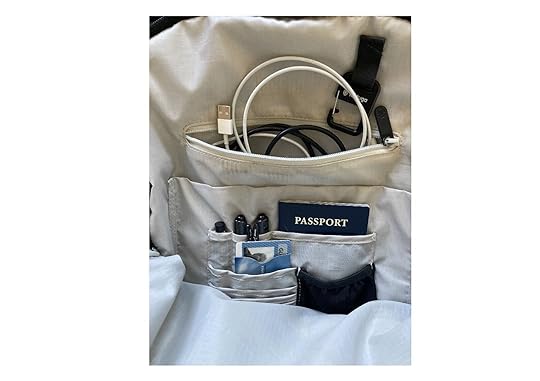
What you don’t see are my biodegradable coffee pods. Photo Credit: Tim Wenger
The Tortuga Setout 45L backpack is 22 inches by 14 inches by 9 inches. That creates 45 liters of space to fill. The pack is big enough that you can fit everything you need even for long trips, as long as you have somewhere to do laundry. I’ve reached a point where whether I’m traveling for three days or 30, I tend to bring about the same amount of stuff, and this pack makes it easy to create a routine out of your packing. I fill it up in the same order each time, and because of the see-thru mesh packing cubes, am able to view what I have already packed and what is still to come.
The Tortuga Setout is made up of three compartments. The main compartment, accessed via a zipper that wraps around three sides of the back, opens like a clamshell. This makes it easy to access anything on the inside, rather than having to dig through stuff you can’t see in a traditional backpacking pack (or worse, having to unpack and repack it all every time you want to change your t-shirt).
The compartment that sits closest to your back when wearing the Setout has a laptop sleeve and room to store accompanying work gear. I travel for work at least once per month, and this pouch allows me to easily be productive while on the road. The front compartment is designed to hold small staples like a passport, notebook, pens, and a book.
Packing cubes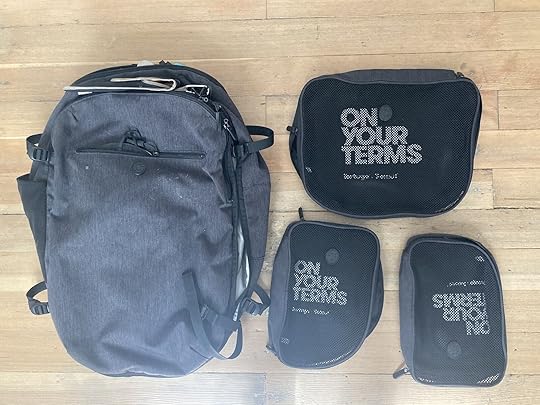
I feel like I’m actually on their terms, but I’m ok with that. Photo credit: Tim Wenger
Unlike a backpacking pack or standard backpack, the Tortuga Setout is designed to accommodate three specialized packing cubes that come with the pack. These fit perfectly into the main compartment when fully packed.
I utilize the three packing cubes to their max. I put pants and shorts in the large one, which can fit three pairs comfortably and four if I stuff it. I use the smaller two for t-shirts, socks, underwear, and any other clothing items. When traveling for work, I typically bring one or two nice button-downs, which I fold and pack into the two zip pockets inside the main compartment. A quick iron at the hotel and they’re good to go. I then arrange the cubes into the main compartment.
Everything else I can pack into my Tortuga SetoutThis was my setup for two months in Mexico. Photo credit: Tim Wenger
On top of the cubes, I place a day pack. On top of that, boots or shoes that I’m not wearing on the plane. Around the edges of the main compartment, any small miscellaneous items that are relevant to that specific trip. Another win for the Tortuga Setout backpack is that after five years I’ve never once had an issue zipping it up. No frustrating moments of not being able to zip the last few inches, no broken zippers, no rips. The zippers are perfect, and after 150-plus flights they’re still as functional as the day I bought the pack.
I fill the laptop compartment with my laptop, of course. Also in this compartment I place my charger, noise-canceling headphones, and a notebook.
In the front pouch, I keep a selection of charging and computer cables and a universal charging adapter with me at all times. These go in the zippered pouch, along with some nerdy staples like biodegradable coffee pods for hotel rooms that only have a Keurig. Outside of the zippered pouch, I keep a few pens, my passport and Global Entry id, and other small necessities. Each has a special place in one of the small open pouches.
Tortuga Setout Divide vs Setout 35LThe Tortuga Setout Divide is a 45L pack, giving you 10L more storage space than the original Setout 35L. Tortuga is a small business that focuses solely on making these packs, so you’re getting quality either way, but I’ve opted for the Setout 45L because it gives me more space while still retaining “guaranteed carry-on” status.
Any downsides?One thing to note about the Setout is that when fully packed, it is definitely on the larger end of carry-on-sized bags. As such, it won’t fit in overhead bins on smaller planes, including those typically used on short-haul regional flights. I do one of two things when I run into this issue: If I’m in a hurry on the other end, I bring the pack onto the plane and weasel it under the seat in front of me. It takes some squishing and pushing, but it always works. When the flight crew does their pre-takeoff rounds, I typically put my feet on top of it to conceal its bulge.
Or, I gate check the bag and pick it up at the baggage carousel at the end of my journey. As an added bonus, this tends to put you in good graces with the gate crew and flight staff because it frees up overhead bin space on the flight.
The only other downside I’ve experienced is that the bottle holder on the side of the pack tends to stretch just a little bit. This can cause your bottle to fall out during a flight, which happened to me once when I’d gate-checked my bag and I never got my Hydroflask bottle back. Granted, I should have taken the bottle with me onto the plane, but forgot to do so that time. I’ve since solved this issue by clipping a small carabiner to the main pack zipper, which clips nicely to the lid on most water bottles.
The Tortuga Setout 45L with packing cubes is on sale now for $129 (44 percent off), for Prime Day 2022.
More like thisTechnology + GearI Won’t Fly Without This Useful Travel Gadget, and It’s on Sale for $30 Until July 138 Adventurous Things To Do in La Paz, Mexico, That’ll Make You Want To Skip Cabo
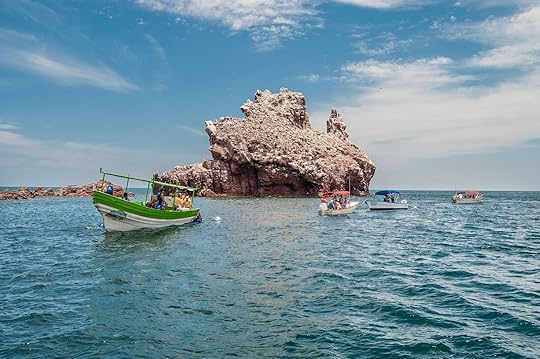
La Paz, Mexico, is fewer than 100 miles north of vacation hotspot Cabo San Lucas, but the two cities might as well be light-years apart. Though La Paz is the capital of Baja California Sur, Cabo has long been the state’s go-to vacation destination — and it shows.
Free from Cabo’s resort sprawl and never-ending nightlife, La Paz is a reminder of what Mexico’s beach towns can be like before tourism reaches critical mass. Its growing popularity is slowly ushering in boutique hotels and hip eateries, but the city is still clinging to a particular type of traveler — one that wants to spend the majority of his or her time outside.
All of the most thrilling things to do in La Paz revolve around outdoor activities, including laid-back options like boating and beaching and more active adventures like scuba diving, windsurfing, and sandboarding. If those are the type of experiences that fuel your love of travel, here are eight reasons you should choose La Paz over Cabo next time you’re in Baja California Sur.
Scuba dive or snorkel in the “world’s aquarium”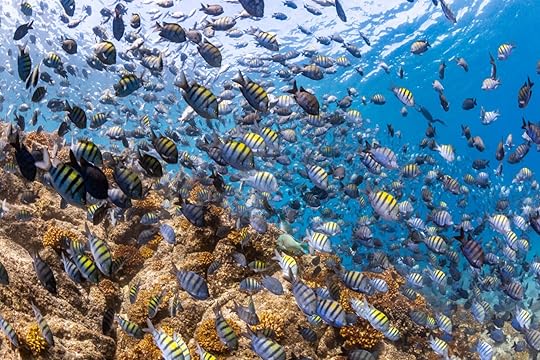
Photo: Nick_Polanszky/Shutterstock
La Paz sits on some premium real estate on the Gulf of California (a skinny inlet separating the Baja Peninsula’s east coast from the rest of Mexico’s west coast). Also known as the Sea of Cortez, the gulf is one of the most biodiverse water bodies on Earth. Nearly 40 percent of the world’s marine mammal species and almost 1,000 different fish species live in the waters just offshore of La Paz. The sea life is so rich — think dolphins, whales, sharks, rays, and turtles, to start — that Jacques Cousteau once dubbed it the “world’s aquarium.”
There are plenty of reputable dive shops in the La Paz area. But you don’t have to miss out if you’re not certified — snorkeling is also one of the best things to do in La Paz, Mexico, especially since the water tends to have an average visibility of around 90 feet (which means it’s very clear). You can also do an easy “Discover Scuba” dive with most shops, even if you’re never tried it before.
Stroll along the most beautiful malecón in Mexico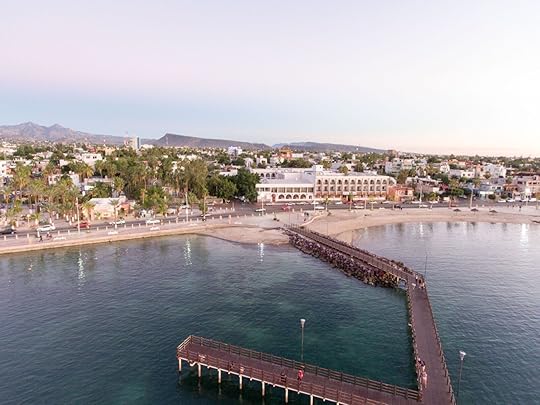
Photo: Leonardo Gonzalez/Shutterstock
The only thing separating downtown La Paz from all that marine biodiversity is a three-mile malecón, akin to a boardwalk. Locals insist it’s the most beautiful esplanade in Mexico, and they make a good case.
Sculptures honoring the region’s ecological and cultural heritage, including one of ocean explorer Jacques Cousteau, appear every hundred yards or so. Palm trees crop up every few feet, and a string of thatched-roof palapas provides shade for beachgoers. There’s also a bike path, skateboard park, and volleyball courts, all of which are popular well into the evening.
While most things to do in La Paz are heavy on adventure, walking the malecón at sunset is a peaceful alternative and a great way to end an active day. It’s also the best way to acquainted with the city and its scenery (and an ideal place to launch a paddleboard).
You can sleep under the stars on an uninhabited desert island
Photo: MIGUEL ZETTER LOPEZ/Shutterstock
Of all the memorable things to do in La Paz, experiencing Isla Espiritu Santo might be the most indelible. A national park and UNESCO World Heritage Site, the lava-and-limestone island reaches into the Sea of Cortez with fingerlike formations webbed together by small pearl-white beaches. The surrounding water is so clear that you’ll hardly notice it’s there — until you dive in and feel its bathtub-warm touch against your bare skin. In a word, Espiritu Santo is magic.
Thirty-two reptile species and 98 bird species, including the elusive blue-footed booby, inhabit the island alongside desert flora like giant cardon cactuses. The last humans to live there were the indigenous Pericu people, who called it home some 10,000 years ago. But today, travelers can sleep there. Select tour operators, such as Baja Expeditions, manage glampsites on the beach, though you can also visit for just a few hours.
Because Espiritu Santo is a protected area, only authorized boats can access its shores. Several operators run day trips to the island from La Paz’s marinas and the pier off the malecón. BACO (Baja Adventure Company) is a good choice for a half-day visit, complete with an hour-long boat ride, paddleboarding off Espiritu Santo, an on-board lunch of ceviche and tacos from a local La Paz restaurant, and a snorkeling excursion at Los Islotes (more on that below).
In total, there are 11 reef and wreck sites open to snorkelers and scuba divers within Espiritu Santo National Park, which includes the archipelago’s namesake island, as well as neighboring Isla Partida and a handful of smaller islets and promontories in the Sea of Cortez.
Swim with sea lions at Los Islotes
Photo: Leonardo Gonzalez/Shutterstock
If you’re going to choose just one snorkel or scuba excursion around Espiritu Santo, choose Los Islotes, a miniature island just north of Isla Partida. In fairness, Los Islotes is more of a rock than an island, and almost every inch of its surface is covered with sea lions.
When they’re not sunbathing, the sea lions of Los Islotes circle the shallow reef that rings the island — as do many tourists who come to see the colony. Swimmers are instructed to keep a close yet safe distance from the sea lions, but the animals follow no such rules. Occasionally, some may approach closely enough to visitors that they can count their cute little whiskers.
Relax on a pristine beach capped at 200 visitors
Photo: Matt Gush/Shutterstock
Nowhere is the overtourism problem in coastal Mexico more visible than it is at the beaches of popular resort destinations like Cabo. But just 30 minutes north of La Paz is Balandra Beach, a natural protected area and a safeguard in the face of growing tourism thanks to one thing: visitor caps. The exact number of visitors allowed daily waffled a bit during the pandemic, but the limit is currently 200 visitors per three-hour time slot. Visitors can choose between 8 AM to 11 AM or noon to 3 PM.
The scenery at Balandra Beach is similar to that of Espiritu Santo — calm waters clear as glass, blindingly white sand, and a rugged desert interior — with a mangrove forest between the sea and the shore that creates a stunning place to kayak. Though Balandra Beach is accessible by land, several boat tours run combine excursions to Balandra Beach, Espiritu Santo, and Los Islotes.
If you do drive to the beach, be sure to bring $50 for the entrance fee and pack everything you might need for the day. Part of what makes Balandra seem so remote is the lack of restaurants, beach bars, and other tourist amenities in the vicinity.
Snowboard on sand in the dunes
Photo: Alex Bresler
I had the pleasure of visiting La Paz recently, and I planned to go paddleboarding on my first afternoon there. But the wind had other plans for me. Instead of gliding across the glassy waters of Balandra Bay, I wound up gliding down the silky sand dunes of the El Mogote Peninsula, about 45 minutes northwest of the city.
My group of four hopped in a truck at the On Board Baja headquarters in downtown La Paz and headed for the dunes around 6:30 PM. Another duo met us there in their own 4WD vehicle, and we saw others off-roading UTVs nearby. Everyone in my group was a beginner, except for one person who was a proficient snowboarder. But after a few trial runs — and accompanying wipeouts — even the most nervous novices were able to board down the easiest dune without falling. Most were emboldened to try more the difficult runs a few feet away.
After an hour or so of sandboarding, the sun began to set over the Bay of La Paz and the greater Sea of Cortez, both of which frame the dunes. As I stared at the waters where I had planned to paddleboard, I was thankful that the weather had disrupted my plans and encouraged me to try a new sport — one I’d highly recommend.
Go whale watching or swim with whale sharks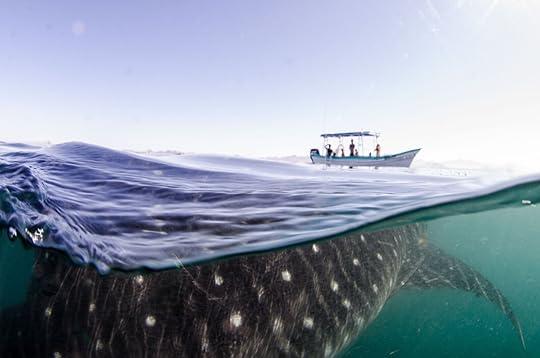
Photo: Leonardo Gonzalez/Shutterstock
La Paz has yet to see Cabo’s crowds, but it does have a busy season: December through February. It’s not just because the weather is great, with temperatures averaging around 80 degrees Fahrenheit, but also because it coincides with the annual whale shark migration.
From October to April, whale sharks descend on the Bay of La Paz to feast on plankton. Juveniles congregate along the interior edge of the El Mogote Peninsula where the food source is most abundant. Full-grown whale sharks, which are not actually whales but the world’s largest fish, can reach lengths of up to 40 feet, and it’s perfectly safe to swim with the gentle giants. Both Baja Expeditions and On Board Baja host excursions to do just that.
Winter is also whale-watching season in Baja California Sur. Between January and March, grey whales leave the Arctic Circle and swim thousands of miles to arrive in Magdalena Bay and the Ojo Liebre Lagoon north of La Paz. One of the operators that organizes dive trips to Espiritu Santo, the Cortez Club, also facilitates whale-watching excursions from La Paz.
Take a day trip to Baja’s windsurfing capital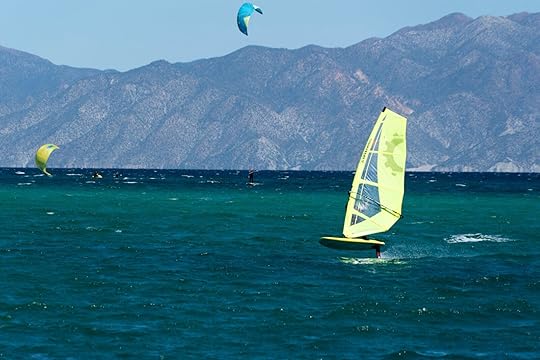
Photo: Andrea Izzotti/Shutterstock
When people say windsurfing is one of the best things to do in La Paz, they’re really suggesting that you plan a day trip to La Ventana or El Sargento. Slightly southeast of La Paz, the twin fishing towns are backed by mountains that create a natural wind tunnel to La Ventana Bay. This spells good news for windsurfers and kitesurfers. The breeze is consistent throughout the year, but the strongest winds blow from November to March.
While there are La Paz-based tour operators that’ll take you to La Ventana, renting a car in La Paz and booking a lesson with an on-site windsurfing school is an excellent excuse to explore even more of Baja California Sur.
Matador Network's Blog

- Matador Network's profile
- 6 followers


