
Matador Network's Blog, page 396
October 26, 2022
The 5 Best Free Museums You Can Visit in Nashville
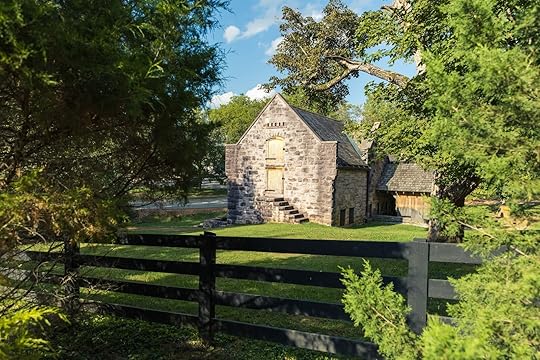
Nashville is known by many names: “Music City, USA,” “Nashvegas,” “Smashville,” and “The Bachelorette Capital of America.” But it deserves another moniker, too. “The City of Free Museums.” Okay, it’s not as catchy as “Nashvegas,” but it perfectly captures one of Nashville’s many alluring qualities: the abundance of museums completely free of charge that are open to the public. And not just your classic art or history museum here, either. The free museums in Nashville include eclectic collection that spans a wide range of interests, from agriculture to stately homes to the Dukes of Hazzard.
Tennessee Agricultural Museum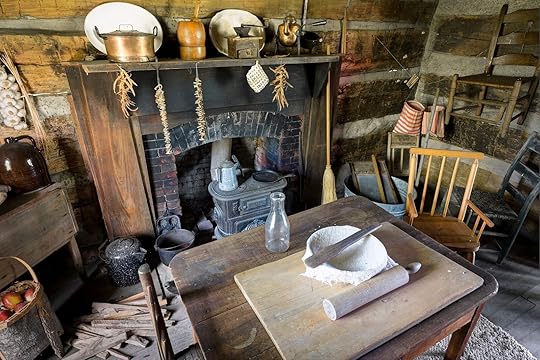
Photo: Serge Yatunin/Shutterstock
Located on the grounds of Ellington Agricultural Center in South Nashville, the Tennessee Agricultural Museum traces the history of farming in Tennessee. The museum has a collection of over 3,000 artifacts that help illustrate life in Tennessee before electricity. There’s also an heirloom garden, historic cabins, and two levels of exhibits. The museum hosts a variety of educational programs, exhibits, and special events year-round, like Farm Fun Days with farm animals, craftsmen, and demonstrators; a Farm to Table Dinner celebrating Tennessee’s cultural heritage; and a Christmas open house with holiday music and refreshments.
Warner Park Nature CenterManaged by the Metro Nashville Parks and Recreation Department, the Warner parks are one of the largest municipally controlled parks in Tennessee. Sure, it’s a little different than the other free museums in Nashville that you might find, but it’s a great way to get outdoors. Start at the nature center to learn about the parks, activities, programming, and animals that you can see. Then head outdoors. Altogether, the parks encompass over 3,100 acres of fields and forests, and they sit just nine miles from downtown Nashville, making them an easy and convenient day trip. It’s easy to see why nearly a million people visit the parks each year. They include a dog park, scenic roadways and overlooks, hiking trails, mountain bike trails, picnic shelters, golf courses, athletic fields, cross country running courses, and, of course, the Nature Center. At the latter, find information on birdwatching tours, naturalist-led hikes, climate panels, full moon hikes, and organic gardening education.
Cooter’s PlaceFor Dukes of Hazzard fans, you can’t visit Nashville without making a stop at Cooter’s Place. This Dukes of Hazzard museum is run by Ben Jones, the actor who played Cooter on the much-loved show. It houses an abundance of memorabilia from the TV show, including pictures, props, costumes, and several of the cars that showed up onscreen. You’ll also see Cooter’s tow truck, Daisy’s jeep, Rosco’s patrol car, and the show’s iconic 1969 Dodge Charger. Of course, photo ops are available inside all the museum’s vehicles. Also keep an eye out for one of the museum’s many events, including car shows, costume contests, and car caravans.
Tennessee Governor’s MansionVisiting the Tennessee Governor’s Mansion is like stepping back in time to when stately homes and Georgian architecture defined the Southern aesthetic. The three-story, 16-room home was originally built for businessman William Ridley Wills in 1931, and now serves as a residence for the governor of Tennessee as well as one of the free museums in Nashville that operates public tours. It has a cutting garden where fresh fruits and vegetables are grown, an arboretum with sugar maples, magnolias, and tulip poplars, and an extensive display of antiques and artwork illustrating the state’s history. There’s also a Christmas ornament collection displayed each holiday season, featuring unique ornaments from each county in Tennessee.
Vanderbilt Fine Arts Gallery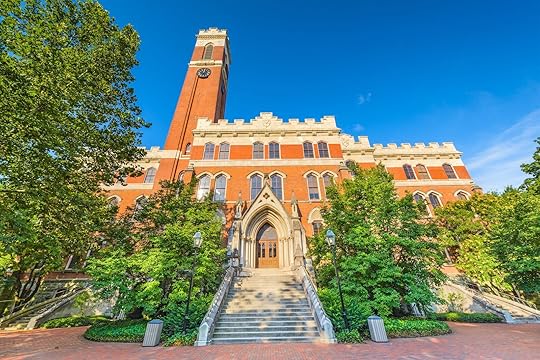
Photo: Sean Pavone/Shutterstock
Nashville may not have the art cred that New York does, but it can still hold its own when it comes to the arts. One of the best museums in Nashville, the Vanderbilt Fine Arts Gallery, located in Cohen Memorial Hall at Vanderbilt University, features six exhibitions each year from Vanderbilt’s permanent collection. Housing over 7,000 works, the gallery’s goal is to illustrate the history of world art through artifacts from Asia, Africa, Ancient Egypt, Ancient Greece, Europe, Mexico, and Central and South America. There’s also a weekly lunchtime series, with each week featuring a different curator tour, up-close examination of objects and guided sketching.


The Best Time To Visit Puerto Rico for Beach Bums, Wildlife Watchers, and Surfers

Puerto Rico is a year-round vacation destination with warm weather, annual festivals, and endless natural wonders. Many people think they should avoid Puerto Rico during hurricane season, but even in those months, guests are still winning. Prices are lower, crowds are thinned out, and the likelihood of a storm affecting a trip is slim. Day to day, life is good on the island, but here’s the best time to visit Puerto Rico depending on your interests.
Best time to visit Puerto Rico for beaches
Photo: Dennis van de Water/Shutterstock
North Coast — March to JulyThe North Coast of Puerto Rico has beaches along the Atlantic Ocean. Between April and June, the water will be warm and inviting. It’s not yet hurricane season, and the weather is mild enough to plan a full day at the beach.
Weekends, in general, are crowded as most people head to the sand for a Medalla (local beer) and relaxation. Sundays are the most popular days.
Piñones is a popular spot because the water is flat and shallow. It’s shielded by reefs and rocks that block the waves and make for easy swimming. The same goes for Playa Mar Chiquita, a half-moon natural pool in Manati formed by two natural rock outcroppings.
South Coast — November to MarchThe South Coast is bordered by the Caribbean Sea. As a result, the water on the South Coast is a couple of degrees warmer. There is a desert climate in the south, so it can also be drier.
Locals tend to avoid going in the water during “winter months” as it’s too cold for them. On the South Coast, there is a high concentration of protected mangrove areas for exploring via kayak and islands that make for fun day trips like Gilligan’s Island and Caja de Muertos.
When to avoid sargassum — November to AprilSargassum has been a growing issue in Puerto Rico. While at its worst during the summer months, the season has extended, and it’s not uncommon to find sargassum as early as April. There’s an unpleasant sulfur smell that comes from the decomposing grasses and it can attract biting sand fleas, in addition to being an eyesore.
Sargassum gathers most along the East and Southeast coast, in places like Fajardo and resort communities like Palmas del Mar. Some hotels will make an effort to clear it for their guests, but all beaches are public in Puerto Rico, so no set company or government agency has ownership or responsibility over its removal.
Best time to visit Puerto Rico for fauna and flora
Photo: vicbruno/Shutterstock
Sea turtle nesting season — March to AugustUp to a thousand sea turtle nests have been counted on Puerto Rico’s shores, including nests for the leatherback turtle, the world’s largest and critically endangered sea turtle species. During this time, locals block off nesting areas. Guests should be cognizant of disruptive elements like artificial light, bonfires, and the use of motor vehicles. Those wanting to volunteer can do so through organizations like Para la Naturaleza, a local nonprofit.
Jellyfish season — November to FebruaryIn general, jellyfish can be anywhere that the water is calm since they don’t like wind or waves. They are present year-round but are more prevalent in the winter months, particularly in January.
If you are swimming, keep an eye out. If you see something that looks like a trash bag, swim the other way. Jellyfish stings rarely warrant a trip to the emergency room but can definitely put a damper on a trip.
Sunflowers and wildflowers — June to OctoberFarms like Finca de Rustica in Naguabo have wildflowers that bloom best in the summer months and are a favorite backdrop for photo shoots. The same goes for Finca el Girasol on the South Coast, open on weekends and featuring rows of bright yellow sunflowers that you can peruse at your leisure.
The Flamboyán tree, brought to Puerto Rico by the Spaniards, is one of the island’s most iconic trees, with large red flowers and hints of yellow emerging from within. The tree blooms between June and September and is a sight to behold.
Best time to visit Puerto Rico for adventure
Photo: SasinTipchai/Shutterstock
Ziplining — November to JunePuerto Rico is home to the third longest zipline in the world, at Toro Verde Adventure Park. Recently, they also opened an urban zipline in Distrito T-Mobile. There are ziplines throughout the island like Rainforest Zipline Park in El Yunque, the national rainforest.
Ziplining is a year-round activity. Generally, you want to aim for a day with clear skies for the best visibility and need to arrive by 3:00 PM. For the best chance of this, avoid the rainy months.
Canyoning and natural pools — November to AprilPuerto Rico is full of mountains throughout the center of the island. One of the most popular activities is canyoning. Tour providers like Tanama River Adventures take guests rappelling, tubing through rivers in underground caves, and on expeditions to explore by foot to waterfalls.
Natural pools are filled with freshwater and are usually refreshing on a hot day. They’re a welcome contrast to beaches, as they’re usually isolated getaways. Places to explore include multiple Charco Azuls, Charco del Hippie, and natural rock slides at Las Paylas and Las Tinajas.
Be wary of the rainy season for these activities, as it can cause the terrain to be muddy and water levels to rise.
Bioluminescent bays — December to AprilPuerto Rico has three of the brightest bioluminescent bays in the world. Mosquito Bay in Vieques, Laguna Grande in the northeast in Fajardo, and La Parguera in the southwest in Lajas.
For the best visibility, the water should be calm and there should be no ambient lighting. Because of this, the winter months provide the best viewing conditions, although there’s never a bad time to cross this activity off your bucket list. Aim to go during a new moon, not a full moon, to better see the contrast of dinoflagellates as they glow in the water.
Pink lakes — November to April
The Cabo Rojo Salt Flats are Puerto Rico’s own pink lakes and are best appreciated on a sunny and clear day, as cloud cover impacts the perceived brightness of the water. During the dry season, there is less rain to dilute the organisms in the water which contributes to its unique coloration. Without a high concentration of microorganisms, the water can appear reddish-brown. For the brightest, rosy hues, visit during the winter months.
Best time to visit Puerto Rico for sports
Photo: IrvingR/Shutterstock
Golfing — November to AprilPuerto Rico is known as the golf capital of the Caribbean, with high-end golf courses throughout the island.
The stops here every year, at the end of February or beginning of March. The cool weather from November to April makes being outside for 18 holes pleasant, and many golf courses like The Wyndham Rio Mar and Royal Isabela, have ocean views.
Surfing and bodysurfing — October to March
The surf scene in Puerto Rico is thriving, especially during the winter months. Winter swells in the Atlantic Ocean make for epic waves and draw in professionals from around the world.
The Rincon Beach Festival was held in March 2022 and the Corona Pro Surf Circuit was held in October 2022. Festivals vary every year but generally, Rincon and Aguadilla are a hub for the sport and offer lessons and recreational surfing year-round.
Snorkeling and diving — April to AugustSnorkeling is also a year-round activity, but it’s best to aim for a day when there are calm waters. The summer months are inviting for being out in the water for a prolonged period.
You can snorkel on your own or with a boat tour that takes you further from the shore. If you can, head to the island of Culebra to spot starfish, manta rays, and sea turtles galore.
Kiteboarding and kitesurfing — November to AprilKiteboarding and kitesurfing are popular pastimes on the island, particularly on windy days. These can occur at any time, and most kitesurfers are ready to go when the weather is right, but the winter months are often the most promising.
The best part is you don’t need a wetsuit. For those aiming to practice jumps and tricks, check out flat water locations like La Parguera and Las Picuas.
Best time to visit Puerto Rico for food
Photo: Elizaveta Galitckaia/Shutterstock
Lobster season — October to JunePuerto Rico has spiny Caribbean lobster as opposed to the bright red Maine lobsters people usually envision. The biggest difference is Caribbean lobsters don’t have juicy claws filled with meat. It’s mainly the tail you’ll be eating.
That said, you can find large hauls and feast on lobster stuffed with seafood at places like La Casa del Pescador in Vega Baja and La Parrilla or Las Picuas 123 Seafood in Luquillo. It will depend on the catch of the day so if lobster is what you’re craving, call ahead to confirm availability.
Quenepa season — April to September
Quenepas are similar to lychees in that you peel off the outer skin with your teeth before eating the fleshy fruit inside. There is a seed in the middle, and they come in sweet and sour varieties. They’re known for their many health benefits and you’ll often see streetside vendors selling them by the branchful.
Quenepas can only be eaten when they’re ripe in the summer. In the past, there has been a festival in Ponce dedicated to quenepas and taking place in August or September.
Breadfruit season — July to September
Breadfruit, known as pana, is a versatile and abundant crop. They’re commonly used on the island to make tostones, mofongo, and the flour can be used for baked goods, from cakes to waffles. The trees produce a bounty about two to three times a year, so you’ll also find it in the winter months, and it can be easily frozen to use for future recipes.
The Festival de la Pana is an annual event held the first week of September in Humacao and allows you to celebrate and indulge in this starchy fruit in various forms.
Pasteles season — November to January
Puerto Rico has an extended holiday season, starting right after Thanksgiving and ending with the San Sebastian Street Festival in Old San Juan in mid-January. During this time, Puerto Rican grandmothers everywhere will be preparing pasteles, a mashed blend of root vegetables, usually tossed with chicken or beef and wrapped in a banana leaf before being boiled.
Certain places compete to have the biggest pastel on the island, like ¿Mami Que Hay Pa Comer?, a restaurant in Coamo famous for its 18 inch pastel.
Best Time To Visit Puerto Rico for Beach Bums, Wildlife Watchers, and Surfers
Puerto Rico is a year-round vacation destination with warm weather, annual festivals, and endless natural wonders. Many people think they should avoid Puerto Rico during hurricane season, but even in those months, guests are still winning. Prices are lower, crowds are thinned out, and the likelihood of a storm affecting a trip is slim. Day to day, life is good on the island, but here’s the best time to visit Puerto Rico depending on your interests.
Best time to visit Puerto Rico for beachesPhoto: Dennis van de Water/Shutterstock
North Coast — March to JulyThe North Coast of Puerto Rico has beaches along the Atlantic Ocean. Between April and June, the water will be warm and inviting. It’s not yet hurricane season, and the weather is mild enough to plan a full day at the beach.
Weekends, in general, are crowded as most people head to the sand for a Medalla (local beer) and relaxation. Sundays are the most popular days.
Piñones is a popular spot because the water is flat and shallow. It’s shielded by reefs and rocks that block the waves and make for easy swimming. The same goes for Playa Mar Chiquita, a half-moon natural pool in Manati formed by two natural rock outcroppings.
South Coast — November to MarchThe South Coast is bordered by the Caribbean Sea. As a result, the water on the South Coast is a couple of degrees warmer. There is a desert climate in the south, so it can also be drier.
Locals tend to avoid going in the water during “winter months” as it’s too cold for them. On the South Coast, there is a high concentration of protected mangrove areas for exploring via kayak and islands that make for fun day trips like Gilligan’s Island and Caja de Muertos.
When to avoid sargassum — November to AprilSargassum has been a growing issue in Puerto Rico. While at its worst during the summer months, the season has extended, and it’s not uncommon to find sargassum as early as April. There’s an unpleasant sulfur smell that comes from the decomposing grasses and it can attract biting sand fleas, in addition to being an eyesore.
Sargassum gathers most along the East and Southeast coast, in places like Fajardo and resort communities like Palmas del Mar. Some hotels will make an effort to clear it for their guests, but all beaches are public in Puerto Rico, so no set company or government agency has ownership or responsibility over its removal.
Best time to visit Puerto Rico for fauna and floraPhoto: vicbruno/Shutterstock
Sea turtle nesting season — March to AugustUp to a thousand sea turtle nests have been counted on Puerto Rico’s shores, including nests for the leatherback turtle, the world’s largest and critically endangered sea turtle species. During this time, locals block off nesting areas. Guests should be cognizant of disruptive elements like artificial light, bonfires, and the use of motor vehicles. Those wanting to volunteer can do so through organizations like Para la Naturaleza, a local nonprofit.
Jellyfish season — November to FebruaryIn general, jellyfish can be anywhere that the water is calm since they don’t like wind or waves. They are present year-round but are more prevalent in the winter months, particularly in January.
If you are swimming, keep an eye out. If you see something that looks like a trash bag, swim the other way. Jellyfish stings rarely warrant a trip to the emergency room but can definitely put a damper on a trip.
Sunflowers and wildflowers — June to OctoberFarms like Finca de Rustica in Naguabo have wildflowers that bloom best in the summer months and are a favorite backdrop for photo shoots. The same goes for Finca el Girasol on the South Coast, open on weekends and featuring rows of bright yellow sunflowers that you can peruse at your leisure.
The Flamboyán tree, brought to Puerto Rico by the Spaniards, is one of the island’s most iconic trees, with large red flowers and hints of yellow emerging from within. The tree blooms between June and September and is a sight to behold.
Best time to visit Puerto Rico for adventurePhoto: SasinTipchai/Shutterstock
Ziplining — November to JunePuerto Rico is home to the third longest zipline in the world, at Toro Verde Adventure Park. Recently, they also opened an urban zipline in Distrito T-Mobile. There are ziplines throughout the island like Rainforest Zipline Park in El Yunque, the national rainforest.
Ziplining is a year-round activity. Generally, you want to aim for a day with clear skies for the best visibility and need to arrive by 3:00 PM. For the best chance of this, avoid the rainy months.
Canyoning and natural pools — November to AprilPuerto Rico is full of mountains throughout the center of the island. One of the most popular activities is canyoning. Tour providers like Tanama River Adventures take guests rappelling, tubing through rivers in underground caves, and on expeditions to explore by foot to waterfalls.
Natural pools are filled with freshwater and are usually refreshing on a hot day. They’re a welcome contrast to beaches, as they’re usually isolated getaways. Places to explore include multiple Charco Azuls, Charco del Hippie, and natural rock slides at Las Paylas and Las Tinajas.
Be wary of the rainy season for these activities, as it can cause the terrain to be muddy and water levels to rise.
Bioluminescent bays — December to AprilPuerto Rico has three of the brightest bioluminescent bays in the world. Mosquito Bay in Vieques, Laguna Grande in the northeast in Fajardo, and La Parguera in the southwest in Lajas.
For the best visibility, the water should be calm and there should be no ambient lighting. Because of this, the winter months provide the best viewing conditions, although there’s never a bad time to cross this activity off your bucket list. Aim to go during a new moon, not a full moon, to better see the contrast of dinoflagellates as they glow in the water.
Pink lakes — November to April
The Cabo Rojo Salt Flats are Puerto Rico’s own pink lakes and are best appreciated on a sunny and clear day, as cloud cover impacts the perceived brightness of the water. During the dry season, there is less rain to dilute the organisms in the water which contributes to its unique coloration. Without a high concentration of microorganisms, the water can appear reddish-brown. For the brightest, rosy hues, visit during the winter months.
Best time to visit Puerto Rico for sportsPhoto: IrvingR/Shutterstock
Golfing — November to AprilPuerto Rico is known as the golf capital of the Caribbean, with high-end golf courses throughout the island.
The stops here every year, at the end of February or beginning of March. The cool weather from November to April makes being outside for 18 holes pleasant, and many golf courses like The Wyndham Rio Mar and Royal Isabela, have ocean views.
Surfing and bodysurfing — October to March
The surf scene in Puerto Rico is thriving, especially during the winter months. Winter swells in the Atlantic Ocean make for epic waves and draw in professionals from around the world.
The Rincon Beach Festival was held in March 2022 and the Corona Pro Surf Circuit was held in October 2022. Festivals vary every year but generally, Rincon and Aguadilla are a hub for the sport and offer lessons and recreational surfing year-round.
Snorkeling and diving — April to AugustSnorkeling is also a year-round activity, but it’s best to aim for a day when there are calm waters. The summer months are inviting for being out in the water for a prolonged period.
You can snorkel on your own or with a boat tour that takes you further from the shore. If you can, head to the island of Culebra to spot starfish, manta rays, and sea turtles galore.
Kiteboarding and kitesurfing — November to AprilKiteboarding and kitesurfing are popular pastimes on the island, particularly on windy days. These can occur at any time, and most kitesurfers are ready to go when the weather is right, but the winter months are often the most promising.
The best part is you don’t need a wetsuit. For those aiming to practice jumps and tricks, check out flat water locations like La Parguera and Las Picuas.
Best time to visit Puerto Rico for foodPhoto: Elizaveta Galitckaia/Shutterstock
Lobster season — October to JunePuerto Rico has spiny Caribbean lobster as opposed to the bright red Maine lobsters people usually envision. The biggest difference is Caribbean lobsters don’t have juicy claws filled with meat. It’s mainly the tail you’ll be eating.
That said, you can find large hauls and feast on lobster stuffed with seafood at places like La Casa del Pescador in Vega Baja and La Parrilla or Las Picuas 123 Seafood in Luquillo. It will depend on the catch of the day so if lobster is what you’re craving, call ahead to confirm availability.
Quenepa season — April to September
Quenepas are similar to lychees in that you peel off the outer skin with your teeth before eating the fleshy fruit inside. There is a seed in the middle, and they come in sweet and sour varieties. They’re known for their many health benefits and you’ll often see streetside vendors selling them by the branchful.
Quenepas can only be eaten when they’re ripe in the summer. In the past, there has been a festival in Ponce dedicated to quenepas and taking place in August or September.
Breadfruit season — July to September
Breadfruit, known as pana, is a versatile and abundant crop. They’re commonly used on the island to make tostones, mofongo, and the flour can be used for baked goods, from cakes to waffles. The trees produce a bounty about two to three times a year, so you’ll also find it in the winter months, and it can be easily frozen to use for future recipes.
The Festival de la Pana is an annual event held the first week of September in Humacao and allows you to celebrate and indulge in this starchy fruit in various forms.
Pasteles season — November to January
Puerto Rico has an extended holiday season, starting right after Thanksgiving and ending with the San Sebastian Street Festival in Old San Juan in mid-January. During this time, Puerto Rican grandmothers everywhere will be preparing pasteles, a mashed blend of root vegetables, usually tossed with chicken or beef and wrapped in a banana leaf before being boiled.
Certain places compete to have the biggest pastel on the island, like ¿Mami Que Hay Pa Comer?, a restaurant in Coamo famous for its 18 inch pastel.
Looking for a Travel Camera? The Sony a7 IV Is Worth the $2,500 Price Tag

Most photographers, professional or hobbyist, would probably name three major brands that rank above all others: Canon, Nikon, and Sony. But one of the most impressive recent cameras is the Sony Alpha 7 (abbreviated a7). It was released in October 2013 and was followed by the Sony a7 II in late 2014 and the Sony a7 III in October 2017.
The most recent version, however, is the drool-worthy Sony a7 IV, which I was fortunate enough to test on a recent trip through Alaska. Though I almost always travel with a DSLR camera, I’ve never had so many people stop me and ask my thoughts about the camera or, even still, ask if they could hold it and look through the viewfinder.

This photo was taken from so far away that at first glance I thought they were two overly large pine cones on a tree. Photo: Suzie Dundas
Though it’s a pricey camera, it’s truly fantastic. Thanks to a user-friendly menu, several levels of auto and intelligent shooting, and easy manual controls, it has the potential to turn an average travel or outdoor blogger, social media creator, or photographer into a great one.
After getting hands-on with this camera (and then going back to my older camera and lenses), I took the plunge and bought a Sony a7 IV, even though I’m not a professional photographer. I often take photos to accompany my freelance stories for online use, but that’s probably no different from many of Matador’s readers, who may take photos to share on their blogs or social channels. It’s more camera than I need, but it’s a great piece of tech that has the potential to make me a more competent photographer. And heck, taking photos with it is just plain fun.
Here’s why I bought one, and why other readers may want to do the same.
We hope you love the Sony a7 IV! Just so you know, Matador may collect a small commission from the links on this page if you decide to make a purchase. Listed prices are accurate as of the time of publication.
The Sony a7 IV is a full-frame, mirrorless camera
Full-frame cameras result in a higher-resolution photo that captures more of the subject from closer distances. Photo: Suzie Dundas
As someone who spent the last seven years shooting on a Canon 6D (a full-frame camera), I’ll never go back to a crop sensor again. A full-frame camera means the camera has a larger sensor and can capture a wider field of view, essentially “cutting off” less of whatever you’re shooting. The alternative is a crop sensor; cameras with these sensors tend to be cheaper.
Almost all professional and semi-professional photographers use full-frame cameras as they produce higher-resolution photos with more detail (and more flexibility for editing) since the larger sensor lets in more light.
The downside of full-frame cameras is that they’re bulkier and heavier, which is not ideal for travel and everyday carrying. That’s why I knew I wanted a full-frame mirrorless camera, a product that didn’t really exist until 2013. In “normal” cameras, an internal piece called a reflex mirror reflects light from the lens. Until recently, removing that mirror meant that photographers couldn’t change their lenses — hence the reason DSLR (which stands for “digital single-lens reflex,” which refers to camera bodies with interchangeable lenses) couldn’t also be mirrorless. But in 2008, the first mirrorless DSLR camera came out, which removed the rather large reflex mirror to create a smaller and lighter camera body that’s much better for travel.

The mirrorless design means the Sony a7 IV body is relatively small and light, even with a full-frame sensor. Photo: Sony
But it wasn’t until Sony introduced the first of the a7 cameras in 2013 that there was a mirrorless DSLR with a full-frame sensor. It changed the game and let photographers capture epic, high-resolution shots without the bulk and weight associated with professional-level cameras. The Sony a7 IV body weighs just one pound, seven ounces (with the battery), and measures 5.2 x 3.8 x 3.1 inches — small enough to fit in a jacket pocket in a pinch.
The resolution is amazing, even on the non “R” versionThere are a few different versions of the Sony a7 IV. I tested the standard Sony A7 IV (the “basic” version), though there’s also the Sony a7R IV — the “R” stands for resolution. The key difference is that the Sony a7R IV has a max resolution of 9504 × 6336 pixels/61 MP, while the “basic” maxes out at 7008 × 4672/34 MP.

Seals in the Prince William Sound, shot with the Sony a7 IV at a 600mm focal length. Photo: Suzie Dundas

The edited photo, cropped and enhanced based on the 600mm photo above. Photo: Suzie Dundas

The distance I was shooting from — using 3x zoom on an iPhone 12. Photo: Suzie Dundas
While the Sony a7R IV gives photographers an amazing resolution, it’ll be overkill for most photographers unless they’re planning on making large (2-foot-by-3-foot or larger) gallery-quality prints of your photos. If you do need that professional-level resolution, it may be worth looking into the a7R IV (or the earlier A7R III, which can go up to 7952 x 5304 pixels/42.4 MP).
Note that higher resolution isn’t always better: it can make shooting in low light more challenging (as its lets more light in with each shot) and dealing with editing, storing, and transferring 61 MP photos can be a task for even the fastest of computers. And don’t forget that large files will fill your memory card rather quickly, especially if you’re shooting in JPG and RAW.
The AI is really, really good when it comes to auto shootingMy first time ever using this camera was while traveling, so I had zero time to get to know the settings. And because of that, I made some mistakes when shooting on manual — like the photo below, which would have been lovely, had I adjusted the focus correctly (or perhaps paid more attention to the preview).

Whoops. Photo: Suzie Dundas
After screwing up some once-in-a-lifetime shots, I decided to ride with the auto settings for a while, using them on everything from landscapes to wildlife to shots in an ice cave and on glaciers — both of which can be very tricky for a camera to analyze, given the contrast between sky and ice.
Nailed it. This bear shot is from at least 75 yards away, by the way.

Photo: Suzie Dundas
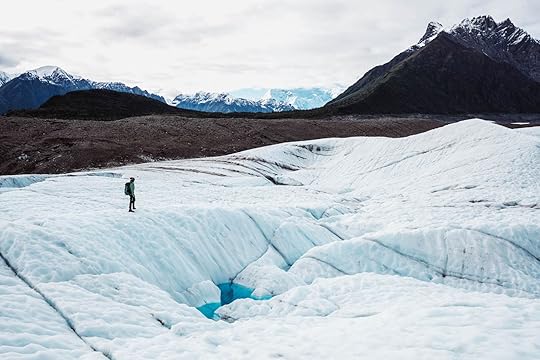

The Sony a7 IV + 200-600 mm lens : the perfect camera for capturing moose snot. Photo: Suzie Dundas
Most DSLR cameras do not come with any lenses (unless you buy a basic camera/lens kit), and the Sony a7 IV is no exception. Most users shooting travel, portraiture, still-life, fashion, and so on will be fine with a budget-friendly standard lens, like a fixed 50-mm lens. Depending on the brand, those will generally run between $150 and $300 (just make sure to buy one compatible with the Sony E mount).
But you’ll need more specialized lenses when it comes to specialty shooting. I tested the Sony FE 200-600mm lens, which was able to shoot incredible close-up photos of mountain goats from a distance; my friend’s 400mm lens couldn’t even find the goats while attempting to focus. Of course, photogs probably know that shooting with any lens above 300mm can make stabilization a challenge, but the combination of the camera’s stabilization and the lens’s stunning stabilization (which includes a side slider to switch between “normal” and “sports” modes) ensured the photos were stable, even from hundreds of yards away.

I’m pretty impressed with the quality of this photo, especially considering the distance — from 200 feet away and at least 500 feet below. Photo: Suzie Dundas
Because the Sony a7 IV has the potential to take such high-resolution photos, it may be possible to use a shorter lens than you’re used to if you’re upgrading from a camera that maxes out around the 25 MP mark. And shorter lenses tend to be a bit less expensive.
Of note: I took a 300mm lens to a wildlife lodge a few weeks after testing the 600mm lens and was shocked at the difference. I literally thought my 300mm lens was clouded or not focusing correctly, but no: the combo of the Sony a7 IV and 600 mm lens was so good it just makes other lenses look broken in comparison. It is worth noting, however, that the lens is huge, likely because it has a built-in stabilizer. As a result, it adds a lot of weight to your kit (4.6 pounds) and can be cumbersome to carry.

The 200-600 mm lens — fantastic, but not small. Photo: Suzie Dundas
Expect all your landscape shots to look epicPhoto: Suzie Dundas
The second lens I took with me was better for landscape shooting. While I usually shoot on a 10 mm lens for landscapes (and yes, it does result in some fisheye-esque distortion I need to fix in Lightroom), I took a slightly more versatile lens since I was only carrying two: the Sony FE 20mm f/1.8 G Lens. While I usually like to go a bit lower than 20 mm for landscapes, I figured it would work well as a catch-all lens for everyday shots.
And it did.
The 20 mm was the lens I started shooting with before I had any clue how to use the camera, and my photos are as crisp and white-balanced as can be. Pair it with the Sony a7 IV’s auto settings (for focus, white balance, ISO, and shutter speed), and your photos will be flawless, even if you never touch the manual settings.
The lens is pricier than the 50mm version (as lower focal lengths tend to be), but buyers looking for an everyday lens that skews toward landscapes will find this lens to be a happy medium. It’ll set you back around $900 if you don’t get it on sale.
It’s a professional-level video camera, tooI don’t usually shoot video, mostly because I don’t have a use for it — I’m not a vlogger, and generally don’t find I have the time to devote to editing travel videos. But the Sony a7 IV shoots excellent high-detail video, as shown by this landscape reel released by Sony.
One thing I did notice while shooting video — though of course my video isn’t finished and edited, as this one is — is that the Sony a7 IV does an excellent job of continuously adjusting exposure and focus while shooting, even if you’re switching between subjects or landscapes. It also has an option to track objects, which is especially useful if you plan to use it for vlogging, shooting moving subjects, or being in front of the camera as a solo traveler.
It’s packed with useful, thoughtful features
I found the flip-out screen easy to use, even without any prior experience with Sony cameras. Photo: Suzie Dundas
Buyers who have used any Sony a7 cameras probably already know they’re well-designed. And photographers who will use all the camera’s features are likely going to dig into the full list of specs before buying, so I won’t list them all here. But these were a few particularly useful features I noticed during my two weeks of testing (some of which are on other a7 models, too).
Easy to hold: the camera has a large front indentation for your finger, so it’s easy to hold and very stable, even when you’re shooting from moving surfaces (like from a boat).Movable display screen: The A7iv’s screen flips out, old-school camcorder style, and can also flip to face in front of the camera. It’s ideal not just for shooting front-facing video, but also for shots where you may need to shoot in portrait or be shooting from a low angle. I appreciated being able to flip out the screen and look down at what I was shooting, rather than having to crawl on the ground to see the frame.Real-time autofocus: Taking photos of a moving subject? The camera’s real-time focus was super useful. All I had to do was tap on a subject, and the focus followed that subject, even if moving. It was useful for wildlife shooting, though would likely work just as well for sports and fast-moving subjects.Two memory card slots: Nothing is more annoying than shooting and realizing your card is full, but since the Sony a7 IV has space for two, that problem is no more. You can select which card to save to or divide it by type of file — photos on one, video on the other.Custom controls: Photographers can decide what whee or dial controls what and create custom settings you can access by tapping a button.No bulky charger: Okay, this does come with a bulky charger — but there’s no need to use it. You can charge the Sony a7 IV without removing the battery with a simple USB-C cable. I appreciated not needing to carry extra cords or cables and minimizing weight, especially when carrying it on a backpacking trip (and yes, it will juice up from a back-up charger).The primary downside is obvious: costThe Sony a7 IV is not a cheap camera, and buyers just looking for a step up from a cell phone camera probably won’t be making the jump straight to a professional camera like this. And the lenses — which are equally fantastic — also don’t come cheap.
That said, it’s not the most expensive camera in the line and certainly cheaper than the a7R IV, which runs closer to $3,500 for just the body. And hey, it’s tax-deductible if you’re a for-profit blogger, right?
The competition
The Sony a7 IV is fairly small compared to most high-end DSLRs, but it’s still a lot more to carry than a cell phone. Photo: Suzie Dundas
Sony told me their two main competitors are the Nikon Z6 II and the Canon EOS R6, both mirrorless, full-frame cameras. The Nikon Z6II is priced roughly the same as the Sony a7 III (the version before the A7 IV) at roughly $2,000 for just the body, and the Canon EOS R6 is more comparable to the Sony a7 IV, at about $2,500.
The differences between the two cameras are vast if you dive into the full specs, but for most users, the biggest difference comes down to the photo size. The Nikon Z6 II is limited to a 24 MP sensor and only captures video at 4:2:0 8-bit (compared to the Sony a7 IV’s 4:2:2, 10-bit, and the Canon only has a 20 MP sensor, resulting in a max resolution of 5472 × 3648 pixels (compared to the Sony a7 IV’s 7008 × 4672). That makes the a7 IV a better choice for shooters hoping to crop photos (perhaps to avoid buying a more expensive, higher-focal-length lens).

The Sony A7 IV (right) compared to my larger Canon 6D (left). Photo: Suzie Dundas
I had a Canon D6, which can shoot up to 26 MP. But it’s not mirrorless, which makes it larger and heavier, as shown in the photos above (Sony a7 IV on the right). If the smaller size offered by a mirrorless camera isn’t as important to you, you’ll have a much wider range of DSLRs to choose from that may generally be more affordable than the a7 IV.
Who should buy the Sony a7 IV?
Photo: Suzie Dundas
The Sony a7 IV and associated lenses are pricey, but so are most nice DSLR cameras. If you meet any of the criteria below, consider investing in the Sony A7 IV — especially if your current DSLR setup feels too for travel.
Hobbyists or professionals looking to increase the quality of their photosOutdoorsy types who want to drop weight and size while retaining professional-quality gearIf you plan to use it enough get your money’s worthIf you’re hoping to transition from hobbyist to occasionally paid photographerIf you want to develop your camera skillsIf you’re hoping to grow your content-creator businessIf you can afford it and just want a fun new toyWho should not buy the Sony a7 IV?
This was on of my favorite photos from the town of Homer, Alaska — but if you’re just shooting photos of your dog, you may not need to spring for such a pricey camera to get passable shots. Photo: Suzie Dundas
You’ll likely prefer a less expensive, lighter camera if you:
Aren’t going to bother editing or sharing photos with anyone other than friends and familyNever check a bag (camera gear can easily fill a carry-on bag)Mostly use your phone for photosHave no interest in ever manually adjusting any camera settingsAre budget-consciousSony Alpha 7 deals and couponsAs of fall 2022, there are some good deals and specials online for snagging a Sony A7 IV (or other items and lenses compatible with the Alpha line) for quite a bit less than normal.
If you’re considering buying one, it may be worth setting a Google Alert for “Sony a7 IV” in case there are solid deals around Black Friday or Cyber Monday. Since the camera has been out for about a year, you may also be able to find used and refurbished options on various resale sites, but be aware that these often come with scaled-down, non-Sony warranties.
If you’re interested in an earlier version (the Sony a7 II), it’s currently $500 off as of late October 2022 if you buy from Sony.com, or $600 off if you buy it with a body kit. I found “open box” deals on the Sony a7 IV from Best Buy starting at $1,900, though they’re only available in certain stores (not buyable online). Sony currently has the body for $2,499 (which seems like the ballpark price around most retailers) or a set that includes an extremely versatile 28 –70mm lens for just $200 more from B&H Photo.
For such a big purchase, some buyers may appreciate the peace of mind that comes from buying directly from Sony.com, both because it makes warranty claims easy and because returns are hassle-free, with a 30-day window.
More like thisTravel SafetyHow To Protect Your Valuables While Traveling: Tips, Gadgets, and Bags You Need
October 25, 2022
Why You Should Always Take a Photo of Your Luggage Before Checking a Bag

There are plenty of reasons people opt to check a bag over packing a carry-on. Sure, when you pick a carry-on suitcase, you get to disregard baggage fees. Still, the inability to pack everything you need, be forced to measure out your liquids and lug around a suitcase at the airport is enough for several people to opt for a checked bag instead. But the major inconvenience travelers have to worry about is lost or stolen luggage. Whether it’s an international or domestic flight, airlines lose more baggage than they probably care to admit, which leaves you stranded without your stuff, putting a damper on your vacation. Erika Kullberg, an influencer who reads the fine print, so you don’t have to, explained why she always takes a photo of her checked luggage.
View this post on InstagramA post shared by Erika Kullberg (@erikankullberg)
The video, which has over 351,000 likes, has viewers reeling over the importance of making sure your luggage gets back to you. Kullberg has previously helped passengers understand why they should always file a claim for their luggage. Using Apple Airtags has become popular advice recently. In August, Airtags helped police find a bag stolen from baggage claim with $15,000 worth of jewelry inside.
Kullberg’s third tip of sending your flight information to your loved ones or anyone picking you up from the airport (which, let’s be honest, is true love) will help everyone know you’ve arrived safely — and that they won’t be making any circles around the parking lot.
8 Celebrity Chefs Share Their Go-To Airport Meal

You know someone has reached celebrity chef status when they’re spending more time in airports than in restaurants. Between TV appearances and book signings, the traveling never stops. And even if they’re an A-lister (unless they’re so A-list they fly private), they, too, will eventually find themselves with a layover. And because nothing kills time quite like sipping a drink or enjoying a leisurely meal while waiting for your boarding call. Fortunately for all of us, airport food is actually good now. In fact, if you’re a frequent flier, eating at the airport can be an epicurean adventure. And who better to ask for insights into the best airport food than professional chefs?
Curtis Stone tells Matador he’s a regular at Loteria Grill in LAX where he always pairs an authentic Mexican taco, or two, with a cold beer. And he’s not the only celebrity chef with on-the-go go-to airport food preferences. From the only safe spot to eat sushi in an airport (according to Chef Brian Malarkey) to a farm-to-vending-machine favored by Chef Rick Bayless, here’s where else you can expect to find these eight celebrity chefs tucking into a pre-flight meal in an airport near you.
Roberto Santibanez
Photo: Mahmoud Suhail/Shutterstock
If you ask Chef Roberto Santibanez for his take on the current state of airport food, he’ll talk about how the options are “exploding.” Whether he’s looking for Italian, French or Japanese, the owner of Fonda Restaurants in New York City and Mi Vida in D.C. says his favorite airports for food are JFK and Newark.
That said, he’s also fond of packing his own snacks, especially if dark chocolate is involved. “My go-tos when traveling are nuts and KIND bars,” explains Santibanez. “I like to eat something healthy with a good amount of protein and a little sweetness.”
Chef Todd Richards
Photo: Jackmont Hospitality
It doesn’t matter where he’s headed or where he’s coming back from, Chef Todd Richards always looks for comfort foods.
“After standing in line at TSA or waiting forever at the gate, the tastiest but simplest foods always work for me,” says the James Beard Award semifinalist and award-winning cookbook author.
Richards likes a good spicy chicken sandwich washed down with a cold beer. As the Director of Culinary for Jackmont Hospitality, Richards spends a lot of time in airports scoping out new concepts, especially from full service restaurants.
“I prefer to sit, take my time and relax,” he says.
Rick BaylessRick Bayless says he prefers to find options that are fresh and from local farms. Fortunately, the Michelin-starred chef and “Top Chef Masters” finalist partnered with Farmer’s Fridge which has nearly 200 vending machines in airports across the country. Each vending machine is stocked with fresh, pre-made grain bowls, salads and other healthy snacks sourced regionally. “Last year we did a collaboration with them to raise money for our Frontera Farmer Foundation,” says Bayless.
Maneet Chauhan
Photo: Maneet Chauhan
As a judge on the Food Network’s hit show Chopped Chef Maneet Chauhan has had to taste test a lot of food. But she never tires of it and doesn’t see it as work anymore.
“I try to sample something local at every airport,” says the chef, who flies 4-5 times per week. “It makes me actually look forward to traveling knowing I have these local favorites to enjoy while waiting for my next flight.”
Her current favorites are DeSano Pizza Bakery at Charleston International Airport, Tortas Frontera by Rick Bayless at Chicago O’Hare and Goldilocks Filipino Cuisine at San Francisco International Airport.
Brian Malarkey
Photo: Mahmoud Suhail/Shutterstock
“I try to spend the least amount of time in the airport as possible,” admits the Top Chef: All Stars alum. “My tip is to eat before you get there.”
Still, when he’s flying through LAX he has to go to ink.sack, a Michael Voltaggio restaurant in the Tom Bradley International Terminal. He always orders the restaurant’s “Spanish riff on the Italian deli sub.” When it comes to sushi, Malarkey says you should never eat it at an airport – unless it’s from Deep Blue on the Fly in JFK.
Chef Richard Blais
Photo: YMZK-Photo/Shutterstock
If you want to run into Chef Richard Blais in the airport, you might need lounge access.
“The fact is, some airlines, especially Delta, do such a great job now with their lounge and club programs that you can find a more-than-decent meal there,” says the Top Chef: All-Stars winner.
That said, Blais does like to check out new fast casual spots that leverage local flavor, and he’s not opposed to keeping it simple, too.
“You can definitely also find me in a coffee shop line or enjoying a good burger.”
Tara Monsod
Photo: Sorbis/Shutterstock
Although she’s competed against the best in the industry on Beat Bobby Flay, Chef Tara Monsod doesn’t sugarcoat it. When she flies, she likes plain old fast food. The executive chef of Animae spends her layovers at McDonalds where she gets a 6-piece chicken nuggets with sweet & sour sauce or a Big Mac (with extra sauce) and a large fry with hot mustard. For dessert?
“Maybe an apple pie with soft serve ice cream,” says Monsod, who is also a fan of Panda Express. Her top pick is a bowl with half chow mein, half rice, green bean chicken, crab rangoons, hot mustard, and sriracha.
Chris ViaudEver since competing on Top Chef Chris Viaud has had a packed schedule. When he’s flying, it’s typically domestic, and he likes to stick to eating the same foods.
“If I have an early flight I start off with a simple breakfast sandwich with bacon, eggs and cheese,” says the James Beard Award semi-finalist. And if it’s a later flight? Look for him wherever there’s a classic turkey club sandwich.
“I don’t want to eat anything that’s too heavy before a flight,” says Viaud. “A sandwich allows me the option to eat a portion of it and save the rest for later.”
The Best LGBTQ+ Bars in Atlanta

Queer nightlife in Atlanta is peachy keen, supporting a trail of gay bars stretching from Midtown to East Atlanta and beyond. Get buzzed at a historic gay haunt for the city’s Black community, shake your tail feather at one of America’s few remaining lesbian bars, or learn how to line dance with country-loving queer folks. It’s no wonder this town gets called the LGBTQ+ capital of the South — there’s a little something for everyone. Head to one of these ten juice joints to sample the Big Peach’s local flavor.
Heretic AtlantaThis queer scene staple, open since 1991, boasts one of the city’s best dance floors. On weekends, furry lads, DTF daddies, and harnessed hunks bump and grind to techno and house music. On Thursdays, the crowd goes country, with an all-gendered crew boot-scootin’ in line dance formations. (Free line dance lessons begin at 8:00 PM on Thursdays for beginners.) If you’re a two-step naysayer, fear not — two bars on either side of the dance floor and an outdoor deck leave plenty of spots for standing akimbo with the himbos. Check out the infamous Blackout Party for a dimly-lit night of debauchery, and remember — what happens on the dance floor stays on the dance floor.
Address: 2069 Cheshire Bridge Rd NE, Atlanta, GA 30324
Mary’s
Photo: AnnaStills/Shutterstock
Uber-inclusive, ultra-queer, and utterly relaxed: this East Atlanta Village dive is a warm hug in bar form. Join the eclectic crowd of regulars hanging along the glitter-pink bar during the week, or plan a visit around parties like Queer Bait and Saturday Sweat when hipsters kick up their heels on the teeny-weeny dance floor. Maryoke, the bar’s Wednesday night singing spectacular, is another neighborhood favorite. Who can resist belting out bops from a list of 15,000 songs?
Address: 1287 Glenwood Ave SE, Atlanta, GA 30316
BulldogsOpen since 1978 and regarded as Atlanta’s OG hang for Black gay men, this friendly Midtown dive is more than a bar — it’s a sacred institution. Most folks pay their respects on Saturday nights when the disco-balled dance floor gets sweaty, but the hallowed grounds are worth a visit any night of the week. Monday is for drag divas, Tuesday offers $2 tacos and tequila, and Sunday is best for imbibing post-brunch. Chow down pub grub on the outdoor patio (wings and cajun pasta are both tasty options), or sidle up next to one of Bulldogs’ bar-side regulars for cheap drinks and chatter.
Address: 893 Peachtree St NE, Atlanta, GA 30309
Woofs AtlantaFantasy football takes on a new meaning at this gay sports bar in the Armour Yards district, where dudes chug brewskies while watching the game on one of 27 television screens. Plan on coming hungry — the menu of bar munchies (nachos, burgers, wraps, and more) makes this the queer equivalent of visiting Buffalo Wild Wings. Woofs might not be your usual gay bar, but bros who like bros need somewhere to watch their home team toss the pig skin.
Address: 494 Plasters Ave. NE STE 200, Atlanta, GA 30324
Sister Louisa’s Church of the Living Room & Ping Pong Emporium
Photo: Sister Louisa’s Church of the Living Room & Ping Pong Emporium
Let’s get one thing straight — Sister Louisa’s “Church” is not. This is a come-as-you-are congregation presided over by Grant Henry (aka Sister Louisa), who hangs his bizarre and blasphemous art from every corner of the two-floor temple. (“Jesus loves a curious pussy,” reads a kitten pic hanging above the bar.) If you’re looking for atonement, show up for Sunday Service, when queer DJ Vicki Powell spins gospel, disco, and house to a room of sweaty sinners. Throughout the week, congregants gather for ping-pong tournaments, karaoke accompanied by a Baldwin organ, and the occasional Thursday night drag show. If this all seems too sacrilegious, you can always order the Blood of Christ — a rum slushie with cherry soda and cherry wine — and ask for forgiveness.
Address: 466 Edgewood Ave SE, Atlanta, GA 30312
Blake’s on the ParkBlake’s started serving heavy pours to gay gaggles in 1988, and today, the neon red sign out front is the postcard picture of Midtown’s LGBTQ+ scene. Pretty boys knock back mix drinks while ogling one another from a wrap-around bar in front — a preamble to hitting the dance floor, where you’ll hear pop remixes pumping all night. Drag shows delight throughout the week, and if you arrive before 9:00 PM, you can even have a meal — best enjoyed on sunny weekend afternoons when floor-to-ceiling windows open up to 10th Street.
Address: 227 10th St NE, Atlanta, GA 30309
Friends on PonceDelightfully divey and unpretentious, this roadhouse-style watering hole near Ponce City Market is a welcome respite from Atlanta’s see-and-be-seen establishments. Join the mixed crowd of queer folks shooting pool, jiving to the jukebox, or sipping Bud Light on the enclosed patio with views of Ponce De Leon Ave. The only time this jeans-and-a-tee crowd gets glam is on the second Sunday of every month for drag impresario Charmain Sinclair Dupree’s “New Faces” — a drag competition that launched legends like RuPaul coven queen Violet Chachki.
Address: 736 Ponce De Leon Ave NE, Atlanta, GA 30306
My Sister’s Room (MSR)
Photo: My Sister’s Room
There are less than two dozen lesbian bars left in the nation, and MSR is one of the best. This bi-level spot might cater to the Sapphic set, but it’s really a haven for anyone who loves top-tier drag performances, high-voltage karaoke nights, bawdy burlesque shows, or cutting a rug to pop music classics. Weeknights tend toward the slower side — an excellent time for ordering chicken tenders, cauliflower bites, or corn dogs from the kitchen — and weekends are all about moving to the tunes. Although its location has changed several times since opening in 1996 (it’s currently located in Midtown), the bar’s all-are-welcome energy remains.
Address: 1104 Crescent Ave NE ATL 30309
Atlanta EagleThis long-running leather bar recently became a bird of a different feather. After ending its 33-year run on Ponce De Leon Ave in 2020, the Eagle re-opened in October 2022 like a phoenix rising from the ashes. The new 5,000-square-foot space, located in Ansley Square near a sprinkling of other gay bars, features two floors and a spacious outdoor patio. Leather-loving lads still rule the roost, but the Eagle’s new iteration comes with a couple of updates: weekly drag shows and plans to serve food. For the historic haunt’s grittier vibe, visit on the last Saturday of the month, when geared-up guys party underneath a harness-clad disco ball.
Address: 1492 Piedmont Ave NE, Atlanta, GA 30309
FutureTechno tunes and psychedelic lights set the mood at this two-story, 14,000-square-foot club and cabaret space in Downtown Atlanta. Circuit queens reign supreme on the dance floor, where you can expect to find a sea of shirtless jocks dancing the weekend away. (Like most circuit events, tickets can be pricey; ensure you’re in an all-night groove mood before going.) An adjoining cabaret space hosts some of Atlanta’s hottest drag shows, including Fantasy Girls, which features local legends like pageant queen Shawna Brooks and powerhouse performer LaLa Ri. Plan your trip right for a star-studded Ru-veal: this is one of the best places to catch RuPaul’s Drag Race girls as they sashay through town.
Address: 50 Lower Alabama Street Suite 180, Atlanta, GA 30303
We Put Cotopaxi’s Top-Rated Packs To the Test

To say that travelers are obsessed with luggage is an understatement. And for good reason: The right bag makes travel easier, cheaper, more comfortable, and safer, whether you prefer a carry-on rollaboard, a large backpack, a duffle bag, or simply a fanny pack.
Utah-based gear and apparel company Cotopaxi makes some of the coolest-looking packs on the market right now with smart designs and bright colors. We put two different Cotopaxi bags — the Allpa 28L Travel Pack and the Batac 16L Backpack — to the test in a variety of travel situations to see how they fared.
We hope you love the Cotopaxi bags we recommend! Just so you know, Matador may collect a small commission from the links on this page if you decide to make a purchase. Listed prices are accurate as of the time of publication.
Cotopaxi’s Allpa 28L Travel Pack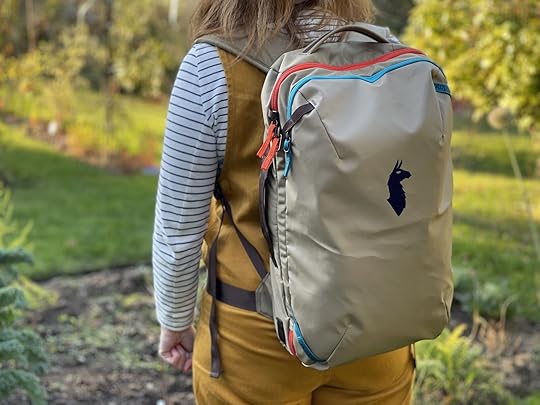
Photo: Jesse Adams
The Allpa 28L Travel Pack is one of Cotopaxi’s best-selling and top-rated packs. I’m not surprised – it’s the most reliable pack I’ve ever owned.
Allpa 28L Travel Pack’s sizeSpecs:
28 liters19 x 11 x 9 inches2 pounds, 10 ouncesThe Allpa Travel Pack comes in three different sizes: 42L, 35L, and 28L. Because I’m one of those insufferable travelers who strive to travel light and like to talk about it, I opted for the 28L version. The Allpa Travel Pack easily fits in the overhead compartment of even the small one planes, but is a bit of a squeeze to slide under the seat in front of you when full. I took it as my carry-on luggage for an 11-day trip that involved a variety of climates and managed to fit everything from my rain pants, woolen hat, and mittens, to my bathing suit, hiking boots, and a large pair of binoculars. Note that while not expandable, this Cotopaxi bag has the most solid zipper I’ve ever seen on a pack, so you can fill it a little more than it should be and still close it without the fear of breaking.
Allpa 28L Travel Pack’s practicality, comfort, and durability
Photo: Jesse Adams
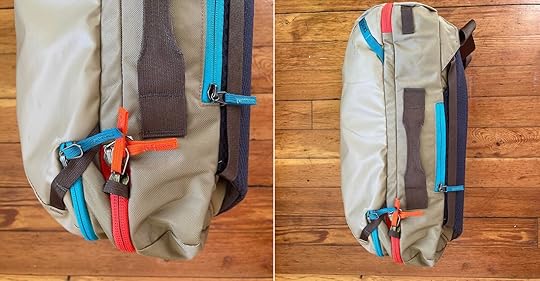
Photo: Jesse Adams
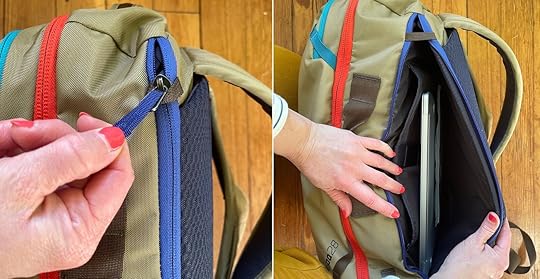
Anti-theft zippers and laptop compartment. Photo: Jesse Adams
The Allpa 28L Travel pack is a small step up from my 25L Black Hole Pack from Patagonia in terms of size, but a massive improvement in terms of practicality. While the Patagonia pack is top loading and requires that you use packing cubes to keep everything organized, this Cotopaxi bag opens like a suitcase and is pre-divided into three mesh compartments. It also features a shallow pocket in the front for the stuff you need to access on the go, like your passport, documents, book, phone, etc., and there’s a zipped, padded laptop compartment in the back with an additional tablet sleeve.
You can carry the Allpa 28L Travel Pack on your back or use the side handles to carry it like a case. I mostly used it as a backpack and it was much more comfortable than my Patagonia pack. It has thicker shoulder straps and a hip belt that sits just right. I walked many miles on the streets of Vancouver with this pack on my back and never felt pain or discomfort – and by then, it was pretty full.
I mostly used my Allpa 28L Travel Pack as a carry-on, but I did have to check it in once because I was bringing home some wine. Not only was the wine bottle intact on arrival, but the black streaks left on the front of the bag after traveling around airport luggage belts were easily washed off with some soapy water.
Allpa 28L Travel Pack’s looks and best features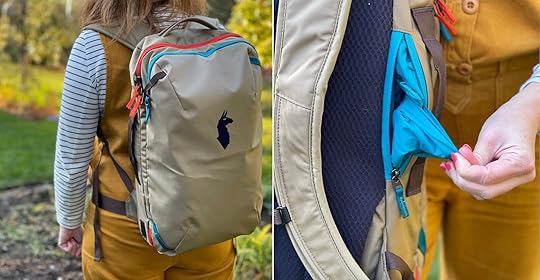
The rain cover has its own little pocket. Photo: Jesse Adams
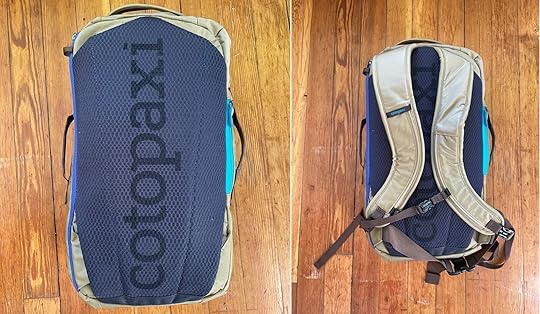
All the straps can be put away on this pack. Photo: Jesse Adams
While the pack is all-around excellent, there are some elements that are particularly ingenious.
The anti-theft zipper system allows you to walk around big cities and take the metro squished among dozens of people without worrying about your stuff. It’s a simple yet effective system that should be a standard feature on every backpack out there.The tuck away straps makes a world of a difference when checking the bag at the airport. Luggage belts don’t like loose backpack straps as they get caught in the system and can create damage. Usually you’re asked to tie and put away the straps as well as you can, but some airlines go as far as giving you huge plastic bags to put your backpack in. Cotopaxi solved the loose straps issue in a brilliant, uncomplicated way.A rain cover on a backpack is nothing new, but it’s not a feature that’s on every pack sold. The rain cover fit is tight and works great. It is also neatly tucked away in its own pocket. I tested it on smaller backpacks when walking around Juneau, Alaska, in the pouring rain, and every item in my bag stayed dry.Cotopaxi’s signature colors let you pick just about any color of the rainbow. And with such a unique and vibrant pack, you’ll have no problem finding your luggage on the baggage carousel.Cotopaxi’s Luzon 18L Backpack – Del DíaThe Luzon 18L Backpack — Del Día is a popular daypack with a 4.7-star rating (out of five) on both the Cotopaxi and REI websites out of hundreds of customer reviews. Mid-sized yet spacious, sturdy, simple, and sustainable, it’s an all-around pack that’ll keep you prepared for anything the afternoon brings.
Luzon 18L Backpack’s size and comfort
Photo: Alex Bresler
Specs:
18L (609 oz)20 x 11.25 x 5.1 in (51 x 34 x 12 cm)300 g (0.66 lbs)The Luzon 18L Backpack’s size is one of its biggest perks. The pack skews long and narrow, conforming to the shape of your back (particularly for taller people) under light (yet sturdy) unpadded (yet comfortable) mesh shoulder straps. With no frame and a large interior compartment, this Cotopaxi bag is more of a sack than a rucksack, but it can fit a surprising amount of stuff.
I took my Cotopaxi bag on all-day hikes that required no technical equipment but lots of layers, food, and water (the internal hydration sleeve easily fit my two-liter Camelback bladder). On more than one occasion, I’ve packed it with two pairs of rock climbing shoes, two harnesses, a belay device, two light jackets, and a 36-ounce water bottle to cart to the climbing gym (where its bright colors always make it easy to locate and retrieve from the sea of cubbies). Once, I even stuffed it with a full load of laundry and walked to the laundromat seven blocks from my apartment (a considerably more pleasant walk than lugging around a hamper).
I have yet to try using the Luzon 18L Backpack for anything more than an afternoon activity, but it does make for a solid daypack on longer trips. Ultra-lightweight and able to be rolled up, it’s an easy pack to stash in a larger bag, whether you’re going backpacking or visiting a city.
Luzon 18L Backpack’s practicality and durability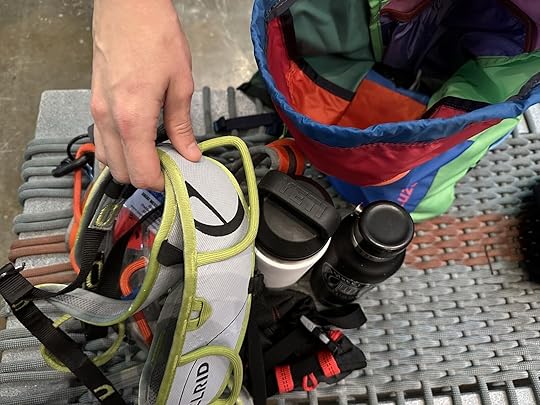
Photo: Alex Bresler
Aside from the internal hydration sleeve and external zippered pocket, the Luzon 18L is one big compartment. This makes it easy to pack and very versatile but equally difficult to organize and navigate once packed. As someone who spends an equal amount of time in urban and outdoor spaces, I appreciate the fact that there aren’t a million single-use compartments that are only condusive to one activity or lifestyle — for city dwellers, both the hydration sleeve and external zippered pocket in the Luzon 18L could also double as a laptop compartment. On the other hand, smaller items like house or car keys, cellphones and chargers, energy bars, sunglasses, and sunscreen have a tendency to get lost at the bottom of the pack.
After a couple of months of light use, my Luzon 18L Backpack shows zero signs of wear, which is not exactly a testimony to its durability. But the positive reviews I’ve read from shoppers who’ve had the same Cotopaxi bag for longer and subjected it to rougher use gives me confidence that this is a pack I’ll have for a long time thanks to the ripstop nylon material, which is sustainably repurposed from fabric scraps that other companies discarded. Though not waterproof by design, I’ve also found the nylon material to be somewhat moisture-wicking, although there’s no flap covering the drawstring closure on top, which could allow water to get into the pack.
Luzon 18L Backpack’s looks and best features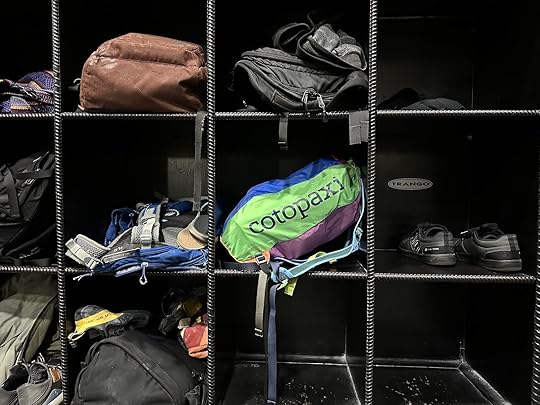
Photo: Alex Bresler
Compared to many of Cotopaxi’s packs, the Luzon 18L Backpack is light on features. In some ways, that’s what makes it a good pick for an everyday daypack. It also makes Cotopaxi’s signature color-blocking one of this pack’s standout features.
Every Luzon Del Día backpack is handmade from repurposed materials and designed by the workers who assemble them, meaning every piece that’s shipped is easy to see and easy to identify — two things that are particularly helpful when it comes to wilderness preparedness.
8 Haunted Trails in National Parks You Can Hike (if You Dare)

America’s national parks preserve some of the country’s most spectacular natural assets. And these protected areas also often have a rich past – but sometimes, that past is terribly tragic.
Morbid historical events in many of these parks have inspired spooky legends that endure today, from tales of murder to mysterious illnesses. Though these haunted trails are great for Halloween hiking, they’re also fascinating places to check out year-round, especially for hikers on the hunt for spooky specters (or who love nerve-rattling local legends.)
The Heritage Trail (or guided tours)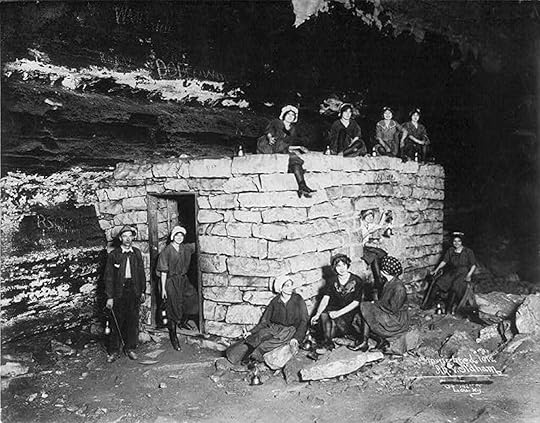
Patients and staff near a treatment room for patients with tuberculosis. Photo: Library of Congress/Public Domain
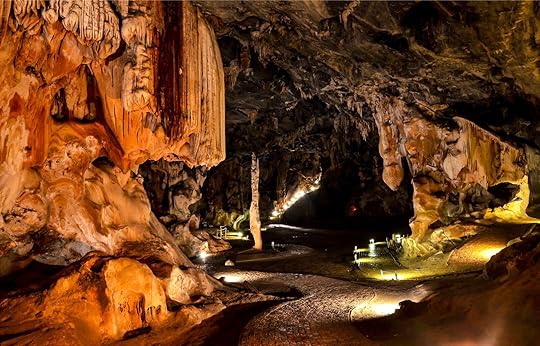
Photo: Ko Zatu/Shutterstock
Park: Mammoth Cave National ParkState: KentuckyDistance: .8 milesElevation gain: 40 feetAnchored by the longest cave system on earth, Mammoth Cave National Park has a reputation for ethereal encounters — so many that several park rangers wrote a book about the park’s otherworldly occurrences: Scary Stories of Mammoth Cave.
The subterranean wonder first opened as a tourist attraction in 1816, and a couple of decades later, physician John Croghan purchased the cave and created an underground sanatorium (place to treat chronic disease) for patients with tuberculosis. Five patients died in residence in just five months, and the subterranean facility closed after half a year in operation.
At the same time, a cave guide named Stephen Bishop was charting miles of the sandstone labyrinth using only a lantern. First brought to Mammoth Cave in 1838 as an enslaved man, Bishop spent nearly two decades exploring the cave system. And he accomplished quite a lot. Today, more than 420 miles of Mammoth Cave have been charted, although an estimated 600 miles remain unexplored.
Since the park opened 1941, rangers leading tours have reported encountering Stephan Bishop — suggesting the legendary guide may still be exploring the cave’s unchartered corners by lantern light. The park’s Heritage Trail is one of the most haunted trails in any US national park as the .8-mile route skirts the Old Guide’s Cemetery – Bishop’s final resting place.
Visitors can only go inside the actual Mammoth Cave as part of a guided tour. The Violet City Lantern Tour is guided only by lantern light for an extra spooky factor, but the Extended Historic Tour goes by the area where tuberculosis patients were treated (as well as “corpse rock,” where the deceased bodies were laid out for months).
The Transept Trail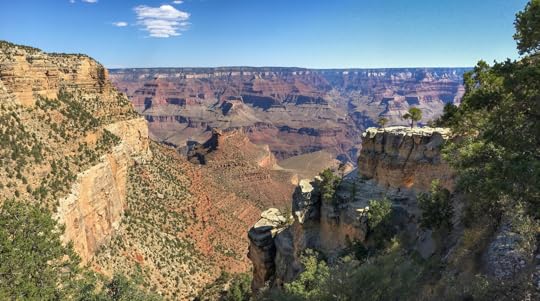
Photo: National Park Service/Public Domain
Park: Grand Canyon National ParkState: ArizonaDistance: 2.9 milesElevation gain: 280 feetDesignated as one of the planet’s seven natural wonders by the aptly named Seven Natural Wonders Foundation, the Grand Canyon is America’s most spectacular geological marvel. Forming the centerpiece of the Grand Canyon National Park, the two-billion-year-old chasm etched into the Colorado Plateau features in plenty of local legends.
Humans have inhabited the region since the last ice age, and today, there are still 11 tribes associated with the protected area. For more than a century, the jaw-dropping spectacle has also drawn tourists – and sometimes, visits have ended tragically. So naturally, there are a few haunted trails.
Along the Grand Canyon’s loftier North Rim, hikers and park rangers have reported encountering a bereaved apparition in a white dress wandering the Transept Trail and the grounds of the Grand Canyon Lodge. Nicknamed the “Wailing Woman,” the tearful specter is believed to have been a guest at the park’s original lodge: a getaway perched on the North Rim from 1928 until 1932, when it burned down during a kitchen fire.
Although there is little historical documentation, anecdotes suggest the woman’s husband and child perished while hiking the Transept Trail, disappearing on a day when foul weather made conditions especially treacherous. And now, it’s known as one of Arizona’s most haunted trails. The trail clings to the edge of a ravine splintering off Bright Angel Canyon, extending from the Grand Canyon Lodge to the North Rim Campground – meaning there’s still a chance to encounter the footpath’s legendary spirit.
West Beach Three-Loop Trail
Photo: RonaldL/Shutterstock
Park: Indiana Dunes National ParkState: IndianaDistance: 3.4 milesElevation gain: 220 feetSpread along the southern edge of Lake Michigan, Indiana Dunes National Park is a patchwork of prairie grasslands, wildlife-rich wetlands, and forest-tufted sand dunes.
Today, the protected area is one of the most biodiverse national parks in the country. But a century ago, the wilderness was almost squeezed out by local industry. The region’s largest dune – the 200-foot-tall Hoosier Slide — was hauled away by glass manufacturers before 1920. When the area was finally protected as a state park in 1926 (and a national park in 2019) it was partially thanks to a vocal champion – Alice Mabel Gray.
An intellectual who worked as a stenographer, Gray became disenchanted with her urban existence – and on Halloween in 1915, she hopped a train for the southern shore of Lake Michigan. Gray spent the remaining nine years of her life living beside the lake, earning a nickname from local reporters: “Diana of the Dunes.”
Before her death in 1925, Gray studied the lakeshore’s flora and fauna and became an advocate for the region’s ecologically-rich dunes. Although she died nearly a century ago, visitors still report spotting Gray along one of the park’s supposedly haunted trails along the lakeside dunes she loved.
Visitors can investigate the legend by heading to the park’s West Beach to walk Gray’s former stomping grounds along the Diana Dunes Dare. A signposted .6-mile loop, the circuit traverses Diana’s Dune and offers panoramic views of the Chicago skyline across the lake. It’s part of the longer and lovely West Beach Three-Loop Trail, which is also popular with birdwatchers. It’s a lovely place for a short stroll even without any unexplainable phenomena.
Spruce Railroad Trail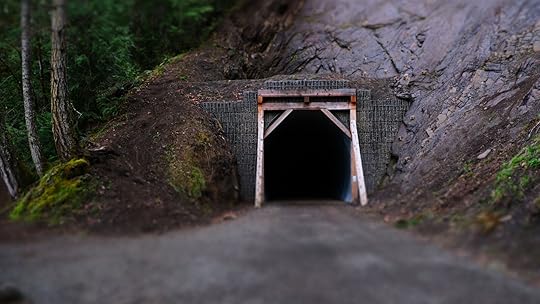
Photo: Sara Valenti/Shutterstock
Park: Olympic National ParkState: WashingtonDistance: 11.2 milesElevation gain: 400 feetOlympic National Park‘s Lake Crescent has featured in plenty of legends. Covering the northern end of the Olympic Peninsula, the lake was created when part of Mount Storm King crumbled onto a battlefield amid a bloody war, crushing the combatants, and sculpting the bed of the massive lagoon – according to legend, at least.
More recently, and more factually, an eerily preserved body was found floating in the crystalline lake during the summer of 1940. Discovered by trout fisherman, the corpse was dubbed the Lady of the Lake. Police eventually identified as Hallie Latham Illingworth, a local tavern server who disappeared in 1937. After three years in the water, police described her body as having a waxy texture, likely due to the natural process of saponification — a process by which fats and oils become soap-like.
Her tale is one of the goriest at any national park: she was found with strangulation bruises, allowing authorities to link her death to her husband, Monty. Although the mystery was solved, visitors still report seeing Hallie lingering along the shores of Lake Crescent on one of Washington’s most haunted trails.
To explore the longstanding legend, and get an eyeful of Washington’s second-largest lake, hike a section of the 11-mile Spruce Railroad Trail – a link in the Olympic Discovery Trail.
Noland Creek TrailPhoto: John Brueske/Shutterstockl
Park: Great Smoky Mountains National ParkState: TennesseeDistance: 18.5 milesElevation gain: 2,500 feetStraddling the border between North Carolina and Tennessee, the Great Smoky Mountains National Park has plenty of nerve-rattling legends. After all, the Cherokee have lived in the mountain-rippled region for more than a thousand years. And European settlers descended on the Smokies beginning in the late 1700s. Remnants of these early inhabitants are sprinkled throughout the protected area, including ghost towns, former homesteads, and more than 200 cemeteries.
Around the same time the park was created, the Tennessee Valley Authority built Fontana Dam, flooding Fontana Lake in the process. When the lake filled with water in the early 1940s, more than a thousand residents were expelled. A road was promised through the park to provide access to historic homesites and graveyards to accommodate these displaced residents, but only six miles of motorway ever materialized.
Today, the route is known as the Road to Nowhere and is known for being one of Tennessee’s most haunted trails. Hikers traversing the lake’s northern shore have reported observing a spectral settler who seems to be searching for someone. According to local legend, the lingering spirit is a settler who died looking for his missing daughter – and today, the apparition appears as a sphere of light, guiding hikers along the trail.
Search for the glowing orb on the Noland Creek Trail, north of Fontana Lake. The footpath passes both the Lower Noland Cemetery and the Upper Noland Cemetery within the first six miles, and while the full hike is too long for one day, there are plenty of backcountry campsites spread along the route.
Goler Canyon Road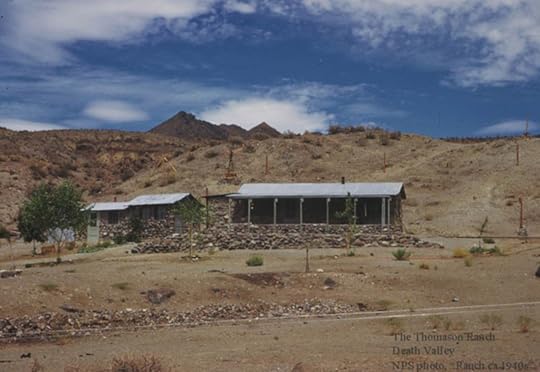
Photo: NPS/Public Domain
Park: Death Valley National ParkState: CaliforniaDistance: 11 milesElevation gain: 3,500 feetThe largest national park in the continental United States, Death Valley National Park is a land of extremes. Cradled by the Amargosa and Panamint ranges, the park is renowned for mysterious phenomena — like the moving rocks and singing dunes.
But in the late 1960s, the vast protected area also harbored a cult-like troop of drifters led by Charles Manson. Nicknamed the Manson Family – yes, that Mason Family – the gang occupied the Barker Ranch, a former mining camp turned rustic getaway for a few months in the late 1960s.
After damaging a handful of spots throughout the protected area – then designated as Death Valley National Monument – the squatters were arrested in early October of 1969 and charged with vandalism, arson, and auto theft. However, a few months later, four members of Manson’s gang were tied to a series of murders committed in Los Angeles during the summer of 1969. Victims included actress Sharon Tate, Folgers Coffee heir Abigail Folger, stylist Jay Sebring, and author Wojciech Voytek.
Today, hardy hikers can still make the 10.5-mile, out-and-back trek to the barebones hideaway used by the Manson family, following Goler Canyon Road into the Panamint Valley. It may not be one of California’s most famous haunted trails, but it’s at least one of the creepiest.
Editor’s note: Goler Canyon Road is closed as of October 2022 following heavy flooding.
Corbin Cabin Trail
Photo: NPS/Public Domain
Park: Shenandoah National ParkState: VirginiaDistance: 2.9 milesElevation gain: 1,000 feetSpread over the flanks of the Blue Ridge Mountains, the hills and hollows of Virginia’s Shenandoah National Park are brimming with Appalachian legends. The park has more than 900 years of human history, meaning plenty of people lived in the mountains when park service protected the area in 1935.
In the early 1900s, George Corbin was one of these scrappy pioneers living in the area. He settled in Nicholson Hollow, carving out an existence farming fruit and grains and slinging home-brewed brandy during the dry days of Prohibition. But in the winter of 1924, his wife died during childbirth, and he again faced hardship when his family was among the more than 450 families evicted to form the park.
But today, Corbin’s sturdy cabin remains, maintained by the non-profit Potomac Appalachian Trail Club. From Skyline Drive (the motorway bisecting the national park), it’s just a short hike to the homestead. Hikers can even rent the cabin for the chance to sleep in the historical building – and for an extra-spooky addition, check out the family cemetery just down the trail from the historic homestead.
Canyon Rim Boardwalk Trail
Photo: Jon Bilous/Shutterstock
Park: New River Gorge National ParkState: West VirginiaDistance: .6 milesElevation gain: 90 feetWest Virginia’s New River Gorge National Park and Preserve might be the country’s newest national park, but the protected area is bisected by one of the oldest waterways on the planet—the New River. Once a hotbed for regional mining operations, the protected area is still scattered with the remains of abandoned railroad and mining towns, like Kaymoor and Thurmond.
The landscape also provided the backdrop for one of the most monumental engineering catastrophes in United States history — the Hawks Nest Tunnel disaster. In the spring of 1930, laborers began digging a tunnel through Gauley Mountain to channel water from the New River to a plant downstream. While excavating the sandstone mountain, workers were engulfed in clouds of silica dust – and very quickly plagued by a fatal lung disease, eventually diagnosed as silicosis.
Workers completed the tunnel in 18 months, but more than 2,900 of then, most African-American, died from silicosis in the months and years to come. Today, the national park’s New River Gorge Bridge is about 10 miles south of the Hawk’s Nest Dam. While it may not be known for being one of America’s haunted trails, it’s certainly a fascinating place to go to see the landscape and mountains the workers were tasked with drilling through.
For expansive views of the landscape and the third-highest bridge in the country, hike the short Canyon Rim Boardwalk Trail near the Canyon Rim Visitor Center. Visitors can also explore the ghost town of Thurmond on a walking tour or hike one of several trails around the abandoned coal-mining town.
The 16 Best Airbnbs in Paris’ Top Arrondissements

Most of us cannot afford to own a pied-à-terre with views of the Eiffel Tower, but luckily, Airbnb is here to save the day with jaw-dropping properties in Paris’ most sought-after neighborhoods. That way we get to live like the Kretz’s clients for a few days, but keep our hard-earned dollars to spend on boutique Paris hotels, delicious French pastries, museum visits, or espresso shots at the local cafés. Here are 16 luxurious Paris Airbnbs for a French vacation.
We hope you love the Pairs Airbnbs we recommend! Just so you know, Matador may collect a small commission from the links on this page if you decide to book a stay. Listed prices are accurate as of the time of publication.
Bright apartment in Paris’ 18th arrondissement
Photo: Airbnb
Photo: Airbnb
Photo: Airbnb
Located at the bottom of the Montmartre Hill, just a few steps away from the iconic cabaret Moulin Rouge, this beautiful apartment can host two guests. While it’s small, it’s full of natural light and authentic Parisian charm, like herringbone-patterned parquet floors and a wrought-iron balcony. The Blanche metro station is just across the street, but because you’re in the 18th arrondissement, you can check out a multitude of iconic attractions on foot, like the Sacré Coeur basilica just a 20-minute walk up the Montmartre staircases, or the Café des Deux Moulins which gained international after being featured in the movie Amélie.
Two guests, one bedroom
Price: $95 per night
Photo: Airbnb
Photo: Airbnb
Photo: Airbnb
A former wood workshop that’s been entirely renovated, this unit is a simple, tasteful, and comfortable option for your trip to Paris. The ground-floor loft is filled with light, and decorated with contemporary taste and elegance in mind. The Airbnb’s front door and windows don’t face the streets and its ongoing flow of pedestrians, instead it is located in a typically Parisian courtyard, keeping the noise and the nosy people out of your vacation. This Airbnb is very close to the Canal Saint-Martin, the perfect place for a romantic walk.
Two guests, one bedroom
Price: $83 per night

Photo: Airbnb
Photo: Airbnb
Photo: Airbnb

Photo: Airbnb
Photo: Airbnb
This large Parisian apartment located in the heart of the Marais neighborhood, one of the oldest in the city, transports you to another era. With timber beams on the ceiling, parquet floors, art, and antique furniture, this unit is not only comfortable and beautiful, but it’s an experience in and out of itself. Former guests rave about the book and music library, the feeling of homeliness, and the apartment’s perfect location — it’s only a two-minute walk from the Pompidou Center, the leading European museum for modern and contemporary art. Typically, only Airbnbs in the south of France are this colorful — making this unit even more special.
Two guests, one bedroom
Price: $262 per night
Photo: Airbnb
Photo: Airbnb
Photo: Airbnb

Photo: Airbnb
Photo: Airbnb
This spacious and very elegant apartment is perfect for a trip to the French capital with family or friends as it can host up to eight guests in four bedrooms. Located in Saint-Germain-des-Prés, a very chic, village-like neighborhood, you’ll be very close to iconic cafés Les Deux Magots and the Café de Flore, and just a 20-minute walk from the Musée d’Orsay. You and your loved ones will feel like you’re staying in the lap of luxury in this sophisticated Airbnb that features beautiful art, tasteful period furniture, a fireplace, classic Parisian herringbone parquet floors, and a large patio with views on the roofs of the city. The building is in a quiet private courtyard, so you won’t be bothered by the noises of the city.
Eight guests, four bedrooms
Price: $1,501 per night

Photo: Airbnb

Photo: Airbnb
Photo: Airbnb
Photo: Airbnb
This beautiful apartment in the Latin Quarter has everything you’d want from your Paris accommodation: Herringbone parquet floors, a corner fireplace, elegant furniture, an eclectic art collection, and a touch of romanticism in the bedroom. And on top of being elegant, it’s also cozy, with large plush sofas and house plants that bring nature to this city lodging. The Latin Quarter is home to the famous bookstore Shakespeare and Company, the botanical garden, the Panthéon, and more, allowing you to see some of the best attractions in Paris just by taking a leisurely stroll.
Five guests, one bedroom
Price: $202 per night
Photo: Airbnb
Photo: Airbnb

Photo: Airbnb
Only a five-minute walk to the famous Champs-Elysées and with a view of the tip of the Eiffel Tower, this luxury apartment in the eight arrondissement of Paris is what dreams are made of. Extremely well appointed with parquet floors, period furniture, and a modern bathroom, this Paris Airbnb is as sophisticated as it gets. It’s also in the best location: Close to the Grand Palais, the Place de la Concorde, the Alexandre III Bridge, and many more must-see attractions.
Six guests, two bedrooms
Price: $832 per night

Photo: Airbnb
Photo: Airbnb
Photo: Airbnb

Photo: Airbnb
If you come to Paris for the Eiffel Tower, this is the unit you want to book. From the balcony of this apartment in the seventh arrondissement, you get the best view of the iconic French monument — it’s so close, you could almost touch it! Not only is it great by day, but at night, when the monument is fully illuminated, the spectacle is even more magical. Beyond the view, this Paris Airbnb is elegantly decorated with subtle tones and simple, yet beautiful furnishings, as well as a modern kitchen and bathrooms, for a comfortable and sophisticated stay in Paris.
Six guests, two bedrooms
Price: $975 per night
Photo: Airbnb
Photo: Airbnb

Photo: Airbnb
This apartment in the second arrondissement is a unique offering. With timber beams running along a magnificent cathedral ceiling, this Paris Airbnb makes you feel like you’re in the belly of a ship. The fireplace and the furniture all work toward making guests feel cozy and at home. The kitchen is a work of art in black and while and the bathroom is a beautiful mix of colors. The apartment is within walking distance from the Louvre, and the Palais Royal.
Two guests, one bedroom
Price: $249 per night
Photo: Airbnb
Photo: Airbnb
Photo: Airbnb
Photo: Airbnb
Views of Paris are best taken in from a balcony. There’s no shortage of those around the city, but few claim the poshness of this apartment’s outdoor terrace. This Paris Airbnb offers a flowered balcony with seating and views out over the city’s rooftops. It’s an easy spot from which to appreciate the architecture of the world’s most romantic city, as well as plan your next cafe stop from above. The sunset views? That’s just an added perk.
Five guests, three bedrooms
Price: $217 per night
Photo: Airbnb
Photo: Airbnb
Photo: Airbnb
Photo: Airbnb
This stylish Airbnb gives you easy access to the best of Paris’ Le Marais neighborhood. It’s well-trimmed on the inside, a classic Paris flat done in white and blue with a large bed and ample living space. If you’ll be working remotely in Paris, this unit has fast WiFi and is an easy walk to plenty of cafes where you can post up. Fine and casual dining is also available nearby, and when it’s time to venture across the city, the metro is right there.
Four guests, one bedroom
Price: $186 per night

Photo: Airbnb
Photo: Airbnb
Photo: Airbnb
Le Motte Piquet is the top Airbnb in Paris’ 16th Arrondissement, with views of the Eiffel Tower and walkable access to some of the city’s best cafes. The Piquet Motte is, appropriately, a two minute walk from the flat. Inside, enjoy the comfortable living space and bedroom, set in a quaint but classic Paris building.
Two guests, one bedroom
Price: $128 per night
Photo: Airbnb
Photo: Airbnb
Photo: Airbnb
This unit offers 6th-floor views of the neighborhood around the Bastille. It’s a walk-up in a classic Paris building that’s nearby to great dining, coffee, and entertainment. The unit is cozy and clean, with a great balcony and some of the best evening views in the entire city.
Three guests, one bedroom
Price: $173 per night

Photo: Airbnb

Photo: Airbnb
Photo: Airbnb
Photo: Airbnb
This luxury apartment near the Louvre is ideally romantic and convenient. It’s well-equipped for a perfect couple’s stay, within walking distance to everything around the Louvre including some of Paris’ best dining. Enjoy comfy furniture, a spacious bed and bedroom, and beautiful views out the window.
Two guests, one bedroom
Price: $388 per night
Photo: Airbnb
Photo: Airbnb
Photo: Airbnb

Photo: Airbnb
This historic duplex in Paris’ Latin Quarter is perfect for families. With three beds spread across two bedrooms and plenty of space to explore, the unit offers a relaxing place to regroup and rest without sacrificing ease of access to all the sights you want to see. The building itself is legendary — with over 400 years of history.
Five guests, two bedrooms
Price: $338 per night
Photo: Airbnb
Photo: Airbnb
Photo: Airbnb

Photo: Airbnb
On the southern edge on Montmarte, this flat has a private courtyard that just might be the best place in Paris to enjoy a cup of coffee (outside of the cafes, of course). This place is perfectly Paris, its ambiance reflecting the city’s chic style and its convenience placing you nearby to the best of the entire Montmarte area.
Two guests, one bedroom
Price: $232 per night
Photo: Airbnb
Photo: Airbnb
Photo: Airbnb
Photo: Airbnb
When you think of the terrace at Paris Airbnbs, you likely picture a thin frame abutting the unit. This terrace will shatter that expectation — it’s a full-on patio complete with a table and two seating areas. That said, it doesn’t sacrifice any of the views — and the unit it abuts is perfectly cozy, as well.
Two guests, one bedroom
Price: $127 per night
Matador Network's Blog

- Matador Network's profile
- 6 followers

