
Matador Network's Blog, page 374
December 21, 2022
These Swiss Hot Springs Will Help You Unwind Like Nowhere Else

Switzerland is packed with natural hot springs that have been attracting visitors for their healing properties for a very long time, starting with Roman soldiers two thousand years ago. These mineral springs were so well known that entire spa complexes, and even whole towns, have been built around hot springs in Switzerland. St. Moritz, now best known as a posh ski town, was sought out in earlier times for its many hot springs.
Today, Switzerland’s mineral springs rarely have the organic shapes of natural bodies of water, having been transformed into attractive pools alongside well-organized spas. But most still offer stunning mountain views and, often, luxurious amenities. Here are the best hot springs in Switzerland.
Hot springs in Switzerland: Hürlimann Bad & Spa ZürichView this post on InstagramA post shared by Hürlimannbad & Spa Zürich (@huerlimannbad)
Hürlimann Bad & Spa are the most urban hot springs on this list, being located in the center of Zurich. The Hürlimann Spa has vaults below that date back centuries, where you can enjoy ancient Roman bath rituals, reminiscent of those used by soldiers to relax their tired muscles long ago. Or you can head to the roof, where you can soak in mineral-rich waters while taking in views of the city and the Alps.
While you can book spa treatments like massages ahead of time, the mineral springs are not available for advanced reservations. They are open every day from 9:00 AM to 10:00 PM, and the best thing to do is to check the “Current Occupancy” link on the official website’s home page to see how crowded the pools below or the rooftops thermal baths are. Admission to the baths is CHF 39 ($42), with additional fees for spa treatments.
Address: Brandschenkestrasse 150, 8002 Zurich
Hot springs in Switzerland: FORTYSEVEN Thermal Spa, BadenView this post on InstagramA post shared by FORTYSEVEN° Wellness-Therme (@fortysevenbaden)
Baden, Switzerland, was one of the places those Roman soldiers first went — since it has the most mineral-rich springs in the country, and a whopping 18 of them at that. The waters at Baden are rich in sulfur, which is said to heal skin conditions and relieve sore muscles. Today, you can choose from several locations in Baden to experience these waters for yourself.
One of the newer places in Baden is FORTYSEVEN, an architecturally appealing spa perched over the Limmat River. Here the natural hot springs are a tingly 117 degrees Fahrenheit — or 47 degrees Celsius, the source of the spa’s name. You can enjoy these hot waters in both indoor and outdoor pools, followed by some time in the sauna.
It’s at this point that we need to warn you that, while you wear swimsuits to enter the hot spring pools, saunas and steam rooms in Switzerland are generally entered in the buff. In fact, entering a sauna with naked people while you’re wearing a swimsuit is considered impolite (voyeuristic, even). If this is a problem for you, FORTYSEVEN offers saunas with swimsuits or no swimsuits, as well as a ladies-only saunas. Admission is CHF 39 ($42) weekdays and CHF 42 ($45) on weekends.
Address: Grosse Bäder 1, 5400 Baden
Hot springs in Switzerland: Leukerbad-Therme, LeukerbadView this post on InstagramA post shared by Leukerbad (@leukerbad365)
If you’re traveling to Switzerland with kids, Leukerbad-Therme is the place to turn them on to the virtues of mineral springs, since Leukerbad has slides, as well as a children’s pool and a kiddie pool. But Leukerbad-Therme has a lot more than elaborate pool slides. It has ten differently styled thermal pools in all, varying in temperature from almost cool to quite hot. Adults will appreciate places like its stone grotto with very minerally water and warm temperatures that will really make you sweat. Many of the pools have jets to massage muscles.
You’ll also find an assortment of saunas and steam rooms that you must enter naked. At Leukerbad, that is the rule. If you aren’t comfortable with that, stick to the pools, where you can wear your bathing suit. If you only want to experience the thermal baths, it’s CHF 28 ($30) for three hours, or CHF 35 ($38) for the entire day. The steam and sauna rooms, which are normally included at other places, are an additional CHF 10 ($11). You could also opt just for the saunas for CHF 28 ($20) — but why would you pass on these baths?
Address: Zentrum 1, 6356 Rigi Kaltbad
Hot springs in Switzerland: Walliser Alpentherme & Spa, LeukerbadView this post on InstagramA post shared by thermalhotels_alpentherme (@thermalhotels_alpentherme)
Also in Leukerbad, you’ll find the Walliser Alpentherme, which is right in the mountains. The indoor and outdoor pools are all fed by thermal springs. If you aren’t traveling with kids, the pools here may be more your speed — there are no colorful slides. Instead, you’ll just have jaw dropping views of mountain peaks. Prices start at CHF 33 ($36).
Address: Dorfplatz 1, 3954 Leukerbad
Hot springs in Switzerland: Mineralbad & Spa, SamedanView this post on InstagramA post shared by Mineralbad & Spa Samedan (@mineralbadsamedan)
As we noted above, St. Moritz was a destination for its hot springs long before it was a ski resort. Samedan is a town just outside of St. Moritz, and its spa is a coveted destination both in summer and in winter, when skiers come to rest their weary legs in the mineral waters. And the waters here are perfect for that, seeing as they are high in sulfur and come up from the ground 115 feet below.
Operated by the same group that runs Zurich’s Hürlimann spa, the Samedan Mineral pools and spa are also located in the heart of town. You can wander through the different indoor pools, in rooms decorated with different tile patterns, and then finish up at the rooftop pool with its Alpine vistas. A day pass here is CHF 39 ($45).
Address: San Bastiaun 3, 7503 Samedan
Hot springs in Switzerland: Mineralbad & Spa, Rigi Kaltbad, LucerneView this post on InstagramA post shared by Mineralbad & Spa Rigi Kaltbad (@mineralbadrigikaltbad)
For some of the best views from any mineral springs, come to Rigi Kaltbad — located on Mount Rigi, offering vistas of the Alps and of Lake Lucerne, a serpentine body of water that is one of the most photogenic lakes in a country full of them. You’ll enjoy views through the windows of indoor pools and from outdoor pools as well.
The term “Kaltbad” in the name means “cold pool,” as the waters at Rigi were long known to be mineral-rich, but not very hot. Today, though, the water is heated by burning locally sourced wood. There are also steam rooms, an herbal spa, and indoor and outdoor relaxation areas. A pass to all of these steam baths and pools is CHF 38 ($41).
Address: Zentrum 1, 6356 Rigi Kaltbad
View this post on InstagramA post shared by Termali Salini & Spa Locarno (@termalisalinilocarno)
If some of Switzerland’s springs are rich in sulfur, the ones here are naturally high in salt — fed by the rock salt deposits that seep down from within the mountains. In addition to several indoor and outdoor pools, all at different temperatures, the Termali Salini & Spa also features Turkish baths and the option to indulge in massages or other treatments. There is even a regular swimming pool where you can get your exercise in before spending the next few hours just luxuriating.
Besides the chance to enjoy a natural saltwater pool nowhere near the ocean, two other things make this spa special. One is the breathtaking views of the Lago Maggiore on which the town of Locarno is located, and the other is being in the only Italian region of Switzerland, where the vibe is just a little more chill. A pass for the day is about CHF 35 ($38).
Address: Via G. Respini 7, 6600 Locarno
Hot springs in Switzerland: Tamina Therme, Bad RagazView this post on InstagramA post shared by Tamina Therme (@taminatherme)
The Tamina Therme spa warms visitors with 98-degree waters from the Pfäfers spring, whose healing properties were first documented almost 800 years ago. Today, the Tamina Therme public spa has a beautiful outdoor pool, as well as indoor spaces within its stunningly designed building — with massive ceilings and huge ovate windows. Lush greenery presents itself in summer, as does plenty of snow in winter, while beyond the garden lie the mountains. You’ll also find a series of attractive saunas, some made from marble, others from special Nordic wood. Spa treatments are also available, as are infusions with aromatherapy, meditative music, or other relaxation methods. A two-hour pass during the week is CHF 32 ($34.50), and CHF 39 ($42) on weekends.
Address: Hans Albrecht-Strasse, 7310 Bad Ragaz
Hot springs in Switzerland: Bogn Engiadina, ScuolView this post on InstagramA post shared by Bogn Engiadina Scuol (@bognengiadinascuol)
The Scuol area is packed with mineral springs that have been drawing visitors for centuries. The outdoor mineral pool provides you with views of jagged mountain peaks while inside you can enjoy a brine pool, an indoor jacuzzi pool, and grottos that provide cold and hot water plunges. You can also visit the solarium, steam rooms, dry saunas, and even a sauna where you are allowed to wear your swimsuit.
The name Bogn Engiadina means Engadine Pools, referring to the Engadine area where they are located, in Romansh. Romansh is a Romance language that is Switzerland’s fourth official language (along with German, French, and Italian) and which is the main tongue of this region. Scuol is a stunning area right next to Switzerland’s only national park. So, after all of these soothing soaks, you can keep the relaxed state of mind going with some forest bathing in the Swiss National Park in the Engadine. A three-hour pass is about CHF34 ($37) and a day pass is CHF48 ($52).
Address: Via dals Bogns 323, 7550 Scuol 


A Full Breakdown of Lake Tahoe’s 13 Ski Resorts

For most, the area split between California and Nevada collectively known as Lake Tahoe is known for, well, Lake Tahoe. But this region isn’t just a one-season paradise. The mountains surrounding the Lake Tahoe basin are home to a handful of ski resorts offering an incredible range of terrain and experiences for snow-lovers. So many, in fact, it might be hard to choose where would be best for you to hit the slopes.
To help point you in the right direction, check out this breakdown of the 13 major ski resorts around Lake Tahoe and how to choose which is the best fit for shredding safely all winter long.
North Lake Tahoe Ski ResortsNorth Lake Tahoe should probably be called “northern Lake Tahoe” as it’s a collective term for all the small towns on the north shore of the lake –unlike the southern shore of the lake, which has a town officially called “South Lake Tahoe.”
Palisades Tahoe
Photo: Suzie Dundas
Closest town: Truckee, CASkiable acres: 6,000Known for: The famous KT-22 lift, large base village, upper mountain learning area, extremely long seasonThe most well-known resort in the area, Palisades Tahoe was home to the 1960 Winter Olympics and boasts the classic base village many visitors look for in a Lake Tahoe ski resort. It’s been known by several nicknames over the years in homage to the pros and amateurs who love to show off on the famous slopes, Palisades is home to not just a slew of Olympians, but the notorious KT-22 lift (which many, including the late pro skier Shane McConkey, title “the greatest lift in America.”)
Experts aren’t the only ones who will love Palisades, though. The upper mountain has beginner terrain, meaning that after a tram ride, new skiers get the opportunity to experience learning how to ski with breathtaking, high mountain views. Palisades is less about defined groomers and more about big bowls and ridgelines so you can sort of choose your own route down. Of course, it grooms plenty of terrain for skiers who aren’t comfortable off-piste.
On any average snow year, Palisades Tahoe will always be open into June on weekends, though in recent years, it’s gone into July. Granted, it’s not epic skiing when it’s slushy and 65, but skiing in a T-shirt and slapping high-fives with folks who come down behind you is a pretty fun way to spend a June morning.
Alpine MeadowsClosest town: Tahoe City, CASkiable acres: 2,400Known for: Relaxed and fun vibe, hike-to terrain, Ice BarWith the opening of a new base-to-base gondola in December of 2022, Alpine Meadows is now physically connected to Palisades Tahoe Ski Resort. With no base area to speak of, save for a cafeteria and a ski shop/old-school ski bar, Alpine Meadows retains an old, soulful-ski feel and has a more relaxed atmosphere than Palisades. Alpine Meadows is home to all levels of terrain, including hike-to and side-country skiing, and on pow days, fresh snow can still be found later in the day. Even better, the backside of Alpine is home to Ice Bar, the perfect spot to hang out with friends and have a drink with some epic views. Alpine Meadows also has a high-speed, top-to-bottom chair (Summit Chair), perfect for doing some hot laps if you’re limited on time.
Diamond Peak
Photo: Diamond Peak /Chris Bartkowski
Closest town: Incline Village, NVSkiable acres: 665Known for: Great progression areas, epic view of Lake Tahoe, ‘Last Tracks’Diamond Peak is known for its sweeping views of Lake Tahoe, making it a favorite for visitors and locals alike. A dedicated learning area for kids and the fact that they offer some of the most affordable lessons in the area make Diamond Peak an especially great choice for families and beginners. And it’s known for good progression terrain: easy blues and easy blacks to help skiers and riders just starting to get to the next level. That said, it does have some steep terrain if you take a left off the top life.
One of the best draws is Diamond Peak’s “Last Tracks” event, where skiers and riders ski to the renowned (and lakeview) Snowflake Lodge Deck at for a wine or craft beer tasting and appetizers, then make a last run down some freshly groomed corduroy at sunset. You’ll need to buy your ticket in advance.
Northstar CaliforniaClosest town: Truckee, CASkiable acres: 3,170Known for: Family-oriented, great groomers, a bit bougie, s’mores at 4 PMNorthstar is a large, family-friendly resort that offers some of the best-groomed slopes in Tahoe, along with a picturesque base area. Home to events year-round, Northstar is a great vacation spot for families looking to stay at their Lake Tahoe ski resort of choice as Northstar has ample hotels, restaurants, spas, an ice-skating rink in the village, and complimentary s’mores at 4 PM.
Northstar is known locally as being for wealthier visitors, especially as the Ritz-Carlton adding a bit of bougie flair to the area. The resort’s grooming is well-known by everyone for being quite good, from older skiers to park rippers, and Northstar is currently home to one of the only half pipes in the Tahoe area. To Northstar’s credit, it does have some excellent expert and tree runs off the backside, plus two sections of sometimes-open backcountry terrain for some side-piste action.
Mt. Rose Ski Tahoe
Photo: Dominic Gentilcore PhD/Shutterstock
Closest town: Incline Village, NVSkiable acres: 1,200Known for: Close to Reno, mom-and-pop vibes, early season-opening, highest base elevationWith a base at 8,260 feet, Mt. Rose is the highest-elevation Lake Tahoe ski resort. That means colder temps and more snow early season, allowing Mt. Rose usually to open a bit earlier than other nearby resorts. It’s been open on Halloween multiple years.
A mere 28-minute drive from Reno-Tahoe International Airport, Mt. Rose is easily accessible to Reno residents with the mom-and-pop resort feeling many love. The Mt. Rose Chutes offer some of the longest vertical terrain in a North American resort, with a vertical drop of more than 1,000 feet over a steep 40-to-45 degrees; the chutes are certainly for experienced skiers only. Overall, Mt. Rose is a great option for locals in Reno or visiting tourists looking for a fun, mom-and-pop ski resort experience close to the city. It’s also close to Diamond Peak, if you want to visit two Lake Tahoe ski resorts in one trip.
Sugar Bowl ResortClosest town: Norden, CA (or Truckee)Skiable acres: 1,650Known for: Historical hotel at the base, wide range of terrain, lingering pow, historic gondolaFor many, Sugar Bowl is a magical unicorn. With terrain for beginners and advanced riders alike, it’s one mountain where skiers and riders of every level will be stoked after a day on the hill. The base may not have a ski village, but the special Tahoe terrain many come looking for is abundant. Mellow greens and plenty of groomed blues make on-piste riding a hoot. And since the challenging and technical riding gets tracked out slower (Sugar Bowl isn’t as accessible as other Tahoe resorts), and you can’t see the entire resort in one look, it’s usually possible to still find untouched pow a few days after storms.
The resort isn’t the only compelling reason to visit Sugar Bowl, though. A newly renovated hotel at the base means you can wake up slopeside, and you’ll get there via the historic Sugar Bowl Gondola – the West Coast’s first ski gondola, dating to 1939 (don’t worry: it’s had some updates). And for more icing on the cake, Sugar Rush Tubing and the Royal Gorge Cross-country Ski Area are just a few minutes away, in case you have folks in your group looking for non-ski winter recreation.
Boreal Mountain
Photo: Boreal/Woodwrd Tahoe
Closest town: Norden, CA (or Truckee)Skiable acres: 380Known for: Easy access, home to Woodward Tahoe, big tubbing area, park skiing/ridingJust off Interstate 80 (seriously, you can see it from the road) and only 10-15 minutes from Truckee, Boreal Mountain is extremely accessible and well-known for being home to Woodward. Woodward is essentially a park and camp, so if you’re looking to hit jumps or rails, this is where you want to learn. They also have trampolines, foam pits, and an indoor skate park.
Boreal is great for skiing and playing around on the slopes, but it’s also home to the well-known Tahoe Tubing hill. It also has cheaper lift tickets, some good midweek deals, and is about 30 minutes closer to Sacramento than every other resort in town (save for Sugar Bowl, which probably only adds another 15 minutes or so). It’s small, but if you just want an affordable Lake Tahoe ski resort for playing around for a day, it’s a good choice.
Tahoe DonnerClosest town: Truckee, CASkiable acres: 120Known for: being the best place to learn to ski or rideTahoe Donner takes the phrase “the place to begin” to heart. As the smallest of the Lake Tahoe ski resorts, Tahoe Donner is the ultimate family-friendly location for parents looking to take their kids skiing or adults looking to learn. With uncrowded runs and gentle beginner terrain, Tahoe Donner specializes in teaching kids and adults who have never touched a ski. Viewed as sort of a “locals secret” (or at least second home-owners secret), Tahoe Donner is an ideal place for families who aren’t hardcore skiers to enjoy time on the slopes together as a family.
Donner Ski Ranch
Photo: Donner Ski Ranch
Closest town: Norden, CA (or Truckee)Skiable acres: 500Known for: Historic feeling, inexpensive, family owned(Yes, another resort named after the infamous Donner Party. There’s a lot in Truckee named after them).
Donner Ski Ranch is last but certainly not least on the list of northern Lake Tahoe ski resorts. Generally considered one of the most nostalgic and unique ski experiences in Tahoe, Donner Ski Ranch opened in 1937 and is truly a slice of ski history.
One of the last family-owned ski resorts in the area, Donner Ski Ranch is extremely inexpensive compared to most resorts (weekday tickets start at just $59). Affordable lessons and a fun, heartwarming vibe paired with a historical perspective make Donner Ski Ranch a favorite of many locals, many of whom likely learned to ski there. And locals and visitors alike are usually mingling at the fun dive bar and restaurant at the base, making it an ideal resort for families or beginner groups looking to learn in a low-key, low-stress environment.
South Lake Tahoe ski resortsMany of the resorts below are in the southern Lake Tahoe area, not necessarily the town of South Lake Tahoe – but the moniker “South Lake Tahoe ” is often used to describe the entire area, regardless.
Heavenly Mountain Resort
Photo: Larry Zhou/Shutterstock
Closest town: South Lake Tahoe, CASkiable acres: 4,800Known for: Skiing between state lines, late-night party vibes, highest elevation lift in TahoeIf you’re looking for a perfect place to head on a bachelor/bachelorette trip and explore a resort for a few days, Heavenly is for you. In South Lake Tahoe, Heavenly has the highest lift (and thus highest skiable terrain) in Tahoe, serviced by the Sky Express lift at 10,040 feet above sea level.
Heavenly is spread between Nevada and California, meaning, yes, you can ski from one state to another. And you’ll have beautiful views when doing so, with Tahoe on one side and desert on the other.
With easy access and a considerable variety of walkable accommodations, Heavenly’s location in South Lake Tahoe makes it a good choice for social trips. South Lake Tahoe has plenty of restaurants and bars, but its neighbor Stateline, Nevada, offers casinos (and more lax drinking rules) for those looking to try their luck into the night. Since it tends to attract the “casino and partying” crowd a bit more, it’s easy to find hidden pow stashes in the trees after a storm, earning it an award for the most undervalued tree skiing of any Lake Tahoe ski resorts.
Sierra-at-TahoeClosest town: Twin Bridges, CA (or South Lake Tahoe)Skiable acres: 2,000Known for: Recently reopened after forest fires, stoke is always high, friendly, everyone-belongs atmosphereThe lesser-known Sierra-at-Tahoe is special to many Tahoe residents because of the recent wildfire that ravaged the resort, along with the immense amount of work that went into reopening the slopes. Not only does Sierra-at-Tahoe boasts runs for every ability and genuinely friendly vibes, but Olympic gold and silver medalist snowboarder Hannah Teter says Sierra-at-Tahoe has the “best powder in Tahoe.”
If you’re looking to hoot and holler along with strangers on a pow day and want a Lake Tahoe ski resort where employees know folks by name, Sierra at Tahoe is the place to be. Just keep in mind that it’s a bit of a drive – it’s only 17 miles from South Lake Tahoe, but winter weather and occasional chain control can make the drive take longer than you’d expect.
Homewood Mountain Resort
Photo: Suzie Dundas
Closest town: Homewood, CASkiable acres: 1,260Known for: Change ‘a-comin, great views, tree skiingHomewood Mountain Resort announced plans to become a “lifetime membership club” in the next few years. It hasn’t gone into detail on what that means, but it’s likely it’ll be semi-private, kind of like the luxurious Yellowstone Club, with passes available to a select group of permanent residents. So if you want to ski it, you should go now. The small parking lot means you need to get there early, but it also means there aren’t usually too many skiers on the hill – which, by the way, has views that make it look like you’re going to ski directly into the lake (which you could, if you send it through the parking lot). It also has excellent intermediate tree skiing off the back.
Kirkwood Mountain ResortClosest town: Kirkwood, CASkiable acres: 2,300Known for: Great advanced terrain, a bit further from the Tahoe area, deep powKirkwood is a local’s favorite. About a 45-minute drive from South Lake Tahoe, Kirkwood is more removed from the other lake Tahoe ski resorts, equating to fewer folks hitting the slopes. The second-highest resort in the Tahoe area, Kirkwood is known for some of the best snowfall in the area and the extreme terrain (they even host a Freeride World Qualifier event).
Kirkwood does have its own beginner area, but it’s best known for its off-piste gullies, snake runs, chutes, and cliffs. Almost 60 percent of Kirkwood’s terrain is rated advanced, so don’t be surprised when you look at the trail map and it’s mostly covered in blue and black runs.
Does Duolingo Actually Work? I Went To Belgium To Find Out After a 90-Day Lesson Streak

The first time I downloaded the language-learning app Duolingo, I was about two weeks out from a trip to Portugal. I was surprised to see an icon for the Brazilian flag representing the Portuguese course, even though Brazil’s population outnumbers Portugal’s by more than 2,000 percent, but I figured the basics of Brazilian and European Portuguese would be the same.
I figured wrong. When I got to Lisbon, simple phrases like “good morning” and “good afternoon” were pronounced so differently than the app had accustomed me to hearing them that it took me a couple of days to register the words. Other times, random words like “abacaxi” that I’d managed to memorize during my brief study were met with raised eyebrows, not because I had a tendency to shoehorn them into conversation but because, in that particular example, “ananás” is the more common word for “pineapple” in Portugal.
The experience left me with a couple of questions: How far in advance of a trip should travelers start studying Duolingo, and how well does Duolingo work when the destination you’re traveling to is different from the destination that was used as a reference point for your language course? So, when I got the opportunity to spend four days in Belgium after studying Duolingo French for three months this past summer, I jumped at the chance to find out.
How well does Duolingo actually work?Belgium has three official languages: Dutch, the native language of about 60 percent of Belgians; French, the mother tongue of around 40 percent of Belgians; and German, which is spoken natively by less than one percent of the population. I chose to visit Brussels, the primarily French-speaking capital, because I remembered some French from a stint I spent in Paris years ago, and I was curious to see how closely Duolingo’s French course translated to the French I’d heard in France versus the French I’d hear in Belgium.
First, I needed some serious practice. Duolingo’s placement exam confirmed just how much French I’d forgotten in the decade since I stopped hearing it regularly. I was placed in Unit 3 of 199 and pledged to spend 15 minutes per day studying for 90 consecutive days.
By day five, I was hooked. I was translating sentences at breakfast, practicing my pronunciation at crosswalks, and listening to short dialogues before bed. Once, during a cabin trip to Northern California, I walked a mile into town and back to get enough internet access to complete that day’s lesson. Though I never got invested in gamification tactics like leaderboards and badges, I chased the daily dopamine hit of watching my lesson streak grow.
If the first measure of a language-learning app is user retention, Duolingo succeeds by presenting itself more like entertainment than a chore.
The second measure, of course, is efficacy.
When I landed in Brussels, I was eager to continue my learning streak in real life. The “getting around” theme of the very first Duolingo French unit I studied had equipped me with the vocabulary needed to hail a taxi at the airport. A later unit involving prepositions helped me explain to my driver, Jan, that I was going to Hotel Indigo in the city center between the botanical gardens and Place Charles Rogier. I’d practiced a few times in the taxi line.

Photo: Alex Bresler
The first sign of trouble came when Jan mumbled something about a “fête nationale” when we hit traffic near the city center. We’d spent the ride chatting. He asked where I was from (“Je viens de San Francisco”) and if it was my first time in Belgium (“Oui, c’est ma première visite”). I explained that I was learning French. He assured me that it was good, albeit not good enough to follow his tirade against Belgian governance when road closure due to it being Belgium’s National Day disrupted our route. Duolingo hadn’t prepared me for that.
This is how the majority of my interactions went. I’d order moules-frites at a restaurant as the app had instructed but then stumble through small talk as the waiter tried running my card through a broken card reader. At the Magritte Museum, I opted to use the French audio guide to learn about the surrealist Belgian artist but realistically only understood a third of his biography.

Photo: Alex Bresler
Talking with locals, if I had the vocabulary to express a complex idea, I often lacked the grammatical structure to present it, and vice versa. My most successful conversations were with an Argentinian expat I met in a cafe who’d recently moved to Belgium and was himself still learning French because we followed the same beginner’s rubric, mine from Duolingo, his from the in-person lessons he’d been taking.
This is perhaps the greatest challenge language-learning apps face: No matter how many probable real-world scenarios users are exposed to, there’s no accounting for the flow of actual, unpredictable, yet totally normal encounters.
Duolingo’s latest conversation-based exercises work to remedy this practicality pitfall. A lot has changed since the first time I used the app. Lessons now guide readers down a “learning path” rather than a “learning tree.” The content is similar but with a greater focus on audio exercises, short stories, and “spaced repetition” to re-expose users to concepts throughout their study.
These new narrative exercises achieved something no textbook I’ve thumbed has been able to accomplish: familiarize me with the cadence of a language and ease the shock of conversation when it came to speaking out loud. Duolingo got me in the habit of reaching for French words rather than English ones, and it gave me the confidence to use them with native speakers.
According to Cindy Blanco, a senior learning specialist at Duolingo whom I chatted with before my trip, that’s the Duolingo promise — not fluency but foundation.
“What Duolingo wants to do is give you a really solid foundation that you can take with you anywhere,” she explained when I’d asked how helpful the French course would be outside of France. (In the end, Belgian French proved nearly indistinguishable to Parisian French to my ear—until I tried buying a baguette, or “pain français” in Brussels, as I learned.)
No language is static, Blanco explains, whether influenced by dialect or slang, like the “TikTok French” you might hear today. “So what’s really important is to build this flexible foundation so that when your super cool TikTok waiter at the Parisian cafe says something you don’t know, you can say in French, ‘Wait, wait, wait, what do you mean there.’ You can negotiate that way … with the vocabulary or context clues to be able to figure it out … in Quebec or Congo.”
And that’s exactly what happened. In four days of attempting to speak exclusively French in Brussels, I only defaulted to using English a few times when interactions got away from me. And that, for me, is a measure of success.
When should you start studying Duolingo before a trip?It’s hard to say how quickly Duolingo’s lessons morph into conversationalism. Different learners and languages are going to produce different results. One thing became clear to me after my short-lived Portuguese lessons though: You’re not going to learn much of a language in a couple of weeks.
Blanco recommends building the app into your travel planning early on. “I think one good way to think about it is [to start practicing] once you’ve purchased the plane tickets. You want flights, you want accommodation, maybe you start looking into tours, start learning the language … You get your visa, you get your passport, you get your language.”
Unless you tend toward spontaneous trips, that should give you at least a few months to hammer in the basics. And if my experience is anything to go by, a few months of Duolingo lessons is plenty to get you eagerly practicing your language of choice in real life.
Indonesia’s Nusa Penida Island Is the Perfect Escape From Bali’s Crowds

Penida Island is a dream destination for travelers, and Nusa Penida is its iconic point. Located off the coast of Bali, Indonesia, it offers stunning views, gorgeous beaches, and plenty of activities to enjoy. Whether you’re looking for sun-soaked relaxation or an adventure-filled holiday, Nusa Penida Island has something to suit, with striking sunset views and a lack of Bali’s crowds to boot. The below video outlines the experience of Nusa Penida.
What to do at Nusa Penida and around the IslandNusa Penida Island is the ideal spot for a fun-filled holiday. From snorkeling and scuba diving to exploring the hidden beaches, coves, and caves along its craggy coastline. For those looking for some relaxation, lounging on the white sand beach or soaking up the sun while cruising around in a traditional boat are both popular activities.
Much like Bali, there are plenty of yoga classes available as well as spa treatments and massages. Nusa Penida Island is full of cultural sites to explore. The ancient Pura Giri Putri Temple is a popular spot for both locals and tourists alike, as it dates back to the 11th century. This stunning temple complex offers stunning views over the island plus plenty of history to learn about.
Top restaurants and cafes on Penida IslandEnjoying a delicious meal while taking in the views of Nusa Penida is a must-do. There are plenty of cafes and restaurants near the iconic viewpoint to choose from, serving up delicious local dishes as well as international cuisine. Wahyu Atuh Beach Warung is one of the most popular spots on the island, serving up traditional nasi campur, sate ayam, nasi goreng, and more. For something different, try Sundara Beach Café which specializes in seafood dishes with fresh catches delivered daily from fishing boats around the island.
Slaza Penida Restaurant & Bar is a great spot for sunset cocktails and local nosh. Located near the beach, it’s super popular with both tourists and locals alike. If you’re looking for something more laidback, head to Warung Nusa – an open-air cafe serving up delicious nasi campur and fresh coconut water.
Best Hotels on Penida IslandWe hope you love the Nusa Penida hotels we recommend! Just so you know, Matador may collect a small commission from the links on this page if you decide to book a stay. Listed prices are accurate as of the time of publication.
Atalaya Villas
Photo: Booking.com
The Atalaya Villas is another excellent choice for travelers to Nusa Penida Island. Each villa is equipped with a private pool, terrace, and fully-equipped kitchenette. Plus, guests can enjoy stunning views of the crystal blue water and lush greenery from their balconies.
Room prices at Atalaya Villas can be expensive, often starting at $230 per night, and the staff is friendly and helpful. There are also plenty of activities to choose from such as snorkeling, diving, kayaking, and fishing.
MAUA Nusa Penida
Photo: Booking.com
MAUA Nusa Penida is a chic and modern stay located in the village of Jungut Batu. This boutique hotel has a variety of rooms to choose from, each with its own private terrace. Enjoy stunning views of the ocean and mountains from your room’s balcony or relax with a massage in their on-site spa.
The cheapest room at MAUA Nusa Penida is the Standard Room which starts from $118 per night. It includes a king-sized bed and a private balcony with views of the ocean. The hotel also offers free Wi-Fi, daily housekeeping services, and complimentary breakfast for all guests.
PED Cottage Nusa Penida
Photo: Booking.com
For a more affordable stay on Nusa Penida Island, there’s PED Cottage. This family-run guesthouse is located in the village of Jungut Batu and offers basic but comfortable rooms at prices that start from $27 per night. All of the rooms feature air conditioning, free Wi-Fi access, and private bathrooms with hot water.
The hotel also provides guests with plenty of activities to choose from such as snorkeling trips or fishing tours. The helpful staff at PED Cottage can help you arrange any kind of excursion you’re looking for.
December 20, 2022
13 Hotels and Resorts Where You Can Watch Wildlife From the Property

If you love creatures great and small, one of the best ways to fully immerse yourself in the animal kingdom is in a hotel that puts your right new the wildlife. For example, all of the rooms at The Cape, a Thompson Hotel in Cabo San Lucas, Mexico, include a pair of binoculars so guests can whale watch from the comfort of their king-size beds. Meanwhile, guests staying in the panoramic suites (picture 180-degrees of floor-to-ceiling glass walls) are treated to “enhanced telescopes.”
That’s not to say that high-powered optics are required, however. A property might have a resident bison herd as its welcome committee, a flock of friendly flamingos photobombing on the reg, or even an adolescent elephant thinking it’s cool to drink from the pool. Why not? After all, it’s an animal’s world. We’re just living in it. From Alaska to Africa, these 13 hotels and resorts allow you to binge-watch wildlife to your heart’s content.
Puku Ridge in Zambia
Photo: Puku Ridge
Opened in 2020, Puku Ridge is the premier luxury property in Zambia’s South Luangwa National Park. Unlike other safari lodges, it has its own on-site hide, right below the restaurant, where guests can sit in the comfort of the structure and photograph the wildlife that frequent Puku Ridge’s watering hole. Depending on the time of the day, it’s either predator or prey. Rates start around $1,000 per night.
Puku Ridge: RPQ8+F4R, South Luangwa National Park, 10101, Zambia
Old Mondoro in Zambia
Photo: Old Mondoro
There are only five chalets at this intimate camp built along the banks of the Zambezi River, so you won’t run into many other guests. But the chance of encountering the camp’s resident trespassers, especially elephants, is pretty dang near 99 percent. If you time it just right, you can do your business on Old Mondoro’s famous “loo with a view” and watch an entire herd of elephants cross the crocodile-infested river. Rates start around $1,100 per person, per night.
Old Mondoro: 9MCR+4MC, Lower Zambezi National Park, Rufunsa, Zambia
Sussurro in Mozambique
Photo: Sussurro
The lagoon that Sussurro fronts is a popular breeding ground for the elusive dugong, an African manatee that’s the least studied manatee in the world. Guests at this design-forward boutique hotel can also spot dolphins and sea turtles from the property’s open-air yoga deck. There’s also excellent bird watching if you venture into the nearby mangroves. Rates start at $686 per person, per night.
Sussurro: Interior of Nhamabue peninsula, accessible by appointment only
Savute Safari Lodge by Desert & Delta in BotswanaPhoto: Savute Safari Lodge, Desert & Delta Safaris
This luxury safari lodge in Chobe National Park, the country’s first national park, is elephant central. Thanks to the watering hole in front of the lodge, guests can watch the world’s largest land mammals, African elephants, from the comfort of the deck, pool, and dining area. The lodge is run by Desert & Delta, the safari company behind Africa’s first all-female guiding team. Rates start at $615 per person, per night.
Savute Safari Lodge: C3P4+7XC, Savuti, Botswana
Pondoro Game Lodge in South Africa
Photo: Pondoro Game Lodge
The exercise machines in the fitness center at Pondoro Game Lodge don’t have TVs. But they don’t need them. While running on the treadmill or taking a spin on the bike, guests can be entertained by baboons and bushbuck foraging in front of the floor-to-ceiling glass doors. Elephants, giraffes, waterbuck and monkeys are also regularly seen from camp. Rates start around $700 per night.
Pondoro Game Lodge: Balule Nature Reserve, Greater Kruger National Park, Hoedspruit, 1380, South Africa
The Resort at Paws Up in Montana
Photo: The Resort at Paws Up / Stuart Thurlkill
At 37,000 acres, The Resort at Paws Up in western Montana is so massive it markets itself as a private national park. Guests at this five-star ranch-meets-resort located south of Glacier National Park regularly see elk and deer, and see occasionally bears, too. Guests also have almost a 100 percent chance of seeing the property’s resident herd of 200 bison. Rates start around $1,600 per night.
The Resort at Paws Up: 40060 Paws Up Rd, Greenough, MT 59823
Anantara Golden Triangle in Thailand
Photo: Anantara Golden Triangle
Come for the transparent-walled bubble rooms with king-sized beds, stay for the animals. At this jungle resort in northern Thailand, guests enjoy ample time spent with the property’s happy herd of free-roaming rescued elephants. In their former lives, these majestic mammals were forced to work in shows and illegal logging operations. If you fall in love with one, but you can sponsor it Rates start at $1,140 per night for up to four guests.
Anantara Golden Triangle: 229, Tambon Wiang, Amphoe Chiang Saen, Chang Wat Chiang Rai 57150, Thailand
Turtle Bay Resort in Hawaii
Photo: Turtle Bay Resort
“World class” best describes the wildlife viewing at this family-friendly resort on the island of Oahu. Here, guests can see curious turtles, sunbathing seals, and breaching whales year-round. Turtle Bay Resort is a National Oceanic and Atmospheric Administration partner, so guests visiting during peak humpback whale season can volunteer to help count the massive mammals. Rates start at $688 per night.
Turtle Bay Resort: 57-091 Kamehameha Hwy, Kahuku, HI 96731
Parc Omega in Quebec
Photo: Gaëlle Leroyer
The aptly named wolf cabins at Parc Omega offer some of the world’s best wolf-watching, all from the comfort of a deluxe log cabin’s bay windows. Parc Omega bills itself as a large preservation of natural spaces where wild animals — including gray wolves, black wolves, and arctic wolves — cohabitate in their natural environments. Rates start at $415 per night.
Parc Omega: 399 QC-323, Montebello, QC J0V 1L0, Canada
Renaissance Wind Creek Aruba Resort in Aruba
Photo: Renaissance Wind Creek Aruba Resort
You may not be allowed to feed the bears in Yellowstone, but you are allowed to feed the wild flamingos living at Renaissance Wind Creek Aruba Resort. These pretty pink birds are year-round island residents that enjoy posing for photos and drinking out of the resort’s freshwater pools. Staff members are trained on how to protect them and keep them wild despite their penchant for being hand fed. Rates start at $273 per night.
Renaissance Wind Creek Aruba Resort: L.G. Smith Blvd 82, Oranjestad, Aruba
Marival Armony in Mexico
Photo: Marival Armony
One perk of staying at this adults-only all-inclusive waterfront resort in Punta Mita is the chance to see (often, from your own balcony) humpback whales who inhabit nearby Banderas Bay. They come by the hundreds, and if your goal is to observe their entertaining courtship rituals – males will knock heads and slap their tails to get a female’s attention – visit between December and March. Rates start at $250 per person per night.
Marival Armony: Carretera a, Playa Destiladeras km 8.3, 63729 Punta Mita, Nay., Mexico
Salmon Falls Resort in Alaska
Photo: Salmon Falls Resort
It’s not uncommon to see whales – both humpbacks and orcas – from the restaurant and deck at Salmon Falls Resort. The property is situated at the southernmost entrance to Alaska’s legendary Inside Passage, and the nearest town, Ketchikan, is considered the “Salmon Capital of the World.” In other words, the fishing is out of this world. Visit between May and September for the best whale watching and salmon-catching. Rates start at $400 per night.
Salmon Falls Resort: 16707 N Tongass Hwy. Ketchikan, AK 99901
Hotel Paracas, a Luxury Collection Resort, in Peru
Photo: Hotel Paracas, a Luxury Collection Resort
This five-star Pacific-front property in central Peru is just a two-hour drive from the bustling city of Lima, but it feels a world away — especially if you’re into wildlife. While you can see plenty of tropical and subtropical birds from the pool, the highlight for many guests is taking the short boat ride to the nearby Islas Ballestas. Basically a junior varsity version of the Galapagos, these islets boast everything from Peruvian boobies to Humboldt penguins. Rates start at $200 per night.
Hotel Paracas: Paracas S/N, Paracas 11550, Peru
How to visit the Blue Cave in Greece

The Greek islands are already well known for their deep blue, clear waters, white sands, and hidden coves. If you’re looking for a deeper exploration of the waters surrounding the Greek islands, you might want to seek out a hidden swimming spot in one of Greece’s blue caves. While there are many caves that swimmers can explore, the island of Kastellorizo has one the most secluded blue caves in Greece, known as the Kastellorizo blue cave.
The Kastellorizo blue cave has two extraordinary features: First, the entrance is so small that it’s barely visible from the outside. Secondly, the way that the sunlight that can reach the inside of the cave reflects off the water turns the stone walls a deep, almost otherworldly shade of blue. In Greek, the cave is known as phokialí, or seal’s refuge.
Getting inside the cave isn’t easy, so you need to be a determined adventurer to make it work – you also might not want to attempt it if you’re claustrophobic. The entrance is about three feet high, meaning most adults will have to lay flat in the boat or hunch over completely just to make their way inside the grotto. Because the entrance is so small, the seas need to be calm before you can make the trip.
Once you get inside though, the views are worth it: The translucent dark blue of water and cave walls is astonishing to behold, and the high ceiling of the cave makes it resemble a cathedral. That’s why the best time to visit the cave is early in the morning, when the sun is still low.
Visitors can head to Megisti harbor to book a private tour that will take them to the cave. A speed boat will take your group to the cave – just be sure to confirm ahead that you’ll be allowed to hop off the boat and go for a quick swim. Some tours will also drop groups off at the small island of St. George, near Kastellorizo, where they can enjoy a leisurely day swimming before getting picked up again.
What to do in Kastellorizo, GreeceBesides visiting the blue cave, the peaceful island of Kastellorizo is worth taking the time to explore. Like so many other small towns in Europe and the Mediterranean, the cobblestone streets are full of charming detours.
Wander among the pastel blue and yellow mansions set on the hillside, or visit one of the five churches on the island. The alleyways in Kastellorizo are sometimes decorated with vines of pink flowers. Head to the island’s old town neighborhood to the 14th-century Castello Rosso. In fact, if you’re interested in learning more about ancient Greek history, there’s an archeological museum on the island, too.
This is a Mediterranean island after all, so if you want to visit Kastellorizo, plan a day of lounging on the beach, and eating fresh fish, prawns, and octopus.
How To Plan a Trip To Maya Bay, One of the Most Photogenic Places in Thailand

Part of Phi Phi Leh island, Maya Bay is sheltered by cliffs that shut more than 300 feet into the air. The white sand beach and stunning turquoise waters draw crowds for good reason: Maya Bay is one of the most photogenic places on earth.
Maya Bay was so overrun with tourists, that the Thai government actually closed it down for several years to let the landscape recover. However, it reopened to tourists in 2022.
The beach is only accessible by boat or ferry from Phuket and Krabi, a small town in Southern Thailand that has easy access to the entire Koh Phi Phi Island chain, including Maya Bay, so if you’re planning to visit this beach, you need to start in one of those two places.
Long tail boats (a common type of boat similar to a canoe used to transport tourists throughout Southeast Asia) and speed boats regularly depart for Maya Bay from Phuket and Krabi; the journey from both places is about 90 minutes. These are private tours, which often include lunch, and don’t stop just as Maya Bay but also explore some of the other Koh Phi Phi islands.
These island hopping tours sometimes make as many as eight stops, taking guests to spots like Bamboo Beach and Monkey Beach on Phi Phi Don, the only inhabited island in Koh Phi Phi islands. You can book experiences that include, in addition to a trip to Maya Bay, shark spotting and snorkeling excursions.
Boat tours usually don’t land directly on the main beach at Maya Bay, but at Loh Samay Bay, and require a short walk through the jungle before arriving at the iconic vistas of white stand and turquoise waters. Boats are typically no longer allowed to enter the bay directly thanks to conservation efforts from the Thai government.
Don’t necessarily expect to spend all day at at the bay – most boat tours available to tourists make many stops throughout the islands, so you may only be there for an hour. Though the beach is clean, Maya Bay tends to be crowded. Swimming isn’t even allowed anymore (however dipping your feet in the water is permitted), so you may only want enough time to snap a few pictures of the beach and cliffs before continuing on your journey.
There is an entrance fee – about $6 – and while there are no hotels on Phi Phi Leh island, nearby Phi Phi Don does offer accommodation. Otherwise, when your tour is over, you can return to Krabi or Phuket.
7 International Day Trips You Can Take From Dubrovnik To Explore the Balkans

Along Croatia’s Adriatic coast, Dubrovnik is a 13th-century city reborn thanks to extensive renovation after earthquakes and wars took their toll. Caught in the fame of Game of Thrones, the town drew well over one million tourists in 2019. The city’s old town is a UNESCO World Heritage site recognized for the historic preservation of its winding limestone streets, elegant baroque architecture, and terracotta rooftop houses. The most famous of Croatia’s cities is also home to top-notch seafood restaurants and boat tours to nearby islands. But the most overlooked aspect of the city is its easy access to the cross-border multiculturalism that the Balkans are known for. Exploring the re tiled roofs and turquoise waters of this region on one of the many easily accessible day trips from Dubrovnik should be a top priority next time you’re visiting Croatia.
To experience a cross-section of the Balkans’ history, cuisine, and breathtaking architecture, take Balkans road trip along Croatia’s sun-drenched coast, and even ferry ride to neighboring islands, on a day trip from Dubrovnik.
Kotor Bay, Montenegro
Photo: canadastock/Shutterstock
Distance from Dubrovnik: 56 miles
It takes 3.5 hours to reach Montenegro by road, though border crossings during the summer season can stretch to five hours. Push along the scenic highway E65, with its narrow hairpin bends and the craggy mountains of Montenegro on one side. The name “Montenegro” is said to come from 15th-Century Venetian lords, who saw the surrounding dense pine forests as giant black mountains.
The ride to Kotor Bay cuts through these narrow mountains, but you’ll get glimpses of the medieval villages located on the water during the drive. The medieval walled town of Kotor is a maze of cobbled alleyways, piazzas, cafes, jazz clubs, and tiny boutiques squeezed into lanes. The most impressive landmark is the Catholic church, a mastery of baroque-romanesque architecture, and you can also spot remains of Byzantine-style frescoes on the arches.
Park your car near the Marina Bonići, and hop on a boat ride across the Bay of Kotor to take in the views from offshore, a fresh perspective on the landscape you drove through. Afterward, head to villages including Perast Tivat, and if you’re up for a 90-minute drive, continue further to Ulcinj and Sveti Stefan. Each is a historic walled town with impressive churches, former grand palazzi, and piazzas studded with cafes and souvenir stores. Stay for an al fresco meal to experience how the architecture and culinary cultures sway towards Italian taste. Don’t leave Montenegro without hitting the beachside town of Budva. This is your chance to lounge on a beach sunbed, backed by fortress walls and citadel views, savoring Montenegrin Vranac wines and jazz.
Mostar, Bosnia and Herzegovina
Photo: Cristi Popescu/Shutterstock
Distance from Dubrovnik: 140 miles
Mostar, in Bosnia and Herzegovina, is approximately a four hours’ drive north from Dubrovnik. On crossing over to the Bosnian countryside, riding on Highway M6 fringed on both sides with rugged mountains, you’ll spot Bosnian-style stone houses rimmed in wooden lattice works. Pull off the highway en route to the UNESCO-listed town of Počitelj with its medieval fortress, unique townhouses, and Ottoman-style mosque. You’ll notice scars from when the Bosnian-Croat forces attacked the village in 1993, but still, Počitelj is among the most beautiful examples of a 14th-century town in the region.
Bosnia’s image in the 1990s was that of a war-torn country, though today once you enter the town of Mostar, the horrors of war are barely visible. This small riverside city of just over 100,000 people hosts many cafes, restaurants, and an open bazaar selling Turkish lamps, carpets, traditional kilim rugs, handmade laces, Persian ceramics, and copper wares. As you move throughout the bazaar you can’t help but notice the skyline dominated by minarets, yet the tallest structure is the new Catholic church and the enormous cross seen on the hilltop. The town’s key attraction remains the Stari Most – a 15th-century Ottoman-era bridge separating both sides of the town. In the 1993 Bosnian war, the Croatian army shelled the bridge and mass destruction came upon in the name of ethnic cleansing. Today, Bosnian Muslims and Catholics live together in relative harmony; the rebuilt Stari Most is the chosen venue for the Red Bull cliff diving sporting event, held every year in the summer. Young locals can be seen jumping off the bridge into the river below, a long-standing tradition.
After an afternoon at the bazaar, it’s time to eat. Bosnian food is a marriage of Middle Eastern and Mediterranean fare. Common dishes include ćevapi (sausage-shaped kebabs tucked inside pita bread, served with onions and sour cream), börek (flaky meat pastry), dolma (stuffed vegetable with meat), and flavored meat stews and broths. And then there’s Bosnian baklava, a sweet, flaky pastry dessert you must try no matter what you order as a main. The nooks and crannies of the old town have cozy cafes where hookah lovers are anchored throughout the day. Coffee enthusiasts should try the strong Bosnian coffee, which locals say tastes far different than its Turkish cousin but is similarly thick and bitter.
Stick around into the evening, because Mostar glows when the sun goes down with illuminated arches, brightly lit evening bazaars, and buzzing open-air cafes.
Shkodër, Albania
Photo: Andrew Mayovskyy/Shutterstock
Distance from Dubrovnik: 110 miles
The northern Albanian town of Shkodër is a 4.5-hour drive from Dubrovnik. The crowds of tourists have recently started venturing to this long-neglected part of Europe. Now at peace and among the safest countries in Europe, the attractive city center of Shkodër is striking with its uber-cool art installations built from the very war artillery that impaired the country during the Yugoslav Wars between 1991 and 2001.
The pastel-hued buildings of the old town are reminiscent of the Venetians’ stronghold of early days. The St. Stephen’s Catholic Church, where many practice Eastern Orthodoxy and the mosque a few meters away put Shkodër at a crossroads of world cultures. The Marubi Museum opens a window into old Albania with street scenes showing the country grappling with the woes of the past: communism, conflict, and modernization. Lovers of art should visit the Venice Art Mask Factory, run by Edmond Angoni, an Albanian artisan who emigrated to Italy in the 1990s to master the Venetian art of mask-making. The Shkodër Historical Museum, in a former Venetian merchant’s house, also showcases Albanian history and culture.
The most visited destination in town is the Rozafa Fortress, located on a hillock. Scattered in Roman relics, the fortress was rebuilt by the Venetians and then the Turks. Because it is located at a higher altitude, the fortress has stunning views of the surrounding landscape including Lake Shkodra, the distant Albanian alps, and the city center.
Modern Albania’s positive vibe echoes along Shkodër’s pedestrian-friendly streets, in particular in its restaurants and cafes. Italian fare is served in most eateries in the city center, but don’t miss out on Albanian classics like byrek (a kind of sandwich in phyllo pastry stuffed with meat, spinach, and feta), baked cheese with tomatoes, lamb bake, or slow-cooked, rice-stuffed bell peppers.
Lokrum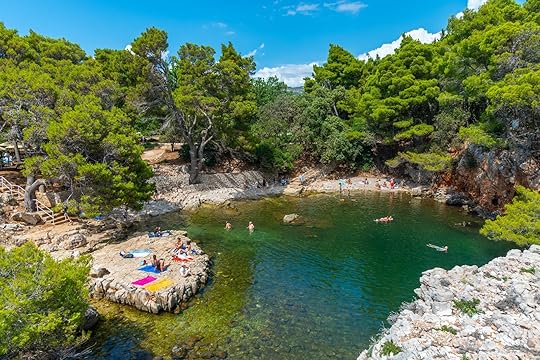
Photo: trabantos/Shutterstock
If you enjoy leisurely walks and want to spend the day outside, this is the Dubrovnik day trip for you. Lokrum Island is easily accessible by a ferry ride from Dubrovnik’s Old Town – they leave every half hour and take just 15 minutes.
The island itself looks like a pine tree covered wilderness from afar, but when you get there, you’ll find that there’s plenty to explore, including the ruins of a monastery and, notably, the French Fort Royal Castle. Visitors are free to roam the castle, from which you can gaze out at unobstructed views of the Adriatic Sea.
In the summer, visitors to Lokrum bring their swimsuits with them. Dead Lake might have an ominous sounding name, but this secluded swimming hole is ideal for a relaxing day of sunbathing and snorkeling.
Distance from Dubrovnik: 4 miles
Cavtat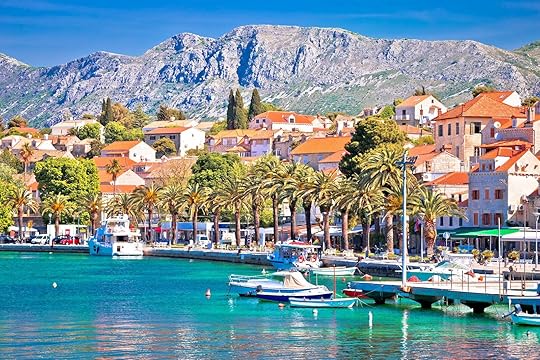
Photo: xbrchx/Shutterstock
A half hour drive from Dubrovnik, daytrippers will find Cavtat, a charming small town flanked by the turquoise waters of a harbor called Luka Bay on one side, and a mountain range on the other.
Cavtat is the epitome of a quaint European town: Visitors can wander the narrow cobblestone streets and the seaside promenade, enjoying an ice cream or a coffee with no agenda at all. A paved, tree lined path that offers ocean views and fresh air follows the Rat Peninsula for people who want to stretch their legs.
However, if you’re someone who enjoys visiting historical monuments, Cavtat doesn’t disappoint in that department either: A renaissance mansion called Rectors Palace houses a 19th-century library, and the Račić Masoluem within Cavtat’s cemetery are frequently visited locations in the town.
Sunbathers and swimmers will be right at home in Cavtat. The beaches are pebbly, but the warm waters are crystal clear and turquoise. Bring your bathing suit because you won’t be able to resist taking a dip.
Distance from Dubrovnik: 18 miles
Korčula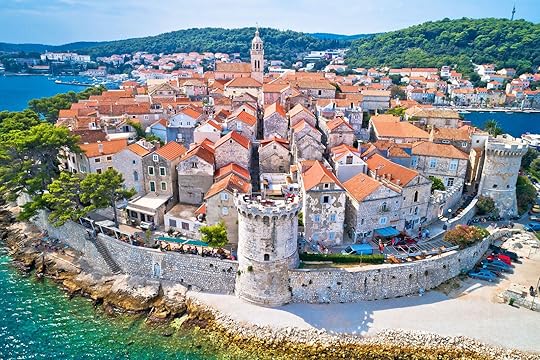
Photo: xbrchx/Shutterstock
Nicknamed “Little Dubrovnik,” the buildings in the town of Korčula (on an island of the same name) are decorated with the same familiar red tiled rooftops. There are no cars allowed on the cobblestone streets of this medieval town, and far fewer tourists flooding the charming town.
THere’s plenty of history to experience on Korčula. Once part of Venetian empire, and according to local legend at least, the explorer Marco Polo was born there. The house where it was rumored to have been born is still standing. The Korčula Town Museum is a much better way to learn about the verifiable history of this ancient island.
The local culture of this island is well worth exploring: Known for olive oil, wine, and fresh fish caught in the Mediterranean seas, visitors should try all three before leaving the island. Performances of Moreska, one of Korčula’s oldest traditional forms of theater involving dancing with swords, take place in the Old Town, on a public stage.
If you’d rather immerse yourself in nature, there’s plenty of opportunity to do so: It’s possible to hike from one end of the island to the other. Some people might even enjoy a donkey tour, during which tourists can ride donkeys through the island’s vineyard.
Distance from Dubrovnik: 75 miles
Koločep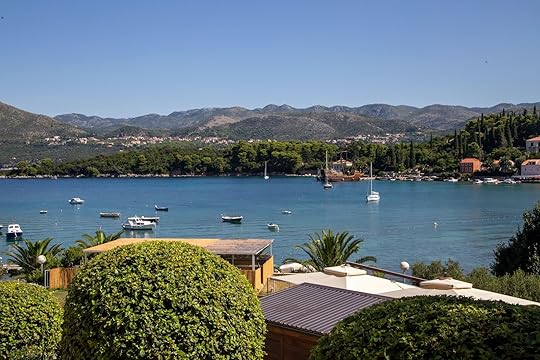
Photo: AC Rider/Shutterstock
Part of the Elafiti Islands, Koločep is a 30 minute ferry ride from Dubrovnik’s port, Gruz. The island is home to just 160 people, and there are just two villages on the entire island. THis where you want to head for a peaceful retreat away from all the crowds.
The sand and pebble beaches at Koločep are equipped with lounge chairs, and clear waters perfect for snorkeling and kayaking. The most popular of these beaches is Donje Čelo.
If you’re planning to go swimming in Koločep, don’t forget to visit the Blue Cave. A natural, sandy-bottom sea cave that turns blue thanks to reflection from the water below, the cave is only accessible by swimming or by boat – you can rent one on the island.
However, it’s better to come with no agenda to Koločep. Instead, spend your time wandering between the villages; the journey takes just a half an hour and you’ll pass secluded olive groves on the way.
Distance from Dubrovnik: 7 miles
Where do ferries go from Dubrovnik?Ferries from Dubrovnik travel all over the Balkans. You can get a ferry from the mainland to the Elafiti Islands of Koločep, Lopud, and Šipan. There are also ferries to Korcula and Kolocep. There is even a ferry from Dubrovnik that will take you to Bari, Italy.
Can you island hop from Dubrovnik?You can island hop from Dubrovnik. Ferries take tourists to nearly all the nearby islands. The Dubrovnik archipelago is easily accessible from the city’s ports, and island hopping is great way to get to know the culture of the Balkans.
What is there to do outside of Dubrovnik?The best thing to do outside of Dubrovnik is to go island hopping. Visit Lokrum, the Elafiti Islands, and many other islands by ferry from Dubrovnik. You can also visit Mljet National Park. There is plenty of opportunity for outdoor adventure from hiking, snorkeling, kayaking. Try fresh fish, and locally pressed olive oil. Visitors to Croatia can take part in all these activities on day trips from Dubrovnik.
December 19, 2022
How To Take Your Pup on a Luxury Getaway To the Riviera Maya

From butler service to in-room doggie dining and a poolside concierge, luxury resorts in Mexico are going above and beyond when it comes to pampering your pup these days. In the last few months, my Chihuahua-mix Poppy and I have spent weeks trawling the beach resorts along the Riviera Maya in search of the ultimate vacation catered to canines.
Although we found some hotels to be duds when it came to really digging dogs, we also found some places that Poppy gives four paws up to for the amenities and VIP (Very Important Pup) service.
Here’s everything you need to know to travel the Riviera Maya with your dog, from logistics to where to stay.
How to travel from the United States to Mexico with a small dog
Photo: Steph Vissani, Ocean Photo at Waldorf Astoria Cancun
Mexico is Poppy’s (and my own) favorite international travel destination for a mom-and-pup getaway. One of the big reasons why is how easy it is for American pets and pet parents to enter the country.
While nearly every international destination requires visiting pets to provide an international health certificate upon arrival (an endeavor that requires a visit to your vet within 10 days of departure, a signature from a second vet at the USDA and an expense of around $300), Mexico allows dogs from the US to enter with just a valid rabies vaccine.
You’ll need to bring the original, signed paperwork for the vaccine (don’t just show up with a rabies dog tag) to show to the agriculture inspector at customs upon arrival. Your pup will then be subjected to a very quick wellness exam where ears, teeth, and paws are inspected for fleas or signs of disease. This usually takes less than five minutes and is free. Once it’s done, you’ll be waved through the airport exit gate.
All in all, travel to Mexico is very easy for American dogs, so long as your pup is on the smaller side. Dogs need to be under 25 pounds and fit into an airline-approved carrier that can slide underneath the seat in front of you. Note that emotional support animals no longer qualify as service pets, so the size restrictions hold true unless your dog is a service animal that’s task trained to help you with a disability (and it is a felony in most states to lie).
You must alert the airline you will be traveling with a pet well before departure, and there’s a fee of around $200 each direction Since there are a limited number of designated seats for pets on each flight, you’ll want to tell your airline as soon as possible to ensure there’s space to accommodate you.
Mexican resorts also cater almost exclusively to small dogs, with most Riviera Maya properties requiring pups to weigh less than 20 pounds to stay. The four hotels listed here are no different.
Secrets MoxchéView this post on InstagramA post shared by Secrets Resorts & Spas (@secretsresorts)
The new adults-only, all-inclusive Secrets Moxché Playa del Carmen Resort, about 10-minutes outside of Playa del Carmen’s bustling downtown, is where to book if you want your dog included on your honeymoon. The luxury resort is gorgeous, featuring some of the most Instagramable pools I’ve ever seen, from a deep blue cenote inspired waterhole, to a lagoon style zero-entry pool with and a sand beach, to an infinity pool that’s made for mermaid swim moves.
And there’s no need to leave the pup in the room while you head to the pool either. The pool concierge set up a chair for Poppy next to mine complete with a towel. We ordered drinks and a snack: mezcal and soda for me with a cheese quesadilla, a water for Pops and a side of beef. Her meal was delivered in a cardboard carryout box for sanitary reasons, but she didn’t care.
Secrets is an all-inclusive property, which means your Chihuahua can chow down on as much carnitas as she can swallow. For humans, the quality of the meals at the multiple a la carte restaurants (including a French restaurant, Mexican restaurant, and a restaurant with a wood-grill focus) was also excellent.
View this post on InstagramA post shared by Secrets Resorts & Spas (@secretsresorts)
I stayed in an ocean view junior suite on the Club Level, which also gave me access to premium services like a rooftop lounge with a restaurant and infinity pool. Poppy found her dog bed to be pretty comfy, although she still preferred nesting on the fluffy pillows with perfect thickness thanks to a pillow menu selection. Our favorite part of the room, however, was the balcony with views across the pools to the ocean. It had a shaded chaise-lounger and a soaking deep tub.
If you want to venture off property, Secrets can set up all sorts of activities (with or without your pup). To include your dog, have the concierge book a taxi to downtown Playa del Carmen. Stroll along the famed 5th Ave and you’ll find shops like Somos Perros (where profits benefit street dogs) that cater exclusively to furry friends.
Secrets Moxché: Carretera, Cancun – Chetumal KM 294, Corasol, 77714 Playa del Carmen, Q.R., Mexico
Waldorf Astoria CancunView this post on InstagramA post shared by Waldorf Astoria Cancun (@waldorfastoriacancun)
We visited the Waldorf Astoria Cancun just two weeks after it opened in November 2022. The most luxurious brand in the Hilton portfolio, the Waldorf is extremely small dog-friendly and Poppy was treated like royalty for her entire stay.
Upon checking in to our deluxe ocean front king room, we discovered a handwritten welcome note, homemade treat amenity, size-appropriate toys, and the only dog bed that Poppy has ever loved – she forewent the human bed to spend hours on it. We decided to order room service for breakfast the next day and I was impressed with the dog menu’s variety. There were four options ranging from chicken nuggets to yellowfin tuna, beef and veggies to meatballs.

Photo: Steph Vissani, Ocean Photo at Waldorf Astoria Cancun
The Waldorf is a sophisticated resort with impeccable style. The lobby dazzles with the brand’s signature clock along with elegant lighting and a bold gold, silver, and blue color scheme. My room featured a furnished balcony that Poppy enjoyed sunbathing on along with a plunge pool that’s easily accessible from the shower via a glass sliding door.
Property amenities include two angular swimming pools and three jacuzzis along with more chairs on the resort’s narrow beachfront. Dogs are welcome to sit by the pools, they just can’t jump in. There are also three restaurants and a spa. Malpeque is the signature restaurant and serves a seafood focused menu. Chaya serves international and Mexican fare three meals a day. I especially loved the crab benedict with fresh meat (not a crab cake) at breakfast.
If the Waldorf is a little to posh for your liking, check out its sister property, the Hilton Cancun, An All-Inclusive Resort on the same grounds. Opened in 2021, it is also dog-friendly and offers a more affordable stay. The food at the Hilton is very good for an all-inclusive and Poppy absolutely loved the carnitas tacos.
The rooms are also high quality, although the ones facing the sea are much nicer than the jungle view abodes. For romance, book a room with a swim-up balcony and sunset views or an ocean-front suite with panoramic views from a wrap-around balcony.
Waldorf Asotria Cancun: 1E, Carr Federal Libre 307 Cancun-Tulum, UPE 248-868, 77580 Cancún, Q.R., Mexico
Hotel Xcaret ArteView this post on InstagramA post shared by Hotel Xcaret Arte (@hotelxcaretarte)
If your dog demands butler service, then you’ll want to book the Hotel Xcaret Arte, where guests (and their VIPs) are assigned a personal butler at check-in. An all-inclusive, adults-only resort, Hotel Xcaret Arte pays homage to Mexican artists throughout its 900 suites as well as its public spaces.
Hotel Xcaret Arte’s dog beds stand out even among dog-focused hotels. We were greeted with a small dog sized teepee inside of which was a comfy pillow bed and a toy. Poppy loved running into the teepee and kicking up the bed before laying on it.
Booking this resort offers free access to all the Grupo Xcaret theme parks. Some, like Xcaret, are kid-focused, but others, like Xel-Ha and Xplor, are more adult oriented with activities like snorkeling or floating down a river with stops for jumping off a 16-foot cliff or zip-lining that ends with a splash in the park’s inlet. All the parks have a serious focus on sustainability, which is another plus.
View this post on InstagramA post shared by Hotel Xcaret Arte (@hotelxcaretarte)
It was easy to spend a day out at the parks and not have to worry about Poppy needing to go out or being bored thanks to the butler service. My butler team came and walked Poppy upon request as well as just spent some time with her in the room. Because I was in constant touch with the butlers via WhatsApp, and they sent pictures, I felt comfortable with the service.
Back at the hotel, there’s an amazing beach area with clear turquoise water. A lagoon area where you can take a kayak or SUP board out is accessible from the beach. Hotel Xcaret Arte also has 10 restaurants onsite with food from around the globe. The oversized swimming pool with a swim-up bar is another perk.
Hotel Xcaret Arte: Carretera Chetumal-Puerto Juárez, Km. 282 L21-3 Colonia Rancho Xcaret, 77710 Playa del Carmen, Q.R., Mexico
Nizuc ResortView this post on InstagramA post shared by NIZUC Resort & Spa (@nizucresort)
Located on a lovely stretch of white sand beach in Punta Nizuc, removed from the chaos of the Cancun hotel zone, Nizuc Resort & Spa is an award-winning, luxury property that is perfect for active woofers as well as people. The grounds are sprawling, which is great if your dog likes to walk, as the resort amenities, are quite far removed from the rooms. If your dog isn’t up for much walking, golf carts can ferry you back and forth.
Poppy loved the giant monogrammed biscuit that awaited her when we got to our room. And I loved the thoughtful service touches like a framed photo of Poppy and I that was printed from one of my social media accounts and placed on the bedside table. There is also a doggie room service menu here with three different meal selections.
View this post on InstagramA post shared by NIZUC Resort & Spa (@nizucresort)
The room itself is enormous, with a bathroom that doubles as a changing area with space for suitcases and a large closet along with a rain shower and separate soaking tub. Rooms also feature ultrahigh ceilings and floor-to-ceiling sliding doors opening onto a large balcony with a plunge pool and two sun-loungers with thick cushions. Poppy adored hanging out here, taking a chair for herself, then protesting when I insisted it was time to explore.
She got over it fast, however, when we reached the beach. As a Chihuahua, swimming isn’t Poppy’s favorite sport, but she does like to dip her paws into the sea every so often. The beach at Nizuc is soft, white sand and the water is shallow, clear, warm, and, best of all, calm, making it a great place for small dogs to get over any water fears. We also took a kayak out, which Poppy really enjoyed. Afterwards she ran zoomies on the sand for an hour straight before passing out on an umbrella shaded beach chair for a well-deserved snoozle.
Nizuc Resort: Blvd. Kukulcan Mz 59 Lote 1-03 Km 21.26, Nizuc, 77500 Cancún, Q.R., Mexico
Troll’s Tongue Is Norway’s Most Dramatic Rock Formation – and You Can Hike To It

If you think the otherworldly rock formations of Vermilion Cliffs National Monument are impressive, wait until you get an eyeful of Trolltunga, AKA Troll’s Tongue, a spectacular jut of rock located in Norway.
The pointed rocky outcrop of Trolltunga protrudes from a cliff at an altitude of 2,300 feet above Ringedalsvatnet lake. Legend has it that the rock formation is the result of an overconfident troll who thought that unlike other trolls, the sunlight would not turn him into stone. Sticking out his tongue in defiance and mockery, the troll was petrified as soon as the sun rose above the magnificent landscape of this corner of Norway. The more scientific explanation is that Trolltunga is the result of glacial erosion that took place thousands of years ago.
While the views from the top are breathtaking and the photo opportunities are exceptional, getting to Trolltunga is not easy. There are three trails that lead to the rock formation, all of which are challenging as they involve steep climbs and slippery terrain. Even experienced hikers should come prepared with proper gear and clothing.
Trolltunga hikeThe main trail to Trolltunga starts from the P2 parking lot in Skjeggedal. The round-trip hike from P2 is 16.7 miles and takes between eight and 12 hours. The hike from P3 Mågelitopp (upper parking lot) is 12.4 miles and takes between seven to 10 hours. The hike from P1 in Tyssedal is the most difficult; it is 23.6-mile-long and takes around 15 hours.
If the parking lot from which you want to start is full, you can park at one of the other two and get a shuttle bus to the trailhead you prefer. There is also a shuttle bus from the nearby town of Odda where many hikers stay before and after the hike.
No matter what trail you choose to get to Trolltunga, know that between October 1 and May 31, you can only hike under the supervision of a guide. Between June 1 and September 30, it is highly recommended to hire a guide, especially for beginner hikers. Skilled and experienced hikers may go on their own if they wish to do so.
Matador Network's Blog

- Matador Network's profile
- 6 followers

