
Matador Network's Blog, page 2219
August 29, 2014
On visiting BsAs for the first time

Photo: Gustavo Brazzalle
1. “Where are all the vegetables?”
Before you arrive, everyone will make it a point to mention how exquisite you’ll find Argentina’s steak, praising the tenedor libre restaurants around the country. And meal after meal, you’ll notice your plate is covered by large pieces of meat, leaving little room for vegetables.
Then, on a visit to the supermarket, the sticker shock you’ll experience will explain it all. Groceries, namely fruits and vegetables, are damn expensive. Suddenly, your desire for vegetables disappears.
2. “The Caminito looks much cooler in pictures.”
La Boca is where you’ll find La Bombonera, Buenos Aires’ famed stadium and home to the Boca Juniors. “Of course I have to visit.” And the Caminito, a nearby stretch of street with buildings clad in every color imaginable, will look picture-perfect. In pictures.
Upon arrival, it’ll be evident you’ve been duped. After a quick walk through the overpriced, Disneyfied block and a mediocre-at-best meal, you’ll decide it’s time to move on.
3. “We’re supposed to show up when?”
“We can’t show up to dinner on time,” your wise travel companion will tell you. “What?” It’s true — you’re supposed to show up late. On purpose. If not, you’ll be awkwardly sitting by yourself.
The first time you attempt this, you’ll still get there too early. Try two hours next time — that’s a little better.
4. “I’m ready for bed and everyone’s getting ready to go out.”
On the weekend, people will be grabbing a coffee when you’re used to brushing your teeth and taking out contact lenses. Showing up “early” means arriving at the boliche before 2am. As in many don’t open until 1:30.
“Oh, the sun’s rising now. We’re still out. This is going to take some getting used to.” On the positive side, at least you get to eat breakfast before going to bed.
5. “Wait. So wine really is cheaper than water?”
“I know hyperbole when I hear it.” Wrong. As you sit down and compare the prices of water at the pizza restaurant, the quizzical look on your face will speak volumes. Doing the calculations in your head…yes, it appears the wine is actually cheaper than the water.
Shit. Given the opportunity, you’re certainly not going to pass up a good glass of Malbec. The decision’s been made. No more water on the trip.

Photos clockwise from bottom left: « м Ħ ж », dragonflysky, Joel Richards, jamieanne
6. “I just don’t get mate.”
It seems as if everyone’s drinking it at all times of day. A simple Google search will show you how daunting the process can appear to be. Preparing the mate is one thing. Complex enough as is. Hopefully you’ll be in the presence of a gracious host who’ll handle this.
“I don’t say gracias until I’m done completely?” “I don’t stir the mate with the bombilla?” “It’s okay to make a loud slurping noise when the mate is finished?” After several chances to ingrain these customs into your mind, it’ll finally seem less intimidating.
7. “Why is everyone ‘No, no por favor‘ing me after I say thank you?”
Hearing no, por favor after saying gracias might throw you off after your first few interactions on arrival at Aeroparque Jorge Newbery. Two weeks later, you’ll be saying it to everyone who thanks you for doing anything. It’s definitely more fun than de nada.
8. “Who DOESN’T sell alfajores here?”
Everywhere you turn, every building you see, there’s a sign suggesting that alfajores are sold within. After one bite, you’re sold. While there are all different sorts, you’ll probably end up partial to the dulce de leche.
It’s said that Argentina is the largest consumer of alfajores in the world. It’s no surprise. They’re amazing. Suddenly, you’re not so confused as to why they’re sold all over. And you’re miraculously not really concerned with not getting money back for your change anymore.
9. “I don’t like fernet. This could be an issue.”
“Order a fernet and coke. Everyone drinks them.” After two sips, you’ll remember — you can’t stand black licorice. Well, good thing you’ve got all that steak and wine to take the edge off. Carry on. 


Snapshots of Burning Man
Follow Matador on Vimeo
Follow Matador on YouTube
I FEEL LIKE BURNING MAN is one of the most misunderstood festivals of our generation. It’s portrayed as a wild infestation of hippies, a place of “What happens at Burning Man, stays at Burning Man” mystery, and a dream-like world where there are no laws, limits, or boundaries. Yet despite whatever crazy, out-of-body experiences might occur, what outsiders fail to see is that Burning Man is first and foremost about community.
I think this video by Evgeny justifies that concept. Burning Man is a party, for sure, but it’s so awesome because people are coming together to feel good about themselves. Some people live the Burning Man life all year round, but others only get to let loose for these few days. Having a place where both kinds of people can interact is seriously epic, and important. 

The art of visiting war memorials

Photo: Wolfgang Staudt
The town of Gettysburg was settled in 1780, and by the start of the Civil War battle that occurred there in 1863, it contained a population of around 2,400 people. The battle changed everything. Not only was the town transformed into the symbolic marker of the turning point of the war, but it became the site of one of the greatest speeches ever given: the Gettysburg Address. When you visit today, the entire town is geared towards its Civil War history.
Gettysburg is also constrained by the limits of the battlefield that surrounds it. You can’t develop that land — it’s all historical sites. Homes in Gettysburg that are incredibly old aren’t torn down. They’re restored. The town is trapped in time because of three traumatic days 151 years ago. The whole thing’s become a war memorial.
I live in DC, about an hour-and-a-half drive from Gettysburg, and I’m surrounded by war memorials, too. They’re everywhere here. They were everywhere in my previous home of London. I saw them everywhere when I traveled Europe. They’re everywhere period. And there’s an art to visiting war memorials. These sites demand more attention than fleeting glances and awkward gestures of respect.
How to look at the memorial
You can usually tell how the war ended by looking at the memorial itself. The World War II Memorial on the National Mall in DC is covered in monolithic granite pillars with two giant arches on either side and a fountain in the middle. It’s a memorial with the pomp of a conflict won. The Vietnam War Memorial is much more somber; it almost sinks into the ground, strangely self-effacing for an object whose sole purpose is to be viewed. It’s a single hue of reflective rock with a simple list of names. There are no signs of victory here.
In Ho Chi Minh City, Vietnam, there’s a memorial museum called the War Remnants Museum. It used to be called the Museum of American War Atrocities. The message there is clear: We won, but the scars haven’t healed.
Many memorials will have lists of the war dead. If you don’t know someone on the list, try to pick a single name and comprehend that that person had a full life, family, kids maybe. Once you feel like you understand that, step back and look at the whole list.
The final exhibit at every memorial is the people visiting with you. Watch them. In DC and in Normandy, for example, you’ll often see veterans at the site. They’re the most fascinating to both watch and talk to because the memorial’s history runs parallel to their own. While you should obviously be respectful and feel out each situation, I’ve often found that vets want to talk about their experiences.
Observing the other visitors, I’m fascinated by trying to intuit how they feel about the war in question. Are they crying? Do they seem angry? Proud? Baffled?
How to feel about the memorial
In Hamlet, Hamlet says to Horatio, “There are more things on heaven and earth, Horatio, than are dreamt of in your philosophy.” Try to keep that quote in mind at the war memorial (or anywhere, really). This is a place for humility. Regardless of what your opinions are about the war — whether it was just, whether it was a tragedy, whether it was glorious — they’re allowed to be felt, but they shouldn’t be imposed on other people. Everyone is allowed to express anger or confusion or sadness or shame here. It’s not your business to judge.
War is usually depicted in reductive terms, which is moronic. War is one of the most all-encompassing, complex human phenomena there is. To convince two or more groups they need to kill each other, and then to get them to act on that conviction, takes a lot of forces working simultaneously. The force of history is behind every war, and the politics and the morality and the economics and the technology of that time all manifest themselves in the conflict.
War memorials, on the other hand, aren’t meant to be acted on in any way. They’re meant to be absorbed, then processed, then learned from. They aren’t places onto which you should project your own philosophy; instead, concentrate on allowing them to impress their message — whatever that may be — onto you. 
August 28, 2014
Learn how to stay still

Photo: Jonathan Emmanuel Flores Tarello
One of the many horribly overused Facebook profile travel quotes is from Lao Tzu, the possibly fictional founder of Taoism. “A journey of a thousand miles,” it says, “begins with a single step.”
It’s the type of quote that inspires travelers to take that first step, whether it be a physical step out the front door or a financial step by saving some money for the next trip. Never mind that Lao Tzu meant it mostly metaphorically and not as a literal journey. It’s the type of quote travelers need to get moving.
Lao Tzu actually had something else to say about travel. “If you let yourself be blown to and fro,” he said in the Tao Te Ching, “you lose touch with your roots. If you let restlessness move you, you lose touch with who you are.”
In other words, learn to stay still.
Treat everywhere as a destination.
Staying home often seems like a nightmare to travelers. There’s nothing going on at home. You’ve seen all the places. Done all the things. Had whatever fun can be had. It’s just a backdrop for the rest of your life. It’s a place to work and a place to live while making other plans. Home is boring.
Look: I don’t know where you live. But I grew up in Cincinnati, Ohio. I thought it was the worst. I couldn’t understand why my parents had decided to live there. It was close to nothing. It didn’t have anything to do. And the people were boring. I hated it. So I left and I traveled the world.
Now, I’m settled in Washington DC, and whenever I go back to Cincinnati, I have a blast. There’s a ton to do there. There are great bars, great museums, amazing music, incredible views, and a ton of cool outdoor activities. And the people are all really interesting.
The reason it was boring was because I was stuck in my hometown bubble, and I had to leave it for the bubble to pop. Not every place can be everything to you. Some will be better than others. But ultimately, if you want to find the people who are interesting and the spots that are fun, you will.
I’ve found that the best way to do this is to treat the place you’re living as its own destination. Go to the museums. Go to the events. Try and meet new people. Treat it like you’re traveling.
Learn to be alone.
Of course, sometimes going out and doing things at the same level you do when you travel isn’t possible, simply because of money or time constraints. So the second step to being still is to learn to be alone. Learn not to hate your own company. I don’t know you, but my guess is you probably don’t suck all that bad. There are probably people who enjoy being around you. Learn to be one of them.
Get alone with your thoughts. If you need to fit exercise into your day, try walking. Walking doesn’t have the same cardiovascular benefits as running, but it’s still a pretty excellent workout. And, more importantly, it offers you a chance to simply wander around and notice things in your neighborhood. It allows you time to think. And since it’s walking and not running, you’re not going to be thinking about how miserable you feel.
If walking isn’t your thing, just go outside. If you have a porch or balcony, great. If you live near a park, go find a tree to sit under. Read under it. Bring a blanket. Wear shoes that slip off easily. Put down the book occasionally and notice the other people in the park. Smile at them. They’re your neighbors. Don’t check your phone. Leave it at home.
If you’re into meditation, do that. If not, try yoga. At the very least — even if the namaste shit isn’t your thing — you’ll learn to stand on your head like a boss. If that doesn’t work, do anything that teaches you to focus on your breathing and pay attention to your other senses and surroundings. You can do this literally anywhere that isn’t in front of a computer or TV screen, and I promise it’ll help ease the restlessness and wanderlust.
Just find a place to sit, breathe, and take in the world around you the same way you would while traveling. You don’t need to be in motion to be alive. 
Meet Jim Hoschek, aka 'Blind Guy'
Jim Hoschek prefers to go by “Blind Guy.” He lost his sight in a surgical accident in 1997, and now, if you just say “hi,” he’s not sure if you’re talking to him, someone else, or if you’re on the phone.
But Blind Guy will be just fine. After his surgical accident, he decided not to sue — even though the average settlement is $26 million — because he said, “I’d still be blind.” The Kansas City native has a great perspective on life and an even better fashion sense. “Hell,” he says, “I look good in everything I wear.” 
25 insane rock climbing photos
As far as sports go, few are more picturesque than rock climbing in its many variations.
Anyone anywhere can become a rock climber, as long as they have a mountain or a boulder nearby, and a serious amount of upper body strength. While plenty of climbers stick to indoor gyms, the best-looking rock climbing happens out in nature.
Check out these crazy rock climbing photos from all over the world. Then get out and start climbing yourself.
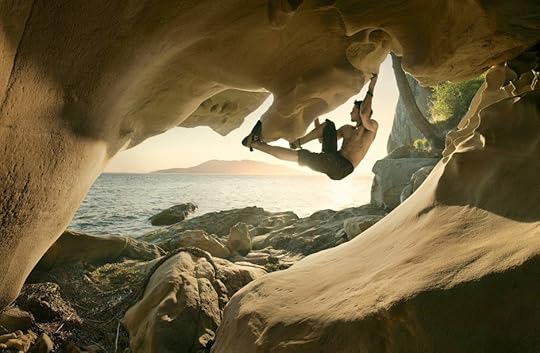
1
Larrabee Beach
Climber Greg Kachmarik on a boulder at Larrabee Beach on the Washington coast. According to photographer Kiliii Fish, this was the “easy” section of the V7-rated route.
Photo: Kiliii Fish

2
Smith Rock
Amanda Clark shows off her moves at Smith Rock State Park in Oregon. Smith Rock is one of the most popular sport-climbing sites in the US.
Photo: kikikiliii

3
Melchsee-Frutt
This belaying photo was taken in Melchsee-Frutt village in Switzerland. Melchsee-Frutt is actually best known as a ski resort, but it has some sick climbing, too.
Photo: l@mie
Intermission
2
Strong women rock climbing in Brazil
by Joshywashington
5
Utah meditation: A climbing trip in photos
by Katie Lambert
1
Anja Miller climbs Gold Bar and contemplates her rock climbing approach
by eric warren

4
Red Rocks Canyon
Photographer Kiliii Fish snapped this picture of Christine Deyo bouldering a sandstone hueco at Red Rocks Canyon National Conservation Area in Nevada.
Photo: Kiliii Fish

5
Red Rocks
Climber Dalton Green makes his way up Red Rocks in Utah.
Photo: Kiliii Fish

6
Joshua Tree
Southern California's Joshua Tree National Park is home to thousands of climbing routes up grippy quartz monzonite.
Photo: Mikaku

7
Pulpit Tower
Chad Walker free solos (no rope, no protection) Pulpit Tower in Zion during a brief but intense lightning storm.
Photo: Kiliii Fish
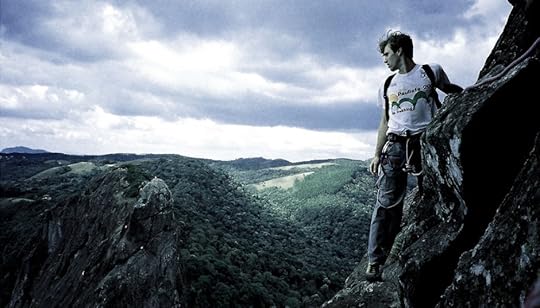
8
Pedra do Bau
The rock formations of Pedra do Bau are located within the Mantiqueira Mountains, 150 miles or so northwest of Rio de Janeiro.
Photo: Leonardo Pallotta

9
Catalonia
Taken in Priorat, a province of Catalonia in Spain. Possibly more “dangling” than “climbing,” but still an incredible picture.
Photo: asventada
Intermission
4
What gear do I need to start: Rock climbing
by Katie Lambert
Rock Climbing in Brazil
by Joshywashington
5
How I got hooked on rock climbing in Korea
by Bart Schaneman

10
Hueco Tanks
This is Patrick Fish Luther bouldering “Diaphonous Sea” in Hueco Tanks, Texas, near El Paso. The area’s known as having some of the best bouldering in the world.
Photo: Susánica Tam

11
Queenstown
Queenstown, New Zealand, has some amazing climbing, mountaineering, and canyoneering spots. This was taken just outside the city.
Photo: Stefanos Nikologiannis

12
Dobongsan
These climbers are scaling a wall near Dobongsan, a mountain that rises just north of Seoul, South Korea and is part of the larger Bukhansan National Park.
Photo: Andrew Catellier

13
Railay Beach
A climber dangles from the 5.12a-rated Burnt Offerings at Ton Sai, Railay, Thailand. Railay is popular among travelers and climbers. The vaunted Thaiwand Wall is shown in the background.
Photo: Maria Ly

14
Protection
While a lot of climbers prefer free climbing—such as deep-water soloing or bouldering—it’s much safer, generally, to have at least something connecting you to the rock.
Photo: Max Ross

15
Lake Tahoe
This photo by Alan Wong was taken just south of Lake Tahoe in Nevada. The lake is typically known for its skiing and water sports, but it has some killer climbing spots as well.
Photo: Reno Tahoe
Intermission
32 photos that prove goats are the world’s best climbers
by Claire Litton-Cohn
4
25 of the world’s hardest mountains to climb [pics]
by Matt Hershberger
2
7 spots to rock climb in Oman
by Baxter Jackson

16
Red Rock Rendezvous
This one was snapped at the 2008 Red Rock Rendezvous, an annual rock climbing festival held just outside of Vegas.
Photo: Carl A

17
Ha Long Bay
This photo captured by Mark Turner was taken in Vietnam’s Ha Long Bay, where limestone formations more famously jut out of the water.
Photo: Mark Turner

18
Yangshuo
Photographer Maria Ly took this photo of fellow climber Keller Rinaudo in Yangshuo, China.
Photo: Maria Ly

19
Summersville Lake
A great depiction of deep-water soloing, this shot was taken at Summersville Lake in West Virginia.
Photo: Steven Sloan
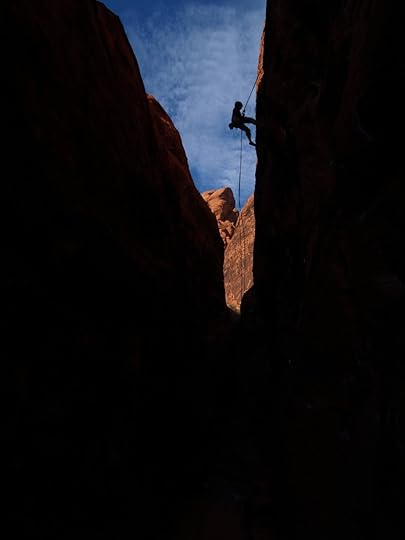
20
The Black Corridor
A climber rappels into the Black Corridor, a popular canyoneering spot at Red Rocks, Utah.
Photo: Caleb Phillips
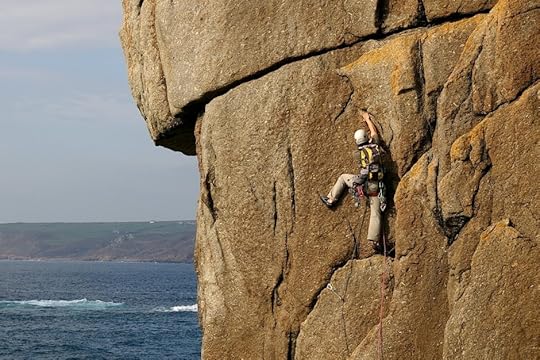
21
Sennen Cove
There's plenty of rewarding climbing in the UK, such as here at Sennen Cove in beautiful Cornwall.
Photo: Doug McNeall
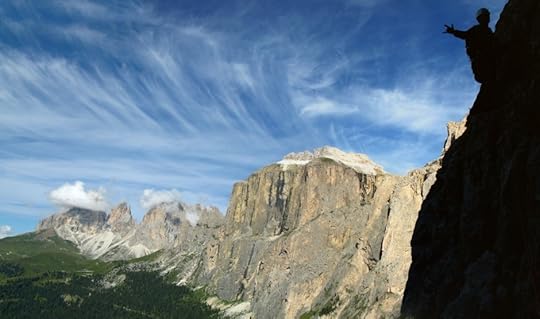
22
Sass Pordoi
Sass Pordoi is part of the Dolomites in the Italian Alps and offers incredible hiking, climbing, and skiing.
Photo: Marco Saraceno

23
Lake Lucerne
This photo was taken in Uri, Switzerland, at Lake Lucerne.
Photo: Adrian Schiess

24
Monkey Face
There is a climber in this picture, ascending Monkey Face, Smith Rock State Park, Oregon. If you squint, you'll see why it’s called Monkey Face.
Photo: Carl A

25
Geyikbayırı
A climber reaches for the quickdraw as she lead-climbs some limestone in Geyikbayırı, Turkey.
Photo: Adam Kubalica

Why summer in the Northwest rocks

Photo: Christopher Berry
We have festivals for everyone.
The Oregon Country Fair will both confirm and challenge your idea of hippie festivals. Imagine a community vaudeville act set amongst hundreds of treehouses in the forest and served with gourmet food. When you catch the March Fourth Marching Band, with their acrobatic stilt dancers, you’ll understand the quirky revelry of the Pacific Northwest.
Pickathon, set just outside of Portland, is the eclectic, independent music festival in the woods that will make you wonder why you ever attended music festivals bigger than 3,500 people. And then there’s the Seattle Street Food Festival, with over 100 carts to sample. Summer here will leave your dance-happy self well-fed and damn impressed.
We’re all about local and seasonal.
So many travel stories revolve around meals sourced from a weathered-faced farmer in a magical land (usually Italy), with meals kissed by the Tuscan sun. It’s basically like that here, minus the Tuscan sun.
Expect restaurants to always have a flavorful seasonal option, with meat and vegetables locally sourced. The absurd Portlandia episode where they grill their server about the origin of the meal’s meat is not far from reality.
It’s paradise for cyclists.
By mid-summer I have thighs of steel from my bike habit. Seattle and Portland have made urban biking a priority by installing hundreds of miles of bike lanes, bikeways, and plenty of bike parking. In Portland, it isn’t uncommon to see a double-decker bike jousting or witness people moving apartments on custom-rigged bike trailers.
Nothing demonstrates the love of bikes more than the month of June when Pedalpalooza events overtake the city. The events range from the unexpected, like bike Zumba and unicycle polo, to the adventurous, like midnight mystery rides that promise a surprise route and booze, to the very naked, like the legendary World’s Largest Naked Bike Ride.
We have awesome farmers’ markets (giving away the best samples).
Sampling is a verb and hobby I take seriously, and it doesn’t come any better than at the numerous daily farmers’ markets in the Pacific Northwest. Offers of fresh cheese, homemade Greek yogurt, butter-toffee pieces, Rainier cherries and other stone fruit, and mini-donuts fried to order make nostalgic memories of European markets a distant thought.
Paired with a free sample of locally roasted coffee, a trip to the market on the weekend is like a mini-breakfast before your actual breakfast.
There’s plenty of water to cool off in.
Yesterday afternoon I lounged on a nude beach with naked, bronzed men that would rival Italian beach-goers. Rivers, lakes, creeks, and stories of the “best swimming hole ever!” are the backdrop to my urban summer living.
Last week I pursued a rumor of natural water slides, a set of river rocks covered in moss with a gentle current to push you down the river. After an hour’s drive and a short hike alongside old-growth forests, I found them.
When a friend invites me over for drinks on her houseboat, I know I’ll be jumping off the boat before our second beer is finished. My summer swimming options don’t include chlorine.
There are endless outdoor dining options.
My favorite Thailand travel moments were meals eaten on small plastic stools on the roadside. Portland eschews stools in favor of picnic benches, but the same al fresco dining experience defines the summer months.
The range of international fare keeps my Stateside self satiated too. A new Russian food cart just opened featuring $1 desert blinis, but it’ll have to compete with all the others selling crepes, Belgian fries, empanadas, and fresh Thai spring rolls.
We have stunning and insanely diverse natural beauty.
The Pacific Northwest is home to active volcanoes, a temperate rainforest, islands, high desert, and natural hot springs. Among it all are so many outdoor adventure opportunities — kayaking, camping, hiking, summer skiing, mountain biking, surfing, rock climbing — that planning a summer event with all my friends in attendance is impossible. Someone will always be missing because nature’s abundance is impossible to resist here. I can drive three hours east and stargaze in the high desert, or go 1.5 hours west to hike sand dunes and spruce forests by day and camp on the beach by night.
And when I’m really feeling the urge to dust off my passport, Canada is just a few hours north. 
Signs you're from the TX Panhandle

Photo:
1. You wore a giant mum to Homecoming.
They’re not just big corsages. They’re like nothing you’ve ever seen.
Weeks, perhaps months, before your high school’s homecoming game, local craft stores and florists start stocking up on Homecoming Mum supplies. Made of flowers, streamers, bells, garlands, more streamers, and anything else you can find in your school colors, these mums are only acceptable if they cover at least half of your body. If ever there was a human version of a peacock, this is it.
2. Some of your teachers didn’t assign homework on Wednesdays.
Because, you know, church. Lots of youth groups meet on Wednesday evenings, so many teachers plan their homework assignments accordingly. #GodAndFootball
3. The four food groups that matter are sirloin, T-bone, rib-eye, and chicken-fried.
The Beef Council ran ads in the ’90s featuring sexy-voiced Robert Mitchum proclaiming to the rest of the country what we all knew as gospel: “Beef. It’s what’s for dinner.”
4. You call June 19 “Juneteenth.”
Abraham Lincoln’s Emancipation Proclamation, which freed slaves across the US, became effective on January 1, 1863. Unfortunately, no one told Texas. It wasn’t until June 19, 1865 — two-and-a-half years later — when Major General Gordon Granger landed in Galveston with his Union soldiers, that news spread that the war was over and the slaves were freed.
I can imagine a lot of people were thrilled with the news, though also a little pissed to be the last ones to find out. Juneteenth is now a state holiday.
5. You learned the Cotton-Eyed Joe and the Texas Two-Step in junior-high phys ed and Texas history classes.
Our school went a step further and had a performance at a local ranching heritage center, where members of the public came and watched us perform. I like to remember it like a Hayley Mills movie.
6. You think all the other states’ flags look alike.
Seriously, with the exception of New Mexico, aren’t they all blue fields with some kind of seal in the middle? You also know by heart the pledge to the Texas flag.
7. You have a jar of pickled okra in your fridge.
Okra preparations in order of importance: fried, pickled, and fried next to a serving of chicken-fried steak. Once a year we put it in gumbo, but only when we’re “cooking international” for Mardi Gras.
8. You know there are several types of tortillas.
When I married my husband, he was under the impression that a tortilla was a tortilla. No, my poor, sweet, unfortunate man-who-was-born-in-one-of-the-middle-states. There are flour and corn tortillas, and the corn come in white or yellow. The flour ones come in different sizes. The whole-wheat ones are for health nuts, and the “wraps” are for weirdos on the East Coast.
9. You know how to put a horny toad to sleep.
Every Texan child raised in the ’70s and ’80s knew that if you caught a horny toad (also called a horned toad) and rubbed its belly, it’d fall asleep. Actually, sleep might not be the medical term. Fear-induced coma might be more appropriate. Still, good times!
(Unfortunately, this is a skill young Texans aren’t learning because of dwindling horned-toad populations. Find out about that here.)
10. You’ve experienced spontaneous applause erupt because it started raining.
With an average annual rainfall of 19 inches, we get a little excited when free water falls from the sky. I’ve witnessed strangers in a grocery store collectively begin cheering and clapping when rain began to fall. You go, God!
11. Chances are good you’re used to climbing up into your vehicle.
Ever seen a cowboy in a Prius? Me neither.
12. When ordering a soft drink you ask for a “Coke,” then wait for the server to ask which kind.
Dr. Pepper, Sprite, or Pepsi — whatever kind of soft drink you want, it’s called a Coke. Chances are good, too, it’ll be no smaller than 147oz.
13. You find yourself earnestly repeating Texas Tourism Board and Highway Department slogans.
Such as: “Texas, It’s Like a Whole Other Country,” “Don’t Mess With Texas,” and of course, “Everything’s Bigger in Texas.”
Because they’re true.
14. You’ve made at least one craft out of a cotton boll.
The hard, dried leaves of a cotton boll make perfect crafting materials. In my house alone, I have angel Christmas-tree ornaments, a wreath, and a full nativity set. 
How to turn 'place' into 'home'

Photo: Hans Veneman
My skin crawls beneath the chemical-stiff caress of new sheets as I lie in the creaky used bed I bought on Craigslist this afternoon. Next week I’m starting medical school, here in the odd city of Cleveland.
It only took me 12 hours to trundle my way here from Boston in a rickety U-Haul truck, and for all the similarities of these small, cold, snowy Northern cities, I expected to feel more at home here. But it’s the little details that raise the hair on the back of my neck: the moldering, bricked-in buildings, the sidewalks devoid of people, the absence of streetlights. Where the hell is everybody? I find myself wondering.
Yesterday in the checkout line at the Cleveland Heights Dave’s Supermarket, a wizened old lady crept up behind me and probed my face with her sharp, bright little eyes. I smiled, happy to meet one of my friendly, new Midwest neighbors.
“The Lord talked to me today, you know!” she thundered, yanking a yellow pamphlet from her purse and waving it in my face.
I smiled awkwardly as she ranted about her visions, scuttling out the door as soon as my groceries were paid for. Back in my empty apartment, I can still see her glassy eyes feverishly rolling in her head. I can’t imagine ever feeling at home in this place, with these people.
But as a traveler and writer, I’ve learned there’s a timeline to these things. Even though I feel alienated and disoriented now, I know the path to normalization. It’s similar to experiencing a breakup for the fourth or fifth time — though the feelings are still as poignant as ever, you know you’ll eventually return to clarity because you’ve gone through it so many times before. Sometimes you just need to hang on for the ride. There’s no way to push things forward; you just have to take a deep breath and experience those feelings until they pass. Until they do, you trust in the timeline and learn to make the best of what’s in front of you.
The wood floor creaks and echoes as my little cat, Beau, makes her hesitant way through my near-empty apartment. My paltry belongings are huddled in the corner of the cavernous living room with no hope of filling the space. Ominous, metallic scrabbling noises drift through the window, rising eerily over the whirring of the fan.
I creep to the window and peer out at the large, shuffling mass wriggling around in the dumpster. Raccoon. I shut the window.
I think back to all the places I used to call home — New York, Germany, Stockholm, Ethiopia. I remember the thrill of waking up in a brand new place, of seeing the world with fresh eyes. I feel nostalgic for the freedom, independence, and power I gained from those adventures. My present life feels small and washed out, boxed in by comparison. Was all of that adventure really building up to this — four years in some rotting glorified suburb?
On bitterly nostalgic nights like this one, I’ll often dust off an old journal, looking for a stronger fix of warm, glowing memories. This is when reality sets in.
I’ve been here for 17 days, and I keep waiting for my spirits to lift. (Stockholm, Sweden, 2006)
I’m constantly looking at my time here as some sort of ordeal or test of will or strength or something that I have to endure, and I’m not really even sure why. (Leipzig, Germany, 2009)
As I move through each journal, the picture gradually changes. Isolation and depression give way to wild escape fantasies, grudging acceptance of my fate, distraction with work, but eventually happiness and connectedness. Ultimately, I feel sadness when I leave. And then the cycle begins again.
The best thing about this awareness is that it points a way out of the dark. If you know the timeline, you know the things that catalyze movement along its path.
I remember drinking a cup of Earl Grey tea in my favorite chipped red-and-white mug, staring out the window into a gloomy Stockholm winter and feeling oddly cozy for the first time in a while. I remember the smell of my favorite old sweatshirt, rolled up in a ball next to me inside my tent in Ethiopia, comforting me as I drifted off to sleep. I remember reluctantly joining my classmates for a birthday party in Berlin — that weekend catalyzed the development of several hilarious, slightly manic friendships that ultimately made it so difficult to leave.
Happiness follows from establishing a framework of home that you’re able to recreate wherever you go. It’s intangible, something born of the right combination of a few constant, familiar things.
* * *
I’ve been in Cleveland for two weeks now. I’m sipping a steaming cup of Earl Grey at my desk; Beau is contently snuggled in my lap.
A few minutes ago, I noticed movement on the giant, leafy tree right outside my window. It was the raccoon again, shimmying down the tree trunk. This time, her three babies were with her — fat little fur balls clumsily dropping from branch to branch.
A moment later, the musty, electric smell of summer rain began to waft through my window. The soft pattering is growing louder now, thundering down on the rusted metal surface of my balcony. The sky is backlit, pearly grey in late afternoon, catching on the heavy spray of water as it flicks off green oval leaves on its way down. When I press my face close to the window screen, I feel as though I’m inside a tree myself, looking out through the dense, verdant canopy surrounding me on all sides. Safe, and starting to feel at home. 
August 27, 2014
10 signs you’re still a tourist in Paris

Photo: Andrea Diener
1. You complain about the price of coffee.
It’s one of the best-kept secrets among Parisian cafés: The price of coffee depends entirely on where it’s consumed. Is the coffee worth more because you’re enjoying it with the sun on your face? You’re damn right it is. Think of the premium as a rental fee. You own that quaint little table for as long as your ass occupies the equally adorable wicker chair.
2. You smile at strangers on the street.
By North American standards, a smile is a simple act of complicity. In Paris, it’s a surefire way to be labeled “crazy.”
The French aren’t known for their friendliness, their affections typically reserved for their inner circle. In fact, the city of Paris recently hired “smile ambassadors” to put tourists at ease. But if you’re feeling brave, flash a smile at the next passerby. I promise she’ll clutch her handbag a little tighter.
3. You’ve muttered the phrase “Oh, any wine will do.”
The moment these words leave your lips, utensils clatter to the floor, glasses shatter, other diners turn to stare. You have made the ultimate faux pas.
Wine is the subject of passionate debate in France, and complete ignorance is simply not acceptable. Learn the basics and develop a preference for Sancerre, Bourgogne, anything but the “new Beaujolais,” which is a nationwide joke.
4. You’ve asked a waiter for a “map of the desert” instead of the dessert menu.
Ah, pronunciation. Just when you think you’ve mastered a language, the slightest slip of the tongue can give you away. That pesky double s is the difference between “lowering” and “f@#king.” And let’s not forget ou versus u or ue.
Intended phrase: “I’m running late, can you nab us a spot if the lineup is huge?” Actual phrase: “I’m running late, do you mind waiting in the enormous ass?”
5. You take the stairs in the Abbesses metro stop.
You’re trying to fit in, easily scaling the stairs throughout the city, just like the Parisians. Good for you! Except Abbesses is located 118 feet below ground, thanks to the hilly terrain of Montmartre. While Parisians are a particularly svelte species, even they have limits. Take the elevator. It comes every 30 seconds.
6. You marvel at the lack of child-friendly activities.
The social life of a Parisian child mirrors that of their parents. They spend their weekends at sexually explicit art exhibits, playing with neighborhood dogs at the park, or amusing themselves at wine bars while the adults catch up.
Children understand from a young age that it’s the grownups who call the shots in this world. A different approach to parenting, no doubt, but I have yet to witness a single supermarket meltdown.
7. You fail to say “hello” upon entering a boutique.
A simple “Bonjour, madame/monsieur” is not only customary, it’s essential. Failure to greet the owner or salesperson is the epitome of rudeness. Not that this will guarantee great service — it won’t. But it ensures you don’t become the subject of bitchy gossip amongst the staff once you’ve left.
8. You over-tip service staff.
Waiters, hairdressers, and taxi drivers — all of these professionals earn a livable wage in Paris, and more often than not a service charge has already been added to the bill. If the service is particularly good, round up to the next euro or two. Otherwise, you’ve already paid your way.
9. You’re dressed as though you’ve come from the gym.
Avoid the following at all costs: flip-flops, fanny packs (really?!), functional sneakers, sweatpants, spandex of any kind. Parisians are famous for their effortless style, and while you may never achieve such fashionable heights, do attempt to blend in. It will minimize your risk of becoming a target for pickpockets.
10. You’re capable of patiently waiting in line.
If there’s one universal truth about this city, it’s that Parisians cannot and do not queue. Their time is infinitely more valuable than yours. They will charge the metro doors before others can exit, unapologetically cut the line at the pharmacy, and in the case of administrative buildings, form a throbbing mass of bodies that can only be contained by police.
Either learn to play the game or accept the wait. There is no middle ground. 
Matador Network's Blog

- Matador Network's profile
- 6 followers


