Matador Network's Blog, page 1334
May 30, 2018
secret gardens from around the world
For centuries people have cultivated gardens as a way of spending time outdoors and enjoying natural beauty. But not all gardens are visible to the public eye or easily accessible. Many famous artists, entrepreneurs, monarchs and even city planners have taken pleasure in creating beautiful gardens that are shrouded in a little mystery. Curious to investigate we have found a selection of the world’s most intriguing real-life secret gardens — all of which you can actually visit.
1. Tromsǿ Arctic-Alpine Botanical Garden: Tromsǿ, Norway

Photo: MU YEE TING
Tromsǿ Arctic-Alpine Botanical Garden is the northernmost public garden in the world. It sits in the northern reaches of Norway just outside of the Arctic circle on the island of Tromsǿ. Open to the public for free and year-round, the grounds are often covered in snow, but in blooming months you can enjoy species that are unique to the polar region such as the Tibetan poppy, Rhododendrons, and the Siberian Fawn Lily.

Photo: Tromsø Arctic-Alpine Botanical Garden
It’s quite a journey to make it there, but if you are interested in horticulture, you’ll find some of the rarest plant species in the world. It’s worth checking out the gardens site before planning a trip as they keep it updated with what is in bloom. We recommend visiting between April and October before it is blanketed in snow.
2. Nemo’s Garden, Noli, Italy

Photo: Nemo’s Garden – Orto Di Nemo
Under the ocean may seem like an unusual place for a garden, however, modern technology has allowed the Ocean Reef Group to grow edible plants and vegetables underwater. Located 100m off the coast of Noli in northwest Italy, Nemo’s Garden is constructed of bell-shaped underwater greenhouses.

Photo: Nemo’s Garden – Orto Di Nemo
Technological advances have allowed the team to create favorable living conditions for the plants in biodomes. They have successfully grown crops of red cabbage, lettuce, beans, basil, and strawberries and aim to see whether it is a viable to plant more varieties.

Photo: Nemo’s Garden – Orto Di Nemo
The Ocean Reef Group believes this method of farming could be useful to the future sustainability of food production in places where farming on land is difficult or impossible.
You can visit the gardens if you are a certified diver. If you are not, the company occasionally provides tours to visitors as well. Check out their homepage for updates.
3. St. Michael’s Mount, Cornwall, Marazion, England

Photo: St. Michael’s Mount
The small tidal island of St. Michael’s Mount is located in Mount’s Bay in Cornwall, England. Perched on top of the island is a 17th-century castle and gardens, home to the St Aubyn family. The small island is reachable by an ancient causeway. During low tide, visitors can walk to the island, but high tide requires a boat.
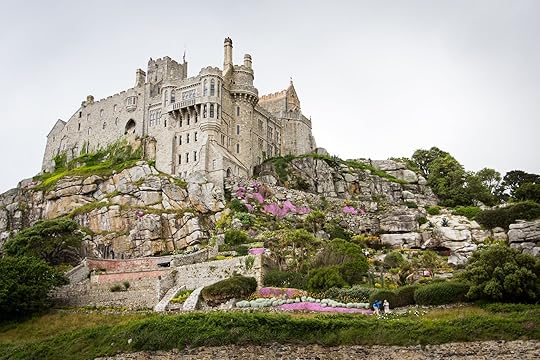
Photo: St. Michael’s Mount
The gardens of the castle hold remnants of history and despite the coastal harsh wind, the Gulf Stream tempers the climate, allowing the gardens to grow on the rock, which acts like a gigantic radiator. It absorbs the daytime sun and creates a microclimate in which all sorts of unlikely plants, such as puya, agave, and aloe, can grow.
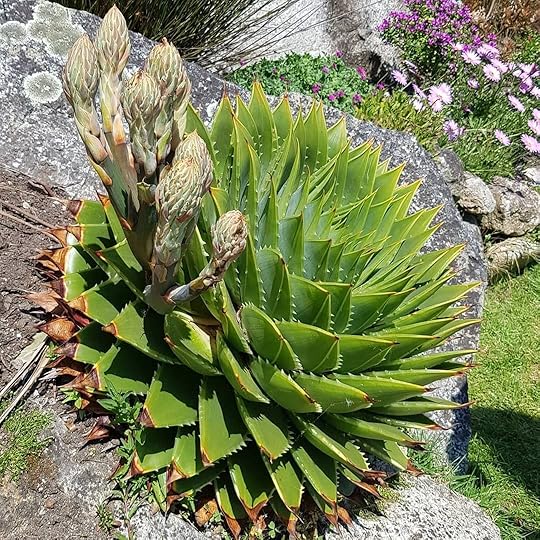
Photo: St. Michael’s Mount
When you are planning your visit check the tide charts to work out if you will require the boat or if the causeway will be exposed. The castle and gardens are closed on Saturdays.
4. Queen Street Gardens, Edinburgh, Scotland

Photo: Omar Yassen
The Queen Street gardens located in Edinburgh’s New Town were built in 1822 for the exclusive enjoyment of surrounding homeowners. This garden is protected by lock and key and is about 7-acres in size. Queen Street Gardens one of the largest preserved communal garden in the UK.

Photo: 13082
There are several exclusive, private gardens to be found in Edinburgh. Although privatization of green space might seem like an ancient concept for a city with such a liberal population, many gardens remain under lock and key. Surrounding homeowners are privy to access which is perhaps fair enough considering the cost of houses in New Town.
If visitors wish to tour the gardens there are very few opportunities. This September during Edinburgh Doors Open Day you can tour of select gardens and historic sites that are usually locked.
5. The White House Rose Garden, Washington D.C.

Photo: Orhan Cam
Having a truly private garden requires security, and the White House in Washington D.C. has that in abundance.
The perimeter of the White House includes several beautiful gardens which are carefully maintained by the grounds staff. The Oval Office is bordered by a colonial-style garden called the Rose Garden. The garden was originally established in 1902 by Lady Edith Roosevelt and then redesigned in 1961 under John F. Kennedy. The Kennedy’s recruited Rachel Lambert Mellon, a billionaire who also has expansive gardens at her own private residence, to create the design.
Today, the Rose Garden is lined with boxwood hedges, magnolias, and crabapple trees. The primary flowering plant in the garden are roses, and additional seasonal flowers are planted year-round so that the garden is always in bloom. The space was designed to be both beautiful and functional. Important diplomatic meetings, weddings, and other ceremonies have been held in the garden over the years and are still today.
Visitors are welcomed for tours twice each year during the spring and fall.
6. Las Pozas, Mexico
Photo: schlyx
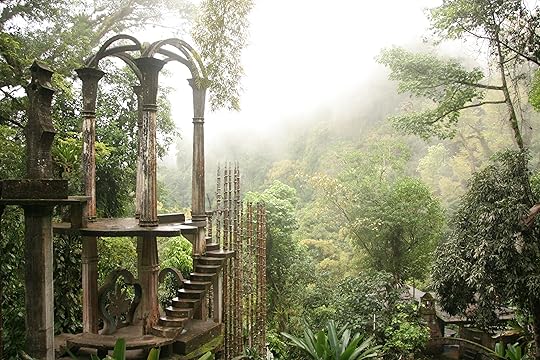
The gardens of Las Pozas are located in the small town of Xilitla in the Huasteca region of southern San Luis Potosi state in Mexico. They are the glorious creation of Edward James, an eccentric English poet and artist, and patron of the Surrealist movement.
The garden can be tricky to find as they are hidden 2000 feet above sea level within the subtropical rainforest. Las Pozas, meaning “the pools” in Spanish, is named so after the nine pools on the property. The garden features more than 30 structures, ranging from surrealist-inspired concrete sculptures to staircases that lead to nowhere.

Photo: Stephani Elizabeth
James died in 1984 after which the forest grew over many of the gardens features. It has since been somewhat tamed and cut back making Las Pozas a little easier for eager explorers to find.
7. The Garden at Buckingham Palace, Westminster, England
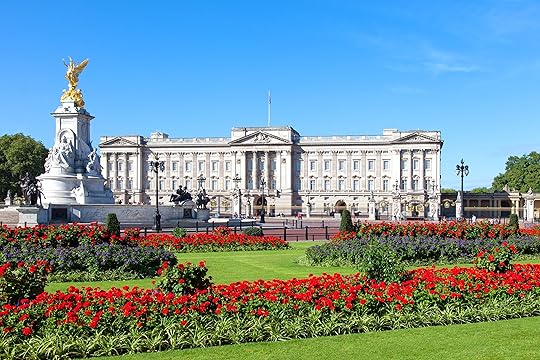
Photo: Ewelina Wachala
Almost invisible from the carefully guarded and gated front view of Buckingham Palace are the gardens. Formally the Queen’s private land, the grounds are normally closed to the public. Unless you are a notable member of society and receive an invite to the annual garden party, you’ll have a wait until the Queen is not in residence to visit. Even then, there are a limited number of tour tickets available. Not only is it a hard to get ticket, your access as a visitor is limited. The tours cover a portion of the grounds and visitors can only steal a glimpse of the garden’s beauty.
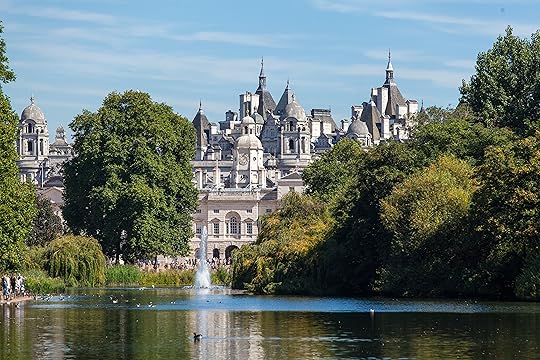
Photo: Cedric Weber
The grounds central feature is a three-acre lake created in the 19th century. The Royals also have a large summer house, rose garden, a tennis court and a helicopter pad. To top it off the grounds are home to one of Britain’s biggest garden ornaments ‘Waterloo Vase’ a twenty-ton sculpture carved from a single piece of marble.
8. The Ancient City Of Sigiriya, Sri Lanka

Photo: Alexander A.Trofimov
The garden of the palace of The Ancient City Of Sigiriya is one of the oldest landscaped garden sites known to the modern world. Constructed during the reign of King Kasyapa, 477-495 CE, the grounds were divided into three diverse thematic spaces, the water gardens, cave and boulder gardens, and terraced gardens.

Photo: Arkady Zakharov
Sigiriya today is a UNESCO listed World Heritage Site. It is one of the best-preserved examples of ancient urban planning and its original irrigation system was found by archaeologists to be very advanced for its era.
You can journey to Sigiriya by bus from local cities Colombo or Dambulla and there is a variety of accommodation available in the area. Admission to the site is from 7am-5pm and costs around $60 U.S. dollars. 

More like this: The 11 most beautiful train stations around the world
The post These beautiful, real-life secret gardens are the ultimate escape appeared first on Matador Network.


Shoppers steal millions with carrots

Thievery, or a clever loophole? Probably both. With the rise of self-checkout kiosks in grocery stores across the UK, customers are trying to game the system by weighing expensive fruits, like avocados, as cheaper ones like carrots or onions. Some customers rang up over 40 lbs of “carrots” in one trip; and unless you’re Bugs Bunny, something just doesn’t add up. The tactic has resulted in over $4 million in supermarket theft in the past four years.
Emmeline Taylor, a professor of criminology at the University of London, first studied this phenomenon at an Australian grocery store before realizing it was endemic all across Britain. According to the receipts of one store, she found that customers were purchasing more “carrots” than the supermarket ever had in stock. People were even ringing up their expensive produce as vegetables the store didn’t carry, like one man who admitted weighing groceries as “loose onions” on multiple shopping trips. Turns out, the store didn’t even sell loose onions, yet the item appeared on the kiosk’s standardized self-checkout list. He was charged with stealing nearly $600 in groceries from a Sainsbury’s supermarket in London over the course of three months.
With the advent of self-checkout machines in the UK and around the world, there’s no doubt that this is a problem that needs to be addressed. Especially when it comes to food, wherever there’s a loophole, you can bet there are hungry shoppers willing to exploit it.
H/T: The Takeout
More like this: British tourists have scammed Spanish hotels out of $74 million claiming food poisoning
The post British shoppers steal millions from grocery stores by ringing everything up as “carrots” appeared first on Matador Network.

Signs you are a rookie bartender

Sorry guys, bartending school is a total scam. The only way to learn how to bartend is by bartending. And unfortunately, the only way to really excel in the industry is to make a few mistakes. From smashing glasses to drinking on the job to visibly counting while you pour, here are a few signs you are a rookie bartender.
1. You’ve got an awkward shake.
Every bartender develops a signature shake over time. It is your calling card, the fastest, most efficient motion for you to deliver beautiful cocktails. Bartenders fumbling with their tins with no sense of rhythm or confidence are definitely rookies.
2. You take a proper shot every time a guest wants to drink with you.
If you are bartending several nights a week, sometimes your liver will need a night off. Regulars love doing shots with their bartender, and you don’t want to be rude, but it’s really the thought that counts. Fill a tequila bottle with water and take pretend shots all night long — if you want to survive the week.
3. We can see you counting when you pour.
Like a dancer learning new choreo, beginner bartenders use a count system to time their pours. Over time a bartender will know what two ounces feels like from muscle memory without the extra step of using a jigger to measure. If you watch carefully, you can catch new bartenders subconsciously mouthing the count as they pour a drink.
4. You’re so busy focusing on making drinks, you forget to chat up your bar.
When you start bartending, you have a lot going through your head during a shift. Drink recipes to remember, cocktail-making techniques to master, all with a focus on speed and accuracy. But sometimes all this focus distracts you from the most important part of bartending — chatting with guests. Whether it is flirting with attractive singles or schmoozing regulars, your personality is just as important as your drinks.
5. You prepped way too much fruit for garnishes, but you forgot to chill the rosé.
Even with a checklist for review, setting up a bar is never an exact science. A bartender must anticipate the needs of the shift, depending on day and season, and adjust their preparations accordingly. Unfortunately, you have to screw up a few times to learn how to anticipate.
6. You have sprayed beer all over yourself in an attempt to change the keg.
Changing a keg can be more complicated than it looks. If you aren’t careful, you can get a face full of beer spray for your efforts. Learn to mind the lever, grasshopper or you’ll have beer in your hair at the start of your shift.
7. You don’t have a tactic to deflect unwanted attention.
If you bartend, you will, at some point, find yourself on the receiving end of unwanted attention. Maybe it is a guest asking for your number, or a co-worker angling for “friends with benefits.” Either way, you need a line, a strategy, or the ability to deliver a firm, but polite “no.” If not, prepare for some awkward conversations.
More like this: 7 life lessons you learn from bartending
The post 7 signs you are a rookie bartender appeared first on Matador Network.

Catch the best sunset in NYC tonight

You’re probably familiar with Stonehenge, the prehistoric site in England built to align with the sun on the summer solstice, but you might not be familiar with Manhattanhenge. Unlike Stonehenge, Manhattanhenge is a complete accident. It occurs when the sunset aligns perfectly with New York City’s gridded streets; a beautiful spectacle, where on a clear day you can watch the sun sink between the city’s skyscrapers, and below the narrow horizon.
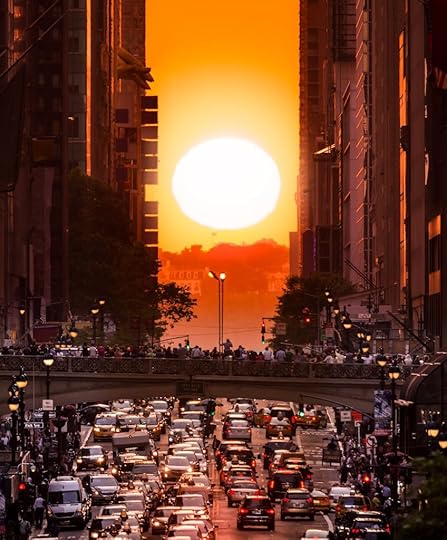
Photo: Mandritoiu for Shutterstock
But Manhattan’s a big island, right? Of the city’s many streets and avenues, where is the best place to catch this spectacle? Because they can accommodate more foot traffic, and provide a broader view, wider streets tend to be better. Try 14th, 23rd, 34th, 42nd, or 57th streets. And try to position yourself at an elevated point, so nothing obstructs your view. Given the event’s rising popularity, make sure you stake out your spot at least thirty to forty-five minutes in advance.
If you’re determined to see Manhattanhenge in 2018, it occurs on two sets of days: May 29th-30th, and July 12th-13th. You can still catch today’s Manhattanhenge if you hurry, but don’t worry if you miss it. There’s plenty of time to scope out your spot for July.
For those who don’t live in New York City, you’re not entirely out of luck. Any city with a grid system can witness its own unique “henge”. Never to be outdone by NYC, Boston has laid claim to a similar phenomenon, called (surprisingly enough) Bostonhenge.
H/T: Business Insider
More like this: 15 photos that prove New York is the most Instagrammable city on the planet
The post Manhattanhenge is NYC’s most Instagrammable sunset, and it happens tonight appeared first on Matador Network.

Do not roast marshmallows over lava

If a volcano erupted in your backyard, your first instinct might be to flee as far away from it as possible. Following the eruption of Hawaii’s Kilauea on May 3rd, however, some Hawaiians had a different idea. While most are certainly staying clear of the lava and its toxic fumes, others have devised a silver lining.
Twitter user Jay Furr asked the official USGS Volcanoes Twitter account whether it’s “safe to roast marshmallows over volcanic vents? Assuming you had a long enough stick, that is? Or would the resulting marshmallows be poisonous?”
While Ham Porter from The Sandlot might be impressed with this ingenuity, the USGS Volcanoes Twitter account was less enthusiastic. They informed the user that roasting marshmallows over volcano vents was unsafe, and that “if the vent is emitting a lot of SO2 or H2S, they would taste BAD. And if you add sulfuric acid (in vog, for example) to sugar, you get a pretty spectacular reaction.” So, that settles it. As your snack would be covered in sulfur dioxide, and potentially sulfuric acid from the volcanic smog, roasting marshmallows over volcano vents could make you pretty sick.
There’s no denying, though, that some Hawaiians don’t seem to be as scared of the eruption as we might on the mainland. Many see it as the work of Mother Nature, which is to be respected and left untouched. Pele is the Hawaiian goddess of fire, lava, and volcanoes, and according to Hawaiian mythology, Kilauea is said to be her home. Some Hawaiians do not view the eruption as a catastrophe, but as a momentous event, and are leaving offerings to the goddess around areas where the lava has been flowing.
Though a spiritual event for some, even the goddess Pele probably agrees that roasting marshmallows over her lava isn’t quite the best idea.
H/T: Thrillist
More like this: 6 active volcanoes you can actually go and see up close
The post Hawaiians urged not to roast marshmallows over volcano lava appeared first on Matador Network.

May 29, 2018
International Driving Permit info

When it comes to the law, playing it safe in foreign countries is always a good idea — especially if you plan to get behind the wheel. Having an International Driving Permit with you when you travel is a surefire way to ensure you’re following local driving requirements. Whether you’re heading to a country that requires one, or plan to do a bit of country hopping and visit multiple places, this document can come in handy in situations including an accident, a traffic stop, renting a car, and obtaining car insurance in foreign countries. As a traveler, you can stay ahead of the curve by keeping this handy permit in your pocket along with your passport and insurance card. Here’s what an International Driving Permit is, and how to get one.
What is an International Driver’s Permit?
The short answer is that an IDP is an officially issued document which certifies the Driver’s License you have in your home country. An IDP is not in itself a Driver’s License; you still must maintain the original license issued at home. The IDP certifies you across international boundaries and in ten languages. The IDP requires a passport-size photograph and presents your name, ID number, and other information in an internationally recognized format.
Why do I need an International Driver’s Permit?
First and foremost, many countries require one. Italy was the first European country to require an IDP for all non-European Union drivers, and several other countries have followed suit. Even though enforcement may vary, as we noted above, it’s always better to be prepared and follow local laws.
Even in countries where you may not be required by law to have an IDP, car rental companies often require one in order to rent from them or obtain local car insurance. Most countries today have at least a partial requirement. Some, such as Indonesia and Egypt, require most or all foreign drivers to carry an IDP in all situations. In many countries, including South Africa and Namibia, an IDP is not officially required but is strongly recommended as many insurance companies and/or local car rental companies will ask to see it, especially in the case of an accident. Other countries will request that you bring your IDP to the local police or transportation bureau in order to obtain a local driver’s license.
When researching regulations in a specific country, you may come across two separate forms of the IDP: IDP 1926 and IDP 1949. These numbers refer to the year in which the IDP regulation was drafted. The older of the two, IDP 1926, is far more rare and only required in Iraq, Brazil, and Somalia. IDP 1949 is a modification of the 1926 enactment, which happened again in 1968 and 2011, but 1949 is still used as the official label.
How do I get an International Driving Permit?
For US citizens, there are two officially authorized ways to get an IDP. The best and most convenient way is through the
What to know before visiting Uruguay
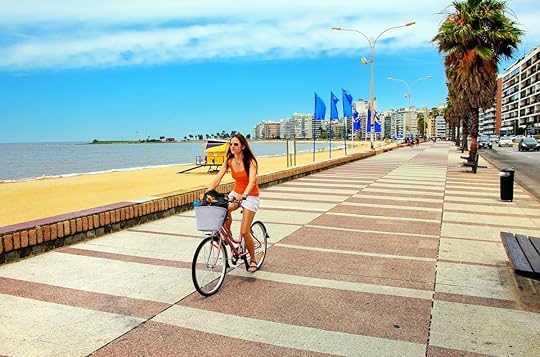
Uruguay is a captivating destination that too often gets passed over for the nearby tourist magnets of Argentina and Brazil, whose own residents know full well what their neighbor has to offer. But with its miles of coastline, inland cowboy culture, and laid-back vibe, this friendly country of about 3.5 million citizens deserves a spot on every travel bucket list. When planning your Uruguayan getaway, though, here are a few things you should keep in mind:
1. It costs a pretty peso.
Uruguay is surprisingly expensive, especially going by the backpacking standard that attracts so many budget travelers to South America. A chivito sandwich in Montevideo costs about the same as a pulled pork sandwich in Memphis; and you won’t find hotels charging hostel prices like elsewhere on the continent. Considering that a chivito is a juicy slab of steak topped with ham, a fried egg, lettuce, and tomato, all on a toasted roll, it’s worth it. Just be prepared to spend a little extra.
2. Surf towns become ghost towns in the off season.
It’s impossible to go to Uruguay without meeting a surfer or two (or several hundred). Most rave about beach towns like La Pedrera and Punta del Diablo but fail to mention just how desolate these surf spots get between April and November. This may appeal to die hard wave chasers who want the swells all to themselves, but it isn’t ideal if you expect to see signs of life on land. Bohemian beach towns like José Ignacio are also closed for business until the first of December; you might find only one restaurant open in November. Luckily, anyone else who’s around will be dining there also.
3. Dinner starts no sooner than 9:00 p.m.
I made the mistake of going for dinner around 8:00 p.m. when I first arrived in Montevideo. Safe to say that throughout our meal my travel companion and I were the only ones at the popular restaurant our concierge recommended until just before we paid the bill. Our waitress explained that locals drink tea around 7:00 p.m., pushing dinner as far back as 11:00 p.m. Of course, it’s also customary to stay out until well into the next morning, so get ready for some long nights.
4. Buenos Aires is a short ferry ride away.
It takes about an hour to get to Buenos Aires from Colonia del Sacramento on the Buquebus ferry. A UNESCO World Heritage site, Colonia is a colonial-era town of cobblestoned streets that’s worth a visit. That said, you can also depart from Montevideo or Punta del Este, though those journeys are closer to two and five hours, respectively. No matter the route, it’s way too easy to get to Argentina from Uruguay to pass up the opportunity.
5. The beaches are beautiful, but the water is cold.
Most of the beaches in Uruguay sit on the southern Atlantic Ocean, which is not known for its balmy waters. Others are situated on the Rio de la Plata, which is famous for being the widest river in the world but certainly not the most swimmable. Both are great for refreshing dips on hot days, but you’ll definitely want to wear a wetsuit if you plan on surfing or spending any substantial amount of time in the water.
6. You can get a mean burn after only a few minutes of sun exposure.
You’ll learn this the hard way should you opt to go sans sunscreen, even for only a few blocks. Give the South Pole’s thinning ozone layer, any sun time at all justifies a slathering of at least SPF 50, unless you prefer the backs of your legs lobster-red. Always, always wear your sunscreen.
7. Bus travel is cheap, convenient, and comfortable.
Buses are hands down the best way to get between cities in Uruguay. Long-distance bus operators like COT come equipped with wifi, air conditioning, and reasonably clean bathrooms. For the most part, buses even arrive on schedule.
8. But taxis can be a huge rip-off.
Whether you’re being overcharged or given questionable change, taxis are not always the most cost-effective way of getting around in Uruguay. They’re perfectly fine for quick trips around town but should be avoided at all costs for longer travel. Uber provides reliable service within the city of Montevideo.
9. English isn’t as widely spoken as advertised.
While planning my trip, I was assured by every website I visited that my lack of Spanish would not be a problem in Uruguay. Unsurprisingly, the internet lied. Sure, plenty of people speak English, but those people don’t necessarily work in hospitality. It’s always important to attempt the local language, but learning a little Spanish is a necessity in Uruguay.
10. Restaurants cater almost exclusively to carnivores.
Beef represents four out of the five food groups in Uruguay. Pork represents the fifth. Enjoying smokey asado or spicy choripan is one of the best ways to get to know the country, which doesn’t go particularly easy on vegetarians. If you don’t eat meat, you’ll probably survive mainly on sides, or seafood if your diet allows. Faina bread, made with chickpea flour, is another filling alternative.
11. Uruguay is more than its coast. Go north and stay overnight on an estancia.
Gaucho culture is huge in Uruguay, making it a great place to live out your cowboy fantasies. There are ranches throughout the country’s interior where guests can ride horses, learn cattle-herding techniques, and enjoy being off the grid. Do yourself a favor and book an overnight at an estancia; then enjoy the memory on your return flight when you check “yes” next to the livestock encounters question on your customs form.
6 things the world could learn from Uruguay
The post 11 things I wish I knew before visiting Uruguay appeared first on Matador Network.

Get paid to visit breweries

If you’re a beer connoisseur, always taking a “sick day” to catch the newest IPA launch at a brewery three hours away, this may be the side hustle for you. When you become a Secret Hopper, you can actually get paid to visit local breweries and try their beers.
Secret Hopper is a (punny) twist on secret shopping: When you sign up, you’ll be assigned a brewery near you, and asked simply to pay them a visit, order a flight, and evaluate your experience. Don’t worry, you don’t have to be an expert. You won’t be expected to write in detail about the beers themselves, but about the overall customer experience. Was the staff friendly? Were you offered a sampler? How engaging and conversational was the bartender? After your visit (and once the buzz wears off), you’ll be asked to fill out an extensive questionnaire about your experience.
It’s not about rating beer quality, but painting a complete and colorful picture of your brewery visit, Secret Hopper founder Andrew Hopper explained to The Penny Hoarder. “We are looking for people who want to do more than just get free beer. We are looking for people who can tell a true story about their experience.”
To become a Secret Hopper, simply go to their website and fill out their form. After you visit a brewery and sample their wares, you will submit your filled-out questionnaire and photo of your receipt, and receive payment via PayPal within a few days. It might not make you rich, but if you’re a brewery-hopper anyway, why not get paid for it?
H/T: The Penny Hoarder
More like this: Around the world in 20 craft beers
The post This company will pay you to visit breweries and drink beer appeared first on Matador Network.

See this video of European rulers

If you thought contemporary European maps were tough to keep straight, you need to check out this video, created by YouTube user Cottereau. It shows the progression of European rulers every year from 400 BC to the present, condensing over 2,400 years of history to a 20-minute video. It gives you a pretty powerful sense of continuity between the past and present, and a good idea of just how frequently borders have changed on the continent since the Roman Empire ruled the land.
You also can’t help but notice the rulers with staying power. Louis XIV, for example, was a fixture in France for 72 years while monarchs of adjacent countries changed every few years. For different reasons, the same is true of Queen Elizabeth II, who has worn the crown since 1952.
Mapped: What Europe would look like if all secessionist movements succeeded
The post This map video shows every European ruler since 400 BC appeared first on Matador Network.

Free things to do in Chicago

When every penny is precious on your travels, you don’t want to waste a single one if you don’t have to. Chicago is loaded with totally free things to do each summer, from lakefront concerts to outdoor movies. The parks and beaches are next level, and there’s a bucket list of amazing architecture and public art to check out. Basically, it’s a frugal traveler’s summer paradise. Here are 10 things on our radar for some good times — gratis.
1. Swim, sun and build sandcastles along 26 lakefront beaches.
A post shared by Anselmo Hernandez Bazaldua (@chemo.baza) on May 28, 2018 at 11:12am PDT
Chicago’s front yard is a lake, bringing surf and sand together against an epic backdrop of soaring skyscrapers. Sun-seekers should head to the free Chicago Park District beaches along Lake Michigan. Squeal with abandon as you rush into the cool blue waters or play it cool as you dip your toes in the sand. No money needed here — just a bathing suit, some SPF and a beach towel to claim your waterside digs for the day.
2. Kick it with cool cats, playful penguins and all their animal kingdom friends.
A post shared by lincolnparkzoo (@lincolnparkzoo) on May 5, 2018 at 11:00am PDT
While it’s open year round, Chicago’s free lakefront zoo is best in the summer and admission comes in at just the right price point: free! Wander around Lincoln Park Zoo and get lost in 49 lush acres filled with wildlife — more than 1,100 animals to be exact. The newest habitats are particularly impressive, like the penguin cove, macaque forest and arctic tundra where huge glass windows let you come nose-to-nose with the animals.
Get a great skyline shot and a mini-lesson in Chicago’s built environment near the Nature Boardwalk, where the bridge over the South Pond has a handy diagram that identifies the notable downtown buildings.
3. Enjoy open-air classical music.
A post shared by grantparkmusicfestival (@grantparkmusicfestival) on Aug 18, 2017 at 4:41pm PDT
A totally free treat each season is the incredible talents of a world-class orchestra and chorus, on display for 10 weeks during the Grant Park Music Festival. Millennium Park makes for a breathtaking outdoor concert space where you can spread out on the grassy lawn or find a pavilion seat to hear free performances of greats like Gershwin, Mozart and Tchaikovsky.
4. Watch outdoor movies under the stars.
A post shared by Chicago Bucket List (@chicagobucketlist) on Jun 14, 2016 at 11:49am PDT
The beautiful park venue trades in the conductor stand for a 40-foot LED screen for the Millennium Park Summer Film Series. Tuesday nights are reserved for movie lovers with a state-of-the-art big screen and sound system that plays favorites films both old and new. Pair the free screenings with a picnic for a perfect night out.
5. Get in an al fresco workout.
A post shared by Amy VanBecelaere (@yogafaithfood) on Aug 10, 2017 at 6:36am PDT
Jay Pritzker Pavilion, the formal name for the Frank Gehry-designed masterpiece of billowing steel, sets the stage — literally — for free Millennium Park Summer Workouts. Sweat it out under the crisscrossing trellis and on the soft grass of the Great Lawn with yoga, pilates, strength training and Zumba® each week.
6. Find fireworks, free concerts and epic views from Navy Pier.
A post shared by Renaissance Chicago Downtown (@renchicagodowntown) on May 28, 2018 at 10:11am PDT
Boat cruises and amusement rides are big draws for visitors to Navy Pier, not to mention major stops like Chicago Shakespeare Theater and Chicago Children’s Museum. For a totally free experience, though, sit in on live music at the Miller Lite Beer Garden (no cover ever), or check the schedule for performances at the Wave Wall and Polk Bros Park stages. Be sure to also catch the fireworks each week along the waterfront on Wednesday and Saturday night (from May to September). It goes without saying that the views alone are worth the walk out to the end of the pier, which is almost a mile long.
7. Find moments of zen in these hidden park escapes.
A post shared by renee gooch (@goochtoophoto) on Feb 13, 2018 at 4:13am PST
Over 50 million people visit Chicago each year, and in summer it can sure get crowded. Swarms of kids running around Navy Pier, sweaty festival goers standing shoulder to shoulder, hundreds of people in line to go up Willis Tower…if you need a break and want to find some peace and quiet there are a few free nature sanctuaries hidden in plain sight:
If you’re at Navy Pier, find Milton Lee Olive Park. This little refuge is tucked in between the pier, a beach, and a massive water purification plant, but still remains remarkably serene. Don’t miss the zen-like concrete paths and the floating deck that makes for a great lookout point.
In Millennium Park, go to Lurie Garden. It’s the definition of urban oasis hidden behind a verdant hedge steps from “The Bean”.
From Maggie Daley Park, go to the Cancer Survivors’ Garden. A small pavilion is flanked by granite columns and surrounded by beautiful plantings. Find its location squeezed between the climbing wall, skating ribbon, and kiddie playgrounds of Maggie Daley Park and the rush of traffic from Lake Shore Drive to the east.
Outside Art Institute of Chicago, the museum’s South Garden is one of several artful outdoor havens off a hectic stretch of Michigan Avenue.
Near North Avenue Beach, seek out Alfred Caldwell Lily Pool — a landmark that is easy to miss on busy Fullerton Avenue near the entrance to Lake Shore Drive. Silence prevails in this dreamy setting; a vision of tranquility with its gently cascading waterfall, stone council ring, and Prairie-style pavilions.
8. Explore Chicago’s downtown Loop with a free InstaGreeter tour.
A post shared by Aya M (@ayamrg) on May 27, 2018 at 7:54pm PDT
Proud of their city and excited to show it off, Chicago Greeters are a group of Chicago-loving local ambassadors that make up a 200-strong volunteer group. Each weekend, Friday to Sunday, they take visitors on free guided walks throughout the Loop. See inside historic hotels, look up at early skyscrapers and find cool public art on every corner with the one-hour InstaGreeter tour. No tickets or advance registration needed, just show up to the meeting spot (Chicago Cultural Center, Randolph Street Lobby) during the hourly time slots.
If you sign up in advance, you can pick the neighborhood of your choice to explore on a personalized 2-4 hour Chicago Greeter walk — also completely complimentary, not even tips are allowed.
9. Stroll the Chicago Riverwalk and make up your own architecture tour.
Matador Network's Blog

- Matador Network's profile
- 6 followers