E.E. Montgomery's Blog, page 2
February 21, 2014
Revisiting stories and how they can help identify problems with others
A story I wrote, that will be published by Dreamspinner Press in May/June, has gone into edits.
Rereading that story has been like coming home. It's a bittersweet feeling because I've been having trouble with the story I'm working on at the moment. I had an enormous amount of fun writing Ordinary People and I still find it an entertaining story to read. Editing it doesn't feel difficult either--and I don't usually like editing at all--because the people and the situation are still so clear in my head.
Vinnie travels from a confused drugged-out kidnapping victim to an adorable upbeat lover. Along for the ride, is James, the calm and sensible counterpart.
I'm finding it strange that I'm identifying more with these two characters than I am with Jonathan in my current wip. Jonathan has been through similar things to what I went through a long time ago so I actually know more about what he's feeling than I did with Vinnie. That doesn't seem to make a difference though. I've portrayed Vinnie's emotions and growth much better than I'm doing with Jonathan.
I found where I'd saved my initial notes for Jonathan's story and have been thinking perhaps that's what the problem is. I wrote the notes, plotted out a nicely rounded story and then put them aside. I had a direction, so I didn't need much more. Unfortunately, my ad hoc approach, while it works well most of the time, hasn't worked at all with this one. My notes forgotten, I'd introduced a completely unrelated plot point into the story that has done nothing but shoot things off in a different direction and undermined the original thesis.
Once I finish the edits for Ordinary People, I'm going to have to look at a rewrite of the last ten chapters of Just the Way You Are (Jonathan's story), to pull it back into line.
Rereading that story has been like coming home. It's a bittersweet feeling because I've been having trouble with the story I'm working on at the moment. I had an enormous amount of fun writing Ordinary People and I still find it an entertaining story to read. Editing it doesn't feel difficult either--and I don't usually like editing at all--because the people and the situation are still so clear in my head.
Vinnie travels from a confused drugged-out kidnapping victim to an adorable upbeat lover. Along for the ride, is James, the calm and sensible counterpart.
I'm finding it strange that I'm identifying more with these two characters than I am with Jonathan in my current wip. Jonathan has been through similar things to what I went through a long time ago so I actually know more about what he's feeling than I did with Vinnie. That doesn't seem to make a difference though. I've portrayed Vinnie's emotions and growth much better than I'm doing with Jonathan.
I found where I'd saved my initial notes for Jonathan's story and have been thinking perhaps that's what the problem is. I wrote the notes, plotted out a nicely rounded story and then put them aside. I had a direction, so I didn't need much more. Unfortunately, my ad hoc approach, while it works well most of the time, hasn't worked at all with this one. My notes forgotten, I'd introduced a completely unrelated plot point into the story that has done nothing but shoot things off in a different direction and undermined the original thesis.
Once I finish the edits for Ordinary People, I'm going to have to look at a rewrite of the last ten chapters of Just the Way You Are (Jonathan's story), to pull it back into line.


February 15, 2014
A new visitor
I've been watching the new birdbath avidly, wondering how long it would take the local wildlife to adopt it as an alternative water source. It turns out birds are really smart. They seem to know this little bowl of water doesn't have a natural source and has to be refilled every couple of days. They're only using it on the hottest days. I don't mind. At least they have another option when it's really hot, which it has been all year here.
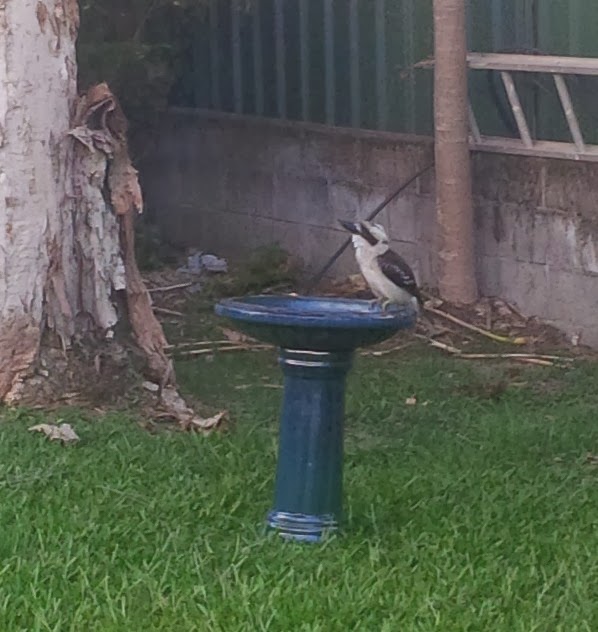
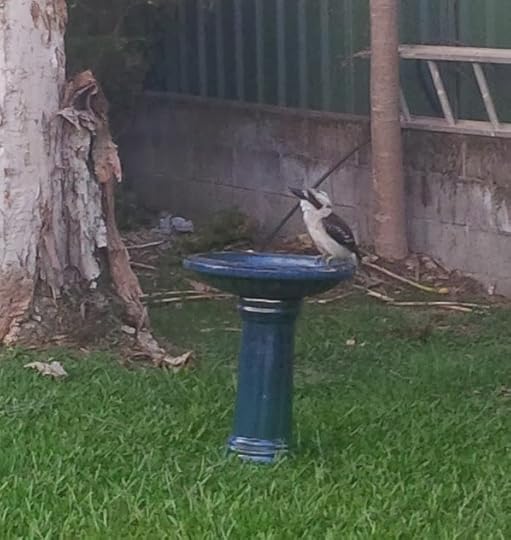 My clothesline is on the kookaburra's regular rounds of his territory, but this is only the second time I've seen him at the birdbath. If you look closely, you'll see he's a blue-wing kookaburra, not a laughing kookaburra. The blue-wings don't laugh: they cackle.
 My clothesline is on the kookaburra's regular rounds of his territory, but this is only the second time I've seen him at the birdbath. If you look closely, you'll see he's a blue-wing kookaburra, not a laughing kookaburra. The blue-wings don't laugh: they cackle.
February 7, 2014
Is reading memory stronger than scent memory?
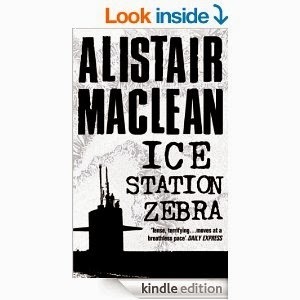 The first book I ever read was Ice Station Zebra by Alistair Maclean. I was four. This is how it happened:
My dad was a voracious reader. To get attention, I'd climb up under his book and settle myself on his lap. He'd read aloud to me and by the end of the book I was reading to him. I can't remember any of the story. I just remember the cover and the sensation of being cradled on my dad's lap as we read together.
I've recently begun reading the book for the first time since then. I still don't remember the story but it feels familiar, almost like I can predict what the next scene is going to be. The characters feel like friends. And as I read, I can almost feel again what it was like to sit on my dad's lap, his arm holding me securely as we slipped into the fictional world of the story. I can smell him again--that warm mixture of axle grease and tobacco. He died more than twenty years ago but this story brings him back for me.
Another thing I've noticed since I began reading this book again. A lot of my writing style is similar to Maclean's in this book. I know reading encourages writing development and I know your writing style can be influenced by what you read, but, seriously, this was the first ever book I read. I've read a LOT of books between that one and where I'm at now. Surely, they would have had as much influence on my writing as Ice Station Zebra. But, no. My first drafts, the words that pop into my head without thought or process, come out sounding like Maclean's words in Ice Station Zebra.
And the reading has triggered a scent memory. I had thought scent memory is the strongest memory of all, but what if it's not. What if your reading memory is the strongest thing of all? What would a world be like if no one remembered anything until someone finds a book and they begin to read. And then to feel, and to think.
And that, boys and girls, is how we move from a four-year-old's memories to a brand new plot bunny...
January 31, 2014
Prompting writing ideas and activities
I usually have a list of books waiting to be written. I rarely have whole plots for any of them, just a scene or an idea that's stuck in my head and won't leave until I turn it into someone's story. Occasionally, though, I draw a blank. Nothing I have planned appeals to me and I want something new to think about.
That's when I start playing games. I give myself writing exercises to do that trigger plot bunnies. Here are a few that always work for me. They're very quick and simple - no more than ten minutes each, tops.
Activity One:
Choose a word, a plant and an emotion at random. Use all three in a sentence, then begin asking questions about the character.
Example:Word: firmPlant: rosemaryEmotion: grief
I wrote three sentences. Each one has the potential to grow into a story.
1. Her tears of grief dampened the soil as she patted it firmly around the rosemary.2. The rosemary scent of his clothing churned the grief roiling inside her, refusing to allow any firm resolution into her mind.3. Rosemary’s eyes glistened with new grief, her lips firm in the face of it.
Activity Two:
I don't watch much TV or watch movies very often, but we have a significant collection of movies on DVD at home. I browse the titles and ask myself questions about different scenarios that would fit those titles. These questions are often philosophical or logical and bring me to story scenarios in a totally different way to the first activity.
Example:
Does the dog wag the tail or does the tail wag the dog. Something that seems true may not be due to perceptions of the viewers. How do you tell the difference? What special skills would be required to discern the difference between truth and projected image?
What things in this world are accepted as truths? List.
How might these things be different if perception is altered?
Think Matrix and throw in a few Tribbles just for fun.
Activity three:
This is one of my favourites. Walk through a crowded room. It could be at a party where you know most of the people (or none of them), it could be in a shopping centre, the theatre or a restaurant. The location doesn't matter. What matters is that you walk slowly and listen. Once you've done a circuit, try to remember four or five sentences you've heard and write them down. The trick is to get individual sentences from different people in different social groups.
Example:
"I'm in the sweet spot."
"Fifteen! How can they justify that?"
"Of course she does a much better job of it."
"Who the hell did they get to paint that?"
Now, weave those sentences into a story. I'm imagining painting restoration or forgery, or perhaps interior designer turned embezzler. The possibilities are almost endless. Just for interest's sake, those sentences were lifted from patrons at the theatre.
That's when I start playing games. I give myself writing exercises to do that trigger plot bunnies. Here are a few that always work for me. They're very quick and simple - no more than ten minutes each, tops.
Activity One:
Choose a word, a plant and an emotion at random. Use all three in a sentence, then begin asking questions about the character.
Example:Word: firmPlant: rosemaryEmotion: grief
I wrote three sentences. Each one has the potential to grow into a story.
1. Her tears of grief dampened the soil as she patted it firmly around the rosemary.2. The rosemary scent of his clothing churned the grief roiling inside her, refusing to allow any firm resolution into her mind.3. Rosemary’s eyes glistened with new grief, her lips firm in the face of it.
Activity Two:
I don't watch much TV or watch movies very often, but we have a significant collection of movies on DVD at home. I browse the titles and ask myself questions about different scenarios that would fit those titles. These questions are often philosophical or logical and bring me to story scenarios in a totally different way to the first activity.
Example:
Does the dog wag the tail or does the tail wag the dog. Something that seems true may not be due to perceptions of the viewers. How do you tell the difference? What special skills would be required to discern the difference between truth and projected image?
What things in this world are accepted as truths? List.
How might these things be different if perception is altered?
Think Matrix and throw in a few Tribbles just for fun.
Activity three:
This is one of my favourites. Walk through a crowded room. It could be at a party where you know most of the people (or none of them), it could be in a shopping centre, the theatre or a restaurant. The location doesn't matter. What matters is that you walk slowly and listen. Once you've done a circuit, try to remember four or five sentences you've heard and write them down. The trick is to get individual sentences from different people in different social groups.
Example:
"I'm in the sweet spot."
"Fifteen! How can they justify that?"
"Of course she does a much better job of it."
"Who the hell did they get to paint that?"
Now, weave those sentences into a story. I'm imagining painting restoration or forgery, or perhaps interior designer turned embezzler. The possibilities are almost endless. Just for interest's sake, those sentences were lifted from patrons at the theatre.
January 24, 2014
Plot ideas
Okay, F/F doesn't seem to be the thing for anyone reading this blog. I'll jot down some ideas before the Thursday Thread on 6 February.
This week I'm looking for All Forms of Love ideas for the second Thursday Threads next month.
It could be a menage or paranormal. I've never written a werewolf story, or any other kind of shifter. That could be fun.
Submit your ideas here in the comments or email me at eemontgomery11 @ gmail . com (no spaces) to be in the running for a print copy of The Courage to Love.
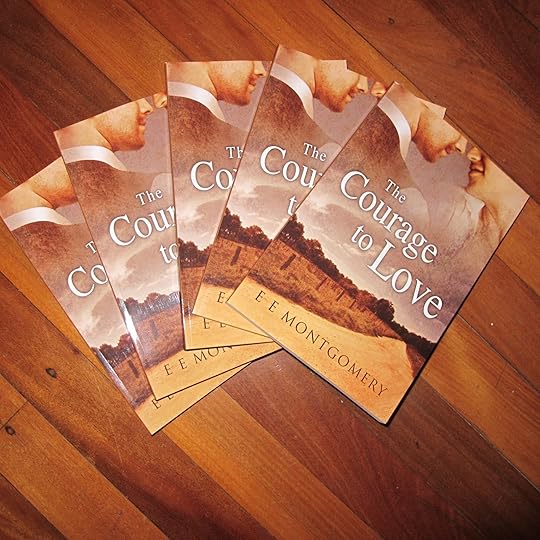
This week I'm looking for All Forms of Love ideas for the second Thursday Threads next month.
It could be a menage or paranormal. I've never written a werewolf story, or any other kind of shifter. That could be fun.
Submit your ideas here in the comments or email me at eemontgomery11 @ gmail . com (no spaces) to be in the running for a print copy of The Courage to Love.
January 17, 2014
Competition and Give-away
I'm going to be involved with #ThursThreads for a #MonthofLove event during February. Each Thursday we're going to be writing and posting flash fiction.
The program is:
 6 February: F/F
13 February: All forms of love
20 February: M/M
27 February: Sci Fi theme
I'm looking for some ideas.
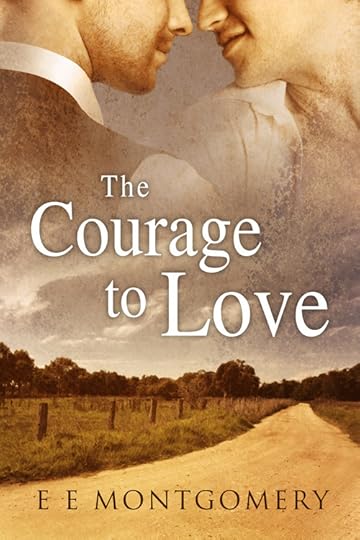
Each week I'll be posting about Thursday Threads and asking for plot ideas for the next theme. One plot idea will be chosen from those submitted and the person who submitted that idea will receive a free print copy of my book The Courage to Love.
I'll announce the winner on my Facebook page, on Google +, on Twitter and on my website. The winner can then contact me privately at eemontgomery11 @ gmail (dot) com with a snail mail address to send the book.
This is the first call. Give me your plot ideas for a very short story (100-250 words) with a F/F theme. You can submit your suggestions either here in the comments or on Facebook, Google + or Twitter by Friday 24 January.
I won't know exactly what I'm writing until I see the Thursday Threads prompt, but I'll try to stick to the plot idea as much as I can.
The program is:
 6 February: F/F
13 February: All forms of love
20 February: M/M
27 February: Sci Fi theme
I'm looking for some ideas.
Each week I'll be posting about Thursday Threads and asking for plot ideas for the next theme. One plot idea will be chosen from those submitted and the person who submitted that idea will receive a free print copy of my book The Courage to Love.
I'll announce the winner on my Facebook page, on Google +, on Twitter and on my website. The winner can then contact me privately at eemontgomery11 @ gmail (dot) com with a snail mail address to send the book.
This is the first call. Give me your plot ideas for a very short story (100-250 words) with a F/F theme. You can submit your suggestions either here in the comments or on Facebook, Google + or Twitter by Friday 24 January.
I won't know exactly what I'm writing until I see the Thursday Threads prompt, but I'll try to stick to the plot idea as much as I can.
January 10, 2014
What joy is really like.
She gave me this with a look of absolute excitement on her face.
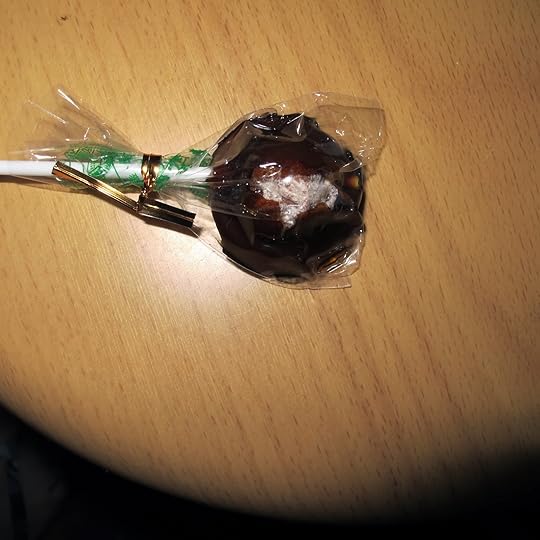
It looked a bit different from what I'm used to, so at my look of query, she said: It's a salty plum!
My first experience with salty plums was in Yarrabah, an Aboriginal community in far north Queensland. Nothing brings back the lazy, wavering heat of a spring day, heading for the daily afternoon thunder storm, like a salty plum.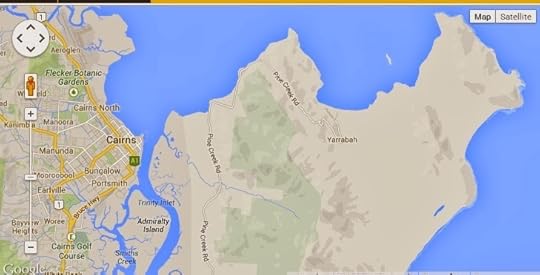
My students first introduced me to the local fruits. Small white apples and green mangoes were plucked from the trees while we walked from town to the point. Small white paper bags full of salty plums were shoved into pockets. When we arrived at the point, we'd scramble down the rocks with a sharp stick and pry oysters off, then sit looking out to sea while we all shared our loot. At the first peal of thunder, we'd brush ourselves off and wander back into town. The children would continue through the centre of town and my companions and I would turn to the school and the government accommodation across the road.
I didn't have salty plums for years after I left Yarrabah but one day I found them in a little deli hidden in an alley in the centre of town. I took some home to share with her.
I can still see her serious four year old face as she delicately nipped a piece of dried plum from the seed. Her brow crinkled and her lips twisted from the bitterness. Then she smacked her lips and grinned at me. She was hooked. For a few years they were our weekend treat, then I couldn't find them anymore.
Just looking at the plum brings to mind a quieter time, a time where laughter was spontaneous, easy and constant throughout my day. It was a time and place where small joys were appreciated completely and all the things that weren't right in the world were pushed away while we laughed and breathed salty air tinged with mangroves and walked barefoot on dusty roads. Even though she wasn't there when I was in Yarrabah, the ability to enjoy the small things in life is in her too.
The salty plum reminded us both of that.
I haven't eaten it yet. I'm savouring the memories for a while first. One day soon, I'll sit on the back deck, peel back the wrapping and let the sweet, salty tartness make me laugh again.
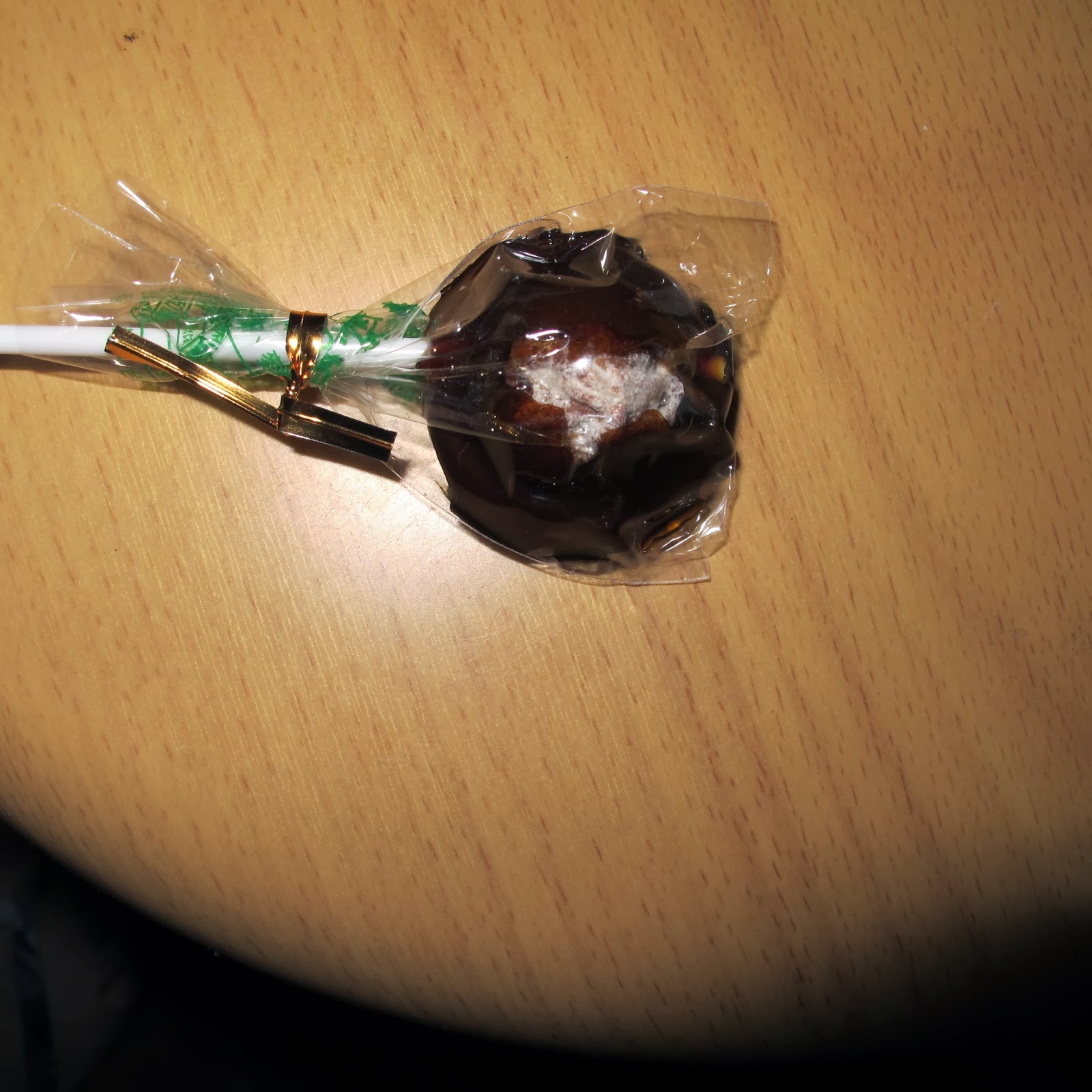
It looked a bit different from what I'm used to, so at my look of query, she said: It's a salty plum!
My first experience with salty plums was in Yarrabah, an Aboriginal community in far north Queensland. Nothing brings back the lazy, wavering heat of a spring day, heading for the daily afternoon thunder storm, like a salty plum.
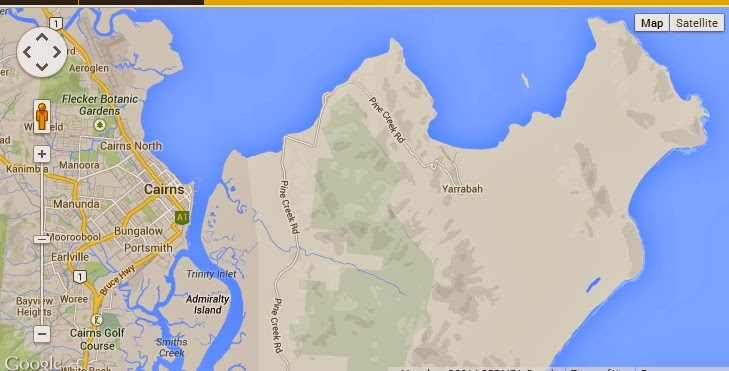
My students first introduced me to the local fruits. Small white apples and green mangoes were plucked from the trees while we walked from town to the point. Small white paper bags full of salty plums were shoved into pockets. When we arrived at the point, we'd scramble down the rocks with a sharp stick and pry oysters off, then sit looking out to sea while we all shared our loot. At the first peal of thunder, we'd brush ourselves off and wander back into town. The children would continue through the centre of town and my companions and I would turn to the school and the government accommodation across the road.
I didn't have salty plums for years after I left Yarrabah but one day I found them in a little deli hidden in an alley in the centre of town. I took some home to share with her.
I can still see her serious four year old face as she delicately nipped a piece of dried plum from the seed. Her brow crinkled and her lips twisted from the bitterness. Then she smacked her lips and grinned at me. She was hooked. For a few years they were our weekend treat, then I couldn't find them anymore.
Just looking at the plum brings to mind a quieter time, a time where laughter was spontaneous, easy and constant throughout my day. It was a time and place where small joys were appreciated completely and all the things that weren't right in the world were pushed away while we laughed and breathed salty air tinged with mangroves and walked barefoot on dusty roads. Even though she wasn't there when I was in Yarrabah, the ability to enjoy the small things in life is in her too.
The salty plum reminded us both of that.
I haven't eaten it yet. I'm savouring the memories for a while first. One day soon, I'll sit on the back deck, peel back the wrapping and let the sweet, salty tartness make me laugh again.
January 3, 2014
Goal setting: achieving what you want.
I'm not usually one for new year's resolutions. I never stick to them more than a day or two. I do, however, regularly set yearly goals. Now is the perfect time to review last year's goals and see how I went. I have to say, before I begin, that 2013 didn't feel a very productive year for me. I've been plagued by self-doubt and lack of motivation. I've allowed things I can't control to control me. I've been worrying about my sales and trying to be more socially active to promote my books when social interaction is one of the things I don't do well - at all. Still, that doesn't mean I haven't accomplished anything - just that I don't feel like I have.
I try to set realistic goals each year. There's no point in setting goals that are unattainable, then beating yourself up about it at the end of the year. It's better to slightly 'under-goal' than 'over-goal'. That way you can feel brilliant about doing more than you intended: the year suddenly becomes a better one because you achieved more than you thought you would. That doesn't mean the goals shouldn't be challenging. I need a certain amount of stress in my life to achieve things and I work best to deadlines, so I make sure I play to those idiosyncrasies.
I don't always achieve all my goals, but I always achieve some of them completely and the rest partially. I don't look at the partial completions as failures. They're an opportunity for me to learn what's achievable for me with other things happening in my life. They're also an opportunity for me to analyse why I didn't achieve them and formulate a plan that might work next time.
Editing long novels is one of those things. I suck at it. I'm getting better but I still don't have a foolproof process. On more occasions than I'd like to admit, procrastination wins.
2013 Goals:1 NaNo Edmo (March) - DONE
2 NaNoWriMo (November) - DONE
3 Write & submit four novellas or novels - THREE WRITTEN AND SUBMITTED (I think it was three - I lost my hard drive which had my database that mapped what I'd sent where and when.)
4 Edit one science fiction novel & submit - THREE-QUARTERS THROUGH ONE EDIT, FEEDBACK RECEIVED ON THE FIRST FOUR CHAPTERS, READY TO BEGIN THE NEXT EDIT
5 Maintain website - update monthly - NOT DONE MONTHLY - UPDATED WHEN NEW SALES, RELEASES, FREE STORIES, AND FORMAT CHANGED
6 Weekly blog entries - DONE
7 Post one free short story to website - DONE
I also did two CampNaNos in April and July.
When I set these goals, I was in a position to accomplish them all easily. Things changed, though, so not everything got done. I'm not giving up, though. What I am going to do instead, is to write a timetable. It's worked in the past to get me past difficult times, so I'm going to do it again.
I've taken a spreadsheet created by Svenja. It maps number of words written each day and matches to your target for the month/year. I use similar spreadsheets for various things at my day job so this should be really easy for me to maintain for my writing. The formulas are easy enough but it's nice to have someone else create the worksheet and share it. That's a lot of work the wonderful Svenja has saved me.
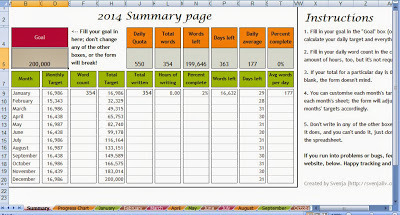
So, my goals for 2014 have to be things that are achievable and will allow me to work towards what I want from my writing life. These goals don't preclude personal goals, because without the balance, I probably won't achieve much at all.
2014 Goals:Writing:
Formulate plan/timetable for writing time, by the end of January. Adjust timetable as necessary for intense writing times (eg NaNo)Focus on one writing project at a time (I have far too many unfinished and unedited books not doing anything)NaNoEdMo (March)CampNaNo x 2 (April, July)NaNoWriMo (November)Write/edit and submit a total of 150,000 wordsWrite and upload a blog entry every weekUpdate Website regularlyPost one free short story to website.Personal:Spend quality time with family every weekCommit to regular exercise - and do itMake birthday and Christmas presents for immediate family (no taking the easy way out and buying things)Enjoy my day job: I have plans for major interactive displays to commemorate 100 years since WWI. It's a five year project and will mean significant liaison with community groups. Huge, but exciting.I think I'm getting closer to something that will work for me. It gives me targets and deadlines and a plan to stay on track. Now I just have to do it.
To help with that, I'll factor in monthly reviews to see how I'm travelling.
I try to set realistic goals each year. There's no point in setting goals that are unattainable, then beating yourself up about it at the end of the year. It's better to slightly 'under-goal' than 'over-goal'. That way you can feel brilliant about doing more than you intended: the year suddenly becomes a better one because you achieved more than you thought you would. That doesn't mean the goals shouldn't be challenging. I need a certain amount of stress in my life to achieve things and I work best to deadlines, so I make sure I play to those idiosyncrasies.
I don't always achieve all my goals, but I always achieve some of them completely and the rest partially. I don't look at the partial completions as failures. They're an opportunity for me to learn what's achievable for me with other things happening in my life. They're also an opportunity for me to analyse why I didn't achieve them and formulate a plan that might work next time.
Editing long novels is one of those things. I suck at it. I'm getting better but I still don't have a foolproof process. On more occasions than I'd like to admit, procrastination wins.
2013 Goals:1 NaNo Edmo (March) - DONE
2 NaNoWriMo (November) - DONE
3 Write & submit four novellas or novels - THREE WRITTEN AND SUBMITTED (I think it was three - I lost my hard drive which had my database that mapped what I'd sent where and when.)
4 Edit one science fiction novel & submit - THREE-QUARTERS THROUGH ONE EDIT, FEEDBACK RECEIVED ON THE FIRST FOUR CHAPTERS, READY TO BEGIN THE NEXT EDIT
5 Maintain website - update monthly - NOT DONE MONTHLY - UPDATED WHEN NEW SALES, RELEASES, FREE STORIES, AND FORMAT CHANGED
6 Weekly blog entries - DONE
7 Post one free short story to website - DONE
I also did two CampNaNos in April and July.
When I set these goals, I was in a position to accomplish them all easily. Things changed, though, so not everything got done. I'm not giving up, though. What I am going to do instead, is to write a timetable. It's worked in the past to get me past difficult times, so I'm going to do it again.
I've taken a spreadsheet created by Svenja. It maps number of words written each day and matches to your target for the month/year. I use similar spreadsheets for various things at my day job so this should be really easy for me to maintain for my writing. The formulas are easy enough but it's nice to have someone else create the worksheet and share it. That's a lot of work the wonderful Svenja has saved me.
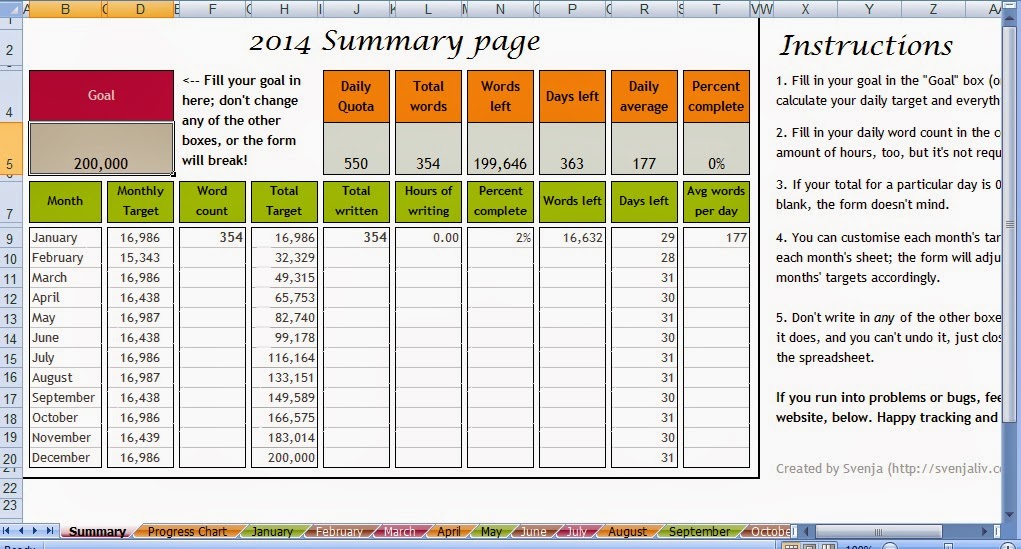
So, my goals for 2014 have to be things that are achievable and will allow me to work towards what I want from my writing life. These goals don't preclude personal goals, because without the balance, I probably won't achieve much at all.
2014 Goals:Writing:
Formulate plan/timetable for writing time, by the end of January. Adjust timetable as necessary for intense writing times (eg NaNo)Focus on one writing project at a time (I have far too many unfinished and unedited books not doing anything)NaNoEdMo (March)CampNaNo x 2 (April, July)NaNoWriMo (November)Write/edit and submit a total of 150,000 wordsWrite and upload a blog entry every weekUpdate Website regularlyPost one free short story to website.Personal:Spend quality time with family every weekCommit to regular exercise - and do itMake birthday and Christmas presents for immediate family (no taking the easy way out and buying things)Enjoy my day job: I have plans for major interactive displays to commemorate 100 years since WWI. It's a five year project and will mean significant liaison with community groups. Huge, but exciting.I think I'm getting closer to something that will work for me. It gives me targets and deadlines and a plan to stay on track. Now I just have to do it.
To help with that, I'll factor in monthly reviews to see how I'm travelling.
December 27, 2013
The Wonder of Human Nature
It's easy to see the worst of humanity. At any given time, I can look at the newspaper, the television, my phone, my computer and I can see hatred, greed, jealousy and selfishness. It takes no effort at all. We're exposed to these things all the time.
People in a country I've never been to are dropping bombs and firing guns on people they've never met and have no interest in meeting.
Businessmen and politicians are making deals, either with each other, or with others, that will see their own families, themselves, benefit, but others--whole communities--suffer, and they don't care.
People I know discuss their latest purchase in terms of how it compares to what someone else owns. They want more, always more. I see people walk away from others, sneer at them, dismiss them, punch them, simply because they're different. They wear different clothing, have different coloured skin, speak a different language, love someone unexpected.
I find myself constantly battling against the insidiousness of it, the blank lack of understanding and, most particularly, the conscious, outright refusal to be aware of any other way. Sometimes I despair that the world will ever change.
For the last couple of weeks, I've been checking my Facebook page more often that usual because I've seen there an outpouring of what I consider the very best of being human. Unfortunately, it came in the face of one of the worst things anyone could ever have to face: a threat to the life of a loved one.
Over the last year, I've watched online as two men--writers with the same publisher I'm with--met, fell in love, got engaged, moved across the country to be together, and planned a long and happy life. Then suddenly one of them was struck down with a recurrence of an illness he'd suffered before. Eric Arvin had a large calcified tumor on his brain stem. It affected his breathing and threatened his life. If he wanted to live, surgery was the only option. His family and his fiance, TJ Klune, are by his side and keeping the family, friends and writing communities updated. Thankfully, Eric survived surgery, has woken and recognised TJ. How much function he has now is still in question. I can see a long and arduous recovery process in his future, regardless. Along with everyone else, I'm hoping these two charismatic men can find the happy-ever-after they both deserve.
 Eric Arvin and TJ Klune
I've been overwhelmed by the way in which this community of souls has pulled together and supported a couple many of us have never met in person. There's a fund to raise money to help Eric's family stay close and to help offset some of the medical costs--basically to be used however they want to use it. In two days, over $20,000 had been raised. Today, it's over $35,000.
Money donated is an easy way of gauging goodness in the human heart, but it's not the only way, and certainly not the most important way. It's just one of the most practical ways, particularly for people who can't be there in person.
It's this mix of online outpourings, willingness to donate, the number of people who've actually gone to the hospital to sit with TJ and Eric's family for a while, arranged hotels and meals. That's the sort of thing being human is about.
The obvious love these two men have for each other has engaged us and drawn us all into the joy of their life together. It's the empathy and compassion everyone around them exudes in spades that has me obsessively checking for updates, and also checking my bank account to see if I could give just a little more.
This is what being human is about. This is the important stuff.
People in a country I've never been to are dropping bombs and firing guns on people they've never met and have no interest in meeting.
Businessmen and politicians are making deals, either with each other, or with others, that will see their own families, themselves, benefit, but others--whole communities--suffer, and they don't care.
People I know discuss their latest purchase in terms of how it compares to what someone else owns. They want more, always more. I see people walk away from others, sneer at them, dismiss them, punch them, simply because they're different. They wear different clothing, have different coloured skin, speak a different language, love someone unexpected.
I find myself constantly battling against the insidiousness of it, the blank lack of understanding and, most particularly, the conscious, outright refusal to be aware of any other way. Sometimes I despair that the world will ever change.
For the last couple of weeks, I've been checking my Facebook page more often that usual because I've seen there an outpouring of what I consider the very best of being human. Unfortunately, it came in the face of one of the worst things anyone could ever have to face: a threat to the life of a loved one.
Over the last year, I've watched online as two men--writers with the same publisher I'm with--met, fell in love, got engaged, moved across the country to be together, and planned a long and happy life. Then suddenly one of them was struck down with a recurrence of an illness he'd suffered before. Eric Arvin had a large calcified tumor on his brain stem. It affected his breathing and threatened his life. If he wanted to live, surgery was the only option. His family and his fiance, TJ Klune, are by his side and keeping the family, friends and writing communities updated. Thankfully, Eric survived surgery, has woken and recognised TJ. How much function he has now is still in question. I can see a long and arduous recovery process in his future, regardless. Along with everyone else, I'm hoping these two charismatic men can find the happy-ever-after they both deserve.
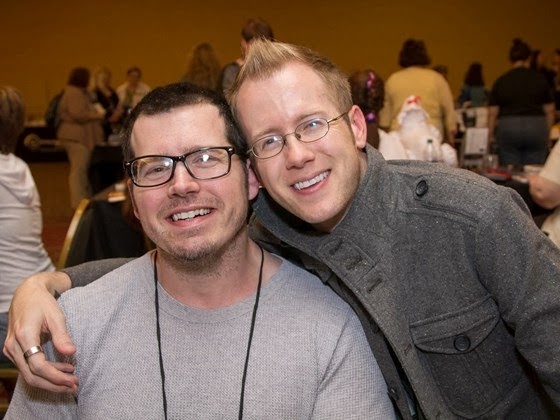 Eric Arvin and TJ Klune
I've been overwhelmed by the way in which this community of souls has pulled together and supported a couple many of us have never met in person. There's a fund to raise money to help Eric's family stay close and to help offset some of the medical costs--basically to be used however they want to use it. In two days, over $20,000 had been raised. Today, it's over $35,000.
Money donated is an easy way of gauging goodness in the human heart, but it's not the only way, and certainly not the most important way. It's just one of the most practical ways, particularly for people who can't be there in person.
It's this mix of online outpourings, willingness to donate, the number of people who've actually gone to the hospital to sit with TJ and Eric's family for a while, arranged hotels and meals. That's the sort of thing being human is about.
The obvious love these two men have for each other has engaged us and drawn us all into the joy of their life together. It's the empathy and compassion everyone around them exudes in spades that has me obsessively checking for updates, and also checking my bank account to see if I could give just a little more.
This is what being human is about. This is the important stuff.
December 20, 2013
Someone understands me
It's that moment when you realise it doesn't matter how odd... er, eccentric, the rest of the world thinks you are. There's someone, one person, who GETS you.
I spent a significant part of my childhood and teens trying to conform. It didn't work. I could never work out what to say when and usually if I did respond to comments around me, everyone turned to look at me as though I'd just jumped out of a spaceship. Even if I explained my leaps of logic, or meandering path through current affairs and history that lead to the conclusion, no one got it.
I was lucky, though. When I was seven, I met someone who got me most of the time, and the times she didn't, she'd just shrug her shoulders and hug me. I didn't always get her either. We're still friends, all these years later. We don't see each other often anymore because our lives have diverged, but when we do, we literally begin conversations mid-sentence, like we've been talking the whole time and haven't missed anything.
Yesterday, I realised I have people in my life that are perfect for me. My daughter and I were talking about cats and I couldn't remember the name of a plant. Don't worry - she got the link - see what I mean? I used my hands to mimic the growth of the plant. I didn't say anything to her. For a second, she frowned at me as though I was mad and then said:
"No, it's not a spider plant."
Of course she recorded me doing my spider plant impersonation. Would you have known what the plant was?
I spent a significant part of my childhood and teens trying to conform. It didn't work. I could never work out what to say when and usually if I did respond to comments around me, everyone turned to look at me as though I'd just jumped out of a spaceship. Even if I explained my leaps of logic, or meandering path through current affairs and history that lead to the conclusion, no one got it.
I was lucky, though. When I was seven, I met someone who got me most of the time, and the times she didn't, she'd just shrug her shoulders and hug me. I didn't always get her either. We're still friends, all these years later. We don't see each other often anymore because our lives have diverged, but when we do, we literally begin conversations mid-sentence, like we've been talking the whole time and haven't missed anything.
Yesterday, I realised I have people in my life that are perfect for me. My daughter and I were talking about cats and I couldn't remember the name of a plant. Don't worry - she got the link - see what I mean? I used my hands to mimic the growth of the plant. I didn't say anything to her. For a second, she frowned at me as though I was mad and then said:
"No, it's not a spider plant."
Of course she recorded me doing my spider plant impersonation. Would you have known what the plant was?