Matt Wesolowski's Blog, page 3
September 24, 2014
“The Black Land: Matty Dunn’s Story” by MJ Wesolowski
 Originally posted on WELCOME TO THE HELLFORGE:
As much as a review, this is a bit of information regarding “The Black Land”: a novella of coastal terror by MJ Wesolowski (My review here). The author has written a short story, available to read on his website, telling the story of one of its minor characters.
 It’s been several months, but the baleful atmosphere of “The Black Land” is still very much with me, and that doesn’t let up here.
Matty Dunn is the local fisherman who sails Martin, the troubled protagonist, to the grim island of Blamenholm. We find out about his upbringing, schooldays, and memories of his dying grandfather in his weatherbeaten bungalow. Not to mention the menace of the castle, almost personified in the form of a stone that young Matty stole from school.
“That stone; he couldn’t get it out of his mind. Miss McKay left it on the edge of her desk…
View original 90 more words



September 23, 2014
The Black Land. Matty Dunn Part 2
Part 1 is here
The Black Land: Matty Dunn’s story
Part 2

Matty and his Granda drank their tea in silence, both of them staring from the window at the sea that heaved at the horizon.
“I want ye to gan now, sonna’” the old man said, as he placed his mug down carefully . “I want ye to leave now, and I want you to do something for me.”
“Right.” Matty’s voice was choked; he couldn’t look at his Granda. He couldn’t say goodbye, he didn’t have the words.
“But before you go, son, I want you to promise me something,”
Matty could only nod.
“Promise me you’ll put it back.”
Jesus, how could he have known?
“Promise me sonna’, right?”
How many years had it been?
“Swear it.”
“I promise, Granda, I swear…”
“Good lad.”
How the hell could he have known?
Secrets.

* * *
It was the feel of that stone in his hand that reared as the American spoke.
“Blamenholm.” Matty’s tongue tried out the word soundlessly as Triumph’s engine thrummed and Seahouses harbour grew smaller behind them in the light of the approaching dawn.
The cold spelks of the rock digging into his palm brought back the terror he had felt as he had passed Miss McKay’s desk that Friday when he’d finally had enough.
It had been getting worse and worse week by week that the hateful object sat there.
‘Work in SILENCE!” She screeched at them as the crooked sums on the blackboard coiled and twisted like witches’ fingers, nearly unreadable.
Woe betide you if she caught you not doing owt; that ruler of hers made your freezing fingers swell something rotten. You had to bite your lip not to cry out when she gave you a smack with that thing. There was no more sparkly laughing, no show and tell; that seemed as long ago as the sunlight that used to stream in delicious, golden slabs of warmth through the windows. As autumn fell on the North East coast, stories on the carpet had been replaced by what Miss McKay called ‘silent thinking’; which no one really got, but you stayed quiet as she paced between the desks, her teeth splintering and grinding behind her cheeks while the wind whirled dusty ghosts in the corners beneath the bare walls. You stayed quiet alright cos if you weren’t ‘silent thinking’ when McKay was having one of her ‘twitchy fits’ as Tommy Fenwick called them, you were for it. He did a good one of her, Tommy, in the corner of the yard at break; bulging out his eyes and staring around into the corners, like she did; like she was trying to catch something that was too quick.
There had been a frieze on the far wall that they had made when McKay first started with class six. It was one of those endless afternoons when they’d sat in the warmth and the brightness back when she allowed them to have the curtains open and the lights on. No one had been fighting, no one getting wrong or being cheeky; the boys were sat with the girls and had the radio been on? There had been music of some sort or was it just joy of the day itself? It wasn’t even that long ago, only weeks, yet it felt like an age.
Frogs, they had been making, frogs and tadpoles to go on the wall. The glitter was out, the gold stars and the glue. It didn’t matter, miss had said, you can do them any colour you like. She had been at the back that day, humming to herself and stapling great green lilipads of sugar-paper over a bright blue background.
Now though, the frieze hung by its last few tatters to the wall. Water had got in and swollen one corner of the room, casting great spots of mould across the gambling amphibians, rendering them sodden, their poster paint faces crying off the wall in bloated, black tears. Over the last few weeks Matty had heard each, individual, revolting splat as each one fell. ‘When it gets to the last one.’ He had told himself last week. ‘When that last one falls, I’m getting that stone, that fucking shitty stone and I’m throwing it in the sea. I don’t care if I get wrong, I don’t care, I’ve had enough.’
But it wasn’t just the frieze, the frogs; it wasn’t even Miss McKay and her moods and her screams and her ‘silent thinking’; it was the other things as well.
aal manner o’things

“Miss; there’s a boy, running in the girls toilets.” Anthea Brown had piped up upon her return to the room last Wednesday. Her eyes were already wet with tears and Matty felt a terrible pity for her as she shuffled from foot to foot before McKay’s desk.
“What boy, Anthea?” McKay intoned, not looking up from the bare wood surface before her at which she had been fixedly staring at for the last hour. “Speak up, girl!”
“A…a…little…” Now the tears came and a few weeks ago, Miss McKay would have gathered Anthea in her arms; today she didn’t even look up. “A little running boy miss, in the toilet…”
There were whispers, no giggles.
“What?” McKay looked up now, her eyes flicked deftly around the corners fo the room and a few at the back followed her gaze.
“He says he’s a little boy miss…” she gulped, sniffing frantically, “but his face miss…his face is all…”
“Shush now, Anthea!” Her voice was sharp and was that recognition in her eyes? “Sit down and stop being such a baby!” She had been shaking, Miss McKay, she just sat there, shaking.
aal manner o’things
There was the book cupboard door that was always open, no matter how many times anyone shut it.
There was that smell that drifted around the room at will, the open doors and windows made no difference to the reek of burned hair.
‘aal manner o’things.
There was the painting that someone had done, even though they hadn’t done painting for a long time, it had went up on the wall with the frogs. Matty thought he was the only one that had seen it because every time he looked round at the grungy tatters of paper and the mould, it made him jump.
“Who did that picture, miss?” He asked one day, his voice barely audible above the sound of the rain screeching down against the windows.
Miss McKay looked up at where he was pointing, looked to the back of the room where the tattered A3 paper clung to the damp ripples of the mouldy wall.
“I don’t…” she was getting up, her chair scraping on the polished wood, her eyes heavy, her voice swollen.
The others turned round too and some of them made small, disgusted noises. Miss McKay was walking over to it now; every eye was following her save for Matty who had seen his chance. A horrible, uncontrollable recklessness whirled through him, it frightened him, it was like being on the Waltzer, that moment where it peaked and you span and everything was a blur and you thought you were going to fly out.
“Take it down miss!” Called out Tommy and a few others joined him.
Matty slid his chair back ward as slowly as he dared as Miss McKay passed his desk, glaring at the painting.
“Who’s done that?” She was snarling, “It’s horrid.”
“Not as horrid as you.” Matty thought, grimly, his gaze now turning to his target that squatted like a vast grey toad on her desk.
As Miss McKay reached he back of the room there began a skittering sound from behind the back wall; the rain intensified and the wind began to low a ghastly wail up into the ceiling. Some of the girls began to cry
‘I hate you.’ Matty was stood in front of her desk now. He glared down at the rock that stared back, defiant in its blankness. He took one look behind him and saw two faces; one of them was Anthea Brown on the front row and he saw the pleading gratitude in her eyes as his fingers closed around the ancient, frozen surface. The other face was the painting on the back wall; daubed by what looked like fingers, long, muddy fingers; black and brown lines that somehow held together into a bony, grinning visage that glared up at Miss McKay with its single, boiling eye before she ripped it from the wall.
‘I hate you and I’m going to sink you to the bottom of the sea.’
“You’ll promise me.” Matty’s Granda had stood, staring from the window of his bungalow all those years ago. “You’ll promise me, Matty, that you’ll never set a foot on that place as long as you live.”
“Why?” Matty had almost sobbed; the end was coming.
But he had heard his Granda and his father talking as he had slept on the single, shelf-like bed that sat in the corner of Triumph’s cabin that morning as they trawled the catch home to the harbour. He had heard the name spoken only once, the name of that place, Blamenholm.
“Not in front of the bairn!” His granda’s voice, hushed, full of fury.
And he knew, he knew from the years they had fished the seas between the Farnes, three generations of Dunns, he had pieced together the story from those long, morning chats when they thought he was asleep. He knew about his granda as a young man, the storm that had carried his boat out to sea and the fear that had raced through him as he felt death all around him, that he thought it was his time, that he was to drown that night as the darkness fell and the wind wailed around him. He knew that the boat had run aground and that it was the island of Blamenholm his granda found himself clinging to for one, dark night.
Men who fought in wars often would not speak of what they had seen in battle; there were things, atrocities that a man could not begin to fathom, let alone recall, his brain would not allow it, for to look back on what he had seen, would be to stare into the crazed fury of insanity itself. Matty never heard his Granda speak of that night he spent upon the island until he had promised he would never go there himself.
“You’ll promise me, Matty, that you’ll never set a foot on that place as long as you live.”
…aal manner ‘othings…
* * *

aal manner o’things
Drugs? Even these days where the young ‘uns showed their flesh like floozies and spoke to one another on little screens; this stretch of the coast was too small for drugs. This yank fella with his wide eyes and twitchy movements must have thought Matty had been born yesterday. There was nowt like that going on round here.
“They’ve got my family.” He had said.
Matty watched the fella stood out on the deck, his arms wrapped round him as he battled to stand upright while Triumph crashed through the larger waves that spoke of further out to sea. There were no drugs on Blamenholm, but what was there?
The yank eventually staggered across the deck and opened the door of the cabin.
“Is that it?” He was gesturing to the faint fuzz of land ahead of them. Matty could hear the twitch in the yank’s voice, but he could also hear the frayed edges of something desperate in there too. The fella’s eyes, that’s what had disturbed him most, it reminded him of Miss McKay, it reminded him of her ‘Twitchy-fits’. Great, wide and saucer-like with pinprick pupils…he had nearly believed it was drugs. But not on Blamenholm, not there.
“So whatta’ you know of Blamenholm then, mister?”
Matty sniffed, careful to hide the derision and doubted the yank would have heard it anyway.
“All ‘a knaa about that place is that it’s dangerous….” Matty spoke with care, “there’s nowt there…full of holes, fissures they call ‘em. They’ll swallow a fella…”
“…whole…yeah, I know.” The yank’s voice was suddenly close, right beside Matty’s ear. He could almost taste the madness on the man’s breath.
“What else? What else do you know about Blamenholm? What don’t you tell people eh? What don’t you tell people like me?”
Matty was not scared, not of this crack-pot, but he felt that familiar stabbing pain in his thigh, the cold weight that sank his heart, that cold weight that had stayed with him all these years.
‘I thought you hated me, Matty.’ It seemed to say, ‘I thought you were going to sink me to the bottom of the sea.’
“I could tell you,” Matty’s voice was calm, he could feel the rock in his pocket pressing its frozen fingers against his flesh. ‘You couldn’t do it then, Matty, just like you can’t do it now. You’re scared, Matty, you’re still too scared and you know it.’
“Tell me.” This guy stank not just of madness, but of desperation.
‘I’ll just come back again, Matty,’ Matty Dunn gritted his teeth and reached into his pocket, ‘I’ll keep coming back, because you’re too scared to take me home.’
“You won’t come back.” Matty said, ignoring the bafflement on the yank’s face as he lifted the rock from his pocket.
“I’ll tell you about Blamenholm, mister,” he said, smiling, the first smile he remembered since they had cut and stuck those frogs to the classroom wall on that bright afternoon all those years ago.
“But I need to you to do something for me,” he pressed the cold, sharp stone into the yank’s hands and felt forty years of misery slide from his shoulders. The wind began to scream, as if in defiance.
“Sure.” The yank smiled, clutching the rock to his chest.
His is teeth looked horribly long.


September 19, 2014
The Black Land: Tales from the editing room floor: Matty Dunn
The following is the back story for one of ‘The Black Land‘s minor characters, Matty Dunn.
Matty Dunn is the man who agrees to sail Martin Walker from the port at Seahouses, over the strip of North Sea, past the Farnes to the island of Blamenholm.
This event originally happened at gunpoint, but, as my editor made me aware, such a thing would kick up a lot of extra fuss about how exactly Martin Walker managed to get a gun into the UK from the US. Not being a fan of such administrative procedure, as well as lazy I omitted this unnecessary piece of over-dramatisation from the story, to, in my opinion, its benefit.
The chapter is over 4,000 words long, so I, for your sake, present it in two parts. The first being below.
I welcome any feedback, positive, constructive or otherwise and I hope you enjoy reading this unpleasant little piece of fiction as much as I enjoyed writing it.

The Black Land
Matty Dunn part 1.
Matty Dunn lived his life amidst the sea; mam used to tell the same story about when he was three; tottering from one side of deck of his granda’s boat to the other as the waves of the north sea rolled it to and fro.
‘pitter-patter, pitter-patter, ‘ees little feet,’ she used to say ‘one side to the other and that was him, our Matty,’ her eyes would twinkle; ‘been a’sea since ‘ee was a bairn.’
He never thought did, but it was as if Matty Dunn’s very soul had been shaped by the blue-grey of the early morning light; honed by the tang of salt that edged the wind that whirled from the north waves. Matty had grown from a boy into a man with the cries of the gulls and the smooth coating of silver scales that clung to his fingers. He had watched the tides sweep up his years alongside Cod, Pollock and Herring, freezing, muscular bodies in his weathered hands, their glassy eyes and their silent gasps for breath were part of his very being.
The Dunn family generations were born of the North Sunderland coast and like his da and his granda and his granda’s granda, Matty had spent the frozen, January mornings reeling in the catch, heaving the crab traps onto the deck while the teeth of the cold gnawed at his bones. Eventually, Matty inherited the blue-hulled motor sailer, ‘Triumph’ that had cradled him atop the waves all his life, brought their catch to be processed and the fee paid.
Life was hard, you had to work, it was unforgiving, relentless, but it was their way and it had shaped the Dunns into hard men. They didn’t have a lot, but they didn’t need a lot, just a roof and a fire and a place to hand your boots. His father and granda shared the same stubborn spirit that Matty felt strong and proud within himself as the years rolled by in and out. The Dunns’ love was as hard as their hands, it burned deep and dark, like coal. Their love was the breakfast that ma cooked when the boats came in; the smoke and spit from the bacon, soft songs his granda sang as he cleaned the herring from the nets.
Oh, there was love alright.
Granda was not much of a talker, he could go for days only emitting short, intoned grunts and only when absolutely necessary. When he sang though, it was with a soft, lilting purr that spilled from deep in his stomach.
What’ll a dee with a harrin’s heed?
Oh what’ll a dee with a harrin’s heed?
Ah’ll mak in inte’ loaves a breed,
Harrin’s heed, loaves a breed an’ aal mannaer o’things…
They would sing it, all three of them as they worked the catch on the deck, the morning sun peering at them over the bobbing peaks of the sea.
How a ye the day, me hinny-oh?
* * *
In granda’s final years, when arthritis crippled him from the waist down and ‘Triumph sailed one man less, Matty spent a lot of time at the bungalow that looked across the bare shore of Seahouses. The two Dunns would sit in silence, watching the sea that had built these walls, that fed their bellies and clothed their backs. The old man still wore his thick, grey jumper he had worn at sea and it saddened Matty to see the watch the wistful twitches of his lips as he grew ever more hunched in his chair.
“She’s been a friend to me for years, Matty, son.” He said, one day.
His voice caught Matty by surprise.
Matty nodded, he didn’t need to ask. Both granda and grandson were staring at the horizon as the sea birds rose and fell on her surface.
“But she’s a fickle one, she’ll be your friend, for a time…but you cannit love her, Matty, she’ll not love you back.”
“Aye, true enough.”
Bothy men nodded.
The beginnings of evening were in the air and the sky was hinting at dusk. Granda gave a sigh, deep and weary and old.
“She’s got secrets too, Matty, secrets she’ll keep long after me and you are dust in the shore.”
“Aye…”
Matty turned to hide his face. Something inside him was spilling, melting and he could feel an ending looming in his stomach. He wanted to grab his granda in his arms and weep into that salt-stiff jumper that smelled of fish scales and childhood and tell him he loved him, to wish him well because this was goodbye.
This was definitely goodbye.
But that was not the Dunn way. There was love but it was buried and black, like coal.
Matty sniffed a long wind of air and stared out of that window at the indifferent blue hue of the sea.
Secrets.
A memory so vast and so sudden in its surfacing caused Matty to nearly cry out. Instead, his back and shoulders stiffened and he quelled the gasp of air with a cough.
“Tea.” He said. and turned abruptly, padding from the thick warmth of the living room and into the kitchen.
The place was sparse, bereft of keepsakes and trinkets; a single hand-painted picture hung from a nail in the wall, its glass coated with a fine layer of dust. A blurry rendition of the sea, as if seen through tears; its foreground a pattern of green clad rocks that dissolved into the raging water. Distant humps of land were just visible on the edge of the horizon. Matty had no idea where or when his granda had acquired this picture but he recalled its haunting quality that had bothered him as a small boy on the rare occasions they had sat for long at the low semi-circular table, sipping steaming mugs of tea; hot china against frozen fingers.
Secrets.
Shame fell hot and leaden into Matty’s stomach as he broke the stillness of the air by noisily filling the kettle; water splashing against the tiles of the small window that looked into the grey concrete of the small back yard.
He must have only been about six or seven; St. Wilfred’s primary, aye, that was it. The memory came now, thick and fast, Matty felt his face scorch red. That new teacher, the new Miss they called her, Miss McKay; tall she was, skinny, with a great mane of curls that stuck out from her head in all directions.
“Bring in something you’ve discovered,” She’d said one Friday afternoon when they’d got in after lunch; their coats still steaming in the cloakroom and the smell of the rain on their skin.
“What does that mean?”
Alfie Donnely’s voice was a wail; the rest of them snickering and sighing.
“He always says that miss!”
“What do you think it means?” Miss McKay had a big, beaming mouth, all those teeth.
Their hands went up sharp, even Alfie’s so’s not to be the odd one out. They laughed again, even miss.
“Is it something you’ve found, miss?”
She’d smiled, even wider then and clapped her long fingers together lightly.
Matty shook his head as he clanked the old metal of the kettle onto the hob and turned up the heat. She was like that, Miss McKay, always pleased with you, just so long as you tried.
On the Monday they’d all sat at their desks with their leaves and funny shaped sticks. Harry Graham stinking out the place with a great clod of bladder-wrack in his bag and one by one they’d show their discovery to the class. What did I even bring in? Matty thought for a second, racking his mind as the kettle on the stove began to burble.
“I’ve got a discovery of my own I wanted to share with you.”
Harriet Wyatt had sat down and the applause for her limpet shells had abated and Miss McKay reached into her handbag, Matty remembered craning forward and staring hard at her face while the others tried to be the first to guess what was inside. He remembered the expression as her fingers closed around it, this mystery object, the millisecond of insecurity that flashed in her eyes as if she was not sure whether this was such a good idea after all. The moment when she had wanted to put it back…Matty’s stomach lurched horrible, just like it had back then. He felt a creeping menace over his skin; the touch of old, wrinkled fingers, that was much older he had been able to understand. He wanted to stand up and shout
‘Don’t! Whatever it is, just don’t! We don’t need to see, we’re fine.’
But he, just like the others in the class who had moved back, away from miss with a collective gasp, had deflated slightly in disappointment as Miss McKay pulled from her handbag, an ugly shard of rock.
“Is that it?” Someone had whispered.
“Divvint be cheeky man!” one of the girls had hissed and there were giggles.
Miss McKay, however was not listening, she was staring at the triangular lump of stone that now lay in her lap. It looked wrong somehow, too big to be pretty with a rough, almost splintery surface. Matty had closed his fists as the anticipation of how it would feel in his hands crept ghost-like over his palms.
Please don’t make us hold it. He had thought, staring hard at Miss. McKay.
Please don’t.
Silence had fallen around the room and the rain from outside had begun a steady tattoo against the windows. There were faint ticks from the back end of the classroom where the metal buckets had been placed beneath the leaky points in the ceiling. Matty looked at the clock then, a cold panic rising in his stomach. Ten minutes to go.
“Now…”
Miss McKay looked up slowly, as if it were difficult to tear her eyes from the stone. her voice petered out and she tried again, the enthusiasm of before suddenly missing.
“Does anyone know why this stone is special?”
None of them had said anything; their heads went down. Even Alfie Donnoley’s.
“Well come on?” And this time her voice was sharp; it had that hard edge to it that the rest of the teachers had; the one thing that made Miss McKay different was suddenly gone.
Matty felt his hand rise weakly.
“Dunn?” Miss McKay snapped.
“Was it…” Matty felt his voice waver, “was it where you got it miss? Did that make it special?”
Silence in the classroom, the tick-tuck, tick-tuck from the buckets at the back getting faster. Miss McKay was all smiles again, her grin opening like a wound across her face.
“That’s right, Matty.” She stood up and lifted the stone awkwardly before her. Some of the children in the front row shifted backward in their seats. “I got this stone from a very special place…”
And at that moment he had nearly turned tail and fled from that steamy, draughty classroom that smelled of poster paint and seaweed. His bladder had swollen taught as Miss. McKay’s words burned into him because he knew where she had got it; of course he knew where she had got it. The rest of the class too, they knew, the way they had hissed as their little breaths turned in against their milk teeth.
She had laughed then, miss, she had laughed and the sound of it was like the crash of some black wave against some black rock far far away where the wind wailed through empty eye-like slits in ancient rock.
“Surely you don’t believe in such a silly old story do you?” and her voice carried a discordant plea that none of them had heard all those years ago but now seared through Matty’s head like hot wire. “It’s been in my house for the last week or so and nothing’s happened to…”
“Oh, Matty!” and her voice was soaring far away, right up to the ceiling and he had felt his cheeks flush as his bladder gave way. There were other sounds too, stifled sniggers that turned to gasps as his legs buckled beneath him and he was falling, falling….
Secrets.
The kettle was whistling and Matty gave a sudden, violent shiver. ‘Jesus man’, he thought, furiously ‘get a grip on yourself.’ Loudly, deliberately, tearing his eyes from that stupid picture and concentrating on what he was doing; he began to fumble in the cupboards for the mugs that Granda kept right at the back, next to his tins; he was going to get the big, thick ones that were behind the others and he was going to do that because his hands were not shaking, oh no.
That stone; he couldn’t get it out of his mind. Miss McKay left it on the edge of her desk and it sat there, coiled and grotesquely ready, like a bony fist. When miss called them up to do their flash cards or have a look at their books, Matty saw how the others avoided that corner of the desk; lifting their arms up, away out of it’s…reach? Sometimes, when it was quiet in the room save for the scrik-scrik of their pencils, Matty could feel it there, a few feet in front of him. ‘Look’, it seemed to say, ‘look, look over here.’
‘I won’t’ he thought back; ‘I won’t look at you’ but he always did and whenever he looked up, Miss McKay was always looking up too; their eyes would meet over that terrible stone.
‘I hate you.’ He thought, ‘I hate you.’
And he looked up from his book, his palms sodden with sweat.


September 5, 2014
The Black Land: Redux
Almost three years ago I wrote a novella. It was supposed to be novel, a gilded masterpiece, a groundbreaking work of speculative fiction, as mystifying and fear-inducing as Jay Anson’s Amityville Horror. The world and their friends would endlessly speculate on whether MJ Wesolowski’s terrifying book was based on real events or an elaborate hoax.
Thing was; I didn’t really have an idea. No; I had an idea, it just wasn’t a very original one. I’ll create a place, I thought to myself, a haunted, cursed place. A place that might be real, a distant, oblique stead that people will pay pilgrimage to in years to come; that horror aficionados will flock to in their multitudes. Think Derry, , think Providence, think Westeros.
Only I couldn’t think of a place.
And all my ideas were either rubbish or derivative.
Then we went on holiday. My heavily pregnant wife spent her afternoons napping while I constructed my masterpiece. My constructing my masterpiece, I wrestled endlessly with a bad Wi-Fi signal and watched Newcastle United pre-season friendlies.
We were in Northumberland; the wild lands of North East England, lands blighted for years by the wars of England and Scotland, soaked in the blood of conflict. Northumberland has a fierce and proud identity; back in time it had its own breed of warriors known as Border Rievers; the notorious and lawless families of the Anglo-Scottish divide who fought in the name of no one but their own. 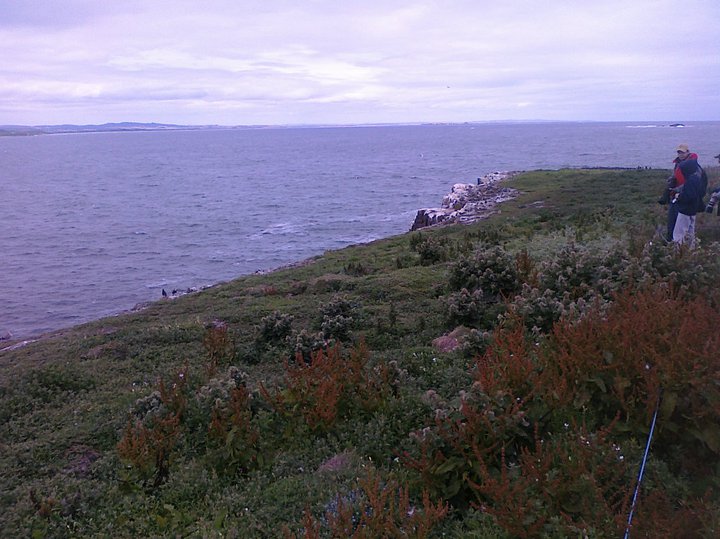
Northumberland also boasts some of England’s most beautiful coastlines and countryside; Lindisfarne or Holy Island, its ruins still standing after some of the earliest Viking pillages on English soil; the wildlife sanctuary of the Farne Islands themselves and further inland, the formidable Chillingham Castle, England’s most haunted building.
Why not create my story here?
We rode on a boat out to the Farne Islands; the slate blue of the north sea thudding against the prow; the brown stacks of land rose from the waters in ominous cliffs like RR Martin’s Pyke, home of the infamous Greyjoys.

Seals fill these waters and the eerie cries of the Kittiwakes rained down on us from their nests, perched taught and precarious on the edges of the cliffs. The Vikings used to say that Kittiwakes were the souls of their heroes that perished at sea. When you here the onomatopoeic wail of their cries
Kitti-WAKE, kitti-WAKE
You can believe it yourself.

Then it came to me. This ancient place, rich in history, conflict and spilled blood would be the location for my story.
Named after the heather-clad moorland of Northumberland’s wilds; ‘The Black Land’ would be a story of ancient evil; of a place that will not be tamed.
Fast forward to a year later and The Black Land was finished (it almost wasn’t; I actually almost gave up on it because an ending simply wouldn’t come, no matter how hard I tried. It took some gentle encouragement from a good writer friend of mine; he basically berated me for the ending being rubbish and the story being much too short.)
A few more months of writing a proper ending and editing (repeat and keep on repeating…)before the manuscript was taken on by US-based indie-publisher ‘Blood Bound Books.‘
It was even better when a very good friend of mine and immaculate low/horror artists Richard Disley agreed to create the front cover for me. (Go check him out, he is MINT!)
I gave Richard the manuscript and let him create what he saw in the book with no input from me. The result was magnificent; it was as if Richard had reached into my brain and plucked what I was trying to create….maybe he did…I’ll never know.

During the final content edits of the novella, I wrote quite a significant back-story to one of the characters; that was, unfortunately cut from the final edit because of time constraints. It doesn’t affect the continuity of the story, it was just a little bit of author-flouncing.
However I was proud of it and when the book came out, totally forgot I had ever written this extra chapter.
Until now…
So, I thought, why not give out that extra chapter on my blog?
It’ll be sort of like a bonus bit of literature that someone, sometime, maybe might even enjoy, if they really have nothing better to do.
I’ll also include some of the concept sketches for the front cover which are hauntingly beautiful…
For those of you who haven’t read The Black Land, it is available here (UK folk) and here (US folk) in either paperback or kindle (The bonus for buying the paperback is you get Richard’s amazing artwork in full colour!) and I would ask you if you have read it, would you mind writing a quick review on Amazon or goodreads (It does wonders for my ego you know!) even if you hated every single word and want to express that…
The next post (probably next week sometime) will be
The Black Land: Bonus Material part 1 of 4: Matty Dunn’s story.
It occurs just after the main character of the Black Land has convinced local fisherman Matty Dunn (A good Riever name!) to sail him to the cursed island of Blámenholm.



August 21, 2014
What’s Your Story? #socialmedia

I’ve believed for a long time now that Facebook particularly is a toxic realm of disappointment that serves no purpose other than to sap your creativity. This article seems to agree, though perhaps not so vehemently!
 Originally posted on Daily (w)rite:

My thoughts on Social Media
Today, I had a minor setback. My first instinct– to go and share it on Facebook.
I don’t share much of my private life on my blog, nor on my Facebook or Twitter. But recently, I’ve noticed a tendency– or maybe a temptation– because I don’t give in to it, of sharing about my life on social media.
I recently read this article in the New Yorker by author Dani Shapiro, about exactly how damaging giving in to this temptation can be for writers:
I worry that we’re confusing the small, sorry details—the ones that we post and read every day—for the work of memoir itself. I can’t tell you how many times people have thanked me for “sharing my story,” as if the books I’ve written are not chiseled and honed out of the hard and unforgiving material of a life but, rather…
View original 346 more words


August 20, 2014
The Book
The cover of the book bore no name, nor location and its remaining pages (that had not been torn out or despoiled by the galvanic ink-strokes of some frenzied penmanship) were yellowed and brittle as if soaked and left to rot some aeon ago. Most beguiling was its front cover; what must have once been brown is now black and cracked, bearing the look of a thing that has been burned. The forlorn volume, I discovered on the bottom of a shelf within the parlour of a roadside antique shop. The owner of the shop; a woman in her later years bade me exchange nothing for the book and even offered that I had made some error in its purchase; yet something about the sorry, blackened leather pulled at me in the same way a malformed teddy bear begs for salvation from the shelves of a toy shop and the depths of its dead, glass gaze.
Back on the road, the reek of the burned leather became apparent and the anticipation that appeared to emanate from the cursed volume dogged me on my journey home. The thought of the thing was blurring my judgement along with the sudden tumult that hammered down in a spiteful tattoo upon the surface of my umbrella. Someone had tried to extinguish this book; to cast it to dust with righteous flame….but had failed.
When I returned home, I lit the lamps and fire against the rain and wind that had become a frozen, spectral wail outside, whistling its corpse-breath through the gaps in the stone. I must admit I gave a cry as three white things like the grotesque wings of some demonaic insects fluttered from the book’s pages as the scorched leather squealed its sudden breach. Heart racing and all too aware of the rustlings and creaks from the trees that thronged the east wall of my home, I bent and retrieved three tattered photographs that lay face-up on the floor; their surfaces dully reflecting light in a miasma of long-dead eyes.

Exposure to the flames that had rent their host, the photographs were difficult to decipher at first, yet this confusion gave way to an eerie puzzlement; the edge of a wooden bridge peering through a haze of undergrowth and a gate in much the same repose. Both of them, whilst neither evocative in their execution, carried in them a strange sense of abandonment, of melancholy, of forgotten places and, combined with the terrible wail of the night, filled me with an errant dread.
The last one was different, the side of a stone church beneath a faded white cloud in a summer sky; yet, again, like its mates, carried with it a beguiling ache of passing time. There was something else about this final image too; one side of the church’s steeple had crumbled, yet did not pertain to the natural collapse that we can attribute to age. No, the gaps in the steeple where stones had been omitted in a repulsive obliqueness that smacked of the presence of some terrible giant that had simply leaned down and carelessly bitten a chunk from the side of this ancient edifice.

Perturbed by my discoveries, a feeling of anticipation close to wonderment befell me as I turned back to the pages of the book. As I have mentioned previously, most of them were torn or blackened by criss-crossing lines of ink in some madman’s scrawl. The remaining were yellowed and, as I had suspected pertained to the conventions of some diary. Below is what I could decipher from the scrawled, archaic print that ravaged those ancient pages.
Date: [indecipherable – by my own eyes I believe that the initial digits are 19]
We found it, WE FOUND IT!! [Blacked out] Lily and I; by our feet and our wits alone. Across the hidden bridge and along endless weed-choked passages. Before god, I can now say the legend is finally proved true!
As I read this passage, the lamps of my home seemed to flicker in the ghoulish mimic of a sudden terror that afflicted me at these words. For I too, had heard speak of a legend in these far flung hills and whilst every aeon of my soul begged me not to read on; I was compelled to do so.

We took the north west road through [blacked out] and threw caution to the faded warning signs between the rusted coils of barbed wire. There it lay, that fabled place, its lands that rise in bilious mounds that appear more akin to some pagan barrow lands than the ancient sepulchres they represent. The memory of [blacked out] and the terrible wonders we saw there that, as I write seem like childish nightmare, yet I know they were real. I KNOW.
Below the entry was a mark, a pale cube where, presumably affixed to the page was one of the photographs. Looking closely, the shots themselves carry that faint over-exposure of a long time ago.
More of the relentless black lines cover the following pages of the book until they abruptly halt and another entry in the same hand peers from the kaleidoscopic, ink-bound madness.
I dream of it. I dream of what I saw. I dream of what we saw. In that pale kirkyard between the trees whose only disciples drive their twisted roots into the earth or feed their squalling young beneath the fading eaves of its crumbling surrounding buildings. Every leaded window of each smaller residence that flanked the church, of which were few, bore naught behind but a spider-webbed darkness. Lily cries at night as she too recalls the pale monstrosities we saw walk in that ancient place; the pale fingers that reached from their entombment and those eyeless holes that seemed to leer with a demoniac malevolence as they lurched from their graves with some nightmarish hunger. We fled then, back over that crumbling bridge and back through the field, all the while the echoes of their terrible , hollow feet rattling against the stone floor of that long-silent mausoleum. Lily cries out in a sleep from which she will not be roused as she dreams of it too…those things we saw, those yellowed bones that rose from their tombs like men…
There is nothing else in the pages of that accursed book, no name, no further exploration of what appears to be a madness that has gripped its author, or some elaborate and ill-conceived joke. For those of us who live here know what is said to have dwelled here, back in some far flung time of yore. Had I myself not been privy to taking long walks in the wider hills and the acquirement of folklore; my interest in this book have waned to perhaps even mockery of its unknown author.
Yet I too have heard stories of this nightmarish enclave where the dead do not rest. I have read passages in bound and ancient books that speak of something that arrived from the seas on foul black wings, that took residency in a once proud bell-tower; its unholy spirit so acrid, so corrosive that its mere presence burned through the very rock. The wood carvings and tapestries tell some fable of a benighted village lost to the forests, its people lost to this winged black shadow, unable to rest, their barrows growing fat with every passing year, bones of beast and man alike.
These stories are oft dismissed as some folk malady, some superstition, yet the passages in this book and its accompanying photographs now burn some terrible brand upon my own consciousness and leave me bereft of sleep as much as answers.
Some long forgotten and ancient hollow where houses stand hollow and a once pious monument now leans, blighted by the mark of some ancient, accursed thing and the dead do not rest.
I have heard a name, one that does not stand out amongst its ilk in the area. I have heard it whispered in the restricted study areas of libraries and betwixt the choking fumes of false righteousness after mass.
Though I dare not speak it, thus some poor student of intrigue may find these words and attempt to follow my own, terrible discovery. For it is not mere coincidence that I hear the beat of terrible wings through the roar of the weather and the eldritch click of ancient bone on ancient bone. The blackened book and its triage of craven images lie amongst the coals of the fire now, stubborn black and still formed. I dare not leave this place, nor face the nameless things that, I have no doubt, my curse of inquisition has damned me too, to face.


August 16, 2014
Black Dog ii: The House Where Nobody Lives.

Black dog takes me for a walk. Leaves scream down from trees. Rusty snow.
We walk while my legs leak blood, it sloshes in my socks. We walk whilst I sleep. My body remembers in the morning.
“I’m tired.” I say.
“You’re always tired.” Black dog says. “That’s why we never get owt done. That’s why you’re on your own.”
“I’ve got you.” I say.
Black dog’s eyes are deadlights. He stares through me.
“Can we stop for a bit?”
Black dog sighs, his nose points down. Shadows choke the streets and people push past; they light their wares in shop windows.
“That’ll be us one day.”
Black dog makes a noise. Sort of like a laugh.
“There.” He says. “That’s our place.”
It peers between buildings, black as a gap in a smile.
The house where nobody lives. Paint thick on broken glass. Each window was a dream.
“No one can see you up there.”
Black dog inclines his head. Crows shun a gambrel roof. The afternoon dies in its eaves.
I slip hook fingers into the space between the door and we go upstairs. It smells like a bedroom from long ago.
“Remember when we first met?” Black dog says.
We’re upstairs; a row of three black windows.
“You can see out but they can’t see in.” Black dog says.
I watch the rain fall on the streets below. I watch their windows wink. No one looks up.
“I said you’d like it here.” Black dog says.
A fire crackles in the grate.
I don’t remember who lit it.
We curl up beneath black windows. Black dog and I.


July 30, 2014
Nightmare du Jour
I am proud to announce that my 100 word prose poem ‘Victim’ will be included in The Daily Nightmare‘s second anthology. (Tentatively named More Quick Shivers) You can get hold of their first volume here

The Daily Nightmare is a place where you can go and share your nightmares to their archive. Like a sort of bad dream amnesty.
The forthcoming anthology will be a number of prose poems that are exactly 100 words and each one of them is inspired by one of the 350 or so nightmares on the site. For the nightmare that inspired me….well, you’ll just have to wait and see.
I will update with more details about the anthology when I have them.
This marks a milestone as it is the first piece of fiction I have sold, but in an unpleasant twist of irony, I have been plagued by nightmares for the last two nights….has anyone got Alanis Morissette’s number?


July 29, 2014
Black Dog part I

Black dog sleeps beneath the sofa. Some days he is only a shadow. Some days he unfurls; extends a paw, an ear. Some days he is solid; his coat curls like claws.
When they go out, black dog licks my hand. His tongue is cold and feels like memories.
“Tell me when we met.” Black dog says.
“I don’t want to.”
But black dog doesn’t hear; he runs his head beneath my hand.
Black dog spreads across the wall. When I called mum, he was a shadow. Black dog came to playgroup. Black dog came to school. The children played loud games and black dog called from the corners of the yard where the shadows pooled.
Black dog came on holiday and hid inside when the day came out.
Black dog curls before the empty fireplace and puts his head on his paws. He looks at me with his ghost eyes.
“Tell me when we met.” Black dog says.
Black dog arrives when the others are gone; crashing through undergrowth, panting, teeth white and whiskers wire. Black dog runs behind me up the stairs when the lights are out.
Black dog lies beneath the bed.
“I’ll be company enough.” Black dog says when it rains.
Black dog is quiet. We play board games. The sun comes out and we read.
“Go outside.” Mum says. “Play with the other children.”
“I want to play here.” Black dog licks my hand. “I want quiet.”
Sometimes black dog is cross. He plants his tail. Black dog unfurls in dreams, all teeth and tongue. Black dog barks until I wake.
“Sorry…sorry…” Black dog licks tears from my cheeks.
“I forgive you black dog.” I think.
The house sleeps.
“You’d forgotten.” Black dog says.
He puts his head on his paws as wind dances in the empty grate.
“I’m sorry.” I say.
Black dog climbs into bed.
The cat sleeps downstairs.


July 18, 2014
The Sacred and the Bovine

Chillingham Castle, an ancient fortress from the 12th century nestled in the borderlands between Scotland and England. The rock of Chillingham’s walls are witness to a myriad of grim atrocities from both sides of the borders; even the trees than line the ‘Devil’s Walk’ that leads to its gates carry their own malefic history.
Chillingham Castle is one of my favourite places in the world and was one of the most profound influences on my novella ‘The Black Land‘. I will dedicate a future blog post about my experiences behind its walls and the others who cannot rest there…
However, Chillingham’s ghosts (and there are many of them, let me assure you!) can rest easy in their eternal turmoil for now as there is something else about this awe-inspiring place that often, and without due course, gets somewhat overlooked.
Rarer than the giant panda, exclusive to this part of the world and as wild as they were back before the cursed stones of the castle was constructed in this part of Northumberland …allow me to introduce to you…
The Chillingham Wild Cattle

No human hand has ever tried to tame them and no vet has ever treated one; these survivors of the days where the forests tangled wild and deep throughout our land, have survived wars, disease and the unrelenting march of modern life.
The wild cattle that roam the parks of Chillingham since the 13th century are genetically unique. There is a reserve herd that are allowed to roam, just as untouched and wild in an undisclosed location in the Scottish highlands. That is perhaps, along with frozen sperm and cell cultures as a precaution, the only intervention that these creatures have had and it is all they need.
When we think of cattle, we imagine the doe-eyed and domesticated milk cows or the brown beef- herds that pepper our landscape. Cows are my favourite animal; they have an innocence about them, an elegance and a beauty that has, alas, been overlooked as these gentle creatures are seen by humans for their uses rather than animals in their own right.
I beg anyone to dare to overlook the Chillingham herd.

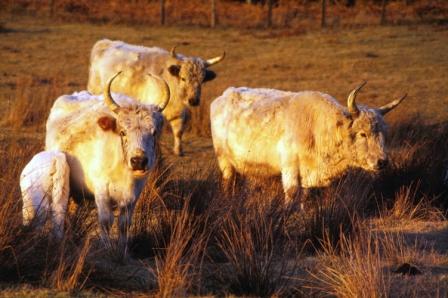
These are far from peaceful; the beasts of Chillingham are formidable; their ebon gaze invokes a stormy vehemence and the curls of their fur that hangs amid their curved horns plays testament to an ancient and savage essence.
When you take a guided tour of their paddock, you are advised not to approach. Mark these words.
Their paddock is littered with great brown patches, where the animals have created their own fighting rings. The herd is a relentless hierarchy where a single bull is king. He passes on his genetic material to the females. Through very gradual inbreeding, the herd has purged itself from harmful inbred genes and sustain themselves. These cattle are completely unrelated to the docile, domesticated breeds that are now common in the British isles.
Many of the bulls carry scars from fights and they fight all year round. To the death. There is no rutting season for these creatures. The king bull is challenged all year round by his younger rivals and when he is killed in a fight, the new king takes his place.
When you climb the fence to enter their paddock, you stay to the edge and if they come too close, you turn around and you leave. Quickly. During my visit, the cattle were docile, roaming, feeding and flicking their tales; the sight of them is something quite phenomenal, you are seeing living history in motion. They show no fear and do not back away like the domesticated dairy or beef herds. These are the last wild cattle in the world.
Legend has it that this herd are protected by more than simply their genetics and the good will of the Chillingham estate. I read an interesting account about a school trip to Chillingham castle in the 1980s (It was in a book which seems to have disappeared off my shelf!) where a pupil took it upon himself to attempt to taunt the herd. He began running toward them, shouting and waving a stick (I can only imagine the poor lad had some sort of deathwish) but upon approaching the creatures, a hand reached up from the ground and grabbed his ankle, overbalancing him mid-flight. On my tour, I asked the guide about this story and he became evasive, claiming he did not know anything about that. Maybe it was just my own fascination with the supernatural that skewed my judgement, but his eyes told me a different story.
These white animals were once considered sacred and were sacrificed by the druids to the deities of the upper world right back to the stone age. This Welsh fairy tale tells of white cattle that are owned by ‘a band of elfin ladies’ and protected thus.

I urge anyone to go and visit Chillingham, the ghosts of the castle are its main draw, but, in my opinion, equal to them are the magnificent beasts that dwell in its wake, go pay them a visit, for their lore has endured long before the bricks and stones of men.