
Discover new books on Goodreads
See if your friends have read any of Pria Anand's books
Pria Anand’s Followers (21)


Pria hasn't connected with their friends on Goodreads, yet.
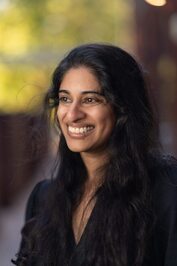
Pria Anand
Goodreads Author
Member Since
May 2025


* Note: these are all the books on Goodreads for this author. To add more, click here.
“In his wonderful TED talk “A Doctor’s Touch,” physician and author Abraham Verghese relates a story in which Bell divines the shortcut a woman took to travel to the clinic from the color of the clay on the soles of her feet and her job—as a linoleum-factory worker—from a rash on the fingers of her right hand.”
― The Mind Electric: A Neurologist on the Strangeness and Wonder of Our Brains
― The Mind Electric: A Neurologist on the Strangeness and Wonder of Our Brains
“In 2016, a group of doctors surveyed 222 white medical students and residents on their beliefs about their patients’ bodies, asking them to judge the veracity of statements such as “Black people’s blood coagulates more quickly than whites’ ” and “Blacks’ nerve endings are less sensitive than whites’.” Half of the students and residents ascribed to at least one of these false beliefs. Like the doctor who brutalized John Brown, 40 percent of the first-year medical students and 25 percent of the residents agreed with the statement “Blacks’ skin is thicker than whites’.” These beliefs had real-world consequences: when given two mock medical scenarios, one featuring a Black patient and one featuring a white patient, the students and residents who endorsed more of the false beliefs assumed that the Black patient felt less pain than her white counterpart. Worse, they were less likely to adequately treat the Black patient’s pain than they were the white patient’s. Even now, medicine seems in thrall to Mitchell’s assertion that not all pain is equal, disbelieves the essential truth that the “capacity to suffer” is a human universal.”
― The Mind Electric: A Neurologist on the Strangeness and Wonder of Our Brains
― The Mind Electric: A Neurologist on the Strangeness and Wonder of Our Brains
“Medical students are taught to imagine a binary: doctor and patient, science and faith, objective truth and superstitious fallacy, us and them. Our morning rounds are an exercise in telling and retelling patients’ stories in a way that explains their illnesses, cloaked in the sense of objectivity offered by a white coat. But the stories told on these rounds are just as prone to false truths as the reports of an amnesia patient, subconsciously shaped by our priors, our communities, our own narratives. On rounds, a woman’s pain might be recast as anxiety, for instance, while a vitamin deficiency born of alcohol use might be regarded as a deserved punishment.”
― The Mind Electric: A Neurologist on the Strangeness and Wonder of Our Brains
― The Mind Electric: A Neurologist on the Strangeness and Wonder of Our Brains