Sherry A. Burton's Blog, page 3
February 12, 2019
I am an Indie Author

As most of you know, I am an indie author. What that means is I self-publish all of my books. (I originally published my first two books with a traditional (or what some refer to as a “real”) publisher. However, even with a traditional publisher, it was my job to promote my books. I decided if I was going to do most of the work, I should receive most of the money, so I decided to go the indie route. This is not to say I would not consider another traditional book deal, but indie is where I am and I thought I'd take a moment to explain what that means.
I realize there are a tremendous amount of self-published authors out there that are intent on getting their books out as quickly as possible. For those that can do it and get it right, kudos to them. In many cases, some self-published authors are more content with quantity over quality. That is not my goal. I prefer to take the time to fully research, edit and proof my books to make sure they are of the highest quality I can provide. I have built a fantastic team which consists of beta readers, proofreaders, my cover/advertising and visual design artist, editor, interior design lady and I have an assistant who helps with some social media posts. I have an online research guy (also known as my hubby, or Prince Charming) who searches newspapers.com to find me articles, which I pour through to see what if any content I can use. In the end, I am the one who must read the research books and newspaper clippings, as I never know what information the voices will decide to use. This all takes time, so it is not realistic for me to publish a book every three months. Not if you expect quality and cohesiveness, something I take pride in.
Along with writing, I must market, post status updates, contact bookstores and other venues to get signing events and answer fan mail (which I thoroughly enjoy.)
It is the goal of myself and my team to make sure I have a clean error-free book when it goes to print. That is not to say we catch everything, but we give it our best. (I am always looking for eagle eyes that are both quick and thorough.)
As an indie author, I must purchase each copy I give away for “free.” It always amazes me when I see big name authors showing photos of the stacks of hundreds of “advance reader” copies their publisher sent them to pass on to readers. At this time, that is simply not within my budget.
I get emails in my inbox daily asking me to pay for this review service, or this service to get more facebook, twitter and Instagram likes. While I do some marketing to help get my book out there, and contests to encourage honest reviews, I refuse to pay for reviews and likes. While my numbers are not as high as some, my numbers are organic and real.
Reader reviews are incredibly important for everyone, but especially for an indie author. Each time you take a moment to review, you are helping me. You are telling potential readers that my books, even though indie published, are worth their time to read. You are telling Amazon, Barnes and Noble, Goodreads, Bookbub, or wherever you take the time to post, that my books are worth them mentioning to others.
By posting a review, sharing my status updates, telling people about my books, you are joining my team and doing a part in helping me succeed. I cannot do this alone, and I am deeply appreciative of each and every one of you.
What else can you do? Ask your local bookstore if they will carry DISCOVERY, and The Orphan Train books that follow. The same goes for your local Library. The more people who read it, the more they will tell their friends. Tell your book clubs, shout about my books to your reading groups on facebook. Comment on this blog post. I am sure there are other things, but these are a few which come to mind.
Please know, I am not posting this to complain. I absolutely LOVE LOVE LOVE what I do. Okay, I love writing and meeting/talking with my fans, but the other stuff comes with the "job," and it is a job. For me, writing is the easy part. Marking and navigating all levels of social media is a constant challenge. I laugh, as for years I floated through life looking for the easy button. I wanted a job that paid well but where I did not have to work evenings or weekends. I can honestly say I have never worked longer hours or had a job that was more difficult. Yet I have a level of personal satisfaction I never knew existed. I didn't choose writing, writing chose me, and I am eternally grateful.
Thank you and happy reading!
Sherry
#indieauthor #writingisajob #marketing #Theorphantrainsaga #Discovery #pleaseleaveareview #Awriterslife #Indie #Pleasehelp


November 9, 2018
The Orphan Trains
In 1840 the population of New York City was just over 300 thousand. By 1920 the population of the city had grown to over 5 ½ million, and yet the size of the city itself remained the same. With the great influx of people, the infrastructure of the city proved inadequate. Families were crammed into tenement buildings. In many cases multiple families sharing units designed to house a single family.
The sewer and trash systems proved inadequate and because child labor laws were nonexistent men and boys were competing for the same jobs. With too many mouths to feed children were often pushed from the family home and wound up living on the streets.
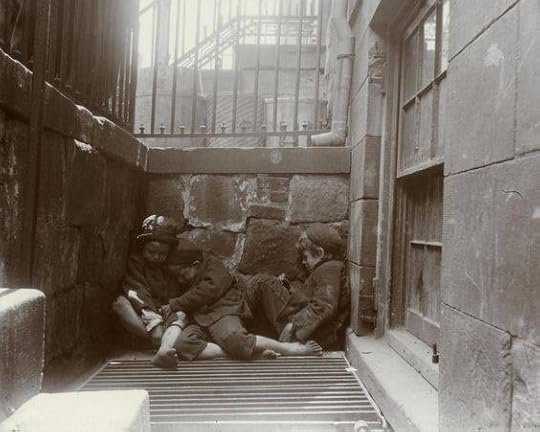
By the mid-1850’s New York City had over 30 thousand children living on the streets, many of them as young as four and five years old. With so many children living on the streets, people soon became sensitized to them, walking over them much the way one would walk over a sleeping dog. Instead of being sympathetic, people would turn up their noses at the way children looked and smelled. Children would sleep in doorways, in boxes and crates. In the wintertime, children would sleep on the vents in the city streets just to stay warm.
The children were in desperate need for an advocate, and that advocate came by way of Charles Loring Brace. Brace came from a well to do family with high social status. Arriving in New York in 1858 brace was appalled not only by the number of children living on the street but with the way society treated them. Brace made it his mission to help the city’s homeless children. He reached out to his high society friends, and using monies donated, founded the Children’s Aid Society in 1853. The Children’s Aid Society offered the children religious guidance and helped to teach the boys trades which they could use to help support themselves in an attempt to help the children become self-sufficient. While the Children’s Aid Society’ efforts helped, it could not keep up with the number of children which were abandoned on a daily basis. Looking for a more permanent solution, Brace thought to send the children out to stable farms where he envisioned families rich morels and food in abundance.
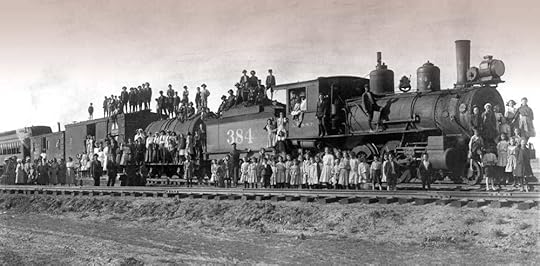
The children’s Aid Society started the “family placement” or “outplacement” program in 1954 sending out its first group of children via two boats and two trains to Dowagiac Michigan. The placements proved a success and the program took off. The Orphan Trains (as they were later called) ran from 1854 to 1929. During the seventy-five-year period, it is estimated that over 250K children from New York and Boston rode the trains.
Agents from the Children’s Aid Society went forward in advance of the trains help the towns select committees to help see to the children’s placement. Prospective parents did not have to adopt the child. However, they were made to sign a contract stating they would feed and clothe the child and see to religious training. The child was also expected to receive some education. The families were told that if for any reason the placement did not work out the children could be returned at the agency’s expense.
It was the mission of all agencies to find good homes with people with strong morals. That is not to say that every home was a good home. As we all know while a home can have a Norman Rockwell Feel, no one know what really goes on behind closed doors. Some children ended up with great homes with loving families, and others ended up being used as labor. While some children were worse off than before they rode the orphan trains, most of the children were much better off than if they would have stayed in the city. It is estimated that 87% of the placements turned out well.
#theorphantrains #homelesschildren #orphantrain #OrphanTrainSaga #homesforchildren #TheOrphanTrainSaga
#DowagiacMichigan z#ChildrensAidSociety
May 16, 2018
Oliver's Story
 As flea season revs up I feel the need to once again share Oliver's story.
 From July of 2017
Let me start by saying Oliver was ten-years old. He wasn’t on any medication other than an occasional Pepcid and his monthly heartworm and flea meds. Therein lies the problem. When I went to purchase Oliver’s flea treatment (Advantix) his new vet told me they did not carry it. They suggested that I try Nexgard and told me it was perfectly safe. I took them at their word, gave him the pill on July 13th and I suspect that why he is no-longer with us. I say suspect because it can’t be proven. He had some symptoms, which singly could be explained away. Last night he started having issues breathing and things escalated rapidly. We had contacted the vet and were in the process of leaving when Oliver died. After Googling this pill (something I wish I’d have done a lot sooner) I found this is not the first instance of this happening. I cannot change what happened, and to be honest, we have been concerned for his health for a while, but the fact that he had a great check-up in late April and he deteriorated so quickly gives me pause. Especially now, after finding the facebook page (Does Nexgard kill dogs) and seeing a video posted that mimicked Oliver’s last couple of hours. I am not trying to lay blame, more that I want to warn others to keep a close eye on their pets. If you are giving this drug, and see any unusual symptoms please have them checked. I’m not sure we could have prevented this from happening, but knowing what I know now, I sure would have tried.
#doesnextgardkilldogs? #fleatreatment #nexgard #mansbestfriend #standardpoodle
Please feel free to share to help save others.
February 26, 2018
Orphan Trains
When I first overheard a discussion regarding The Orphan Trains, my interest piqued. That discovery was over ten years ago when I first began writing. In the years since I read my first story on Orphan Trains, the plight of those children has called to me. I feel that it is a piece of our American history that most people do not know about. It isn’t taught in classrooms and wasn’t even before history became sanitized. Today's curriculum tends to lean more towards being politely correct than accurate.
With the influx of immigrants into New York city came poverty and sickness. Abandoned and orphaned children lived and died in the city streets. Children as young as five were forced out of their homes, getting jobs as newsies, flower sellers, shoe shiners. Children sold rags and picked pockets, many joining gangs just to survive. By the mid-1800’s it is estimated there were over 30,000 children living on the streets in New York City.
In 1853 a gentleman named Charles Loring Brace helped found the Children’s Aid Society, his mission, to get the orphans off the street. Other institutions followed but were still no match for the cities ever-growing street children population. A solution to that problem soon came by way of placing the children out, sending the children to farming communities where the children could thrive. This is where trains came into place, sending children from birth to 18 to less populated areas and place them with farmers who could always use a helping hand. The trains were called “Orphan Trains” or “Baby Trains.”
While the idea held some merit, the actual process was less than perfect. Though some children did end up in happy homes, countless children did not fare so well. In many cases, the new “parents” were referred to as employers. Long before child labor laws were in place, the children were expected to work in exchange for food, clothing, and education. Boys were picked based on their strength and ability to work; girls were chosen for their ability to become servants, caregivers, babysitters and more. With crowds gathered to view the new arrivals, the children were placed on display with prospective “parents” picking their child from the lineup. The children were inspected like livestock to determine if they were healthy. Before the train’s arrival children were instructed to sing, dance, show their muscles or demonstrate other talents to help them to get picked.
Some of the orphanages had another system and would send word to the towns in advance. People could then send a note to the orphanage telling of their request for a child with certain hair or eye coloring, age, religion. These children had numbers pinned to their clothing to let their new parent know which child now belonged to them.
Though the trains were referred to as “Orphan Trains” many of the children who rode them were not orphans at all. Many children were sent into the streets by parents who were too sick, poor or too ill-equipped to care for them. In the same token, many of the orphans in the orphanages or children’s homes had a parent or parents that would visit on occasion. Others were left at the doorstep never knowing why their parent abandoned them.
Though there were flaws in the system, in many cases the life the child lived was better than the one that was left behind. It is estimated that over 250,000 children rode the orphan trains during the placing out program which ran from 1854 to 1929. The first orphans were placed in Dowagiac, Michigan. Subsequent placements were made throughout the United States, even crossing over into Mexico and Canada. My goal is to write a series of historical fiction to help make people aware of the early placing out that was the forefront to many of the programs (foster care, child labor laws, background checks for adoption, to name a few) that we have in place today. #orphantrain
With the influx of immigrants into New York city came poverty and sickness. Abandoned and orphaned children lived and died in the city streets. Children as young as five were forced out of their homes, getting jobs as newsies, flower sellers, shoe shiners. Children sold rags and picked pockets, many joining gangs just to survive. By the mid-1800’s it is estimated there were over 30,000 children living on the streets in New York City.
In 1853 a gentleman named Charles Loring Brace helped found the Children’s Aid Society, his mission, to get the orphans off the street. Other institutions followed but were still no match for the cities ever-growing street children population. A solution to that problem soon came by way of placing the children out, sending the children to farming communities where the children could thrive. This is where trains came into place, sending children from birth to 18 to less populated areas and place them with farmers who could always use a helping hand. The trains were called “Orphan Trains” or “Baby Trains.”
While the idea held some merit, the actual process was less than perfect. Though some children did end up in happy homes, countless children did not fare so well. In many cases, the new “parents” were referred to as employers. Long before child labor laws were in place, the children were expected to work in exchange for food, clothing, and education. Boys were picked based on their strength and ability to work; girls were chosen for their ability to become servants, caregivers, babysitters and more. With crowds gathered to view the new arrivals, the children were placed on display with prospective “parents” picking their child from the lineup. The children were inspected like livestock to determine if they were healthy. Before the train’s arrival children were instructed to sing, dance, show their muscles or demonstrate other talents to help them to get picked.
Some of the orphanages had another system and would send word to the towns in advance. People could then send a note to the orphanage telling of their request for a child with certain hair or eye coloring, age, religion. These children had numbers pinned to their clothing to let their new parent know which child now belonged to them.
Though the trains were referred to as “Orphan Trains” many of the children who rode them were not orphans at all. Many children were sent into the streets by parents who were too sick, poor or too ill-equipped to care for them. In the same token, many of the orphans in the orphanages or children’s homes had a parent or parents that would visit on occasion. Others were left at the doorstep never knowing why their parent abandoned them.
Though there were flaws in the system, in many cases the life the child lived was better than the one that was left behind. It is estimated that over 250,000 children rode the orphan trains during the placing out program which ran from 1854 to 1929. The first orphans were placed in Dowagiac, Michigan. Subsequent placements were made throughout the United States, even crossing over into Mexico and Canada. My goal is to write a series of historical fiction to help make people aware of the early placing out that was the forefront to many of the programs (foster care, child labor laws, background checks for adoption, to name a few) that we have in place today. #orphantrain
February 10, 2018
The story Continues!
The hubby and I have been doing a great bit of driving of late, heading into the city (Port Huron) for some appointments and then driving home again. It is an hour each way in clear weather, much longer if the weather is bad. But we enjoy each other’s company, so that makes the drive tolerable. Conversations vary, but when I am involved in a storyline I like to bounce ideas off him. My PC (Prince Charming) has never been a yes man, so he is quick to point out flaws in a storyline or add thoughts of his own. We toss ideas back and forth like a wrinkled sheet, until the folds even out, and the fabric of the story becomes smooth. Over the last few weeks we have been discussing a story idea that I was given (yes, by my voices) around the time I was writing Tears of Betrayal. The subject matter fascinated me then and has called to me ever since. I was new to writing at the time and wasn’t sure how to bring the story to life, so I pushed it to the back burner. It wasn’t until we started driving to the city a few weeks ago that the idea broke out of its cocoon and started whispering once more. Then, the whispers became murmurs, and now it is speaking clearly and telling me it is next. Well, kind of, as upon discussing this more and more I realize I need a Segway book to take me to the story I wish to tell. It works out well as both stories will take a tremendous amount of research to get them right. While the stories themselves will be fictional, I intend on using real settings and real events in history to tell them. My research partner (PC) has already began pulling newspaper articles for me to pour through and the voices are eagerly filling my head with info for both books. It seems as if adding the aquariums to my office is working, my voices are exceedingly chatty when I’m around water.
Photo is of Miss Gracie (our latest rescue kitty and our new Betta fish, Dexter.
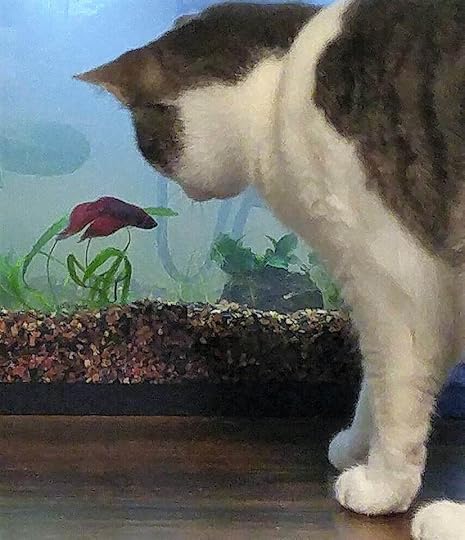
Photo is of Miss Gracie (our latest rescue kitty and our new Betta fish, Dexter.
December 30, 2017
Once Upon a Time
Don, my soon to be husband and I, had devised a plan only a few days earlier to elope. There was no reason for a rushed ceremony; it was simply a plan we had devised to have a small nest egg saved up before we had a big ceremony. Don was in the Navy, and if he were married, he would get married pay. Our plan was simple. We were going to get married, not tell anyone we were husband and wife, and save a little extra money.
Don was on leave and due back to the ship right after the first of the year, so we decided we would get married before he left. We chose December 30th. We had worked out all the details; we would drive to Tennessee, get married and be home by early afternoon, what could possibly go wrong?
I woke early on that Friday morning as Don was supposed to pick me up by seven for our secret rendezvous. I was ready on time, but Don was nearly an hour late picking me up. Apparently, unbeknownst to us, another couple was having a house moved to its new location on that very morning, choosing to do so early so as not to inconvenience anyone. Yes, I am talking about a whole house. A single story, dark brown, brick ranch that was to be moved to its new location on that very day. The good news is the house is still there, and every time we pass it, we remember the day it found its new home atop the hill. After that minor delay, we were on our way.
We had told my mother that we were heading to Bardstown to see Don’s father and would be gone most of the day. We had arranged for my then sister-in-law to join us as a witness. We drove to her house, waited across the street for my brother to leave for work, then picked up her and my nephew who was just a baby at the time. We dropped the baby off at his great aunt’s house and were on our way to Tennessee to become husband and wife.
The drive was uneventful, and we all arrived in high spirits. There was a line at the courthouse; apparently, several other couples had hopes of getting married that day as well. When it was our turn, we told the lady at the desk we were there to get married. She smiled and said she needed our birth certificates. This was the second thing that nearly derailed our plans, as we had not thought to bring them. Before you chastise us for not being prepared, please remember we were very young. I had barely turned eighteen and my husband to be was twenty-one. It was way before the invention of the Internet, so we had not been able to research what was involved. After a very tense moment, the woman decided that we could use our driver’s licenses since they had our pictures on them. We were lucky because at that time Kentucky was one of the few states that actually required photos on their driver’s licenses.
After our identities were established she then requested the paperwork for blood test results. Glitch number three. Of course, we had not thought to have any blood test taken. Things like this must happen on a regular basis as the lady was able to direct us to a clinic where we could get our blood drawn.
We drove across town and finally found the clinic in a rather run-down section of the city. After arriving, and feeding yet another parking meter that seemed prevalent in the large city, we entered to find a sea of patients waiting to see the doctor. As we entered the building, every person turned their head to watch us. I was uneasy as all of those eyes followed us across the room and continued to stare even after we had signed in and took our seats.
At the time I felt it was because somehow everyone in the room knew of our secret mission, but now as I type, I think it was more because we were highly overdressed for the area. Don was looking pretty dashing in his leisure suit. My sister-in-law had donned a nice dress for the occasion, and I had on a new outfit, the first one I had ever purchased on my own. Purchased with my very own money from the new job I was working. I had on new blue jeans with a soft fur trim that lined the back pockets and a stunning black velour angel sleeve top. It was 1980, and this was very fashionable. Having just turned eighteen it never occurred to me that fur-trimmed blue jeans and a black top may not have been the best choice of wedding attire. Besides, this was just our pre-wedding wedding.
Luckily we were only there for a blood draw, and we were called back within a few short moments. They put us in separate rooms across the hall from one another where we each sat on an exam table and waved to each other like a couple of kids. The nurse came into my room first, asked a couple of questions and then tied the tourniquet around my arm. As she was lowering the needle toward my arm, I asked her when the results would be back. As the needle approached the crook of my arm, she replied: “oh not long, we should have them back in the morning.” I jerked my arm away just before the tip penetrated my exposed vain. “But, we are getting married today,” I exclaimed pulling at the rubber vice that still gripped my arm.
After a few moments of chaos, we were sent across town yet again to a blood draw center that could accommodate a same day blood draw. After arriving and paying yet another parking meter, we made our way to a nice waiting area where we were met by a very friendly lady who assured us it would not take long to complete the process. After only a few minutes our blood was carted away to the testing area with the word stat boldly labeled across each glass vile. We were told it would take about an hour and since it was now nearing lunchtime, she suggested we take this opportunity to go and get something to eat.
I am not sure how much Nashville has changed since then, but in December of 1980, it was not easy for three highly stressed and very hungry people to find something to eat. We drove for a very long time before finally finding a Burger King. We ate burgers and fries and hurried back to the lab to get our test results. It took over an hour to get lunch, however when we returned the results had still not come back. After waiting yet another hour, the receptionist finally called down to see what was taking so long. It turns out that our blood was missing and no-one could find those two tiny glass tubes of blood. They placed a trace on the tubes, and we had no choice but to wait for them to be found.
After nearly two hours of panicking the blood was found and the results finally arrived. Don paid the fifty-six dollars, and we were on our way. Unfortunately, instead of being on our way to the courthouse, we were once again headed back to the clinic so the resident doctor could verify the results and declare us fit to be married. We arrived back at the clinic, walked back through the gauntlet of gawkers and spoke with the receptionist who in turn called the nurse who took our paperwork to the doctor. Forty minutes and Thirty-six dollars later, we exited the building, paperwork in hand which attested that we were in good health and genetically fit to become husband and wife, all signed by a doctor which we never saw.
By the time we returned to the courthouse, it was late, and all of the judges had left for the day. Feeling both physically and mentally exhausted I blinked to keep the tears at bay. Seeing my distress, the clerk took pity on us and offered to call over to the night court and see if there was anyone who could perform the service. Luckily there was a judge there who agreed to see to our joining.
We made our way to the courtroom and opened the door. We were more than surprised to be met with a room full of people who turned to stare at the people who had suddenly disturbed the proceedings. We quickly closed the door without entering, fearing we had unknowingly arrived at the wrong courtroom. Within seconds the door opened, and we were greeted by a distinguished man, with incredibly large ears, who assured us we were indeed in the right place.
The man introduced himself as Judge Doty and beckoned us to follow him. I was a bit scared walking through that sea of faces in the courtroom and into a back chamber within the building. Judge Doty was a sturdy, kind-faced older man, with dark eyes that looked as if they had witnessed many years in the judicial system. He seemed rather pleased to be doing something as mundane as performing a simple marriage ceremony. When he asked which one of these pretty ladies the bride was, Don clutched my hand possessively and proudly stated that I could cook too. He knew this for a fact as I had made him a spaghetti dinner only a few short months earlier when he was home on leave. What he neglected to say was that I had used boxed noodles, sauce from a jar and he never even touched the homemade meatballs that I had slaved hours to cook.
As Judge Doty began the ceremony, he was interrupted by a phone call. After answering and assuring his wife he would bring home a loaf of bread and a gallon of milk he continued. A few seconds later a second call had been answered. This call was of greater importance as it ended with the promise of a fishing trip to take place the following day. When the service continued Judge Doty got to the part where a ring was needed and in one smooth motion without exchanging words, My sister-in-law slipped her wedding ring off her hand and passed it to Don who then slipped it onto my waiting finger. Apparently, in our haste to get married, we had overlooked this minor detail. At long last, and without any further interruptions, he officially declared us husband and wife. It was certified after we handed over a forty dollar ceremony fee.
Upon surrendering the borrowed ring and returning to the van the first major test of our marriage was soon at hand. The van was nearly out of gas, we were over a hundred miles away from home, and Don was nearly out of money. Between all the parking meters, blood test, doctors signatures and ceremony fees, his cash was nearly depleted. He had a bit of money in an account at home, but that was way before the invention of the universal debit card. I had not thought to bring any money, and my sister-in-law only had a couple of dollars on her, so we were frantically trying to figure out how we were going to get back home.
As it turns out Don had a money order in the van for the amount of six dollars which he had yet to fill out. He took the money order to a bank across the street, went into the bank, walked up to the teller, slid the money order under the window and told her he needed money. It was at that time that the guard saw him at the window, watched him pass the note and assumed he was robbing the bank. Apparently, the bank had been closed for several minutes, and somehow no-one had remembered to lock the side door. After a few tense moments, my new husband was able to convince everyone he was not a bank robber, had just gotten married and needed to cash the small money order in order to get his new bride safely back home. The teller, who had already closed out her drawer, took pity on him and gave him cash for the money order out of the money she had in her own purse.
With the funds from the money order and the small amount of cash on hand, Don was able to purchase gas which he prayed would be enough to get us all safely home. During the drive home, I having reached my limit, proceeded to crawl into the bed in the back of the van and sleep most of the way home.
Needless to say, we arrived back at the aunt’s house to pick up the baby much later than we originally intended. As we reached the back door, my brother greeted us humming the hymn to the funeral march. As it turns out, the baby had gotten sick, and his aunt had called my mom looking for us. When my mother questioned why we would take my sister-in-law with us to visit Don’s dad her aunt had jokingly stated: “maybe they eloped.”
After gathering my nerve, I called my mom, who demanded to know where we had been. There was no reason to lie, so I told her Tennessee and when she asked why I said: “why do you think?” The next thing I heard was a dial tone. At that point, I was very glad I had taken that much-needed nap. My brother congratulated us, we had a celebratory glass of wine, and we left.
After once again gathering the courage to call my house my younger brother answered the phone and wanted to know why mom had been crying ever since hanging up the phone with me. She refused to answer and told him to tell me if I wanted to speak with her I knew where she lived. An hour later we parked at the church next door to my parent's house. Feeling as if we were facing the firing squad, we slowly made our way across the yard and up the incline to the house.
My mom was still crying. My dad, not typically known for his patience, was so calm it was frightening. He wanted to know why we had eloped. Don spoke up and simply said, “because we love each other.” Dad then asked the million dollar question, which was whether or not I was pregnant. We, of course, told them no, which was the truth. Dad visibly relaxed, slightly, at that point and left the room. Many years later I was told by my brother that he had seen dad with a loaded pistol in his waistband before he himself had been ordered to leave the house. I do not know for certain if this was true, but I think it was a very good thing that an impending pregnancy was not the reason for our hasty elopement.
When dad returned to the room, both he and mom then attempted to make us see the error of our ways and get an annulment. They claimed that neither of them objected to the marriage, just the way we had gotten married. They wanted us to get an annulment and then go back the following weekend to get re-married with them beside us. I was afraid if we agreed to this they would find a way to keep us from a second ceremony. Dons refusal was because he was not about to relinquish his well-earned prize. He had nearly been shot at the bank just a few short hours earlier, and he was not about to let that experience be for naught.
After a stalemate, it was decided that I would retire to my room for the night and Don would go home and all parties involved would discuss it further the following day when hopefully calmer heads would prevail. I know there are some that would think it utterly absurd to sleep alone on one's wedding night, but by this point, Don and I were so exhausted it seemed like the right thing to do.
The final agreement was that we would follow our initial plan to keep the marriage a secret and plan for the big wedding in the summer. As with our elopement, things did not go as planned. We never had the big wedding nor did I get the white dress. I am happy to report that I did get a wedding band that was eventually replaced with a lovely diamond set. When we first got married several people expressed their disapproval telling us it would not last six months. I am happy to report that their predictions did not hold true and today marks our 37st wedding anniversary.
Truth be told, one does not need a fancy dress, a shinny bauble or even a lot of money to get married. You only need perseverance, a trip across the state line and enough money for gas to get you home….
#elopement #weddingbells #courthousewedding #Fairytalewedding #thestoryofus
September 24, 2017
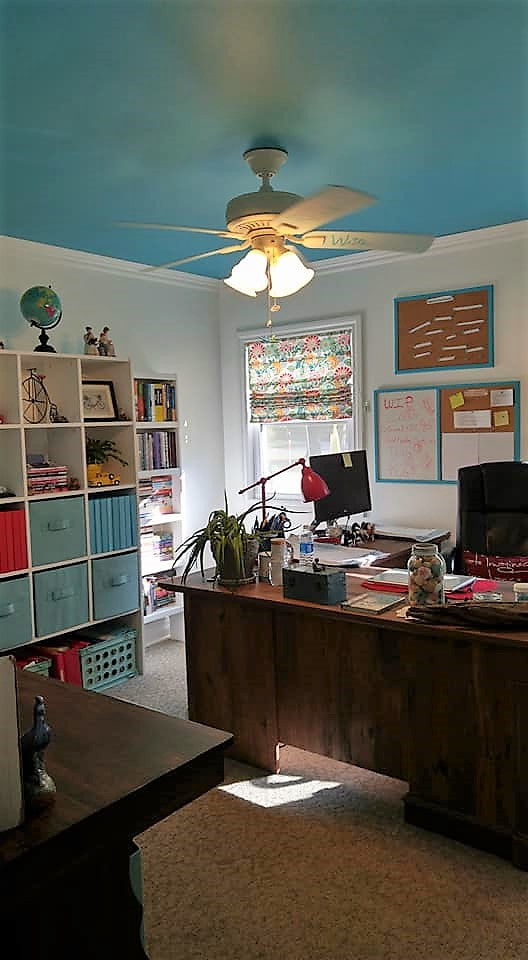
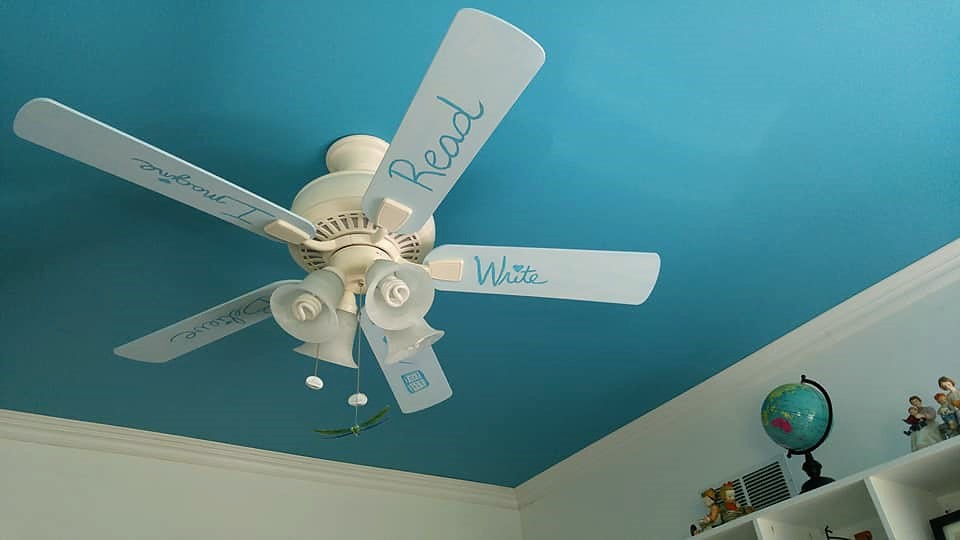
Office Makeover
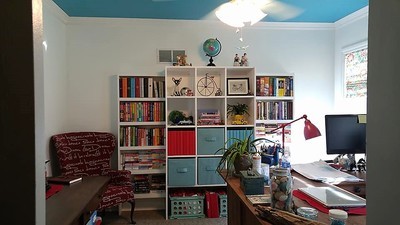
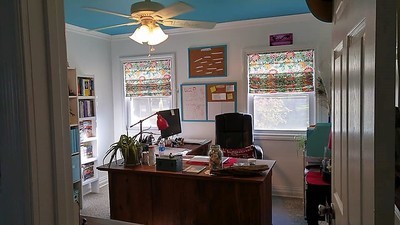
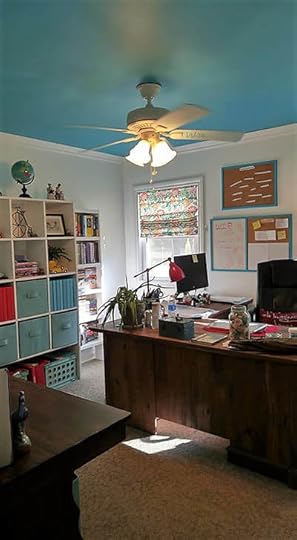
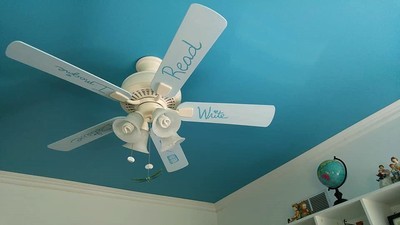
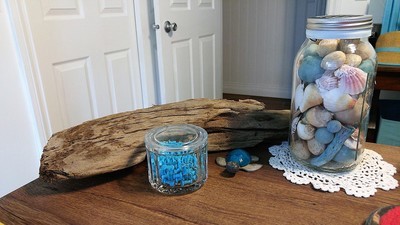
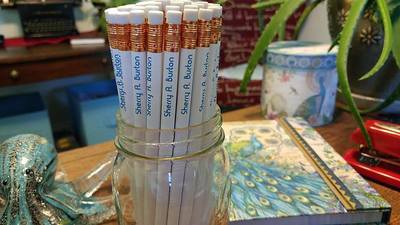
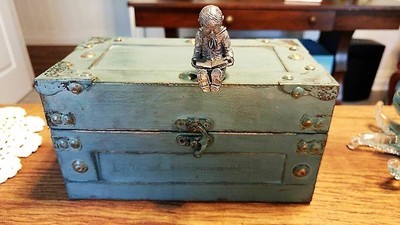
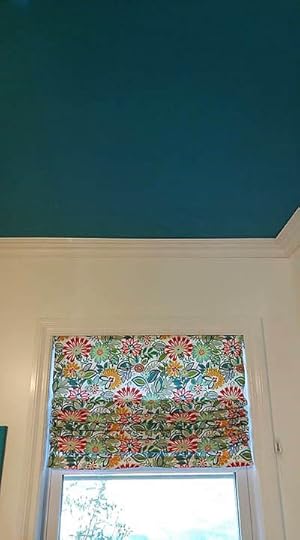
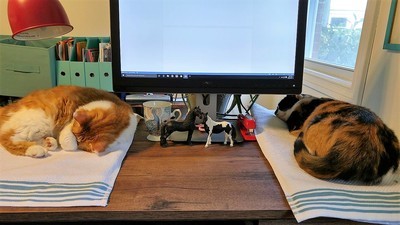
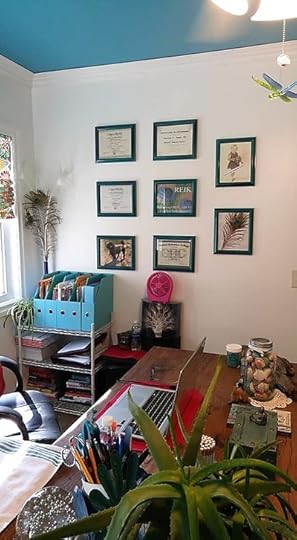
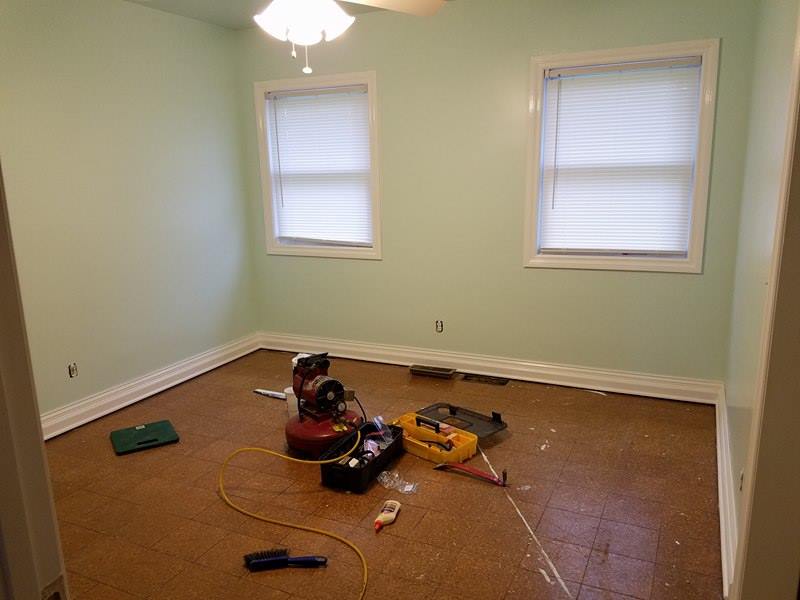
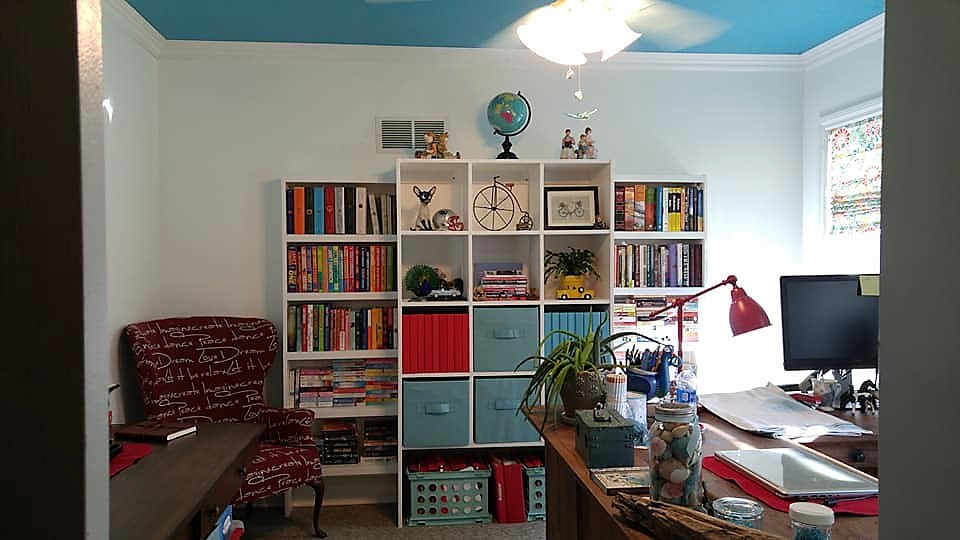
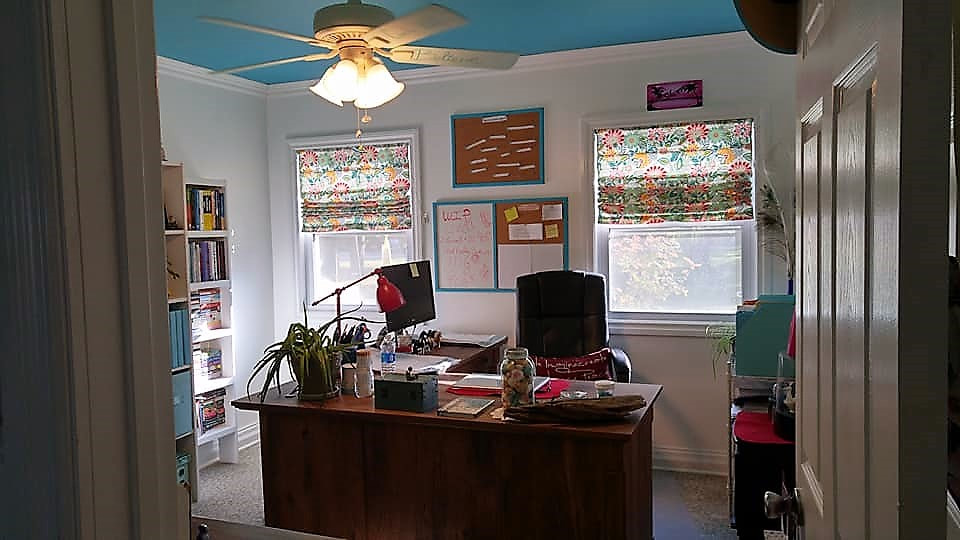
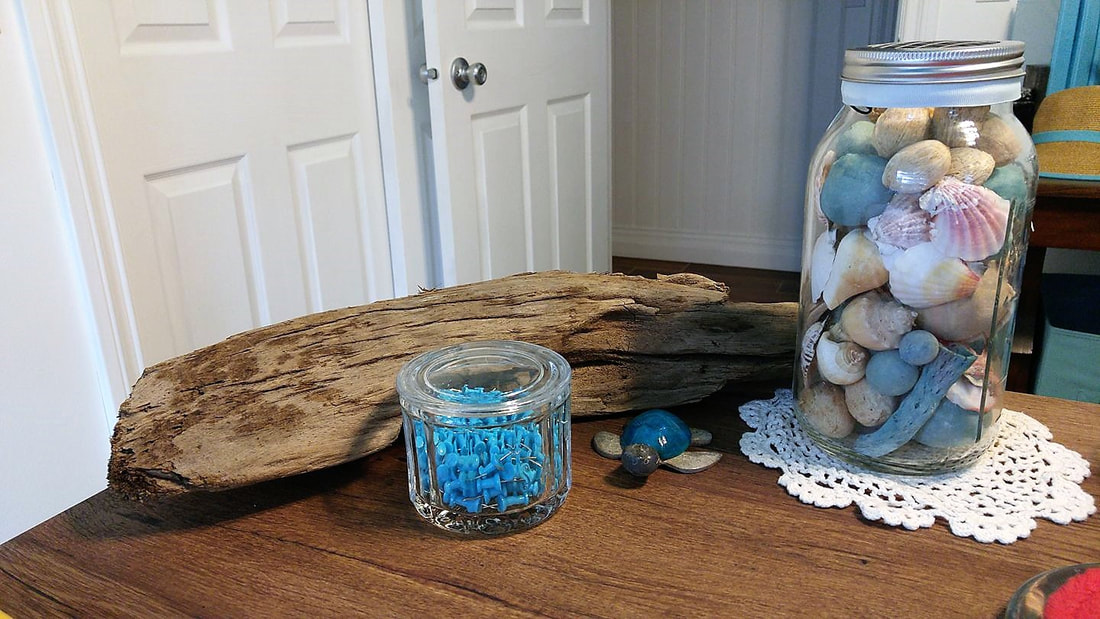
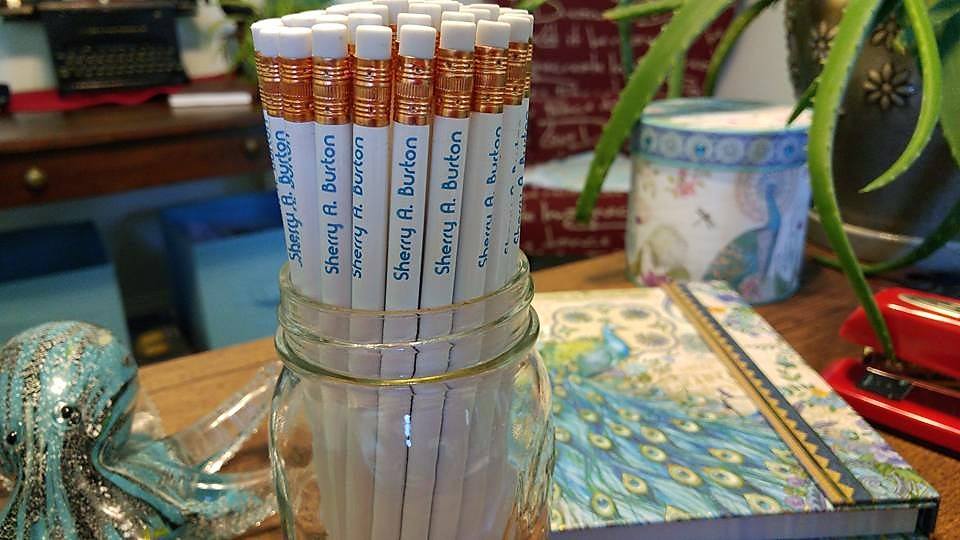
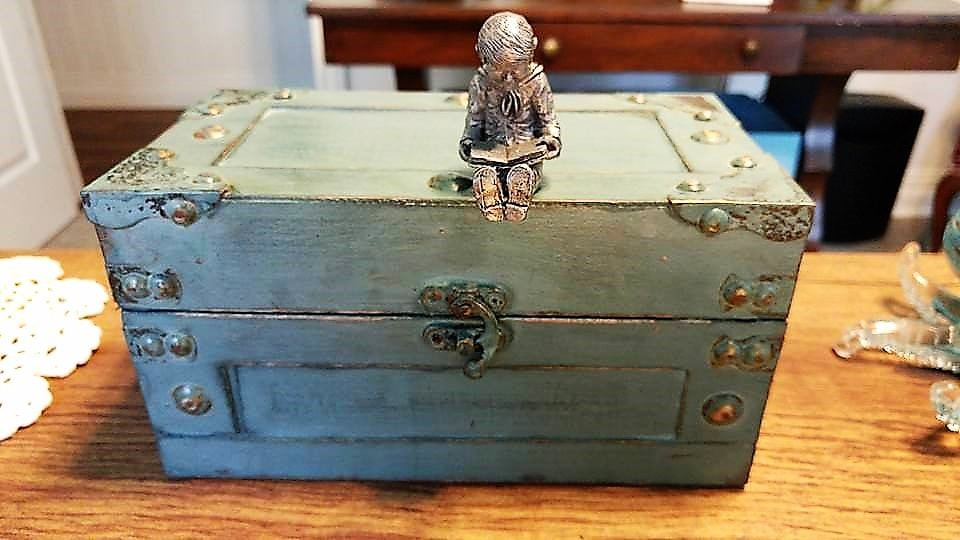
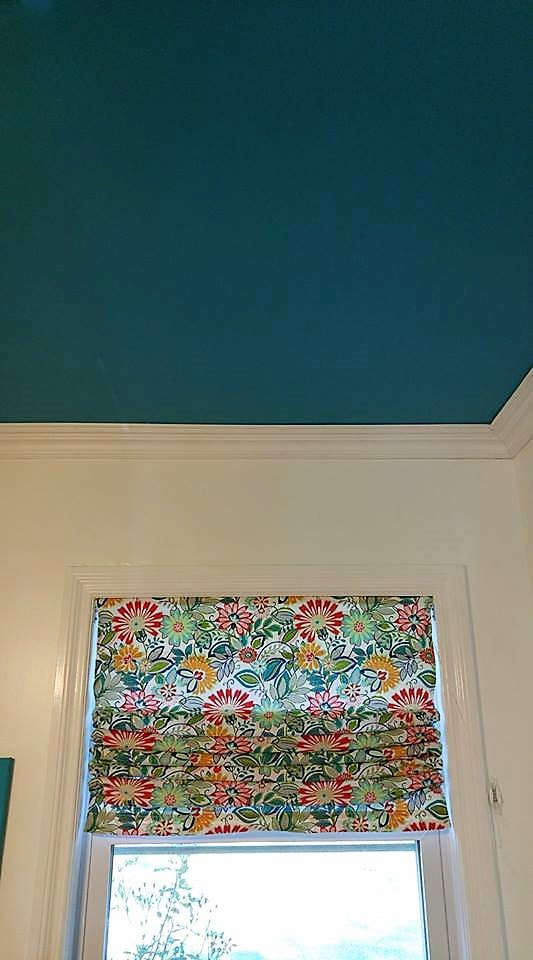
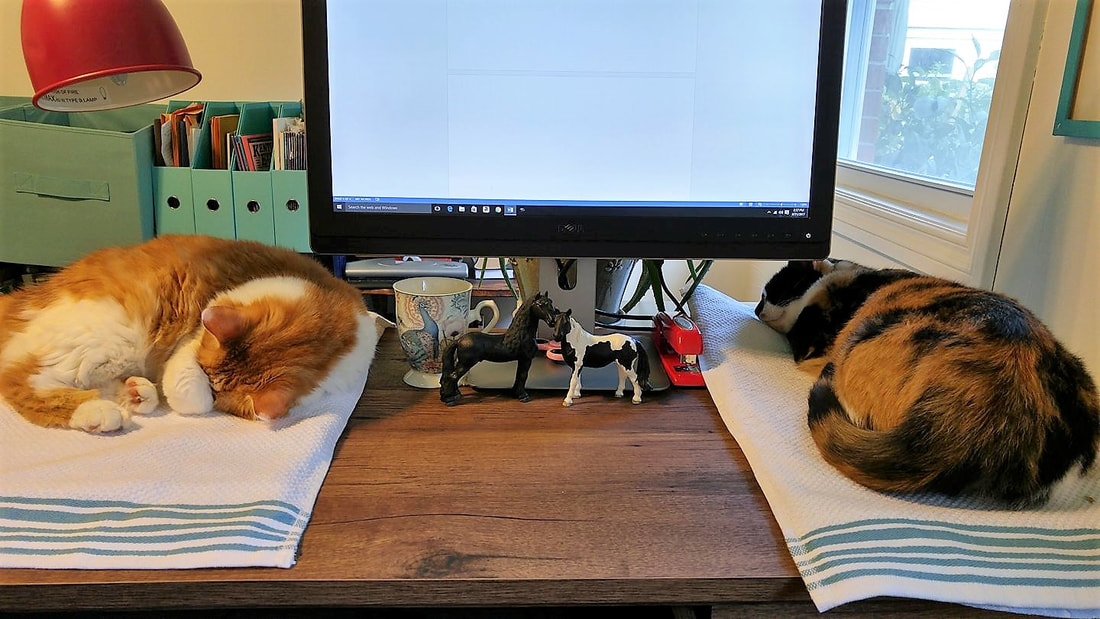
When we first moved to Michigan, I felt a bit displaced. I spent months using the kitchen table as a makeshift office and hated the fact that most of my writerly things were in boxes. We had an area set aside for my future office, but other renovations kept delaying the renovations of my office. One day in an act of frustration, I decided that we did not, in fact, need a guest room, and that room could be put to better use as my office. The bedroom set removed, I was left with an empty room. At first, I had trouble seeing the vision for this room, as I had already designed my office around the previous space, even going so far as purchasing the tile. This room was newly carpeted, so although I briefly considered ripping up the carpet, I couldn’t convince the Hubby it was something we should do. I spent days pouring through Pinterest, and slowly a vision took hold. It was bold, but I thought it would work well for the space. We’ve experimented with color a good deal in the renovations here at what we call The Northern Command Post, so when I told him I wanted to paint the ceiling, he went with it. Still, I think he may have had some misgivings in the beginning. How could he not, even I nearly hyperventilated when I handed the paint sample to the lady and asked for a full gallon. Truthfully, I debated that choice from the time I picked the color until the moment I saw it on the ceiling. But from that instant on I knew I had made the right choice. For the ceiling to work, I knew I needed bright white walls. Surprisingly, the white walls caused me more anxiety than having a bold color on the ceiling, but I also knew I could bring in color with accessories. My vision came together to give me a space that is unique and inviting, and most of all a place that makes me smile. #officemakeover #awriterslife #author #Michiganauthor #Paintedceiling #writersretreat


July 1, 2017
An Unexpected Visitor
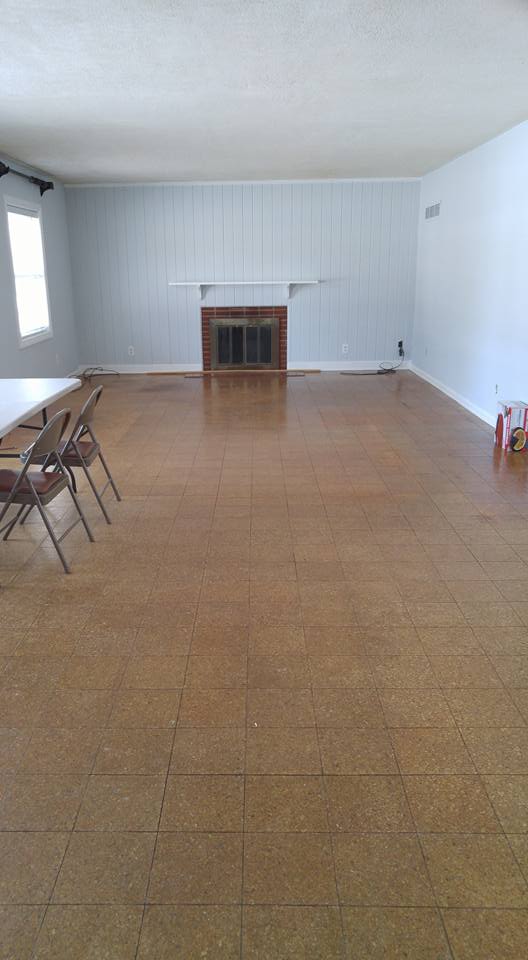

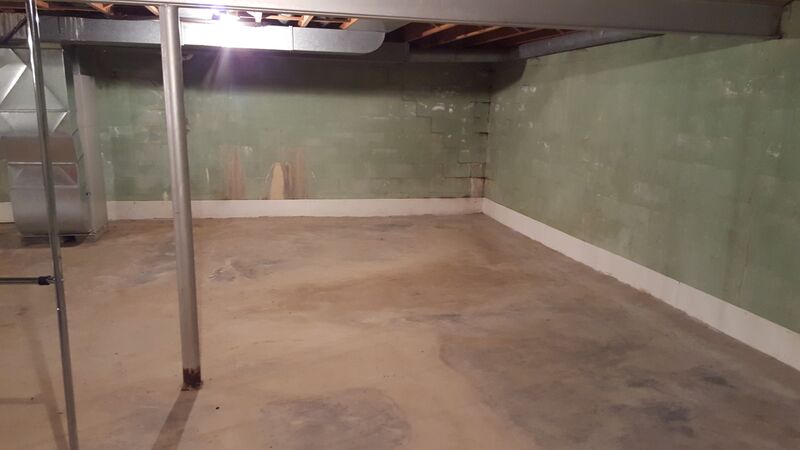
 We had an unexpected visitor this morning, the son of the Doctor who had our house built in 1958. He showed up unannounced with the hopes of seeing inside the home. Of course, we said yes, as we wanted to share all the updates we’ve had done since purchasing the home early last year. He walked through the office, I use that term loosely, as it is currently a storage room. I could tell he was not impressed, when he made mention of the same (extremely outdated) cork flooring. Told how the room used to be the hub of the house, it being the only room with a television. He pointed to the scuffed-up floor, having gotten that way by his sister’s wayward hound. I shared with him my future plans of adding a wall, moving a door, and opening up the ceiling, but it was clear he had trouble seeing my vision. We then moved to the laundry room, which again is still in dire need of renovation, before stopping in the kitchen. The memories flashed in his eyes as he waved his arms, telling of cabinets and islands that were no longer there. Seeing doorways where none had been during his time in the home. Things changed, as he stepped into the newly renovated dining/living room. Scanning the room, he mouthed the word wow repeatedly, as his gaze took in every detail of the once expansive, yet simple room. He said he couldn’t wait for his remaining siblings to see what has become of their childhood home. He told how the front door was rarely used. “It was only used when Mother had her bridge club meetings there. Since dad was a distinguished doctor they really couldn’t have their guest using the back door. Otherwise we never used the room.”
We walked down the hall to his sister’s room (our guest room.) Another wow as he saw his old room, now our den. His parents, now our master bedroom. More stories about how the bathroom used to have a tub where a shower now stands.
We took him to the basement. And, while still a work in progress, it still managed to make him smile and profess how wonderful everything looks. It was nice to share our house with one of its original occupants and see approval. He was beaming when he left, and said he couldn’t wait to e-mail his siblings and tell of all we have done.
It pleases me to know that the good doctor and his wife can rest in peace knowing their house is in good hands. And now we know a bit of history of the house. Like, it was the first fully electric house in Sanilac county. Something that was corrected, after the third electricity bill arrived and they switched it over to gas heat. That the basement always flooded, until they had major work done. We are grateful for that! And, to be careful when digging in the back yard, as Blacky is buried back there somewhere. #goinghomeagain #revisitingyourchildhood #history #homerenovations #hometour
June 7, 2017
Coming Home
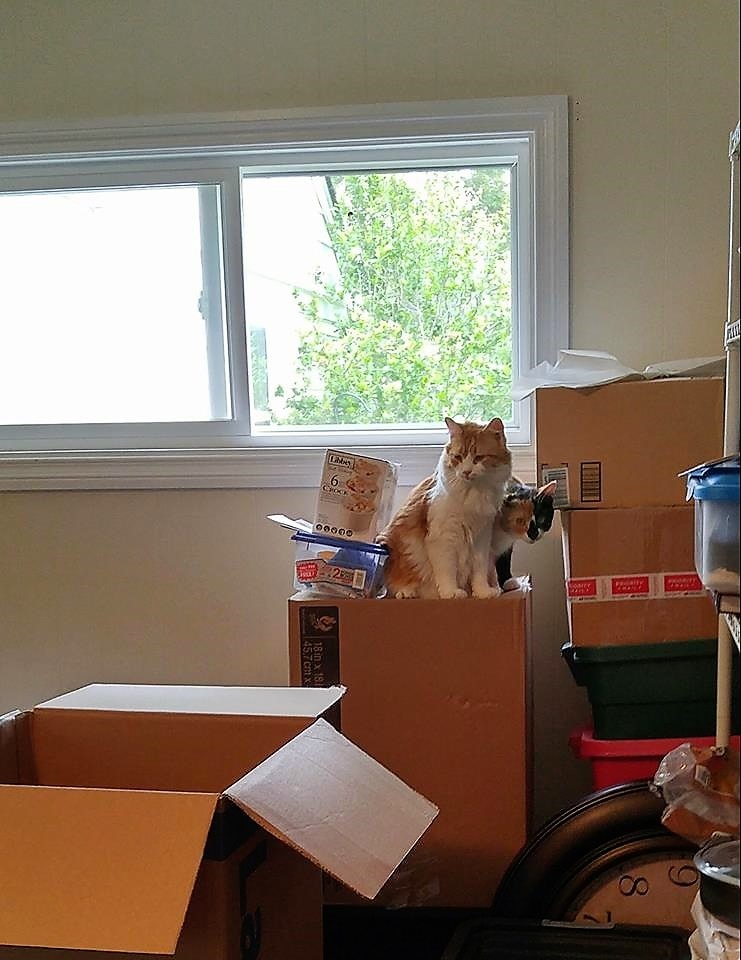
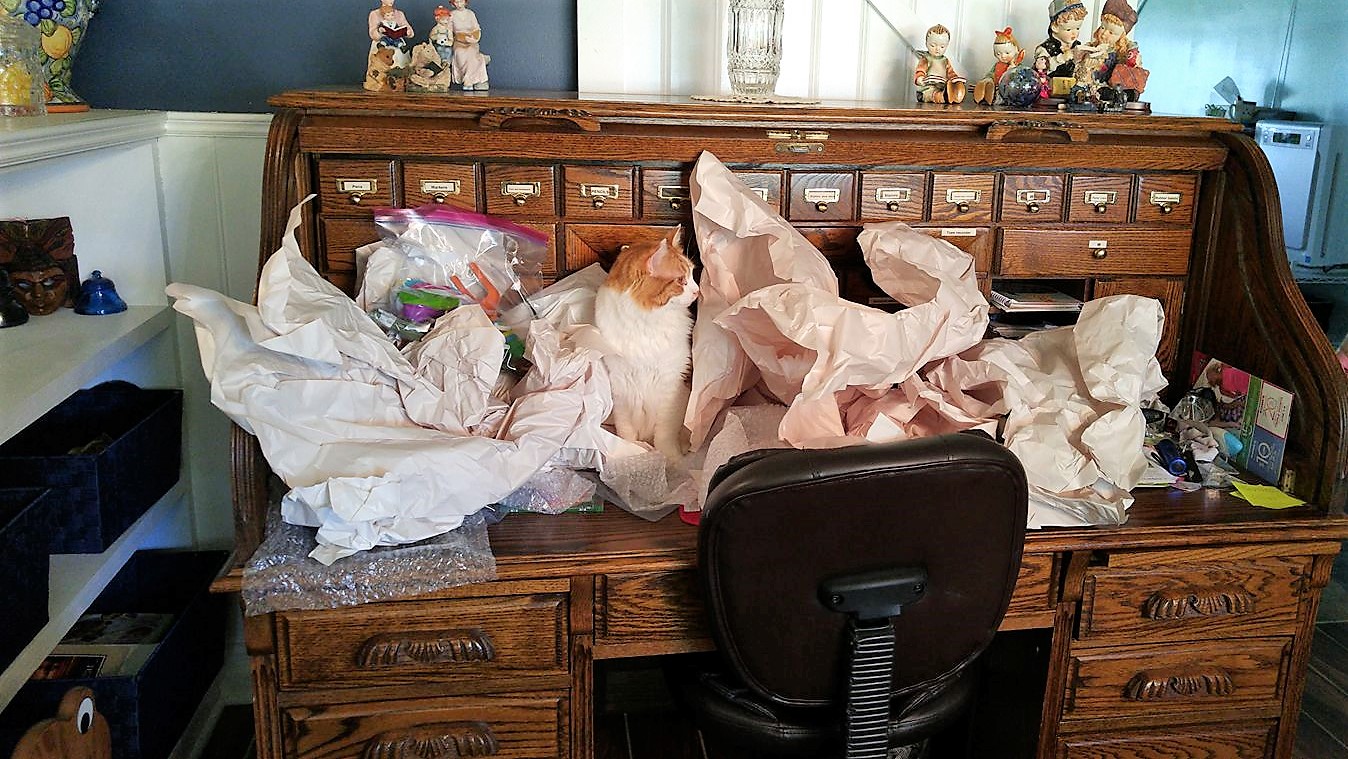 The hubby and I are now officially full- time Michigan residents. It took a bit of doing, but our belongings are now under one roof. Two actually. As much of our stuff is still in the garage waiting for me to find a place for it to fit. No easy chore, since we have a lot of duplicate items. The cost of maintaining two homes I guess. Mostly we have kitchen stuff as I am a sucker for the latest kitchen gadget. This kitchen is smaller than our two previous kitchens, so finding space for all my gadgets is difficult at best. Never fear, what does not fit will be purged.
It is good to be back “home.” While the hubby and I both grew up in Kentucky, we have spent more of our married life in Michigan than any other place, returning to Michigan feels like home. Ours is a small town. It takes maybe five minutes to drive from one end to the other. We have three stoplights. If you hit them all during a red cycle, it may take a bit longer to drive through our town. If you live here, you can’t go to the store most days without running into at least one person you know. A simple trip to get bread can take ages when you stop to visit in the grocery isle.
When we purchased our home in Pennsylvania, we had thought it would be our forever home. It was brand new, so new, so new I got to customize many of the elements. I had my basement and my much dreamed of mountain view. It was a lovely craftsman, on a large lot, in a safe neighborhood. The perfect home, really. With the exception of the large lot, it was everything this new (old) home isn’t. The Michigan house is an older brick ranch. At the time of purchase just over a year ago it was in need of a major update. Still, it had good bones and a spacious basement, albeit unfinished. It has a large room for an office, someday. Unfortunately, that room is currently being used as a mud room/cat playground. The cats love all the boxes and adore “helping” me unpack. To a cat wrapping paper appears to be the equivalent of catnip. If there is an empty box or packing paper, they are sure to be close by.
Except for the large dining room, where we have already been fortunate to have hosted many a family dinner, the rooms are smaller here. Our master bath is a third of the size of ours in PA. Strange, but with all the things this house is not, I must admit I am more comfortable here than I ever was in Pennsylvania. I’m sure a great deal of that is because we have family here. Our three children and six of the seven grandchildren are here. The seventh grandchild visits often for extended stays. But, even more than that, it just feels as if we have finally found our forever home. Ages ago, when the hubby and I used to ride our bikes around town, we would often pass by this house and marvel at its beauty. I’ve always been partial to brick ranches. The house sits on a great lot, surrounded by mature trees. It was a dream home to us those many years ago. We both often imagined ourselves living here. The parents of three small children it was all the house we needed at a price that was beyond our reach at the time. Then, the Navy took us elsewhere, multiple times, and in PA we thought we had found our dream house, and we could have been happy there if we’d been given more time. But fate had other plans. Circumstances in our life made us want to be closer to our children and grandchildren. And, here we are, in our new, old, dream home. It’s funny how things work out and how, given time, dreams do sometimes come true.
#dreamsdocometrue. #family #catsloveboxes #nevertakeasingledayforgranted! #movingsucks! #puremichigan
February 27, 2017
Ten Cent Dress
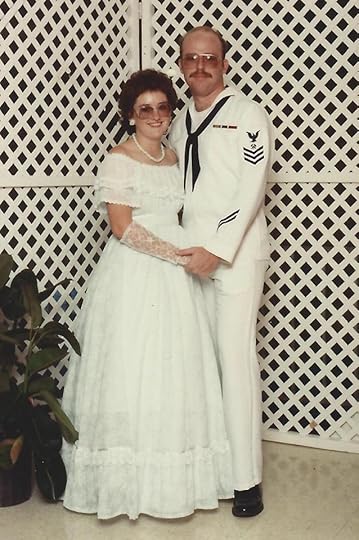
In 1986 and we were stationed in Charleston South Carolina. So, naturally, when I found out I was going to my first Navy Ball I was determined to dress the part. One thing I must stress is at that time my husband was not very high on the pay scale, and we had three small children at home, so money was extremely tight. As it happened I volunteered at the Navy thrift shop. I got paid mileage, they paid for childcare and I found some great deals. One such deal was this dress that I wore. It was a lovely pale green formal ball gown and it cost me a whopping ten cents! Yes, you read that right. This lovely gown set me back one whole dime at the Navy Relief Thrift Shop. I splurged and spent thirty dollars on a hoop skirt and found a pair of lace gloves that went to my elbow that cost nine dollars. I was not overly concerned about shoes back in those days and beings the dress would cover them anyway, I ended up wearing something I already had. So, I went to my very first Navy ball in a city that pretty much invented them in an outfit that cost thirty- nine- dollars and ten cents. There were other ladies in stunning ball gowns and hoop skirts that night, but I would be willing to bet that none of them were as lucky as I to have found such a wonderful deal. After the dance, Don and I drove down to Charleston’s Battery and walked among the cannons and hundred-year-old trees. I in my ten- cent ball gown and he in his dress white uniform. I am sure we were a sight to see. Now days, at the Navy Ball you will find more tiny black dresses, and pants than formal ball gowns but in the days of old wives (it was a man’s Navy back then) dressed in gowns, and actually looked as if they were going to a Ball.
#dressingthepart #NavyBall1986 #80shair #bargainshopping
#dressingthepart #NavyBall1986 #80shair #bargainshopping