Alli Martin's Blog, page 14
August 1, 2017
DIY Edit: 01 A New Hat
Even though I’m an editor for hire, I firmly believe in self-editing. For one, it helps you develop your skills as a writer because it forces you to learn to analyze your own work. For two, you’ll get more from a professional editor because if you’ve already caught simple mistakes, an editor can spend more time on complicated issues. For three, if you decided to hire me, it makes my life easier. 


July 24, 2017
The Changeable Plan
Almost every week I meet my friend for dinner and we go to either Barnes & Noble or the library. We spend an hour walking through the books, reading titles, touching covers, and expanding our to-read lists. In addition to an ever-increasing to-read list, I also have an ever-increasing library. And of those books there are a good many that I haven’t read. This year I decided my reading theme would be Read Your Damn Books. I made a whole plan for how many books I wanted to read, how many of them should be books I already own, how many audio books, how many graphic novels, etc. And then I proceeded to the library website and I ordered a bunch of books for home delivery because I apparently like usurping my own plans.
But aren’t all plans really just guidelines? I mean, when I made the original book list, I knew I would swap out books if I wasn’t particularly feeling a title, and that I would make new discoveries over the year. My primary goals were to read thirty books and to spend about half of my 2017 reading time consuming books from my home library. I also wanted to read at least five books borrowed from my local library and to listen to at least two audio books.
I had no idea that I’d get so invested in audio books. I’ve been listening to them while I take walks and so I’ve so far been through seven audio books. (Can I count one as “reading my damn book” since I already owned it?) My guideline of a plan obviously involves some spontaneous revision since I now have to decide how upping my audio book intake affects the number of physical books I read. Do I still need for half of my 2017 books to come from my bookshelf? Can I revise that number to just twelve? (Or ten seeing as how we’re over halfway through the year and I’ve read a whooping total of six books I own.)
I also had to scrap and revamp part of my plan. I had planned to start researching for a time travel story in the latter half of 2017, but in starting to draft my pirate novel, I realized I need to do more pirate research. So it’s back to the high seas, air, and steampunk for me. All the time travel books have been relegated to 2018—at least I already have the start of next year’s guidelines.
The main thing about plans is that they have to be flexible. Rigid plans often prevent productivity. If I said I had to stick to reading my physical books and ignored that I was enjoying listening to audio books on walks I might not have finished as many books as I have, or I might have stopped walking so I could add that time to my book reading time. Sticking to my original plan would have ignored my natural inclinations and that frustration would have easily made me stagnant.
Strangely this reminds me of writing my last novel. I had an outline laid out—an excellent guideline, indeed—but I got caught in the middle, trying to force the main character to read books when she just wanted to listen to audio books (at least in this analogy). Once I let her listen to audio books, things started coming much easier. I had to refigure my plan and change a few expectations, but finishing the first draft became much easier when I stopped fighting against my plan, just like how reading over thirty books in 2017 will be much easier if I let myself continue listening to audio books. Going with the flow isn’t so easy if you’re a planner, but learning to find my own rhythm and accept that as a new plan is key to staying productive.
July 18, 2017
The Secret to Writing Great Critiques
Writers tend to focus on getting feedback—wanting to know how others received the work and what to do to make it better. But I’ve learned a lot about writing by critiquing others’ work. It’s made me more cognizant of rhythm and meaning (understanding the logistics of a sentence), and it’s helped me figure out how to step back from my own work to evaluate things like pacing, character development, and description.
The secret to writing great critiques is in having a plan for how to approach critiques. This is the big picture for how I critique manuscripts.
In-Line Comments
Critiquing someone else’s work can be scary—I don’t want to offend them, but honest feedback is the only way anyone will improve. In-line comments are useful, not only for line edits, but also for identifying exactly where clarification and revision is needed in a manuscript. Here’s how I’m honest but also kind when delivering in-line comments:
Always highlight the things that are working.
A few hearts around a description or line of dialogue lets the writer know what they’re doing right! Being able to check off strengths isn’t just stroking an author’s ego; it can let them know what elements are most effective and can help them identify areas that don’t have to be revisited in revision. Bonus: It also reminds the author that I, the reviewer, am a supporter of their work.
Give specific feedback.
If something is confusing or unclear, maybe the word isn’t quite right or the pacing is off, I need to tell the writer why. I once received a note on a manuscript that just said “eh.” I’m still not sure what that meant. But “eh, the dialogue here isn’t quite believable” provides a direction for revision.
Say it with a question.
Sometimes the best way to phrase feedback is in the form of a question. A question can be less confrontational and can still draw attention to what’s not working. For example, if I need timeline clarity, I ask it in a question, such as “How long is this after the divorce?” If something feels forced, I might ask, “Is there a way to make this more organic?” If more sense details would help flesh out the scene, I ask specific leading questions like, “What does the pie smell like? Is the room warm? Is the blanket soft on her skin?”
Read it twice.
Preferably, I read the manuscript twice. On my first read, I (1) note moments that are fantastic, (2) identify questions and confusions, and (3) limit corrections to typos or grammatical errors that cause confusion. The first read lets me get a feel for the story without focusing on critique comments. This provides a foundation for the critique since I know where the plot is going and have an idea of the strengths and problem areas.On my second read, I go hog wild with comments. I expand and clarify questions, explain if my confusion persisted or was later clarified, offer suggestions for foreshadowing and improving pacing, and of course, provide additional line edits. When appropriate I note whether a comment is from the 1st read or 2nd read. It can be helpful to know if a reaction is due to not yet knowing how the story ends.
Embrace the author’s vision.
Sometimes an idea is so good, I wish I’d written it myself. But I didn’t and reviewing someone else’s story isn’t the place to tell the story I would write; I need to help the author tell their story. That means I have to figure out what the author was trying to do if the execution isn’t working, and help direct them in a way that will let their vision shine.
Leave at least 3 comments per page.
This is by no means a rule, but I find that I typically write better feedback if I try to make at least three comments on every page. It helps the author navigate where things are/aren’t working, and it helps me write a more useful summary letter because I’ve made so many notes throughout the manuscript. (I also try to make at least one positive comment on every page.)
The Summary Letter
The summary letter (also called a critique letter, edit letter, or end note) is a way to summarize my feedback and experience reading the piece, as well as highlight the most important elements from my critique. It can also let me fully articulate something I only touched on with in-line comments, usually issues that affect the whole manuscript, like structure, plot, character arcs, or pacing.
I usually highlight two or three strengths and two or three weaknesses in a summary letter. As previously mentioned, I want the author to know what worked well and the things that need further development. My main method for writing an end note is the “Positivity Sandwich.” Basically, I begin and end with positive feedback, putting all the critique bits in the middle. For example,
Hi so-and-so,The strongest element in your story is …
Here’s some things that weren’t working as well, why they weren’t working, and a suggestion, if I have one …
It was so cool that … OR Again, I really loved … OR Also, I wanted to mention this awesome thing you did …
It’s a bit of a Jedi mind trick (and lots of writers are savvy to it) but it still makes me feel better to send and read feedback that begins and ends with something the reviewer enjoyed about the work. Again, it lets the author know what readers are connecting with or responding to positively.
The Real Critique Secret
The real secret to writing a great critique comes in spending time with the manuscript. There’s no short cut to analysis and no “trick” to being more effective other than giving a manuscript my full focus. The good news is that the more time I spend looking at other people’s text critically, the easier it is for me to disconnect from my own manuscript and see it as a story to be analyzed rather than My Beautiful Creation. That skill alone keeps me eager to critique manuscripts because as much as I’m writing the critique for someone else, I’m writing it for me, too.
July 11, 2017
Determining the Punk
In 2008 one of my friends introduced me to the term “steampunk.” I’d say that I fell in love then, except I’d apparently been a fan of this genre without having known it existed. That’s the thing about punk sub-genres, they’re still not well known and even if you know about them, there are so many—and so many new ones—that they can easily be confused by even the most knowledgeable.
With how many punk subgenres there are, figuring out in which one a story “belongs” can be a tricky thing. For me, punk genres are defined by three things:
the time period and aesthetics
the technology
the punk social element
There are other elements that identify specific genres (steampunk is often optimistic whereas cyberpunk is often cynical), but these three earmarks are apparent in most punk subgenres, which is why I find them so helpful for classification.
I’m limiting my exploration to eight punk subgenres that are relevant either as to their popularity or for illustrating examples of identification. This is by no means a complete list of punk subgenres, and will probably be an outdated list within a year, so take this as an introductory guide to figuring out how to break down punk subgenres into their elements.
The Time Period & Aesthetics
The time period defines many of the other elements, so it is one of the most definitive indicators of a punk subgenre. Even stories set in the future or in a completely fictional universe on a different planet are inspired or influenced by these time periods. Identifying the historical influence can help narrow down the genre since there are very few overlaps in those aesthetics.
Clockpunk 1300–1550
Steampunk 1830–1900
Dieselpunk 1910–1945
Decopunk 1920–1950
Atompunk 1945–1965
Cyberpunk 1980–future
Biopunk 1990–future
Solarpunk 2000–future
For alternate histories, these dates aren’t hard starts and stops. One thing to consider is what those years have in common and if it makes sense to include a story outside of that range. For example, steampunk is largely defined by the Victorian Era, which corresponds with the reign of Queen Victoria (1837–1901). I’ve seen stories listed as steampunk (and that I recognize as being steampunk) taking place as late as 1910. But they worked as steampunk stories because they highlighted other story elements recognizable as steampunk (which I’ll get into below).
In addition to the time period, stories have to take into account cultural aesthetics. As mentioned, Victorian England has greatly influenced steampunk as a genre, but there is also steampunk based on American and non-Western settings. These stories take aesthetic notes from the locations and cultures in which they are set. While bustles and four-in-hand ties can be indicators of steampunk, so can spurs and boots and kimonos. It all depends on which time period and cultural notes are used for inspiration.
The Technology
The technology is partly dependent on the time period. Even though many punk genres have a science fiction element that pushes the technology beyond what was possible within that time period, it still has a historical (or contemporary) basis. For many punk subgenres, the technology is in the title.
Clockpunk — clockwork technology, no engines (lots of clicking)
Steampunk — steam technology, including trains and steam engines
Dieselpunk — diesel-based technology, like combustion engines
Decopunk — technologies appropriate to the time period 1920–1950
Atompunk — nuclear technology, most especially the atom bomb
Cyberpunk — cyber technology, internet, wired or wireless, virtual reality
Biopunk — merging technology with biology, electronic or digital prosthetics
Solarpunk — renewable energies, specifically solar powered
The only genre in the above list that doesn’t have a nod to the technology in the title is decopunk. The name “decopunk” refers to the aesthetics of the genre. To me, that means the aesthetics are as important to decopunk as steam is to steampunk or biotechnology is to biopunk. It also forces us to reconsider what we mean when we say “technology.” Is technology just weapons and vehicles, or does it include the ability to mass-produce clothing and furniture? Does it include the timesaving home technologies that allow people the freedom to visit a speakeasy? Does it include the ability for a detective to analyze fingerprints? The point being: there’s a lot of technology that isn’t easily summarized in one word, and decopunk is a good example of how that technology might appear in a punk subgenre.
An important note on the technologies: there is always an overlap in time periods because technology is always moving forward (and a story with strong science fiction elements may be leaning into that progress). Reality functions in much the same way. For example, the atom bomb was being developed during prime years covered by the dieselpunk time frame. In that case, to figure out if a story is dieselpunk or atompunk, the social concerns and aesthetics need to be considered. Would you classify a story set in 1938 about the construction of the atom bomb as dieselpunk or atompunk? What’s the primary technology being discussed/used?
The Social Element
The counterculture element is the core of a punk story. Social concerns and a reaction against certain culture movements are, after all, what makes a story punk. Any of the isms can be a focal social concern: racism, sexism, and classism are common topics in steampunk. Individuality is a common topic in cyberpunk. Atompunk focuses around concerns of nuclear war and nuclear energy, whereas solarpunk tends to take on environmental concerns and renewable energy. Most of the social concerns grow out of the time period that influences the genre.
Some potential (but not all) social concerns for the genres:
Clockpunk — religious influence, exploration & trade, diversified division of labor
Steampunk — colonialism, sexism, racism, classism, factory work/unions
Dieselpunk — nationalism, world war, factory work/unions, women’s suffrage
Decopunk — decadence, apathy
Atompunk — atomic energy, nuclear war/winter, space flight, civil rights
Cyberpunk — individuality, autonomy, humanism, transhumanism
Biopunk — humanism, transhumanism, body modification
Solarpunk — environmental issues, renewable energy
For genres in which the time periods overlap, the social elements are often the defining traits of the genre. Decopunk and dieselpunk cover nearly the same time period and would ultimately use the same technology, however a decopunk story will be more urban, upper class, and decadent. The social concerns will likely include a reaction against decadence and apathy. In dieselpunk, characters will interact more personally with gasping combustion engines and the thrust and grime of mechanics, expressing opinions on nationalism and world wars or the advent of the assembly line.
Some social concerns are shared across genres, so the key to identifying the genre may lie in identifying how that social concern is being addressed. A transhumanism issue in cyberpunk is likely to include how the mind connects with a computer or virtual reality, whereas in biopunk the concern is grounded in modifying a physical body and exploring the question of what defines a body as “human.” Identifying the genre by the social element requires depth of knowledge about the genres and the subject of the story.
A Grain of Salt
While these are earmarks I find particularly helpful for identifying genres, there is a caveat here in that genre definitions can change as genres age and become defined by the works rather than the works being defined by the genre. Early steampunk work and some recently marketed novels don’t gel with the definitions I outlined above, so in general I recommend keeping your definition in mind for your own work and for your bookshelf, but not fussing too much if someone’s classification doesn’t entirely align with your own. Genres are used primarily for marketing, which means whenever a genre is hot, the definition for what fits in that genre widens considerably.
July 4, 2017
Happy 4th of July
In lieu of a post on the 4th of July, please enjoy these pictures of fireworks I took at Disney’s Boardwalk in March. Shiny and blinky and photogenic!

Regular posting will resume next week. Enjoy the holiday, fellow Americans.
June 27, 2017
I Tweet, Therefore I Write
Twitter is one of my favorite online resources for writing. It’s a great place to meet writers and find opportunities and inspiration. Everyone uses Twitter differently, but here are five ways I use Twitter to help my writing career.
1. To Connect With Other Writers
Connecting with other writers is one of the best things about Twitter. For me, having an account isn’t about promoting my own work; it’s about connecting with people and sharing experiences. Other writers remind me I’m not alone in my struggles, and they are the best sources of support, whether they’re active in my creative process and let me bounce ideas or critique my work, or are just there to share the misery of discovering I need to rewrite eight chapters of a novel.
While I already have several writer friends who use Twitter, I pick up more writers by doing events like NaNoWriMo or by tweeting about writing and tagging it #amwriting. The #amwriting hashtag is a great way to meet writers or to just offer support to a stranger. A lot of the responses I get to my #amwriting tweets are things like, “Keep at it!” or “Know what you mean,” but even the littlest interactions are opportunities to grow my writing community and make a new friend.
2. To Learn About Craft, Strategies, and the Writing Life
Twitter is my number one place for finding articles and posts that discuss various elements of writing craft and life. Sometimes I’ll hone in on issues that I’m having or stuff that I just like to read about (hello, world building and productivity), but the breadth of topics never leaves me wanting. The trick is curating a good list of people to follow who make sense for me. That means I look for Twitter accounts that link to a variety of writing topics. That includes authors like Elizabeth S Craig and Joanna Penn, and accounts that specifically focus on teaching writers like DIYMFA. Genre twitters like Mythic Scribes and Science Fiction are great for focused articles that hit on genre-specific issues. And it’s easier to find these accounts than I thought it would be since Twitter helpfully suggests similar accounts and often times writers will retweet or talk about a new account to follow. Recommendations make the Twitter world go round.
3. To Find Inspiration
I have found so much inspiration on Twitter, though a lot of that inspiration has come from outside the Writing Twitter World. Back in May I found an article on the Radium Girls of World War I, and a few years ago a friend retweeted a song that severed as the inspiration for the novel I’m currently working on. Accounts related to my genres have provided a lot of inspiration—The Victorian Society and Victorian London have been great for steampunk inspiration and research, as has History In Pictures, an account that posts historical photos perfect for an alternate history author. There really is a lot of inspiration available on Twitter, as long as I’m open to a new idea.
4. To Find Publishing Opportunities and Tips From Insiders
Most literary magazines and publishers have Twitter accounts, and following those accounts are a good way to stay informed about publishing trends and when literary magazines are looking for submissions. I also take advantage of free content to get an idea for what kinds of stories are being published to figure out if I have any stories that might appeal to their editors.
Like following publishers, editors and agents are great sources of information. Recently I’ve been perking up every time an agent tweets a query tip. Many of these tips fall along the lines of “please, stop doing this specific thing,” but recently I saw a tweet from an agent (Kurestin Armada) recommending that if you receive an offer of representation and are notifying other agents who have your query, attach the complete manuscript. I wouldn’t have considered doing that, but hearing the reasoning from the agent gave me the confidence to be so bold!
5. To Find an Agent
I’ve been on the agent hunt this summer, and Twitter has been one of my key tools for discovering and researching agents. Two of the best sources for information and making connections are the #MSWL hashtag and pitch fests.
#MSWL is a hashtag for agents and editors to post their manuscript wish list. While MSWL tweets can appear at any time, there is usually a designated day during the year when the hashtag is most active. During my agent search, it’s been a powerful tool for gaining insight into an agent’s wants and figuring out if I’m right for them, and if they’re right for me.
Pitch fests like #PitMad are an opportunity for writers to let agents know what they have ready to go. During Pitch Madness (#PitMad), authors with completed ready-to-query manuscripts, pitch their book in a tweet. Agents and editors favorite tweets to show their interest. It’s a great way to find agents you might have otherwise skipped querying because—hello, they’ve already told you they’re interested in your story!
I recently participated in a sci-fi/fantasy pitch fest called #SFFpit that garnered likes from three agents—all of whom I queried. Fingers crossed!
June 20, 2017
The Not-So-Lonely Path: Sci-fi in the MFA
When I decided to get an MFA, I knew that writing genre could be a challenge. As an undergrad I was discouraged from writing science fiction, enough so that I took more nonfiction workshops than fiction and didn’t write for a year following graduation. (My realistic contemporary fiction was uninspired, but I wasn’t “supposed” to write science fiction—mentally rectifying that disconnect took some time.) I didn’t want a repeat of that experience, but also in the eleven years between my degrees I had learned a lot about fighting for myself.
After I was accepted to the MFA program—following an application that was basically plastered in warnings that I would be writing science fiction—I still thought I might have a battle. After all, even I, future science fiction writer, had left my undergraduate days brainwashed that science fiction didn’t belong in an MFA program. Even if the faculty accepted me, I could still face challenges from the students.
In my first workshop, I was surprised by the overwhelming support I received. There were a handful of dismissive critiques, but the majority of my classmates treated me like a peer and not like I was an inferior sci-fi writer. One memorable critique recommended that I not be “constrained by the genre” while another student restrained his urge to critique my story using the rigorous standards he would apply to literary fiction (that is a paraphrase, but is fairly close to the actual quote that appeared in his critique). These were the comments I had prepared for and the attitude I thought I’d have to fight. I had thought I would have to demand to be taken seriously, to argue that I was in the MFA program to make myself a better writer—which meant developing the craft of writing as it applied to characterization, description, narrative, world building, and plot. “Literary” is a just word that defines the quality of the writing, not the content, I would argue. It applies to work by Isaac Asimov, Kurt Vonnegut, Margaret Atwood, and Nnendi Okorafor, just the same as it does to David Foster Wallace, Junot Díaz, and Donna Tartt. I was ready for this fight!
But it never came. The handful of dismissive and confused critiques in my first workshop were the main confrontation. My classmates were curious and supportive. At a party, a student pulled me aside and quizzed me for an hour about steampunk and alternate history, just because he’d never heard of it before. Basically, my MFA classmates blew away my expectations and set a tone of acceptance not only for me, but for other students who wanted to try their hand at workshopping science fiction and fantasy.
I knew I wanted to approach the MFA on my own terms, and that I would have to work to get what I needed from it. I am lucky that the professors not only welcomed me into the program, but encouraged me to forge my own path. I still read a lot of realistic contemporary fiction for class assignments, but if I was willing to put in extra work, they were willing to let me write papers exploring point of view from robot narrators and examine the differences in structure between Victorian and Neo-Victorian literature. I always say “you get out what you put in,” and that was very much the case for me in the MFA program.
Before the MFA, I was concerned that the divide between literary fiction and genre fiction was too great. I felt like only my echo chamber understood the overlap, but the students and faculty in my program helped me see that we’ve come a long way and that when it comes to accepting science fiction as literature, I am not alone.
June 13, 2017
Punking a Genre
Punk sub-genres still seem like something the cool kids are doing, but I feel like a lot of people I talk to don’t understand what makes a genre “punk” as opposed to all the other ways that you can describe a genre—alternate history, science fiction, speculative fiction, urban fantasy, gaslamp fantasy, etc. So why do we keep throwing “punk” on the ends of other descriptors?
Punk movements started primarily in the 1970s as counterculture movements, growing out of the music scene. In the UK, unemployment rates were high, the economy was crap, and the youth were angry and had something to say about it. For the purposes of how punk relates to fiction, many punk genres embrace that same DIY ethic and are anti-establishment with an emphasis on individual freedom; in short, the authors are angry and have something to say about it.
So the punk element of steampunk, for example, is not that an author has thrown in anachronistic technology, thrust petticoats into a steam-powered future, or pasted gears and goggles on a top hat. The punk element is what the author has to say about social and political movements that are counterculture to the time period or to their contemporary society. In the realm of steampunk and Victorian culture it might be a story that is concerned with classism or feminism. In the same time period, but set in New York City, a story might focus on Unions or factory work. In Japan it might have something to say about isolationism or feudalism. Or set in Australia or New Zealand it might focus on the treatment of aborigines and be anti-colonialism. What topic is tackled doesn’t matter so much as the fact that a topic is tackled, and that it is a topic that aligns to problems of that time period and culture.
All punk-genres have this counterculture element in mind, so no matter if the story is alternate history and rewriting the 1940s with diselpunk, exploring the 1500s with clockpunk, or if it’s catapulting into the future and commenting on contemporary society through cyberpunk or biopunk, a punk story will have a social commentary that is counterculture to the society presented in the story.
New punk genres are popping up all the time, so now that you know the crucial element, what sort of new punking do you want to see?
June 6, 2017
Works in Progress
Last week on Twitter a Works in Progress Meme circulated, and I couldn’t resist playing along.
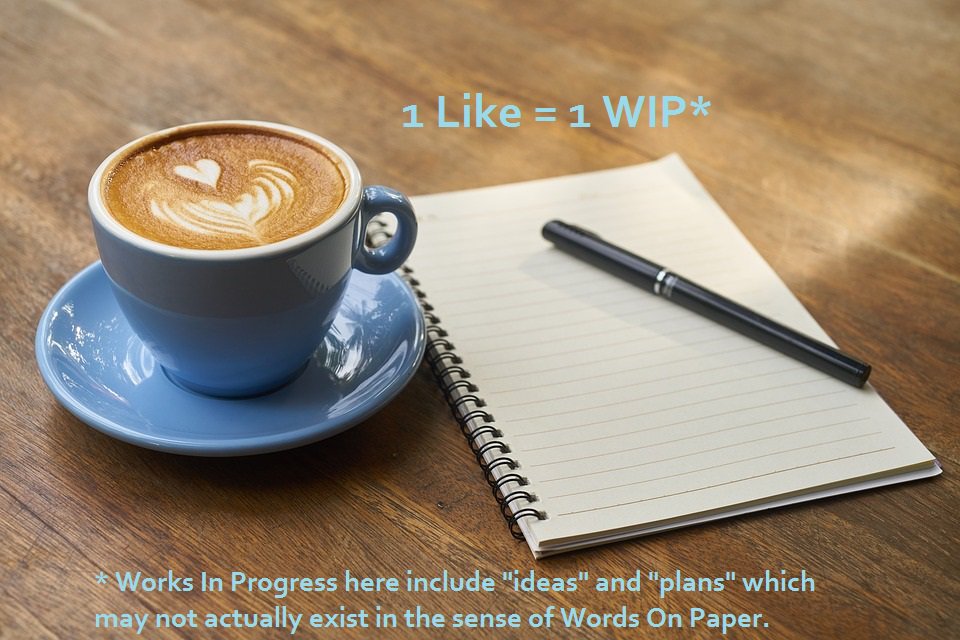
Here’s what I shared according to the likes I received:
Novel: Gay Airship Pirates, which now includes a feminist book binding sharpshooter and her paraplegic husband who is more awesome than you.
Short Story: Space Mermaids, which are not mermaids because space, but still lure sailors to their doom… or do they??? Queer protag; snarky girlfriend.
Short Story: New Orleans house has so much character it possesses a girl and has to come to grips with being mortal.
Short Story: WWII Coffee Robots—everything changes post V-E Day; is there still a place in the world/economy for robots? Also, robots
Novel: Time Traveling Archeologists steal artifacts from the past—that’s why some objects become “lost to time.” (inspiration: Daniel Jackson/Robin Hood)
Novel/Series: THE STEAMPUNK—secret organization seeks to overthrow the monarchy, unwitting machinists & opera singers get involved. Co-authored with @momebie.
Novel: Space pirate/book collector collab with @sopdet. Adventures! Romance! Books!
Short Story/Novella: An amateur scientist “tests” a window that allows you to see 2 weeks into the future. One day he doesn’t see himself outside the window.
Short Story: Arrogant scientist proclaims the end is here! His sentient robots keep up the sham that the world ended to protect his fragile ego.
Short Story: An old creepy doll abandoned on a park bench gains sentience because people assume it has sentience.
Novella/Novel?: Pair of spy sisters have telepathy, but only when drinking tea.
Short Story/Novella?: Scientists create “metallic mermaids” to save ships, but then the mermaids start reconstructing shipwrecks and bringing them to the surface.
What works do you have in progress?
May 30, 2017
Research Reads: May
The internet is a vast and wonderful place that provides a lot of information, which means it’s a great place to find ideas for stories or story elements.
Here’s a list of topics that have caught my attention in the last month. (Initial links are provided along with any additional research I may have done.)
The Forgotten Story of the Radium Girls, Whose Deaths Saved Thousands of Workers’ Lives
Warning: the article contains some grainy, yet still gruesome pictures of some of the cancers the women developed.
The abstract on the article sums this up better than I can: “During World War I, hundreds of young women went to work in clock factories, painting watch dials with luminous radium paint. But after the girls—who literally glowed in the dark after their shifts—began to experience gruesome side effects, they began a race-against-time fight for justice that would forever change US labor laws.”
Wonderfully, this is a general summary of a book on the same topic—The Radium Girls by Kate Moore. I know what I’m adding to my Want to Read list.
Aside from the nonfiction account being a fascinating story to tell, there are reminders here about untested new technologies, the hierarchy of labor, and the greed of corporations. (Seriously, can you imagine being told that the “best practice” of your job painting with radium is to lick your paintbrush to a fine point?)
If you don’t want to commit to the book, but are interested in the topic, here are options for further reading:
Undark and the Radium Girls by Alan Bellows for Damn Interesting
The Radium Girls via Atomic Heritage Foundation (includes impact on the Manhattan Project)
Waterbury’s Radium Girls via Connecticut History (information on Radium Girls in CT, including one who survived until 2014!)
Mickey Mouse WWII Gas Masks
A child's gas mask during WWII. pic.twitter.com/HKVrDvE7fg
— History In Pictures (@HistoryInPix) April 22, 2017
Technically this picture was posted at the end of April, but I haven’t been able to get this creepy image out of my head. It also led to me researching what the heck these Disney World War II antiquities actually are.
Designed following the attack on Pearl Harbor, 1,000 of these masks were produced for toddlers in 1942. They weren’t needed in the States, and only a few of these terrifying relics remain.
For further reading:
Objects of Intrigue: Mickey Mouse Gas Mask by Allison Meier for Atlas Obscura
Did you know Walt Disney designed the world’s weirdest gas mask? by John Kelly for The Washington Post (contains good historical information on the lack of distribution of gas masks in the US)
Somehow This WWII Mickey Mouse Gas Mask Was Supposed to be Less Creepy by Leslie Horn for Gizmodo (a lot of the same info as in the first article, but I just really appreciate the title)
Time Travel: A Conversation Between a Scientist and a Literature Professor
An interesting conversation about the “realities” of time travel and how time travel works in narrative fiction (not just in speculative fiction about traveling through time, but the way time is manipulated in narrative forms). It’s a pretty good primer for discussing time travel, and thinking about how to use time travel in different narratives. (They also discuss my preferred time travel theory—parallel timelines—which just makes more sense and is much less headachy than closed time loops (I’m looking at you Harry Potter.))
No further reading links for this one—it’s just a nugget to mull over for another time. Ha, ha.