
Kyle Cassidy's Blog, page 2
January 7, 2023
How much vegan chili can you make for $36?
Last week over on Twitter, vegan comfort food emulator Thee Burger Dude (@TheeBurgerDude) wondered how much vegan chili he could make for $36. I didn't follow enough of the conversation to figure out what made him ask that, but it got me instantly obsessed with how much vegan chili I could make for $36. A few years back my colleague at the Philadelphia Weekly, Randy LaBosso wondered, in a series of articles, how well he could live on some small amount of money — it might have been $40 a week. And, you know, whenever someone on the Internet does something like that, you're always smacking your head at how you could do it better and I'm going "Randy! Let me tell you about lentils!"
I'm fortunate to live in a part of Philadelphia which has an enormous amount of food options and that's not the case everywhere. Many American's live in food deserts where their options for shopping are very limited. For this, I shopped at two different places, Sprouts Farmers Market for bulk spices and Aldi, for almost everything else. There are a few places that I didn't try that might have been able to save me more money, such as our vegetable trucks and the dollar store (critically, I think the zucchini and squash might have been about 25% or so less expensive at a vegetable truck). Also, if I'd been able to go in on this with other people, I think I could have gotten the beans cheaper in larger amounts by shopping at some of our international stores that supply restaurants in the area.
So, all this is predicated on a) having places to shop and b) having the time to go to those places.
TL;DR
I was able to make 72 cups of vegan chili for $36. People on the web say that a serving of chili is one cup, but that seems small. I think it's more like two cups. But the bottom line is that you can have a decent meal for a dollar. I also have a lot of carrots, spices, and textured vegetable protein left that will make the next batch less expensive.
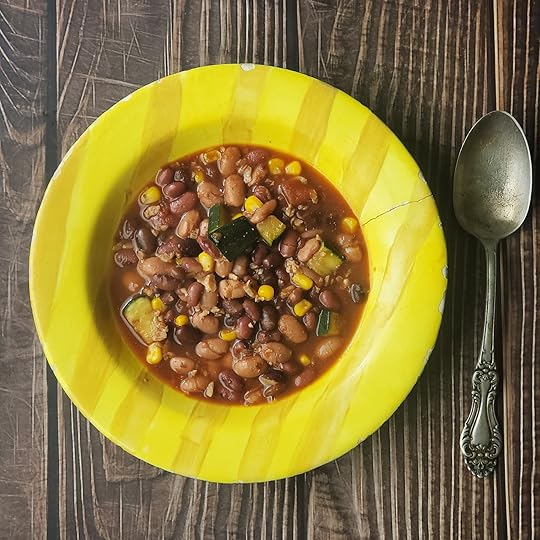 One cup of vegan chili. It was very good. I think two cups is a more reasonable serving size.
 Ingredients
Critical to this are dried beans, the bigger the bag, the cheaper they are per ounce. So I went with 32 oz bags. For some reason, the red beans were twice as expensive as the black and pinto beans, but I think three different beans is important to texture. To this I added yellow squash, zucchini, and carrots and "rewards" — something to break up the textural experience, and then some canned extras, yellow corn, crushed tomatoes and Textured Vegetable Protein (which is amazing stuff — it arrives dry and you just put it in liquid to reconstitute it). This keeps it from being boring because, for me, it has to be worth eating also. The TVP was the most expensive item, but if you get it in bulk, you'll have it for next time. You could also substitute it for more vegetables, but I think it makes a big difference. Spices were chili, cumin, and Better that Bullion Vegetable, which is a great umami flavor. You could also use soy sauce since the Better than Bullion is one of the more expensive things here, I think it's worth it thought.
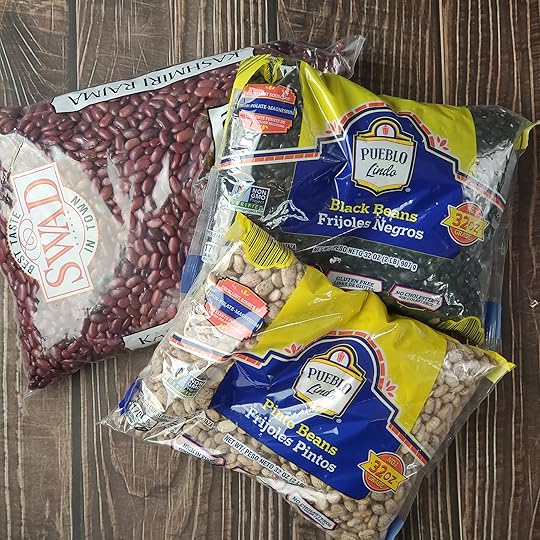
I like to have an assortment of beans you could also put chickpeas in here — which I think are great.
Cooking Methods
I used an Instant Pot because we have one, but you could also do it in an ordinary large pan or dutch oven — you just need to soak the beans overnight first.
I mixed the beans into quasi 4 cup mixtures (32 ounces of beans is actually more like five cups) and put them in the instant pot with 12 cups of water, then added all the spices (I used 3 tablespoons of Better Than Bullion, 3 tablespoons of cumin and 2 of chili powder) plus 1/3 of a can of crushed tomatoes and set it for 38 minutes.
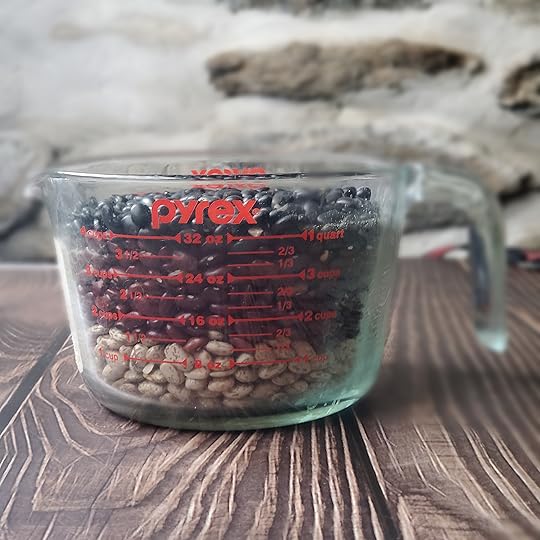 Mix and match the beans however you like.
 It takes a while for the Instant Pot to get up to steam, so it's probably more like an hour's cooking time. (If you're cooking them on the stovetop, start tasting them at 45 minutes after simmering, it might take as long as an hour and a half.) When the 38 minutes was done, I chopped the carrots, squash and zucchini, and cooked them in a frying pan. I sautéed the carrots for about five minutes on their own before adding the squash and zucchini and letting it go for another five or so minutes until everything has some bite but is otherwise soft. Then I released the remaining steam from the instant pot, added the dry TVP and corn (drained), stirring it in (this lets the TVP soak up some liquid), then added the cooked vegetables and stirred it in.
That's it. Probably 20 minutes prep time and an unattended hour of cooking time.
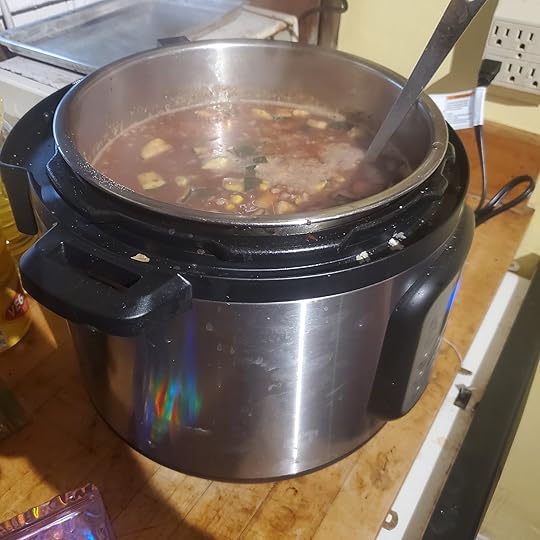 I need better lighting in my kitchen if I'm going to do this.
 We'd been making a lot of chili during lockdown because all the ingredients are shelf-stable and available in bulk, so we'd had a lot of practice at this — one pot will literally feed two people for more than a week, it's tasty, it freezes well, and, it's inexpensive.
Here's our breakdown. You could save money by leaving out the TVP and the Better Than Bullion flavoring and add more vegetables, but I do think they add significantly to its final success.
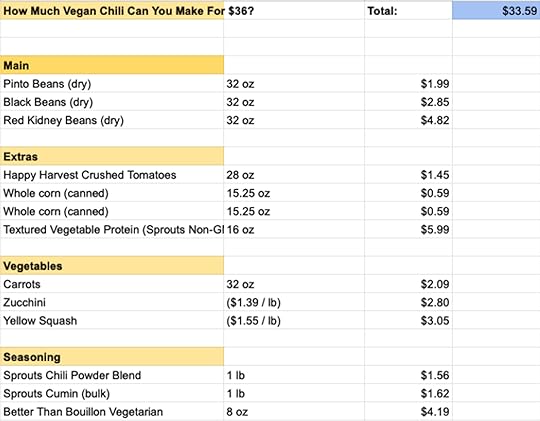 Here's my price breakdown for what's in here. I think we probably could have done better on some of the vegetables but I'm really happy with the prices for the corn and the crushed tomatoes. On the whole, I think this is pretty good.
 Also, I did write this vegan cookbook, Cooking With Roswell, which has more stuff in it. All of which is vegan, all of which is easy. You should get a copy.


January 2, 2023
Hello 2023!
Since 1999 I've been taking a self portrait that spans the end of one year and the beginning of the next. They're all two seconds long and start in the last second of one year and end in the first second of the next.
Here's 2022 turning into 2023. As I've gotten older, I've realized that I have pretty much everything I want right where I am.
I hope 2023 is good for you. See you there.
I'm now also @kylecassidy@photog.social on Mastodon and <lj user="trillian_stars"> is @Trillianstars@mastodon.social.
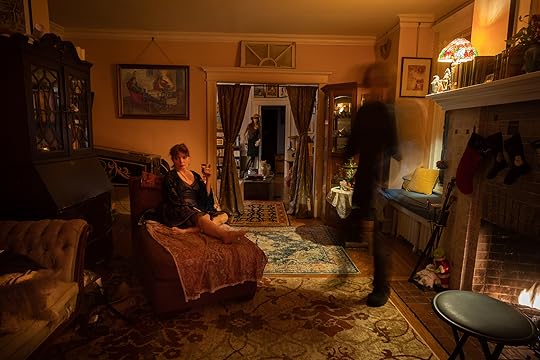 2022 becomes 2023. You may clickenzee to Embiggen.
December 31, 2022
One more show, one for the road.
May your 2023 be filled with joy.
Add me: [LiveJournal] [Facebook] [Twitter] [Google+] [Tumblr] [Ello]
November 14, 2022
New Photography Book!
It's been three years in the making and quite a long strange trip, but my latest book, Lopapeysa: A Knitter's Guide to Iceland with Patterns, Techniques and Travel Tips is on sale in the UK and EU. It's got LOTS of photos and it's about a really exciting and photogenic location.
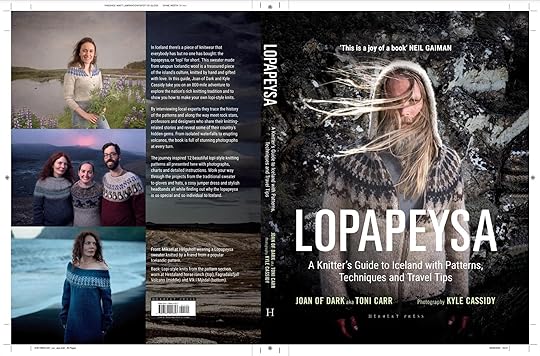 European cover of Lopapeysa
 I wanted to talk a bit about photographing this book, since I'm a gearhead, and take you a bit behind the scenes. I'll also talk about the book itself, and Iceland because, how can you not?
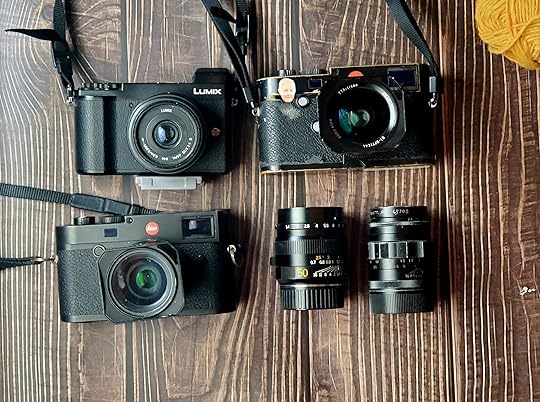 Camera gear that I took with me, a Panasonic Lumix GX9, a Leica M240 and a Leica M10 with a variety of lenses.
 Over the years, most of the innovation I've made photographically is just reducing the size of my kit. I often take a photo of the camera gear that I've packed before I go off to do something and it's pretty amazing how that pool of equipment has gotten smaller and smaller and smaller over the years. A lot of it has to do with switching from gigantic DSLR's to Leica rangefinders and mirrorless Micro Four Thirds cameras, but it comes with tradeoffs. DSLR's typically have a lot more features than a tiny little Leica, like auto focus and auto exposure and the ability to take multiple frames a second, so you definitely give up features and functionality and, if you're doing it right, you can make up for a lot of that with your own photographer skill. It's a lot easier with a DSLR, but it's also a lot more equipment you have to haul around.
So on this trip, I brought a Leica M10 as my main camera and a Leica M240 as a backup. Since Leica's don't have zoom lenses it's nice to be able to have two lenses ready to go at any time.
Leica M10 Leica M240 Leica 90mm f2.8 TTartisans 50mm f 1.4 TTartisans 35mm f 1.4 TTartisans 21mm f 1.4 Panasonic GX9 Panasonic 20mm f1.7 pancake lens Leica 45mm f2.8 macro Off camera flash Pocket Wizard radio triggers Triopo light modifier with pistol grip (I never heard of them either, I got it on eBay)For this trip I used the 21mm and the 50mm mostly so I usually had the 21mm on the M10 and the 50mm on the M240 and would switch between the two. The 21mm for wider landscapes and the 50mm for more closeup people shots.
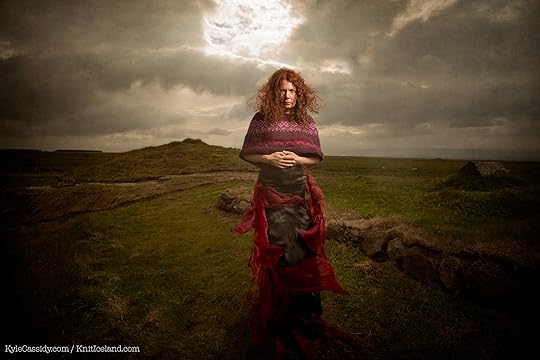 Leica M10, TTartisans 21mm f1.4 — off camera flash.
 So this (above) is one of the 21mm shots which takes in a lot of landscape because, let's be honest, Iceland has a lot of landscape.
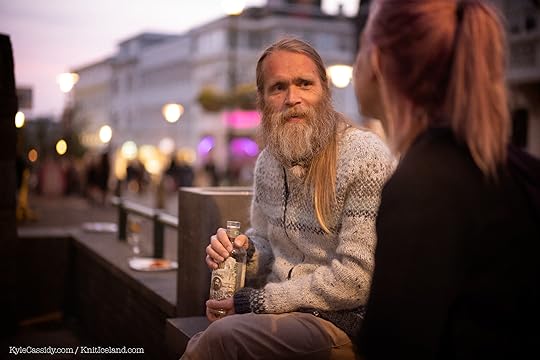 TTartisans 50mm 1.4
 And this (above) is one of the 50mm 1.4 shots (on the Leica M240) -- the 50mm has a really great ability to isolate the subject when shot wide open. I love this lens and use it a lot. I felt that there were two types of photos I was taking, one is a photo that gives a sense of mood and the other is a photo that the knitwear is the total star of and gives people looking at the photo a clear idea of what the piece is going to look like when it's done. And it's also important (I think) that these photos show the knitwear being used — what will it look like when I, my friend, my significant other, my whoever, wears this out? So the 21mm was often (but not always) my mood lens.
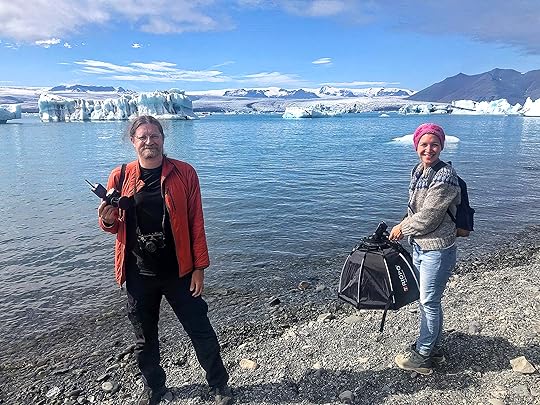 Watching a glacier turn into icebergs. That's Joan on the right. Photo by Trillian Stars.
 A lot of the photos I took had daylight balanced flash on them. I'm not entirely able to quantify why I like the look of daylight flash, but one of them is that it looks otherworldly and sophisticated to me. Because the lighting is unnatural, in that it often looks like a studio photo in the wild, it calls more attention to itself.
In order to get the flash to work in daytime I was limited by the Leica's mechanical shutter which fixed the shutter speed at 1/125th of a second and if you were at f16 an 1/125 of a second at iso 100 you're left with that Spinal Tap question "where do you go from there?" So I used a variable ND filter, which is really two circular polarizers that you can turn to adjust the amount to light they stop. The downside of this is you have to really crank up the power on the flash.
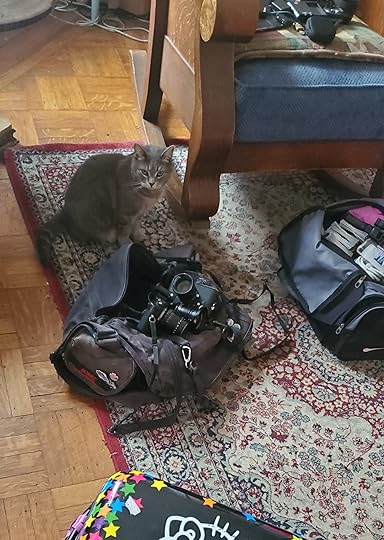 Packing to go, I had a camera bag, a duffel bag, and a hard-sided suitcase.
 I packed three bags, cameras, accessories and clothes. I checked the accessories and the clothes bag and took the camera bag with me on the plane. The camera bag had everything I needed to do my job, though not necessarily well. So I had all my cameras and equipment but only two chargers (the rest was in the accessories bag). I never prioritize things I can get where I'm going, so if your bag of clothes gets lost, you'll be fine because you can get clothes when you get there. If your AA batteries get lost, that's fine because you can get AA batteries when you get there. So plan for the worst (all your checked bags get lost) and figure out what you need to do your job — in this case, I would have been able to photograph everything, I just might have smelled bad after a couple of days. However, everything got where it needed to be.
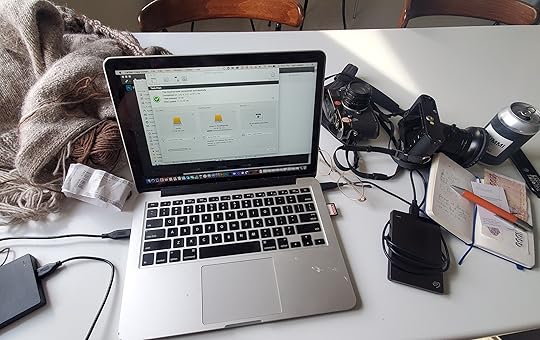 Somewhere on the road. I had two external hard drives that I synched with Carbon Copy and if I had wifi, I let it synch to the cloud. When I left Iceland, I gave Joan one of the hard drives so that if my luggage got stolen or my plane crashed they could still finish the book. Your photos are the only thing that matters.
 Your photos are always the most important thing. They're more important than your cameras, they're more important than your clothes. Because they're the only thing that can't be replaced. For this trip we were traveling in a gigantic mobile home with five people, a lot of sweaters and a modest amount of equipment. We'd bought "Internet access" and my plan was to continually sync to the could but we found out about 7 hours after we left Reykjavik that "Internet access" was limited to 1gb of data which was gone in a day. So, the rest of the time I carried out a local physical backup — one copy on the laptop HD which was synched with two external drives. Every time we paused or after each large photo shoot, I synched the photos. And if we ever ended up in a place with wifi, the cloud synch would automagically continue.
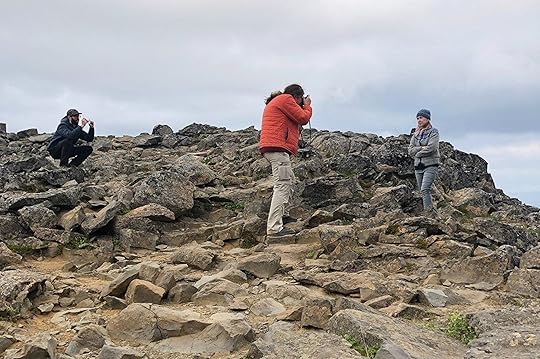 At the top of a volcanic core. I'm wearing an EMS summit jacket on top of my lopi. Before we went someone said "pack for all weathers because you will experience all of them" and that was true. it was hot, it was cold, it was dry, it was soaking. The summit jacket packs into its own pocket and you can use it as a pillow. It was a fantastic investment. Mine is stuffed with polar fleece, which is an inorganic down alternative.
 We had some specific plans as we circumnavigated the country and these were mostly based around people we were meeting up with. The rest of the time we kept free for spontaneous trips or things that people told us about. The whole idea of this book is that it's a book about having an adventure in Iceland, but it's also got 12 knitting patterns in it and, an overarching historical mystery that we were trying to solve. Having two cameras with two lenses more or less permanently mounted to them let just jump out of the RV and take photos pretty quickly.
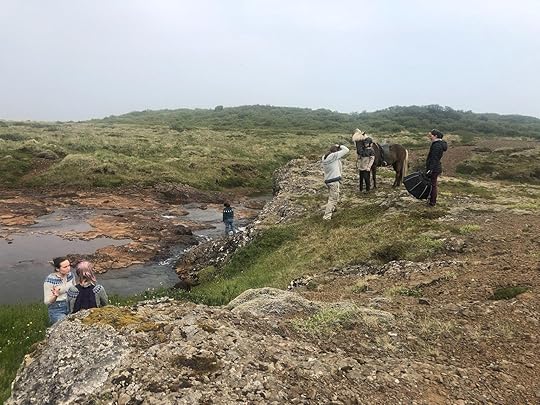 This is one of my favorite photos of the trip. Trillian Took it. It's just got everything going on at once. I'm photographing a sweater, Arwin's holding lights, Joan's talking, everybody is wearing a lopi.
 Hestaland is a horse farm that we'd always planned on visiting. It's a place you can stay for extended periods of time and have adventures organized around horseback riding. We were there for a day and did some nice photos with horses, people and the landscape. It was very cloudy out at the time which is actually a bonus for photographers.
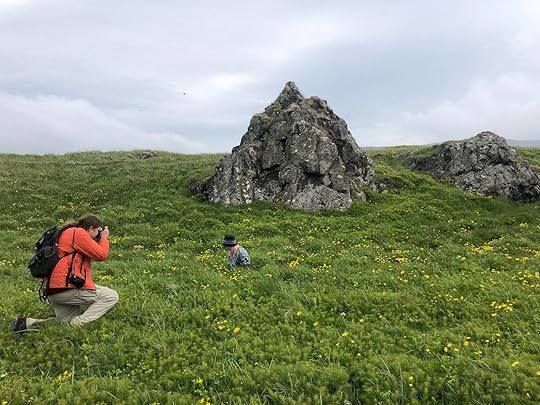 Photographing Joan journaling during a stop. Since everybody was wearing our product everywhere and the books as about traveling, anything we did became fodder for book photos.
 The ubiquitous 100% cloud cover actually served to keep all the photos looking pretty homogeneous and it helped with the external flash. We went in the summer so there were probably 22 hours of sun. It never actually set. It would hit the horizon and roll around for a bit before coming up. And by 3 am it was as bright as it was going to be at noon.
Joan had already written all the patterns, so when we got back we were pretty far along on our book. I only needed to finish the travel diary (which I was writing along the way) and pick out photos. I went through and made a big collection of lots of images distributed across two categories, "travel" and "patterns" — each pattern had at least one hero shot, one mood shot, and some closeups. The travel section just had all sorts of stuff. I wrote the travel section in Word and just pasted in images that I thought would be useful for the layout.
We had the distinct pleasure of having two publishers, Stackpole Crafts in the U.S. and Bloomsbury's imprint Herbert Books in the UK/EU, both of whom had a different vision for the final product — this was really exciting to me, to see two different editors and two different layout teams coming up with different visions for our words, images and patterns.
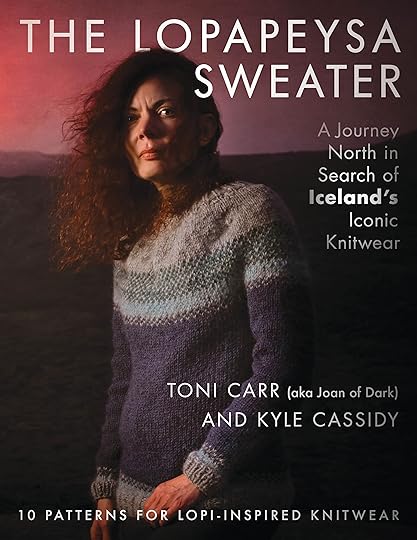 The U.S. version of the book has a different cover and slightly different content.
 The U.S. version has a photo of Trillian Stars at the volcano which was an amazing experience (you can read about it in the book).
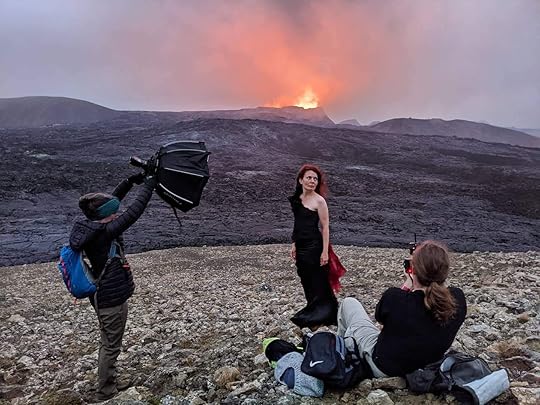 Photographing at the volcano. Lights by Arwin Thomasson, photo by Alon Abramson.
 The volcano was warm and bright at first, but then we hiked up a biiiig hill into a cloud and it got dark and very cold. The volcano itself, by the time we got there, had been disgorging lava for months and had filled up a valley and made itself pretty remote. The closest we were eventually able to get was probably half a mile. The routes changed all the time as lava filled up some places and not others. But it was a multi hour hike over some challenging terrain and when we finally got to our space the really strong winds made the lighting difficult. I'm glad that I brought a deep parabolic softbox rather than an umbrella which would have folded down smaller, but the wind would have yanked an umbrella into the lava in 30 seconds.
I organized my photos first by date and secondly by photo shoot in a folder structure. That made it easier to tag locations in lightroom when I got home and also keep a clear idea of where everything was photographed (if it was shot on day four, it must be Dalvik).
I kept all my edits in layered .psd files and then when everything was ready for the printers, I flattened them all into .tif files.
We had three levels of editing / proofing and sometimes a page would pop up with nothing on it that could hold another photo. I created a folder of additional photos that the designers could drop in anywhere and then during the proofing stages I'd occasionally ask that a photo be moved or change a caption, but as it was, the images didn't go through a lot of changes once they got sent out. A couple times I kept working on an image that I wasn't perfectly happy with and at the last minute I'd send them a newer version but it was mostly the text that needed revision. Both publishers had fact checkers as well as copy editors so we'd get a note saying "is this really the northernmost place in Iceland?" as well as one fixing the spelling.
Anyway. That's photography on the knitting book.
You can get the U.S. version here or at your favorite local bookstore.
If you're in Europe, you can get the UK edition here.
Happy to answer your photo book questions if I can be helpful. Have a great day.
November 11, 2022
NEW BOOK OUT!
TOP SEKRIT NO LONGER! Lopapeysa: A Knitter's Guide to Iceland with Patterns, Techniques and Travel Tips is out in the UK today. (U.S. version coming soon, but you can preorder from the usual places). It's 1/2 travel adventure, 1/2 historical mystery and 1/2 knitting book. With 12 original patterns by fiber wizard Joan of Dark (Knockdown Knits, Geek Knits, Knits for Nerds) we spent a month on the road, circumnavigating Iceland, meeting some of the O.G. women who invented this now completely ubiquitous sweater in the 1940's and '50's and talking to regular Icelanders about the power, symbolism, significance, and lets be honest, flame-blasting warmth, of this iconic piece of clothing.
Along the way we watched volcanos erupt, glaciers becoming icebergs, and spent a lot of time soaking in hot springs.
Come along with us while we try and unravel the mystery of who invented the Lopapeysa and make one yourself.
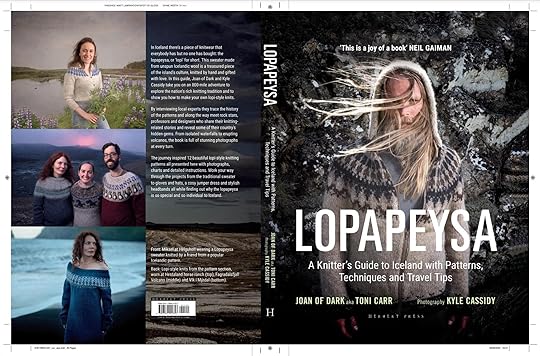 European cover of Lopapapeysa. The U.S. version comes out later this month.
November 2, 2022
In Memory of Peter Straub: Part 1
In 2008 I'd just finished a wildly successful photo book called Armed America: Portraits of Gun Owners in Their Homes and was feeling mounting pressure to follow it up, fastly, with something equally as exciting. I'd recently met science fiction novelist Michael Swanwick at a party and had thought a book of photographs of writers in their writing spaces was a great idea for a photo book because it would let me travel and meet new people and, it was pretty much the same thing that I'd done with my last book and I felt that I'd gotten pretty good at photographing people in their houses.
In the early months of 2009, Peter Straub was one of the first people that I approached — author of Koko, Floating Dragon, Ghost Story and the Talisman with Stephen King, I figured I needed to start big. Peter was one of those people whose books endlessly occupied the cardboard dumps jutting out into airport terminals and bookstores. Everything he wrote just got handed to the New York Times bestseller list. He'd pretty much single handedly returned the horror genre from pulp back to gothic respectability, even with all those grisly murders. Peter had a really funny web page, which isn't there anymore, but you can find it on the Internet Archive, it was about the fake town of Millhaven, where much of the action takes place in Straub's novels. There were fake newspaper clippings and hidden links that appeared if you clicked in certain places, it was a beautiful maze that lead you on a non-linear journey through this fictional place, filled with gems of wit and pathos. It really was marvelous. And, this being the heady-middle days of the Internet, there was a "contact me" link. So I clicked it and filled with youth and success I explained that I wanted to photograph his writing space and sent some reviews of my current book.
A couple of days later I got an email back from Peter saying he'd be delighted to have me come up and photograph his writing space.
Peter had the most perfect house, five stories tall, along central park in Manhattan. Exactly the sort of place you'd think he'd have. Filled with books. He and his wife Susan invited me and my assistant Colin in with joy, as though they'd been waiting for us and we were friends. Peter lead us to his exquisite writers garret which was literally festooned with awards, Edgars mostly, and curious knickknacks, one of which was an autographed photo that Alice Cooper had sent him as a fan. He had various first editions of the various works of Henry James.
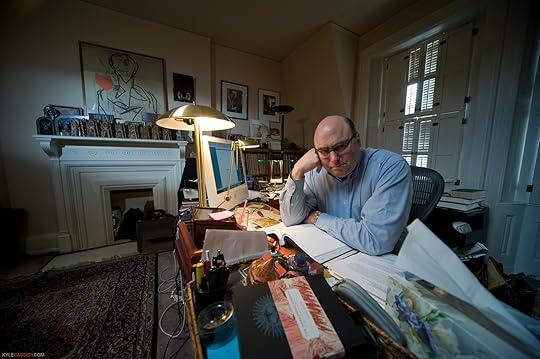 Peter's 5th floor writing space. You may clickenzee to embiggen.
 And he told me that for years his writing regiment had been to get up incredibly early in the morning and write until just before noon at which point he would head downstairs, make a sandwich, pour a glass of bourbon, and watch One Life to Live. Over the years as a writer, working at home, he'd gotten obsessed with various soap operas because, back in those pre-VHS days, you had to watch what was on TV, and during the day the only things on TV were daytime dramas meant to entertain housewives because why on earth would anybody else be home? Soap operas, Peter said, were great things for writers to watch because "they're entirely plot!"
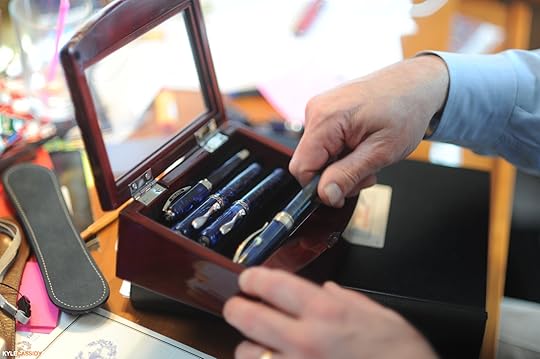 I overheard someone say once "Nobody writes a best selling novel with a $500 fountain pen", but they were wrong. Peter was obsessed with fountain pens and the Levenger's catalogue was his pornography.
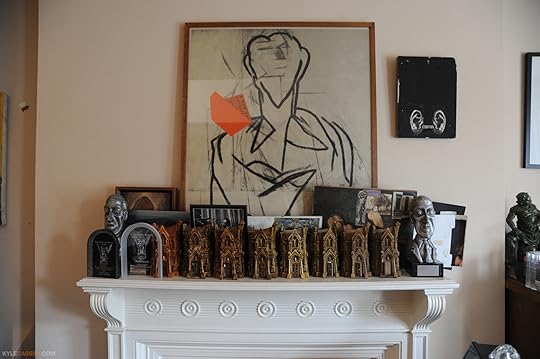 A collection of awards. Edgars and World Fantasy mostly.
 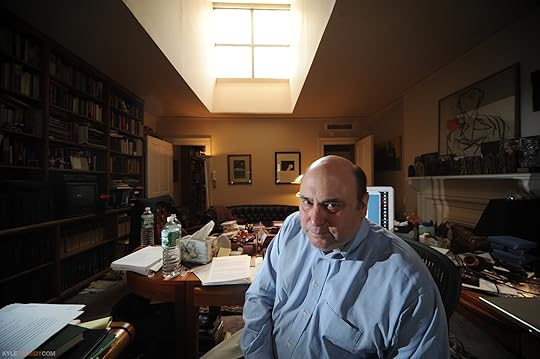 I love this photo of him. Peter was charming and delightful and funny. And he also play-acted at being sinister because of what he wrote. He could't do it for very long though before a smile came though.
 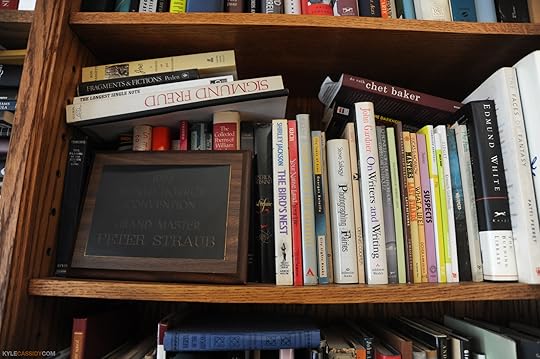 Shelves
 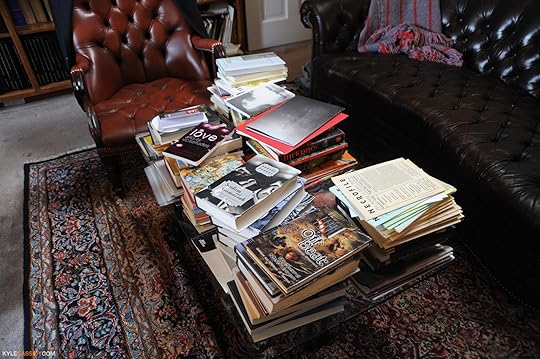 You couldn't really tell what was a "to be read" pile and what was an "already read" pile. His house was a library and a cathedral to books.
 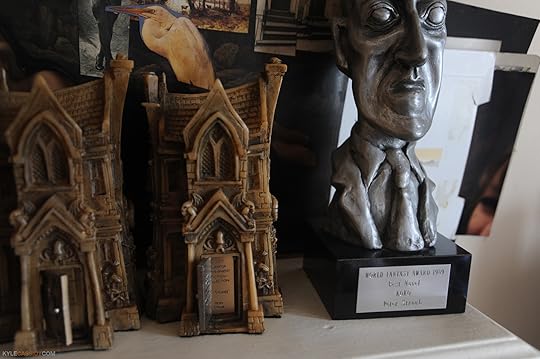 Details, everywhere it was a space to explore.
 I photographed Peter's office, I phographed things in his office. We stayed long after the photographing was done.
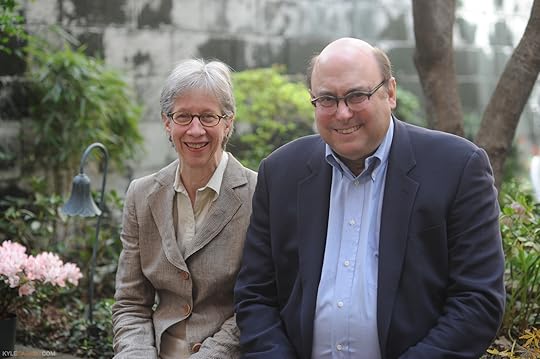 Susan Straub runs a non-profit that convinces adults to read to children.
 Susan packed up some cookies for Colin and I and when we left, hours later, I felt like we were friends.
And, over the years, I found out that we were.
And I'll miss him.
More memories soon.
Peter Francis Straub, March 2, 1943 — September 4, 2022
October 21, 2022
I'm in Bangkok and it's a bit of a whirlwind....
In May of 2021 I got an email out the blue from a guy named Jan Kath, a high end rug maker from Germany with offices in Nepal and India and New York and, it seemed, a lot of other places. He was doing a fiber art exhibit of moderin-ish Afghan "War Rugs" — these started popping up in Afghanistan in the 1980's and depict scenes of war in a traditional fiber art from. Our local museum did an exhibit of War Rugs a few years back that I went to see. Jan wanted to use an image from Armed America to make a rug, it was a photo of Jep and Diana and Gwen and Lilly. People email me about Armed America all the time. It's the book that just keeps on going. Jan had picked an image from the book and I said it was fine with me as long as it was fine with Jep and Diana and Gwen (Lilly sadly is no longer with us) because more than anything, I don't want anybody I've photographed to feel like I've represented them in a way they're unhappy with. I contacted the family and, wouldn't you know it, they were familiar with Jan's work, even if I wasn't. So I wrote back and said go for it and went back to my life. A few months went by and I got a message from Jan that included a photo of the rug partially completed and ... sweet barking cheese ... it looked just like a photograph. Jan told me that the resolution was 200 DPI, which at life size was 19,700 x 13,800 individual knots tied by hand that made up this carpet. The weaver would consult a chart, choose a string by color and fiber, make a knot, cut the string, consult the chart, and go back and do it again.
Anyway, the rug got made, the exhibit went up in Kassel Germany. Jan invited me out to see it, but plane tickets were like $1600 each and I was super busy so I declined but was very happy for him.
Well, the show did gangbusters, got written up in the New York Times )and it included a photo of "our" rug and a shout out to me, which was really nice) and Jan got invited to bring the entire show to Bangkok for their Biennial art exhibition and Jan offered to get me a ticket and a hotel if I'd come out. And, I didn't need to get asked that twice. So, after a 26 hour plane flight, connecting in Qtar and about 40% of a sweater knitted, I found myself in Thailand, completely unprepared and un-studied.
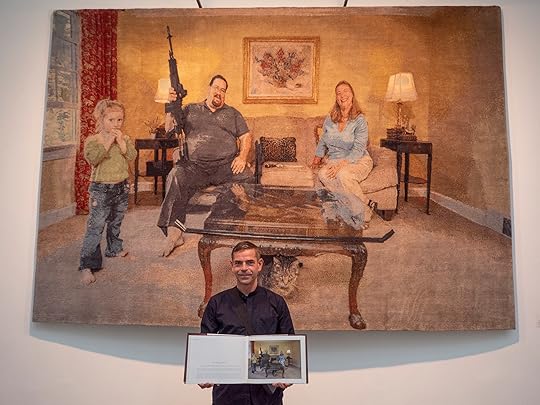 Jan holding a copy of Armed America with the carpet he made out of one of the photos.
 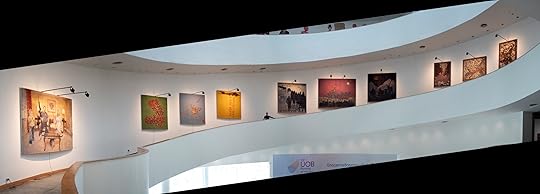 Here's about 3/4th of Jan's show, it continues up to the right.
 outside the building
  Jep and Diana peeking out
The theme of the exhibition is CHAOS:CALM and a lot of the works seem to be about ways that artists dealt with the COVID-19 pandemic — turning their work in to become more introspective.
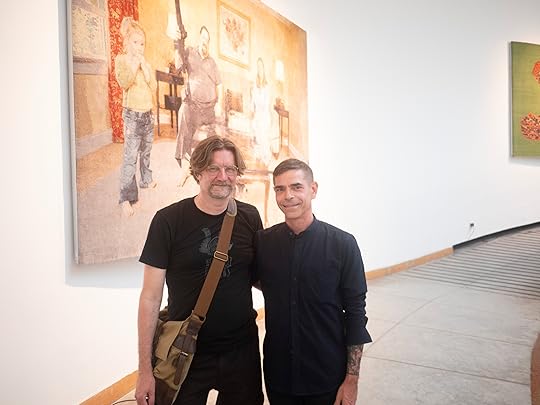 Look at me, I'm an artist.
 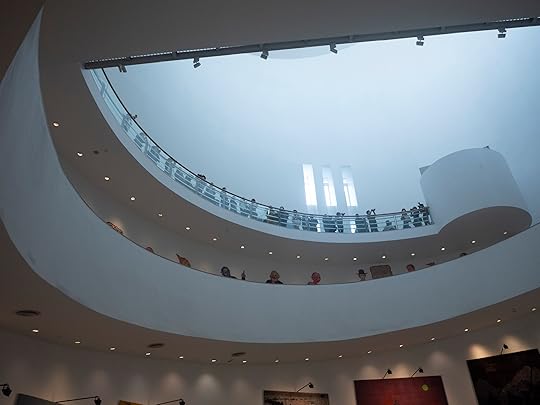 Media queuing up at the top of the gallery to descend on Jan's work.
  Jan demonstrating the hand-tied knotting techniques that make up the 200dpi life sized image
 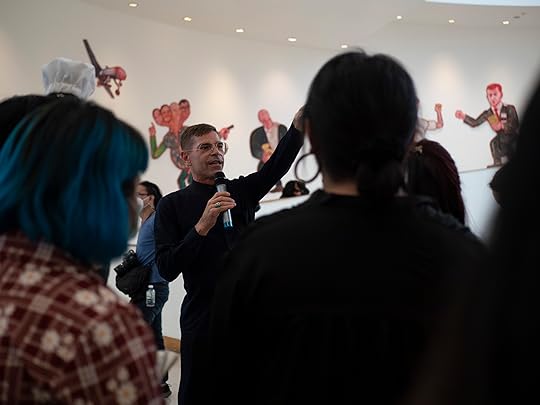 Jan talking to the press.
  The press having a look.
 So, I've been wandering around Bangkok for the past week watching the International press, going for runs, visiting a lot of Buddhist temples and marveling at the skill and attention to detail that human beings can achieve. I'm headed back to the states tonight. So happy for this experience.
September 11, 2022
9/11
Once again I almost didn't repost these stories from 9/11, but I figured I've been doing it this long — and it's so long now — we live in a world that spun out of that morning. It seems this time like it was nearly missed — there's just so much going on in the news that 9/11 was almost a blip. Anyway, here's 9/11 and it's aftermath like I saw it back in 2001. Hope you're having a good day.
I'm going to be doing some blog posts in the next week or so about Peter Straub who we lost last week. So stick around, or come back.
Whichever it is, have a good day.
July 15, 2022
What to do when your dog is dying.
This came in the mail and I thought that since it applies to a lot of people, I'd answer here. If the rest of you want to share your stories and your love and your support, please do in the comments.
A reader writes:
Our dog Dolby has cancer and we don’t know how long he has left (3 months? 9 months?) do you have any advice to cope? My wife and I are just so upset and have grief. I don’t even know how To process this. I know you went through this with Roswell.
First – I’m sorry this is happening, but also, I’m glad that it’s happening. Unless you live with a grey parrot or a galapagos turtle, any dog or cat you get is probably going to die before you do. And it will be crushing. But it will only hurt as much as the inverse of the love you created together. If it hurts terribly, that’s because you gave that animal that much love. Dogs (and cats) in America die in staggering numbers every day (the ASPCA says 390,000 dogs are euthanized every year in America) – the fact that you’re sad about it means that your dog had what a quarter of a million dogs a year didn’t have – someone who loved him. You are the only people who truly know how powerful and how special that love is, and every bit of hurt you feel right now is because you and Dolby loved that much. Always remember; this is a happy story. This isn't a story about a dog who died, it's a story about three creatures on earth who found one another and lived for a time in exquisite happiness do deep and unique that nobody else can do anything but comprehend the shadow of it.
Another thing you have, and that I do understand, is time. This made all the difference for Roswell and me. This ancient Buzzfeed article I found says that 1,200,000 dogs are killed by cars every year. These are dogs that presumably people loved but ran out into traffic one morning and boom. Finished. Having three months, or nine months to figure this out is a Very Lucky Thing.
Because….
There are some things you can control, and some things that you can’t control. You can’t really so much control when your dog will die, but you *can* absolutely control how it happens and how special those days in between are.
I can really only speak for myself here, but that’s what you asked for and so I’ll tell you some things that made it all easier for me when I found out that Roswell had three months to live….
First and foremost – realize that this isn’t really about you, it’s about Dolby. Dolby doesn’t know he’s going to die, he only knows if he feels happy or sad, or tired or in pain, and you are in control of all of those. You can make him happy, and you can keep him from feeling pain. Be the best dog parents you can be. Make Dolby the happiest dog on Earth, and when he’s not the happiest dog on Earth anymore, make sure that he’s never uncomfortable before it's over. What more can anyone ask for? We learned about a home-euthanasia service called “Lap of Love” which we called when our cat, Milla, had a stroke and, let me tell you, it was as close to a wonderful experience as it could possibly have been. There was no trip to the vet, there was no unfamiliar place, there was just love and then nothing. They're in the Yellow Pages. Don't be afraid to ask your friends for money to help make this happen. If you can, don’t leave Dolby alone, not because he might die while you’re gone, but because two years from now you’d empty out your bank account to have one of these lazy afternoons doing nothing with him and also because Dolby probably wants you around. There were times we had to leave Roswell, but we started a writers retreat and let people use our house as long as they sat with her. So grad students or poets would come and spend the afternoon or the weekend in the house, typing away on the Great American Something while Sparky napped on their laps feeling content and loved. Celebrate every day together. Every one. Every minute together is the superbowl touchdown of your lives. Live these last days hard and make them a lifetime of joy. Let him always know that you love him and that you know he loves you. Try and think of something good you can do because you’re feeling bad. I think a lot of people on Earth wake up and say to themselves “My life is bad, I’m angry. I want to make someone else sad so that in comparison, my life won’t feel so dreadful,” which is a terrible way to be. Do extra things that make others happy because of this. Can you sponsor a puppy? Take Dolby to visit an old neighbor? This is not a sad thing unless you let it be. I’ll tell you right now, that the last year Roswell and I had together was the best of the 13 years we had, because we appreciated it. I don’t think I’d trade it for five more ordinary years. It absolutely matters that other people acknowledge your experience. Don’t ever scroll past a friend’s post that a dog or cat or rabbit has died without saying something, because as ephemeral and perhaps silly as it may seem, those comments, those sad faces, every person saying “I understand that your are hurting” means something, so make it a part of your life to always offer support to others. Do something special and big. Maybe get a portrait of the three of you painted. Maybe make a youtube channel or tile the bathroom floor to look like Dolby, write a book of poems, make an album, make a comic but do some major undertaking to acknowledge how much his time with you means and (eventually) meant. But really, most importantly: make sure that Dolby feels love and happiness every single day until he feels nothing but a little tired and that the last thing he ever thinks is that he feels warm and he feels loved and that he had the best life ever.xox
June 6, 2022
Emily the Spider book!!!!!
We want to make a free book that teaches people about the amazing lives of spiders.
This is the story of a 152 day romance I had with a tiny spider on my back porch who I photographed every day for the duration of a summer. I photographed her web construction and maintenance, the myriad of things she fiercly killed and ate, her numerous attempts to have children and find a mate, and how she lived her tiny life in a space I thought of as mine, but soon came to realized belonged to her just as legitimately.
Thousands of people followed along on-line to the soap opera that was this spider's life as I posted about her on this LJ. And it was during this time photographing Emily (the spider) I met Dr. Catherine Scott, an arachnologist and behavioural ecologist whose research is focused on the behaviour and communication of black widows and other spiders and who filled in the many, many gaps in my knowledge.
I learned that Emily was an Uluborade, popularly known as a feather legged orb weaver, who are the only non-venomous spiders.

Emily the spider. You may clickenzee to embiggen.
Emily and her web design.
I learned that some spiders decorate their webs, for reasons nobody really understands, and I watched Emily do this over and over.
This narrative of the life of a spider will include my photos and observations, and genuine expert spider text from Dr. Scott and, I think, at the end of it, you'll spend more time looking at small places, finding big rewards.
I'm looking for $500 to pay Dr. Scott to write about the science of spiders. Anything above that, we'll split. The final (e) book will be available for free to anyone who wants a copy.
Kickstarter is here.
The more money we have, the more time we'll be able to spend working on this and the better it will be. We're counting on your investment to make a book that we can give away to people for free.
Here are some excerpts from the book as it exists now.


