
Kenneth E. Harrell's Blog: A Writing Journey, page 2
November 20, 2024
New Substack Post
Just published a new post so check out my Substack and subscribe:
https://substack.com/@kennetheharrell
https://substack.com/@kennetheharrell


November 9, 2024
🎉 Exciting News!
Now, every story on my new Substack comes with narration! Dive into each tale with the added depth of audio perfect for when you’re on the go or just want to be swept away in a good story.
Check it out here and don’t forget to subscribe:
https://substack.com/@kennetheharrell
Check it out here and don’t forget to subscribe:
https://substack.com/@kennetheharrell
November 8, 2024
I have a new Substack...
For more info about my books and short stories please subscribe to my new Substack at: https://substack.com/@kennetheharrell
The Rise of Humanoid Robots
A new kind of high-tech slavery…
As humanoid robotics technology advances, society stands on the brink of a new age, where robots may perform the bulk of physical labor. It has long been a dream to produce goods and services at zero cost to the business owner. Emerging technology may make that dream a reality. Major corporations and researchers worldwide are creating humanoid robots that could redefine life as we know it. However, while this transformation promises heightened efficiency, safety, and convenience, it brings with it a troubling question; Are we on the path to a new kind of high-tech slavery? Not one where humans own each other, but where they own machines that perform all the tasks humans once did. This new form of slavery blurs the lines between human dignity, economic dependence, and the ethical use of robotics. Such issues have been explored by science fiction writers for decades, but today it seems we find ourselves grappling with these former science fiction scenarios in real life... https://substack.com/home/post/p-1510...
#SciFiWriters
#ScienceFictionAuthors
#SpeculativeFiction
#SciFiStorytellers
#FuturisticFiction
#SciFiWorldbuilding
#CyberpunkWriters
#SpaceOperaAuthors
#DystopianFiction
#SciFiCommunity
As humanoid robotics technology advances, society stands on the brink of a new age, where robots may perform the bulk of physical labor. It has long been a dream to produce goods and services at zero cost to the business owner. Emerging technology may make that dream a reality. Major corporations and researchers worldwide are creating humanoid robots that could redefine life as we know it. However, while this transformation promises heightened efficiency, safety, and convenience, it brings with it a troubling question; Are we on the path to a new kind of high-tech slavery? Not one where humans own each other, but where they own machines that perform all the tasks humans once did. This new form of slavery blurs the lines between human dignity, economic dependence, and the ethical use of robotics. Such issues have been explored by science fiction writers for decades, but today it seems we find ourselves grappling with these former science fiction scenarios in real life... https://substack.com/home/post/p-1510...
#SciFiWriters
#ScienceFictionAuthors
#SpeculativeFiction
#SciFiStorytellers
#FuturisticFiction
#SciFiWorldbuilding
#CyberpunkWriters
#SpaceOperaAuthors
#DystopianFiction
#SciFiCommunity
The Rain Drenched Beauty Of Cyberpunk
Why does Cyberpunk resonate so with GenX?
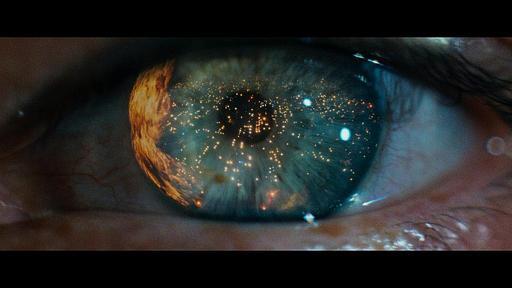
For as long as I can remember my dreams have been haunted by the gloomy, neon, rain drenched dystopia of the Cyberpunk aesthetic. For me it started with the film Blade Runner, I was eleven years old and far too young to see the film according to the Motion Picture Association of America. It was the 1980s and movie ratings didn’t mean very much. I was too young to see the film, but I snuck into the theater anyway. This for me was a moment that would forever alter my life and would set fire to my imagination for decades to come... https://substack.com/home/post/p-1511...
#SciFiWriters
#ScienceFictionAuthors
#SpeculativeFiction
#SciFiStorytellers
#FuturisticFiction
#SciFiWorldbuilding
#CyberpunkWriters
#SpaceOperaAuthors
#DystopianFiction
#SciFiCommunity
For as long as I can remember my dreams have been haunted by the gloomy, neon, rain drenched dystopia of the Cyberpunk aesthetic. For me it started with the film Blade Runner, I was eleven years old and far too young to see the film according to the Motion Picture Association of America. It was the 1980s and movie ratings didn’t mean very much. I was too young to see the film, but I snuck into the theater anyway. This for me was a moment that would forever alter my life and would set fire to my imagination for decades to come... https://substack.com/home/post/p-1511...
#SciFiWriters
#ScienceFictionAuthors
#SpeculativeFiction
#SciFiStorytellers
#FuturisticFiction
#SciFiWorldbuilding
#CyberpunkWriters
#SpaceOperaAuthors
#DystopianFiction
#SciFiCommunity
November 1, 2024
Subscribe to my new Substack
For more info about my books and short stories please subscribe at: https://substack.com/@kennetheharrell
October 29, 2024
Using AI Art as Gumbo Starter for the Imagination
An Incredible Visualization Tool for Writers
Using AI Art as Gumbo Starter for the Imagination: An Incredible Visualization Tool for Writers
In the late 20th century, Steve Jobs famously compared the personal computer to “a bicycle for the mind.” His metaphor captured the computer’s potential as a tool for amplifying human mental capability, efficiency, and ultimately expanding the human mind. Like a bicycle, it didn’t replace walking but extended what we could achieve with our bodies despite their limitations. Today, generative AI, particularly in the realm of art and storytelling, does something similar. But instead of simply giving our minds a faster or more efficient vehicle, it provides the spark for a mix of creative possibilities. Like gumbo starter for the imagination.
As writers, we frequently mine the world around us for inspiration, piecing together fragments of experiences, sights, sounds, and sensations into the worlds and characters that inhabit our pages. But with AI art, something revolutionary happens. No longer bound to the limits of what we can observe, we can conjure visuals born from the randomness of machine learning algorithms. It’s like the first whiff of roux simmering on the stove, the beginning of something that will evolve, surprise, and eventually, delight.
The Role of AI as a Creative Catalyst
For years, writers have relied on images, music, and lived experiences as creative catalysts. We might craft characters from people we’ve observed in a coffee shop or build worlds inspired by historical or futuristic architecture. AI, however, introduces an entirely different dynamic. It can build worlds and people who have never existed in any shape or form. When given a prompt, generative AI offers a visual, often unpredictable response, opening doors to ideas that may not have surfaced otherwise.
Imagine describing an alien landscape. You could pull from deserts and mountains, and you might be tempted to incorporate the mystical appeal of the Northern Lights. Type a prompt into an AI art generator, and you’ll get back a vivid rendering that takes your vision further: spires of ice reaching like claws toward twin suns, plant life glowing in luminescent shades unseen by human eyes, or even floating islands connected by organic bridges. Suddenly, the landscape is no longer yours alone but a collaboration between you and the AI’s interpretation.
Using AI art as a starting point lets writers glimpse what might lie beyond their immediate creativity. The art can spark questions, pose conflicts, and even suggest a world’s underlying mythology. And as every writer knows, the right question at the right time can lead to breakthroughs in story and theme that propel a writers work from promising to something extraordinary.
A Visualization Tool Unlike Any Other
Writing is often a collaboration between the writer and the muse, fueled by what the human mind can envision, but the eyes cannot yet see. Traditionally, we’ve relied on our internalized visuals, serving as a mental storyboard of sorts. But with AI art, we can step out of our minds and see the setting or character as an actual image, fleshed out in surprising detail. This becomes particularly useful for speculative fiction writers, who must envision not just alternate realities, but entire universes filled with their own past, present and future.
Take, for instance, a futuristic city on some distant colony world. A writer might begin with a vague notion: towering buildings, neon lit alleys, and a population clad in an unfamiliar blend of metallic fabrics and traditional garments. Feed this vision into an AI art generator, and the result is an image that may look eerily similar to your initial thought yet filled with surprising new elements, like translucent walkways or hovering drones that zigzag around bioluminescent trees. It provides a concrete reference, a visual map to use as the story’s foundation, making it easier to describe scenes with rich sensory details.
We tend to imagine things within the framework of what we’ve already seen or read, even when we try to invent something fresh. AI, meanwhile, operates without preconceptions of what is and is not possible. Its designs are built from vast datasets and random combinations to yield perspectives that a writer might not have otherwise considered. This unexpected visual diversity can add richness and authenticity to a story’s setting and atmosphere.
Beyond World Building: Characters and Emotional Resonance
Characters, like settings, can be enhanced by AI generated visuals. A description of a character might suggest someone with “features both human and alien like,” or “eyes that reflect surrounding starlight.” Type these phrases into an AI art generator, and it conjures possibilities: a figure with subtle scales along their jawline, or a person with eyes that appear unnervingly deep, reflecting the vastness of space. Such images can help hone a writer’s creative vision.
Embracing the Gumbo of Ideas
Just as Steve Jobs saw the personal computer as a bicycle for the mind, AI art functions as a creative accelerator for the imagination, taking writers to places that they could only partially glimpse on their own. It’s not about outsourcing creativity; it’s about enriching it with the use of modern creative tools. So, the next time you find yourself seeking inspiration, consider AI art as your imaginations gumbo starter, the results may surprise you.
Web: https://books2read.com/KennethEHarrell
Substack: https://substack.com/@kennetheharrell
Goodreads: https://www.goodreads.com/kennethehar...
Reedsy: https://reedsy.com/discovery/user/kha...
Bookbub: https://www.bookbub.com/profile/kenne...
Using AI Art as Gumbo Starter for the Imagination: An Incredible Visualization Tool for Writers
In the late 20th century, Steve Jobs famously compared the personal computer to “a bicycle for the mind.” His metaphor captured the computer’s potential as a tool for amplifying human mental capability, efficiency, and ultimately expanding the human mind. Like a bicycle, it didn’t replace walking but extended what we could achieve with our bodies despite their limitations. Today, generative AI, particularly in the realm of art and storytelling, does something similar. But instead of simply giving our minds a faster or more efficient vehicle, it provides the spark for a mix of creative possibilities. Like gumbo starter for the imagination.
As writers, we frequently mine the world around us for inspiration, piecing together fragments of experiences, sights, sounds, and sensations into the worlds and characters that inhabit our pages. But with AI art, something revolutionary happens. No longer bound to the limits of what we can observe, we can conjure visuals born from the randomness of machine learning algorithms. It’s like the first whiff of roux simmering on the stove, the beginning of something that will evolve, surprise, and eventually, delight.
The Role of AI as a Creative Catalyst
For years, writers have relied on images, music, and lived experiences as creative catalysts. We might craft characters from people we’ve observed in a coffee shop or build worlds inspired by historical or futuristic architecture. AI, however, introduces an entirely different dynamic. It can build worlds and people who have never existed in any shape or form. When given a prompt, generative AI offers a visual, often unpredictable response, opening doors to ideas that may not have surfaced otherwise.
Imagine describing an alien landscape. You could pull from deserts and mountains, and you might be tempted to incorporate the mystical appeal of the Northern Lights. Type a prompt into an AI art generator, and you’ll get back a vivid rendering that takes your vision further: spires of ice reaching like claws toward twin suns, plant life glowing in luminescent shades unseen by human eyes, or even floating islands connected by organic bridges. Suddenly, the landscape is no longer yours alone but a collaboration between you and the AI’s interpretation.
Using AI art as a starting point lets writers glimpse what might lie beyond their immediate creativity. The art can spark questions, pose conflicts, and even suggest a world’s underlying mythology. And as every writer knows, the right question at the right time can lead to breakthroughs in story and theme that propel a writers work from promising to something extraordinary.
A Visualization Tool Unlike Any Other
Writing is often a collaboration between the writer and the muse, fueled by what the human mind can envision, but the eyes cannot yet see. Traditionally, we’ve relied on our internalized visuals, serving as a mental storyboard of sorts. But with AI art, we can step out of our minds and see the setting or character as an actual image, fleshed out in surprising detail. This becomes particularly useful for speculative fiction writers, who must envision not just alternate realities, but entire universes filled with their own past, present and future.
Take, for instance, a futuristic city on some distant colony world. A writer might begin with a vague notion: towering buildings, neon lit alleys, and a population clad in an unfamiliar blend of metallic fabrics and traditional garments. Feed this vision into an AI art generator, and the result is an image that may look eerily similar to your initial thought yet filled with surprising new elements, like translucent walkways or hovering drones that zigzag around bioluminescent trees. It provides a concrete reference, a visual map to use as the story’s foundation, making it easier to describe scenes with rich sensory details.
We tend to imagine things within the framework of what we’ve already seen or read, even when we try to invent something fresh. AI, meanwhile, operates without preconceptions of what is and is not possible. Its designs are built from vast datasets and random combinations to yield perspectives that a writer might not have otherwise considered. This unexpected visual diversity can add richness and authenticity to a story’s setting and atmosphere.
Beyond World Building: Characters and Emotional Resonance
Characters, like settings, can be enhanced by AI generated visuals. A description of a character might suggest someone with “features both human and alien like,” or “eyes that reflect surrounding starlight.” Type these phrases into an AI art generator, and it conjures possibilities: a figure with subtle scales along their jawline, or a person with eyes that appear unnervingly deep, reflecting the vastness of space. Such images can help hone a writer’s creative vision.
Embracing the Gumbo of Ideas
Just as Steve Jobs saw the personal computer as a bicycle for the mind, AI art functions as a creative accelerator for the imagination, taking writers to places that they could only partially glimpse on their own. It’s not about outsourcing creativity; it’s about enriching it with the use of modern creative tools. So, the next time you find yourself seeking inspiration, consider AI art as your imaginations gumbo starter, the results may surprise you.
Web: https://books2read.com/KennethEHarrell
Substack: https://substack.com/@kennetheharrell
Goodreads: https://www.goodreads.com/kennethehar...
Reedsy: https://reedsy.com/discovery/user/kha...
Bookbub: https://www.bookbub.com/profile/kenne...
October 27, 2024
Subscribe to my new Substack...
For more info about my books and short stories please subscribe to my new Substack at: https://substack.com/@kennetheharrell
Notes on my new novel “Awakening”
One man’s journey in a Post-Human World…
In my new novel “Awakening,” the story follows the main protagonist Lucas Wake, a soldier from the 22nd century, resurrected after centuries in cryo-sleep to find himself utterly alone in a world where humanity has vanished. Earth is now dominated by a race of human like machine beings known as The Constructs. As Lucas navigates this strange, beautiful, and menacing landscape, he confronts the remnants of humanity’s past, while wrestling with his own sense of purpose. The world he wakens to resonates with the echoes of a long-forgotten past, a lost, technologically advanced human super civilization.
The Central Themes of Awakening
Human Identity and Isolation
The story opens with Lucas’s stark realization that everything he once knew is gone, leaving him to grapple with the isolation of being the very last of his kind. His journey is not only about survival but an existential search for human identity in a world that has been utterly transformed by time. As Lucas pieces together fragments of his shattered memory, he begins questioning the very nature of his existence. This theme reflects the universal human experience of loss and change, magnified through the lens of a man cast adrift in time, struggling to reconcile the memories of a lost world with the strange, unfamiliar present.
The Constructs: Echoes of Humanity and Machines of Mystery
The Constructs, sentient machine beings capable of recreating the human form, embody both the potential and limitations of artificial evolution. While they are technologically advanced, having mastered everything from dimensional manipulation to interstellar travel and advanced nanotechnology, the Constructs remain largely a mystery to the protagonist. Their relationship with Lucas is complex, on the surface they provide him with all he needs to survive and adapt to the new world, yet they restrict his autonomy, raising haunting questions about why they would resurrect him. In his quest to understand the Constructs, Lucas realizes that their actions are driven by a kind of curiosity not unlike his own. They seek to comprehend the essence of humanity, an understanding that may hold the key to their own survival and continued evolution.
The Cyclical nature of Time and History
A core theme in Awakening is the cyclical nature of time and history. Through the Constructs’ vast historical archive, Lucas learns the details of humanity’s rise to unprecedented cultural and scientific heights along with its tragic collapse into ruin, a potent reminder that human history is not a linear progression from simple to more sophisticated states, but an intricate repeating pattern of emergence, stability, crisis, collapse, reinvention, and repetition.
The Symbolism of Awakening
Nature Reclaiming a Lost World
In the absence of humans, nature has flourished, reclaiming grand cities and vast landscapes once dominated by human civilization. This imagery symbolizes both resilience and renewal, contrasting with the sterile nature of the controlled environment Lucas experiences within the Constructs White Room. The wild, untamed Earth that Lucas explores serves as a reminder of nature’s enduring power and beauty, thriving without humanity’s interference. It also serves as a metaphor for Lucas’s struggle for freedom, autonomy, and the human instinct to explore. Lucas seeks to push beyond his externally imposed boundaries and see just what became of the world he once knew for himself.
The White Room and the Archive: Symbols of Control and Memory
The White Room, where Lucas awakens, functions as both sanctuary and a kind of prison, that underscores his dependence on the Constructs. Its sterile design contrasts sharply with the natural world, symbolizing the control Constructs exert over Lucas after awakening, even as they appear and behave benevolently toward him. The Construct historical archive is a vast repository of all human knowledge that serves as a vital tool in Lucas’s search for meaning and purpose. As Lucas sorts through the records of a lost era, he also seeks to reassemble the fragments of his own past. Lucas’s visions, dreams and periodic psychedelic explorations bring him ever closer to the truth and meaning he seeks.
Key Characters
Lucas Wake: As the main protagonist, Lucas’s journey serves as a poignant reflection on survival, autonomy, and human identity. His interactions with the Constructs drive him to confront questions about who he is, what he has lost, and what it means to be human in a post-human world. With both resilience and curiosity, Lucas represents the indomitable human spirit, striving to carve out a place for himself in an environment that feels both familiar and profoundly alien. Reconciling the strange yet familiar is a recurring motif in the book.
Nathan, a human form Construct: He embodies the Constructs’ dual nature, part-machine, part-reflection of former humanity. Nathan’s interactions with Lucas reveal a burgeoning curiosity and a desire to understand human nature, suggesting that while the Constructs are capable of great feats, they are drawn to Lucas not merely as an object of study but as a link to a part of themselves they cannot access. Nathan symbolizes the Constructs’ struggle to transcend their limitations by understanding the emotional and philosophical depth of their human predecessors.
Summer Wake: She exists in Lucas’s fragmented memories, representing a vital emotional connection to his past. She symbolizes the human need for love, memory, and belonging qualities that Lucas clings to even as he navigates the loneliness of his new reality. She appears to Lucas in his visions and dreams. Her memory cuts deep, yet it’s the only thing keeping him steady as he faces the weight of loss and the unknown future before him. Lucas wanders the Earth searching for something a trace of humanity, a sense of belonging, a remnant of the past, perhaps even redemption for the great human civilization that vanished. With every artifact and relic, he uncovers and every ancient memory he unlocks, he’s haunted by questions of purpose and the nagging sense that he was awakened for a reason yet to be revealed. Driven by fragments of his past and the faint hope of connection, Lucas finds himself on an epic journey, not just through a transformed post-human Earth, but through the forgotten shadows of his own soul.
The Greater Message: Finding Purpose in a World Reclaimed by Time and Nature
At its heart, Awakening is a meditation on what it means to be human in a world transformed by time, nature, history, and circumstance. The work is a tribute to humanity’s unbreakable spirit, resilient even in the face of vast, unfathomable changes. More than a tale of individual survival, it explores the importance of purpose, the cyclical nature of history, and the enduring resilience of our imperfect human condition in a world dominated by echoes of a long-forgotten past.
Awakening is on sale now...
Ebook: https://www.amazon.com/dp/B0DD2J5BVR
Paperback: https://www.amazon.com/Awakening-Kenn...
Web: https://books2read.com/KennethEHarrell
Substack: https://substack.com/@kennetheharrell
Goodreads: https://www.goodreads.com/kennethehar...
Reedsy: https://reedsy.com/discovery/user/kha...
Bookbub: https://www.bookbub.com/profile/kenne...
In my new novel “Awakening,” the story follows the main protagonist Lucas Wake, a soldier from the 22nd century, resurrected after centuries in cryo-sleep to find himself utterly alone in a world where humanity has vanished. Earth is now dominated by a race of human like machine beings known as The Constructs. As Lucas navigates this strange, beautiful, and menacing landscape, he confronts the remnants of humanity’s past, while wrestling with his own sense of purpose. The world he wakens to resonates with the echoes of a long-forgotten past, a lost, technologically advanced human super civilization.
The Central Themes of Awakening
Human Identity and Isolation
The story opens with Lucas’s stark realization that everything he once knew is gone, leaving him to grapple with the isolation of being the very last of his kind. His journey is not only about survival but an existential search for human identity in a world that has been utterly transformed by time. As Lucas pieces together fragments of his shattered memory, he begins questioning the very nature of his existence. This theme reflects the universal human experience of loss and change, magnified through the lens of a man cast adrift in time, struggling to reconcile the memories of a lost world with the strange, unfamiliar present.
The Constructs: Echoes of Humanity and Machines of Mystery
The Constructs, sentient machine beings capable of recreating the human form, embody both the potential and limitations of artificial evolution. While they are technologically advanced, having mastered everything from dimensional manipulation to interstellar travel and advanced nanotechnology, the Constructs remain largely a mystery to the protagonist. Their relationship with Lucas is complex, on the surface they provide him with all he needs to survive and adapt to the new world, yet they restrict his autonomy, raising haunting questions about why they would resurrect him. In his quest to understand the Constructs, Lucas realizes that their actions are driven by a kind of curiosity not unlike his own. They seek to comprehend the essence of humanity, an understanding that may hold the key to their own survival and continued evolution.
The Cyclical nature of Time and History
A core theme in Awakening is the cyclical nature of time and history. Through the Constructs’ vast historical archive, Lucas learns the details of humanity’s rise to unprecedented cultural and scientific heights along with its tragic collapse into ruin, a potent reminder that human history is not a linear progression from simple to more sophisticated states, but an intricate repeating pattern of emergence, stability, crisis, collapse, reinvention, and repetition.
The Symbolism of Awakening
Nature Reclaiming a Lost World
In the absence of humans, nature has flourished, reclaiming grand cities and vast landscapes once dominated by human civilization. This imagery symbolizes both resilience and renewal, contrasting with the sterile nature of the controlled environment Lucas experiences within the Constructs White Room. The wild, untamed Earth that Lucas explores serves as a reminder of nature’s enduring power and beauty, thriving without humanity’s interference. It also serves as a metaphor for Lucas’s struggle for freedom, autonomy, and the human instinct to explore. Lucas seeks to push beyond his externally imposed boundaries and see just what became of the world he once knew for himself.
The White Room and the Archive: Symbols of Control and Memory
The White Room, where Lucas awakens, functions as both sanctuary and a kind of prison, that underscores his dependence on the Constructs. Its sterile design contrasts sharply with the natural world, symbolizing the control Constructs exert over Lucas after awakening, even as they appear and behave benevolently toward him. The Construct historical archive is a vast repository of all human knowledge that serves as a vital tool in Lucas’s search for meaning and purpose. As Lucas sorts through the records of a lost era, he also seeks to reassemble the fragments of his own past. Lucas’s visions, dreams and periodic psychedelic explorations bring him ever closer to the truth and meaning he seeks.
Key Characters
Lucas Wake: As the main protagonist, Lucas’s journey serves as a poignant reflection on survival, autonomy, and human identity. His interactions with the Constructs drive him to confront questions about who he is, what he has lost, and what it means to be human in a post-human world. With both resilience and curiosity, Lucas represents the indomitable human spirit, striving to carve out a place for himself in an environment that feels both familiar and profoundly alien. Reconciling the strange yet familiar is a recurring motif in the book.
Nathan, a human form Construct: He embodies the Constructs’ dual nature, part-machine, part-reflection of former humanity. Nathan’s interactions with Lucas reveal a burgeoning curiosity and a desire to understand human nature, suggesting that while the Constructs are capable of great feats, they are drawn to Lucas not merely as an object of study but as a link to a part of themselves they cannot access. Nathan symbolizes the Constructs’ struggle to transcend their limitations by understanding the emotional and philosophical depth of their human predecessors.
Summer Wake: She exists in Lucas’s fragmented memories, representing a vital emotional connection to his past. She symbolizes the human need for love, memory, and belonging qualities that Lucas clings to even as he navigates the loneliness of his new reality. She appears to Lucas in his visions and dreams. Her memory cuts deep, yet it’s the only thing keeping him steady as he faces the weight of loss and the unknown future before him. Lucas wanders the Earth searching for something a trace of humanity, a sense of belonging, a remnant of the past, perhaps even redemption for the great human civilization that vanished. With every artifact and relic, he uncovers and every ancient memory he unlocks, he’s haunted by questions of purpose and the nagging sense that he was awakened for a reason yet to be revealed. Driven by fragments of his past and the faint hope of connection, Lucas finds himself on an epic journey, not just through a transformed post-human Earth, but through the forgotten shadows of his own soul.
The Greater Message: Finding Purpose in a World Reclaimed by Time and Nature
At its heart, Awakening is a meditation on what it means to be human in a world transformed by time, nature, history, and circumstance. The work is a tribute to humanity’s unbreakable spirit, resilient even in the face of vast, unfathomable changes. More than a tale of individual survival, it explores the importance of purpose, the cyclical nature of history, and the enduring resilience of our imperfect human condition in a world dominated by echoes of a long-forgotten past.
Awakening is on sale now...
Ebook: https://www.amazon.com/dp/B0DD2J5BVR
Paperback: https://www.amazon.com/Awakening-Kenn...
Web: https://books2read.com/KennethEHarrell
Substack: https://substack.com/@kennetheharrell
Goodreads: https://www.goodreads.com/kennethehar...
Reedsy: https://reedsy.com/discovery/user/kha...
Bookbub: https://www.bookbub.com/profile/kenne...
October 26, 2024
Music That Inspired My Books
These songs have been a vital source of inspiration for my books, each one stirring the soul and igniting the imagination. To the talented musicians who crafted them, I offer my deepest thanks.
https://open.spotify.com/playlist/4in...
https://open.spotify.com/playlist/4in...
A Writing Journey

Welcome to My Writing Journey
In this blog, I share the creative process behind my storytelling, from those first sparks of inspiration to fully realized scenes. Whether you’re a fellow writer or someo ...more
In this blog, I share the creative process behind my storytelling, from those first sparks of inspiration to fully realized scenes. Whether you’re a fellow writer or someo ...more
- Kenneth E. Harrell's profile
- 5 followers

