
M.B. Mulhall's Blog, page 32
October 27, 2011
Guest Post: Break The Rules And Become A NaNoWriMo Rebel
NaNoWriMo is a great idea. It's a whole month dedicated to trying to write a novel. If you want support, there are forums on the site and local chapters, and a whole lot of people worldwide that know exactly what you are going through.
There's only one problem with NaNoWriMo, the rules! They're great for some writers, but they don't work for everyone, including me, and a lot of writers I know. I played by them my first time, in 2004, with a novel idea I loved. I completed 50,000 words in 30 days, but I've never been able to revise or rewrite that mess (and I've tried several times). After that I played by my own rules, until 2009, when I tried it their way again. It was another complete disaster of a novel.
Playing by their rules wasn't all bad. It helped me get into the habit of writing every day and it pushed me to meet a huge goal. Now that I've tried it (twice!), I'll be playing by my own rules for my sixth NaNoWriMo. Here are six tips to make NaNoWriMo work for you:
1. Start when you want to start. If you have an idea for a first sentence or three chapters before NaNoWriMo officially starts, go ahead and write them. Just don't include the pre-writing word count as part of your final total. Aim to write 50,000 new words for the month, even if you don't start your novel on November first. I have one writer friend who has to write the opening sentence in October, and another who has to write the beginning and ending scene to the novel before starting.
2. Don't worry about word count. Word count can make you obsess about how many words you are typing instead of the quality of those words, or whether they help move the story forward. Try to write more than you would in a normal month, no matter what the word count ends up being at the end.
3. Rewrite or revise an old idea. If you need or want to work on an existing project instead of something new, do that. It's better to reach a goal on a project you've got going, than to get writers block on a new project because you can't get the other story out of your head.
4. Write more than one story. If you're not finished with the novel you're already writing by November first, finish it before starting a new novel (include those words in your final total too, as long as you wrote them in November). If you're writing short stories or a chapter book series, use multiple stories as your NaNoWriMo novel.
5. Write your own rules. Use whatever tricks you have up your sleeve to make writing a priority for the month. Some ideas: treat yourself for meeting weekly goals, announce your goals publicly and be accountable to a writing partner, your family, or the internet, or set a timer (10 minutes, 30 minutes, 1 hour, etc) every time you sit down to write, and when the timer goes off, continue writing until you get to the end of the scene or chapter.
6. Follow the rules. I know, this is supposed to be about breaking the rules, but if they work for you, keep doing what works.
Be a NaNoRebel and make the challenge fit your goals. Remember, if you break the rules one year, that doesn't mean you can't follow them again the next time.
p.s. If you've never done NaNoWriMo and aren't sure you can do it, check out my post: Six tips for writing 50k in 30 days for NaNoWriMo!
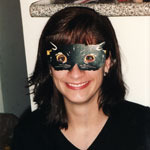
Today's guest post is brought to you by writer & artist extraordinaire, Ani Louise! Who thought a rule breaker could be so cute?
Bio: Ani Louise is a MG/YA writer, artist, and zombie cheerleading coach. She tells stories so other people can hear the voices in her head, and likes to hang out on Twitter as Ani_Lou She blogs occasionally here .



 [image error]


October 26, 2011
Guest Post: On Inspiration and Imagination
So, it's Friday – 10 days, nine hours, fourteen minutes and forty five seconds … forty four seconds …forty three seconds to my first Nanowrimo, and the day I should have my blog post finished.
Finished! Started would be pretty good.
As usual, there have been lots of good intentions and fresh ideas. Lots of times that my mind has wandered off into the wild blue yonder in search of inspiration, and been inspired, truly.
Yes, inspiration does strike when you least expect it. Which is why none of these inspirations have hit the screen or seen the paper – I haven't been expecting them so I haven't kept a note of them.
The best time is when I'm walking the dog. Each time I put his lead on I think about taking a notebook out with me, but as I don't want to carry anything carry I tell myself that if inspiration strikes I will dictate into my mobile. So, there I am, a couple of miles from home when, suddenly out of nowhere the ideal solution as to how the judge was really murdered pops into my head. That's when I realise that my phone is not mobile but static … on the dining table!
So, it's NaNoWriMo in ten days, nine hours, six minutes and twelve seconds and I have actually spent most of October preparing for it. Well, not exactly; I have actually spent the majority of October planning to prepare for it; the rest has been preparing to prepare for it.
I started off at a gallop. Writing lists, plotting plots, sketching characters …
The problem is, once I have planned something I forget about it – it's as though my brain thinks I have actually done the task I had planned for. Sports psychologists tell us that when we are training for an event or a match we should envisage the whole thing, step by step. Envisage each hole on the golf course and envisage playing the perfect shot. Imagine walking off the eighteenth green knowing that you have won – this apparently will give your brain the knowledge that it can succeed, and gives your subconscious a way of achieving that success.
However, my imagination is so vivid that as soon as I've imagined writing The End" at the bottom of my final chapter, my brain thinks I've actually written my book and goes into congratulation mode! I then envisage myself standing on stage accepting a prize for my debut novel, but I need to lose a couple of stones first; I picture myself having finished a diet and weighing 8 stone so now my brain is telling me to go out shopping for size eight clothes. As I can't actually afford a brand new wardrobe I imagine becoming a best-selling author with a huge advance for a series of novels; I see myself paying the cheque into the bank, being invited into the manager's office for advice as to how best to invest my millions and then walking to my favourite jewellers. So, by now I'm a size eight, incredibly wealthy prize winning novelist. I don't actually have to write another word, it's taken me about ten minutes to visualise it and my brain thinks that's it, time to relax with a cup of tea!
Of course, I don't just imagine the cup of tea – I actually leave my desk to go and make it and then I have to take the dog for a walk. You know what happens next: I get really inspired but, of course, have no pen or paper with me and instantly forget the inspiration. So hours after I started I've been inspired to do absolutely nothing.
Help!
No, these psychologists have got it wrong, for me in any event. What they should be doing is telling me not to think of the end product, but to think about the enthusiasm I have at the start of a project. The excitement of having the idea and settling down to actually write. The feeling of satisfaction I will have of actually completing the first chapter, not the first series. I need to find a way of making myself sit down on a daily basis and actually getting words onto the paper.
But, prior to that, I need to find my shopping lists and get off my bottom to go and buy stuff and then come back and actually cook it and freeze it, not just imagine it. Then I'll really feel prepared to sit down and write a novel in a month. Roll on November. Roll on NaNoWriMo – bring it on – I can do it – I already have, just now, in my head!
Glossary:
Mobile = Cellphone
8 stone = 112 lbs
Size 8 = Size 4
This great across the pond post comes from a Nano first timer, the lovely Rita Bailey! Best of luck Rita!
BTW, I
I'm Rita Bailey (also known on NaNoWriMo as RitaMeekat and on Twitter as QuirkyJibbles) from beautiful Lincoln in the UK. I love writing and am lucky enough to spend my time writing blurb for other people's websites, which is probably why I haven't yet got a website of my own!
I've got at least two books in my head, one of which I'm currently working on for NaNo (I'm a NaNo Newbie) and the other is a historical novel for which I'm doing loads of research. When I'm not writing I spend my time planning to write (which is what I call it when I'm reading, walking the dog, daydreaming etc).
[image error] [image error]
 [image error]

 [image error]

October 25, 2011
Book Review – Farsighted
 Today's book review is very exciting for me to bring to you because it's for a great YA paranormal novel put out by a lovely friend, Emlyn Chand. Emlyn and I met through Twitter and became fast friends. I was luckly enough to beta read the first half of this book months ago and I'm super excited to be a part of the blog tour now that the book has finally hit the "shelves".
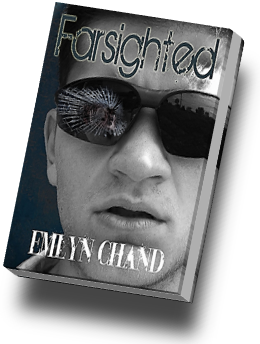
Title: Farsighted
Author: Emlyn Chand
Genre: YA Paranormal
Amazon Summary:
Alex Kosmitoras's life has never been easy. The only other student who will talk to him is the school bully, his parents are dead-broke and insanely overprotective, and to complicate matters even more, he's blind. Just when he thinks he'll never have a shot at a normal life, a new girl from India moves into town. Simmi is smart, nice, and actually wants to be friends with Alex. Plus she smells like an Almond Joy bar. Yes, sophomore year might not be so bad after all.
Unfortunately, Alex is in store for another new arrival–an unexpected and often embarrassing ability to "see" the future. Try as he may, Alex is unable to ignore his visions, especially when they begin to suggest that Simmi is in danger. With the help of the mysterious psychic next door and new friends who come bearing gifts of their own, Alex must embark on a journey to change his future.
Personal reaction:
Luckily, I got to see this story from its first draft to the final product and I enjoyed it immensely. It's something different compared to a lot of the YA stuff that's out right now. While Alex has this sight, he's definitely not the super hero type (even though he would very much like to be). He comes off as very real; a sullen, moody, hormonal teen. I liked that it wasn't very predictable. When you read a lot of YA, it's sometimes very easy to figure out what's going to happen next. I didn't really have much of that with Farsighted, a definite plus. If you're looking for something a little different in the YA paranormal genre, definitely pick this up!
Questions:
Q) Is Farsighted your first novel?
R) Nope. It's my second. After lots of back and forth, I decided my first novel would be better off unpublished. So with that said, it's important to remember that not every work has to be published. My first novel was important, because it taught me I could see an entire novel through from start to finish. But in that first novel, I made lots of mistakes as a writer. Luckily, I learned what my faults were and sought out ways to improve upon them. And Farsighted is the better for it.
Q) In a category where fantasy currently runs rampant (vampires, fae, etc.), what made you choose to go a different route with a main character with psychic abilities?
R) Everything started with a single image—my face in these tacky oversized sunglasses reflecting out at me from the car's side mirror. I was daydreaming while my husband drove us across Michigan for my sister's wedding. Something about my image really struck me in an almost horrific way. I felt the glasses made me look blind but found it so weird that there was still a clear image within them; it seemed so contradictory. At the time, my book club was reading The Odyssey, which features the blind Theban prophet, Tieresias. I started thinking about what it would be like to have non-visual visions of the future and began forming a modern Tieresias in my mind. Lo and behold, Alex Kosmitoras was born. I didn't want him to be alone in his psychic subculture, so I found other characters with other powers to keep him company. Thank God for my poor fashion sense.
Q) Being female, what made you opt for a male main character?
R) Again it goes back to that initial glimpse of myself in the mirror and somehow linking it to Tieresias from Greek mythology. I always saw Alex as a boy. It was fun to think outside of my gender, my age group, my physical abilities – everything.
Q) What was the most difficult part of writing Farsighted?
R) The hardest part was getting started! I spent about three months trying to talk myself out of writing Farsighted. It's too ambitious, my inner critic pointed out. You'll never get it done, not in the way it deserves to be done, it pressed. But there was another part of me that couldn't resist; I knew I had to at least try before giving up. So glad I decided to be an optimist for a change!
Q) How did your personal experiences influence your writing?
R) Farsighted's fictional town of Grandon is based on my hometown; it's small and kind of boring. I couldn't wait to escape and move on to bigger and better things. My home town was mostly Caucasian, but somehow I ended up with a very diverse set of friends even though they made up less than 1% of the student body. Fast forward a few years, and I end up marrying a man from India. He's from New Delhi, like Simmi. I've always been fascinated by other cultures; I even decided to pursue my Master's in Sociology for this very reason. I credit two early life influences for this attraction: 1) My adoration of A.C. Slater in Saved by the Bell, 2) Disney's Aladdin being the best movie ever.
Q) Did you have to do a lot of research before writing?
R) Absolutely. Research is a must for world-building, authenticity and just honing one's craft in general. I started in on Farsighted by reading tons and tons of books before doing ANYTHING else—I read about world folklore and superstitions, religions especially Zoroastrianism, Hinduism, and Sikhism, psychic powers, the occult, blindness, and even Nostradamus. I learned how to cast runes and perform a ten-card Celtic Cross Tarot reading. I had nightmares for several weeks, but then they eventually stopped, and I started writing.
Q) I know that YA wasn't always your first choice when it came to writing, what prompted you to give it a try?
R) My first novel was literary women's fiction. It didn't capture who I am or what my strengths are— that's why it's taken up permanent residence in my desk drawer. When I was ready to write my second novel, I had 4 ideas that really excited me—a dystopian novel, historical fiction, chick lit, and what became Farsighted. I thought each idea out and wrote sample pages or character sketches as practice (I call this the left-brained approach to brainstorming books as described in the article I wrote here). The Farsighted pages were the easiest to write, and they were the ones my trusted beta readers liked best too, so I decided to give it a try.
Q) Who are your writing influences?
R) In truth, I'm influenced by everything I read (for better or worse). My primary influences are JK Rowling for awesome world-building and unrivaled dialogue-writing skill, Anne M Martin for first making me love books, John Irving for incredible characterization, Suzanne Collins for riveting action, and Vladimir Nabokov for seamless and beautiful prose.
Q) Who are your favorite YA authors?
Ooo. JK Rowling, Suzanne Collins, and JD Salinger are classic faves. I'm currently reading Matched by Ally Condie and am absolutely loving it. Next up is the Tiger series by Colleen Houck, another set of books I anticipate greatly enjoying.
Q) Just for fun, if Farsighted was made into a major Broadway musical, what would the name of big number be?
Is it bad that I totally have a musical planned out in my head already? A few months ago, I set out to write an edgy rock ballad to represent Farsighted, but it came out like a diddy from Rent. The title of my musicale's big number would be "Tomorrow is Today (but still so far away)." A musical version of Farsighted would be so, so cool! Thanks for indulging my fantasy a bit 
Q) What can we expect next from you?
R) I'm working on book two in the Farsighted series. It's called Open Heart and will be written from the point-of-view of a different main character. I'm also toying with the idea of a special hardcover edition of Farsighted Book 1 with new chapters added to the end and a sneak peek of Open Heart.
Q) Where can fans purchase Farsighted and contact you?
R) You can get Farsighted in the Amazon Kindle store or in the eBook shop of your choice. The paperback edition will be available on November 24, which is also my birthday—hooray! To get in touch with me, visit my website at www.emlynchand.com, or look me up at: Facebook, Twitter, Google+, GoodReads, or LibraryThing.
Blog Tour Notes
THE BOOK: Alex Kosmitoras may be blind, but he can still "see" things others can't. When his unwanted visions of the future begin to suggest that the girl he likes could be in danger, he has no choice but to take on destiny and demand it reconsider. Get your copy today by visiting Amazon.com's Kindle store or the eBook retailer of your choice. The paperback edition will be available on November 24 (for the author's birthday).
THE CASH PRIZES: Guess what? You could win a $100 Amazon gift card as part of this special blog tour. That's right! Just leave a comment below saying something about the post you just read, and you'll be entered into the raffle. I could win $100 too! Please help by voting for my blog, Keystrokes & Work Counts, in the traffic-breaker poll. To cast your vote, visit the official Farsighted blog tour page and scroll all the way to the bottom. Thank you for your help with that.
THE GIVEAWAYS: Win 1 of 10 autographed copies of Farsighted before its paperback release by entering the giveaway on GoodReads. Perhaps you'd like an autographed postcard from the author; you can request one on her site.
THE AUTHOR: Emlyn Chand has always loved to hear and tell stories, having emerged from the womb with a fountain pen grasped firmly in her left hand (true story). When she's not writing, she runs a large book club in Ann Arbor and is the president of author PR firm, Novel Publicity. Emlyn loves to connect with readers and is available throughout the social media interweb. Visit www.emlynchand.com for more info. Don't forget to say "hi" to her sun conure Ducky!
MORE FUN: There's more fun below. Watch the live action Farsighted book trailer and take the quiz to find out which character is most like you!
[image error]
http://apps.quibblo.com/static/flash/qwidget/qwidget.swf?s=&theme=black&quiz=fDlEAGP




 [image error]


October 24, 2011
Panic setting in?
[image error]One week and counting folks. Are you waking up in a cold sweat? Perhaps the nerves have risen. Butterflies in the stomach have turned into a swarm of angry bees? NaNoWriMo is a week away and, Holy Shit, You.Have.No.Plot.
What are you going to do? Will you have to skip the month of tortu– uhh intense writing pleasure? Of course not!! (We're not letting you out that easily. Sorry.)
All you need is the glimmer of an idea and to give yourself permission to be a pantser (even if that's not your normal M.O.). Now some of you may be scratching your heads about now. Why is she asking us to go around pulling down the pants of unsuspecting folks? That's not what I mean by being a pantser. There are two kinds of writers. First you have the plotter. Those super organized folks who have incredibly detailed outlines on what happens in each chapter. They will get no surprises from their characters as they write, because they don't leave anything to chance. I think it's an awesome way to write, to know exactly what's going to happen, but I just can't work that way. I am most definitely a pantser. Someone who writes by the seat of their pants. I normally start with a vague idea and (hopefully) an idea of an ending (I just thought of mine in the shower this morning. A good reminder that I need to go and buy some Aqua Notes). Everything else is kind of left to chance. My characters will really run the show, pointing me in directions I may not have even thought of. I know, it sounds kind of crazy and perhaps a bit daunting, but I think it's so much more fun to be surprised. Don't you?
So don't worry if you have no detailed plot idea. That little niggling idea in the very back vaults of your mind? Let it out. Don't worry if it's vague, under developed or even seems perhaps a little…stupid. Let it out. Don't hold back and let it run wild. You might just be surprised that it grows into something absolutely amazing and even if it's not amazing, I bet you'll be able to look back on it and learn from it and probably laugh at some of the ridiculous things your characters do or say. Enjoy it. Let it live. Have.Fun.

 [image error]
 [image error]


October 20, 2011
Guest Post: NaNoWriMo Plotting with Sketchbooks
 Everyone around me is plotting. Plotting for novels, plotting for short stories, plotting for projects they've started and not yet finished. I'm plotting too and I'm plotting alongside a lot of other people for the exact same thing: National Novel Writing Month.
It's the sixth year I'm doing NaNoWriMo and I'm hoping for my second win (Please, don't even do the math there, it's embarrassing.) and I sort of figured other NaNo-ers are scouring out how everyone else is going about plotting (I know I am…) to get into the groove, so, I decided I would share here a bit how I do things.
 I like to create what I call a History Book. It's a go-to book I carry around with me everywhere while working on the story and it has everything and more I ever actually wanted to know about my story and the place it takes place in. I'm a big fan of writing many different stories in the same place, so having a book that contains every piece of background material for the setting I can turn to is really instrumental.
What I put in the book though? Those are the fun parts…
1. THE SKETCHBOOK
It starts with the Sketchbook. I use a sketchbook to organize all my thoughts. I'm not much of an artist and I likely won't draw inside of it, but, the space is big enough to cut pictures out of magazines and glue them in. For my project (which I call Stereoport) I have squirreled away countless issues of Juxtapoz and cut them apart, pasting images of settings on each blank page of my sketchbook, before I even start writing inside of them. Having a visual to work with starts to get my brain flowing with the sort of people who would inhabit the areas and create the art that I'm staring at.
 2. THE SETTING
I'm a big settings person and I can't even begin to try and tell a story without understanding where it is taking place. The opening pages of my sketchbook are mostly collections of ideas of streets and places the characters can inhabit. The feelings of the citizens as a whole, the politics, the culture. The foods they enjoy eating, the disasters that have gotten them to where they are. Stereoport is a bit complicated because it deals with several types of gangs and each one of them is given a spot in the book, just in case I may want to write a story about a different gang the next time I visit their world for storytelling purposes.
 3. THE CHARACTERS
Once I start to get the feel of where these people are living, I can start to pick out who I want to tell a story about. This is where it starts to get a bit difficult for me, figuring out a character's motivation and trying to understand where I can pull a plot from. This time around, I found a few really helpful online resources (particularly L. Scribe Harris's Character/Motivation/Conflict Groundwork Workshop) and started filling them out in my sketchbook. I have a rough time with plot and this helped me out a lot.
4. THE PLOT
Now that I've got the characters and the setting, I can get to the most difficult part and the part I am getting into now, sketching out the entire plot and scenes. A lot of people use note cards and stuff for this, but, I actually have begun using Scrivener for Windows once I got to this point. Writing it out in the sketchbook would be nice, but, if the plot proves to be unworkable, everything in the sketchbook starts to seem wrong, but, if I plot out the story outside of the book, the History Book maintains itself as a resource to the place, the people and another place I can go back and try and pull a plot out of later on. So, instead, I use the note card feature in Scrivener and flip through the pages of my sketchbook to get the story started, that way when November comes, I'll be ready.
 This is the awkward way I plot all my stories and it is in no way totally useful to me, but, a lot of people like to pick and choose different things from all sources and put it together in a way that works for them. What sort of stuff do you guys use? Does of this sound like it could helpful to you? Do you even have some decent advice to make this method work even better. Let me know! I'd love to hear it.
This awesome photo-filled post is brought to you by the super pleasant wearer of awesome funky red glass, Melissa Dominic whom I'm totally going to ask to make me maps if I ever publish Red Dust and Embers to Ashes!
_____________

Melissa Dominic is a writer, mapmaker and a historian of places that don't exist. She keeps a field journal of her writing, life and novel-expectations at BrokenNerves.Net You can also find her NaNoWriMo profile here.



 [image error]


October 18, 2011
Guest Post: NaNo NoWay
November is almost here and you know what that means: NaNoWritMo. Writers everywhere are getting ready to hunker down and crank out 50k words in a month and hope it produces a story worth editing. But what about writers who don't do NaNoWritMo? Are they left in the dust for reasons outside of our control? Missing out on a great time? What if a writer chooses not to do it?
What about me?
I heard about NaNoWritMo last year. I had just gotten onto the writing scene in November so I really didn't know what it was until November was almost over. Next year, I thought. Then I started figuring out how I write best and that setting a schedule or deadline really doesn't work for me. In fact, it turns my brain right off, sends my muse running for the hills and causes my characters to cower. I am not a writer who excels under stress. A friend, tried to get me to do a novel in three days competition with her and I completely blanked out. Couldn't even think of how the current stories I was working on went. All I could think was, You want me to do what? In how much time?
So now, as everyone talks NaNoWritMo, psyching themselves up, I'm trotting along on my own path, not preparing, plotting or planning. I do feel a little left out. I hear it's a great community to be part of. I could try too, dust off an older idea. I have plenty. But I just can't. I can't even think, it's too intimidating, too much for a panster like me. I write when I want and when I feel like it. When someone asks me about setting deadlines, schedules or doing something like timed word sprints, or am I doing NaNoWritMo? I say, Noooooo way. Not for me. And I swear, I must be the only one saying that.
Today's post is brought to you by the lovely, the talented, the sparkly vamp hater: Patricia Lynne!

Patricia Lynne is a young adult author. She recently self published her first novel, Being Human. It is available in ebook or paperback on Amazon, Barnes and Noble and Smashwords. You can find her on Twitter, Facebook and Goodreads, usually when she's supposed to be writing. When she's not running away in terror of deadlines, she's switching from one story to the next, wondering if she can ever finish a story before starting the next. It does happen though… Sometimes. She lives in Michigan with her husband, likes to dye her hair the color of the rainbow and glomps anyone who agrees that Green Day is the best band ever!
 [image error]
[image error]
[image error]
[image error]
[image error]
 [image error]
[image error]
[image error]

October 13, 2011
Guest post: National "Novel Idea" Writing Month
As luck would have it, I read that article a few weeks before November last year, giving me just enough time to work myself into a panic and start plotting like a madwoman. I read everything I could on NaNo, joined the website, plotted a story arc, and waited for several days on the edge of my seat for the fun to begin. At exactly three am on November first, I wrote my first words to my novel, The Earth is for Dancing, and loaded my word count into my own personal author page on nanowrimo.org. NaNo had officially begun!
Then day two hit. And day three. And eventually day seventeen. And the weirdest thing happened. All of the emailed pep talks from OLL staff and all of the motivational post-it notes I had prepared ahead of time fell by the wayside. I didn't need their empty words of encouragement. It was almost as if this book was writing itself! I was on a roll! I even finished five days early, seven thousand words above the goal!!! I was a rock star!
The problem hit me on December 1st. I had nothing to do. I had spent thirty days of my life plotting and planning. I had gotten up early on Sunday mornings to sneak in a few thousand words before my family woke up. I had covered my hands in Sharpie tattoos because ideas came to me when there was never a notepad handy. I had cried real tears over this story when I finally realized that one of the characters had to die, just because it had to be.
And then it was over.
Suddenly, my young, lost teenaged character was out of my life. I had no more control over what happened to her, although at times throughout the month it felt like I'd never had any control over her to begin with. The book did. There was nothing to do but mourn for my characters, close the cover, and move on.
It wouldn't seem like spitting out a 50,000-word novel in 30 days would produce a lot of quality material and I've since wondered if that's why so many agents are closed to queries until mid-January, just to avoid the flood of hopeful queries that spring up out of NaNo novels. But I couldn't let my girl go. She had to be heard.
So December became my own personal LorcaNoviEdiMowExInten (Lorca's Novel Editing Month with Extreme Intensity), the month I spent agonizing over my novel, page by haunting page, adding backstory here, cutting teen-angst soaked dialogue there. I celebrated New Year's Eve on
my sofa with my book, a concept born only two months before that had blown up into my own little masterpiece. I had my solitary little glass of champagne with a book I felt truly proud of and could finally send out into the world.

Today's' Guest Post is courtesy of the super prompt Lorca Damon!
Lorca Damon is a teacher, staff writer for GoodEReader.com, columnist for The Piedmont Journal, and YA fiction writer, as well as the author of Autism By Hand (available on Kindle and Nook). She's a 2010 NaNo winner, which makes her somehow think this who concept is a cake walk. She's probably in for a rude awakening this year.
Visit her website & follow her on Twitter!
www.lorcadamon.com
@LorcaDamon





October 11, 2011
Guest Post – NaNo, NaNo, bitches.
If you're a wannabe novelist, there's no escaping NaNoWriMo—that's National Novel Writing Month, for the uninitiated. The premise is simple: Take the month of November and write a 50,000-word novel (or novella, if you think that 50K is too short to be a novel).
It's a challenge I've rarely accepted, but this year I'm going to make an exception.
In the past, I've shrugged off NaNo novels as, well, puerile. Useless. A handjob for the unpublished writer's ego. There was no way, I thought, that anyone can write a novel worth reading in a month's time. When I was working on my first novel, a good day's output for me was 1,500 words. And frankly, that's a Herculean effort compared to some writers.
If you do NaNo, you will NOT have a publishable manuscript by the end on November. The sheer scope of drafting quickly—of cheerfully throwing anything that is NOT story over the side and moving on—makes mistakes in your narrative unavoidable.
Do not do NaNo if you're expecting to have a complete, finished, and polished manuscript ready to send out to agents by the end of the month. You will be disappointed, and your error- and typo-filled manuscript may drive agents to hang themselves from the ceiling fans in their offices.
What you WILL have is the first draft of something that might be publishable once you're done. Newsflash: You are never done after the first draft. No, not even you. And you over there—the one with the smirk, who thinks his or her writing is perfect? You, especially. I know you. Hell, I was you, back in the day. No matter how good you think you are, your writing will improve through subsequent drafts and edits.
Something else you'll have: Confidence. Coming to the page every day, attacking the manuscript like it's a dragon you've sworn to slay, helps you grow as a writer. Those of you who are paralyzed by the thought of putting the wrong word down can breathe easy. NaNo isn't about perfect manuscripts. It's about getting that damned story out of your head and onto the page so you can decide whether you have a book to work with.
Instead of National Novel Writing Month, picture November as Writer-as-Shark Month. The manuscript is your sea, and you must move forward relentlessly, swimming through a chum of words, attacking chapters, gulping down great chunks of manuscript in order to feed the beast of hunger in your belly. (Have I taken this metaphor too far yet? I hope not. I never metaphor I didn't like.)
Someone should shoot me for that joke.
The thought holds up, though: To complete a novel-length manuscript within a month's time, you have to be relentless. You have to be disciplined. You have to be hard on yourself. Taking a month to say "NOTHING will keep me from writing this story" is a great way to get a first draft completed. If nothing else, it will lend your writing a sense of urgency.
Case in point: Earlier this year, I wrote a YA manuscript called Little Miss Perfect. I was experimenting with an idea very similar to NaNo, called fast-drafting. The premise was that you write between 3,000-5,000 words a day until the manuscript is done. It's an incredible process that demands you get to the page and do the work no matter what. At the end of the process, I had a first draft that I think may end up being very good. And I did it in ten days. When you write "THE END" at the bottom of your draft, it will feel better than nearly anything you've ever done.
If you're doing NaNo this year, good luck. I'll be in the trenches with you. On the days when it's hard, remember there are people out there just like you, struggling to keep moving forward. If you're not doing NaNo, what the hell are you doing still reading this?
Today's Guest Post is brought to you by the one, the only (one I'm concerned with anyhow): Bobby Mathews !
!
Bobby Mathews is an indie author who's hoping to break into commercial publishing one of these days. He blogs about writing and books at Bob the Writer, and his first novel, Prodigal is on sale at Amazon.





October 6, 2011
It's coming…
No, not Halloween (although I'm super excited for that as well). I mean the first of November. Do we all know what November brings (besides turkey, tryptophan induced naps, football and pumpkin products)? It brings NANOWRIMO! Now I *know* some of you just groaned loudly while others may be scratching their heads. I hope a few of you are jumping up and down and clapping with unbridled glee (you will be my extra special friends).
For those who don't know, NANOWRIMO stands for National Novel Writing Month (which is a mouthful and a pain in the ass to keep saying and/or typing so I shall refer to it merely as NANO from now on). It's when you spend the month of November trying to write a novel of at least 50,000 words. Personally, I have often hit the goal of 50k, but that's never the end of my novel so I continue it after NANO ends.
It's grueling, it makes you a social hermit, you'll end up talking to yourself and waking in the middle of the night to jot down notes and dialog. You may forgo showering ,eating (woo added unintentional diet bonus!) and sleeping, but you will have a novel (or almost a novel) by the end of the month! How cool is that?!
Now, before the haters pop up and start bitching "a NANOvel is NO novel!" let me explain why they may be annoyed. For those of you who have never written before and are going to use NANO to give it a try, firstly, AWESOME! Yay for you and good luck! Secondly, even if you finish writing your novel in November (be it 50k or 70k or 100k) know that what you hold in your hot little hands is a very lovely, very wordy rough draft of your novel. You will have a long road of editing ahead of you, BUT you'll have accomplished something many people haven't and you'll be on the right track to polishing your work and getting the masterpiece published. Just don't go trying to shop your book around until you've gone through that editing process…several times.
As for me, I like to use NANO as a catalyst to get me going on a story. The constant checking in and checking what my writing buddies' word count is up to is great motivation, for me anyhow. Like I stated above, I don't normally finish a story during NANO but I can come damn close and by then I'm all excited to get it done and so I'll keep at it. Deadlines are good for me.
Throughout the month of October, I'll be posting pep talks and guest posts on NANO prep. What to do if you don't have an idea (No Plot, No Problem!), outlining and research, getting out while you still can, etc. If anyone is interested in doing a guest post (even if it's one on why you DON'T like NANO) please leave your name and email in the comments below and I'll be in touch!
When November rolls around, I'm going to be your own daily little cheerleader. As you guys have probably noticed, I am not a daily blogger, but for this, to keep you guys going with advice and a kick in the ass, I am going to do the ABC-123(4)s of NANO. Everyday I will put up a short little something for that day's letter or number. It might be about drama, pacing, resolution, etc. You'll have to check in each morning to see. I hope it'll help people keep at it and even if you don't hit 50k by the 30th, hopefully you'll keep stopping by and keep writing till the end of the month.





October 4, 2011
Speaking of 5 star reviews…
Remember how, a few posts ago, I bragged about being stingy with my 5 star reviews? Well, It just so happens that I recently stumbled onto a landmine of amazing books, as in four 5 star worthy books in one week! I want to share them with you because there's not much I love more than recommending a good book to someone and having them love it as much as I did. So here goes!
Book 1:
Ahh, The Girl of Fire and Thorns, a young adult fantasy novel with an imperfect, insecure and overly curvy heroine. She's a 16 year old who's been coddled and left in the dark about her real purpose in life. Impending war helps her to grow, gain confidence a nd live up to the prophesies written about her.
I like that the MC was real. I have seen a lot of people complain that Elisa found herself to be worthless until she lost weight and why I won't say it's right, I feel that it's realistic. People have insecurities and body issues (whether they're big and small) and while it's definitely better to come to accept and love yourself for who you are and not what you are, the reality of it is, a lot of people are not going to come to love themselves without making some kind of change. I feel like this is what happened with Elisa. Not that she consciously made the change, but it still happened and it gave her that boost of confidence to live up to her destiny and not be afraid to assert herself and try to help.
If you feel like the weight issue is going to teach your kids bad things, use it as a lesson to teach them it's important to love themselves, etc. Books can be good for that kind of thing, you know?
Back to the book:
The plot was involved and the pacing was awesome. Not a slow spot to be found. Not in my opinion anyway. There's a lot of talk of "God" but I definitely don't feel like it came off as preachy, especially since it showed people's doubt and how many of them have lost religion in their lives.
It is the first in a trilogy but things wrap up well enough for it to be a stand alone book.
I have to say I'm kind of hoping one of the friendships develops further in the series and I think the author is plotting it that way. I'll keep my fingers crossed.
Book 2:
The Night Circus was, simply put, magical. With flowing prose, side show oddities, an unusual love story and those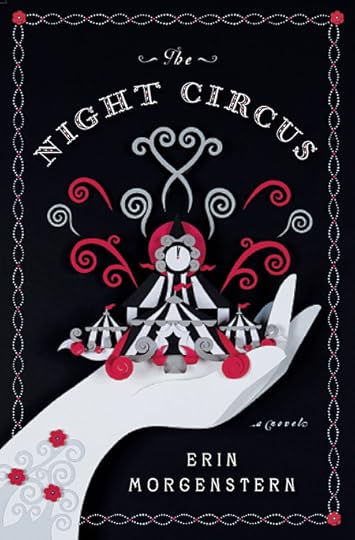 wonderful little vignettes where I, the reader, was waiting for and then walking through the circus, it was a complete experience.
The style was something unique and even though the story was slow building, it kept my attention and interest and I enjoyed the character of the actual circus and how we kept learning about it and its changes.
It's not rank with non-stop action, there isn't sex galore but it's whimsical and fantastical and immensely enjoyable. It won't be for everyone, but if you've looking for something different from the norm, if you're the kind of person who seeks out the unusual, the mystical, the unexplainable, if you want to be a believer, then this book is most definitely for you.
Book 3: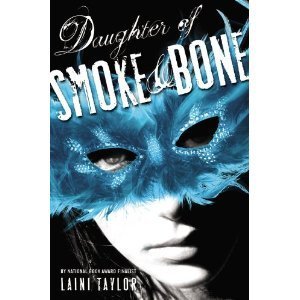
There are quite a few young adult novels out there about angels these days, but I didn't even know that The Daughter of Smoke and Bone involved them until almost the middle of the book. That was a good thing. This book was full of mystery, secrets and wishes. Past lives, battles and forbidden love. It takes place beautifully described locations like Prague and Paris.
What did I love about it? The style, the voice, the unexpected twists and turns and…the teeth. Weird, I know, but all I could keep thinking was "What the hell are all those teeth for?!" I loved that the author keeps you guessing until the end of the book. I love that while there's romance, it's not all "OOOOMG I've seen that guy once and I know without a doubt that I love him and would do absolutely anything for him!". I swear that drives me batshit insane to see in so many YA books these days. You want your character to fall in lust? Go for it! That's natural. Love at first sight? Ehhh I'm not really a believer. Betraying your friends and family for some guy you just met? Even more unlikely. Which is why I enjoyed Karou admiring and being attracted to *name redacted for non-spoiling reasons* but thinking that she couldn't give him absolutes when it involved the well being of her family.
Again this is the first book in a series and I cannot wait for the next to come out. It's just something different in a flooded category.
Book 4:
One of my favorite books of last year was Anna and the French Kiss. It was just the kind of story that sucked me in and made me wish I was Anna. Great voice and great character development. When their hearts broke, I felt it. I know I know, that sounds cheesy, but it's true. When I saw that Lola and the Boy Next Door was a sequel of sorts, I jumped up and down and could not wait to read it. I have to say, Lola does not disappoint. Not only did it suck me in like the original, but it had plenty of Anna and St. Claire from the original book. I love that! Again, there's great voice and I felt for the characters. Also, I just love me some geek love. It's*so* cute!
I don't know that there will be be a third book, although I suppose it's possible with Lola's best friend. That would be pretty awesome and I'm going to cross my fingers and maybe wish on some stars for that.
So there you go. Four amazing books, all pretty different, to add to your to-read list. Please, if you've read them or you read them later, comment and let me know what you think, even if your opinions vary from my own. I'm always up for a good debate on books (civil of course!)





![[image error]](http://keystrokesandwordcounts.files.wordpress.com/2011/10/oh-noes.jpg)