
Gregory J. Downs's Blog, page 2
November 2, 2013
Thoughts on Ender's Game
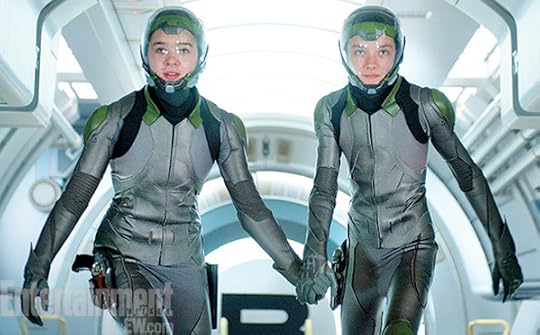
I read Orson Scott Card’s book when I was too young to get the full impact of what he’d written. It was the kind of book that stays with you, though, even then. For the first time in my life (that I can remember) I was drawn into a book which both mesmerized and repulsed me. It’s a rare book that can do that, and only a few other books can rival Ender’s Game in that way for me.
I am older now, though not much wiser: I want to read the book again. I very recently watched the movie, you see, and it made me think through all sorts of things afterward, both about the movie itself and what I remember of the original story, and how the two play together. It’s always good when a movie makes me think (hasty generalization?), and I think other people should think about movies too: especially the ones that make you think. So here I list some of my thoughts on the Ender story, such as I have experienced it, in the hopes that you, dear reader, will be encouraged to think some thoughts of your own…
(Note: these are in no particular order, and I will attempt to keep them as spoiler-free as possible… but no promises. Go read it or watch it if that bothers you.)
1) I liked it. Sure, there were some awkward moments in the script where the lines didn’t feel like they fit, but oh well. If the movie has one specific issue, it’s compression: the vast amount of psychological experience Ender undergoes had to be shortened to fit into a two-hour timeslot. Not easy, even if he is a skinny kid. Sometimes it felt like you were watching a summary of a story instead of a story, but maybe it only felt like that because I read the book first. I still liked it.
2) The music was epic, but at moments it was too epic. I wanted some James Newton Howard instead of so much Steve Jablonsky, to get more of the subtlety of the story across, but I guess that couldn’t be helped. The movie needs to be a blockbuster so that they can adapt all the rest of OSC’s books to film!
3) Which brings me to a more developed thought. I don’t agree with Card all the way, as far as some of the conclusions he draws through Ender’s reactions and maturation in the book and the movie. But he makes you think, and that’s good. Not that just making you think is all a story needs to be good, but Card does it in way that ends up grounding you in solid earth, rather than leaving you to float in the black void of space (Christopher Nolan Style… I’ll explain later).
4) What was really cool about the movie was that it showed you Ender, showed you his problems, and showed you what was right and what was wrong about him. Here’s where my memory of the book grows vague, because I honestly don’t remember how exactly it made me feel at the end. But at the end of the movie, at least, I had a pretty good idea of two things: One, that war seriously messes people up, especially kids with their big hearts and open minds. Two, Ender is a moral person who ends up facing his demons with courage, and makes the right choice in the end. And I’d like to point out that he only conquers them through outside help—his team, Petra, the last scene—defying the popular motif of the hero-who-saves-himself. It was like the Hunger Games, but better written and with a way more solid moral foundation.
5) The word moral: I don’t mean it in the sense of “don’t do this, do that, be good, don’t kill people, lalalalala.” I mean it in the sense of: when you read or watch a really good story, you come to the end and you feel uplifted, empowered, and ready to face the real world with strength, because the hero of the story did, and dadgummit if I can’t do the same thing with my own littler problems and afflictions. It hearkens back to the old Tolkienic (heheh) principle that the best stories make real life more real, and that’s what Ender’s Game was able to do, in some fascinating though disjointed fashion.
6) That quote at the beginning and end of the movie. Quite the statement… probably flawed to some extent, but such a deep look into the human condition! I could spend an entire post delving into it, but I’ll spare you that.
For the moment, at least. I’m going to re-read that book soon.
Gregory J. Downs, 11-3-2013
PS. For more thought-provocation: I chose the above photo for a reason. I think it says something important about the heart of the movie, and the heart of Ender's struggle. What, pray tell, is that important something? Have at it!


October 26, 2013
The Fussy Librarian
It's a funny thing, but I rarely think about my books these days. My old books, I mean: the ones I wrote in Highschool and published. They did well, but as their 30 seconds of fame faded I ceased to think about them and have moved on to other projects: school, story-philosophy, and some new but slow-proceeding stories. That being said, every once in a while I surf the web looking for ways to heat up some of my old cold stories.
In this vein I was browsing some writing blogs the other day and came across Lindsay Buroker's mention of "The Fussy Librarian." I looked up the site, and the concept really appeals to me. It's a site that sends book recommendations to its subscribers, targeting specific audiences: so if you like fantasy, you get emails about fantasy deals, if you like military, military, if you like thriller, thriller (though why would you? ^_^), if you like mystery, mystery.
But there's something else. TFL also categorizes books by content. If you don't want books with sex, drugs and rock n' roll, you won't get them. If you do... that's you're choice.
I decided to try it out. The concept of a book site taking into consideration not only genre taste but content taste as well really appeals to me. It seems like good ideals and good business, from both ends. See, as an author submitting my book, I'm the one who labels my book for content. I tell TFL what amount of violence, sex, language etc. my book has, and they cater to the audience that wants that level of content. Good stuff. Their blurb says,
If you love to read, check out The Fussy Librarian. You choose from 30 genres, select content preferences and then she sends you daily ebook recommendations. www.TheFussyLibrarian.com So... check it out. I don't know exactly when they'll be featuring my book, but I'm interested to see how this project develops as a whole. It could be really good.-GJD
In this vein I was browsing some writing blogs the other day and came across Lindsay Buroker's mention of "The Fussy Librarian." I looked up the site, and the concept really appeals to me. It's a site that sends book recommendations to its subscribers, targeting specific audiences: so if you like fantasy, you get emails about fantasy deals, if you like military, military, if you like thriller, thriller (though why would you? ^_^), if you like mystery, mystery.
But there's something else. TFL also categorizes books by content. If you don't want books with sex, drugs and rock n' roll, you won't get them. If you do... that's you're choice.
I decided to try it out. The concept of a book site taking into consideration not only genre taste but content taste as well really appeals to me. It seems like good ideals and good business, from both ends. See, as an author submitting my book, I'm the one who labels my book for content. I tell TFL what amount of violence, sex, language etc. my book has, and they cater to the audience that wants that level of content. Good stuff. Their blurb says,
If you love to read, check out The Fussy Librarian. You choose from 30 genres, select content preferences and then she sends you daily ebook recommendations. www.TheFussyLibrarian.com So... check it out. I don't know exactly when they'll be featuring my book, but I'm interested to see how this project develops as a whole. It could be really good.-GJD
October 15, 2013
Summer Reading and the Grand Philosophy of Story

Well, well, it's been a while. School is well underway, but I want to share with you a bit of something I wrote over the summer, dealing with why I find reading such a great pastime. It was left unfinished, so I just put some finishing touches on it, and here you go!
*
There are few things I like more than reading. I have to admit this has always been so. Reading can and should quiet us, refresh us, and add to our experience of real life. To paraphrase Tolkien in his essay On Fairy Stories, "Dipping ordinary things in myth makes them seem more real, more exciting in real life."
For me this summer, the particular revelation of that reality has come through reading nonfiction that enlightens the way I look at stories.
What I've read:
1. Rediscover Catholicism and Quo Vadis: Matthew Kelly, an Unknown Author, and the revitalizing of the Story of Faith.
2. Michael O'Brien: Looking for the war of symbols in stories.
3. 'An Experiment in Criticism' and 'On Stories': CS Lewis and the really great qualities of fantastic stories.
4. The Letters of J.R.R. Tolkien: the life and philosophies of my favorite storyteller. This is possibly my favorite of them all... you get such a deep look at why and how he did what he did in The Lord of the Rings and his other works. I have yet to read something by Tolkien that I did not enjoy (on various levels of depth).
5. On Fairy-Stories: a short yet detailed look at the story philosophy behind Tolkien's works and the works he liked to read best. It is here that I pull my paraphrase from above. Here Tolkien asserts that stories are not just entertainment, but a way to make real life brighter and to live it more fully.
*That's it for now, as far as reading goes. I hope to publish some notes on my reading since then soon. I have "officially" started work on my own current "definitive" story-philosophy book, title not to be revealed yet. It is slow going, this non-fiction, but I am truly excited for this project. It has been as much a search inside myself as a search through other great writers, and through it I hope to gain a greater understanding of stories and how they fit into the grand scheme of things. My writing in-between other commitments is divided between this story philosophy project and a long short story I hope to publish within the year. It is a delightful bit of work, at least to write. I hope to read as well.
Sincerely,GJD
July 29, 2013
Maybe not the best way.
I just took down a blog post, for a reason I've never taken down a post before. I realized I shouldn't have written it.
I doubt any of you saw it... but maybe you did. And maybe that wasn't the best way for me to present my idea. It's not a big scandal or secret. But let's remember tonight that not all things we think up on the fly should be posted online for everyone to see. We need to think before we speak, and pray about what we've thought up... again before speaking.
~GJD
July 13, 2013
Kaleb and Greg Discuss Symbology, Truth, and Various Awesome Topics
A little while ago I posted about reading the Silmarillion from a spiritual perspective. Shortly after that post went live on Goodreads.com, an acquaintance from my old writing group (The League of Extraordinary Scribes) commented on it briefly. I being the compulsively wordy person I am, responded at great length. I seem to have a problem not responding at great length (except when I am engaged in the activity of eating, at which time you will get no response out of me at all, or if you do, you will not be able to understand a word I say).
So, a discussion was born. You don't need to read the original post to understand it, but it might help. Read it here if you want badly to hear my original musings. For the record, this was a fun conversation that made me actually think about the backing of my points. That's always a good thing.
THE CONVERSATION
(Somewhere around the middle of my post, I mentioned reading Michael D. O'Brien to "sharpen my Harry Potter-slaying sword. As some of you know, HP is not my jam. So that's the context for these comments.)
KALEB: Harry Potter slaying sword? He's the Boy Who Lived. You can't kill him.
I never got a joy like that from my reading of the Silmarillion. It was more of a history textbook for me than anything else.
GREG: The sword is metaphorical. And it's not so much Harry Potter himself I would wish to slay as the spiritual incongruities latent in his story and other stories. But point taken.
See, that was my thing the first time I read it. But once I stopped reading it for pure entertainment (I guess we should never really read 'just to be entertained', but you get the idea) I was able to see it for what it was. And in a way, it IS a history textbook, of an imaginary place, where the struggles 'of powers and principalities' get projected onto the awe-inspiring canvas of Middle Earth. All the best fantasies do that, I think. 'Fantasies' referring to everything in a 'different world' or in a setting that is not 'real life' exactly.
KALEB: I don't think there are any stories that don't have any spiritual incongruities. And to be honest, much of what is best about the Silmarillion is also in Harry Potter. I never really understood the hardship and fear of the Crucifixion until I read the Harry Potter. It's not perfect, but none are.
GREG: Well, to be honest, I should have been clearer in what I said. Firstly, I don't mean to condemn the author or universally uphold Tolkien fantasy while despising everything else. I'd love to discuss our views on Harry Potter and fantasy/fiction in general. I actually love this kind of discussion, so I'll post here in detail. You don't have to do the same if you don't want to.
You make a good point by saying that no stories are incongruity-free. I'm not sure I would say *no* stories are, but of course we live in a fallen world, and we are fallen, so there is imperfection everywhere. But I would be careful about saying "I don't think any stories are free of spiritual incongruities" because this could lead to the thinking that "since there are some mistakes in all stories, and some good in most/all stories, then I can read whatever I wish because there is good to be drawn out of everything."
I'm not saying you're doing that, mind you. I say it to help explain a philosophy that has formed my view on fantasy/fiction. It seems to me (and I got this idea from reading Tolkien, Lewis, and other smarter people than me) that there are two kinds of story with mistakes/spiritual incongruities/corrupted details in them. The first kind is "good at heart," with some disordered details... for instance, I think Wayne Batson's books fall into that category (and I've told him so, heh heh). I think Tolkien's books fall into that category. I think my own books do, too (though I think they're not nearly as good as Tolkien's).
The second kind of book looks similar to the first, but while it has mixed good and bad on the *surface*, below it has some disordered spirituality that ultimately makes it not worth reading. Some can be more or less harmful than others in the second kind of book, just as some can be more or less good in the first kind of book. I would put Harry Potter in this second category (and I would assume you would put it in the first).
That's where we should focus our discussion, I guess, if you want to. What puts a book in category 1 or category 2 is the important thing we should think about whenever we pick up something to read.
Just to clarify again, I'm not saying all of this in order to start an argument or make anyone angry. I am simply very interested in finding out what makes a good book or a bad book (and whether or not there is or isn't an in-between... now *there's* another interesting question!)
KALEB: Discussion might be interesting, but probably futile, as I don't see there being two groups of stories. A story well told is a story worth reading, regardless of its theology.
GREG: Would you say that books can have a "good message" or a "bad message"? That some books can help us or hurt us in our life journey?
Or is your view that stories are just stories, and the only thing that makes them worth reading is whether they're well-told or not? Because then, of course, the internal message would not matter as long as the words were engaging. Actually, I would be very interested to hear about this, if this is your view.
KALEB: They can do that, but a good story will still be a good story, because what makes a story good, or beyond good, is that reflects and illuminates Truth about life, and it resonates with readers. The theology, "messages," and engaging words are all secondary. A poorly written book can still resonate and be good, and one beautifully written may not resonate at all, and so it wouldn't be good. Harry Potter does a very good job at reflecting Truth, as well as fantastic world-building and creating lovable characters with unexpected depth. Lord of the Rings does it too. So does Star Wars. And Narnia. All the great stories reflect that Truth.
GREG: Ok. What I called "spiritual congruence" and you called "theology" I meant to be the same thing as "Truth about life." I guess I'm unclear on what you mean by "theology" then. Because I think of the spirituality/theology of a story as being 'the way it shows God's truth' and not 'the way it has Christian religious items in it.'
So I guess I have 2 questions.
1- Are you saying that a well-written book is harmful if it does not reflect Truth in the right way?
2- What exactly do you mean by 'Truth about Life'? Is it that right and wrong are portrayed as they should be, or is it more than that?
KALEB: By theology, I mean the specifics of orthodox theology, like you might find in a theological dissertation. The actual tenets of Christianity, which has come to seem to be required for something to be a "Christian fantasy."
1/2. No, because Truth can not be reflected wrongly. It is what it is. Universal themes like love, redemption, sacrifice, are all parts of that Truth. Different facets of a diamond, almost. It reflects the aspects of God, not necessarily in a manner that they are in our world, but abstractly in a way that reveals them more clearly than they can be seen in real life.
This would be so much easier if I didn't have so many meds in me right now, and I'd ever done it before.
GREG: Ok. I get what you mean. And I would agree with you, then, that a book doesn't need that kind of "theology" to be a good book or in line with truth.
Well, yes, you can't mess up the Truth itself. But I don't think it's a good idea to say that you can't mess up your portrayal of Truth.
For one, what about stories written by people with twisted worldviews? I mean, assuming there is right and wrong, and right and wrong aren't different for different people, couldn't someone write a book that has a messed-up view of right and wrong?
For instance, there are a lot of great romances out there, some by Christians, some not. And then there's "50 Shades of Grey." Now, many people seem to enjoy reading it, but as far as I can tell it doesn't reflect true, good, and beautiful things very well. Is it still worth reading?
I'm not saying you approve of 50 Shades. I'm just saying, where do we draw the line?
Which stories are good for us and which are bad for us?
Is a good story a story that reflects those 'aspects of God' a lot?
Is a bad story a story that doesn't reflect those?
Also, you said "It reflects the aspects of God, not necessarily in a manner that they are in our world, but abstractly in a way that reveals them more clearly than they can be seen in real life." That makes me think of some more questions.
Can you really reflect Truth in a different way than it is in Real Life?
Is truth or goodness or beauty something different in a story world than in our world?
How do you abstractly reflect truths clearly?
Sorry, I realize that's a lot. I'm just finding this conversation fascinating. I'm actually writing some articles on storytelling and I was not expecting what you're saying. So it's interesting to me I guess.
KALEB: Yes, someone could definitely write a book with a messed-up view of right and wrong, but it won't really be reflecting Truth.
No, I'd say 50 Shades is not worth reading. WHich stories are good, and which are bad, I think is mainly decided by personal conviction and opinion. Beyond that, I don't think there really is a set line, since "For the redeemed, everything is pure, and for the unredeemed, everything is impure." Granted, books that cause you to sin by reading them, especially lust, like 50 Shades and other pornographic books, would definitely be bad. A good book doesn't necessarily have to reflect them a lot. Some are good because they're a good story that's fun to read. They might not have any profound insights or significant depth, but that doesn't mean they're bad.
You can reflect truth in a different manner than in real life, but the truth is still the same. It might be shown as more literal, or more metaphorically. But no, they're not different.
Symbols, my friend. Symbols.
Am I making sense anymore? I'm pretty tired and on hefty painkillers, plus working on a Superman archetype superhero, so I can't tell anymore.
GREG: So I guess the point of departure is you think Harry Potter reflects Truth, and I think it doesn’t.
You seem to be saying here that good stories/bad stories depend on taste. Well, I guess I would agree with that, with one clarification. We’re entertained by different stories depending on our different tastes, and that can *help* us find good stories, but taste isn’t enough to make a story ‘good’ on its own. For instance, I’ve read some of the Harry Potter books, and I liked them. But things about them bothered me, so I did some reading and praying and decided they weren’t good for me. My taste led me to them, but something else led me away. SO: Is there some standard above personal taste we can use to judge stories? If so, what is it?
Is that a biblical quote? Could you give me the verse? It sounds familiar but I can’t place it. Second point of departure: I would say there is a line, outside of taste, but it is for each person to discern and judge it for themselves. Not *different lines*, mind you, but different people with different ideas looking for the same line.
Ah, so I see what you mean. Books that cause us to sin/harm us spiritually are bad. So, how do we judge which stories harm us spiritually and which help us? Can any stories be spiritually indifferent?
I agree with you. Some good books/movies are just plain fun. But I’ve noticed that even fun stories have a line. They’re not deep, like you said, so they can’t be *very* bad or *very* good, but they can have a *little* bad or a *little* good.
Could you give me an example of truth reflected differently than in real life? It’s still confusing to me for some reason. I think I must be misunderstanding your terms, so an example might help.
Ah yes! Symbols! So are you saying that stories have symbolism that is good or bad, and that helps them reflect truth or reflect not-truth? Because, for instance, I have a problem with much of the symbolism in Harry Potter.
If you want to wait until the painkillers are gone you can. I don’t want to force a discussion, but I’m learning a lot and you are making sense, I think. Am I making sense? I figure even if we don’t end up agreeing on much, we’ll have learned something and it will be worth it.
KALEB: Probably, and the HP books do, especially at the end of the series. If they were any more explicitly Christian, they'd be preachy.
Yes, there is a standard, but I'm not sure what it is. I can usually tell pretty easily though.
Yeah, it is, but I can't remember where it is. Paul said it though.
Right. Hence the different opinions on Harry Potter.
Probably depends on the person. Yes, I think they can be spiritually indifferent.
Right. They don't have that extra depth, but that wasn't the purpose for which they were written, so they can't be held inferior to other books because of that.
Okay. I'll try. In the real world, sin corrupts. We see that as a person becomes corrupts. In LotR, that is shown with what happened to Boromir, Gollum, and Frodo at the end. It's the same truth, but it's shown in a different manner.
I'd say symbols are how they reflect truth or not truth. But, I'm bad with symbolism, so I'm not good at explaining it. I think the LotR example would be the best example.
GREG: Well, I would disagree that "explicitly Christian" means preachy. Graham Greene is a classic author who drags Christianity through the mud and grit of real life, totally un-preachy, but he gets across the message of how awesome the Truth is.
I assume you mean Harry's "conquering death" and the bible verses on the gravestones, and that sort of thing. And you're right, there are some definite Christian elements in there. But I would venture to say that the similarity goes no deeper than appearance. You can mix elements of goodness into a story that is disordered at heart, and make it look good that way. Imagine mixing some healthy soup in with some soup that has mold in it. It will look like good soup, and probably even taste like good soup, but you'll get sick anyway.
As far as particular incidents go, I think the end of the story is a corruption of Christianity rather than a good allegory for it. Harry's conquering of death has nothing to do with God, but everything to do with his own power. *He* saves himself, *he* gains power over death, *he* is able to fix all problems by the power and knowledge he has gained. Rather than making him a type (literary sense of the word) of Christ, this makes him a replacement. Contrast this with, says, Gandalf, who sacrifices his own life, knowing he will help others to succeed by doing so. This is closer to "no greater love than this, to lay down one's life for one's friends." Gandalf does not conquer death, he is not the savior, and when he returns to the story, he was *sent* back. It is not his power that saves the day. It is God's mission for him.
Now, this is my paraphrasing of other, older ideas. Our own views, after all, are often flawed and inconsistent. That's why I think it so important to base ideas in some solid ground- previous great thinkers, the church, etc. While it is everyone's choice what they read, it is also everyone's duty to makes sure they are doing 100% what they can to judge aright according to The Standard, God's, not ours.
Well, I don't really believe we can ever say or write anything that is entirely neutral. The world- real-life and everything in it- is a spiritual battleground after all, and in a warzone every single thing you do contributes to victory or defeat, even if only in a very, very small way. All books, therefore, while they needn't have explicit depth and/or spirituality, will always lean in one direction or another: truth or falsehood. That's why nothing is "pure entertainment."
For instance...
I love the Frodo corruption analogy. It shows that by sheer exposure to evil one can be corrupted, as Frodo was, even while knowing the whole time what evil it is! It reminds me that it isn't enough to say "I can dip my hands into the dark side and come out unscathed, because I know it's the dark side and I don't agree with it." That doesn't work out... just ask Saruman.
What I mean about symbols is that in real life, symbols mean something. Something unalterable. The cross means something. The Dragon of Revelation means something. Symbols are how we understand reality, and to mess with their meanings in a story is dangerous. Witchcraft, for instance, is full of symbology- and to redefine that symbology to make it neutral or good, rather than evil (as it is in real life) is extremely unwise.
Or I could be crazy. But most of these ideas have their root in great thinkers, rather than myself, which is why I think they hold more weight than anything I could come up with on my own.
KALEB: The person who came up with the idea has no bearing on the validity of the idea. Aristotle, for example, very firmly espoused the theory of spontaneous generation, which was completely wrong.
No, actually, I meant the willingly going to his death because that was the only way to defeat Voldemort. It wasn't about him. It was about his dying so that everyone else could live. It wasn't his own power, though why that could be a problem doesn't make much sense, since Jesus is God, so being resurrected by God is using His own power.
True on nothing being just pure entertainment.
Symbols are not unalterable. Until Christianity gained enough members and traction to change how cultures see things, the there was nothing good symbolized by a cross. It was a brutal tool used for execution of the worst of the worst. It wasn't until later that it gained its current meaning.
GREG: I see what you mean, but I respectfully disagree. You'd give more weight to what your best friend says than what a bum on the street says. You'd probably give more weight to something you read in Aristotle than in Professor N.'s book of Materialist Sociology. So my point in saying my ideas have roots in smarter people's ideas was supposed to mean something along the lines of "this isn't some random thing I made up; this has evidence to support it."
You're right to point out my incomplete knowledge of the book. I guess I should clarify, I wasn't critiquing Harry's self-sacrifice. Of course Harry Potter has moments (big moments, too) of self-sacrifice, love... the 'universal themes' you mentioned earlier. My problem was the engine by which these themes are driven. It spoils a good theme to convey it through corrupted imagery/symbology.
As far as Jesus being God and therefore "taking up His life again," you are of course correct. But Harry Potter isn't God.
So, if nothing is pure entertainment, then we must at least think critically about everything we read for entertainment. Agreed?
I would argue that God changed the symbol of the Cross, not the Christians who came afterward. Real, timeless symbols--not slang words and swastikas, that's a whole different story--are symbols of reality, of the great story of God's Kingdom.
A quote from Michael D. O'Brien's book "A Landscape with Dragons."
“Yes, I thought, always a new story, but really a very old story. It sounds simple: A king made a beautiful kingdom, and he filled it with creatures he loved. A dragon crept out of the darkness and sought to devour an entire world. A brave man faced him, and the dragon slew the man. And the man was God, but nobody knew that until the man came back to life. Then he took the weapon with which the dragon killed him, and he battled the dragon. The dragon hated the Cross and feared the way the man changed it into a thing that could defeat him and his legions. God is the maker of this one great story, which contains all the billions of lesser stories, and he will decide how the tale ends. This story really happened, and parts of it are still happening and some of the most terrific parts are still to come.”
This conversation has grown quite epic in length. Would you be opposed to us making some closing statements, and me putting it up on my blog? Well, I meant that to be a short response instead of another long one. Ugh. Sorry about that. I'm far too wordy.
KALEB: That is a fairly short one, actually, and no, I'm not opposed to it. I just wish I could phrase it better.
Yes, I'd agree.
No, actually, I wouldn't. I'd weigh the statement on its own merits without regard to who said it.
Yes, we'll probably just have to disagree. All Creation will be redeemed, and symbols are part of creation, so they too can be redeemed. Christians have been doing that since it was founded. Christmas trees, Easter eggs, and so many more have all been "taken captive for the Glory of God."
GREG: Cool. I think that actually is a really good note to end on. If this conversation gets someone thinking, it is a success (and it's already got me thinking).
God Bless,
Greg
June 27, 2013
"Never laugh at live dragons."
Quote by JRR Tolkien.
Tonight I just wanted to let ye readers know that my journey along the road of writing and self publishing is now complete. Or, at least, it has reached a milestone of a solemn (not sad solemn, but important solemn) nature. Today marks two things: one, that all three of my books are now in print form as well as ebook (links on the side of the blog), two, that my writing income has trickled down to virtually nothing.
I want to take this opportunity to do two things. One, to give you the links for the print versions of my books, as I know some of you have asked for them before.
Song of the Aura
Excather
Ghostwalker and Other Stories
Continuum: Fables of the Fallen (coauthored anthology).
Two, I want to tell you a story. It's the story of how I started writing, how I made some money off of it, got cocky, made some mistakes, and stopped making money off of it. (That's the short version. You can leave now if you want.) It's the story of me and writing, so far, what I've done and what I hope to do. Because I like organized things (to a point), I've divided the story into phases.
The Inkling Phase
I'd always liked books. I'd always been a huge reader. The first book I read all the way through, by myself, was a Star Wars: Return of the Jedi picture book at age 6. At age 7, I moved on to the Chronicles of Narnia, and devoured them. They were my favorite books, until the next year when I read the Hobbit and began the Lord of the Rings. By 9 I was done them all, and I've read them through again almost every year since.
That might not seem important at first, but I want to show how important two writers in particular, CS Lewis and JRR Tolkien, have influenced me. They gave me the first (cough) inklings of so many ideas, including my love for storytelling. When I tried writing some ideas down for fun in middle school, though, my stories got laughed at, and I got lazy, and never really got past the first page or two of anything. But I still liked stories, and as my tastes got "maturer" (read: weirder) I read and watched more and more.
The Watershed Phase
In ninth grade, my mom found out about a local short story writing contest, and convinced me to enter. I was reluctant at first, but then when I started trying to come up with ideas, I found I actually liked it. The real writing wasn't so fun, but hey, they were only short stories, right? I finished two and sent them to the contest. They didn't win. How could they, I thought, when I am so obviously brilliant? (Those were my first finished stories, and they were about a man who saw how long people had to live [idea ripped from a rock video] and a ship's captain on another planet.)
I was bummed, but the spark had lit something in me, and I kept writing. I entered the contest in tenth grade too, and still didn't win. But I started writing more and more, and as I gradually let people see my work, something changed. My friends liked it. Some people I barely knew even gave me compliments.
Then I started a series of what was supposed to be 4 short stories about a boy named Mordred. I didn't have publication in mind, I just posted on facebook and asked if people wanted to read. They did, and Mordred's story got longer and longer as I invented new episodes.
Then, in eleventh grade, I finished Mordred's story. It was now a 100,000-word novel. I submitted it to a novel contest on Amazon, and kept writing. I wrote a few more short stories, and submitted them to the contest I had entered each year and lost at. Then I started work on another novel.
I didn't win the Amazon contest... but I got first place for my short story. That's it, I told myself. I'm getting better. I can do this.
The Self-Publishing Phase
Going into twelfth grade, I had finished two books, but had absolutely no luck with publishers or agents. I was frustrated, but at the end of eleventh grade I had met some people at a convention (free tickets being part of the prize for the contest I'd won) who'd told me about their efforts in self-publishing. So I did some research... and then a LOT of research.
Why not? I told myself, No one else will publish me anyway.
So I did it myself. Over the course of the year I published 14 ebooks of various sizes and story arcs. 8 were novels, several were novellas and shorts, and 1 was actually a how-to publishing booklet. And the really surprising thing was... I succeeded. I was read (still not sure how). People mysteriously found me and read my books, and I was making money!
($)_($)
Now don't get me wrong, making money is great, but I think it did something to me that I'm still trying to shake the effects of. I'm not sure what to call it. Arrogance? Maybe. Pride? Maybe, maybe not. Pride isn't always bad. Obsession? I was obsessed with "being an author." Now, I knew I wasn't real hot stuff, and that there were several thousand people doing better than me at any given time (at the peak of my performance). But I had this image of myself that I tried to conform to, and it backfired in the end. I wrote 50,000 words per month and published something every few weeks, but my writing suffered... not in the technical sense, but in the... spiritual sense? I'm not sure.
Anyway, I made some bad business decisions, and as a result the natural slump of my sales after their peak was aggravated, and now approaching 2 years since I published my first book, I'm nearly peniless.
And I kind of like it.
The Freedom Phase
This is where I am now. My writing makes me a teensy bit, but I'm okay with that. I do a lot of other things now, and writing isn't really my job like it was. I actually love it that way! A teacher of mine once said that the surest way to kill a hobby is to go into business with it. That's not universally true, but I do know I enjoy writing more now that I don't think of it as my job. I consolidated all my books into 3 large books, each collecting a certain project. Ghostwalker is a shorts collection, Excather is all my Mordred novels, and Song of the Aura is all of my series in one. They look and read like I always imagined.
And yes, I do still write. I write slower, but I write about many different things now. I'm not "A Novelist." I'm "A Student" and "A Pre-Theologate Kid" and "A Writer." I write a lot of papers... but I like them! I'm studying what I love, reading and writing what I love, and if most of it isn't commercial fiction, that's okay. Now don't get me wrong... if my books make me big bucks again, I'm not going to complain.
But I'm not going to let it inflate my head again, either.
~GJD
Tonight I just wanted to let ye readers know that my journey along the road of writing and self publishing is now complete. Or, at least, it has reached a milestone of a solemn (not sad solemn, but important solemn) nature. Today marks two things: one, that all three of my books are now in print form as well as ebook (links on the side of the blog), two, that my writing income has trickled down to virtually nothing.
I want to take this opportunity to do two things. One, to give you the links for the print versions of my books, as I know some of you have asked for them before.
Song of the Aura
Excather
Ghostwalker and Other Stories
Continuum: Fables of the Fallen (coauthored anthology).
Two, I want to tell you a story. It's the story of how I started writing, how I made some money off of it, got cocky, made some mistakes, and stopped making money off of it. (That's the short version. You can leave now if you want.) It's the story of me and writing, so far, what I've done and what I hope to do. Because I like organized things (to a point), I've divided the story into phases.
The Inkling Phase
I'd always liked books. I'd always been a huge reader. The first book I read all the way through, by myself, was a Star Wars: Return of the Jedi picture book at age 6. At age 7, I moved on to the Chronicles of Narnia, and devoured them. They were my favorite books, until the next year when I read the Hobbit and began the Lord of the Rings. By 9 I was done them all, and I've read them through again almost every year since.
That might not seem important at first, but I want to show how important two writers in particular, CS Lewis and JRR Tolkien, have influenced me. They gave me the first (cough) inklings of so many ideas, including my love for storytelling. When I tried writing some ideas down for fun in middle school, though, my stories got laughed at, and I got lazy, and never really got past the first page or two of anything. But I still liked stories, and as my tastes got "maturer" (read: weirder) I read and watched more and more.
The Watershed Phase
In ninth grade, my mom found out about a local short story writing contest, and convinced me to enter. I was reluctant at first, but then when I started trying to come up with ideas, I found I actually liked it. The real writing wasn't so fun, but hey, they were only short stories, right? I finished two and sent them to the contest. They didn't win. How could they, I thought, when I am so obviously brilliant? (Those were my first finished stories, and they were about a man who saw how long people had to live [idea ripped from a rock video] and a ship's captain on another planet.)
I was bummed, but the spark had lit something in me, and I kept writing. I entered the contest in tenth grade too, and still didn't win. But I started writing more and more, and as I gradually let people see my work, something changed. My friends liked it. Some people I barely knew even gave me compliments.
Then I started a series of what was supposed to be 4 short stories about a boy named Mordred. I didn't have publication in mind, I just posted on facebook and asked if people wanted to read. They did, and Mordred's story got longer and longer as I invented new episodes.
Then, in eleventh grade, I finished Mordred's story. It was now a 100,000-word novel. I submitted it to a novel contest on Amazon, and kept writing. I wrote a few more short stories, and submitted them to the contest I had entered each year and lost at. Then I started work on another novel.
I didn't win the Amazon contest... but I got first place for my short story. That's it, I told myself. I'm getting better. I can do this.
The Self-Publishing Phase
Going into twelfth grade, I had finished two books, but had absolutely no luck with publishers or agents. I was frustrated, but at the end of eleventh grade I had met some people at a convention (free tickets being part of the prize for the contest I'd won) who'd told me about their efforts in self-publishing. So I did some research... and then a LOT of research.
Why not? I told myself, No one else will publish me anyway.
So I did it myself. Over the course of the year I published 14 ebooks of various sizes and story arcs. 8 were novels, several were novellas and shorts, and 1 was actually a how-to publishing booklet. And the really surprising thing was... I succeeded. I was read (still not sure how). People mysteriously found me and read my books, and I was making money!
($)_($)
Now don't get me wrong, making money is great, but I think it did something to me that I'm still trying to shake the effects of. I'm not sure what to call it. Arrogance? Maybe. Pride? Maybe, maybe not. Pride isn't always bad. Obsession? I was obsessed with "being an author." Now, I knew I wasn't real hot stuff, and that there were several thousand people doing better than me at any given time (at the peak of my performance). But I had this image of myself that I tried to conform to, and it backfired in the end. I wrote 50,000 words per month and published something every few weeks, but my writing suffered... not in the technical sense, but in the... spiritual sense? I'm not sure.
Anyway, I made some bad business decisions, and as a result the natural slump of my sales after their peak was aggravated, and now approaching 2 years since I published my first book, I'm nearly peniless.
And I kind of like it.
The Freedom Phase
This is where I am now. My writing makes me a teensy bit, but I'm okay with that. I do a lot of other things now, and writing isn't really my job like it was. I actually love it that way! A teacher of mine once said that the surest way to kill a hobby is to go into business with it. That's not universally true, but I do know I enjoy writing more now that I don't think of it as my job. I consolidated all my books into 3 large books, each collecting a certain project. Ghostwalker is a shorts collection, Excather is all my Mordred novels, and Song of the Aura is all of my series in one. They look and read like I always imagined.
And yes, I do still write. I write slower, but I write about many different things now. I'm not "A Novelist." I'm "A Student" and "A Pre-Theologate Kid" and "A Writer." I write a lot of papers... but I like them! I'm studying what I love, reading and writing what I love, and if most of it isn't commercial fiction, that's okay. Now don't get me wrong... if my books make me big bucks again, I'm not going to complain.
But I'm not going to let it inflate my head again, either.
~GJD
June 24, 2013
Frodo's Last Stand
Nope, this isn't a fanfiction piece. The only thing worse than fanfiction, in my estimation, is Lord of the Rings fanfiction (just in the same way that the only thing worse than fake plastic food is cheesecake fake plastic food).
I'm reading a book by Michael D. O'Brien, a prominent author and artist from Canada. In it he does many things, but one of the things that strikes me the most is his comparison of Harry Potter and Frodo Baggins. It gave me an idea, inspired dually by my reading of this book and my memories of The Return of the King. I'm going to present it here unconnected from anything else, but it is related to ideas I hope to explore more fully in my next writing project.
I find it fixating that Frodo, at the end of The Lord of the Rings...
Oh, wait. (SPOILER ALERT!)
There, you were warned.
I find it fixating that Frodo, at the end of The Lord of the Rings, fails in his quest. He comes the whole way, suffering horribly and resisting temptation all the while, and at the very end he is corrupted by the Ring. He takes it for his own, to the horror of loyal Sam, and will not throw it in the Fires of Mount Doom. He fails! After all that! He knew the Ring was evil, he knew it would corrupt him, and therefore would almost never use it, and never once he had entered the Dark Lord's land. How, then, did he fall?
I think Tolkien says something essential about the natural of Evil and the fruits of Evil here, in a way that, say, J.K. Rowling or Rick Riordan don't. Frodo falls because he is (ahem) human, he is weak, and because even though he is properly equipped to face the evil of Sauron, by sheer proximity he is overcome. The two are linked: human frailty (concupiscence for you theology buffs) and proximity to evil. No matter how prepared you are, if you are facing down evil on your own, knowingly or unknowingly, you will be corrupted. The power of the Ring, which Frodo does use, though he knows the consequences, is too much. It's an interesting result that doesn't pop up much in today's fantasy. Supernatural power, taken for one's own? Bad? All bad? The only thing that saves Frodo in the end is mercy... the mercy he showed to Gollum earlier in the story (That part I won't spoil for you, if you [most unfortunately] have not read Lord of the Rings yet).
More to come, but those are my thoughts for now.
~GJD
I'm reading a book by Michael D. O'Brien, a prominent author and artist from Canada. In it he does many things, but one of the things that strikes me the most is his comparison of Harry Potter and Frodo Baggins. It gave me an idea, inspired dually by my reading of this book and my memories of The Return of the King. I'm going to present it here unconnected from anything else, but it is related to ideas I hope to explore more fully in my next writing project.
I find it fixating that Frodo, at the end of The Lord of the Rings...
Oh, wait. (SPOILER ALERT!)
There, you were warned.
I find it fixating that Frodo, at the end of The Lord of the Rings, fails in his quest. He comes the whole way, suffering horribly and resisting temptation all the while, and at the very end he is corrupted by the Ring. He takes it for his own, to the horror of loyal Sam, and will not throw it in the Fires of Mount Doom. He fails! After all that! He knew the Ring was evil, he knew it would corrupt him, and therefore would almost never use it, and never once he had entered the Dark Lord's land. How, then, did he fall?
I think Tolkien says something essential about the natural of Evil and the fruits of Evil here, in a way that, say, J.K. Rowling or Rick Riordan don't. Frodo falls because he is (ahem) human, he is weak, and because even though he is properly equipped to face the evil of Sauron, by sheer proximity he is overcome. The two are linked: human frailty (concupiscence for you theology buffs) and proximity to evil. No matter how prepared you are, if you are facing down evil on your own, knowingly or unknowingly, you will be corrupted. The power of the Ring, which Frodo does use, though he knows the consequences, is too much. It's an interesting result that doesn't pop up much in today's fantasy. Supernatural power, taken for one's own? Bad? All bad? The only thing that saves Frodo in the end is mercy... the mercy he showed to Gollum earlier in the story (That part I won't spoil for you, if you [most unfortunately] have not read Lord of the Rings yet).
More to come, but those are my thoughts for now.
~GJD
June 13, 2013
Atlas Falls
I read some of Atlas Shrugged these past few days. The idealogy is all messed up. I think Ayn Rand was (rightly) disgusted at the parasitic socialist ideas she saw. Great. But she denies the spiritual realm, and is left to come up with her own definition of good and evil. That definition (from what I read in the book itself and in writings about the book) seems to be that Unrestricted Capitalists are morally "good" and everyone else is some varying degree of moral "evil." Interestingly enough, she smirks at the idea of "all things in moderation," which is a bummer, because she's obviously a powerful intellect. Church Teaching condemns both extremes of unrestricted Capitalism and total Communism, as both degrade the humanity of the person.
Also, the way that Rand seperates her protagonists and antagonists (I don't think they earn the title of hero or villain) is irritating. I'd be a lot more sympathetic to her idealogy if she showed that human beings are a mix of various values and drives, and that there are a lot of people out there trying to do good (or evil) the best they know how. Instead she seems to split the world down between two types of people: the workaholic, misunderstood, passionate-about-gain individualistic materialists, and the whining, conniving, parasitic, deceptive, unmotivated slugs who pretend they care about "society" and "people" and "morals" but really just want to destroy all those shining examples of excellence who call themselves Objectivists.
In all fairness, I got sick of the novel after about 50 pages, skimmed until about page 80, and gave up and wrote Sparknotes. The book was really well written, but even going into it intending to like it (I had heard good things and wanted to see Ayn Rand's world in action), I soon got depressed and tired of trying to sympathize with her totally unsympathetic antagonists. I liked them only slightly more than her heartless cardboard-cutout antagonists.
A lot of Christian stories out there get written with the intention of being a beliefs-soapbox, and end up just being a lame story. I am a Christian, and I'll admit this. It's morbidly comforting to know that when Objectivist Athiests write from the same soapbox, the result is even lamer.
~GJD
Also, the way that Rand seperates her protagonists and antagonists (I don't think they earn the title of hero or villain) is irritating. I'd be a lot more sympathetic to her idealogy if she showed that human beings are a mix of various values and drives, and that there are a lot of people out there trying to do good (or evil) the best they know how. Instead she seems to split the world down between two types of people: the workaholic, misunderstood, passionate-about-gain individualistic materialists, and the whining, conniving, parasitic, deceptive, unmotivated slugs who pretend they care about "society" and "people" and "morals" but really just want to destroy all those shining examples of excellence who call themselves Objectivists.
In all fairness, I got sick of the novel after about 50 pages, skimmed until about page 80, and gave up and wrote Sparknotes. The book was really well written, but even going into it intending to like it (I had heard good things and wanted to see Ayn Rand's world in action), I soon got depressed and tired of trying to sympathize with her totally unsympathetic antagonists. I liked them only slightly more than her heartless cardboard-cutout antagonists.
A lot of Christian stories out there get written with the intention of being a beliefs-soapbox, and end up just being a lame story. I am a Christian, and I'll admit this. It's morbidly comforting to know that when Objectivist Athiests write from the same soapbox, the result is even lamer.
~GJD
June 10, 2013
Reflections on the Silmarillion
I was in middle school when I first tried to tackle Tolkien's Silmarillion. I had read The Hobbit and The Lord of the Rings, loved them, and decided I needed to read everything else Tolkien had ever written. From the little I remember of the time (I try to forget it sometimes), I genuinely liked living in Middle Earth better than Planet Earth. Now, we all need some escapism in our lives, but we need the Tolkien kind (he explains in "On Fairy Stories", not the substance abuse kind, and I think when I was younger I was looking to use Tolkien for the substance abuse kind rather than the real kind, the kind that makes you love real life all the more.Anyway, the Silmarillion is now, as it was then, not something you read purely to be entertained, to "make the world go away," and so I quickly lost heart (though not interest) all those years ago.(Metaphorically) Today, though, I return to the world Tolkien made, sub-created, and find it changed from what I remembered. I haven't read Lord of the Rings in several years, never finding the time for it (lame excuse, I know), and I chose to make my return with the 100-pound, pool-table-sized Alan Lee-illustrated edition of The Silmarillion. And this time… I actually finished it.I thought I loved Tolkien's work before. I did, I think, but much in the way a dog loves dogfood or a couch potato loves World of Warcraft (don't get me started on my ex-gamer status). Now, reading it all with new eyes, it's an entirely different experience. You could call it spiritual. My evidence is this: the joy I got from reading it wasn't the joy of entertainment. It was the joy I sometimes have after conversing with a good friend at 3am in the morning, or after a certain philosophical or theological passage stops behaving like a chicken with rabies and becomes crystal, lucid, sensible and wonderful. Matthew Kelly (an Australian who travels/speaks/writes/philosophizes) said that "Pleasure cannot be sustained beyond the act producing it," but that joy lasts longer. (Badly paraphrasing him, I think that) it is not so much a feeling as a condition, or a state of the mind and soul.So, that is what I felt after reading the Silmarillion. It had something to do with the way Tolkien's history of Middle Earth and the wars of Angels and Demons that shaped it was simultaneously A) spiritually in line with the real moral universe and B) a totally blazingly awesome story (awesome being used in the sense of awe-inspiring rather than surfer-slang). Michael D. O'Brien (I guy I'm reading to sharpen my Harry-Potter-Twilight-slaying sword) applauds it by saying that the "Angelology" and "Demonology" is exactly right, by which I assume he means the angels and demons in Beleriand are just like angels and demons in real life.I don't agree. For one thing, angels and Valar/Maia don't behave the same. Tolkien's angelic beings get married, build things, and fight against their enemies physically as well as spiritually. Well… maybe the only real diversion is how they marry, and how they exercise such tangible temporal powers. In any case, that wasn't the point I wanted to make. The point is that the book helped me start to realize that Truth (capital T essential) really can form a story and make it something more than man celebrating man's genius. It can become man celebrating the wild, frightening, glorious, heroic adventure God has placed him in, and placed in his heart a desire to partake of.That makes me think of how everyone, deep down, wants to be a hero. But I'll save that for a different post… or maybe a book about stories… yes, that sounds nice…~GJD
May 20, 2013
Technology and Separation
As you have probably noticed, my presence on this blog has been limited to the occasional post and thought blurb. There are several reasons for this: one is, of course, that time is hard to come by in a hectic college life. But of course if you've ever persevered to learn an instrument, write a book, or climb a mountain, you know the "I don't have time" excuse doesn't hold water. In reality, there are simply other goals I have set for myself.
But I like blogging and I like technology, so fully aware of the irony of the situation, I will write about technology, in a blog post, hoping to explain why I don't blog very much.
What draws me to various kinds of technology?
This something I have asked myself quite a bit recently, and for me technology's biggest draw is no longer the desire to "connect" with other people, or to "feel fulfilled," or to entertain myself. The things that really draw me to blogging, among other forms of technology and communication, are the ways they help convey my writing material, my written ideas, to others. If you're reading this blog you probably know about my self-publishing efforts, and the unexpected success I had with ebooks. That certainly showed me the power of technology, and I enjoyed it because it helped me bring my stories to a far wider audience than would have been possible without the internet, ebooks, ereaders, tablets, and even blogs (not mine so much as the 'good read of the day' blogs and book reviewers who picked up my books, but still...). What I like about blogging, is its ability to act like my own private magazine, filled with articles written by me, about things I find interesting and important.
What I take from technology.
"It's a tricksy one, preciousssss...." Back in my heyday with self-publishing and social networking I was on (almost) every site you could name. I told myself it was "for connecting with readers," and "keeping touch with friends," and to a certain extent this was true. But to a much larger extent, it was because I felt this need to accomplish things, and social networking was a way to feel like I was doing that that didn't require the effort of actually accomplishing things.
Not that you can't accomplish things via social networking. But as soon as social networking becomes the main thing you're accomplishing, rather than a means by which you communicate what you have accomplished, you have a problem. I had a problem.
Hence, nowadays you can find me all of 3 ways: Blog (maintained barely), Goodreads (maintained reluctantly), and Email (maintained compulsively).
What kind of interests drive me? Social? Academic? Technological? What is it?
What most interests me about the possibilities of blogging and the internet is linked to what I've already said. I see technology as a way for me to quickly and efficiently organize my ideas, write them out in detail, and spread them among others. These ideas can come in the form of stories, poems, musings on life, pictures, posts, or subtly critical scholarship articles... whatever the case may be, technology for me is by definition a means to a greater end: propagation of ideas to others, faster and more organized than the past has been able to afford.
My interaction with technology.
This is what limits my interaction with technology. When I look at any potential technological opportunity, I have to guage how well it will fit my purpose. I simply don't consider it the best use of my time to involve myself with the "inner ring of chaos," as I have dubbed it, of social networking. Social networking had two purposes for me, as I think it does for many people: one, it helps us retain contact with people we care about, and two, it helps us with our career/job/hobby/ministry/etc.
Now obviously everyone's situation is different, but in my own case I found that if I was honest with myself I could easily find better ways to fill those two needs.
1) People I care about? Facebook is the easy way out, and no really lasting, deep friendship was ever kept alive on likes and pokes and IMs alone. Sticking to phone calls, video calls, email, and (GASP) actual paper-and-pen letters has vastly improved the day-to-day relationships I have with people, and the long-distance relationships are actually improved, too. The key is not being afraid of effort and not settling for the easy, quick-fix way that always presents itself first.
2) Career? Well, there are more exceptions here, and I'd be more lenient on others than on myself. There are, after all, many useful ways to use technology to your advantage in a certain line of work. But the best way to do a good job is to do your job well. Lead by example, and if you use technology, use it well, and don't ever let it become a crutch.
How technology is part of my interaction with society.
Thus, we come to the ironic part of this. I don't blog often because I think I can better spend my time in other things, bettering myself and pursuing my interests. A moral compass is essential in properly deciding what is "bettering" and what is "worsening," so realize that that is at the root of much of what I'm saying, though on the topic of moral compass there have been more oceans of ink spilled than I will ever be able to do in a 5-page blog post, so I'll leave it at that.
Over the time you haven't seen me blogging, I've been writing on various topics, often using technology to help me work. That is where I draw the line. Only when the web will suit my purpose for a relevant idea/project will I make use of it.
So in other words, when next I decide to write a post like this one.
-GJD
~
I wrote this article for an application to a <a href="http://lamplighternotebook.blogspot.c...http://direct2tv.com/directv-scholarship.html">scholarship </a>sponsored by <a href="http://lamplighternotebook.blogspot.c...http://www.direct2tv.com">Direct2TV.com</a>
But I like blogging and I like technology, so fully aware of the irony of the situation, I will write about technology, in a blog post, hoping to explain why I don't blog very much.
What draws me to various kinds of technology?
This something I have asked myself quite a bit recently, and for me technology's biggest draw is no longer the desire to "connect" with other people, or to "feel fulfilled," or to entertain myself. The things that really draw me to blogging, among other forms of technology and communication, are the ways they help convey my writing material, my written ideas, to others. If you're reading this blog you probably know about my self-publishing efforts, and the unexpected success I had with ebooks. That certainly showed me the power of technology, and I enjoyed it because it helped me bring my stories to a far wider audience than would have been possible without the internet, ebooks, ereaders, tablets, and even blogs (not mine so much as the 'good read of the day' blogs and book reviewers who picked up my books, but still...). What I like about blogging, is its ability to act like my own private magazine, filled with articles written by me, about things I find interesting and important.
What I take from technology.
"It's a tricksy one, preciousssss...." Back in my heyday with self-publishing and social networking I was on (almost) every site you could name. I told myself it was "for connecting with readers," and "keeping touch with friends," and to a certain extent this was true. But to a much larger extent, it was because I felt this need to accomplish things, and social networking was a way to feel like I was doing that that didn't require the effort of actually accomplishing things.
Not that you can't accomplish things via social networking. But as soon as social networking becomes the main thing you're accomplishing, rather than a means by which you communicate what you have accomplished, you have a problem. I had a problem.
Hence, nowadays you can find me all of 3 ways: Blog (maintained barely), Goodreads (maintained reluctantly), and Email (maintained compulsively).
What kind of interests drive me? Social? Academic? Technological? What is it?
What most interests me about the possibilities of blogging and the internet is linked to what I've already said. I see technology as a way for me to quickly and efficiently organize my ideas, write them out in detail, and spread them among others. These ideas can come in the form of stories, poems, musings on life, pictures, posts, or subtly critical scholarship articles... whatever the case may be, technology for me is by definition a means to a greater end: propagation of ideas to others, faster and more organized than the past has been able to afford.
My interaction with technology.
This is what limits my interaction with technology. When I look at any potential technological opportunity, I have to guage how well it will fit my purpose. I simply don't consider it the best use of my time to involve myself with the "inner ring of chaos," as I have dubbed it, of social networking. Social networking had two purposes for me, as I think it does for many people: one, it helps us retain contact with people we care about, and two, it helps us with our career/job/hobby/ministry/etc.
Now obviously everyone's situation is different, but in my own case I found that if I was honest with myself I could easily find better ways to fill those two needs.
1) People I care about? Facebook is the easy way out, and no really lasting, deep friendship was ever kept alive on likes and pokes and IMs alone. Sticking to phone calls, video calls, email, and (GASP) actual paper-and-pen letters has vastly improved the day-to-day relationships I have with people, and the long-distance relationships are actually improved, too. The key is not being afraid of effort and not settling for the easy, quick-fix way that always presents itself first.
2) Career? Well, there are more exceptions here, and I'd be more lenient on others than on myself. There are, after all, many useful ways to use technology to your advantage in a certain line of work. But the best way to do a good job is to do your job well. Lead by example, and if you use technology, use it well, and don't ever let it become a crutch.
How technology is part of my interaction with society.
Thus, we come to the ironic part of this. I don't blog often because I think I can better spend my time in other things, bettering myself and pursuing my interests. A moral compass is essential in properly deciding what is "bettering" and what is "worsening," so realize that that is at the root of much of what I'm saying, though on the topic of moral compass there have been more oceans of ink spilled than I will ever be able to do in a 5-page blog post, so I'll leave it at that.
Over the time you haven't seen me blogging, I've been writing on various topics, often using technology to help me work. That is where I draw the line. Only when the web will suit my purpose for a relevant idea/project will I make use of it.
So in other words, when next I decide to write a post like this one.
-GJD
~
I wrote this article for an application to a <a href="http://lamplighternotebook.blogspot.c...http://direct2tv.com/directv-scholarship.html">scholarship </a>sponsored by <a href="http://lamplighternotebook.blogspot.c...http://www.direct2tv.com">Direct2TV.com</a>
Gregory J. Downs's Blog

- Gregory J. Downs's profile
- 23 followers
Gregory J. Downs isn't a Goodreads Author
(yet),
but they
do have a blog,
so here are some recent posts imported from
their feed.

