S. Venugopal's Blog, page 2
August 12, 2024
Creating my fantasy novel cover: Mughal influences and breaking the “Golden Age”

They say everyone needs a hobby, but I think what a person really needs is an obscenely personal project they can squat over in the manner of Saturn Devouring His Son, horrified by the the carnage they cannot stop but also relishing the all-consuming control they have over the masterpiece, or the destruction, clenched in their hands.
My fantasy novel, Body Traitor’s History, served as that instrument for me during the pandemic years, when I researched, drafted, edited, proofread, and formatted the manuscript for both print and digital distribution.
Then, I created the cover.
Why I decided to go down that route (and my general disillusionment with mainstream publishing) deserves another post of its own, but here, I constrain myself to notes on design, inspiration, and technique.
Since Body Traitor’s History is a novel inspired by India’s Mughal history and its legacy, I wanted to playfully insert some elements of Mughal painting in my own work.
To me, this included flattened subjects (a neat way of evading my struggles with perspective), the liberal use of gold detailing, transparent colours, translucent textures, and human figures caught mid-action.
This isn’t as far-fetched an idea as it sounds; nearly every Indian high-school art class worth its salt will at some point see students forced to replicate Mughal miniatures. My own painting of Empress Noor Jahan lives facedown in a dark loft with the household lizards, to spare the seeing public.
As an adult, however, I was entranced by a painting of a younger Emperor Shah Jahan with his son, Prince Dara Shukoh. The mint green background contrasting with the light purple fabric, the feverish use of gold lines, and the smaller human figures on the large cushion mesmerised me. (In case you are curious, the black stains under the emperor’s arms are because of the perfume he is using.)
 “The Emperor Shah Jahan with his Son Dara Shikoh”, Folio from the Shah Jahan | Album Painting by Nanha; Calligrapher Mir ‘Ali Haravi, via metmuseum.org
After months of experimentation and countless failed paintings, I finally landed on a workable base, achieved by randomly layering dark blue ink and copper and gold paint on a sheet of Chinese rice paper given to me by a penpal. Rice paper is extremely fragile and reacts almost violently to moisture, but is able to hold many more layers of pigment than your standard sheet of watercolour paper.
While the surface was still wet, I added gold flakes in no particular order or arrangement. As I scanned the original design to begin the digital edits, there was a light burn that you can see on the right hand column of the original piece.
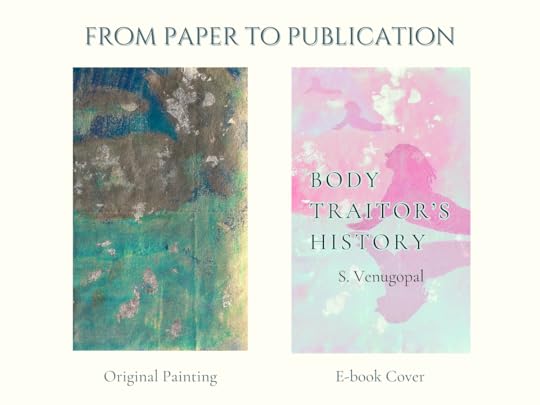
Using Adobe Lightroom on mobile (hey, it was free), I changed the colour tones until I achieved the mint green and pink/purple combination I was gunning for, while working to keep the gold flakes luminous.
Regarding the human figure, I went for a recognisable yoga pose. Called the Cobra Pose in English, it shows a person (incorrectly) rising from a face-down position on the floor. I’ll leave the symbolism of it to you.
The figure in the image, which many believe to be the main character or the narrator, is actually me. I used a photo of myself, enlarged it on a screen, and traced it, thus again trying to avoid the pitfalls of freehand anatomical proportions. I transferred this tracing to a thick sheet of watercolour paper and made it into a paper doll of sorts, which I then scanned and slapped onto the original image in the style of a collage.
Due to how colours are processed, as well as differences in dimensions, the print and digital versions of the book have slightly different covers. I like the warmer green and pink combination on the paperback, but I feel that the digital version preserved the shimmer of the gold flakes and gave me more space to play with the paper cut-outs.

And finally, the meaning of it all.
The overarching theme of Body Traitor’s History is, to me, the truth of what we so carelessly call a “golden age.” Shah Jahan’s time is referred to as one, and while it might have been a golden age for Dara Shukoh during his childhood, one can hardly say the same for the people who died from septic wounds, malnutrition, slavery, parturition, or wartime atrocities.

Historians of a more religious or nationalist bent these days rudely demand that we agree with their evaluation of which ages were golden. Every hour, they stupidly eulogise worlds without Tylenol and Tiger Balm and labour laws and Wi-Fi that their own spoiled children would have not survived, but perhaps they have a point. After all, every age is gold for those who have the most of it.
The histories of those without gold, meanwhile, are defaced and replaced with more striking characters.
 An unused cover design concept for my novel that I may one day resurrect [screenshot taken from the Canva workspace]
Body Traitor’s History tries to address this question in good faith and, most importantly, with love. So if you’d like to give it a try here, I’d be very grateful.
paperbackE-book

July 26, 2024
Meet My 35mm “Friends” | Part 2
 Fuji Velvia 50 film strips, held up to sunlight | Shot on a smartphone
Unlike veterans of film photography who compose epic poems in praise of their art, I struggle to defend this hobby. (I struggle to defend almost anything, but that’s for another day.) Basic 35mm film is overpriced and persnickety, with more brands going extinct by the day. Developing photos involves money, gelatin, and huge volumes of chemically contaminated water. Next, consider that out of a roll of 36 shots, maybe five will satisfy me. Despite what the fanatics say, film is dying as it’s rapidly usurped by analogue photography apps and editing software, and perhaps that’s not a tragedy.
At the same time, I’m not ready to forever sacrifice real light leaks for Lightroom presets.
With that out of the way, let’s go meet this group of charismatic yet problematic players.
You see this creature on the campus of a school that caters to upper middle class children. They are well over 40 but insist on dressing just like the high school offspring they’ve come to pick up. There is an abundance of neon pink chiffon or thrombosis-inducing jeans. Their makeup comes from duty-free shops in Dubai or Paris, with colors that bite the skin to bring out its beauty. Or they drive a scarlet luxury car with an open roof, blasting the horn and air-conditioning so everyone can envy their children as they clamber into the leather interiors with muddy shoes. You are chatting with another parent when they approach. They give you a tight-lipped smile, then invite your friend to Sunday brunch.
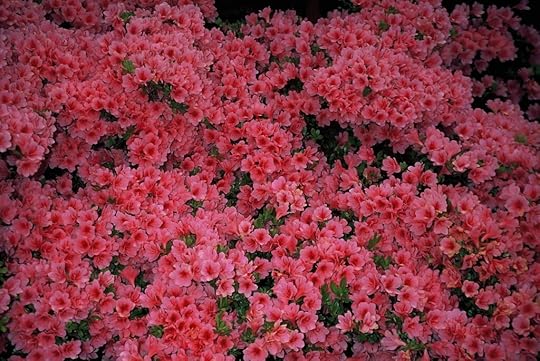 Ashikaga Flower Park | Shot with Pentax Zoom 105-R | [2018]
Velvia 50 makes the Ektar 100 look like a sweet-natured Marxist; every shot I took with it felt like a minor crime. No amount of light seems to be enough for this color reversal film but when you satisfy its tall list of needs, Velvia 50 pays back the favor with pinks and reds that run as rich as blood, and grain almost as fine.
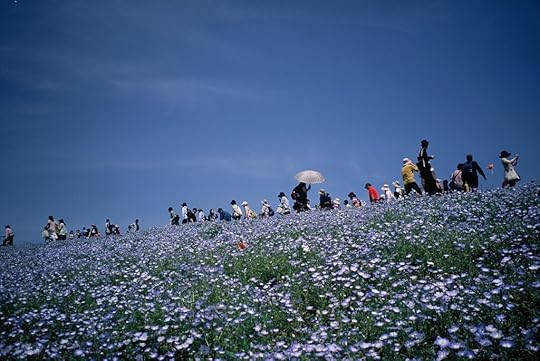 Hitachi Seaside Park | Shot with Pentax Zoom 105-R | [2018]
Velvia 50 also does a fantastic job of differentiating between shades of blue. The contrasts are robust without feeling digital, and the degree of saturation would have probably made a Fauvist weep in joy. The film’s noticeable vignette gives almost all its photos the look of a storybook postcard. Whites are subtle but the shadows can be merciless.
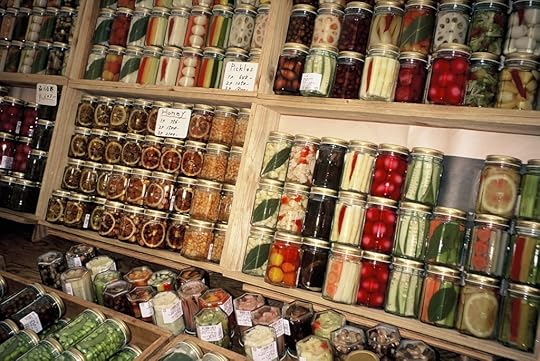 UNU Farmer’s Market | Shot with Pentax Zoom 105-R | [2018]
This is an immersive film in every sense of the word; its dark margins lock in a scene whose almost sentient colors command your attention.
Velvia 50 is here to seduce your jaded eyes. . . but only if you play on its level.
2] Japan Camera Hunter Streetpan [ISO 400]
Dark isn’t always deep. You thought you might gain a new philosophy by spending time with them but instead all your clothes smell like old cigarettes and you’ve lost your immunity. They declare their organization will be featured in the world’s newspapers, yet can’t get out of bed before 1pm. They curse the USA and teach you about neo-imperialism, then apply to Cornell. They sit in rooms without turning on the lights and drink more Diet Coke than water to prove they have trauma. They’ll be friends with anyone, but are somehow attracted to only one racial type.
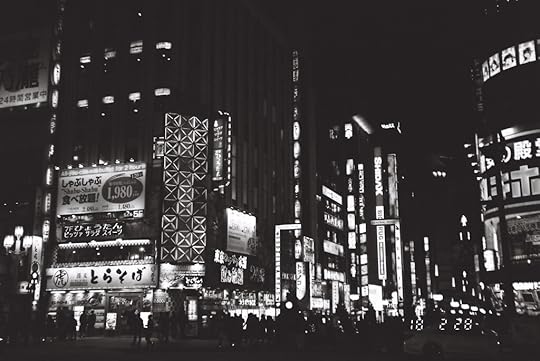 Shinjuku ni-chome | Shot with Pentax Zoom 105-R | [2018]
With JCH Streetpan, I was in the rare position of being able to witness a new 35mm film hit the market. In reviews and sample photos, I noted the sticky blacks and brave levels of contrast. Streetpan was uncouth, grungy, and loaded with smoky roadside drama. 22-year-old me fell in love.
The versatility of this film is impressive, no doubt, and one has to pull together a search expedition to find any grain (when you shoot it right). I read that JCH Streetpan was meant to be used in low light urban scenes/infrared photography, and it got me some atmospheric urban nightscapes. For that, I’m thankful.
But at the end of the day, I had mixed feelings.

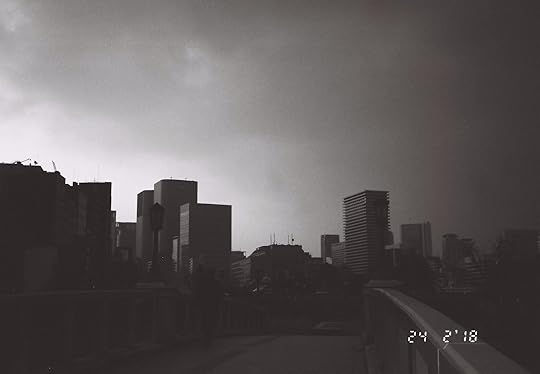 Uji and Osaka | Shot with Pentax Zoom 105-R | [2018][image error][image error]
When unsure, the film overcompensates with black and is prone to muddiness; take a spontaneous shot late in the afternoon and you have a photo which looks like it was washed with espresso. Meanwhile, whites are stripped of all texture and flattened out, so I wouldn’t recommend it for portraits.
With every picture, JCH Streetpan lets you know that it deserves to be in a far more expensive camera, in the hands of a far more experienced shooter. One factor may have been the way Streetpan was developed in the lab, considering its novelty at the time.
In conclusion, this film tries to accomplish many things. I wish accessibility had been one.
3] Lomochrome Purple [ISO 100 – 400]
B(e)ad jewelry. Unbrushed hair. Weed. Orientalism.
Your friend believes they are the universe itself, but can really be summed up in these words. They’ve learned to repackage a musty world and sell that distortion to us commoners, whose deepest journey into our soul was trying to remember when we last exercised. They promote capitalism, but call themselves “gy*sy” or “baby witch.” They tell you that your migraine is the result of a war within your soul and that your vaccine is made of fetal tissue.
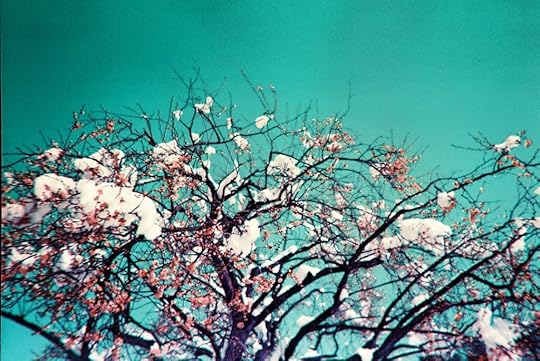 Aftermath of a snow storm [2018]
Lomochrome Purple is a piece of marketing genius. Take something that’s already niche and add yet more ways to be niche and effectively keep your fanbase from outgrowing you. This film is a revival of the more traditional (yet sadly extinct) color infrared films of the past. I can see this being a source of attraction to new film photographers who don’t care much for professional color films, and need something more flamboyant to sustain their interest in the medium.
An added advantage: very few self-absorbed monochromatic street photographers (male) would be caught dead with this counterculture plaything. You can buy Lomochrome Purple as only film, or as part of a reusable disposable camera.
 Mt Fuji sunset from Enoshima [2018]
In terms of contrast, the colors do most of the work. The dominant shades are cyan, a range of raisin, and dulled pinks/reds. If you use color gels, change the exposure time or camera ISO, or capture scenes with high amounts of diffused light, you get cleaner purples and pinks than what I have here, along with undertones of green and/or gold highlights. I realize that’s too random to be of much help, but I suppose that’s exactly what Lomography was hoping for.
Expect a lot of grain and dark patches for no discernible reason. Recommended for photographers who chase after cooler shades and aren’t afraid to admit a love for fantasy and/or hippie culture.
All in all, this is a film for that motley group of world-builders playing in narratives rather than facts.
Welcome to your first creative writing workshop! You glimpse this student seated next to the professor and size up your competition. They’re wealthy and cosmopolitan in a subtle way and seem as deep as a children’s swimming pool. You quickly dismiss them; such people will never experience a trauma worth exploiting for the sake of a publishing advance.
At the end of the semester, their story – a stream of consciousness style family saga about surviving PTSD – goes into a literary journal. Yours goes into the non-recyclable trash.
You learn that privilege doesn’t always signal a lack of talent, just as suffering doesn’t guarantee its presence.
 Advent of night traffic | Shot with Diana Mini | 2018
My relationship with Fuji Natura 1600 was like an ignorant encounter with something from the spirit world. If I had known the film stock was only available in Japan and was soon to be discontinued, I might have treated it with a little more dignity and shot some human subjects, rather than trying out long-exposure night traffic photography.
Add to that a toy camera with a love of randomly dropping solar flares over the photos, one police officer who kept following me because he thought I was trying to throw myself off the traffic bridge, and my cold, numb fingers failing to advance the film spool. The result? A rave on an alien planet.
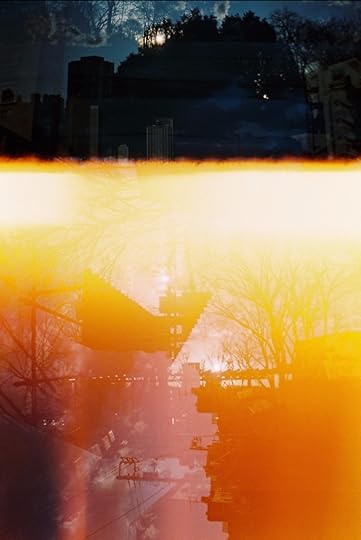 Multiple counts of urban exposure | Shot with Diana Mini | [2018]
From what little I can see in these photos, Natura 1600 does a fine job with various shades of the same color and delivers bold highlights as well. The black is clouded with green (more due to light pollution than the film), but under the right circumstances you can also get a pure color. I also love the high contrast and flattened grain.
But the 1600 ISO proves itself in the way so many of the fine details (stained clouds, electric poles, tree branches, etc.) are saved and allowed to keep their definition against a dark background, rather than just being blended in.
If you ever stumble across this film, guard it with your life and immortalize your nocturnal escapades.
They enter the office at 8:50 and rise from the chair at 17:10. They vote for (right of) centre parties and attend classical music concerts in their private box. They arrange college funds for their communist children who refuse to bathe, and bring the family to first world cities during the holidays. Strangely, their smiles go missing: the all too common fate of the one who captures portraits of others. Most media they consume was released in the 1970s, and they use a notebook to budget their finances. Friends envy their wine cellar.
Long after the communist children fail in their creative ventures and surrender to capitalism, their parent will pay the $10,000 fee and climb Mt Everest.
 A China Town in Japan | Shot with Diana Mini [2018]
Kodak Portra 800 is a film that demands to be treated with reverence. It’s generally used to capture studio portraits of eclectic-looking people who scowl at the photographer or turn away with artistic coyness. It’s a vivid yet balanced film that brings out the magic of forgettable features.
This film is a well rounded player in the color department and drinks in every shade with greed. I’m quite appreciative of that blue tinge that keeps the skin tones from becoming too yellow, yet preserves the warmth of a scene.
[image error][image error]Don’t let the name or the price fool you. You may think Portra 800 is a high-end professional color film that must be treated like a queen, but it can also be a creature of the night – a predator happy to follow its subjects through the studio and the cemetery.

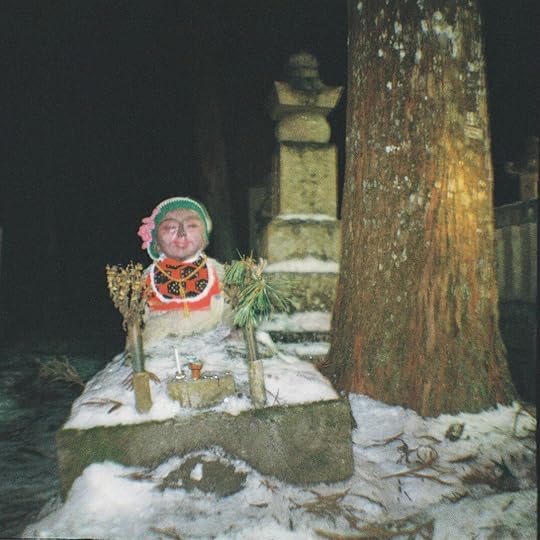 Chatting with a Jizo in Oku-no-in | Shot with Diana Mini | [2018]
The above photo of a Japanese deity was shot close to midnight in a gloomy Buddhist mausoleum where the air was heavy with snowy vapor. The only source of light was my toy camera’s flash and a few weak bulbs behind me. Yet the detail on the god’s face, complete with stone contours and a glassy sheen, is nothing short of formidable.
The range of brown hues pulled from the tree on the right gives you an idea of what this film can truly accomplish when capturing human skin.
The grain in these photos looks intense, but it’ll smoothen out if you shoot on any device that’s even a half-step above my own. I was unfortunately too broke to buy the film again to try it out on my point-and-shoot camera.
My closing notes? If you love someone and want to spend the rest of your life with them, but find yourself too repressed to speak the words, take a picture of them with Portra 800 instead.
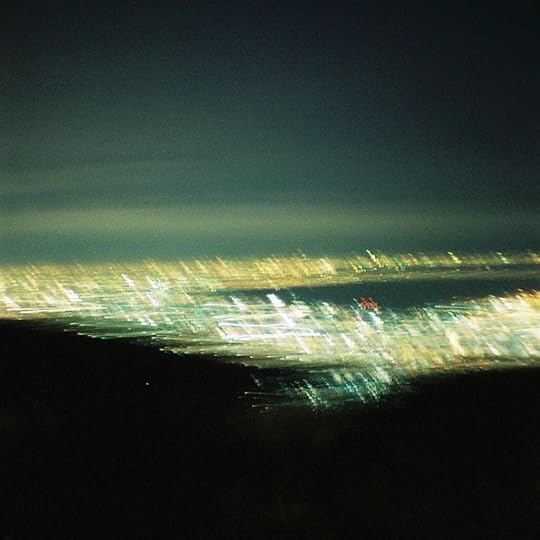 Impressions of Kobe, seen from Mt Rokko | Long exposure shot with Diana Mini | [2018]
No more is needed.
Meet My 35mm Friends | Part 1
 Pizza in Japan | Shot on Lomo 400
Loading a pack of film into your camera is no less than choosing a soulmate to join you on a quest. This act requires both prejudice and compassion.
Imagine your tender companion who identifies flowers on sight, dances under the sun, needs soup at least once a day, and goes to bed by 10pm. To drag them out for an oily noodle dinner at an alleyway restaurant before insisting they join you for a romp under the city’s neon lights while eating convenience store ice cream and debating politics at midnight would be pure cruelty.
But replace them with your sarcastic philosopher who’s turned the destruction of their own body into an organized religion, defeated the dark night of their soul through settler colonialism, and spends more time on midnight trains than midday ones.
Right there, you have a night against which all future nights will be compared.
35mm film is the same. Take Ektar 100 to a night market and a week later, you’ll be crying on the floor of the photo lab, surrounded by snapshots of black. Bring CineStill 800T to an outdoor lunch and the iPhone photographers will walk away with edgier shots.
In this series, I’d like to showcase some of the 35mm films I’ve tried out since I first began film photography in 2017.
Doing away with technical terms, measurement systems, obscure values, and reductionist bios (see all of the above), I’d rather introduce these films to you as friends whose stubborn biases exist alongside their surprising talents.
Disclaimer: this piece describes the fictionalized personality traits of 35mm films for a non-commercial review. The expressed views do not in any way reference the creators, manufacturers, or users of these products.
1] Fujifilm Super Ace [ISO 400]
Prepare to be hugged – this friend will be the first you meet on your first day at a new workplace. They pop up everywhere, welcoming nervous guests with excessive zeal. Desperate for any goodwill, you lean on them and come to adore the stable blandness that defines everything they do. But as you grow secure in your own skills, you find yourself outgrowing the relationship. Your friend’s all consuming love of veganism was cute a few months ago, but now all you can see is their utter lack of nuance. You need to find someone more inclusive.
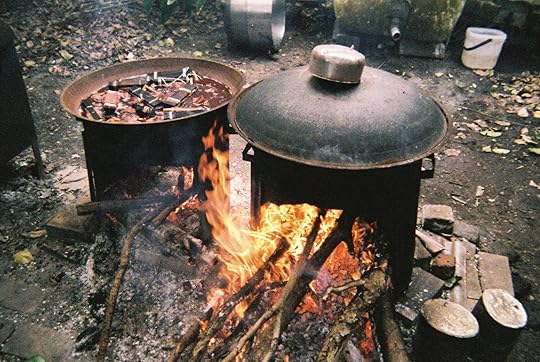 Dyeing cloth at Studio Kuuru-Koubou | Iriomote [2017]
Fujifilm’s unabashed love of green is evident in every picture you take. ISO 400 means you’ll be needing the flash and a good amount of light. This is your budget travel film, great for landscapes and day shots. But throw in a person of color and you might be forgiven for thinking that they just escaped a war on Mars. Every shadow has lime undertones, every face has been washed with Fanta. The grain is fine as long as there’s plenty of sunlight.
2] Ilford XP2 Super Single Use Camera [ISO 400]
Nod at your new hipster friend. You’re ready to cast off the unneeded and this one is here to help. Enter a cult that quickly accepts you as one of its own and forgives most of your flaws. But for a group that claims to be obsessed with darkness, they spend quite a bit of time seeking validation from the mainstream. You ignore it at first, but the pretentiousness begins to get to you.
You abandon this friend in a rock pool, and grab your scuba diving gear.
 Pharmacy in Haneda Airport [2017]
Ilford Photo is an amiable, mid-range, black-and-white film compan. Most of its offerings will get you a series of low-contrast shots where the dominant shade is a sunlit gray. If you use a flash, XP2 Super can be quite forgiving in low light situations and serves as an entryway to shooting monochrome. However, it captures a lot of vapor and lacks the drama of its more high-maintenance cousins such as Kodak Tri-X 400 or Japan Camera Hunter Streetpan.
3] Lomography Color Negative 400
The name is frighteningly long and foreign, but this is your first lover. A poet who uplifts your dreams but comes down like a gale on your insecurities. Attuned to your every need, they wait quietly at your side and help you coax life-changing insights from the scenes you once dismissed as superficial. They extend the golden hour to engulf your days, and stretch the twilight to soften your nights. Fighting, flirting, war, peace, . .these can happen within minutes of each other, or all at once. You are not allowed to crave familiarity, or a place to stand and make a plan.
 Sunset in Ikebukuro [2017]
Ultimately, that’s what drives you apart.
Lomography is a fascinating phenomenon, to say the least. Whether it’s a capitalistic project that farms the whimsy of those who can afford it, an indiscriminate tide washing out a stuffy precision-based discipline, or a PR stunt that created a whole movement to move a load of plastic, or something less cynical, is for you to decide. I’m just there because it doesn’t condescend to new photographers. (An occupational hazard of the art form.)
Its films are chemical chaos, meant to be described in only the broadest of strokes. Your pictures will be ethereal, but no two photos on your roll will look like they originated from the same planet.
 Evening Commute [2017]
With experimentation, I learned that the Lomo 400 will drag all your blues centerstage and let them steal the show. However, it also shows a fondness for yellow light sources, red undertones, and bold pinks. Greens are either weak or chilled with blue highlights, but not always. Expect cool undertones, but prepare to be surprised. Grain? Yes. How much? God only knows.
Also, meet my first real film camera! A £5 point-and-shoot junk piece abandoned by its previous owner because of a broken autofocus and dislodged viewfinder (explaining many of the blurry and cut-off shots you are about to see). It was a half kilogram brick around my neck and accompanied me on all my errands until I was forced to give it up at Narita airport to get my baggage down to the required weight as I was leaving Japan for the last time.
To take a more Buddhist perspective, I suppose the camera wasn’t ready to leave its native land and I hope it’s happily weighing down someone else’s neck in Tokyo.
 Toeing the line: micro-gardens and micro-sheds [2017]
4] Fujifilm Neopan ACROS 100
Even the most asocial of you should hope to know this one acquaintance: a significantly older individual on the fringes of your social circle who arrived late to the party of life. There’s always an intriguing backstory that only the worthy will hear: military service gone wrong, forbidden love affairs, criminal gangs, and more. They meet both the youth’s idealism and the seniors’ hesitation with practiced diplomacy. While your best friends pour all their energy into solving one part of your nature, this individual masters you with just a glance. You grow in their presence and realise that more things are survivable than you thought.
 Winter stroll through Shin Okubo [2017]
This old world film takes the most banal scenes of life and fossilizes them to serve up sepia-flavored memories just days later. Yet, Neopan Acros 100 was so cheap I saw it sold in unguarded crates outside camera shops.
 Man-made eclipses in Takadanobaba | Film + Red Filter | Shot with Yashica 300 AF | [2017]
This 35mm film delivered both low and high-contrast images with ease and intuitively knew how much gray to inject or hold back. Faces could be discerned but shadows spoke of untold depths. Starve it of light and it didn’t so much as murmur a complaint. Grain? What grain?
But why the past tense? This 35mm film actually went extinct a few months after I shot these photographs. (I’m trying not to take that personally.)
 Inside Toyama Park | Film + Red filter | [2017]
This photo to me feels like a frame straight out of some 1960s movie about the isolation of city life, and really speaks to the chameleon-like power of Neopan Acros 100. My ‘red filter’ here was a tinted piece of plastic I held in front of the flash to get a cinematic black sky effect.
Each day, I appreciate this film even more and I hope to give its successor a try.
You are supposedly friends. You suspect this because they sometimes invite you out to coffee and almost seem to enjoy your personality. It must be personality; next to them you feel you have very little to offer in terms of intellect or aesthetics. You’re constantly terrified of pushing your luck, convinced that your next sentence will be the blight on your ephemeral bond. They turn up to every encounter dressed in the season’s finery and their every step is laid down with an inborn arrogance. People look at you with this person, and assume you both are foreign royalty.
 Double Exposures in January | Shot with Diana Mini | [2018]
On every step of your journey together, Ektar 100 makes you pay. It’s painful to buy, knowing that you would shoot thrice the number of photos had you bought less fancy film, but it comes with tomes of referrals and rave reviews from professional photographers.
The film makes it clear with every shot that it would rather be on Venus, so you run after the sun to placate it.
 Plum flowers under snow | Shot with Diana Mini | [2018]
But the final photos come and they are crisp, clean, filled with bold color and grains as delicate as Turkish coffee powder. Now you are addicted.
Feed it with reds and pinks. Keep it away from shadows.
This is truly the film for your most decadent memories. The ones in well-lit rooms, I mean.
But to offset its snobbiness, I shot it with a toy camera.
July 21, 2024
Body Traitor’s History: Fantasy Novel Content Warnings

I provide here a list of content warnings for my novel, Body Traitor’s History, to serve those readers who are working to distance themselves from certain subjects, triggers, or themes.
Please note that I wrote the novel for adults (ages 18 and up) and not young adults.
***
Here are the major content warnings that DO NOT spoil the novel or its plot. My book may mention, describe, or delve into the following:
Substance abuse/addictionDeath/murderChild lossPregnancy lossFatphobiaSexAdult humourMental illnessTraumaMedical conditionsTortureHistorical evils such as wartime rape, slavery, widow killings, etc.To learn about the novel or where to get it, click here.
In general, Body Traitor’s History leans more towards dark comedy rather than grimdark fantasy. Its message is ultimately hopeful and my aim is to entertain you, as opposed to leaving you shocked or saddened.
If you do not wish to see possible spoilers please stop reading here.
To see content warnings that may spoil the plot, keep scrolling.
***
Below are some content warnings that DO reveal important plot/character points or spoilers, so please proceed with caution.
To read the triggers, please highlight the blackened text with your cursor.
My book may mention, describe, or delve into the following:
RapeChild abuseSuicideGender dysphoriaThere are no on-page depictions of rape or child abuse.
There is an on-page depiction of a failed suicide attempt.
Some depictions may be referenced in a darkly humorous way that might not be acceptable to all.
I believe I explore these themes and triggers in good faith and with sensitivity, at times drawing from my own experience as a journalist and an individual. These triggers are not inserted for shock value or to move along the plot.
I hope this list helps you decide whether Body Traitor’s History is a safe choice for you.
June 20, 2024
Body Traitor’s History : Excerpt
Two hundred years after the first Emperor Adheenishta left this world with his intestines outside his body because the lust-crazed elephant he was taming flung itself upon him, the sixth Emperor Adheenishta mistakenly baked himself to death by falling asleep after a feast with his favourite opium pipe in his mouth.
The first sign of a modernising empire is that each emperor’s death grows more shameful to recount. This is why I declare a golden age and a modern one will never lie in each other’s arms, exchanging loving looks. Instead, my story hangs between the two, screaming in discomfort. You may expect opulence, executions, heartbreak, and vulgar rumours about the emperor’s family. But I will also speak to you about science, medicine, history, and changing bodies.
When I report to work, stars still prick the sky. Bathed and groomed, I weave through blocks of herb gardens and leisure pools that delight the senses during the day and break the ankles at night. Mint, coriander, and basil greet me with their heady scents and an overfed cat comes to wish me a pleasant day. I let her nuzzle my face. She is upset I have shaved and jumps back into the darkness with a cry. I climb up crooked fortress steps with only the half-eaten moon showing me the way until I come to my destination.
Set pointedly close to the palace, the royal gymnasium vibrates with light and life even before dawn, chastising those who are still looking for sleep at this hour. Hundreds of clay lamps in mirrored shelves brighten the stone walls and fight the early morning chill. Stinking bats shiver and fuss in the eaves.
On the lowest floor of the gymnasium, yawning princes and their trainers stretch on rubber mats. They roll out their muscles, exercise with batons, or warm coconut oil over firelight for their massages. I am followed by the crack of joints and the squelch of wet skin wherever I go. Running upstairs, I see the kingdom’s greatest warlords throwing weights, jumping into midair splits, and sprinting with maces or spears. Moans come in every imaginable pitch. On the third floor, I am welcomed by music and pounding feet. The dance class is underway, with musicians beating wooden blocks and plucking strings while the court dancers and their masters storm through the songs they will perform for the king’s birthday. On the fourth level, I am treated to boxing and wrestling. There are slaps, strikes, falling bodies, interesting positions, and unclean taunts. On the highest level, swords scream, daggers spark, spears fly, and their shadowy wielders fight for breath.
Armed with my cleaning basket and duty list, I make certain that the floors are shining, the air is perfumed, the water tanks are free of scorpions, and there are no neglected weights or swords on the ground waiting to kill a drowsy prince. I put away over thirty of them, cursing their former owners. Making my rounds, I find a pile of sweat-stained cloth mats. I soap them back to whiteness and hang them at the windows so they will both dry and thank us with a breeze.
Returning to the entrance, I am humming the ballad the palace harpists enchanted us with last night when I notice General Rayadkal in his short pants and exercise shirt. He wears the expression of a small boy waiting outside the female bath hall for his mother. Rayadkal’s worthless trainer is late and the warlord who led the Daedkar army to victory in over seventy battles across land and sea does not know what to do with his limbs. I drop my cleaning basket, arrange my uniform, and greet him with a low bow.
The general’s body trainer is Archim Yifaj, who is hated by almost all. Unlike me, Yifaj is a true Daedkar man, but he is so poorly bred that upon hearing him speak, one would think he was abusing his farm goat rather than teaching a respected general whose grandchildren had children.
“Pull in your stomach!” he would threaten as Rayadkal lay on his back with his thin legs hanging in the air, his body reduced to a tremorous strip of lean meat from the effort. Even the aforementioned goat could tell you that Rayadkal had indeed drawn in as much of his stomach as mortally possible and the only way he might take in the excess flesh was if he broke open his ribs to claim more space. But none of that mattered to the trainer. He derived immense pleasure from making the general perform needlessly dangerous martial arts sequences, such as one that had him twist from a flying kick to a prostrate pose on the floor in a single motion. At the end of each session, Rayadkal’s white exercise garments were so wet that one could see every wiry hair on his stomach through the fabric.*
[*One could see many other features as well, but I stop myself here.]
“The teacher has overslept,” he complains to me. “He promised a massage.”
“I will make enquiries,” I promise, and send a keeper to rouse Yifaj with violence. “In the meantime, will you honour me by accepting my services?”
“But the massage. . .”
“I will gladly administer it, my lord, with your permission.”
He eyes me with disappointment—Yifaj is more than double my size, with upper arms that would make watermelons flee in shame—but agrees. I ask the general about his sleep, diet, and bodily pains. His answers are curt and laced with irritation. Since his stomach and abdomen are aching from the previous day’s exertions, I focus on strengthening his legs. We run up and down the stairs together, lift bars with our shins, push against weighted sacks, balance on quavering logs, raise heavy wheels with our flexed feet, perfect a demanding cycle of kicks, and practice our squats while holding solid iron balls above our heads.
My words are encouraging, but they do not please the general. His shirt is still largely white when we conclude and he appears insulted by the lack of oil and sweat. Though unhappy with myself, I spread out a fresh rubber mat and give the general the massage that must have consumed his thoughts since it was promised. I am far less solid than his usual trainer but bring talents of my own. Within minutes, the most feared warlord in the kingdom is asleep under my hands.
I bathe, change into a new uniform, and watch the elderly man snore, wondering what punishment they will devise for his trainer, and praying we might be allowed to watch. Though unlikely, I fantasise about the man being disembowelled and made to pick up his entrails while we all chant, “Pull in your stomach!”
At this moment, the head of the royal gymnasium runs into the hall, his face red with sleep lines and his uncombed beard spread out like a fan. The keeper I sent to find Yifaj is behind him, trying but failing to hide his sunny grin.
Head Keeper glances at the sleeping Rayadkal, then seizes my arm and throws me into his office. He pulls the thick white curtains together to create a conspiracy room.
“Trainer Yifaj was arrested late last night by the queen’s bodyguards,” he whispers to me. “He was found to be a traitor. A search of his rooms revealed coded letters guiding him to poison General Rayadkal. He was questioned under torture and the exalted Light of the Winter Moon immediately ordered that his neck be liberated from its unsightly ornament. All our rooms are being searched as I speak now, to find accomplices. The sentence was carried out while you trained the general. The traitor’s headless body will be paraded on an elephant today evening, as a warning to others who harbour such treacherous ideas. The event will begin one hour before sunset, and your attendance is mandated. Palace staff must be dressed formally, as there is a celebratory feast afterwards. Do not fret—I will lend you my suitable slippers.”
“I have suitable slippers,” I say through dry lips.
Head Keeper looks at them. “Indeed, if you mean to gift them to the king’s dogs.”
“The traitor leered at me often when I was training my students,” I say. “Yifaj, I mean. I found his behaviour unseemly.”
“Others have complained of his wandering eyes,” Head Keeper sighs. “I disciplined him many times, but I realise now it was not unseemly behaviour. As an imposter, he could not think of more than three or four exercise sequences. He was studying the other trainers—and you most of all—to thieve new ideas and keep the general engaged. I believe this is why he made his students repeat the same exercises without reprieve until their muscles tore and they wept like children.”
When I am unable to answer, Head Keeper opens his schedule book and trails a finger down the morning list.
“The traitor’s next appointment was with the World Shaker,” he tells me. “You will train him today instead, but end ten minutes earlier. Wash yourself and dress excellently in a fresh robe before returning to this room. You will meet a new master here, who will come through the secret underground passage. You will speak of his and your relationship to no one. Will you swear on the false gods you pray to?”
I do so.
Outside, Rayadkal is awakening and he smiles around the gymnasium as though it is yet another fortress he has blasted open. Head Keeper mouths the prayer of the dead and goes to destroy his fine mood.
buy the paperbackBuy the e-bookBuy e-book/paperback on amazon.com
Cover image: Ink on paper with digital colouring by Sahana Venugopal