
L.M. Long's Blog, page 34
March 15, 2012
Mental Health Day
"My tummy hurts."These are the three words I dread as a mom. Choose any other part of the body to hurt as a child, and it can probably be repaired with a kiss and a bandaid. Maybe a couple of tylenols. But the stomach? Tummy means trouble.Like dominoes we went down one by one. My school age child brought it home and my husband held out as long as he could, but eventually we all succumbed. Normally being a mom and being sick isn't exactly harmonious. Can we really ever have a sick day? Sick means I can't really indulge in my own well being, I still have to take care of everybody else. It is the very definition of being a mother- no sick days. However, this time it was bad. Broke my washing machine doing laundry, bad. I had to call in the calvary (ie my own mother) for support.When she agreed to come, I wasn't really full on sick yet. I entertained the brief thought of perhaps being able to take advantage of the opportunity of having my mother here. I dreamt of getting whole chapters of my newest WIP revised in between bouts of sickness. I think that is in the mother's DNA. Even when we are at our worst, we can think of something that needs to be done. The reality of the situation was much less pleasant, in which I spent most of my time sleeping with my head next to the bathroom toilet, or trying to sip a disgusting concoction called happy belly.It took a few days before my belly could be anywhere near happy again.When I was conscious and not concentrated on immediate physical needs, I would stare at the ceiling for long spaces of time. My brain hurt too much to try and concentrate on revisions, but it didn't keep the voices out. I began to hear long streams of character dialog. I had a delirious breakthrough in my plot line. Then I fell asleep.When I woke again the ideas were still there, and after a quick trip to the bathroom, I jotted them in my notebook. It was right around this time that I thought I should call out sick more often. Being quarantined seems to spark creativity in me. With the lack of distractions and pressures on my time, I could really hear my characters. Obviously I knew this on a somewhat subconscious level, since my best writing comes when all my children are far, far away from me. "Our language has wisely sensed the two sides of being alone. It has created the word loneliness to express the pain of being alone. And it has created the word solitude to express the glory of being alone." Paul TillichIt's a fine line isn't it? I long for the day when my children will all be in school. Fantasize about the long stretches of time I'll have to write. I feel I need a little bit more of the glorious side of solitude in my life.
For now I'll settle for a sick day once in a while.
-Laura

For now I'll settle for a sick day once in a while.
-Laura


March 13, 2012
Day 22: Mastering Story Structure

Despite talking about story structure in several of my previous posts, I've really felt unsteady about it. Sometimes I find myself getting lost in terminology like turning points and plot points or denouements and resolutions, so today I decided to tackle this head on. I sat my little bum down on my bed and have been pouring over all the story structure books I own until I FINALLY feel like I've got the hang of it. (I even created the little pie chart below to better visualize the way all of these pieces fit together).
So now I turn to you. I'm going to offer up my interpretation of what story structure is, and then you're going to comment and tell me if it looks right or if I'm totally off the mark. *deep breath* Here goes.
[image error]
ACT I Your story should begin with a hook. In the past I wasn't sure if the hook was just another term for the inciting incident but I've concluded that they serve different functions, despite occasionally being presented in the same scene. The hook is whatever draws a reader in. This could be the story's concept (a civilization has 24 of its children fight to the death on live television, as in The Hunger Games), its language ("Between the silver ribbon of morning and the green glittering ribbon of sea, the boat touched Harwich and let loose a swarm of folk like flies..." - G.K Chesterton in The Blue Cross), its humor ("A healthy male adult bore consumes each year one and a half times his own weight in other people's patience." - John Updike, Assorted Prose), or any other number of openings that compel the reader to keep reading.
Your story should also have an inciting incident, but here's where things got even more complicated for me. In Writing Great Books for Young Adults I read that the inciting incident should take place almost on page one, absolutely as soon as you can introduce it. In Story Structure -- Demystified I read that the inciting incident should take place within the first 25 pages of your novel, but that some "life as usual" scenes should be exposed first to showcase just how much the inciting incident will change your character's world. Then in Hooked, Les Edgerton suggests that a good hook will involve the inciting incident, thrusting the character into trouble and egging the audience to continue reading. The conclusion I've reached from these varying sources is that the inciting incident of your story can be introduced at different times, depending on the style of book you're writing. For example, most young adults have accustomed themselves to the fast-paced world of instant messaging, instant microwaving, and instant gratification. If they have to wade through pretty prose and petty backstory your book won't stand a chance. On the other hand, my mother isn't interested in reading a book if it lacks a sense of poetry and a deep understanding of character early on the in story. I would say the best advice for the point of introducing the inciting incident is to study examples from your genre.
After including the obvious necessities of introducing your hero, showing life as usual (or how the inciting incident has changed life as usual), dropping bits of backstory, and foreshadowing things to come, you will end Act I with the first plot point. (Plot points can also be referred to as turning points, so don't get confused by that). Plot point one is when the main problem, or "initial surface problem," for the character is introduced.
"[It] occurs as a direct result of the inciting incident. And while it may seem at first glance that solving this problem is what the story is really about, it's not. ...[E]very story is about solving the deeper, more complicated story-worthy problem that is slowly revealed as the story progresses," (Hooked, Les Edgerton, page 26).
ACT II, PART 1 The beginning of Act II is all about responding to the first plot point. Often a character will need a bit of time to sit and plan out how to best overcome (or secure if it's a romance) these recent changes. Larry Brooks suggests that any attempts the hero makes to fight his antagonist in these scenes cannot succeed, but that each failure slowly helps to strengthen him, preparing him to overcome the antagonist in Act III.
At about the 3/8ths mark of your novel you should consider including a pinch point, allowing the reader to see firsthand how strong the antagonist is. This helps increase suspense as it causes a reader to wonder just how the hero really will come off conqueror when his foe is so capable. Larry Brooks offers that,
"Pinch points can be very simple and quick. It can be one character reminding the other of what's going on. A glimpse of an approaching storm - take that literally or metaphorically... The simpler and more direct it is, the more effective it is" (Story Structure -- Demystified, locations 1393-1399 on Kindle).The midpoint occurs halfway through your novel. It is the point at which the main character is allowed to conquer their adversary momentarily. This is where the temporary triumphs that I wrote about previously come into play.
ACT II, PART 2 At about the 5/8ths mark it's time to include pinch point two. This serves the same function as the first pinch point - reminding readers of the power of the antagonistic force - only this time the antagonist has gotten stronger. Just as the hero has grown and evolved with every failed attempt to rectify the problem, so has the antagonist evolved after being defeated by the hero's temporary triumph.
The reversal is what puts the "temporary" in temporary triumph. Victoria Lynn Schmidt's Book in a Month shows the reversal of the hero's temporary triumph occurring near the end of Act II, Part 2, but that is subject to interpretation. Depending on the style of story you are writing, the reversal may come at any point after the temporary triumph; (In my story it comes almost immediately after). The advantage of putting the reversal off until the end of Act II is that it functions well as a catalyst for the "dark moment."
Not a necessary part of a story, but certainly one that increases dramatic tension, near the end of Act II is the "Dark Moment" (or as Larry Brooks calls it, the pre-second plot point lull). This is the point at which things really can't get any worse for the hero. All hope seems lost and the audience is left wondering how in the heck the hero will get himself out of this jam.
The dark moment now plays the role of catalyst, spurring us into the second plot point. Occurring 75% of the way through, this is the point at which the final bit of new information is introduced, giving the hero all the knowledge he'll need to conquer the villain in Act III. After having gone through her toughest trial yet the heroine has reflected on how committed she really is to this goal. The second plot point shows her renewed commitment to solve this problem. An interesting note: In David Warfield's article on story structure he points out that the second plot point often answers the surface problem, or as he terms it, the "dramatic question." The problem that was plaguing the hero from the beginning, the one that kept readers wondering "Will he ever be able to solve this?" gets solved right here. The hero is inevitably given a new set of goals as a new dramatic question is posed.
"Example[s]: In Seven, at the end of Act II the Serial Killer comes to the police station and turns himself in! Mystery solved! Dramatic Question (will the detectives stop the Serial Killer?) answered. Story over? Not quite… In Wedding Crashers, the hero's sins are exposed (by the antagonist fiancé) and the girl he loves now hates him: she's sure to marry the fiancé!" (Story Structure in 17 Steps, Warfield).
ACT III Act III is all about your main man getting his hero on. He's been doing what he can to solve the problem up till now, but he was lacking some skill or personality trait that would allow him to succeed. After having gone through a series of challenges and failures your hero has grown and developed and is ready to take on the antagonist.
The climax is the most important scene in Act III (arguably the whole book). A good portion of Act III should be spent building up the tension and stacking the odds against your main character to make his triumph all the greater. The climax is the height of dramatic tension where the reader still questions if the hero will win or not.
It is only in the resolution (as a direct result of the climax) that the hero's victory or defeat is certain. Now we see all of the loose ends tied up as the hero's life moves to a new state of normalcy. The best resolutions are often brief,
"provid[ing] a... 'coming down' period to emotionally center the audience to the idea that ORDER HAS BEEN RESTORED in the world of the protagonist," (Story Structure in 17 Steps, Warfield)So tell me, did I get it right? Did I forget anything or mix terms or roles together?
MY DAY 22: This was a hard day for me. Up to then I'd been writing in the female perspective but, having duel-narrators, I made my first attempt at writing from the male perspective. If my man were verbose and semi-charming it would have been a bit easier, but he's a complete realist who isn't going to get all flowery in his descriptions of a scene. I'm not totally sure how to convey detailed goings-on when they're being told by this minimalist.
Photo Credit

March 6, 2012
The Challenges of Writing
I have been sitting here staring at a blank screen for the last two hours trying to write my blog entry. My children are around involved with several things: playing video games, watching "The Aviator" and staring at our broom standing up on end. That alone would probably get my brain going. Still nothing. So I start to research what I might talk about: Politics, religion, health issues, children. Nothing strikes my fancy. I read through my "morning pages" and all I have been writing about is all the woes of remodeling without enough money . No good. So I go to my writer's notebook and low and behold there are some notes on writer's block. From Stephen Blake Mettee article on Banishing Writer's Block, he suggests several ideas. If you think you have nothing to write about then think about this: 1. you have no plan 2. you don't have enough information 3. you don't change subjects enough. 4. you have a lack of passion Having a plan is easily fixed with writing down your ideas in a notebook as I have done. Gathering information about a topic is also not difficult only time consuming. You can do it with a few hours of time. Changing the subjects in your writing isn't that difficult either. Reading and researching takes time but it is worth it. And the last of them: passion. If you have no passion about anything, I don't know what you can do about that. You can't just run out and buy some. Writer's need to work on what gives them their opinions and ideas about certain subjects. The passion should soon develop. I've done all of that and still no ideas. What else am I to do.
Perfectionism is another idea Mr. Mettee wrote about with writer's block. He says to allow yourself to write a flawed and mistake ridden draft and edit it later. Just get the ideas down on paper and never mind how they look. You can always rewrite it. You can't rewrite a blank page. So I just start typing whatever is in my head.
Self-Doubt. Another challenge to overcome is the negative thoughts that drain your creativity and set you up for failure. Give yourself positive thoughts and just start writing. A pep talk to yourself so to speak. You can do it. You have done it so many times before. Just start typing and before you know....voila you have something you can work with.
So there you have it. How to overcome writer's block. A challenge we all face from time to time that we must overcome.

Perfectionism is another idea Mr. Mettee wrote about with writer's block. He says to allow yourself to write a flawed and mistake ridden draft and edit it later. Just get the ideas down on paper and never mind how they look. You can always rewrite it. You can't rewrite a blank page. So I just start typing whatever is in my head.
Self-Doubt. Another challenge to overcome is the negative thoughts that drain your creativity and set you up for failure. Give yourself positive thoughts and just start writing. A pep talk to yourself so to speak. You can do it. You have done it so many times before. Just start typing and before you know....voila you have something you can work with.
So there you have it. How to overcome writer's block. A challenge we all face from time to time that we must overcome.
March 1, 2012
I refuse to die (literally).
Monday afternoon my oldest daughter came home with a note from school. A project was due the next day.A project she should have been working on for two weeks, yet I knew nothing about.A project she would be presenting, from memory, to her class.My daughter is seven.I called the teacher immediately for details and sure enough, my daughter had failed to give me the initial FIVE page packet explaining said project, along with the additional TWO reminder notes sent home about said project.I did not have time for a freak out. We plunged in head first, churning out notecards, internet pages, and everything we could find about Giraffes that could be rubber cemented to a poster board. She presented it yesterday and all went smoothly.
I would even dare say, better than if we had all of the two weeks to prepare.I work well on a deadline.For those of you that may have missed me mentioning it in previous posts, I am a runner.I am a runner that hates to run.Running falls into the category of things I wish I could do asleep. Then running would just be a nightmare, instead of my dreaded reality three times a week. Because I absolutely hate to run and it's really good for me, I schedule three or four races a year to keep me training.There is absolutely nothing more motivating than an impending deadline, especially when you have a team of girls counting on you to be at the starting line with them. I feel this way about writing. Half the time I wake up and write because I see the impending deadline in the future, the goal to finish my next book looming.Sometimes I hate the writing process, especially when I feel myself tapping out words I know I will erase a week or two later.I've been in a a bit of a slump recently, writing and erasing, writing and erasing.Until I installed a new program into my computer to "encourage" my writing.Write or Die. Have you heard of it? It's my newest obsession. It combines the panic of finishing a school assignment the day before it's due, with the pressure of training for a race.There is nothing like the power you feel when finishing something that demands everything of yourself.Use Write or Die in your next word war and prepare to be amazed at what you can accomplish.-Laura

I would even dare say, better than if we had all of the two weeks to prepare.I work well on a deadline.For those of you that may have missed me mentioning it in previous posts, I am a runner.I am a runner that hates to run.Running falls into the category of things I wish I could do asleep. Then running would just be a nightmare, instead of my dreaded reality three times a week. Because I absolutely hate to run and it's really good for me, I schedule three or four races a year to keep me training.There is absolutely nothing more motivating than an impending deadline, especially when you have a team of girls counting on you to be at the starting line with them. I feel this way about writing. Half the time I wake up and write because I see the impending deadline in the future, the goal to finish my next book looming.Sometimes I hate the writing process, especially when I feel myself tapping out words I know I will erase a week or two later.I've been in a a bit of a slump recently, writing and erasing, writing and erasing.Until I installed a new program into my computer to "encourage" my writing.Write or Die. Have you heard of it? It's my newest obsession. It combines the panic of finishing a school assignment the day before it's due, with the pressure of training for a race.There is nothing like the power you feel when finishing something that demands everything of yourself.Use Write or Die in your next word war and prepare to be amazed at what you can accomplish.-Laura
February 28, 2012
Day 21: Solidifying Scene Structure
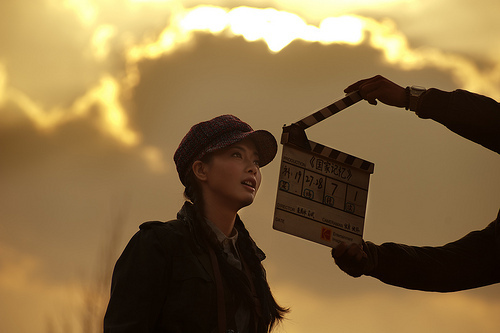 Day 21 of the 36 Day Challenge; the first day of Part 2, Act II and we haven't even covered scene structures yet! So here are some tips from pro scene writer Jordan Rosenfeld to help you master the scene and create a draft strong enough to withstand even the most brutal of revisions.
SCENE LENGTHSChoosing to use a long or short scene has much to do with the overall ebb and flow of your storyline. When attempting to build suspense or hold off on that pivotal payoff it would be best to use a longer scene. Or if the previous scene left your reader breathless and reeling from a frenzy of activity a long scene can be strategically placed to slow the pace a bit and allow the reader time to digest what just happened. Maybe you've just finished a long scene and the story needs a pickup in pace; time to employ the short scene. The length of the scene can also help distinguish between the personalities of your characters. A quiet, shy character, for example, will likely have a shorter scene than the long-winded town gossip who is ever-eager to share the latest news of her neighbors, family, and pet gerbil. SCENE STRUCTURES
"Each scene needs to have its own beginning, middle and end. The beginning should be vivid and memorable, and help immediately draw your reader into the scene. Scene middles are the vast territory where the stakes must be raised, characters get caught in conflict and consequences follow that keep your plot interesting. Scene endings, of course, set the stage for the scenes that follow, and leave a feeling or taste with the reader that should be unforgettable," (Write Your Novel in 30 Days, page 66).Beginnings: With the beginning of each new scene you have the obligation to capture your reader's attention all over again, and Rosenfeld has provided us with three techniques to do just that:Character Launches begin straightway with your protagonist and help your readers feel connected to the emotion in your novel.Action Launches must begin at the point of action - no preemptive explanation is necessary. If you want to explain a character's motivations be sure to have the character reflect on them after the action has already taken place.Narrative Launches are to be used in small doses; a novel beginning with narration at the exclusion of action can quickly become dull. Narration can be useful however, if an action sequence would take up too much time and a summary will move the reader along to the real action more quickly. It may also be necessary to actually set the action in motion, such as in stories beginning with lines like these: "'My mother was dead before I arrived.' 'The war had begun.' 'The storm left half of the city under water,' (WYNITD page 68)." Another opportunity to begin with narration is if the character is not physically capable of acting (a person in a coma, paralyzed, etc.). When deciding on which style of scene opener to use, consider the following questions:
1) Where are my characters in the plot? Where did I leave them and what are they doing now? 2) What is the most important piece of information that needs to be revealed in this scene?"Middles: This is the time to complicate your character's life a bit further. He began the scene with a goal or expectation, so let's find a way to up the stakes a bit: find something your character stands to lose (or gain) and threaten to take it away (or provide it). Will this change your character's goals for the scene? Will he leave the scene hoping for something he hadn't known he wanted when the scene began?
"[To] keep your protagonist from wandering aimlessly about your narrative... give him an intention... - a job that he wants to carry out that will give purpose to the scene," (WYNITD page 69).Endings: These are the trial of how well you've nailed your scene. Done right, the reader will have a deeper interest in the characters and plot, keeping them turning pages to find out what will happen next. Done wrong and you've potentially just lost yourself a would-be fan. One way to help focus your scene ending is to think in terms of a camera's zoom feature. Zooming in allows the viewer (in our case reader) to see intimate details and be drawn more closely into the emotions of the characters. Zooming out will provide them the opportunity for overall reflection and a chance to see how the events in the scene may color the trajectory of the story. Thinking of each scene as a mini story that begins with a goal, sees the goal obstructed by new challenges, and ends with a new goal, will help focus each of your scenes and give them the purpose they need to keep your readers reading.
MY DAY 21: Sadly I found that my aforementioned condensed scenes weren't working too well and needed to be expanded. So much for my previous day's work.
Photo Credit

February 23, 2012
If You Care About Your Aspiring-Writer Friends
I blog about grammar a lot over on my own blog. Apparently, I'm not reaching enough people. I'm hoping that all of you out there who care about your friends will share this post. Because even those people you know that don't write novels or other equally ambitious projects, still write. Facebook posts. Twitter. Emails. Texts. And various other things that drive people like me crazy.
I wouldn't exactly say I'm a grammar freak. I make my own share of mistakes. I just happen to have "Grammar Girl" and the "Chicago Manual of Style Online" bookmarked. Several grammar books have permanent residence next to my computer. I correct my family and friends on Facebook because I get a kick out of making fun of them. And since I'm a writer, they think I have the clout to do that . . . (I won't digress into another post about misconceptions people have about writers.) The great thing about writing fiction is that you can flaunt grammar rules in the name of poetic license most of the time. Like above. Did you notice the sentence fragments? (I didn't pull one over on you? You don't think "Facebook posts" is a complete sentence?) There is one thing that, if your MS crosses my desk--or my screen, I should say--I will mark with fervor. Comma Splices.If I've edited for you, chances are you've seen the dreaded comment with two little, annoying letters "cs" over and over. Don't worry about it. I'm about to lecture now, but quite honestly, it's by far the most common mistake I see in manuscripts. There are several in the first Harry Potter book, just sayin'. Sometimes--but only when I can clearly see the reason the author punctuated the sentence incorrectly--I let it slide.Simply put, a comma splice is when a comma is used to split (or splice) two independent phrases without a coordinating conjunction.Example: I went to the store, I bought bread.Wrong. WRONG! . . . (Sorry, I'm calm now.) Although the two ideas are closely related, and it's quite tempting to emphasize the relationship by using the comma as just sort of a breath between them--it's wrong. If you want that close relationship use a semi-colon. I went to the store; I bought bread. Or better, reword the sentence. I went to the store and bought bread. OR When I went to the store, I bought bread. The possibilities are endless.I personally think "Grammar Girl" has one of the best explanations for what comma splices are and why it's better not to use them, despite the temptation to flaunt this particular rule in the name of art. Read or listen to it here. In the mean time, stop splicing those sentences incorrectly.

I wouldn't exactly say I'm a grammar freak. I make my own share of mistakes. I just happen to have "Grammar Girl" and the "Chicago Manual of Style Online" bookmarked. Several grammar books have permanent residence next to my computer. I correct my family and friends on Facebook because I get a kick out of making fun of them. And since I'm a writer, they think I have the clout to do that . . . (I won't digress into another post about misconceptions people have about writers.) The great thing about writing fiction is that you can flaunt grammar rules in the name of poetic license most of the time. Like above. Did you notice the sentence fragments? (I didn't pull one over on you? You don't think "Facebook posts" is a complete sentence?) There is one thing that, if your MS crosses my desk--or my screen, I should say--I will mark with fervor. Comma Splices.If I've edited for you, chances are you've seen the dreaded comment with two little, annoying letters "cs" over and over. Don't worry about it. I'm about to lecture now, but quite honestly, it's by far the most common mistake I see in manuscripts. There are several in the first Harry Potter book, just sayin'. Sometimes--but only when I can clearly see the reason the author punctuated the sentence incorrectly--I let it slide.Simply put, a comma splice is when a comma is used to split (or splice) two independent phrases without a coordinating conjunction.Example: I went to the store, I bought bread.Wrong. WRONG! . . . (Sorry, I'm calm now.) Although the two ideas are closely related, and it's quite tempting to emphasize the relationship by using the comma as just sort of a breath between them--it's wrong. If you want that close relationship use a semi-colon. I went to the store; I bought bread. Or better, reword the sentence. I went to the store and bought bread. OR When I went to the store, I bought bread. The possibilities are endless.I personally think "Grammar Girl" has one of the best explanations for what comma splices are and why it's better not to use them, despite the temptation to flaunt this particular rule in the name of art. Read or listen to it here. In the mean time, stop splicing those sentences incorrectly.

February 22, 2012
Dealing with Rejection.....
Oh my goodness..... I missed my last blog post on here and I feel awful. I hadn't marked the rest of my calender to schedule in a writing session for this blog. I realized a couple of weeks ago that my schedule of blog posts ran out and and thought I was done. But I'm not done....I have so much more to write. So looking at the schedule of when I contribute, I realized that I missed an entry....but never fear I will pick it up again and continue on.
Part of my absence was because of me and my husband's work schedule. It changed drastically at the beginning of the year. So while we are making more money doing other things---I am not getting to write as much. On top of that I was given the ax at the newspaper I wrote for every week. Because of budget cuts, I was informed that my last column was published last Friday-- which was three weeks ago. I couldn't even write a good-bye column, it was just "That's it---you're gone". Terrible. I wrote that column for 3 1/2 years which gave me over 200 articles on many, many topics. It's so sad to see it end but sometimes that's what happens.
So what do we writers do after a difficult loss of position or rejection???? We think about it for a while, we have a good cry and then we pick ourselves up and continue writing. I realized that I have enough material to publish another book which will be a collection of my best 100 columns and get myself out there even farther than my own county paper. I can finish several manuscripts I had been working on for over the last year and I can rearrange my work schedule to spend more time with my family.
So here I am and will be writing posts to this blog to keep me on my toes and writing my best. That's all any one can ask for.....
Happy Writing!!!
Part of my absence was because of me and my husband's work schedule. It changed drastically at the beginning of the year. So while we are making more money doing other things---I am not getting to write as much. On top of that I was given the ax at the newspaper I wrote for every week. Because of budget cuts, I was informed that my last column was published last Friday-- which was three weeks ago. I couldn't even write a good-bye column, it was just "That's it---you're gone". Terrible. I wrote that column for 3 1/2 years which gave me over 200 articles on many, many topics. It's so sad to see it end but sometimes that's what happens.
So what do we writers do after a difficult loss of position or rejection???? We think about it for a while, we have a good cry and then we pick ourselves up and continue writing. I realized that I have enough material to publish another book which will be a collection of my best 100 columns and get myself out there even farther than my own county paper. I can finish several manuscripts I had been working on for over the last year and I can rearrange my work schedule to spend more time with my family.
So here I am and will be writing posts to this blog to keep me on my toes and writing my best. That's all any one can ask for.....
Happy Writing!!!
February 14, 2012
Who's Your Valentine?
[image error]
All around you rose petals line the walkways, chocolates rain from the sky, and violins serenade commuters on the subway. That's right, it's Valentine's Day again. If a bunch of gangsters being massacred in a dank Chicago garage can't rid us of this holiday, nothing can. Yes my friends, it appears the holiday is here to stay; but if you're one of the many celebrating the season sans significant other, do not despair. I've found you a date. Don't worry, it's not a set up; you already know the guy. In fact, you probably know him better than almost any man you've met. You've been able to see into his thoughts, understand his motivations, and learn that - despite an occasional fault or two - he is one fantastic fellow. I'm talking about your literary hero; the guy whose very name makes your heart beat a few paces quicker. Peeta, Mr. Darcy, Gilbert Blythe - you're the lucky lady that gets to spend an entire evening curled up with him on the couch (and he won't even mind if you have garlic breath!).
What is it about flawed fictional characters that we find so hunky? Is it that they learn to conquer their faults in the end? Is it that we can see what they can't - that their faults stem from some internal modesty or self-deprecation? Or is it that, despite how many stupid mistakes they make, we know their motivations are pure? I'd argue that it's a bit of all three. (For tips on making a character likable check out Jami Gold's fantastic article).
For myself, I love a guy who is willing to sacrifice anything to do what it right. And despite being a romantic to the core, I love a guy even more if he's ready to give up love to keep honor. (If Jane Eyre were a man I'd be in love with her. Instead I wish I could BE her). Who is your favorite hero and what is it about him that makes you want to swoon?
Photo Credit: anat_tikker / FreeDigitalPhotos.net

What is it about flawed fictional characters that we find so hunky? Is it that they learn to conquer their faults in the end? Is it that we can see what they can't - that their faults stem from some internal modesty or self-deprecation? Or is it that, despite how many stupid mistakes they make, we know their motivations are pure? I'd argue that it's a bit of all three. (For tips on making a character likable check out Jami Gold's fantastic article).
For myself, I love a guy who is willing to sacrifice anything to do what it right. And despite being a romantic to the core, I love a guy even more if he's ready to give up love to keep honor. (If Jane Eyre were a man I'd be in love with her. Instead I wish I could BE her). Who is your favorite hero and what is it about him that makes you want to swoon?
Photo Credit: anat_tikker / FreeDigitalPhotos.net
February 8, 2012
Good? Reads
I love goodreads. I really do. And before I became an author, goodreads was purely fun times for me. It was somewhere to find new reads, get book recommendations, and have the occasional lively discussion.Because I am not only a writer, I'm a reader.A pretty voracious one at that.But things have recently shifted, and goodreads isn't always so fun for me anymore.It's work.I try (really hard) to comment, and participate, and keep up with all of my favorite people and blogs. Out of my 548 friends on goodreads, I know only a handful of them in real life, and I only trust about a half dozen more to give me recommendations that I might actually read. The rest are mostly blogs I follow, people who share a love of the same books I do, those who have friended me, and then. . .the indies.(Cue evil entrance music)Oh, I know, I am one.And from the very people I should be embracing, comes the spam.Some days, it's downright overwhelming. Like sifting through a mountain of garbage to find a few true gems.I know we're all looking for ways to market our book, and goodreads is all fan base,But goodreads is not a dating website/singles bar/street corner.Authors should not act like prostitutes.Don't try to friend me if the only book you have listed as "read". . .is your own.Did you know it actually lists the name of the person who is sending me the book recommendation? So we can assume I've already checked out your profile, and if I wanted to read your book, I would have added it to my "to read." Please stop "recommending" it to me.Once I walked into a yogurt shop, threw up on the floor, and left. When you join a group and drop your book on the bookshelf- but never participate in any discussions. . .it's rude. I was eleven. What's your excuse? Continuing to try and add me as a friend, after I've already ignored you (three times), is only going to make me want to report you to goodreads, and possibly flog you on the message boards.Please don't flatter me in my own comments, when you've never actually read my book. I can view your bookshelf. I have a problem with male authors. Call me sexist- my husband does it all the time. I don't read very many of them. I don't connect well with a male "voice," and don't usually enjoy the writing. I've had thirty-three years to figure this out, so please stop trying to convince me your book will "rock my world." (Actual message)Now, I'm not a "reader" blogger- I'm an author- so I know some of you bloggers out there must have some of your own pet peeves. . .let 'em rip.-Laura

February 2, 2012
Romance Is In The Air
Valentine's Day is coming up. Most of you probably don't need reminded about that. My husband does, but probably not you. I actually don't consider myself a "romance" writer, although it's an essential element in most of my stories. I usually write YA, so I can get away with awkward romantic scenes. Luckily, when I want to un-awkward a scene, I have a friend named Tracy who can smooth it all out. Last year she taught me something very important about romantic scenes. If you want your reader to feel it, use all five senses.The scene started out like this:
Sort of . . . blah. I don't really care about the scene and I wrote it! But then it became this:
And in honor of Valentine's Day, I'm recommending a couple of my favorites that do just that. "Friends & Foes" by Sarah M. Eden and "Maid to Match" by Deeanne Gist.

"Hopefullythat will make up for my despicable behavior as your friend." Adam said, guiltstill evident in his voice. I wondered how long it would be before that woreoff.
Ileaned forward. "I'm sure I overreacted," I conceded. It took me a moment torealize that my hand was resting on his knee. I blushed, and started to pull itback. He put his hand on top of mine, stopping me for a moment. I looked up athim and met his eyes as he raised them from his own gaze on his leg. He leanedforward and my heart jumped into my throat the moment I felt his lips.
The spell was brokensooner than I was prepared for. Adam jerked away from me with more
force than Icould have ever expected. I nearly fell forward into his lap, and I flushed adeep,
deep scarlet as I righted myself and sat back, leaning away from him.
Sort of . . . blah. I don't really care about the scene and I wrote it! But then it became this:
"Hopefullythat will make up for my despicable behavior." Adam still sounded guilty. Iwondered how long it'd take to wear off.Okay, so I'm probably a bit biased, but this version? This version rocked! All the same things happened, but showing how Bek reacts using every sense blew it all away. Sometimes, despite knowing it all, I blush a little when I read it. I know some amazing romance writers. The best ones help you feel the tension, make your heart race and thud with the characters, or long for the first kiss.
I leaned forward and caught a whiff of his cologne. Thefact that I recognized the smell so quicklyboth startled and soothed me. "I'm sure Ioverreacted," I said, embarrassed about my tantrum the night before.
It took me a moment torealize I'd rested my hand on his knee. I froze and stared at it. My handseemed to ignite. The blood rushed up my arm, to my heart, spreading andwarming me. It rose into my face, burning it with embarrassment. Everythingabout me seemed to center on that moment. Could he feel the warmth? I finallystarted to drag my fingers backward, reluctant to lose contact with theelectric, but blissful feeling.
Adam curled his fingers over my hand. My gaze jerked up. He staredat our hands, almost transfixed, like he never noticed how nicely my fingers fit insidehis. How good it would feel to pull my hand inside his and hold it…
Okay, maybe that's what I was thinking.Hisgaze rose to meet mine. The stillness in the quiet house intensified. Everythingseemed to disappear, leaving Adam and I alone. Did every girl get lost inAdam like this? Did he make their heart pound and burn, but love every secondof it? When would I wake up and realize I dreamed it all up?Hiseyes seemed to smile. Almost like he'd waited for this moment. Could thatbe true? The burning that started inmy hand took over. He leaned closer. I saw so clearly the sharp edge of hisjawbone, smooth, tanned. Icouldn't resist reaching up to run my fingers along it. His lips brushed acrossmine, like the prelude to something amazing. I closed my eyes. My heartstalled. I stopped breathing. Myentire world froze in that moment.
And in honor of Valentine's Day, I'm recommending a couple of my favorites that do just that. "Friends & Foes" by Sarah M. Eden and "Maid to Match" by Deeanne Gist.


![[image error]](http://4.bp.blogspot.com/-KpWbjJd7ZHA/T17X0ge7G8I/AAAAAAAAAMg/ui0QgZYzwvo/s1600/Story+Structure.png)
![[image error]](http://3.bp.blogspot.com/-qckrNn55vlk/TzoeklPS04I/AAAAAAAAALo/5w0dgHSjTKk/s1600/414036zjzi0rp0d.jpg)