
Clea Simon's Blog, page 10
November 30, 2021
“To be fearless…” (an interview)
To be fearless is to let the creative impulse take you where it will. …
Abby Frucht and I went deep when we chatted about writing, process, and Hold Me Down back in October. The original interview ran on the JMWW blog, and I’m now reprinting it here:
NO HOLDS BARRED: AN INTERVIEW WITH CLEA SIMON BY ABBY FRUCHTOctober 4, 2021 · by jmwwblog · in Interviews. ·

Clea Simon is the author of the upcoming psychological suspense novel, Hold Me Down (Polis Books, October 19, 2021), as well as the recent A Cat on the Case, the third in her “Witch Cats of Cambridge” series. She is also the author of World Enough, a rock ‘n’ roll noir, as well as the Blackie and Care series (most recently “Cross My Path”) chronicling the adventures of the pink-haired Care and the black feral cat who loves her. In addition to these darker books, she is also the author of the Dulcie Schwartz feline mysteries, the Pru Marlowe pet noir mysteries, and the Theda Krakow mysteries, as well as three nonfiction books, including The Feline Mystique: On the Mysterious Connection Between Women and Cats. The recipient of multiple honors, including the Cat Writers Associations Presidents Award, she lives in Somerville, Massachusetts, with her husband, Jon Garelick, and their cat, Musetta.
Abby Frucht: Gal, the rock musician and song writer at the center of Hold Me Down, thinks of her history as being ingrained in the “blonde and battered wood” of her bass. As rock critic, author of countless mysteries, and writer of non-fiction about cats, fathers and daughters, and a loved one’s mental illness, in what object or entity, palpable or impalpable, varnished or worn, does your history reside?
Clea Simon: Probably in the small but beloved collection of books from my childhood that have accompanied me now through six decades of moves, family changes, and more. They take up less than a shelf in my office, but those books—the Robert Graves/Maurice Sendak collaboration The Big Green Book, Frog and Toad, Remy Charlip’s Arm in Arm, Frog and Toad, and a copy of The Wind in the Willows, given to me by a camp counselor when I was stuck in the infirmary for a few days, among others—are my rock. They’re a comfort, sure, but their playfulness and imagination continues to inspire me. In retrospect, these books made themselves invaluable to me because they spoke to me as no adults did. They took me seriously but also acknowledged that reality was not what was always acknowledged. In a Bruno Bettelheim way, sure, but also in the sense that they respected the possibility of the impossible—that scene with the god Pan in Wind in the Willows? That’s awfully heady stuff. This may not sound relevant to my current writing, or to the rock and roll years of my twenties, but it is. Those books keep me in touch with some free, wild part of myself.
AF: When for the first time in years Gal meets up with her band’s former guitarist, the guitarist, now a lawyer, presses her card into Gal’s hand saying, “Please…If you want to talk.” I love that Gal has no clue what Shira is suggesting they might talk about, and I like that the reader has no clue, either. When did you yourself know what Shira hoped they’d talk about? Did you already know, when writing this scene, the revelations that would come of their conversation-to-be, or did Shira’s invitation propel you to keep writing and find out?
CS: I knew early on what Gal was not acknowledging, but the way these conversations played out—largely with Shira, but obliquely with Lina and others—was a surprise to me. As I crafted the manuscript, I was aware of wanting to obscure some things and keep others vague. That Gal’s defenses would cause her to misinterpret and misdirect her rage. But I was both surprised by and very much loved how Gal ends up revealing so much of herself through her music, even as she remains blind to her own expressions for so long.
AF: “The crowd feeds the performer,” Gal notes of her drug-fueled nights on the road. “There’s a charge from being onstage, something mutual.” Where does “that rush” come from for you as a writer. And do you ever dare wish you might feel, again, as if you “didn’t have flesh. Have skin,”?
Clea Simon: Oh my god, yes—but I do! I do feel that way when the writing is going well. For me, now, it is that feeling when all the gears hit that I don’t exist as a writer—that I am channeling something fully formed that is out there and waiting. I love that I don’t always know what that something will be, or what it is saying about me. What writer doesn’t? When I was nearly done with the first draft of my 2017 mystery, World Enough, which is also set in the music world, I realized there was a horrible plot twist set up that I hadn’t been aware of. Of course, when I re-read, I saw that the seeds for it had been planted all along, and so of course I let it play out. It gave the book a certain poignant ambiguity, right at the end, and I like to think that it makes the book, which was named a “must read” in the Massachusetts Book Awards. Much of Hold Me Down was like that – just trying to surf what emerged.

I think this feeling of being without flesh, without a controlling consciousness, is vital. If you have complete control of your work at all times, you’re not allowing that other element in—the magic or the subconscious. Whatever that truly creative part is. For Gal, and, certainly, at times, for me, I have wanted to be swept up in that feeling to avoid a reality—I have let things out of me in an almost automatic, unthinking way that I did not want to acknowledge consciously. But it’s more than that. It’s the reason I write and also the best part of the writing.
AF: Gal is a rape survivor. Acts of vengeance, murder itself, and the question of making amends are at the core of her urgent and important story. Do you feel that a rapist’s even genuine repentance might be meaningful to his victims?
CS: I don’t care about a predator’s repentance, except in that it might mean that predator is less likely to attack in the future. I don’t think it’s relevant to anyone but the perpetrator. A few years ago, I was contacted by the roommate of the man who raped me in college. He wanted to know if I wanted to talk about the experience. His outreach made me furious. Why would I want to talk to someone who was at some level complicit? Why would I care? Perhaps there is such a thing as genuine repentance, but too often—as in my case and in Hold Me Down—it’s simply self-serving. What I do think is meaningful is the survivor’s rage and pain. Let that be heard.
AF: Gal’s fans called her “fearless.” What does it mean to be fearless in art?
CS: To be fearless is to let the creative impulse take you where it will. Yes, there’s a ton of craft involved in shaping that initial impulse into its best, most complete form. For me, it often seems like that wild first draft is a sketch, a rough that barely suggests the original concept—I think of it as leaving more in my head as opposed to on the page—and the vast bulk of the work is in revision, editing, re-reading, re-writing. That’s the time-consuming and often dreary part. But the fearlessness has to be in the conception, in allowing the piece to become what it wants to be, even if it’s painful, messy, or mean.
Abby Frucht won the Iowa Short Fiction Prize for her first collection of stories in 1987 and has since published eight books of fiction. Maids, which breaks from that tradition, reckons in poetic form with Frucht’s memories of the women who cleaned her parents’ house when she was a girl—a doctor’s daughter—on Long Island. Frucht lives in Wisconsin and has served as mentor and advisor at the MFA program in Creative Writing for more than 25 years. You can find her along with some of her essays at www.abbyfrucht.net. You can find Maids for sale on the Matter Press site.Advertisement


November 27, 2021
What makes any of us victims? What made me?
(This ran in today’s Boston Globe, reprinted here in full.)
[image error] ALEKSANDRA/ADOBE
What makes a victim?
This might seem like an odd question for a writer of crime fiction, where the emphasis is usually on the crime, if not the criminal. But, recently, as I branched into the subgenre known as “psychological suspense,” the question came to the forefront — as it had, years earlier, in my own life.
The answer, of course, varies. Victims can be made by circumstance: the car that breaks down on a deserted street. The unhappy resemblance to another, or the unlucky appearance of a potentially violent person at a moment of tension or decompensation. At such times, an assault can seem random. A stroke of bad luck.
Often it may be. But at times, I have learned, it is not. Because, at times, circumstances can set us up to be vulnerable. To be a victim.R
ELATED: Clea Simon: In #MeToo era, we don’t need to make nice
I learned this years ago, during an intense self-defense class called “Model Mugging.” This class drilled us in the best physical responses to an attack — how to strike out without hesitation, using our body’s particular strengths. How, if thrown to the ground, for example, to kick and keep kicking. How to shout. Despite its name, this course wasn’t designed to stop a simple mugging. One of the first rules, in fact, was: “Give up your wallet. It’s not worth it.” But if someone is trying to harm you? To stuff you into a vehicle and abduct you? Fight back. You may be fighting for your life.
Ostensibly, one reason I took this course was that I had been mugged. Coming home late one night, I had been followed into the foyer of my building and thrown up against the wall. I was told there was a knife, although I have no recollection of feeling anything other than the metal of the foyer mailboxes against my face. I certainly never saw anything.
During the Model Mugging course, I was shown how I’d been “interviewed” before the attack. Tried out as a potential victim. I recalled that, walking the few blocks from where I’d found an on-street parking space, a stranger had called out asking if I knew the time. I’d been tired. Distracted, and couldn’t be bothered. “Sorry, no,” I had mumbled, or words to that effect. I hadn’t looked up. That vague response, I learned, had let the mugger know I was not attentive.
In retrospect, my automatic apology — “sorry” — undoubtedly amplified the signal. It was certainly something I became aware of, and in the years since, I’ve tried to stay conscious of the signals I’m sending out, especially when I’m alone or at night. But as I’ve since realized, I had been conditioned to be a victim, long before the attack.
Let me make one thing clear: I have no patience with victim-blaming. It is neither our fault nor our responsibility that we are assaulted, robbed, or worse. We — I — certainly never “asked for it,” just as we never asked for the conditions that may have made us more vulnerable — the laggard in the herd, easy to pick off. And, as I noted above, many people are victimized without having any particular vulnerabilities.
But during that class, I became acutely aware of the set of circumstances that had set me up ― as much as the quiet of the hour, the long blocks between my car and my home.
I grew up in a disordered home. Both my older siblings had schizophrenia, and in the years before their official diagnoses or before any real treatment, my sister, in particular, had terrorized me, killing my pet hamster and frightening me with her outbursts. In response, I became an insular child, withdrawing into my imagination — and my books. As a corollary — and in part because I wanted to distinguish myself from my siblings — I also became the “good” child. The one who caused no problems, who never complained.
RELATED: Clea Simon: Elizabeth Jennings: ‘American,’ Russian mole, and beneath it all, rape survivor
These traits appeared to serve me well — until they didn’t. At one point, in my 20s, I found myself in a ridiculous job situation, unable to advocate for myself and afraid to quit. Coming to my parents with the problem, I was stunned by my father’s response:
“When are you going to stop being such a good girl?” In my memory, he was practically spitting. “And start being a smart woman?”
That was a pattern I began to recognize. One that had, in fact, already cost me. To keep the peace, I had learned to accept what scared me without complaint. To quell my anxiety, I had taught myself that if I only worked harder — and kept quiet — I could maintain some kind of equilibrium. The illusion that I had control was so seductive that I never realized its downside. That when things went awry, I was to blame. My own version of victim-blaming, this had cost me long before that mugging. Long before, even, my father’s sharp retort.
RELATED: Clea Simon: Truth and reconciliation on the bandstand
As a freshman in college, during my first months on my own, I had been assaulted by a classmate. But I didn’t tell the resident adviser who theoretically supervised us both. I kept it from my parents and most of my friends as well. Until recently, in fact, I had trouble calling the assault what it was. Instead, I blamed myself. For being “stupid.” For being vulnerable.
Some of this was the times. In the ′80s, such assaults were still called “date rape” and considered a different, lesser kind of assault. But in retrospect, I see my own particular vulnerabilities at play as a “good girl,” if not yet a “smart woman.”
Years later, I’ve worked through most of these issues — in part through my writing. I’ve asked myself the questions: Would I have become a different person if I had acted out more? If I had complained? Would I still be writing about crime, even imaginary ones? Would I still be asking what makes a victim?
Clea Simon is the Somerville-based author, most recently, of “ Hold Me Down .” She can be reached at cleasimon.com .
November 24, 2021
Thankful
Maybe you’re celebrating with friends or family today or settling down with a beloved pet or a Hallmark movie. Maybe you’re out there on the front lines at a shelter or a protest, doing your bit to make this a better world. Wherever you are today, I’d like to reach out and wish you a warm and healthy holiday*. I hope to have one, and in that spirit, I’m sharing the following:
I am thankful:
for my brother-in-law and his partner’s hosting (and cooking!) – and that we are all vaccinated and can gather this year
for the pie that seems to have come out as it should
for my loved ones who will do their best to eat it and compliment me either way
for the writing community that has held me up and encouraged me over a rough year
[image error]for the bunnies in our yard (even if they do eat everything)
for the people who read my books
for the ones who send me notes – or pictures of their cat
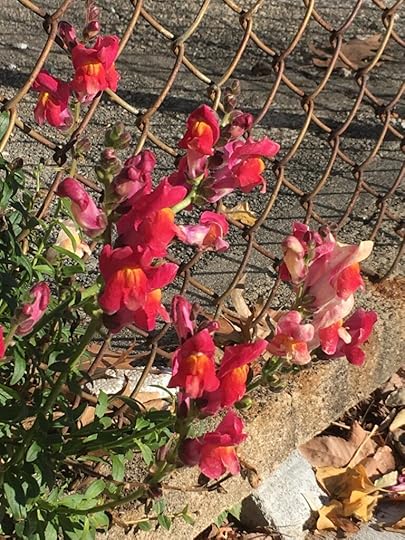
for unexpected beauty everywhere
for health and love
for you!
Happy Thanksgiving*, all!
*The majority of Americans – even those of us whose families only came over in the last center or so – celebrate this as Thanksgiving. For many Native Americans, today is considered, instead, a day of mourning, commemorating centuries of genocide. However, the idea of a harvest festival – a celebration of life’s bounty – is universal, and I hope that is something we can all share.
November 22, 2021
Thankful Tuesday
I know Thanksgiving is coming up, but I’d love to use this #ThankfulTuesday to send out a whole-HEARTed love song to the amazing #bookstagram community. All authors fear being alone – and it is the greatest feeling in the world when, instead, your book gets read, reviewed, and, hopefully, loved.
So a huge THANK YOU to all who have read or will read #HoldMeDown. And thanks especially to the book bloggers who shared with their followers! Here are just a *few* of my favorites, compiled in a reel by the amazing @SaraDivello using snips from #Instagram #bookbloggers and my @BostonGlobe review:

Thanks as well to @polisbooks@bostonglobe@theartsfuse and all the #readers! Without you all…
November 21, 2021
Five songs Gal Raver wishes she wrote…
“Simon’s tour of the Boston music scene will make readers wish “Hold Me Down” included a link to iTunes.” – Oline Cogdill, South Florida Sun Sentinel
 Clea Simon
Blame Oline. She was the first reviewer to suggest that HOLD ME DOWN should have a playlist, and I’ve certainly talked with various interviewers since about the songs that the band at the center of the book would be listening to. It’s a daunting task, but the fact that CrimeSpree Magazine has a regular “five things” feature made it easy. No, this doesn’t even constitute a whole set. Just five songs that Gal might be listening to… songs she would wish she had written. (What follows ran in CrimeSpree two weeks ago.)
My new HOLD ME DOWN doesn’t come with a playlist (not yet). But enough folks have asked me what I was listening to while writing this rock-and-roll suspense that I realized I needed to think about the songs that inspired its tough protagonist, Gal Raver, a clubland survivor with a history beyond the hits. So, yeah, these songs are in regular rotation on my playlist. More to the point, they’d be on Gal’s, too.

L7: “Fast and Frightening”
This one always gets me going – Donita Sparks’ trilled “r,” the ferocity of Suzi Gardner’s punk-metal guitar. What’s not to like? A slash-and-burn track by the founders of Rock for Choice, “F&F” evokes the band’s live energy more than the better-known grunge grind of “Pretend We’re Dead.” “She’s got so much clit, she don’t need no balls.”
Sleater-Kinney: “Turn It On”
True story: I was driving to work when this song came on WMBR, my local college station, forcing me to pull over and listen. A slow grind of passion that builds to something more desperate than orgasmic, this cut showcases the raw chemistry between Corin Tucker’s wailing vocals and Carrie Brownstein’s urgent guitar. A lot has been made of how this album, “Dig Me Out,” chronicles the breakdown of Tucker and Brownstein’s romance, but this cut captures that moment when it just … has … to … happen.
A.K.A.C.O.D.: “Sun Burns Out”
Released as one of Monique (“Bourbon Princess”) Ortiz’s many low-rock projects, this cut features her heady contralto and liquid bass in its own quickie noir drama. When she lived in Boston, Ortiz was often referred to in relation to Mark Sandman/Morphine’s bass-centric sound, but she has long held her own.
The Darts: “Revolution”
Power punk pop for now people! Amped-up garage rock, complete with Farfisa organ and a shout-along chorus led by the relentlessly chipper Nicole (“Love Me Nots”) Laurenne, this gleeful anthem transcends the guilty-pleasure dome.
Deap Vally: “Smile More”
A manifesto with hooks, delivered with a sardonic sneer, “Smile More” captures the complicated reality of being female today with punk directness. “Yes, I am a feminist, but that is not why I started doing this,” intones the LA duo’s guitarist/singer Lindsey Troy. Gal’s a survivor from another generation, but, hell yeah, she sings along.
A former journalist, Clea Simon is the Boston Globe-bestselling author of three nonfiction books and 29 mysteries. including the new psychological suspense HOLD ME DOWN. While most of these (like A Cat on the Case) are cat “cozies” or amateur sleuth, she also writes darker crime fiction, like the rock and roll mystery World Enough, named a “must read” by the Massachusetts Book Awards. Her new psychological suspense Hold Me Down (Polis Books) returns to the music world, with themes of PTSD and recovery, as well as love in all its forms. She can be reached at www.cleasimon.com, on Twitter @Clea_Simon and on Instagram @cleasimon_author
Enter your email address to receive notifications of new posts by email.
Email Address
Subscribe
November 18, 2021
#FBF with Caroline Leavitt and Harvard Book Store
Caroline Leavitt is not only an astute critic and a crafter of glorious prose (check out her With or Without You), she’s also a dear friend. So when the two of us got talking in this Harvard Book Store online event, the official launch of my new Hold Me Down, we covered everything – from sex and drugs and rock and roll to what we fear most (in writing). Couldn’t join us at the live event? Eavesdrop on the conversation below. It’s too late to answer your questions live, but if you post any – or email me – I promise to get back to you! View it here:
November 15, 2021
Which crime?
For me, the question has never been why write about crime but, rather, which crime of many to focus on…. You see, there was the serial killer on my high school paper, the mugger in my apartment building, and, well, I explain it all here in CrimeSpree Magazine: https://crimespreemag.com/which-crime/:
Which Crime?by Clea Simon | Nov 12, 2021 | Books, Features
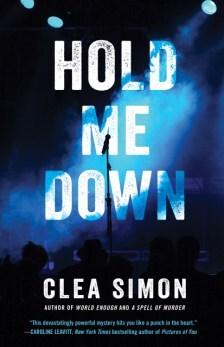
For me, the question has never been why write about crime but, rather, which crime.
Before I was ten, a woman I knew had been murdered. The oldest sister of my best friend J. was living on her own. But when she stopped returning calls and then didn’t show up for the holidays, her family feared the worst. During the subsequent police investigation and the horrible, inevitable discovery that followed, J. basically lived at my house – as I would move to hers soon after, when my brother was first hospitalized for the schizophrenia that would eventually lead him to take his own life.
When I was in high school, I edited the school newspaper, working with a shy, socially awkward photographer. In the years that followed, he became a serial killer, murdering sex workers while still living with his parents, blocks from where I grew up. I found out about Joel Rifkin’s crimes as the news broke because I was working at the Boston Globe at the time. As a copy editor on the night desk, I was waiting for a wire service photo to print out, an annoying but essential process in the years before everything was online. While I was hanging out, cursing the slow-as-molasses printer, I saw that the photo before mine had a familiar dateline – East Meadow, NY – and I grabbed that photo and began to pull. As far as I knew, nothing newsworthy ever happened in my otherwise utterly nondescript suburban hometown. For a few months, then, that was no longer true.
That same job meant I kept odd hours, often working a shift that ended at midnight – and often going out with my colleagues afterward for food or drink or simply to burn off the adrenaline of deadline. Perhaps it was inevitable, then, that I’d be mugged one night, in the foyer of my own apartment building. In later years, I’d come to realize that I’d been “interviewed” by the mugger – a stranger on the street had asked me the time, and when I’d shrugged and given some noncommittal answer, I’d shown myself to be half asleep and unaware.
In retrospect, maybe it makes sense that when I left journalism and nonfiction, I’d turn to crime fiction. There’s something about making sense of the world, and often bringing justice, that is incredibly comforting. It may also explain why most of my books have been cozies – the gentler kind of puzzle mysteries in which even the violence is once removed. No distraught families, no serial killers. No acute memories of being shoved up against the mailboxes with enough force to bruise my cheek.
Why, then, in my new Hold Me Down, did I instead focus on a different crime, one that left me with a particular form of PTSD – which I share with Gal Raver, the protagonist of this rock and roll psychological suspense? It is, as readers will find out, a more muddled and in some ways ambiguous crime. There were no bodies found in car trunks. No weeping relatives. Instead, there was the taint of complicity, the haunting suspicion that I had played a role in my own victimization, more so, even, than in that long-ago mugging.
The only answer I can give is that maybe that ambivalence is the answer. As a writer, I like to explore the why as much as the who. And, in this case, that meant delving into the victim’s mind, my mind, to understand the crime at the heart of the story.
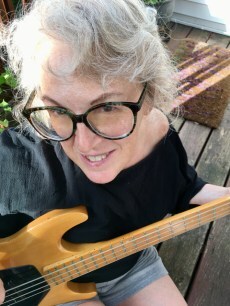
A former journalist, Clea Simon is the Boston Globe-bestselling author of three nonfiction books and 29 mysteries. including the new psychological suspense HOLD ME DOWN . While most of these (like A Cat on the Case ) are cat “cozies” or amateur sleuth, she also writes darker crime fiction, like the rock and roll mystery World Enough , named a “must read” by the Massachusetts Book Awards. Her new psychological suspense Hold Me Down (Polis Books) returns to the music world, with themes of PTSD and recovery, as well as love in all its forms. She can be reached at www.cleasimon.com, on Twitter @Clea_Simon and on Instagram @cleasimon_author
November 14, 2021
Talking about writing… with YOU!
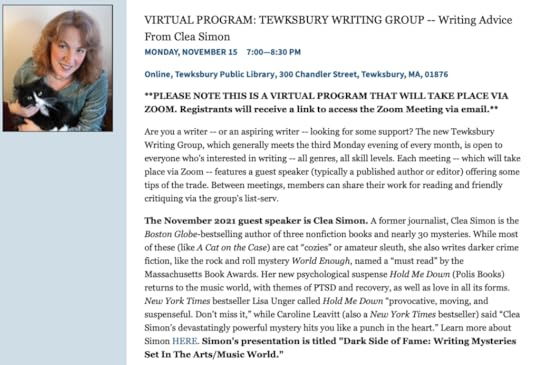
I am thrilled to be speaking to the Tewksbury Library’s ongoing interactive Zoom writing group. I’m going to be talk a little about using the arts and music scenes as a setting, but then we’ll be open for questions about everything from plotting to pencils. Please tune in and have your questions ready!
The event is free and open to all, but you must register! Register here: https://us02web.zoom.us/meeting/register/tZcrd-qoqjwuGtJza04y81tOdYFQuhCGODt2
November 13, 2021
A SPELL OF MURDER on sale today!
Did you see? There’s a special sale of A SPELL OF MURDER, the first Witch Cat of Cambridge cozy, today only for $1.99! If you haven’t tried this cozy mystery series, now’s your chance! If you have, gift a copy to a cat or cozy-loving friend! Click here for the special e-book deal – or cut and paste this url: https://amzn.to/3BvMVUS
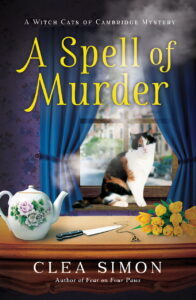
“”A) delightful series launch…You don’t have to be a cat lover to appreciate this paranormal cozy’s witty observations, entertaining dialogue, and astute characterizations.” – Publishers Weekly
“[A] fun new cat mystery that effortlessly mixes in paranormal elements with murder and a little romance.” – Criminal Element
November 11, 2021
Gumshoe loves “A Cat on the Case”
“The plotting is tight … The action is nearly constant and the danger is real and you can only hope Becca stays aware and alert to stay safe. It all makes for an exciting adventure with enough danger to keep you reading to find out what will happen next.” – Gumshoe Review

Thank you, Gayle Surrette! The editor of Gumshoe Review posted a lengthy review of A CAT ON THE CASE, the latest “Witch Cats of Cambridge” cozy. You can read the full review here or below:
A Cat on the Case (Witch Cats of Cambridge #3) by Clea Simon
Cover Artist: Mimi Bark
Review by Gayle Surrette
Polis Books Hardcover / eBook ISBN/ITEM#: 9781951709266
Date: 02 March 2021
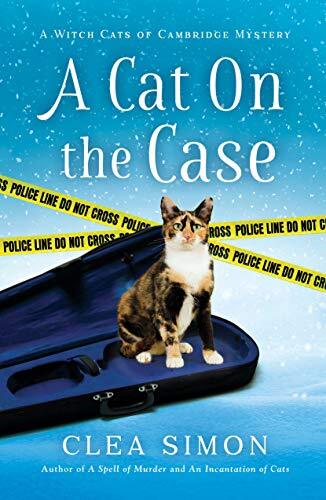
Becca Colwin has settled into working at Charm & Cherish. It gives her a chance to read all the shop’s books on herbs, spells, witchcraft, and other topics as well as learn about the craft from the owner’s sister, Elizabeth. It’s the perfect job to pay the rent, feed her three cats (Harriet, Laurel, and Clara), do her own research, and take quick jobs as a witch detective.
Actually, Becca doesn’t really have any powers according to her cats. They, on the other hand, do have powers. Harriet can call items to her. Laurel can put ideas or impulses to actions in people’s heads. Clara can move through solid objects and shade herself to remain mostly invisible when following Becca to and fro when she’s away from the apartment in order to keep her safe. It doesn’t always work because the cats can’t talk to her or tell her things–they can just observe.
While working, a young woman came into the shop and browsed but finally approached the counter and asked if she was the one from the ad, the witch detective, because she needed help. As Becca was asking her what was wrong the girl looked out the window and bolted from the shop. The young woman left her violin case behind and inside was a very old but well-kept violin and an apartment address in Becca’s building. The girl had disappeared so fast she wasn’t able to catch her on the street.
That was the start of the mystery. Who was the girl? Where did she come from? Was she a student? What problem drove her to seek a witch detective?
Meanwhile, Becca has a number of other problems. Her downstairs neighbor is complaining that her cats are smelly and make noise all day and night. She threatens to call animal control if Becca doesn’t get rid of them. Then, she learns her building is going condo and she can’t afford to buy the unit; she may have to find another place to live that allows pets. Next, a murder happens in the unit across from hers–the one where the mystery girl was staying.
Of course, Becca is concerned for the young woman and throughout the book continues to offer her assistance even when she finally realizes the girl is lying to her–repeatedly. The cats are overly concerned because there are some strange people hanging around and incidents of vandalism that are quite frightening.
As usual for this series, Becca has good instincts but often gets so caught up in her thoughts she loses track of what is actually going on around her. She often plans to do something and gets distracted and doesn’t follow through. She has friends to talk over issues with. Some are very helpful and others try to get her to drop the case.
The plotting is tight and some readers will figure out a major plot point quite early but that’s only a part of the story. The action is nearly constant and the danger is real and you can only hope Becca stays aware and alert to stay safe. It all makes for an exciting adventure with enough danger to keep you reading to find out what will happen next.


