Debra H. Goldstein's Blog, page 23
September 30, 2018
Guest Blogger: Marilyn Levinson – an interview with Carrie Singleton
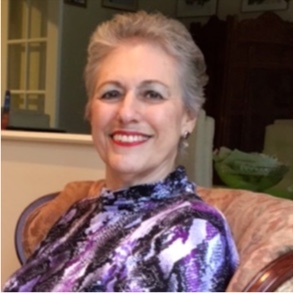 An Interview with Carrie Singleton by Marilyn Levinson
Carrie, how did you end up living in Clover Ridge, CT?
When I was young, my brother and I spent summers at my father’s family farm outside of Clover Ridge, CT. I had fond memories of those days. After college, I got a degree in library science but never spent more than a year in any one place for the next seven years. I had no sense of home or family. I hadn’t seen my father, who was a thief, in years. My mother, who was never maternal, had remarried and was living in Hollywood with her actor husband. My older brother, whom I adored, had died in a car accident in his early twenties. I was at a low point in my life when I asked my great uncle and aunt, who had sold the farm and were living in a vintage house on the Green in Clover Ridge, if I could stay with them for a while. Aunt Harriet and Uncle Bosco welcomed me into their home.
How did you meet Dylan Avery, your boyfriend?
After I got my new job, I decided it was time I found a place of my own. I answered an advertisement that a cottage was for rent a few miles outside of town. It turned out the cottage was on the Avery property. Dylan lived in the manor house when he was around. His job as an insurance investigator of stolen art and gems had him traveling constantly. It turned out that I knew Dylan when I was little because he used to play with my brother Jordan. Anyway, one thing led to another and we started dating.
How did you manage to snag that wonderful job you have as head of programs and events in the 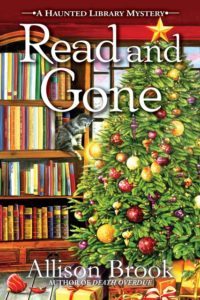 Clover Ridge Library?
I must admit I had some help. My uncle got me my initial job in the library, which wasn’t very satisfying as I wasn’t doing much besides reshelving books. I was thinking of moving on when the person who held the position of head of programs and events had to move to California. Uncle Bosco recommended me to the director. And since I’d had experience arranging programs and events and Uncle Bosco was on the library board, Sally felt obliged to hire me.
How did you meet Evelyn Havers, the ghost that haunts the library?
Evelyn made it her business to be present when Sally offered me the position. I was going to turn it down, but Evelyn instructed me to tell Sally that I’d think about it and let her know my decision the following morning. We got to talking and became fast friends.
How did you find Smoky Joe, the library cat?
Smoky Joe simply showed up outside my cottage one morning. He jumped into my car as I was about to leave for work. I couldn’t leave him in the car all day and so I brought him into the library. He ran into the children’s room and the pre-Ks fell in love with him. Surprisingly, he proved to be a friendly, people-loving cat. Smoky Joe plays a big part in READ AND GONE.
Who is your best friend in the library?
That’s Angela, who works at the circulation desk. Angela was one of the few people who befriended me when I started working in the library. She’s fun and straightforward and tells it like it is.
 Who is the person you like the least in the library?
That would be Dorothy Hawkins, the unpleasant reference librarian who is also Evelyn niece. Dorothy is angry because I was given the position of head of programs and events instead of her. She pulled all sorts of nasty pranks on me until I discovered a way of putting an end to her malicious actions once and for all. Still, I know she capable of really bad behavior so I’m always on my guard when I’m around Dorothy.
How did you get mixed up in solving murder mysteries?
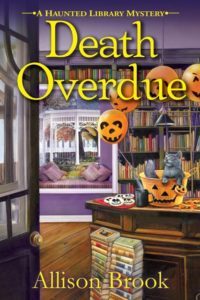
A good question. Believe me, I didn’t plan to become an amateur sleuth. Things simply happened. The first time was in DEATH OVERDUE, when a retired detective came to the library to talk about a cold case he believed he finally solved. The poor man died right in front of his audience. I was horrified and feeling guilty about having him come to speak when Sally, my boss, thought we should have canceled. I felt I had to find the person who murdered him. Now in READ AND GONE, my father shows up out of the blue after not seeing me for close to ten years and asks me to help him retrieve his half of a heist that his partner-n-crime, the local jeweler has kept. Naturally, I refuse, but when the jeweler if murdered and my father’s Suspect Number One, I’m obliged to prove him innocent.
What are some of your favorite programs and events that you’ve featured at the library?
I think the Halloween Party in DEATH OVERDUE was a big success, when adults dressed up in costumes, and the special musical programs around the December holidays in READ AND GONE. Some of the old favorites too: current events and book discussions and film presentations. I’m looking forward to our food presentations, too.
The post Guest Blogger: Marilyn Levinson – an interview with Carrie Singleton appeared first on Debra H. Goldstein.


September 16, 2018
Guest Blogger: Leslie Karst – It’s All About How You Tell the Story
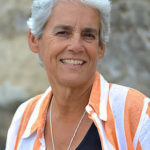 It’s All About How You Tell the Story by Leslie Karst
Like Debra—the host of this fabulous blog—my career before becoming a mystery author was in the legal profession. I spent twenty years as a civil attorney specializing in research and appellate work, which was basically akin to writing a term paper every day of your working life.
It was a job that could be mind-numbingly tedious, yet punctuated by moments of supreme elation. I’d spend hours and hours reading through dusty old legal tomes, searching for case law that supported my argument. And then, when I’d finally discover that perfect published opinion, it was like striking gold.
 surrounded by case files and legal pads
But in general, I found the work pretty darn boring. Which is why I retired as soon as I could from the law and turned my sights to writing mystery novels, instead. Because—as we all know—writing fiction is about as far away from drafting legal briefs as can be.
Or is it?
 coffee and PB&J sandwiches helped
I was recently asked whether all that writing I did during my years as a research attorney aided me in my subsequent career as a mystery author. My immediate thought was, No way; they’re totally different. But then, when I truly thought about it, I realized that they actually have quite a bit in common.
I think we can all agree that one of the most important components of writing a good mystery is the story: how you set it up, how you place your clues and red herrings, how you characterize your protagonist, suspects, and villain.
Well, the same is true in the law. The purpose of a legal brief is to convince the judge that, based on current law as applied to the facts of your case, you should prevail. Thus, how you set forth the facts of your case in your brief is vitally important.
 dry, dusty legal tomes
First, you must decide which facts to include and which to leave out. Of course, there’s the ethical component to consider, i.e., you can’t leave out facts relevant to the case simply because they’re harmful to your client. But the same is true in a mystery novel, where it’s considered unfair to leave out information vital to resolution of the mystery simply because it might make readers more easily guess whodunit.
In addition, legal cases are often won or lost on how you tell the story. Which elements do you emphasize and which do you play down? This is, of course, similar to how one employs red herrings and clues in a mystery novel.
And finally, there’s voice and readability. As with any great novel, the attorney drafting a brief wants the judge to be drawn into the story and truly care about the case.
So on further reflection, my answer is yes, I guess all those years as an attorney did in fact help make me a better mystery author!
Readers: Have any of you had a previous job that you were later surprised to discover ended up making you better at something you now do?
~ ~ ~ ~ ~ ~ ~
The daughter of a law professor and a potter, Leslie Karst learned at a young age, during boisterous family dinner conversations, the value of both careful analysis and the arts—ideal ingredients for a mystery story. Putting this early education to good use, she now now writes the Sally Solari Mysteries (Dying for a Taste, A Measure of Murder, Death al Fresco), a culinary series set in Santa Cruz, California.
Originally from Southern California, Leslie moved north to attend UC Santa Cruz (home of the Fighting Banana Slugs), and after graduation, parlayed her degree in English literature into employment waiting tables and singing in a new wave rock band. Exciting though this life was, she eventually decided she was ready for a “real” job, and ended up at Stanford Law School.
For the next twenty years Leslie worked as the research and appellate attorney for Santa Cruz’s largest civil law firm. During this time, she rediscovered a passion for food and cooking, and so once more returned to school—this time to earn a degree in Culinary Arts.
Now retired from the law, Leslie—along and her wife and their Jack Russell mix, Ziggy—splits her time between Santa Cruz and Hilo, Hawai‘i. When not writing, she occupies herself with cooking, reading, singing alto in the local community chorus, gardening, cycling, and observing cocktail hour promptly at five o’clock.
Leslie Karst blogs with the Chicks on the Case (https://chicksonthecase.com). To learn more about Leslie and her books, visit her website at lesliekarstauthor.com
The post Guest Blogger: Leslie Karst – It’s All About How You Tell the Story appeared first on Debra H. Goldstein.
Guest Blogger: Leslie Karst – It’s All About How You Tell the Story (click to read or leave comments)’
It’s All About How You Tell the Story by Leslie Karst
Like Debra—the host of this fabulous blog—my career before becoming a mystery author was in the legal profession. I spent twenty years as a civil attorney specializing in research and appellate work, which was basically akin to writing a term paper every day of your working life.
It was a job that could be mind-numbingly tedious, yet punctuated by moments of supreme elation. I’d spend hours and hours reading through dusty old legal tomes, searching for case law that supported my argument. And then, when I’d finally discover that perfect published opinion, it was like striking gold.
surrounded by case files and legal padsBut in general, I found the work pretty darn boring. Which is why I retired as soon as I could from the law and turned my sights to writing mystery novels, instead. Because—as we all know—writing fiction is about as far away from drafting legal briefs as can be.
Or is it?
coffee and PB&J sandwiches helpedI was recently asked whether all that writing I did during my years as a research attorney aided me in my subsequent career as a mystery author. My immediate thought was, No way; they’re totally different. But then, when I truly thought about it, I realized that they actually have quite a bit in common.
I think we can all agree that one of the most important components of writing a good mystery is the story: how you set it up, how you place your clues and red herrings, how you characterize your protagonist, suspects, and villain.
Well, the same is true in the law. The purpose of a legal brief is to convince the judge that, based on current law as applied to the facts of your case, you should prevail. Thus, how you set forth the facts of your case in your brief is vitally important.
dry, dusty legal tomesFirst, you must decide which facts to include and which to leave out. Of course, there’s the ethical component to consider, i.e., you can’t leave out facts relevant to the case simply because they’re harmful to your client. But the same is true in a mystery novel, where it’s considered unfair to leave out information vital to resolution of the mystery simply because it might make readers more easily guess whodunit.
In addition, legal cases are often won or lost on how you tell the story. Which elements do you emphasize and which do you play down? This is, of course, similar to how one employs red herrings and clues in a mystery novel.
And finally, there’s voice and readability. As with any great novel, the attorney drafting a brief wants the judge to be drawn into the story and truly care about the case.
So on further reflection, my answer is yes, I guess all those years as an attorney did in fact help make me a better mystery author!
Readers: Have any of you had a previous job that you were later surprised to discover ended up making you better at something you now do?
~ ~ ~ ~ ~ ~ ~
The daughter of a law professor and a potter, Leslie Karst learned at a young age, during boisterous family dinner conversations, the value of both careful analysis and the arts—ideal ingredients for a mystery story. Putting this early education to good use, she now now writes the Sally Solari Mysteries (Dying for a Taste, A Measure of Murder, Death al Fresco), a culinary series set in Santa Cruz, California.
Originally from Southern California, Leslie moved north to attend UC Santa Cruz (home of the Fighting Banana Slugs), and after graduation, parlayed her degree in English literature into employment waiting tables and singing in a new wave rock band. Exciting though this life was, she eventually decided she was ready for a “real” job, and ended up at Stanford Law School.
For the next twenty years Leslie worked as the research and appellate attorney for Santa Cruz’s largest civil law firm. During this time, she rediscovered a passion for food and cooking, and so once more returned to school—this time to earn a degree in Culinary Arts.
Now retired from the law, Leslie—along and her wife and their Jack Russell mix, Ziggy—splits her time between Santa Cruz and Hilo, Hawai‘i. When not writing, she occupies herself with cooking, reading, singing alto in the local community chorus, gardening, cycling, and observing cocktail hour promptly at five o’clock.
Leslie Karst blogs with the Chicks on the Case (https://chicksonthecase.com). To learn more about Leslie and her books, visit her website at lesliekarstauthor.com
The post Guest Blogger: Leslie Karst – It’s All About How You Tell the Story (click to read or leave comments)’ appeared first on Debra H. Goldstein.
September 2, 2018
2018 Anthony Awards – Short Story – Part Two
2018 ANTHONY AWARDS – SHORT STORY – PART TWO by Debra H. Goldstein
The Anthony Awards, given for excellence in different aspects of mystery, have been presented at the Bouchercon World Mystery Conference since 1986. The purpose of this two-part blog, which began on Friday, August 19 (http://www.debrahgoldstein.com/2018-anthony-awards-short-stories-part-one-click-comments/) is to provide you with an opportunity to learn more about this year’s Anthony Short Story finalists – Jen Conley, Susanna C. Calkins, Hilary Davidson, Barb Goffman, Art Taylor, and me and our writings. Bouchercon has made the nominated stories available to be read at https://www.bouchercon2018.com/anthony-awards/short-story-anthony-award-nominees/. Today’s blog gives more insight into each writer while the first part told a little about each story.
Do you tend to write short stories or novel? Was this story, in any way, a first for you, part of a series, or did it have any special meaning?
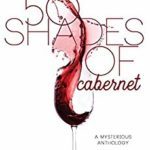 Barb Goffman – “Whose Wine Is It Anyway?” – 50 Shades of Cabernet – http://www.barbgoffman.com/whose-wine-is-it-anyway-.html
Other than my one novel that’s long been a drawer, I only write short stories. “Whose Wine Is It Anyway?” is a stand-alone. It stemmed from something that happened to me nearly fifteen years ago, when I was working as an attorney at a law firm. It was a brief conversation that stuck with me, and I knew I wanted to use it one day in my fiction if I could figure out the right plot. So I was delighted when I finally got to type this: “I’m supposed to plan my own goodbye party?” That real-life sentence made for great dialogue and became the final straw that incited the rest of the plot in this story.
Debra H. Goldstein – “The Night They Burned Ms. Dixie’s Place” – Alfred Hitchcock Mystery 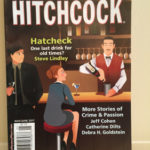 Magazine – http://www.alfredhitchcockmysterymagazine.com/assets/4/6/Goldstein_Night-Goldstein.pdf Podcast: https://www.podomatic.com/podcasts/ahmm/episodes/2018-06-22T06_54_58-07_00
I write novels and short stories, but “The Night They Burned Ms. Dixie’s Place” has a special meaning to me. It was my first submission to Alfred Hitchcock Mystery Magazine and AHMM
not only published it, but featured my name on its cover. Neither of these exciting events almost happened. Even though several of my short stories had been accepted by other publications, I lacked the confidence to send my work to AHMM or Ellery Queen. Several friends, including Art, Barb, Bob Mangeot and Terrie Moran encouraged me to submit my work to these Dell magazines, but the one who made me believe in myself was B.K. (Bonnie) Stevens.
A few years ago, when I read her story, “Thea’s First Husband,” I was so blown away by it that I wrote her a fan email asking if she taught online classes. She didn’t, but she sent me suggested readings and we subsequently became friends. She encouraged me to reach beyond my fears. Last year, every Malice Domestic recipient received the AHMM which contained “The Night They Burned Ms. Dixie’s Place” in their book bags. A few weeks after Malice, I received a package and note from Bonnie. She wrote she believed it was an award-winning story and knew, because it was my first Alfred Hitchcock submission and acceptance, I would want extra copies of the issue. Sadly, Bonnie passed away just before winning the Anthony for Best Novella last year. I wish she had lived to see the wonderful ride, including being an Anthony and an Agatha finalist, that “The Night They Burned Ms. Dixie’s Place” has taken me on.
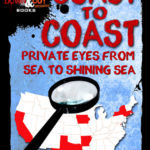 Art Taylor – “A Necessary Ingredient” – Coast to Coast: Private Eyes from Sea to Shining Sea –
http://www.arttaylorwriter.com/books/a-necessary-ingredient/
Short stories have always been my first love, and I tend to write short fiction primarily—partly because it’s just the length at which my own imagination and my storytelling seem to work best. Even my first book, On the Road with Del & Louise, was a novel in stories, with six stories serving as the building blocks for the longer narrative about that title couple. While “A Necessary Ingredient” was a challenge in some ways because of the private eye angle, I very much enjoyed the challenge of writing that kind of story in the unexpected setting of semi-rural North Carolina—exploring how two different traditions can be joined and potentially enhance one another: the hard-boiled detective story on the one hand, those Hammett and Chandler and Macdonald stories that Ambrose likes to read, and on the other hand, the regional mystery as epitomized by writers like Margaret Maron, a fellow North Carolinian and one of my own inspirations. In fact, there are a couple of nods in the story to Maron’s Deborah Knott series, and it was fun playing homage to her mysteries in my own work.
Hilary Davidson – “My Side of the Matter” – Killing Malmon – 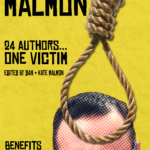 https://downandoutbooks.com/bookstore/malmon-killing-malmon/
I write both short stories and novels. “My Side of the Matter” was special because Dan and Kate Malmon are dear friends, and it was exciting to be involved in a project to support a great cause. My first short story, “Anniversary,” was published by Thuglit in 2007, and it was selected for a best-of-the-year anthology. Since then, I’ve published dozens of short stories in Ellery Queen, Beat to a Pulp, the Bouchercon anthologies, and many other places. My debut novel, THE DAMAGE DONE, won the 2011 Anthony Award for Best First Novel. It’s the first book in the Lily Moore series, which also includes THE NEXT ONE TO FALL and EVIL IN ALL ITS DISGUISES. I’m also the author of a hardboiled thriller called BLOOD ALWAYS TELLS and a short-story collection called THE BLACK WIDOW CLUB. Tess Gerritsen once called me “the master of plot twists,” which is the greatest compliment I can imagine!
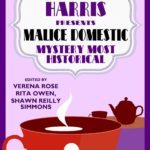 Susanna C. Calkins – “The Trial of Madame Pelletier” – Malice Domestic 21: Mystery Most Historical – http://www.susannacalkins.com/short-stories.html
I’m delighted, honored, and a bit embarrassed to say that “The Trial of Madame Pelletier” was my first published short story. For the last few years I’ve been writing the Lucy Campion historical mysteries (St. Martin’s/Minotaur) but when I saw the call for short stories for the Malice Domestic Anthology, I thought I’d try my hand at a short story. When I was in graduate school, working on my doctorate in European History, I had written a paper on the original trial, at the time focusing on the sensationalized newspaper accounts. I always had it in the back of my head I might return to the case someday. I went back through several medical journals that had described the poisoning (and the trial) at length, and suddenly I thought about a different way to tell the story. And, as a side note, it was a great feeling to put all that research to good use, after all these years!
Jen Conley – “God’s Gonna Cut You Down” – Just To Watch Them Die: Crime Fiction Inspired by 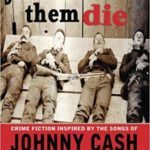 the Songs of Johnny Cash – https://www.jenconley.net/
I tend to write short stories, which I find easier for me, although I do have a novel coming out with Down & Out books next year which I am excited about. Still, I’ve always loved the short story format–reading them and writing them. Overall I would say–and so would anyone who knows me–I am impatient person by nature and I like to get to the heart of story within a sentence or two.
The story I wrote for this anthology had some meaning to me. When I was a teen, there was a local murder of a thirteen-year-old girl. Her fifteen-year-old neighbor attacked and beat her unconscious. He left her at the side of a creek bed, near one of the marshy inlets of the Barnegat Bay. When the tide came in, she drowned. Recently he was released from prison and returned to his old neighborhood to live with his mom. One account had him riding around in a car, waving to his old neighbors–as if they would be happy to see him. As a teen when this happened, I always assumed this guy was a sadistic monster. However as an adult, reading the updated details about him when he was released, I concluded that he was probably not only full of rage but also of low-intelligence. This aspect bothered me deeply. Maybe it added such a sad pathos to an already terrible story.
What are you working on now?
 Susanna:
I’m excited that the first in my new series—MURDER KNOCKS TWICE (also with St. Martin’s Minotaur)—will be released in Spring 2019. Set in Prohibition-Era Chicago, these novels feature Gina Ricci, a cigarette girl who must confront some dark doings that underlie the sparkling glamour of the speakeasy where she works.
 Barb:
Barb:
I’m in the middle of revising four stories, though by the time this blog runs, I hope at least one of them will be submitted. I’m also working on a blog post about my new story coming out in early September, “The Case of the Missing Pot Roast,” which will appear in this year’s Bouchercon anthology, Florida Happens.
 Hilary:
My next novel is called One Small Sacrifice, and it will be published by Thomas & Mercer in May 2019. It’s about a doctor who vanishes, and the police realize that her boyfriend was involved in another woman’s death a year earlier. I just finished the edits, which feels great, but I’m also working on my next book, as well as a collaborative novel with a group of friends from ITW, and stories for a couple of other anthologies. It’s great to be busy when you love what you do.
 Art:
Art:
Because I have a few stories that have recently come out or are coming out over the next year (or two!), I’m taking some time to concentrate on a novel I’ve been tinkering with for a while, a dark tale set primarily in a small all-boys boarding school in the mountains of North Carolina. I hesitate to say much about it beyond that—I work slowly and messily, and there’s no telling when or whether the book will ever get done. But for now, for better or worse, that’s where I’m spending much of my time.
 Jen:
Jen:
I’m actually finishing up the revisions/edits of a novel–a missing guy story. One of the big secondary characters is Andrea Vogel, a police officer who has been the main character in several of my short stories. This time she’s the lead detective in the missing person case. I’ve always written Andrea from first-person but this time she’s seen from the perspective of my new main character, Kayla Misto’s viewpoint. Kayla isn’t a fan of Andrea. And Andrea isn’t a fan of Kayla. That’s been fun to do.
 Debra:
One Taste Too Many, the first book in my new Sarah Blair cozy mystery series, officially debuts from Kensington in January, but it already is available for pre-order. In it, Sarah knew starting over after her divorce would be messy, but things fall apart completely when her ex drops dead, seemingly poisoned by her sister’s award-winning rhubarb crisp. Now, with Sarah’s cat, RahRah, wanted by the woman who broke up her marriage and her twin wanted by the police for murder, Sarah needs to figure out the right recipe to crack the case before time runs out. Unfortunately, for a gal whose idea of good china is floral paper plates, catching the real killer and living to tell about it could mean facing a fate worse than death—being in the kitchen!
The post 2018 Anthony Awards – Short Story – Part Two appeared first on Debra H. Goldstein.
2018 Anthony Awards – Short Story – Part Two (click for comments)
2018 ANTHONY AWARDS – SHORT STORY – PART TWO by Debra H. Goldstein
The Anthony Awards, given for excellence in different aspects of mystery, have been presented at the Bouchercon World Mystery Conference since 1986. The purpose of this two-part blog, which began on Friday, August 19 (http://www.debrahgoldstein.com/2018-anthony-awards-short-stories-part-one-click-comments/) is to provide you with an opportunity to learn more about this year’s Anthony Short Story finalists – Jen Conley, Susanna C. Calkins, Hilary Davidson, Barb Goffman, Art Taylor, and me and our writings. Bouchercon has made the nominated stories available to be read at https://www.bouchercon2018.com/anthony-awards/short-story-anthony-award-nominees/. Today’s blog gives more insight into each writer while the first part told a little about each story.
Do you tend to write short stories or novel? Was this story, in any way, a first for you, part of a series, or did it have any special meaning?
Barb Goffman – “Whose Wine Is It Anyway?” – 50 Shades of Cabernet – http://www.barbgoffman.com/whose-wine-is-it-anyway-.html
Other than my one novel that’s long been a drawer, I only write short stories. “Whose Wine Is It Anyway?” is a stand-alone. It stemmed from something that happened to me nearly fifteen years ago, when I was working as an attorney at a law firm. It was a brief conversation that stuck with me, and I knew I wanted to use it one day in my fiction if I could figure out the right plot. So I was delighted when I finally got to type this: “I’m supposed to plan my own goodbye party?” That real-life sentence made for great dialogue and became the final straw that incited the rest of the plot in this story.
Debra H. Goldstein – “The Night They Burned Ms. Dixie’s Place” – Alfred Hitchcock Mystery Magazine – http://www.alfredhitchcockmysterymagazine.com/assets/4/6/Goldstein_Night-Goldstein.pdf Podcast: https://www.podomatic.com/podcasts/ahmm/episodes/2018-06-22T06_54_58-07_00
I write novels and short stories, but “The Night They Burned Ms. Dixie’s Place” has a special meaning to me. It was my first submission to Alfred Hitchcock Mystery Magazine and AHMM
not only published it, but featured my name on its cover. Neither of these exciting events almost happened. Even though several of my short stories had been accepted by other publications, I lacked the confidence to send my work to AHMM or Ellery Queen. Several friends, including Art, Barb, Bob Mangeot and Terrie Moran encouraged me to submit my work to these Dell magazines, but the one who made me believe in myself was B.K. (Bonnie) Stevens.
A few years ago, when I read her story, “Thea’s First Husband,” I was so blown away by it that I wrote her a fan email asking if she taught online classes. She didn’t, but she sent me suggested readings and we subsequently became friends. She encouraged me to reach beyond my fears. Last year, every Malice Domestic recipient received the AHMM which contained “The Night They Burned Ms. Dixie’s Place” in their book bags. A few weeks after Malice, I received a package and note from Bonnie. She wrote she believed it was an award-winning story and knew, because it was my first Alfred Hitchcock submission and acceptance, I would want extra copies of the issue. Sadly, Bonnie passed away just before winning the Anthony for Best Novella last year. I wish she had lived to see the wonderful ride, including being an Anthony and an Agatha finalist, that “The Night They Burned Ms. Dixie’s Place” has taken me on.
Art Taylor – “A Necessary Ingredient” – Coast to Coast: Private Eyes from Sea to Shining Sea –
http://www.arttaylorwriter.com/books/a-necessary-ingredient/
Short stories have always been my first love, and I tend to write short fiction primarily—partly because it’s just the length at which my own imagination and my storytelling seem to work best. Even my first book, On the Road with Del & Louise, was a novel in stories, with six stories serving as the building blocks for the longer narrative about that title couple. While “A Necessary Ingredient” was a challenge in some ways because of the private eye angle, I very much enjoyed the challenge of writing that kind of story in the unexpected setting of semi-rural North Carolina—exploring how two different traditions can be joined and potentially enhance one another: the hard-boiled detective story on the one hand, those Hammett and Chandler and Macdonald stories that Ambrose likes to read, and on the other hand, the regional mystery as epitomized by writers like Margaret Maron, a fellow North Carolinian and one of my own inspirations. In fact, there are a couple of nods in the story to Maron’s Deborah Knott series, and it was fun playing homage to her mysteries in my own work.
Hilary Davidson – “My Side of the Matter” – Killing Malmon – https://downandoutbooks.com/bookstore/malmon-killing-malmon/
I write both short stories and novels. “My Side of the Matter” was special because Dan and Kate Malmon are dear friends, and it was exciting to be involved in a project to support a great cause. My first short story, “Anniversary,” was published by Thuglit in 2007, and it was selected for a best-of-the-year anthology. Since then, I’ve published dozens of short stories in Ellery Queen, Beat to a Pulp, the Bouchercon anthologies, and many other places. My debut novel, THE DAMAGE DONE, won the 2011 Anthony Award for Best First Novel. It’s the first book in the Lily Moore series, which also includes THE NEXT ONE TO FALL and EVIL IN ALL ITS DISGUISES. I’m also the author of a hardboiled thriller called BLOOD ALWAYS TELLS and a short-story collection called THE BLACK WIDOW CLUB. Tess Gerritsen once called me “the master of plot twists,” which is the greatest compliment I can imagine!
Susanna C. Calkins – “The Trial of Madame Pelletier” – Malice Domestic 21: Mystery Most Historical – http://www.susannacalkins.com/short-stories.html
I’m delighted, honored, and a bit embarrassed to say that “The Trial of Madame Pelletier” was my first published short story. For the last few years I’ve been writing the Lucy Campion historical mysteries (St. Martin’s/Minotaur) but when I saw the call for short stories for the Malice Domestic Anthology, I thought I’d try my hand at a short story. When I was in graduate school, working on my doctorate in European History, I had written a paper on the original trial, at the time focusing on the sensationalized newspaper accounts. I always had it in the back of my head I might return to the case someday. I went back through several medical journals that had described the poisoning (and the trial) at length, and suddenly I thought about a different way to tell the story. And, as a side note, it was a great feeling to put all that research to good use, after all these years!
Jen Conley – “God’s Gonna Cut You Down” – Just To Watch Them Die: Crime Fiction Inspired by the Songs of Johnny Cash – https://www.jenconley.net/
I tend to write short stories, which I find easier for me, although I do have a novel coming out with Down & Out books next year which I am excited about. Still, I’ve always loved the short story format–reading them and writing them. Overall I would say–and so would anyone who knows me–I am impatient person by nature and I like to get to the heart of story within a sentence or two.
The story I wrote for this anthology had some meaning to me. When I was a teen, there was a local murder of a thirteen-year-old girl. Her fifteen-year-old neighbor attacked and beat her unconscious. He left her at the side of a creek bed, near one of the marshy inlets of the Barnegat Bay. When the tide came in, she drowned. Recently he was released from prison and returned to his old neighborhood to live with his mom. One account had him riding around in a car, waving to his old neighbors–as if they would be happy to see him. As a teen when this happened, I always assumed this guy was a sadistic monster. However as an adult, reading the updated details about him when he was released, I concluded that he was probably not only full of rage but also of low-intelligence. This aspect bothered me deeply. Maybe it added such a sad pathos to an already terrible story.
What are you working on now?
Susanna:
I’m excited that the first in my new series—MURDER KNOCKS TWICE (also with St. Martin’s Minotaur)—will be released in Spring 2019. Set in Prohibition-Era Chicago, these novels feature Gina Ricci, a cigarette girl who must confront some dark doings that underlie the sparkling glamour of the speakeasy where she works.
Barb:
I’m in the middle of revising four stories, though by the time this blog runs, I hope at least one of them will be submitted. I’m also working on a blog post about my new story coming out in early September, “The Case of the Missing Pot Roast,” which will appear in this year’s Bouchercon anthology, Florida Happens.
Hilary:
My next novel is called One Small Sacrifice, and it will be published by Thomas & Mercer in May 2019. It’s about a doctor who vanishes, and the police realize that her boyfriend was involved in another woman’s death a year earlier. I just finished the edits, which feels great, but I’m also working on my next book, as well as a collaborative novel with a group of friends from ITW, and stories for a couple of other anthologies. It’s great to be busy when you love what you do.
Art:
Because I have a few stories that have recently come out or are coming out over the next year (or two!), I’m taking some time to concentrate on a novel I’ve been tinkering with for a while, a dark tale set primarily in a small all-boys boarding school in the mountains of North Carolina. I hesitate to say much about it beyond that—I work slowly and messily, and there’s no telling when or whether the book will ever get done. But for now, for better or worse, that’s where I’m spending much of my time.
Jen:
I’m actually finishing up the revisions/edits of a novel–a missing guy story. One of the big secondary characters is Andrea Vogel, a police officer who has been the main character in several of my short stories. This time she’s the lead detective in the missing person case. I’ve always written Andrea from first-person but this time she’s seen from the perspective of my new main character, Kayla Misto’s viewpoint. Kayla isn’t a fan of Andrea. And Andrea isn’t a fan of Kayla. That’s been fun to do.
Debra:
One Taste Too Many, the first book in my new Sarah Blair cozy mystery series, officially debuts from Kensington in January, but it already is available for pre-order. In it, Sarah knew starting over after her divorce would be messy, but things fall apart completely when her ex drops dead, seemingly poisoned by her sister’s award-winning rhubarb crisp. Now, with Sarah’s cat, RahRah, wanted by the woman who broke up her marriage and her twin wanted by the police for murder, Sarah needs to figure out the right recipe to crack the case before time runs out. Unfortunately, for a gal whose idea of good china is floral paper plates, catching the real killer and living to tell about it could mean facing a fate worse than death—being in the kitchen!
The post 2018 Anthony Awards – Short Story – Part Two (click for comments) appeared first on Debra H. Goldstein.
August 17, 2018
2018 Anthony Awards – Short Stories – Part One (click for comments)
2018 ANTHONY AWARDS – SHORT STORIES – PART ONE by Debra H. Goldstein
Jen Conley – “God’s Gonna Cut You Down” – Just To Watch Them Die: Crime Fiction Inspired by the Songs of Johnny Cash – https://www.jenconley.net/
My story is called, “God’s Gonna Cut You Down.” It was written for the anthology, Just To Watch Them Die: Crime Fiction Inspired by the Songs of Johnny Cash. Eric, the main character of the story, is drawn into a plot to avenge his sister’s gruesome murder. When he and his sister were young, she was brutally raped and killed by two teen neighbors. One of the teens isn’t alive anymore, but the other, David, a childhood playmate of Eric, is now a grown man and has been recently released from prison, returning home to live with his mother. Eric’s brother and his father have decided it is now time to kill David. Eric is stricken with dread. He doesn’t want to go through with it but he feels he has to.
The song, “God’s Gonna Cut You Down,” is an old folk song, a dark warning to sinners. Johnny Cash recorded it in 2003 and if you listen to his version, you can hear a deeply disturbing tone, almost frightening. I wanted to capture that in my story.
Susanna C. Calkins – “The Trial of Madame Pelletier” – Malice Domestic 21: Mystery Most Historical – http://www.susannacalkins.com/short-stories.html
“The Trial of Madame Pelletier” (Malice Domestic 12: Mystery Most Historical, Wildside Press, 2017) loosely draws on the real trial of a presumed poisoner in a small town in 1840s France. The case of the “Lady Poisoner” was a cause célèbre—a true trial of the century—playing out in both the court of public opinion as well as the assize court of Limousin. In my re-imagining of the trial, the story is told from the perspective of Anna Pequod, a maidservant, who must testify about what she witnessed in the days and months leading up to the fatal poisoning of her employer.
Hilary Davidson – “My Side of the Matter” – Killing Malmon – https://downandoutbooks.com/bookstore/malmon-killing-malmon/
My story, “My Side of the Matter,” is part of an anthology called Killing Malmon, which raises money for the National Multiple Sclerosis Society. That’s a great cause, but the tough part about this project was that each author had to kill Dan Malmon, who was one of the editors of the project, along with his wife, Kate. That’s not a spoiler, but the premise of the book, and it made me invert me usual way of telling a story. Since the reader knows who’s going to die, I wrote the story from the point of view of the killer, who got away with his crime, but is suddenly confessing for reasons that remain mysterious until the end of the story. It was a different way of building suspense.
Barb Goffman – “Whose Wine Is It Anyway?” – 50 Shades of Cabernet – http://www.barbgoffman.com/whose-wine-is-it-anyway-.html
In “Whose Wine Is It Anyway?” Myra is about to retire from her secretarial job at a large DC law firm—a job she loves, with people she loves. But she learns too late that her beloved boss doesn’t value Myra the way she thought. The way he should. So with a single day left at work, Myra sets out to teach some lessons about the importance of caring for others as much as you do yourself, about the pitfalls of vanity, and about the dangers of getting so wrapped up in work that you forget what’s really important in life. But anger and melancholy lead Myra to dangerous decisions, maybe even lethal ones.
 Debra H. Goldstein – “The Night They Burned Ms. Dixie’s Place” – Alfred Hitchcock Mystery Magazine – http://www.alfredhitchcockmysterymagazine.com/assets/4/6/Goldstein_Night-Goldstein.pdf Podcast: https://www.podomatic.com/podcasts/ahmm/episodes/2018-06-22T06_54_58-07_00
“The Night They Burned Ms. Dixie’s Place” is set in Birmingham, Alabama in the 1960’s in a house where they change the sheets more than once a night. The story reflects Birmingham’s racial, civil, and political strife and how their collision, on a particularly hot night, has a lasting impact on a nine-year-old black boy. The child is the narrator, so the events and other characters are seen through his eyes. As he tells the story of the night and an obvious murder, he also raises a subtle specter of other societal crimes. His innocent retelling of “The Night They Burned Ms. Dixie’s Place” is what makes the story go beyond being a simple whodunit to subliminally allowing the reader to contemplate diversity and tolerance.
Art Taylor – “A Necessary Ingredient” – Coast to Coast: Private Eyes from Sea to Shining Sea –http://www.arttaylorwriter.com/books/a-necessary-ingredient/
I wrote “A Necessary Ingredient” at the request of Paul D. Marks, one of the co-editors of Coast to Coast: Private Eyes from Sea to Shining Sea. I don’t normally write private eye stories—and both of the ones I’ve written previously have played with the genre in small ways: one a parody, the other a bit of speculative fiction, edging into the fantastic. Here too I found myself riffing on and working against some of the genre’s conventions. As the subtitle suggests, the anthology spans a wide geographic area, and “A Necessary Ingredient” is set in my own home state of North Carolina—not the kind of place readers might associate with those mean streets that a man must walk down, as Chandler famously put it. Rather than those mean streets, for example, my main character, Ambrose Thornton, visits farmer’s markets and local greenhouses, and being a private eye isn’t his life mission in the first place; instead, he simply likes reading those hard-boiled detective tales, living in the world of his imagination, until—despite his best efforts— he finds himself drawn into an actual case. A local restaurant owner—an attractive chef—has heard that a much-prized ingredient, the tonka bean, is being grown in the area, and can Ambrose help her find it? Even if you’re not a proper p.i., who can turn down a damsel-in-distress, right?
The post 2018 Anthony Awards – Short Stories – Part One (click for comments) appeared first on Debra H. Goldstein.
August 5, 2018
Guest Blogger: D.J. Niko – Researching for Authenticity in Historical Fiction
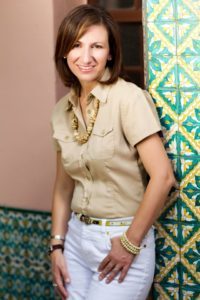 Researching for Authenticity in Historical Fiction by D.J. Niko
Researching historical fiction and thrillers with historical themes is a little like going down the rabbit hole: you have to enter another world and come out, sweating and panting, on the other side before you can actually get it.
When you research and write about the ancient world, that’s especially true. I deal with time periods as far back as the sixteenth century BCE, when information wasn’t exactly plentiful and the recording of facts was sketchy at best. Think about it: historical documentation as we know it wasn’t a thing back then. The ancient Egyptians carved their conquests onto temple walls, the Israelites had an oral history that got passed down over thousands of years, the Greeks (before the days of Herodotus) painted pottery and inscribed ostraca, and on it goes. A few blanks to fill in? You can say that again!
A lot of people ask me, why the ancient world? Why not pick something more accessible, like, say, World War II or 1960s London? What can I say? Doing things the hard way is one of my more charming qualities.
So how do I get my material? For starters, I hang out with a lot of archaeologists. Archaeology is one of the most important tools in understanding antiquity, because it provides hard proof of how people lived and died, when cities flourished and were destroyed, worship practices, and so on. The scientists working in the field are a wealth of information and, in most cases, fairly outspoken (and opinionated!) about their research. They are more than happy to give a novelist an earful.
In researching my first book, The Tenth Saint, I traveled to Ethiopia and spent time with historians at Aksum and monks at Lalibela, trying to understand the mindset of the people during the early centuries of the Common Era, when Christianity first infiltrated the Abyssinian Empire. I went down into the tombs of Aksum, walked through the catacombs beneath the rock churches of Lalibela, attended traditional ceremonies whose practices had not changed since ancient times, hiked to cave churches in the hinterlands (and I mean hinterlands), and studied the stele inscriptions of the nation’s early kings. Of course, I also sampled all the Ethiopian food, beer, coffee, and tej (honey wine) I could get my hands on. Hey, it’s the least I could do for my readers.
For the next book in the series, The Riddle of Solomon, I added another layer of inquiry to the standard archaeological research. The story is set largely in Israel and involves an antagonist who believes he is the Jewish messiah for whom the world has waited. This guy is ruthless in amassing the relics that will prove his legitimacy; chief among them are the plans for building the third temple in Jerusalem, meaning the original temple plans by King Solomon.
So, to research messianism, Judaic oral tradition, and the spiritual significance of King Solomon’s story, I consulted a couple of rabbis. They were very gracious to embrace a Greek Orthodox girl and, over several meetings, walk her through the fine points of Judaism. It was illuminating, to say the least, and I think the book is better for it.
For me, there is no substitute for experiencing a place firsthand and interviewing the experts in person. But life does not always allow for this. My other means of research include university library archives, books written by ancient writers (for my novel The Oracle, which takes place in contemporary and ancient Greece, I read Plutarch, Herodotus, and Pausanias), museums, and, of course, the Internet. And this happens throughout the writing process, not just in the front end.
As I state in my Twitter profile, I have become an antiquities geek thanks to all this research (I’m really fun at cocktail parties), but if the work seems more authentic because of it, I’ll take the ridicule.
Video trailer for THE TENTH SAINT
~ ~ ~ ~ ~ ~
Daphne Nikolopoulos in an award-winning journalist, novelist, lecturer, and writing instructor. Under the pen name D.J. Niko, she has written three novels in an archaeological thriller series titled The Sarah Weston Chronicles and a historical novel titled The Judgment (Medallion Press, 2016). Her debut novel, The Tenth Saint (Medallion Press, 2012), won the Gold Medal (popular fiction) in the Florida Book Awards. The Judgment won a national Bronze Medal in historical fiction in the IPPY Awards 2017 and first place in historical fiction (pre-published) in the Royal Palm Literary Awards.
All four books have been translated and published internationally. The fourth and final book in the Sarah Weston series, Firebird, will be released in 2018.
Daphne is current editor in chief of Palm Beach Illustrated magazine and editorial director of Palm Beach Media Group. Prior to that, she was a travel journalist who logged hundreds of thousands of miles traveling across the globe, with emphasis on little-known and off-the-beaten-path locales—many of which have inspired her novels.
Daphne is a writing instructor at Florida Atlantic University’s Osher Lifelong Learning Institute, where she also lectures about ancient cultures. She also teaches principles of writing fiction at the Florida Authors Academy and the Mandel Library of West Palm Beach, and has lectured on her research and travels nationwide.
Born and raised in Athens, Greece, Daphne now resides in West Palm Beach with her husband and twin son and daughter. You can find her on the Web at djnikobooks.com and connect with her on Facebook (AuthorDJNiko) and on Twitter: @djnikobooks.
The post Guest Blogger: D.J. Niko – Researching for Authenticity in Historical Fiction appeared first on Debra H. Goldstein.
Guest Blogger: D.J. Niko – Researching for Authenticity in Historical Fiction (click here to leave or read comments)
Researching for Authenticity in Historical Fiction by D.J. Niko
Researching historical fiction and thrillers with historical themes is a little like going down the rabbit hole: you have to enter another world and come out, sweating and panting, on the other side before you can actually get it.
When you research and write about the ancient world, that’s especially true. I deal with time periods as far back as the sixteenth century BCE, when information wasn’t exactly plentiful and the recording of facts was sketchy at best. Think about it: historical documentation as we know it wasn’t a thing back then. The ancient Egyptians carved their conquests onto temple walls, the Israelites had an oral history that got passed down over thousands of years, the Greeks (before the days of Herodotus) painted pottery and inscribed ostraca, and on it goes. A few blanks to fill in? You can say that again!
A lot of people ask me, why the ancient world? Why not pick something more accessible, like, say, World War II or 1960s London? What can I say? Doing things the hard way is one of my more charming qualities.
So how do I get my material? For starters, I hang out with a lot of archaeologists. Archaeology is one of the most important tools in understanding antiquity, because it provides hard proof of how people lived and died, when cities flourished and were destroyed, worship practices, and so on. The scientists working in the field are a wealth of information and, in most cases, fairly outspoken (and opinionated!) about their research. They are more than happy to give a novelist an earful.
In researching my first book, The Tenth Saint, I traveled to Ethiopia and spent time with historians at Aksum and monks at Lalibela, trying to understand the mindset of the people during the early centuries of the Common Era, when Christianity first infiltrated the Abyssinian Empire. I went down into the tombs of Aksum, walked through the catacombs beneath the rock churches of Lalibela, attended traditional ceremonies whose practices had not changed since ancient times, hiked to cave churches in the hinterlands (and I mean hinterlands), and studied the stele inscriptions of the nation’s early kings. Of course, I also sampled all the Ethiopian food, beer, coffee, and tej (honey wine) I could get my hands on. Hey, it’s the least I could do for my readers.
For the next book in the series, The Riddle of Solomon, I added another layer of inquiry to the standard archaeological research. The story is set largely in Israel and involves an antagonist who believes he is the Jewish messiah for whom the world has waited. This guy is ruthless in amassing the relics that will prove his legitimacy; chief among them are the plans for building the third temple in Jerusalem, meaning the original temple plans by King Solomon.
So, to research messianism, Judaic oral tradition, and the spiritual significance of King Solomon’s story, I consulted a couple of rabbis. They were very gracious to embrace a Greek Orthodox girl and, over several meetings, walk her through the fine points of Judaism. It was illuminating, to say the least, and I think the book is better for it.
For me, there is no substitute for experiencing a place firsthand and interviewing the experts in person. But life does not always allow for this. My other means of research include university library archives, books written by ancient writers (for my novel The Oracle, which takes place in contemporary and ancient Greece, I read Plutarch, Herodotus, and Pausanias), museums, and, of course, the Internet. And this happens throughout the writing process, not just in the front end.
As I state in my Twitter profile, I have become an antiquities geek thanks to all this research (I’m really fun at cocktail parties), but if the work seems more authentic because of it, I’ll take the ridicule.
Video trailer for THE TENTH SAINT
~ ~ ~ ~ ~ ~
Daphne Nikolopoulos in an award-winning journalist, novelist, lecturer, and writing instructor. Under the pen name D.J. Niko, she has written three novels in an archaeological thriller series titled The Sarah Weston Chronicles and a historical novel titled The Judgment (Medallion Press, 2016). Her debut novel, The Tenth Saint (Medallion Press, 2012), won the Gold Medal (popular fiction) in the Florida Book Awards. The Judgment won a national Bronze Medal in historical fiction in the IPPY Awards 2017 and first place in historical fiction (pre-published) in the Royal Palm Literary Awards.
All four books have been translated and published internationally. The fourth and final book in the Sarah Weston series, Firebird, will be released in 2018.
Daphne is current editor in chief of Palm Beach Illustrated magazine and editorial director of Palm Beach Media Group. Prior to that, she was a travel journalist who logged hundreds of thousands of miles traveling across the globe, with emphasis on little-known and off-the-beaten-path locales—many of which have inspired her novels.
Daphne is a writing instructor at Florida Atlantic University’s Osher Lifelong Learning Institute, where she also lectures about ancient cultures. She also teaches principles of writing fiction at the Florida Authors Academy and the Mandel Library of West Palm Beach, and has lectured on her research and travels nationwide.
Born and raised in Athens, Greece, Daphne now resides in West Palm Beach with her husband and twin son and daughter. You can find her on the Web at djnikobooks.com and connect with her on Facebook (AuthorDJNiko) and on Twitter: @djnikobooks.
The post Guest Blogger: D.J. Niko – Researching for Authenticity in Historical Fiction (click here to leave or read comments) appeared first on Debra H. Goldstein.
July 29, 2018
Reading to Recharge by Debra H. Goldstein
 Reading to Recharge by Debra H. Goldstein
No deadlines! No responsibility! What was I to do with myself once I turned in the second book for Kensington’s new Sarah Blair cozy mystery series, the final edits for the first book, One Taste Too Many, the synopsis for the third book in the series, and a short story looking for a home?
Answer: Nothing or should I say, “almost nothing.”
Unlike writers who immediately start another project because they have trained themselves to write 1500-2000 words per day, I’m not that disciplined. I keep up with any community or volunteer obligations I have, but other than that, I watch TV, play spider solitaire, visit with my family, go out to lunch with friends, and immerse myself in reading. Catching up on reading is my greatest joy and probably the best use of my time.
I begin by reading any magazines I’m behind on. Once I finish the periodicals, I move on to books. There is no rhyme or reason to my selections. My choices during the past few weeks included Kitchen Confidential (Anthony Bourdain), Poppy Done to Dead (Charlaine Harris), Someday Someday Maybe (Lauren Graham), Black Fedora, Glitter and Glue (Kelly Corrigan), The Hangman (Louise Penny), Kitty Kitty Bang Bang (Sparkle Abbey), Beach Trip (Cathy Holton), Dead Storage (Mary Feliz) and The President is Missing (Bill Clinton and James Patterson), How to Write Pulp Fiction (James Scott Bell), I Know What You Bid Last Summer (Sherry Harris), and The Day I Died (Lori Rader-Day). Surprisingly, because of their variety in subject matter and writing styles, I enjoyed them all (though I did figure out the Patterson book earlier than I would have preferred). I’m planning to give myself another few days to read because it recharges me.

When I write, I lose myself in my own world of words. Reading lets me taste the thoughts, opinions, and construction mechanisms of other writers. When this intense period ends, I will continue to read before bed or while traveling; but, better yet, I will return to my writing world with a wider perspective.
What do you use to recharge yourself or expand your horizons?
The post Reading to Recharge by Debra H. Goldstein appeared first on Debra H. Goldstein.
Reading to Recharge by Debra H. Goldstein (click to read or write comments)
Reading to Recharge by Debra H. Goldstein
No deadlines! No responsibility! What was I to do with myself once I turned in the second book for Kensington’s new Sarah Blair cozy mystery series, the final edits for the first book, One Taste Too Many, the synopsis for the third book in the series, and a short story looking for a home?
Answer: Nothing or should I say, “almost nothing.”
Unlike writers who immediately start another project because they have trained themselves to write 1500-2000 words per day, I’m not that disciplined. I keep up with any community or volunteer obligations I have, but other than that, I watch TV, play spider solitaire, visit with my family, go out to lunch with friends, and immerse myself in reading. Catching up on reading is my greatest joy and probably the best use of my time.
I begin by reading any magazines I’m behind on. Once I finish the periodicals, I move on to books. There is no rhyme or reason to my selections. My choices during the past few weeks included Kitchen Confidential (Anthony Bourdain), Poppy Done to Dead (Charlaine Harris), Someday Someday Maybe (Lauren Graham), Black Fedora, Glitter and Glue (Kelly Corrigan), The Hangman (Louise Penny), Kitty Kitty Bang Bang (Sparkle Abbey), Beach Trip (Cathy Holton), Dead Storage (Mary Feliz) and The President is Missing (Bill Clinton and James Patterson), How to Write Pulp Fiction (James Scott Bell), I Know What You Bid Last Summer (Sherry Harris), and The Day I Died (Lori Rader-Day). Surprisingly, because of their variety in subject matter and writing styles, I enjoyed them all (though I did figure out the Patterson book earlier than I would have preferred). I’m planning to give myself another few days to read because it recharges me.
When I write, I lose myself in my own world of words. Reading lets me taste the thoughts, opinions, and construction mechanisms of other writers. When this intense period ends, I will continue to read before bed or while traveling; but, better yet, I will return to my writing world with a wider perspective.
What do you use to recharge yourself or expand your horizons?
The post Reading to Recharge by Debra H. Goldstein (click to read or write comments) appeared first on Debra H. Goldstein.