Debra H. Goldstein's Blog, page 16
August 1, 2021
Guest Blogger: Charlotte Hunter – Looking for a Crime? Grave-Robbing
 Looking for a crime? Grave-robbing by Charlotte Hunter
For me, grave-robbing used to conjure thoughts of 18th-century resurrection men prowling moonlit cemeteries for fresh corpses to sell to medical schools. Then I began research for my current work-in-progress and, to my surprise, discovered grave robbery remains a thriving crime throughout the United States.
Some of these thefts are relatively petty on the desecration scale. For example, in early 2021 two men stole three skulls from a central Florida cemetery to use in building an altar. In 2015 a Rhode Island man was convicted of stealing over 150 headstones from a veterans’ cemetery to use as flooring in his garage and backyard shed. Also in 2015, a still unknown person broke into the Berlin mausoleum of F. W. Murnau, director of the 1922 film Nosferatu, and stole his skull.
But the majority of today’s grave robbers aren’t looking to score weird trophies or cadavers (although the body-broker biz also thrives). They’re looking to score easy money with little fear of detection.
In 2000, Mary and Ernest Adams purchased a pricey scenic plot in a Maryland cemetery for their deceased son. Not long afterward they discovered their son had been secretly reburied in an inexpensive lot at the bottom of a hill, and someone else lay buried in the scenic grave. Also in Maryland, Jeanette Greene’s children buried their mother in an expensive hilltop plot. Then her headstone disappeared. The body in the hilltop plot was no longer Jeanette. Eventually her stone was found in low-priced, boggy area of the cemetery. Even worse, the body disinterred from that grave wasn’t Jeanette Greene, nor was she found in any of six nearby graves; the cemetery employees who stole her body and resold the hilltop plot hadn’t bothered to record where they put it. Jeanette’s remains are still missing.
Burr Oak Cemetery, just outside Chicago, used to be best known as the resting place of 14-year-old Emmett Till, lynched in 1955 Mississippi for supposedly offending a white woman. In 2009, a new employee practicing his backhoe skills found bones scattered throughout a fenced-off, overgrown section of the cemetery. The subsequent police investigation revealed that, during the previous four years, between 200 to 300 bodies had been disinterred, dumped into the weeds, and the graves resold, to the financial benefit of the cemetery supervisor and a few minions.
The stories go on and on. Deeds aren’t provided to purchasers or are destroyed. Plots sold multiple times to multiple people often have coffins crammed together or stacked atop each other. And records—many kept on 3×5 cards, or worse—are inaccurate or missing.
I researched state cemetery regulations, certain there must be some oversight.
Not so much.
In 2003, for example, Florida reported to the Government Accountability Office (https://www.gao.gov/assets/gao-03-757.pdf ) that, of its 3,000 known cemeteries, only 173 were regulated and these were only occasionally inspected. Throughout the nation, cemeteries belonging to religious organizations, fraternal societies, or counties and municipalities are not regulated or inspected. Sometimes family members, like the Adamses and Greenes, catch the fraud, but they are the fortunate few. Most grave robbing is similar to what occurred in Burr Oak Cemetery; old graves, often located in the nicest parts of a cemetery, are unvisited and forgotten. Except by thieves, who know few will notice or care if an old headstones vanishes and a shiny, new one takes its place.
So, if you’re working on a new story and searching for crime possibilities that also push all sorts of revenge buttons, you might consider doing what I did: Dig around in cemeteries.
Which, yes, is awful. But I couldn’t resist.
~ ~ ~ ~ ~
Charlotte Hunter writes middle-grade mysteries, and currently is keeping fingers and toes crossed about her agent search. She is president of the Citrus Crime Writers, central Florida’s chapter of Sisters in Crime, and is also a member of the Guppies and the Northern California chapter. She wanders in cemeteries, keeping a sharp eye out for signs of criminal activity. Also ghosts.
The post Guest Blogger: Charlotte Hunter – Looking for a Crime? Grave-Robbing appeared first on Debra H. Goldstein.


July 18, 2021
Guest Blogger Linda Lovely – Giving a Villain a First-Person POV
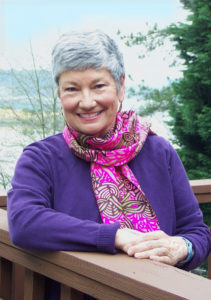 Giving the Villain a First-Person POV by Linda Lovely
If the villain in a novel is intelligent, resourceful, and relentless, the heroine needs the same attributes—in spades—to outwit her opponent.
An evil versus good see-saw offers an excellent suspense-building tool. This is especially true if authors give readers a peek at what evil deeds the villain is planning. Such insights encourage readers to root for the heroine, who may seem like an underdog, still struggling to figure out the “why” of a murder let alone the “who done it.”
To build tension, I work hard to make my villains formidable—and credible. They can’t be carboard cutouts. Every human, even monsters like Hannibal Lecter, display some admirable qualities.
In The Writer’s Journey, Christopher Vogler remarks: “Every villain is a hero of his or her own story.” Actor Tom Hiddleston is credited with saying “Every villain is a hero in his own mind.” I agree. And that makes writing villains challenging and fun.
In a mystery, there are many ways to reveal a villain’s motives, objectives, and personality. I’m a long-time Sue Grafton fan, who couldn’t wait for the late author to deliver the next “letter” in her alphabet-titled series. However, I believe Grafton dramatically notched up the tension in her series with T is for Trespass. In that mystery novel, Grafton’s primary villain was allotted her own chapters. These third-person POV chapters drew a chilling portrait of a cunning sociopath.
In my new traditional mystery, With Neighbors Like These, I followed Grafton’s example. While most of the book unfolds in my heroine’s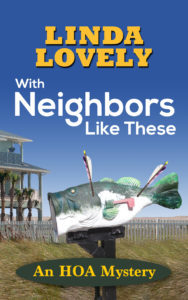 first-person point-of-view chapters, readers periodically pay a visit to The Twin, my clever, calculating villain. My villain’s chapters also are written in first-person to give the reader unfiltered access to The Twin’s mind—emotions, ideas, dark humor, elaborate plans.
The first-person approach has a side benefit. It doesn’t give away a single clue about The Twin’s age, occupation, appearance or other identifying characteristics. So, while readers gain an insider’s view of the villain’s plans, they must keep turning pages to see if the heroine can ID the killer before the body count climbs. To avoid reader confusion about which “I” character is speaking, each of The Twin’s chapters are clearly identified.
This is my ninth published novel. A structure that works best for one book may be a poor fit for another. I’m pleased with how my villain’s chapters upped the suspense in With Neighbors Like These, so I’m taking the same approach in the second book in my HOA (homeowner association) Mystery series.
~ ~ ~ ~ ~
A journalism major in college, Linda Lovely has spent most of her career working in PR and advertising—an early introduction to penning fiction. With Neighbors Like These is Lovely’s ninth mystery/suspense novel. Whether she’s writing cozy mysteries, historical suspense or contemporary thrillers, her novels share one common element—smart, independent heroines. Humor and romance also sneak into every manuscript. Her work has earned nominations for a number of prestigious awards, ranging from RWA’s Golden Heart for Romantic Suspense to Killer Nashville’s Silver Falchion for Best Cozy Mystery.
Buy Links:
https://www.amazon.com/Neighbors-Like-These-HOA-Mystery-ebook/dp/B097F8DSL5
https://www.lindalovely.com/hoa-mysteries
The post Guest Blogger Linda Lovely – Giving a Villain a First-Person POV appeared first on Debra H. Goldstein.
July 4, 2021
Guest Blogger: Lynn Slaughter – Starting a Novel: One Writer’s Approach
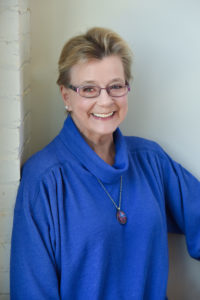 Starting a Novel: One Writer’s Approach by Lynn Slaughter
As both a writer and a voracious reader, I’m always fascinated learning about the writing process of different authors. There’s definitely no one size-fits all approach. So, my philosophy is to do whatever works!
Here’s what tends to work for me. First off comes a glimmer of an idea. In the case of Leisha’s Song, one came to me standing in line in New York’s Port Authority to board a bus for Connecticut. A grandmother and teenage granddaughter were standing near me, and being the nosey writer I am, I was eavesdropping on their conversation. The granddaughter was heading to boarding school, and she did not want to go. She was leaving all her friends in her neighborhood and didn’t want to go to “some fancy school with uppity white kids.” Her grandmother would have none of that. Her granddaughter was smart, she said, and the scholarship she’d won was her shot at a better life.
That got me thinking about what it would be like to be a whip smart young woman of color at a boarding school where the majority of students came from white, wealthy families.
Okay, so now, I had an idea for a character and a setting. After that, I spent an enormous amount of time thinking and writing about my character and the other principal characters in her world. For me, the most essential thing to dig deeply into is their back story and how their back stories have shaped who they are and how they view the world and their place in it.
For example, in Leisha’s Song, Leisha has grown up as more or less the stand-in for her late mother. With her father not in the picture and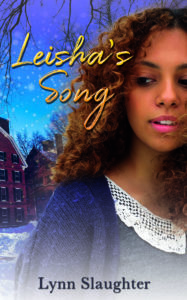 her mom having abandoned her and later died of a drug overdose, Leisha has grown up with her widowed grandfather. From the time she’s been identified as academically gifted, her grandfather has poured every one of his deferred dreams into her. He has a whole script laid out for her—Get a scholarship to a prestigious New England boarding school, which she has accomplished, continue to excel academically, which she has—and snare a college scholarship on route to becoming a physician. While she’s inherited her late mother’s singing ability, her grandfather repeatedly tells her that singing is fine as a hobby but certainly not as a career. He’s also been adamant that she never become romantically involved with a white boy, since he blames her mother’s demise on a white man she met at the night club where she was singing.
For Leisha, there’s been a lot of payoff in being her grandfather’s golden child and replacement daughter. She loves her grandfather, and he’s enormously proud of her. She gets a lot of accolades for her academic accomplishments. It’s never been a problem for her to be a pleaser.
Right away, from knowing about her background, all kinds of ideas for both internal and external conflict spill out, as I play the “What If?” game. What if her experiences at boarding school cause her to feel conflicted about following her grandfather’s script for her life? What if she falls in love with classical singing and really wants to pursue music rather than medicine? What if, despite her grandfather’s dictums to leave it alone, she can’t bear not to try to find her beloved mentor who suddenly resigns and disappears in the midst of preparing her prize students for a vocal competition? What if she finds herself attracted to another student, a sensitive cellist who happens to come from an ultra-wealthy conservative white family?
Suddenly, she’s way out of her comfort zone and has to figure out who she is and who she wants to be apart from her grandfather’s script for her, as well as what price she may have to pay for following her own path. If she continues to defy her grandfather, he may pull her out of school and away from Cody, her romantic interest. Moreover, she may even end up risking her life to find her missing teacher.
As the mystery writer Elizabeth George advises in her craft books, I’ve found that if I start with character development, all sorts of plot ideas and complications will follow.
But here’s the caveat. I know lots of wonderful writers who don’t do it this way! They get to know their characters in the process of writing their stories and would never spend days and weeks thinking and writing about their characters beforehand.
Are they doing it wrong? Absolutely not! It’s whatever works, and the answer to that question will be different for every writer.
I’d love to know what your process is and what works for you!
~ ~ ~ ~ ~
After a long career as a professional dancer and dance educator, Lynn Slaughter earned her MFA in Writing Popular Fiction from Section Hill University. She writes coming of age romantic mysteries and is the author of the newly released Leisha’s Song; While I Danced, an EPIC finalist; It Should Have Been You, a Silver Falchion finalist; and Deadly Setup (forthcoming from Fire and Ice, 2022). She lives in Louisville, Kentucky, where she’s at work on her next novel and serves as the President of Derby Rotten Scoundrels, the Ohio River Valley chapter of Sisters in Crime.
The post Guest Blogger: Lynn Slaughter – Starting a Novel: One Writer’s Approach appeared first on Debra H. Goldstein.
June 28, 2021
Guest Blogger: Judy Penz Sheluk – Paying it Forward
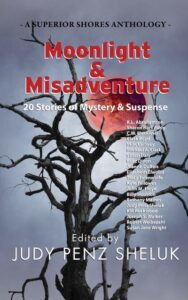 Paying it Forward by Judy Penz Sheluk
I love short crime fiction, and while I’ve written a few short stories, I’m far from prolific. In fact, the thought of writing enough short stories to fill a collection is enough to make me break out in hives. That’s one of the reasons I started the Superior Shores Anthologies, with the first one, The Best Laid Plans, releasing in June 2019. Since then, I’ve published Heartbreaks & Half-truths (June 2020), and most recently, Moonlight & Misadventure (June 2021).
I say “one of the reasons” because a larger part of this labor-of-love initiative is a way to pay it forward: I got my start as a mystery writer in The Whole She-Bang 2 (Sisters in Crime Toronto) in 2014. I’d been a journalist for a dozen years before that, so I’d seen my byline on, and in, a myriad of occasions and publications, but to see my name on a book cover…well, let’s just say I was hooked.
And, yes, you read that right. An unknown author had her name on the cover of a multi-author collection.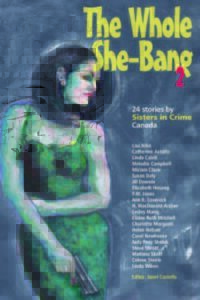 It meant so much to me that when it was time to design the cover for Plans, I wanted to do the same thing.
And so, I did. And I’ve kept on doing it. Of course, there is that whole branding thing that’s so important…
The concept of themed anthologies can be attributed to THEMA, a quarterly New Orleans-based literary journal that published my very first work of fiction in Spring 2004. Each issue of THEMA has a theme, where, and I quote, “The premise (target theme) must be an integral part of the plot, not necessarily the central theme but not merely incidental.” I use those words almost verbatim in my Call for Submissions, and I’m always amazed at how different authors will interpret a theme in their own unique way. I wonder if Virginia Howard, the Editor of THEMA, finds the same thing. I suspect she does. I also wonder  how she’s managed to dream up so many themes: http://themaliterarysociety.com/issue...
For Moonlight & Misadventure, my initial thought was Moonlight & Murder, but I didn’t want only stories with murders in them. After all mystery and suspense can be so much more. Then I thought, what about Moonlight & Mayhem (I do love a good alliteration), but mayhem seems so overused…and misadventure? That could cover any number of situations.
Putting together three anthologies in as many years takes a tremendous amount of work and dedication: 270+ stories read, 63 selected, editing, proofreading, formatting, cover art, publishing, and promotion. But at the end of the day, I know I’ve paid my success forward, maybe not in a big way, but in the only way I know. Writing. Reading. Publishing. Repeat.
About Moonlight & Misadventure
Whether it’s vintage Hollywood, the Florida everglades, the Atlantic City boardwalk, or a farmhouse in Western Canada, the twenty authors represented in this collection of mystery and suspense interpret the overarching theme of “moonlight and misadventure” in their own inimitable style where only one thing is assured: Waxing, waning, gibbous, or full, the moon is always there, illuminating things better left in the dark.
Featuring stories by K.L. Abrahamson, Sharon Hart Addy, C.W. Blackwell, Clark Boyd, M.H. Callway, Michael A. Clark, Susan Daly, Buzz Dixon, Jeanne DuBois, Elizabeth Elwood, Tracy Falenwolfe, Kate Fellowes, John M. Floyd, Billy Houston, Bethany Maines, Judy Penz Sheluk, KM Rockwood, Joseph S. Walker, Robert Weibezahl, and Susan Jane Wright.
~ ~ ~ ~ ~
A former journalist and magazine editor, Judy Penz Sheluk is the author of two mystery series: The Glass Dolphin Mysteries and the Marketville Mysteries. Her short crime fiction appears in several collections, including The Best Laid Plans, Heartbreaks & Half-truths, and Moonlight & Misadventure, which she also edited.
Judy is a member of Sisters in Crime National, Toronto, and Guppy Chapters, International Thriller Writers, the Short Mystery Fiction Society, and Crime Writers of Canada, where she serves as Chair on the Board of Directors.
Find the Book: https://books2read.com/u/47NPkj
The post Guest Blogger: Judy Penz Sheluk – Paying it Forward appeared first on Debra H. Goldstein.
Mysteryrat’s Maze Podcast features Pig Lickin’ Good!
King River’s Life’s Mysteryrat’s Maze Podcast features Debra’s Pig Lickin’ Good short story. Pig Lickin’ Good, originally was published in Malice Domestic’s Mystery Most Edible (2019) and was a 2020 Derringer Award finalist.
Pig Lickin’ Good By Debra H. Goldstein (podbean.com)
The post Mysteryrat’s Maze Podcast features Pig Lickin’ Good! appeared first on Debra H. Goldstein.
June 20, 2021
Guest Blogger: DonnaRae Menard – The Character Bio
 Years ago I wrote for the fun of writing. I worked third shift and left chapters hanging around the plant. Anonymously. It brought an expected lesson. People started leaving notes regarding the characters, did they work, have spouses, or red hair? There were also comments on conflicting information in different chapters. I wanted people to buy into my story, but errors were keeping it two-dimensional. I worked harder at keeping on track with the nuances of character’s personalities and the landscape of my story.
Eventually I wanted to know the character like a friend, or if it’s the bad guy, well enough to protect myself from them. Consider Carol, a 5’4” case of walking nerves with crinkly hair and green eyes. She likes her coffee black, gin, and sequins in her glass frames. She doesn’t date blond guys because of a jerk when she was sixteen. Good start. What else? Is she from the south, work as a defense lawyer, have a gutter mouth?
While I’m still toying with the premise of a piece, I’m listing characters. I get specific and might type out a 1000 word descriptive to keep on file. I need to know these people enough so I’m not guessing how they’ll react. They still develop quirks along the way (and I keep track of those), but I can put the character somewhere confidently until I’m ready for them to move. Their makeup depends on their roots, education, how they interpret money, sex, danger. Even if I don’t know what they are going to say next, I know where their attitude comes from. This helps keep the voice of the piece the same throughout.
You’re walking through the bus terminal, you see the perfect descriptive for your piece. But you don’t know that person and can’t follow them around. Let yourself picture him in a scene, and with a little patience that personality will develop. It may lead to plucking a character from this book and dumping them into another, changing sex, or even evicting them away. If someone enters the field who has the potential of becoming a major player later, set them up. Character’s can go from being a friend to a bad guy on the strength of the bio. Get started before Chapter 1. It might change as you go, but when you’re ripping through a scene, you won’t have to stop and finesse someone.
Words are like babies, they are yours. Sometimes it’s hard to edit out or make changes. When you’re almost done you don’t want to go back and make all the changes because Paul needs to be fifty-four instead of twenty-four. Or worse then that, kill him off.
For me, it’s scary to get invested in someone who exists on paper via a #2 pencil, but I want to know these people closely. Surprise is good, being left hanging isn’t. I want readers to experience someone I have grown in words, and to welcome them with open arms. Or maybe run away as fast as they can.
The post Guest Blogger: DonnaRae Menard – The Character Bio appeared first on Debra H. Goldstein.
June 6, 2021
Guest Blogger: Connie Berry – THE DOMESDAY BOOK: Don’t Worry, It’s Not the End of the World
 One of the themes in my Kate Hamilton Mystery series is the effect of the hidden past on the present. What do we think we know? Is it true? What would happen if we learned the truth? In every book in the series, American antiques dealer Kate Hamilton must unravel the tangled threads of history to unmask a killer.
In The Art of Betrayal, the third in the series, Kate and her friend antiquities dealer Ivor Tweedy sell a hitherto unknown translation of the Little Domesday Book to an eccentric historian, setting the stage for murder, lies, and betrayal.
Have you heard of The Domesday Book? The name alone conjures up the misty past. It refers to the “Great Survey”—a census record of England, ordered in 1085by William the Conqueror. If William was going to be king, he wanted to know exactly what he was king of.
The name Domesday (Middle English for Doomsday) was taken from the book mentioned in the Bible, the one recording the deeds of all mankind, a reminder that the Domesday records were the final and ultimate authority.
Not many people know that The Domesday Book is actually two separate and independent documents, both written in Latin. The Great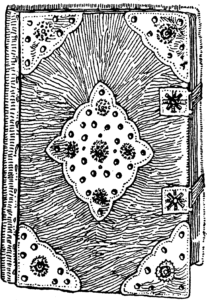 Domesday Book is a summary of thirty-one English counties south of what was then the Scottish border, except for Essex, Norfolk, and Suffolk. The records for those three counties—the full, unabbreviated records, mind you, not summaries—are preserved in the Little Domesday Book, which is fuller in details because the text is undigested—a virtual treasure trove of historical details, little-known facts, descriptions of local customs, even the musings of the commissioners assigned the task of gathering information.
Many of these tidbits made their way into English legend and folklore.
One of my favorite examples is a Norman gentleman by the name of Roger God-save-the-ladies (Rogerus Deus-salvet-dominas). In 1086, Roger lived in Essex. Where did he get his name? Who were the ladies he saved?
One of the characters in The Art of Betrayal believes she is descended from a mysterious “green maiden,” said to have been discovered by a sheep farmer in the eleventh century. Is she right—or is the most important thing her belief in the story?
Someone, I wish I could remember who, said, “The past is history; the future is mystery.” I get the point but respectfully disagree. History is littered with mysteries and hidden secrets. Delving into my own heritage, I learned that every ten years when the census-taker came round, my Scottish grandmother shaved a few years off her age.
History is often a record, not of what actually happened but what people wanted the future to believe. Lies are told, and those lies are repeated. As an antiques dealer and love of history, Kate Hamilton knows that what we believe about our past determines how we think and how we behave in the here-and-now.
For Kate, the past is truly prologue.
~ ~ ~ ~ ~
Connie Berry is the author of the Kate Hamilton Mysteries, set in the UK and featuring an American antiques dealer with a gift for solving crimes. Like her protagonist, Connie was raised by antiques dealers who instilled in her a passion for history, fine art, and travel. In 2019 Connie won the IPPY Gold Medal for Mystery and was a finalist for the Agatha Award’s Best Debut. She’s a member of Mystery Writers of America and is on the board of the Guppies and her local Sisters in Crime chapter. Connie loves history, foreign travel, cute animals, and all things British. She lives in Ohio with her husband and adorable Shih Tzu, Emmie. You can learn more about Connie and her books at her website www.connieberry.com.
The post Guest Blogger: Connie Berry – THE DOMESDAY BOOK: Don’t Worry, It’s Not the End of the World appeared first on Debra H. Goldstein.
May 25, 2021
Review: Modern Cat Magazine
The editor of Modern Cat Magazine picked FOUR CUTS TOO MANY as one of her five Spring/Summer book club picks! “Cozy mystery fans will delight in Four Cuts Too Many…will Sarah solve this delicious mystery? You’ll have fun finding out.” – Modern Cat, Connie’s Book Club Pick for Four Cuts too Many. Check out the entire review on pg. 72
Suspense Magazine writes that THREE TREATS TOO MANY, “Like the first two in the series, it’s chock full of delightful characters with a fast-moving plot that cozy fans will really enjoy. Delicious fun!” https://suspensemagazine.com/blog2/2020/12/31/suspense-magazine-winter-2020-issue
How Debra’s writing career took off with a leap of faith – read about it in Guideposts!
The post Review: Modern Cat Magazine appeared first on Debra H. Goldstein.
Kensington Offers Special May E-Book Sarah Blair Mystery Sales!!!
Here’s your chance before FOUR CUTS TOO MANY’S May 25, 2021 arrival to grab copies of THREE TREATS TOO MANY or start at the beginning with ONE TASTE TOO MANY and TWO BITES TOO MANY to keep up with Sarah and RahRah’s adventures!
One Taste Too Many – only $1.99 – Amazon
Two Bites Too Many – $.99 (that’s ninety-nine cents!) – Amazon – Barnes & Noble – check all other e-book sources (April 30-May 31)
Two Bites Too Many – $.99 – Kobo CA US Mother’s Day Sale
Three Treats Too Many – $.99 (only May 17-19) – BookBub selection!! Amazon and all other e-book sources!
The post Kensington Offers Special May E-Book Sarah Blair Mystery Sales!!! appeared first on Debra H. Goldstein.
Debra is going to be on the road virtually in May
May 20 – Ernst & Hadley Virtual Bookclub – (Tuscaloosa, AL) – 5:30 p.m. CST/6:30 EST
May 21 – Interview by Chris Upton – A Free Thinkers Corner Bookstore – (Dover, New Hampshire)
May 23 – Cozy Reading Library Takeover on Facebook (Colleen Flynn) – 7 CST/8 EST)
May 25 – Jamie’s Grab You a Book – Takeover Facebook – 10-12 CST/11-1 EST
May 25 – Cozy Mystery Launch – Facebook (Kim Heniadis) – https://www.facebook.com/events/3689641581133707 – 7-9 CST/8-10 EST
May 26 – Browseabout Books and Lewes Public Library – A Conversation with Debra Goldstein – interviewed by author Cheryl Hollon – free, but registration is required Conversation with Debra H. Goldstein | Four Cuts Too Many – LibCal – Delaware Libraries – 5 EST/4 CST
The post Debra is going to be on the road virtually in May appeared first on Debra H. Goldstein.