Ahimsa Kerp's Blog, page 15
September 2, 2012
Moorcock, please.


August 20, 2012
New Header Art

August 16, 2012
On Queries
I always thought the difficulty of queries was exaggerated. How hard can it be to write after you’ve completed a 100,000 word novel?
The answer is quite very indeed super hard. And all that work is just a ritual dressing, preparing your query for slaughter (or worse, indifference) as it floats in a sea of slush. Writing a query feels like quite the Sisyphean task indeed.

I think I’m finished with mine, though seeing how the the first round of submissions goes it might still need some revision. Those 300 words have taken me something like 20 hours. I have used feedback from my writer friends, taken great advice from the writers at Absolute Write, read every entry on Query Shark, googled my fingers off, and follow Sara Megabow‘s Twitter, among others.
But this article is perhaps the most useful of all. Dozens of agents talk about common mistakes and what they would like to see. The below quote, from Amy Boggs, is as clear and eloquent advice that I have found. More cake, less sprinkles please.
So the biggest mistake folks who follow guidelines make is talking too much about things that aren’t their story. Sometimes queriers do this by talking more about themselves than about their story (note: I represent fiction only; things are different in the non-fiction realm). Others have long, disconnected lists that really ought to be cut or woven together with the description of the story (a list of settings/countries, a bullet-point list of characters, a list of themes summed up into abstract nouns (“It’s about Truth, Justice, Freedom, Reasonably-Priced Love!”)). Some just end up running down the events that occur rather than telling me what the plot arc at the heart of the story is. The bulk of a query should consist of 1) the main character, 2) what happens to complicate their life, 3) what goals they now have in response to that complication, and 4) the main obstacle between them and their goal. That is the cake of the query; everything else is just frosting and sprinkles.


August 9, 2012
New Microstory Published.

It’s very short, and it comes from a novel I started writing about 10 years ago. As with so many first novels, I got about 15,000 words in and shelved it.*
Not finishing was a good call, not least because a very famous writer came out with a very similar idea a few years later. But there are still some nice moments there. I think this snippet, published by Eggplant Literary Productions (hence the photo), captures one of them. If you have anything at all to say about the story, I’d really appreciate a comment left on the site itself.
*I am in the process of turning the failed novel into a short story/novella–reducing the characters and streamlining the plot. Maybe I’ll even finish it one of these days.


August 6, 2012
Truckin’. Got my chips cashed in. Keep truckin, like the do-dah man.

I haven’t blogged for a while, but it’s been quiet on the writing front. I keep writing stories, and they keep getting rejected.
I’ve submitted 47 times this year. 10 are currently in story limbo, 2 have been accepted, and 35 have accrued rejections. Some rejections were nice, some were snarky. (Even the minuscule amount of power editors have is enough to corrupt, it seems.) Some earned invitations for more work, others “just didn’t work” for the editor.
It’s not setting the world on fire, but I’m okay with it. Although earning respect or money would be great, I do enjoy writing for its own sake. I like having ideas and translating them into narratives, and the luxury of improving with each story. I also am lucky that my only deadlines are self-imposed. I can write whatever I want without worrying about my brand or what my agent or editor wants.
So far this year I’ve written a near future sci-fi story dealing with global warming, overpopulation, and the right to bear children. Another that is urban fantasy set in Seoul featuring killer buddhists. A third, also Lovecraftian, starring a pair of PCT hikers. And the fourth is also Lovecraftian, meshed with steampunk, set in 1920′s New Zealand. They’re all patiently waiting to find a good home. As the above-mentioned song says:
Sittin’ and starin’ out of the hotel window.
Got a tip they’re gonna kick the door in again
I’d like to get some sleep before I travel,
But if you got a warrant, I guess you’re gonna come in.*
*This doesn’t have much to do with writing or my state of being; it’s just a good song.


June 7, 2012
Fifteen Albums You Can Write To
Every writer has a different routine. Some load up on caffeine and chocolate. Some use inspirational quotes. And some writers need silence to write. Of the three choices, it’s the third one that seems craziest to me. I always need to listen to music–not just when writing, but pretty much for all of my life.
There are times when I want to listen to Led Zeppelin or U2 or Fleet Foxes. If I’m entirely honest, though, when I’m writing I lean toward the likes of Celtic mysticism and funky ambient tracks.
With that in mind, here are fifteen albums (five of them soundtracks) I recommend whole-heartedly. They are in no particular order, and in most cases I singled out a stand-out song to try out. Again, some of this stuff is kind of out-there, but this is all stuff I’ve liked for years and would recommend to everyone.
15 Albums That Could Aid Your Writing
Portishead - Dummy
You can’t go wrong with anything of theirs, but this is my favorite. Listening to Portishead is like having your own James Bond theme song and is great for all parts of writing.
[image error]
Sigur Ros – Takk
Like Portishead, you cannot go wrong with any of their albums. This song, however, is by far my favorite and maybe one of the most beautiful songs ever.

Amethystium - Odonata
These guys have a super mellow sound and are great for losing yourself into a particularly moving scene.
Emiliana Torrini - Fisherman’s Woman
This Icelandic singstress (maybe a new word) is fantastic to listen to while writing dialogue or upbeat scenes.
Deep Forest – Deep Forest
I like Deep Forest enough that I can’t even assess them rationally. Each album draws from a different part of the world, but their first, pygmy inspired one, is still the raddest.

Air – 10,000 Hz Legend
In a running theme, there are a lot of great albums you could chose from. This one is my favorite, as it involves Beck and a whole slew of different songs and sounds.

Tunng – Good Arrows
It’s hard to describe these guys. Cream meets trip-hop,maybe? These lads out of England have a trippy sound that helps the rhythm of your writing.
Fever Ray – Fever Ray
You could also choose anything from The Knife, but this album works better as a whole, I think. Of all the music here, this is some of the sweetest for life in general.

Goldfrapp – Felt Mountain
Along the lines of Portishead and The Knife, Goldfrapp features some great tunes with ethereal vocals.

The Proposition soundtrack
Fans of the Bad Seeds know that Nick Cave is bad ass, but, to me, this soundtrack (with Warren Ellis) transcends anything he did before. It’s sparse and slow, filled with haunting violins and perfect for writing poignant scenes.

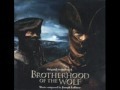
Brotherhood of the Wolf soundtrack
This is an underrated soundtrack to an underrated movie. It’s good, all-purpose score.
Last of the Mohicans soundtrack
I try to avoid hyperbole in general, but if you don’t feel anything from this song, you might not have a heart.
Sleepy Hollow soundtrack
Maybe not Danny Elfman’s finest work, but it does capture three things: darkness, darkness and quirky darkness.
[image error]
Run Lola Run soundtrack
This frenetic soundtrack is great for writing action scenes or just upping your pace. It’s also a great soundtrack to jog to.
[image error]





May 17, 2012
Eight Fantastical Cities
A writer’s life is not easy. In addition to creating compelling characters and a gripping plot, they must (or should) anchor it all with a convincing setting. It’s not an easy task to create a new world, but when done right, it adds an element that enhances the story in a rather exceptional way. A good setting serves as another character, one that has a unique relationship with each of the other characters.
Worlds are huge, though. I thought it would be fun to look at some of the most memorable cities in spec fic (which has an inherent creative advantage over non-genre stuff). Most of these are safe enough to visit and comfortable enough to live in; though, just like in the real world, it would be better to go as a rich person than a poor one.
In the case of series, I listed the first book but many of these cities have subsequent appearances.
Villjamur

Who: Mark Charan Newton’s Nights of Villjamur
Why: “Villjamur was a granite fortress. Its main access was through three consecutive gates, and there the garuda retained the advantage over any invading armies. In the center of the city, high up and pressed against the rockface, beyond a latticework of bridges and spires, was Balmacara, the vast Imperial residence, a cathedrallike construct of dark basalt and slick-glistening mica. In this weather the city seemed unreal.” (Nights of Villjamur)
Ambergris

Who: Jeff Vandermeer’s City of Saints and Madmen
Why: Ambergris is a sprawling city built by sentient mushroom men who were driven out by humans. There is no government, publishing houses are the titans of industry and the populace erupts once a year, during the Festival of the Freshwater Squid, in an orgy of violence and murder that has something to do with the surviving mushroom men.
New Crebizon

Who: China Meiville’s Perdido Street Station
Why: “… a squalid city where humans, Re-mades, and arcane races [including cactus men, bug people, and spider gods] live in perpetual fear of Parliament and its brutal militia. The air and rivers are thick with factory pollutants and the strange effluents of alchemy, and the ghettos contain a vast mix of workers, artists, spies, junkies, and whores.” (wikipedia)
Camorr

Who: Scott Lynch’s The Lies of Locke Lamora
Why: Based on medieval Venice, this corrupt city is half-run by crime syndicates. Filled with mysterious volcanic glass, this island is a place of secrets. It’s a vast, beautiful city with a long history.
Lankhmar

Who: Fritz Leiber’s Swords and Deviltry
Why: If the stories of Fafhrd and the Gray Mouser seem prototypical sword and sorcery, it’s because they completely are. (It was Leiber himself who suggested the term sword and sorcery.) Highly entertaining and superbly written, these books would go on to influence everyone from Gary Gygax to Terry Pratchett.
“Lankhmar is richly described as a populous, labyrinthine city rife with corruption; it is decadent and squalid in roughly equal parts and said to be so shrouded by smog that the stars are rarely sighted (the city’s alternate name is “The City of Seventy Score Thousand Smokes”)…Streets in Lankhmar are often evocatively named (the Thieves’ Guild is located on Cheap Street near Death’s Alley and Murder Alley.)…The main meeting place is the Plaza of Dark Delights. ” (wikipedia)
Immryr

Who: Michael Moorcock’s Elric of Melnibone
Why: Decadent capital of a fading Empire, the Dreaming City is the only surviving city on the island of Melnibone. The parallels to London are evident, but the depth of the city is as exotic as any in fiction.
“The architecture of Imrryr is characterized by tall and slender many-colored towers topped with banners. According to tradition, when an emperor dies, a tower is torn down and a new one built to bear the deceased ruler’s name.” (wikipedia)
Trantor

Who: Isaac Asimov’s Foundation
Why: Perhaps the original fictional megalopolis, this planet sized city of 45 million is not a place for a peaceful getaway. In fact, it’s so built up that residents have to take a special trip to see the sky (though not many appear to do so.)
“He could not see the ground. It was lost in the ever increasing complexities of man-made structures. He could see no horizon other than that of metal against sky, stretching out to almost to almost uniform grayness, and he knew it was so over all the land-surface of the planet…There was no green to be seen, no soil, no life other than man.” (Foundation)
City of Ash

Who: Tim Aker’s The Horns of Ruin
Why: “Ash is a funny city. Not funny, like rag clowns and puppet shows. Funny like it shouldn’t exist. Funny like it should collapse in on itself in a cloud of shattered glass and burning streets.
What is today the city of Ash was once the capital city of the Titans. Their throne, their birthplace, a city of temples and totems and grand technology. The name of that city is lost to us, but it nestled in a crater, like a giant bowl of stone sprinkled with buildings and roads and carved riverways. “
What are some of your favorite fictional cities? Please let me know in the comments.





AD&D Class
I took a long quiz to see what class I would be in Dungeons and Dragons. Some of the questions are rather poorly constructed (and did I mention that it was long?) but it was fun. And although I’d like to think of my alignment as more true neutral, I certainly can’t complain about being a Druid. (Though a Ranger would be almost as good, it’s better to turn into an animal than to have an animal companion.) My race was human (boring).
I doubt that any DM alive would believe that I rolled those scores, but who am I to quibble with the methods of the test?
You Are A:
Neutral Good Human Druid (4th Level)
Ability Scores:
Strength- 14
Dexterity- 13
Constitution- 17
Intelligence- 13
Wisdom- 14
Charisma- 15
Alignment:
Neutral Good- A neutral good character does the best that a good person can do. He is devoted to helping others. He works with kings and magistrates but does not feel beholden to them. Neutral good is the best alignment you can be because it means doing what is good without bias for or against order. However, neutral good can be a dangerous alignment when it advances mediocrity by limiting the actions of the truly capable.
Race:
Humans are the most adaptable of the common races. Short generations and a penchant for migration and conquest have made them physically diverse as well. Humans are often unorthodox in their dress, sporting unusual hairstyles, fanciful clothes, tattoos, and the like.
Class:
Druids- Druids gain power not by ruling nature but by being at one with it. They hate the unnatural, including aberrations or undead, and destroy them where possible. Druids receive divine spells from nature, not the gods, and can gain an array of powers as they gain experience, including the ability to take the shapes of animals. The weapons and armor of a druid are restricted by their traditional oaths, not simply training. A druid’s Wisdom score should be high, as this determines the maximum spell level that they can cast.
If this inspires you to find out your inner class, please let me know in the comments what race and class you are.





May 8, 2012
Untimely Writing
When I’m thinking about a story, I usually try to write it down. If I am trying to finish something else, though, I jot down some notes and return to it later.
This time, however, I completely forgot about the notes until finding them now, almost two years later. I no longer remember any impetus behind these thoughts. There are four statements that seem to make no sense: if you can write a story with these elements then I will … well I will be impressed.
Listens to styx
Are they on a yacht?
A mirror with a thousand worlds emerges into an infinity of new realities.
Stink of the grave
Seriously, where was I going with this?





April 30, 2012
My Only Friend, The End
I got to type those words today on my novel. At 88,000 words, it’s longer than I originally expected and (probably) shorter than it should be. It’s been a long trip–I started a screenplay in 2005. I was getting my masters in Roman history and with Dawn of the Dead 2004 and Shaun of the Dead, zombies were getting big. The juxtaposition seemed natural. The vision of spiked chariots churning through undead shamblers was the first thing I thought of. I never got past the first ten pages, though, and time passed.
In 2010, deciding it would be better to novelize it, I wrote a chapter or two, and they still exist in the book to some extent. But it wasn’t until March 2011 that I started in earnest. Some months were better than others, but a little over a year later I’ve finished the rough draft.
It needs work, sure. Probably some significant rewriting and certainly a few fact checks. That will be a new challenge, and probably not a fun one. Once I hear back from my writing group, I will polish it up and then begin the next step: looking for an agent. This certainly won’t be fun–I still get bummed every time my short stories don’t quite work for John Joseph Adams.
That’s all in the future. For now, I’m extremely happy just to have typed those two final words.