
Sally Bellerose's Blog, page 2
May 26, 2013
In life and in writing it is brave to move away from known places and places where you are known. I also think it is brave to stay.
What follows is a short opening statement I was asked to prepare for a panel titled
“Singular Women, Singular Worlds.” I never made it to Saints and Sinners Literary Conference in New Orleans due to thunderstorms and tornadoes and missing pilots. The panel included Jill Malone, Judith Katz, and Elana Dykewomon – more’s the pity, I didn’t get to hear what they had to say.
What follows is my opening statement.
How I create the worlds of my stories is directly related to the world that created me.
My siblings and I were raised in Chicopee a small town in Western MA. My parents were raised in Chicopee. My son Brian was raised in Chicopee. My first book is set in the town and is loosely based on the broad facts of my early life- Catholicism, illness, squabbling sisters, drugs, sex, family. Some of the characters and events in the novel started out as barely disguised people and incidents from my life but morphed into fiction as I wrote and rewrote draft after draft.
My new novel-in –progress, Fishwives, is also set in a small New England town. I suppose this makes me a regional writer.
I learned how to write by writing and failing to tell the story I was trying to tell, writing more, failing more, trying to fail less with every draft until the characters and story took on a life of their own. But my first book, and every story I write, whatever the setting or theme or characters, is always written with the sensibilities of a small town working class lesbian with a messy illness, a girl with a chip on her shoulder, a woman who made a twenty mile trek to Northampton, MA to become middle-class, because that is who I am.
For me, writing is all about the specifics of discovery. And discovery is about asking questions. For example, in that first book, The Girls Club, there is a scene in a high school girls’ room where the main character Cora Rose is seated on the toilet in a stall and spit on by a girl standing on the toilet seat in the next stall. When I was in high school some nasty girls spit on me in the girls room, so yes I was, to a point, writing what I knew, writing a scene that had actually occurred, but as I wrote the scene the facts and the characters changed. Initially, in this scene stolen from life, it was the main character alone with 4 girls spitting on her. In the novel, over time, 4 girls became one because it was better for the story to conflate them, to sketch one girl and present her more fully, easier to show her vulnerabilities if she was alone, so the writer and reader could see something in her besides spit and meanness.
In life things often happen quickly – then we move on to the next thing. There’s no slo-motion – You get spit on, the bell rings, you wipe it off and go to the next class. In writing you can slow down, if not the scene itself, what you discover in the scene, you can question every action, every motive, every emotional reaction.
As a small town writer, I attempt to examine where I am – try to go deep if not wide. As a girl with a chip on my shoulder questions of place often push my class buttons. In life and in writing, I think it is brave to move away from known places – or to look at it from another perspective, places where you are known. I also think it is brave to stay.
My next novel is about old lesbians behaving badly. Not a stretch for me. The setting is small town MA. The characters are working class, becoming poorer as they grow older. I’ll try to ask them hard questions. I am very interested in powerful old people. These characters are opinionated. They are poor, but not powerless or cute or sexless. One of them has a frayed corset. I have lots of questions about that. I have lots of questions about how they polish the chips on their shoulders – how they keep their humanity and power intact. I have lots of questions about how they stay so close to home and remain radical as they age. Of course these questions will change, and, I hope, get better as I fail and try again to answer them.
PS The irony of being the panalist who did not make it out of the airport does not escape me.


May 12, 2013
It’s good to cry in your mother’s arms – or the arms of anyone who loves you
 Ballast
Mom is no malingerer, but after Dad died she had a hard time getting up in the morning. She had gotten used to sleeping the hours Dad slept and couldn’t get back in the rhythm of staying awake during the day and sleeping through the night. She often fell asleep in the wee hours and slept through the morning. She asked me to call to wake her when I woke, no time too early. So I have spoken to Mom almost every day between 6 and 8 AM for the last eighteen months, sometimes for a moment, sometimes for more than an hour.
This morning in the middle of a meandering conversation I told Mom that her three year old great granddaughter Kennedy had been upset at bedtime the previous night and had cried herself to sleep in her mother’s arms. Mom was uncharacteristically quiet for a moment. We decided that our beloved girl had just had a bad night. Then we spoke for an hour about the old man on Mom’s bowling team who wants to take her to Florida for a month, and about income taxes, which she hasn’t had to pay for fifteen years because she’s old and poor.
At 9 AM I said, “Talk to you later, Mom. I’m off to writing group.”
“You know your Pepere Curley was a drunk,” she answered.
Her statement was not news, but a lure, a tug on a line of a good story. I said nothing.
“I was her age, a little older,” Mom said and I knew she was referring to Kennedy. “My aunt picked me up to take me back to Lil’s house.” Lil was her cousin, now twenty years dead. “Not in a car, of course, in a wagon, must have been Uncle Joe’s wagon, an old wooden work wagon, open to the air, with sides short enough for a little girl to peek over. It was an over-night visit. They were always trading off kids. Maybe my brother was there, too. We were clopping along and we saw my father staggering down the street. He was carrying a sack under each arm because he said the sacks held him steady when he was drunk.”
Ballasts, I thought, but said, “Ah ha.”
“He never tried to hide his drinking. He was walking towards us tipsy as all get-out. We all saw him and no one said a thing. It wasn’t like today. We were moving slow. The horse was a work horse, a plodder, and the road was dirt. There were cars, but not many on a side street in that part of town. I was worried that my father would fall in that dusty road and no one would help him up, that no one else would come along, or that someone would come along and drive right over him. When it rained, there was quite a gully on the side of that street. I waited and watched him and knew he must have seen us, but he hung his head and said nothing and no one in the wagon said anything either. We just kept clopping toward him and he just kept weaving toward us. I didn’t cry right then, because I figured that might have made him more tipsy, but I turned around as we passed and watched him and the sacks under his arms with my chin resting on the side of the wagon. All these years and I remember my chin bouncing against the wood slat as the wagon bounced along the road. The horse’s feet kicked up little cloud of dust that blurred my view and stung my eyes and I lost sight of my father completely so I stood up to see and no one made me sit down, even though standing wasn’t allowed when the wagon was moving. When my father was almost out of sight, my aunt snapped the reins and said, “Sit.” I got on my hands and knees and crawled to the back of the wagon to watch but all I could see was a speck that I thought might be my father. When we turned into Lil’s I was mad because no one had said hello to my father. I fussed about getting out of the wagon. I thought my father was brave to keep walking down the road carrying those sacks, getting smaller and smaller, when no one in the wagon even waved hello. That night I was alright at supper. She was a good cook, my aunt. But she put me and Lil in the same bed and I cried all night. In the morning Lil told her mother. My aunt took me home and I finally got to cry in my mother’s arms.”
“Wow, Mom.”
“It’s good to cry in your mother’s arms,” she said.


May 7, 2013
Happy (Belated) Poetry Month
Whee – just found out my poem (below) has been up at Sam’s Pizza on Main Street in my home town of Northampton MA since the beginning of April – as part of National Poetry week – which in Northampton extends well into May. Happy belated poetry month to all. Thanks to our Poet Laureate Rich Michaelson for including my work in this project. He arranged for dozens of poems to be posted in 30 or more restaurants all over the city. A lovely idea.
Work Break Morning Shift
Hands turning off an engine
fingers slipping out of work gloves
boots stepping from a dump truck
dew dampening the morning
Face soft with sleeping
robe loosely tied and yawning
whispering in the dim light
offering toast and coffee
Crows gathering in the front yard
pecking rows of green beans
strutting blue/black cawing
rhythm old as waking
seaming night to day


February 20, 2013
Welcome Lori Desrosiers, Philosopher poet and pal. Congr...

 Welcome Lori Desrosiers, Philosopher poet and pal. Congratulations, Lori.
Lori Desrosiers’ first full-length book of poems, The Philosopher’s Daughter is from Salmon Poetry (2013). Her chapbook, Three Vanities, was published in 2009 by Pudding House. Her poems have appeared in New Millenium Review, Contemporary American Voices, BigCityLit, Concise Delights, Blue Fifth Review, Pirene’s Fountain, The New Verse News, Common Ground Review, and many more, including a prompt in Wingbeats, a book of writing exercises from Dos Gatos Press. Her MFA in Poetry is from New England College. She is editor and publisher of Naugatuck River Review, a journal of narrative poetry.
Here is a link to the site to buy the book
http://www.salmonpoetry.com/details.php?ID=283&a=242
The Philosopher’s Daughter (Salmon Poetry 2013) came about partly because I had already written a book of poems about the women in my family, my grandmother, my mother and myself, and I felt like my father’s story was missing in the mix. My father was a real philosopher. He taught Philosophy at Fordham University for fifteen years before he died, and he wrote three heavy (in all the senses of the word) volumes of philosophy with Latin names (the first one was Homo Querens), which were published by Fordham Press. He called his theory the “philosophy of the person.” It’s quite interesting, although since my specialty was literature and not philosophy, I found it a bit hard to understand. He was also a psychoanalyst and psychiatrist, and had his practice in his home on the upper east side.
My father was not a typical dad, which plagued my little brother, who would have liked a “baseball dad” like his friends had. He asked us philosophical questions at a young age, such as “Is nothing something?” and “How many angels can dance on the head of a pin?” which at three or four, I took seriously enough to try to answer. My parents were divorced when I was eleven, and he used to live in Manhattan, and my brother and I would take the train to visit him from Hastings-on-Hudson, where we lived with our mother in an apartment overlooking the river. About six years before he died, he married Becky and they moved to Redding, CT, where he died of brain cancer. I think it’s ironic that this brilliant man died of a brain tumor.
I am still writing poems about my father, some of which are in the book I’m working on, which is partially a response to some of the music he loved (the classics, Beethoven especially) and partly more philosophical musings on my part. I guess my dad, more than anything else, taught me how to think deeply, and to keep the sense of wonderment I had as a child. He told me once that children are closer to God. Perhaps they are. Here’s the poem on this idea, from The Philosopher’s Daughter:
Closer to God
My father used to say,
“Children are closer to God.”
When I was very small
before there were words
coursing through my mind,
there were sunbeams
filtering through my nursery window.
I recall the songs of sparrows,
the clang of milk delivery,
horses’ hooves on cobblestone,
the smell of burning chestnuts,
my mother humming lullabies,
my father’s exultant laugh.
He died at 63,
mute from brain cancer.
In his last moments
did he reclaim this wordless awe?


December 26, 2012
“Radiohead” A Story from Hilary Sloin
Welcome guest blogger, pal, and author of the fabulous novel “Art on Fire” just out from Bywater Books. You can link to more of Sloin’s work here http://hilarysloin.wordpress.com/
Radiohead (a short story) by Hilary Sloin
For a time, Veronica was my husband’s secretary. She had a nicotine-stained voice, pumpkin lips, and two different colored eyes—one ocean blue and the other primordial-ooze green. Her nose was like an apex with a bump at the top for jumping into the water. She typed ninety-five words per minute and never needed the spellcheck; everyone in the office came to her for proofreading. They bought her lattes in the afternoon, and someone was always appointed to bake cupcakes on her birthday even though that wasn’t the custom around the office. At first, we met for lunch every few months, just as a formality, then once a month, and soon we were meeting twice a week and drinking gin and tonics, sharing tuna tartare in parchment or grilled salmon with capers over angel hair pasta, trashing the firm’s architects and staff without restraint, except for my husband, who was never a topic.
Veronica had started out with every advantage: Her divorced parents sent her to a private all-girls’ school, then on to Columbia University where she got a degree in journalism. She landed a job with The New York Times in the copy editing department, and while she was there met and married a sports writer who didn’t want children either. “It was so perfect,” she told me, while we were lying in her bed.
“And then my life blew a gasket. My boss kept leaning over me, breathing his onion breath down my neck, trying to get a closer look at my tits. My husband took up with a music writer at the Voice. I became suicidal. Not the kind where you try it and fail, just the kind where it’s the only thing you can think about. I quit my job and went on disability. I was terrified of other people. Fast forward three years: He divorced me and I moved out of our apartment in the Village into this one, getting by on disability and alimony. I tried every anti-depressant on the market—well, at least 15 of them. I ate all day. I couldn’t eat. I slept all day. I couldn’t sleep. I itched. I ached. I drooled. Then my ex, who felt appropriately guilty, told me about this psychiatrist. A genius, he said. A miracle worker! So I went. This guy, in his dumpy office, wearing those Timberland boots that were popular in the eighties and worn out corduroys, charging $750 a half hour, told me about this drug for people who hear radios in their heads—there are actually people who transmit radio signals. He said that many people who get no relief from anti-depressants found solace in this drug for radioheads.”
She rolled over onto her side. She’d been lying on her back, facing the ceiling. Now she was facing me. I looked from the blue eye to the green eye and back again. She thumped the mattress with her hand. “And it fucking worked. Within days I went grocery shopping. I paid my bills. It was only the beginning, but eventually I was able to get a job.”
“I can’t believe there are people who hear radios in their heads,” I said, not knowing which part of the story to comment on.
“Can you imagine? And most of them probably don’t even know this drug exists.”
“That’s tragic. That’s like having huge boobs and not knowing about bra.” We laughed. “Do you still take it?” I asked.
“Oh yeah. Hell yeah. Because I don’t want to take any chances. I mean, I’ll come off it someday, but not while I’m working as a fucking secretary for Peters & Sons. No offense, Trudy. Not that there’s anything wrong with Peters & Sons or Michael.”
I made a blasé face, letting her know I hadn’t taken it personally.
She’d called in sick so we could be together. I took the 1 to the 7 out to Queens from the Upper West Side where I lived. She had a sweet little flat in Sunnyside, right next to a Lebanese market. We picked up tabouli, humus, kalamata olives, and huge floppy pitas, had an early lunch. Best Middle Eastern food I’d ever eaten. But food was as compelling as a green lawn in the suburbs. We knew what we wanted. We were awkward at first, gentle and ginger, until her hand was inside me, I was bent over the bed, and all our inhibitions were destroyed.
“How did you meet Michael?” she asked afterward, reaching for her pack of Camels.
“Oh, who cares?” I said. “We were set up. We hit it off. We were both ready to get married. It was time.”
She nodded. “He has a particular smell.”
I looked at her. “Oh?”
“It’s kind of spicy. Like incense or curry.”
“Really? I never noticed. Has he always had it or is it new?”
“I’m not sure. But when I walk into his office it hits me hard, you know, like when someone is wearing patchouli or Chanel number five. I think it’s new. I think I remember the first time I smelled it.”
“Huh.”
“Does he wear cologne?”
“I don’t think so.”
“Maybe it’s shampoo.”
“You know, that could be it. Because I think he recently switched shampoos.”
“Some people retain the smell of their shampoo for days, even if they don’t wash their hair that often.”
“I don’t know if he washes his hair daily or not.” There was a steep drop from her armpit to her waist and I skied it with my hand.
That night in bed, Michael was reading a book on the architect Frank Gehry. Half his life he spends reading about Frank Gehry. He didn’t look up. I tried to sniff the air around him. I sniffed harder.
“Do you have a cold?” he asked.
“Yes. I think so.”
“There’s a lot going around. We had three secretaries out today. It’s murder on the budget because I have to hire temps. I hate temps,” he said. “They’re like leeches.”
“I used to be a temp.”
“Well, I’m sure you were a very conscientious temp. There are a few of those.” He patted my knee.
On my way to the bathroom, I loitered at his bureau and saw that, sure enough, there was a bottle of Armani cologne. How had I missed this? I suppose it was because Rosa cleaned the house once a week, so I never had any reason to interact with Michael’s bureau. Then, while I sat on the toilet, I couldn’t remember whether he had shaved his goatee. He shaved it and grew it so often. I could remember every detail of Veronica’s body, down to the flat pink polish on her toenails and the small elephant-on-a-pedestal tattoo on her ankle, but I could not remember details about my husband that I would need to give the police if anything happened to him.
I cracked the bathroom door. “Do you find Veronica attractive?” I asked. I just felt like talking about her.
“Veronica? You’re not going to get jealous of my secretary, are you?”
I flushed the toilet and stepped out of the bathroom. He had the goatee still.
“Who wouldn’t find Veronica attractive?” he turned the page.
“I suppose that’s true.” I climbed under the covers.
“Unfortunately, she has an attitude problem. I may have to let her go.”
“What kind of attitude problem?”
“Well, it could be exacerbated by the fact that works for the head partner whereas all the other girls work for my underlings, so she feels superior.”
“What has she done to indicate that?”
He folded the corner of the page and closed the book. He considered. “Well, she proofreads the other secretaries’ work for one thing, marks it up in red pen.”
“Don’t they ask her to?”
“Of course not. Why would they?”
“Well, because she worked for the Times.”
“For like five minutes,” he said.
“Still.” I slathered body lotion on my legs and arms and thought of wetness and her hands and how they’d been on my skin that very afternoon.
“She takes long lunches, too. And sometimes in the afternoon she smells like gin.”
“Does it affect her work? Does she get her work done?” I tried not to sound agitated.
“I’d rather not talk about it. I like to keep work at work and when I’m home,” he looked at me, “I just want to be home. Okay then?” He opened his book, letting me know that was the end of it.
The next day was Saturday. Michael and I had coffee and set out for our weekly trek through Central Park. We walked to the East Side. There was a little boulangerie where we liked to pick up croissants or brioche or both. We always commented on how we could taste the butter, as if we’d never noticed before, and how we really should have skipped the pastry and opted for egg whites and dry whole wheat toast, but we never veered from our ritual unless one of us was sick or called away due to crisis.
Then, at two, I met Veronica at the Angelic Theatre to see the new Mike Leigh film. I was so excited I could feel a pulse down there. I couldn’t understand what they were saying until about halfway through the film when I finally grew used to the accents, and by then, I’d missed so much of the story there was no catching up. We held hands and I thought about things I wanted to do to her, things I’d never done before, things I wasn’t even sure were the province of people. I felt of control for the first time in many years, and I loved it.
The train was arctic from the constant onslaught of air condition. “Either they make us sweat bullets or all our pores stand up,” I commented to her as we took our seats. The train was pretty empty. She draped her arm across the back of my neck and I tucked my hand under her thigh. My nipples were hard; I could see them poking out from behind my tee-shirt every time I looked down. A man sat across from us, watching, so I folded my arms over my chest. I wondered if we looked like two lesbians, and for the first time it occurred to me that what we were doing was the same thing two lesbians would do. Neither of us, from what I understood, was a lesbian. The man looked involved and it frightened and disgusted me.
“Do you consider yourself a lesbian?” I asked as we walked from the subway to her apartment.
“What? No. Do you?”
“Me? I’m married,” I said, as if that was all there was to say on the subject. I knew it was the word that frightened me. The deed—without the word—held me sway. I had never felt such desire in all my years of men. “We are acting like lesbians. You realize that,” I said.
“Do you want to go home?”
“Are you kidding?”
“Fine. Then who cares? Why talk about it?” She was wearing Capri pants with crazy paisley tights under them and a black button down shirt. Her pulpy lips were painted thick with a plum shade. “
“Do you ever think about getting a different job?” I asked.
“Yeah. Pretty much every day.”
“Why don’t you?”
“Doing what?”
“Copy editing. Isn’t that what you did at the Times?”
“My degree is in journalism. That was just an entry-level position.”
As soon as we got inside her apartment, we were on the floor in the foyer, fumbling with our clothes. And then, when we’d finished there, we had a glass of water and got naked on her bed. That was equally, differently exciting. Then we passed a joint back and forth.
“I’m in love with you,” she said matter-of-factly, as though she was stating the correct time. She was lying on her back, facing the ceiling. “I think about you the minute I open my eyes in the morning, and some piece of your person is the last image I see before I fall asleep. I don’t think I’ve ever been in love—more like intense simpatico aggravated by sexual starvation.” She lit a cigarette. “Do you think we’ll ever be together?” she turned to face me.
“I don’t know. I mean, I’m married.”
“I realize that,” she replied. But is your marriage fulfilling?”
I thought about this for a quick moment even though I knew it was the sort of question that demanded at least a week of close consideration. “Well,” I lifted my head like I had the answer and was about to utter it, then I dropped my head back down. “I don’t know. I don’t think about whether I’m fulfilled. I can get out of bed in the morning. I don’t find Michael offensive or repulsive for the most part. He doesn’t abuse me. I love him, you know, the way you love someone you’ve lived with for years. I love our apartment. It’s quite beautiful.”
“You love your apartment?” she was outraged.
“I wish you could see it. You’d understand what I mean…”
“You know, Michael’s kind of a prick. I mean, I haven’t said anything until now because I didn’t want to be divisive, but everyone at the firm hates him.”
“That’s what he said about you.”
“About me? Are you kidding? That’s a boatload of manure. Do you know how often those women take me out to lunch? And I’m not talking Applebee’s or the Olive Garden. I’m talking three-star restaurants. Sushi places where they give you a hot wash cloth. Italian cafes where they put homemade bread and dark green extra virgin olive oil on the table. Do you know how many Valentine’s Day cards I get at the office? Practically every secretary gives me a Valentine’s Day card. And only me. And one of the architects sends me red roses and a white teddy bear every year. Just because I fucked him once.”
“Which one did you fuck?” I asked, trying not to sound jealous.
She continued, sitting up now. “Michael’s a tyrant. He won’t make anyone partner. There’s only one female architect out of sixteen and all the secretaries are women even though plenty of men have applied. This year he’s going to hold the Christmas part in the office with a CASH BAR. Who ever heard of such a thing? Making the employees pay for their own drinks??? Peters Sr. always hired a boat with an open bar and live band or took everyone to Keene’s, that swank Ivy League place on 33rd where the steaks are this thick and cost thirty-five bucks a piece.” She got up and crossed the room to where her shirt lay in a pile on the floor. She put it on. I went to her and put my arms around her from behind. My head reached her shoulder blades. “So contrary to what your deluded husband says, I’m extremely popular at the office,” she proclaimed in a shaky voice.
“I know, honey. I’ve seen it myself. I think he probably wants to justify hiring someone cheaper.”
“What?” she turned. “He’s going to fire me? Fuck!”
“Not necessarily.”
“That motherfucker. He told you he was going to fire me?”
I wished so badly you could pluck escaped words from the air and push them back into your mouth, swallow them whole.
“No. But he isn’t completely satisfied.”
“Well, whatever. I guess it’ll be back to unemployment and looking for another job, just like every other secretary whose boss is a misogynist, insecure, egomaniac with low self-esteem.”
She had him figured.
We sat on the edge of the bed. I was still naked, which no longer seemed appropriate, so I gathered up my clothes and put them on, even my shoes. Veronica wore her black top. It ended midway down her thighs and her long legs were crossed, with the toes of her left foot spread out on the hardwood floor. Heaviness settled over the room. The sun was low—pink with an orange eye in the middle—sinking onto the Empire State Building. It was beautiful, but I didn’t bother pointing it out. A vise was tightening. I could feel it, and she felt it too.
“For what it’s worth, I’m in love with you too,” I said.
“You are?”
“Isn’t it obvious?”
“So are we lesbians?”
“I don’t think so. I think this is aberrant.”
“Good. Because that’s the last thing I need. But I think if you leave Michael and you live with me and we keep fucking, then we will at some point, be lesbians. Though from what I understand, lesbians always stop fucking eventually at which point we’d become something more like…”
“Companions?”
“Yes, exactly. Companions.”
She didn’t realize I’d already abandoned her. She’d stated what I’d considered and dismissed—the possibility of a life spent as an outcast, a pariah, doing the dead man’s float in the margins of society. I knew I didn’t have what it took to be a lesbian. Who would bring home the bacon? Who would provide the health insurance? Could either of us learn to change a flat tire? Or, more accurately, would we want to? I stayed a while. We had a couple of drinks. The conversation lulled to long spaces between humorless paragraphs. She smoked a cigarette. We had quiet, almost married sex. It grew dark. I stumbled out of her apartment, ruined for men, guilty and ashamed because I knew I’d never go back.


December 5, 2012
The Next Big Thing – Writers Discuss New Work
 The Next Big Thing – A Blog Hop Post
As part of ‘The Next Big Thing Blog Hop,’ I was tagged by the talented Barrett http://wordsofbarrett.wordpress.com/ in her post last week. The purpose of this hop is to expose you to writers and their work that perhaps you haven’t heard of, whether a new release or a Work in Progress (WIP). This is week 24.
According to the rules of the hop, I will be answering some questions (the same ones for every other blog hopper) about either my newest release or my WIP and then at the bottom of the post I’ve listed authors who will do the same thing in their blogs next Wednesday Dec 12th.
Alright then – let’s get started!
What is the working title of your book?
“Fishwives” is a novel about two elderly working –poor lesbians who have been together for sixty years.
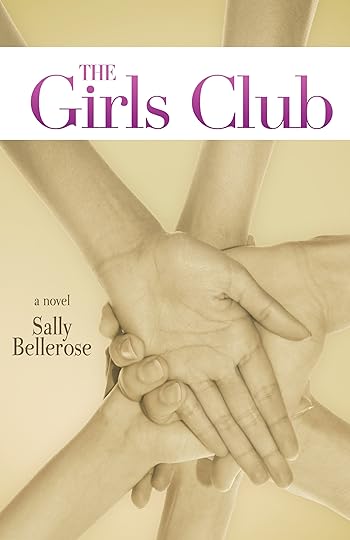
“The Girls Club” my debut novel is available from Bywater Books http://www.bywaterbooks.com/shop/the-girls-club or your independent book store or http://amzn.to/apVqj1 .
Where did the idea come from for the book?I wanted to write a short story about elderly working class lesbians. While writing the story, which I also titled “Fishwives,” I fell in love with the main characters. “Fishwives” won The Saints and Sinners Fiction Contest. So, I had a lot of incentive to keep writing about the lives and times of these two women, and the triumphs and woes of their sixty plus years together.
What genre does your book fall under? “The Domestic Sublime,” which is a category my friend Susan Stinson and I have been seriously teasing each other about for years. Lesbian Drama. Elderly Romance. Quirky Humor. Social Commentary.
Which actors would you choose to play your characters in a movie rendition? Judi Dench and Olympia Dukakis
What is the one-sentence synopsis of your book?
The saga of life and times of two old women who have loved and fought with each other and their culture(s) – from 1958 to present day.
What is the longer synopsis of your book?
Two young women meet in late 1950’s New York City, fall in love, and despite hardship and societal pressures preserve that love for over sixty years. The story relates the adventures of living an “out” relationship pre- Stonewall to (partial) Marriage Equity.
Will your book be self-published or represented by an agency?
I hope Bywater Books will be publishing “Fishwives.”
How long did it take you to write the first draft of your manuscript?
About a year. So far.
Who or What inspired you to write this book?I am an aging, working class lesbian. I know many aging working class queers. I wanted to see us in print. Also, as I said, while writing a short story, I fell in love with my protagonists as well as several of the other characters.
What else about your book might pique the reader’s interest?
Sex. Yes, old women and sex. Younger women and sex. Young men and sex. So far no old men and sex, but the book is not finished. All of my characters are, of course, flawed, some more than others, so also, betrayal and redemption. And, what is piquing my interest at the moment – “our” shared history as queer people, as citizens, as folks trying to be decent human beings.
Next Wednesday check out these author’s blogs to find out about their Next Big Thing.
Sacchi Green http://sacchi-green.blogspot.com
Sandra Lambert http://sandralambert.typepad.com
Marianne K Martin http://redroom.com/member/marianne-k-martin
If you’re a fellow writer and would like to participate in this Blog Hop, please reach out to them and let them know! The more the merrier 
Happy reading and writing. Happylife – sallyb


October 8, 2012
On the 14th anniversary of Matthew Shepard’s death Leslea Newman responds to the tragedy with October Mourning

On the 14th anniversary of Matthew  Shepard’s death it is my honor to host Leslea Newman, celebrate her newest book, October Mourning, A song for Matthew Shepard and pay tribute to his memory. As the author of over sixty books, Leslea has been a tireless advocate for justice. She continues this great work in this cycle of sixty-eight poems that remind us what is at stake as we work for justice and fight for our very lives.
I am grateful she is such a tireless warrior for peace. Leslea is also a fantastic friend.
In her own words, Leslea Newman -
I remember Thursday, October 8, 1998 as though it were yesterday. I was sitting at our round, oak kitchen table when the phone rang. It was a crisp-as-a-Granny-Smith-apple New England evening. Something delicious was simmering on the stove. Mary, my beloved spouse, was in the living room, waiting to be called to supper. I picked up the phone.
“Hey Lesléa, it’s Jim.”
Jim was Jim Osborn, head of the University of Wyoming’s LGBT Association. He had called me months ago to ask me to be the keynote speaker for Gay Awareness Week which would begin the following Monday. I was to give a presentation on my book, Heather Has Two Mommies. All our plans were set. I wondered if something had changed.
The whole world had changed, but I didn’t know that yet.
“I have something to tell you,” Jim said, his voice uncharacteristically serious. Jim went on to say that his good friend Matt Shepard, who was also a member of the university’s LGBT group, had been kidnapped, robbed, beaten, tied to a fence, and abandoned by two young men who had met him at a bar. Matt spent a cold, windy Wyoming night all alone on the outskirts of town, and wasn’t discovered for 18 hours, when a biker accidentally came upon him. Matt was now in the hospital, in a coma. The campus and town was in an uproar. It was clear that Matt had been targeted because he was gay.
“So,” Jim said with a deep sigh, “I wouldn’t blame you if you decided not to come.”
“Wait a minute,” I said, confused. “Are you canceling Gay Awareness Week? Do you want me not to come?”
“No,” Jim said. “We very much want you to come.”
“Then I’ll be there,” I assured him. And on Monday, October 12th, I kissed Mary goodbye and boarded my flight. Because I had started traveling early in the day, I didn’t know that Matt had died that morning until hours later when I stepped off the plane. And since one of the last things Matt did on the Tuesday night before he was attacked was attend a meeting of the University of Wyoming’s LGBT Association to finish planning Gay Awareness Week, I have felt personally connected to him and his story ever since.
It wasn’t until 11 years later that I began writing October Mourning: A Song for Matthew Shepard. Some books have long gestation periods, and this is one of them. The book is a cycle of 68 poems that explore the impact of Matt’s murder through fictitious monologues from various points of view. I knew that there were witnesses to the crime: the truck Matt was kidnapped in, the fence he was tied to, the moon that watched over him, a deer that kept him company all through the night. I also knew that the only way to access the voices of these silent witnesses was through poetry. And my intuition proved correct: as soon as I began to write, the poems poured out of me like water. They were in a word, unstoppable.
Though the poems in October Mourning can’t bring Matt Shepard back, what they can do is honor his memory and teach his story to teen readers who are too young to remember. My hope is that the book will inspire readers of all ages to carry on Matt’s legacy, by working to erase hate and replace it with understanding, compassion, and love.
THE FENCE
(that night)
I held him all night long
He was heavy as a broken heart
Tears fell from his unblinking eyes
He was dead weight yet he kept breathing
He was heavy as a broken heart
His own heart wouldn’t stop beating
He was dead weight yet he kept breathing
His face streaked with moonlight and blood
His own heart wouldn’t stop beating
The cold wind wouldn’t stop blowing
His face streaked with moonlight and blood
I tightened my grip and held on
The cold wind wouldn’t stop blowing
We were out on the prairie alone
I tightened my grip and held on
I saw what was done to this child
We were out on the prairie alone
Their truck was the last thing he saw
I saw what was done to this child
I cradled him just like a mother
Their truck was the last thing he saw
Tears fell from his unblinking eyes
I cradled him just like a mother
I held him all night long
OCTOBER MOURNING: A SONG FOR MATTHEW SHEPARD. Copyright © 2012 by Lesléa Newman. Reproduced by permission of the publisher, Candlewick Press, Somerville, MA.
Link to Book Trailer: http://www.youtube.com/watch?v=2XFdG3Id9Sg
Link to website: http://www.lesleanewman.com/newbks.htm


September 18, 2012
Link to Susan Stinson and Bob Flaherty discussing The Girls Club on WHMP Morning News
Here is the link to the discussion of The Girls Club by aticulate, smart, generous people who really “got” and praised the novel. Yup, as a writer I like an honest crit because anything less is insulting, but as a human being who bleeds, sometimes on the page, I love heatfelt praise. Thanks Susan and Bob.
http://whmp.com/play_window.php?audioType=Episode&audioId=6028699 There will be a brief pause after hitting the link.



