Quinn McDonald's Blog, page 51
December 10, 2013
Saying “No” With Grace
Wish you could say “No” more effectively? Without hurting the other person’s feelings? You can. It takes a bit of practice, but practice is worth the freedom you gain–from doing things you don’t have the time or energy for.
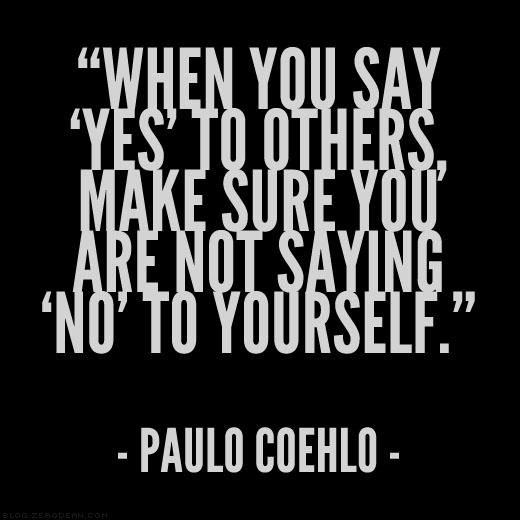 What to do? When you say “No” you will be met with cajoling, from ones that generate a big load of guilt to ones that tell you how long the favor will take–and it’s always “Five minutes, max.” Of course, the only worthwhile thing that can be accomplished in five minutes is brushing your teeth.
So here are several technique that work. It’s not easy, but it’s easier than saying “yes” and exhausting yourself or heaping stress on yourself. Because that’s what we are doing–when we say “yes” when we should say “no” we are the generator of our own stress.
1. Listen to the entire request. Cutting the speaker off before they are done only makes them more demanding and insistent.
2. Re-phrase what they want you to do. This is important so you can understand what is being asked of you. Frequently, people asking favors use diminishing language (words like only, just, little, quick, easy) and you hear that instead of the task.
3. Agree, but set a time that works for you. If you WANT do what is asked of you, and you CAN do it, agree but give yourself plenty of time. This includes setting a time you will spend on the task. For example: “So you want me to take you shopping for a used car? I can come with you from 2 to 4 on Saturday. How does that sound?” or “You want me to proofread your marketing letter? Sure, I’ll be able to get to it on Monday, the 18th, and complete it on the 21st. Does that sound OK?”
 Notice that in each case you are asking if the time is agreeable. If not, you have a great excuse to turn it down. If the person wants more of your time or a faster deadline, you can decline, having offered what is possible.
4. Do the favor, but for a limited time, set the time at the outset. “Sure, I’ll go with you, but I have to be back at my house at noon.” Or , “I’d love to help, and I can go from noon to 2 p.m.–will that work?”
Like the first Polite No, it offers your help, within your limits. If the person doesn’t like your limits, you can gracefully back out.
5. If you don’t want to or can’t, suggest someone else. “I can’t go on Saturday, but you might want to ask Joe, he knows a lot about cars.” Suggesting some other solution helps the other person walk away and makes you helpful.
There are times when you will have to choose between two “No’s” or say “No” more often than your guilt-meter wants you to, but remember that even in an airline emergency, when the yellow oxygen masks drop in front of you, you are supposed to help yourself first, then those around you. That’s a good image to keep in mind–saying No let’s you take care of yourself so you can survive to help others.
–Quinn McDonald is a creativity coach who helps others help themselves. Occasionally she is better at that than doing it herself. But she keeps practicing.
Filed under: Inner Critic, Opinion Tagged: how to say No, standing up for yourself



December 9, 2013
Origami Paper Collage
As a Yasutomo Design-team member, I get to have a lot of fun playing with the company’s art materials. One of the ways I experiment is using different materials in unexpected ways. I’ve always liked origami paper, so today I tried using it as a collage element. You can read the complete instructions on the Niji blog site, but here are the highlights. For the project I used Fold’Ems origami paper, Splash Inks, Yasutomo’s gel pens, and a touch of the gold sumi-e watercolor paint.
 Yasutomo’s Fold ‘Ems origami paper is double sided. One side is a print, the other a pattern. This was the star pattern, which worked well to give parts of the collage texture.
Start by choosing a sturdy watercolor paper.
Free-mix Splash Inks in a palette to make green, teal, and purple.Dilute the colors with water, then drop the colors onto the wet paper using a fat watercolor brush.
As the colors spread, tilt the paper to allow blending. I like to avoid mixing watercolors in wet-in-wet technique.
If you must blend, use a light hand, allowing the colors to run and mix.
 Allow to dry completely. Select some coordinating colors from the origami paper.
I like abstracts and a rustic look, so free-hand drawing loose flowers appeals to me. Cut the majority of the flower from the solid paper, then add touches of the patterned side.
Try several shapes rather than just one. It makes the completed piece look more natural.
 Cut double portions of leaves, so you have a mix of dark and light. It makes them more interesting. As a finishing touch, I added a bit of gold watercolor shine to a few of the leaves and darkened the stems with a green gel pen. You can use the purple pen to add depth and give the flower petals some definition.
Quinn McDonald is on the Niji Design Team; she is a creativity coach and collage artist. She was not paid to create this post or any she does as a design team member. She was given materials to experiment with.

Filed under: Art in Progress, Journal Pages, Links, resources, idea boosts Tagged: niji design team, origami collage, origami paper, Yasutomo design team


Adapting to Change, Woodpecker Style
Change is hard. Most people don’t like it. It feels disruptive, awkward and different. We like our routines. Birds must like their routines, too, migrating every year, building nests, raising hatchlings. From time to time, I see something surprising, and today it was from a gila woodpecker.
The male is a noisy, colorful addition to the area; gila woodpeckers live in the

Male Gila Woodpecker. Photo from the Cornell lab, where you can read more about them. Link below.
desert and don’t migrate. This one is the mate to the leucastic female who loves to drill holes in my oranges. She doesn’t, however, eat the lemons. Just the beautiful oranges.
The male keeps wanting to drink from one of the hummingbird feeders, but the feisty and fierce birds dive bomb him and drive him away.
These are the same hummingbirds that boldly pull the tail of my long-tailed cat, harassing a beast that could easily swat them out of the air. She now dives under the patio table when she hears the warning clicks of the hummingbirds.
The gila woodpecker was at the feeder today, using his slender beak and long tongue to slurp the sugar-water mixture. The little buzzers were at the front feeder. After a while, I became curious. Why they had deserted the post they defended for weeks?
The woodpecker had deposited ants into the feeder. Hummingbirds don’t like the taste of the ants’ protective formic acid. They deserted the feeder. The woodpecker then ate sugar-water coated ants, leaving enough in the feeder to keep away th hummers.
Clever adaptation. Although the woodpecker is much larger than the hummingbirds, he had no desire to fight. So he poisoned the well–for others–creating a feeder he could empty over the course of the afternoon.
There’s a lot to be learned from this: small size doesn’t have to mean giving in to larger sizes; when the hummingbirds attacked the woodpecker, he left. Then again, finding a way to make the food you want distasteful to your enemy is a way to get it all for yourself. My job was to clean and re-fill the feeder.
–Quinn McDonald is a naturalist with a sense of justice. But not enough to mess with hummingbirds.
Filed under: Nature, Inside and Out Tagged: animal adaptation, gila woodpecker, hummingbirds


December 7, 2013
Books Worth Reading
Looking for a book to read? If you like novels, please consider reading Neil Gaiman’s American Gods. Gaiman’s most recent book, The Ocean at the end of the Lane is a magical mystery tour of the mind and heart of a young boy who is surrounded by magic. American Gods is a completely different book–an almost hallucinogenic road trip in which old and new gods battle for the attention of America.
 It’s not a post-apocalyptic novel, it is a novel in he present tense in which the old gods realize that once no one cares about you anymore, you are no longer a god. And America, as they keep repeating, is a bad place to be a god. The new gods realize that information isn’t power, attention span is. So the old gods battle it out with the new–technology and drugs in a story that combines love, lust, searching, loss, mystery, sacrifice and murder.
As in most excellent mythologies, the gods here inhabit human bodies, but act as avatars. Their mistakes and ego get them into trouble and their mistakes delight us, because we can see them coming. Until, of course, we cannot.
Gaiman’s mind is both nimble and complex. The story never flags, and at the end of 560 pages you are sorry to leave the characters.
Another book that’s worth reading is Margaret Atwood’s Madd Addam. It’s the third of a trilogy, but the first one I’m reading. The book is so well-written and cleverly populated, I’m going to go back and read the other two, even though I know what happens. (That’s the definition of a good book for me).
Atwood sets her book in the future. Corporate greed led to re-engineering a new breed of human, and a non-water flood (most likely a virus that could not be engineered out of existence fast enough) destroys the world, leaving a few people (who are either the hippy-like God’s Gardeners or the eco-warrior Madd Addamites.) Then there are the Craikers, the newly-engineered, placid, curious, and beautiful Craikers who are to re-populate the world. Unfortunately, the trusting Craikers are no match for the Painballers, sociopaths who roam the world.
And no one is a match for the wonderful animals Atwood creates in the world. The smart, destructive Pigoons, are both delicious, smart and mean. There is also the food species, ChickieNobs and Liobams, who need to be avoided. Oh, and of course, the cross between humans and sheep, the Mo’hairs, who provide hides, well, hair.
Both novels rely heavily on metaphor for understanding and pleasure. As a reader, you can see what will happen in either a clash of gods or a corporate “accident” in which the victims are everyone. The smart at not the only survivors, and as Yeats pointed out, “the best lack all conviction while the worst are full of passionate intensity.”
You don’t have to love science fiction to love either of these novels. As in all cases of perspective, your enjoyment of these books will vary. I love them both and am glad to have spent my time reading.
–-Quinn McDonald wishes she could write fiction. She also know that half of being smart is knowing what you ar dumb at and not doing it. The other half, of course, is knowing what you are good at and doing a lot more of that.
Filed under: Creativity


Two Books, Both Worth Reading
Looking for a book to read? If you like novels, please consider reading Neil Gaiman’s American Gods. Gaiman’s most recent book, The Ocean at the end of the Lane is a magical mystery tour of the mind and heart of a young boy who is surrounded by magic. American Gods is a completely different book–an almost hallucinogenic road trip in which old and new gods battle for the attention of America.
 It’s not a post-apocalyptic novel, it is a novel in he present tense in which the old gods realize that once no one cares about you anymore, you are no longer a god. And America, as they keep repeating, is a bad place to be a god. The new gods realize that information isn’t power, attention span is. So the old gods battle it out with the new–technology and drugs in a story that combines love, lust, searching, loss, mystery, sacrifice and murder.
As in most excellent mythologies, the gods here inhabit human bodies, but act as avatars. Their mistakes and ego get them into trouble and their mistakes delight us, because we can see them coming. Until, of course, we cannot.
Gaiman’s mind is both nimble and complex. The story never flags, and at the end of 560 pages you are sorry to leave the characters.
Another book that’s worth reading is Margaret Atwood’s Madd Addam. It’s the third of a trilogy, but the first one I’m reading. The book is so well-written and cleverly populated, I’m going to go back and read the other two, even though I know what happens. (That’s the definition of a good book for me).
Atwood sets her book in the future. Corporate greed led to re-engineering a new breed of human, and a non-water flood (most likely a virus that could not be engineered out of existence fast enough) destroys the world, leaving a few people (who are either the hippy-like God’s Gardeners or the eco-warrior Madd Addamites.) Then there are the Craikers, the newly-engineered, placid, curious, and beautiful Craikers who are to re-populate the world. Unfortunately, the trusting Craikers are no match for the Painballers, sociopaths who roam the world.
And no one is a match for the wonderful animals Atwood creates in the world. The smart, destructive Pigoons, are both delicious, smart and mean. There is also the food species, ChickieNobs and Liobams, who need to be avoided. Oh, and of course, the cross between humans and sheep, the Mo’hairs, who provide hides, well, hair.
Both novels rely heavily on metaphor for understanding and pleasure. As a reader, you can see what will happen in either a clash of gods or a corporate “accident” in which the victims are everyone. The smart at not the only survivors, and as Yeats pointed out, “the best lack all conviction while the worst are full of passionate intensity.”
You don’t have to love science fiction to love either of these novels. As in all cases of perspective, your enjoyment of these books will vary. I love them both and am glad to have spent my time reading.
–-Quinn McDonald wishes she could write fiction. She also know that half of being smart is knowing what you ar dumb at and not doing it. The other half, of course, is knowing what you are good at and doing a lot more of that.
Filed under: Creativity


Looking for a book to read? If you like novels, please co...
Looking for a book to read? If you like novels, please consider reading Neil Gaiman’s American Gods. Gaiman’s most recent book, The Ocean at the end of the Lane is a magical mystery tour of the mind and heart of a young boy who is surrounded by magic. American Gods is a completely different book–an almost hallucinogenic road trip in which old and new gods battle for the attention of America.
It’s not a post-apocalyptic novel, it is a novel in he present tense in which the old gods realize that once no one cares about you anymore, you are no longer a god. And America, as they keep repeating, is a bad place to be a god. The new gods realize that information isn’t power, attention span is. So the old gods battle it out with the new–technology and drugs in a story that combines love, lust, searching, loss, mystery, sacrifice and murder.
As in most excellent mythologies, the gods here inhabit human bodies, but act as avatars. Their mistakes and ego get them into trouble and their mistakes delight us, because we can see them coming. Until, of course, we cannot.
Gaiman’s mind is both nimble and complex. The story never flags, and at the end of 560 pages you are sorry to leave the characters.
Another book that’s worth reading is Margaret Atwood’s Madd Addam. It’s the third of a trilogy, but the first one I’m reading. The book is so well-written and cleverly populated, I’m going to go back and read the other two, even though I know what happens. (That’s the definition of a good book for me).
Atwood sets her book in the future. Corporate greed led to re-engineering a new breed of human, and a non-water flood (most likely a virus that could not be engineered out of existence fast enough) destroys the world, leaving a few people (who are either the hippy-like God’s Gardeners or the eco-warrior Madd Addamites.) Then there are the Craikers, the newly-engineered, placid, curious, and beautiful Craikers who are to re-populate the world. Unfortunately, the trusting Craikers are no match for the Painballers, sociopaths who roam the world.
And no one is a match for the wonderful animals Atwood creates in the world. The smart, destructive Pigoons, are both delicious, smart and mean. There is also the food species, ChickieNobs and Liobams, who need to be avoided. Oh, and of course, the cross between humans and sheep, the Mo’hairs, who provide hides, well, hair.
Both novels rely heavily on metaphor for understanding and pleasure. As a reader, you can see what will happen in either a clash of gods or a corporate “accident” in which the victims are everyone. The smart at not the only survivors, and as Yeats pointed out, “the best lack all conviction while the worst are full of passionate intensity.”
You don’t have to love science fiction to love either of these novels. As in all cases of perspective, your enjoyment of these books will vary. I love them both and am glad to have spent my time reading.
–-Quinn McDonald wishes she could write fiction. She also know that half of being smart is knowing what you ar dumb at and not doing it. The other half, of course, is knowing what you are good at and doing a lot more of that.
Filed under: Creativity
December 6, 2013
Clearing Off Space to Make a Snowflake
Well, it’s the weekend, and I’m having a garage sale to get rid of items I’ve had in the garage for five years since I moved. Overall, I did pretty well, marking and boxing about 30 boxes of material and keeping about three. Ruthless is all well and good, but some things need to stay a bit longer.
But for those of you ready to clean out your studio:
Get rid of unwanted Direct Mail (and save some trees.) Here are five suggestions that would reduce a lot of unwanted solicitations and letters. And a way to end the junk mail.
Stop unwanted catalogs. This site requires that you know the name of the catalog (or company), but it is incredibly detailed, so you can get rid of only the ones you don’t like.

My first virtual snowflake of the year!
And if you need some fix-it help: Drooling for a pair of ultra-cool Christian Louboutin shoes–the ones with the red sole? Of course, you can’t stand the idea of the red sole wearing off–those shoes would look like the rest of us in the common ruck wear. Arty’s Shoes in Manhattan will replace the sole in a nice bright red for $40. Call Arty’s at 212-255-1451.
Or just stop worrying and make a virtual snowflake with virtual scissors and paper. It takes a bit of practice, but they all wind up looking wonderful. Best of all, you can email them, or save them to your computer, like the one above.
Or laugh at do-it yourself projects gone oh, so wrong.
Have a creative weekend!
–Quinn McDonald is hoping this is her last garage sale.
Filed under: Links, resources, idea boosts Tagged: get rid of unwanted direct mail and catalogs, virtual snowflake


December 5, 2013
Wedding on New Year’s Eve
Don’t often talk about this, but I am an ordained celebrant. I perform weddings, house blessing, child namings. I create ceremonies for people who need a special ritual in their lives. Sometimes when I say “ritual” people think of incantations and swinging a chicken over your head and yelling “Shalimar!’ but that’s not what I do.

Digital art, fractal art by © Wiirus, New Year’s Eve.
This wedding is low-key and simple. It will be on New Year’s Eve. The couple were each married before, and after almost two decades of being alone, have found each other. I visited them today and their path to getting married is so complicated and highly patterned. Tonight I wrote their ceremony, and found a poem that is perfect for them. I thought you’d enjoy it, too. The title is the author’s, and names people he knows.
Wedding Poem For Schele and Phil
A marriage is risky business these days
Says some old and prudent voice inside.
We don’t need twenty children anymore
To keep the family line alive,
Or gather up the hay before the rain.
No law demands respectability.
Love can arrive without certificate or cash.
History and experience both make clear
That men and women do not hear
The music of the world in the same key,
Rather rolling dissonances doomed to clash.
So what is left to justify a marriage?
Maybe only the hunch that half the world
Will ever be present in any room
With just a single pair of eyes to see it.
Whatever is invisible to one
Is to the other an enormous golden lion
Calm and sleeping in the easy chair.
After many years, if things go right
Both lion and emptiness are always there;
The one never true without the other.
But the dark secret of the ones long married,
A pleasure never mentioned to the young,
Is the sweet heat made from two bodies in a bed
Curled together on a winter night,
The smell of the other always in the quilt,
The hand set quietly on the other’s flank
That carries news from another world
Light-years away from the one inside
That you always thought you inhabited alone.
The heat in that hand could melt a stone.
–Quinn McDonald loved spending an evening reading poetry, looking for just the right ones, even though she should have been working on the garage sale.
Filed under: Poetry, Quotes, The Writing Life Tagged: Bill Holm's poetry, ceremonies


December 3, 2013
Journaling with Pen and Paper
Put down the paint–all of it. Acrylics, watercolors, pastels. Lay down your neon gel pens, distressers, macro- and micro-glitter, mica shards and flower petals. Put them down. Now. You don’t need them to journal. Breathe. Clean off your desk. Breathe again. Just for now, we are going to keep it simple. You can go back to layers-upon-layers tomorrow.
 Just for today, allow your journal to be a quiet discovery of what’s in your heart and soul. It doesn’t need six layers of paint, crayons, punchinella stencils, gloss varnish, sprinkles and hot chocolate sauce. The last dozen journals I’ve seen were heavy and colored and had ephemera stuck all over them, but not a single word that helped the owner make sense of her life.
I believe in slow art. Simple art. Original art. It has your fingerprints in it and your mistakes throughout it. Because it is original and raw. I believe that the original digital art was done by hand–ten digits, including an opposable thumb– with a pencil on paper. After that, pens and maybe watercolor pencils were added. That’s all you need to make meaning. Meaning might not come from words alone, but it doesn’t comes from pressure to buy pounds of tools to create busy, color-laden, thick, but word-empty pages, either.
 Try going to spare. Simple. Pen and paper. With words. If you feel that your journal pages have become the boss of you, and meaning has taken the back seat, throw everyone out of the art van and rearrange the seats.
Put creativity and your good common sense in the front seat. Everyone else who is clamoring for attention (“But X puts paint in her hair and puts her journal on her head to get color!” “Be like Y and use that new archival peanut-butter-and-jelly stain to create an inner child page!” ) has to sit in the way-back and be quiet. Give them a coloring book and ketchup packets.

Black Pitt pens work just fine. A touch of color, maybe. But not a lot more.
Now you are ready to drive. Find your meaning, purpose, and self awareness in simple, direct lines. Remember when you loved making things? Go back to that time. It was rich in content, satisfying in the doing.
--Quinn McDonald has a Shaker and Bauhaus sensibility today.
Filed under: Art in Progress, Journal Pages Tagged: line art, no-layer art, slow art


December 2, 2013
The Power of Silence
For someone who talks as much as I do, writes as much as I do, and makes a living with words, I’d like to use a few of them to praise the power of silence.
 The first time someone ripped into my book on amazon, I wanted to respond, show them how wrong they were, prove (with a flourish) they hadn’t read the book. I gave it some thought, even wrote a draft. And a tiny voice whispered in my ear, “Do you really think you will change this person’s mind? Make them come to their senses? Suddenly burst into tears, beg your forgiveness and re-write her fury into love? Well, no, I knew that wasn’t going to happen. So I spared myself the fingers and editing and said nothing.
Had I taken up the sword, the critic would have simply dug in her heels and insisted she was right, and more so. Saying nothing, keeping silent, was an excellent choice.
Recently, I wrote a review of a book that had (in my opinion) flaws. Carefully couching the critique in words that showed it was simply my opinion and taste, I said the book didn’t strike me as either a memoir or a history, and explained why. Someone, possibly a friend of the author, wrote a comment pointing out my mistakes and how I clearly didn’t understand history or “get” the brilliance of the book. Again, I chose silence.
There is power in not arguing, not proving our point. It’s more than not having to be right, it’s letting the other person’s view stand in the open, giving it space to be an opinion and stand for itself.
 Yes, sometimes we have to stand up and speak out. Social justice issues can’t be kept quiet. But the majority of the responses aren’t about social justice, they are about control, or needing to be right, or just being heard. And for that, silence is a power that has strength.
—Quinn McDonald is enjoying some silence as she prices items for the garage sale this coming Saturday.
Filed under: In My Life Tagged: silence, strength