
Laurie Boris's Blog, page 25
April 16, 2015
Mindfulness and the B Word
 It’s alarming enough to have something growing on your body that’s not supposed to be there without the added joys of waiting for a professional to tell you what it is and what should be done about it.
Several times in my life, these stowaways have required a biopsy. So far, most have been benign or at least precancerous, and they were handily dispatched. Right now I’m wearing a bandage on my left temple while a recent removal is healing. It’s benign, which is one of my favorite b-words.
But don’t fret—I’m not here to get all TMI about icky skin things.
It was the wait that got me thinking.
I’m sure it’s not intentional on the part of the office staff to leave me hanging overnight to call about test results in the morning. Not the first time that’s happened, either. But there I was, alone in the house with a message I couldn’t return, an answer I didn’t have.
I did the human thing for a few minutes and worried. What if I wasn’t lucky this time? I’m from a family of fair-skinned people who have dermatologists on speed-dial. What if it required more treatment, more cutting, more money I didn’t have?
And then it hit me.
I’m alone in the house. My husband works from home. I’m almost NEVER alone in the house. And there I was, wasting that precious time and energy with worry about something I couldn’t control. Something I didn’t know. Something I couldn’t, at that moment, know, unless I felt like getting my stalker on and paying a visit to the dermatologist’s office, and perhaps the local jail.
I smiled.
Then I bopped around the house doing my bad Annie Lennox impression, had a conversation with a few of my characters to work out a few of their issues, then sat down to edit for the rest of the evening, without a thought that my style of reading aloud would bother anyone.
If I’d spent that evening coiled like a spring, regardless of the test results, I’d have regretted it. Learned from it, maybe, but regretted it.
Score one for living in the moment and not letting the worry win.


April 6, 2015
Against All Odds—What’s Our REAL Chance of Becoming a Successful Author?

Wise and inspiring words from Kristen Lamb:
“Show me a struggling author and I will show you someone spending too much time shopping the same book. Instead of writing more books and better books, these writers are worried about querying the same book over and over, or (if published) they fret over sales, marketing, blog tours, or algorithms.
We cannot control what will be the next hottest thing. We can’t control the marketplace or the tastes of readers or whether matte bookmarks sell more books than pink beer koozies. This means we shouldn’t waste precious time on things we cannot control at the expense of things we can.”
 Originally posted on Kristen Lamb's Blog:
 Image and quote courtesy of SEAL of Honor on Facebook.
Many of you were here for last week’s discussion regarding What Makes a Real Writer? When we decide to become professional writers, we have a lot of work ahead of us and sadly, most will not make the cut.
I know it’s a grossly inaccurate movie, but I love G.I. Jane. I recall a scene during Hell Week (the first evolution of S.E.A.L. training) where Master Chief has everyone doing butterfly kicks in the rain. He yells at the recruits to look to their left and look to their right, that statistically, those people will quit.
Who will be the first to ring that bell? Who will be the first to quit?
 Image via http://www.freerepublic.com
Years ago, one of my mentors mentioned The 5% Rule. What’s The 5% Rule? So happy you asked. Statistically, only 5% of the population is…
View original 1,727 more words


March 29, 2015
Real Life into Fiction
 Think about your favorite novels. There might be a ripping good story and great writing, but I bet it also stars characters that leap off the page. Even if the characters inhabit a fantasy world and have two heads and green fur, they feel as real as the person sitting next to you. That being feels…real to you. You care what happens to she/he/it. Ever wonder how writers do that? I can’t speak for all writers, but here are a few secrets some of us use to take our real life experiences into fiction.
We eavesdrop on people. Not in a creepy, stalker-y way. Listening to the way real people speak (and not just in movies and TV shows) is one of my favorite tools to improve dialogue skills. You can pick up some great expressions, accents, and inflections. This helps us write dialogue that will not only distinguish one character from another but create living, breathing facsimiles of real people. Notice I said “facsimiles.” A direct transcription of a human conversation is rife with filler words and the niceties of greetings. Unless the exchange tells us more about a character (wow, what a polite serial killer) or advances the story in some way, why waste time with all the daily-grind chitchat when you just want to get on with reading?
We sometimes model characters from real people…or at least pieces of them. You’ve probably met a person who seems “larger than life.” Perhaps you’ve always thought this person should be in a novel. But if a writer isn’t careful, this can lead to a character that seems too good to be true. I modeled one of my characters from a friend who’d recently died from cystic fibrosis. My husband read the first draft and said, “You’re too close to this.” So I put it aside for a while. With some perspective and writing experience, I realized my problem: because I adored and admired my friend, I made the character too good. He had no flaws. So I gave him a few. I made him a little forgetful, showed him arguing with his sister, showed him not always making the “right” choices. He became empathetic, more real, more like someone readers could relate to. In other words, human. And we humans like other humans. Or beings with green fur and two heads, depending.
We think about motivation…a lot. Far more than the people in our lives are comfortable with, sometimes. If I’m reading a story and the main character doesn’t seem to want anything, doesn’t act when thrust into a difficult situation, and even by the end of the story hasn’t seemed to have grown or changed or made peace with a troubling situation or triumphed in any way…I feel a lot less connected to the story. So the perennial question writers ask themselves is WHY? Why does she want that job so badly? Why hasn’t she contacted the father she’s been estranged from most of her adult life? Why is she being so mean to that nice guy who only wanted to help her? And, hey…that nice guy? Why was he being so nice?
We don’t like to give our characters the easy way out. A compelling main character wants something, but it can’t be too easy. What’s the fun of that? Didn’t you get that lecture when you were a kid that the goal you worked really hard to achieve (or the luxury you bought with your own money) would be worth that much more to you than one someone simply handed to you? Same with characters. We throw roadblocks in their paths. Sometimes I feel lousy for putting the hurt on characters I’ve grown to like. But seeing how they respond to adversity, how badly they want this thing they’re after, can make a reader root even harder for them to succeed. Just like in real life.
What are some of your favorite fictional characters? What about them made you care about them and root for them? (Or, in turn, hate them with a passion?)


March 26, 2015
The Clean Reader Ap Uproar
Mark Twain once said that the difference between the right word and the wrong one is the difference between lighting and a lightning bug. I choose my words with care and like to think I get them all in the right order, but it’s done for a reason. With intent. I hate the idea of some app that will strip my intent because of a few words some readers might find “objectionable.” I don’t think I”m all that salty, but still. There’s a reason I’m all over the interwebs crowing about Banned Books Week every year. Because words mean things. And a watered-down version does not have the same meaning. Thank you, DV Berkom, for posting this.
 Originally posted on DV Berkom Books:
[image error]Unless you’ve been hiding under a rock (or editing your manuscript, or are on safari in the depths of the DRC) you’ve probably read about the uproar surrounding the Clean Reader Ap. I’ve read several posts about it and thought I’d share the two I enjoyed most: Charlie Strossand Chuck Wendig.
Gotta say, Ernest Hemingway’s turning in his grave right now. I remember picking up a used copy of For Whom the Bell Tolls years ago and being puzzled by his word choices (unmentionable was used several times in place of his original text. I freely and somewhat sheepishly admit it took me a couple of pages before I realized I had a censored copy as I’d never run across one before.) The replacement words absolutely destroyed Hemingway’s intent, not to mention totally messed with my reading experience. Talk about jarring the reader…
Thankfully, Mark Coker over…
View original 69 more words


March 23, 2015
Plotting for pantsters
Plotting versus pantsing… AC Flory lays this out so well, unbearable GPS and all.
 Originally posted on Meeka's Mind:
 Most writers who identify as pantsters do so because they can’t or won’t use outlines for their work. They like the thrill of the unknown, of putting finger to keyboard and jumping into a story without any idea of where it’s going. I know this because I am one. In fact I can’t outline to save my life.
But plotting and outlining are not quite the same thing. A plot is like a road map; it defines the destination of the story, and offers possible pathways for getting there. But if you don’t want to take the highway, or even those twisty country lanes, a plot will allow you to set off cross-country with just the position of the sun as your compass.
Outlines, on the other hand, are more like a GPS device. They tell you when and where to turn. They can even tell you how long it will be…
View original 873 more words


March 19, 2015
Playing Charlie Cool Nominated for Readers’ Choice Award
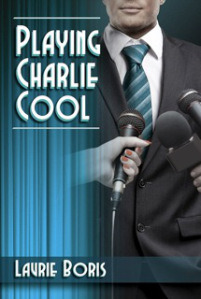 Those of us in the community of independent writers and readers might know there are few book review sites that focus exclusively on indie authors. Big Al’s Books & Pals is one of those sites. They also keep the bar high. Name recognition might get you moved up the list, as blog founder Big Al himself said in an interview with Martin Crosbie, but you know that review is going to be fair: no passes here. That’s why I’m so excited Playing Charlie Cool was nominated for one of their 2015 Readers’ Choice Awards in the category of contemporary fiction. Out of the thousands of books that Books and Pals received last year, just over three hundred were reviewed. And an even smaller selection made it into the thirteen categories for the award. I love writing Charlie, and even though we’re on a little hiatus right now, I’d definitely pour him a scotch and put some Sinatra on the playlist if he decided he had more stories to tell me. I’d like to ask for your vote, if you think Charlie and I are worthy, in the contemporary fiction category. It’s easy and you don’t have to vote for every single category, although the more votes you submit, the greater your chances to win some goodies, including a selection of the nominated books and a sweet, sweet $75 Amazon gift card.
  Just click here to go to the Rafflecopter page where you can vote. Scroll down to see the instructions and categories, and click on the category name to see the nominated books. (Note: Older versions of Internet Explorer don’t like Rafflecopter much, so if you use a different browser, it might work better.) A few of my author compadres were also nominated, so I hope you’ll check out the stellar work of Lynne Cantwell (Scorched Earth, nominated in Fantasy), DV Berkom (A One Way Ticket to Dead, nominated in Thrillers), Julie Frayn (Mazie Baby, nominated in Women’s Fiction), Donna Fasano (Following His Heart, nominated in Romance), Jackie Weger (No Perfect Secret, nominated in Romance), and Shawn Inmon (Rock ‘N’ Roll Heaven, nominated in Paranormal). Thank you for your time, and thank you for continuing to give independent authors a chance. Voting ends March 28.


March 14, 2015
Flash Spring Forward
 It’s been a while since I flashed you. So here are a few of my contributions from Friday’s Word-a-Palooza and barn-raising also known as 2MinutesGo at JD Mader’s blog. As usual, only lightly edited for your protection. ‘Cause that’s the way we roll. If you’re in a writing mood, maybe you’ll come by next week and play. Or at least read the awesome, awesome writing going on there.
—–
Spring Rhythm #9 in Footwear (inspired by Maggie Estep and JD Mader)
The other shoe hangs by a lace, by the sword of Damocles, by a thread, by the whisper of a scream, by the feathery remains of a dream; the other shoe blots out the sun, hovers like a cartoon spaceship and your dainty umbrella won’t save you from disaster. The other shoe doesn’t fit Cinderella’s evil stepsisters no matter how many toes they cut from their ugly feet. The other shoe hovers like a slap, like the flat of a hand caught before snapping down on the head of a drum. The other shoe, suspended, watches his brother, waiting, waiting, waiting for his turn, for his moment on the pavement, for his silent detonation.
—–
A Good Home
Pressed a little smaller with humiliation from having to give up a few items from her grocery cart at the checkout, Betty trundled home. The plastic handles cut into her palms, her forearms, her elbows. As she was waiting for the light to change, arranging and rearranging the bundles to minimize circulation cutoff, she noticed a flyer taped to a utility pole: Kittens, free to good home. She smiled, imagining an energetic little creature happy to see her at the end of the day. A friend she could talk to who wouldn’t bark back, order her around, try to make her feel like shit. Okay, maybe her home wasn’t exactly good now, especially when Mr. Wonderful was in town, but it could be. With a kitten.
When she called the number on the little stub, a woman answered. Betty cleared her throat and stammered out the question.
“Yes, we have one left, a female calico with double paws, poor thing.” She asked Betty a few questions about her living arrangements, her work. “I don’t mean to be intrusive, you understand. “But I want to make sure you’ll be able to give her a good home.”
“Of course,” Betty lied.
They took to each other immediately, the kitten hopping after Betty when she did her chores around the apartment, her giant, funny paws like little boots. In fact, Betty named her Boots. And home did feel like a good place, a happier place. Until he returned.
“What the fuck?” he said when he stumbled in late one night, stinking like the road and half a distillery.
Betty snatched Boots up inches before his foot accidentally connected with her new friend. “I got a kitten.”
He mumbled something she couldn’t hear, his eyes squinching. “Ugly little thing.”
Betty’s shoulders sank.
“I ain’t paying for it.”
“I didn’t ask you to.”
Boots skittered out of her arms and hopped to his duffel bag, giving it a sniff and a few paw pats. “Hey.” He started for her. “Get the fuck away from there, ya little mutant.”
“Don’t, she’s just exploring, she…”
“Stupid bitch. Probably don’t even know how to train these things right. Here, I’ll show you. Hey.”
She reached for his arm, a second too late.
“No, goddammit, bad cat!” He backhanded Boots, and with a mewl that curdled Betty’s heart, the kitten darted across the room and under the couch.
Then he went into the bedroom and passed out. Betty stayed on the couch that night, unable to sleep. At some point, Boots poked her nose up and curled into the hollow of her belly.
By that morning, she decided her friend wasn’t the only one who needed a good home. She hoped he’d enjoy the going-away present Boots left for him in his duffel.
—–
Untitled
As if a silent signal had been passed, her brand-new fiancé and his father excused themselves from the table with some lame excuse about something to do with spark plugs, or fishing lures, or baseball collectibles. The story kept changing through dinner and finally, mouth pressed tight, Suzie’s brand-new future mother-in-law waved them free. Then brought more coffee to the table. The silence stretched; the clock ticked; the coffee grew as cold as did Suzie’s fascination with the oily film on the surface of her cup. “So,” Mrs. Steiner finally said. “You and my son, huh?”
Suzie shrugged; her stomach pinched the longer the woman stared, her eyes like the coldest of speculums. “I…um…well.” Her voice firmed. “He’s a great guy. When you know, you know. Right?”
Mrs. Steiner’s brows pushed together. It felt like the loudest sound in the universe. “You know. You know nothing. What’s his favorite meal, huh? You know that?”
Suzie rattled her mind for things she’d seen him enjoy eating. “He likes…spaghetti?”
“Pah.” She punched a hand out. “Meat loaf. My meat loaf.”
Meat loaf? He told her he hated it.
“You know you have to make him soup and toast when he’s sick? That you have to cut the crusts off and the butter needs to go all the way to the edges of the bread?”
“Should I be writing this down?”
The tines of the speculum widened. “You think this is funny? My son is a very special boy…”
“I’m sorry, Mrs. Steiner, but I think he stopped being a boy at about twelve or so.”
Mrs. Steiner leaned in close, a manicured fist closing around the collar of Suzie’s T-shirt. “Listen here, you little tramp. He will always be my boy and if you hurt one hair on his head, I know people. I know people who will cut you.” And then she released the fabric. Smiling sweetly, she said. “Now. Would you like some babka with your coffee?”


February 6, 2015
Flash Freeze Fiction
 Baby, it’s cold outside. But we’re having fun with freewriting day at JD Mader’s Unemployed Imagination blog. Here are a few pieces I put up today. I hope you’ll come by and check out the great writing folks are throwing down. We’re still open for business, no matter how cold it gets. As always, lightly edited for your protection.
—–
Making Do
Snow squeaks beneath her inadequate footwear as she trudges from store to store, and once again she questions her decision to stay. But she’s here and has made promises and doesn’t have much choice in the matter, so she sucks in a deep breath that makes her nostrils stick together and vows to at least try to become one of those cheerful, rosy-cheeked people who roll their eyes at the weather and Make Do. They stamp snow from their thick, warm boots and grin at the way the sudden entrance into a heated diner fogs their glasses. They slap you on the back and say things like, “Yeah, but it’s a dry cold,” and talk about how many inches they’re supposed to get, as if it were an offering dropped down the chimney by Santa. She keeps waiting for it to become fun, to be happy about building snowmen and drinking hot chocolate by the fire, but nearly all she’s been able to do lately is sit at the window watching the flakes swirl and fly sideways and pile up in the garden, thinking about springtime, counting the days, hours, and minutes until green things start shooting up through the snow. As she’s leaving the bookstore, she sees the sign on the next building and gets a thought. Maybe she can do this. Maybe all she needs is to duck in and get herself a pair of decent boots. At least it would be a start.
—–
RIP, Valhalla, NY, February 3, 2015
He loved trains, ever since the first Christmas his dad ran a ring of baby track around the tree. It had tiny wooden cars on little wooden wheels, and he pushed it along, making chug-chug sounds as he crawled beside them. Later he graduated to real model ones from the hobby store, bits of metal track and liquid smoke and chalky green fake landscapes in the basement, his mother tsking at the mess and smell and why didn’t he go play outside, already? So he did, plopping his engineer’s cap on his small, sleek head, but that was never as much fun as playing conductor. He thought about that as he climbed the stairs into the Metro-North train, bound for home after a long day, and claimed a seat in the first car, so he had a better view of what lay ahead. It made him feel like he was young again, pushing those little trains around, playing at the God of Conductors. While the other passengers disappeared into their electronics or newspapers or conversations, he leaned against the window, sinking back into those early days, imagining the feel of one piece of track clicking into another, the drip-drop of the liquid smoke in to the engine and how it puffed white exhaust as it chugged along. And then he saw it. The lights up ahead. Was that….a car? Sitting on the track? Why…? He barely got his head around the question when the squeal of brakes split his head apart, his last thought of those tiny cars, the dancing lights of the Christmas tree, the engine rounding the corner, trailing smoke.
——
Life in the Key of NYC
She’s too impatient to ride the bus uptown and gets off at the next corner, where a man plays three-card monty on a folding table in front of the bodega, eyes ever shifting for a sign to collapse his enterprise and move on. He follows her with those quick glances, deciding if she’s a mark or a narc, calls out something about the appeal of her walkaway until she can no longer pick his voice out from the crowd. She snaps up the pace, checking the time on her phone, doing the mental intersection of coffee shop locales versus blocks to pound, decides on a straight shot to her next meeting, where they will probably offer java anyway; they always do. Some impossibly young woman offers a choice of beverages, finds a way to make her feel old and dowdy even though they are in the same demographic, the same universe, the same team. Faces blur as she navigates corners and magazine stands and tourists; the syncopation of cab horns and subway rumbles and multilingual conversation is the jazz soundtrack of her life, and she can’t imagine how anyone could live anywhere else.


January 26, 2015
Interview with B.R.A.G. Medallion Honoree Laurie Boris

Talking about Don’t Tell Anyone, sibling rivalry, Jewish mothers, and indieBRAG with Stephanie Hopkins at her blog, Layered Pages. Hope you’ll visit!
 Originally posted on Layered Pages:

Laurie Boris is a freelance writer, editor, proofreader, and former graphic designer. She has been writing fiction for over twenty-five years and is the award-winning author of five novels: The Joke’s on Me, Drawing Breath, Don’t Tell Anyone, Sliding Past Vertical, and Playing Charlie Cool. When not hanging out with the universe of imaginary people in her head, she enjoys baseball, cooking, reading, and helping aspiring novelists as a contributing writer and editor for IndiesUnlimited.com. She lives in New York’s lovely Hudson Valley.
Hello, Laurie! Thank you for chatting with me today about your B.R.A.G. Medallion book, Don’t Tell Anyone . First tell me about how you discovered indieBRAG and what has your experience been like with self-publishing.
Hi, Stephanie! I’m grateful to be aboard today and so excited that Don’t Tell Anyone is an indieBRAG honoree. I discovered indieBRAG when my friend and fellow Indies Unlimited contributor Martin…
View original 2,078 more words


January 24, 2015
Update on The Body Market: Post-Launch
For independent authors, launching a new book is hardly a precise science. Especially when things go a little sideways. Here’s DV Berkom’s blog about what happened when she released The Body Market. (Which is a kick-ass thriller, by the way, and the third in the Leine Basso series.) The launch story does end well, however.
Originally posted on DV Berkom Books:
I thought since I hadn’t posted in a while (I’ve been concentrating on researching and writing the next Leine Basso book) I’d give an update on how things are going after the launch of The Body Market. The book’s been selling well and a couple of authors have contacted me privately to ask what I did differently, and whether I think those strategies worked. Since I love to analyze (not in any real scientific way, mind you) I sorted through all the things I did differently and those I didn’t and came to the same conclusion:
I have no effing idea which strategy worked the best.
Now, before you give me a ration of crap in the comments, let me clarify: if someone tells you that yes, this one thing they did caused Amazon’s bots to get behind their book, I’d have to call bullshit. Only Amazon knows how…
View original 853 more words


![[image error]](https://commons.wikimedia.org/wiki/File%3ACensored_stamp.jpg)