Marie August's Blog, page 30
February 18, 2012
Book Review: Claire de Lune (Claire de Lune #1) by Christine Johnson
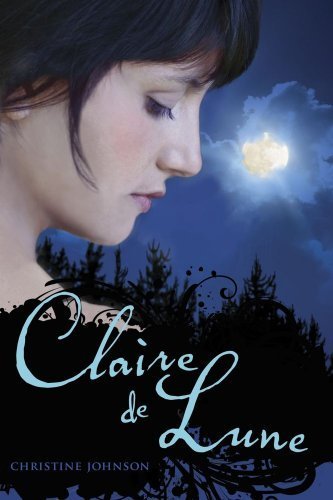

Werewolf fiction for preteens and young teen readers
Claire de Lune (Claire de Lune #1) by Christine Johnson
Reading Level: Young Adult
Release Date: May 18, 2010
Publisher: Simon Pulse
Pages: 352
Source: Amazon Vine
Reviewed By: Kate McMurry
During Claire Benoit's sixteenth birthday party, a serial-killer werewolf is sighted in the woods behind her home in the small town of Hanover Falls. The leader of the hunt for the rogue werewolf is Dr. Engle, an important researcher from the "Federal Human Protection Agency" who lives in Hanover Falls. The existence of werewolves is commonly accepted in the U.S. and around the world and, in addition to the FHPA, which does research on werewolves and defends humans from them, "Lycanthropy Researchers International" exists to find a drug that can turn werewolves into humans. In spite of this acceptance, everyone is shocked by the murders because "werewolf attacks were the sort of thing that happened once in a while in Eastern Europe, maybe, or rural Japan, but in the United States they had become as rare as an outbreak of cowpox."
Dr. Engle's son Matthew, a handsome soccer star from Claire's high school whom she's crazy about, was about to ask her out when all her friends fled from Claire's party. But romantic frustration is soon the least of her problems when her mother reveals that the itching on Claire's hands and ears that's been driving her crazy for days marks the start of her transformation into a hereditary werewolf. The process lasts three months, beginning the first full moon after the sixteenth birthday. That night, in the woods behind her home, Claire is introduced to a small, all-female pack of five other werewolves besides herself and her mother. Claire is disoriented, afraid, and angry at her mother for lying to her all her life.
In order to fairly critique this book, I need to put it within the context of "urban fantasy," the genre it seems to aspire to. In these stories, a magical universe exists side-by-side with our recognizable, modern world, but its inhabitants purposely keep their real nature hidden to avoid constant conflict with frightened, angry humans. Those same humans consciously and unconsciously collude with the cover-up in this manner: When magical events impinge on humans, they either refuse to believe in the magic, or authority figures such as police, spy agencies, the military, and politicians employ propaganda and force to silence them.
In every genre of fiction, secrets and lies are a major sources of conflict, but they are particularly important in urban fantasy in these ways: 1) The protagonist carelessly, or because she has no other choice to protect others from harm, displays magic in front of humans and gets into trouble for it. 2) The protagonist is forced to deal with the fallout of magical villains carelessly or purposefully hurting humans with their magic. 3) The protagonist is either part of or connected to a species of magical creatures who have recently "come out of the closet" to humans, resulting in a struggle for their civil rights as citizens of the U.S.
This is how I see this book within those parameters: 1) The world-building is extremely circumscribed, consisting only of female werewolves with limited powers and no explanation of their origins other than that a "Goddess" created them. I assume this simplification is because the book is written for preteens or very young teens. 2) The element of secrecy exists in Claire's mother insisting that werewolves can never have close relationships with anyone, not even the members of their pack, for fear of exposure. On the other hand, the book does also state, in direct contradiction of this decree, that somehow the existence of werewolves has become universally and matter-of-factly accepted by humans. 3) Though Claire's mother and newscasts throughout the book proclaim that authorities are committing lots of resources to catching the rogue werewolf, the story never shows anyone other than the nerdy Dr. Engle actually doing anything to accomplish that. There are no police, no local hunters, no national guard, no private security patrolling the areas where the rogue werewolf has been sighted--including especially the woods behind Claire's house where she and her pack frequently go. We also never receive any descriptions of the methods Dr. Engle would of necessity need to employ in order to capture a werewolf, for example, a team of helpers in protective gear armed with dart guns, nets and a special containment vehicle with very thick bars so a wolf with super strength can't break out of it. Perhaps the author has left all this out because she assumes a young audience would not be interested. 4) Claire does have to contend with the fallout of one of her own kind committing murders that put her entire pack in danger of exposure to humans, but that fallout consists only of, as stated above, the nerdy Dr. Engle. Again, perhaps to keep the conflict from becoming to intense for young teens. 5) Claire does have to contend with the negative results of her werewolf state being unavoidably revealed to a human.
As stated above, it is possible that the author has chosen to write what might be termed, "urban fantasy lite," because she wanted to avoid the graphic violence and horror that is often a big part of adult urban fantasy. If so, she has succeeded. There is violence, but it is not shown at all except in a couple of places in very mild form. The romance is also G-rated and without passion, which is probably inevitable in a universe where there are no male werewolves who can exist as an emotional and physical equal to Claire's magical powers. I think it is also possible that the reason there is a shortage of romantic fire in Claire's relationship with Matthew is because, again, this book is aimed at younger teens.
For those who love werewolf stories, another excellent recent YA werewolf book I highly recommend is Raised by Wolves
 .
.Heroine: 4


Subcharacters: 4
Fantasy World-Building: 3
Writing: 4
Action-Adventure Plot: 4
Romantic Sub-Plot: 3
Overall: 3.5


February 14, 2012
Book Review: Jessica's Guide to Dating on the Dark Side (Jessica #1) by Beth Fantaskey
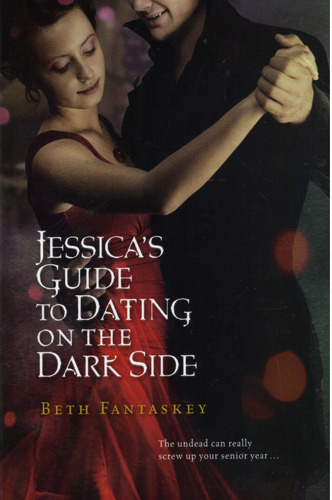

Clever, original, young-adult vampire romance, which is book 1 of a trilogy
Jessica's Guide to Dating on the Dark Side (Jessica #1) by Beth Fantaskey
Reading Level: Young Adult
Release Date: February 1, 2009
Publisher: Harcourt Children's Books
Pages: 368
Source: Purchased
Reviewed By: Kate McMurry
This YA novel has a wonderful hook that drew me in instantly: a geeky high-school senior discovers she's a vampire princess betrothed to a gorgeous vampire prince.
I love paranormal comedy, and to discover this book is a comedy with vampires was like Christmas and the Fourth of July rolled into one for me! Other delights for me are the fact that the author provides not only the point of view of Jessica, but of the understandably arrogant vampire prince, Lucius, as he writes hilariously disgruntled update letters to his vampire uncle back in Romania. The arc of the romance between Jessica and Lucius is also pleasingly slow--rather than the insta-love so common in YA paranormal romance. Along the rocky road from initial comic enmity to romantic feelings for each other, the author provides a wealth of highly entertaining verbal sparring between these two vibrant characters.
Since this is YA romantic comedy vs. an adult romance plot, not surprisingly there is a love triangle. But fortunately (for me at least), the second male romantic interest doesn't hold a candle to Lucius in personality, and he's merely a plain-vanilla human with no magical powers. Thus, I had no second thoughts at all about vastly preferring Lucius to the human, which is my ideal type of triangle.
For those interested in age appropriateness, this book can safely be read by younger teens, but is intelligently enough written to engage the attention of older teens--and adults--as well.
Heroine: 5
Hero: 5
Subcharacters: 4
Fantasy World-Building: 4
Writing: 5
Romantic-Comedy Plot: 5
Overall: 5

February 11, 2012
Book Review: Before I Fall by Lauren Oliver
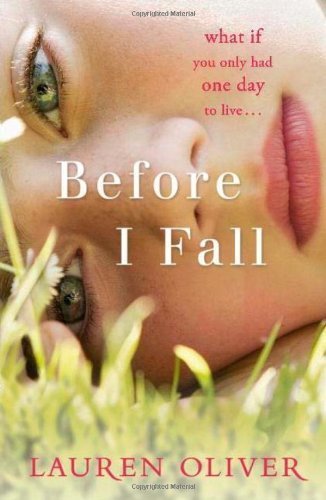 Excellent young adult, literary fiction
Before I Fall by Lauren Oliver

Reading Level: Young Adult
Release Date: October 25, 2011
Publisher: HarperCollins
Pages: 496
Source: Amazon Vine
Reviewed By: Kate McMurry
This book has what is known in the publishing world as a "high concept": the heroine, Samantha, dies in a car accident within the first few pages of the book, then comes mystically back to life and lives the day of her death over and over again. Fantasy is very "hot" right now, and anyone casually reading about that concept might naturally assume that this book is popular fiction, specifically, a contemporary fantasy with mystery, adventure and lots of instances of overt magic throughout the book. I myself was drawn to reading the book because of that fantasy concept because, like many other people, I love Groundhog Day. I knew from reviews I'd read that this is not a comedy, but I assumed this might be a dramatic version of that comedic movie.
It is not.
It became clear to me after reading less than ten pages that this is not popular fiction--it is literary fiction. A hint of this was there all the time that I only picked up on after the fact: the author prominently mentions in her bio on this product page that she has an MFA from prestigious New York University. The reason I'm bringing up the genre of this book is this: I believe it's important in doing a review of a book to not judge it as failing for not doing things its author never intended. That is, I don't want to condemn an apple for not being a good orange.
For those who have not had this information drilled into you by one or more high school, college or university English instructors (I plead guilty to teaching English at all three of these types of institutions), literary fiction places a central focus on two distinct things that are usually only sidelines in popular fiction, or not there at all: the style of the writing, that is, the beauty of the words on the page, and the complex, dark psyches of the protagonist and the characters she interacts with. Unlike the heroes of pop fic, lit fic protagonists generally have no driving "story goal," that is, an intense desire for something in the external, physical world that the protagonist will stop at nothing to achieve. The lack of a strong goal means there is no dramatic requirement for the counterbalance of a strong, external antagonist to stand in the protagonist's way. In particular, there's no need for the type of evil villains that are common in pop fic, contemporary fantasy novels. In lit fic, the conflict tends to be internal--the protagonist struggles with two competing sides of herself, the person she's always been, and a new version of herself arising from (usually) the ashes of her present terrible (or at the least dreary and depressing) circumstances. The ending doesn't have to be tragic, but more often than not it is, in the sense that there is often a sense of inevitability about the protagonist's ultimate inability to escape her dark fate.
Having made that very simple, over-generalized statement of what lit fic tries to do, I can rate this book on each of these three aspects:
Beautiful language - 5
Complex, dark characterization - 5
An inevitably tragic/dark ending - 3
I graded down the ending because I struggled with the way it is constructed. In order to avoid this being a major spoiler, I'll be as nonspecific as I can about the details.
In my opinion, the "rules" of the magic in the story as they apply to Sam are not consistently applied to the most crucial counterbalancing character in the plot, Juliet. Sam's "inevitable" fate arises out of her story journey to become a better, more moral person. Not so with Juliet. The author allows the story's magic to provide Juliet with a resolution that involves a change in her physical state that the author does not permit to Sam--and the logic for this choice is not at all clear to me. There are many other ways than the one the author has chosen for Sam to make a moral "sacrifice" which demonstrates symbolically how much she's changed due to her story journey. I believe the ending would have been both artistically and emotionally far more satisfying if Juliet and Sam were allowed to have outcomes that involved a consistent application of the magical force propelling the story.
Another aspect of the ending that bothers me because it seems to me to be contradictory to the tenor of the rest of the book as a lit fic novel, as described above, is this: After slogging for multiple, difficult days to achieve a core change in her own psyche, Sam simplistically concludes that all the other characters close to her in this story will be just fine in their future lives. That is, that they will rise to a higher moral plane, from their present casually vicious state, without any of the brutal emotional struggle Sam endured to achieve that evolution herself. I'm not sure if the author has included this in order to satisfy to some extent those in her audience who might be hoping for a traditional pop fic "happily ever after" ending. But for me, in the context of the focus of this book, it rings false. Nothing in the story as it is constructed leads me to believe that, in particular, the key negative force in Sam's life, her bullying, "bitch" friend Lindsay, will eventually grow and become a better person given the current trajectory of her life.
Heroine: 5
Subcharacters: 4
Writing: 5
Literary Fiction Plot: 3
Overall: 4

February 7, 2012
Book Review: Beauty Queens by Libba Bray
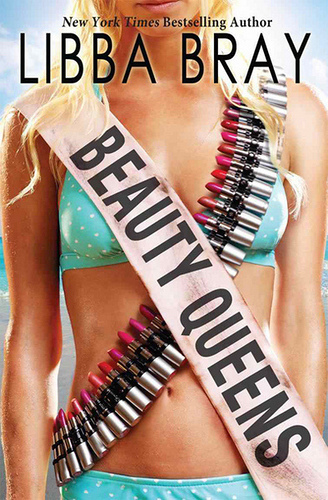

R-rated, satirical, dark comedy for mature teens over age 17
Beauty Queens by Libba Bray
Reading Level: Young Adult
Release Date: May 24, 2011
Publisher: Scholastic Press
Pages: 400
Source: Amazon Vine
Reviewed By: Kate McMurry
A plane carrying contestants representing all 50 states for the Miss Teen Dream Pageant crashes on a desert island, and everyone but 12 of the contestants dies. How will they manage to survive until they are rescued?
The author states in the acknowledgment section at the end of her book that she was inspired in writing this book
 by
Lord of the Flies
by
Lord of the Flies
 ,
The Shock Doctrine
,
The Shock Doctrine
 ,
Heart of Darkness
,
Heart of Darkness
 ,
The Pirates Of Penzance
,
The Pirates Of Penzance
 , and the James Bond movies
 . Comic homages to all of these influences are definitely apparent in this social satire that takes swipes at the dumbing-down and objectification of women via the multi-billion-dollar, international beauty industry, the efforts of mega-corporations to control governments and start wars for their own economic and political gain, international arms smuggling, reality TV, hedonistic consumption of material goods, and a certain ex-governor from Alaska.
I was drawn to this book because I love YA fiction and I love comedy, making the combination of the two irresistible. The book certainly did not disappoint me in terms of delivering laughs, many of them not mere chuckles, but outright belly laughs. Fans of socio-political satire, such as is found on Saturday Night Live, Jon Stewart, Stephen Colbert, The Simpsons, and in Doonesbury, will very likely love this book. Bray has something for everyone by alternating rowdy slapstick (so-called "low" comedy) with extremely witty use of language, including colorful metaphors and clever one-liners and tart comebacks (so-called "high" comedy).
The structure of the novel takes a bit of getting used to, but it does encourage the reader to distance herself (or himself) from the characters enough to laugh at situations that would normally cause shudders or tears if the story were presented as drama rather than comedy. The book is written in omniscient point of view, with a godlike narrator who dives frequently into the heads of the 12 beauty queens and various villains, including the main villain, an evil business empire named simply, the "Corporation," which is the sponsor of the Miss Teen Dream Pageant. The book begins with a satirical disclaimer from the Corporation, and sprinkled throughout the book between wild scenes with the characters are scripts for commercials for wacky products from the Corporation as well as interviews with the beauty queens that look as though they were requested by the publicity team for the Miss Teen Dream Pageant.
It was lucky for me that I started reading this book early enough in the day that I could finish it in one sitting without having to stay up all night to do it, because I could not make myself put it down. I know that's a cliché thing to say, but it's actually true. Three or four different times I got almost physically exhausted by the endless bizarre antics of the characters, but I kept wondering what would happen next and rushed onward through page after page.
There is, though, one part of the book I had a hard time accepting. Of all the many characters in the book, the one I grew most attached to was perhaps the weirdest of the weird, Taylor Rene Krystal Hawkins, Miss Texas. Initially she was just another buffoon to me, but as the story progressed I found her both poignant and powerful, and I wanted far better for her than she got in the resolution. I know intellectually that the comic treatment of her situation, which is quite tragic, is artistically consistent with the tone of the entire book when dealing with tragedy. But all the other tragedy the audience is encouraged to laugh at happens either to nameless subcharacters or villains. I couldn't laugh at the ending of Taylor's story. I was rooting for her strongly, and I wanted far better for her than what she gets.
Parental guidance: Drunkenness, explicit sex scenes, violence (thought it is mostly cartoonishly depicted, as in a James Bond film). If this were rated like a movie, in my opinion it would be R-rated, suitable for teens over the age of 17
Characters: 4
Writing: 5
Comedy Plot:4
Overall: 4

Book Review: Beauty Queens by Liba Bray
R-rated, satirical, dark comedy for mature teens over age 17
Beauty Queens by Liba Bray
Reading Level: Young Adult
Release Date: May 24, 2011
Publisher: Scholastic Press
Pages: 400
Source: Amazon Vine
Reviewed By: Kate McMurry
A plane carrying contestants representing all 50 states for the Miss Teen Dream Pageant crashes on a desert island, and everyone but 12 of the contestants dies. How will they manage to survive until they are rescued?
The author states in the acknowledgment section at the end of her book that she was inspired in writing this book
by
Lord of the Flies
,
The Shock Doctrine
,
Heart of Darkness
,
The Pirates Of Penzance
, and the James Bond movies. Comic homages to all of these influences are definitely apparent in this social satire that takes swipes at the dumbing-down and objectification of women via the multi-billion-dollar, international beauty industry, the efforts of mega-corporations to control governments and start wars for their own economic and political gain, international arms smuggling, reality TV, hedonistic consumption of material goods, and a certain ex-governor from Alaska.I was drawn to this book because I love YA fiction and I love comedy, making the combination of the two irresistible. The book certainly did not disappoint me in terms of delivering laughs, many of them not mere chuckles, but outright belly laughs. Fans of socio-political satire, such as is found on Saturday Night Live, Jon Stewart, Stephen Colbert, The Simpsons, and in Doonesbury, will very likely love this book. Bray has something for everyone by alternating rowdy slapstick (so-called "low" comedy) with extremely witty use of language, including colorful metaphors and clever one-liners and tart comebacks (so-called "high" comedy).
The structure of the novel takes a bit of getting used to, but it does encourage the reader to distance herself (or himself) from the characters enough to laugh at situations that would normally cause shudders or tears if the story were presented as drama rather than comedy. The book is written in omniscient point of view, with a godlike narrator who dives frequently into the heads of the 12 beauty queens and various villains, including the main villain, an evil business empire named simply, the "Corporation," which is the sponsor of the Miss Teen Dream Pageant. The book begins with a satirical disclaimer from the Corporation, and sprinkled throughout the book between wild scenes with the characters are scripts for commercials for wacky products from the Corporation as well as interviews with the beauty queens that look as though they were requested by the publicity team for the Miss Teen Dream Pageant.
It was lucky for me that I started reading this book early enough in the day that I could finish it in one sitting without having to stay up all night to do it, because I could not make myself put it down. I know that's a cliché thing to say, but it's actually true. Three or four different times I got almost physically exhausted by the endless bizarre antics of the characters, but I kept wondering what would happen next and rushed onward through page after page.
There is, though, one part of the book I had a hard time accepting. Of all the many characters in the book, the one I grew most attached to was perhaps the weirdest of the weird, Taylor Rene Krystal Hawkins, Miss Texas. Initially she was just another buffoon to me, but as the story progressed I found her both poignant and powerful, and I wanted far better for her than she got in the resolution. I know intellectually that the comic treatment of her situation, which is quite tragic, is artistically consistent with the tone of the entire book when dealing with tragedy. But all the other tragedy the audience is encouraged to laugh at happens either to nameless subcharacters or villains. I couldn't laugh at the ending of Taylor's story. I was rooting for her strongly, and I wanted far better for her than what she gets.
Parental guidance: Drunkenness, explicit sex scenes, violence (thought it is mostly cartoonishly depicted, as in a James Bond film). If this were rated like a movie, in my opinion it would be R-rated, suitable for teens over the age of 17
Characters: 4
Writing: 5
Comedy Plot:4
Overall: 4
February 3, 2012
Book Review: The Haunting of Pico by Patrick Kampman
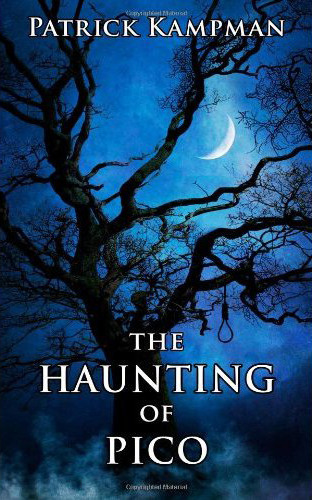
 Young adult ghostly mystery with a male protagonist
The Haunting of Pico by Patrick Kampman
Reading Level: Young Adult
Release Date: December 4, 2011
Publisher: Dark Fiction
Pages: 290
Source: Kindle Owners' Lending Library for Amazon Prime Members
Reviewed By: Kate McMurry
Fifteen-year-old Chris and his beautiful, fourteen-year-old sister Eve are quite unhappy when their parents decide to move from laid-back urban life in California to the small town of Pico in Texas. Chris and Eve are non-biological siblings who were separately adopted by their parents from Korea, and at first Chris is worried that his Asian heritage will lead to prejudice against him and Eve in Pico. Fortunately, that does not happen, but he soon discovers that he has far greater problems than his social life. His parents have unknowingly purchased an old house for Chris's family that has been haunted for over 60 years by a previous owner of the house who was murdered on the property. The rage-filled ghost poses a serious threat to Chris and his sister, and he is determined to solve the mystery of what is holding the ghost to this world in order to send it on its way.
Both teens and adults who enjoy a paranormal mystery with a strong climax will be pleased with this story. It is also suitable for boys as much as girls, because it has a strong male protagonist, something that is much too infrequent in YA fiction. Chris is a sympathetic, compelling hero, and the coterie of friends he draws to himself are quite entertaining, as well.
While this novel has some excellent comic repartee scattered throughout, I would label the story primarily drama. And at certain moments it moves from mystery into suspense or downright thriller because of some truly creepy villains who crank up the action. (Note: I myself am not a fan of horror, and anyone who loves horror may not find this novel particularly scary. But for readers such as myself who don't read horror or can't stomach extreme violence, this story is plenty frightening, particularly in the ultimate resolution of the main plot.)
For fans of romantic triangles in YA, there is a quite unusual and interesting one in this book for you to enjoy.
I particularly recommend this fun, paranormal mystery to anyone who loves the Dead Is YA paranormal mystery series by Marlene Perez
 or enjoyed the male hero in Also Known as Rowan Pohi by Ralph Fletcher
 .
.For those concerned about the age appropriateness of this story: There are a few sexual situations (though discretely handled), a bit of underage drinking, and several scenes of strong violence. Because of these things, some parents may consider this story more appropriate for teens 16 and above.
Hero: 5
Subcharacters: 5
Villain: 5
Writing: 5
Mystery Plot: 5
Paranormal Sub-Plot: 5
Overall: 5

December 17, 2011
Book Review: My Double Life by Janette Rallison
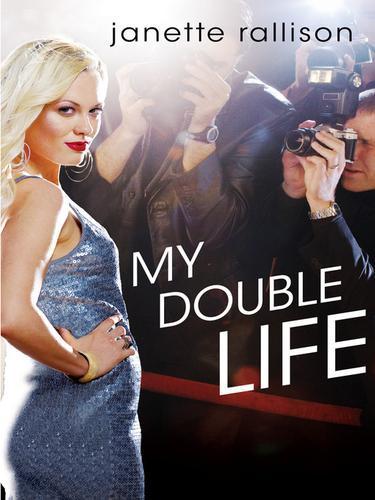

The Pop Princess and the Pauper
My Double Life by Janette Rallison
Reading Level: Young Adult
Release Date: May 13, 2010
Publisher: Putnam Juvenile
Pages: 272
Source: Purchased
Reviewed By: Kate McMurry
A self-described "half-Latina" from a small-town, working-class family, Alexia Garcia is a dead ringer for twenty-something pop sensation, Kari Kingsley, who is also half-Latina. The amazing resemblance leads to a lucrative job offer to serve as the secret double for Kari at some of her public appearances so Kari can focus on completing an overdue album. Alexia's mom is strongly against the masquerade because, as she confesses for the first time in Alexia's 18 years, Alexia and Kari share the same father. He's pop legend, Alex Kingsley, the lead singer of The Journey Men--a fact that both Alex and Kari have been kept in the dark about as well. Alexia is furious at her mother for hiding this crucial information from her, knowing how much all her life Alexia has wanted to know about her father. Since Alexia is legally of age and doesn't need her mother's permission, she takes the job Kari's publicist is offering and heads for Los Angeles.
In adult romance novels, there is a classic story line called the "secret baby plot," in which the heroine had a baby years before that the hero never knew about. This is the first time I've ever personally heard of a novel where the "secret baby" is the heroine. What a great twist!
I am a huge fan of Janette Rallison and have read every one of her young adult novels. I must confess I was a bit disappointed initially on realizing that, other than a couple of scenes of comic relief, this story is light drama, not her usual laugh-out-loud comedy. But I quickly got into the book because, no matter what type of story she chooses to tell, Rallison is a great writer. All of the things I normally enjoy in a Rallison YA novel are here in spades: vividly three-dimensional characters, strong conflict, and compelling love stories, both familial and romantic.
Alexia is a dynamic and compassionate heroine, and her efforts to get to know her half-sister are emotionally moving. The complications created by Alexia's pretending to be her sister are both painful for Alexia and occasionally very funny for the reader. I particularly enjoyed Alexia's romance with teen heartthrob Grant. It is extremely well done, and I really liked Grant, who is not just gorgeous and sexy, but a thoroughly decent guy. One of Rallison's strengths has always been her ability to write a good romance plot, and as usual, she shines at that here.
Perhaps most moving of all is the growth in Alexia's relationship with her mother and the eventual outcome in Alexia's quest to know her father. The resolution of that portion of the book brought tears to my eyes. It was also a nice change to be able to experience YA-novel parents as caring nurturers. And not only that, but as deserving of a chance at achieving romantic happiness as well.
Subcharacters: 5
Writing: 5
Drama Plot: 5
Romantic Sub-Plot: 5
Overall: 5

December 15, 2011
Book Review: My Fair Godmother (My Fair Godmother #1) by Janette Rallison
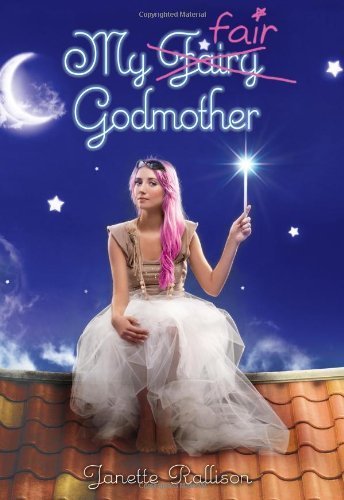

Hilarious, fractured fairytale from the queen of young-adult romantic comedy
My Fair Godmother (My Fair Godmother #1) by Janette Rallison
Reading Level: Young Adult
Release Date: January 6, 2009
Publisher: Walker Childrens
Pages: 320
Source: Purchased
Reviewed By: Kate McMurry
Sixteen-year-old Savannah develops a case of serious sibling rivalry when her boyfriend dumps her for her geeky big sister. Soon after, Savannah is fantasizing about how great it would be if her life were like a fairytale, with herself as a princess attending a ball with a handsome prince at her side, when her fairy godmother, Chrysanthemum Everstar, suddenly appears and offers Savannah wishes. Savannah is thrilled at this amazing, magical opportunity, but she nevertheless exercises caution while making her wishes so that nothing will go wrong. Unfortunately, Chrissy is not a full-fledged godmother—hence the moniker, "fair" godmother. Her incompetence lands Savannah in a series of wild adventures within multiple fairy tales, including Cinderella, Snow White, and the Middle Ages in general. Along the way Savannah discovers a romantic interest she would never have considered in her own era, when Chrissy tosses Tristan, a boy from Savannah's class, into fairytale land with Savannah.
I am a huge fan of Janette Rallison. I've read everything she's ever written, and many of her books several times. In my humble opinion, nobody does YA romantic comedy better than her. Normally Rallison does not include fantasy elements in her contemporary romantic comedies, but her venture into fairytale retelling in My Fair Godmother
is extremely well done. Chrissy is a wonderful antagonist, a colorfully slapdash fashionista who can't be bothered to thoroughly listen to Savannah's wishes. As a result, Chrissy fulfills them in the worst possible way for Savannah as the wacky godmother abruptly flings Savannah and Tristan into arduous situations, which are conveyed by the author in laugh-out-loud scenes of comic mayhem.Rallison's stories are always character-centered. She excels at creating compelling growth arcs for her protagonists, believably moving her heroines from an initial perspective that is endearingly passionate and determined—but drolly skewed in its view of life and relationships—toward a hard-earned appreciation of a bigger picture of life by the end of her stories. This is especially true in the heroines' attitude toward the boys they collide with in Rallison's rollicking romance plots. That approach is terrifically in evidence in My Fair Godmother
.Another theme that Rallison deals with in many of her YA novels—and which she also does really well—is sisterly competition. It is definitely on display here in Savannah's humorously troubled relationship with her sister.
Finally, if you'd like a break from the "gritty" and "edgy" fiction dominating the YA market these days, Rallison is just the ticket. You can always count on her YA novels, including this one, to provide a G-rated story suitable for all ages, but which is sophisticated enough in its execution to hold the attention of older teens and adults, as well. This novel, in particular, is filled with enthralling action without resorting to overt violence, in-your-face sexuality, swearing, or wild parties with drugs, alcohol, and smoking.
Heroine: 5
Subcharacters: 5
Fantasy World-Building: 5
Writing: 5
Romantic-Comedy Plot: 5
Overall: 5

December 6, 2011
Book Review: Shade (Shade #1) by Jeri Smith-Ready
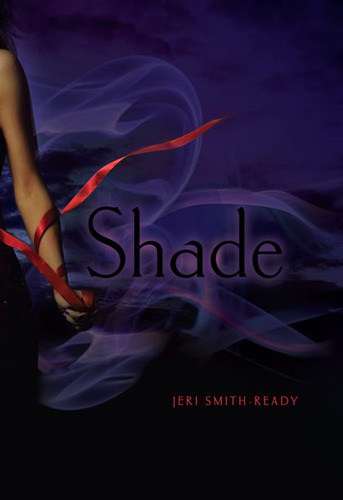

Is it a curse or a blessing to be haunted by your dead boyfriend?
Shade (Shade #1) by Jeri Smith-Ready
Reading Level: Young Adult
Release Date: May 4, 2010
Publisher: Simon Pulse
Pages: 320
Source: Amazon Vine
Reviewed By: Kate McMurry
Sixteen-year-old Aura's world looks much like ours--except that everyone born after the Shift, which happened sixteen and a half years ago, can see, hear, and talk to ghosts. Aura has always disliked this ability, to the point that she's been researching the Shift secretly for some time to discover why it occurred in order to somehow find a way to end it. Then her boyfriend Logan dies on his seventeenth birthday from a lethal combination of cocaine and alcohol, and suddenly what had seemed like a curse has become a blessing. Though she can never touch Logan again, she hasn't truly lost him and their love since his ghost is still with her.
I could hardly put this book down once I began reading it. The writing is excellent, the characters are strong, and the love story between Aura and Logan is intense. It is complicated in a poignant way, as well, by the fact that a love triangle springs up when Aura develops a strong emotional connection to Zachary, a handsome, charismatic Scot who was born exactly one minute before her. He's the last person born pre-Shift, and she's the first one born after.
This book marks a great start for a new urban-fantasy series. The fantasy aspect with the ghosts is intriguing and unique. There is plenty of romantic conflict with two fascinating male love interests. And there is a growing external threat from shadowy government figures stalking Aura, Zachary and even Logan, due to the technology they've created to "tag" ghosts.
I can't wait to read the next installment
! Heroine: 5
Subcharacters: 5
Fantasy World-Building: 4
Writing: 5
Action-Adventure Plot:4
Romantic Subplot: 5
Overall: 5

November 23, 2011
Book Review: How to Hook a Hottie by Tina Ferraro
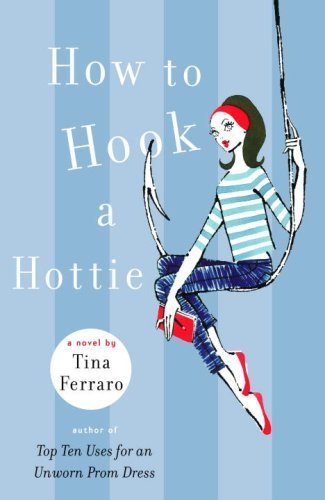
 A hilarious young adult chick lit novel with a matchmaking plot
How to Hook a Hottie by Tina Ferraro
Reading Level: Young Adult
Release Date: January 8, 2008
Publisher: Delacorte Books for Young Readers
Pages: 208
Source: Purchased
Reviewed By: Kate McMurry
Seventeen-year-old Kate has a her life planned out, and it doesn't include college, which she considers a waste of valuable time. She's determined to make her first million no later than twenty-five as a successful entrepreneur, and she's convinced the way to do that is to keep her eyes open and not miss a good opportunity. Which is why she is ready, willing and able when the chance of a lifetime falls in her lap.
A hunky jock named Brandon asks her to an important athletic banquet and, overnight, she goes from a social nonentity to a guru on dating as the girl who's hooked the biggest hottie around. Offers start pouring in of quick cash for dating advice, which Kate is delighted to accept. The only problem is, she can't handle this gig without masculine input. Fortunately, her best friend's older brother, Dal, who's a senior and a hunk in his own right, is willing to take on the job--for a hefty percentage of the take.
This book
is laugh-out-loud funny. Kate is an adorable, quirky heroine, and her encounters with desperate girls, clueless Brandon and cleverly conniving Dal are hilarious. Tina Ferraro is fantastic at romantic comedy. Her writing style is smooth. Her plots are comically convoluted, and she knows how to write a strong, sympathetic heroine. I highly recommend this book, and her other two romantic comedies,
The ABC's of Kissing Boys
 and Top Ten Uses for an Unworn Prom Dress.
For other similar books, I recommend also The Oracle of Dating by Allison van Diepen
 and A Match Made in High School by Kristin Walker.
Heroine: 5
Subcharacters: 5
Writing: 5
Chick-Lit Comedy Plot: 5
Overall: 5