
Jeremy Pack's Blog, page 2
May 13, 2012
Seattle Post – Traffic Fatality Claims Two Lives
[image error]Once again, I’ve taken a dive into the Seattle Post’s archives to bring you another article that explores more of the mystery surrounding The Heart of the Jungle. Learn more about the tragedy that claimed the lives of Chris James’s parents in this brief news clipping surrounding the circumstances of their deaths.
Traffic Fatality Claims Two Lives
And if you haven’t already, why not take a moment and enter The Heart of the Jungle Giveaway?


May 8, 2012
My Very First Interview
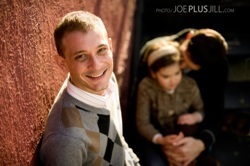 Pixie at mmgoodbookreviews was kind enough to offer me an interview, and I had a great time!
If you're interested in learning more about me, my writing, or what's up next, feel free to click on over.
MMGoodBookReviews Author Interview: Jeremy Pack
May 2, 2012
Guest Blog: The Story Behind the Story
For those of you who are interested, I'm guest blogging today at Jadette Paige's "Story Behind the Story" blog. I always wonder what sparked an author's story ideas, and I thought it would be fun to share my own.
http://www.jadettepaige.blogspot.com/
Also, if you haven't entered my giveaway, there's lots of time to get your name in the pot. Ellie, my offical "Random-Selector", has begun a new "is it time to pick a name yet, daddy" campaign that is sure to continue every day until the big event. She's waaay excited. Hit the image below to enter.
[image error]
Happy reading!
May 1, 2012
Philosophy of Craft, Part 4 – The One About Sex…
quinn.anya / Foter
Anyone who knows me will tell you that I’m a bundle of contradictions. I made that disclaimer in my author’s bio. Today, we’ll be honing in on the liberal mindset/old-fashioned sensibilities bit and having a frank heart-to-heart about sex. This, in the interest of expectations management and rumor control.
First, a very plain admission: I don’t write erotic fiction. The mating habits of grass are likely more titillating than anything I could churn out. I’ve struggled with this disclosure for many weeks, given that M/M romance, in my experience, is inextricably entwined with the erotic. Naturally, this prompts certain expectations among fans of the genre, and my admission comes out of a sense of obligation to those who might be disappointed by the sex—or rather the absence thereof—in The Heart of the Jungle.
Let me stop here and put liberal mindset Jeremy on the podium so there is no misunderstanding: My decision not to write erotic fiction isn’t founded on moral judgment or principle. The stories I want to tell just have a different thrust. I applaud my fellow authors who do write the steamy stuff, and I have enormous respect for their work. I view the erotic as a valid and beautiful expression of human love, and I believe M/M romance goes a long way to demystifying a once taboo subject. As a gay man, I have a deep and abiding gratitude for the brave and talented folks who work in this category, and I am honored to be numbered among them. Doubtless, they could be writing heterosexual characters to much greater commercial success, but instead have determined to be true to their inner muse and write what they love. This is a sentiment I can well understand.
I am infinitely grateful to Dreamspinner Press for taking a risk on a story that strays from convention, and I will be similarly grateful to anyone who takes a risk in reading it—whether a fan of the genre or not, whether preferring passion or not.
My most sincere hope is that if you give me a chance you walk away aroused in all the ways my story is meant to arouse you and that you aren’t terribly disappointed in the ways that it doesn’t.
In either case, I would be genuinely interested in what you have to say on the subject. Feel free to comment or EMAIL me with your thoughts.
April 30, 2012
Announcing The Heart of the Jungle Giveaway
To celebrate the release of my first book, The Heart of the Jungle, I’m sponsoring a no obligation, no strings giveaway. To enter, simply click on the image below to be taken to the entry form.

All of the usual disclaimers apply: NO PURCHASE NECESSARY, VOID WHERE PROHIBITED, MUST BE 18 TO ENTER…. If you’d like to check the rules, you can do so HERE.[image error]
Good luck, and thank you for your interest in my work!
The Heart of the Jungle is now Available!
[image error]Very exciting day for me today! My first book, The Heart of the Jungle is now available for purchase.
April 26, 2012
Murder Most Foul!
Double Homicide Baffles Police
Over the next several weeks, “The Seattle Post” will be bringing you a series of reports on the unfolding story leading up to the events of The Heart of the Jungle. Keep an eye on this space to stay abreast of the developing story. (There may even be an exciting giveawayannouncement. Just sayin’.)
Enjoy!
April 25, 2012
Murder Most Foul
Over the next several weeks, "The Seattle Post" will be bringing you a series of reports on the unfolding story leading up to the events of The Heart of the Jungle. Keep an eye on this space to stay abreast of the developing story. (There may even be an exciting giveaway announcement. Just sayin'.)
Homicide Baffles Police
Enjoy!
April 23, 2012
Philosophy of Craft, Part 3 – Style
Abdulmajeed Al.mutawee || twitter.com/almutawee / Foter
In part three of my continuing series about writing, I’ll be talking about style—not belt-matching-shoes style (because God knows I’m no authority on that subject)—but style in the sense of the technical things in my writer’s toolkit. I promise not to get too technical.
POV
My tendency is to write in Third Person Omniscient point of view. This means that a disconnected narrator is telling the story. He (or she) has the singular ability to pop into and out of characters’ heads at will. There’s a reason this POV is the most commonly used one: It gives the writer the greatest power and control. The downside is that, for some readers, it also operates pretty far from the characters. When someone reads a book and peppers their critique with “too much telling, not enough showing” or “lots of infodumps”, chances are good the author has used Third Person Omniscient, and that has not settled well with the reader. I try to keep my voice very active, and when I feel I’m moving too far away from my characters, I’ll interject bits of internal monologue or even switch to a more limited point of view to draw them back in.
Voice
A writer’s voice is something unique to the author. It’s the way they construct sentences, the vocabulary they use, the cadence of their narrative. To me, writing is a form of poetry. It should feel good, and it should sound good—talking came before writing, after all. I listen to everything I write at least four times, polishing with each pass. I listen for things like repetition, stuttering text, passive voice, typographical errors, and confusing point of view. I also cut out in-between text and listen very carefully to dialogue to make sure the speakers have their own voice, unique from mine and each other.
In the end, if it sounds right to my own ears, I’ll stick a fork in it.
Vocabulary
I have an extensive one that stems from my love of language. I revel in obscure words, and I like using language in surprising ways. In other words…. I don’t dumb it down. I do, however, use this sparingly—there’s a danger the reader will be yanked out of the story, and I don’t want that. I don’t put big words in to make me look smart—I’m not, by the way—but, there are occasions when I’ll choose an obscure, polysyllabic monstrosity specifically for cadence sake. It’s there because I like the way it sounds. As long as the meaning can be intuited from context, I figure readers are generally smart folks and won’t mind.
As style goes, these are the biggies for me. Whether I’m writing a whodunit, a thriller, an historical romance, my voice will always feature prominently. If it didn’t, it just wouldn’t be me.
Stay tuned for the next entry—It’s all about SEX!
April 10, 2012
Philosophy of Craft, Part 2 – Three Act Structure
[image error]
The City Project / Foter
Continuing on from last week's entry, WWYK, here is part two in my seven part series on how I approach my craft…
I have shamelessly commercial tastes in entertainment. I'll be the first to admit that I love me a gargantuan bucket of butter-ish soaked popcorn, a supertanker of Cherry Coke, a package of Red Vines, and a summer blockbuster that's 90% CGI set to a bass-heavy soundscape. (Dodges rotten fruit and stinging barbs.)
Say what you will about slickly produced Hollywood tripe, but you have to admit that screenwriters and producers are onto something. Moviegoers wouldn't spend billions of hard-earned dollars otherwise. Whether or not last year's highest grossing tentpole changed someone's life for the better, the formulaic approach to storytelling works on a very fundamental level. In the lingo of screenwriting, this is known as three-act structure. It dates all the way back to Aristotle, and it goes something like this:
Act I – The Inciting Incident
Three act structure takes off at a major change or turning point in a character's life. Generally, the hero is a Joe -ordinary with a prominant flaw of some kind. (He's weak, he's afraid of heights, he's commitment-phobic, etc.) This part of the story sets the stage for the upcoming conflict by dragging the hero out of his comfort zone and sending him in a new direction. Act I is pure setup. It introduces you to the characters, the world, and the conflict and tells you why you should care. Near the end of the act, there's generally a reversal of some kind that pits the hero directly against the antagonist and sets him on a collision course with confrontation. The reversal is usually the first time the hero and the antagonist actually come into direct opposition.
Act II – Escalating Conflict
The second act contains the bulk of the story. It's filled with dramatic escalations that drive the hero toward his opponent in a meaningful way. This layering of conflict makes the climax inevitable by pushing the hero past the point of no return. His flaw becomes a major impediment, and by the time this act reaches its own reversal, it seems all but certain he will fail. The second act's reversal is sometimes referred to as the hero's "Dark Night of the Soul"—a moment in which it seems as if all hope is lost and the hero is doomed.
Act III – Climax
The final act is the showdown. Our Joe-ordinary overcomes his flaw, or turns it to his advantage in some way, and rushes headlong toward the antagonist for a final confrontation of some kind. The payoff here is the catharsis we experience watching him prevail against unbelievable odds. Most of the time, there's a happy ending. (HEA in abbreviated parlance.)
This is a bit of a simplification, but generally describes the story structure many Hollywood features (particularly tentpole films) follow. It's also the way I construct my own stories. My first novel, "The Heart of the Jungle" rarely strays from three-act structure. If you read it, now that I've explained the structure, the elements I've described will be pretty clear.
Should I be ashamed to admit I'm a formulaic writer? Perhaps if I had literary aspirations…. But I don't. I just want to tell a good story. I'll leave the Pulitzers, Nobels, and Lammies to more capable folks. As a consumer, as a reader, as a filmgoer, this is what I like, and therefore what I write.*
* Butter-ish and Red Vines not included.


