Russ Wallace's Blog, page 6
April 4, 2013
“Marketing made simple” by Rob Eager with Wildfire Marketing

Marketing made simple was taken from the Wildfire marketing website. I tweaked it to only apply for authors but the article is mostly intact on how I read it. Some things may be geared towards non-fiction books but I can see how fiction writers can take the same information and use it.
For many authors the term “marketing” seems as complex and confusing as learning to speak a foreign language.
All too often, individuals and organizations mistake marketing as the attempt to explain who they are, what they’re about, or what they do. However, this perspective contains a common thread that is counterproductive – the marketing language is self-focused and all about you. The problem is that nobody cares about you or what you do. Instead, they care about what you can do for them. And, they won’t give you their money until you answer their internal question, “What’s in it for me?”
 For example, when I hear authors asked to explain why they wrote their book, they usually describe what the book is about. To make matters worse, these self-focused explanations are placed onto important marketing materials, such as websites pages, brochures, social media pages, newsletters, etc. Thousands of dollars are spent on marketing. Yet, the most important question in the public’s mind never gets answered, “What’s in it for me?”
Book readers don’t care about your topic, genre, mission, or product features. Their primary concern is how you can make their life better. Therefore, they want to know the RESULTS that you can create for them.
To avoid confusion, I define a result as any positive outcome, life change, or tangible improvement that you create for someone who reads your book. In addition, the description of a result must be specific enough to generate emotional interest. Logic makes people think, but emotion makes them act. For example, consider the difference between these statements:
Ineffective:
My book is about home organization.
Effective:
My book helps you experience the soothing calm of an ordered home.
You may think your marketing materials tell people about results. However, I’ll bet the language isn’t as effective as you think. To prove my point, try this test: Ask someone who is unfamiliar with your book to visit your website. Give them 60 seconds, and then ask how they would explain you to a friend. If they don’t mention the results that you offer, then your marketing is more of a hindrance than a help.
The big problem with a lot of marketing campaigns today is that they expect the customer to do the company’s job, which is to answer the ultimate question, “What’s in it for me?” That’s like asking someone what they do for a living, and they respond with a glazed look and say, “I don’t know…you tell me.” People will not take the time figure out the results you offer…that’s your job and the job of your marketing materials.
When people cannot discern how you’ll improve their life, then they will hesitate to give you their money –to buy a book. We all make decisions according to our self-interest. Marketing is the process by which you help people realize you have their best interests in mind. When you shift from telling people what your product is about to explaining the results you offer, you will naturally reduce skepticism and build the trust required to create a purchase. For example:
Authors – Don’t tell people the topic of your book. Tell them the results that it will create.
A results-based approach to marketing simplifies your efforts by focusing solely on the most critical elements for success. You no longer need to worry about what language to put on your website, what kind of articles to write for your newsletter, or what to say during a media interview. Tell people about the results that you offer, and give examples of readers who have experienced those results. When your concentrate on appealing to a person’s self-interest, you kindle the sparks needed to ignite marketing wildfires all across the country.
I receive a weekly newsletter every Monday and the information has been extremely helpful. Go to the website and sign up for the Monday Marketing Tips at http://www.startawildfire.com/ you won't regret it.


March 26, 2013
The dates are set for Zenobia the musical. Will you be there?
Presenting... ZENOBIA THE MUSICAL in Chicago this summer. Don't miss out on the extraordinary story of Zenobia preformed as a musical.
http://youtu.be/TaoOFFQQQLM
 Lorrisa has taken her obsession for Zenobia and combined it with her love for acting and music and wrote this wondrous story of a great woman in history!
the original live multimedia musical by Lorrisa Julianus & Angela Salvaggione Presented by: Theatre-on-the-Hill and the Village of Bolingbrook/ Roger C. Claar, Mayor.
WHERE: Bolingbrook Performing Arts Center
375 W. Briarcliff Rd.
Bolingbrook, IL 60440
WHEN:
Thursday, August 15th 8pm
(FREE WORLD PREMIERE for the annual Bolingbrook Jubilee)
Friday, August 30 8pm
Saturday, August 31 8pm
Sunday, Sept 1 7:30pm
Rated PG-13 for dialogue and intense action
Based on historical events
And calling all singers, dancers, and actors, here's your chance to participate in this great show.
GENERAL AUDITION INFORMATION:Auditions will be held April 22nd and 23rd , 7pm to 10pm, at the Bolingbrook Performing Arts Center, 375 W. Briarcliff in Bolingbrook (same location for rehearsals and performance). Conveniently off I-355 and I-55, we are less than 30 miles from State/Madison in downtown Chicago and an approximately 38min drive.This is an adult cast with an equal number of male and female roles. There are only two under 18 roles. Performers of every racial background are encouraged to audition for any role they feel is within their capabilities.Auditions will consist of readings from the script (please email lorrisaj@att.net for sides and songs in advance), a vocal audition (prepare your own song acapella or learn one of ours with mp3), and a movement audition.EVEN IF YOU CAN’T SING, there are still plenty of roles available, particularly for men.If you are unable to make these audition dates, please contact us and other arrangements may be possible.
Please write theatreonthehill@yahoo.com to request an audition hour slot. Walk-ins are also welcome. Please bring a head-shot and resume if you have them.Rehearsals will begin immediately after auditions and occur weekly on various weekday evenings and Sunday afternoons until the performance date. Please bring your schedule to auditions and/or list of conflicts.
March 21, 2013
Crafting a can’t-put-me-down First Chapter: by Lara Perkins- Agent with Andrea Brown Literary Agency.
Andrea Brown http://andreabrownlit.com/is a respected agency and has some of the best agents out there finding and making best sellers. When I saw ANWA writer’s conference have Lara Perkins on the roster I made sure I attended her class. She spoke about how important your first chapter needs to be. Here are some great tips for writers. For readers I have included the first chapter of Zenobia- Birth of a Legend, let’s see if it grabs you and follows the suggestions below.
 Lara Perkins is an Associate Agent and Digital Manager at the Andrea Brown Literary Agency.lara@andreabrownlit.comLara has a B.A. in English and Art History from Amherst College and an M.A. in English Literature from Columbia University, where she studied Victorian Brit Lit. In her pre-publishing life, she trained to be an architect, before deciding that books, not bricks, are her true passion. She spent over a year at the B.J. Robbins Literary Agency in Los Angeles before coming to Andrea Brown Literary.
Your mission: Surprise and delight your reader. Entice them to continue deeper into your story.
Characteristics of a memorable first chapter:
- Grabs reader
- Tells what kind of story it is
- Strike a balance of familiar with unfamiliar
- Keeps them turning pages
Give your reader a mystery, a puzzle – right away
Decide whether to prologue, or not to prologue. It can’t be a band aid for the first chapter.
Establish the stakes for the Main Character and make sure they are high enough to sustain a story. What can be gained? What can be lost?
You don’t have to start with an action scene.
Solve a puzzle. Raise a question. Engage the reader.
Conflict is interesting.
Hint at tension and conflict.
Action without context at the beginning is a big mistake.
Let the reader know what kind of story it is.
Beware of promises you make.
Establish your mood and tone. (description)
Establish your voice. (calm, confident, assertive)
Weave in your thesis. (theme of your story)
Danger, possibility, and action.
Keep it engaging.
You don’t want an academic or dry tone.
Voice is clear and present.
YA = POV & inner voice.
Raise the questions in the first chapter and answer those questions at the end.
Learn how to strike a balance between the unfamiliar and the familiar.
Make your reader care about your Main Character. Give them something fresh. Don’t give them someone they can’t relate or understand, or to familiar.
They don’t need to know everything in the first 10 pages.
Use specific details of time period or description of where it may be occurring. Answer: When? Where?
Mystery is the conflict.
Craft a lean, mean, strong opening line. Make it tight and confident.
Spike tension in first line.
First line – What question or mystery does it raise?
No back story until page 100.
Info should be relevant.
Don’t over use dialogue tags.
Don’t describe things with the word beautiful.
Use strong memorable voice.
Leave the reader wanting more.
Last line of the first chapter needs to end on a twist.
Hope these notes have helped you make the best book possible. I know it has motivated me.As promised below is chapter one of Zenobia - Birth of a Legend.ENJOY!
Chapter 1
The Syrian Desert, 249 CE Zelina watched her daughter playing with her brothers. Her child’s hair was cut to shoulder length and she wore the garb of a boy. While she was lighter-boned than some of her brothers, her speed and agility were superior, and her toughness was becoming legendary among her peers. With the help of her trusted servant Rechab, Zelina had been able to conceal her daughter’s gender. She was, to all others, Zenob, a boy. Her real name, Zenobia, was never used except in their most private moments. The last of Zelina’s sons had left her tent a few years after Zenobia’s birth, which made the masquerade easier. At a surprisingly early age, Zenobia had grasped and embraced the role laid out for her preservation. This lit a fire that would burn deep inside her for the rest of her life, a desire to prove that a girl could be just as valuable as a boy, and a woman just as valiant and skilled as a man. Naturally, there were a few problems. Girlish traits were subdued in Zenobia, and what little surfaced was overshadowed by her extreme competitiveness. However, she never urinated in the bushes or against a wall with the boys. Nor did she ever join them in swimming naked in a river or an oasis. Her mother and Rechab developed the ruse that ‘Zenob’ had stomach and intestinal problems, occasionally causing sudden attacks that required immediate remedies and rest in their tent. Zenobia had employed this tactic effectively a few times, but Zelina remained ever alert, ready to squelch any rumors before they gained momentum. Today, the boys were playing a team tag game. The players passed or ran a fist-sized bag of grain to the opponent’s base, in this case a tent pole. Tagging an opposing player carrying the bag changed the possession to the tagger. Though designed as a non-contact sport, collisions were frequent. So were arguments, like the one that now ensued. “I tagged you before you touched the pole, Zenob!” proclaimed Harrab. He was big for his age, and used to getting his own way, though not with ‘Zenob’. He was not above cheating to win, and his recent growth spurt had exacerbated his bullying traits. “You did not!” Zelina heard the fire in Zenobia’s voice and imagined that same fire in her eyes. Her daughter already had a strong sense of justice. “Are you calling me a liar, Zenob?” Harrab growled menacingly. He gave her a shove with both hands. Zenobia started to boil inside. He’d missed the tag by at least a cubit, and they both knew it. “That seems like an appropriate word for it,” she said casually. Harrab did not know what ‘appropriate’ meant, but he knew it was an insult. He faked another shove, then suddenly grabbed Zenobia’s shoulders, pulled her toward him, and drove his knee into her groin. She grunted. What happened next was almost too fast for the minds of those watching to register. Lightning quick, Zenobia delivered a punch to Harrab’s nose. As his head snapped back and his hands flew up in startled pain, she took a step back, measured, and kicked him squarely in the groin. Harrab shrieked and dropped like a coconut, doubled up in a fetal position. A spontaneous cheer went up from the boys and girls watching, for many of them had been victims of Harrab’s bullying. Even as Zenobia impulsively raised both of her arms in the universal sign of victory, she remembered her mother’s counsel and bent over, feigning intense pain. “Zenob! In the tent! Now!” Zelina’s voice had never sounded harder. Zenobia staggered to the tent, still bent over. It was a great act, but they both wondered if would it be enough. Inside the tent, Zenobia apologized profusely. “Mother, I couldn’t help myself. I just couldn’t endure it from that pig!” “I know dear,” her mother said as she held her tight. She wondered if it would be for the last time. “You’ve done a great job for many years. I’m very proud of you.” That afternoon, Zelina was summoned to Zabbai’s tent. She had hoped this day would not come until Zenobia reached puberty. Sheiks had beheaded wives for lesser insubordinations. As she readied herself, Zenobia told her, “Don’t worry, Mother.” Zenobia had fully accepted the story surrounding her birth, and it gave her a tremendous confidence, a confidence Zelina wished she could share right now. “The goddess of the desert that told you to spare me will be with you.” “I’m sure she will, my love,” Zelina lied. Then she kissed her daughter tenderly and left the tent. Two of the wives had reported their suspicions to Zabbai, and rumors were swirling around the camp. Zabbai and his second-in-command, Cam, were alone in the tent. Zabbai glared at Cam. “You are amused by all this, aren’t you?” he growled. Cam did not back down. “Yes, I am,” he said matter-of-factly. He never addressed Zabbai as “Lord.” They had grown up together and were peers. They had been in many battles together and were equals in all but responsibility, and they both knew it. Zabbai continued to glare at Cam. Finally, Cam merely shrugged his shoulders and said, “You must admit, surprises do make life more interesting!” He did not bother to suppress a smile. Besides, he thought to himself, something like this should have been expected when you made that stupid decree about the baby girls. They had both seen the ferocity with which a mother bear protected its cubs. A guard opened the tent flap and announced, “Your wife is here, my Lord.” “Send her in,” Zabbai barked. Zelina entered to within six paces of the sheik, dropped to her knees and bowed before him. What has he been told? she wondered. He remained silent for a full two minutes glaring at the woman bowed before him. He spoke two short words. “Explain! Now!” As she had feared, her hope of continuing the masquerade was dashed. “My Lord, your son, Zenob, is really your daughter, Zenobia,” she said in a contrite voice. She did not raise her head to face him. Zabbai had never seen her so subdued. “How could you do this?!” Zabbai roared. He was incredulous. She was his favorite wife, both the prettiest and the most intelligent. He liked intelligence in a woman, provided she knew how to keep her place. She also had a passion for life and for him. She must have been desperate to defy him. This reflected negatively on his position as sheik. He continued ranting, “By nightfall the whole camp will know of this masquerade!” Sooner than that, thought Cam. Half of the camp can hear you right now. He was the only one in the tent enjoying the situation. “I was ordered to do it, my Lord. The night she was born…” “Ordered!” screamed Zabbai. “Ordered to disobey your lord and master!” His tone became deadly threatening. “By whom?” “By the gods, my Lord!” Clever, thought Cam, extremely clever. He had seen Zelina’s mind sparkle at some of the campfire conversations in the evenings. She was witty and intelligent. Can she actually pull this off? Instantly, Zabbai’s demeanor underwent a profound alteration, and he paused in thought. “Explain,” he finally said. Zabbai was rapt with attention as Zelina related the apparition of the desert goddess with long, wavy black hair down to her ankles and a diaphanous full-length gown. It was a vision others had described before, which was why Zelina had chosen it. According to the goddess, the gods had destined Zenobia for greatness, and she was to be preserved alive by disguise as a boy until the appointed time. “And why was I not told of this?” Zabbai demanded. “I do not know, my Lord. I only know it was so ordered. I… I hope you might have some insight into why.” “This is absolutely amazing,” said Zabbai. And absolutely impossible to disprove, thought Cam, and, therefore, brilliant. Telling the sheik that his wife had been visited by a goddess and his daughter was destined for greatness was highly flattering, easily believed. Cam knew it was a ruse, but no one else would. Even any servant women who knew the child’s true gender likely had believed the vision story. Zabbai looked at Cam. He knew Cam had a gift for discerning when someone was truthful or lying. Cam knew his opinion was being solicited, and he knew what he would do. But caution was called for. Sheiks who lost the respect of their council often lost their positions and sometimes even their heads. He would not let that happen to his friend. “I discern no disrespect to her lord in this,” he said. “But let us find out for sure. Bring this girl to the council meeting you called for tonight. Let us see for ourselves what the gods find so special about this young maiden.” He hoped Zenobia displayed the quick mind of her mother. She would need it. Zabbai understood. He nodded to Zelina. “As you command,” she replied bowing as she withdrew.
March 19, 2013
14-day-kindle-book-launch-how-to-get-more-eyes-on-my-book-by-dave-eaton
I took this class at the ANWA writers conference, it was very informative giving a step by step on how to do a Kindle eBook launch. Dave Eaton is a marketing consultant for small businesses, online marketing, and social media marketing.
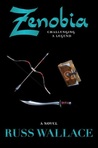
Zenobia – Birth of a Legend is available to read on Kindle eBook. Learn about Zenobia the Syrian desert girl who is destined to became queen, conquer Egypt, and challenge Rome.
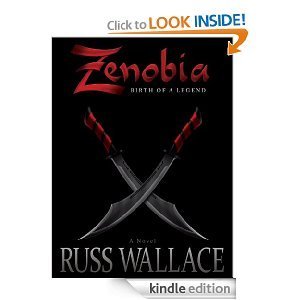
http://www.amazon.com/Zenobia-Birth-Legend-World-ebook/dp/B005YF5MZE/ref=pd_rhf_pe_p_t_3_YHCJ
1. Enroll in KDP Select – https://kdp.amazon.com/self-publishing/KDPSelect
Why? Amazon Promotes your book, Participate in the “Lenders Library” fund, Royalties are 70% beginning at a $2.99 retail price
2. Select 5-Day Free Promotion to begin on a Saturday 14 days in the future
3. Get at least 5 purchaser’s reviews from different locations/states
4. Notify Friends and Family of upcoming promotion. Tell them to spread the word
5. Join Forums in your Genre and “Freebie Forums ahead of time (contributing to the conversations, adding value) Once established post notification of your free promotion.
6. Join Facebook Pages in your Genre and “Freebie” Fan Pages. Once established post notification of your free promotion
7. Join the following Free Kindle Pages: http://pixelofink.com ; http://ereadernewstoday.com ;http://freedigitalreads.com. Notify these sites at least 7 days prior to your Promotion
DO NOT submit unless you have at least 5 or more 4 and 5 star Reviews
8. Post Ads in Ezines 10 days prior to promotiona. Search for “Free” and “cheap” ezine advertizingb. Try this resource: http://www.ezinead.net/c. Search Google for “Free Newsletters”
9. Buy Facebook Adsa. Direct your visitors to your Facebook Fan Page – Cost is Cheapb. Show ads to “Fans” of Books or Authors in your Genrec. Choose the demographic of your audienced. Set a daily budget or set a maximum spend
10. Remind Friends and Family a couple of days before launch of promo through all means of communicationa. Email, text, facebook, twitter…
11. Send Press Releases on the 1st, 2nd and 3rd day of your Free promotiona. Submit Press Release for distribution to http://webwire.com
12. After Free promotion, keep your price low until you are at the top of your category.Start at $.99Raise to $2.99 after you reach the top of your categoryUltimate price should be between $2.99 and $4.99.
Why Kindle?- Amazon has the largest buyer database- They are always looking for more stuff to sell- millions of credit cards on file- Every year they double in size- They pay royalties up to 70% (making more money is always good.)- billions of kindle devices (including phone apps)- Instant global delivery- Instant publishing- Amazon promotes your book- Kindle out sells printed book 2 to 1 on Amazon- Kindle ranks higher on Google
If you give Kindle an exclusive on your book you will get more benefits. Dave suggests going a 90 exclusive to start out and then you can cancel the exclusive with amazon and add your eBook with other providers like Smash words.
Why do the exclusive? (KDP Select)- Free promotional program- Lenders library fund- Promotes your book in multiple places
5 fundamentals that must be in place before starting the kindle book launch:A good cover (Get a graphic artist)Proper formattingWell written descriptionComplete the Author Central Page*Write a biography – make it unique (3rd person)*Author Central page you can have your blog automatically posted. Your twitter feeds posted. You can have events and upcoming book launches available. Any photos or videos can be on your Author Central page.Pick correct categories for your book. Shop for books in your genre and choose 2 categories from your competition.
Check out Russ Wallace’s Author Central Page. Like our page at http://www.amazon.com/Russ-Wallace/e/B005ZY4FES/ref=sr_ntt_srch_lnk_1?qid=1363671833&sr=1-1
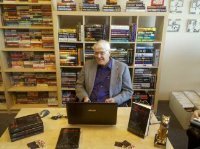 Russ Wallace is the author of Zenobia- Birth of a Legend
 Why should I give my book away for free? A download is a download. The value of word of mouth marketing is priceless.
March 14, 2013
The Rising Generation in the Publishing Family- EBOOKS
By now as a writer you know how important eBooks are in your publishing decision. Many have decided to skip the step of a big publisher and have decided to self publish. Even if you publish your book with a publishing company most likely your book will be available as an eBook. There are many providers for eBooks and I'm not promoting one over another. I took a class on eBooks and the presenter clearly liked Smashwords because of the great information they have in the Style Guide. Even if you choose another eBook provider the information here will help you.
Zenobia - Birth of a Legend is available on both Smashwords and Amazon. So no matter what device you have you can enjoy the great story of Zenobia. Here's a link to preview and purchase your copy of Zenobia - Birth of a Legend on Smashwords.
 https://www.smashwords.com/books/view/94629
The Rising Generation in the Publishing Family: Presented by Marsha Ward, Founder of ANWA - American Night Writers Association. Marsha Ward is the author of the popularly acclaimed series, The Owen Family Saga: The Man from Shenandoah, Ride to Raton, Trail of Storms, and Whitney Award Finalist Spinster’s Folly, and the forthcoming Gone for a Soldier. http://marshaward.com
Smash words and Amazon are the major eBooks providers.
eBooks, e-books, E-Books—whatever you call them, tons of them sell every day from multiple outlets on the Internet. They include regular-length—and epic-length—novels, short stories, volumes of poetry, prose collections, non-fiction books, memoirs, and any other literary genre you can imagine.
Making an eBook is not as scary as you thought. Once your literary work is ready to be published—which means you never, never are going to publish the *first draft of your writing effort—it is relatively easy to gain the skills you need to produce your first eBook.
*Make sure you rewrite your book until its perfect. Use critique groups and beta readers. If three people mention a change in your book than you know that it needs to be changed. One person, it’s their opinion and you can take it or leave it. Two people mention a change you should take it a little more serious. But if three people suggest a change, make it.
Important thought to keep in mind: an eBook is not the same as a print book. It will be read on a variety of devices, each with different reader-preferred formatting options. You should not try to keep the same formatted look of a print book in your eBook.
Tools to start:
Open your Internet browser
Open a free account at https://www.smashwords.com/
Scroll down and find “Publish on Smashwords” in the left menu
Click on “Style Guide (how to format)”
This eBook is free. Scroll to “Available ebook reading formats”
Download the version that suits your device (take note of the link to “How to download eBooks to e-reading devices and apps”)
Make an intensive study of this eBook
Keep in mind “The Nuclear Option” while there are several places to upload your eBook and your choices may be different than mine, the place to start is with a clean version of your manuscript. Your manuscript might have been written—over time—on several different computers, using different versions of Word or another word processor or writers’ software. The Smashwords Style Guide will help you clean up all the odd code created by using these versions.
In a couple days I'm going to share tips by Dave Eaton a Marketing consultant who taught a class on getting more eyes on your book- 14 Day Kindle Book Launch (How to get more eyes on my book).
For Kindle users here is the link to read Zenobia - Birth of a Legend.
http://www.amazon.com/Zenobia-Birth-Legend-World-ebook/dp/B005YF5MZE/ref=sr_1_1?ie=UTF8&qid=1363225574&sr=8-1&keywords=zenobia+-+birth+of+a+legendMarch 12, 2013
She loves you, She loves you not: Writing Romances
 Me with my favorite author Janette Rallison
Romance to me is very important in a book. I love love. In Zenobia- Birth of a Legend, we get a budding romance. In Zenobia – Challenging a Legend a great romance develops. Not only do you get a great action book but the tension of Zenobia’s first love keeps you turning the pages. Will they end up together or will they not? Here are some great tips on writing romance novels from one of my favorite authors, Janette Rallison. http://janette-rallison.blogspot.com/

She loves you, She loves you not: Writing Romances Editors want to buy – by Janette Rallison -
Romantic Heroes qualities need to be- Powerful in some way, rich, titled, and have a successful job.
We want to read heroes who are clever, street smart, resourceful, tough, and protective of the heroine.
We love the witty banter.
Heroes need to be faithful and loyal.
Love triangles really only work one way.
He’s also good even when he’s a bad boy.
Don’t make them too bad. You don’t want a hero who is a total rake and a player. They can change for the heroine.
Romance has grit, wit, and hot.
#1 rule – It is not enough for heroine to fall in love. The reader has to fall in love too.
A heroine is:
- Fairly young- She doesn’t know she’s beautiful- Likable and strong- MC is a woman (POV can change)- She isn’t weak- She isn’t perfect- She is well developed
6 elements every story needs:
A likable characterWho has a problemWhich leads to a goalThe character encounters obstaclesThere is an antagonistThere is a consequence of failure if the MC doesn't get the goal.
The character needs to grow. Romance is character driven more than plot. If hero and heroine don’t have to change, what’s keeping them apart?
Writing exercise: write 10 good qualities about your MC. What are her fears?
Main Plot-line can’t be that the heroine’s goal is to fall in love.
Rules of thumb-
- Must be worthy goal that the heroine wants to accomplish
- Best goals are important and urgent
- If goal can be postponed until next year than it isn't good enough
- All MC should have goals
- Goals can change
- They don’t have to be achieved always
- Be specific
Strong obstacles/ conflict
Conflict is not arguing. Conflict that can be cleared up with a 2 min conversation is not good enough.
Don’t throw unrelated conflict at MC.
Make sure the consequences of failure are big.
10 mistakes to avoid:
Physical attraction is not the only reason why they are in love.Weak conflict (a snippy rude heroine overcomes and falls in love.)Unlikable characters – example: a Jerk or a vixenNot enough character developmentStarting slowBringing characters together to soon. For romance we need tension, something has to keep the hero and heroine apart.Bad boy is too badWeak, stupid, or poorly motivated heroine. Your read shouldn't say, “I’d never do that.”Not knowing sub-genre and all the rules and clichesWriting like it’s 80’s or 90’s
Here are some of my favorite love stories from books, TV, and movies. What are some of your favorites?


March 7, 2013
THE HOW, WHERE, AND WHY OF RESEARCH—AND IS IT REALLY NECESSARY?

In writing, research is very important. At a recent writer’s conference I took a class that focused on this very subject. While writing Zenobia- Birth of a Legend, Russ Wallace visited the Pyramids in Egypt. Russ wrote a wonderful scene where Zenobia visits the Pyramids in Chapter twenty-nine. I think his experience of being on location and seeing them for himself allowed him to explore deeper into his senses. When reading Zenobia – Birth of a Legend, I can time travel to the 3rd century and experience things as Zenobia did. I can visit exotic places like Egypt and I don’t even need a passport. Of course nothing can replace the real feeling of being there but isn’t it nice that you only have to open a book and you can be transported to another time and place?
THE HOW, WHERE, AND WHY OF RESEARCH—AND IS IT
REALLY NECESSARY?
Presented by Lynn Gardner
 http://www.lynngardner-author.com/
James Patterson said: “Just like the Associated Press, I have my own style manual. “JP Writing Style and Book Elements” is a list of nineteen bulleted points that I keep within arm’s reach whenever I’m working. Point number 18 is written in capital letters, because no matter how often I read it, I need to be reminded that it is of the utmost importance: RESEARCH HELPS. DON’T FAKE ANYTHING—NOT BRAIN TUMORS, NOT DROWNINGS, NOT EVEN A BEE STING.”
Google and Wikipedia should not be your only form of research.
Set fun places. Use your five senses when describing a setting.
Twelve important things to remember as you begin researching your story
Being on location is the best kind of research.What action will take place, maybe there is a local story you can use.Find an expert, a local in the area, take tours and ask tour guides. See if there is an offbeat place that everyone goes and sees. A good website to use for local facts is the Chamber of Commerce.Notice names, people, places, and little details you would only know if you had been there. How do the locals dress? What do they drive? Find out what hobbies they have.Create your own town if you want but if you use a real town get it right.Talk to a real person. Call park services or a professional in the town.Ask specific questions about the town when exploring but don’t overload with all this information in your book. Pick the most important parts.Drowning & bee stings – test the scene out. Make it believableAntagonist has to be as smart as the protagonist.Don’t believe everything you read. Get 2 references.Find someone who does the same job as your MC and get their thoughts on the profession.Readers live where you’re describing. Build your story on sensors and impressions. Describe the seasons.*Bonus* – Have a passion for characters and location. It’s as important as good grammar.Tip – Google earth is a great place to visit a location without really being there.
 Lynn Gardner writes mysteries and I’m currently reading her book Amethysts and Arson. Lynn’s detailed research makes you feel like you are really there. When I’m finished you can read my review at http://juliemartinwallace.blogspot.com/
February 28, 2013
Historical Fiction- One Genre that is here to stay
Last weekend I attended a writers conference and at the Protagonist ball I dressed up as Zenobia the Warrior Queen.

The great thing about my job is not only am I promoting a fantastic book series about Zenobia but I’m learning how to improve my own skills as a writer. The next couple of weeks I will share my notes from the classes I attended in hopes it will help other writers. One of my favorite classes was on Historical Fiction. Now of course with these ideas not everything has to be followed to the T. With writing there seems to be an exceptions to everything. I hear people say you can never do this certain thing and the next time I’m reading a New York Times best selling author I find them breaking that exact rule. What I've learned is yes there are rules to follow but there are also rules to be broken. This Historical Fiction class was very helpful and I received great advice from Heather B. Moore who is an author of eleven historical novels.
Heather B. Moore – “Historical Fiction – One Genre that is here to stay”
Write what you know but also write what you love. Research can open your world to new ideas.
Why Historical Fiction sells: We like to learn from the past. We ask questions like; where did our families come from? We Love to learn. History stands the test of time.
Study something you like; a certain time period that interests you, and then it won’t feel like work. You will be excited to write. Focus on major events or highlight a more critical time or era.
After you researched and become familiar with a certain era you can continue to write in that time period.
You want your readers to connect with a major event or a major character.
Building a historical world and integrating your research:
Avoid information dumpsSprinkle in detailsMove the plot forwardTake out cliches – like modern day thoughtsGo back to basics – make dialog simple
Include in your research:
Weather, climate, topographyClothingReligious culture (do people convert in masses?) You may not want your MC (Main Character) to go against what the masses believe or else they will be ostracizedSocial structure – level of societyGovernmentTraditions, holiday festivals- create a scene that comes to lifeOccupations & Industry- what does your characters do for work?Food & Agriculture- What do they eat? Do they farm?Travel Methods – carriages? Social status decides how they get around
Dialect choices:
Characterization toolLighten up on the dialect – use a couple words but don’t be too heavyKeep us in the story and don’t slow it downChoose a few select words to show dialect
Dialog –
Creates characterIncreases pacing –readers skim to dialog“Shows”Establishes time periodCan put us in the story
Characterizing historical figures:
What if a major character is a historical figure?
EmotionsMotivations- Ask your MC what motivates them?Background- What makes them act a certain way?EnvironmentCharacter Arc – know the arc before you start writing
Expanding Historical facts into plot arc:
Story always comes firstDon’t show off your knowledgePreface – a place to share where you received your historical factsWebsite – a great place to share your knowledge of that time frameMotivation – events, wars, people etc… If a character is desperate enough it can motivate them to do lots of things
Focus on the right conflict:
Most compellingUnique, hasn’t been done to deathDecide on which part of a person’s life is most interesting
Why you don’t have to be an expert -
Indexes – look up nonfiction book sourcesGoogleEmail Historians & ScholarsInterview professors or a skilled worker in a certain fieldDocumentaries – can help visually
Make sure you get 1 – 2 credible sources and Wikipedia is not one of them. Children books and magazines with education links are helpful. Keep track of your sources.
Selling your novel through nonfiction platform:
Ask yourself –What am I an expert in?How am I different?
Join a group (historical society)VolunteerSpeak for freeTeach classesMore information about Heather Moore - http://hbmoore.com/

There are many events in Zenobia – Birth of a Legend, the historical fiction novel Russ Wallace wrote, that show Zenobia experiencing injustice which becomes a great motivator. In beginning of the novel, we learn how she should have been put to death at birth just because she was a girl. She was raised pretending to be a boy. You can only imagine this experience would teach her life is not fair. You have two choices when you face the cruelty of life, you either become a victim or you become an advocate to fight against injustice. Zenobia decided to fight. One thing Russ Wallace says about the Zenobia series is how much imagination he has to use in writing ancient history. I think he does an awesome job at giving us great historical facts but also making the characters realistic enough we can relate with their struggles.
February 14, 2013
How February came to be
 Calendars and months have changed a lot over the years. Most of this took place before Zenobia’s time but still very thought-provoking. Don't forget to take the discovery quiz at the end. See how much you know of the history of calendars.
 The original Roman calendar was said to be invented by Romulus, the first king of Rome, at around 753 BCE (Before Common Era). The calendar started the year in March (Martius) and consisted of 10 months, with 6 months of 30 days and 4 months of 31 days. The winter season was not assigned to any month, so the calendar year only lasted 304 days with 61 days unaccounted for in the winter.
Februarius (February) was not part of the original calendar, but was added (with a variable number of days), as the month preceding the beginning of the year. Sometimes there was an additional intercalary month.
Februarius became known as the purification month or atonement, as the Lupercalia Roman festival suggests. Originally, Februarius may have had 23 days. In time, the calendar was standardized so that it had 12 months with 29 or 31 days, except for Februarius which had 28. Later, Julius Caesar re-standardized the calendar to line up with the seasons.
Julian Calendar Reform

Among the offices Caesar was Pontifex Maximus, the highest Roman priest. The calendar was the province of the priests because it was they who annually picked the dates of the religious festivals. By 46 B.C., what should have been autumn harvest festivals were lining up with the summer. This would be a problem because you can't harvest what hasn't yet grown. When Caesar returned from Egypt to Rome that year, he fixed the Roman calendar, probably based on what he'd learned from the astronomer Sosigenes of Alexandria, in Egypt. (Side note: Alexandria, Egypt had the largest library until Caesar visited. It is also the location where most of book two takes place in Zenobia – Challenging a Legend.)
It’s also said the calendar was changed from the Roman Republican Calendar by Caesar because he was tired of its corruption. Priests back then would exploit the calendar for political reasons, and would add in days, sometimes months, in order to keep favored politicians in office.
The new calendar had an average of 365 ¼ days per year. So to solve this problem, Caesar created a leap year every four years, which meant that every four years, they would repeat February 23. In the Julian calendar, there was never a 29th of February. The year was broken into 12 months: Ianuarius, Februarius, Martius, Aprilis, Maius, Iunius, Quintilis, Sextilis, September, October, November, and December. In 44 B.C. the Romans renamed Quintilis, Iulius, after Julius Caesar, and in 8 B.C. Sextilis was renamed Augustus, after Caesar Augustus.
The major problem with the Julian calendar was the fact that it was off by 11 minutes every year. The Julian system says a year is an average of 365.25 days, when it takes closer to 365.2422 days for the earth to return to the same point while orbiting the sun, putting the calendar off by 11 minutes, or 1 day every 128 years.
The Gregorian calendar is the most widely used calendar today. It is derived from the Julian calendar and named after Pope Gregory XIII who decreed the new calendar on February 24th 1582. The Gregorian calendar was adopted initially by the Catholic countries of Europe, with other countries adopting it over the following centuries. The motivation for the Gregorian reform was that the Julian calendar assumes that the time between vernal equinoxes is 365.25 days, when in fact it is almost 11 minutes shorter. The discrepancy results in a drift of about three days every 400 years. At the time of Gregory's reform there had already been a drift of 10 days since Roman times, resulting in the spring equinox falling on 11 March instead of the ecclesiastically fixed date of 21 March, and moving steadily earlier in the Julian calendar. Because the spring equinox was tied to the celebration of Easter, the Roman Catholic Church considered this steady movement in the date of the equinox undesirable.
How would you like to lose 10 days in one month?

Zenobia loved to learn and expand her knowledge. Take a quiz and challenge yourself:http://dsc.discovery.com/tv-shows/curiosity/topics/calendars-quiz.htm
Resources:http://www.timeanddate.com/calendar/julian-calendar.htmlhttp://ancienthistory.about.com/od/holidaysfestivals/f/CaesarCalendar.htmhttp://dsc.discovery.com
February 7, 2013
What is Ancient History?
Ancient History is the history of the ancient world from the earliest known civilization to the collapse of the Western Roman Empire in 476 AD. Informal -Something that is already long familiar and no longer new, interesting, or relevant.
On a recent trip to Vegas, I was thrilled to find a statue of the Goddess Diana from Roman Mythology in Caesars Palace. Zenobia in book one was compared to the Goddess because of her skills in archery.

Diana statue in Caesars Palace
I'm excited when I find readers, book clubs, and organizations that focus on history. Most groups spotlight Renaissance or Medieval times. Groups who center on Ancient History can sometimes come off as boring. I might not have been interested in knowing more of the time frame if it wasn't for Zenobia from the 3rd century. She brings a point of view that even today we can relate to. Ancient History doesn't have to be "Ancient History" and we can make it fun and interesting. I'm a visual learner so walking around Caesars Palace made the history of Roman times come to life.
Even riding on the elevator was a history lesson to be found


 As I explored Caesars Palace it was like being transported back to Roman times.
 of course Caesar was a focal point
 Zenobia came along on the Roman tour of the extensive grounds
 There were beautiful gardens and statues everywhere
 Roman towers
 Sparkling water fountains
 and Roman Mythology was all around
 I don't even need a passport to travel to different times in history.
 next stop Egypt