
Sarah E. Glenn's Blog, page 5
April 12, 2022
Michele Drier: SNAP - When The News Changes Your Narrative
 Why did I subscribe to Reuters and the BBC to write a novel?
 In 2011 I was euphoric. I’d just sold my first book, a mystery, to a small press and felt I was on the road to being a novelist—a long-held aspiration.
My daughter and her husband took me out to dinner, and he asked, “Why don’t you write vampire novels?”
I thought he must be crazy. I’d never even read a vampire novel.
Flash forward to 2021. I now had sixteen books published—five mysteries, a stand-alone thriller and ten, count ‘em ten, books in The Kandesky Vampire Chronicles. And soon the world was in the grip of a pandemic disease.
Yes, I took his advice and began what was intended to be a trilogy of stories about 21st Century Southern California career women getting involved with 500-year-old Hungarian vampires. The Kandeskys were alluring and stunning, both the men and women. Their looks mesmerized and drew people to them, a tactic they used to hunt prey until they discovered making money was easier. They established a cadre of donors who provided blood, built their businesses and never looked back.
Now the family is one of the richest in the world and their flagship business is SNAP, an international celebrity gossip empire with nightly TV shows and a weekly magazine. And to keep this empire alive and growing, they need peace in the world. Peace to give people time for earning and spending money. Peace to report on celebrities having affairs, buying houses, getting messy divorces, suing one another.
Two of the senior members of the family live in Kyiv, where they hoped to expand their Eastern European influence. This stopped in 2014 when Russia attacked and took control of Crimea, an area of Ukraine the Kandeskys considered their own backyard, forcing the family to align itself with the West. When the COVID-19 pandemic hit and people began sequestering themselves, the coverage of celebrities began to dry up. Countries were pointing fingers at each other as the cause of the virus and the basis of its spread. The first reported cases were in China, and research labs around the world geared up to develop and produce vaccines. Russia, China, India, the EU nations and the US all rushed vaccines onto the market, competing with one another to make windfall profits.
I was on the cusp of writing the 11th book in the Kandesky saga and decided I’d have SNAP begin a disinformation campaign, pointing a finger at Russia for developing the virus, then trying to sell its own vaccine as a way to make hard currency.
Even though my novels are fiction, they all have an undercurrent of reality, so I began to follow both the pandemic’s and Russia’s movements. Putin began massing troops on the border with Ukraine, and this was a direct threat to the Kandeskys' empire.
Two years before, in the tenth Kandesky book, SNAP: Red Bear Rising, I followed the Russian incursion into the Sea of Azov, the border between Crimea and Russia and now I was back, reading daily news stories about the world’s reactions to further Russian aggression.
The EU countries and NATO were understandably nervous and upset, the US was still trying to figure out what role Russia played in the election of 2016 and the balance of power in the world, always on a hair-breadth basis, was threatening to roll over into World War III.
How would this play out? How much factual information should I, could I include? Although Jean-Louis Kandesky, half-a-millennium-old Hungarian vampire and Maxie, his 21st Century SoCal wife, set up shop in Brussels to meet with the EU and NATO, what influence could they possibly have?
I generally write two books a year, but I’ve been working on SNAP: Pandemic Games for almost a year now. Every time I feel I’m close to wrapping up the story something new happens with the pandemic or with Putin’s push against Ukraine.
One week I read comments from Polish representatives and had to go back and rewrite a chapter to include their concerns and their strong plea to NATO to take action. Both NATO and the EU are pulled into the news and the plot because Putin’s topmost demand is that NATO refuse Ukraine’s membership.
Watching the slow and steady build-up of Russian troops, the actions of Belarus, Russia’s only European ally, and crack-down on dissidents has stopped me. What should I include? What is going to sound believable? What are the motivations?
In the end, I’m finishing the book and it will end before the actual invasion of Ukraine, but week by week, as I read the stories from across Europe, I stopped writing to assess the plot.
My critique group believes I’m prescient, predicting the ultimate events, including the invasion.
In truth, I’m just a storyteller, concocting how far I can go to stretch the fiction before reality overtakes it.

Michele Drier is a fifth generation Californian. She is the past president of Capitol Crimes, a Sisters in Crime chapter, the Guppies chapter of Sisters in Crime, and co-chaired Bouchercon 2020. Michele Drier spent better than 20 years as a reporter and editor at California daily newspapers. She writes traditional mysteries (two series) and paranormal romance (a 10-book series, The Kandesky Vampire Chronicles) as well as a medical thriller, Ashes of Memories. Her website is micheledrier.me .
Side note from Sarah: I have a review of SNAP: The World Unfolds for the interested.


April 9, 2022
Gwen Mayo: Confessions of a History Junkie

One of the definitions of a “junkie” is a person who gets an unusual amount of pleasure from or has an unusual amount of interest in something. For me, that something is history. Thanks to the Internet, I can indulge my passion any time I please. I have a list of sites longer than my arm, but as wonderful as the web can be, nothing replaces an up close look into the past.
My spouse and I have spent many happy days looking for towns that no longer exist. Some of those towns wind up in stories or blog posts. My historical wandering brought the White House cookbook from the Lincoln administration into my possession. A trip to the Walter Reed Medical Center Museum let me get a good look at the Civil War Union Army Field Surgery Kit. That piece of history turned up in one of my Nessa Donnelly mysteries. I also spent a lovely summer researching the history of Kentucky bourbon.
I know history isn’t considered a sexy topic, but it can be. Lexington, Kentucky has a historic home that was once owned by Mary Todd Lincoln’s family. The same house was later Jenny Hill’s Bawdyhouse. Belle Brezing, Lexington’s most famous madam, lived there for a couple of years before buying her own house.
Still, when I talk about my favorite pastime I get a lot of eye-rolls. Kids who hated memorizing dates for a history test often grow up to be adults who think history is boring. Why wouldn’t they? Their only exposure to history has been a bunch of dull facts delivered by a teacher with no real interest in the subject.
History, real history, isn’t the dry facts of an event; it is a group of individual stories that narrow an event to only one outcome. History is made up of hundreds of ‘what if’ stories. For instance, would the outcome of WWII have been different if Hitler had not taken a sleeping pill before the Allies landed on Normandy’s beaches? The question opens a whole range of alternate histories. Our reality is that Hitler slept until noon, and Field Marshall Rundstedt did not get the support he requested. The history of the world may have turned on a sleeping pill.
 Gwen Mayo is passionate about blending the colorful history of her native Kentucky with her love for mystery fiction. She currently lives and writes in Safety Harbor, Florida, but grew up in a large Irish family in the hills of Eastern Kentucky.
 Gwen is a graduate of the University of Kentucky, an active member of the Short Mystery Fiction Society, and a member of the Derby Rotten Scoundrels Chapter of Sisters in Crime, the Florida Gulf Coast SinC and the online SinC GUPPIES Chapter. Her stories have appeared in anthologies, in webzines, and in micro-fiction collections.
Most interesting fact: Gwen was a brakeman and railroad engineer from 1983 - 1987.
April 6, 2022
Judy Alter: The Outrageous Cozy

Someone on a listserv recently suggested a new sub-genre for cozy mysteries: the noir cozy. Sure, it’s tongue-in-cheek because the two terms almost cancel each other out. But new sub-genres in mystery keep popping up. The other day I read an author’s suggestion of a Feminine Noir Thriller category.
Because “the mystery” as a literary genre is so varied, no one definition fits, so over the years sub-genres have developed: the traditional mystery (for which everyone keeps trying without success to find a definitive description), the sci-fi mystery, the thriller, the hard-boiled/noir, the police procedural, the historical, and of course the cozy. Sometimes—frequently—the lines between blur. For instance, is the romantic suspense novel a genre of its own or simply suspense with a bit of romance added? Is amateur sleuth a category or part of the cozy?
When talk of the cozy comes up—amateur sleuth, no blood, gore, or sex, limited world such as a small town—I always think of the Murder, She Wrote series, quite possibly the longest-running cozy series. Today, so capably written by Terrie Moran, the series is up to something like Number Fifty-Five. Some critics and readers think of it as the perfect example of mysteries that require willing suspension of disbelief on the part of the reader: What small town has that many murders? It’s a wonder anyone is left in Cabot Cove. Yet Jessica Fletcher goes merrily along, solving murders in her beloved hometown as well as exotic destinations. And we talk about the Cabot Cove Syndrome.
But I would suggest there’s a new kind of cozy coming into the market—the outrageous cozy. The reader is really asked to suspend disbelief with these books. Think for instance of Julie Mulhern’s Country Club Murders Series. Wealthy and widowed, artist Ellison Russell has probably stumbled over close to fifty bodies in fourteen books. She finds them in swimming pools, the hostas in her front yard, the country club parking lot, almost anywhere she goes. All these murders play out against the decline of country club social ways in the 1980s, with Ellison dealing with her domineering mother who insists on pearls, white gloves, and the “right way” to do things, her rebellious teen daughter, the cop she’s fallen in love with, and her oh-so-capable and almost psychic housekeeper. None of this would ever happen in real life, but it makes wonderful reading. You just have to suspend that disbelief you were unfortunately taught in school.
And then there’s Finley Donovan Is Killing It by Elle Cosimano. A struggling novelist and always-broke single mom, at the mercy of her selfish and crooked ex, Finlay is overheard talking about the plot of her novel that’s stalled, and she’s mistaken for a hit woman. Lured by an enormous pay-out, she goes along with the charade, thinking she can bow out at any time. Of course, that’s not as easy as it sounds, and she and her sidekick/nanny/housekeeper soon are embroiled in a string of adventures from getting caught masquerading in a shady bar to a remote grave site in the country. They come too close to that huge grave for comfort. It’s all outrageous—and witty and clever. Second book in the series, Finley Donovan Knocks ‘Em Dead, finds Finlay involved with soccer moms who are ought to kill her ex. He’s a good dad, she hates him, but she must keep him alive. The hilarity just keeps coming.
Somewhat brazenly, I even think my current series, Irene in Chicago Culinary Mysteries, might fit in this new category. There aren’t that many bodies, but there is an outrageous character. Irene Foxglove (a chef with the name of a poisonous plant) is a TV chef who defines the term “diva.” Her gofer, Henny James, tells the stories of the murder and mayhem that surround Irene whose behavior is so impulsive, so demanding, so difficult that any self-respecting criminal would have offed her long ago. After one book, Irene rekindles her love affair with the fabulously wealthy French father of her only child and spends her time jetting back and forth across the pond in his private jet, bringing trouble every time she returns to Chicago. Henny goes from amused exasperation to frustration to reminding herself she really is fond of her favorite diva.
I don’t think outrageous cozies will ever become a big trend, but they’re fun to read—and I’m having fun writing one.

About Judy Alter
After an established career writing historical fiction about women of the nineteenth-century American West, Judy Alter turned her attention to contemporary cozy mysteries. When her publisher went out of business, she became an indie publisher and barely looked back. Her current series, Irene in Chicago Culinary Mysteries, features a TV diva chef and her gofer, an ambitious young cook from Texas.
Retired as the director of a small academic press, Judy is an active member of Sisters in Crime, Guppies, Women Writing the West, and the Texas Institute of Letters. When she is not writing, she is busy with seven grandchildren and a lively poodle/border collie cross. Her avocation is cooking, and she is the author of Cooking My Way Through Life with Kids and Books, Gourmet on a Hot Plate, and Texas is Chili Country, all available from Amazon
April 1, 2022
Guest Post, Darlene Dziomba: New Career in My Fifties
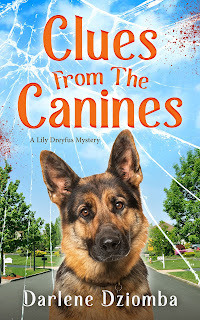
Darlene Dziomba, author of the Lily Dreyfus Mystery series, enriches the workdays of coworkers at the University of Pennsylvania by finding humor in every situation. She is a dedicated volunteer at the Animal Welfare Association, walking dogs and cleaning kennels, and lives in New Jersey.
Learn more about her at https://readdarlene.com/
Set in a small town in New Jersey, Clues from the Canines combines witty dialogue with tension and intrigue. Lily, the Adoption Coordinator at the Forever Friends Animal Shelter, is stunned by the news that her physically fit, former Marine boyfriend is dead. When the police rule the death a homicide, Lily, spurred on by grief, resolves to sniff out the killer. She gathers her pack, both human and canine, to point police to the perpetrator. The canine pack competes for the alpha position, their owner’s attention, and extra treats, while the human pack doggedly seeks out justice.
I have attended the mystery fan conference Bouchercon eleven times. The tenth one, held in Toronto, inspired me to write a mystery of my own. I listened to a panel of writers who each had a protagonist in a dog-related profession: dog groomer, dog walker, pet sitter. It occurred to me that I had never read a mystery where the protagonist worked in an animal shelter. I was volunteering at the Animal Welfare Association, walking dogs and cleaning. I wondered if I could write a book with a protagonist who works in an animal shelter. My journey to published author began. The expression, “You are never too old to learn,” has propelled me through my journey. I was fifty-one when I conceived the idea, and I will be fifty-five when I publish the book.
My career is in a field where no one logically expects a published author to emerge. I’ve spent thirty-two years working in various fiscal operations and financial planning positions at the University of Pennsylvania. I reached a point in this career where I had become stagnant. The work was not changing, and I was competing for new jobs with younger, vibrant, lower-paid individuals. Finance had passed on me, and I was ecstatic to have an idea to pursue.
I drew on my ability to analyze data and logically draw conclusions in developing my book. Writers fall into two categories: plotters or pantsers. I am a plotter. My initial mechanism was paper. I started simply with: What is the basic plot? Who is my protagonist? Who is my villain? My simple plotting burgeoned until the wall in my guest room was a wallpaper of loose-leaf sheets. I had a column for each day in the story. I connected theories with arrows. I noted things I needed to add on Post-its. This was not sustainable.
I took a course called “Plot Thickeners” with Simon Wood. This brilliant man plots his books in, drum roll please, spreadsheets. I don’t want to brag, but I was the star pupil. For me, a spreadsheet was about numbers, formulas, and macros. In my financial job, it is. In my writing, spreadsheets serve an entirely different purpose. There are formulas. For example, the percentage of scenes of each subplot to the main plot and the percentage of scenes in which the protagonist appears. The bulk of the matter, though, is verbal content. It is organized in neatly constructed blocks that can be edited and sized depending on the content. Now, I rely on my spreadsheets in writing as much as I depend on them for financial planning.
Writing a book was challenging. It took four years. I accepted a lot of criticism and did numerous revisions and rewrites, but I’ve done it. I have a complete book that I will self-publish on Amazon’s KDP platform in April 2022.
March 28, 2022
The Three Snowbirds: Why Homosassa?

In Murder on the Mullet Express, our three snowbirds head to Homosassa, Florida as their first stop. The characters’ motives for this destination become clear (to the detriment of Uncle Percival), but someone unfamiliar with Homosassa might wonder why we set a story there in the first place, especially in the 1920s.
Homosassa and Homosassa Springs are two communities divided by U.S. 19 in Citrus County, a fairly rural area. Today, it’s best known for its manatees and Monkey Island. We visited Ellie Schiller Park more than once, which has a timeline of Homosassa’s history. The Yulee Sugar Mill and Tiger Tail Island were interesting, but we found ourselves drawn to the tale of a Florida Land Boom project.
In the 1920s, the West Coast Development Company bought up a large amount of property in the area around Old Homosassa on the cheap, with an eye to reselling it as a planned community. I read the brochure from the newly-formed Chamber of Commerce, and they essentially said they were building the Biblical shining city on a hill (in a place with very few hills and fewer people). Eden might be a more accurate term; the area was overflowing with fish, game, and waterfowl.
The proposal generated a lot of interest, but getting the customers to the property was a challenge: due to the enormous number of would-be entrepreneurs, Florida railroads had put an embargo on passengers. Not to be daunted, West Coast arranged for potential investors to arrive in Jacksonville, where they would be driven across the state in the luxurious new Cadillacs. Immediately, our minds went into gear: imagine the locked-room mystery one could set in a private car during a lengthy ride!
Unfortunately, that sort of puzzle works best in short form, not a novel. Plus, it wouldn’t really involve Homosassa. A deadly ride might turn up in a future story, though.
So, back to the proposed city. Sales of premeasured lots began in early 1926. The speculators who arrived first were, for the most part, not interested in living there themselves. They were there to buy property that they could then resell at a higher price. Eventually, it would pass into the hands of someone who did want a Florida home and was willing to pay through the nose for it. That sort of mindset leads to skullduggery, and where there’s skullduggery, there’s often murder.
The planned city included an arcade and casino. In those days, a ‘casino’ could refer to a place where people gathered for social affairs, but gambling was always a possibility. Tampa, only a few hours’ drive to the south, had a thriving gambling enterprise run by organized crime in the 1920s. To make things even better, the homegrown gang, Charlie Wall’s boys, were butting heads with mobsters who had come down from Chicago. Oh look, there’s murder again.
We drew from these elements to create our characters. Once that was done, the plot began to write itself. I hope you’ll find the results colorful and enjoyable.
March 23, 2022
Guest Post, Laurel S. Peterson: The Challenges of Writing in Multiple Genres
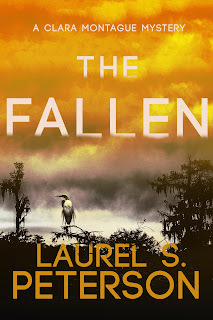
 Laurel S. Peterson’s poems have been published in many literary journals. She has published two poetry chapbooks, two full-length poetry collections, Do You Expect Your Art to Answer? and Daughter of Sky (Futurecycle Press) and two mystery novels, Shadow Notes and The Fallen (Woodhall Press). She is a writing professor, serves on the editorial board of Inkwell magazine, and was Norwalk, Connecticut’s, Poet Laureate from April 2016 – April 2019. You can find her on Twitter, Laurel on Facebook, Instagram, and at her website.
Thanks for having me on your blog, Sarah. It’s a pleasure to be here!
As a community college English professor, I teach a lot of writing courses, and many students seem to struggle with why they need what I’m teaching them. Granted, employers tell us that they want employees with great communication skills, but that feels less accessible to them than, say, being able to tabulate a series of numbers (as an accountant), take blood (as a nurse), or whip up chicken marsala (as a chef). I get it. But the point of my courses isn’t only that they can now write about literature or make an argument for or against the death penalty, but that they have the facility to move among multiple forms to best express their ideas.
As professional writers, this is even more true of us. We are capable of not only writing our books in whatever our chosen genre is, but we also pen blogs, write Instagram or Twitter posts, create short stories and promotional materials, and make grocery lists. We are all capable, but what are the challenges?
The first challenge for me is flexibility of mind. I need to see what form the material wants, and then use that form. My poetry comes from intensely felt moments, while my novels come from issues. If I am out walking and am transported by the beauty of a hawk’s screel or the whispering water against the shore, that’s a poem. The purpose is to describe that moment’s power, its strong emotional pull, the way in which it connects me to something so much bigger than I.
But if I’m thinking about how someone might sneak up on me in those woods, where they would hide the body (or push it over the cliff to land in those handy bushes down below), and how women cannot walk alone in the woods in this world, then I’m in novel mode. However, the form isn’t always so clear right away. The intense moment of feeling afraid in the woods might go in either direction, and sometimes I don’t figure that out that it’s a poem until I’ve written thirty bad novel pages!
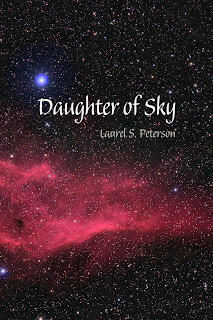
The second challenge for me is a mastery of forms. The components of poetry are different from the components of novels. Character can be muted in poetry, but not in fiction. In literary fiction, you might get the kind of intense description that you get in a poem, but that might not be the case in genre fiction. Setting plays an important role in fiction, but it could be muted or almost absent in a poem. My challenge is to know how I can use those elements to create the effect that I want. In this case, being a poet can be really useful, as there is such attention to detail and language in a poem, and that’s a useful skill for any writer.
Finally, writing in multiple genres requires me to read more broadly. If I’m going to write in more than one genre, it’s my responsibility to be sure I’m reading in that genre as well. I do much better at that in the mystery genre than in the poetry genre, but there are always a couple of each in the reading stack. (The reading stack is a bit out of control!) But this might also just be an excuse to buy another book!
Next up, I’m going to try writing something multi-genre, in which I combine genres in a single piece of writing. Wish me luck! What challenges do you face writing in more than one genre? I’d love to hear your thoughts.
Thank you so much for visiting with us!
March 15, 2022
Guest Post, Margot Kinberg: When You’re On Social Media*
*NOTE: The title of this post is a line from the Pet Shop Boys’ On Social Media.
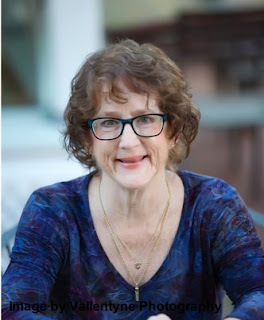 Margot Kinberg is a university professor and mystery novelist, originally from the US East Coast. Her academic and teaching background is mostly in language learning, teacher education, writing, and content area literacy. She has two crime fiction series: the Joel Williams series, and now, the Patricia Stanley series. Her new novella, Streets of Gold, comes out on March 16th.
Thanks very much for having me, Sarah. Technology has woven itself into our daily lives, and that’s especially true of social media. It’s not hard to see why, when you think of the ease of communication and the ability people have now to be in contact with others at any time, from many different parts of the world.
Social media has a lot of drawbacks, but, in both real life and in crime fiction, it can help solve crimes and find missing people. I’m sure you’ve read plenty of news stories that feature people who were reunited with family, and crimes that were solved, because of social media. We see that thread running through crime fiction, too.
Social media plays a major role, for instance, in Helen Fitzgerald’s The Cry. Joanna Lindsay and her partner, Alistair Robinson, travel from her native Scotland to his family’s home in Victoria. With them is their nine-week-old son, Noah. The flight is long and difficult, and the couple are all too glad to get off the plane and on their way. During the drive to Alistair’s family home, the couple faces every loving parent’s worst nightmare: the loss of their son. They report that he’s missing, and a massive search is undertaken. The media picks up the story, and before long, Facebook and other social media outlets are carrying the story, too. There are all sorts of ‘find Baby Noah’ pages, crowdfunding efforts, and more. The police are involved, too, of course, and they slowly begin to wonder whether Joanna and Alistair know more than they are saying about Noah’s fate. Questions start to come up online, too, and it’s not long before Joanna, especially, becomes the target of all sorts of speculation. The power of social media comes through clearly in this novel, and we see how that impacts the search and the couple.
Kazuhiro Kiuchi’s Shield of Straw is the story of Takaoki Ninagawa’s search for justice when his granddaughter is raped and killed. DNA evidence has linked Kunihide Kiyomaru to the crime, but he has gone into hiding. So, Ninagawa puts out a very public billion-yen bounty on Kiyomaru’s head and creates a website explaining how to claim the reward. When Kiyomaru hears of this, he knows that thousands of people will be looking for him, and he decides to turn himself in at the local police station. At least he’ll be protected there. Tokyo police detective Kazuki Mekari and his team are sent to bring the fugitive back to Tokyo to face trial, but that won’t be easy. Mostly through social media, thousands of people know that Kiyomaru is being brought to Tokyo by train. There’s even a way that people can check on the train’s progress online. So, the team will have to dodge amateur bounty-hunters all the way back to Tokyo. It’s an eerie look at how social media can be used to target someone.
The focus of Brannavan Gnanalingam’s Sprigs is an exclusive boys’ school in Auckland. Rugby rules there, and those who are on the team are the social leaders. One Saturday night after an important rugby match, members of the team get together for a party at the home of one of their teammates. News of the party gets around, and it’s soon crowded. One of the partygoers is fifteen-year-old Priya Gaianan, who’s both excited and nervous about going. She has too much to drink, and four of the boys on the team gang rape her. The incident’s recorded, too, and is soon passed around via social media. Priya is, of course, devastated, not only because of the rape, but also because everyone will find out about it. When she finally goes to the police to report what happened, they use the video to trace the attack to the boys responsible. In this case, we see how social media is helpful to the investigation, but also makes things that much worse for Priya.
Samantha Downing’s For Your Own Good is set against the backdrop of the exclusive (and expensive) Belmont Academy. The students there are all expected to be accepted at the finest universities, and their parents take every measure to ensure that happens. There’s a lot of pressure on the young people, and that only increases when Ingrid Ross, the mother of one of the students, suddenly dies during a major event at the school. When it’s established that she was murdered, the police begin an investigation that comes to focus on the victim’s daughter, Courtney. Along with the interviews they conduct, the police check online activity, texts, and social media to look for evidence. They arrest Courtney, but is she guilty? And if not, who else could the murderer be? It’s a complex case, and it doesn’t stop with just one killing. As we follow along, we see how the various characters share information and gossip, create their own theories about the crimes, and more, all using social media. We also see how the killer uses social media.
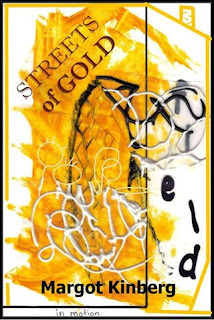
Social media is a part of my new novella, Streets of Gold, too. The story features fifteen-year-old Staci McKinney, who’s left home to escape her predatory stepfather. As you can imagine, her mother, Theresa McKinney, is desperate to find her, and checks her daughter’s social media dozens of times. She also creates a video, which she puts online, hoping that people will share. Her strongest wish is that Staci will see it and respond. But Theresa’s not the only one looking for Staci. Philadelphia City Councilman Daniel Langdon and his assistant, Scott Townlee, want to find Staci, too. She is the only witness to a crime they committed, and they want to make sure she’ll keep quiet. They, too, use a social media campaign to enlist the public’s help in tracking Staci down. In this case, social media could be a way to find and rescue Staci – or to trap her.
And that’s the thing about social media. Love it or hate it, it’s an important part of our modern lives. So, it’s no wonder at all that it plays a role in crime fiction, too.
Thanks again for hosting me, Sarah!
March 7, 2022
Author Interview: ME Roche
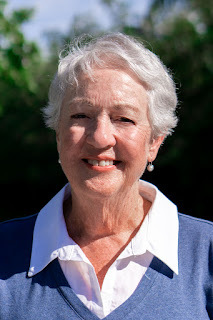
ME Roche is the product of a Midwest upbringing. She’s lived and worked on both coasts as well as in Ireland. As a registered nurse, she’s had the opportunity to work in many facets of nursing, and although now retired, she continues to volunteer and enjoy working at a neighborhood clinic.
What made you decide to start writing your own stories?
I’ve always loved to read—especially mysteries—and when I finally decided to try my hand at writing something myself, my first thought was to try updating those stories from the 1950’s and 60’s about student nurses who tackled mysteries. As an RN, I knew there were many changes in patient care from that time, as well as changes in our education; my first three YA novels were an attempt to address these issues.
How long on average does it take you to write a book?
With the first to the final drafts (at least eight) of my novels, it has taken at least a year to complete each one. I do, however, often set drafts aside to work on something new. For example: I’ve published two novels within the last six months, but each was just waiting for a polish. I plan another release this summer; it was also written and revised several times over the past three years.
How did publishing your first book change your process of writing?
My first two books were professionally published. By the time I had written my third book, my publisher and I had parted ways, so the whole process of preparing everything myself was almost entirely new and very time consuming. I’m still learning!
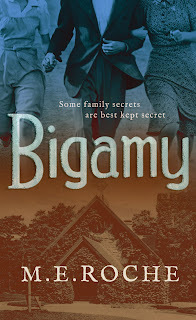
Your new novel, Bigamy, was loosely inspired by a case from the 1930s. Without getting into spoilers, could you tell us more about it?
My most recent novel, Bigamy, was loosely based on an actual case from the 1930’s. The case was brought to my attention by friends who believed it would make a good story and was actually part of their family history. It took me a while to decide if I could make it work and it was an education. We forget the amount of access to information that we have today, is very unlike what people had at that time, and what that difference meant to how situations were addressed. While I did take liberties with certain aspects of the story for dramatic effect, I did adhere to many of the details.
Who is your favorite author, and what do you enjoy most about their work?
I have way too many “favorite” authors. I love mysteries, but what I have been trying to do is discover new authors both for my own enjoyment and that of those who read the monthly newsletter on my website (www.meroche.com). My two favorite authors of this past year: Robert Dugoni (The World Played Chess) and Hank Phillippi Ryan (Trust Me).
Thank you so much for visiting!March 2, 2022
Cover reveal and excerpt: Alter, by H.R. Truelove
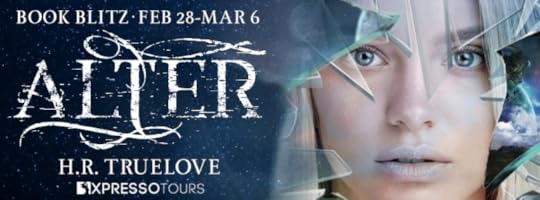
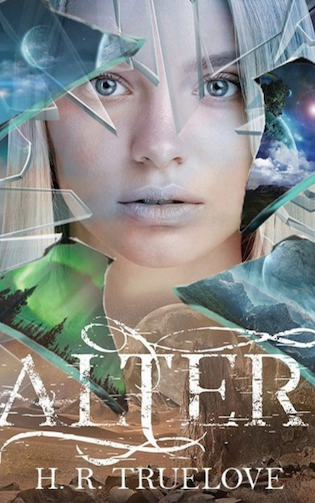
Alter
H.R. Truelove
(Alter, #1)
Genres: Science Fiction, Young Adult
Who do you trust when you can’t trust yourself?
Lennox, Erris, Wisdom…
There are many voices in Laura’s mind but no one, not even her family, will believe her.
Laura’s life is far from normal. After spending years in a medical center for seeing visions no one else can, Laura is transferred to the Tomlinson Institute of Research. There, she’s promised, lies the truth she’s been after her entire life.
But as her eighteenth birthday looms closer, Laura’s already complicated life takes a sudden turn. When she discovers what hides behind her unusual abilities, Laura’s reality is blown to pieces, and she must learn to make sense of her supernatural gifts. With a little help from the voices in her head, Laura needs to fight to save herself, the world she lives in–and every other world in the multiverse.
Alter is a gripping and intricate tale of conspiracy, mad scientists, and broken lives. A multiverse of blurry lines, lies, and deceit where we come face-to-face with the best of humankind… And its very worst.
Goodreads / Amazon / Barnes & Noble / Kobo
—
EXCERPT:
My eyes were weak, but I heard every heartbeat in the Hollow. Every thud had a signature as unique as each of the countless snowflakes piled outside.
The chilly air stung my eyes and lips. My ears curled from the cold and the tips of my fingers were burned black.
We didn’t even have a word for frostbite in the Dark World. Many Shadows who slept in the Hollow had missing fingers, hands, or entire arms and legs. Some limbs were taken in battle, others lost to the cold, but not one of them was a lesser fighter for it. We were born fighting, thrashing our way into the frosted wasteland of the Dark World with nothing but the voice in our heads.
I’d named mine Wisdom.
My conscience. The angel on my shoulder. The Devil. An imaginary friend—who wasn’t imaginary.
A visitor in my head, whose thoughts were a plague on my mind.
Do it now, Lennox. While Helectra’s sleeping. Her death will be quick and easy. You’ll be out of the Hollow before anyone knows you’re responsible.
What if you’re wrong? I asked, my words heard by Wisdom alone.
Helectra’s a spy! I went through the Crawlers’ records myself. Would you like to see them? Wisdom’s tone was far more threatening than helpful.
No. I trust you. It was a two-week hike to the closest computer I’d be able to verify the information on, anyway.
You should trust me. I’ve never been wrong. About anything. Wisdom’s irritation was so strong, a bitter taste settled on my tongue. We need to deal with Helectra before the Crawlers come after her. End her, Lennox. And don’t hurt anyone else this time.
Wisdom’s memories threatened to pierce my mind. I focused my thoughts, pitting my will against hers like a shield. I only wanted her words. I couldn’t handle her feelings.
Helectra wouldn’t end my life quietly. Crawler or not, I owe her a fight. I can do this. The pain will stay with me.
Wisdom’s doubt broke my shield and tore through my body.
Of course, Lennox. As always, you’ll do what you think is best.
No matter what happens.
Wisdom slipped from my mind, nothing but the jerk at my scalp to remind me a visitor was here. There was no time to celebrate the relief her quiet brought because once my visitor left, her voice was replaced with a new sound.
Thump, thump, thump.
Even a heartbeat sounded different when it belonged to a traitor. I followed the traitorous beat through the series of caves I’d sought refuge in with nearly thirty others. The children born during the Evernight were called Shadows, and the Crawlers hunted them mercilessly.
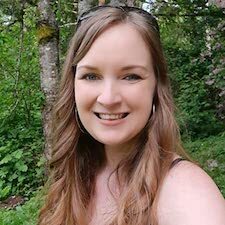
Author Bio:
H. R. Truelove lives with her family in the beautiful Pacific Northwest.
She developed a thirst for reading during her long bus rides to school, and has been writing poetry, song lyrics, and short stories most of her life.
Truelove's debut trilogy, Alter, releases in 2022.
Website / Goodreads / Facebook / Instagram / Twitter
GIVEAWAY!
a Rafflecopter giveaway
Hosted by:
February 23, 2022
The Two-Headed Killer
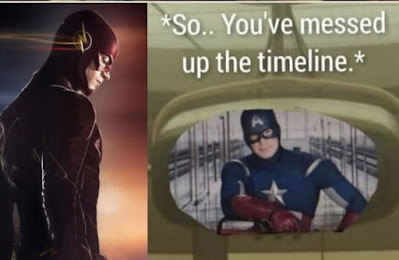 With apologies to DC and Marvel.
When Gwen and I show our books to other authors, the first questions we get asked are: “You wrote a book together? How did you plot it?”
Creative types often have problems working together. It’s like another cook in your kitchen or, worse, a boss that tries to micromanage you. You have your creative process, and they have theirs. This is true for even authors who married other authors; sometimes the choice comes down to writing separately vs. divorce.
Yet, it can happen. Richard Levinson and William Link created great television together: Columbo, Ellery Queen, Murder, She Wrote, and many other popular shows. Sometimes they devised plots together (often under the pen name ‘Ted Leighton’) which scriptwriters would turn into a television episode. Charles and the Caroline Todd created two long-running series of mystery novels together. James Patterson also co-writes, but he takes a top-down approach: he creates the characters and a detailed plot, which is then taken over by other writers.
In our case, short stories are relatively easy. We discuss what should happen, and then one of us begins writing. We take turns. I remember, while writing one story, saying to Gwen, “You need to invent something,” because we’d hit the point where Professor Pettijohn needed to reveal his latest invention. Then, we had to figure out how to use it within the story. Dialogue is a breeze. It’s fun to write, and Gwen suggests comebacks I can play off of. It's great fun to have another imagination to build a story with. The sum is greater than the halves.
Writing novels, though, is a bigger challenge. One of our biggest roadblocks: writing style. Gwen is a true plotter, while I am a pantser (a writer who flies by the seat of the pants). When Gwen sits down to write, she lays out her plot, then starts at the beginning of the book and produces the ensuing material in a linear fashion. She inserts scenes only when the story demands it.
I don’t do well with beginnings, since story openings invite a lot of second-guessing and, frankly, procrastination. Instead, I write the scenes that are the clearest in my head. It’s like a spider web: I fill the space between the scenes with the stuff that should precede or follow them. As a result, it can take me as long as 30,000 words to figure out what a novel is really about and force it into a logical chronology. Short stories are so much easier.
So, clashes ensue. We come up with the characters together, including ‘the crime before the crime’ and who the killer is. Gwen let me choose the poison in our first two novels because I love that sort of thing. I was the one who started Murder on the Mullet Express because she was working on Concealed in Ash. I mentally formed a crude sequence of events for the first part of the novel and wrote the scenes I had the strongest ideas for. Then, Gwen took over for a while and added more background to my work, plus she added the scenes between the scenes. So far, no problem.
I got back into the novel after editing a couple of anthologies, read over the previous text to reorient myself, and added further scenes. This was when the trouble started. I have this unfortunate habit of writing the scene where the killer was revealed to give myself a goalpost for the in-between narrative. Then, I wrote some critical clue discovery scenes between it and where Gwen left off.
This was a big mistake. Gwen started writing at the first gap and, through organic process, revealed a big clue that I’d set later in the book. I was unhappy that she hadn’t looked ahead, while she felt that certain clues would be discovered sooner with the technology available at the time. Then, I had a spark of an idea of how future trouble could be created with the information she’d changed. We discussed the new plot twist, and I removed and retooled the conflicting scenes as necessary. After that, I made sure to run ideas by her before I wrote them.
Gwen and I finished the book by using yWriter (which we no longer have) to coordinate the plot and firm up the chronology (which days the train ran, when court was open for arraignments, etc.). Even then, details cropped up that required retrofitting other scenes and adding new narrative.
I did the final edits to sand down the bumps. Some chapters needed more work than others. Once the text was smoothed out, though, we had a pretty good product. Readers seem to appreciate the cultural details and the plot twists that started as accidents. It took longer to write than the sequel, but how else were we supposed to learn?
For Murder at the Million Dollar Pier, we created a master plot. We also agreed that if one of us makes changes to the novel's plot, it needs to be changed accordingly in the master plot. This has reduced clashes and made it easier to see where the characters should go next, so we're using the same method in writing our third novel, Ybor City Blues. May all disharmony exist on the page, not between the authors.


