S.B. Barnes's Blog, page 3
January 13, 2024
Friends to lovers meets bi awakening: an M/M subgenre

The subject of today’s blog post is pretty specific. Like, so specific, you’d think there would only be a handful of books that fit it. You’d be wrong. Friends to lovers, specifically the pining best friend story meeting the bi awakening story (and I’m using bi for brevity’s sake here, it’s often demi or pan) combines a classic romance trope with a classic M/M trope. The “best friend you wish could be more but you can’t say anything for fear of ruining the friendship” has been a romance staple for decades, at least since When Harry Met Sally and probably earlier. Meanwhile, bi (or other) awakening is utterly classic in M/M: the previously assumed straight guy, often someone in a hypermasculine field like sports, realizing and coming to terms with same-sex attraction and the joys of gay sex.
First, let’s examine what makes these two tropes so appealing.
The pining best friendSomething that can be tricky to establish in a romance is emotional intimacy. A lot of romances involve characters making big decisions based on their love lives, and a lot of the time, a sane person watching will think “Wait, what? You’re turning your whole life around for a guy you’ve known for like two weeks?”
Just think of those Hallmark Christmas movies where the lead leaves her high-pressure big city job for Farmhand McSmallBusiness from her hometown. It’s no coincidence a lot of the love interests in those stories are long-lost childhood friends – the pace of the story would otherwise make you think that the lead is utterly insane.
With the pining best friend trope, you start off with emotional intimacy. The leads are close, they’ve been close, they know each other well and in some ways have already passed relationship milestones, only, well, in a friend way. That’s a great, solid start for a romantic couple, and it’s also a great way for an author to build dramatic irony, i.e. have the audience totally aware of the pining, but one of the characters is totally oblivious. That makes us as an audience invested and frustrated and desperate for the resolution. It’s also not hard to understand the impediments – most people can empathize with not wanting to rock the boat or risk what you have with someone who’s important to you.
The bi awakeningBi/pan/demi awakening is really popular beyond just this iteration; it also happens in a lot of rivals/enemies to lovers stories or with a plain old meet-cute. I would argue that the popularity stems from how easily it ties into a very classic romance trope: the love interest is different from everyone else who came before. They affect the person having the awakening in a way they weren’t expecting and no one else ever has. It’s very classically romantic. You get this in F/M romance, too, although there it’s often compounded with virginity kink (aka “I’ve been waiting for the right person”).
It can also be kind of problematic when looking at something like demisexuality, where a storyline like this leading to the conclusion that no one makes the character feel the way the love interest does automatically resolves all their complex feelings around sexuality; a person’s sexuality usually isn’t entirely dependent on one other person even if that sounds romantic in theory. (For reading recs specifically featuring acespec characters, check below)
A lot of bi awakening stories are set with a younger age group, around 20-25 (possibly also younger, but I don’t read stories set in high school for reasons of being a high school teacher). I think this makes sense, given that’s a pretty reasonable time of life for someone to be questioning their sexuality. A lot of them also feature very stereotypically masculine men becoming interested in other men, which…maybe says some things about gender norms. It’s also a classic romance trope, though: the alpha male softening and showing his romantic side.
Combining the twoA few different things affect how this trope combination plays out. One is the duration of the friendship. That directly affects the level of pining going on. Usually, the character who is pining has a lot of moments of thinking “this is a really bad idea for me” when it comes to the other character experimenting with them; if the friendship has lasted upwards of five years, this is even more compounded. Depending on your tolerance for angst, this can be really gut-wrenching, or it can be mostly light.
Another factor is how big a deal the change in sexuality is for the other character. A lot of stories actually play this out pretty low-key, with the character mostly going “huh, I guess I’ll roll with this then” but not communicating that well, leading to a more drawn-out resolution. Some go much more in-depth with it and tell more heart-wrenching stories about internalized homophobia; it’s really a matter of personal preference.
Finally, one of the big awkward landmarks of the pining best friends trope is of course the question posed by When Harry Met Sally: Can men and women be friends without sex getting in the way? It was awkward when When Harry Met Sally kind of ended that one on a stilted “no, not really”; it’s also kind of awkward when the same is true of same-sex couples. Most stories don’t really go there, but it’s something worth thinking about in my opinion!
Now for some recs! A side note on star ratings: If you’re interested in this trope, any of these books will fulfill it. My star ratings are my subjective take on the book, which will reflect my preferences more than anything. Follow the links for full reviews to see why I gave it that rating, and take a look at the other goodreads reviews to get a more general picture!
Chai Love You A Latte by F. A. Ray (Boyfriend Café #3)


Trent and Gabe have been friends since they were kids. Now they’re in college together, living in the same dorm and working in the same café, and they see no reason to change that. They might be a little closer than most best friends, but what’s the harm? Gabe’s only torturing himself a little bit. Until Trent turns his head and a platonic cheek kiss goodnight becomes something more.
Especially notable: Trent, the character who has the bi awakening, is genuinely confused and struggling, and it’s given time and space as a central theme. It’s nice to see in comparison to stories where characters adjust very fast!
Dirty Forty by Mia Monroe (Friendship and Desire #1)

Zach and Dominic have been best friends forever. They live together and run a landscaping business together, and if they reach forty with no partners in sight, they'll get married. Platonically. Except now Dominic has told their parents they're in love and getting married, and Zach is in hot water because he is in love and doesn't want to get married for show.
Especially notable: Romance between characters in their late thirties, very long scale for the pining character.
The Gift by May Archer (Love in O’Leary #2)
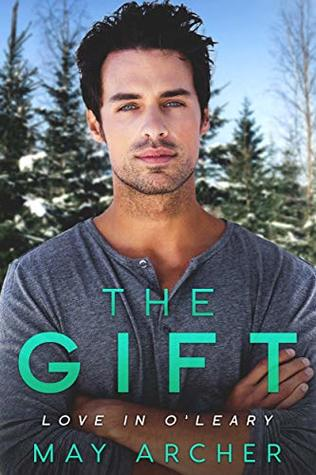
Daniel goes to the woods to live deliberately away from everyone he knows and lick his wounds after flaming out professionally and personally. There, he meets Julian, the local vet who helps him take care of strays and awakens some feelings in him that Daniel was not expecting.
Especially notable: Shorter scale for the pining friendship angle; we witness the entire friendship on the page. Great dialogue and well-rounded setting!
Just Friends by Saxon James (Never Just Friends #1)
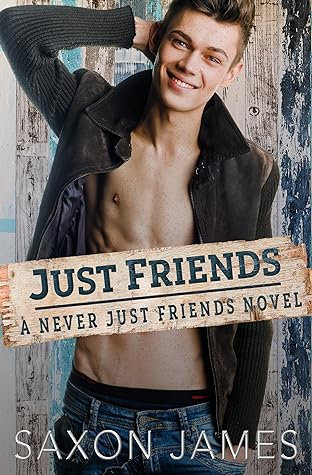

Tanner is the all-around smalltown hero, he works for the fire department and serves as a weekend bouncer for the bar and spends all his free time helping people out. There's just two problems: his dyslexia stopping him from passing the exams he needs to become a full member of the fire department, and his best friend Royce who left for Australia five years ago. Except then Royce comes back, having gotten surgery for his epilepsy and ready to get closure from his long-time crush on Tanner.
Especially notable: I would call this one the blueprint for this trope. A very straightforward example.
Finally, some recs if you're interested specifically in sexuality awakening and pining in stories about acespec romance!
Friendly Fire by Saxon James (Never Just Friends #4)
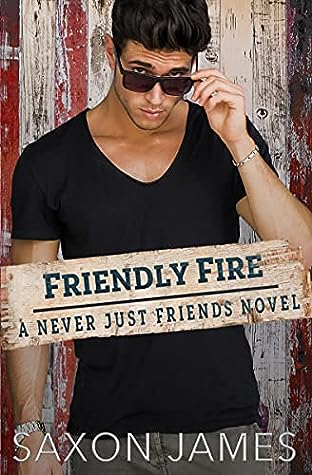
3.5 stars. Rafe has been with Laura for years. So many years that he doesn't know how to get out of it anymore, even though both of them want to. When his ex-best-friend Cam moves in next door and starts trying to annoy him to death, it becomes clear that it's time for him to find a way out.
Especially notable: This isn’t so much a bi awakening as an ace awakening, and Cam’s feelings for Rafe drove the friendship apart – kind of a subversion there!
Scoreless Game by Anna Zabo and L.A. Witt (On the Board #2)


Scoreless Game follows Elias and Nisha, captain and assistant captain, respectively, of the same hockey team. They've been best friends for years despite harboring intense feelings for each other. These have gone unacknowledged because of a sort of mistaken mismatch situation: Elias is asexual, though sex positive, and Nisha doesn't think he's interested at all. Meanwhile, Nisha's parade of hook-ups has lead Elias to believe he's only interested in casual sex.
Especially notable: I wouldn’t necessarily call this one “ace awakening” in that Elias knows he’s ace at the start of the novel, it’s more of a mutual pining situation. It is one of my favorites out there, though, and it really explores how Elias’s asexuality affects his life.
Goal Lines & First Times by Eden Finley and Saxon James (CU Hockey #3)
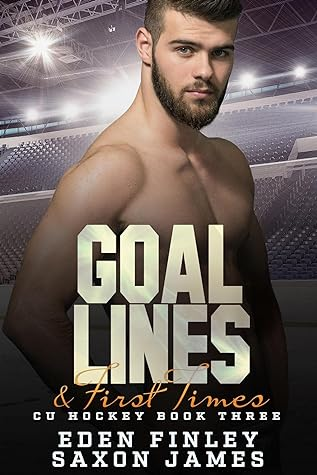
Cohen has been told by pretty much everyone in his life that no, not everyone experiments with their high school best friend. It’s made him consider that he might not actually be as straight as he thought. Meanwhile, Seth is tired of trying to make it work with dates who want too much too fast, chasing a spark he just can’t find. Thinking he might be demisexual, he goes online, where he meets Cohen.
Especially notable: This is a mutual awakening, if you will, where the sexuality awakening isn’t brought out by the other person, but rather through self-reflection after which they go looking for answers and find each other and support each other through it. Slow build, which I appreciate in a story about demisexuality.


January 10, 2024
Practicing pornography part 2: Writing sex scenes

So you’ve got your anticipation going. You’ve explored the physical chemistry, the internal and external impediments, and now it’s finally happening: Your characters are doing the do.
Now, a thing that frustrates me a little about romance novels is that the ratings are a little…hard to understand. There’s a lot of talk about “heat level” or “spice level” which is helpful, I guess, but sometimes misleading. I would feel weird about calling the sex scenes in my book “spicy” given that there’s generally an emotional core to them, but I still do it because that’s the language we have. Romance.io, a cataloguing site for romance novels, has a “steam rating guide”, which I find significantly more helpful in figuring out what a book actually provides. In general though, in the book market, you’re not going to get anything as clear as, say, AO3’s rating and tagging system. This is not least because of the way books are marketed and tagged on social networks and with major retailers. Authors tend to compensate by marketing using taglines or graphics that indicate what tropes a book contains, which can read like AO3 tags. I have mixed feelings about all of this, but I digress.
This is your first choice as a reader and writer, though. What kind of heat level are you looking for? Do you want something with frequent sex scenes? Do you want something with kink? Do you want something with romantic sex scenes?
It is, imo, an unfortunate side effect that the more focus there is on the romance, the less there is on sex and vice versa. In a book with a high heat level, there are generally a lot of sex scenes and they frequently come at the expense of the emotional build. Plot elements are glossed over and I’ve read more than one romance novel where a pivotal scene for the resolution of the impediments just kind of happens off screen. Vice versa, something I’ve noticed about more overtly romantic stories is that a) if there is a sexual relationship before there is a romantic one, once the romantic relationship comes to fruition, the sex scenes drop off, and b) kink becomes less likely. This is not to say this is true of all romance novels! These are just some trends I’ve noticed, especially in the popular/well-marketed stuff.
The next question is: how do you write sex? Literally, in the sense of how do you put the words on the page.
1. Choreography
Back when I was mostly writing 2-5K oneshots, writing sex scenes was mostly about the individual acts being done. In that case, it’s a pretty straightforward process. How do your characters start, what do they do, write the orgasms, finished. There’s a context, a build-up, but it’s mostly implied and not the core focus. Depending on the romance novel, early sex scenes that are mostly about exploring a dynamic or about physical attraction can be like that.
In that case, choreography is one of the biggest concerns. Nothing pulls a reader out of a sex scene like having to pause and reconfigure the mental image of whose limbs are where; your job as a writer is to make sure that changes in position reach the page. This sounds like an easy task but it gets a lot harder when you start writing. For one thing, writing is always a translation effort between reader and writer, what you see in your head while writing will never be exactly what readers see. Sometimes you’ll get caught up describing one physical aspect (usually something to do with the genitals) and forget something basic, like that the characters turned around, or someone hitched a leg over someone else’s shoulder to make this work. It also really depends on your style as a writer how you do this; I’m not a very visual thinker, so I’m usually caught up in the internal aspects or the feelings and have to remind myself that I need to add on whether one character is on his knees or on all fours.
Then there’s the neverending issue of “I already used the word “cock” twenty times on this page”. For what it’s worth, my stance on this is that I’d rather read “cock” and “dick” twenty times than a zillion awful synonyms. I already have a hard time with historical fiction that uses words like “cockstand” or “manhood”. (For your reading pleasure: list of horrifying synonyms used for genitalia from fanfiction). Another way to avoid the parade of synonyms is to treat the genitals as an extension of self, no matter how weird that sounds, and use phrasing like “he can feel himself leaking”.
Basically, describing the physical mechanics of sex is important so that your readers can imagine what’s actually going on beyond the abstract if you’re going for an explicit scene. If you want to keep it deliberately vague, that’s cool too, but you’re then writing what I would call a fade-to-black, or a mature instead of an explicit sex scene.
The thing about getting the physical mechanics down is that in a vacuum, it’s a lot like writing an instruction manual for flatpack furniture.
2. But how does that make you feel?
Making sex less clinical is mostly about getting really into the headspace of the character who describes it. Part of this is the larger context; I like to outline my stuff these days, and that involves considering the emotional stakes of each sex scene. What’s going on between the characters? What’s going on in the larger world outside them? Classics here include the uptight character who needs to get taken out of their head via sex, the bi/gay awakening plotline where “it’s never felt like this before” or the couple who are allegedly having no-strings-attached sex but who can’t help feeling all these things about it.
This can be matched up with the sex acts you choose; especially in terms of the whole “who’s on top” thing with MM fiction it’s easy to match up emotional vulnerability. This brings a whole host of other issues about how anal sex is mapped onto gender roles, but that’s a whole different thing. Very frequently, trust is also expressed through protection and whether or not it’s used. It’s also maybe worth considering how this differs from FM fiction; my experience is that when it’s not subsumed in a story about virginity etc., first-time vaginal sex between a couple is treated far less as if it were about deep-seated trust than first-time anal sex between two male characters. Which is maybe worth considering. What’s also worth considering is how anal sex is often treated as the pinnacle of pleasure between two men even though a) people of all genders can enjoy anal sex and b) plenty of men who have sex with other men don’t enjoy anal sex at all.
Anyway, part of the “but how does that make you feel” question is about that—bringing the emotional stakes of the story into the sex scene. If you don’t, it frequently feels like the story grinds to a halt for every sex scene, or even like there is no real story, just a bunch of interconnected sex scenes between two characters culminating in an unwarranted “I love you”.
The other part is remembering that describing emotions and describing body parts isn’t enough; you should also be talking about what feels good how! I’ve read sex scenes where you’re given a physical description of what body is where but at no point does the author describe how it feels for either character and it’s just…weird. To me, at least, it’s barely even hot, it’s just a series of actions on the page. I said above I’m not much of a visual thinker, and maybe if you are a visual thinker this works better for you; for me, I need what’s going on inside the characters to really get into it.
In one of the sex scenes I wrote for the sequel to Heart First, it’s very much about Tony’s perspective of something he’s doing to Daniel, and that’s where his attention is. But about halfway through, I realized I had barely described how Tony was feeling, what sensations he was getting out of it, what it was doing for him even though he was the POV character. So I went back and edited to explain why it feels so good to him to do something to someone else, and I think the scene is much stronger for it because it conveys a sense of urgency on Tony’s part and also shows how much it affects him that he can make Daniel feel this way.
Finally, I would like to petition that writing orgasms is important. You’d think this would be obvious, but a lot of sex scenes kind of just have one line. I think it’s worth lingering! Worth describing the physical sensations as well as you can (describing orgasms is hard, especially without lapsing into clichés or awful metaphors), and worth describing how it makes the characters feel. Especially if you’ve been building to this scene for a long time, it is literally an anticlimax for it to end with “then I came. Hard.”
3. Realism?
Do sex scenes need to be realistic? No, absolutely not. We’re all reading and writing for escapism. And as I’ve mentioned above, a lot of tried and true tropes of explicit fiction aren’t all that realistic at all, especially when it comes to the emotional weight some sex acts are given. Sometimes they even play into uncomfortable gender norms, or racial stereotyping, or society’s general obsession with the concept of virginity, and it’s very worth examining that in depth.
But depending on what you’re writing, you might want to have sex scenes that feel a little more like something that would happen in real life. It’s not suited to every book in the genre obviously (more obviously, omegaverse and anything featuring monsters comes to mind), and most readers and authors alike want to read about steamy sex that is a lot easier than it is in real life. Sometimes, though, it can be nice to read about something a little more real, especially if the tone of the book is more serious in general.
So, what’s the line of writing something without it getting too real? Probably most readers don’t want to read about the realities of prepping for anal sex. Like, if you’re having anal sex and you’re scared of accidents happening and you or your partner not being perfectly clean ~in there~ then you should definitely not ditch the condoms because MM fiction taught you that was fine. Equally, a lot of readers probably don’t want to read an in-depth anal douching scene prior to an anal sex scene – not that anal douching is always necessary or even good, there are some health questions about it — but the truth is that jumping into super spontaneous anal like people do in MM fiction with no regard to whether someone has showered in the last day or so, or has used the bathroom recently, is not super realistic. Personally, I appreciate when this kind of thing is mentioned, I find it more believable and in that way, it pulls me into the story more.
There’s a fandom classic set of articles here (careful, nfsw images included) about the realities of gay sex which goes through a few things like how in real life, what MM fiction has canonized as the right way to prep someone else isn’t the only way to go, how topping and bottoming don’t mean the same thing in real life as in fiction etc. which is well worth reading when you’re writing about gay culture. Statistics tell us that most writers of romance, both het and M/M, are white women who are attracted to men; like any other time you’re writing about a culture not your own, research is important.
Something I personally also like doing, which I think lends at least a little realism to fictional sex scenes, is to include the stuff that doesn’t work. Like when someone’s leg gets pushed up too far and their hamstrings can’t take the stretch, or when a cramp happens, or when the characters’ skin sticks together and it hurts when they pull apart. Little things, not enough to take you out of the scene, but enough to ground the reader in the idea that these are real bodies doing a real thing that isn’t always super easy or dignified.
As a last note though: you don’t owe your readers realism. Much like people shouldn’t go to porn for sex ed, they also shouldn’t go to erotica for it. Some of us enjoy realism, some don’t. We read and write about sex for pleasure, not for education. For me, knowing enough about the realities of sex means that something very unrealistic or something I think is a bad idea in real life will pull me out. This is especially true of rimming scenes for me, I always feel kind of relieved when those are set during or directly after a shower. (There is a non-zero number of sports romances that include rimming scenes directly after a game or an intense work-out and describing someone’s ass as “musky and smelling like them” is nice and all but I am here to tell you that a sweaty butt smells the way you think a sweaty butt will smell. Some people are into that, that’s cool! I would still recommend showering prior to mouth-to-anus contact for hygiene reasons. Similarly, any time a toy, a dick or a finger moves seamlessly between ass, mouth and vagina I cringe internally.) But that’s just me as a reader, and for plenty of readers, the sense of urgency overriding what would be safe sexual practices is a lot hotter—and that’s just fine. It’s erotica, not a how-to guide.
January 7, 2024
Hockey Romances. Why?

(At time of writing, I hadn't read all of these yet - I have now, for long-form thoughts on the individual books check out my goodreads page)
So I was taken out of work a couple weeks ago due to ~pregnancy stuff~ (mostly just stress, the baby and I are fine) which has left me with a lot of spare time on my hands. And as one does, I have been filling my time reading lgbtq+ romance novels. Because I can.
In this time, I have fallen headfirst into the hockey romance novel subgenre, and I ask myself, as I have done every time I see these books advertised, why? I am not a sports fan. One time, my husband was watching football (European), and a team in red kits was playing against yellow kits, and I started laughing because "it looks like ketchup is playing against mustard". His expression was great, but he hasn't taken me seriously since.
So why is hockey of all things such a draw for the mlm romance subgenre? Especially given the NHL's apparent fear of rainbow tape? Why do I now know what the word "celly" refers to and what an "enforcer" is? Why why why?
Here are my answers:
Extremely organic way to set up some of the most classic romance tropes. Forced proximity? Being on the same team takes care of that. There was only one bed? Shared hotel rooms during away games. Enemies to lovers? Rival teams. Lots of potential for drama given that players lead very transient lives in terms of the constant possibility of trades. In mlm love stories, even more so given that the NHL is so blatantly homophobic. Perfect level of fame. Fame and wealth as a draw for a love interest are kind of staples of the genre, and NHL players are famous, sure, but not all of them, and they aren't as famous as football stars (either kind of football). They are still filthy rich, which makes great wish fulfillment. You can have the sexy penthouse and the anonymity.I would go on to talk about how different roles on the team lend themselves to different tropes (goalie = tightly controlled dude who needs someone to help him cut loose; enforcer = misunderstood fighter with a heart of gold; coach for all your forbidden love/sleeping with the boss desires) but that would very quickly reveal my utter lack of hockey knowledge, so let's not. Instead, here's a quick reclist.
Rachel Reid's Game Changers series. It's a classic in the genre for a reason and it has everything. Forbidden love? Got that, maybe the definitive example. Redemption arc? Got that. Misunderstood bruiser with a heart of gold? Got that. Age difference? Got that. Also really excellent sex scenes, not gonna lie, and satisfying endings throughout - sometimes a happy end will come a little suddenly for me, but these books really delivered, and the nice thing about how romance series are structured is that you get a little peek at what comes after for the couples in the other books. Him, Us and Epic by Sarina Bowen and Elle Kennedy. This one surprised me, I don't generally go for first person POVs, but I did enjoy this! Coming-of-age story turned coming out story featuring a budding hockey star and his best friend. Lots of fun. Scoring Chances series by Avon Gale. This series is fun in that it doesn't focus on the NHL, it actually focuses on the minor leagues in the southeast of the US, a place almost no one associates with ice hockey. As such, there's a chance to tell different stories about professional athletes who aren't super rich and famous, which I appreciate a lot. TBH the first pairing wasn't entirely my cup of tea, but I'm glad I kept going because I especially enjoyed the later books, which tackle tough topics (including eating disorders, abuse etc., so content warning for that). These are still romance novels though, so rest assured that there's a light at the end of the tunnel. What I especially appreciate is that these books don't have relationship drama, in that the main couples communicate and work together instead of a third act break-up-make-up! Hockey Ever After series by Ashlyn Kane and Morgan James. These are just great. Lots of fun to read, lots of cameos from character in later books, just excellent mood all around. Also features my favorite ever trope (secret relationship, sorry, anyone who knows me knows I am a sucker for it I just can't help myself) heavily, which is a win in my book. I especially enjoyed book two, "Scoring Position". Is that because Nico is German and I loved him? Is that because Ryan is my new blorbo? We may never know.Happy reading and please give me recommendations for more books like these, I'm lowkey obsessed.
Practicing pornography part 1b: Emotional anticipation
Let’s say the following action beat is given:
Character A is fucking character B in the missionary position. Partway through, A grabs B’s hand and holds it above their head.
Depending on where you’re at in the resolution of the emotional stakes, the action can mean entirely different things to both characters. Which would you most like to read?
Full emotional resolution, it’s a romantic gesture No emotional potential acknowledged, it’s a precursor to bondage Character B wants it to be a romantic gesture but thinks it's about bondage Character A intends it romantically but pretends it's about bondageSexual and emotional anticipation are not at all two separate things. They’re interwoven and in a lot of stories they culminate at the same time. On the other hand, there are a lot of tropes specific to romance that intentionally misalign sexual and emotional anticipation purposely. Any variation of the “it’s just sex until we catch feelings” storyline does this. Any story that has the leads on a different timeline to realizing their feelings does this. In a lot of romance novels, and in some movies and TV shows, physical attraction and sex happen early on whereas emotional attraction and romance are later.
This may be a reading bias of mine, I love a good “friends who hook up to lovers”, but my impression is that queer stories especially frequently contain this. From the ever beloved gay/bi awakening stories that often fall back on “just an experiment” to “friends to lovers” to “we can keep our feelings out of it”, there’s…a lot. And that does throw up some questions to me, because het romance tends to talk about casual sex between two people who will clearly end up not being casual in a very different way. For example, in M/M fiction there’s a frequent focus on men having high sex drives and it being “normal” between male friends to have some level of sexual contact; there’s also more often a higher level of secrecy and drama surrounding a queer couple than a het couple. Erections also tend to happen with little to no stimulation.
I don’t know that it necessarily says a lot about cultural stances towards the LGBTQ+ community or individual author’s preconceptions, but I think it is definitely worth exploring why so many M/M romance novels especially veer towards the following: a) men having a higher sex drive, b) men maintaining sexual contact with each other while not acknowledging it to be in any way non-heterosexual and c) “coming out” stories as a romantic trope rather than a question of personal identities. Not all of them, of course, and none of these things are bad in and of themselves but it is worth questioning why men (especially men in a traditionally masculine setting like frat romances or sports romances) are portrayed as being less in touch with their feelings, more sex-driven and bad at communication. It seems to me to reinforce some stereotypes, especially when you bring in the way sexual position is often used to gender-roles-reinforce.
So what does the addition of emotional anticipation change?
On the one hand, attraction becomes rooted in more than just the physical. The physicality is still there if the attraction hasn’t been consummated, but the POV character begins to imbue it with emotional meaning. This is often where people start being really attracted to features we connotate with someone’s inner world, like their eyes or hands in the context of hands doing/creating/caring. This is also often where acts of service start cropping up, especially if the emotions behind them are still unstated. Think cooking for someone, or taking care of some mundane practical aspect of life for them.
If this is a story where sex happens before emotional resolution, it also ramps up the sexual aspects because the sex becomes imbued with the potential for meaning. It’s not only that the characters are having sex—they’re emotionally conflicted about it because they want it to mean emotional intimacy, but at this stage of the story it doesn’t. Unless of course they interpret physical actions emotionally.
So you have all this attraction and all these actions steadily ramping up the heat and the emotional weight—what’s the reason it doesn’t culminate? In other words, what’s the plot?
3. Impediment(s)
I would separate this into two distinct categories: internal and external impediments. Most stories have both.
Internal impediments can range from personal insecurity to internalized prejudice. In my opinion, internal impediments are very hard to get right. There’s so much that fits in there: Body image issues. Sexual hangups. Sexuality confusion. Tragic backstory. Anthony Bridgerton’s inability to commit emotionally in case his future wife is unknowingly allergic to bee stings. The usual.
The thing about an internal impediment is that it very often manifests as “the other person can’t possibly want me/want to be in a relationship with me because X” past all reasonable doubt and it can get a little trying. Eventually as a reader you reach a point where you’re frustrated with the couple and unclear as to why they won’t talk already.
The same can be true for external impediments—troublesome families, social context (think historical fiction with a big class divide, homophobia, sports romances…), the good old interrupted kiss.
This is not to say internal and external impediments are mutually exclusive—they can and do mirror each other a lot, like with something like internalized homophobia or a character’s sense of responsibility or duty. Think of Henry in Red, White and Royal Blue, who has internalized a sense of responsibility towards the crown despite being treated terribly by it.
When you’re writing about sex, the big question is, how do you keep it sexy with all this emotional stuff going on? Trauma isn’t sexy (look I know there are books that Go There, for the sake of my sanity I’m just going to say that everyone needs to watch Dan Olson’s videos on 50 Shades of Grey to parse why “I like kink because of my tragic backstory” is troubling). Poor communication skills are also not sexy (fight me). But we need to build anticipation somehow—either for that first sex scene or for the emotional resolution. Because we all know there will be a happy ever after, some romance presses even guarantee it. It just has to feel earned.
In cases where emotional and sexual chemistry resolve simultaneously, like in many movies or TV shows, this issue is somewhat circumvented. Physical attraction can build at the same time as emotional intimacy and your impediments are generally clear hindrances to both. When the dam breaks, it breaks on both fronts. In the romance novel format, you get that frequent mismatch between when sexual chemistry and emotional chemistry resolves, and that can lead to some very interesting places in the ensuing sex scenes. There’s a big difference between writing a sex scene where everyone’s emotions are on the table and one where there are a lot of things going unsaid – see the poll above! It is entirely in the author’s hands to walk the fine line between what is believably romantic, believably sexy and has just enough angst to keep you hooked on the will they/won’t they.
Practicing Pornography Part 1a: Sexual Anticipation
The “will they/won’t they” is a trope staple in pretty much anything featuring a romantic couple. It’s a mainstay of romantic comedies, a lot of TV shows build it into their central premise and scale it to last seasons, and it’s what hooks you on a lead couple in any romance novel. The unspoken contract to the audience is, of course, that they very much will by the end.
So why do we care, if it’s a foregone conclusion? Or rather, how does the author make us care?
AttractionIt’s a simple, basic tenet of writing romance: your leads have to be attracted to each other. Most of the time, this is achieved via physical description. A lot of romance novels have a dual POV set-up which allows both main characters to reflect on the other’s appearance. This allows for plenty of dramatic irony, especially in the love stories where one or both characters struggle with self-image. Traits one character finds repulsive in themselves, the other can reflect on as being intensely attractive. Meanwhile you, the reader, are very aware there is a mutual attraction brewing.
My preference as a writer is single POV, which means that you don’t get the love interest’s side of things until they tell your main character. This can be fun, too, especially if you’re writing something involving a lot of pining. Especially especially if it’s your non-POV character who’s doing the pining; writing from the perspective of someone not taking the hint is very funny. It can be incredibly frustrating to read, but it does make the pay-off satisfying.
It's also not uncommon to read about physical attraction the characters aren’t overtly aware of; in an enemies-to-lovers situation, they will often describe each other’s (conventionally or unconventionally attractive) physical attributes and state how irritating they are, or claim they are unattractive etc. This is also creating dramatic irony: you, the reader, are aware the character is in denial.
Finally, there’s the peak romantic (or, if you’re writing it, the peak demisexual) attraction awakening. Think Mr. Darcy admitting that now he knows Elizabeth, he considers her one of the handsomest women in his acquaintance. Physical attraction that grows out of increased emotional intimacy can also be shown via increased attention to physical details, or via the reframing of a physical attribute that was unattractive at the beginning of the story and has become attractive through repeat exposure.
2. Action
Physical attraction isn’t the be-all and end-all. For me as a writer, I struggle with it because that’s not how I process attraction to other people in general. What I personally find more compelling is how actions cause attraction. There are some pretty big genre conventions out there—the massage scene meant to be stress relief but actually everyone is turned on; the accidental cuddle in a there-was-only-one-bed or a friends-to-lovers-fell-asleep-on-the-couch; the dance at a club because some external pressure made it happen, you catch my drift. There’s also the sub-genre of the imagined action, where your (current) POV character envisions or dreams of doing something sexual to their love interest and then doesn’t.
This is an interesting component to write, because you’re both writing about what is happening (unintentionally sexy massage, accidentally non-platonic cuddling…) but you’re also writing about the more that is happening in the characters’ imaginations. You have to root the sensation of attraction in the body of the character along with the physical reality of what’s happening, while also allowing for the flights of fancy.
Depending on where the characters are on the romance front, actions don’t just have to be accidentally sexy actions. There’s a strong case for acts of service to be very, very sexy because they showcase caring: cooking for someone, taking care of them during illness etc. That then depends on your POV character’s interpretation. Usually, if you’re writing from the POV from the person who is doing the act of service, it’s not that sexual, it’s all about tenderness and protectiveness whereas the POV of the person being taken care of is free to be as thirsty as they like while also being overwhelmed with emotion. (Personally, I think there’s room for some stepping outside the rulebook here. Why not tie in the acts of service POV with extremely sexual thoughts? Especially if you’re going a kinky route, a character could start out with acts of service because of an inciting incident meaning their love interest needs to be taken care of…and then realize they’re extremely into the praise they get in return/the feeling of devotion).
TV shows and movies like to draw out these portions of the will they/won’t they almost to the point of absurdity. If you, like me, have sat through the entirety of a procedural cop show with a will they/won’t they lead, you will know the lengths they go to to prolong this part. And movies, especially romantic comedies, are rarely rated high enough for more than a fade to black sex scene, which usually happens either at the end of the second act before some miscommunication leading to the emotional resolution, or at the very end.
It's a different story with books. Romance novels with a high heat level (aka more than one sex scene that doesn’t fade to black) usually have several sex scenes interspersed throughout the book, meaning that by about the fifty percent marker, you will have gotten at least one sex scene. So how does a romance novel build that level of tension if it has to be snapped so early?
So what do you think? What types of physical attraction do you find most compelling to read about? Any particular scenes or moments that stand out to you?
Practicing Pornography - meditations on reading and writing about sex
This morning, while I was lying in bed and putting off getting up (look, I am eight and a half months pregnant, getting up is hard), I was scrolling through the MM Romance subreddit for recommendations. I ended up ordering something by Marina Vivancos and the thought process in my brain as I did was “oh I really liked her sex scenes”.
Which, I mean. It’s my money and my ten-year-old-Samsung-tablet-I-only-use-as-an-ebook-reader-these-days. Whatever. But it got me thinking about the book recommendation requests I see on that subreddit. There’s a weekly post where people can request specific sex acts/dynamics, but mostly when I see people posting for recommendations, it’s about the romance. “Bi awakening” or “Omegaverse mate rejection” or “Grumpy x sunshine where the sunshine needs therapy”, you catch my drift.
The other day, I saw someone posting on the romance subreddit (general, not limited to MM) about how the categories of erotica and romance have become kind of the same thing, how people used to want “Billionaire playboy falls for deserving housekeeper” but now it’s “Billionaire playboy with a daddy kink falls for deserving housekeeper”. And I got where that reader was coming from, the romance novel market is frankly overwhelming and messy and the way things are categorized makes little sense sometimes (this is a whole other post but imagine it as a coordinate system where the X axis is trope, the Y axis is heat level and the Z axis (for those of you that, like me, were dumb enough to take calculus II in college and have heard of that) is where the book falls on the content-craft scale).
But at the same time, I was kinda like…well, okay, but a lot of us specifically enjoy reading and writing about sex. Not even necessarily in a super horny way, although for sure that’s part of it. Reading and writing sex can just be really cathartic. To me, reading a well-done sex scene captures the feelings of the characters: the anticipation and rising tension in the build, the snap of it breaking, the release of the climax and the satisfaction of the aftermath. It’s just mental and not physical. I’ve always been someone who feels along with the characters I’m reading a lot. When I was twelve and read Wuthering Heights it took me about a day to figure out why I was in such a funk and it was because they were all extremely messed up. It’s no shock to me I enjoy the same thing about sex scenes in books.
And I’ve got to say, the romance market is about the only subgenre that delivers on that front. Reading sex scenes in more “highbrow” novels is often just mystifying to me because so often I’m left wondering why these characters have sex at all given they’re all vaguely disgusted by the mechanics and emotionally stunted about the meaning of it. Not all of course, but some books. There are also not a lot of that kind of novel that actually feature a full explicit sex scene, most fade to black or gloss over the physicality of it.
So with that in mind, over the next few days I’m going to try to put my thoughts about what makes a good sex scene in order, both as a reader and as a writer, on this blog. Not necessarily as a step-by-step how-to guide, because everyone’s different and all that, but as a series of categories to think about while writing and reading, to nail down your preferences as a reader and maybe iron out your weaknesses as a writer.