Jonathan B. Spira's Blog: Overload Stories, page 10
January 2, 2018
Moon Chairs Explained! This Isn’t Rocket Science
Moon Chairs are simply chairs that have a rounded seat and are suspended on four legs. The set curves inward so that the chair seat resembles a half moon, hence its name “moon chair”. These types of chairs have wide legs and a wide base so that they are oftentimes collapsible. This is so that they can easily be transported within the home or outside. They are relatively inexpensive compared to other types of chairs, depending upon the type and model of these types of chairs that you buy. There are numerous types of these chairs available on the market, all of which are best suited to different situations and settings.
Children’s Moon Chair The children’s moon chair is exactly what its name implies: a chair for a child. They are smaller chairs than those for adults and are often less expensive than larger chairs since they do not require as much material to make. The childrens chair comes in a variety of colors, especially basic childrens colors like red, green, blue and so on. They can also come in neon colors and with your childs favorite cartoon character printed on the seat. They make great, simple additions to any childrens bedroom and serve as less expensive ways to add charm and decoration to your childs room. Plus, any child will love his or her childrens chair since they are quite comfortable and a great place to sit while reading, coloring or playing video games.
Adult Moon Chair
The adult moon chair is, as with the children’s moon chair, exactly what its name: moon chairs for adults. These types of chairs have great versatility and can be used for a variety of purposes. The prices for adult chairs range depending upon the type and style of chair that you wish to purchase. There are recreational adult chairs that are used for outdoor activities like camping, trips to the park, watching a parade, etc. Adult chairs also make great additions to patios, porches and decks where they can be easily folded up and stored away. Plus, many people find adult chairs quite more comfortable than traditional outside furniture chairs. Then there are inside adult chairs. These are oftentimes used for more aesthetic purposes and fit best into modern décor themes. They can be found in living rooms, theater rooms, family rooms and even in some adults bedrooms. Usually the adult chair that is found as a home décor piece is more expensive and features a design that doesn’t collapse.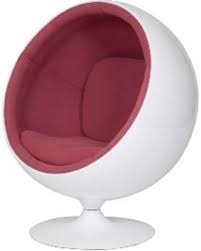
Papasan Chair
A papasan chair is a type of chair that is extremely large and does not have collapsible legs at all. Their legs are oftentimes made of sturdy bamboo and they resemble a large satellite dish (they are oftentimes referred to as satellite dish chairs, but their technical term is papasan chair). These types of chairs can oftentimes hold more than one person. They are perfect for a couple to snuggle up together on to watch a movie together or share a newspaper or whatever. The legs made also be made of rattan, metal or plastic and the chair seats come with a variety of fabric choices, so you can find a papasan chair to match almost any design décor theme. Some people argue that a papasan chair is the best moon chair on the market because they are more chic-looking and fit very nicely into modern design décor themes. These types of chairs were extremely popular in the 70s, and they’ve been making a comeback every since the 90s due to their comfort and their techno-modern look.
The Bottom Line
The bottom line about these types of chairs is that they are relatively inexpensive ways to add a little something extra to your home. They are also very comfortable and are great for sporting outings and other such around the house activities. You should not misconstrue that all chairs are cheap though because you can buy some expensive models that add flair to your home décor theme. As far as what is the best moon chair goes, that question is highly debated. Generally, you get what you pay for. The best chair is typically of the papasan style. The best chair has bamboo or rattan legs, and metal legs are better than plastic ones. The best have a nice fabric print that fits nicely into your home design theme. Regardless, if you are looking to try something new, consider trying moon chairs.
We have been in the furniture business for nearly a decade and have delivered customer satisfaction throughout the years. We search high and low for unique and different products. We have many buyers that look locally as well as internationally to get you the best products in the chair industry that we can find.
It is our goal to help you find the exact chair you are looking for. We have specialized in the Moon chair because we feel that it is such a versatile product and the price point is for everyone.
Galerry :
The post Moon Chairs Explained! This Isn’t Rocket Science appeared first on BEST FURNITURE.


January 1, 2018
Herman Miller Aeron Chair Review
Selection of an ergonomic chair should be considered an investment, both in monetary terms and as an investment in your good health. Correct support and posture when seated has long been proven to improve well-being and increase productivity. One of the best-selling chairs has been around for many years but still remains a firm favourite. But why is the Aeron Chair still so popular?
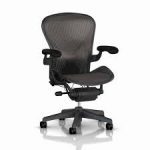
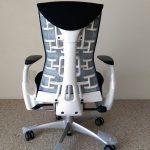
Designed in 1994 by Bill Stumpf and Don Chadwick, the Herman Miller Aeron Chair is one of the few office chairs identifiable by name. It has an almost iconic status in the ergonomic chair market with millions sold worldwide since its launch. Despite its high price tag, it remains one of the best-selling, if not the best-selling, office chairs in the world. Undoubtedly, one of its most appealing features is its looks. The Aeron Chair is a design classic and is on display in New York’s Museum of Modern Art. Manufactured from modern materials, it is well proportioned, with an unusual but distinctive design. Its use of a ‘Pellicle’, a thin, taut membrane of mesh, rather than conventional foam upholstery, revolutionized office chair design. Many manufacturers now offer a mesh option in their chair ranges. With arms suspended from the back rest frame, the chair appears quite minimal from the side view but very substantial from the front or rear.
One of the most unusual aspects of a Herman Miller Aeron Chair is its sizing. Aeron Chairs are available in three sizes, A, B and C. Size B covers the vast majority of people (around 90%) with ‘A’ covering the very smallest percentile and ‘C’ covering the largest, heavier percentile. The positive aspect of this is that the dimensions of the chair are scaled depending on size as is the weight control for the tilt and the chairs are suitable for a much broader diversity of people than many other chairs. One negative aspect, and there are not many, is that the chair relies on the three sizes for seat depth. There is no seat depth adjustment facility on the chair.
Arm height is adjusted on the Aeron Chair via two levers on the rear of each arm or, on some chairs, these levers are replaced by wheels. Arms have a good range of adjustment and move very easily. Arm pads are pivoting as standard, although it is possible to order fixed (non-pivoting) arm pads if required. When positioned inwards, they offer good support for keyboard work and when positioned straight or slightly outwards, they are suitable for mouse or general work. Arm pads are large and well padded.
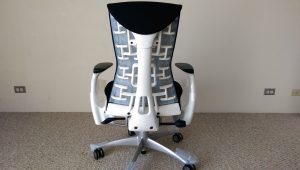
Herman Miller Chairs are fitted with a Tilt and Forward Tilt facility. The Aeron Chair has the Kinemat tilt which moves naturally and effortlessly through a generous 30 degree recline. There is a tension control and Tilt Limiter – a mechanism to limit how far the chair reclines. The chair also has a Forward Tilt facility which allows the chair to tilt forward, past the upright position. This is particularly useful for close computer work.
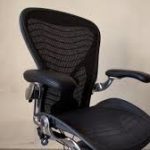
The Pellicle seat and back suspension on Aeron Chairs is made from a highly engineered weave. It is quite firm but offers excellent, comfortable support. It has excellent pressure distribution properties and allows air to flow through, preventing heat build-up and allowing moisture to dissipate.
Posturefit is a unique back support mechanism found only on Aeron Chairs. It has a butterfly shaped pressure pad which supports the lumbar region but also supports the lower back, beneath the belt line, which other chairs cannot support. Controlled with a pressure wheel, the Posturefit maintains a healthy posture and comfortable support when seated for long or short periods. There is also a standard lumbar support option consisting of a sliding, reversible bar, similar to other chairs.
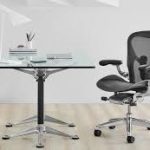
It would be very difficult to review the Herman Miller Aeron Chair without taking into account its looks. It is, after all, a design classic! Available in three different Pellicle styles and a range of colours, it looks fantastic, whichever option you choose. It has a graphite frame and base as standard but can be upgraded with a polished base and polished linkages. Although expensive, these polished aluminium options really enhance what is already a stunning looking chair. Herman Miller chairs are extremely well-built, as you would expect from a ‘high-end’ manufacturer. All materials used are very high quality and very well finished.
Since its launch, many other task chairs have tried to copy the Aeron Chair by Herman Miller. It is, after all, an extremely desirable object with many millions of chairs sold worldwide. Even used, refurbished chairs have a strong re-sale market. Many other chairs offer similar features, quality of build and practical comfort but only the Aeron Chair is immediately recognizable as a design classic. If you want a chair as good as an Aeron Chair, buy an Aeron Chair.
GALERRY

The post Herman Miller Aeron Chair Review appeared first on BEST FURNITURE.
Modern Sofas of Today
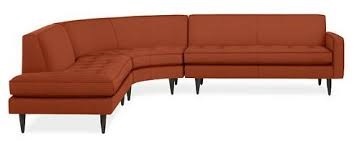
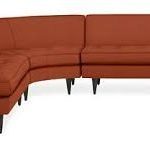
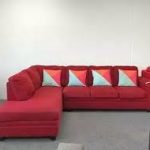
Modern sofas give plenty of advantages to the interior design of your home. Modern sofas come in various original styles and designs which light up the whole atmosphere of your home. There are huge selections of materials, styles, colors and designs you can choose from when it comes to modern sofas.
Nevertheless, the preference of a new trendy sofa, first and foremost, depends on what you actually need. Because of the huge selection of sofas you can choose from, you can definitely get easily confused regarding which to choose. You should think first of what you really need to be able to choose the perfect modern sofas for your home. Also, think of the area you are going to place it into and the other furniture pieces and decorations that you already have. It is also important to think of the budget that you can afford. It is essential to know your budget before you even think of buying one.
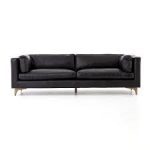
Rectangular contemporary sofas are one of the general choices of designed sofas nowadays. This type of sofa has a capacity of seating 3 people comfortably. It is very appropriate for living rooms. Sofa beds are also another option, it has multi purposes.
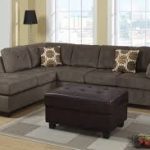
Another popular choice is the sectional sofa. These types of sofas can give you comfortable seating space and style as well. These types of sofas can be positioned in various spaces and you can also decorate them as you like.
You should always keep your budget in mind, no matter what type of modern sofas you want to purchase. The quality, design and the materials used determines the price of the modern sofas.
Space or the area where you will put your sofa is very important. It will easily help you determine which type of sofa is perfect for you and your home. You may want to have a regular or sectional sofa but without a space to place them. Of course, that wouldn’t be possible.
Modern sofas have been made to be placed in various areas of your home. Futons and sofa beds, for instance, can be positioned in the bedroom or the living room. Sectional sofas and regular sofas, on the other hand, are made particularly for the living or seating room to provide seating accommodation for families and friends. When you are anticipating having more guests at home on a regular basis, you should check and consider getting sectional modern sofas. This is the perfect choice for your home, because this will not only accommodate more people but also you can place the items together or you can place them in any part of your home as you like.
A loveseat is perfect inside the bedroom because it creates a romantic atmosphere. The loveseat is also a good alternative when you are not concerned of the guests you’ll be having in the future. There are various designs of loveseats you can choose from and you can easily place them in any part of your home.
And last, but not the least, the important thing to remember before buying modern sofas is its use. Do you need it for guests or friends that will relax on it while visiting your home? For family and friends that needs a place to sleep overnight? This will also help you in choosing perfect modern sofas for your particular needs.
You should also check on the upholstery when you are planning on purchasing modern sofas. There are various selections of materials you can choose from. These can be leather, fabric or suede. The materials also determine the price. The quality of each material also affects the size and shape of the finished product.
GALERY

The post Modern Sofas of Today appeared first on BEST FURNITURE.
March 17, 2017
Microfiber Corner Sofas
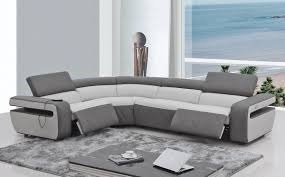
Corner sofas are one of the most demanded types of sofas because they are extremely space efficient. Corner sofas offer a great alternative if you need additional seating room but are short of space. They could easily be adapted You can arrange your corner sofa to fit basically any room, especially lobbies and other small rooms.
Before buying a microfiber corner sofa you should start by measuring the largest piece of the set as well as the dimension of the corner where the couch is to be placed in. Their compact design often make these sofas appear far smaller than what they really are.
There are several styles of corner sofas available, including:
Corner Sofa Beds
Corner sofa beds are great types of sofas because of their extreme space efficiency. Corner sofa beds can be easily attached to other pieces of furniture to make an extra bed whenever needed. A corner sofa bed is especially suited for small rooms where it emulates the feeling of a lot of free space.
The L shape Corner sofa
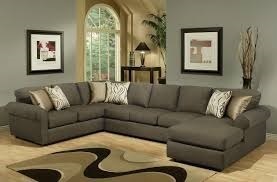
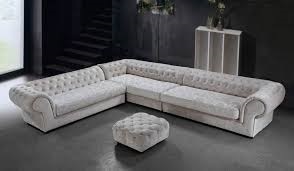
The L shape corner sofa can help to give your living room an elegant look while providing you with great comfort, style and grace at the same time. L shaped sofas can fit perfectly into the corner of a room and therefor are often referred to as corner sofas, accentuating the charm and enhancing the aesthetic appeal of any living room.
Armless corner sofas.
The great thing about armless corner sofas is that they can be combined with other sofas to create an even greater sectional sofa with additional seating.
You might also find it convenient to group sofas by the style of their backs. You will find that all sofas can be grouped into four back-style categories:
Tight Back
Tight back sofas have the firmest seat as their sprung backs have no pillows for you to sink into and you tend to sit upright in these sofas. Tight back sofas stay neat looking because they have no back pillows to straighten.
Attached Pillow Back
They offer softer seats but still maintains a neat and tidy look with their pillows that are sewn onto the inside back of the sofa, preventing them from shifting around.
Loose Pillow Back
The seating comfort is moderately firm but, as with all styles, will vary based on the depth of the sofa and the quality of the filling in the cushions. Loose Pillow Back sofas usually have the same number of back and seat cushions, allowing for fabric matching of stripes and plaids. In this case the back pillows are reversible and can usually be unzipped for re-stuffing.
Multi Pillow Back or Scatter Back corner sofas
Multi Pillow Back sofas, also called Scatter Back sofas, have more back pillows than seat pillows. These sofas tend to sit softly and are often deeper than other designs. The back pillows can be arranged to accommodate people of varying heights. The pillows are tossed randomly across the back for a more casual look.
Other choices of a primarily decorative nature include the base and arm designs. Base treatments include skirted, upholstered leg, plinth base and bun feet.
After choosing the style of the corner sofa, a fabric must be chosen. Here you are advised to carefully consider the manner in which the sofa is to be used, as the cost of reupholstering a sofa is close to that of a new one. Microfiber is the best choice for any person with pets or children in their homes because microfiber fabrics are usually more stain-resistant and easier to clean and has a higher resistance to abrasion if you tend to get a lot of use out of the corner sofa you have chosen.
The post Microfiber Corner Sofas appeared first on BEST FURNITURE.
November 2, 2012
After Sandy: A Slow Return to Normalcy

Delta Terminal 3 at JFK early Thursday morning
Airports Open, Some Power Restored, Subways and Buses Running
For some, a sense of normalcy has begun to return to the Northeast. The cleanup continues, more people have power, and operations are starting resume at both John F. Kennedy International Airport as well as at LaGuardia.
The two airports were literally underwater after Hurricane Sandy struck earlier in the week. New York Governor Cuomo had previously gone on record saying that LaGuardia Airport would be closed indefinitely. While almost 20,000 flights had been cancelled since the weekend, and 2,899 flights had been cancelled just yesterday, only 572 flights had been reported as cancelled on Thursday as of 9 a.m.
In the early hours of Thursday, I arrived at JFK for a flight to Los Angeles on Delta expecting mass chaos. I had been unable to print my boarding pass at home so I expected lines out the door both at the check-in desks, kiosks, and security checkpoints. What I found as I entered the former Pan Am Worldport was a calm, almost serene scene. There was no one on line at the business-class check-in desk and the agent, who told me she still didn’t have power at home, was nonetheless cheerful.
With a boarding pass in hand, I wished the agent well and headed to the security checkpoint. There was one person in line and no wait time. The TSA agents were cheerful and friendly and greeting passengers, asking about how they had fared.
My flight was departing from Terminal 2 so I headed to the walkway and towards the Delta SkyClub near my gate. Two agents were on duty as I entered and one whom I recognized welcomed me and checked me in. She told me she hadn’t had power since the storm but she was doing all right and she clearly was happy to be at work instead of at home without power.
The club was quiet. On previous early morning flights, I’ve found it packed, but today there was just a sprinkling of travelers enjoying a bagel or muffin. Everyone seemed in a good mood to be travelling, based on what I overheard.
At the gate, my flight, which was oversold, had started to board. Everything was calm and orderly despite a full flight. Incredibly enough, we pushed back on time at 7 a.m. and there were only a few aircraft ahead of us for takeoff.
My experience, however, contrasts greatly with what my colleague Cody Burke reported after riding his bicycle through Red Hook in Brooklyn yesterday evening. Red Hook is one of the most impacted areas in New York City. The blocks were lined with shoulder high piles of trash, soggy mattresses, ruined clothing, and building debris. On one corner, a group of people stood around a campfire lit in an old oil drum. The hum of water pumps was everywhere, and huge hoses emerging from the front doors of the houses were spilling flood water out into the street.
In addition, traffic in Manhattan yesterday was pretty much gridlocked at every turn and, as contributing editor Henry Feintuch reported after driving in, there was simply no place to park. After 90 minutes of looking for a parking spot, he turned around and drove back to Westchester.
Bellevue Hospital in Manhattan, where an administrator described third-world like conditions following the failure of its backup power, was evacuated as was NYU Medical Center the day before for the same reason.
October 26, 2012
Driving Alone: How Technology is Reducing Distractions on the Road

Lane departure warning in Mercedes-Benz E350
Recently I have been giving some thought to practical uses of technology with respect to one of the most highly-publicized dangers, namely distracted driving. While distractions at the knowledge worker’s desk can cost a lot of time and money, distractions on the road can be deadly.
One application that comes to mind is the Google self-driving car. While I haven’t ridden in it (since no one drives it really), I have been driving a car for the past year or so that has some features that approach the Google self-driving car’s functionality. My car’s features include active cruise control, which uses radar to adjust the car’s speed in order to maintain a preset distance between the vehicle and the one ahead.
First, a disclaimer. I like to drive and I enjoy high-performance cars, especially on the unrestricted sections of German Autobahns. I don’t like the idea of the car driving for me, either. I didn’t even like the idea of cruise control, primarily because I felt that it would lead to a lack of attention on my part, until I started using the active version.
Another feature, lane departure warning, which is triggered by optical sensors detecting pavement lane markings, informs the driver if the car strays out of lane. Should the warning be ignored, the system will guide the car back into the lane by braking the wheels on the side of the vehicle away from the line.
Blind spot detection uses radar sensors in the rear bumper to monitor the space to the right and left of the car, focusing in on the blind spot. If a car is nearby, a warning triangle in the respective rear view mirror turns yellow. If a car is more or less next to yours, the arrow glows red. If you activate your turn signal, indicating an intention to move in the direction of said vehicle, the arrow blinks red and an alert sounds. If you continue in the direction of said vehicle, the car’s Electronic Stability Program uses rear-wheel braking, specifically applying the brake on one side, to nudge the car back into its lane.
If that isn’t enough, the car also monitors the driver (usually me) to make sure he is awake enough to drive. In the first 20 minutes of each drive, the car establishes a profile for the driver based on steering input and other factors. If a driver deviates from the profile as established, it may mean that he is sleepy. If this is determined to be the case – and the system is operative at speeds over 50 mph (80 km/h) – the car beeps and flashes an Attention Assist message (“Time for a Rest?”) on the dashboard.
Jonathan B. Spira is CEO and Chief Analyst at Basex and author of Overload! How Too Much Information Is Hazardous To Your Organization.
October 19, 2012
Knowledge Work Kills

Use it or lose it…
I’ve often wondered about the impact of the change in how we work, from manual and active labor to knowledge work at our desks, with respect to our health. After all, while our life expectancies are significantly longer than even 50 years ago, we suffer more knowledge-age ills, including back problems and neck and shoulder injuries. What I didn’t realize, however, was how frightening the reality was.
Let’s look at the rise of the boob tube. While the term “couch potato” has been the subject of much derision for several decades, the combined effect of long-term television watching with our propensity towards knowledge work has become a matter of great concern, and not just to me. Simply put, the more time we spend sitting in front of a computer screen, be it a laptop or desktop, the shorter our lives will be.
In an article in the October 2012 issue of the British Journal of Sports Medicine entitled “Television viewing time and reduced life expectancy: a life table analysis,” J. Lennert Veerman of the Centre for Burden of Disease and Cost-Effectiveness, School of Population Health, The University of Queensland, Brisbane, Australia, and his colleagues examined data from the Australian Bureau of Statistics and the Australian Diabetes, Obesity, and Lifestyle Study, the latter an ongoing project studying the health habits of almost 12,000 Australian adults.
Along with questions about general health, disease status, exercise regimens, smoking, diet and so on, the survey asked respondents how many hours per day in the previous week they had spent sitting in front of the television.This was significant in that researchers found it easier to get respondents to quantify the length of time they spent watching television (and sitting) than simply sitting by itself.
What the researchers found was striking, to say the least. Compared to subjects who watch no television at all, those who watch an average of six hours per day have a life expectancy of 4.8 years less. Each hour viewed reduces that person’s life expectancy by 21.8 minutes.
The numbers here are staggering – indeed, the researchers compared the loss of life from TV viewing to that associated with major chronic disease risk factors including physical inactivity and obesity.
I’ve become all too aware of my own sedentary knowledge-worker lifestyle and have made several major changes that get me out from behind the computer screen (the TV was less of a concern as I am happy to report that my television viewing habits are minimal, very happy indeed). In the past six weeks I’ve flown over 25,000 miles (40,000 kilometers) and, while I wasn’t exactly flapping my arms in order to keep the aircraft aloft, the combination of walking through foreign cities and airports (and I find I am more apt to walk around the city when I am not home) as well as the convenience of a hotel gym and pool (while I seemingly ignore the gym and pool on home turf) make it easy to remain active and keep fit. I’ve also just started doing Crossfit, a community-based training program that combines several types of cardiovascular and resistance trainings into a benchmarked sport.
Just as with cigarette smoking, a habit I never acquired a taste for, it’s never too late to stop smoking and it’s never too late to stop sitting in front of the computer or TV. Now that you’ve finished this column, why not go out for a bike ride or walk and become active?
Jonathan B. Spira is CEO and Chief Analyst at Basex and author of Overload! How Too Much Information Is Hazardous To Your Organization.
October 12, 2012
Technology You Should Be Paying Attention to: 3D Printing

Makerbot Replicator 2
One of the most exciting up-and-coming technologies today is 3D printing. If it sounds like science fiction, that is because, in many ways, it is. The technique builds 3D objects, layer by layer, through a variety of methods. At its most basic level, imagine a hot glue gun that can move on two horizontal axes, as well as vertically, squirting small drops of glue to build up an object one layer at a time. More complex types of 3D printing use powder that is solidified by an ink jet printer head loaded with binding material, or even a solution of liquid resin that is solidified by a laser beam.
The technology itself is not new; indeed, it has been around since the 1980s, and, up until recently, it was more commonly known as rapid prototyping. It is a form of additive manufacturing, which is distinct from the more common subtractive manufacturing since instead of taking a block of material and removing mass to shape an object, it starts with nothing, and adds material to create the object.
Recently, due to an explosion of consumer-level interest in the technology, 3D printing has been getting serious mainstream attention. The darling and established market leader of the consumer 3D printing movement, MakerBot, started selling DIY 3D printer kits in 2009, and has expanded rapidly, receiving a $10 million venture capital investment from the Foundry Group in August 2011. Since then, the company has released two versions of its Replicator line of 3D printers aimed at the “prosumer” market, and opened the first 3D printing retail store in Manhattan. Between 2009 and 2011, the company’s printers accounted for 16% of the market; in 2011 alone they accounted for 21.6%.
The largest players in the field are 3D Systems and Stratasys. They are established public companies with diversified operations that cover medical, industrial, architectural, design prototyping, and 3D scanning. Both have been aggressively acquiring smaller companies to build out their technology portfolios and move into new markets. 3D Systems is the overall market leader in terms of revenue ($288.9 million as of June 2012) and grew by 41.7% and 44.1% in 2010 and 2011 respectively. Stratasys comparatively, achieved revenue of $177.9 million for the same period.
In addition to making and selling hardware, a market has emerged around providing 3D print services. Shapeways and Ponoko are two companies occupying this space, both have established online marketplaces (similar to eBay or Esty), where designers upload 3D designs that can be ordered for prototyping purposes or purchased directly by their customers. The companies handle the 3D printing and shipping, eliminating the need for designers to ever touch the product, or invest in the high-end 3D printing equipment that is used.
The ever increasing level of press that 3D printing technology has been receiving has its own dangers. Gartner placed the technology at the peak of its 2012 Hype Cycle for Emerging Technologies, predicting that overinflated expectations of what is technologically possible will lead to a slump in the market, before eventual slow but steady growth emerges as practical applications are found.
The attention the technology is receiving is considerable; it seems that not a day goes by without a major publication covering some aspect of the industry, including a series of stories about the potential (good headline material but overblown) to manufacture a gun in your home using the technology. Potential applications that earn headlines include printing organs, mass copyright and patent violations, the death of the global supply chain, printing in space, etc, etc, etc. The list is endless, but many of these use cases are years away from being viable.
Nonetheless, the future of 3D printing is bright (perhaps literally so, as Disney research has developed a way to print optics in light bulbs). A reality check on the limitations of the technology and an adjustment of expectations may be in order, but have no doubt; 3D printing will be one of the great technology storylines for years to come.
Cody Burke is a senior analyst at Basex. He can be reached at cburke@basex.com
October 5, 2012
Why Can’t We Just All Get Along (Online) and Pay Attention?

Safety first! Padded pole by UK company 118 118.
Sitting on the ANA Boeing Dreamliner inaugural flight from Seattle to Tokyo, Japan, I brought up some reading material on my iPad and first turned to the Wall Street Journal.
In the German-language edition, I found the headline: “Sind iPhone-Nutzer schlechtere Eltern?” (Are iPhone Users Worse Parents?). The lede looked at a hapless father, Phil Tirapelle, who lost track of his 18-month-old son while he was busy texting during a walk outside. The toddler was “almost trampled” but rescued just in time. Regular readers of this space know that the number of emergency-room admissions for pedestrians who walk into lampposts while texting has doubled every year for the past five years.
Clearly, not paying attention can be a problem and sometimes a matter of life or death. Indeed, I just saw an article in the New York Times in which New York City’s transportation commissioner was quoted as having stopped people from walking mindlessly into traffic while texting (half of them were grateful, she reported; the other half were irritated).
We are absorbed and are unable to distinguish between that which is urgent, that which is important, and that which is none of the above (that would be most everything). Yet we cannot disconnect for fear of missing the mundane. And it could cost someone his life or result in great injury.
Later in the flight, I found an article in the U.S. edition of the Wall Street Journal positing the question: “Why We Are So Rude Online,” a topic also near and dear to my heart. Over the years I have noticed that people’s personalities become completely different once seated behind what they believe to be the anonymity of the computer.
But back to the WSJ article on rudeness, in which a TV announcer, Chip Bolcik, is quoted as knowingly posting “provocative” political questions on his Facebook page. He bemoans the fact that he has lost two friends over Facebook spats, but Bolcik is hardly innocent. He fans the flames and encourages dissent, even using “attack dog” friends to further fuel a fire.
Stepping back for a moment, one has to wonder if this is how Bolcik would conduct himself at a gathering of friends. He seems to feel that one’s behavior in the online world can be different, but he is quickly learning that there are no free passes and, as he commented after losing a particularly close friend, “I was pretty upset.”
The problem here is that the entire idea of how one comports oneself in society has been tossed aside. The online world isn’t isolated. What happens online can have repercussions both online and off. Saying anything that comes to mind isn’t any more acceptable online than it is to scream “fire” in a crowded theater.
It’s the newness of it all that allows this to happen. There are no rules, or so people seem to think, yet the very rules that govern life in general are still in force. The thought bubbles that float above cartoon characters, thinking things that should not be said, hold thoughts that we too should not air online.
I wrote about which medium one should use over a decade ago, calling it What Works Better When. The prime impetus behind this was that many people seemed not to understand how saying the same thing, but across different media, could result in different interpretations and understanding of what was being communicated. I never considered, until now, that I would have to contemplate expanding this to include when not to use technology (while crossing the street, for example) or that saying things without thinking (“I hate you”) might come across as more than a bit severe in an online environment where the tone cannot be transmitted along with the words.
Our lives have been so swept up by our infatuation with all things online that we cannot disconnect and are most likely typing something we probably shouldn’t while we mindlessly cross the street looking down at the smartphone. Perhaps New York City needs to update its Walk/Don’t Walk signs: they could say “Text/Don’t Text” instead.
Jonathan B. Spira is CEO and Chief Analyst at Basex and author of Overload! How Too Much Information Is Hazardous To Your Organization.
September 26, 2012
If Technology Makes Us Dumber, Why Are We Getting Smarter?

Downloading higher IQ in 3, 2, 1…
We often think of Information Overload as sapping our intelligence and decreasing our reasoning powers, but, starting in the early 1900s and continuing to the present day, Americans who have taken standardized IQ tests have gained on average three points per decade. Despite claims that texting and Twitter have watered down literacy and the ability of young people to write, research from Stanford that covered writing samples from 2001-2006 shows that students were writing far more than previous generations did. Perhaps as significantly, the study found that they were adept at tailoring their style for a specific audience (i.e. no emoticons in a class essay).
Writing in the Wall Street Journal, James A. Flynn, explains an interesting theory about the reasons behind this. Flynn is the researcher and creator of the Flynn effect, which first acknowledged the trend of rising IQ scores. He notes in his recent article Are We Really Getting Smarter? that one of the main differences between us and our forebears is how the modern world we live in both embraces the hypothetical and values classification. We tend to look for what traits things have in common (as opposed to what traits are different), and are willing and able to imagine possible outcomes.
These differences make us better suited for exercises such as IQ tests that measure the ability to analyze and extrapolate patterns, or use logic to determine the answer to a hypothetical question. Treating hypothetical situations as legitimate thought experiments also enables a writer to visualize his audience and shift tone and style appropriately.
Of course, higher scores on IQ tests alone don’t mean that we are necessarily smarter. Interestingly enough, it seems that we are continuing to improve the specific skill sets that the tests measure, not by studying for the test, but in natural reaction to changes in our environment. In a sense, our mental abilities are evolving by chance in the same direction as the way the tests were originally created.
Information Overload, although detrimental in a variety of documented ways, in this case may not be so bad. Our fast-paced world throws so much information at us on a daily basis that learning how to classify incoming data is a critical survival skill. Given how many different ideas we are exposed to through media, the Internet, and our hyper-connected social lives, it is no surprise that our ability to conflate concepts and scenarios to create hypothetical situations is growing stronger.
The downside of Information Overload is clear: shortened attention spans, lost time and productivity, Internet addiction, and health issues. Nonetheless, there may be a few positive benefits from the barrage of information we receive today, at least as far as IQ scores are concerned.
Cody Burke is a senior analyst at Basex. He can be reached at cburke@basex.com